...

High-End Fashion Dress Manufacturing

Dress-focused product development and scalable manufacturing for established fashion brands, buying offices, and product teams managing demanding seasonal programs.

  • 30+ years of fashion dress development experience behind the manufacturing system
  • 16 owned womenswear factories supported by 20+ long-term satellite factories
  • 300 garment sewing lines, including 50+ quick-response and flexible lines
  • 300-400 pattern and sample specialists across the wider development organization
  • 15,000-35,000 sample pieces or development instances supported per month
  • Stable monthly garment capacity of approximately 6.5 million pieces, with higher peak capacity available

Duolan develops fashion dresses from design direction, tech packs, reference garments, and collection briefs. Fabric behavior, pattern balance, internal support, workmanship, embellishment, and bulk reproducibility are reviewed as one connected product system. The goal is not merely an attractive prototype. Each approved style needs a clear path into pre-production confirmation, controlled manufacturing, inspection, packing, and repeat production.

Built for Brand-Level Fashion Dress Programs

Duolan works best with established fashion organizations that manage defined product direction, structured development calendars, commercial quantities, and continuing collection needs. Each program is organized around product accuracy, manufacturing discipline, and reliable sample-to-bulk execution.

Global Fashion Brands

Global fashion brands often manage many styles, multiple delivery windows, strict supplier approval processes, and detailed product standards. Duolan supports these programs through centralized development coordination and a manufacturing network designed for both core control and scalable production. Product teams can submit tech packs, original garments, reference images, fabric concepts, or mixed development briefs. The project route is then built around the product category, fit priority, material complexity, workmanship requirements, testing needs, quantity, and launch calendar. Core and technically demanding styles can remain under closer owned-factory control, while suitable repeat or volume programs can be allocated through approved production resources under unified standards.

Leading Regional Brands

Regional leaders frequently need a supply partner capable of moving from a successful seasonal launch into broader channel growth. Their requirements usually include faster multi-style development, controlled test orders, repeat production, color extensions, and capacity expansion without losing the approved fit or finish. Duolan combines sample development, production planning, material coordination, and multi-factory capacity allocation. Instead of treating every order as an isolated transaction, product files, patterns, measurements, material references, workmanship instructions, and approval comments are organized for later reuse. This structure makes continuing programs easier to plan when a style needs replenishment, a collection expands, or a selling window requires additional capacity.

Premium Dress Brands

Premium dress brands rely on silhouette, fabric hand, fit, internal construction, and finishing to justify their market position. A visually similar garment can still feel noticeably lower in value when the fabric weight is wrong, a neckline lacks stability, a lining restricts movement, a zipper creates distortion, or pressing changes the surface. Duolan evaluates the garment as a complete wearing and manufacturing system. Pattern shape, seam placement, support materials, lining, closures, embellishment weight, and final presentation are reviewed together. Particular attention is given to satin, mesh, lace, stretch jersey, corset structures, sequins, pearls, rhinestones, embroidery, and other dress-focused materials and processes.

Buying and Product Teams

Buying offices and product teams need more than attractive sales language. They require readable quotations, development assumptions, sample status, approval records, production checkpoints, packing instructions, and timely issue escalation. Duolan organizes the work around a clear development basis and a defined next step. Fit comments are translated into pattern and measurement actions; material decisions are linked to bulk availability; approved workmanship is converted into production instructions; and production readiness is reviewed before full release. Formal confirmation can be maintained through email and project documents, while faster daily coordination can use messaging and video review where complex construction or fit points need visual explanation.

What Defines High-End Fashion Dress Manufacturing?

High-end dress manufacturing is the controlled conversion of a design into a garment with accurate silhouette, appropriate fabric behavior, secure internal construction, refined workmanship, wearer comfort, and standards that can be repeated across sizes, colors, production lines, and future orders.
Silhouette and Wearer Positioning​

Silhouette Accuracy

A premium dress must preserve the intended proportion when viewed on the body, not only on a hanger. Bust placement, waist level, hip shaping, skirt volume, drape, hem balance, and side-seam position all influence the visual result. Pattern development begins by identifying the silhouette priorities and the areas where fit cannot be compromised. For bodycon dresses, stretch and negative ease need to support the body without excessive transparency or distortion. For corset and bustier dresses, cup position, waist compression, boning direction, and neckline stability need to work together. For satin and bias-influenced styles, grain control and fabric relaxation affect the final hang.

Fabric Performance

Premium appearance depends on using a material that can physically create the intended shape. Weight, drape, stretch, recovery, opacity, surface shine, friction, shrinkage, seam response, and pressing tolerance must match the design. A soft satin may create elegant movement but expose seam tension and handling marks. A mesh may provide visual lightness but require a compatible lining and carefully controlled elastic recovery. A stretch jersey can support a fitted silhouette only when recovery remains stable after sewing and wear. Material review therefore considers both the sample effect and the production conditions needed to reproduce it.

Fit and Balance

Fit is not limited to matching a measurement chart. A dress also needs vertical and horizontal balance, clean movement around the body, controlled tension, correct strap position, and consistent shaping across graded sizes. During sample review, measurements are checked alongside visual balance on the dress form or fit model. A neckline may measure correctly but still gape. A waist may match the specification but sit too high because of torso balance. A backless dress may look correct from the front yet lack security during movement. Corrections are recorded by category so pattern, measurement, and construction changes remain clear.

Internal Structure

Many high-end dresses depend on hidden engineering. Boning, cups, elastic support, fusible materials, stay tape, underlining, lining, seam reinforcement, zipper guards, and internal hanging support can determine whether the garment feels secure and polished. Internal components must be selected according to the outer fabric and intended wear. Excessively rigid support can create visible ridges; insufficient support can cause collapse or movement. The structure also needs to remain manufacturable. Sample-only solutions that rely on uncontrolled hand adjustment are reviewed before approval so a stable production method can be established.

Refined Workmanship

High-end workmanship is visible in the areas people touch and inspect closely: necklines, armholes, straps, zippers, lining joins, seams, hems, embellishment edges, pressing, and final presentation. Stitch density, needle selection, seam allowance, reinforcement, thread tension, and handling methods are adjusted for the material. Satin requires protection from puckering and pressure marks. Mesh needs clean joining without bulky buildup. Sequins and beads require controlled clearance around seams and closures. Quality is created through defined methods and checkpoints rather than relying on a final inspection to correct production that was not controlled earlier.

Bulk Repeatability

A beautiful sample has limited commercial value when its fabric, internal support, decoration, or sewing method cannot be repeated in production. Before bulk release, material references, measurements, graded rules, construction details, embellishment placement, pressing requirements, and packing standards need to be locked. First-piece or pilot verification is used for structure-sensitive styles so critical operations are confirmed before volume increases. Production records and approved references then guide inline inspection, final inspection, and later repeat orders. Repeatability is the point where product development becomes a reliable supply program.

Risks Brands Must Control Before Bulk Production

High-end dress programs can lose time and margin when design, material, fit, construction, and production standards are not aligned early. Each major risk needs a corresponding control action before it becomes a sample rejection or bulk-production problem.

Risk AreaWhat Can Go WrongDuolan Control Method
Design translationVisual proportions, neckline depth, drape, or decoration differ from the intended directionDesign-basis review, reference comparison, and development priorities locked before sampling
Fabric and silhouetteMaterial weight, stretch, shine, or recovery cannot support the target shapeFabric behavior assessment, swatch review, and alternative material direction where needed
Fit interpretationComments are applied as isolated measurements and create new balance problemsPattern, measurement, and visual fit comments reviewed together by category
Internal constructionCups, boning, lining, elastic support, or closures feel unstable or create visible marksStructure map, component compatibility review, and construction testing in the sample stage
Sample-to-bulk transitionApproved appearance depends on a sample-room method that cannot remain stable in volumeProduction-readiness review, operation definition, and first-piece or pilot confirmation
Material consistencyBulk fabric, lining, trim, or decoration differs from the approved sampleMaterial reference locking, shade and batch checks, and approved component records
Multi-style schedulingSamples, comments, materials, and production priorities become mixed across a collectionStyle-level tracking, priority planning, and milestone control by collection calendar
Final presentationPressing, folding, packing, or transport changes the surface or silhouetteProduct-specific finishing and packing instructions, final appearance checks, and shipment coordination

High-End Dress Categories We Develop and Manufacture

Duolan focuses on fashion-driven dress categories where material behavior, fit, structure, decoration, and production consistency directly affect perceived value. Each category follows a different development and manufacturing route rather than a single generic sewing method.

Occasion Dresses

Occasion dresses need a strong visual result while remaining comfortable for extended wear. Development often combines fitted upper-body shaping, controlled waist definition, skirt movement, lining coverage, and decorative details. The main risks include unstable necklines, heavy embellishment, transparent areas, restrictive linings, zipper distortion, and inconsistent skirt fall. Duolan reviews occasion styles around the wearing scene, target retail position, fabric behavior, support requirements, and finishing standard. Cocktail, graduation, homecoming, wedding-guest, birthday, and other event-focused programs can be developed as coordinated collections with varied silhouettes, lengths, colors, and commercial price levels.

Party Dresses

Party dresses often depend on immediate visual impact, body-contouring fit, reflective materials, cut-outs, mesh, sequins, rhinestones, unusual necklines, and statement details. Attractive appearance alone is not enough. Decoration weight can change the drape, sequins can interfere with seams, cut-outs can shift during movement, and stretch materials can become transparent under tension. Development therefore covers body security, skin contact, support, lining strategy, closure placement, decoration clearance, and production durability. Commercial programs can balance high-impact hero styles with cleaner supporting styles so the collection remains visually strong without making every product equally expensive or difficult to manufacture.

Bodycon Dresses

Bodycon dresses require controlled negative ease, stable recovery, clean seam shaping, and accurate grading. Fabric stretch needs to work in the correct direction, while opacity and lining decisions must reflect real tension on the body. Bust, waist, hip, and hem measurements cannot be adjusted independently without checking overall balance. Duolan reviews stretch percentage, recovery, weight, handfeel, surface appearance, and seam response before confirming the material direction. Pattern development focuses on contour, side-seam position, neckline security, waist definition, and movement. Bulk control includes material-batch consistency, graded measurement checks, seam appearance, and recovery after sewing and pressing.

Satin Dresses

Satin dresses can appear simple while requiring disciplined handling. Surface shine reveals needle marks, puckering, pressing damage, uneven seams, and grain problems.
A fabric that drapes beautifully in one sample may also be sensitive to batch variation or difficult to stabilize in bulk.
Development considers yarn structure, weight, face finish, drape, opacity, grain direction, lining, seam type, needle size, pressing temperature, and packing pressure. Bias or fluid silhouettes need enough relaxation and balance control before final measurements are confirmed. Production routes are planned to reduce abrasion and handling marks from cutting through packing.

Mesh and Lace Dresses

Mesh and lace dresses need a clear relationship between outer fabric, lining, stretch, pattern placement, seam construction, and coverage. Lace motifs may need positioning at necklines, hems, or center lines; mesh stretch may differ between directions; and lining can change both comfort and visual transparency. Duolan develops these styles through material pairing, motif placement review, clean edge construction, reinforcement at stress points, and compatible stretch where fitted areas are involved. For layered products, each layer is checked for length, movement, seam bulk, and recovery so the finished garment remains light without becoming unstable.

Sequin Dresses

Sequin dresses combine visual value with higher production risk. Sequin size, attachment method, base fabric, density, direction, weight, and clearance around seams influence comfort and manufacturability. Decoration may need to be removed from seam allowances, zipper zones, darts, and neckline edges before joining. Lining and internal finishing protect the wearer from rough contact. Duolan reviews sequin maps, seam routes, pattern matching, repair standards, attachment strength, garment weight, and packing protection. First-piece confirmation is especially important because small differences in cutting direction or decoration handling can become highly visible across a production run.

Corset and Bustier Dresses

Corset and bustier dresses depend on engineering beneath the surface. Cup volume, bridge position, boning length, waist balance, neckline shape, underbust fit, closure choice, lining, fusible support, and elastic retention must work as one system. A garment can look correct while standing still but fail during movement when support is not balanced. Development includes structure mapping, component selection, fit review from multiple angles, and pressure-point checks. Bulk preparation defines boning position, cup and padding references, seam reinforcement, top-edge control, closure installation, and measurement checkpoints to preserve the intended shaping across sizes.

Resort and Vacation Dresses

Resort and vacation dresses usually prioritize movement, comfort, lightweight materials, color, print, and a polished appearance under warm-weather conditions. Halter, backless, cut-out, wrap, ruched, and flowing silhouettes need secure construction even when visual lines appear minimal. Fabric transparency, colorfastness, shrinkage, strap tension, tie durability, neckline stability, and packing recovery are common development points. Duolan can organize coordinated drops across mini, midi, and maxi lengths, using shared color stories and fabric directions while varying silhouette and complexity. Production planning also considers print placement, shade continuity, and delivery timing for seasonal launch windows.

From Brand Direction to a Coherent Dress Collection

A strong dress collection needs more than a group of attractive individual styles. Duolan organizes product direction, fabric planning, silhouette balance, development priority, and manufacturing routes so the collection can move through sampling and production with greater clarity.

Translate Brand Language into Product Decisions

A collection brief may include mood images, historical bestsellers, competitor references, color direction, target prices, delivery windows, and preferred silhouettes. Before development starts, the team identifies which elements define the brand and which elements are flexible. Key questions include: Is the collection built around polished occasionwear, confident bodycon dressing, relaxed resort styling, or dramatic party pieces? Which areas of fit are part of the brand identity? How much structure should remain hidden? Which fabrics create the desired movement? Where should decoration deliver visual impact, and where should construction remain clean?

The review is converted into product decisions rather than broad creative language. Silhouette priorities, neckline families, length mix, fabric groups, decoration levels, color relationships, and technical risk are mapped across the styles. A high-impact sequin dress may act as a hero product, while satin, mesh, or cleaner fitted styles provide commercial balance. Shared materials or trims can be planned where they improve consistency and purchasing efficiency without making the range repetitive. Each style is also assigned a development route based on difficulty, material availability, and the amount of pattern or structure work required.

The result is a clearer collection framework for design, sourcing, sampling, costing, and production. Product teams can see which styles need early development, which can follow shared blocks, and which details must be tested before final approval.

Build a Balanced Silhouette and Price Architecture

High-end collections perform better when the style mix serves different wearing occasions, body preferences, and price positions. A range built entirely from technically difficult hero pieces may look impressive but create excessive cost, sampling load, and production risk. A range built only from safe commercial styles may lack visual identity. Duolan supports a balanced architecture by separating styles into hero, core commercial, supporting, repeatable, and seasonal categories.

Silhouette planning can combine fitted mini dresses, structured midi dresses, fluid satin styles, statement occasion pieces, and relaxed resort options. The mix can also vary neckline, sleeve, back exposure, waist treatment, and skirt volume while maintaining a recognizable brand language. Price architecture is considered through material cost, consumption, decoration density, pattern complexity, sewing minutes, finishing, and quality requirements. Where a concept exceeds the target level, the team can explore controlled alternatives such as changing the decoration method, reducing hidden construction complexity, adjusting panel count, or using a more stable material with a similar visual effect.

These decisions protect the design intention while improving commercial feasibility. Cost is not treated as a late-stage reduction exercise after the sample has already been approved. It is considered alongside design and manufacturing from the beginning.

Plan Development Priority Across Multiple Styles

Multi-style programs become difficult when every sample is treated as equally urgent and every material decision is made independently. Duolan organizes development priority around launch importance, technical risk, material lead time, common construction, and production readiness. Styles with new fabrics, complex corset structures, all-over sequins, special dyeing, or custom embroidery are started earlier because they require more testing and approval.

A style-level development plan records the basis of development, target sample purpose, critical measurements, fabric direction, components, pending decisions, expected review stage, and next action. Comments are grouped into fit, visual, material, workmanship, and production-readiness categories. This prevents a fit correction from being mixed with an aesthetic preference or a sample-room adjustment from being mistaken for a final production method.

The wider manufacturing system can support approximately 3,000-8,000 style-development and sampling flows per month. Capacity at that level is only useful when projects remain organized. Clear priorities and shared standards allow large brand programs to move without losing attention on the technically important styles.

Connect the Collection to a Production Strategy

A collection is not production-ready simply because each sample has been approved. Materials, trims, colors, size ratios, quantities, decoration routes, production lines, inspection requirements, packaging, and delivery sequences need to work together. Duolan reviews the collection as a manufacturing program before bulk release. Styles are grouped by fabric and process where useful, while technically sensitive products receive a more controlled route.

Core styles and products with demanding fit or construction can remain under closer owned-factory management. Suitable volume, repeat, or supporting styles can be distributed through long-term satellite capacity under approved standards. The production plan considers whether styles can share material orders, whether color batches need separate control, which processes require specialized factories, and how shipment priorities follow the launch calendar.

A clear production strategy also supports future replenishment. Pattern files, measurement standards, material references, workmanship notes, and approval decisions are retained so a repeat order does not restart from an incomplete memory of the first production. The collection becomes a repeatable program rather than a one-time set of garments.

Fabric and Trim Engineering for Premium Dress Results

Material selection connects visual design with fit, comfort, construction, cost, and production stability. Duolan reviews outer fabrics, linings, support materials, closures, and decorative components as one system before a premium dress moves toward approval.

Satin and Silky Fabrics

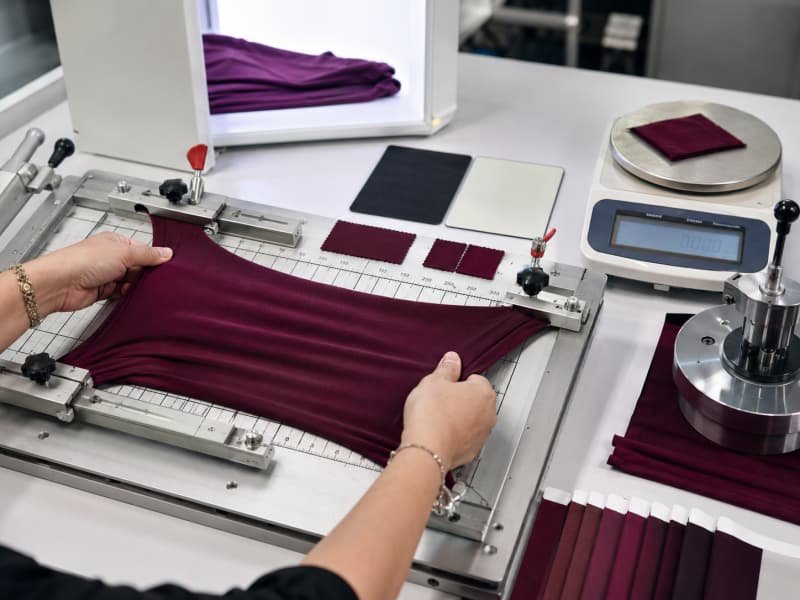
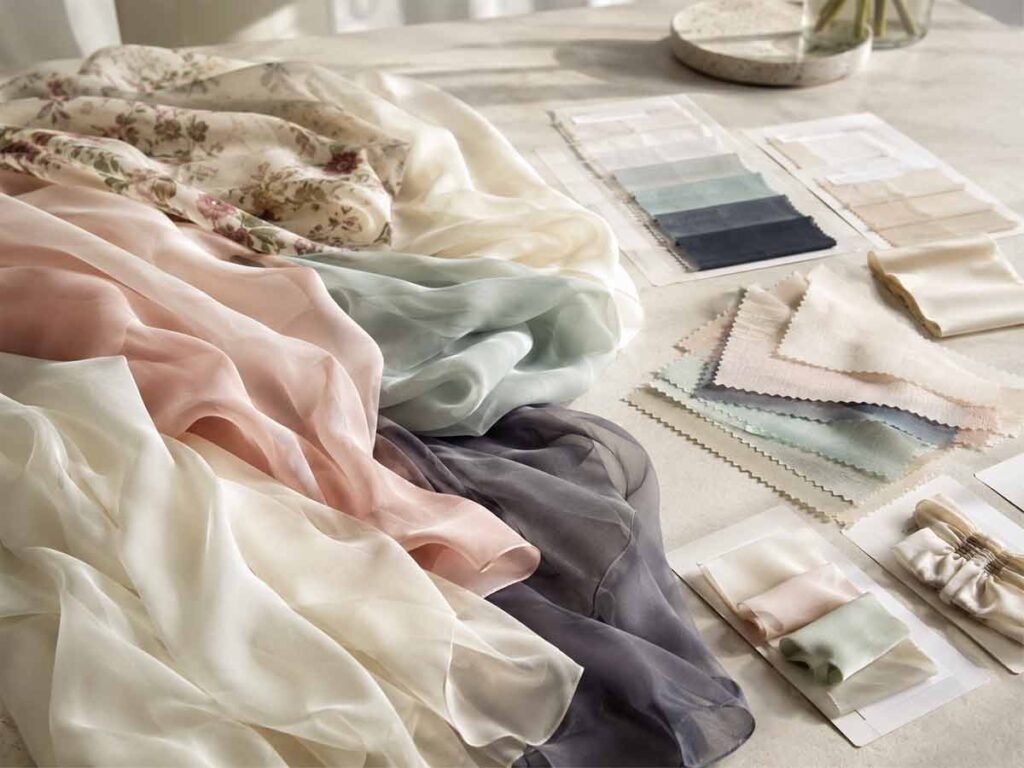
Satin quality cannot be judged only by shine or softness. Weight, yarn construction, face finish, drape, opacity, friction, grain stability, seam response, and pressing tolerance shape the finished garment. Lightweight satin may support fluid bias or slip silhouettes but can reveal seam tension, needle marks, and lining edges. Heavier satin may create a richer surface while requiring different handling around darts, gathers, and curved seams. Duolan evaluates swatches and sample performance under the intended construction. Needle size, stitch density, seam type, cutting direction, pressing method, lining, and packing pressure are aligned to the fabric. Bulk material is controlled by reference and batch so changes in shade or handfeel do not undermine the approved sample.

Mesh and Lace

Mesh and lace create transparency, texture, and layered depth, but their mechanical behavior varies widely. Stretch direction, recovery, hole size, motif scale, edge stability, and surface friction affect pattern choice and sewing. A lace motif may need to align at the center front, neckline, sleeve, or hem; a stretch mesh may require compatible lining to prevent one layer from pulling against another. Duolan reviews motif placement, cutting allowance, joining method, reinforcement, lining coverage, and wearer contact. Samples are checked both flat and on the body because the visual density can change under tension. Bulk preparation defines placement standards and acceptable variation where the material contains natural motif repeats.

Stretch Jersey

Stretch jersey used in bodycon and fitted dresses must deliver compression, recovery, opacity, and surface stability. Stretch percentage alone is not enough. Two fabrics with similar stretch can behave differently after sewing, pressing, washing, or repeated wear. Duolan reviews weight, composition, course and wale behavior, stretch direction, recovery, growth, surface shine, and color performance. Pattern negative ease is adjusted according to the actual fabric rather than a generic formula. Seam type, thread, elastic support, lining, and hem construction are selected to avoid popped stitches, rippling, or unwanted bulk. Key sizes are checked during grading so the contour remains consistent as measurements increase.

Chiffon and Lightweight Fabrics

Chiffon, georgette, and other lightweight woven fabrics create movement but can shift during cutting, distort along bias areas, fray, show seam bulk, or become transparent under lighting. Duolan plans cutting, numbering, seam construction, lining, edge finishing, gathering, and pressing according to the material. Layered skirts require careful length control because each layer may relax differently. Fine materials are also sensitive to needle damage and handling marks. The sample stage confirms whether the chosen fabric can support the neckline, sleeve, waist, and skirt shape. Where additional stability is needed, narrow support materials can be placed without making the garment look rigid.

Velvet and Textured Fabrics

Velvet and directional textured fabrics require consistent nap direction, controlled cutting, gentle handling, and suitable pressing. Shade can appear different when panels are rotated, even when the fabric comes from the same roll. Seam pressure, pile crushing, and surface marking are common risks. Duolan defines nap direction on the marker plan, checks shade under controlled lighting, adjusts sewing and finishing methods to reduce visible track lines. Lining and support materials are selected to preserve drape. Packing also needs enough protection because heavy compression can affect the surface. For embellished textured fabrics, decoration placement and garment weight are reviewed together.

Linings, Zippers and Support Trims

Hidden components often determine whether a dress feels high-end. A lining must match the outer fabric in stretch, weight, opacity, color, and movement. Zippers need the correct tape, tooth size, length, placement, and reinforcement so they close smoothly without creating ridges. Boning, cups, elastic, fusible materials, stay tape, and underlining need sufficient support without becoming visible from the outside. Duolan develops these components as part of the garment structure, not as late substitutions. Approved references are recorded for bulk purchasing, while alternatives are reviewed before use if supply conditions change. Component compatibility is especially important for backless, strapless, corset, mesh, and fitted dresses.

Pattern, Fit and Structure Behind Premium Dresses

Premium dress development requires controlled pattern balance, fit interpretation, hidden support, and grading. Measurements provide a framework, while visual balance and movement confirm whether the garment performs as intended on the body.

Establish the Silhouette Before Chasing Details

The first pattern objective is to establish the silhouette and body balance. Bust point, shoulder position, neckline, armhole, waist level, hip shaping, side seam, skirt volume, and hem line are assessed together. Small isolated adjustments can create larger problems when the overall balance is ignored. Lowering a neckline may change support and strap position. Tightening a waist may shift side seams or pull the skirt. Adding bust volume can affect armholes and underbust shape. Duolan reviews the body relationship of the garment before focusing on decorative details.

For fitted dresses, the pattern is matched to the actual stretch and recovery of the selected material. For structured wovens, ease and shaping need to support movement without losing a clean line. For fluid satin or chiffon styles, grain and drape influence how panels fall. The sample is measured, photographed, and reviewed on a dress form or fit model from front, side, and back. Comments are separated into measurement, pattern, visual, and construction actions so the next version has a clear correction path.

Engineer Necklines, Straps and Open-Back Security

Necklines and exposed backs often define the visual appeal of a high-end dress, but they also create fit and support risk. A low neckline can gape, a halter can place excessive tension on the neck, a one-shoulder dress can rotate, a strapless dress can slide, and a backless design can lose stability during movement. Pattern shape, internal stay tape, elastic, cups, boning, grip materials, strap position, closure choice, and lining all contribute to security.

Duolan maps the support route before finalizing the sample. The team checks whether tension is distributed through the torso, waist, shoulder, or closure rather than concentrated at one point. Edge construction is tested to maintain a clean line without becoming stiff. Strap attachment and reinforcement are reviewed according to expected load. For open-back or cut-out designs, movement checks help confirm whether the product remains wearable in real use. The agreed support method is then translated into measurable placement and operation instructions for bulk production.

Build Corset and Bustier Structures for Repeatable Production

Corset and bustier dresses need a defined internal architecture. Cup shape, underbust level, bridge width, boning direction, waist position, panel contour, fusible support, top-edge control, lining, and closure type affect both appearance and comfort. A sample-room specialist may be able to adjust a one-off garment by hand, but high-end manufacturing requires the same result to be reproduced across sizes and production operators.

Development begins by identifying the target support level and the visual shape. Components are chosen for the outer fabric and intended market. Boning must be long and firm enough to support the structure without pressing into the body or showing through the shell. Cups and padding need stable references. Seam allowances and internal finishing must allow accurate assembly. Pattern notches, placement marks, and component maps are established before production. First-piece verification checks cup position, top edge, waist compression, closure alignment, and internal comfort before the style is released to volume.

Grade the Shape, Not Only the Measurements

Grading a high-end dress means preserving silhouette logic as the size changes. Simply adding equal amounts around the body can move necklines, alter cup position, widen straps incorrectly, reduce support, or change the relationship between waist and hip. Duolan follows the brand’s approved size specification and grading rules, while reviewing the areas most sensitive to the style. Bust shaping, armhole depth, neckline position, torso length, waist placement, hip contour, slit height, and hem proportion may require category-specific control.

Key sizes can be checked through measurements, pattern overlays, or fit review according to the program. Stretch styles need enough adjustment to maintain compression without excessive tension. Corset styles need cup and boning relationships that remain balanced. Long dresses need length and proportion controls that reflect the intended footwear and wearing scene. Grading records are retained with the approved pattern so repeat orders and color extensions use the same foundation.

Production-Ready Sample Development for Fashion Brands

A production-ready sample supports design review, fit approval, costing, manufacturing planning, and bulk replication. Duolan organizes each sampling stage around a defined purpose so revisions lead toward approval rather than repeated trial-and-error.

Lock the Development Basis Before the First Sample

Sampling begins by confirming what will guide the work: a complete tech pack, original garment, reference images, existing block, fabric idea, or mixed development brief. The sample purpose also needs to be clear. A design prototype, fit sample, showroom sample, sales sample, and pre-production sample do not carry the same approval standard. Duolan records the intended silhouette, fit priority, material direction, visual details, construction assumptions, target size, and outstanding decisions before pattern work starts.
A feasibility review identifies the areas most likely to affect the outcome. A satin bias dress may need attention to grain and relaxation. A corset dress may require cup, boning, and waist support decisions. A mesh dress may need a coverage and lining plan. A heavy sequin dress may require an adjusted pattern and reinforced hanging support. Early clarification reduces the risk of producing a technically complete sample that does not answer the brand’s real development question.

Use Dedicated Development Capacity for Complex Styles

The wider Duolan manufacturing system includes approximately 300-400 pattern and sample specialists and around 650-1,200 pieces or sets of pattern, sample, and development equipment. The equipment base includes CAD pattern systems, marker systems, pattern plotters, sample sewing machines, overlock and coverstitch machines, cutting tools, and sample pressing stations. Monthly capacity is approximately 15,000-35,000 sample pieces or development instances, supporting around 3,000-8,000 style-development and sampling flows.
Scale does not replace technical attention. Complex dresses are routed according to fabric, structure, decoration, and sample purpose. A pattern and sample team needs access to the correct material, component references, and approved construction direction. Development status is updated by stage so a collection with many styles does not lose track of pending fabric, fit, trim, or approval decisions. The same project information later supports costing and production preparation.

Turn Comments into Controlled Revision Actions

Sample comments are most effective when they explain both the observed issue and the intended result. Duolan groups feedback into fit, measurement, visual proportion, material, workmanship, component, and production-readiness categories. For example, “waist too loose” may require a measurement adjustment, but “waist does not look defined” may involve pattern shape, seam placement, fabric support, or internal construction. “Neckline too open” may affect edge shape, cup position, strap angle, and wearer security.
Before the next sample round, changes are summarized so the team can distinguish confirmed instructions from suggestions still under discussion. Updated measurements, pattern actions, material changes, and construction revisions are linked to the sample version. A short review note can accompany the completed sample, explaining what has been achieved, what remains to be checked, and which details may affect bulk production. This gives product teams a more efficient basis for decision-making.

Prepare the Sample for PP and Bulk Decisions

A sample becomes production-ready when the brand can judge the appearance and the factory can define how to reproduce it. Before moving toward PP or bulk confirmation, Duolan reviews fit status, measurement status, material references, color, lining, trims, internal support, workmanship, decoration, labeling, packaging, and any unresolved commercial issue. Sample-room techniques are examined to make sure they can become stable production operations.
The sample proposal and later production plan show timing according to style complexity, material readiness, revision requirements, and project priority rather than offering one fixed number for every dress. Brands receive a clearer view of the first-sample stage, revision stage, approval dependencies, and expected production path. Once the direction is confirmed, the next step can be a revised sample, sales sample, PP sample, controlled launch order, or planned bulk production.

Refined Sewing and Finishing for High-End Dresses

High-end workmanship is created through material-specific sewing methods, controlled edge construction, stable closures, clean linings, balanced hems, and finishing that protects the surface and silhouette from production through delivery.
1Satin Seam Control (1)

Seam Control

Seam quality depends on the fabric, grain, needle, thread, stitch density, tension, seam allowance, feeding method, and pressing. Satin may pucker or retain needle marks; stretch jersey may ripple or break under tension; chiffon may shift or fray; mesh may stretch unevenly; and decorated fabrics may become bulky at joins. Duolan defines the sewing method around the actual material rather than applying a universal seam standard. Critical seams are reviewed for strength, flatness, symmetry, stretch, and visual appearance. Seam routes are also planned around decoration and internal support so bulky areas do not create visible ridges or discomfort.

Clean Necklines

Necklines receive close visual attention and often carry structural load. A premium neckline needs smooth curvature, stable edges, correct tension, symmetrical shape, and secure integration with straps, cups, lining, or boning. Understitching, stay tape, elastic, clean facing, binding, lining, or internal support may be selected according to the design. The method should control gaping without making the edge thick or rigid. Low, asymmetric, strapless, halter, and mesh necklines receive movement and security review. Production checkpoints include shape, edge width, left-right balance, reinforcement, and surface cleanliness.

Zipper Integration

A zipper can distort an otherwise well-developed dress when the tape, seam allowance, reinforcement, fabric tension, or installation sequence is not suitable. Invisible zippers need clean entry and smooth closure without puckering or ridge lines. Heavier structured dresses may require stronger closures and reinforced seam areas. Stretch fabrics need stabilization that does not block recovery. Duolan reviews zipper type, length, placement, top and bottom finishing, seam matching, hook-and-eye support, and wearer access. First-piece review confirms alignment and operation before the method is repeated across production.

Lining Finish

Linings need to support opacity, comfort, shape, and internal cleanliness without fighting the movement of the outer fabric. Stretch compatibility is important for fitted dresses, while lightweight woven dresses need enough ease to avoid pulling. Lining length, attachment points, underarm finishing, zipper joining, vent or slit construction, hem treatment, and internal hanging support are defined according to the style. Internal seams are checked for rough edges and bulk. The finished lining should remain controlled during wear while staying discreet from the outside.

Hem Construction

Hem quality influences the final proportion and movement of a dress. Narrow rolled hems, blind hems, turned hems, faced hems, horsehair or structured hems, layered hems, and decorated hems each create a different result. Material weight, skirt shape, stretch, transparency, and design intent guide the selection. Circular and bias areas may need relaxation before final leveling. Layered chiffon or mesh requires consistent spacing between layers. Satin needs careful pressing to avoid shine or impressions. Production control checks length, level, stitch visibility, seam joins, and movement.

Pressing and Presentation

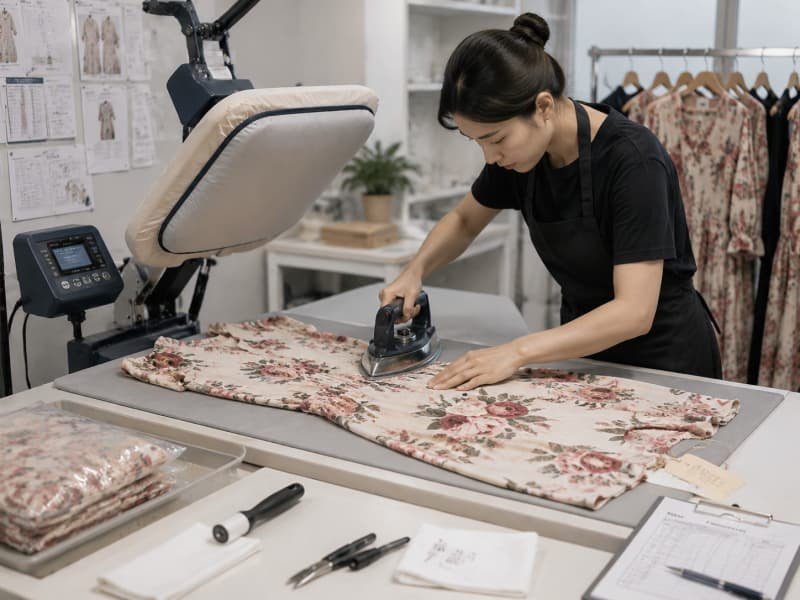
Pressing is part of construction, not only a final cosmetic step. Temperature, steam, pressure, time, protective cloths, and form equipment need to suit the material. Excess pressure can crush velvet, mark satin, flatten textured fabrics, or reveal seam allowances. Insufficient pressing can leave ripples and uneven edges. Duolan defines pressing points during production and final finishing, then protects the garment through hanging, folding, interleaving, packing, and carton planning. Final appearance checks review surface, shape, symmetry, cleanliness, loose threads, decoration, labels, and packing readiness.

Special Process Support for Fashion-Driven Dress Projects

Decorative processes need to strengthen the design without damaging fit, comfort, material behavior, production stability, or care performance. Duolan coordinates specialized resources for printing, dyeing, embroidery, washing, sequins, pearls, beads, rhinestones, and combined dress embellishment.

Sequin Application

Sequin work is planned around base-fabric stability, sequin direction, attachment method, density, garment weight, seam routes, and wearer contact. Cutting and sewing may require clearance zones around darts, zippers, side seams, necklines, and hems. Loose or damaged sequins need an agreed repair standard. Lining and edge finishing protect the skin. First-piece review confirms orientation, placement, comfort, and balance before production continues.

Beading and Pearls

Beads and pearls add dimension but also create weight, impact risk, and handling requirements. Placement density needs to support the silhouette rather than pull the fabric out of shape. Attachment strength, knotting or back finishing, seam clearance, and repair methods are defined before bulk. Heavy areas may need reinforcement or internal support. Packing includes surface protection so decoration does not press into adjacent panels during transport.

Rhinestone Detailing

Rhinestones can be applied through hot-fix, setting, sewing, or combined methods according to the stone, base fabric, and design. Temperature-sensitive fabrics require controlled testing.Placement templates or approved reference samples support consistency. Edges, stretch zones, and high-friction areas receive additional attention because stones can detach or restrict movement when positioned without technical consideration.

Embroidery

Embroidery development considers artwork scale, stitch density, backing, thread, fabric distortion, placement, color, and garment construction. Dense embroidery can stiffen a light dress or cause puckering, while poor placement may conflict with darts, seams, or stretch areas. Duolan coordinates artwork sampling and tests the embroidery on the intended fabric before production. The approved sample records thread colors, dimensions, position, and backing method for repeatability.

Printing

Print development covers artwork, scale, repeat, color, placement, print method, fabric composition, surface texture, and curing requirements. Digital, transfer, screen, or other methods are selected according to the material and visual result. Placement prints need clear garment coordinates; all-over prints require repeat and shade control. A print that looks correct on flat fabric is also reviewed after cutting and sewing to make sure important elements remain aligned with the dress silhouette.

Pleating

Pleating changes volume, movement, width, and garment consumption. Pleat type, depth, direction, heat setting, pattern allowance, joining, and hem behavior need to be confirmed before final costing and pattern approval. Some materials hold pleats better than others, while heat-sensitive fabrics may require alternative methods. The sample verifies recovery and visual rhythm. Bulk checks focus on pleat consistency, direction, width, placement, and stability after handling.

Dyeing and Gradient Effects

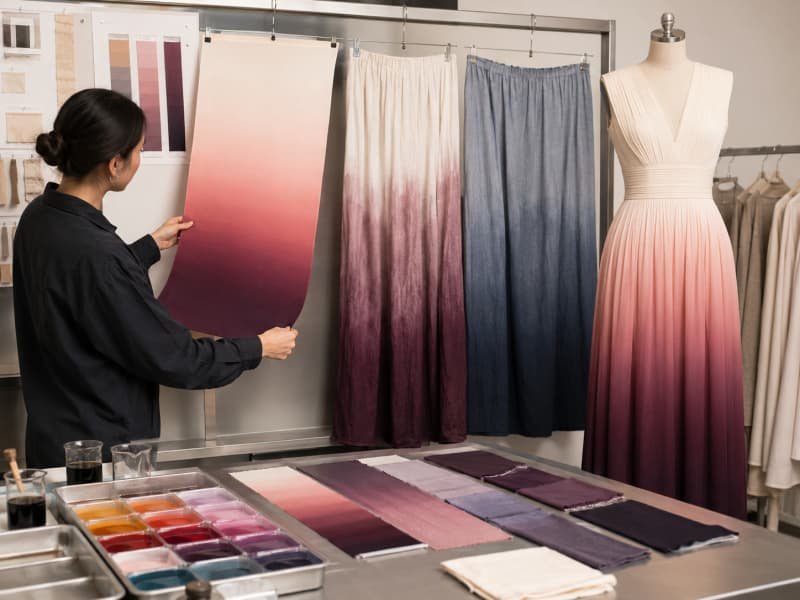
Garment dyeing, dip dyeing, gradient effects, and related color treatments need controlled substrate, preparation, color standards, testing, and batch management. Fabric composition and trims may react differently to the same process. Sample approval therefore includes the expected range of variation where a handcrafted or gradient appearance is part of the design. Bulk planning considers shade grouping, process capacity, washing, drying, and the effect on measurements and surface texture.

Washing and Finishing

Washing and special finishing can change handfeel, shrinkage, color, surface, and fit. The selected process is tested with the actual garment construction and components. Measurement change, seam appearance, trim reaction, color transfer, and care requirements are reviewed before bulk. Duolan works with 2-3 established supporting factories in key special-process categories such as printing, dyeing, embroidery, and washing, allowing the process route to be matched to the product and delivery plan.

How Approved Samples Become Controlled Bulk Production

The transition from sample approval to bulk manufacturing is managed through production-readiness review, material locking, operation planning, first-piece verification, and controlled release. Each step protects the approved product standard as volume increases.

Confirm What Is Truly Approved

A sample can be visually close while still carrying open points. Before bulk starts, Duolan identifies the approval status of fit, measurements, fabric, color, lining, trims, support components, decoration, workmanship, labeling, packaging, and testing. Comments are separated into confirmed standards, accepted tolerances, and pending actions. The production team needs a clear reference rather than a collection of mixed emails and sample-room notes.

The review also identifies details that were easy to achieve on one sample but need a more stable volume method. Hand-adjusted gathers, manually shaped cups, irregular decoration clearance, and temporary support materials are examined. Where needed, a PP sample, operation test, or first-piece confirmation is used to establish the production method. The approved sample remains the visual reference, while measurable and operational standards explain how to reproduce it.

Lock Materials, Components and Color Standards

Bulk consistency begins with material control. Outer fabric, lining, zippers, cups, boning, elastic, thread, labels, decoration, and packaging materials are matched to approved references. Composition, weight, width, stretch, recovery, shade, handfeel, surface, and finish may be recorded according to product risk. Color and texture are checked under suitable lighting. When multiple dye lots are involved, lot control and shade grouping reduce visible variation within garments or delivery groups.

Material changes are not treated as silent purchasing substitutions. If an approved component becomes unavailable or unsuitable for the required quantity, the alternative is reviewed for visual, fit, construction, care, and cost impact. A zipper tape color, lining stretch, cup shape, or sequin base can affect the garment even when the difference appears small on a purchase sheet.

Define the Production Route and Critical Operations

Each style is broken into a production route covering cutting, numbering, sewing sequence, internal structure, special process, finishing, inspection, and packing. Critical operations are identified so training and checks can focus on the areas most likely to affect appearance or fit. A corset dress may require controls around cup setting, boning, top edge, and closure. A satin dress may require careful feeding, seam pressing, and surface protection. A sequin dress may require decoration removal, seam clearance, reinforcement, and repair standards.

Style, color, size ratio, quantity, material readiness, process capacity, and delivery priority guide line planning. Core and highly technical styles can remain under closer owned-factory control. Suitable repeat or volume work can use approved satellite capacity with common standards and coordinated inspection. Production planning is aligned with the agreed shipment sequence rather than releasing all styles without priority.

Verify the First Piece Before Volume Increases

First-piece or pilot verification creates an early checkpoint between instructions and full production. Measurements, visual proportion, sewing method, internal construction, decoration, pressing, and finishing are checked against the approved basis. When a problem appears, the correction can be made before the same operation is repeated across a large quantity.

After release, inline inspection focuses on the identified critical points. Findings are fed back while production is still active. Final inspection and packing checks confirm the finished garment and shipment requirements.

Records from the program support repeat orders, where the same material references, patterns, measurements, workmanship methods, and packing instructions can be reused or deliberately updated rather than reconstructed from memory.

A Scalable Manufacturing System for Dress-Focused Brands

Duolan combines owned-factory control, long-term satellite capacity, specialized process resources, development teams, and large equipment coverage. Capacity is allocated according to garment complexity, quantity, quality risk, and delivery sequence rather than using a single factory route for every style.

16 Owned Factories

Owned factories provide closer control for important development programs, technically demanding dresses, and products where fit or workmanship needs direct coordination. They support the connection between sample standards, production instructions, first-piece confirmation, inline control, and repeat production. Owned capacity also allows core styles to remain within a more stable management route when the collection includes sensitive fabrics, corset structures, complex embellishment, or strict visual standards.

20+ Satellite Factories

More than 20 long-term satellite factories provide additional flexibility for repeat orders, volume expansion, specialized production, and seasonal peaks. Satellite capacity is not presented as uncontrolled outsourcing.

Each project needs an approved allocation, common technical information, material standards, inspection checkpoints, and production coordination. The network allows suitable styles to scale while core control remains centralized.

300 Sewing Lines

The wider manufacturing system operates around 300 garment sewing lines. Line allocation can reflect product type, fabric, construction, order size, and shipment priority.

High-end dress programs often contain very different operations across styles, so production planning separates structure-sensitive, stretch, delicate, embellished, and commercial products instead of assuming one line setup can handle every category equally well.

50+ Flexible Lines

More than 50 quick-response and flexible lines support test orders, multi-style schedules, repeat production, and shorter reaction windows. Flexibility is used within a structured program rather than as an ultra-low-volume sales message.

The lines are most valuable when a brand needs controlled replenishment, color extensions, multiple launches, or a production route that can respond to actual sales while preserving approved standards.

6.5 Million Monthly Capacity

Stable monthly garment capacity is approximately 6.5 million pieces across the wider system, with peak capacity reaching around 10 million pieces and additional monthly space of approximately 1-2 million pieces.
For dress-focused programs, usable capacity is planned according to complexity rather than quoted as one undifferentiated number. Embellished, corset, satin, mesh, and basic commercial styles require different line time and process resources.

Equipment and Technical Base

The wider equipment base includes approximately 7,000-9,000 core sewing machines, 650-1,200 pattern and sample development units, 150-400 printing units, 150-300 embroidery units, 1,000-1,800 pressing and finishing units, and 3,000-6,000 inspection, packing, handling, and support units. Equipment categories include CAD pattern systems, automated spreading and cutting, specialized sewing, sequin and embroidery support, pressing, needle detection, pull testing, measurement, barcode, folding, bagging, and carton sealing equipment.

Quality Management from Development to Delivery

Dress quality is controlled through connected development, material, production, inspection, and packing checkpoints. The control plan changes according to fabric, structure, decoration, fit sensitivity, and the approved standard of each style.

Quality StageMain ChecksExamples for High-End Dresses
Development reviewDesign basis, risk, construction feasibility, target fitNeckline security, corset support, satin grain, mesh coverage, sequin weight
Material inspectionShade, handfeel, width, weight, stretch, recovery, surface, defect reviewSatin pressure marks, mesh stretch direction, lace motif, jersey opacity
Sample and PP approvalMeasurements, silhouette, construction, components, decoration, finishCup position, waist balance, zipper line, lining length, embellishment placement
Pre-production setupPattern version, marker, size ratio, BOM, operation route, approved referencesGraded pattern control, decoration clearance, critical operation instructions
First-piece confirmationMeasurement, visual appearance, sewing method, internal structureNeckline edge, boning position, side-seam balance, hem level, pressing result
Inline inspectionCritical operations, workmanship, measurements, issue correctionSeam puckering, stretch recovery, lace matching, stone adhesion, zipper distortion
Final inspectionAppearance, measurement, function, cleanliness, labels, packingSurface marks, loose decoration, symmetry, closure operation, final presentation
Shipment readinessQuantity, assortment, cartons, barcodes, packing and delivery instructionsSize-color ratio, polybag, hanging or folding method, carton protection, split shipment

Duolan’s wider system includes dedicated quality, data, order, and complaint-support functions. Inspection and packing resources include needle detectors, pull testers, light inspection tables, measurement tables, folding and bagging equipment, barcode printers, carton sealing equipment, weighing equipment, and carton marking systems. Third-party inspection can be coordinated where required by the brand or market.

Compliance and Documentation for Brand-Level Projects

Factory approval, social responsibility, material testing, labeling, product documents, and design confidentiality are managed according to the project and destination market. Claims are kept specific to the audit, material, test, or standard actually applicable.
Social Audit Awareness​

Factory Audit Support

Duolan’s manufacturing system has completed SMETA audit work, including SMETA 2-Pillar audit and social-audit records. Brand programs can also be coordinated around relevant supplier requirements and assessments. Audit scope, legal entity, production location, validity, corrective actions, and the exact factory assigned to the order should be confirmed during supplier onboarding rather than treated as a general marketing statement.
Bulk Production Documentation​

Testing and Material Documents

Project requirements may involve AATCC, ASTM, OEKO-TEX, EN, China GB standards, GOTS-related material requirements, or brand-specific test protocols. The applicable route depends on product, material, market, care method, and performance expectation. Fabric composition, colorfastness, shrinkage, seam strength, decoration attachment, and other tests can be planned where required. Test reports apply to the tested material or product configuration and are not described as universal certification for every style.

Label and Packing Coordination

Care labels, composition labels, brand labels, size labels, hangtags, barcodes, polybags, folding, hanging, cartons, assortment, and shipping marks need to match the approved instruction. Label content and placement are checked against the destination-market and brand requirements supplied for the project. Packing methods can be adapted to surface-sensitive satin, velvet, structured corset products, sequins, and other dresses that need additional protection.

Design Confidentiality

Tech packs, original garments, artwork, patterns, unreleased samples, fit comments, price information, and collection schedules are treated as confidential project materials. NDA-based collaboration can be arranged according to the brand’s process. Access to design information should remain limited to relevant development, costing, sourcing, production, quality, and logistics functions. Client logos and confidential designs are not used publicly without approval.

How Duolan Runs a High-End Dress Project

Each project follows a clear route from product information to development, approval, manufacturing, quality control, and delivery. The route is adjusted for style complexity, material availability, number of styles, quantities, and launch priorities.

Project Brief Review

The team reviews the brand profile, product category, tech pack or reference, target size, material direction, quantities, colors, size ratio, target market, quality standard, packing, and launch date. Missing information is identified before pricing or sampling commitments are finalized. Complex styles receive an early risk note covering fit, support, material, decoration, or bulk feasibility.

Feasibility and Cost Alignment

Pattern complexity, fabric consumption, material availability, trims, embellishment, sewing operations, special processes, finishing, testing, and packing are reviewed together. Where the target result and target cost conflict, alternatives are presented with their effect on appearance, fit, durability, and production. Quotations are linked to the defined material and construction basis rather than a vague reference image alone.

Pattern and Sample Development

The sample route identifies the purpose of the first sample, material status, fit priorities, construction assumptions, and expected review. Updates can be provided at key stages for complex styles. Completed samples are supported by measurements, images, and a short review of achieved and pending points. Revisions are summarized before the next round begins.

Approval and Bulk Readiness

Once the design direction is close, the team confirms the approved sample basis, measurements, materials, trims, workmanship, decoration, labels, and packing. Open issues are resolved or clearly recorded. A PP sample, first piece, or pilot step is used where technical risk requires additional confirmation before full production.

Production and Quality Coordination

The order is divided by style, color, size, quantity, complexity, and delivery priority. Materials and special processes are synchronized with production planning. Critical quality points are assigned by style. Inline findings are addressed while production is active, followed by final inspection, packing checks, and shipment preparation.

Delivery and Continuing Programs

Duolan can coordinate express, air, sea, FOB, CIF, DDP, designated forwarders, and split shipments according to the agreed commercial terms and delivery structure. Approved patterns, measurements, material references, workmanship notes, and production records are retained for repeat orders, color extensions, and future collection development.

Confidential High-End Dress Programs in Production

The following anonymized programs reflect the order structure commonly managed for established brands. Client identities and unreleased designs remain confidential. Quantities fall within the regular range of 10-30 styles and approximately 20,000-80,000 total pieces per brand order.

US Occasionwear Program - 18 Styles, 48,600 Pieces

A confidential US occasionwear brand planned an 18-style seasonal program covering fitted midi dresses, satin occasion styles, corset-led silhouettes, mesh details, and cleaner commercial pieces. The total order quantity was 48,600 pieces across multiple colors and a brand-defined size range. The development challenge was not a single difficult garment. It was keeping a coherent fit and quality standard while each product required a different combination of fabric, support, lining, closure, and decoration.

The project was separated into technical groups. Corset and bustier products received early structure review for cup position, boning, waist balance, and top-edge security. Satin products were reviewed for grain, seam response, lining, and pressing. Mesh products received coverage and stretch-compatibility planning. Shared zippers, linings, and support trims were evaluated where standardization improved consistency without changing the design.

Samples and comments were tracked by fit, visual, material, workmanship, and production-readiness status. Before bulk release, the collection used locked material references, approved measurements, construction notes, and critical quality points. Technically sensitive styles passed first-piece verification before volume increased. The production plan prioritized launch-critical styles and coordinated split shipment preparation around the brand’s delivery sequence.

The program demonstrates how a mixed occasion collection can be managed as one coordinated system while preserving the individual development route of each style.

European Partywear Program - 24 Styles, 72,000 Pieces

A confidential European partywear program contained 24 styles and 72,000 pieces, with sequins, rhinestones, stretch mesh, fitted jersey, cut-outs, asymmetric necklines, and high-visual-impact finishes. Decoration was the main design language, but uncontrolled decoration could also create the greatest risk: excess weight, rough skin contact, inconsistent placement, seam interference, detachment, and packing damage.

Development started with process mapping. Sequin and stone areas were reviewed against darts, side seams, zippers, neckline edges, and stretch zones. Clearance and repair standards were established. Lining and internal finishing were selected to protect the wearer. Stretch styles were checked for opacity, recovery, and seam behavior under tension. Asymmetric products were reviewed for rotation and strap or neckline stability.

Bulk preparation included material and decoration references, placement standards, approved construction, size grading, first-piece checks, and inline inspection points. Production routes were separated according to decoration type and garment structure. Surface-sensitive products used protective handling and packing methods to reduce pressure and abrasion. Quantity and shipment planning followed the brand’s style priorities rather than treating all 24 styles as one undifferentiated production block.

The program shows how visual impact can be preserved when embellishment, fit, comfort, sewing, and logistics are planned together from the sample stage.

Multi-Channel Resort Program - 12 Styles, 28,800 Pieces

A confidential multi-channel fashion group developed a 12-style resort and vacation dress program totaling 28,800 pieces. The collection combined printed lightweight dresses, halter and backless silhouettes, satin-effect styles, cut-outs, ruching, and flowing midi and maxi lengths. The product objective was relaxed movement and strong visual color while maintaining reliable coverage, strap security, print alignment, and presentation after packing.

Fabric and silhouette were reviewed together. Lightweight materials were checked for transparency, drape, shrinkage, seam bulk, and handling. Halter and backless products received tension and support review. Printed products were planned around artwork scale, repeat, placement, and shade. Layered skirts were allowed for relaxation before final leveling. Shared color stories and fabric groups supported collection consistency while each style retained a distinct silhouette.

Production planning accounted for print scheduling, fabric batches, size-color ratios, and launch order. Approved patterns, print references, measurements, sewing methods, pressing requirements, and packing instructions were released together. Long and fluid styles used folding or protection methods selected to reduce hard creases and surface disturbance during shipping.

The program represents a controlled route for seasonal dresses where fabric movement, open construction, print, and delivery presentation carry equal importance.

High-End Dress Manufacturing Frequently Asked Questions

Duolan focuses on fashion, occasion, party, bodycon, satin, mesh, lace, sequin, corset, bustier, resort, vacation, wedding-guest, graduation, homecoming, and going-out dresses. Product suitability is reviewed according to material, structure, decoration, target quantity, quality standard, and delivery plan.
Yes. A complete tech pack can guide pattern, measurements, construction, materials, trims, labels, and workmanship. The team also identifies unclear or conflicting details before sampling. When information is incomplete, the open points are confirmed rather than silently interpreted.
Yes. Reference images, original garments, existing patterns, fabric ideas, and mixed briefs can support development. The development basis, target fit, required changes, and sample purpose are clarified first because a visual reference alone does not define measurements, internal structure, materials, or bulk standards.
Fit control combines measurements, pattern balance, visual review, material behavior, support components, and movement. Necklines, cups, boning, waist balance, straps, open backs, lining, closures, and graded sizes receive additional review where the design depends on hidden structure.
Yes. Each category uses a different development route. Satin needs grain, seam, pressing, and packing control. Mesh needs coverage and stretch compatibility. Corset products need defined internal architecture. Sequin products need placement, clearance, repair, comfort, weight, and packing standards.
Sample timing is quoted after reviewing style complexity, material readiness, pattern requirements, special processes, revision scope, and project priority. The proposal can separate first-sample timing, revision timing, material dependencies, approval points, and courier preparation instead of applying one fixed promise to every dress.
The approved basis is converted into locked materials, patterns, measurements, construction notes, component references, decoration standards, pressing requirements, and packing instructions. Structure-sensitive styles can use PP samples, first-piece confirmation, or pilot checks before full release, followed by inline and final inspection.
Yes. The wider system supports approximately 3,000-8,000 style-development and sampling flows per month. Multi-style programs are organized by technical group, material, priority, sample status, production route, and delivery sequence so comments and approvals remain clear across the collection.
The manufacturing system has completed SMETA audit work, including SMETA 2-Pillar. Projects can also be coordinated around relevant AATCC, ASTM, OEKO-TEX, EN, China GB, GOTS-related, and brand-specific requirements. Exact scope and applicability are confirmed for the assigned factory, material, product, and market.
NDA-based cooperation can be arranged. Tech packs, original samples, artwork, patterns, prices, comments, and unreleased collection information are limited to relevant project functions. Brand names, logos, and confidential products are not used publicly without approval.

Start Your High-End Dress Manufacturing Project

Share enough information for a meaningful development and manufacturing review. Duolan will assess the product direction, fabric requirements, pattern and fit complexity, internal structure, decoration, quantity, size distribution, quality standard, packing, and target delivery window before recommending the most suitable route. A complete tech pack is helpful, but an original sample, reference images, collection brief, fabric concept, or mixed set of materials can also begin the discussion. Confidential files can be handled under an NDA process. The review is intended to clarify feasibility, development priorities, material and construction risks, sample requirements, production capacity, and the information needed for quotation.

Please include:

  • Company or brand name and primary market
  • Product category and number of styles
  • Tech packs, sketches, reference images, or original-sample details
  • Target fabrics, linings, trims, and special processes
  • Quantity by style or estimated total program quantity
  • Colorways and brand-defined size range
  • Target sample purpose and expected launch date
  • Testing, audit, label, packaging, and delivery requirements
  • Any critical fit, appearance, cost, or calendar priorities

Start Your Apparel Development Project

OEM/ODM Manufacturing Support for Fashion Brands

Share your collection details, estimated quantities, target market, development timeline, and technical requirements. The production team will review your request and provide a tailored manufacturing solution based on your product category, fabric selection, construction needs, and delivery schedule.

Fashion Manufacturing Support with Scalable Production Capacity

From sample development to bulk production, Duolan supports fashion brands with confidential OEM/ODM manufacturing, stable quality management, flexible production planning, and coordinated multi-factory execution for seasonal and capsule collections.

Need Direct Assistance?

Seraphinite AcceleratorOptimized by Seraphinite Accelerator
Turns on site high speed to be attractive for people and search engines.