 Skip to content
High Volume Dress Manufacturer
High-volume dress manufacturing for established fashion brands, from PP sample transfer and bulk production planning to QC, packing accuracy and reliable delivery.
Duolan helps fashion brands produce dress programs at scale, with control over approved samples, fabric readiness, multi-style scheduling, bulk sewing, measurement consistency, label accuracy, packing and shipment preparation. Our strongest field covers dress-led women’s fashion, including fashion dresses, occasionwear, partywear, satin dresses, mesh styles, corset structures, resort dresses and dress-led sets.
- 30+ years of womenswear development and production background support dress manufacturing decisions.
- 16 owned womenswear factories strengthen control from PP sample transfer to bulk execution.
- 20+ long-term satellite factories support repeat programs, seasonal volume and style-based production routing.
- 300 sewing lines and 50+ quick-response / flexible lines support launch orders and repeat production.
- 750–1,200 development team members support product, fabric, pattern, sample and process work.
- 15,000–35,000 monthly sample capacity supports PP preparation and revised sample programs.
- 3,000–8,000 monthly style workflows support multi-style dress development and production handoff.
- Approx. 6,500,000 pcs stable monthly production capacity, with peak capacity up to approx. 10,000,000 pcs, depending on product mix and planning.
- SMETA 2-Pillar audit record supports supplier evaluation and sourcing review.





High Volume Dress Manufacturing, Not Ready-stock Wholesale
High-volume dress manufacturing is not catalog buying, ready-stock wholesale or low-quantity trial production. It means approved dress styles are produced at scale under controlled fabric, fit, construction, QC, packing and delivery standards.
Brand-owned Dress Production
Duolan supports brand-owned dress programs built around approved designs, tech packs, original samples, PP samples, fabric records, size specs, label files and planned production orders.
The work begins after product direction is clear. Dress styles may come from sample development, OEM files, full-package programs or repeat styles. Duolan’s role is to turn approved standards into stable production execution across sizes, colors and batches.
Volume Means Consistency
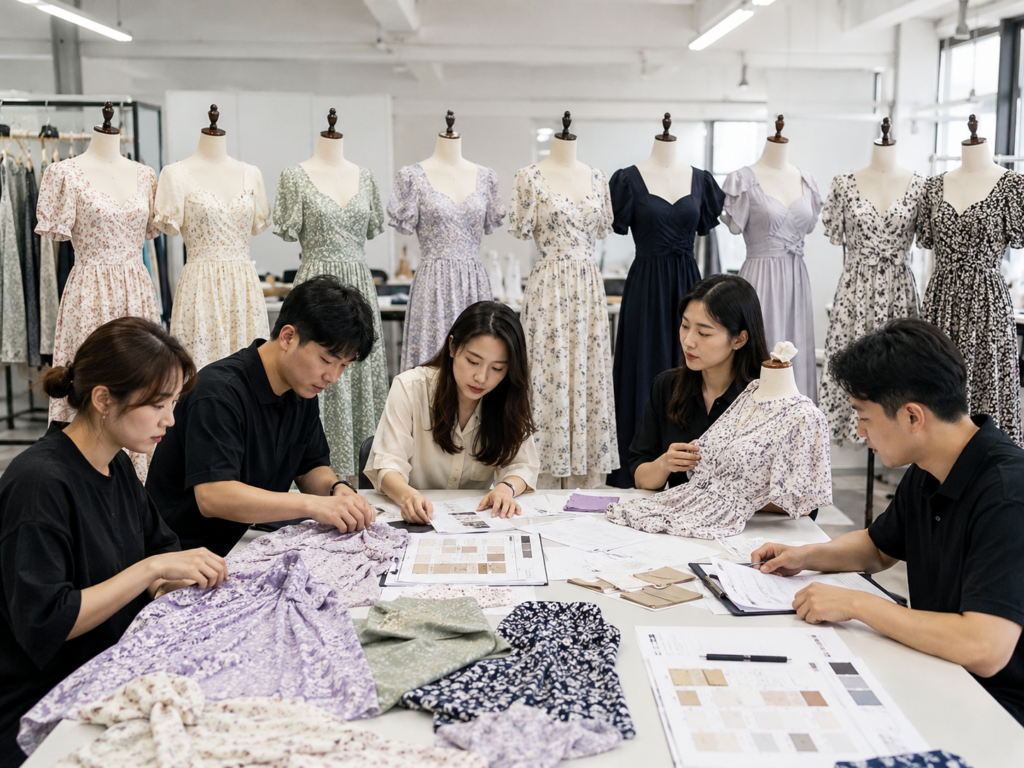
High volume is not only a quantity number. It means a dress order must repeat approved fit, fabric, surface, lining, zipper, construction, labels, packing and carton data across thousands of pieces.
Duolan reviews PP sample records, BOM, size specs, fabric lots, trim files, sewing notes and packing requirements before bulk production. The goal is to prevent production teams from interpreting the same dress differently during cutting, sewing, QC and packing.

Dress-specific Volume Risk
Dresses carry more production risk than basic apparel because fit, fabric and presentation are closely connected. Satin can show surface marks. Mesh can distort. Corset structures can shift across sizes. Long hems can twist. Packing can damage delicate surfaces.
Duolan reviews these risks before production routing. Volume production only works when dress-specific details are controlled before bulk cutting begins.

Built for Established Dress Programs
Duolan works best with fashion brands carrying approved styles, production planning, delivery windows and repeat order potential. High-volume production needs clear standards before the first bulk cut.
Global Fashion Brands
Global fashion brands need dress production aligned with approved samples, factory execution, QC files and delivery preparation.
- Duolan supports programs where PP sample, fabric, fit, construction and packing standards must stay aligned.
- Bulk projects can begin from approved samples, tech packs, BOM files, fabric records and size specs.
- Global teams benefit from production data, QC flow and shipment preparation discipline.
Regional Leading Dress Brands
Regional dress brands often manage seasonal launches, repeat programs and category refreshes.
- Duolan helps move approved dress styles into planned production routes.
- Projects may include occasion dresses, party dresses, satin styles, fitted styles, mesh dresses and resort styles.
- Clear order data improves material planning, production scheduling and delivery control.
Ecommerce Dress Brands
Ecommerce dress brands need bulk production ready for photography, online launch, warehouse receiving and fast sell-through cycles.
- Duolan reviews size labels, barcodes, polybags, carton marks and packing lists as production details.
- Surface-sensitive dresses receive stronger packing and inspection review.
- Repeatable styles can extend into new colors or fabrics with preserved records.
Occasionwear / Partywear Brands
Occasionwear and partywear often include delicate fabrics, body-conscious fit, structured support and high visual standards.
- Duolan reviews satin surface, mesh coverage, sequin comfort, zipper stability and lining behavior.
- Fitted and embellished styles receive stronger measurement and surface review.
- PP sample transfer protects both visual impact and production repeatability.
Product and Buying Teams
Product and buying teams need production answers before committing to order volume.
- Duolan reviews approved styles, style count, size range, color plan, production quantity and delivery window.
- Teams can separate core volume styles, high-risk styles and repeatable styles before production routing.
- Early review reduces material delays and late production changes.
Sourcing Offices
Sourcing offices evaluate suppliers through factory system, audit record, production capacity, QC flow, multi-style scheduling and delivery communication.
- Duolan supports supplier review with factory structure, capacity data, sample capacity and SMETA record.
- Sourcing teams can review whether a volume dress program fits Duolan’s dress-led womenswear strength.
- Clear supplier information speeds up technical and production discussions.
High Volume Dress, Bulk Dress, Full Package and OEM
High-volume dress manufacturing sits closest to bulk production and repeat production. It is different from ready-stock wholesale, sample development or early-stage full-package development.
| Production Path | Brand Provides | Duolan Supports | Best Fit |
|---|---|---|---|
| High Volume Dress Manufacturing | Approved styles, tech packs, PP samples, quantity plan and delivery window | Production routing, bulk cutting, sewing, QC, packing and shipment coordination | Brands scaling confirmed dress programs |
| Bulk Dress Manufacturing | Confirmed dress styles and order quantity | Bulk production, QC and delivery | Brands needing planned production volume |
| OEM Dress Production | Complete tech pack, BOM, spec and approved sample | PP sample, production execution, QC and delivery | Brands with confirmed production files |
| Full Package Dress | Concept, references, sample, fabric idea or tech pack | Sourcing, pattern, sample, bulk production, QC and delivery | Brands needing managed development-to-production support |
| Ready-stock Wholesale | Existing catalog product selection | Not Duolan’s positioning | Inventory-based sourcing, not brand-owned manufacturing |
What Brands Should Prepare for High-volume Review
High-volume review needs production information, not only reference images. The stronger the input, the more accurate Duolan can evaluate capacity, cost, production route, QC workload and delivery window.
Production Inputs
Prepare the strongest available production files:
- Approved sample or PP sample.
- Tech pack, BOM and construction notes.
- Size spec, tolerance and grading rule.
- Fabric record, trim record and color plan.
- Style count and product category split.
- Quantity by style, color and size.
- Delivery window and launch timing.
- Previous order feedback or quality improvement notes.


Brand and Delivery Inputs
Bulk delivery details should arrive before production planning:
- Main label artwork, care label content and size label rule.
- Hangtag, barcode and SKU files.
- Polybag requirement, hanger need, tissue use or folding method.
- Carton mark, carton ratio and packing list format.
- Warehouse receiving requirement.
- Final inspection requirement.
- Repeat order plan or seasonal replenishment expectation.
- Duolan helps move approved dress styles into planned production routes.
- Projects may include occasion dresses, party dresses, satin styles, fitted styles, mesh dresses and resort styles.
- Clear order data improves material planning, production scheduling and delivery control.
High-volume Dress Production Workflow
High-volume dress production starts after standards are locked. Strong PP sample records, material readiness and file discipline create a cleaner production route.
Step 1|Bulk Project Intake
Duolan reviews style count, approved samples, quantity plan, size breakdown, color plan, fabric records, delivery window, packing requirements and inspection expectations. The goal is to understand production scale and risk before factory routing.
Step 2|PP Sample and Production File Review
PP sample, BOM, size spec, construction notes, fabric and trim records, label files and packing instructions are checked together. Production teams need one approved reference before bulk cutting.
Step 3|Fabric, Trim and Material Booking
Fabric lots, lining, zippers, elastics, lace, sequins, boning, labels, hangtags, barcodes and packing materials are prepared according to approved standards. Material timing affects the full production schedule.
Step 4|Production Routing and Capacity Planning
Styles are routed according to complexity, fabric sensitivity, workmanship difficulty, order volume and delivery window. Core styles, high-risk styles and repeat styles may follow different production priorities.
Step 5|Bulk Cutting and Sewing Execution
Cutting follows fabric direction, shade grouping, marker logic and bundle control. Sewing follows PP sample standards, construction notes, measurement tolerance and inline QC requirements.
Step 6|Inline QC, Measurement Check and Surface Review
QC starts during production, not only at final inspection. Duolan checks seam quality, zipper stability, lining, support points, measurements, surface condition and correction needs during bulk execution.
Step 7|Packing, Final Inspection and Delivery Coordination
Packing follows approved label, barcode, polybag, carton and packing list requirements. Final inspection reviews appearance, measurement, workmanship, label accuracy, packing accuracy and carton information before shipment preparation.
Dress Categories Suitable for High-volume Production
Duolan’s high-volume dress strength is focused on dress-led women’s fashion categories where production consistency, fit control, material discipline and packing accuracy decide final delivery quality.

Fashion Dresses
Fashion dresses need stable reproduction of silhouette, fabric movement and body effect across sizes and production batches.
- PP sample records should lock neckline, waist position, length, zipper, lining and hem.
- Bulk cutting checks fabric direction, panel balance and shade consistency.
- Sewing control focuses on seam quality, zipper smoothness and inside finishing.
- Inline QC reviews front, side and back appearance before issues spread.
- Packing should protect garment shape and surface before delivery.

Occasion Dresses
Occasion dresses require polished appearance and stable construction at scale.
- Fabric lots are checked for shine, drape, opacity and surface consistency.
- Lining, bust support, zipper and hem finish receive stronger bulk inspection.
- Pressing and finishing standards protect premium appearance.
- Packing method reduces wrinkles, pressure marks and surface damage.
- Final review checks garment presentation, labels and carton information.

Party Dresses
Party dresses often include fitted silhouettes, mesh, sequins, cut-outs, ruching, halters or corset structures.
- Style grouping separates mesh, sequin, fitted and support-heavy pieces.
- Bulk QC checks stretch recovery, transparency, seam strength and zipper stability.
- Embellished styles need surface and lining comfort review.
- Packing protection reduces sequin abrasion and mesh distortion.
- Measurement tolerance protects body-hugging fit across sizes.
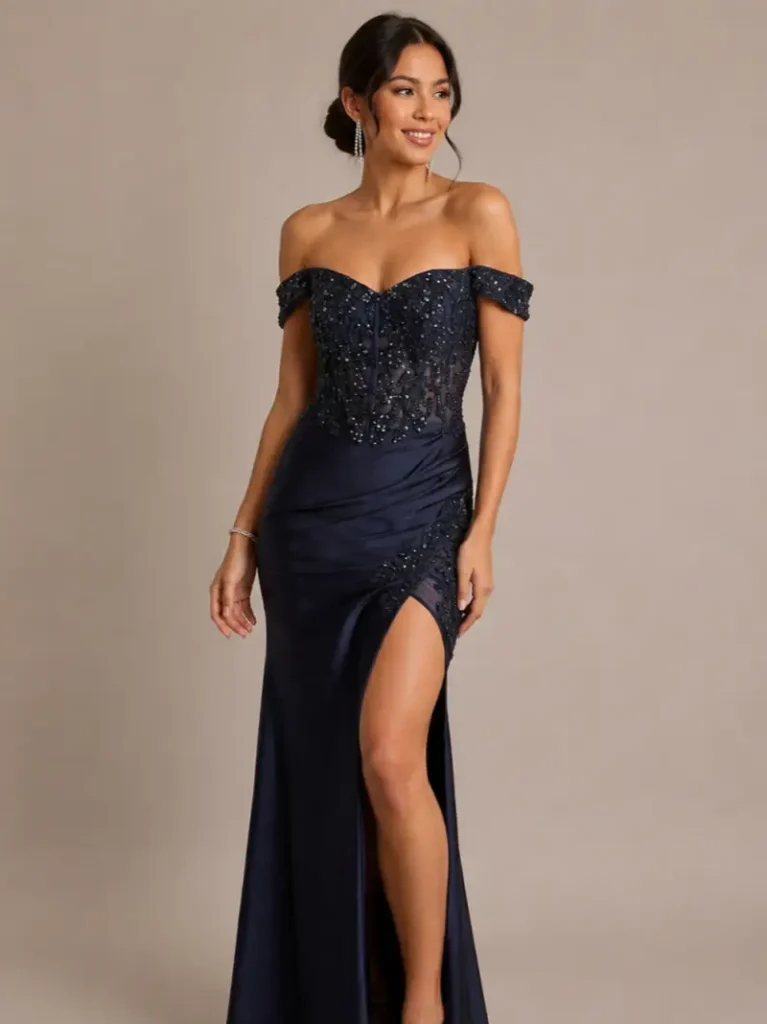
Cocktail Dresses
Cocktail dresses need refined structure and clean finishing without production heaviness.
- Fabric, lining and closure standards are confirmed before bulk cutting.
- Waist, bust, slit, zipper and hem receive stronger fit control.
- Sewing notes protect clean inside finishing and smooth outside appearance.
- Surface review checks pressing, seam marks and trim placement.
- Packing follows channel requirements for ecommerce or retail receiving.

Bodycon Dresses
Bodycon dresses depend on recovery, pattern tension, seam elasticity and grading consistency.
- Fabric recovery is checked before bulk production.
- Critical measurements are controlled around bust, waist, hip and length.
- Sewing standards protect elastic seams and clean edge finishing.
- Inline QC checks twisting, seam strain and uneven hem behavior.
- Repeat programs preserve fabric records and measurement standards.
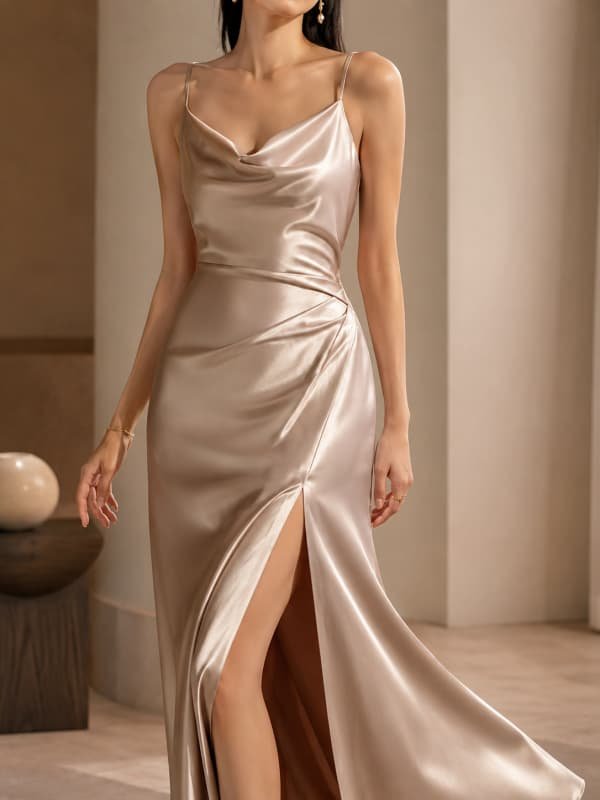
Satin Dresses
Satin dresses show production defects quickly at volume.
- Cutting direction and shade grouping are reviewed before sewing.
- Seam tension, needle marks, zipper placement and lining drag receive stronger control.
- Pressing standards prevent shine marks and seam impressions.
- Packing protection reduces pressure lines during shipment.
- Surface QC checks marks, scratches, puckering and folding condition.
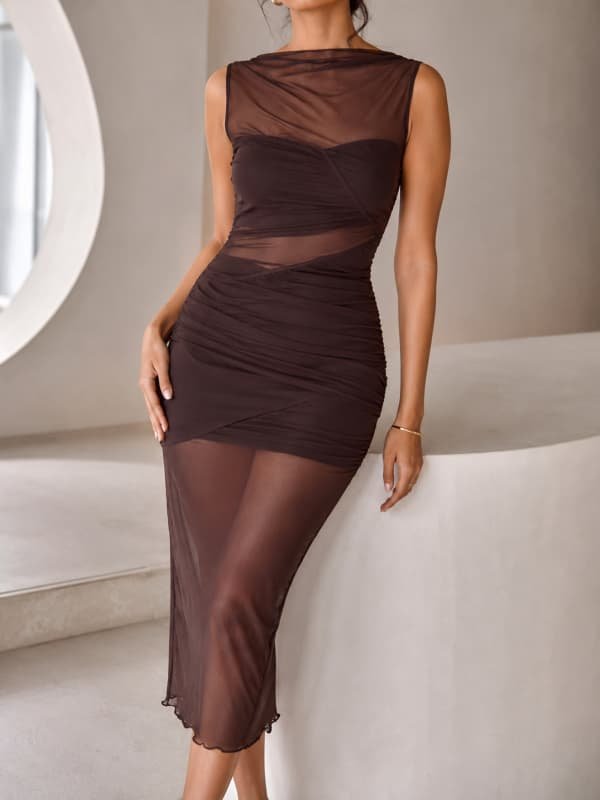
Mesh Dresses
Mesh styles need coverage consistency and careful handling during bulk production.
- Mesh stretch, lining tone and panel placement follow approved sample records.
- Sewing teams control edge finishing, lining attachment and seam visibility.
- Bulk review checks whether sheer areas remain consistent across sizes.
- Packing prevents distortion and snagging.
- QC checks transparency, measurement stability and comfort-related details.

Corset Dresses
Corset and bustier dresses depend on internal support repeating correctly at scale.
- Cup position, boning placement, support layers and closure strength are locked before bulk.
- Sewing standards protect inner structure and outer silhouette.
- Size grading is reviewed carefully because support can shift across sizes.
- Inline QC checks top edge, zipper, back tension and lining comfort.
- Final review confirms structure, fit and appearance against PP sample.

Resort Dresses
Resort dresses require lightweight comfort, movement and clean arrival condition.
- Fabric drape, transparency, print scale and hem balance are reviewed before bulk.
- Long panels and lightweight fabrics need careful cutting control.
- Sewing standards protect strap security, side seam balance and clean hems.
- Packing reduces wrinkles and hem distortion.
- Bulk QC checks movement, print consistency and finished presentation.

Maxi Dresses
Maxi dresses need stronger fabric usage and hem control during volume production.
- Marker planning checks long panels, width use and direction.
- Cutting control protects length accuracy and panel balance.
- Sewing standards focus on side seams, lining length and hem evenness.
- QC checks walking movement, twisting and length consistency.
- Packing plans reduce bottom hem creasing.

Mini Dresses
Mini dresses need strict length, coverage and fit control.
- PP sample must define length, lining, slit height and hem behavior clearly.
- Bulk measurement checks protect wearing confidence across sizes.
- Fitted minis need stretch recovery and seam tension review.
- Neckline and bust support receive stronger inspection.
- Packing should preserve surface and shape.

Dress-led Sets
Dress-led sets support campaign styling and category expansion.
- Paired sizing, fabric lot and color consistency are checked before production.
- Top-bottom proportion and label placement follow approved records.
- Packing logic confirms whether pieces ship together or separately.
- Barcode and carton data must match set relation.
- QC checks paired appearance, size match and packing accuracy.
What High-volume Dress Manufacturing Should Not Become
High-volume dress manufacturing should support approved styles, planned production and repeatable delivery. Duolan does not position bulk dress work around ready-stock buying or low-standard price competition.
| Not Our Position | Why It Weakens Volume Projects | Duolan’s Better Fit |
|---|---|---|
| Ready-stock dress wholesale | No control over brand-owned product standard | Approved-style bulk manufacturing |
| Low-quantity trial production | Not aligned with high-volume planning | Planned dress production programs |
| One-off custom dress making | No repeatable production value | Sample-to-bulk dress production |
| Catalog-based dress buying | Weak product ownership and fit control | Custom brand-owned dress production |
| Price-only production | Fabric, fit, QC and packing discipline become fragile | Value-based high-volume manufacturing |
| No PP sample production | Bulk standards remain unclear | PP sample transfer before bulk |
PP Sample Transfer Before Volume Production
PP sample transfer is one of the strongest controls in high-volume dress manufacturing. Bulk production should not begin with loose references, mixed comments or unfinished files.
PP Sample as Production Reference
A PP sample is the reference for production floor, QC team, packing team and final inspection. It should confirm final appearance and construction standards before bulk starts.
- Duolan checks final fabric, lining, trims, zipper, support materials and finishing.
- PP sample review covers measurements, tolerance, label position and packing method.
- High-risk styles such as satin, mesh, corset, sequin and bodycon dresses need stronger PP discipline.
- Production teams use PP sample records to reduce interpretation gaps.
- Final inspection compares finished goods against approved reference standards.

File Lock Before Cutting
Bulk cutting should start only after core production files are locked. Open files create production risk, especially when an order includes many styles, colors and sizes.
- Final BOM confirms fabric, lining, trims, labels and special materials.
- Size spec confirms critical measurements and tolerance.
- Construction notes confirm seam, lining, zipper, support and hem methods.
- Packing files confirm polybag, barcode, size sticker, carton mark and packing ratio.
- Locked files help cutting, sewing, QC and packing teams work from one standard.

Controlled Change After Approval
Post-PP changes can affect cost, delivery and QC. Fabric replacement, lining change, zipper change, length update, size change, trim substitution or packing adjustment should be reviewed before production action.
- Duolan checks whether change affects fit, construction, material supply or inspection.
- Updated files must reach production and QC teams before execution.
- Large changes may need revised sample or additional approval.
- Controlled change protects both delivery window and product consistency.

Multi-style Production Planning
Most high-volume dress orders are not one style in one color. A real brand order may include 10–30 styles and 20,000–80,000 pcs across dresses, colorways, sizes, fabrics and packing requirements. Duolan plans production around style complexity, material readiness and delivery windows.
Style Grouping by Complexity
Not every dress style should move through production at the same rhythm. A satin slip dress, corset mini, mesh party dress, resort maxi and lined occasion dress carry different risks.
- Duolan separates simple, moderate and high-risk dress styles before routing.
- High-risk styles receive earlier material, pattern, sewing and QC review.
- Core volume styles are planned for efficiency and stable repeatability.
- Complex styles may need closer owned-factory control or extra inline checkpoints.
- Grouping avoids forcing delicate or structured dresses into unsuitable production flow.
Fabric and Color Grouping
Fabric and color grouping protects material consistency and production timing. A multi-style order may share satin, mesh, lace, crepe, jersey, lining, zipper or trim groups.
- Duolan groups styles by fabric type, fabric lot, color family and trim requirement.
- Shade grouping reduces visible color differences across panels or paired items.
- Shared materials can improve sourcing efficiency, but only when garment behavior still fits each style.
- Light colors may need extra lining or opacity review.
- Fabric and color grouping help reduce production confusion and late material shortages.
Production Scheduling by Delivery Window
High-volume production needs a working schedule across material arrival, cutting, sewing, QC, packing and shipment preparation.
- Duolan reviews delivery window, style priority, order volume and production route together.
- Styles with earlier campaign or warehouse needs can receive earlier production slots.
- Material-sensitive styles are scheduled after approved fabric and trim readiness.
- QC workload is considered before production reaches final packing.
- Schedule control helps prevent rushed final inspection or packing mistakes.
Fabric, Trim and Material Readiness
Material readiness decides whether high-volume production can move smoothly. Late fabric, inconsistent trims or unapproved substitutions can damage both quality and delivery.
Fabric Lot Control
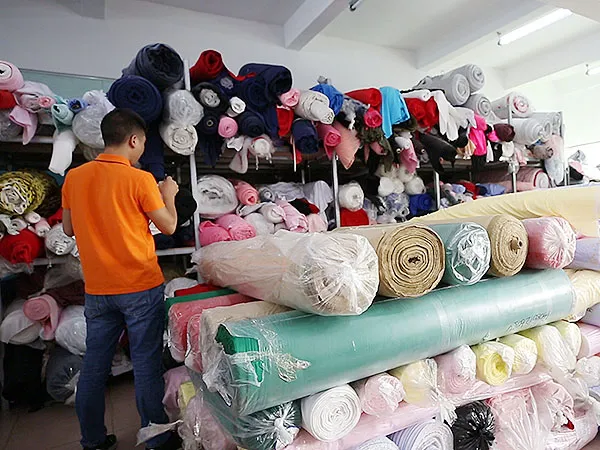
Fabric lot control protects color, handfeel, shrinkage, opacity, weight and repeat supply. Volume dress orders may use several fabric rolls or batches, making early review essential.
- Duolan checks fabric records against approved sample standards.
- Color, shrinkage, stretch, recovery and surface behavior are reviewed before cutting.
- Satin, mesh, lace, jersey, crepe and lightweight woven fabrics need different inspection focus.
- Shade grouping is used where batch variation may affect garment appearance.
- Repeat orders require preserved fabric references and approved replacement logic.
Trim and Support Material Control
Trims and support materials affect dress fit, durability and appearance. Zippers, lining, boning, elastic, lace, sequins, hardware, thread and labels must match approved standards.
- Duolan reviews trim placement, color, durability and compatibility with fabric.
- Corset styles need stable boning, cups, closure and support layers.
- Mesh and satin styles need lining decisions consistent with approved samples.
- Thread color, zipper type and hardware finish must align across bulk.
- Unapproved trim substitution is avoided before production review.
Material Delay Risk
Material delays can affect cutting, sewing, QC and shipment. High-volume dress production needs earlier visibility on fabric and trim timing.
- Duolan checks material lead time before confirming production route.
- Dyeing, printing, sequin, lace or special process delays are reviewed early.
- Packing materials, labels, hangtags and barcodes should not wait until sewing ends.
- Material readiness helps prevent idle production slots and rushed final stages.
- Strong material planning supports reliable delivery windows.
Cutting, Sewing and Line Execution Discipline
High-volume dress production succeeds when cutting, sewing and finishing teams follow approved standards with discipline. Small process deviations can become large problems across thousands of garments.
Cutting Direction
Cutting direction affects shine, drape, print position and garment balance.
- Duolan reviews fabric face, grain, nap, shine and print direction before cutting.
- Satin, velvet, lace, mesh and printed fabrics need stronger direction control.
- Long dresses and maxi panels need careful marker planning.
- Approved PP sample direction is followed in bulk cutting.
- Direction control reduces mismatched panels and uneven appearance.

Shade Grouping
Shade grouping protects visual consistency across garment panels and batches.
- Fabric rolls are reviewed for color variation before cutting.
- Panels are grouped to reduce visible shade mismatch.
- Light colors, satin surfaces and paired sets need stronger shade control.
- Shade records support issue tracing during QC.
- Better shade grouping protects appearance in ecommerce and retail display.

Bundle Control
Bundle control keeps style, size, color and panel data organized.
- Cutting bundles are managed by style code, color, size and batch.
- Numbering reduces mixed panels and wrong-size sewing.
- Bundle records support faster inline issue tracing.
- Multi-style orders need stronger bundle discipline.
- Accurate bundle control supports sewing flow and packing accuracy.

Sewing Standard
Sewing standards protect seam strength, zipper quality, lining and structure.
- Duolan checks seam type, stitch density, zipper setting and inside finishing.
- Fitted, corset, satin and mesh styles need category-specific sewing notes.
- Inline review checks errors before bulk issues spread.
- PP sample records guide production floor execution.
- Sewing standards protect repeatability across sizes and batches.

Inline Correction
Inline correction prevents repeated defects during production.
- QC teams review seam, measurement, zipper, lining, surface and support points during sewing.
- Early defects are corrected before more pieces are produced.
- Style-level notes are updated when recurring problems appear.
- Inline control reduces pressure on final inspection.
- Production teams keep stronger focus on high-risk styles.

Pressing and Finishing
Pressing and finishing affect final appearance and packing condition.
- Satin, sequin, lace and mesh need careful temperature and pressure control.
- Finished garments are checked for seam flatness, hem balance and surface marks.
- Structured dresses need finishing without damaging support layers.
- Packing method is reviewed after finishing.
- Clean finishing helps garments arrive closer to approved appearance.

Fit, Measurement and Size Consistency at Volume
Fit and measurement consistency become harder when production volume increases across styles, sizes, colors and batches. Duolan controls critical dress areas from PP sample through inline and final checks.
| Fit / Size Area | Volume Risk | Duolan Control |
|---|---|---|
| Bust and Underbust | Coverage or support changes by batch | Critical measurement and support check |
| Waist Position | Proportion shifts across sizes | Waist tolerance and pattern control |
| Hip and Seat | Movement or tightness inconsistency | Ease and fabric recovery review |
| Dress Length | Mini safety, midi balance and maxi hem variation | Length tolerance and hem control |
| Neckline / Strap | Gaping or instability | Neckline and strap check |
| Lining Fit | Pulling, twisting or exposure | Lining length and ease control |
| Size Grading | Size logic fails across markets | Grade rule and size set review |
| Set Pairing | Top-bottom mismatch | Paired size and packing control |
Cost and Volume Efficiency Review
High-volume dress cost is shaped by material, construction, decoration, QC, packing and production efficiency. Lower price without control often creates higher risk in fabric, fit, delivery and claims.
| Cost Driver | Typical Influence on Unit Cost | What Changes the Price | Duolan Review |
|---|---|---|---|
| Main Fabric | 35%–55% | Composition, weight, width, wastage, dyeing, printing and shrinkage | Review usage, lot control and repeat supply |
| Lining and Support Materials | 5%–15% | Lining coverage, cups, boning, interlining and elastic support | Match support to dress structure |
| Trims and Accessories | 5%–15% | Zippers, lace, hardware, elastic, labels and thread | Check durability, placement and availability |
| Cutting and Sewing Labor | 18%–35% | Seam type, lining, zipper, structure, hem and finishing | Classify styles by complexity |
| Surface Decoration | 8%–30% | Sequins, embroidery, beads, rhinestones and print | Review process density and defect risk |
| QC Intensity | 3%–8% | Critical measurements, delicate fabric and packing check | Define style-specific QC before bulk |
| Packing and Brand Details | 3%–10% | Hanger, polybag, tissue, barcode and carton ratio | Match packing to channel needs |
Cost ranges support quotation diagnosis and production review. Final pricing depends on confirmed fabric, workmanship, quantity, packing and delivery plan.
QC System for High-volume Dress Orders
High-volume dress QC must protect product quality and information accuracy across multiple styles, colors, sizes and packing formats. Duolan checks quality before production errors reach shipment stage.
| QC Stage | What Duolan Checks | Risk Controlled | Inspection Record |
|---|---|---|---|
| Fabric Inspection | Color, shrinkage, stretch, defects and handfeel | Material mismatch | Fabric batch record |
| Cutting Check | Direction, shade, placement, numbering and bundle | Cutting and panel errors | Cutting check record |
| Inline QC | Seam, zipper, lining, support and stitch density | Process deviation | Inline issue record by style |
| Measurement Check | Bust, waist, hip, length and tolerance | Fit inconsistency | Critical measurement record |
| Surface Check | Satin marks, mesh distortion and sequin damage | Visual quality loss | Surface review record |
| Label Check | Main label, care label, size label, content and placement | Brand execution errors | Label accuracy record |
| Packing Check | Polybag, barcode, carton ratio and packing list | Warehouse receiving issues | Packing check record |
| Final Inspection | Appearance, measurement, label, packing and carton data | Shipment risk | Final inspection record |
Brand-ready Packing for Volume Dress Delivery
Packing is not a final afterthought in high-volume dress production. Labels, barcodes, polybags, carton marks and packing lists affect warehouse receiving, inventory accuracy and post-delivery issue control.
Main Label

Main labels must match garment structure and brand standard.
- Duolan checks artwork, label size, fold type, material, sewing method and placement.
- Placement is reviewed against neckline, zipper, lining, back opening and stretch zones.
- Label accuracy is checked by style, color and size before shipment.
Care Label

Care labels must match fabric, lining, trims and market requirements.
- Duolan reviews care content against actual fabric and trim details.
- Placement should be readable, durable and comfortable.
- Satin, mesh, sequin and lined dresses often need careful care information.
Size Label

Size labels connect garments with specs, barcode files and packing lists.
- Duolan checks size label accuracy against approved grading.
- Placement consistency helps warehouse teams identify products efficiently.
- Size label errors are controlled before packing.
Hangtag / Barcode

Hangtags and barcodes support inventory control and retail presentation.
- Duolan confirms style code, color code, size code and barcode placement.
- Attachment methods are reviewed to avoid fabric damage.
- Barcode data is checked with packing list and carton information.
Polybag / Hanger / Tissue

Dress packing protects presentation and surface condition.
- Satin, sequin, lace, mesh and structured dresses may need stronger protection.
- Folding, hanger packing, tissue and sticker placement are reviewed before packing.
- Packing method should match ecommerce, retail or warehouse receiving needs.
Carton Mark / Packing List

Carton data affects receiving speed and accuracy.
- Duolan checks carton mark, style code, color, size breakdown and carton ratio.
- Packing list data is matched with barcode and carton information.
- Repeat programs benefit from stable carton records.
Production Routing and Capacity Support
Duolan’s high-volume dress capability is supported by owned factory control, satellite factory flexibility, development depth and production capacity. Production routing matches style complexity, order volume and delivery requirements.
Factory and Production Structure
- 16 owned womenswear factories support core dress styles, high-risk products and sample-to-bulk transfer.
- 20+ long-term satellite factories support selected repeat orders, seasonal volume and complexity-matched production.
- 300 sewing lines support multi-style women’s fashion production.
- 50+ quick-response / flexible lines support launch-sensitive styles and controlled updates.
- Manufacturing bases across Guangxi, Guizhou, Sichuan and Jiangxi add production buffer for different schedules.
Development and Workflow Scale
- 750–1,200 development team members support product planning, fabric, trims, pattern, sample and process work.
- 15,000–35,000 monthly sample capacity supports PP samples, revised samples and production preparation.
- 3,000–8,000 monthly style workflows support multi-style dress development and tracking.
- Stable monthly production capacity is approximately 6,500,000 pieces.
- Peak monthly production capacity can reach approximately 10,000,000 pieces, depending on product mix and planning.
Why Routing Matters for Dress Programs
- Core volume styles can be planned for sewing efficiency.
- Satin, mesh, corset and embellished styles receive stronger control.
- Repeat styles benefit from preserved production records.
- Multi-style orders are routed by fabric, complexity, delivery window and QC intensity.
- Central coordination keeps PP samples, size specs, QC standards and packing files aligned.
Delivery Window and Bulk Schedule Control
High-volume delivery depends on approved sample status, material readiness, order volume, style complexity, packing method and production route. Duolan plans bulk schedules around production reality, not vague shipment promises.
Before Bulk Production
Before sewing begins, Duolan reviews whether production inputs are ready.
- PP sample approval.
- Material confirmation.
- Color and size plan.
- Production routing.
- Cutting schedule.
- QC plan.
- Label, barcode and packing file confirmation.
- Carton and shipment preparation logic.
During Bulk and Shipment
Bulk execution requires stage-by-stage control.
- Material arrival and fabric inspection.
- Cutting and bundle control.
- Sewing and inline correction.
- Measurement and surface checks.
- Final QC and packing.
- Carton preparation and packing list check.
- Shipment coordination.
A reliable delivery window comes from early material readiness, controlled production routing and disciplined final packing, not rushed work near shipment.
Repeat Order and Replenishment Control
High-volume dress manufacturing often continues through repeat orders, color extensions and seasonal replenishment. A strong repeat program depends on preserved production records and disciplined improvement.
Preserved Production Records
Repeat orders should not restart from memory. Duolan preserves key records from approved production programs.
- Pattern version, PP sample records and fit notes.
- Fabric reference, color record and trim files.
- BOM, size spec and tolerance.
- Construction notes and QC checkpoints.
- Packing method, barcode logic and carton details.
Fabric and Color Consistency
Repeat production needs material control. A new fabric batch may differ from the previous order in color, handfeel, shrinkage or surface behavior.
- Duolan reviews fabric replacement or rebooking against approved records.
- Color and shade checks protect visual consistency.
- Light colors may need lining review again.
- Repeat order material decisions are checked before cutting.
Reorder Risk Control
A repeat order should improve from previous production records.
- Previous QC notes guide new production checks.
- Packing issues can be corrected before the next shipment.
- Measurement concerns can be reviewed in PP preparation.
- Brand teams can extend strong dresses into new colors or fabrics with better control.
- Production history reduces repeated mistakes across seasons.

High-volume Dress Project Evidence
Duolan respects client confidentiality. Production experience can still be shown through country, style scope, dress type, order volume, delivery window and project actions without exposing protected designs or brand names.
US Dress Bulk Production Program

A US ecommerce fashion brand moved an approved dress program into bulk production. The order included satin dresses, fitted dresses, mesh styles and occasionwear pieces. The main task was keeping PP sample standards, size tolerance and packing data aligned across several dress groups.
- Scope: 24 dress styles, including satin dresses, fitted styles, mesh pieces and occasionwear.
- Bulk volume: 58,000 pcs across approved styles, colors and sizes.
- Delivery window: 68 days after PP approval and material confirmation.
- Production focus: PP sample transfer, fabric grouping, size tolerance and packing accuracy.
- Project actions: reviewed BOM, grouped fabrics, checked label files, controlled measurement points and prepared carton data before shipment.
Australian Party Dress Volume Order

An Australian partywear brand produced a seasonal volume order with fitted, mesh and sequin dresses. Visual impact was important, but production control depended on stretch recovery, transparency, zipper stability and surface protection.
- Scope: 18 styles, including mesh dresses, sequin pieces and fitted party silhouettes.
- Bulk volume: 42,000 pcs across final approved styles.
- Delivery window: 76 days after PP approval, including packing protection review.
- Production focus: mesh coverage, sequin seam handling, stretch recovery, zipper stability and packing protection.
- Project actions: separated construction notes by fabric group, reviewed lining comfort, checked critical measurements and planned protective packing.
UK Satin and Mesh Dress Program
A UK fashion brand produced a satin and mesh dress program for ecommerce launch. The program required clean surface, stable lining tone and controlled arrival condition.
- Scope: 12 styles, including satin dresses, mesh dresses and related capsule pieces.
- Bulk volume: 26,000 pcs after final style selection.
- Delivery window: 52 days after final material approval.
- Production focus: satin surface QC, mesh distortion control, lining tone and packing pressure marks.
- Project actions: reviewed satin cutting direction, checked mesh coverage, adjusted lining relation and planned folding protection before packing.

Regional Occasion Dress Repeat Program
A regional fashion brand repeated and extended an occasion dress program with new silhouettes, colors and size requirements. The project required preserved records, fabric consistency and stable grading.
- Scope: 28 styles, including occasion dresses, fitted styles and selected dress-led extensions.
- Bulk volume: 74,000 pcs across approved styles and categories.
- Delivery window: 82 days after PP and material confirmation.
- Production focus: repeat records, fabric consistency, size grading and carton accuracy.
- Project actions: reviewed previous production notes, confirmed fabric records, checked size logic, aligned barcode files and prepared carton-level data for warehouse receiving.
Compliance, Testing and Supplier Evaluation
Established fashion brands evaluate high-volume dress manufacturers through product focus, factory background, audit record, testing coordination, inspection support and documentation discipline.
SMETA Record
Duolan’s factory system has completed SMETA audit and SMETA 2-Pillar audit record, supporting sourcing discussions and social responsibility review.
- Audit record helps teams assess supplier background before formal cooperation.
- Social responsibility awareness supports vendor approval discussions.
- Accurate supplier information gives volume dress programs a stronger evaluation foundation.

Social Audit Awareness
High-volume production often requires clearer factory and labor responsibility information.
- Duolan supports supplier evaluation with factory background, production capacity and audit information.
- Social audit awareness helps reduce early sourcing uncertainty.
- Supplier review becomes more evidence-based.

Fabric and Trim Testing Coordination
Some dress programs require testing related to fiber content, shrinkage, colorfastness, seam strength, trims or care labels.
- Duolan can coordinate with requirements related to BSCI, ISO 9001, AATCC, ASTM, OEKO-TEX®, EN, China GB standards, GOTS and brand-specific standards where applicable.
- Testing needs should be shared before final material approval.
- Early testing awareness reduces later compliance delays.

Third-party Inspection Preparation
Inspection readiness begins before final production.
- Approved samples, measurements, labels and packing files need clear documentation.
- PP sample records support later inspection work.
- Inline and final QC become easier when standards are clear.

Bulk Production Documentation
Bulk production needs records beyond photos.
- Duolan prepares records for fabric, trims, BOM, size spec, construction notes, QC points and packing details.
- Documentation gives production and inspection teams one approved reference.
- Post-PP changes need controlled review.

Supplier Capability Pack
Sourcing teams often need supplier information beyond garment samples.
- Duolan can support discussions around development capacity, factory system, production lines, audit record and QC process.
- Duolan’s strongest fit is dress-led high-volume manufacturing linked to approved production standards.
- Clear supplier information reduces time between inquiry and technical review.

High-volume Dress Risk Control
High-volume dress production carries predictable risks. Duolan reviews key risks before production begins so material, size, surface, packing and shipment issues can be controlled earlier.
Material Delay
Material delay affects the full production schedule.
- Fabric, lining, zipper, lace, sequins, labels and packing materials are reviewed early.
- Dyeing, printing and special process timing are checked before scheduling.
- Material readiness reduces idle production slots and rushed final stages.
Shade Difference
Shade difference becomes visible when multiple rolls or batches enter one order.
- Duolan checks fabric lots before cutting.
- Shade grouping reduces panel mismatch.
- Satin, light colors and paired sets receive stronger review.
Size Deviation
Size deviation can increase claims and reduce sell-through confidence.
- Critical measurements are checked from PP sample to bulk.
- Bust, waist, hip, length and lining receive focused review.
- High-risk styles may need stronger inline measurement checks.
Surface Damage
Surface damage affects dress value quickly.
- Satin, sequin, mesh, lace and embellished styles need careful handling.
- Pressing, sewing and packing steps are reviewed for surface risk.
- Protective packing is planned before shipment.
Packing Error
Packing errors create warehouse receiving problems.
- Barcodes, size stickers, carton marks and packing lists are checked before shipment.
- Set items need paired packing logic.
- Packing review reduces style, color and size mismatch.
Shipment Pressure
Rushed shipment can weaken final QC and packing accuracy.
- Delivery planning considers material arrival, sewing progress, QC workload and packing time.
- Final inspection should not be compressed into an unrealistic window.
- Clear schedule control protects shipment preparation.
High-volume Dress Project Checklist
A stronger bulk project brief helps Duolan review capacity, route, cost, QC workload and delivery preparation with fewer delays.
Before Production Planning
Prepare the strongest available production information:
- Approved sample or PP sample.
- Style count and product categories.
- Quantity by style.
- Quantity by color.
- Size breakdown.
- Fabric record and trim record.
- BOM, size spec and construction notes.
- Delivery window and launch timing.
- Inspection requirement.
- Repeat order expectation.

Before Shipment
Confirm brand-ready delivery files before final packing:
- Main label, care label and size label files.
- Hangtag and barcode files.
- Polybag, hanger, tissue or folding requirement.
- Carton mark and carton ratio.
- Packing list format.
- QC checklist and final inspection standard.
- Warehouse receiving rule.
- Shipment method and delivery contact.
- Reorder or replenishment plan.
High Volume Dress Manufacturer FAQ
A high-volume dress manufacturer produces approved dress programs at scale, with control over PP sample transfer, material readiness, bulk cutting, sewing, QC, labels, packing and delivery.
Wholesale dress buying usually means selecting existing inventory. High-volume dress manufacturing means producing brand-owned dress styles according to approved samples, tech packs, materials, size standards and packing requirements.
Useful information includes approved sample or PP sample, tech pack, BOM, size spec, fabric and trim records, style count, quantity by style and color, delivery window, label files, packing instruction and inspection requirement.
Yes. Duolan supports multi-style dress programs, commonly involving different fabrics, silhouettes, colors, sizes, production risks and delivery priorities.
Duolan reviews PP sample, BOM, size spec, construction notes, fabric records, trim files, label files, packing instructions and QC points before bulk cutting begins.
Duolan focuses on dress-led women’s fashion, including fashion dresses, occasion dresses, party dresses, cocktail dresses, bodycon dresses, satin dresses, mesh dresses, corset dresses, resort dresses, maxi dresses, mini dresses and dress-led sets.
Duolan checks critical measurements, tolerance, grading logic, fabric recovery, lining relation and inline measurement records before final inspection.
Yes. Duolan can support main labels, care labels, size labels, hangtags, barcode stickers, polybags, hanger packing, carton marks and packing lists.
Duolan preserves pattern version, PP sample records, fabric references, BOM, size specs, trims, construction notes, QC points and packing methods to support repeat production and color extensions.
Duolan is positioned for planned high-volume dress manufacturing for established fashion brands, not low-quantity trial production, ready-stock dress wholesale or one-off dress making.

Send Your High-volume Dress Production Project
Send your bulk dress production project to Duolan if your brand has approved dress styles, PP samples, tech packs, fabric records, size specs or repeat order plans ready for production review. Strong inquiries help our team understand style count, product categories, quantity by style, color plan, size breakdown, delivery window, packing needs and inspection requirements.
For dress orders involving satin, mesh, corset, sequin, fitted, resort or occasion styles, clear PP sample records and production files help Duolan identify material risks, production route, QC intensity and packing protection earlier. If your program includes multiple styles, please share style codes, order quantity, size ratio, fabric grouping and delivery priority.
Duolan will review whether your project needs capacity planning, material readiness review, PP sample transfer, production routing, quotation, bulk production, QC preparation, packing support or repeat order planning.

