Skip to content
How Do You Evaluate Fabric Pilling Risk Before Bulk Production?
Your trusted Women’s Apparel Development & Manufacturing Partner from China
- Jerry
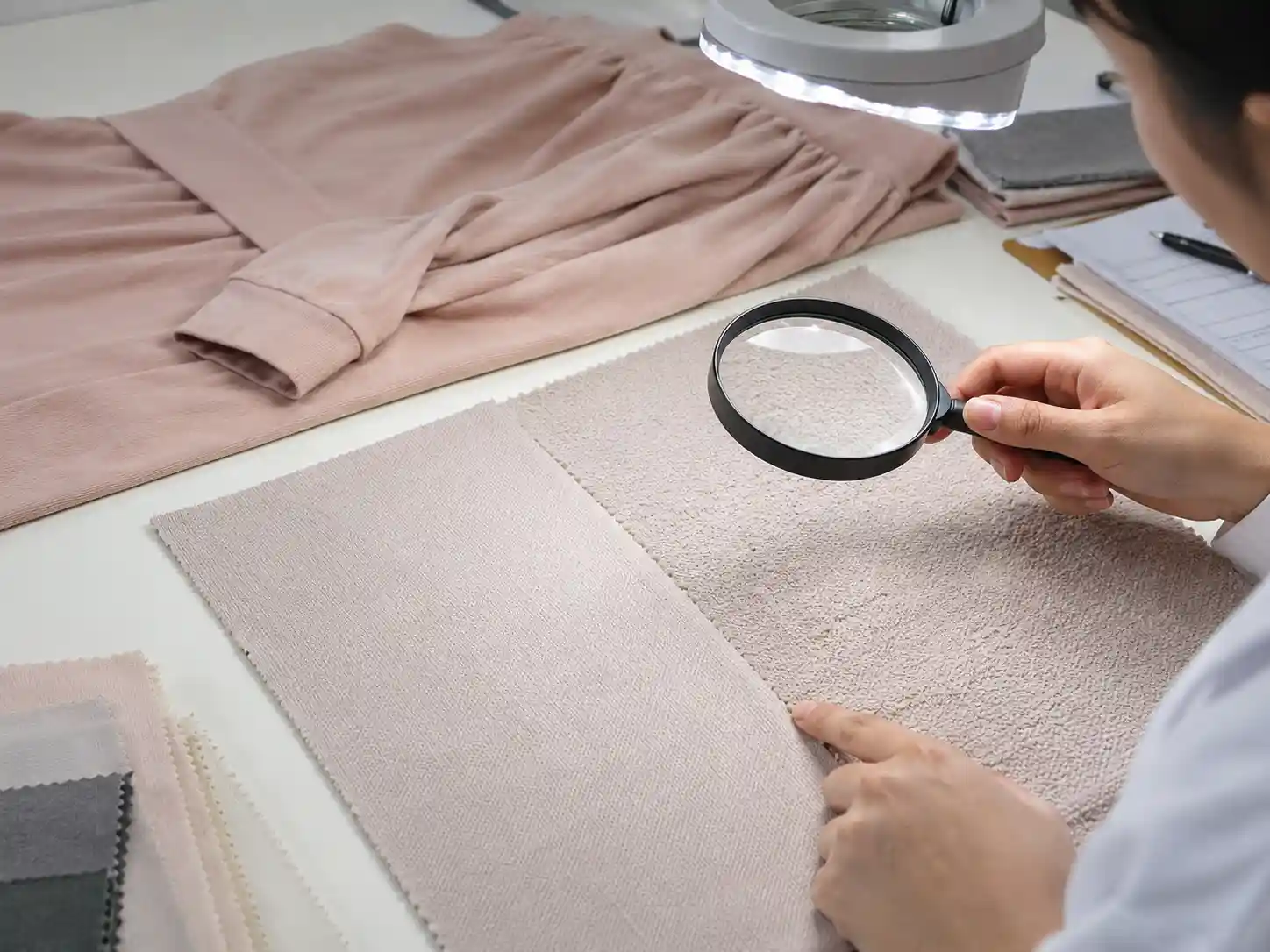
A fabric can look smooth in a showroom, photograph beautifully on a sales sample, and still become a commercial problem after only a few wears. Pilling rarely announces itself during fabric selection. It develops later, when loose surface fibers are repeatedly rubbed at the underarm, waist, hip, seat, inner thigh, handbag-contact area, or during washing and drying. By the time customers notice the fuzzy balls, the production order has already shipped and the brand may be dealing with returns, poor reviews, markdowns, or retailer claims.
To evaluate fabric pilling risk before bulk production, combine early material screening, an appropriate standardized test, controlled visual grading, garment-use analysis, and bulk-lot verification. Fiber content alone is not enough. Yarn construction, fabric density, surface finish, fit, laundering, friction zones, color contrast, and sample-to-bulk consistency must all be reviewed before approval.
The key is to answer two separate questions: can the fabric achieve an acceptable laboratory grade, and will that result remain acceptable in the garment customers will actually wear? A fitted jersey dress once looked dense, soft, and premium during development. The first warning appeared only after the sample was worn with a crossbody bag for one afternoon. One side developed visible fuzzing. That short wear check revealed what the certificate had not – and prevented the same problem from being repeated across thousands of garments.
What Is Fabric Pilling Risk?
Fabric pilling risk is the likelihood that loose surface fibers will form visible balls, fuzz, or matted areas during wear and laundering. It depends on fiber strength, yarn structure, fabric density, finishing, garment fit, friction, and care conditions. A reliable evaluation considers both laboratory performance and how the fabric will behave in the finished garment.
How Pilling Develops
Pilling usually begins before obvious fiber balls appear. Repeated rubbing lifts fiber ends from the yarn and creates a fuzzy surface. Those fibers then twist together, collect lint, and form small pills. Continued abrasion may enlarge the pills or eventually break them away.
This explains why two fabrics can look different after similar wear. One may develop many persistent pills because strong fibers keep them attached. Another may fuzz early but shed the loose fibers before large pills form. A late test result can therefore hide severe deterioration that occurred at an earlier stage.
The progression normally follows four stages: surface fibers loosen and rise; loose fibers become entangled; pills grow through further friction and lint collection; and the anchoring fibers either hold the pills or break and release them. Intermediate observations provide a more complete view than a single final grade.
Fuzzing, pilling, and matting should also be recorded separately. A brushed knit may show limited pill formation but lose its soft, even surface through matting. A smooth black jersey may develop small pills that become highly visible because the pills contrast with the dark fabric ground.
Where Friction Occurs
Real garments do not experience uniform abrasion. The highest-risk areas depend on silhouette, fit, styling, and the way the customer uses the product.
- Underarms and sleeve sides
- Waistbands and belt-contact areas
- Hips, side seams, inner thighs, and seat panels
- Crossbody-bag and shoulder-bag contact points
- Back panels against vehicle seats or office chairs
- Sleeves that repeatedly contact desks and countertops
A fitted dress generally places the fabric under more tension than a loose shift dress. Tension can open a knit structure, expose more yarn surface, and increase repeated rubbing against the body. Accessories also matter: a textured handbag, rough coat lining, sequined jacket, or hook-and-loop fastening may create localized damage that routine flat-fabric testing does not fully represent.
The result must therefore be interpreted in context. A fabric that performs acceptably in a loose printed blouse may be unsuitable for a close-fitting, smooth-surface evening dress.
Why Brands Should Care
Pilling is often treated as a minor cosmetic issue, but customers usually see it as evidence that a garment is wearing out too quickly. The textile may remain structurally strong while the product already looks old.
- Negative product reviews and reduced repeat purchasing
- Returns, customer-service claims, and retailer chargebacks
- Markdowns, sorting, reinspection, and repacking costs
- Cancelled repeat orders and lower confidence in future collections
- Lost campaign value when the product no longer matches its polished photography
The risk is especially high when the product is marketed as premium, designed for frequent wear, or photographed with a clean surface. Dark solid colors, smooth knits, and fitted silhouettes often reveal deterioration more clearly than textured prints or mélange fabrics.
The useful commercial question is not simply, ‘Will this fabric pill?’ Nearly every textile changes under enough abrasion. The better question is, ‘Will the visible change remain acceptable for the product’s price, positioning, fit, care method, and expected use?’
What Raises the Risk
Pilling risk rises when several unfavorable factors appear together rather than because of one single characteristic. The following matrix is a practical screening aid, not a laboratory pass standard.
Risk factor | Lower-risk condition | Higher-risk condition | Why it matters |
Fiber surface | Continuous filament or compact fiber system | Short, loose staple fibers | More loose ends can reach the surface |
Yarn structure | Compact, adequately twisted yarn | Bulky, low-twist, hairy yarn | Fibers are less securely held |
Fabric construction | Dense and stable | Loose, open, mobile | Yarn movement increases during friction |
Surface finish | Smooth, controlled finish | Brushed, raised, heavily softened | More exposed fibers are available |
Garment fit | Relaxed fit | Strong negative ease | Tension and body friction increase |
Care method | Gentle wash and air dry | Frequent wash and tumble dry | Mechanical action is more severe |
Color | Low contrast between pill and ground | Dark solid with pale surface fibers | Surface change becomes more visible |
End use | Occasional low-contact wear | Frequent high-contact wear | Total abrasion exposure is greater |
A material moving into several higher-risk columns should receive more detailed testing before approval. The table helps prioritize attention, but it cannot replace a standardized test or garment-specific assessment.

Which Fabrics Are Most at Risk?
Fabrics with hairy yarns, short staple fibers, loose constructions, brushed surfaces, or strong synthetic components often require closer review. Knitted and blended materials can be especially sensitive, but fiber content alone is not enough to predict performance. The finished fabric structure and intended garment use usually matter more than the composition label by itself.
Fiber and Yarn Effects
Fiber strength has a complicated relationship with pilling. Strong fibers can improve durability, but they can also keep pills attached for longer. Polyester and nylon pills may remain visible because the anchoring fibers resist breakage. Weaker fibers may release pills sooner, although early fuzzing can still make the garment look worn.
Staple length also matters. Shorter fibers create more fiber ends within the yarn, increasing the potential for migration. Longer fibers generally have greater contact with surrounding fibers and can be held more securely. However, yarn structure can either reduce or amplify this effect. A compact yarn with controlled twist normally holds fibers better than an open, bulky yarn.
More twist is not automatically better. Excessive twist can make a dress fabric harder, less fluid, less comfortable, or less lustrous. The development objective is not maximum pilling resistance at any aesthetic cost. The textile must still deliver the required drape, softness, stretch, shine, and silhouette.
Do not approve a material from the composition line alone. Two fabrics marked 95% polyester and 5% elastane may behave very differently because one uses smooth filament yarn in a dense knit while the other uses a soft, hairy spun yarn in a more open structure.
High-Risk Knits
Knits often need additional review because their looped structures allow more yarn movement than many woven constructions. Risk can rise further when the material is stretched over the body.
- Brushed jersey and fleece-back fabrics
- Loose rib knits and low-density sweater structures
- Lightweight viscose or rayon-rich jersey
- Polyester-acrylic sweater blends
- Bouclé and novelty-yarn knits
- Soft mélange knits and fine-gauge fitted jersey
- Stretch knits with weak recovery
A knit should be inspected both relaxed and extended. A swatch that appears compact on the table may open significantly when stretched across the bust, waist, or hip. This exposes more yarn surface and can increase rubbing. Recovery also matters: a material that remains open after repeated extension may allow fibers to migrate more easily during later wear.
For bodycon and fitted dresses, surface assessment must be combined with fit evaluation. Excessive negative ease can turn a borderline fabric into a high-risk fabric even when the original laboratory result appears acceptable.
Problematic Blends
Blends can produce worse pilling behavior than a simple reading of the composition suggests. One fiber may migrate to the surface while another stronger fiber keeps the pill attached.
A cotton-polyester blend is a familiar example. Cotton fibers may loosen and tangle, while polyester fibers provide enough strength to hold the pill in place. Similar interactions can occur in other staple-and-synthetic combinations.
- Which component is most likely to fuzz?
- Which component is most likely to anchor the pill?
- Are the fibers filament or staple?
- What spinning method and yarn count are used?
- Has the surface been brushed, sanded, washed, or heavily softened?
- Was the reported result obtained before or after laundering?
- Does the report represent development yardage or a production lot?
These questions expose the difference between a generic fiber claim and the actual finished textile. The test should be carried out on the final dyed and finished fabric because separate fiber data cannot reliably predict the behavior of the complete construction.
Brushed and Raised Surfaces
Brushing creates softness by deliberately raising fibers from the surface. The same process can increase opportunities for fuzzing, matting, and pill formation. Performance depends on brushing intensity, fiber type, yarn compactness, shearing, heat setting, enzyme treatment, washing, and any anti-pilling finish.
- Visible fiber transfer when the surface is rubbed
- Rapid whitening or cloudiness on dark fabric
- Uneven nap direction across the width
- Heavy loose lint on contrasting paper or tape
- Large differences between the face and back
- Local patches that flatten or glaze after steaming
Raised materials should be judged for more than pill count. The original surface may flatten, mat, glaze, or become uneven. A fabric can receive an acceptable numerical grade while still failing the product’s appearance requirement.
When the mill changes the brushing process or applies a corrective finish, the revised material should be fully retested. A finish may improve surface resistance but also change color, stretch, softness, drape, sewing behavior, or performance after washing.

How Can You Screen Risk Early?
Early screening combines fabric specifications, visual inspection, controlled rubbing, laundering, and garment-use analysis. It helps product teams identify materials that need laboratory testing or redevelopment before substantial time is invested in sampling, fitting, costing, and bulk planning. Early screening is fast and practical, but it should never be presented as a replacement for standardized testing.
Review the Specification
A useful fabric specification must identify the exact material being approved. Composition alone is insufficient. Review supplier and mill, material code, fiber content, yarn type, weight, width, construction, stretch, recovery, finish, surface treatment, color reference, care recommendation, previous test method, test date, and the production stage represented by the test.
The production stage is critical. A result from greige fabric may not represent the final dyed and finished textile. Dyeing, washing, brushing, softening, heat setting, and surface treatment can all change pilling performance. Ask whether the report relates to laboratory yardage or a true production lot; small development batches sometimes receive more controlled finishing than later bulk fabric.
The record should also state whether the sample was tested before or after laundering. A result without pretreatment information is difficult to compare or reproduce. The fabric code, color, finish, and lot should match the material being offered for the garment program.
When the supplier cannot provide enough detail, treat the fabric as a new material rather than relying on a broad statement such as ‘this quality normally passes.’
Inspect the Swatch
Swatch screening should be consistent rather than casual. Use controlled lighting, clean hands, and a known approved fabric for comparison. View the candidate flat, bent over a curved surface, stretched, relaxed after stretching, under low-angle side lighting, and against contrasting backgrounds.
Side lighting makes raised fibers easier to see. Stretching reveals whether the structure opens and exposes more yarn. A practical manual check can include face-to-face rubbing, repeated folding, light adhesive-tape contact, and comparison before and after one agreed wash cycle.
These actions can expose rapid fuzzing, shedding, whitening, directional instability, or surface roughening. They do not produce an ISO or ASTM grade and should not be presented as one. Their value is speed: they identify obvious concerns before laboratory time and sample-development resources are committed.
A small cutting may not represent the whole width. When possible, inspect full-width yardage and compare samples from the left, center, and right because finishing tension, brushing, and heat exposure can vary across the roll.
Use a Risk Screen
A simple internal score helps teams decide how much testing a fabric needs. It is a development-management tool, not an industry standard or a substitute for the customer’s test manual.
Screening item | 0 points | 1 point | 2 points |
Surface hairiness | Clean and compact | Slightly hairy | Brushed or visibly fuzzy |
Construction | Dense and stable | Moderate openness | Loose or highly mobile |
Fiber system | Filament or proven stable yarn | Standard staple blend | Hairy staple with strong synthetic |
Garment fit | Relaxed | Regular | Tight or high negative ease |
Contact exposure | Low | Moderate | Frequent bag, seat, or body friction |
Care method | Gentle care | Machine wash | Frequent wash and tumble dry |
Visual contrast | Textured or printed | Medium contrast | Dark smooth solid |
Supplier history | Proven repeat quality | Limited data | New or inconsistent source |
One practical internal interpretation is 0-4 points for the routine test plan, 5-9 points for enhanced laboratory review, and 10-16 points for laboratory testing plus wash or wear validation. These ranges are not universal pass criteria. They simply help prioritize development attention. A low score also does not guarantee performance; a new material should still meet the brand’s normal testing requirements.
Test the Intended Use
The same fabric can carry different risk depending on the garment. A lightweight jersey may be suitable for a loose day dress but unsuitable for a tight mini dress. A brushed knit may work for occasional styling but disappoint in a frequently worn travel set.
- Expected garment extension and negative ease
- Lining choice and seam placement
- Body-contact, outerwear-contact, and accessory-contact areas
- Product price and expected wearing frequency
- Care-label instructions and destination-market habits
- Climate, moisture, and whether the garment will often be layered
A panel check or controlled wear trial can be particularly useful for fitted styles. Stretch the material to an estimated wearing extension and expose it to the type of contact likely to occur in use. A side panel can be checked against a handbag-like surface, while a seat panel can be assessed under repeated sitting friction.
These exercises are not standardized grades, but they may reveal risks that flat testing does not fully represent. Formal laboratory testing should begin early when the material is new, brushed, loose, hairy, intended for close fit, planned for repeated wear, or supplied without dependable historical data.
Which Pilling Test Should You Use?
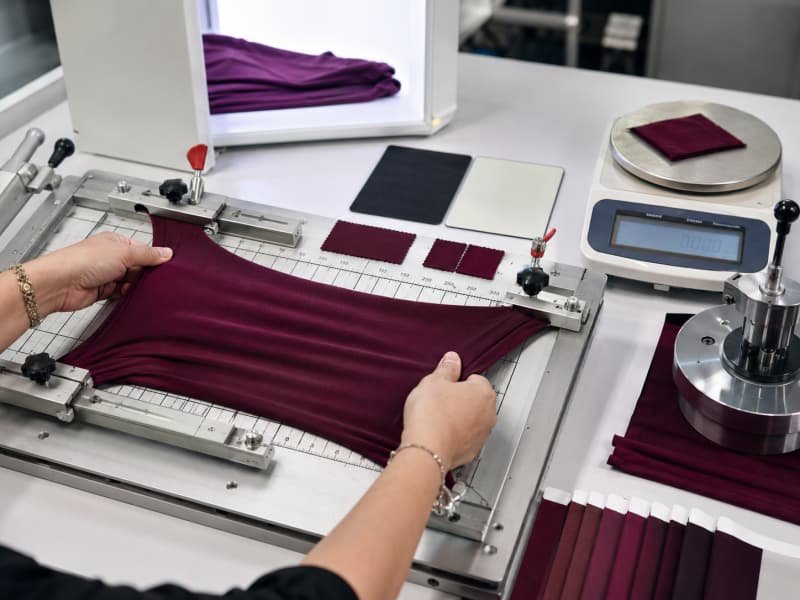
The correct pilling test depends on the fabric structure, customer specification, destination market, established brand protocol, and available historical data. Modified Martindale, random tumble, and rotating pilling-box tests use different mechanical actions, so results from one method should not be directly converted into results from another.
Compare the Methods
The selected method should create a controlled form of abrasion that is appropriate for the textile and accepted by the customer. Familiar equipment is not automatically the correct equipment.
Test method | Main action | Common applications | Important caution |
Modified Martindale | Controlled multidirectional rubbing | Many woven and knitted apparel fabrics | Setup, loading, abradant, and test stage affect results |
Random tumble | Free tumbling in a chamber | Many woven, knitted, and napped fabrics | The specimen must be able to tumble freely |
Rotating pilling box | Mounted specimens tumble in a lined box | Materials covered by customer or regional protocols | Results are not directly interchangeable with Martindale |
Brush pilling | Controlled brushing followed by visual assessment | Specific textiles under defined customer or ASTM protocols | Use only when the method is required and suitable |
The method must appear beside every result. ‘Pilling grade 4’ is incomplete without the standard, exposure stage, pretreatment, and specimen condition. When a brand changes laboratories or test methods, retained materials should be tested side by side. That exercise can create an internal comparison, but it should not be treated as a universal conversion formula.
Modified Martindale
Modified Martindale testing is useful when the brand has established benchmarks for similar fabrics. Its controlled multidirectional rubbing allows the surface to be assessed at defined stages. The result becomes more useful when it can be compared with approved materials that already have known market performance.
- Approved reference fabrics and retained tested specimens
- Historical complaint or return data
- Category-specific acceptance limits
- Consistent laboratory procedures and photographs
- Known relationships between grades and actual garments
The request should identify the exact standard and procedure. Writing only ‘Martindale test’ can create ambiguity because different standards and customer methods use Martindale equipment. Confirm the specimen face, pretreatment, number of specimens, exposure stages, required grade, visual-assessment procedure, and whether fuzzing or matting must be reported separately.
Intermediate readings are valuable because some fabrics deteriorate early and later shed their pills. A single final grade may hide that progression.
Random Tumble
Random tumble testing subjects specimens to repeated, irregular movement inside a chamber. It can be suitable for many woven, knitted, and napped materials that can move freely during the test.
- The customer manual specifically requires the method
- Previous approved fabrics were tested in the same way
- The surface is suited to a tumbling action
- The specimen can move without stiffness or bulk restricting the test
- The team wants an additional stress comparison for a new material
Random tumble results should not be interpreted through Martindale limits unless the brand has conducted its own structured comparison. For a new program, test a proven fabric, a known borderline fabric, and the new candidate together. Relative evidence is often more useful than one isolated number.
Materials that cannot tumble freely may produce unrepresentative results. In that situation, another technically applicable and contractually accepted method should be selected.
Pilling Box and Standards
The rotating pilling-box method mounts specimens on tubes and exposes them to tumbling inside a lined box. It should be used when required by the customer, product specification, laboratory history, or market protocol. Mounting tension, specimen direction, seam preparation, tube condition, box lining, and cleaning all affect repeatability.
Commonly referenced methods include ISO 12945-1 for rotating pilling box, ISO 12945-2 for modified Martindale, ISO 12945-3 for random tumble, and ISO 12945-4 for visual assessment. ASTM references may include D4970/D4970M for Martindale-based assessment, D3512/D3512M for random tumble, and D3511/D3511M for brush pilling.
Always verify the edition required by the customer or contract. A standard number copied from an old report may no longer match the current test manual. Do not combine grades from different methods in an unqualified dashboard, and do not assume that a grade under one method equals the same grade under another.
The best method is the one that is technically appropriate, accepted by the commercial agreement, and supported by enough historical evidence to guide a real product decision.

How Do You Read Pilling Results?
A pilling result should be read together with the test method, exposure stage, pretreatment, visual grade, photographs, observer comments, and garment use. A numerical grade alone does not show when deterioration began, whether fuzzing or matting occurred, or whether the result is suitable for a particular product.
Understand the Grade
Many pilling methods use a visual scale from 5 to 1, with 5 representing no visible change and 1 representing severe surface deterioration. The grade describes appearance after a defined procedure; it does not directly predict an exact number of wears.
Grade | General appearance | Practical interpretation |
5 | No visible change | Strong appearance retention under the stated test conditions |
4 | Slight or partial surface change | Often promising, subject to product requirements |
3 | Moderate visible pilling | Requires review of fit, color, price, and end use |
2 | Clear pilling over much of the surface | High concern for appearance-sensitive apparel |
1 | Severe surface deterioration | Normally unsuitable without redevelopment |
The interpretation is not a universal pass rule. Each brand should establish its own limits. A complete result might read: ‘Grade 4 at the intermediate stage and grade 3-4 at the final stage, with slight localized fuzzing and no severe matting.’ That statement is more useful than a report that says only ‘pass.’
Half grades may be used when the surface falls between two reference appearances. Because the result is visually assessed, observer training, lighting, specimen orientation, and retained references matter.
Read the Progression
A fabric should ideally be assessed at more than one stage. It may change rapidly at first and then stabilize, or continue to deteriorate throughout the test. Some pills also break away later, which can make the final surface appear better than an earlier checkpoint.
- Pilling grade and the exact test stage
- Fuzzing, matting, pill size, and pill distribution
- Localized damage and surface color change
- Controlled photographs from the same angle and exposure
- Observer comments and any disagreement between assessors
Consider two materials that both finish at grade 3. One may remain at grade 4 for most of the test and decline only near the end. The other may reach grade 3 early and remain visibly rough throughout. Their final grades match, but the likely customer experience may not.
Results from different laboratories should be compared cautiously. Specimen preparation, conditioning, equipment condition, lighting, and assessment practice can create variation. For important programs, test comparison materials in the same laboratory and at the same time.
Consider Washing
Washing and drying can reveal risks that are not present in the as-received fabric. They may remove temporary finishes, relax the structure, raise loose fibers, change yarn mobility, shrink the construction, or remove some loose surface material.
- As-received fabric
- After one agreed care cycle
- After several care cycles
- After machine washing and tumble drying
- After garment finishing
- Fabric taken from a completed garment
The pretreatment should reflect the care label or the customer protocol. A machine-wash, tumble-dry jersey dress should not be approved only from an unwashed result. Record water temperature, detergent, machine type, load condition, cycle, drying method, and number of cycles. ‘Washed before testing’ is too vague to reproduce.
Washing does not always make pilling worse. It may remove loose fibers or tighten the structure through shrinkage. The direction of change depends on the material, which is why before-and-after evidence is useful.
Match the Product
The same grade can lead to different approval decisions for different garments. A result accepted for a textured printed cardigan may be unsuitable for a smooth black bodycon dress.
- Visibility of surface change and pill-to-ground contrast
- Garment fit, negative ease, and high-friction zones
- Expected wearing frequency and product care
- Retail price and the appearance promise made to the customer
- Previous complaints, returns, and market experience with similar materials
Dark solid fabrics often reveal pale pills more clearly. Tight garments experience more body friction. Premium products create higher expectations for appearance retention. Acceptance rules should therefore be organized by product family rather than applied blindly to every textile.
A sound decision combines the standardized result, the progression through the test stages, a garment-specific risk review, and historical market performance. The laboratory grade is essential evidence, but it is not the entire decision.

How Do You Control Risk Before Bulk?
Pilling risk is controlled by setting the requirement early, approving the exact fabric and finish, retesting corrective changes, locking the production specification, and verifying representative bulk lots before cutting. The objective is not one successful sample. It is consistent performance from development yardage through repeat production.
Set the Requirement
Acceptance limits should be agreed before the sample is sent to the laboratory. The requirement should identify the standard and edition, pretreatment, specimen face, number of specimens, test stages, minimum final and interim grades, restrictions for fuzzing or matting, retest procedure, and approval authority.
‘Minimum grade 4’ is not a complete specification because it does not explain the method, exposure stage, or pretreatment. Limits should be based on evidence: successful commercial fabrics, retained specimens, wear trials, complaint records, product price, garment fit, and expected use.
When no historical data exist, test several benchmark fabrics from products that have already performed well. This creates a realistic reference point and prevents the threshold from becoming an arbitrary number.
The target should protect the customer experience without destroying the intended fabric character. A requirement that forces every textile to become hard, heavy, or overtreated may solve one issue while creating problems with drape, comfort, sewing, or visual quality.
Investigate Failure
A failed result should trigger structured root-cause analysis rather than an immediate cosmetic treatment. First verify the fabric code, color, lot, finish, test method, edition, specimen preparation, conditioning, and photographs. Determine whether the main issue is pill formation, fuzzing, matting, whitening, or another abrasion effect.
- Confirm the material identity and the exact production stage tested.
- Review the laboratory method, specimen preparation, and test conditions.
- Inspect the retained specimen and compare it with an approved control.
- Check fiber length, blend, yarn twist, hairiness, density, and surface finish.
- Review garment fit, lining, seam allowances, trims, and high-friction construction.
- Retest the revised material under the same agreed procedure.
Possible corrective actions include improving fiber control, adjusting yarn compactness or twist, tightening the construction, revising brushing, improving heat setting, changing washing or enzyme treatment, or applying a suitable anti-pilling finish. Each change has consequences beyond pilling.
A supplier’s statement that the material has been improved is not sufficient. The revised fabric must be checked for shade, hand feel, stretch, recovery, drape, sewing behavior, and performance after care.
Verify the Bulk Lot
Bulk fabric should be verified against the sealed development material before cutting. Representative sampling may include different rolls, dye lots, the beginning, middle, and end of production, left-center-right positions across the width, and more than one finishing batch.
- Fabric identity, weight, and width
- Shade continuity and surface appearance
- Hand feel, stretch, and recovery
- Pilling performance and dimensional stability
- Appearance after the agreed care method
- Comparison with the sealed swatch and approved report
One small specimen may not represent a large production quantity. Higher-risk fabrics may require testing from more than one roll or lot. Keep development and bulk swatches together, clearly labelled with supplier, material code, color, lot, date, approval status, and related report.
When bulk material differs visibly or technically, pause cutting until the difference is reviewed. Once thousands of panels have been cut, corrective options become narrower and more expensive.
Lock the Production Standard
Preventing sample-to-bulk variation requires control of the complete material route, not only the fabric name. Lock fiber content, yarn source where necessary, construction, weight tolerance, width, stretch, recovery, color process, surface finish, brushing level, hand-feel reference, care performance, pilling requirement, approved supplier, and substitution restrictions.
A ‘same quality’ replacement should never be accepted only because the color and touch appear similar. Small differences in yarn, dyeing, finishing, or brushing can create large differences in wear performance.
For higher-risk fitted, brushed, jersey, mesh-layered, satin, velvet, or appearance-sensitive styles, a pilot run provides additional protection. Review pilot garments after pressing, handling, packing simulation, laundering where relevant, and controlled wear. Confirm that the fabric still fits and behaves correctly after any anti-pilling improvement.
The final control chain should remain traceable: fabric specification, approved swatch, test report, garment application, bulk-lot verification, first-piece confirmation, and retained production sample. That evidence chain allows the brand and manufacturer to identify what was approved, what changed, and where corrective action is needed before a material issue becomes a production-wide failure.
Planning a dress program with pilling or surface-performance concerns?
Duolan Apparel supports fashion brands with dress-focused fabric sourcing, material alternatives, sample development, fit review, production-readiness checks, bulk material locking, pilot verification, and scalable manufacturing. The core product focus includes occasion dresses, party dresses, bodycon and fitted dresses, satin, mesh, jersey, velvet, fashion sets, and related womenswear in which material behavior and garment construction must be developed together.
For a practical review and quotation, send the tech pack or reference sample, target garment category, fabric composition or swatch, expected fit and stretch, destination market, care-label plan, required test standard, target quantity, launch schedule, and any known wear concerns.
Share:
Our Services
Categories
Table of Contents
Here, developing fashion collections is more than manufacturing garments — it’s a collaborative process focused on transforming ideas into well-executed, market-ready products. From fabric sourcing and sample development to scalable production and delivery coordination, every stage is built to support quality, consistency, and efficient collection launches across global markets.