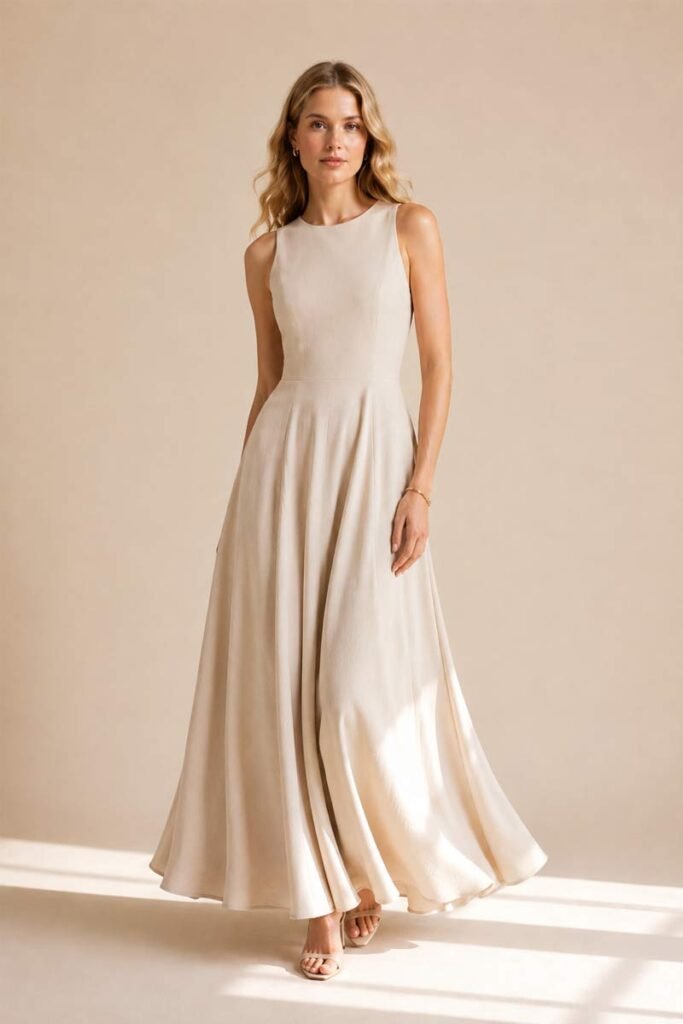
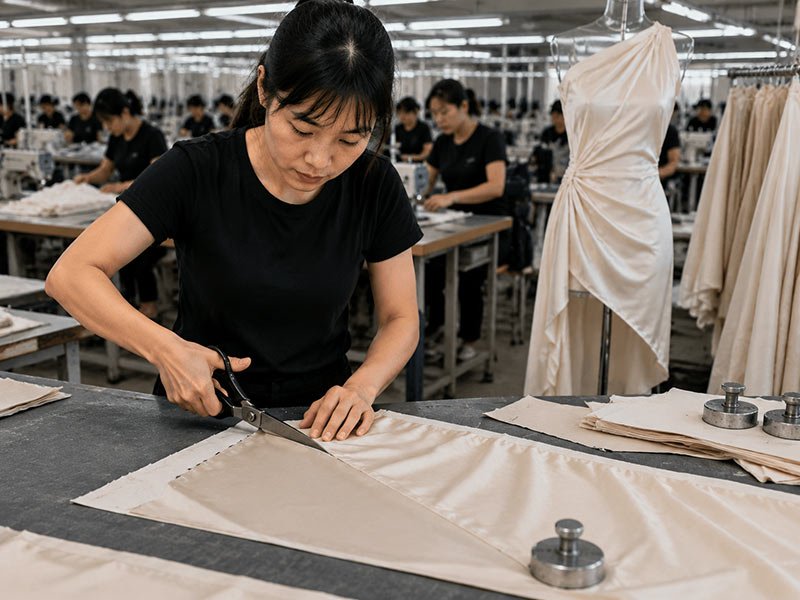
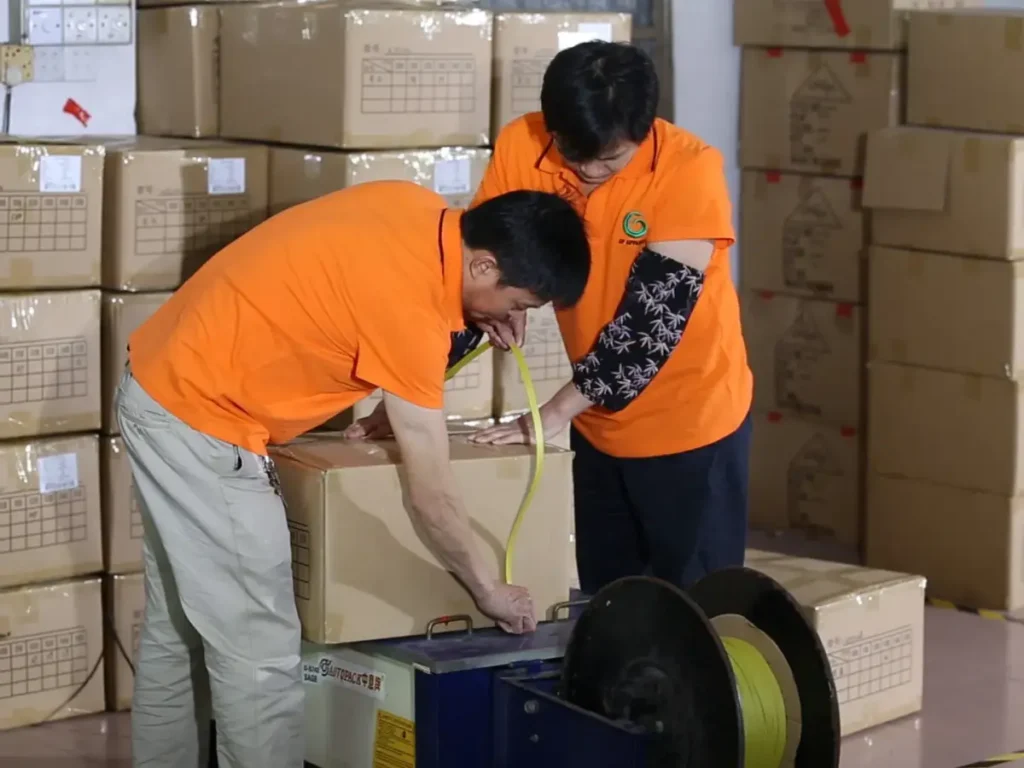
...

Maxi Dress Manufacturing for Fashion Brands

Dress-focused development, sampling and scalable production for resort, occasion, printed and contemporary maxi dress collections.

  • 30+ years of fashion dress development experience supporting fit, fabric, construction and commercial execution.
  • 16 owned womenswear factories, 20+ long-term satellite factories, 300 sewing lines and 50+ quick-response lines.
  • Monthly sample-development capacity of 15,000-35,000 pieces or iterations across 3,000-8,000 style workflows.
  • Stable monthly garment capacity of approximately 6.5 million pieces, with peak capacity reaching 10 million pieces.
  • SMETA audit completed, including SMETA 2-Pillar audit and an available social-audit record.

Built for Established Maxi Dress Programs

Duolan supports fashion teams that manage seasonal calendars, multiple silhouettes, repeat orders and defined brand standards. The working model is structured around product development and controlled production rather than isolated garment making.

Established Fashion Brands

Maxi dress programs for established labels often involve several drops, multiple colorways and repeated fit blocks rather than one-off designs. Duolan organizes each program around approved patterns, material directions, workmanship standards, size specifications and launch timing. The objective is to preserve brand language across new styles while keeping production decisions measurable. Teams can develop resort, occasion, wedding-guest, vacation and contemporary maxi categories without rebuilding the supply chain for every new silhouette.

Buying and Product Teams

Product and sourcing teams need more than fast replies. They need design questions converted into pattern actions, fabric decisions, fit comments and production standards. Duolan works from tech packs, original samples, reference images, measurement charts, moodboards or collection briefs. Each input is reviewed for silhouette, length, support, lining, fabric behavior, target market, quantity and launch calendar before sampling begins. Clear development notes reduce repeated clarification between design, merchandising, sourcing and factory teams.

Occasion and Resort Labels

Long dresses used for resort, vacation, formal dinners, wedding-guest edits and evening collections require different combinations of drape, opacity, support and movement. Resort styles often prioritize lightweight fabrics, prints and easy movement, while occasion styles may require satin control, structured bodices, high slits, layered mesh or embellishment. Duolan separates these construction paths early so each group receives the right material, sample and production treatment rather than one generic maxi dress process.

What a Maxi Dress Manufacturer Must Control

A strong manufacturing partner should make long-dress risks visible before they become bulk defects. The evaluation points below connect design intent with evidence from development, production and quality control.

Evaluation AreaWhat Must Be ControlledEvidence Duolan Can Provide
Maxi expertiseLength proportion, skirt fall, hem balance, lining length and movementPattern review, mannequin fitting, measurement records and finished garment checks
Fabric behaviorDrape, opacity, stretch, recovery, shrinkage, weight and surface sensitivitySwatches, lab dips, fabric notes, alternative options and sample comparison
Pattern and fitBust-waist-hip balance, waist placement, slit height, strap position and gradingCAD pattern, fitting comments, revision summary and approved measurement chart
Sample controlPrototype purpose, fit review, revision route and PP basisFirst proto, fit sample, revised sample, review note and PP confirmation
Bulk consistencyMaterial batch, trims, construction, measurements, color and packingBOM alignment, first-piece confirmation, inline records and final inspection summary
Program capacityMultiple styles, different risk levels, repeats and scale-up ordersProduction path plan, line allocation, factory coordination and schedule checkpoints
ComplianceSocial audit, material testing, market standards and brand-specific requirementsSMETA records, test coordination, factory transparency and documentation support

Where Maxi Dress Projects Lose Control

Long dresses magnify small errors. More fabric, longer seams, larger print areas and greater movement make proportion and production discipline especially important from the first pattern through final packing.

Length Becomes Inconsistent

A single finished length does not suit every size, silhouette or market. Problems appear when total length is graded mechanically, when high heels were assumed but not documented, or when bias-cut and stretch fabrics relax after sewing. Duolan defines the measuring point, base-size length, front and back balance, slit reference and grading rule before the measurement chart becomes a bulk standard.

Fabric Changes the Silhouette

Two fabrics with similar composition can create very different skirt fall, volume and movement. Chiffon may need layer and hem control, satin can expose seam pressure and pressing marks, and jersey may lengthen under garment weight. Material review considers drape, weight, opacity, stretch, recovery and finishing behavior before the pattern and construction route are fixed.

Hem Balance Drifts

Full skirts, bias panels, tiered seams and soft fabrics can produce uneven hemlines after hanging, sewing or pressing. Long-dress balance must be observed from front, side and back on a mannequin or fit model. Grain direction, seam tension, hanging rest, panel symmetry and hem method are checked before bulk output is released.

Lining Affects the Exterior

A lining that is too short, too heavy, too elastic or poorly fixed can pull the shell, show through, twist around the body or become visible at the slit. Duolan matches lining weight, color, stretch and coverage to the shell fabric and wearing scenario. Fixing points around zippers, waist seams, bust areas and side seams are reviewed as part of construction, not treated as hidden finishing.

Print Placement Moves

Large maxi panels make scale and placement more visible than on shorter garments. A floral motif can land correctly on the sample but shift across graded sizes or bulk cutting. Strike-off approval, pattern-panel planning, marker layout, cutting direction and seam matching are reviewed together so the print remains intentional across the size range.

Bulk No Longer Matches

A strong sample can still fail in production if materials, trims, seam methods, measurements and pressing standards are not locked. Duolan uses a production-readiness review, first-piece confirmation and inline checkpoints to convert the approved sample into repeatable instructions for the fabric team, cutting room, sewing line, finishing team and quality team.

Maxi Dress Styles We Develop and Manufacture
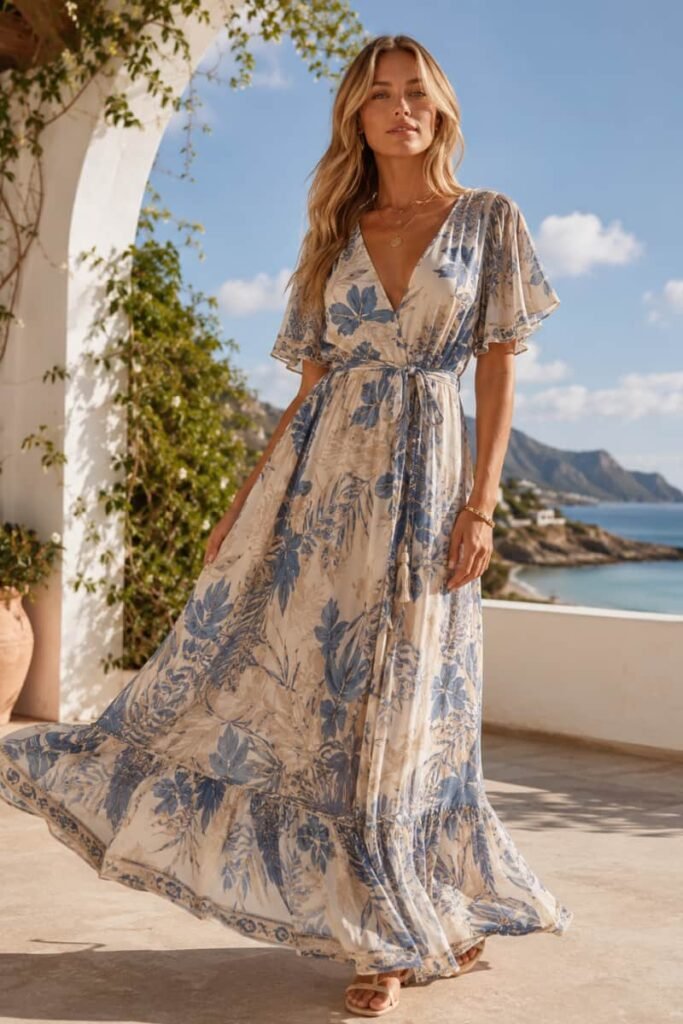
Product direction is organized by selling occasion, fabric behavior and construction risk. Each style group receives a development path suited to its silhouette rather than a generic long-dress pattern.

Resort Maxi Dresses

Resort maxi dresses depend on lightweight movement, breathable hand feel, print clarity and comfortable coverage. Common directions include halter necklines, cut-outs, elasticated backs, tie details, tiers and open skirts. Development focuses on fabric flow, opacity, lining strategy, print scale and travel-friendly finishing. A resort style should look fluid in motion while remaining stable through packing, warehouse handling and final steaming.

Printed Maxi Dresses

Printed maxi dresses require coordination among artwork scale, fabric width, pattern pieces and grading. Duolan can support strike-offs, color review, engineered placement and all-over prints. High-visibility areas such as center front, bust, waist seam, side seam and slit are checked before bulk cutting. Panel matching is prioritized where the design and target price justify the additional consumption and labor.

Satin Maxi Dresses

Satin maxi dresses are highly sensitive to grain direction, seam pressure, needle marks, shine variation and pressing. Slip silhouettes may need bias stability and hanging rest, while structured satin designs require support without destroying drape. Development compares shell weight, lining friction, zipper behavior and hem finish. Packing methods are selected to reduce hard creases and surface rubbing during delivery.

Chiffon Maxi Dresses

Chiffon creates softness and movement but demands disciplined handling. Cutting layers, edge control, seam allowance, stitch density, thread tension and lining length all affect the result. Tiered or ruffled chiffon styles also require consistent gathering ratios and balanced layer lengths. Duolan reviews transparency and movement on the body, since flat measurements alone cannot show whether a chiffon maxi feels secure and visually clean.

Occasion Maxi Dresses

Occasion maxi dresses combine visual impact with fit and movement. High slits, draped bodices, open backs, one-shoulder lines, corset-inspired structures, lace overlays and controlled embellishment can be developed according to the intended price tier. Fit review checks bust balance, waist placement, support, neckline stability, sitting comfort and walking range before the sample becomes a production reference.

Tiered Maxi Dresses

Tiered maxi dresses rely on controlled volume rather than unlimited gathering. Panel height, gathering ratio, seam thickness, fabric weight and total hem circumference determine whether the skirt looks light or bulky. Production planning also considers cutting consumption and line handling. Tier junctions are checked for symmetry, smooth distribution and resistance to seam slippage, especially in rayon, chiffon and loosely woven fabrics.

Fitted Maxi Dresses

Fitted maxi dresses need stable stretch, recovery and opacity across the full garment length. Garment weight can pull the waist and hip balance downward, particularly in jersey, stretch mesh and knitted structures. Pattern work considers negative ease, vertical growth, lining or body-layer support, slit movement and seam recovery. Fit is evaluated after wear and movement, not only immediately after dressing.

Halter and Backless Maxis

Halter, backless and cut-out maxi dresses shift support away from conventional shoulder and back areas. Neck pressure, side-bust coverage, adhesive-bra compatibility, strap position, back opening stability and zipper placement must be considered together. Internal elastic, cups, boning, mesh support or discreet stabilizing tapes can be developed where needed, while preserving the intended open silhouette.

Build a Commercial Maxi Dress Collection

A profitable collection needs role clarity across styles. Duolan helps organize silhouette, color, material, cost and production timing so visual pieces and volume pieces support the same launch.

Campaign Hero Style

A high-impact maxi dress can lead campaign imagery, social content or a seasonal lookbook. Hero styles may use strong prints, dramatic volume, open-back structures, embellishment or premium satin. Development begins early because photo samples must represent the intended production result. Visual impact is protected, while hidden construction and costly details are reviewed for bulk feasibility.

Core Sales Style

Core sales styles use cleaner construction, reliable fit and materials with predictable availability. Wrap maxis, halter columns, ruched jersey designs, printed A-lines and lined chiffon silhouettes can provide repeatable commercial volume. Approved patterns, BOM records, measurements and workmanship notes are preserved so repeat orders and color extensions do not restart from zero.

Seasonal Print Style

Print-led styles give a resort or summer drop a recognizable visual language. Color family, motif scale and garment placement should work across several silhouettes or related sets. Shared base cloths and coordinated color approvals can improve consistency across the collection. Print decisions are planned before cutting so the series feels intentional rather than assembled from unrelated fabrics.

Premium Occasion Style

Premium styles support higher price points through controlled satin, lace, mesh layering, corset-inspired support, draping or embellishment. Added complexity must create visible value. Duolan reviews whether each detail improves silhouette, fit or brand identity, and whether the process can be repeated across planned quantities without unacceptable variation.

Repeatable Fit Block

A proven bodice, waist and skirt block can support new colors, sleeves, necklines, prints and lengths. Fit-block reuse shortens decision cycles and strengthens consistency across drops. Pattern version, grading, fabric behavior, support method and QC points are retained as production assets, then reviewed before every reorder to account for material-batch or styling changes.

Collection Extension

A confirmed printed maxi can extend into a skirt set, lightweight top, midi dress or alternate neckline. A satin slip maxi can support a cami, skirt or shorter occasion silhouette. Extensions work best when the brand defines which elements must remain consistent – fabric, print, fit, color or construction – and which elements can change to create range without duplication.

Fabric and Lining Decisions for Maxi Dresses

Fabric choice controls the entire garment: fall, opacity, movement, seam behavior, comfort, cost and packing condition. Duolan reviews shell and lining as one system before pattern and workmanship are finalized.

Fluid Wovens for Movement

Chiffon, georgette, rayon, viscose and lightweight crepe create the movement expected in resort and occasion maxi dresses, yet each material reacts differently during cutting and wear. Grain instability, shrinkage, seam slippage, transparency and heat sensitivity are reviewed before sample cutting. Lightweight shells often need controlled cutting layers, panel numbering and careful handling to prevent distortion.

Lining selection follows the intended effect. A soft woven lining can preserve flow in an A-line or tiered dress, while a stretch lining may be required beneath a fitted bodice. Color is checked under retail and daylight conditions because a close shade can still change the outer fabric visually. Lining length is set according to slit position, transparency and movement, then checked after hanging and pressing.

Where an original fabric is unavailable, alternatives are compared by weight, drape, opacity, surface, shrinkage and cost rather than composition name alone. The objective is to retain the silhouette and wearing experience, not merely find a similar fiber label.

Satin and Occasion Surfaces

Satin performance depends on weave, weight, yarn, stretch and finishing. A glossy light satin can deliver fluid movement but show needle marks, seam impressions and body lines. Heavier satin creates more structure yet may increase drag at the skirt and pressure at the waist. Duolan compares drape, crease recovery, seam behavior and lining friction before selecting the pattern and support route.

Bias-cut satin requires additional control. Panels can relax and lengthen after cutting or sewing, so grain alignment and resting time are considered before final hemming. Straight-grain satin requires different shaping through darts, seams or drape. Zippers, facings, cups and internal support are selected to avoid visible bulk. Pressing temperatures and protective methods are tested to reduce shine marks and permanent edge impressions.

Packing is part of satin quality. Folding lines, tissue protection, garment orientation and carton pressure are considered according to fabric sensitivity and delivery route. A garment can leave the line correctly and still arrive poorly if finishing and packing are not aligned.

Stretch Fabrics for Fitted Maxis

Jersey, stretch crepe, stretch satin and stretch mesh must be assessed for stretch percentage, direction, recovery, opacity and vertical growth. Long garments add weight, so a fabric that fits correctly in a short sample may pull down at the waist or lengthen at the hem when used in a maxi silhouette. Duolan reviews fabric behavior with the intended garment length and structure rather than relying on hand feel alone.

Pattern ease is adjusted according to recovery and target fit. High negative ease can create transparency, seam stress and rolling at the waist; insufficient shaping can produce a loose hip and unstable neckline. Lining, power mesh, elastic support or double-layer construction may be used selectively to improve coverage and stability. Stitch type, thread elasticity and seam recovery are confirmed before bulk sewing.

Fitting includes movement and wear time. The dress is checked after walking, sitting and remaining on the body so vertical growth, neckline movement and slit opening can be observed. Measurement standards are then aligned with the approved wearing result.

Sheer and Decorative Systems

Mesh, lace, sequins and embellished fabrics require a coordinated shell, support and lining plan. Sheer areas need deliberate coverage zones rather than a universal full lining. Lace placement may need motif control around the bust, waist and seams. Sequin grounds must be checked for weight, skin contact, seam bulk, needle breakage and loss during handling.

Decorative materials can change fit. Dense embellishment adds weight and stiffness, while open mesh can stretch under the skirt. Duolan evaluates support structure, seam reinforcement, zipper protection and internal finishing during sampling. Areas touching the body may require soft lining, binding, facing or protective tape to reduce abrasion.

Bulk consistency depends on material approval and placement rules. Sequin direction, lace motif, mesh color, lining shade and embellishment density are documented before production. Pilot or first-piece verification is preferred for higher-risk combinations so the line does not discover structural problems after thousands of pieces are underway.

Engineering the Structure of a Maxi Dress

A long silhouette must remain balanced from neckline to hem. Support, waist position, skirt volume, slit construction, lining and movement are developed as connected decisions.

Bodice Support

Support requirements depend on neckline, fabric and wearing occasion. Halter, strapless, corset-inspired, low-back and cut-out designs may use cups, boning, mesh reinforcement, elastic, stabilizing tape or internal panels. The goal is secure fit without visible heaviness. Support placement is checked against bust balance, armhole coverage, neckline tension and intended undergarment use.

Waistline Position

Natural, raised and dropped waistlines change the perceived leg length and skirt fall. A waist seam placed only from a flat measurement may sit differently after the bodice supports the bust or after stretch fabric relaxes. Duolan checks waist position on the body, confirms side-seam balance and records the final relationship between bodice length, skirt length and total garment length.

Skirt Volume

Column, A-line, fit-and-flare, full-circle and tiered skirts require different hem circumference and fabric consumption. Too little volume restricts movement; too much can add weight, cost and packing bulk. Panel count, flare position, gathering ratio and fabric width are reviewed during pattern planning so the silhouette can be cut efficiently and sewn consistently.
Slit and Hem

Slit Engineering

A slit must balance appearance, stride and security. Position, height, overlap, facing, lining opening and reinforcement are confirmed on the fit sample. High slits may need internal control at the top point or altered seam construction. Grading rules are defined so larger sizes retain a consistent visual proportion without exposing more than intended.

Lining Coverage

Coverage is designed around opacity, comfort and silhouette. Full linings, partial skirt linings, bodice-only linings, shorts linings and mesh support layers can be used according to the style. The lining must move with the shell, remain hidden at the hem and slit, and avoid pulling at zipper or waist points. Length is checked after final pressing and hanging.

Hem and Movement

Movement depends on hem circumference, fabric weight, slit design and layer relationship. Fit review includes walking, turning and sitting. The hem is observed from front, side and back, then rechecked after the garment has hung. Narrow hems, rolled hems, blind hems or faced finishes are selected according to fabric behavior and price position.

Pattern, Length and Grading Control

Maxi length is not a single measurement. It is a proportional system connecting the bodice, waist, hip, slit, hem and intended wearer across the full size range.

Define the Length Reference

The measuring point must be agreed before sample approval. Common references include high point shoulder to hem, center back to hem, waist to hem and side-seam length. Duolan records the chosen point together with neckline shape, shoulder position and heel assumption where relevant. Front and back length are compared on the body, since draped bust areas or shaped backs can change the apparent hem level even when flat measurements look equal.

Control Grain and Relaxation

Bias panels, stretch knits and loosely woven fabrics may lengthen after cutting, sewing, steaming or hanging. Pattern direction, marker placement and resting treatment are selected according to fabric behavior. Final hemming is scheduled only after the garment reaches a stable condition appropriate to the material. For mixed-grain or asymmetric designs, each panel is checked for controlled relaxation so the hem remains intentional rather than accidentally uneven.

Grade More Than Width

Grading is not limited to adding circumference. Bodice length, waist placement, skirt drop, slit height, strap length, armhole depth and hem volume may need independent rules. Duolan follows the brand measurement specification and reviews whether the grade preserves the approved silhouette. A high slit should remain proportional, and an A-line skirt should maintain movement across sizes without creating excessive hem growth or visual heaviness.

Plan Length Variants

Petite, regular and tall programs can be developed where the brand requires defined length families. Separate length blocks are stronger than one universal garment when the market and range justify them. Key decisions include bodice proportion, waist placement, knee and slit relationship, and total hem position. Variant planning also supports length extensions from a confirmed maxi into midi or shorter versions while retaining the same brand fit language.

Color and Print Control for Maxi Dresses

Large garment panels make color and artwork decisions highly visible. Approval must cover the fabric surface, final silhouette and graded production rather than a small swatch alone.

Lab Dip Approval

Color is reviewed on the intended shell and lining materials because sheen, transparency and surface texture can change perception. Approval records should define the selected standard, acceptable direction and any matching requirement across shell, lining, zipper, thread and trims.

Print Scale Review

Artwork scale is evaluated against the complete garment. A motif that looks balanced on a swatch can become oversized at the bodice or visually crowded around the waist. Sample panels or digital simulations help confirm repeat scale before strike-off and sample cutting.

Placement and Matching

Engineered placements, borders and directional motifs require pattern integration. Center-front position, neckline, waist seam, side seams, tiers, slit and hem border are reviewed together. Matching level is defined according to visual importance, fabric consumption and target price rather than promised universally.

Bulk Color Consistency

Bulk rolls are inspected by batch and shade grouping before cutting. Panel numbering and controlled bundling reduce cross-shade mixing. Finished garments are compared under agreed lighting, with special attention to satin shine, sheer overlays and mixed-material combinations.

From Design Direction to Fit-Reviewed Sample

Sampling is a controlled decision process. Every stage should answer a specific question about silhouette, fit, fabric, construction, visual finish or readiness for production.

Start from the Available Information

A project can begin from a tech pack, sketch, reference image, original sample, measurement chart, fabric direction or collection brief. Duolan first identifies what is already confirmed and what remains open. The review covers target market, selling occasion, silhouette, neckline, support, skirt shape, length, slit, lining, color, quantity, price direction and launch date. Missing inputs are listed before sample cutting so uncertainty does not move silently into the pattern room. The group supports 3,000-8,000 style-development and sample workflows per month, with 15,000-35,000 sample pieces or iterations across the manufacturing system. Capacity is organized through pattern, sample, fabric, trim, workmanship and project-control teams rather than treated as a single sample-room output number.

Build the First Prototype

The first prototype translates design direction into physical proportion. Pattern makers consider fabric behavior, support, bodice balance, waist position, hip ease, skirt fall and total length. The first sample may use substitute materials when the purpose is pattern or construction review, but substitutions are clearly identified because drape and fit conclusions must not be confused with final-material approval. Before sewing, higher-risk details can be tested locally: neckline structure, draped panels, cut-outs, slit reinforcement, sequin seams, rolled hems or layered transparency. Early section trials reduce full-sample rework and reveal whether a visually strong detail is suitable for planned production quantities.

Review Fit and Movement

Fit review covers more than bust, waist and hip measurements. Maxi dresses are checked for neckline security, armhole coverage, waist placement, side-seam direction, back balance, slit exposure, lining movement and hem level. Walking, turning and sitting reveal issues that flat measurements cannot show. Comments are translated into measurable pattern or workmanship actions. “Too heavy” may require reduced gathering, a different lining or lighter trim. “Too loose at the back” may require contour correction, elastic adjustment or support changes. “Hem looks uneven” may involve grain, relaxation, panel length or body balance. A revision summary keeps design language and technical actions aligned.

Create the Revised Sample

The revised sample should confirm priority changes rather than introduce uncontrolled new variables. Updated patterns, measurements, material decisions and construction notes are versioned so design and factory teams refer to the same basis. Where several colorways or fabrics are planned, the team identifies which version needs a complete garment sample and which can be approved by swatch, lab dip, strike-off or partial test. A structured milestone plan is more reliable than one universal sample-day promise because a simple printed resort maxi and a boned satin occasion maxi do not require the same development path.

Prepare the Production Basis

A production-ready sample links appearance with manufacturing instructions. Fit points, total length, slit height, lining coverage, fabric standard, color, trims, seam methods, hem finish, labels and packing are aligned with the tech pack and BOM. PP or golden-sample status is clearly defined before bulk release. Where fit, structure or workmanship remains sensitive, Duolan can recommend first-piece or pilot verification before full-line output. The purpose is to confirm that the approved result can be repeated by the selected production route, not only by a senior sample maker.

Product Identity Matters​

Workmanship That Keeps Maxi Dresses Balanced

Long seams, lightweight materials and large hems expose sewing variation quickly. Workmanship is selected by fabric and silhouette, then verified for appearance, strength and repeatability.

Narrow and Rolled Hems

Chiffon, georgette and other lightweight fabrics often use narrow or rolled hems to preserve movement. Needle size, stitch density, folder setting, thread tension and seam allowance must suit the material. A hem that is too tight creates waves; one that is too loose can twist or expose raw edges. Trial sections are reviewed before the full skirt is finished, and layer lengths are checked after pressing and hanging.

Bias-Cut Seam Control

Bias seams can stretch during handling and produce rippling, twisting or uneven length. Cutting direction, panel pairing, seam support and machine feeding are controlled to reduce distortion. Satin and silky surfaces may require refined pressure and handling to avoid impressions. Garments are allowed to relax before final hem correction, particularly where long panels carry significant weight.

Slit Reinforcement

The top of a slit concentrates stress during walking and sitting. Reinforcement method, seam allowance, lining opening and facing are chosen according to fabric strength and desired appearance. Bar tacks, hidden reinforcement or internal tape may be used where appropriate. The slit is checked on the body to confirm height, overlap and security across the size range.

Lining Attachment

Lining can be attached at neckline, zipper, waist, seams or selected anchor points depending on the style. Too many fixing points can restrict movement, while too few can allow twisting and exposure. Duolan checks lining grain, ease, zipper clearance, slit opening and hem relationship. Decorative or sheer designs receive additional skin-contact and coverage review.

Gather and Tier Joining

Gathered and tiered skirts need consistent ratios and distribution. Uneven gathering changes the visual balance and can pull side seams forward or backward. Panel circumference, notch placement, seam thickness and stitching sequence are planned before line production. For sheer layers, seam finishing must remain clean without creating heavy horizontal bands through the garment.

Zipper and Side Seams

Invisible zippers can wave or distort when installed into bias, satin, stretch or lightweight fabrics. Stabilization, seam allowance and pressing are adjusted according to the material. Side seams are checked for vertical direction, symmetry and smooth transition through the waist and hip. In fitted styles, seam recovery and zipper movement are tested after wearing rather than only on the hanger.

How Approved Samples Become Bulk Standards

Production starts only after the approved result is translated into shared standards for materials, patterns, sewing, inspection and packing. Each stage closes a different source of variation.

StageControl FocusProject Output
Sample confirmationFit, proportion, length, movement, visual finish and open commentsSample review note and revision status
Material lockingShell, lining, trims, color, print, weight, stretch and approved alternativesBOM and approved material record
PP basisMeasurements, grading, workmanship, labels, packing and QC checkpointsPP or golden-sample confirmation
Production planningStyle complexity, quantity, materials, risk level, line and factory allocationProduction path and milestone plan
First-piece or pilotFit-sensitive, structure-sensitive and workmanship-sensitive detailsFirst-piece or pilot confirmation note
Inline controlDimensions, hem, lining, print placement, seams, appearance and batch consistencyInline QC records and corrective actions
Final releaseFinished appearance, quantity, size ratio, labels, packing and shipment documentsFinal quality and packing summary
Reorder preservationPattern version, BOM, approved sample, workmanship and QC historyRepeat-production reference file

A Scalable Manufacturing System for Maxi Programs

Duolan combines development depth with coordinated production capacity. Core projects, quick-response programs, repeats and scale-up orders are assigned according to complexity, materials, quality risk and launch timing.

16 Owned Factories

Owned womenswear factories provide direct control over key development programs, complex dress structures, sample-to-bulk transition and repeat standards. Core silhouettes and higher-risk styles can remain close to the central development and quality teams throughout production.

20+ Satellite Factories

Long-term satellite factories provide controlled capacity for repeat orders, seasonal peaks and larger rollouts. Allocation is based on product type and proven capability rather than open-market subcontracting. Project management, material standards and quality checkpoints remain centrally coordinated.

300 Sewing Lines

A group network of 300 apparel sewing lines supports multiple categories, quantities and production routes. Maxi dress projects can be separated by woven, stretch, lightweight, structured or decorative construction needs instead of forcing every style through one line setup.

50+ Responsive Lines

More than 50 quick-response and flexible lines support launch orders, repeat replenishment and selected smaller production stages within a larger brand program.

The focus is controlled transition and scale-up, not fragmented one-off orders without a development path.

12,000-20,000 Equipment Units

The group reports approximately 12,000-20,000 equipment units or sets across fabric inspection and cutting, CAD and sample development, core sewing, printing, embroidery, finishing, inspection and packing. Equipment is matched with specialized teams and production routes rather than presented as isolated machine ownership.

6.5-10 Million Monthly Capacity

Stable monthly garment capacity is approximately 6.5 million pieces, with peak output reaching about 10 million pieces and additional monthly expansion space of roughly 1-2 million pieces. Capacity planning for a specific maxi program is confirmed after style complexity, materials, approvals, order quantity and delivery window are reviewed.

Quality Control for Full-Length Dress Production

Maxi quality is evaluated as material, measurement, fit, movement and final appearance. Flat inspection alone cannot reveal every issue in a long, fluid or structured silhouette.

Fabric and Shade Inspection

Incoming materials are reviewed for width, weight, shade, defects, hand feel and agreed performance requirements. Shade grouping matters because long panels create large uninterrupted color areas. Stretch, recovery, opacity and shrinkage are considered where relevant. Shell, lining and trims are compared together so mismatched undertones or surface behavior do not appear only after garment assembly.

Cutting and Panel Control

Grain direction, marker layout, panel numbering and shade bundling are controlled before sewing. Printed, striped, border or directional fabrics receive additional placement review. Bias and lightweight panels are handled to reduce distortion. Tiered or multi-panel skirts are checked for correct lengths and notches so balance is built into assembly rather than repaired at final inspection.

Sewing and Construction Checks

Inline checks focus on side-seam direction, waistline alignment, zipper smoothness, slit reinforcement, lining attachment, gathering distribution, seam appearance and hem preparation. Higher-risk details are checked early in the line so corrective action can be taken before output grows. Workmanship references are aligned with the approved sample and production instructions.

Measurement and Grading Checks

Critical points include bust, waist, hip, bodice length, total length, waist-to-hem, slit height, strap length and hem circumference where specified. Measurement review follows the brand chart and agreed tolerances. Size progression is observed for silhouette and coverage, not only numerical compliance. A grade can meet width increments and still create an incorrect waist, slit or hem relationship.

Fitting and Movement Checks

Selected garments are reviewed on a mannequin or fit model where the style requires visual and movement confirmation. Neckline security, bust balance, waist position, side seams, back opening, lining, slit exposure and hem level are observed while standing, walking and sitting. Fitting QC is especially important for halter, backless, fitted, high-slit, satin and layered mesh maxi dresses.

Final Appearance and Packing

Final checks include pressing, stains, surface marks, seam impressions, loose threads, hem balance, lining visibility, embellishment condition, labels, size ratio and packing. Carton and polybag methods are checked against fabric sensitivity. Satin, sequins, delicate prints and structured bodices may need added protection so the approved appearance survives delivery to the brand warehouse.

Protecting Maxi Dresses Through Delivery

Finishing and packing preserve the work completed during development and sewing. Long garments need controlled pressing, folding and verification to arrive ready for warehouse processing and retail preparation.

Final Pressing

Pressing methods are matched to satin, chiffon, mesh, jersey and embellished surfaces. Heat, pressure, steam and protective layers are controlled to avoid shine marks, seam impressions, stretching and crushed texture. Hem balance is rechecked after finishing.

Garment Folding

Fold points are selected to reduce hard creases and distortion. Structured bodices, cups, boning, long slits, layered skirts and decorative surfaces may require tissue, shaped support or alternate folding. Hanging options can be reviewed when the product and shipping plan justify them.

Protective Packing

Polybag size, tissue, interleaving, garment orientation and carton pressure are planned around the material. Sequins, stones and delicate prints are protected from abrasion. Shell and lining are arranged to prevent twisting, and long hems are contained without forcing permanent folds.

Shipment Verification

Before release, teams verify style, color, size ratio, quantity, hangtags, care labels, barcodes, polybags, carton marks and packing instructions. A final quality and packing summary gives the brand a clear release basis before the goods move to the nominated logistics route.

Compliance Support for Global Fashion Programs

Audit readiness and product documentation matter as much as garment execution for established brands. Duolan separates completed audit records from standards supported according to project and market requirements.

Social Responsibility Records

Duolan factories have completed SMETA audit and SMETA 2-Pillar audit, with a SMETA social-audit record available for review under the appropriate business process.

Factory visits, video reviews and supporting documentation can be coordinated for qualified programs.

Testing and Market Standards

The manufacturing system can coordinate requirements related to BSCI, ISO 9001, AATCC, ASTM, OEKO-TEX, EN, China GB, GOTS and brand-specific standards according to the product, material, destination market and requested testing plan. Standards are described accurately as project support unless a current certificate is specifically verified.

Project Confidentiality

Design files, patterns, original samples, artworks, measurement charts and launch information can be handled under NDA arrangements.

Formal email confirmation, controlled file sharing, project ownership and restricted use of brand materials help protect development information throughout sampling and production.

Maxi Dress Projects from Development to Delivery

The following anonymized scenarios reflect the scale and working pattern of established fashion programs. Quantities illustrate realistic project structures based on multi-style orders rather than one isolated design.

Printed Resort Collection - 18 Styles, 48,000 Pieces

A U.S.-market resort label developed an 18-style seasonal group combining printed maxi dresses, halter silhouettes, tiered skirts and related lightweight pieces. The total planned order reached 48,000 garments across several colors and size ratios. The main development risks were print scale, color relationship, lining opacity, tier balance and maintaining consistent movement across different base fabrics.

Duolan organized the project by print family and construction route. Artwork scale and strike-offs were reviewed before full garment sampling. Selected hero maxis received full print-placement review around the neckline, waist seam, tiers and slit, while supporting styles used approved all-over repeats. Lining shades were compared under the shell, and total lengths were reviewed after hanging and pressing.

Production was divided according to print process, fabric behavior and style complexity. First-piece checks focused on shade grouping, print direction, skirt length and lining visibility. Inline records tracked critical measurements and tier distribution. The resulting standards were preserved for a later color extension and repeat program rather than treating the collection as a single-season file.

Satin Occasion Program - 12 Styles, 26,000 Pieces

An occasionwear program included 12 satin maxi styles with draped bodices, high slits, open backs and fitted waistlines. The order totaled approximately 26,000 pieces. Satin surface quality, seam impressions, bias relaxation, zipper movement and packing creases created the highest risks. Several silhouettes also needed internal cups, mesh support or discreet boning without losing the clean exterior.

Development began with fabric-behavior comparison rather than immediate full sampling. Selected satin options were assessed for drape, shine, crease recovery and lining friction. Local trials tested draped sections, slit reinforcement and zipper installation. Fit samples were reviewed for bust balance, waist placement, back stability, sitting comfort and total length. Bias styles were allowed to relax before final hem correction.

Before bulk release, shell, lining, zipper, support materials, measurements, seam methods and pressing standards were locked against the PP basis. First-piece verification checked the line setup before full output. Packing used surface protection and controlled folding to reduce hard creases. Final inspection included visual comparison under consistent lighting and measurement review across the size range.

Multi-Style Maxi Drop - 24 Styles, 72,000 Pieces

A fast-moving fashion program required 24 maxi styles across resort, contemporary fitted and evening directions, with a total order of about 72,000 pieces. Different materials included printed rayon, chiffon, stretch crepe, satin and mesh. The central challenge was not producing one difficult garment; it was managing simultaneous samples, approvals, material routes and production priorities without mixing standards.

The project was divided by risk: established fit blocks, new commercial silhouettes, photo-priority hero styles and high-risk construction styles. Each group received a different sample and approval path. Fabric and trim teams worked from a shared collection matrix, while pattern and sample teams tracked version status and open comments. Photo samples and high-risk fit samples were prioritized against the launch calendar.

Bulk planning separated standard, quick-response and higher-risk lines. Approved patterns, BOMs, workmanship points, measurement charts and packing instructions were linked to each style. Inline reviews concentrated on long-dress length, side-seam balance, opacity, slit height and sample-to-bulk appearance. Production records were retained to support replenishment of the strongest styles after launch.

Maxi Dress Manufacturing Frequently Asked Questions

Send the tech pack or reference images, fabric direction, size range, colorways, quantity by style and color, target market, required delivery window, label and packing requirements, and any testing standards. A preliminary cost direction can be discussed once material, construction and quantity assumptions are clear. Final pricing follows confirmed specifications and the agreed production basis.
Yes. Reference-led development can begin from images, sketches, original garments or moodboards. The team identifies missing construction, material, fit and measurement information before pattern work. Clear decisions are documented so the result is developed as a brand product rather than a visual copy without production standards.
Common options include chiffon, georgette, rayon, viscose, crepe, satin, jersey, stretch crepe, mesh, lace and printed woven fabrics. Selection depends on silhouette, drape, opacity, support, movement, season, target price and packing needs. Duolan can compare nominated fabrics and propose alternatives where availability or performance creates risk.
The team agrees on a measuring reference such as high point shoulder to hem or waist to hem, then reviews front, side and back balance on the body. Fabric relaxation, heel assumption, slit position and lining length are considered. Final rules are recorded in the measurement chart and PP basis before bulk production.
Yes, when the range strategy supports separate length families. Petite, regular and tall versions may need changes beyond the hem, including bodice proportion, waist placement, slit relationship and skirt drop. Separate pattern blocks are recommended when one universal length would weaken fit or create high return risk.
Shell and lining are reviewed together for color, weight, stretch, comfort, movement and coverage. Lining length and fixing points are checked around zippers, waist seams, slits and sheer zones. Fit and movement review confirms whether the garment remains secure under realistic lighting and wear conditions.
Approval may include artwork scale, strike-off, lab dip, sample panel, full garment sample and placement confirmation depending on the print. Direction, repeat, border position, panel matching and graded-size behavior are reviewed before bulk cutting. Shade grouping and panel numbering help protect consistency during production.
Duolan runs a production-readiness review covering sample status, fabric, lining, trims, color, measurements, workmanship, labels, packing and open risks. The order is then divided by style, color, size, quantity and complexity, and assigned to an appropriate production route. Higher-risk styles may receive first-piece or pilot verification.
The approved sample is aligned with the BOM, pattern version, measurement chart, construction details, material standards, PP basis and QC checkpoints. First-piece checks, inline inspections and final appearance reviews confirm whether production follows the approved standard. Records are retained for repeat orders and color extensions.
Yes. NDA arrangements can cover designs, patterns, tech packs, original samples, artworks, pricing, launch information and production details. Confidential materials are used only for the agreed development and manufacturing work, subject to the signed terms and project process.

Start Your Maxi Dress Manufacturing Project

Share the current stage of your maxi dress program, even when every detail is not yet complete. Duolan will review the available information and recommend a suitable development, sampling or production route. A strong brief allows fabric, pattern, fit, workmanship, capacity and delivery risks to be identified before they create repeated revisions or bulk disruption.

  • Tech pack, fashion sketch, reference images or original sample
  • Target fabric, lining, print, color or Pantone direction
  • Size range, measurement chart and fit priorities
  • Expected quantity by style, color and size
  • Target market, launch date and required delivery window
  • Labels, hangtags, packaging, testing and compliance requirements
  • Company or brand name, website and project contact details

Upload files under an NDA where confidentiality is required. The review will focus on design feasibility, material direction, sample path, bulk readiness, manufacturing allocation and the next decision needed to move the program forward with clear standards.


Start Your Apparel Development Project

OEM/ODM Manufacturing Support for Fashion Brands

Share your collection details, estimated quantities, target market, development timeline, and technical requirements. The production team will review your request and provide a tailored manufacturing solution based on your product category, fabric selection, construction needs, and delivery schedule.

Fashion Manufacturing Support with Scalable Production Capacity

From sample development to bulk production, Duolan supports fashion brands with confidential OEM/ODM manufacturing, stable quality management, flexible production planning, and coordinated multi-factory execution for seasonal and capsule collections.

Need Direct Assistance?

Seraphinite AcceleratorOptimized by Seraphinite Accelerator
Turns on site high speed to be attractive for people and search engines.