Skip to content
Midi Dress Manufacturing
Dress-focused development and manufacturing for established fashion brands, from fabric and pattern review to controlled bulk delivery.
- 8 core midi silhouettes supported across satin, crepe, jersey, chiffon, mesh, lace, velvet and sequin material directions.
- Midi-specific controls cover waistline position, front and back length, slit height, lining length, hem sweep, drape and grade rules.
- 16 owned factories, 20+ coordinated satellite factories, 300 sewing lines and 50+ flexible lines support multi-style programs and repeat production.
- Monthly development infrastructure supports approximately 15,000-35,000 sample developments and 3,000-8,000 style development workflows.
- Reference bulk production windows: 15-20 days for simple styles, 20-30 days for standard styles and 30-45 days for complex styles after approvals and material readiness.
- SMETA and SMETA 2-Pillar audit foundation supports onboarding discussions with fashion groups, product teams and sourcing offices.
Built for Established Midi Dress Programs
Fashion Brands
Product Teams
Sourcing Groups
What Brands Need from a Midi Dress Manufacturer
Category Focus
Fabric Control
Pattern Accuracy
Production-ready Samples
Bulk Consistency
Reorder Scalability
Control Midi Dress Risks Before Bulk Production
Midi dress risks become expensive after cutting begins. Early review connects each commercial risk with a measurable control point and visible evidence before production moves forward.
| Risk | Commercial Impact | Duolan Control | Evidence |
|---|---|---|---|
| Length endpoint looks unbalanced | Style appears shorter, heavier or less refined | Review waist position, torso proportion, front/back length and intended footwear | Fit photos, POM sheet, approved pattern |
| Fabric and silhouette mismatch | Poor drape, unwanted cling, weak structure or low visual value | Compare weight, stretch, recovery, opacity and seam response before final sampling | Swatches, drape comparison, trial sample |
| Grading changes the silhouette | Larger or smaller sizes no longer follow the approved shape | Control grade rules for waist, hip, length, slit and hem sweep | Size spec, graded nest, size-set review |
| Slit position becomes unstable | Exposure, restricted movement or inconsistent appearance | Set slit height from garment landmarks and reinforce stress points | POM record, movement review, sewing detail |
| Lining ends at the wrong level | Visible lining edge, transparency or pulling | Coordinate lining length, ease, slit opening and attachment method | Lining spec, sample photos, final measurement |
| Sample and bulk differ | Returns, delayed launch and costly correction | Lock approved sample, material direction, workmanship and first-piece standard | PP basis, first-piece report, inline QC |
| Packing damages finish | Satin creases, pleats collapse or embellishment marks the surface | Select folding, interlining, hanger or protection method by material and structure | Packing trial, carton check, shipment photos |
Midi Dress Styles Developed for Brand Collections

A-line Midi

Fit-and-Flare Midi

Bodycon Midi

Slip Midi

Wrap Midi

Shirt Midi

Corset Midi

Pleated Draped Midi
Midi Dresses Across Collection Roles

Cocktail

Wedding Guest

Work-to-Evening

Contemporary Occasion

Resort

Party
Engineering Balanced Midi Dress Proportions
Waistline and Torso Balance
Length Endpoint and Core POMs
Movement, Sweep and Slits
Grading and Size Inclusivity
Grading a midi dress is not a uniform enlargement. Bust, waist and hip growth interact with torso length, skirt circumference, slit position, neckline coverage and hem level. Fitted dresses need controlled ease and recovery; fluid dresses need enough volume without excessive bulk. Duolan follows the approved size specification and reviews high-risk points on graded patterns. Size-set requirements can be planned around the brand’s base, lower and upper anchor sizes, with fit comments converted into measurable pattern and construction corrections before bulk cutting.
Match Fabrics to Midi Dress Silhouettes
Fabric approval should answer four questions: does the material create the intended silhouette, can the pattern control its behavior, can the sewing method protect the surface, and can bulk production repeat the approved result? Duolan reviews drape, structure, stretch, recovery, opacity, weight, skin feel, seam response and finishing requirements before the material becomes a production standard.
| Fabric | Best Midi Directions | Key Behavior | Lining | Bulk Risk |
|---|---|---|---|---|
| Satin | Slip, bias, draped, occasion | Drape, shine, seam response, pressing | Usually required | Puckering, crease marks, shade variation |
| Crepe | A-line, wrap, work, occasion | Weight, grain, surface, shrinkage | Depends on weight | Twisting, uneven fall, surface damage |
| Jersey | Bodycon, ruched, fitted | Stretch, recovery, opacity, growth | Optional or partial | Bagging, shine, seam wave, transparency |
| Chiffon | Pleated, layered, printed | Transparency, movement, hem behavior | Full or strategic | Uneven hem, snagging, layer mismatch |
| Mesh | Lined bodycon, panels, overlays | Stretch direction, recovery, coverage | Usually required | Seam distortion, exposure, edge weakness |
| Lace | Cocktail, occasion, panelled | Motif scale, stretch, edge finish | Commonly required | Motif mismatch, fraying, seam bulk |
| Velvet | Party, winter occasion, fitted | Nap direction, pressure marks, stretch | Often required | Shade direction, crushing, seam movement |
| Sequin Fabric | Party, statement, holiday | Weight, backing, skin contact, cut loss | Required for comfort | Sequin loss, scratching, seam bulk, packing marks |
Pattern, Fit and Grading for Midi Dresses
Pattern from Fit Direction
Fabric-specific Corrections
Grading and POM Control
Size grading connects the approved base sample with the full sales range. Core points can include bust, waist, hip, front length, back length, waist-to-hem, slit height, hem sweep, lining length, strap position and sleeve measurements where applicable. Grade rules follow the brand’s size specification and market. High-risk points are checked for proportion, not only numeric growth. The final pattern version, measurement table and tolerance requirements are aligned before production so cutting, sewing and QC teams work from the same controlled reference.
Construction Details That Protect the Silhouette

Bodice Stability

Waist and Side Seams

Slits and Movement

Lining and Opacity

Hem and Pleating

Zippers and Trims
From Design Brief to Development Plan
Brand Inputs
Feasibility Review
Development Output
The development response can include clarification points, material direction, sample purpose, expected approval stages, risk notes and a proposed timing path. Sample fee and lead time are presented with the development scope so the brand team knows what is included and which approvals affect progress. The goal is a controlled route from concept to fit-reviewed sample, final revision, PP basis and bulk planning, supported by clear records rather than informal messages.
Production-ready Midi Dress Sampling
Sampling is a decision process, not a single garment. Each stage should answer a defined question about appearance, fit, fabric, construction or production readiness before the next stage begins.
First Sample Direction
Fit and Revision
PP and Bulk Basis
A pre-production or bulk-basis sample should represent the approved material, fit, measurements, construction and visible finish closely enough to guide production. Remaining open points are listed rather than assumed. Before bulk starts, Duolan aligns fabric, lining, trims, color, measurement specification, workmanship points, labels and packaging. Sample stages can include first proto, fit sample, revised sample, salesman sample and PP sample according to the brand’s internal approval system.
Development communication normally includes three visible update points: start confirmation, key technical updates for high-risk details and pre-completion notice with review guidance. This rhythm keeps approvals active and reduces late-stage surprises.

Lock the Standard Before Bulk Production
Approval Status
Material and BOM Lock
Production Path
First-piece and Inline Control
The first completed units are checked against the approved sample, measurements and workmanship points. Inline inspection then follows high-risk areas such as waist level, length, slit, lining, zipper, seam quality, embellishment and pressing. Problems are corrected while production remains active rather than waiting for final inspection. Records from the approved sample, first-piece review and inline findings create a clear basis for final acceptance.
Scalable Manufacturing for Multi-style Programs
16 Owned Factories
20+ Satellite Factories
300 Sewing Lines
50+ Flexible Lines
6.5M Monthly Capacity
3,000-8,000 Styles
Quality Control from Development to Shipment
Midi dress quality is built through connected checkpoints. Fit, material, workmanship, measurements, pressing and packing must be controlled before defects become repeated across an order.

Development Quality

Material and Pre-production

Sewing and Inline Inspection
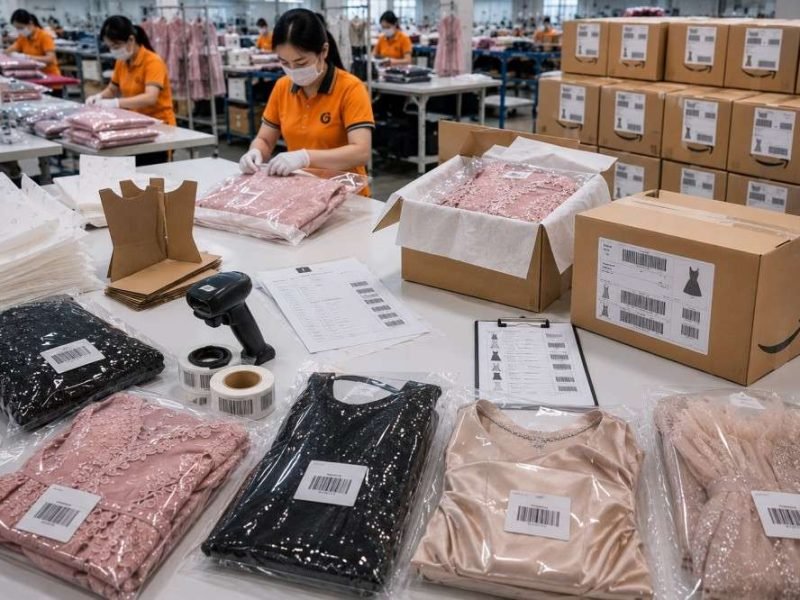
Final and Packing Review
Midi-specific checkpoints can cover more than ten visible areas, including waist level, front length, back length, slit height, lining length, hem balance, side-seam position, drape, zipper flatness, transparency, pressing and packing marks.
Packing, Delivery and Repeat-order Consistency
Garment Protection
Packing methods are selected by fabric and structure. Satin may need tissue or controlled folding to reduce pressure lines. Pleated styles need enough space to protect the fold direction. Sequin garments require skin and surface protection. Structured bodices may need shaped support or hanger packing. A packing trial can be reviewed before bulk packing so the carton method does not flatten drape, shift embellishment or create permanent marks.
Label and Packing Accuracy
Repeat-order Records
Reorders should build on approved production assets. Pattern version, size specification, BOM, fabric reference, color record, workmanship standard, QC findings, packing method and delivery notes are retained for the next production round. Before replenishment, material availability and batch behavior are reviewed again. The retained record supports repeat colors, length extensions, related styles and faster planning without assuming that every new batch will behave identically.
Compliance, Testing and Confidential Development
Social Audit Foundation
Duolan’s manufacturing system has completed SMETA audit and SMETA 2-Pillar audit and maintains a SMETA social audit record.
Relevant reports and onboarding documents can be reviewed according to project and confidentiality requirements.
Factory allocation should also be aligned with the approved manufacturing scope before production.
Market Standards
NDA and Design Security
Anonymized Midi Dress Collection Program
Project Scope
Development Challenges
Sample and Approval Route
Production Allocation
The 18 styles were divided into three production paths. Commercial woven styles followed stable sewing lines with shared material controls. Stretch fitted styles were assigned to teams experienced in feed balance, negative ease and recovery. Structured and embellished styles used dedicated technical follow-up and first-piece confirmation. Allocation reduced unnecessary line changes and allowed QC plans to focus on the risks of each style group instead of applying one generic checklist.
Quality and Delivery Control

Midi Dress Manufacturing Frequently Asked Questions

Start Your Midi Dress Development Review
A focused development review gives both teams a clearer starting point than a general quotation request. Share the available design files, material direction, fit requirements, expected style count, quantity structure and launch timing. Duolan will review the silhouette, fabric behavior, pattern and construction risks, sample route, bulk readiness needs and production path. When details are incomplete, the development team will identify the missing decisions before sampling begins. For multi-style programs, include the collection structure and indicate which styles are commercial core shapes, visual statement pieces or repeat candidates. Files may include tech packs, sketches, original-sample photos, size specifications, fabric references, trim details, label artwork, packaging instructions and inspection requirements. A clear brief supports more accurate material sourcing, sample planning, cost review and delivery evaluation.
- Product type, style count and intended collection role
- Tech pack, reference images, original sample or design files
- Fabric, lining, trim, color and special-process direction
- Size range, fit priorities and measurement specification
- Quantity by style, color and size where available
- Label, packaging, testing, inspection and delivery requirements