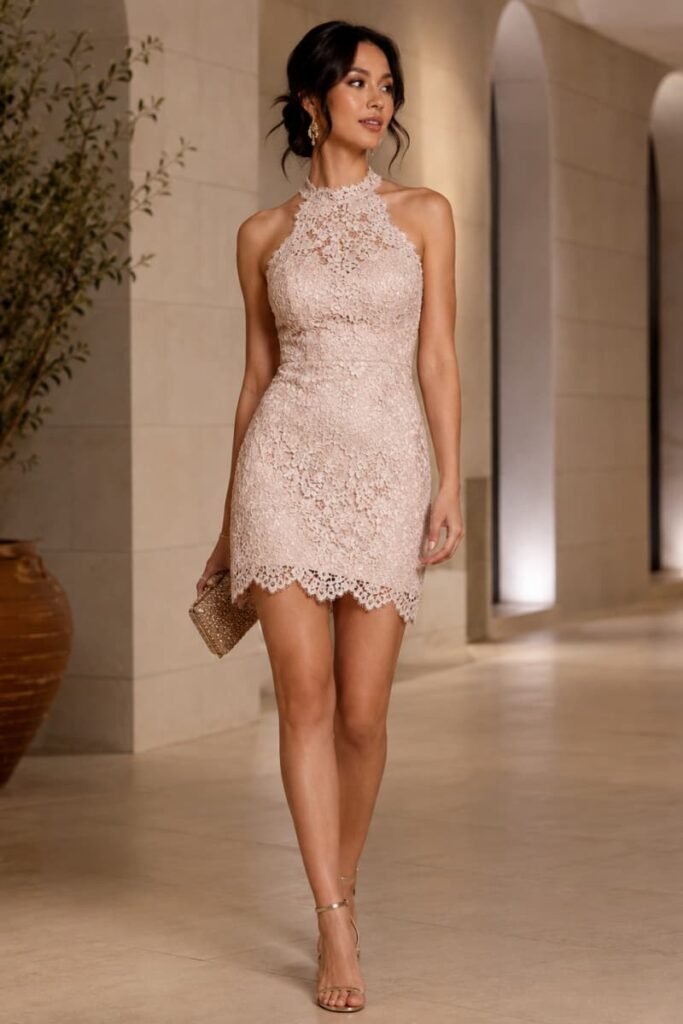
...

Mini Dress Manufacturing

Dress-focused development, sampling and scalable production for established fashion brands building commercial mini dress collections.

Duolan turns defined design direction into production-ready mini dresses through coordinated fabric development, pattern engineering, fit review, sampling, workmanship validation and controlled bulk execution. The manufacturing structure supports style-sensitive collections rather than isolated sewing orders.

  • 30+ years of fashion dress development and market-led product experience.
  • 16 owned womenswear factories supported by 20+ long-term satellite factories.
  • 300 sewing lines, including 50+ quick-response and flexible production lines.
  • 3,000-8,000 styles supported through development and sampling workflows each month.
  • Experience across bodycon, satin, corset, mesh, sequin, halter, backless and structured mini dresses.
  • SMETA and SMETA 2-Pillar audited manufacturing system for brand qualification programs.

Built for Established Fashion and Product Teams

Mini dress programs move quickly, yet the fit, fabric and construction risks remain high. Duolan works best with teams that manage defined brand positioning, structured development calendars, commercial order plans and repeat-production potential.

Fashion Brand Teams

Seasonal mini dress drops need more than attractive sketches. Brand teams need a manufacturing partner able to preserve the intended silhouette while coordinating fabric options, color direction, fit priorities, sample comments, production timing and branded delivery. Duolan supports multi-style programs where visual consistency matters across bodycon, satin, party, structured and embellished designs. Development decisions are recorded so approved details can move into production and future reorders without rebuilding the style from the beginning.
  • Collection-level fabric and silhouette planning
  • Multi-style sampling and revision coordination
  • Controlled transition from approval to repeat production

Product Development Teams

Product teams often arrive with a tech pack, sketch, reference sample or defined fit target. Duolan reviews the design against fabric behavior, pattern structure, lining, support, closure choice, workmanship feasibility and grading requirements before development begins. Sample comments are translated back into patterns, specifications and construction instructions rather than handled as surface alterations. The result is a sample that supports fit approval, commercial review and production preparation, not merely a visual prototype.
  • Fit priority and measurement review
  • Pattern correction linked to written comments
  • Production-readiness decisions before bulk release

Sourcing and Buying Offices

Sourcing offices need clear project control across several styles, materials, colorways and delivery dates. Duolan separates standard, structure-sensitive, material-sensitive and embellishment-sensitive mini dresses, then assigns the most suitable development and production path. Audit records, inspection requirements, nominated materials, third-party inspection, labels, packaging and shipment coordination can be aligned with the brand program. Communication remains tied to measurable milestones instead of general progress statements.
  • Structured style, color, size and quantity breakdown
  • Capacity planning across owned and supporting factories
  • Documented quality and delivery checkpoints

Complete Mini Dress Manufacturing Scope

A reliable mini dress program connects design review, material decisions, pattern work, sampling, bulk preparation, quality control and branded delivery. Each stage must protect the short silhouette, fit balance and commercial launch plan.

Project Feasibility Review

Duolan reviews the style purpose, target market, reference materials, expected quantity, size range, color plan and launch timing. Early review identifies whether the design depends on stretch recovery, structural support, transparent layers, placement workmanship or special finishing. The project then receives a development route rather than a generic sample quote.

Fabric and Trim Development

Fabric selection is assessed against drape, opacity, stretch, recovery, weight, handfeel, color response, lining need and bulk availability. Trims such as zippers, hooks, cups, boning, elastic, lace, sequins and labels are evaluated as working components of the garment. Material direction is locked before large-scale production planning.

Pattern and Fit Engineering

Mini dress patterns must balance bust, waist, hip, torso and hem proportions within a shorter body length. Duolan develops or corrects patterns around the intended silhouette, sample-size measurements, fit comments and fabric behavior. Grading preserves neckline, cut-out, waistline and hem relationships across the full size range.

Sampling and Revision

First prototypes, fit samples, revised samples, salesman samples and pre-production samples serve different approval purposes. Duolan confirms the sample type, required materials, key review points and timeline before work starts. Staged updates keep fabric, fit and structure decisions aligned while the garment is being developed.

Bulk Production Control

Approved samples do not enter bulk automatically. Fabric, lining, trims, color, measurements, workmanship, labels, packaging and delivery requirements are reviewed first. Production routes are then matched to style complexity, order volume and timing, with first-piece or pilot confirmation for higher-risk constructions.

Inspection and Delivery

Inspection begins before sewing and continues through first-piece review, inline checks, final inspection and packing verification. Mini dress controls focus on body length, coverage, bust support, strap length, transparency, side-seam balance, hem level, closures, embellishment attachment and size consistency. Branded packing and shipping documents complete the delivery path.

Mini Dress Styles Built for Commercial Collections

Mini dresses share a short length, yet their manufacturing logic changes with silhouette, material, support and occasion. Duolan develops style families around the commercial effect and the production controls required to preserve it.

Bodycon Mini Dresses

A bodycon mini dress depends on controlled negative ease, stable stretch, recovery and opacity. Development begins with fabric direction and target compression, followed by bust-waist-hip balance, seam placement and hem behavior. Bulk control focuses on fabric lot consistency, stretch direction, relaxation, measurement tolerance and resistance to riding up. Suitable programs include going-out, club, party, birthday and fitted capsule collections.

Corset Mini Dresses

Corset mini dresses require disciplined cup placement, boning position, underbust balance, waist shaping, back closure and lining. Attractive front construction can fail when the support system does not match the fabric or size range. Duolan tests internal structure, pressure points, neckline security and grading before bulk. Suitable directions include bustier minis, lace-up corset styles, satin corset dresses and embellished party silhouettes.

Satin Slip Minis

Satin slip mini dresses appear simple but expose every issue in drape, seam tension, bias behavior, pressing and packaging. Development controls strap position, neckline shape, bust ease, body length, lining coverage and hem flow. Fabric surface marks, needle holes, puckering, shine variation and compression creases receive extra attention. Suitable collections include cocktail, occasion, wedding guest, resort and elevated evening edits.

Sequin Party Minis

Sequin mini dresses need visual impact without excessive weight, skin irritation, broken edges or unstable hems. Duolan reviews sequin density, base-fabric strength, seam clearing, lining, zipper areas, stress points and packing protection. Placement and color must stay consistent across sizes. Suitable uses include holiday parties, birthdays, homecoming, dance events and nightlife collections where photography and movement strongly influence product performance.

Halter Mini Dresses

Halter minis transfer load toward the neck and upper bust, so strap width, neckline angle, cup position, back closure and torso balance matter. Development checks whether the fabric stretches under wear and whether the front remains secure during movement. Grading must preserve the neck-to-bust relationship across sizes. Suitable programs include summer party, resort, vacation, graduation and clean evening silhouettes.
Cut-out Club Dresses​

Backless Cut-out Minis

Backless and cut-out mini dresses require support without relying on conventional back coverage. Duolan evaluates concealed elastic, internal straps, boning, cups, adhesive-friendly areas, closure placement and lining continuity. Cut-outs are checked while standing, turning, sitting and reaching. Suitable directions include going-out, event, club, vacation and statement capsule collections where exposed areas must remain controlled rather than accidental.

Mesh Lace Minis

Mesh and lace mini dresses combine transparency, stretch and placement risk. The development route covers mesh recovery, lace motif position, seam visibility, lining color, coverage zones, neckline finish and size grading. Duolan aligns outer and inner layers so they move together without twisting or pulling. Suitable programs include feminine partywear, occasion minis, corset-lace combinations and layered fashion dresses.
Blazer Dresses

Structured Blazer Minis

Structured mini dresses and blazer minis rely on shoulder balance, lapel control, waist shaping, internal support, sleeve mobility and clean pressing. Fabric weight, fusible choice and lining affect both silhouette and comfort. Duolan develops the internal construction together with the outer design so the dress keeps its shape during wear and transport. Suitable programs include premium going-out, office-to-evening and modern occasion collections.

Control Mini Dress Risks Before Production

Short silhouettes amplify errors that may remain less visible in longer garments. A small change in body length, strap tension, stretch recovery or lining coverage can alter wearability, photography and return risk. Duolan links each risk to a measurable development or production control before volume is released.

Risk AreaCommercial EffectDuolan Control Standard
Body length and hem positionCoverage may look acceptable while standing but fail during walking, sitting, turning or reaching.Define the point of measure, review movement on the fit sample, confirm hem balance and apply a controlled tolerance in bulk.
Fabric opacityLight colors, stretched areas or flash photography may reveal underwear, seam allowances or internal construction.Review fabric under normal and strong light, confirm lining zones, check opacity at target stretch and lock the approved fabric lot.
Stretch and recoveryThe dress may loosen, ride up or change measurement after wearing, steaming or repeated handling.Record stretch direction, recovery behavior, relaxation, shrinkage and cutting direction; verify bulk lots against the approved sample basis.
Bust and neckline supportStrapless, halter, corset and cut-out styles may slip, gape or create pressure at the wrong points.Review cup position, neckline curve, boning, elastic, strap tension and closure strength during fit and grading.
Waist-hip balanceFitted minis may show drag lines, side-seam movement, horizontal wrinkles or upward migration.Correct pattern contour, waist shaping, hip ease, seam placement and fabric tension rather than altering the surface only.
Hem constructionLight fabrics may flip or wave; heavy decoration may pull the hem down; stretch hems may tunnel.Select a hem method by fabric behavior, test stitch and pressing settings, and review the finished hem after rest.
Closure performanceInvisible zippers, lacing, hooks or elastic may distort the silhouette or fail under stress.Confirm zipper length, insertion method, reinforcement, hook position and opening allowance on the sample and first piece.
Sample-to-bulk consistencyApproved fit and visual details may drift when materials, operators, lines or factories change.Lock PP standards, BOM, measurements, workmanship points and inspection checkpoints; validate first-piece and inline results before full release.

Fabric and Lining Engineering for Mini Dresses

Fabric decisions determine whether a mini dress feels secure, photographs well and remains stable in production. Duolan reviews material behavior together with silhouette, fit, construction, price level and delivery timing rather than sourcing fabric as an isolated task.

Stretch Jersey and Bodycon Fabrics

Bodycon mini dresses need a fabric that supports the intended contour without becoming transparent, overstretched or unstable after wear. Development records composition, fabric weight, usable width, stretch direction, recovery, shrinkage, surface finish and color response. A fabric may feel firm in the hand yet lose shape at the hip or hem after several minutes on the body. Another fabric may recover well but expose seam allowances under light colors. Duolan compares the material in flat condition, at target stretch and after relaxation before finalizing the pattern. Pattern measurements are not copied directly from a rigid-fabric block. Negative ease is adjusted around the fabric response and the desired compression level. Side seams, center-back seams, zipper areas and hems are reviewed for tunneling, twisting and stitch breakage. For programs using multiple colors, dark and light shades are checked separately because dye and finishing can change handfeel and opacity. Bulk cutting direction, fabric relaxation time and lot consistency become part of the production standard. Lining, power mesh or double layers may be added only where support or coverage requires them, avoiding unnecessary weight across the full dress.
  • Review points: GSM, composition, stretch direction, recovery, shrinkage and opacity
  • Fit points: bust-waist-hip contour, riding-up risk, seam tension and hem stability
  • Bulk controls: lot matching, fabric relaxation, cutting direction and approved stitch settings

Satin and Drape-led Fabrics

Satin mini dresses expose needle marks, seam puckering, pressing damage and packaging creases more readily than textured fabrics. Duolan first defines the visual target: fluid slip satin, firmer occasion satin, stretch satin, matte satin or satin-back crepe. The same pattern will not produce the same result across these materials. Lightweight satin may need carefully controlled ease and lining to avoid transparency, while heavier satin may need internal support to prevent the short hem from becoming rigid or bulky. Development checks drape, surface shine, grain direction, seam response, bias movement, needle performance, pressing temperature and crease recovery. Strap position, neckline shape and hem flow are reviewed after the sample hangs and relaxes, not immediately after sewing. Where bias cutting is used, the garment may be allowed to rest before final hem correction. Bulk control includes shade grouping, defect mapping, cutting cleanliness, machine handling and protective packing. Tissue, individual bags, hanging methods or reduced compression may be selected according to the finished surface and the brand delivery standard.
  • Review points: drape, grain, surface marks, needle holes, puckering and crease recovery
  • Construction points: neckline, straps, lining, bias behavior, hem flow and pressing
  • Bulk controls: shade grouping, clean handling, approved pressing and protective packing
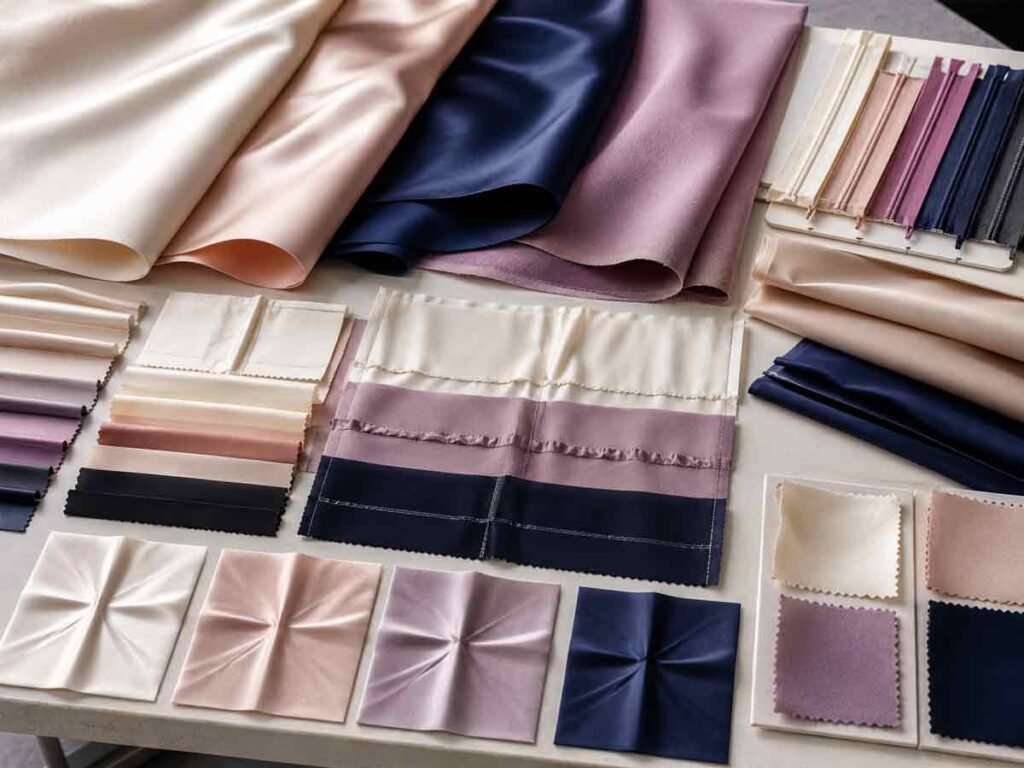
Mesh, Lace and Sheer Materials

Mesh and lace mini dresses require a deliberate relationship between the outer layer, lining and body coverage. Duolan reviews stretch compatibility, transparency, motif scale, edge finish, seam visibility, color layering and skin contact before building the sample. Lining cannot be treated as a shorter duplicate of the outer shell. Its length, color, stretch, fixation and seam position influence the final visual balance, especially around the bust, waist, hip and hem. Lace projects also need placement planning. Large motifs, scalloped edges and directional patterns can create noticeable differences between the left and right sides or between sample and bulk. Pattern pieces may be positioned to preserve symmetry at the neckline, waist or center front, which affects fabric consumption and cutting time. For mesh layers, stretch direction must align with the pattern and lining so both layers move together. Bulk inspection checks motif placement, seam matching, puckering, exposed seam allowances, lining coverage and edge quality under normal light and photography conditions.
  • Review points: outer-to-lining stretch, transparency, motif placement and edge behavior
  • Fit points: coverage zones, neckline security, side-seam stability and layered movement
  • Bulk controls: placement markers, symmetry standards, lining length and seam visibility

Sequin and Embellished Materials

Sequin and embellished fabrics add visual value but also introduce weight, abrasion, broken edges, seam obstruction and packing risk. Duolan reviews decoration density, base-fabric strength, repeat direction, usable width, seam-clearing method, skin-contact areas and expected garment weight. A densely decorated hem may pull a short dress downward or make the edge uncomfortable during movement. Heavy decoration around the bust or straps may also change support requirements. Sampling includes a workmanship swatch or small construction test when the placement or attachment method carries risk. Sequins may need to be removed from seam allowances and secured after sewing. Beads, pearls and rhinestones are checked for attachment method, back treatment and friction. Lining shields the skin and protects internal threads without making the garment stiff. Bulk planning includes additional handling time, process routing, inspection standards and protective folding. Packing avoids direct decoration-to-decoration pressure, while zipper, strap and hem areas receive targeted checks before shipment release.
  • Review points: decoration density, base-fabric strength, weight, abrasion and seam clearing
  • Construction points: lining protection, edge comfort, reinforcement and balanced placement
  • Bulk controls: process routing, attachment checks, protective packing and handling discipline

Pattern, Length and Fit Engineering
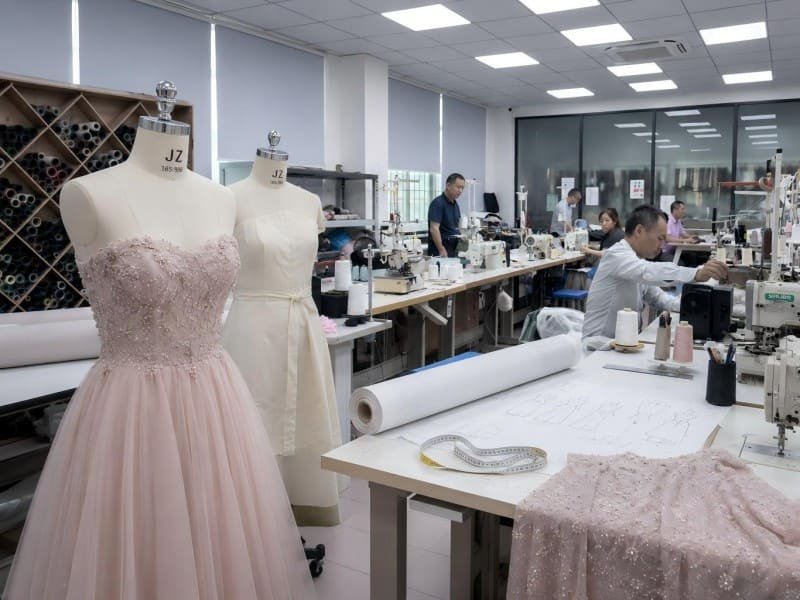
A mini dress is not a standard dress with a shorter hem. Every vertical and horizontal relationship becomes more visible. Duolan connects pattern work, fit review, movement testing, grading and measurement control to preserve the intended silhouette across sizes.

Define Measurements Around the Intended Silhouette

Development begins by confirming how the brand defines each measurement. Body length may be taken from the high shoulder point, center front, side seam or another controlled reference. Strap length, neckline depth, armhole, bust, underbust, waist, hip, hem opening, zipper length, cut-out position and lining length must follow the same measuring method through sampling, PP approval and bulk inspection. Duolan converts the brand size chart or fit sample into a point-of-measure map so pattern, sample and QC teams evaluate the same garment geometry. The short silhouette leaves little room for measurement ambiguity. A small change in shoulder slope can lower the neckline and shorten the apparent front length. Extra tension at the hip can lift the hem. A longer strap can change bust position and expose more coverage than intended. Duolan therefore reviews measurements as a connected system rather than isolated numbers. The sample-size target is agreed first, followed by the full size range, grading rules, intended ease and any style-specific exceptions.

Review Length During Real Movement

Flat measurements cannot confirm movement security. Fit review considers standing, walking, sitting, turning and reaching, with attention to hem lift, riding up, neckline movement and exposed lining. Bodycon, halter, strapless, backless and cut-out styles receive added movement review because tension shifts across the torso as the wearer moves. The goal is not to make every mini dress conservative; the goal is to preserve the intended visual exposure in a controlled, repeatable way. Fabric behavior changes the result. Stretch jersey can climb upward as the hip moves. Bias satin can lengthen after hanging. A heavy sequin hem can pull the silhouette down, while a light mesh layer can float above the lining. Duolan records fit comments with photos, measurements and pattern actions so revisions return to the paper pattern. Approved body length, lining length and hem relationship then become inspection points for production.

Correct the Pattern, Not Only the Sample Surface

Drag lines, gaping, side-seam movement, waist wrinkles and uneven hems often originate in the pattern. Temporary pinning may improve one sample without solving the underlying issue. Duolan traces fit comments back to neckline curves, darts, princess seams, side seams, waist shaping, back contour, stretch direction or lining structure. Pattern correction then updates the sample and the production files together. Fitted mini dresses receive close review around bust-waist-hip transition and negative ease. Corset styles require accurate cup placement, boning channels and back closure. Halter and backless designs require load control through the neck, side seam, underbust or internal elastic. Satin and other non-stretch fabrics need enough movement ease without losing a clean silhouette. Revised samples confirm whether the correction works on the body and whether the construction remains suitable for repeated production.

Grade Proportion Across the Full Size Range

A successful sample size does not guarantee a stable commercial size range. Mini dress grading must preserve neckline position, bust support, waist level, cut-out placement, strap length, skirt proportion and hem coverage. Programs commonly expand from a core fit sample into XS-XL or a broader brand-defined range. Duolan follows the supplied grading rules or develops a grading proposal around the target market, fabric behavior and intended fit. Mechanical increases can distort a short silhouette. Adding equal length at every size may change the design proportion, while insufficient vertical growth can reduce coverage in larger sizes. Stretch fabrics need different grade logic from rigid woven fabrics. Structured corset minis need cup and boning review by size, not only circumference changes. Duolan links grading to the size chart, fit comments, PP sample and measurement tolerance so approved proportions remain visible during bulk inspection and future reorders.

Development Can Start From Different Inputs

Brand teams enter development with different levels of information. Duolan converts each starting point into a controlled brief, identifies missing decisions and recommends the next sample path before pattern work begins.

Tech Pack and BOM

A complete tech pack provides style drawings, measurements, construction, materials, labels and packaging. Duolan checks whether the file matches the target fabric and silhouette, flags unclear points and prepares a sampling plan. Missing tolerances, grading rules, lining details or workmanship references are clarified before development.

Reference Images

Reference images can communicate silhouette, neckline, length, drape and visual details. Duolan separates the must-keep elements from interpretive areas, then proposes fabric, structure and construction options. Front, back, side and detail views improve accuracy. The final sample remains a developed product rather than a blind visual copy.

Original Sample

An original sample can be measured, opened where permitted, photographed and evaluated for fit, fabric, pattern and workmanship. Duolan records the parts to preserve, improve or adapt for another market. Brand ownership and confidentiality requirements are confirmed before any replication or redevelopment work begins.

Sketch and Moodboard

A sketch or moodboard gives creative direction without full technical detail. Duolan develops the concept into silhouette options, fabric directions, construction logic and a sample brief. The brand team confirms the visual priorities, target price level, size range and launch timing before detailed pattern development starts.

Fabric Direction

A nominated or preferred fabric may lead the development. Duolan checks whether the material can support the desired neckline, body contour, hem, support and workmanship. Where the original fabric is unstable, unavailable or outside the target cost, alternative swatches can be reviewed against the same garment effect.

Existing Style Redevelopment

An existing style may need fit correction, fabric improvement, new construction, updated colors or more reliable bulk production. Duolan compares the current sample with the desired result, documents the problem points and rebuilds the pattern, BOM or workmanship standards where needed. Previous approvals do not replace a new production-readiness review.

Mini Dress Sample Development From Brief to Approval

Sampling should help a brand make decisions on fit, fabric, workmanship and production readiness. Duolan defines the sample purpose, required materials, review points and timing before work begins, then keeps revisions tied to clear development records.

Project Review and Sample Planning

The first step clarifies what the sample must prove. A design prototype may focus on silhouette and material direction. A fit sample must follow agreed measurements and fit priorities. A salesman or presentation sample may require close visual finishing. A PP sample must represent the production basis. Duolan reviews style complexity, fabric readiness, trims, special workmanship, size range, expected quantity and target launch date before confirming the plan.

Typical planning ranges begin after reference materials and essential decisions are available. Standard knit or woven mini dresses often require about 7-12 working days for a first sample. Corset, heavily embellished, engineered lace, structured or multi-layer styles often require about 12-20 working days. Custom fabric, lab dips, printed strike-offs or special trims can add 7-21 days before the garment sample is ready. Final timing is confirmed against the actual development route rather than promised from the style name alone.

Pattern, Material and Workmanship Preparation

Pattern makers and sample technicians translate the brief into a construction route. Fabric, lining, closures, cups, boning, elastic, lace, sequins, beads or other details are prepared according to the sample purpose. Where exact bulk materials are not yet available, Duolan identifies temporary materials and marks the differences clearly so the sample is not mistaken for the final production standard. High-risk details may be tested through a small workmanship swatch before they are sewn into the garment.

Material and pattern preparation happen together. A change from rigid satin to stretch satin alters fit, seam construction and grading. A change in sequin density alters weight, lining and hem balance. A change in zipper type can affect the side seam and opening allowance. Early alignment prevents a technically correct pattern from being built around the wrong material assumptions.

First Sample and Internal Review

Before dispatch, the sample is reviewed against the agreed purpose. Duolan checks silhouette, key measurements, body length, lining coverage, neckline security, bust support, seam appearance, zipper function, strap length, hem balance and visible workmanship. Photos or video can be prepared for early review, especially when a design decision may influence the next step. The aim is to identify clear issues before international shipping or a formal fit session.

An internal review does not replace brand approval. It creates a cleaner sample and a more focused feedback process. Complex styles may receive a short review note listing the points already verified and the areas needing brand confirmation. The sample is then shipped with project identification, sample type, measurement information and tracking details so the receiving team knows how to evaluate it.

Fit Comments and Pattern Revision

Fit comments work best when they connect observation, measurement and desired result. Duolan can work from annotated photos, fit-session videos, measurement sheets, written comments or live review calls. Comments are sorted into pattern, measurement, fabric, construction and workmanship actions. Conflicting comments are clarified before the revised sample begins. A typical revision may require about 5-10 working days after comments and materials are confirmed, while complex redesign or new material development requires a new schedule.
Revision records preserve the reason behind each change. A lowered neckline may require strap, cup and lining adjustments. A tighter waist may change zipper tension and hip movement. A shorter hem may require new lining and movement review.

PP Approval and Production Readiness

A PP sample should represent the approved production basis in fabric, color, trims, measurements, construction, labels and workmanship. Duolan reviews open issues before PP development and records any approved exceptions. A typical PP sample may require about 7-12 working days after bulk materials are ready, although special workmanship or multiple approval rounds can extend the schedule.
Approval is followed by a production-readiness check. Fabric, lining, trims, colors, measurements, tolerances, workmanship points, labels, packaging and inspection requirements are locked. Higher-risk mini dresses may enter first-piece confirmation or a small pilot stage before the full run is released. The result is a controlled path from sample approval into manufacturing, not an abrupt handover between separate teams.

Revised-Fit-Approval​.webp

Construction Details That Hold the Silhouette

Mini dress quality is often decided inside the garment. Support, lining, closures, seams and hem methods must work with the outer design so the short silhouette remains secure, clean and repeatable in volume.

Bust and Cup Support

Corset, bustier, halter, strapless and cut-out minis may use molded cups, foam, lining, underbust seams, boning or internal elastic. Duolan aligns cup size, cup position, neckline and body length during fitting. Support components are checked for pressure, visibility and grading. Bulk standards define placement, seam allowance and reinforcement so the bust shape remains consistent.

Straps and Necklines

Thin straps, wide halter ties, chain straps and adjustable hardware carry different loads. Duolan checks strap width, attachment position, length, slider function, neckline curve and reinforcement. Fit review confirms whether the neckline stays secure during movement. Production inspection checks matching strap length, clean topstitching and stress-point strength across sizes and colors.

Lining and Coverage

Lining controls opacity, comfort, support and the visual relationship between outer fabric and body. Duolan selects lining by stretch, weight, color, handfeel and fixation method. Coverage zones are tested under normal light and photography. Lining length and seams are kept away from exposed cut-outs and short hems unless the design requires a visible layered effect.

Zippers and Closures

Invisible zippers, side zippers, hooks, lacing, buttons and elastic closures affect fit and entry. Duolan confirms opening length, zipper strength, seam support, guard placement and top closure. Structured minis may need reinforcement around the zipper or lacing panel. Bulk inspection checks alignment, smooth operation, secure attachment and consistent opening position.

Seams and Stress Points

Fitted mini dresses concentrate tension at side seams, waist seams, underbust seams, back openings and strap attachments. Stitch type, seam allowance, thread, reinforcement and elastic recovery are selected by fabric and movement. Duolan tests high-stress points on the sample and first piece, then records the approved method for production and inspection.

Hems and Edge Finishing

A short hem remains highly visible and must stay level during movement. Fine satin may need a narrow clean hem, stretch jersey may require coverstitch or bonded finishing, mesh may use rolled or raw-cut edges, and decorated fabrics may need hand finishing. Duolan reviews weight, flare, stretch and pressing response before locking the method.

Special Workmanship for High-Impact Mini Dresses

Decoration creates value only when it supports the silhouette, wearing experience and production plan. Duolan develops workmanship through material tests, placement standards and repeatable process controls rather than adding complexity without a commercial reason.

Sequin Application

Sequin work may use all-over fabric, machine embroidery, placement panels or local hand application. Duolan reviews repeat direction, density, base-fabric strength, seam clearing, skin contact and finished weight. Critical areas such as zippers, straps, armholes and hems receive separate treatment. Bulk standards define placement, attachment, trimming and protective packing.

Beading and Rhinestones

Pearls, beads, stones and heat-fixed decoration are planned around visual focus, garment weight and stress. Duolan confirms the design map, attachment method, backing, spacing, edge comfort and packing protection through a sample or workmanship swatch. Inspection checks missing pieces, loose attachment, sharp edges and consistency across colorways and size grades.

Embroidery and Lace

Embroidery and lace placement can shape the bust, waist and hem while increasing cutting and matching complexity. Duolan reviews artwork scale, stitch density, backing, motif symmetry, scalloped edges and lining. Placement markers are linked to pattern pieces so the approved visual relationship can be reproduced during cutting and sewing.

Printing and Placement

All-over, digital, screen and placement prints need artwork, repeat size, color reference, target fabric and pattern context. Mini dress details such as ruching, darts, cup seams, cut-outs and grading can shift the print. Duolan uses strike-offs, color review and sample-garment checks before bulk print standards are locked.

Ruching and Draping

Ruching, gathering, pleating and draping alter volume and body contour. Duolan defines gathering ratios, anchor points, elastic tension, seam placement and left-right balance. Fit review checks whether the detail supports the waist and hip or creates unwanted bulk. Production templates and process markers help maintain consistent placement in volume.

Washing and Finishing

Washing, softening, heat setting, pressing and surface finishing can change dimensions, handfeel, shine and color. Duolan reviews the intended effect on the actual fabric and construction, then confirms shrinkage, stretch recovery and pressing method. Bulk finishing follows approved settings, with special protection for satin, structured cups, sequins and delicate lace.

From Approved Sample to Controlled Bulk Production

Sample approval is a decision point, not an automatic production release. Duolan checks whether materials, measurements, workmanship, labels, packaging and timing are ready to be reproduced at scale before the first bulk units enter the line.

Bulk Readiness Review

Duolan first confirms the approval status: fit approved, visual approved, PP basis or still pending refinement. The order purpose is also identified as launch order, test order, repeat order or scale-up order. Fabric, lining, trims, colors, measurements, tolerances, workmanship points, labels and packaging are checked against the approved basis. Open issues are listed before production planning begins.
The review prevents a visually approved sample from hiding unresolved production risks. A temporary zipper, substitute lining or hand-corrected hem may be acceptable in an early sample but unsuitable for bulk. A sequin placement may need a cutting marker. A bodycon fabric may require relaxation and lot control. A corset mini may need a first-piece check for cup and boning alignment. The output is a concise production-readiness note that shows what is locked and what still needs approval.

Production Path and Timeline Plan

Bulk orders are broken down by style, color, size, quantity, fabric, construction, workmanship and target delivery. Standard minis, fit-sensitive bodycon styles, structured corset styles, material-sensitive satin dresses and embellished party minis are not treated as one production block. Duolan matches each group to the most suitable line, technical team and supporting process. Multi-style programs may be divided into production waves so approved styles move first while later complex styles complete preparation. Indicative manufacturing ranges begin after PP approval and bulk material readiness. Standard mini dresses often plan around 30-45 days. Structured, embellished or multi-process styles often plan around 45-60 days. Large multi-style programs may use staged deliveries across a 35-60 day window. Exact timing depends on fabric production, color approval, trim readiness, quantity, factory allocation, inspection and packing requirements. The confirmed schedule is built backward from the required delivery date.

First-piece and Pilot Confirmation

Higher-risk styles are verified before the full run is released. First-piece confirmation checks measurements, pattern balance, fabric response, construction, closure function, workmanship and visual details under production conditions. A small pilot may be used when the style depends on complex corset structure, dense sequins, layered mesh, satin handling or sensitive fit. Process settings and corrective actions are recorded for the production line.
Early verification is especially valuable when a sample was made by highly skilled sample technicians. Bulk operators, cutting methods and production equipment can produce different results unless the method is transferred clearly. Duolan uses approved samples, construction instructions, measurement points, workmanship references and first-piece results to bridge the gap. Full output begins only after critical points are aligned.

Repeat Production and Standard Preservation

Repeat orders benefit from preserved patterns, size specifications, BOM records, approved workmanship and previous inspection findings. Duolan reviews current material lots, colors and order requirements before reusing the standard. A repeat order may still require a confirmation sample or first piece when fabric, factory, quantity, color or construction has changed. The goal is to reproduce the approved product while recognizing new variables rather than assuming the previous order will repeat automatically. Reorder planning also considers demand speed and capacity. Strong-performing mini dresses may need replenishment during a selling window. Archived standards shorten preparation, while flexible lines and satellite capacity can support scale-up when the style is suitable. Quality checkpoints remain tied to the approved basis so faster replenishment does not remove fit, material or workmanship controls.

Bulk Planning for Multi-Style Mini Dress Programs

Commercial collections often include 10-30 styles across several fabrics, colors and construction levels. Duolan organizes the program by complexity and readiness so development, production and delivery remain visible across the complete order.

Classify Styles Before Capacity Is Assigned

Each style is classified by fabric behavior, fit sensitivity, structure, workmanship and material readiness. A simple stretch mini, a bias satin slip, a corset dress and a fully sequined party mini require different sewing skills and preparation. Duolan identifies standard, fit-sensitive, material-sensitive, structure-sensitive and embellishment-sensitive styles before capacity is assigned. The classification guides sample priorities, technical support, line selection and inspection intensity.

Color and size structure also influence planning. A style with six colors and an extended size range creates more cutting, bundling, labeling and inspection combinations than a single-color core style. Nominated fabric, custom lab dips, printed artwork and special trims may create separate readiness dates. The plan keeps these variables visible so one delayed input does not obscure the status of the full collection.

Match Production Resources to Product Risk

Core high-risk styles can remain under tighter control within owned factories and experienced lines. Standard or repeat styles can use established production routes. Flexible lines support priority launches, pilot orders and replenishment where the garment and material are ready. Satellite factories add capacity for approved, transferable styles when order volume grows. Special processes such as print, embroidery, washing and embellishment are routed through long-term supporting resources with defined sample and production standards.

Factory count alone does not create stability. Product-to-line matching, material readiness and technical transfer decide whether capacity is useful. Duolan uses production files, approved samples, first-piece checks and inline inspection to keep the style standard visible when several lines or factories are involved. The same approach supports seasonal peaks without treating every order as an emergency.

Build Delivery in Controlled Waves

Staged delivery can protect launch dates when several mini dress groups have different preparation needs. Ready standard styles may enter production first. Structured or embellished styles can follow after workmanship and material confirmation. Shipping waves are planned around sales priority, complete color-size assortments, packing requirements and freight strategy. A partial shipment is not released merely because units are finished; the assortment and launch purpose must remain useful to the receiving team.

Progress is tracked through sample status, material status, cutting, sewing, special process, inspection, packing and shipment preparation. Order changes are assessed for their effect on fabric, capacity and delivery rather than accepted without impact review. A clear program plan helps brand teams manage photography, launch, replenishment and warehouse intake with fewer surprises.

5.Channel-Specific Packing Needs (1) dl

Mini Dress Quality Control Across Six Checkpoints

Quality control follows the product from material approval to shipment preparation. Mini dress inspection concentrates on fit-sensitive and exposure-sensitive details rather than treating loose threads as the only quality concern.

Development Risk Review

Before sampling or bulk, Duolan identifies high-risk areas such as body length, stretch recovery, transparency, bust support, zipper tension, sequin weight, lining coverage and hem behavior. The review determines which details need material testing, fit comments, workmanship swatches, pilot confirmation or tighter inspection attention.

Fabric and Trim Inspection

Bulk fabric is checked against the approved direction for color, defects, width, weight, stretch, handfeel and visible surface behavior. Trims are reviewed for size, color, function and attachment. Satin, mesh, stretch jersey, lace and embellished materials receive product-specific checks before cutting begins.

PP Standard Locking

The PP sample, measurement specification, tolerance, BOM, workmanship references, labels and packing instructions become the production basis. Open approvals are documented. Mini dress control points include body length, bust-waist-hip measurements, lining length, strap length, neckline, cut-outs, closures, hem and decoration placement.

First-piece Confirmation

Initial production pieces are measured and compared with the approved standard before volume increases. Fit-sensitive or complex styles may receive a pilot run or critical-process trial. Corrections are applied to pattern, sewing method, pressing, decoration or material handling while the affected quantity remains limited.

Inline Inspection

Inline checks review measurements, seam balance, stitch quality, zipper position, strap attachment, lining, hem level, symmetry, surface condition and embellishment. Findings are recorded and corrected during production. Inspection frequency and sampling level are aligned with style risk, brand requirements and the approved quality plan.

Final and Packing Check

Final inspection confirms finished measurements, appearance, workmanship, labels, barcodes, folding, polybags, size-color assortment and carton marks. AQL requirements or third-party inspection can be coordinated according to the brand program. Shipment release follows correction and recheck of identified issues rather than packing first and reviewing later.

Branding, Packing and Shipment Preparation

A finished mini dress must arrive ready for warehouse intake, retail presentation or ecommerce fulfillment. Duolan coordinates brand identification, product information, protective packing, carton structure and shipping documents around the garment and sales channel.

Main and Size Labels

Main labels and size labels are confirmed for artwork, material, dimensions, fold, position and attachment. Placement must not irritate the wearer or distort delicate fabric. Duolan checks label content against the approved file and maintains consistent orientation across styles and size ranges.

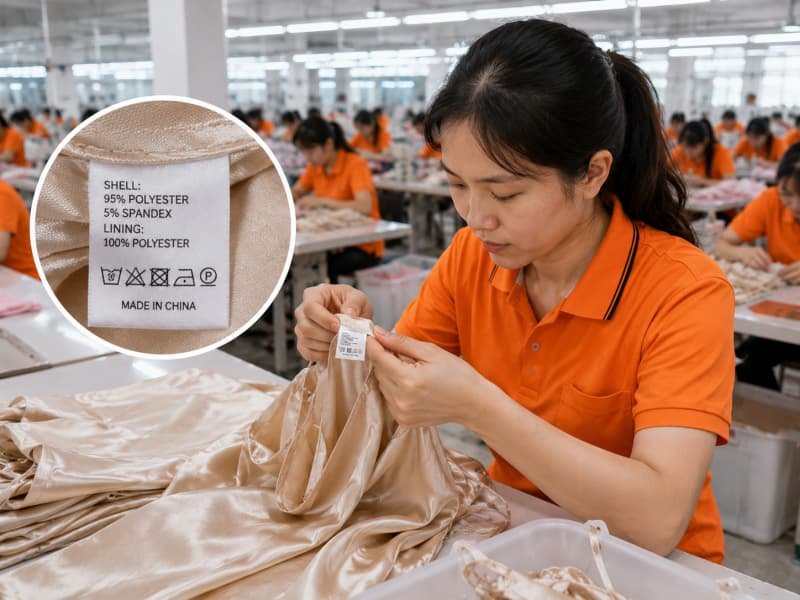
Care and Content Labels

Care labels can include fiber content, care symbols, country of origin, legal text, style information and brand-specific references. Final wording remains the brand responsibility, while Duolan follows the approved artwork and placement. Printed clarity, label direction and secure attachment are checked during final inspection.

Hangtags and Barcodes

Hangtags, price tickets, RFID or barcode labels are matched to style, color and size data. Duolan can follow supplied numbering files and nominated label sources. Scan verification, attachment location and presentation are reviewed before packing, especially for multi-style programs with many SKU combinations.

Garment Protection

Packing is adapted to the garment surface and structure. Satin may need tissue and reduced compression. Sequins and rhinestones need protection from abrasion. Corset cups and boning need shape protection. Fine straps are secured to prevent tangling. Hanging or flat packing is selected according to the approved delivery standard.

Carton Assortment

Carton plans define quantity, size-color assortment, folding method, inner protection, carton strength, gross weight and marks. Multi-wave shipments require clear style and SKU identification. Duolan reviews the packing ratio against the receiving plan so completed garments arrive in usable commercial assortments.

Shipment Documents

Commercial invoices, packing lists, carton details, booking information and nominated-forwarder communication are prepared according to the agreed trade and shipping terms. Final timing considers inspection release, packing completion, warehouse cut-off and freight booking. Air, sea or combined shipping can be planned around the launch requirement.

Manufacturing Capacity for Multi-Style Programs

Duolan combines owned-factory control with a long-term supporting network. The scale matters because mini dress collections frequently mix simple, fitted, structured and decorated styles within one launch calendar. Capacity is valuable only when development standards, production routes and quality checkpoints remain coordinated.

Manufacturing FactScaleValue for Mini Dress Programs
Owned womenswear factories16 factoriesCore, complex and high-priority mini dress programs can remain under direct manufacturing control.
Satellite factory network20+ long-term partnersApproved repeat styles and volume increases can gain additional capacity without rebuilding the supply network.
Supporting workforce12,000+ workersMulti-region production support provides capacity buffering during seasonal peaks and large launch programs.
Sewing lines300 linesSeveral style groups, colorways and delivery waves can run in parallel when materials and standards are ready.
Flexible production lines50+ linesPilot orders, priority launches, replenishment and selected fast-response programs receive dedicated routing.
Stable monthly capacityApprox. 6.5 million piecesLarge brand programs can move from launch quantities into repeat and scale-up production.
Peak monthly capacityUp to 10 million piecesThe manufacturing network can absorb seasonal concentration through coordinated capacity planning.
Style development workflows3,000-8,000 styles monthlyLarge numbers of samples, revisions and multi-style projects can be managed through specialized development teams.

Compliance, Confidentiality and Supplier Qualification

Global fashion programs require more than product audit records, quality standards, material requirements, confidential development and brand-specific documentation must fit the supplier qualification process.

Audit and Social Responsibility

Duolan relies on a manufacturing system that has completed SMETA audit and SMETA 2-Pillar audit. Relevant audit records and supplier capability information can be reviewed under the appropriate qualification process.

Factory allocation for a program is discussed alongside the required social responsibility, production and documentation expectations rather than presenting an audit name without identifying the manufacturing route.

  • SMETA audit completed
  • SMETA 2-Pillar audit completed
  • Factory-specific document review available during qualification

Market and Brand Standards

Project requirements can be aligned with BSCI, ISO 9001, AATCC, ASTM, OEKO-TEX, EN standards, China GB standards, GOTS and brand-specific testing or quality instructions where applicable. Duolan does not present every standard as a universal certificate. The responsible factory, material, product, destination market and test scope are reviewed so the correct requirement is applied to the actual mini dress program.
  • Material and product testing planned by market and garment risk
  • Brand manuals, restricted substances and quality standards can be incorporated
  • Third-party laboratories or inspection agencies can be coordinated when required

Design Confidentiality

Unreleased styles, tech packs, original samples, print artwork, labels, pricing and production information can be protected through NDA and controlled internal access. Project references used for capability presentation are anonymized or approved before publication. Development files remain connected to the responsible team, while factory and process sharing is limited to the information needed to execute the garment. Confidentiality supports long-term cooperation and protects both design value and launch timing.

  • NDA support before full design disclosure
  • Restricted handling of unreleased styles and brand files
  • Anonymous case presentation unless written approval is available

Anonymized Case: 18-Style Mini Dress Program

The following program reflects the scale and structure of a commercial brand order handled through a multi-style development and production route. Brand identity, labels and proprietary designs remain confidential.

Program Scope and Commercial Target

A US fashion brand planned an occasion and going-out mini dress drop with 18 styles and a total order quantity of 48,600 pieces. The range covered XS-XL, six principal color families and four product groups: six stretch bodycon minis, four satin slip or draped minis, five corset and structured minis, and three mesh or sequin statement styles. Individual style quantities ranged from 1,800 to 4,200 pieces according to commercial priority. The launch required coordinated photography samples, final fit approval, branded labels, barcode files and four staged shipping waves.
The main challenge was not total capacity. Each product group had a different risk profile and material readiness date. Stretch styles needed opacity and recovery control. Satin styles needed color, drape and pressing discipline. Corset styles needed cup, boning and back-closure stability. Mesh and sequin styles required lining, placement and protective packing. A single production route would have created unnecessary waiting and transferred risk between unrelated styles.

Development Route and Sample Decisions

The project began with technical files, reference samples, a brand size chart and target launch dates. Duolan divided the 18 styles into standard, fit-sensitive, structure-sensitive and embellishment-sensitive groups. Material boards were prepared by group rather than style alone, allowing compatible linings, zippers and support components to be reviewed together. Standard first samples were planned within 8-12 working days after material direction was confirmed. Structured and embellished samples followed a 13-18 working-day route, including workmanship swatches for sequin placement and corset support.
Twelve styles reached approval after one formal revision. Six styles required a second revision because of bust support, strap tension, lining length, satin hem balance or sequin weight. Comments were returned to the pattern, measurement and construction files. PP samples used bulk-intent materials and approved labels so production readiness could be assessed before capacity was released.

Pattern, Fabric and Workmanship Corrections

Bodycon styles were corrected around hip tension and riding-up risk. Two light colors received partial double layers after opacity review. Satin styles used adjusted seam tension, neckline stabilization and a revised hem process after the first samples showed minor waviness. One bias-inspired style was allowed to rest before final hem leveling. Corset styles received revised cup position, boning termination and zipper reinforcement. A lace-up back style gained a modest internal support panel so the external lacing remained decorative rather than carrying the full load.
For the statement group, sequin density near the hem was reduced without changing the front visual effect, lowering weight and improving edge comfort. Mesh lining coverage was lengthened by 1.5 cm on two styles after movement review. Placement markers were added for lace and sequin panels, while protective packing was specified for decorated surfaces. Each correction was linked to the approved pattern, BOM or workmanship reference so the production lines did not rely on verbal instructions.

1.United States Contemporary Summer Drop-fitted poplin minis

Production Allocation and Quality Control

The 18 styles were assigned to three production paths. Standard stretch and woven styles entered flexible and core lines first. Satin and corset styles moved through lines with matching technical experience. Mesh and sequin styles used dedicated supporting processes followed by controlled assembly and finishing. Production started in waves rather than waiting for every style to become ready. First-piece confirmation was required for all corset, satin and sequin styles before full line release.
Quality control concentrated on body length, bust-waist-hip measurements, neckline security, strap length, lining coverage, zipper position, hem level, decoration attachment, labels and size-color packing. Inline findings were corrected before the next quantity block. Final inspection and packing checks followed the brand quality plan, with complete barcode and carton verification for each shipping wave. The first shipment left 34 days after PP release for the ready group; the final wave completed 49 days after the last material approval.

Commercial Outcome and Reorder Readiness

The 48,600-piece program shipped across four planned waves, allowing the brand to begin photography, launch and warehouse intake before the most complex styles were completed. Approved patterns, measurement specifications, BOM records, color references, label files and workmanship standards were archived by style. The staged route preserved the launch priority without forcing satin, corset and embellished products into the same production timing as standard styles.
The project also created a clearer reorder path. Strong-performing styles could be reviewed against the original material lot, color and approved standard rather than redeveloped from zero. Capacity expansion remained conditional on material availability and first-piece confirmation, protecting the fit and visual result during scale-up. The case shows how a multi-style mini dress program can combine speed with technical control when styles are separated by risk and readiness.

Mini Dress Manufacturing Frequently Asked Questions

Send a tech pack, reference images, original sample photos or sketches together with target fabric, colorways, size range, expected quantity, target market and delivery date. Brand labels, packaging, inspection and testing requirements should be included when available. Duolan reviews the information and identifies missing decisions before confirming sample cost, sample type and timeline.
Yes. Front, back, side and detail images provide the clearest direction. Duolan separates the must-keep silhouette and design features from areas requiring technical interpretation, then proposes fabric, pattern, support and construction solutions. A reference image is not treated as a complete production file, so measurements, fit target, materials, size range and commercial requirements still need confirmation.
Yes, provided the brand has the right to use the sample. Duolan can measure, photograph and review fit, pattern, fabric, construction and workmanship, then preserve or improve selected details. NDA and handling rules can be agreed before the sample is sent. Redevelopment may still require new material and fit approval before bulk production.
Standard knit or woven first samples often plan around 7-12 working days after key materials and requirements are confirmed. Corset, structured, embroidered, sequin, lace-placement or multi-layer styles often require about 12-20 working days. Custom fabric, lab dips, strike-offs and special trims add preparation time. A project-specific schedule is confirmed after complexity and material readiness are reviewed.
Duolan defines the body-length measurement method, lining length and hem relationship before approval. Fit review includes standing, walking, sitting, turning and reaching, with attention to riding up and exposed lining. Pattern changes, fabric stretch, bias movement and hip tension are considered together. Approved measurements and tolerances become PP and bulk inspection points.
Yes. Development can cover cups, foam, boning, underbust seams, lining, waist shaping, back closure, lacing, zipper reinforcement and internal support. Fit and grading are reviewed across the intended size range. Higher-risk styles may require a workmanship test, PP sample and first-piece confirmation before the full production run is released.
Outer fabric and lining are reviewed for stretch compatibility, color, weight, transparency, seam position and movement. Coverage is checked under normal light and stronger photography conditions. Lining length and fixation are adjusted to the silhouette rather than copied automatically from the outer shell. Bulk inspection checks visibility, twisting, exposed seams and consistency.
Standard mini dresses often plan around 30-45 days after PP approval and bulk material readiness. Structured, embellished or multi-process styles often require about 45-60 days. Large multi-style programs may ship in controlled waves within a 35-60 day window. Fabric production, color approval, quantity, factory route, inspection and packing requirements determine the confirmed schedule.
Yes. Main labels, size labels, care labels, hangtags, barcodes, polybags, tissue, hanging methods, carton assortments and carton marks can follow approved brand files. Packing is adjusted for satin, sequins, corset cups, fine straps and delicate lace. Final inspection checks label accuracy, barcode data, assortment and protective presentation before shipment release.
Yes. NDA arrangements can be completed before full tech packs, original samples, artwork, labels or unreleased collection information are shared. Internal access can be limited to the teams responsible for development and production. Public capability materials use anonymous or approved references unless written brand permission is available.

Start Your Mini Dress Manufacturing Project

Send the available project information for a structured development and production review. Duolan will evaluate the mini dress category, material direction, fit sensitivity, construction, workmanship, expected quantity and delivery requirement before recommending the most suitable sample or bulk path. Complete files are welcome, yet a project can also begin with reference images, an original sample or a defined collection direction. All unreleased designs and brand files can be handled under NDA. Accurate information allows the team to identify risks early, plan realistic timing and prepare a quotation that reflects the actual garment rather than a generic dress category.

  • Company or brand name and destination market
  • Tech pack, sketches, reference images or original sample photos
  • Target fabric, lining, colors and special workmanship
  • Expected quantity by style, color and size range
  • Target price range or commercial position
  • Required sample type and fit approval process
  • Launch date, delivery date and preferred shipping route
  • Label, barcode, packaging, testing and inspection requirements

Suggested form fields: Name, Company, Work Email, Tel or WhatsApp, Target Market, Mini Dress Category, Expected Quantity, Development Stage, Target Timeline, Message and Upload Files.


Start Your Apparel Development Project

OEM/ODM Manufacturing Support for Fashion Brands

Share your collection details, estimated quantities, target market, development timeline, and technical requirements. The production team will review your request and provide a tailored manufacturing solution based on your product category, fabric selection, construction needs, and delivery schedule.

Fashion Manufacturing Support with Scalable Production Capacity

From sample development to bulk production, Duolan supports fashion brands with confidential OEM/ODM manufacturing, stable quality management, flexible production planning, and coordinated multi-factory execution for seasonal and capsule collections.

Need Direct Assistance?

Seraphinite AcceleratorOptimized by Seraphinite Accelerator
Turns on site high speed to be attractive for people and search engines.