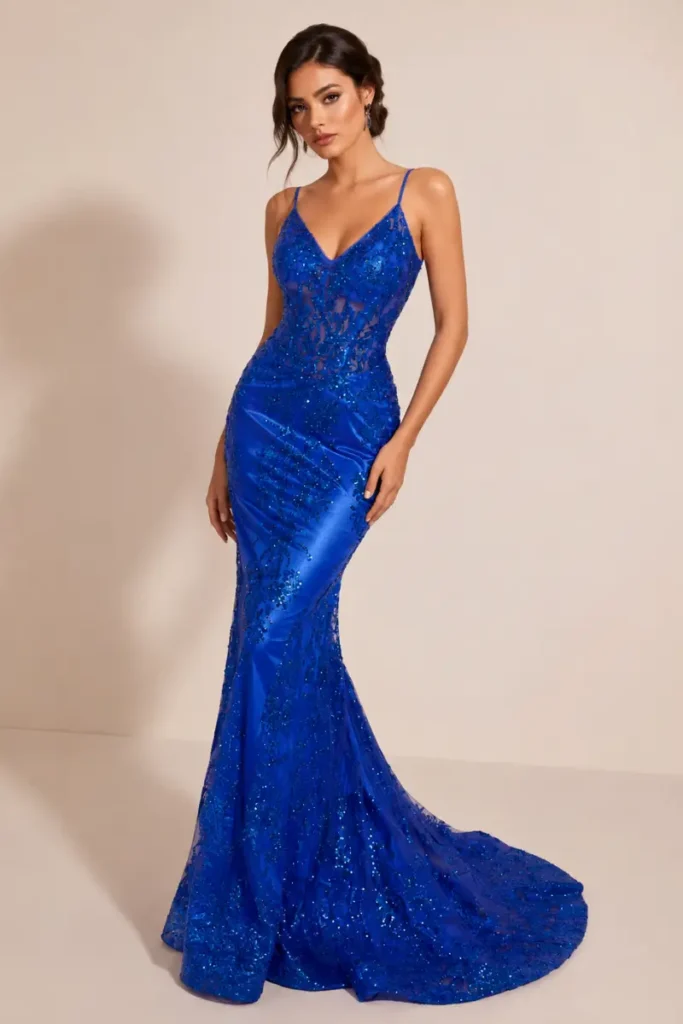
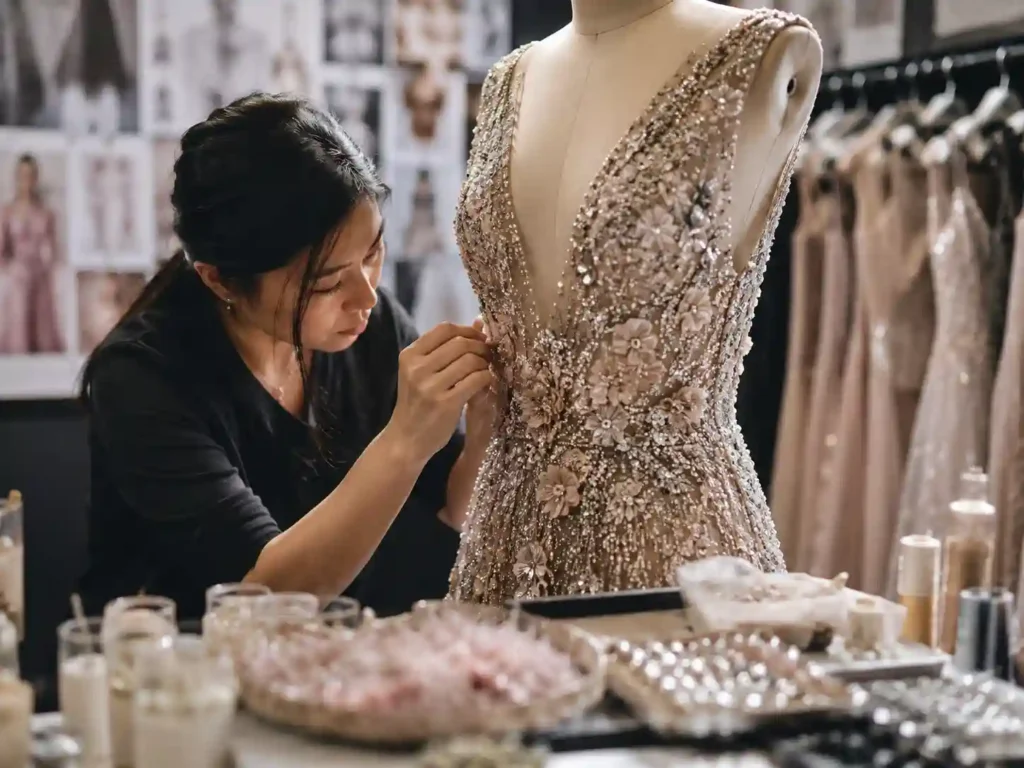
...

Mixed Embellishment Dress Development Solutions

Develop multi-technique fashion dresses with a controlled path from embellishment concept, fabric review, pattern and sample work to repeatable bulk production.

  • 30+ years of fashion dress development experience, including sequin-print combinations, pearl dresses, beadwork, rhinestone applications, and other composite decorative techniques.
  • Dress-focused development for party, occasion, going-out, cocktail, graduation, homecoming, holiday, and event-driven collections.
  • 16 owned womenswear factories, 20+ long-term satellite factories, 300 sewing lines, and 50+ flexible lines for multi-style production planning.
  • Material, placement, backing, lining, comfort, workmanship, QC, and packing are reviewed as one connected system rather than separate decoration tasks.
  • Mixed embellishment projects can move through craft swatches, first samples, revisions, PP approval, pilot verification, and controlled bulk release.
  • SMETA 2-Pillar audited manufacturing foundation with project-specific alignment to brand quality, testing, documentation, and inspection requirements.

Built for Structured Fashion Dress Programs

Mixed embellishment creates the strongest commercial value when a brand has a clear product direction, target market, launch calendar, and production plan. Duolan works with teams that need more than decorative application; they need an accountable development route from initial concept to repeat orders.

Brand and Product Teams

Established fashion brands, product development departments, buying teams, sourcing offices, and designer-led labels often manage several styles at the same time. Their concern is not whether a supplier can attach beads or sequins. They need reliable interpretation of visual direction, fit priorities, fabric behavior, cost structure, delivery timing, and production standards across a full dress program. Duolan supports projects based on tech packs, reference images, original samples, moodboards, fabric directions, or mixed development files, then turns incomplete inputs into a structured development brief. The best fit is a brand with defined sales channels, an identifiable dress category, planned quantities, and a path from sample approval to launch production and repeat business.

Suitable Project Profiles

Strong project matches include partywear drops, occasion collections, holiday capsules, going-out programs, cocktail ranges, homecoming and graduation assortments, and statement styles within larger seasonal lines. Mixed embellishment may be used on one hero style or distributed across 10-30 related styles with different commercial roles. Duolan reviews whether each style is intended for photography, wholesale presentation, fit approval, launch production, or long-term replenishment. Projects are assessed by silhouette, fabric, decoration density, size range, target quantity, packaging needs, and launch date. A clear brief allows decoration choices to support product value instead of adding uncontrolled cost, handwork, weight, and lead-time risk.

Dress Categories Suited to Mixed Embellishment
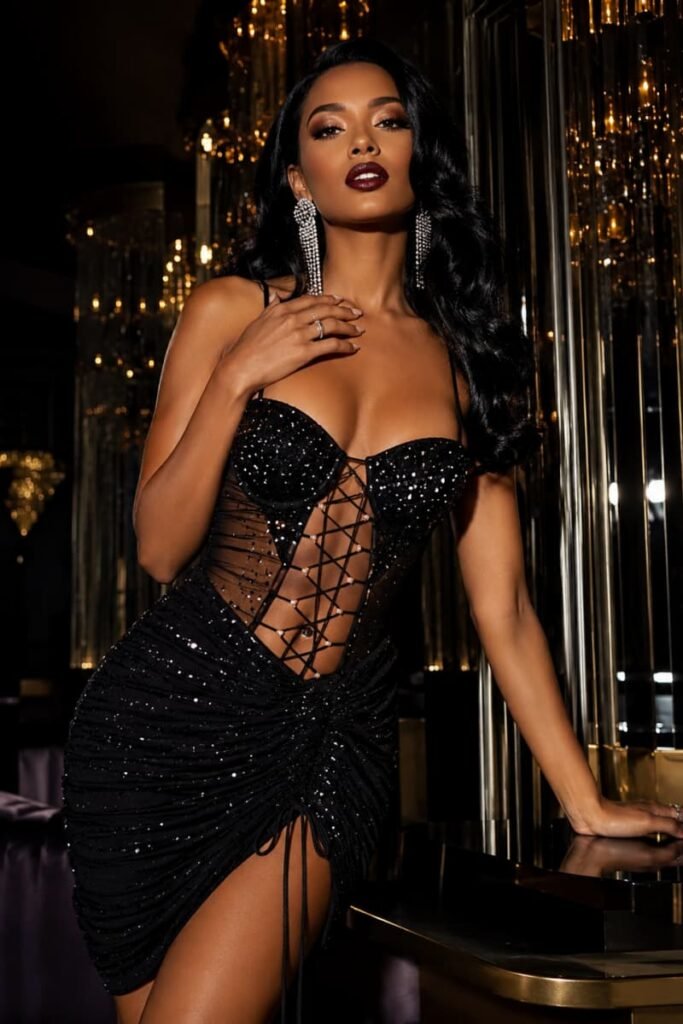
Different dress categories need different balances of shine, movement, coverage, structure, and wearability. A technique that works on a loose holiday dress may fail on a fitted mini. Duolan develops embellishment plans around the intended silhouette and selling occasion.

Party Mini Dresses

Party minis often carry the highest visual pressure in the smallest garment area. Sequins, beads, rhinestones, fringe, metallic trims, and embroidery may compete for space around the bust, waist, hip, hem, neckline, or cut-out areas. Development must protect mobility, zipper function, hem balance, and skin comfort while preserving a strong camera-ready finish. Localized density usually performs better than uncontrolled full-body weight. For body-conscious shapes, stretch direction and recovery must remain measurable after decoration. A successful party mini needs enough impact for night photography while still allowing consistent grading, repeatable placement, and efficient sewing during bulk production.

Cocktail Dresses

Cocktail dresses benefit from a more controlled embellishment hierarchy. Crystal edges, pearl clusters, embroidered motifs, tonal sequins, lace appliques, and limited fringe can create a premium focal point without overpowering the silhouette. Development work normally centers on neckline proportion, waist emphasis, drape, lining coverage, zipper clearance, and clean internal finishing. Embellishment colors should remain coordinated under daylight, retail lighting, and flash photography. Duolan also reviews whether decoration should be attached before assembly, after partial construction, or during final handwork, because the chosen route influences seam quality, repair access, pressing, and bulk consistency.

Going-Out Dresses

Going-out dresses need strong visual identity, flattering fit, and realistic movement for dining, nightlife, social events, and content creation. Mixed decoration may combine print with sequins, mesh with crystal placement, embroidery with cut-outs, or pearls with sculpted trim. The challenge is maintaining a modern finish rather than creating excessive ornament. Fabric stretch, transparency, support, and edge finishing deserve equal attention. A successful style should look directional from the front, side, and back, remain comfortable during movement, and photograph consistently across colors and sizes. Decoration placement must follow body proportions instead of remaining fixed only to the sample size.

Occasion Dresses

Occasion dresses require a balance of refinement, structure, and durability. Beading, embroidery, appliques, crystals, and 3D flowers may be distributed over bodices, sleeves, waist panels, skirts, or asymmetric drapes. Heavier decoration can change the way a skirt falls, pull a shoulder line forward, or collapse a delicate neckline. Duolan reviews backing, lining, seam support, bust balance, and weight distribution before approving the final layout. Occasion programs also need disciplined color matching and packing protection because visible surface damage, missing elements, or crushed details can immediately reduce perceived value at retail or during event wear.

Homecoming and Graduation

Homecoming and graduation dresses often combine youthful silhouettes with strong embellishment and strict seasonal timing. Mini and short fitted shapes may use rhinestones, beads, corsage details, sequins, bows, lace, or fringe. Wearability matters because the garment must support movement, sitting, dancing, photography, and repeated handling. Product teams also need predictable approval dates before campaigns and school-event seasons begin. Duolan can separate photo-sample priorities from production priorities, then lock fabric, placement, lining, closures, labels, and packing before bulk release. Clear sample stages reduce late decoration changes that can disrupt delivery windows.

Holiday and Event Collections

Holiday programs may include metallic shine, black-and-gold palettes, jewel tones, dense sequins, crystal accents, velvet combinations, 3D flowers, and dramatic fringe. A collection usually needs visual variety without losing a coherent brand story. Duolan can organize embellishment families across hero, commercial, entry, and repeatable styles. One dress may carry dense mixed handwork, while supporting styles use lighter embroidery, tonal sequins, or trim-led details to protect the overall price architecture. Coordinated materials, colors, techniques, and sample timing help a 10-30 style program move forward as one collection instead of a group of unrelated decorative garments.

Mixed Embellishment Combinations We Develop

The value of mixed embellishment comes from disciplined combination, not maximum complexity. Each craft pairing needs a clear visual role, compatible materials, controlled weight, a workable process sequence, and a repeatable production standard.

Sequins and Beading

Sequins build surface coverage and directional shine, while beads add depth, weight, and focal detail. The combination works well on party minis, fitted midis, bodice-led occasion dresses, and holiday styles. Development starts with sequin size, orientation, spacing, base mesh or fabric, bead type, bead color, and local density. Heavy beads should not be placed where they distort stretch, interfere with seams, or pull a neckline out of balance. Backing, lining, knot protection, repair methods, and packing must be considered before approval. A placement map should identify full-density, transition, and open zones so bulk production does not rely on visual guesswork.

Pearls and Rhinestones

Pearls provide soft dimensional elegance, while rhinestones create sharper light reflection. Used together, they can define necklines, waist panels, corset seams, straps, bows, appliques, or scattered motifs. The key is controlling scale and contrast. Large pearls and large stones placed too closely can create excessive weight, pressure points, and a costume-like appearance. Duolan reviews fixing methods, edge safety, stone setting, pearl finish, color variation, surface abrasion, and the relationship between decoration and garment structure. The final mix should remain secure through fitting, packing, transport, and normal wear while preserving a clean internal finish.

Embroidery and Applique

Embroidery creates line, texture, and repeatable artwork, while applique adds layered shape and dimension. The pairing suits mesh dresses, lace effects, floral occasionwear, statement sleeves, bodice panels, and asymmetric skirts. Artwork must be adjusted for fabric stability, thread density, motif scale, seam locations, and size grading. Applique edges need an agreed finish, and transparent bases may require tonal backing or selective lining. Duolan reviews whether embroidery is made on yardage, cut panels, or completed sections, then plans applique placement around darts, princess seams, zippers, and hems. A controlled artwork file and placement reference are essential for repeatable results.

Print and Sequins

Print-and-sequin development can create a strong visual signature when the reflective elements support the artwork rather than cover it randomly. Duolan’s long-term dress development background includes work combining sequin applications with later print processes and other composite decorative approaches. Development focuses on registration, print scale, sequin direction, heat exposure, colorfastness, panel matching, and process order. A strike-off or craft swatch should confirm whether the print sits above, below, or around the reflective layer. Bulk approval should define artwork position, acceptable placement tolerance, seam matching priorities, and the visual standard under movement and photography.

Lace and Crystal Details

Lace offers pattern and transparency; crystals create selective brightness. Together they work best when crystal placement follows the lace motif, neckline, scallop, waist shape, or panel architecture. Random placement can hide lace quality and raise cost without improving the dress. Development must consider motif direction, left-right balance, seam joins, cut placement, transparent zones, lining color, crystal setting, and abrasion. On fitted styles, crystals near side seams, armholes, or sitting areas need extra review. Duolan converts the approved lace-and-crystal layout into cutting, placement, assembly, and inspection references so the visual rhythm remains consistent across sizes.

3D Flowers and Beading

Three-dimensional flowers can build a high-impact occasion or party statement, while beads add detail at flower centers, edges, stems, or surrounding areas. The combination requires careful control of flower size, shape recovery, attachment points, bead weight, spacing, and packing protection. Flowers placed near armholes, shoulders, waist folds, zippers, or seating zones may crush or restrict movement. Duolan reviews whether components should be pre-made, embroidered, heat-shaped, hand-assembled, or attached after main garment construction. A packing trial is important because a visually successful sample can arrive damaged if flowers are compressed or beads rub against neighboring surfaces.

Fringe and Metallic Beads

Fringe creates movement and strong video appeal, while metallic beads add weight and light. The combination suits dance-led, party, stage-inspired, and event styles. Fringe length, density, attachment tape, bead weight, hem balance, movement noise, and tangling risk all influence the final result. On fitted dresses, the attachment line must remain smooth and secure without restricting stretch. On skirts, heavier bead ends can alter swing and place stress on the seam. Duolan reviews movement on a form or fit model, confirms attachment spacing, checks edge comfort, and defines folding or hanging methods that protect fringe during packing and transit.

Embroidery and Decorative Trims

Embroidery can be combined with braided trims, cords, chains, pearl bands, crystal tape, lace edges, or metallic piping to create structured surface direction. The combination is effective on waistlines, corset seams, necklines, straps, cut-outs, pocket details, and panel borders. Trim width and stiffness must match the curve and stretch of the garment. Decorative bands can ripple, twist, shrink, or become visually uneven when applied around tight shapes. Duolan reviews trim construction, attachment method, seam allowance, turn points, edge treatment, and grading before the first sample. Production references should define start and end points, curve handling, overlap, joining, and acceptable visual alignment.

Development Risks Behind Multi-Technique Dresses

Mixed embellishment introduces connected risks across fabric, fit, construction, handwork, process sequence, timing, and packing. Early risk mapping makes the sample more decision-ready and prevents avoidable problems from moving into thousands of finished garments.

Risk AreaWhat Can Go WrongDevelopment ControlBulk Evidence
Excess decoration weightNecklines drop, straps stretch, skirts pull unevenly, or fitted panels lose shapeReview total and local weight, reinforce load points, reduce density where neededApproved weighted sample, support notes, first-piece check
Fabric distortionMesh waves, satin puckers, jersey loses recovery, or organza collapsesTest base stability, backing, needle impact, heat exposure, and stretch behaviorCraft swatch, panel trial, material standard
Skin irritationBeads, sequins, knots, metal edges, or trim joins scratch the wearerAdd lining, backing, edge covers, clean seam allowances, and protected joinsInside-finish reference, wear check, final inspection point
Placement variationMotifs shift between pieces, colors, sizes, or production linesUse artwork files, placement maps, templates, notches, and size-specific rulesPP sample, placement sheet, inline comparison
Attachment failureStones release, beads loosen, sequins drop, or appliques liftSelect the correct fixing method and inspect high-stress zonesAttachment check method, defect standard, repair record
Process conflictPrinting, embroidery, heat setting, sewing, or pressing damages another techniquePlan the process route before sampling and validate sensitive stagesApproved route sheet, trial panel, pilot confirmation
Color and finish mismatchPearls, stones, threads, trims, and base fabric look inconsistentConfirm physical color references under relevant lightingTrim board, lab dip or swatch, approved material set
Packing damageFringe tangles, crystals mark fabric, 3D flowers crush, or sequins hook togetherConfirm fold direction, protective layers, garment spacing, and carton loadingApproved packing sample, packing instruction, final check

Feasibility Review Before Sample Development

A professional sample begins with decisions, not cutting. Duolan reviews the design basis, fabric behavior, decoration route, fit priorities, target quantity, and launch timing before committing the style to a sample plan.

Turn Design Inputs Into a Clear Brief

A mixed embellishment project may arrive as a complete tech pack, a reference image, an original garment, a moodboard, a trim board, or a combination of incomplete materials. Duolan first clarifies the development basis: silhouette, length, fit standard, target fabric, stretch requirement, transparency, support, coverage, decoration type, preferred visual density, size range, quantity, target market, and launch date. The team also confirms the purpose of the sample. A fit sample, visual sample, showroom sample, photo sample, and PP sample do not carry the same priorities. Locking the purpose helps avoid unnecessary revisions and prevents the first sample from trying to solve every question at once.
Key inputs normally include:
  • Tech pack, sketch, reference image, or original sample photos
  • Intended dress category and wearing occasion
  • Base fabric or fabric direction
  • Embellishment artwork, layout, density, or inspiration
  • Color references and trim finish
  • Target size range and fit standard
  • Planned style count, order quantity, and launch calendar
  • Label, packaging, testing, and inspection requirements

Identify High-Risk Decisions Early

The review then focuses on where the style is most likely to fail. A pearl-and-rhinestone bustier may need cup and boning support before decoration density is finalized. A sequin-and-bead bodycon dress may lose stretch or become uncomfortable at side seams. An embroidered mesh dress may need selective lining, artwork adjustment, and seam planning. A print-and-sequin style may require process-order trials before the first garment is assembled. Duolan evaluates material compatibility, local weight, structure, attachment method, process sequence, handwork volume, repair access, pressing restrictions, grading, and packing. High-risk points are communicated as development priorities rather than discovered after the sample is finished.
A feasibility note may recommend:
  • A craft swatch before full sampling
  • A lighter or more stable base fabric
  • Local backing, lining, or seam reinforcement
  • Reduced density around stretch, zipper, or skin-contact zones
  • A revised process order
  • Separate artwork rules for different sizes
  • A pilot or first-piece stage before full bulk release

Build a Realistic Development Route

After the review, the project is divided into clear stages. Complex mixed embellishment commonly begins with material and craft confirmation, followed by pattern work, a first sample, fit and visual comments, a revised sample, PP confirmation, and bulk readiness review. Planning windows should be matched to handwork density, component availability, style count, and approval speed. For a complex style, an indicative route may allow 5-8 working days for craft swatches, 12-18 working days for the first sample after material direction is locked, 7-12 working days for a revision, and 7-10 working days for PP confirmation. Final timing is confirmed after design and material review rather than advertised as a fixed promise.
The development output can include:
  • Sample Development Brief
  • Feasibility Note
  • Fabric and Trim Direction
  • Risk and Confirmation List
  • Sample Stage Plan
  • Indicative Timeline
  • Bulk Readiness Path

Fabric Compatibility for Mixed Embellishment

The base fabric determines how decoration hangs, stretches, reflects light, accepts needles or heat, and survives bulk handling. Material selection must be reviewed with the silhouette, lining, structure, decoration density, and target wearing experience.

FabricSuitable Mixed TechniquesMain RiskDevelopment Control
MeshEmbroidery, appliques, crystals, light beads, sequinsStretch distortion, holes, transparency, local saggingStabilize artwork zones, test backing and lining, control stitch and decoration density
Tulle3D flowers, embroidery, light sequins, scattered stonesTearing, edge damage, crushed volume, uneven layersUse soft backing where needed, verify layer count, protect during sewing and packing
SatinRhinestones, pearls, light beading, applique, selective embroideryNeedle marks, puckering, shine variation, pressing damageMinimize penetration, test setting temperature, control handling and seam support
Organza3D flowers, applique, embroidery, light crystalsTransparency, stiffness, crease memory, local collapseReview support zones, edge finish, motif position, pressing, and packaging
ChiffonLight sequins, delicate embroidery, small beads, lace appliquePulling, waviness, seam distortion, excess weightReduce local load, stabilize panels, use fine attachment and balanced lining
Stretch JerseySequins, light beads, crystals, decorative trimsRestricted recovery, rippling, size variation, discomfortTest stretch before and after decoration, follow grain and recovery, grade placement
Woven CrepeBeading, embroidery, pearls, appliques, trimsLocal stiffness, seam bulk, uneven drapeBalance density, verify seam allowances, backing, and pressing response
LaceCrystals, pearls, beading, applique, embroidery highlightsMotif mismatch, weak edges, transparency, inconsistent joinsPlan cutting placement, symmetry, seam joins, lining, and motif-based decoration

Selecting Embellishments for Commercial Production

Every decorative component influences appearance, weight, cost, lead time, repairability, and packing. Duolan reviews the material itself before deciding how much to use and where it belongs on the garment.

Sequin Specification

Sequins vary by diameter, shape, finish, hole position, cup depth, transparency, direction, and base construction. Flat, cupped, reversible, matte, holographic, translucent, and metallic sequins respond differently under movement and photography. Directional sequins need a consistent lay, while dense sequin fabrics require seam clearing and careful edge finishing. Duolan checks the sequin against the base fabric, garment stretch, intended shine, seam locations, and wearing comfort. The approved sample should define direction, density,  seam treatment, lining, and packing protection rather than relying on a generic fabric swatch.

Bead Type and Weight

Glass, acrylic, metallic, bugle, seed, tube, and shaped beads carry different weights, edges, finishes, and costs. A light visual reference can become structurally heavy when translated into real materials. Long bugle beads may feel sharp near armholes or sitting areas, while dense glass beads can pull delicate mesh or chiffon. Duolan reviews bead scale, total density, local load, thread or fixing method, knot protection, replacement availability, and color consistency. Bead layouts should distinguish focal motifs from transition zones. A weighted sample and movement review are useful when the design covers shoulders, bust, waist, hip, hem, or fringe ends.

Pearl Finish Control

Pearls may differ in diameter, coating, luster, translucency, hole quality, and shade. Small finish variations become obvious when hundreds of pieces are placed on one garment. White, ivory, champagne, silver, and colored pearls should be approved against the base fabric and other trims under relevant lighting. Coatings may scratch during handling or packing, so abrasion and contact points need attention. Duolan also reviews whether pearls are sewn individually, applied as bands, attached to motifs, or fixed on pre-made components. The bulk standard should identify approved size, color, surface finish, placement, attachment, and substitution restrictions.

Rhinestone Setting Method

Rhinestones can be hot-fixed, sewn, set in metal mounts, attached on tape, or integrated into applique and embroidery components. The right method depends on fabric heat sensitivity, stretch, stone size, wash and care expectations, backing, and local stress. Satin may show heat marks; stretch fabrics may release stones when recovery is ignored; transparent mesh can expose unattractive backing. Duolan reviews setting temperature, pressure, dwell time, adhesive behavior, mount edges, and repair access. High-stress zones such as side seams, zippers, waist folds, armholes, and sitting areas need additional scrutiny before the final placement is approved.

Embroidery Density

Embroidery density influences stiffness, fabric shrinkage, puckering, transparency, needle damage, and cost. Large motifs on mesh, satin, organza, or stretch bases require different stabilizers and stitch strategies. Thread sheen and color can change the visual relationship with sequins, beads, and crystals. Duolan reviews artwork size, stitch type, density, underlay, backing, panel position, seam interruption, and size grading. A digital artwork approval alone is not enough. A stitched swatch or panel trial confirms whether the embroidery preserves drape and whether the surrounding embellishments can be attached without overcrowding or damaging the base.

Applique Edge Finish

Appliques may be cut from lace, embroidery, organza, mesh, satin, printed fabric, laser-cut material, or pre-made decorative components. Edge quality determines whether the result looks refined or unfinished. Raw, satin-stitched, folded, laser-cut, heat-sealed, beaded, and hand-finished edges all behave differently. Duolan checks fraying, stiffness, thickness, color matching, seam overlap, transparency, shape retention, and attachment points. The sample should confirm motif orientation, left-right balance,  backing, and the sequence between applique attachment and garment assembly.

Fringe Construction

Fringe may be made from thread, beads, sequins, chains, crystals, cords, feathers, fabric strips, or mixed materials. Length and density influence movement, garment weight, tangling, noise, and packing. Heavy fringe can stretch attachment seams or distort a fitted hem. Uneven trimming becomes visible during walking and video. Duolan reviews attachment tape, anchor stitching, spacing, drop length, direction, repair method, and movement. Fringe around arms, hips, slits, or hems should be fit-tested. Packing instructions need to prevent tangling, crushing, or abrasion, especially when several decorated garments share a carton.

Metal and Trim Safety

Metal chains, studs, eyelets, buckles, decorative hooks, crystal bands, metallic piping, and rigid trims can add structure and shine, but they also introduce weight, sharp edges, corrosion, noise, and fabric-damage risks. Curved placements may ripple if the trim is too stiff. Heavy metal near a neckline or strap can affect balance and comfort. Duolan reviews finish, plating, edge smoothness, attachment, pull direction, color matching, contact with skin, and interaction with other decorations. Hidden backing, protective tape, reinforcement, and careful placement can preserve the visual effect while reducing wear and transit damage.

Controlling Placement, Density and Visual Balance

Mixed embellishment should guide the eye, support the silhouette, and remain consistent from sample size to the full size range. Placement engineering converts an artistic concept into measurable garment instructions.

Build a Placement Hierarchy

A strong mixed embellishment dress usually has a clear focal area, supporting details, transition zones, and open space. Full-density decoration across every panel can increase weight and cost while weakening the visual story. Duolan reviews where the eye should land first: neckline, bust, waist, hip, sleeve, cut-out, slit, back, or hem. From there, density can be stepped from heavy to medium to scattered. Symmetric layouts need accurate center lines and left-right balance; asymmetric layouts need controlled anchors so each unit retains the intended composition. Placement around darts, seams, zippers, boning channels, and curved edges must be adjusted before artwork and templates are finalized. Development references may include:
  • Front, back, and side placement maps
  • Full-density, transition, and open-zone definitions
  • Start and end points measured from stable garment landmarks
  • Motif orientation and direction
  • Seam and zipper exclusion zones
  • Size-specific scaling or repositioning rules
  • Approved close-up photographs

Grade Decoration Across Sizes

A layout that looks balanced on a sample size can become crowded on a smaller size and sparse on a larger size. Simply enlarging or reducing the artwork may distort motif scale or move focal points away from the body. Duolan reviews whether the decoration should scale, repeat, extend, compress, or maintain a fixed motif size while changing spacing. Neckline borders, waist motifs, corset channels, bust cups, hip panels, and hems need size-specific handling. Placement should be measured from reliable points such as center front, shoulder seam, waist line, side seam, hem, or pattern notch rather than an unstable visual estimate. For a five-size range such as XS-XL, the grading plan may define:
  • Fixed motif dimensions with adjusted spacing
  • Additional repeats on larger panels
  • Reduced density in narrow zones
  • Revised start and end points around cups, waists, and hems
  • Separate templates for selected sizes
  • Visual approval of a boundary size where risk is high

Balance Photography and Real Wear

Decorated dresses are often approved from front-view photographs, yet real wear exposes the side, back, movement, sitting, and close-up finish. Duolan reviews the garment on a form or fit model to check shine distribution, weight balance, transparency, movement, and contact points. Camera flash may exaggerate rhinestone or sequin brightness, while retail lighting may reveal color mismatch between pearls, stones, thread, and fabric. Fringe may look strong in video but tangle during sitting. Dense beading may create an attractive front while pulling the back neckline forward. Approval should therefore include front, side, back, inside, movement, and detail views. A complete visual review can cover:
  • Standing and movement balance
  • Front-to-back continuity
  • Shine under more than one light condition
  • Skin-contact zones
  • Sitting and arm movement where relevant
  • Inside finish and lining coverage
  • Photography close-ups and normal viewing distance

Structure and Support Behind Heavy Embellishment

Decoration can only remain attractive when the garment underneath carries the load. Lining, backing, seam support, pattern balance, closures, and local reinforcement must be developed with the embellishment plan.

Support Weight Without Losing Shape

Mixed decoration can shift the center of gravity of a dress. Heavy beads around a neckline may pull the front down. Rhinestone and pearl clusters on one shoulder may twist an asymmetric bodice. Dense fringe at a hem may lengthen a bias or stretch panel. Duolan reviews where weight enters the garment and how it travels through seams, straps, waistlines, boning, lining, and closures. Support should be added only where needed, because excessive backing can make a dress stiff, hot, or visually bulky. Local reinforcement may use stable fabric, organza, tricot, power mesh, tape, interfacing, hidden stays, or construction changes matched to the silhouette. Key review points include:
  • Shoulder and strap load
  • Bust and neckline balance
  • Waist seam stability
  • Side seam and zipper stress
  • Hem and fringe weight
  • Asymmetric decoration balance
  • Stretch recovery after reinforcement
  • Pressing and finishing response

Design Lining Around Comfort and Coverage

Lining is not a generic layer added at the end. It controls transparency, skin comfort, internal appearance, support, dressing ease, and the way decoration sits on the body. A mesh-and-crystal dress may need selective lining to preserve transparency. A sequin-and-bead mini may need full lining and protected seam allowances to prevent scratching. A satin dress with rhinestones may need a soft lining that does not fight the outer drape. Duolan reviews lining composition, stretch, color, opacity, handfeel, seam construction, attachment points, and coverage boundaries. The lining must remain hidden at necklines, armholes, slits, cut-outs, and hems while allowing movement and recovery. Lining decisions may cover:
  • Full, partial, or panel-specific coverage
  • Nude, tonal, contrast, or transparent appearance
  • Stretch compatibility with the shell
  • Backing over knots, sequin edges, and metal settings
  • Cup, boning, and waist support integration
  • Clean finishing around zippers and openings
  • Repair access before final closure

Protect Closures and High-Stress Areas

Zippers, hooks, eyelets, lacing, straps, slits, cut-outs, armholes, and side seams are common failure points when decoration is placed too close. Beads can jam a zipper; crystals can scratch the slider; sequins can catch in seam allowances; heavy appliques can distort a slit or cut-out edge. Duolan creates exclusion zones or controlled transitions around functional areas, then plans reinforcement and finishing. On corset-led or fitted styles, decoration must follow the support structure rather than cover it blindly. Strap width, hook position, zipper tape, lining closure, and local seam strength should be confirmed during sampling and transferred to the workmanship sheet. Controls may include:
  • Minimum decoration clearance around zippers and hooks
  • Sequin or bead removal from seam allowances
  • Reinforced ends at slits and cut-outs
  • Protected eyelet and lacing areas
  • Hidden backing under metal or crystal components
  • Smooth armhole and neckline edges
  • First-piece checks at high-stress construction points

Production-Ready Sample Development

A successful sample must do more than resemble a reference. It should help the brand confirm appearance, fit, material behavior, construction, decoration, cost direction, production feasibility, QC points, and the route to bulk.

Start With Swatches and Focused Trials

Complex mixed embellishment should not always begin with a complete garment. Craft swatches, printed panels, embroidery trials, placement mock-ups, weighted samples, and lining tests can answer critical questions faster and at lower risk.

A sequin-and-print concept may need registration and process-order trials. A pearl-and-rhinestone bodice may need a weighted support test. A 3D flower and bead layout may require a packing trial before the sample is fully closed. Duolan selects the smallest useful trial that can validate the uncertain point, then records the approved material, density, color, attachment, backing, and finish.

Typical early-stage evidence can include:

  • Craft swatch or strike-off
  • Embroidery or applique panel
  • Bead and pearl layout sample
  • Rhinestone fixing trial
  • Stretch-before-and-after comparison
  • Backing and lining options
  • Packing compression check

Separate Fit, Visual and Production Decisions

A visually strong sample can remain unsuitable for bulk because attachment time, seam access, handwork density, or process order has not been confirmed. Duolan uses stage-based sampling so comments are handled in the right order. A first sample may focus on silhouette, fabric, support, and main visual direction. A revised sample can refine placement, density, trim finish, comfort, and construction. A PP sample should lock the production basis, including approved materials, measurements, workmanship, labels, and packing.
Possible sample stages include:

  • First prototype
  • Fit sample
  • Visual or photo sample
  • Revised sample
  • Salesman sample
  • Pre-production sample
  • Golden sample reference

Complex styles often need a 12-18 working-day first-sample window after material direction is confirmed, followed by a 7-12 working-day revision window. 

Turn Comments Into Controlled Revisions

Comments should become measurable actions, not informal promises. Duolan reviews each note against the design intent, fit, pattern, fabric, structure, decoration, and production impact. A request to “add more sparkle” may require a density map and cost review. A request to “make the waist tighter” may affect lining, zipper, bead placement, and grading. A request to move an applique may alter seam access or symmetry. Revision summaries identify what changed, what remains open, and which approval is needed next. Before bulk, the approved version is reviewed for production readiness rather than released automatically.
Revision control can include:
  • Comment-by-comment response
  • Updated measurements or pattern notes
  • Revised placement map
  • Material or trim changes
  • Before-and-after detail images
  • Open decision list
  • PP and bulk readiness status

Coordinating Multiple Embellishment Processes

Mixed-technique dresses often pass through several specialist processes before final assembly. Sequence planning protects appearance, material performance, production timing, and accountability across the full route.

Define the Process Route Before Cutting

The same decoration can require a different route depending on the base material and garment structure. Embroidery may be completed on yardage, cut panels, or partially assembled components. Printing may happen before sequin application, after selected treatments, or on a pre-engineered panel. Appliques may be positioned before major seams are closed, while final beads and rhinestones may be added after pressing-sensitive operations. Duolan maps the route before bulk material is cut, identifying which supplier or department handles each stage, what evidence is approved, how pieces are counted, and where inspection occurs.
A route sheet may cover:
  • Base material inspection
  • Print or dye process
  • Embroidery or sequin process
  • Cutting and panel numbering
  • Applique positioning
  • Main garment assembly
  • Beading, crystals, fringe, or final handwork
  • Lining closure and internal finishing
  • Pressing restrictions
  • Final inspection and packing

Protect One Technique From Another

Process conflict is a major source of hidden damage. Heat-setting rhinestones can mark satin or affect sequins. Pressing can flatten 3D flowers.

Embroidery can shrink a panel and change later applique alignment. Sewing over dense sequins can damage needles, distort seams, or create sharp internal edges. Beading completed too early can block construction access and increase handling damage.

Duolan uses swatches, panel trials, protected pressing, seam-clearing rules, process-specific handling, and intermediate checks to keep one technique from compromising another.

Important controls include:

  • Heat and pressure limits
  • Panel dimensions before and after embroidery
  • Print registration and color approval
  • Sequin direction and seam clearing
  • Protected storage between processes
  • Component counting and bundle identification
  • Repair responsibility and approved replacement materials

Coordinate Capacity Across a Multi-Style Program

A typical brand order may contain 10-30 styles and 20,000-80,000 total pieces, with different handwork levels, colors, sizes, and approval dates. Treating the program as one production block creates bottlenecks. Duolan breaks the order down by style complexity, material readiness, decoration route, critical construction, quantity, and launch priority. High-risk styles may enter craft trials and pilot production earlier, while commercial styles move through standard lines. The manufacturing system includes 16 owned factories, 20+ satellite factories, 300 sewing lines, and 50+ flexible lines, allowing production paths to be matched to style needs rather than assigned only by available space.

Program planning can include:

  • Style-by-style risk classification
  • Material and trim readiness dates
  • Specialist process bookings
  • Sample and PP approval gates
  • Pilot and first-piece priorities
  • Line allocation by construction difficulty
  • Inline QC timing
  • Packing and shipping sequence

Critical Workmanship Points We Control

The strongest evidence of mixed embellishment capability is found in close-up construction. Duolan reviews the points where decoration, fit, comfort, and garment function meet, then converts approved details into production and inspection references.

Neckline Edges

Necklines can expose sequin edges, bead knots, applique thickness, lining roll, and uneven crystal spacing. Dense decoration may pull the neckline down or make a clean curve difficult. Duolan reviews edge clearance, backing, lining attachment, seam allowance clearing, motif balance, and final pressing. The approved detail should remain smooth against the body and visually consistent from center front to shoulder or back opening. For asymmetric designs, the visual weight must not twist the neckline. Bulk checks compare curve shape, decoration start points, inside protection, and edge cleanliness against the PP reference.

Armhole Finishing

Armholes combine movement, skin contact, curved construction, and frequent friction. Sequins, beads, metal trims, and applique edges placed too close can scratch the wearer or restrict the seam. Duolan creates a controlled clearance zone, trims dense surface materials from seam allowances, protects thread ends, and aligns lining without exposing rough edges. Sleeveless and halter styles need extra review because the armhole may carry more visual and structural importance. Fit testing should include arm movement. Inline inspection checks edge smoothness, symmetry, lining roll, decoration clearance, and secure finishing.

Zipper Clearance

Invisible and exposed zippers can fail when beads, sequins, crystals, fringe, or thick applique interfere with the slider and seam. Duolan defines a clear working zone, removes or relocates decoration where needed, stabilizes the zipper seam, and protects adjacent surfaces. The design may use a controlled density transition rather than an abrupt empty strip. For fitted dresses, zipper length and seam strength must support dressing without pulling against heavy decoration. First-piece checks confirm smooth opening, top closure, seam alignment, decoration spacing, and inside finishing before full production is released.

Side Seam Alignment

Mixed embellishment can make side seams visibly uneven when motifs, stripes, lace edges, sequin direction, or fringe lines fail to meet. The side seam also carries fit tension and may sit under the arm or against the hip. Duolan reviews artwork continuation, seam allowance clearing, motif priority, stretch, and comfort. Some designs require exact matching; others need a planned visual break to avoid excessive material waste. The production standard should state which motifs must align, where tolerance is acceptable, how decoration is cleared from the seam, and how the inside is protected.

Bust and Waist Balance

The bust and waist often carry the main visual message of a party or occasion dress. Pearls, crystals, applique, embroidery, or bead patterns must work with cups, darts, boning, princess seams, ruching, and waist shaping. Decoration can hide construction lines or unintentionally exaggerate fit problems. Duolan reviews motif position on the body, left-right balance, cup symmetry, waist level, local weight, and grading. A fit model or form review is especially useful for corset, bustier, halter, and bodycon styles. Bulk inspection compares placement against both measurement and visual references.

Slit Reinforcement

Slits introduce movement and concentrated stress. Beading, fringe, sequins, applique, or crystals near the slit can add weight, catch during walking, or weaken the corner. Duolan reinforces the top, controls decoration clearance, protects internal edges, and confirms whether the embellishment should continue, taper, or stop before the opening. A movement check helps identify scratching, twisting, or excessive swing. The PP standard should define slit length, reinforcement method, decoration boundary, lining connection, and pressing. Bulk checks focus on symmetry, strength, clean edges, and consistent visual transition.

Hem Decoration

A decorated hem controls movement, length, balance, and packing. Heavy beads or fringe can stretch a bias or knit fabric, while dense sequins may make turning and pressing difficult. Duolan evaluates total drop weight, hem structure, decoration direction, floor or leg contact, and size grading. The sample may need to rest before final length is confirmed. For mini dresses, edge comfort and activity matter; for midi and maxi styles, swing and transport damage become more important. Production standards define finished length, attachment line, trimming, repair access, and packing position.

Lining Attachment

Lining should protect the wearer and stabilize the garment without changing the outer silhouette. In mixed embellishment dresses, the lining may need to cover knots, sharp edges, metal settings, backing, and local reinforcement. Duolan reviews where the lining is bagged, tacked, free-hanging, or joined to seams; how it behaves around zippers, slits, cups, boning, cut-outs, and hems; and whether it allows repair before final closure. Bulk checks confirm opacity, stretch, color, length, attachment, and clean internal appearance. A smooth lining can be the difference between an impressive sample and a wearable commercial product.

Converting Approved Samples Into Bulk Standards

Approval becomes reliable only when the agreed sample is translated into documents, materials, process instructions, first-piece checks, and QC references that production teams can follow without interpretation gaps.

Lock the Production Basis

Before bulk production starts, Duolan runs a readiness review to confirm whether the sample is fit-approved, visually approved, suitable as a PP basis, or still pending refinement. The team then locks the elements that can change bulk appearance: shell fabric, backing, lining, color, sequins, beads, pearls, stones, threads, appliques, fringe, metal trims, closures, measurements, placement, workmanship, labels, and packing. A beautiful sample made from one-off materials is not a safe production reference. Each critical item needs an approved specification or physical standard, plus clear rules for any proposed substitution. The bulk basis can include:
  • Approved PP or golden sample
  • BOM and approved material set
  • Measurement specification and tolerance priorities
  • Pattern and grading version
  • Placement map and artwork files
  • Decoration density, direction, and attachment standard
  • Workmanship sheet
  • Label and packing requirements

Confirm First-Piece and Pilot Production

Higher-risk styles should be verified before full quantity is released. Duolan can use a first-piece, pilot run, or limited initial output to confirm line interpretation, fit, material behavior, construction, decoration, pressing, and packing. A pilot is especially valuable for bodycon, corset, halter, backless, satin, sequin, beaded, mesh-layered, and shape-sensitive occasion dresses. The review looks for differences between sample-room methods and production-line methods. Any correction is made while the quantity remains controlled rather than after thousands of units have passed through several processes. First-piece verification can cover:
  • Measurement and fit-critical points
  • Fabric and lining behavior
  • Decoration position and density
  • Seams, zippers, edges, and reinforcement
  • Inside finish and comfort
  • Process damage or missing components
  • Pressing and appearance
  • Fold and packing method

Preserve Standards for Reorders

A repeat order should not begin from zero. Once a style is approved, the pattern version, size specification, BOM, material references, artwork, placement, workmanship, QC findings, packing, and production notes should become reusable assets. Mixed embellishment styles are vulnerable to component changes, color drift, revised fixing methods, and altered handwork density when records are weak. Duolan preserves the approved basis and reviews changes before reorder production. New fabric or trim lots may still require color, finish, weight, and compatibility confirmation, but the team starts from a controlled standard rather than reconstructing the style from photographs.

Reorder records may include:

  • Pattern and grading version
  • Approved material and trim references
  • PP sample or golden sample status
  • Workmanship and placement files
  • Known risk points and corrective actions
  • QC and packing records
  • Approved changes from prior orders

Quality Control for Mixed Embellishment Dresses

Quality control follows the risks established during development. Inspection is more effective when the team knows which materials, locations, structures, and visual details can create failure across a specific style.

Material and Color Review

Shell fabric, lining, backing, thread, pearls, stones, beads, sequins, trims, and metal finishes are checked against approved references. Color, luster, transparency, texture, and component size can influence the overall appearance even when each item appears acceptable alone.

Placement Accuracy

Major motifs, borders, density zones, waist points, neckline details, hem lines, and asymmetric anchors are compared with the PP sample and placement file. Size-specific rules are used where the layout changes across the range.

Attachment Security

Beads, pearls, rhinestones, sequins, appliques, fringe, chains, and trims are checked for secure fixing, loose ends, missing elements, damaged surfaces, exposed knots, sharp points, and weak high-stress positions. The inspection method follows the material and fixing technique.

Inside Finish

Lining coverage, backing, seam allowances, knot protection, zipper areas, armholes, necklines, slits, cups, boning, and metal settings are reviewed for comfort and clean internal appearance. A decorated dress must remain wearable, not merely attractive from the outside.

Measurement and Fit Points

Critical bust, waist, hip, shoulder, neckline, length, strap, slit, and opening measurements are checked according to the approved specification. Elastic or stretch styles may require attention to recovery and handling before measurement.

Workmanship Consistency

Seams, topstitching, edge finishing, motif alignment, sequin direction, applique edges, embroidery quality, pressing, symmetry, and reinforcement are compared across units and production lines. High-risk operations receive earlier inline attention.

Visual Consistency

Inspection also considers overall balance from normal viewing distance. A garment may pass individual checks yet look uneven because one side is heavier, shine distribution differs, or the decoration does not follow the silhouette consistently.

Packing Protection

Folding, tissue placement, polybag size, hanger use, protective layers, fringe arrangement, 3D component protection, labels, barcodes, and carton loading are checked against the approved packing method.

Final Inspection Readiness

Duolan can support brand inspection standards and third-party inspection arrangements. Final review combines appearance, measurement, workmanship, decoration, labeling, and packing rather than treating embellishment as a separate afterthought.

Protecting Embellished Dresses During Transit

Decoration remains vulnerable after sewing is complete. Packing must protect reflective surfaces, three-dimensional elements, fringe, metal components, delicate fabrics, and the finished silhouette through handling, storage, and international transit.

Surface Separation

Sequins, rhinestones, beads, pearls, metal trims, and textured appliques can rub against the shell fabric or neighboring garments. Tissue, soft interleaving, protective sleeves, or controlled fold directions can separate vulnerable surfaces. Dark and light colors may also need separation where transfer risk exists.
5 Packaging for Party Dresses

Controlled Folding

Folds should avoid dense bead clusters, rigid crystals, corset edges, 3D flowers, and heavy fringe attachment lines. A garment may need a wider polybag, fewer folds, shaped tissue, or hanging presentation. The approved packing sample should show exact fold points and facing direction.

Fringe Management

Fringe can tangle, twist, crease, or pull at the attachment seam. Strands may be aligned, wrapped, separated, or supported depending on material and length. Beaded fringe needs additional protection from impact and abrasion. Packing trials confirm whether the movement returns after unpacking.

3D Detail Protection

Flowers, bows, sculpted appliques, feathers, padded motifs, and raised embroidery can flatten under carton pressure. Protective collars, tissue forms, inserts, individual spacing, or lower carton compression may be required. Carton loading must prevent heavy garments from pressing directly onto fragile details.

Metal and Crystal Protection

Sharp or rigid components can scratch fabric, damage polybags, or mark neighboring surfaces. Protective patches, backing covers, wrapping, or component orientation can reduce contact. Metal finishes should also be protected from moisture and abrasion during transport and warehouse handling.

Carton and Shipping Review

Carton quantity, garment weight, stacking pressure, moisture protection, labels, barcodes, and receiving requirements are reviewed with the garment’s construction. The final method should protect appearance without creating unnecessary volume or cost. A packing check before shipment confirms that the approved method is followed.

Manufacturing System for Complex Dress Programs

Duolan combines dress development, specialist process coordination, flexible production planning, and brand-level quality discipline. Scale is used to organize complex programs, not to replace style-specific control.

30+ Years Dress Development

The leadership team’s fashion development background began in the 1990s and includes long-term work around European and American fast-fashion dress markets, silhouettes, fabrics, commercial product development, and decorative processes. Experience includes sequin-print combinations, pearl dresses, beadwork, rhinestone dresses, and composite embellishment methods. 

16 Owned Factories

Owned factories provide stronger control over core dress projects, pattern and sample transition, production methods, first-piece verification, quality checkpoints, and repeat standards. Complex or priority styles can be assigned to the production path most suited to fit, structure, fabric, decoration, and launch requirements.

20+ Satellite Factories

Long-term satellite factories add controlled flexibility for capacity, specialist operations, repeat production, and peak delivery periods. Work can be divided by style complexity, process route, quantity, and timing rather than placing every style into one factory. Clear PP references, route planning, and QC checkpoints remain necessary when several production locations are involved.

300 Sewing Lines

A 300-line manufacturing foundation supports multi-style programs and large seasonal orders. The line count is most useful when combined with style classification, material readiness, process planning, and production discipline. Mixed embellishment programs may need different lines for fitted, structured, lightweight, handwork-intensive, or repeatable commercial styles.

50+ Flexible Lines

More than 50 flexible and quick-response lines help manage test orders, launch orders, priority styles, smaller production waves, corrections, and replenishment. Flexibility is not presented as uncontrolled speed. The lines support staged production where high-risk styles are verified before scale and commercial styles can move without waiting for every statement style.

Audited and Documented Control

The manufacturing foundation has completed SMETA and SMETA 2-Pillar auditing. Project execution can be aligned with brand-specific quality, testing, social responsibility, inspection, labeling, and documentation requirements. Depending on the program, teams can work with requirements related to BSCI, ISO 9001, AATCC, ASTM, OEKO-TEX, EN, China GB, GOTS, and specific brand standards where applicable.

Anonymized Mixed Embellishment Program Case

A representative North American occasionwear program shows how a multi-style decorative collection can be separated into craft families, developed through controlled approvals, and released into bulk without treating every style as the same production problem.

Program Scope and Development Challenge

The program included 18 dress styles and 48,600 total pieces across three color directions and a five-size range from XS to XL. Individual style quantities ranged from 1,800 to 3,600 pieces.

The assortment covered party minis, fitted midis, asymmetric occasion dresses, and two statement maxis. Four decoration families were involved: sequin-and-bead layouts, pearl-and-rhinestone bodices, embroidery-and-applique mesh styles, and fringe with metallic bead details. The brand needed a unified holiday visual direction while protecting different retail price points and launch dates.

The main risks were not limited to decoration application. Several styles shared base fabrics but required different stretch recovery. Pearl and crystal density affected bust support. Sequin layouts crossed side seams and invisible zippers. Embroidered mesh motifs changed scale across sizes. Fringe styles needed movement and packing trials.

Material approvals were staggered, and the brand wanted photo samples before every bulk color was finalized. A single route for all 18 styles would have created delays and inconsistent standards.

Development and Production Controls

Duolan divided the program into four craft families and classified each style by fit, material, handwork, and timing risk. Craft swatches were completed before full sampling for seven higher-risk styles. Sample planning used an indicative 5-8 working-day craft stage, 12-18 working days for first samples after materials were locked, and 7-12 working days for revisions. Statement styles entered development first, while commercial supporting styles moved through fabric, pattern, and trim confirmation in parallel. Key controls included:
  • Separate placement maps for sequin, pearl, crystal, embroidery, applique, and fringe zones
  • Five-size grading rules for artwork and density
  • Local backing and lining changes on heavy bodices
  • Zipper and seam exclusion zones
  • Weighted hanger checks for statement styles
  • Front, side, back, movement, and inside-view sample review
  • PP sample, BOM, measurement, workmanship, placement, and packing lock
  • Pilot or first-piece verification for nine higher-risk styles
The 48,600-piece order was released in production waves based on material readiness and launch priority. Complex statement styles received earlier inline checks, while repeatable commercial styles used standardized artwork and workmanship references.

Outcome and Reorder Readiness

The program moved from collection brief to PP approval through planned craft, fit, visual, and production decisions rather than one general sample round. Decoration density was reduced around selected armholes, zippers, and stretch zones without weakening the intended visual effect. Two bodice styles received revised support and lining before PP approval. Embroidery artwork was adjusted for boundary sizes, and fringe packing was changed after an early compression trial.

The final production basis included 18 approved PP references, style-level BOMs, measurement files, decoration maps, workmanship notes, QC checkpoints, and packing instructions. Bulk production was planned over an indicative 40-55 day window after final approvals, with shipping sequence aligned to launch priority. The program structure also created reusable records for color extensions and repeat orders. Instead of rebuilding decoration from photographs, future production could begin from locked patterns, materials, artwork, placement, construction, and quality findings.

Frequently Asked Questions

A mixed embellishment dress combines two or more decorative techniques or materials in one garment or coordinated collection. Examples include sequins with beads, pearls with rhinestones, embroidery with applique, print with sequins, or 3D flowers with beadwork. Development must coordinate appearance, weight, fabric behavior, attachment, lining, comfort, process order, grading, QC, and packing rather than treating each decoration as an isolated detail.
Common combinations include sequins and beading, pearls and crystals, embroidery and applique, lace and rhinestones, print and sequins, fringe and metallic beads, 3D flowers and handwork, and embroidery with decorative trims. Compatibility depends on the base fabric, garment structure, stretch, transparency, heat sensitivity, wearing area, decoration weight, target cost, lead time, and expected bulk quantity. A craft swatch is recommended when the combination has not been production-tested.
Yes. Development may begin from reference images, sketches, tech packs, original sample photos, moodboards, fabric directions, trim ideas, or mixed files. The team first clarifies the silhouette, fit, fabric, construction, decoration, sample purpose, size range, quantity, and launch timing. Reference images are used as design direction, while materials and methods are selected for commercial feasibility, repeatable production, and the intended market rather than copied without technical review.
Fabric selection considers weight, stretch, recovery, drape, transparency, needle response, heat sensitivity, seam stability, backing, lining, and local support. Mesh, satin, organza, chiffon, jersey, crepe, lace, and tulle require different decoration densities and fixing methods. Duolan may recommend a craft swatch, panel trial, alternative base, local backing, reduced density, or revised process route before a full sample is made.
Timing depends on material sourcing, artwork, handwork density, style count, and approval speed. For a complex mixed embellishment style, an indicative plan may allow 5-8 working days for craft swatches, 12-18 working days for a first sample after materials are confirmed, 7-12 working days for a revision, and 7-10 working days for PP confirmation. Final dates are confirmed after feasibility and material review.
Placement is controlled through artwork files, pattern landmarks, measured start and end points, templates, density zones, motif orientation, and size-specific grading rules. Some motifs keep a fixed size while spacing changes; others need additional repeats, reduced density, or separate templates. High-risk areas such as necklines, cups, waist panels, hips, slits, and hems may be reviewed on a boundary size before bulk production.
The fixing method is selected according to the component, fabric, stretch, heat sensitivity, wearing area, and care expectations. Controls may include reinforced stitching, protected knots, approved hot-fix settings, backing, local reinforcement, clearance from high-friction zones, repair access, and inline inspection. The inspection method follows the decoration type rather than using one generic test for all beads, stones, pearls, and sequins.
The approved version is converted into a PP or golden sample basis, BOM, measurement specification, pattern version, material references, placement map, artwork, workmanship sheet, QC checkpoints, and packing instructions. Higher-risk styles may use a first-piece or pilot stage before full production. Bulk is released only after open decisions around fabric, lining, trims, color, fit, decoration, labels, and packing are resolved.
Yes. Duolan can support brand inspection requirements and coordination with nominated third-party inspection providers. The inspection plan should be agreed before production and should cover material, measurements, workmanship, decoration placement and security, appearance, labels, barcodes, packing, and any project-specific requirements. Early agreement prevents the final inspection standard from differing from the sample and production references used by the factory.
Tech packs, artwork, reference samples, unreleased collection information, material directions, and project files can be handled under agreed confidentiality procedures. Access should be limited to relevant development, sourcing, sample, production, and quality teams. Brand-specific files should not be used for unrelated promotion or shared outside the approved project route. NDA requirements can be reviewed before detailed design files or original samples are transferred.

Send Your Mixed Embellishment Dress Project

Share enough project information for a focused review rather than a generic quote. Duolan can assess the dress direction, decoration mix, fabric and lining needs, structure, sample route, high-risk workmanship, planned quantity, and bulk readiness before the project moves forward. A complete submission helps the development, material, pattern, sample, production, and quality teams work from the same basis.

Please include:

  • Company name, target market, and main sales channel
  • Tech pack, sketch, reference image, or original sample photos
  • Dress category, silhouette, and intended wearing occasion
  • Fabric, lining, stretch, transparency, and color direction
  • Embellishment types, artwork, layout, density, or reference details
  • Size range and fit standard
  • Number of styles, target quantity, and expected launch date
  • Label, packaging, testing, audit, or inspection requirements
  • Main concerns around fit, material, workmanship, cost, timing, or bulk consistency

Duolan will review the development basis and identify the next useful step, which may be a material and trim review, craft swatch, feasibility note, sample plan, PP readiness review, or production-path discussion. Files can be submitted through the project form for a structured response.


Start Your Apparel Development Project

OEM/ODM Manufacturing Support for Fashion Brands

Share your collection details, estimated quantities, target market, development timeline, and technical requirements. The production team will review your request and provide a tailored manufacturing solution based on your product category, fabric selection, construction needs, and delivery schedule.

Fashion Manufacturing Support with Scalable Production Capacity

From sample development to bulk production, Duolan supports fashion brands with confidential OEM/ODM manufacturing, stable quality management, flexible production planning, and coordinated multi-factory execution for seasonal and capsule collections.

Need Direct Assistance?

Seraphinite AcceleratorOptimized by Seraphinite Accelerator
Turns on site high speed to be attractive for people and search engines.