...

NDA-Based Dress Development

Confidential dress development for established fashion brands, from protected file review to production-ready samples and controlled bulk manufacturing.

  • 30+ years of dress development experience across fashion, occasion, party, fitted and structured silhouettes.
  • 300-400 pattern and sample specialists supporting pattern engineering, sample sewing, fit correction and technical preparation.
  • 15,000-35,000 sample pieces or development instances per month across the wider manufacturing group.
  • 16 owned factories, 20+ long-term satellite factories and 300 sewing lines supporting multi-style programs and scale-up production.
  • NDA terms can be reviewed before full tech packs, original garments, unreleased references or collection plans are released.

Built for Established Fashion Development Teams

Confidential development works best when design ownership, collection timing and production responsibility are clear from the beginning. Duolan supports organizations managing seasonal dress programs, protected product files and a defined route from concept approval to bulk release.

Fashion Brand Teams

Seasonal dress collections often combine commercial silhouettes, statement pieces and repeatable core styles under one color story and launch calendar. Duolan organizes development by style complexity, material readiness, sample purpose and approval priority. Protected design references remain connected to the technical decisions that create the final result, allowing brand identity to survive the transition from creative direction to measurable construction standards.

Product Development Teams

Product teams need more than sample sewing. Sketches, tech packs, size specifications, reference garments, fit comments and costing targets must be translated into a route that pattern makers, material teams and production units can follow. Duolan supports feasibility review, material development, pattern engineering, sample revisions, approval records and production-readiness preparation without separating creative intent from manufacturing reality.

Sourcing and Compliance Teams

Sourcing teams evaluate confidentiality, delivery exposure, factory allocation, audit status and sample-to-bulk control alongside price and capacity. Duolan provides a dress-focused manufacturing network with 16 owned factories, more than 20 long-term satellite factories and SMETA 2-Pillar audited operations. Project scope, approved production locations and downstream handling requirements can be confirmed before sensitive files move beyond the core development group.

What Is NDA-Based Dress Development?

NDA-based dress development is a controlled apparel development arrangement in which confidentiality terms are agreed before sensitive product information is shared. The protected scope may include sketches, tech packs, original samples, patterns, materials, fit comments, branding, packaging, quantities and launch plans throughout feasibility review, sampling, approval, bulk manufacturing and delivery.

More Than a Signed Document

A signed agreement establishes legal boundaries, but a strong project also needs operating rules. File access, sample photography, showroom use, downstream supplier disclosure, pattern ownership, production location changes and post-project record handling should be understood by both sides. Duolan can review a brand-provided NDA or discuss a mutual format before full technical files are released.

Confidentiality Connected to Development

Protection has little value when the manufacturing team cannot build the product accurately. Duolan combines confidentiality review with dress-focused design interpretation, fabric and trim development, CAD pattern work, fitting, structured sampling, PP approval and bulk control. Each protected file is used for a defined development purpose rather than treated as a general reference that can circulate without context.

Scope Confirmed by Project

Not every program needs the same controls. A campaign sample may require tighter image restrictions, while a licensed collection may require named production locations and downstream approvals. A private-label program may focus on label artwork, pricing and launch dates. The agreed scope should identify protected information, authorized use, permitted recipients, retention period, governing terms and any required return or deletion process.

Confidential Information Protected Across a Dress Program

Dress development creates several layers of intellectual, technical and commercial information. Protection needs to follow the full program rather than stop at the first sketch or tech pack.

Design Direction

Sketches, CAD drawings, moodboards, color stories, styling references, line plans and unreleased collection images establish the creative identity of a program. Duolan uses them to understand proportion, silhouette, occasion, visual focal points and coordination between styles. Public display, portfolio use, showroom exposure and social-media use should remain subject to written permission.

Technical Files

Tech packs, measurement charts, POM definitions, construction notes, stitch requirements, BOMs, grading rules and tolerance standards convert a concept into manufacturing instructions. Version control matters because a superseded measurement sheet or unapproved construction note can create both confidentiality risk and production error. Approved revisions should carry a clear status and date.

Physical References

Original garments, sample pieces, pattern parts, approved color standards, trim references and sealed samples often reveal more than a digital file. They show workmanship, fit, internal structure and proprietary combinations. Each physical item should have a project identity, use restriction and return, archive or destruction instruction agreed before handover.

Material Development

Fabric codes, supplier references, custom colors, print artwork, embroidery files, lace placements, sequin layouts and custom trim specifications can distinguish one collection from another. Disclosure should be limited to the mills and process partners needed to complete approved work. Material substitutions or supplier changes require review because they can alter appearance, fit and repeat-order consistency.

Brand and Packaging Assets

Woven labels, care labels, hangtags, barcode files, SKU structures, packing methods, retail artwork and warehouse instructions reveal brand identity and launch preparation. These files often arrive late in development but remain commercially sensitive. Approval status, market-specific language and version control need the same discipline applied to patterns and samples.

Commercial Information

Target costs, order quantities, delivery windows, campaign dates, selling markets, product hierarchy and replenishment plans can expose collection strategy. A program involving 10-30 styles and 20,000-80,000 total pieces requires controlled communication because material booking, production allocation and delivery planning involve several operational roles. Only information required for execution should move to each role.

A Confidentiality Structure That Follows the Project

Protection becomes credible when each development stage has a clear risk, control action and record. The structure below can be adjusted to match a brand NDA, vendor manual or licensed-program requirement.

Project StagePrimary ExposureControl ApproachUseful Record
NDA and initial reviewFull files released before scope is agreedBegin with a non-confidential outline; confirm parties, protected information and permitted use before full releaseSigned NDA and project scope
File intakeMixed versions or unnecessary internal circulationAssign a project code, separate approved and working files, and identify authorized project rolesFile register and revision log
Pattern and sample workOriginal samples, patterns or images used outside the programMark physical references, restrict photography and define showroom or portfolio rulesSample register and image permission status
Material sourcingSensitive artwork or material identity shared too broadlyRelease only the technical information needed by approved mills and process partnersApproved supplier and material list
Sample approvalVisual approval mistaken for full production approvalSeparate fit, color, workmanship, label, packaging and PP statusApproval summary and sealed standard
Production allocationSensitive styles moved to an unapproved locationConfirm approved factory route and require written review before location changesProduction allocation record
Bulk manufacturingOld files or samples followed on the lineRelease one production pack, conduct pre-production review and verify first output against the current standardPP meeting and first-piece record
Project close or reorderFiles retained without clear purpose or old standards reusedAgree archive, return or deletion rules and maintain a controlled reorder referenceCloseout note or repeat-order pack

How Duolan Handles Confidential Dress Projects

A protected project needs clear working boundaries without slowing development. Duolan can align the operating plan with the signed NDA, project sensitivity, sample purpose and approved manufacturing route.

NDA Review Before Full Disclosure

A brand may begin with company information, dress category, style count, target quantity and a non-confidential project description. Full tech packs, original garments, labels or unreleased collection images can follow after NDA terms are accepted. Early separation between general evaluation material and protected development material reduces unnecessary exposure while allowing Duolan to assess whether the program fits its dress development and manufacturing capabilities.

Assigned Project Roles

Design interpretation, material sourcing, pattern work, sample sewing, costing, quality review and production planning require different information. Project instructions can define which roles need access and what each role receives. A pattern maker may need the complete measurement and construction file, while a dye house may only need the approved fabric quality, color target and testing direction. Limiting disclosure improves both confidentiality and decision clarity.

Samples, Images and Showroom Use

Brand names, labels, complete patterns and unreleased design images are not intended for public use without written approval. Project terms can also cover sample photography, fitting-room images, internal presentation, showroom display, trade-show use and portfolio publication. Physical samples can be coded and tracked so an original garment, fit sample, photo sample and PP standard do not become interchangeable or leave the approved route without a clear reason.

Downstream Process Control

Printing, embroidery, beading, washing, dyeing and special trim development may involve specialist partners. Duolan can identify where external support is needed and confirm the approved route before sensitive artwork or sample information is released. A subcontracted process should receive the minimum information required for execution, while garment identity, launch plans and unrelated collection files remain outside its working scope.

Archive, Return and Reorder Rules

A completed program may need a controlled archive for replenishment, or it may require patterns, samples and files to be returned or removed after a defined period. Reorders benefit from retaining the approved pattern, BOM, material identity, sealed sample and quality notes, but retention should follow the agreed terms. Project closeout can record what remains active, what is archived and what must no longer be used.

Start With the Development Materials Already Prepared
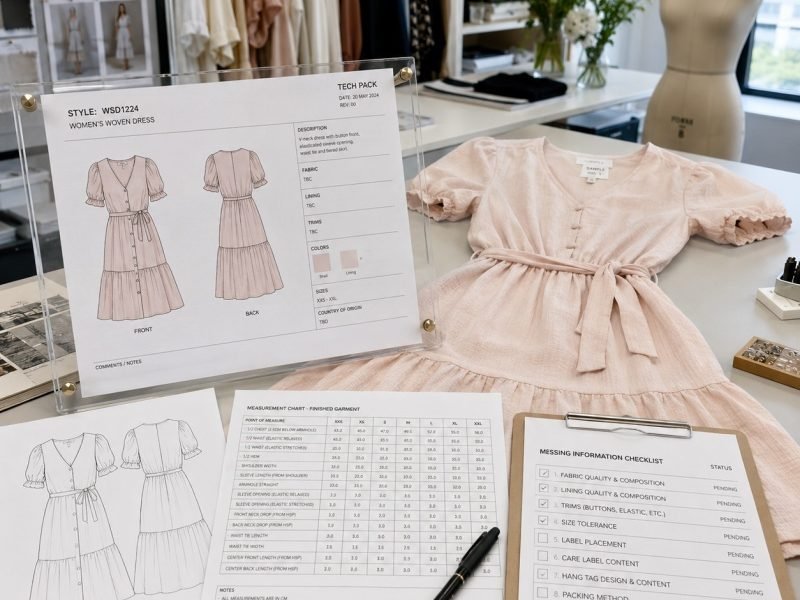
A confidential dress program can begin from a complete technical package or from an earlier creative stage. Duolan reviews the material available, identifies missing decisions and prepares the next development step without forcing every project into one rigid starting format.
1. Incomplete Tech Pack Review

Tech Pack

A developed tech pack provides drawings, measurements, construction notes, stitch details, labels and BOM information. Duolan checks internal consistency, fabric suitability, open construction points and version status before pattern work begins. Sensitive brand assets can remain redacted during the first feasibility discussion and be released only when the project route and NDA scope are confirmed.

Fashion Sketch

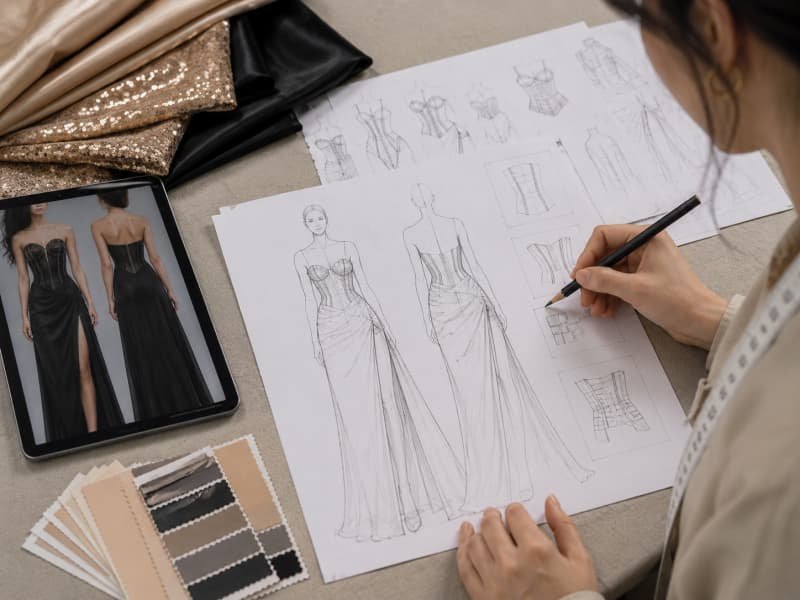
A sketch communicates shape and visual intent while leaving fit, support and construction open. The development team reviews style lines, body coverage, balance, focal points and movement, then converts the drawing into questions about fabric behavior, seam placement, closure, lining, measurements and production method. The goal is not to over-engineer the design, but to reveal decisions required for an accurate first sample.

Reference Images

Reference images help define neckline, length, drape, proportion and styling, yet they rarely reveal internal structure or exact measurements. Duolan maps visible features into technical requirements such as strap angle, waist position, slit height, bust support, back stability and lining coverage. Protected references remain tied to the approved development purpose rather than serving as general inspiration material.
sample

Original Garment

An original garment provides direct evidence of fit, materials, trims and workmanship. Duolan can measure, photograph and analyze the reference, identifying features to retain and areas to improve. Ownership, sample return, photography limits and pattern-development boundaries should be stated before review, especially when the garment is unreleased, archival or supplied under a third-party license.

Size Specification

A brand-supplied size chart establishes the intended body and garment standards. Duolan reviews POM definitions, base size, ease, grade rules, tolerances and style-specific fit points. Development can follow a proprietary block or a defined range such as XS-XL or US 0-14, but the range must be connected to the actual target body, fabric stretch and silhouette rather than copied from a generic chart.

Fabric Direction

A swatch, composition target, weight range, hand-feel reference or material photo can establish direction. Duolan compares drape, stretch, recovery, opacity, surface, color, finish and bulk availability, then advises whether the material should be sampled directly, adjusted, lined or replaced. Supplier identity and custom development information can be handled within the agreed confidentiality scope.

Collection Moodboard

A moodboard helps the team understand occasion, color palette, silhouette mix, material story and commercial hierarchy. Statement styles and volume styles can then be planned within one collection instead of developed as unrelated garments. When the board contains unreleased campaign concepts or competitor research, the agreed use should remain limited to product interpretation and collection planning.

Existing Sample Comments

A project may arrive after another sample missed the target. Photos, measurements and written comments help identify whether the problem comes from pattern balance, material choice, structure, workmanship or an incomplete specification. Duolan separates the cause from the symptom and builds a revision plan around the current evidence, reducing the risk of repeating the same sample route under a new factory name.

Design Translation Before Pattern Work Begins

Confidential sketches and references have value only when the intended look can be converted into measurable, wearable and repeatable construction. Duolan reviews the design as a connected system before fabric is cut.

Silhouette and Proportion

Neckline depth, shoulder width, waist placement, torso length, hip shape, slit position, hem sweep and total length establish the visual balance of a dress. A 15 mm change at the waist or neckline can noticeably alter a fitted silhouette. Duolan identifies the proportions that define the style and separates them from areas where technical adjustment is acceptable, preserving the recognizable design without making the garment unstable.

Coverage and Wear Conditions

Ecommerce photography, event wear, dancing, sitting and walking expose different risks. A low neckline may look controlled on a mannequin and open during movement. A high slit may become excessive when the wearer sits. Backless, strapless and cut-out styles require coverage standards that match the intended market. Movement checks are therefore planned as part of fitting rather than added after the visual sample has already been approved.

Internal Support Strategy

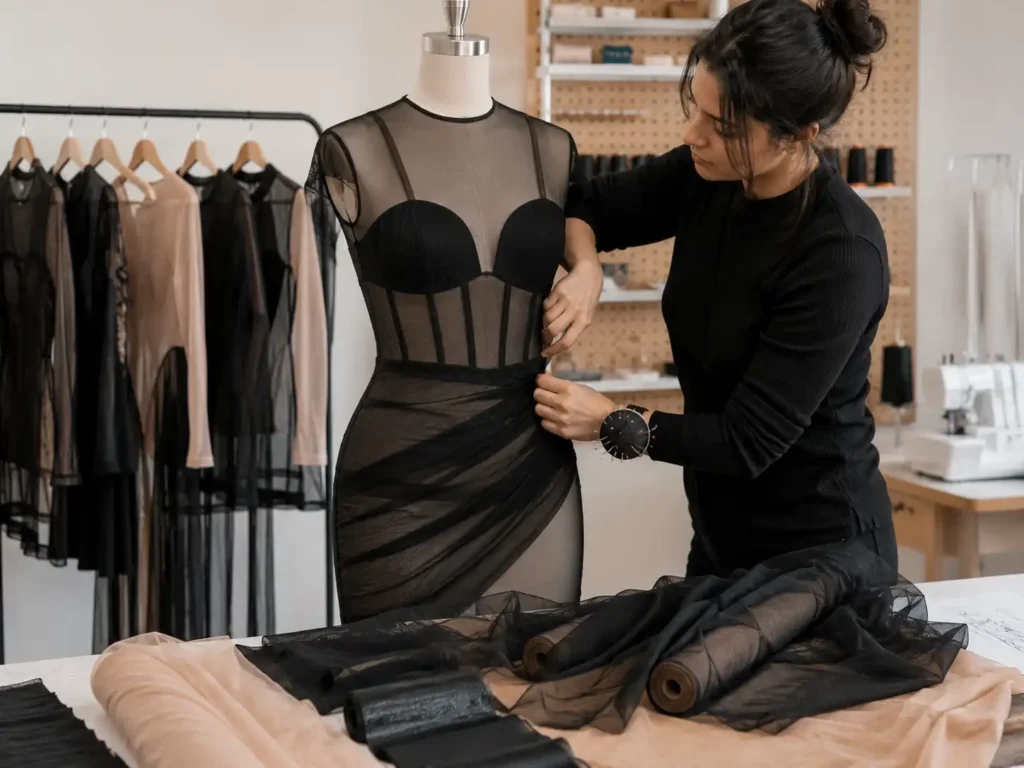
Cups, boning, power mesh, elastic, stay tape, underlining, lining and closures must work together. More structure is not always better; excess stiffness can distort drape or create visible edges. Duolan defines the required support level, pressure points, hidden reinforcement and wearer contact before finalizing the pattern. Corset, bustier and backless dresses receive particular attention because small changes in cup position or waist control affect the whole garment.

Production Feasibility

A hand-built sample can hide operations that are difficult to repeat across 20,000 pieces. Draping anchors, motif placement, bead density, seam access, pressing sequence and attachment order are reviewed while the style is still being developed. Where a detail is visually important but difficult to scale, Duolan tests an alternative construction that protects the appearance while improving accuracy, sewing flow and inspection access.

Protected Decisions Recorded

Design decisions should not remain in scattered messages. Confirmed neckline depth, support level, fabric direction, closure, lining coverage, approved appearance and open questions are recorded against the current version. A clear decision trail allows the next sample to solve defined problems and prevents an outdated reference from becoming the production basis after the design team has already moved forward.

Dress Categories Developed Under Confidential Programs

Duolan focuses on fashion dresses rather than a broad apparel catalog. Development routes are adjusted according to silhouette, material behavior, internal structure and the commercial role of each style.

Mini and Going-Out Dresses

Short fitted styles depend on accurate waist placement, hem balance, opacity, neckline security and movement control. Cut-outs, open backs, ruching and asymmetry can create instability when the wearer walks or sits. Development checks body coverage, fabric recovery, closure strength and finishing so the visual impact remains strong without relying on a fragile one-off sample.

Midi and Maxi Dresses

Longer dresses introduce grain, weight, sweep, slit, hanging and movement risks. Bias panels may grow after sewing, layered skirts may settle at different rates and heavy hems can pull the bodice.
Duolan reviews the relationship between bodice support and skirt load, plans hanging or relaxation checks when needed and controls length before the final hem standard is released.

Party and Occasion Dresses

Occasion styles often combine fitted bodices, polished surfaces, special trims and extended wear time. Fit, comfort, lining, closure and embellishment security must be evaluated together. Photo appeal matters, but the garment also needs to perform through sitting, dancing and repeated handling. Approval therefore covers appearance, internal comfort and production durability rather than the front view alone.

Vacation and Resort Dresses

Vacation collections may use light woven fabrics, open backs, halter necklines, fluid skirts and breathable constructions. The main risks include transparency, strap pressure, bias growth, seam distortion and inconsistent print placement. Duolan balances movement with stability and reviews packing recovery because lightweight dresses often travel folded before reaching a store, warehouse or final wearer.

Corset and Structured Dresses

Structured dresses require accurate panel geometry, cup capacity, boning position, waist control, closure strength and load distribution. A corset bodice cannot be approved separately from the skirt when the lower section changes tension and balance. Fit reviews examine breathing, sitting, movement and recovery, while bulk preparation defines the approved support materials and construction sequence.

Satin, Mesh and Embellished Dresses

Sensitive surfaces expose production variation quickly. Satin shows seam pressure and shade direction, mesh changes opacity under stretch, lace needs motif control and sequins add weight and abrasion risk. Duolan plans cutting, lining, joining, placement, pressing and packing around the material rather than forcing every dress through one standard sewing method.

Confidential Fabric and Trim Development
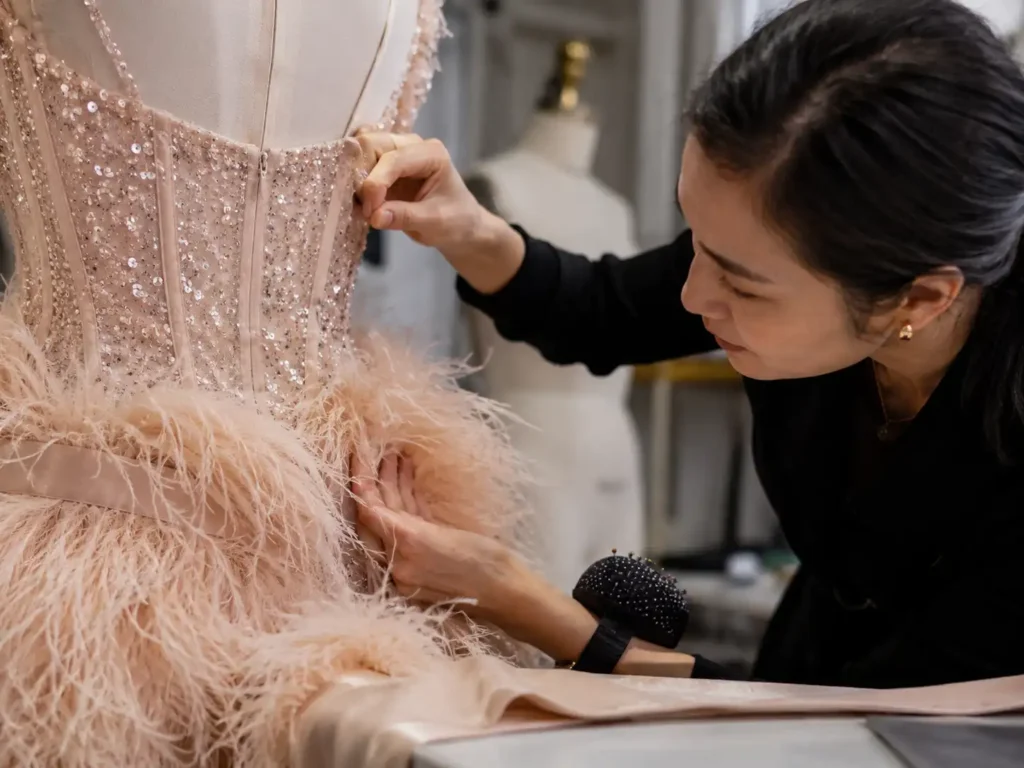
Material selection determines silhouette, fit, comfort, appearance and production stability. Duolan evaluates main fabric, lining, trims and support materials as one garment system while protecting proprietary material directions and custom developments.

Fabric Behavior Before Appearance

A swatch can look attractive and still fail in the intended dress. Drape, weight, stretch, recovery, opacity, friction, shrinkage, surface sensitivity and pressing response are reviewed against the silhouette. A fluid satin may suit a bias slip but distort a structured bodice. A stretch mesh may look soft when flat and become transparent or unstable under tension. Early testing prevents pattern work from being built around the wrong physical behavior.

Color, Lab Dips and Component Matching

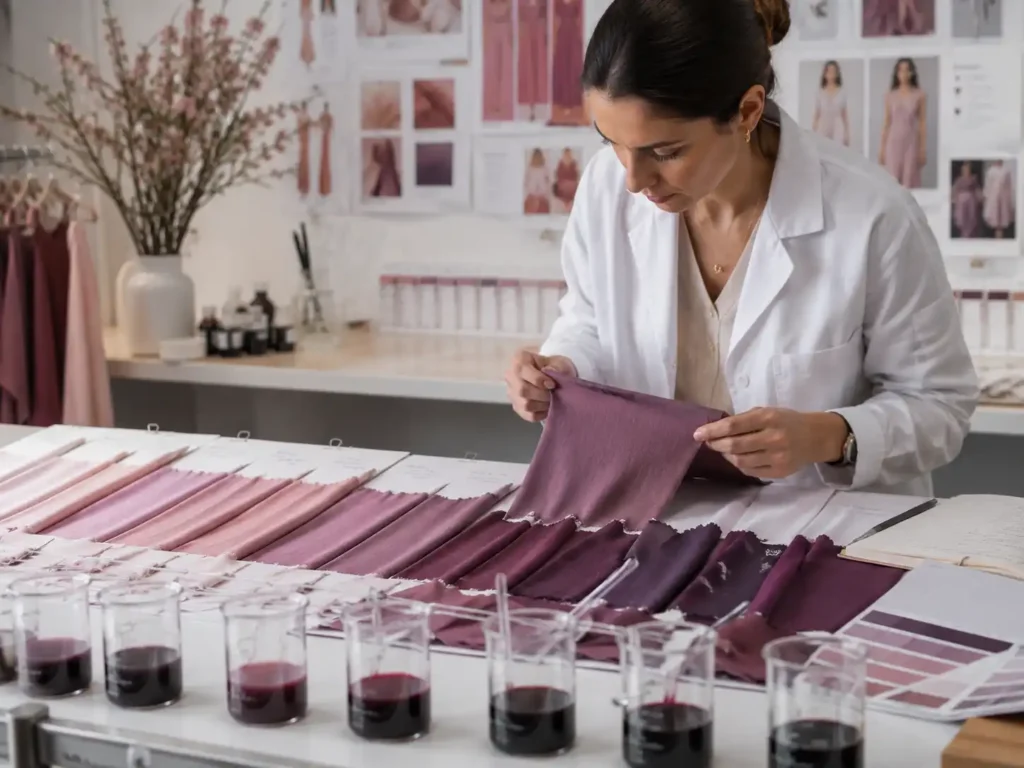
Color approval needs the correct fabric quality, face direction and viewing conditions. Satin, velvet and textured surfaces can shift visually under different angles, while lining, zipper tape and thread may reveal an undertone mismatch. Duolan coordinates color references, lab dips and component matching according to the project requirement. Approved submission codes and comments should remain linked to the current material and garment version.

Linings, Zippers and Support Trims

Hidden components often determine whether a dress feels refined. Lining must match the outer fabric in stretch, weight, opacity, color and movement. Zipper tape, tooth size, length and reinforcement affect closure smoothness. Boning, cups, elastic, stay tape, fusible materials and underlining must provide support without printing through the surface. Duolan develops these items as structural components, not late substitutions.

Embroidery, Print and Decorative Materials

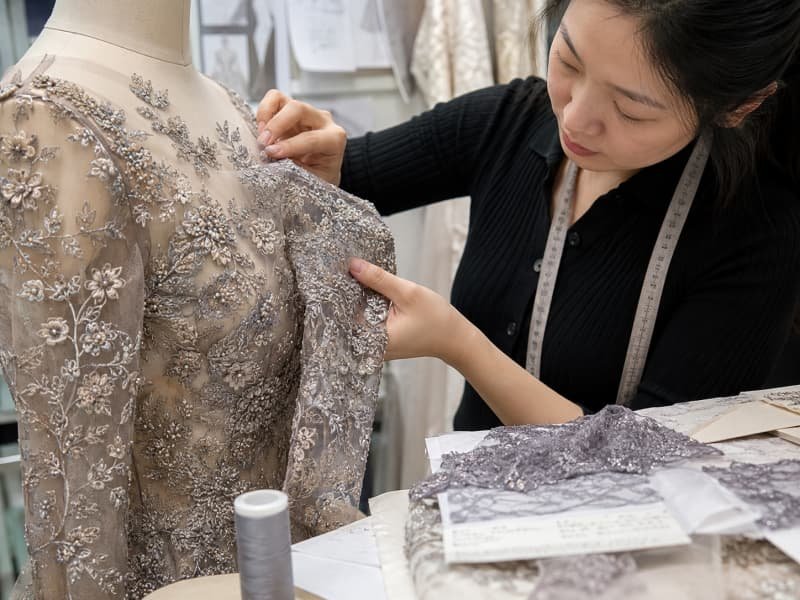
Artwork, motif placement, sequin maps, pearl density, embroidery scale and print repeat can be commercially sensitive. Files are released only to the approved process route needed for development. Sample review checks placement, weight, abrasion, edge security, care requirements and repeatability. A decoration that works on one artisan sample may require a placement guide, template, operation sequence or reinforcement method before bulk production.

Material Identity for Reorders

Repeat orders require more than a general description such as stretch satin or soft mesh. Supplier code, composition, construction, weight, usable width, finish, color reference, lining and support materials should be recorded. When an original article becomes unavailable, a similar-looking replacement must be tested because small changes in stretch, drape or thickness can alter fit and grading across the range.
Fabric Replacement Before Production

Controlled Alternatives

Launch calendars sometimes require a backup fabric or trim. An alternative should be technically qualified before the main material fails, not introduced during cutting without review. Duolan can compare appearance, fit effect, cost, lead time and availability, then recommend whether a panel test, partial sample or full garment sample is needed. Brand approval remains required before a protected specification is changed.

Pattern, Fit and Structure for Production-Ready Dresses

A convincing sample depends on pattern balance, fit diagnosis, internal support and grading. Duolan turns approved design intent into a technical basis that can be reproduced across the size range and production run.

Base Size and Fit Standard

The supplied block, fit model and base-size measurements establish the starting point. Bust level, waist position, hip shape, torso length, shoulder slope and posture affect fitted dresses more than a generic size label. Duolan reviews the relationship between body measurements, garment measurements and intended ease before the first sample. A proprietary size system can be followed when POM definitions and grade rules are clear.

Fit Diagnosis Instead of Surface Alteration

Comments such as “bust is loose” or “waist feels high” may come from several causes: wrong pattern balance, fabric stretch, cup capacity, strap angle, side-seam position or torso length. Duolan separates fit, measurement, balance, support and material causes before changing the pattern. Accurate diagnosis avoids a local correction that shifts the neckline, armhole or back opening into a new problem.

Grading Across the Range

Grading is not a uniform enlargement. Neckline depth, strap width, cup capacity, slit height, cut-out coverage and support placement may need style-specific rules. Key sizes are reviewed to confirm that the visual proportion and function remain consistent as dimensions change. When a program covers a wider range, Duolan can recommend an additional fit size or size-set review before the full grade is released.

Hidden Structure

Cups, boning, power mesh, waist stays, elastic, interlining, underlining and closure reinforcement must support the silhouette without creating hard edges or discomfort. Structured dresses are tested as complete garments because skirt weight and movement affect the bodice. The approved internal package becomes part of the production standard and should not be replaced with a visually similar component without technical review.

Movement and Recovery

Front and back photographs do not reveal every fit risk. Sitting, walking, turning, raising the arms and recovering after movement can expose neckline opening, strap pressure, slit instability, twisting or fabric growth. Duolan includes movement observations in fit review for fitted, backless, bias, corset and long dresses. The final pattern should hold the intended shape through realistic wear, not only during a static fitting.

A Controlled Dress Sample Approval Ladder

Every sample should answer a defined question. Clear sample purpose, version status and approval language reduce repeated rounds and prevent an attractive but incomplete garment from entering production.

Feasibility or Mock-Up Sample

A partial construction, bodice mock-up or material trial can answer a high-risk question before a full garment is built. Corset support, drape anchors, cut-out stability, sequin placement and layered transparency often benefit from targeted testing. The result is recorded as a development decision, not mistaken for a complete sample approval.

First Prototype

The first full sample tests the relationship between silhouette, fabric, construction and measurements. Standard styles are commonly planned at approximately 7-12 working days after specifications and materials are confirmed. Structured, draped, embellished or custom-material styles are commonly planned at approximately 12-20 working days. Final timing follows the actual material and complexity review.

Fit and Revision Samples

Fit samples test balance, measurements, support and movement on the agreed body standard. Comments are grouped into fit, measurement, fabric, construction, visual and production issues. Revision samples often require approximately 5-10 working days, depending on comment clarity and material readiness. Each round records confirmed points, open decisions and the goal of the next review.

Photo and Sales Samples

Campaign, ecommerce and sales samples may need superior finishing, approved color and near-final branding before the full production standard is complete. Confidentiality rules should cover image timing, sample destination and use. A photo-ready status does not automatically authorize bulk because fit, labels, packaging or material tests may still remain open.

Size Set

A size set verifies grading, proportion and measurement behavior across selected sizes. It is especially useful for fitted dresses, extended ranges, corset styles and products where neckline, cup, slit or cut-out placement must remain controlled. The review identifies whether grade rules need correction before every size is cut in production fabric.

PP and Golden Sample

The PP sample establishes the production basis after materials, fit, measurements, construction, color, trims, labels and key packaging points are approved or clearly documented. A sealed or golden sample gives the line and quality team a physical comparison standard. Any remaining exception should be written, assigned and approved before full production loading.

From NDA Review to Controlled Bulk Delivery

A confidential dress program needs one connected route from the first non-confidential discussion to shipment. Each stage releases only the information and commitment required for the next decision.

NDA and Project Outline

Confirm legal parties, protected information, permitted use and any restrictions on photography, subcontracting, production location, retention or public reference. Begin with the dress category, style count, estimated quantity, target market and timing without attaching the full protected package.

Confidential File Review

After the confidentiality scope is accepted, Duolan reviews tech packs, sketches, reference garments, size standards, material direction and launch requirements. Missing information and high-risk decisions are listed before pattern work begins.

Feasibility and Development Plan

Styles are grouped by complexity, sample purpose, material readiness and launch priority. The plan identifies standard samples, targeted trials, fit sizes, custom materials, special processes and approval dependencies.

Material and Pattern Development

Main fabric, lining, trims and support materials are developed alongside CAD patterns, draping and measurement engineering. Material changes are evaluated for their effect on fit and construction before approval.

Sampling and Revision Control

Each sample receives a defined purpose and version status. Fit comments, visual decisions, construction changes and material updates are recorded so the next sample follows one coordinated instruction set.

PP Release and Production Planning

The approved pattern, BOM, measurements, workmanship, labels, packaging and physical standard are reviewed together. Production allocation, line preparation, quality checkpoints and any pilot or first-piece requirement are confirmed before loading.

Bulk Manufacturing and Inspection

Incoming materials, cutting, sewing, special processes, pressing and packing are controlled against the current production pack. Inline checks identify drift early, while final inspection verifies measurements, workmanship, appearance, assortment and packing requirements.

Delivery, Archive and Reorder

Shipment records, approved standards and reorder information are organized according to the agreed confidentiality and retention terms. A repeat order should follow the controlled approved pack rather than rely on memory, an old sample or a generic material description.

Workmanship and Special Processes for Confidential Styles

Complex dress details become commercially valuable when they can be repeated consistently. Duolan develops workmanship and special-process standards around the material, silhouette and expected production volume.

Satin Handling and Pressing

Satin exposes needle marks, seam pressure, puckering, shine and shade direction. Cutting orientation, needle choice, seam allowance, pressing temperature, support materials and packing pressure need to suit the exact quality. Duolan reviews seam appearance in the real production fabric and can use an operation test or first-piece check before full line loading. Approved pressing and handling methods become part of the workmanship standard.

Mesh, Lace and Sheer Construction

Stretch mesh changes opacity and motif scale under tension, while lace requires placement and joining control. Development defines lining coverage, seam visibility, edge reinforcement, stretch compatibility, motif alignment and wearer contact. Samples are checked flat and on the body because transparency and density can change dramatically in wear. Bulk standards identify critical placement points and acceptable natural variation where repeats are irregular.

Sequins, Pearls and Stones

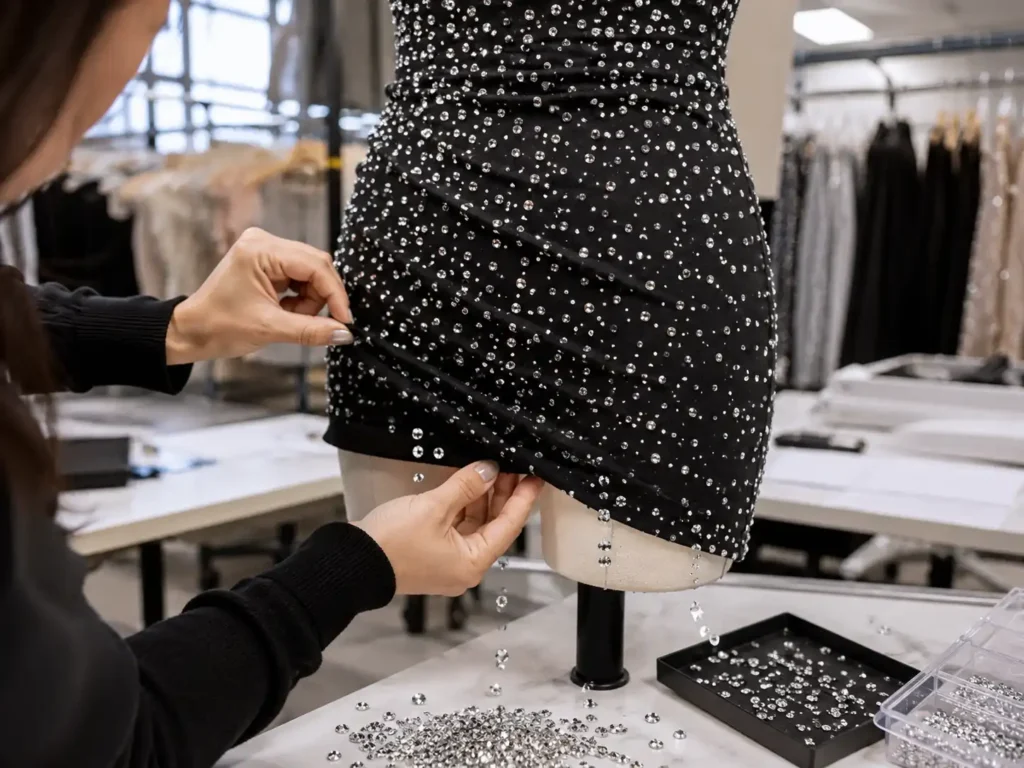
Embellishment adds weight, abrasion, attachment and packing risks. Duolan reviews density, placement, edge clearance, stitch security, backing, lining, comfort and repair access. Hand-applied details may need templates, section maps or operation sequencing to keep the result consistent across thousands of pieces. Contact zones, zipper paths and seam allowances are kept clear where decoration could scratch the wearer or interfere with assembly.

Corset and Bustier Construction

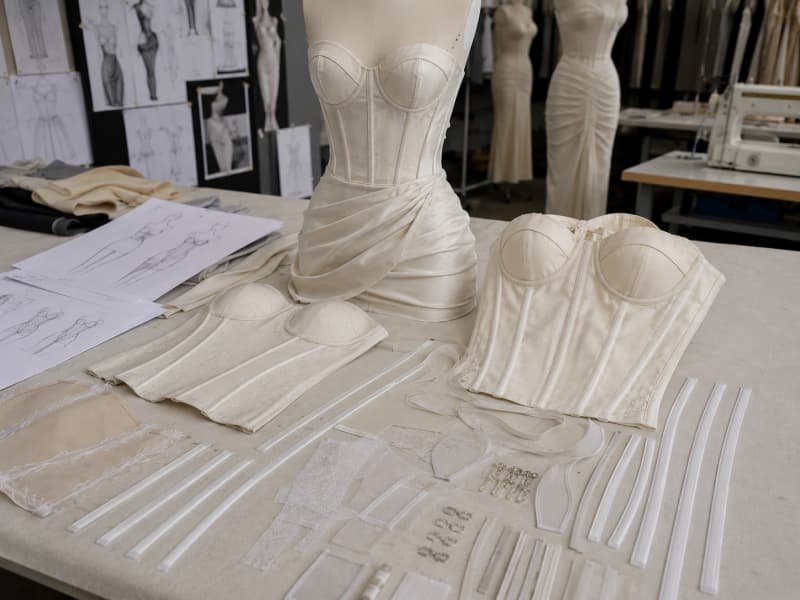
Panel geometry, cup capacity, boning, waist control, closure reinforcement and skirt load must work as one system. Duolan distinguishes decorative corset styling from functional support and selects internal materials accordingly. Fittings examine neckline security, breathing, sitting and movement. Production preparation defines channel width, boning length, seam matching, cup placement and reinforcement so the approved support does not drift during bulk sewing.

Draping, Pleating and Ruching

Draped and gathered details depend on anchor position, grain, layer order and tension. A few millimeters at an anchor can change the visual flow across the body. Duolan records drape points, fold direction, stitch path, gathering ratio and finished balance. When hand arrangement is required, a placement guide or reference sample helps the line reproduce the intended result without flattening the design into a mechanical pattern.

Clean Finishing and Final Appearance

High-impact fashion dresses still need controlled insides. Lining attachment, seam finishing, zipper ends, hook-and-eye placement, strap joins, hem level, thread trimming and pressing influence comfort and perceived quality. Final inspection compares the garment with the approved standard under normal lighting and movement, not only on a flat table. Packing methods are adjusted for surfaces that crease, crush or snag easily.

Sample-to-Bulk Control Without Losing the Approved Standard

Bulk consistency depends on converting the approved sample into controlled production information. One attractive sample cannot carry every decision unless materials, pattern, measurements, workmanship and exceptions are released together.

Approved StandardProduction Release EvidenceBulk Verification
Design and visual balanceCurrent tech pack, approved images and sealed sampleFirst-piece comparison for silhouette, neckline, waist, slit, drape and length
Pattern and gradingApproved pattern version, base-size comments and grade rulesMarker/version check and key-size measurement review
Main fabric and liningSupplier code, composition, construction, weight, color and approved swatchIncoming shade, usable width, defects, weight and dimensional checks before cutting
Trims and support materialsLocked BOM with approved referencesReceiving check for zipper, cup, boning, elastic, label and support-material identity
WorkmanshipConstruction notes, operation standards and critical detail photosInline inspection at high-risk operations and first output from special processes
Fit and measurementsMeasurement specification, POM definitions and tolerancesIn-process measurement checks and final size/assortment verification
Labels and packagingApproved artwork, placement, folding, barcode and carton instructionsPre-pack review, scan check where required and final packing audit
Exceptions and open itemsWritten approval with owner and deadlineClosure check before shipment; no silent substitution or unresolved carryover

Manufacturing Capacity for Confidential Multi-Style Programs
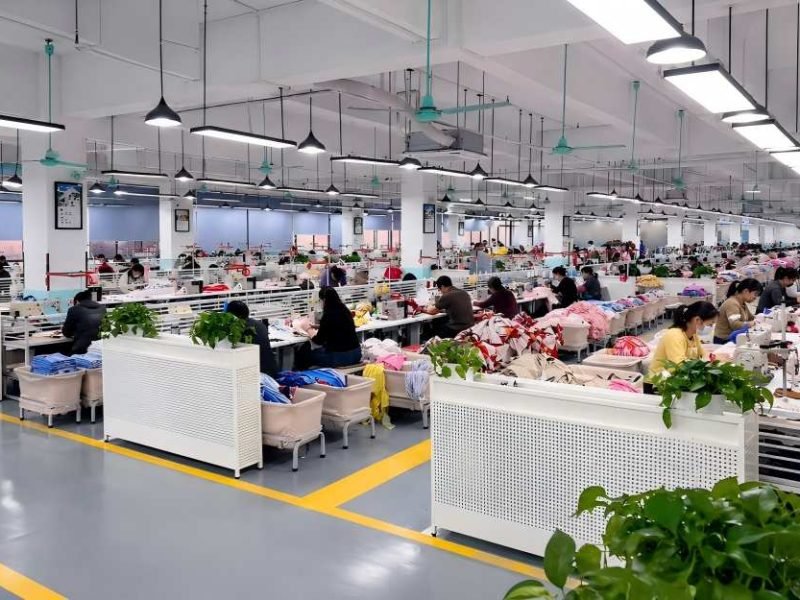
Scale matters only when product sensitivity, style complexity and quality requirements remain controlled. Duolan uses a multi-factory structure to support collection development, launch orders, repeat orders and capacity growth without treating every style as interchangeable.
JF Apparel sewing line 4 duolan

Core Control Through Owned Factories

Duolan is supported by 16 owned womenswear factories. Core styles, technically complex dresses and highly sensitive projects can be assigned according to development history, process capability and approved confidentiality requirements. Factory allocation should be confirmed before production, and a proposed location change should be reviewed when the NDA, vendor manual or licensed-program rules require named facilities.

Flexible Capacity for Seasonal Programs

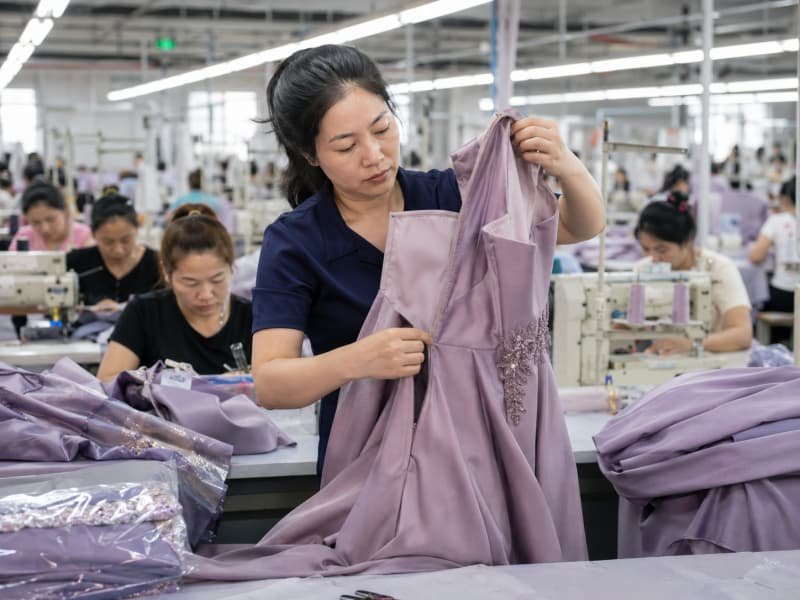
More than 20 long-term satellite factories and 300 sewing lines provide capacity for multi-style launches, replenishment and scale-up. The network is not a license to move protected work freely. Styles are matched to construction, fabric, special process, quality risk and delivery need. Approved routes, technical packs and quality checkpoints remain controlled as capacity expands.
pattern design duolan

Development Resources Before Production

Approximately 300-400 pattern and sample specialists support pattern engineering, sample sewing, fit correction and technical preparation across the wider group. Monthly activity can reach approximately 15,000-35,000 sample pieces or development instances. These resources allow a 10-30 style program to run several sample tracks while keeping priority campaign, fit and PP decisions visible.

Production Planning by Style Risk

A satin slip dress, corset mini, sequin party dress and layered mesh maxi should not share one production assumption. Duolan groups styles by material handling, operation complexity, special process, inspection need and launch priority. High-risk styles may receive a pilot run, first-piece confirmation or added inline checks before full loading, while stable repeat styles can move through a more efficient route.

Quality, Audit and Brand-Specific Requirements

Confidentiality does not replace quality governance. Protected programs still need verifiable factory status, material requirements, inspection standards, labeling accuracy and market-specific documentation.

SMETA Audit Foundation

Duolan’s manufacturing system has completed SMETA and SMETA 2-Pillar audits. Relevant audit records can support supplier review according to the actual factory route and validity period. Audit status should be checked against the facility assigned to the program rather than assumed from a general group statement.

Brand and Market Standards

Projects can be planned around applicable quality, testing, social compliance, labeling, packaging and brand-specific requirements. BSCI, ISO 9001, AATCC, ASTM, OEKO-TEX, EN, GOTS and client standards may be relevant depending on product, material, market and supplier documentation. Applicability and evidence are confirmed project by project.

Inline and Final Quality Control

Material identity, cutting, construction, high-risk operations, measurements, pressing and packing need checkpoints linked to the approved sample and production pack. Inline review detects drift while correction remains possible. Final inspection then verifies workmanship, appearance, size assortment, labels, packaging and agreed sampling level.

Confidential Quality Records

Inspection photos, measurement reports, test results, defect records and packing documents may contain brand names, designs or commercial information. Their use and retention should follow the project confidentiality terms. Reports shared with laboratories, inspection companies or logistics partners should contain only the information required for the assigned service.

An Anonymized Confidential Occasionwear Program

The following representative program reflects recurring Duolan order structures: 10-30 styles per brand program and approximately 20,000-80,000 pieces in total. Names, original artwork and commercially sensitive details are intentionally removed.

Project Brief

An established North American occasionwear label planned 18 dress styles across going-out, wedding-guest and party categories. The order plan totaled 42,600 pieces in US sizes 0-14, using six main material families: satin, stretch crepe, power mesh, lace, sequin fabric and structured woven. Protected inputs included unreleased line sheets, tech packs, original reference garments, custom colors, labels, packaging artwork and a fixed launch calendar.

Confidentiality and Development Route

NDA scope was reviewed before full files were released. Styles received project codes, while the first feasibility review used redacted references and commercial ranges. Development was divided into three tracks: standard fashion dresses, fitted mesh and stretch styles, and structured or embellished styles. First samples were planned within the 7-12 working-day range for standard styles and 12-20 working days for complex styles, subject to material readiness.
United States|Guest Designer Going-out Dress Capsule

Technical Challenges

The main risks were satin color consistency, cup and waist control on structured minis, lace placement across curved seams, sequin abrasion near armholes and grading of cut-out details across the size range. Duolan used material trials, targeted bodice mock-ups, fit reviews in selected sizes, placement guides and written revision summaries. No style moved to PP status while fabric, fit or construction decisions remained undefined.

Bulk Preparation

Approved patterns, BOMs, color references, measurement standards, workmanship notes, labels and packaging were released as one production basis. The 18 styles were divided into three production waves according to launch priority and process risk. Structured and embellished styles received first-piece confirmation and added inline checks, while repeatable woven styles followed the standard PP and inspection route.

Program Result

The representative structure shows how a 42,600-piece program can protect design information without isolating confidentiality from production. Controlled disclosure, style grouping, sample status, approved material identity and production allocation allowed the collection to move from protected development inputs to measurable bulk standards. Reorder files retained only the approved references required for future production under the agreed archive rules.

NDA-Based Dress Development Frequently Asked Questions

Yes. NDA terms can be reviewed before confidential tech packs, original garments, unreleased references or collection plans are shared. A non-confidential project outline can be used for the first capability review. Final acceptance depends on the legal parties, scope, governing terms and obligations contained in the proposed agreement.
The scope may cover sketches, CADs, tech packs, patterns, measurements, BOMs, fabric and trim references, original garments, samples, fit comments, labels, packaging, costs, quantities, launch dates and other project information defined by the agreement. Protected information and exclusions should be written clearly rather than assumed.
Brand names, labels, complete patterns and unreleased design images are not intended for public use without written approval. Project terms can also define whether anonymized images, post-launch garments or approved references may ever be shown. No public-use permission should be inferred from the act of developing or manufacturing the product.
Yes. Reference images can establish silhouette and visual direction, but measurements, fabric, internal support, closure, lining and construction still require clarification. Duolan converts visible features into technical questions and prepares a defined development basis before pattern work rather than copying an appearance without understanding how the garment must function.
Ownership and usage rights should be stated in the commercial agreement or NDA because different development arrangements use different terms. The agreement may address brand-supplied patterns, newly created patterns, paid development work, reuse restrictions, archive rights and return or deletion requirements. Duolan follows the agreed written terms for the program.
Specialist partners may be needed for fabric development, printing, embroidery, washing, dyeing or embellishment. Duolan can identify the proposed downstream route and limit disclosure to information required for the assigned process. Programs needing named suppliers, written downstream obligations or prior approval should include those requirements in the project scope.
Standard styles are commonly planned at approximately 7-12 working days after specifications and materials are confirmed. Structured, draped, embellished or custom-material styles are commonly planned at approximately 12-20 working days. Revision samples often require approximately 5-10 working days. Final timing is confirmed after style, material and sample-purpose review.
Duolan reviews the approved pattern, materials, measurements, workmanship, labels, packaging, exceptions and production route before release. Depending on risk, a style may require PP approval, first-piece confirmation, a pilot run, inline inspection or added quality checkpoints. The production line follows the current controlled pack and sealed standard rather than an earlier sample.
A single agreement can cover a collection when the parties, protected information, permitted use and duration are broad enough for the program. Operational records should still identify each style, file version, sample status and production route. Licensed products, collaborations or styles with different ownership may require separate schedules or additional approvals.
Archive, return and deletion requirements should follow the signed agreement. Replenishment programs may need controlled retention of approved patterns, BOMs, material identity, sealed samples and quality notes. A closed program may require return or removal after a defined period. Project closeout should record the agreed action rather than leave old files available without a current production purpose.

Start a Confidential Dress Development Review

Begin with a non-confidential outline covering dress category, style count, quantity, size direction, sample purpose and launch timing. Release full tech packs, original garments, labels and unreleased files after the NDA scope and file-transfer route are confirmed.

  • Company or brand name, market, selling channel and NDA legal entity
  • Dress category, style count, priority styles and estimated quantity
  • Available material: tech pack, sketch, reference image, original sample or existing comments
  • Fabric, color, trim and special-process direction
  • Base size, size range and measurement standard
  • Required sample type: prototype, fit, photo, size set or PP
  • Campaign, launch, delivery and replenishment plan
  • Key fit, construction, workmanship or compliance concerns

For an initial review, avoid uploading sensitive files through an ordinary public form. Submit the project outline first, confirm the NDA and file-handling route, then release the complete protected package to the assigned development team.


Start Your Apparel Development Project

OEM/ODM Manufacturing Support for Fashion Brands

Share your collection details, estimated quantities, target market, development timeline, and technical requirements. The production team will review your request and provide a tailored manufacturing solution based on your product category, fabric selection, construction needs, and delivery schedule.

Fashion Manufacturing Support with Scalable Production Capacity

From sample development to bulk production, Duolan supports fashion brands with confidential OEM/ODM manufacturing, stable quality management, flexible production planning, and coordinated multi-factory execution for seasonal and capsule collections.

Need Direct Assistance?

Seraphinite AcceleratorOptimized by Seraphinite Accelerator
Turns on site high speed to be attractive for people and search engines.