Skip to content
Occasionwear, Evening & Formal Dress Manufacturing Solutions
Dress-focused development and manufacturing for fashion brands building polished, camera-ready and commercially repeatable occasionwear collections.
Duolan coordinates collection planning, fabric and trim development, pattern engineering, staged sampling, complex workmanship, bulk production and delivery for occasion-led dress programs. The manufacturing system is structured for multi-style launches rather than isolated one-off garments.
- Typical brand programs: 10-30 styles developed and produced within one seasonal order structure.
- Common order scale: approximately 20,000-80,000 garments across the full style, color and size matrix.
- Manufacturing network: 16 owned factories supported by 20+ long-term satellite factories.
- Production organization: 300 sewing lines and 50+ quick-response lines for phased launches, repeats and scale-up orders.
- Development capacity: approximately 15,000-35,000 sample developments per month across the supporting group.
- Compliance foundation: SMETA audit and SMETA 2-Pillar social audit record.
Built for Brand-Level Occasionwear Programs
Occasionwear Brands
- Collection-level planning
- Commercial and statement style balance
- Repeatable fit and material standards
Fashion Buying Teams
- Structured development records
- Clear approval checkpoints
- Bulk readiness before production release
Product Development Teams
- Fit and proportion review
- Construction and trim feasibility
- Sample comments translated into production actions
Sourcing Offices
- Multi-style order breakdown
- Factory and line matching
- Shipment and packing coordination
What Strong Occasionwear Programs Require
Collection Architecture
Material Direction
Fit and Structure
Sampling Discipline
Bulk Consistency
Launch Coordination
Control Risks Before They Reach Production
Fabric-Silhouette Mismatch
- Control: fabric behavior review
- Output: recommended main fabric, lining and test needs
Unstable Fit Balance
- Control: pattern and fit correction
- Output: revised measurement and construction priorities
Insufficient Support
- Control: support system review
- Output: cup, boning, lining, tape and closure plan
Decoration Failure
- Control: craft feasibility trial
- Output: workmanship standard and defect reference
Sample-to-Bulk Drift
- Control: bulk readiness review
- Output: production readiness note
Compressed Launch Calendar
- Control: timeline and approval discipline
- Output: development and production path
Occasionwear Product and Collection Range
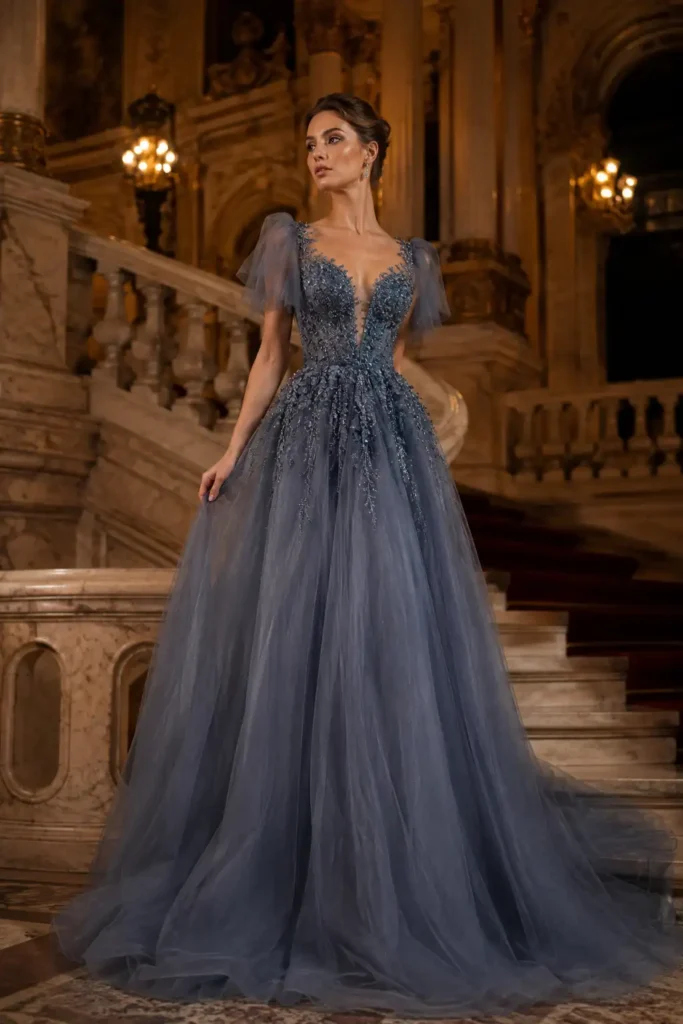
Evening Dresses

Formal Dresses

Semi-Formal Dresses

Cocktail Dresses

Prom Dresses

Graduation Dresses

Homecoming Dresses

Wedding Guest Dresses

Bridesmaid Dresses

Party Dresses

Gala Dresses

Holiday Collections
Build a Balanced Commercial Collection
A strong dress program gives each style a clear commercial job. Visual statements build identity, dependable core shapes carry volume, and repeatable blocks support color or length extensions after launch.
| Collection Role | Typical Product Direction | Commercial Function | Development Priority |
|---|---|---|---|
| Image Style | Structured gown, strong drape or elevated embellishment | Creates campaign identity and wholesale attention | Start early; test structure and workmanship |
| Core Commercial Style | Satin midi, fitted crepe dress or refined cocktail shape | Carries stable sales across channels | Lock fit, material and repeatability |
| Entry Style | Clean mini, simple draped dress or lighter construction | Extends price coverage and order depth | Control construction cost without losing finish |
| Event Statement Style | Sequin, pearl, rhinestone or metallic party dress | Supports holiday and social-media visibility | Trial decoration, weight and skin-contact areas |
| Repeatable Fit Block | Proven bodycon, corset, halter or slip shape | Supports reorders, color updates and seasonal extensions | Preserve pattern, BOM, tolerance and QC records |
Collection planning can also connect mini, midi and maxi lengths to one fabric family; develop a hero color with supporting neutrals; or extend a proven corset, slip or ruched block into tops, skirts and coordinated sets. The goal is not maximum style count. The goal is a coherent product line with controlled development effort and clear sales roles.
Silhouette and Fit Engineering
Shape the Bust and Waist
- Review points: bust point, cup edge, under-bust seam, waist level, side seam, center-front balance and closure tension
- Evidence: front, side and back mannequin views with key measurements and fit notes
- Bulk control: approved pattern version, measurement tolerance and internal support specification
Control Hips, Slits and Movement
- Review points: hip contour, stress lines, recovery, slit opening, knee width, hem sweep and lining movement
- Evidence: movement fitting, seated view, side-seam check and slit reinforcement detail
- Bulk control: critical measurement chart and first-piece visual reference
Secure Necklines and Straps
Strapless, halter, one-shoulder, asymmetric and backless dresses depend on tension distribution. Neckline gaping, strap pressure, unstable armholes or back-opening distortion often come from pattern and support choices rather than sewing quality alone. Duolan evaluates neckline shape, elastic or anti-slip support, strap angle, strap width, attachment points, armhole depth, back coverage and closure placement as one system. Halter styles need neck comfort and balanced front weight. One-shoulder shapes need stable diagonal tension. Backless styles may require internal waist support, side reinforcement or carefully positioned clear elastic. Each design is tested according to intended movement and the target size range.
- Review points: neckline contact, strap load, armhole security, back opening and anti-slip support
- Evidence: tension test, fitting movement and internal construction close-ups
- Bulk control: strap specification, attachment method and neckline tolerance
Preserve Fit Across Sizes
A successful base sample is only the starting point. Occasionwear grading must preserve neckline security, bust coverage, waist position, hip shape, slit balance and skirt length across the intended size range. Duolan works from the approved base pattern and size specification, then identifies details needing proportional or non-linear grade rules. Cups, boning, straps, back openings, cut-outs and decorative placements may require size-dependent adjustments. Before bulk, size-set review can focus on high-risk points rather than relying only on numeric grade increments. Measurement tolerances are prioritized according to visual and functional impact: bust, waist, hip, dress length, strap length, cup spacing and slit height do not carry equal risk.
- Review points: grade rule logic, coverage, support, length, decorative placement and movement
- Evidence: size-set measurements and selected fit checks
- Bulk control: approved grading file, priority tolerances and measurement method
Fabrics Chosen by Garment Result
Material selection starts from silhouette, event, comfort, target price and production plan. Eight common occasionwear materials are compared by result, risk and manufacturing impact.
| Material | Best For | Main Strength | Key Risk | Production Impact | Duolan Review |
|---|---|---|---|---|---|
| Satin | Slip, draped, fitted and formal silhouettes | Luster, fluidity and elevated surface | Seam marks, snagging, puckering, shade variation | Careful cutting direction, needle choice and pressing | Confirm weight, face, drape, lining and seam tests |
| Crepe | Formal midi, column, fitted and tailored dresses | Controlled drape and cleaner surface | Different recovery, stretch and opacity by construction | Pattern ease and pressing method must match fabric | Review stretch, recovery, weight and color depth |
| Chiffon | Layered maxis, sleeves, soft formal shapes | Lightness and movement | Transparency, fraying, rolled hem variation, layer shift | More handling, layer control and finishing time | Confirm layer count, lining, hem and seam method |
| Mesh | Panels, fitted dresses, draping and illusion details | Stretch, transparency and modern visual effect | Excess transparency, weak recovery, edge distortion | Requires lining, elastic or stabilization decisions | Review stretch direction, coverage and seam support |
| Lace | Cocktail, formal, romantic and panelled styles | Surface depth and refined detail | Motif placement, fraying, shade and seam interruption | May require placement cutting or applique work | Confirm motif scale, edge treatment and lining color |
| Velvet | Holiday, winter evening and rich formal styles | Depth, softness and strong seasonal color | Pile direction, pressure marks and seam movement | Directional cutting and controlled pressing required | Review pile, weight, backing, stretch and finishing |
| Tulle | Layered skirts, overlays, sleeves and volume details | Light volume and structured transparency | Scratchiness, crushing, uneven gathers and snagging | Layer count and attachment raise labor and QC needs | Confirm hand feel, stiffness, layers and edge finish |
| Sequin Fabric | Party, holiday, gala and statement dresses | Immediate visual impact and light reflection | Weight, missing sequins, sharp edges and direction mismatch | Higher cutting loss, cleaning and inspection workload | Review backing, density, direction, skin contact and repair standard |
Lining, Support and Internal Structure
Design the Lining System
- Control points: coverage, hand feel, stretch, static, color influence, hem relation and seam protection
- Common checks: light test, movement test, shell-lining balance and seam visibility
- Production record: lining code, color, pattern version and attachment method
Engineer the Support System
- Control points: cup specification, boning type, channel position, interlining, power mesh and waist support
- Common checks: bust security, side collapse, neckline contact, sitting comfort and repeated movement
- Production record: component specifications, placement references and workmanship notes
Specify Closures and Adjustments
- Control points: zipper length and color, hook placement, eyelet finish, strap hardware and reinforcement
- Common checks: smooth operation, pull strength, finish consistency and wearing ease
- Production record: BOM code, approved trim sample and placement specification

Decorative Workmanship Built for Repetition
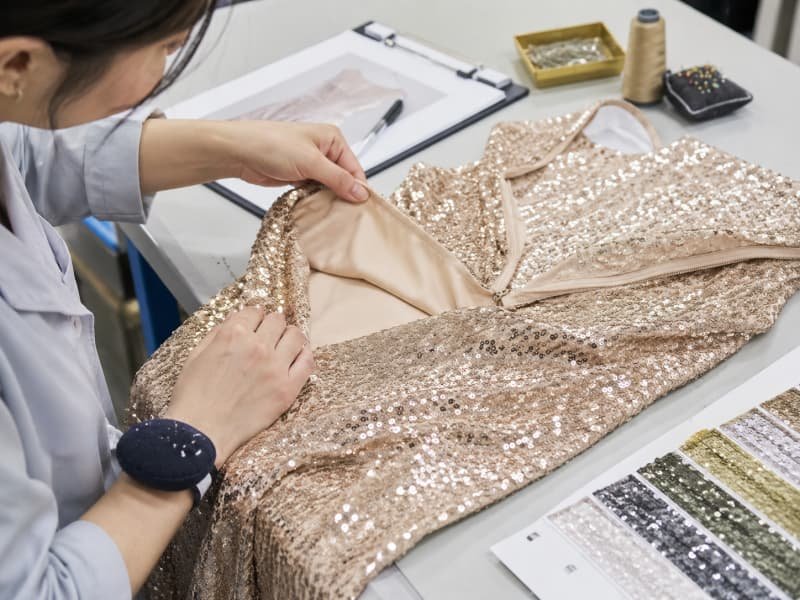
Sequins
- Best suited to holiday, party and gala programs
- Key risks: weight, abrasion, direction mismatch and missing sequins

Beading
- Best suited to statement evening and formal styles
- Key risks: loose attachment, weight concentration and inconsistent density

Pearls and Rhinestones
- Best suited to focal bodices, straps and decorative panels
- Key risks: detachment, finish variation and surface damage

Embroidery
- Best suited to lace-like effects, motifs and premium panels
- Key risks: puckering, placement shift and stiffness

Pleating and Draping
- Best suited to satin, chiffon, crepe and soft formal styles
- Key risks: inconsistent folds, excess bulk and size-to-size variation

Ruching and Applique
- Best suited to fitted cocktail and occasion styles
- Key risks: uneven density, distortion and uncomfortable edges
Start From the Development Materials You Have
Tech Pack Development
- Useful files: tech pack, BOM, artwork, size spec
- Output: clarification list, material questions and sample route
Reference-Led Development
- Useful files: front, side, back and detail references
- Output: development assumptions and feasibility points
Original Sample Review
- Useful files: original sample, measurement notes and comments
- Output: sample review, pattern path and material direction
Collection Brief Development
- Useful files: moodboard, style list, price architecture and launch date
- Output: collection development route and priority map
Sampling in Clear Approval Stages
Development Review
- Decision: confirm development basis
- Evidence: feasibility note or sample plan
First Prototype
- Decision: confirm overall direction
- Evidence: sample images, measurements and review notes
Fit Sample
- Decision: confirm fit priorities
- Evidence: fit photos, measurement chart and comment summary
Revised Sample
- Decision: confirm corrected design and fit
- Evidence: revision summary and before-after comparison
Photo or Sales Sample
- Decision: approve presentation use
- Evidence: photo-ready sample and open-point list
PP or Golden Sample
- Decision: approve bulk basis
- Evidence: signed reference, BOM and workmanship standard
Production-Ready Sample Standards
Lock Materials and Color
Lock Measurements and Fit
Lock Construction and Workmanship
Lock Branding and Packing
Turn Approved Samples Into Production Steps
Break Down Style Complexity
Design the Operation Path
Confirm First Piece and Trial Output
Match Capacity to the Program
Quality Control Around Occasionwear Risks
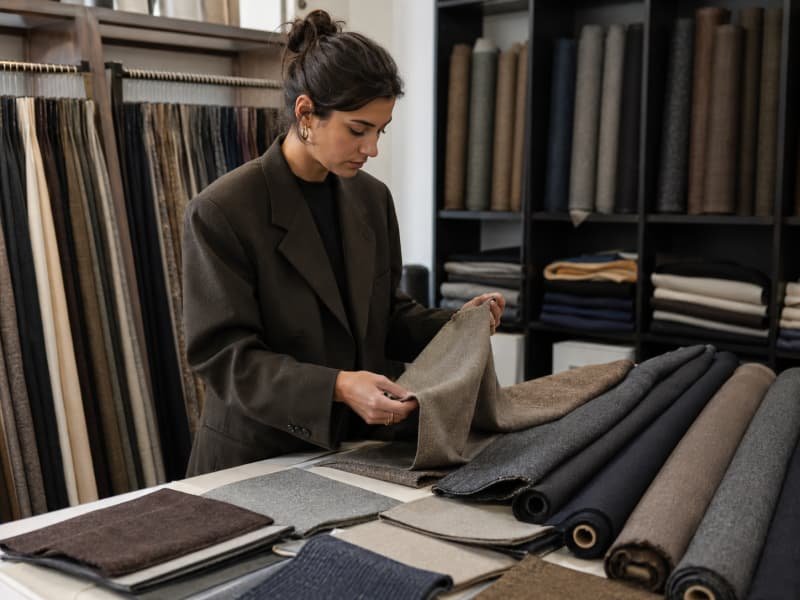
Fabric Inspection
- Focus: shade, surface, direction, defects and performance
- Evidence: inspection record and approved reference

Cutting Control
- Focus: direction, placement, layer stability and bundle identity
- Evidence: cutting reference and numbered bundles

First-Piece Review
- Focus: sample-to-line translation
- Evidence: first-piece approval or correction note
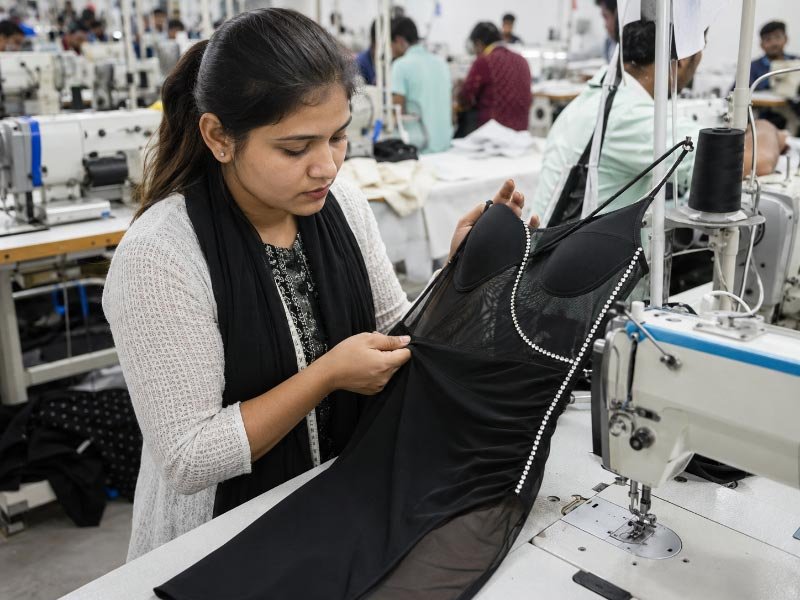
Inline Inspection
- Focus: repeat defects and critical operations
- Evidence: inline findings and corrective action
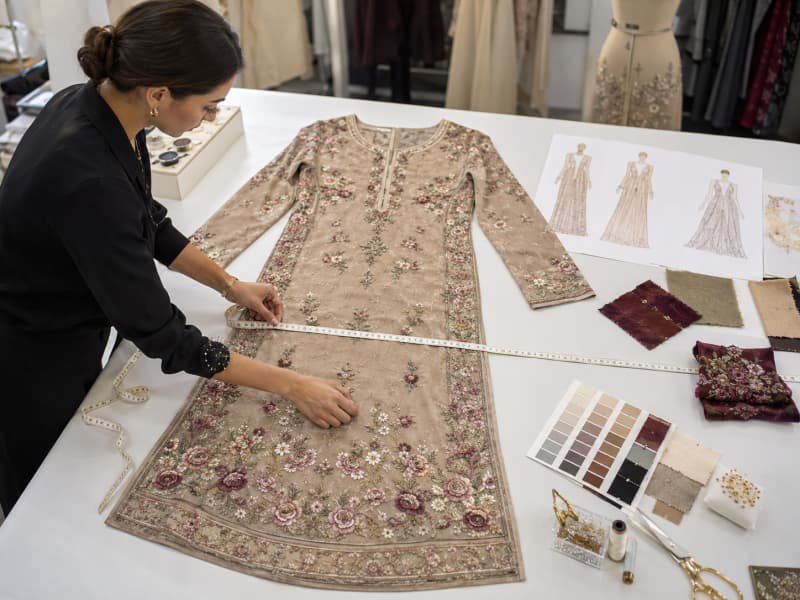
Measurement Review
- Focus: fit and size consistency
- Evidence: measurement report and size reference
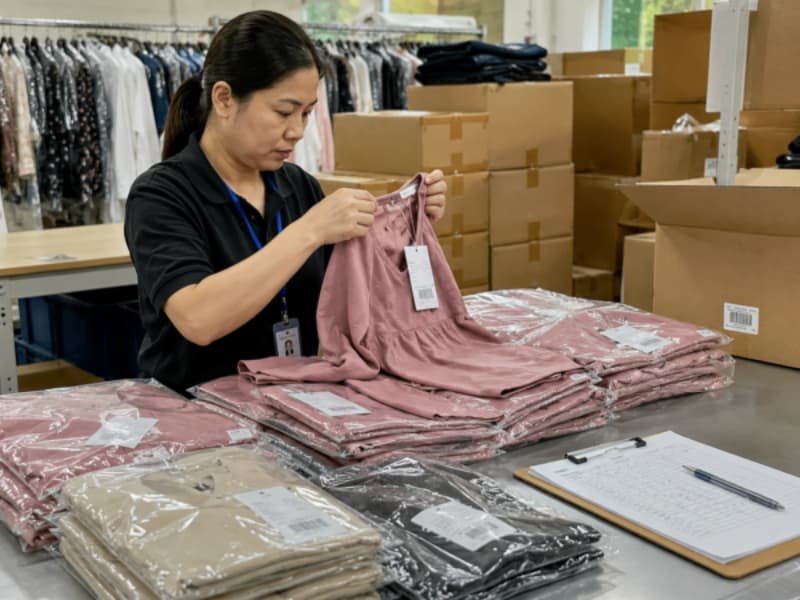
Final and Packing Check
- Focus: finished product and shipment readiness
- Evidence: final quality and packing summary
Multi-Style Production and Reorder Planning
Plan the Initial Launch Order
The order is separated by style, color, size, quantity, material readiness and complexity.
High-risk styles can enter trials earlier, while proven shapes and common fabrics move through a more direct path. Delivery requirements may be split by campaign, warehouse, country or selling window. Duolan aligns production planning with approvals rather than forcing all styles into the same start date. A 20-style program may include several different material and workmanship groups; each group receives its own critical path while remaining connected to the master delivery plan.
Prepare for Repeat and Scale-Up
Approved pattern versions, BOM records, material references, trim specifications, workmanship notes, PP samples, measurement tolerances, QC findings and packing details become reusable production assets. Before a reorder, material batch, color, supplier availability and any requested fit or design updates are reviewed. Proven styles can then extend into new colors, lengths, necklines or coordinated separates without losing the original fit block. Scale-up decisions consider whether added quantity should remain on the original line, move to parallel lines or be divided across factories under the same reference standard.
Use Manufacturing Scale With Control
Packing and Delivery Coordination

Branding Components
- Control: artwork, placement and code matching
- Output: approved branding reference

Garment Protection
- Control: material-sensitive packing method
- Output: packing sample or written standard

Order Packing Matrix
Style, color, size and carton ratios are checked against the order plan. Polybag marks, carton marks, assortment ratios and packing lists help receiving teams identify stock correctly and reduce warehouse discrepancies.
- Control: ratio, barcode and carton alignment
- Output: packing list and carton information

Shipment Coordination
Duolan can coordinate with nominated forwarders and support express, air or sea arrangements, including phased or split shipments when approved. Final quality, packing and documentation status are aligned before goods are released.
- Control: shipment readiness and document alignment
- Output: shipment status and handover information
Manufacturing Scale With Project Control
30+ Years Development
16 Owned Factories
20+ Satellite Factories
300 Sewing Lines
50+ Response Lines
SMETA Foundation
Representative Occasionwear Program Cases
North American Holiday Occasionwear Program
Program scope: 18 styles and approximately 42,000 garments across satin, stretch crepe, mesh and selected sequin constructions. The range included fitted minis, satin midis, draped maxis, structured bodices and holiday statement pieces. Several styles shared color groups but required different linings, stretch behavior and production paths. The main challenge was keeping the collection visually connected while protecting fit and finishing across multiple fabric categories. Duolan divided the range into material and complexity groups, prioritized structured and decorated styles for earlier trials, and used separate fit and visual review points for photo samples. Before bulk, fabric, lining, trims, measurements, support components, decoration references and packing were locked by style. Production was phased so approved core styles could begin while higher-risk statement styles completed final PP checks. The result was a controlled transition from a multi-style development calendar into bulk production without treating all 18 styles as one identical order block.
- Order structure: 18 styles, approximately 42,000 garments, multiple color and size combinations
- Key materials: satin, stretch crepe, mesh and sequin surfaces
- Main controls: style grouping, early complex-style trials, fit review, PP locking and phased production
- Evidence suited for display: color-material matrix, sample revision comparison, PP details, inline QC and protected packing
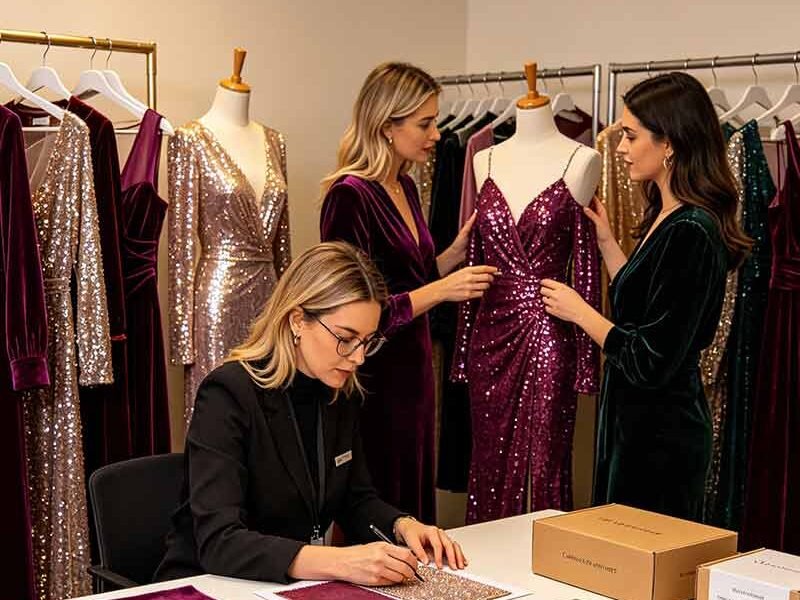
European Formal and Event Dress Program
Program scope: 26 styles and approximately 68,000 garments covering formal midis, cocktail minis, lace styles, corset-inspired dresses, draped shapes and embellished party pieces. The range included four major color families and several repeatable fit blocks. The central risk came from decoration consistency, lace placement, internal support and size grading across styles with different construction levels. Duolan created a development priority map, moving corset, lace-placement and embellished styles into early feasibility and first-piece checks. Approved fit blocks were reused where suitable, while necklines, cups, boning, slits and back openings received style-specific controls. The bulk order was broken down by style complexity and material readiness, with production allocated across appropriate lines. Packaging used style-color-size ratios and added protection for lace, satin and decorated surfaces. Production records preserved pattern versions, BOM details, workmanship references and QC priorities for later repeat or extension programs.
- Order structure: 26 styles, approximately 68,000 garments, four principal color families
- Key products: formal midi, cocktail mini, lace, corset-inspired, draped and embellished dresses
- Main controls: fit-block reuse, lace placement, support structure, size grading and protected packing
- Evidence suited for display: pattern archive, decoration standard, size-set review, first-piece approval and packing matrix

Frequently Asked Questions

Start Your Occasionwear Manufacturing Program
Send the available development materials and commercial requirements for an initial project review. Helpful inputs include the intended occasion, design references or tech packs, fabric direction, color or Pantone information, size range, expected style count, estimated total quantity, target market, launch date, quality priorities and packaging requirements. A structured brief allows Duolan to review product feasibility, material and support needs, suitable sample stages, complex workmanship risks, bulk production path and delivery planning before the program moves forward. Files do not need to be organized in one format, but each project should become a clear development basis before sampling begins.
- Dress category and collection purpose
- Tech pack, sketch, reference images or original sample information
- Target fabric, lining, trims and color direction
- Size range and measurement standard
- Expected style count and total order quantity
- Target market, launch date and delivery destination
- Quality, compliance, branding and packing requirements
Recommended Form Fields
- Name
- Company
- Business Email
- Tel / WhatsApp (Optional)
- Dress Category
- Expected Quantity
- Target Launch Date
- Message
- Upload Your Files
- Submit Button: Send Brief