 Skip to content
OEM Dress Manufacturer
Dress OEM execution for established fashion brands, from technical files and PP samples to inspected bulk delivery.
Duolan manufactures brand-owned dress designs through controlled OEM workflows. We review tech packs, fabric standards, BOM details, measurement specs, approved samples, PP requirements, dress construction risks, QC points and packing rules before bulk production moves forward.
- 30+ years of fashion dress development background supports dress-specific OEM execution.
- 16 owned womenswear factories help control samples, PP standards and core production.
- 20+ satellite factories support coordinated multi-style dress programs and seasonal capacity.
- 4 regional bases help route production across Guangxi, Guizhou, Sichuan and Jiangxi.
- 12,000–20,000 equipment units support cutting, sewing, finishing, inspection and packing.
- 750–1,200 development staff support pattern interpretation, sampling, grading and fit correction.
- 1,200–1,500 coordination staff support order follow-up, QC communication and delivery tracking.





OEM Dress Manufacturing Follows Brand-owned Standards
OEM dress manufacturing is not the same as selecting available dresses, adding labels or making a rough sample from a picture. In an OEM project, the brand owns the design direction, and the manufacturer must execute against defined technical, material, fit, quality and delivery standards.
OEM Means Execution Discipline
Dress OEM Requires Category-specific Judgment
Built for Brands With Dress Production Standards
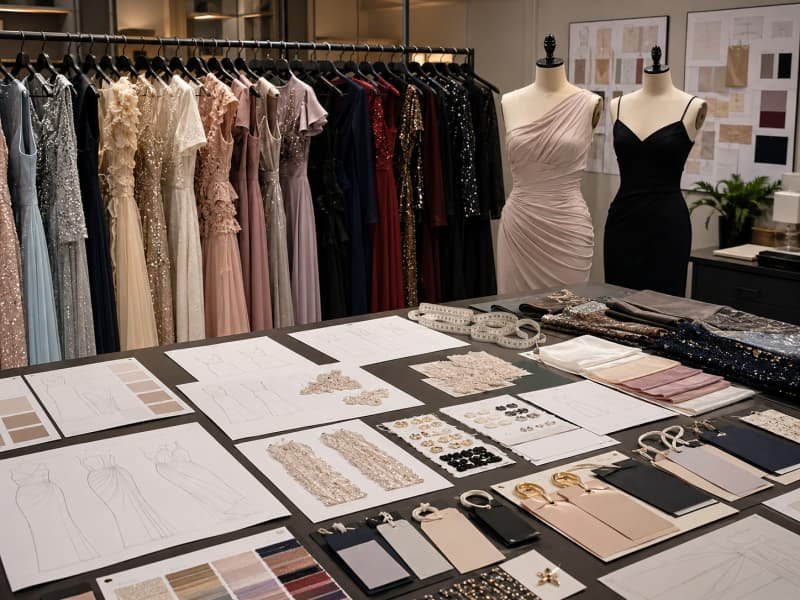
Established Dress Brands
- Project input: tech packs, approved samples, fabric standards, measurement specs, BOM files, label rules or packing manuals.
- Manufacturing need: sample-to-bulk execution, material control, PP sample locking, QC visibility and brand-ready delivery.
- Duolan review: dress category, fabric risk, fit sensitivity, construction details, production path and inspection focus.
- Strong fit: brands managing fashion dresses, occasion dresses, party dresses, fitted dresses and repeatable dress programs.
Product Development Teams
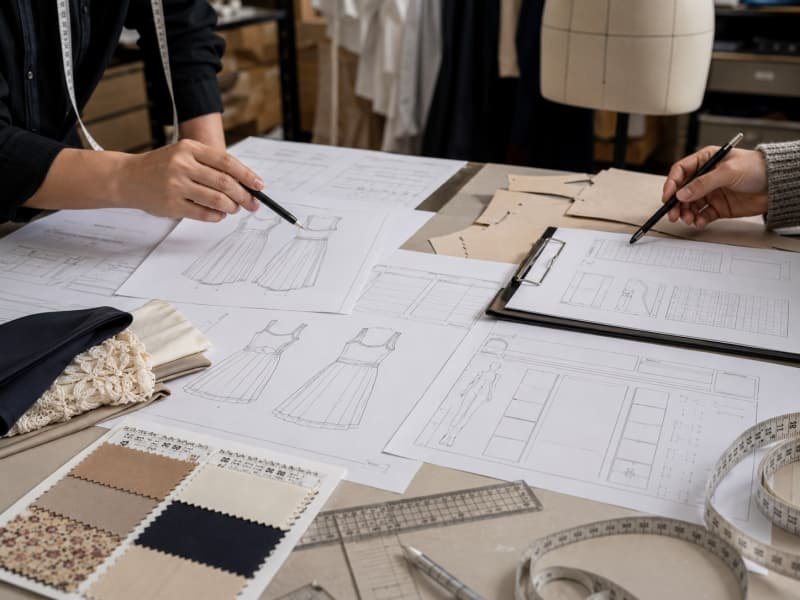
- Project input: flat sketches, construction notes, sample comments, size chart, fabric references and intended launch schedule.
- Manufacturing need: practical feedback on whether the file can move into sample, revised sample, PP sample or bulk planning.
- Duolan review: measurement logic, fabric behavior, lining, trims, closure, pattern feasibility and unresolved risk areas.
- Strong fit: teams that need technical execution rather than catalog sourcing or informal garment development.

Buying Teams
Buying teams compare manufacturers by evidence, not presentation. They need clarity on factory system, production control, compliance support, inspection process, packing rules and delivery discipline.
- Project input: supplier requirements, quality manuals, inspection standards, packaging rules, target quantities and delivery windows.
- Manufacturing need: supplier evaluation support, production readiness review, risk control and documented communication.
- Duolan review: SMETA-related records, material coordination, QC stages, packing details and production handover control.
- Strong fit: buying teams and sourcing offices evaluating OEM dress production partners for brand-level programs.

Multi-style Dress Teams
- Project input: product list, style codes, fabric direction, color plan, launch calendar and sample status by style.
- Manufacturing need: style grouping, production routing, material timing, PP priorities and delivery sequence planning.
- Duolan review: complexity by style, BOM readiness, sample approval stage, capacity route and quality-control requirements.
- Strong fit: brands developing seasonal dress drops, partywear capsules, occasionwear programs and repeated OEM dress lines.
OEM, ODM and Private Label Dresses Compared
Different manufacturing models require different levels of brand input and factory responsibility. Duolan’s strongest position is OEM dress production, where brand-owned standards are translated into samples, PP references, BOM control, bulk production and QC.
| Model | Brand Input | Manufacturer Role | Best Used When |
|---|---|---|---|
| OEM Dress | Tech pack, sample, fabric standard, BOM, measurement spec, packing rule | Execute against the brand’s defined product and quality standard | The brand already owns the design and production direction |
| ODM Dress | Concept, reference images, moodboard, fabric direction or category goal | Help develop before the final standard is fully fixed | The brand needs design-to-sample development support |
| Private Label Dress | Existing or adjusted style with brand label and packing needs | Apply brand finishing and selected modifications | The product standard is simple and modifications are limited |
| Ready-style Dress | Available inventory or catalog selection | Supply existing goods with minimal development | The brand is buying stock, not building OEM standards |
| OEM Dress Partner | Technical files plus ongoing production plan | Review files, develop samples, lock PP, produce bulk, inspect and pack | The brand needs accountable sample-to-bulk execution |
Dress-focused OEM Manufacturing Partner
Focused on Dress Categories That Need Control
From Brand Standard to Factory Execution
What an OEM Dress File Should Include
A strong OEM file reduces uncertainty before sampling and bulk production. Duolan reviews each file area to see whether the dress can move into development, PP preparation or production planning with a clear technical standard.
| OEM Dress File Area | What Should Be Included | Why It Matters |
|---|---|---|
| Flat Sketch | Front, back, side, construction details and close-up callouts | Helps pattern and sample teams interpret the design accurately |
| Measurement Spec | Sample size, POM list, tolerance, size range and grading direction | Supports fit control, QC measurement and production consistency |
| Fabric Standard | Composition, weight, stretch, drape, handfeel, color and swatch reference | Prevents material substitution and sample-to-bulk mismatch |
| BOM | Main fabric, lining, trims, labels, packing items and approved references | Aligns sourcing, sampling, production and QC teams |
| Construction Notes | Seams, lining, closure, support areas, reinforcement and finishing method | Turns design details into production instructions |
| Fit Comments | Approved changes, unresolved issues and revision history | Keeps sample decisions visible before PP locking |
| Label Files | Woven label, care label, size label, hangtag and barcode information | Supports brand presentation and delivery data accuracy |
| Packing Manual | Folding, hanging, polybag, sticker, carton mark and protection method | Reduces receiving issues and garment damage after shipment |
Dress Types That Need OEM-specific Control

Satin Dresses
- OEM risk: seam puckering, needle marks, surface pulls, shine variation, carton creases and inconsistent pressing.
- File attention: fabric weight, drape, approved color, lining requirement, seam detail and packing instruction.
- Sample check: confirm surface smoothness, drape, hem behavior, seam tension and inner construction.
- Bulk control: cutting stability, operator handling, pressing method, final inspection and surface-safe packing.
Mesh Dresses
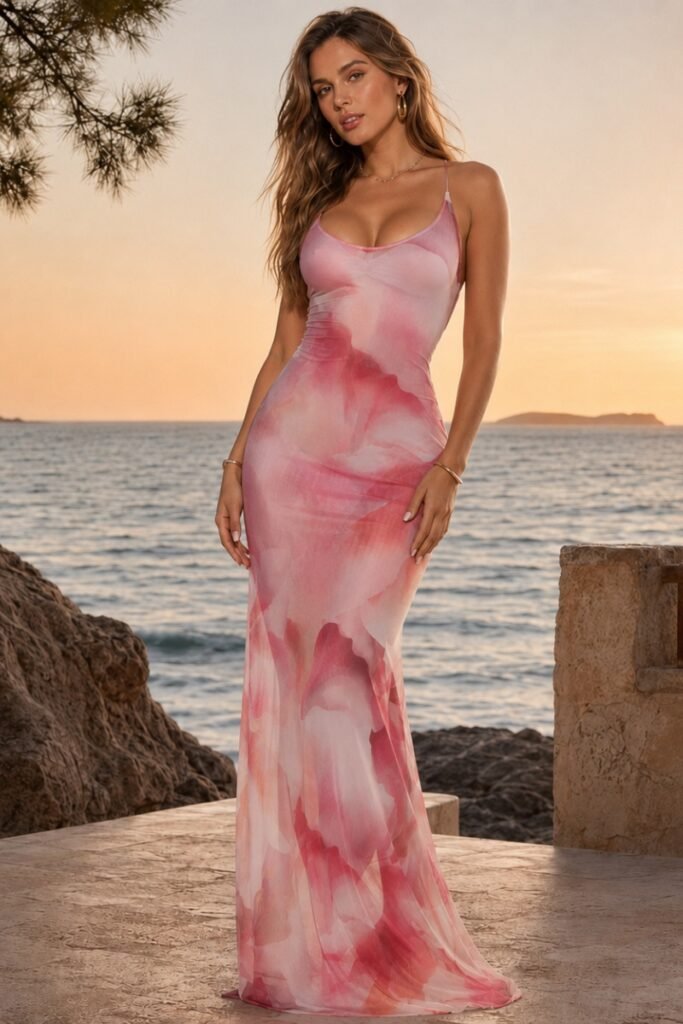
- OEM risk: over-transparency, seam visibility, stretched edges, print distortion and unstable lining coverage.
- File attention: mesh GSM, stretch direction, lining color, panel position, edge finish and transparency standard.
- Sample check: review coverage under light, movement, seam allowance visibility and lining attachment.
- Bulk control: fabric direction, edge stability, inline inspection, final appearance and consistent panel placement.

Sequin Dresses
- OEM risk: missing sequins, scratchy interiors, thick seams, surface abrasion and shipment damage.
- File attention: sequin type, backing, density, lining, seam cleaning, weight and packing requirement.
- Sample check: confirm comfort, attachment strength, seam bulk, surface loss and inner finish.
- Bulk control: loose-piece checking, careful sewing, lining confirmation, surface protection and packing method.

Corset Dresses
- OEM risk: weak support, cup mismatch, zipper stress, uncomfortable pressure, gaping and unstable grading.
- File attention: cup shape, boning placement, interlining, closure, lace-up details and bust/waist specs.
- Sample check: review support, symmetry, comfort, zipper tension, bust coverage and size balance.
- Bulk control: structural material matching, reinforcement, first-piece checking and size-range inspection.

Bodycon Dresses
- OEM risk: weak recovery, opacity problems, twisted side seams, size drift and uncomfortable compression.
- File attention: stretch direction, recovery expectation, opacity standard, sample size and tolerance points.
- Sample check: review fit under tension, movement comfort, lining need and seam elasticity.
- Bulk control: fabric lot, cutting direction, inline measurement, side seam balance and final fit review.

Maxi Dresses
- OEM risk: uneven hems, inaccurate length, heavy fabric drag, slit inconsistency and carton creases.
- File attention: total length, lining length, slit height, hem method, fabric fall and packing requirement.
- Sample check: review movement, drape, floor clearance, hem level and pressing response.
- Bulk control: cutting layout, length tolerance, hem inspection, final hanging check and packing protection.
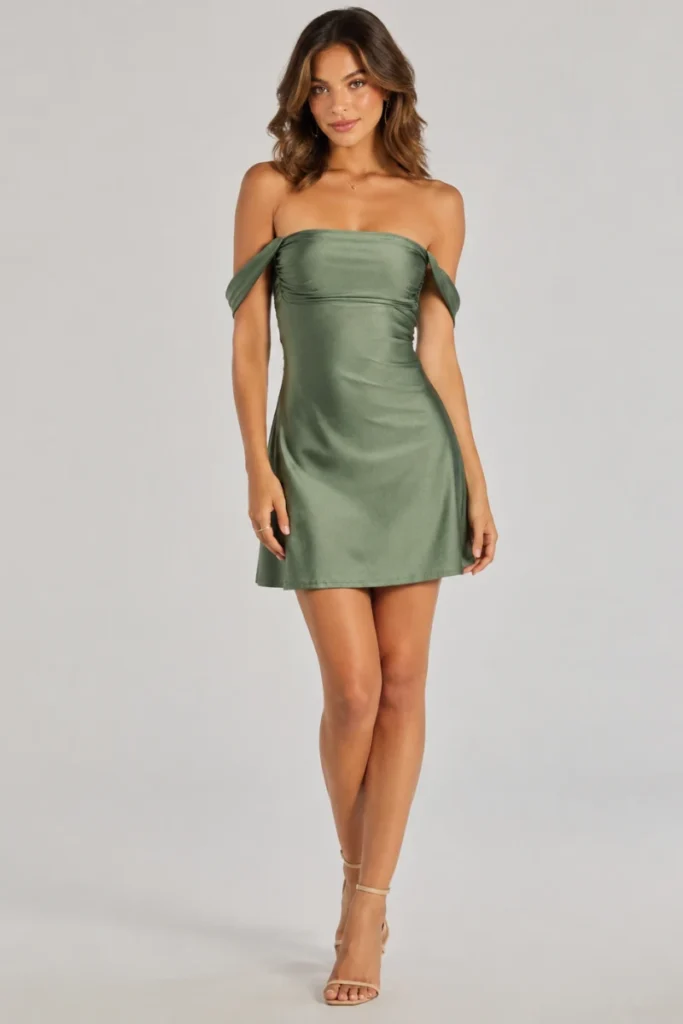
Mini Dresses
- OEM risk: insufficient coverage, lining exposure, hem instability, tight hip fit and movement discomfort.
- File attention: dress length, lining length, waist/hip spec, slit or cut-out position and movement standard.
- Sample check: confirm sitting coverage, hem security, lining position, side seam balance and fit comfort.
- Bulk control: measurement tolerance, lining consistency, final movement check and sensitive-area QC.
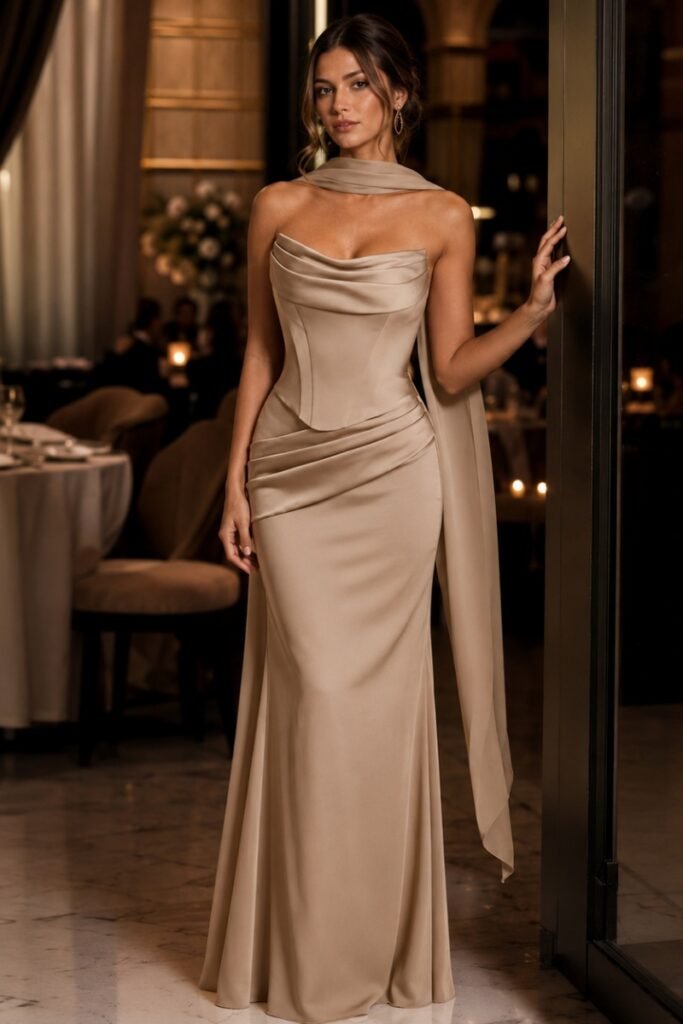
Occasion Dresses
- OEM risk: poor pressing, weak support, lining exposure, uneven slit, surface damage and inconsistent finish.
- File attention: fabric quality, lining, neckline, support, slit, closure, pressing and packing standard.
- Sample check: review event-ready appearance, comfort, drape, support and final garment presentation.
- Bulk control: finishing inspection, pressing method, label accuracy, carton protection and final visual review.
Fabric Standards That Must Be Locked
For OEM dress production, fabric cannot remain a general preference. It becomes a production standard. Duolan reviews each material detail before sample approval, PP locking and bulk production.
| Fabric Standard | Must Be Locked | OEM Dress Risk Controlled |
|---|---|---|
| Approved Quality | Supplier reference, composition, handfeel, finish and approved swatch | Prevents visually similar but technically different substitutions |
| Color Standard | Lab dip, Pantone, approved color card, bulk shade and tolerance | Reduces shade drift across sizes, colors and reorders |
| Weight and Drape | GSM, thickness, fall, structure and garment effect | Protects the intended silhouette and sample appearance |
| Stretch and Recovery | Stretch direction, return rate, opacity and seam behavior | Controls fitted dress sizing and wearing consistency |
| Lining Standard | Color, thickness, stretch, coverage, attachment and comfort | Controls transparency, support and inner garment quality |
| Surface Behavior | Pulls, pressure marks, sequin loss, pile direction or lace distortion | Protects final presentation and packing decisions |
| Shrinkage Stability | Wash, steam, heat response and shape retention | Reduces measurement change and garment distortion |
| Bulk Lot Control | Roll inspection, shade band, batch separation and replacement rule | Reduces sample-to-bulk material differences |
Dress BOM Control Before Bulk Production
A BOM is not only a purchasing list. For OEM dress production, it is the material control document that connects approved sample, sourcing, production, QC and packing.
| BOM Area | What Must Be Confirmed | Production Risk Controlled |
|---|---|---|
| Main Fabric | Quality, color, lot, width, consumption and approved reference | Wrong material, cost change or shade variation |
| Lining | Quality, color, stretch, coverage and attachment method | Transparency, discomfort or structure failure |
| Zipper | Type, length, tape color, puller, placement and strength | Wavy seams, weak closure or poor appearance |
| Cups and Boning | Size, placement, shape, length and support level | Weak bust support or grading instability |
| Elastic and Straps | Width, recovery, skin contact, placement and sewing method | Poor comfort, weak hold or inconsistent fit |
| Hardware | Eyelets, rings, sliders, hooks, color and reinforcement | Breakage, color mismatch or stress-point failure |
| Brand Labels | Woven label, care label, size label and approved placement | Brand errors, compliance issues or customer confusion |
| Packing Items | Hangtag, barcode sticker, polybag, tissue, carton mark and protection | Receiving errors or garment damage during delivery |
OEM Dress Fit Control Beyond Measurements
A dress can meet the measurement chart and still fail on the body. Duolan reviews flat specs together with fabric behavior, body movement, construction and size tolerance before production standards are finalized.
Fit Requires More Than POM Numbers
OEM production often relies on POM lists and tolerances, but dresses require additional judgment. A neckline may gape even when the chest measurement is correct. A zipper may wave because fabric and seam tension are mismatched. A fitted dress may twist because stretch direction and cutting are not aligned. A corset dress may lose support if cup position, boning and size grading are not reviewed together.
Duolan reviews dress fit from both technical and wearing perspectives. The tech pack defines the measurable standard, while sample review shows whether the garment actually performs as intended. This combined review is especially important for dresses with body-hugging shapes, open backs, strap details, structured bodices, slits, light fabrics or stretch materials.
| Fit Area | OEM Risk | Duolan Review |
|---|---|---|
| Bust and neckline | Gaping, weak support, wrong cup position | Coverage, cup placement, strap tension and neckline stability |
| Waist and hip | Pulling, twisting, unbalanced proportion | Side seam, compression, hip curve and movement comfort |
| Back and closure | Zipper stress, open-back instability, poor hold | Closure strength, reinforcement, hook position and fit balance |
| Length and hem | Coverage issue, uneven hem, wrong slit height | Dress length, lining length, slit safety and hem tolerance |
| Stretch fit | Size drift, opacity issue, weak recovery | Recovery, opacity under tension, seam elasticity and tolerance |
| Grading | Fit changes across size range | Key measurement points, grading logic and fit-risk review |
Construction Details That Decide Dress Quality
Dress OEM quality often depends on details hidden in construction. Before bulk production, Duolan reviews key areas that can affect fit, comfort, function, surface presentation and inspection results.

Neckline and Bust
- What can fail: gaping, weak bust support, wrong cup position, unstable neckline and poor coverage under movement.
- What to confirm: neckline shape, bust measurement, cup placement, strap angle, lining and support materials.
- Duolan review: fit comments, sample movement, construction notes and size-range risk before PP approval.

Zipper and Closure
- What can fail: zipper waves, uneven closure, weak hook, side seam pulling and back stress during wear.
- What to confirm: zipper type, length, tape color, seam thickness, reinforcement and closure position.
- Duolan review: sample function, fabric thickness, stress points and inline QC focus for bulk production.

Lining and Interior
- What can fail: wrong lining color, transparency, rough inner seams, poor attachment and unstable structure.
- What to confirm: lining quality, color, stretch, thickness, coverage, seam finish and inner comfort.
- Duolan review: wearing feel, opacity, attachment method and production repeatability before bulk starts.
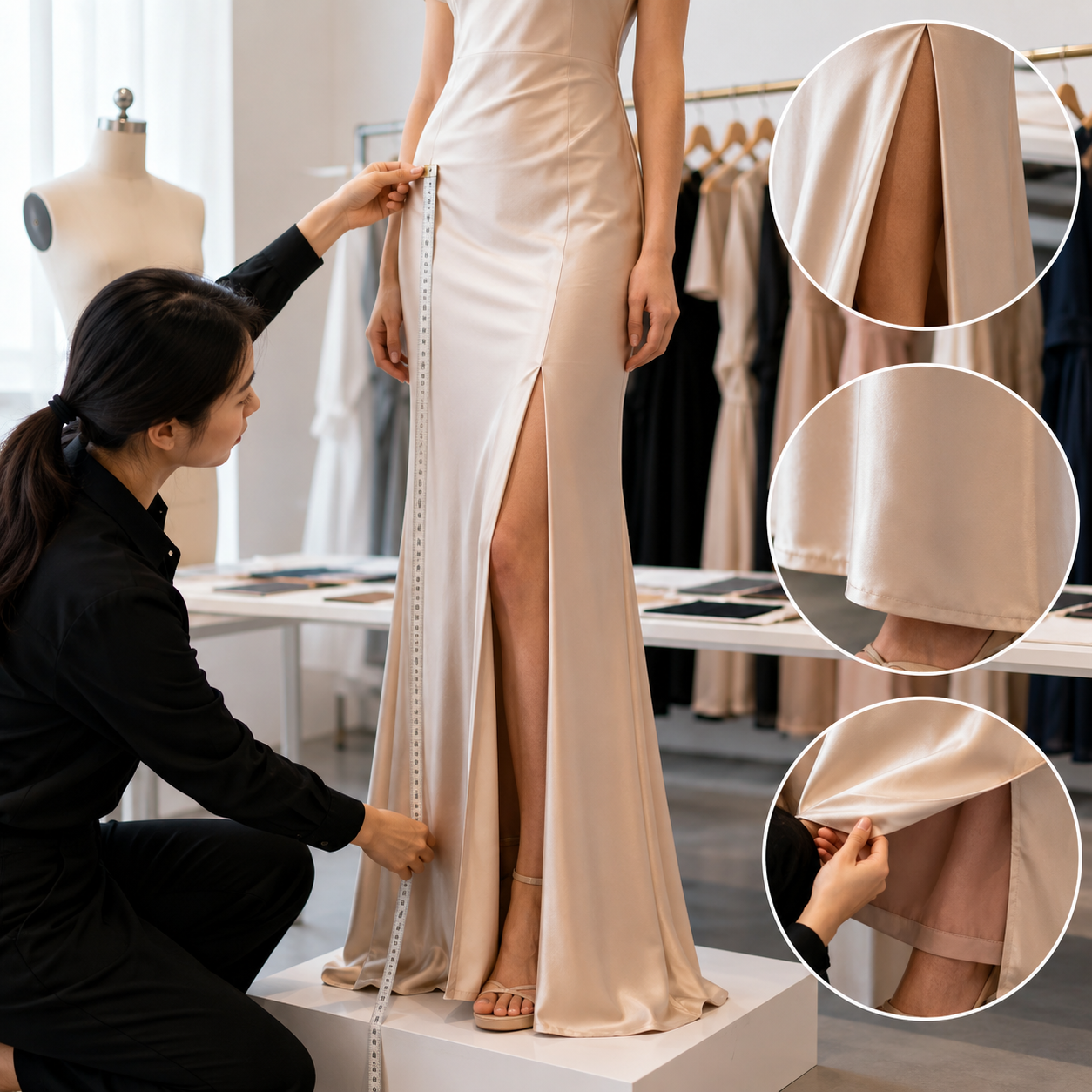
Slit and Hem
- What can fail: uneven hem, unsafe slit height, lining exposure, poor movement and final pressing marks.
- What to confirm: slit position, total length, lining length, hem method, tolerance and packing style.
- Duolan review: sample movement, measurement check, pressing response and final inspection method.

Cups and Boning
- What can fail: weak support, uncomfortable pressure, asymmetry, zipper stress and unstable grading.
- What to confirm: cup shape, boning channel, interlining, placement, length, reinforcement and size grading.
- Duolan review: structure test, fit comments, sample correction and first-piece inspection standards.

Straps and Hardware
- What can fail: strap breakage, weak elastic recovery, metal color mismatch and unstable adjustment.
- What to confirm: trim size, strength, placement, reinforcement, skin contact and attachment method.
- Duolan review: function test, stress points, BOM matching and QC checkpoints for repeated production.
From Tech Pack to Production-ready Dress Sample

Tech Pack Review
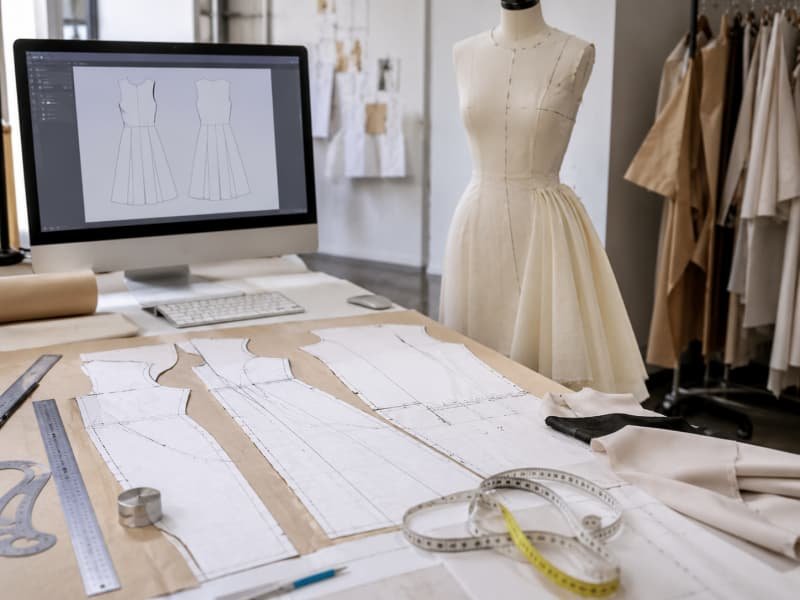
Pattern Interpretation

First Sample

Fit Revision
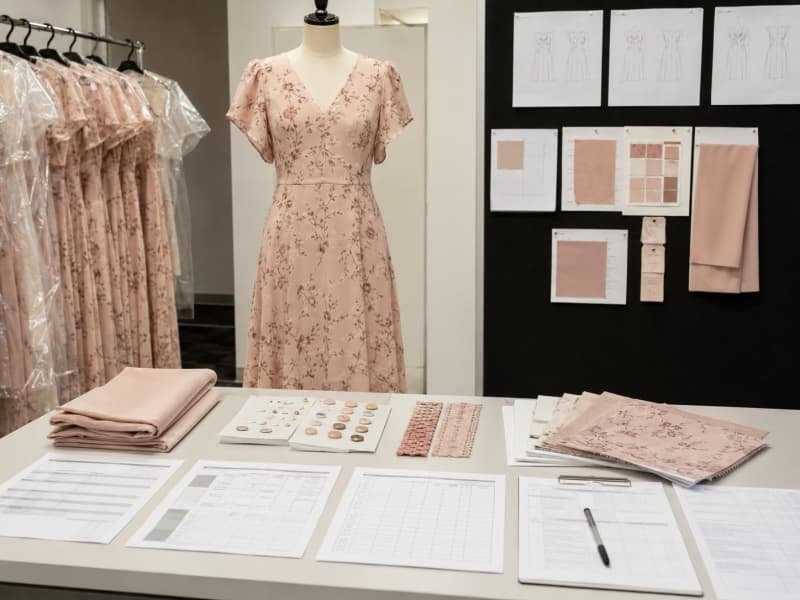
Production Sample

PP Preparation
What Makes an OEM Dress Sample Production-ready
A sample should not move into production only because it looks close to the reference. Duolan reviews whether the sample can become a stable standard for fit, material, construction, measurements, QC and packing.
| Sample Standard | What Must Be Confirmed | Buyer Value |
|---|---|---|
| Fit Standard | Bust, waist, hip, neckline, back, length and movement | Reduces fit drift and product returns |
| Fabric Standard | Quality, color, weight, drape, stretch, opacity and approved swatch | Protects sample-to-bulk material consistency |
| Trim Standard | Zipper, lining, cups, boning, elastic, hardware and labels | Supports BOM accuracy and functional stability |
| Construction | Seams, lining, closure, reinforcement, support and edge finish | Gives production teams clear workmanship direction |
| Measurement Basis | Sample size, POM list, grading direction and tolerance | Gives QC teams measurable inspection standards |
| Surface Finish | Pressing, stain check, thread trimming and delicate surface protection | Improves final presentation and brand quality perception |
| Brand Finishing | Woven label, care label, size label, hangtag and barcode | Prepares the dress for warehouse or retail receiving |
| Packing Standard | Folding, hanging, polybag, carton mark and protection method | Reduces delivery damage and receiving problems |
How PP Sample Locks OEM Dress Standards
PP Sample Lock Areas
| PP Sample Area | What It Locks | Production Team Uses It For |
|---|---|---|
| Dress Fit | Measurements, tolerance, balance and movement comments | Size control and first-piece checking |
| Fabric Standard | Approved swatch, color, lot, handfeel and drape | Material confirmation before cutting |
| Lining and Support | Coverage, color, comfort, cups, boning and interlining | Inner construction and fit stability |
| Trim Details | Zipper, elastic, hardware, labels and hangtags | BOM matching and production preparation |
| Workmanship | Seams, edge finish, support areas and reinforcement | Sewing standard and inline QC focus |
| Packing Standard | Fold, hang, polybag, barcode, carton and protection | Delivery and warehouse receiving control |
Production Control After PP
| Control Stage | Duolan Focus | Risk Reduced |
|---|---|---|
| Material Check | Confirm fabric, lining, trims and labels against PP | Unapproved material changes |
| First-piece Review | Compare first production garment with PP sample | Early repeated defects |
| Inline QC | Check key measurements, sewing and sensitive areas | Large-scale quality issues |
| Final QC | Review function, appearance, measurements and packing | Shipment-level risk |
| Packing Check | Confirm barcode, polybag, folding and carton marks | Receiving and delivery errors |
| Reorder Reference | Keep PP standard, BOM, QC notes and packing record | Repeat production drift |
Pre-production Alignment Before Bulk Starts
The Standard Must Move From Sample Room to Line
What Gets Aligned
- Material status: main fabric, lining, trims, labels, hangtags, packing items and approved references.
- Measurement control: key POM points, tolerance, sample size, grading concerns and size range focus.
- Construction details: lining, support, zipper, cups, boning, slit, hem, strap and reinforcement requirements.
- Production risks: fabric handling, surface protection, stretch recovery, lace placement or sequin damage points.
- QC plan: first-piece check, inline inspection, final inspection and packing confirmation priorities.
- Delivery rules: folding, hanging, barcode, carton mark, special protection and shipment preparation.
Turning Dress Samples Into Production Steps
Production engineering translates an approved OEM dress sample into practical factory actions. The goal is to make each production team understand what to cut, sew, check, finish and pack according to the approved brand standard.
A Dress Sample Must Become an Execution Route
A sample can show the final garment, but production needs a route. The factory must know how fabric will be inspected, how pieces will be cut, how lining will be attached, how zippers and support structures will be sewn, where measurements must be checked, what surface risks require protection, and how the garment should be packed.
Duolan’s production engineering work focuses on this translation. The approved dress is broken into key production decisions: material confirmation, marker planning, cutting direction, sewing sequence, sensitive construction points, pressing method, QC checkpoints and packing method. This is especially important for OEM dress programs because the brand expects production to follow the approved file and sample, not the factory’s guess.
Production Route Controls
| Production Area | Control Question | OEM Value |
|---|---|---|
| Fabric inspection | Is shade, handfeel, stretch and surface approved? | Prevents wrong material entering cutting |
| Cutting plan | Are grain, stretch, motif, pile or print directions controlled? | Protects size, fit and visual consistency |
| Sewing sequence | Which seams, support areas and closures are most sensitive? | Reduces repeated workmanship defects |
| Finishing method | Does pressing or steaming affect surface and shape? | Protects final presentation |
| QC checkpoint | Which dress areas can fail first in bulk? | Makes inspection more targeted |
| Packing method | Does the garment need folding, hanging or surface protection? | Reduces delivery condition risk |
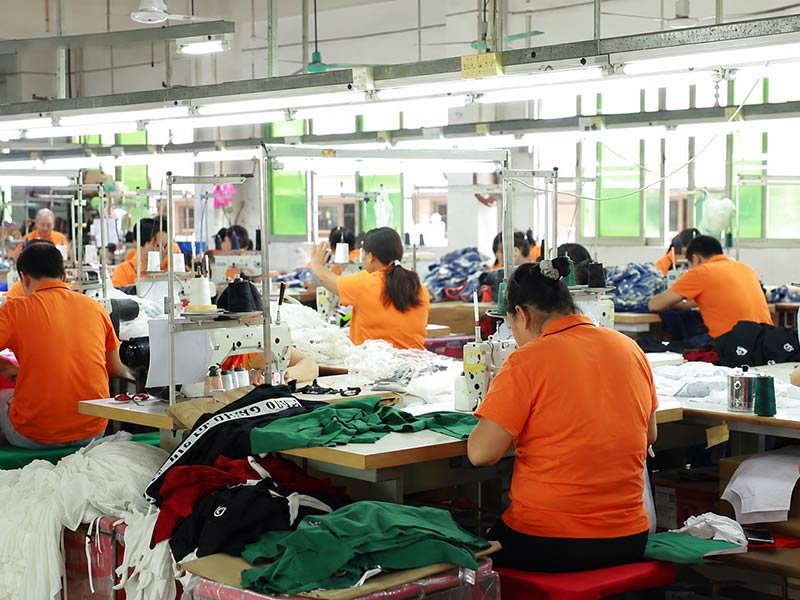
Factory System for OEM Dress Programs
Core Factory Control
- Data basis: 16 owned womenswear factories support core production control and sample-to-bulk discipline.
- OEM use: suitable for fitted dresses, satin styles, corset structures, event dresses and quality-sensitive programs.
- Brand value: approved standards are easier to protect when critical styles stay under tighter manufacturing control.
Satellite Capacity
- Data basis: 20+ long-term satellite factories provide coordinated capacity beyond the core factory base.
- OEM use: suitable for repeat dress programs, seasonal drops and style groups with different complexity levels.
- Brand value: added capacity can be used without treating production as uncontrolled outsourcing.
Regional Routing
- Data basis: 4 regional bases support capacity planning across Guangxi, Guizhou, Sichuan and Jiangxi.
- OEM use: suitable for bulk dress programs that require production scheduling and order distribution.
- Brand value: distributed resources help support larger or repeated programs under central coordination.
Equipment Base
- Data basis: 12,000–20,000 equipment units support different manufacturing stages and garment processes.
- OEM use: useful for bulk production when samples, BOM, production notes and QC standards are clear.
- Brand value: equipment scale matters when it is connected to PP standards and production engineering.
Development Team
- Data basis: 750–1,200 development staff support pattern, sample and garment execution work.
- OEM use: useful for tech pack review, fit comment revision, material changes and production-ready samples.
- Brand value: stronger development support helps reduce delays caused by unclear fit or construction decisions.
Order Coordination
- Data basis: 1,200–1,500 coordination staff support order follow-up, production communication and delivery tracking.
- OEM use: suitable for multi-style dress orders, supplier evaluation programs and repeat production planning.
- Brand value: coordination reduces stage-to-stage misunderstanding and keeps the production record more visible.
Material Resources for OEM Dress Programs

Fabric Matching
- OEM role: review composition, weight, drape, color, stretch, opacity and handfeel against the approved sample or tech pack.
- Dress value: helps protect silhouette, fit, surface presentation and bulk consistency across production lots.
- Duolan control: compare sample swatches, bulk availability, shade risk, lead time and replacement options.

Support Materials
- OEM role: confirm materials that support opacity, coverage, bust shape, waist shaping and inner comfort.
- Dress value: helps corset, satin, mesh, sequin and fitted styles perform better when worn.
- Duolan control: review lining color, thickness, stretch, support level, closure stress and grading impact.

Zippers and Hardware
- OEM role: confirm zipper type, tape color, puller, eyelets, hooks, rings, sliders and reinforcement needs.
- Dress value: improves closure function, adjustment stability, visual consistency and long-term wear quality.
- Duolan control: check trim strength, placement, color match, stress point and BOM accuracy.

Labels and Packing
- OEM role: coordinate woven labels, care labels, size labels, hangtags, barcodes, polybags and carton marks.
- Dress value: supports ecommerce receiving, retail handling, compliance content and customer-facing presentation.
- Duolan control: confirm placement, attachment method, data accuracy, packing sequence and final QC.

Print and Embroidery
- OEM role: coordinate process samples, placement standards, color effect, stitch density and repeatability.
- Dress value: helps brands produce visual details without losing garment balance or bulk control.
- Duolan control: review fabric reaction, shrinkage, handfeel, distortion risk and process lead time.

Finishing Processes
- OEM role: review whether the process supports the approved dress standard and bulk production requirement.
- Dress value: helps preserve color effect, handfeel, structure and final sellable presentation.
- Duolan control: check shrinkage, shade variation, surface change, pressing method and quality stability.
Bulk Planning by OEM Dress Complexity
Bulk planning should follow dress complexity, not only order quantity. Duolan reviews material status, sample stage, production risk, QC focus and packing method before assigning production resources.
| Dress Program | Main Production Risk | Duolan Review |
|---|---|---|
| Satin Dress | Seam puckering, surface marks, pressing and carton creases | Cutting stability, sewing tension, pressing method and protective packing |
| Bodycon Dress | Stretch recovery, opacity, side seam twist and size drift | Fabric recovery, tolerance, cutting direction and inline measurement |
| Corset Dress | Support, cup position, zipper stress and grading | Cups, boning, reinforcement, closure strength and size-range review |
| Sequin Dress | Scratch risk, sequin loss, thick seams and packing damage | Lining, seam cleaning, loose-piece QC and surface protection |
| Mesh Dress | Transparency, lining mismatch, edge instability and seam visibility | Coverage check, lining color, edge finish and light inspection |
| Maxi Dress | Length tolerance, hem level, drape and crease control | Cutting layout, hem check, pressing method and carton planning |
| Multi-style Program | Material timing, sample status and production routing | Style grouping, PP priority, capacity route and delivery sequence |
| Repeat Dress Order | Standard drift, fabric lot change and trim replacement | Previous sample record, BOM memory, QC notes and material comparison |
QC Points for OEM Dress Production
OEM dress QC should follow the approved file, PP sample and dress-specific risk. Duolan checks fabric, cutting, sewing, fit, trims, finishing, labels and packing according to the product standard.
| QC Area | What Duolan Checks | Dress Risk Controlled |
|---|---|---|
| Fabric Lot | Shade, handfeel, stretch, opacity, surface and approved reference | Material mismatch and bulk inconsistency |
| Fit and Measurement | Bust, waist, hip, neckline, length, slit and tolerance | Fit drift and customer complaints |
| Cutting | Grain, stretch direction, motif, pile, print or lace placement | Shape distortion and visual mismatch |
| Sewing | Seams, lining, zipper, closure, support and edge finish | Repeated workmanship defects |
| Trims | Cups, boning, elastic, hardware, labels and hangtags | Function failure and BOM errors |
| Finishing | Pressing, thread trimming, stains, surface marks and shape | Poor final presentation |
| Packing | Folding, hanging, barcode, polybag, carton mark and protection | Delivery damage and receiving errors |
| Final Inspection | Appearance, function, measurements, labels and packing condition | Shipment-level quality risk |


Brand Data and Packing Specs for OEM Dresses
OEM dress delivery requires accurate product data and packing rules. Labels, barcodes, folding methods and carton marks help finished garments move through brand warehouses, ecommerce systems and retail channels more smoothly.
| Brand Delivery Item | What Must Be Confirmed | Why It Matters |
|---|---|---|
| Fiber Content | Main fabric, lining, trims and care content | Supports accurate care labels and customer use |
| Size System | Brand size scale, size label, grading logic and placement | Reduces warehouse confusion and customer complaints |
| Care Label | Language, care method, attachment and approved placement | Helps protect garment performance after purchase |
| Style Code | Product code, color code, size code and barcode format | Supports inventory, ecommerce and receiving systems |
| Woven Label | Logo size, color, placement, stitch method and approved sample | Keeps brand identity consistent across bulk production |
| Hangtag | Paper, print, string, attachment point and collection match | Supports brand presentation and product identification |
| Polybag | Size, warning text, sticker, folding method and protection need | Protects the garment and supports fulfillment handling |
| Carton Mark | Quantity, destination, carton number, style code and size mix | Helps receiving, shipment organization and order tracking |
Supplier Evaluation Support for OEM Dress Brands
Brand Evaluation Needs More Than Samples
Evaluation Support Areas
- Audit-related basis: SMETA audit, SMETA 2-Pillar audit record and SMETA social audit record support supplier review discussions.
- Quality alignment: project needs may involve BSCI alignment, ISO 9001 quality awareness, AATCC, ASTM, EN or China GB standards.
- Material requirements: OEKO-TEX?, GOTS-related material needs or customer-specific material requirements can be coordinated by project.
- Inspection support: third-party inspection and customer-designated QC requirements can be reviewed before production planning.
- Packing accuracy: care labels, barcodes, polybags, carton marks and customer manuals can be aligned with brand standards.
Repeat OEM Production Without Starting Over
Previous Standards Should Protect Future Orders
Reorder Memory Helps Collection Growth
OEM Dress Evidence Without Exposing Brands

Tech Pack to PP
- Project input: flat sketch, measurement spec, fabric reference, trim list, sample comments and packing direction.
- OEM challenge: stretch recovery, bust balance, side seam control and tolerance needed clearer standards.
- Duolan action: reviewed file gaps, sample risk, material behavior, measurement points and PP locking needs.
- Result: the project moved toward a clearer sample and PP standard instead of entering bulk with unresolved details.

Satin Surface Control
- Project input: satin fabric reference, approved silhouette, lining request, color range and delivery plan.
- OEM challenge: seam puckering, pressing marks, creasing and carton pressure could affect final presentation.
- Duolan action: reviewed fabric weight, seam method, pressing response, lining choice and packing protection.
- Result: surface risk became part of production and QC planning before bulk cutting started.
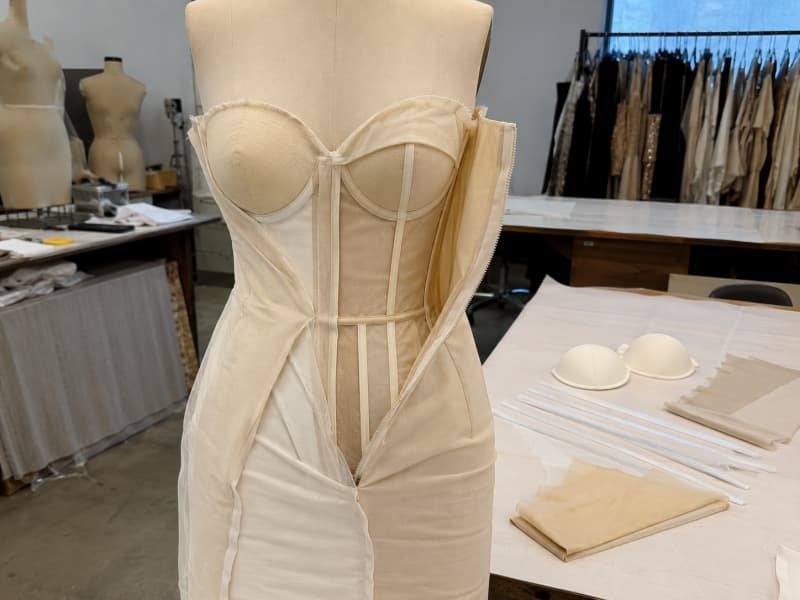
Corset Structure Review
- Project input: sample photos, cup requirement, boning reference, zipper detail and size range.
- OEM challenge: bust support, cup position, zipper stress and grading stability needed correction.
- Duolan action: reviewed internal construction, support materials, sample comments and PP risk points.
- Result: the structure standard became clearer before entering production-ready sample approval.

Multi-style Routing
- Project input: product list, tech packs, fabric directions, sample stages, target delivery window and packing rules.
- OEM challenge: material timing, sample approval status, QC priorities and production routing varied by style.
- Duolan action: grouped styles by complexity, reviewed PP priority, checked BOM readiness and planned production route.
- Result: the program became easier to manage across sampling, bulk planning, QC and delivery preparation.
OEM Dress Manufacturer FAQ
An OEM dress manufacturer produces dresses according to the brand’s own design, tech pack, sample, fabric standard, BOM and quality requirements. The manufacturer’s role is to execute the approved standard through sample development, PP sample locking, material confirmation, bulk production, QC and packing, rather than selling existing dresses from a catalog.
Yes. Duolan supports OEM dress production for established fashion brands, product teams, buying teams and sourcing offices. We focus on dress-centered womenswear, including fashion dresses, occasion dresses, party dresses, fitted dresses, corset styles, satin dresses, mesh dresses, sequin dresses, skirts and related collection pieces.
The strongest starting point includes a tech pack, flat sketch, measurement spec, fabric standard, BOM, original sample photos, fit comments, label files, packing manual, target quantity and delivery window. If some information is missing, Duolan can review what still needs to be clarified before sampling or PP preparation.
Yes. An approved sample can help define fabric, fit, construction, trims, workmanship and finishing details. Duolan reviews whether the sample standard is clear enough for BOM confirmation, PP sample preparation, measurement control, QC checkpoints and bulk production planning.
A PP sample is the pre-production reference used before bulk production starts. It should lock the approved dress fit, fabric, lining, trims, workmanship, labels, packing method and sensitive QC points. Production and QC teams use it as a standard during first-piece review, inline inspection and final checking.
Duolan connects approved samples with PP locking, BOM confirmation, fabric lot control, measurement tolerance, production notes, first-piece checking, inline QC, final inspection and packing confirmation. This helps reduce the risk that a dress looks correct during sampling but changes during bulk production.
Yes. Duolan can coordinate fabric, lining, zippers, cups, boning, elastic, hardware, labels, hangtags and packing materials according to the OEM dress file. Material and trim decisions are reviewed for fit, comfort, construction, production feasibility, QC risk and brand delivery requirements.
Yes. Duolan can support woven labels, care labels, size labels, hangtags, barcode stickers, polybags, carton marks and customer-specific packing rules. For OEM dress production, brand finishing is treated as part of production readiness, not only as a branding add-on.
Duolan can coordinate third-party inspection and customer-designated QC requirements according to the project. Supplier evaluation, audit-related records, material documentation, QC stages, packing requirements and inspection preparation can be discussed with qualified brand teams before production planning.
Please send your tech pack, approved sample photos, fabric reference, BOM, measurement spec, label files, packing requirements, target quantity, size range and delivery window. Clear production files help Duolan review OEM feasibility, identify missing information and recommend the next sample or PP step more accurately.

Send Your Dress OEM File
Duolan reviews OEM dress files for brands that already have a defined product direction, technical document, approved sample, material reference or bulk production plan. Upload your tech pack, BOM, measurement spec, sample photos, fabric standard, trim references, label files and packing requirements so our team can check whether the project is ready for sampling, PP confirmation or production discussion.
Our review focuses on execution risk, not generic quotation. We check whether the dress file is technically complete, whether the selected fabric supports the silhouette, whether measurements and tolerances are clear, whether lining and trims are production-ready, whether the BOM matches the sample standard, and whether QC and packing points are already defined. This helps prevent inaccurate costing, unclear sample revisions, material mismatch, PP sample drift and production-stage surprises.
After review, Duolan can provide file comments, missing-information notes, sample or PP direction, material and construction risk feedback, production feasibility discussion and a more reliable quotation basis. The clearer your dress OEM file is, the more accurately we can evaluate development route, bulk production readiness, quality-control focus and delivery preparation.
For all inquiries, please feel free to reach out at:
- Email Address
- Tel / WhatsApp optional
Get In Touch
Our team will answer your inquiries within 12 hours.
Your information will be kept strictly confidential.

