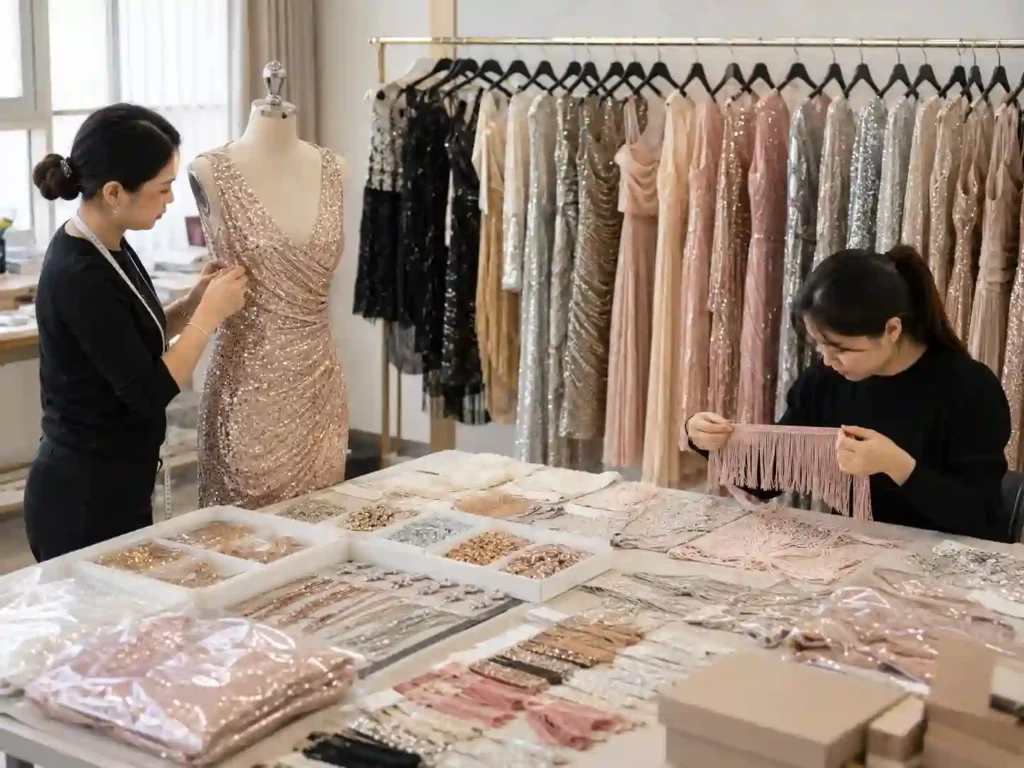
...

Party Dress & Partywear Manufacturing Solutions

Partywear development built around strong visual identity, controlled fit, reliable workmanship, and repeatable bulk production.

  • 30+ years focused on fast-fashion womenswear and dress development.
  • 16 owned womenswear factories supported by 20+ long-term satellite factories.
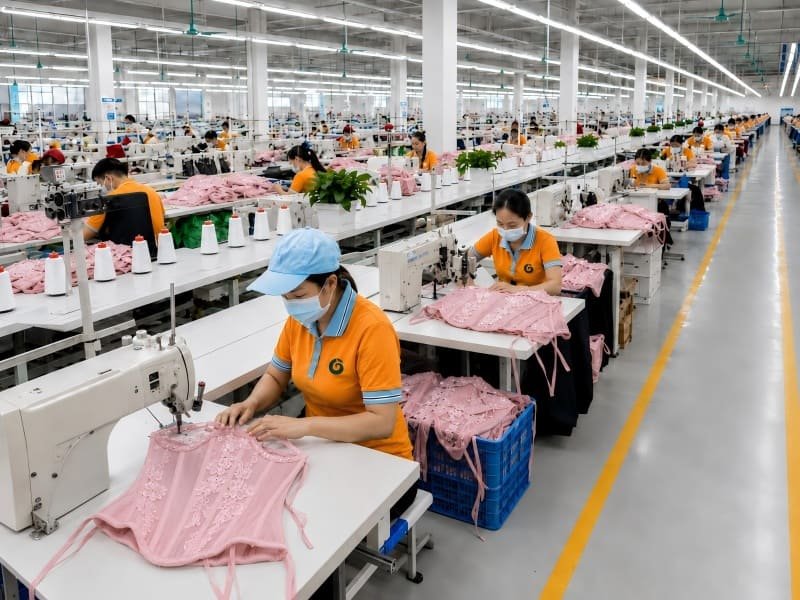
  • 300 sewing lines plus 50+ flexible lines for multi-style programs and repeat orders.
  • Stable monthly capacity of approximately 6.5 million garments across the manufacturing group.
  • Monthly sample-development capacity of approximately 15,000-35,000 styles or sample pieces.
  • SMETA and SMETA 2-Pillar audit foundation for formal supplier qualification.

Built for Established Partywear Brands and Product Teams

Duolan works best with fashion organizations that already have a defined market, product direction, launch calendar, and commercial production plan. Our role is to turn partywear concepts into coordinated, production-ready programs with clear development ownership and controlled manufacturing standards.

Partywear Brand Teams

Brands operating regular party, going-out, holiday, birthday, homecoming, cocktail, and social-event drops need more than a factory that can copy a reference image. They need a manufacturing partner able to understand brand language, retail price architecture, hero styles, commercial styles, repeatable fits, color extensions, and launch timing. Duolan supports those teams with product review, fabric and trim sourcing, pattern development, sample refinement, production planning, quality control, packing execution, and repeat-order records.

Product Development Teams

Product teams usually manage design intent, fit comments, sample priorities, material decisions, photography deadlines, and production readiness at the same time. Duolan converts development comments into measurable pattern, construction, and workmanship actions. Sample versions, material directions, critical measurements, and production risks are organized before bulk release, helping the internal team review decisions without losing control across multiple styles.

Buying and Sourcing Teams

Buying and sourcing teams need reliable information before approving a supplier: capacity structure, factory responsibility, material control, technical capability, quality checkpoints, social-audit readiness, production timing, and documentation discipline. Duolan provides a structured route from supplier evaluation to sampling, trial production, launch orders, repeat orders, and scale-up production, with a clear focus on dress categories rather than a broad, unfocused apparel offering.

Multi-Brand Fashion Groups

Multi-brand groups often manage different price points, silhouettes, fit standards, markets, and release dates. A single partywear program may include satin dresses, stretch bodycon styles, mesh constructions, corset shapes, embellished pieces, matching sets, and jumpsuits. Duolan can divide styles by complexity, material route, production method, and timing while preserving a coordinated reporting structure for the wider group.

Control the Risks Behind High-Impact Partywear

Strong partywear depends on more than a striking front view. Fit stability, stretch recovery, coverage, support, embellishment durability, construction comfort, and sample-to-bulk consistency decide whether a style performs in real wear and survives commercial production.

Design Translation

Reference images often hide seam placement, inner support, lining coverage, closure construction, fabric weight, or the real volume needed for draping. Before pattern work begins, Duolan reviews the intended silhouette, proportion, body emphasis, visual finish, and wearing scenario. The goal is to prevent a visually similar sample from becoming structurally wrong, uncomfortable, or impossible to reproduce at scale.

Fabric Mismatch

A satin cowl dress, stretch bodycon mini, layered mesh style, sequin dress, and corset party dress require different material behavior. Drape, recovery, opacity, support, skin feel, weight, shrinkage, and pressing response are assessed against the target shape. Material selection is treated as a product decision rather than a sourcing task, because the wrong fabric can alter fit, quality perception, and bulk stability.

Fit Instability

Party silhouettes frequently concentrate stress around the bust, waist, hip, neckline, back opening, straps, or hem. A sample may look acceptable on a mannequin but shift during walking, sitting, dancing, or arm movement. Duolan reviews support points, negative ease, seam balance, strap load, neckline security, lining control, slit position, and hem safety before fit is treated as approved.

Complex Detail Failure

Sequins, rhinestones, beads, lace placement, cut-outs, ruching, boning, cups, eyelets, lacing, and concealed zippers create visual value but also introduce production risk. Every detail needs a stable placement reference, acceptable comfort standard, workable operation sequence, and inspection method. High-impact details are tested as construction systems, not added as decoration after the main garment is developed.

Bulk Variation

Approved samples can drift during production when fabric batches, trim lots, operator methods, pressing conditions, or measurement control are not locked. Duolan aligns the approved sample, pattern version, BOM, material direction, workmanship points, tolerance requirements, and packing instructions before production. Complex styles may require first-piece confirmation or a pilot run before full output is released.

Launch Delay

Partywear is closely tied to holiday, homecoming, graduation, birthday, campaign, and event calendars. Late material approval, repeated sample changes, delayed PP confirmation, or rushed complex workmanship can compress production and inspection time. Duolan works backward from the target release date, identifying which materials must be locked first, which styles need earlier trials, and where decision delays affect the final delivery path.

Partywear Categories We Develop and Manufacture

A commercially balanced partywear line combines statement pieces, repeatable volume styles, fit-secure options, coordinated separates, and event-specific silhouettes. Duolan develops each category around material behavior, construction risk, size performance, and production repeatability.

Party Mini Dresses

Mini dresses may use fitted, ruched, draped, cut-out, halter, backless, strapless, or long-sleeve shapes. Development focuses on body proportion, bust and waist balance, hem safety, movement, closure security, and fabric recovery. Commercial mini programs often include color extensions and closely related necklines, so pattern version control and consistent grading are important for both first production and later replenishment.

Cocktail Dresses

Cocktail dresses usually require a more polished balance of shape, fabric quality, and event suitability. Satin midi dresses, one-shoulder styles, fitted lace designs, draped silhouettes, and structured mini or midi options must look refined without becoming overly heavy. Duolan controls waist position, skirt fall, neckline stability, lining, seam finish, pressing, and color appearance across sampling and bulk production.

Bodycon Party Dresses

Bodycon dresses rely on fabric weight, stretch direction, recovery, seam strength, opacity, and negative ease. A difference of only a few centimeters in bust, waist, hip, or length can change the fit dramatically. Pattern work is coordinated with the selected jersey, stretch satin, mesh overlay, or bonded material, while size grading is reviewed to protect the intended contour across the range.

Corset Party Dresses

Corset and bustier dresses require coordinated control of cup shape, bust height, boning placement, waist suppression, lining, seam allowance, zipper position, lacing, and neckline security. Support must come from the complete structure rather than from boning alone. Duolan develops the inner construction and outer silhouette together, then verifies comfort and production method before bulk release.

Satin Party Dresses

Satin creates light reflection and fluid movement, but also reveals puckering, needle marks, seam tension, pressing damage, color variation, and poor grain control. Slip dresses, cowl necks, halter styles, draped midis, and satin maxis need fabric-specific pattern and sewing decisions. Duolan reviews drape, bias behavior, seam method, lining, zipper installation, handling, and final pressing against the intended price level.

Mesh and Lace Dresses

Mesh and lace support transparency, layering, contour, paneling, and visual depth. Development must control stretch direction, edge finishing, seam visibility, placement matching, lining coverage, skin contact, and color consistency. For cut-out or illusion styles, Duolan evaluates the garment under normal light and stronger photography conditions to reduce unexpected transparency or visible internal construction.

Sequin Party Dresses

Sequin and embellished dresses require more than attractive surface material. Key controls include ground-fabric stability, sequin direction, attachment strength, edge comfort, seam allowance clearing, needle selection, weight distribution, lining, pressing limitations, and protective packing. Placement maps and workmanship references help maintain visual consistency across panels, sizes, and production batches.

Partywear Sets

Partywear can extend beyond dresses into matching tops and skirts, bodysuits, fitted separates, statement tops, co-ordinated sets, and jumpsuits. A coordinated line benefits from shared fabrics, colors, trims, fit direction, and packing standards. Duolan can organize linked styles so a brand gains a broader assortment without developing every product from an unrelated material and construction base. 

Develop Partywear Around Real Selling Occasions

Different social events create different expectations for coverage, glamour, comfort, movement, photography, and delivery timing. Duolan translates the intended event into product decisions instead of treating every party style as the same commercial category.

Birthday and Going Out

Birthday and going-out collections often rely on fitted minis, ruching, cut-outs, back details, body-conscious shapes, and strong color or shine. Styles need immediate visual appeal, but bust security, hem movement, zipper durability, lining, and comfort remain essential. A balanced drop usually combines one or two high-impact campaign pieces with easier commercial styles that can support color extensions and repeat production.

Cocktail and Social Events

Cocktail and social-event dresses require a polished finish with controlled exposure. Satin, crepe, lace, velvet, draped jersey, and refined mesh can work well when the silhouette, lining, and workmanship support the desired level of formality. Midi proportions, neckline shape, waist placement, slit height, and movement are reviewed together so the final garment looks considered rather than simply fitted.

Holiday and New Year

Holiday and New Year ranges often include sequins, metallic surfaces, rhinestones, velvet, dark jewel tones, black, champagne, silver, and gold. Material booking and workmanship trials should begin earlier because embellishment, color matching, pressing, and packing require extra control. Duolan separates campaign-heavy pieces from repeatable sales styles so the range can maintain impact without placing every SKU on the most complex production path.

Homecoming and Graduation

Homecoming and graduation dresses need youthful energy, photo appeal, movement, and reliable fit. Corset minis, halter dresses, fit-and-flare shapes, satin minis, and bodycon styles are common, but timing is highly event-driven. Sample priorities, school-season deadlines, size range, bust support, hem security, and color planning should be established early to protect the sales window.

Wedding Guest Events

Wedding guest dresses require refinement without bridal positioning. Satin midis, lace styles, draped silhouettes, one-shoulder dresses, and elegant maxis can be developed around balanced color, tasteful coverage, movement, and event appropriateness. Lining, opacity, slit control, shoulder security, and pressing quality are especially visible in photography and formal venues.

Seasonal Party Drops

A seasonal drop may combine minis, midis, fitted silhouettes, soft drapes, sequins, mesh, lace, satin, and matching separates. The strongest assortment does not rely on one construction level. Duolan helps organize hero styles, commercial core styles, color extensions, photo samples, repeatable fits, and production priorities so the line can move from campaign development into controlled sales production.

Build a Partywear Collection, Not Isolated Styles

A strong partywear program needs a clear assortment structure, not a random group of attractive samples. Duolan works within the brand’s direction to coordinate silhouette, fabric, color, fit, sample priority, and production route across a complete launch.

Create a Commercial Style Architecture

A partywear collection can be organized into several roles. Hero styles deliver campaign impact through sequins, metallic finishes, corset structures, unusual cut-outs, or sculpted draping. Commercial styles carry the main sales volume through more repeatable fits, reliable materials, and color extensions. Supporting styles broaden the price range and wearing occasions. Repeatable styles retain stable patterns and materials for replenishment. Photo styles may be prioritized earlier for campaign production even when final bulk quantities are still being confirmed. Duolan reviews how many styles share a body block, material family, trim system, or construction route. A 20-style launch becomes easier to manage when related products use controlled fabric groups and fit logic instead of 20 unrelated development paths. Pattern and BOM records also create a stronger foundation for color expansion, length changes, neckline variations, and future seasonal updates.

Coordinate Fabric and Color Stories

Partywear collections often work best with a focused material palette. Satin may provide fluid shine, mesh can add transparency and layering, stretch jersey supports body-conscious volume styles, lace brings refined texture, and sequins create campaign impact. A coordinated family can use black, burgundy, champagne, silver, deep green, ivory, or seasonal accent colors without creating unnecessary sourcing and quality complexity.
Duolan evaluates whether colorways can use the same fabric base, whether lining colors should match or contrast, whether trims remain available across the full launch, and whether metallic or sequin surfaces need separate packing. Color approval, lab dips, swatches, trim boards, and material alternatives are linked to the sample plan so visual direction and production feasibility move together.

Plan Multi-Style Sampling and Production

Not every style should enter sampling and bulk production at the same time. High-risk corset, sequin, mesh, or heavily draped pieces may need early material trials and first prototypes. Commercial stretch styles can move through a faster pattern route once fabric and fit standards are clear. Photo samples, fit samples, salesman samples, revised samples, and PP samples serve different decisions, so the purpose of each version should be defined before work begins.

For larger programs, Duolan can separate styles by risk, launch priority, material readiness, and production complexity. The resulting schedule protects photography, internal review, buying decisions, material booking, pilot checks, final production, inspection, packing, and shipment without forcing every SKU into the same timeline.

Multi-style Production Grouping​

Match Partywear Fabrics to Silhouette and Production Risk

Partywear fabrics behave differently under tension, movement, lighting, pressing, and repeated production. Material selection is reviewed against shape, support, coverage, surface appearance, target price, and manufacturing stability before the sample route is fixed.

Fabric DirectionStrongest ApplicationsPerformance to ReviewMain Production RisksDuolan Development Control
SatinSlip, cowl, draped, halter, midi and maxi party dressesDrape, shine, grain, crease recovery, seam appearancePuckering, needle marks, pressing shine, color variationFabric comparison, grain planning, seam testing, lining and pressing standard
Stretch JerseyBodycon, ruched, fitted mini and midi dressesWeight, stretch direction, recovery, opacity, hand feelGrowth, seam bursting, transparency, unstable gradingStretch and recovery review, fit sample, seam test, measurement tolerance
MeshLayered, illusion, cut-out, panelled and bodycon stylesStretch, opacity, recovery, skin feel, color depthVisible seams, rolling edges, inconsistent transparencyLining map, edge method, panel control, light-condition review
LaceCocktail, fitted, corset, panelled and occasion stylesMotif scale, stretch, hand feel, transparency, placementMotif mismatch, fraying, visible seam joins, shade differencePlacement plan, backing choice, seam trial, cutting and matching reference
Sequin FabricMini, fitted, holiday, New Year and statement dressesWeight, ground stability, sequin direction, comfortSequin loss, scratching, broken needles, heavy seamsSeam clearing, attachment review, lining, workmanship map, protective packing
VelvetHoliday, cocktail, fitted and draped dressesPile direction, recovery, shade, pressing responseShading, crushing, seam marks, inconsistent napOne-way cutting plan, handling method, pressing test, batch control
Chiffon and OrganzaLayered, ruffled, draped and volume party dressesTransparency, float, stiffness, recovery, edge behaviorFraying, uneven layers, static, weak edge finishLayer plan, edge testing, lining choice, pressing and hanging review
CrepeCocktail, draped, fitted, midi and refined social dressesDrape, texture, recovery, opacity, surface stabilityStretch variation, seam impression, uneven fallWeight selection, pattern balance, seam method, finishing standard

Engineer Fit, Support and Wear Safety

Partywear fit must hold its intended shape during movement, not only during a static sample fitting. Duolan develops the outer look and the inner support system together, then checks critical measurements and wearing behavior before the pattern is released for production.

Bust and Neckline Support

Strapless, corset, bustier, halter, plunge, and asymmetric dresses need a defined support route. Cup position, bust height, neckline tension, grip tape, underbust structure, boning, lining, seam placement, and closure type influence security. Duolan reviews where the garment carries load and how the neckline behaves during arm movement, walking, sitting, and prolonged wear.
Waist and Hip Fit​

Waist and Hip Balance

Fitted partywear can look distorted when waist suppression, hip shaping, side-seam position, or vertical balance is incorrect. Pattern corrections are based on the selected material and intended contour rather than a generic body block. Bust-waist-hip relationships, torso length, waist placement, skirt fall, and seam tension are checked together, especially in bodycon, corset, and panelled styles.

Stretch and Recovery

Stretch percentage alone does not describe performance. Recovery, weight, knit stability, stretch direction, and heat response determine whether a fitted dress keeps its shape after wear. Duolan evaluates the material before finalizing negative ease and grading. Seam type, thread, stitch density, zipper compatibility, lining stretch, and measurement tolerance are adjusted to suit the fabric route.

Strap and Halter Load

Thin straps, halter necks, open backs, lace-up backs, and asymmetric shoulders concentrate force in small areas. Reinforcement, strap width, attachment method, adjusters, edge finish, and neckline balance must be selected according to garment weight and bust support. Samples are reviewed for pressure points, twisting, gaping, and slippage before the construction standard is locked.

Lining and Opacity

Lining affects coverage, comfort, stretch, drape, body control, seam visibility, and color depth. Full lining, partial lining, double-layer self fabric, power mesh, soft jersey, or strategically placed panels may be used depending on the style. Duolan checks opacity under normal light and stronger photography conditions, especially for mesh, light colors, cut-outs, and close-fitting fabrics.

Slit and Hem Safety

Mini lengths, high slits, wrap fronts, draped hems, and cut-away shapes need movement testing. The approved length should remain wearable when sitting, walking, climbing stairs, and raising the arms. Slit reinforcement, overlap, lining length, hem weight, edge finish, and seam security are reviewed so visual impact does not create preventable exposure, tearing, or customer returns.

Control Embellishment Before It Becomes a Bulk Risk

Complex partywear workmanship must be attractive, comfortable, repeatable, and inspectable. Duolan develops each decorative element around placement accuracy, operation sequence, wear performance, defect prevention, and final packing rather than treating embellishment as a surface add-on.

Sequin Application

Sequin direction, density, ground fabric, seam location, and garment weight affect both appearance and production. Sequin material may need clearing from seam allowances before stitching, followed by controlled replacement around visible edges. Needle type, thread, stitch path, lining, pressing limits, and packing protection are confirmed to reduce broken sequins, scratching, bulky seams, and uneven shine.

Rhinestone and Beading

Rhinestones, beads, pearls, and mixed embellishments require placement references and attachment standards. Heat-set stones must be tested against fabric heat sensitivity and bonding performance. Hand-applied or stitched components need pull resistance, secure thread paths, clean backing, and comfortable skin contact. Duolan reviews decoration density, repair method, inspection lighting, and spare-component needs before bulk production.

Lace Positioning

Lace placement can change the visual balance of a fitted or corset dress. Motif direction, symmetry, bust placement, waist alignment, hem ending, seam joins, and transparency need to be mapped before cutting. For repeated sizes, the placement logic must remain visually consistent even when pattern pieces change. Backing, lining, seam finish, and edge treatment are developed as part of the placement plan.

Ruching and Draping

Ruching and draping depend on controlled fullness, anchor points, seam direction, fabric recovery, and pressing. Uneven gathering can alter the body line and create large visual differences between garments. Duolan defines the gathering amount, start and end positions, internal support, stitch method, and final measurement reference so the detail can be repeated across operators and sizes.

Corset Construction

Corset workmanship combines cups, lining, boning channels, panel seams, waist shaping, zipper or lacing, edge finishing, and support. Boning length and position must match the torso and neckline design. Bulky seam intersections, visible channels, distorted cups, and uncomfortable edges are addressed during the sample stage. Complex styles may move through a first-piece or pilot confirmation before release.

Closures and Openings

Concealed zippers, hooks, eyelets, lacing, snaps, bra closures, and adjustable hardware carry both visual and structural responsibility. Placement, reinforcement, tape quality, pull strength, alignment, and opening length are reviewed for dressing ease and wear. For close-fitting styles, zipper installation is tested against fabric stretch and seam tension to reduce rippling, breakage, or difficult use.

Review Partywear Feasibility Before Sampling Starts

A strong sample begins with a clear development basis. Duolan reviews available information, missing decisions, material behavior, fit sensitivity, workmanship complexity, cost pressure, timing, and bulk repeatability before the first pattern is cut.

Fabric Feasibility

The selected material is checked against drape, support, stretch, recovery, opacity, surface effect, pressing response, color availability, and minimum production requirements. When a specified fabric creates high risk or poor commercial value, Duolan can present alternative directions while preserving the desired visual result as closely as possible.

Fit Feasibility

The team reviews neckline, bust, waist, hip, torso length, back opening, strap position, skirt proportion, slit, hem, and expected size range. Critical fit points are identified before pattern work, especially for strapless, corset, bodycon, halter, backless, mesh, and cut-out styles where small changes can alter wear security.

Workmanship Feasibility

Sequin clearing, beading, lace placement, boning, cups, draping, ruching, cut-outs, invisible zippers, and delicate edge finishes are checked against the selected fabric and intended volume. The review identifies which details need a technique sample, a partial mock-up, a first prototype, or a pilot confirmation before full production.

Cost Feasibility

Cost is influenced by fabric yield, material source, lining, trim complexity, decoration density, operation time, cutting loss, size range, color count, packing, testing, and production volume. Duolan reviews which details create meaningful product value and which changes can protect the intended price architecture without making the garment look reduced or unfinished.

Timeline Feasibility

The project is planned backward from the target launch or warehouse date. Material development, lab dips, trim confirmation, first sample, fit review, revision, PP approval, production, inspection, packing, and shipment are mapped against available time. High-risk materials and constructions are prioritized early so late-stage decisions do not compress quality control.

Bulk Feasibility

A visually successful sample is not automatically ready for production. Duolan checks whether the approved material can be secured, whether pattern and construction are repeatable, whether trims are stable, whether measurement tolerances are realistic, and whether quality points can be inspected consistently. The outcome becomes the basis for sampling, pilot work, or a production-readiness plan.

Protect Approved Standards During Bulk Production

Bulk production begins only after the approved development basis is organized. Duolan separates material, fit, workmanship, planning, inspection, packing, and delivery controls so the sample standard can be reproduced across styles, colors, sizes, lines, and repeat orders.

Complete a Bulk Readiness Review

Before release, Duolan confirms whether the current sample is visually approved, fit approved, a PP basis, or still pending refinement. Fabric, lining, trims, color, measurements, workmanship points, labels, packing, and launch requirements are checked against the production order. The review also confirms whether the order is a launch order, test order, repeat order, or scale-up order because each route requires a different level of verification and production planning. Styles with unresolved fit, material, or construction points are not treated as fully ready. A concise production-readiness note can identify what is locked, what remains open, and what action is needed before the line begins. The purpose is to reduce disputes and avoid transferring development uncertainty into thousands of garments.

Break the Order Down by Production Risk

A multi-style partywear order is divided by style, color, size, quantity, material, construction complexity, special process, and timing. Regular stretch dresses, structured corset styles, delicate satin pieces, layered mesh dresses, and heavily embellished garments may require different lines, operator skills, pilot checks, and inspection intensity. Duolan matches each group to an appropriate production path rather than treating the complete order as one undifferentiated block. The production plan may include separate material arrival dates, technique trials, first-piece confirmation, special-process coordination, multi-factory allocation, or staggered shipment. Internal milestones are planned backward from the agreed delivery date so material approval, cutting, sewing, special workmanship, inline inspection, finishing, final inspection, and packing remain visible.

Verify First Pieces and High-Risk Operations

For fit-sensitive or workmanship-sensitive styles, Duolan may run a first-piece confirmation, small pilot quantity, or operation trial before full release. Corset dresses, bodycon styles, satin garments, sequin dresses, mesh layers, halter or backless shapes, and complex occasion pieces benefit from early verification because a small pattern or workmanship issue can multiply quickly in bulk. The check focuses on approved measurements, fabric direction, seam balance, neckline and bust support, lining, zipper, decoration placement, pressing, and final appearance. Corrections are made before production volume increases. The result can be recorded as a first-piece or pilot confirmation note for the project team.

Keep Every Team on the Same Reference

Pattern teams, material teams, sewing lines, special-process suppliers, QC staff, packing teams, and project managers need the same approved references. Duolan uses the approved sample, updated pattern, size specification, BOM, material cards, workmanship notes, tolerance rules, packing instructions, and QC checkpoints to align execution. Changes after approval are documented so the active version remains clear. Once production is complete, the same records support future replenishment. Pattern versions, material references, trim details, inspection findings, and packing standards become reusable production assets rather than disappearing after the first order.

Turn Partywear Concepts into Production-Ready Samples

Duolan treats sampling as a controlled decision process. Each sample version should answer a defined question about visual direction, fit, material, construction, presentation, or production readiness instead of becoming another untracked prototype.

Start with a Structured Development Brief

Development can begin from a tech pack, original sample, reference images, fashion sketches, website references, fabric direction, moodboard, or collection plan. Duolan first confirms the product category, intended market, target silhouette, size standard, sample purpose, material direction, critical details, estimated quantity, target price level, and launch date. Missing information is organized into a clear question list rather than left for operators to interpret independently. For a partywear program, the first review also identifies whether the key challenge is fit, structure, drape, support, stretch, transparency, embellishment, or timing. A corset mini and a satin cowl dress may have similar visual importance but require completely different sampling routes. Clear priorities help the pattern, fabric, sewing, and project teams work from the same target.

Build the First Sample Around the Main Decision

The first sample may be a design prototype, fit sample, fabric-and-silhouette test, technique sample, or near-complete presentation sample. Sample purpose determines where development effort should be concentrated. A fit sample may use an approved or representative fabric to solve bust, waist, hip, length, and balance. A technique sample may test sequin seams, boning, draping, lace placement, or a cut-out edge before the full garment is made. Sampling capacity across the wider manufacturing group is approximately 15,000-35,000 styles or sample pieces per month, with support for roughly 3,000-8,000 style-development and sampling workflows. Capacity does not replace project control; every style still needs a defined version, comment record, material reference, and next decision.

Convert Comments into Measurable Corrections
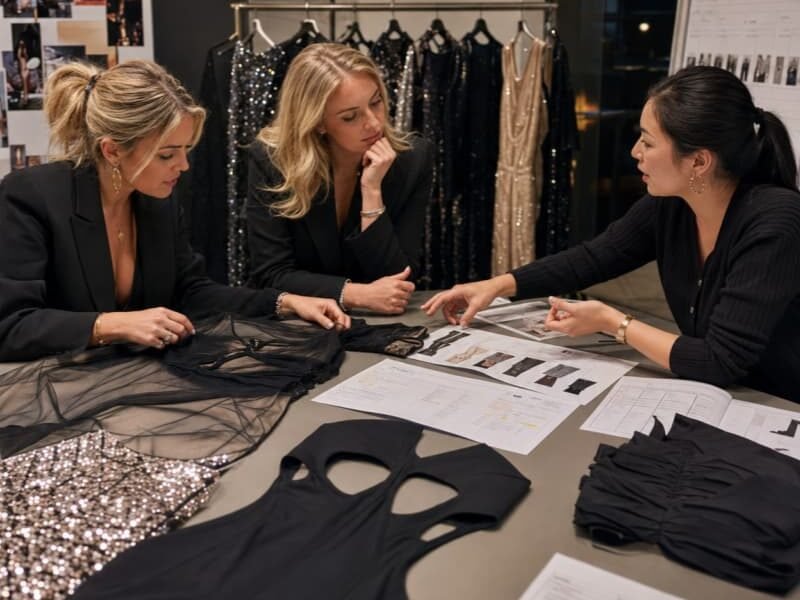
Fit and workmanship comments are translated into pattern, measurement, construction, and material actions. Statements such as “more support,” “cleaner drape,” “less gaping,” or “stronger shape” need measurable changes: cup position, neckline reduction, strap length, seam shape, boning position, waist suppression, gathering amount, lining route, or fabric weight. Duolan records the requested change and checks whether it affects cost, lead time, grading, or production method. Revised samples should show what changed and what still requires approval. The most useful output is not simply a second garment, but a controlled version with an updated pattern basis, revised measurements, confirmed workmanship points, and a clear route toward PP or production readiness.

Confirm a Production-Ready Standard

Before bulk production, the sample basis should align fit and measurement, fabric and color, trims and accessories, lining, construction, decoration, labels, packing, and inspection points. Depending on the project, the final reference may be a PP sample, golden sample, approved sample with signed comments, or a controlled combination of sample, tech pack, BOM, and workmanship notes. Duolan normally prepares a clear sample and production route rather than presenting only a sample fee. The schedule is confirmed after fabric, trim, complexity, and sample purpose are reviewed. Material availability and comment turnaround remain major timing factors, so the development plan identifies the decisions needed from both teams before dates are locked. 

A Manufacturing System Built for Multi-Style Partywear

Duolan combines dress-development depth with a multi-factory manufacturing structure. Capacity is organized to support complex core styles, seasonal launches, parallel sampling, repeat production, and later scale-up without presenting one production route as suitable for every garment.

16 Owned Factories

Core projects can be allocated within a network of 16 owned womenswear factories. Owned-factory control is most valuable for complex silhouettes, priority programs, sensitive sample-to-bulk transitions, and styles requiring closer technical supervision. Allocation depends on material, pattern difficulty, workmanship, order timing, and quantity rather than factory location alone.

20+ Satellite Factories

More than 20 long-term satellite factories provide additional flexibility for production balancing, repeat orders, seasonal concentration, and suitable process allocation. Satellite capacity is not treated as uncontrolled subcontracting; project responsibility, material standard, workmanship reference, timeline, and QC requirements remain coordinated through the Duolan manufacturing system.

12,000+ Supporting Workers

Regional supporting factories across several manufacturing bases contribute more than 12,000 workers. The wider labor structure helps absorb multi-style launches and volume changes while allowing production to be divided according to skill and garment complexity. High-risk partywear still requires controlled factory matching, pilot verification, and consistent technical references.

300 Sewing Lines

The group operates approximately 300 garment sewing lines. Line scale supports large multi-style programs and repeat production, but production planning remains style-specific. Satin, stretch, corset, mesh, lace, and sequin products can be routed according to sewing method, operator experience, special-process needs, and inspection intensity.

50+ Flexible Lines

More than 50 flexible and quick-response lines support testing, seasonal programs, smaller launch phases, urgent replenishment, and styles requiring closer control before scale-up. Flexible lines are especially useful when a collection includes several complexity levels or when commercial quantities are confirmed after sales performance becomes visible.

6.5 Million Monthly Capacity

Stable monthly production capacity across the group is approximately 6.5 million garments, with peak capacity reaching around 10 million garments and additional capacity space of roughly 1-2 million pieces per month. Capacity is valuable only when matched with material readiness, technical control, QC staffing, and delivery planning, so production commitments are confirmed project by project.

Choose the Right Partywear Development Path

Different levels of product information require different working methods. Duolan can execute complete specifications, develop from partial direction, or coordinate a broader private-label partywear program while keeping decision points and responsibilities clear.

OEM Execution

OEM is suited to brands with a complete tech pack, BOM, size specification, construction details, labeling requirements, and approved material direction. Duolan reviews feasibility before execution, then manages pattern verification, material sourcing or nominated supply, sample confirmation, production planning, QC, packing, and shipment. Technical questions are raised early when the specification conflicts with fabric behavior, fit, workmanship, cost, or timing.

ODM Development

ODM support is suitable when a brand has reference images, sketches, a moodboard, target silhouettes, original samples, a fabric direction, or a collection concept but still needs pattern, material, trim, and construction development. Duolan works inside the existing brand language, proposing a route that turns the available input into a measurable sample basis without replacing the brand’s creative ownership.

Private Label Programs

Private-label support can cover coordinated party dresses, sets, jumpsuits, labels, care labels, hangtags, barcodes, polybags, garment bags, cartons, and shipping marks. Multi-style programs can share fabric families, color directions, fit standards, trims, and packaging logic. Confidentiality, documentation, approval stages, and production records are maintained throughout development and bulk execution.

Inspect Partywear by Product Risk, Not One Standard

Quality control is organized around material, fit, construction, surface decoration, wearing safety, finishing, and packing. Partywear categories receive different inspection points because the main defect risk in a satin slip dress is not the same as the risk in a sequin mini or corset style.

Control StageMain Inspection PointsPartywear-Specific FocusEvidence and Decision
Material InspectionComposition, width, weight, shade, defects, stretch, recoverySatin shade and marks, mesh opacity, sequin attachment, velvet nap, lining matchInspection record, approved swatch, lot separation where needed
Cutting ControlGrain, nap, direction, placement, size bundle, shade groupingLace motif, sequin direction, satin grain, mesh panel orientationCutting reference, placement map, bundle identification
First-Piece ReviewMeasurements, silhouette, seam balance, construction, trimsBust support, boning, cup position, ruching, cut-outs, zipper, lining, hemFirst-piece or pilot confirmation before full release
Inline InspectionStitching, seam strength, measurements, symmetry, operation qualitySeam stretch, decoration loss, panel alignment, gaping, puckering, edge comfortInline report, correction action, recheck result
Final InspectionSize, visual finish, workmanship, cleanliness, pressing, functionWear security, opacity, slit and hem, zipper function, embellishment, shapeFinal inspection result, project-specific AQL or agreed standard
Packing InspectionLabels, barcodes, folding, protection, carton data, quantityAnti-snag protection, sequin and rhinestone protection, satin crease controlPacking reference, carton record, shipment release

Support Brand Compliance and Supplier Qualification

Formal sourcing programs require accurate audit information, test coordination, traceable documentation, and disciplined execution. Duolan distinguishes completed audit foundations from standards that are applied according to market, material, product, or brand requirements.

Social Audit Foundation

The Duolan manufacturing system has completed SMETA and SMETA 2-Pillar audit processes and can provide relevant social-audit records for supplier evaluation. Audit scope, factory entity, validity, and project applicability should be reviewed during onboarding so the approved production location matches the sourcing requirement.

Quality Requirements

Projects can be coordinated around BSCI, ISO 9001, AATCC, ASTM, OEKO-TEX, EN, China GB, GOTS, and specific brand requirements where relevant. Not every standard applies to every style. Material source, target market, product composition, decoration, labeling, and brand manual determine the required testing and documentation route.

Product Testing

Testing may include colorfastness, dimensional stability, seam performance, tensile or attachment strength, washing performance, fabric composition, restricted-substance requirements, embellishment security, or other product-specific items. The final test plan is agreed according to market, product risk, material, trim, and brand requirements rather than using one generic report for all partywear.

Supplier Documentation

Duolan can coordinate sample records, material approvals, BOM information, production references, QC documents, packing instructions, carton marks, shipping documents, and third-party inspection support. Clear files reduce the risk of different teams working from different versions and create a stronger production record for later replenishment.

Plan Launch Orders, Reorders and Scaled Production

Partywear programs often begin with a seasonal launch and continue through color extensions, repeat orders, or larger production after sales results become clear. Duolan builds the first order as a reusable production standard for later development and replenishment.
Sales and Launch Information​(数据)

Protect the Launch Calendar

Development and production are planned backward from the target warehouse, campaign, online, or store date. The route normally includes collection confirmation, fabric and trim sourcing, color approval, first sample, fit review, revision, photo or salesman samples where needed, PP approval, bulk production, QC, packing, and shipment. Material risk and complex styles are moved forward in the schedule so the final stages retain inspection and delivery buffer. The production lead-time reference in Duolan’s manufacturing system is approximately 15-20 days for simple styles, 20-30 days for regular styles, and 30-45 days for complex styles after approvals and material readiness. Final timing depends on fabric, decoration, style count, size range, order quantity, testing, packing, and the approval calendar.

Organize Multi-Style Launch Orders

Launch orders commonly include 10-30 styles with different quantities, colors, and construction levels. Duolan breaks the order down by style, color, size, material, quantity, critical workmanship, and timing. Related products may share a material booking or production route, while high-risk styles receive separate first-piece or pilot control. Staggered production or split shipment can be considered when launch priorities differ. Project updates can cover material status, sample or PP approval, cutting, sewing, special process, inline QC, finishing, final inspection, packing, and shipment readiness. The reporting level is matched to project complexity and brand requirements.

Make Repeat Orders Easier

Repeat production should not restart from memory. Approved patterns, grading rules, size specifications, BOM, fabric and trim references, workmanship points, PP or golden sample records, measurement tolerances, QC findings, labels, barcodes, and packing instructions are retained as production assets. Before replenishment, Duolan reviews material-batch changes, color differences, trim availability, quantity, timing, and any feedback from the previous delivery. Stable records help reduce sample repetition, measurement drift, material substitution, inconsistent workmanship, and avoidable approval time. Repeat orders can also support new colorways, length changes, neckline extensions, or related silhouettes while keeping the proven fit and construction base.

Coordinate Delivery Options

Available logistics routes include express, air, and sea freight. Common reference times are approximately 3-7 days by express, 5-8 days by air, and 20-35 days by sea, subject to destination, carrier, season, customs, and routing. Projects can be coordinated around FOB, CIF, DDP, split shipments, overseas warehouse arrangements, or a nominated forwarder.

Delivery planning includes quantity, carton count, weight, volume, packing method, labels, barcodes, shipping marks, documents, cutoff dates, and receiving requirements. Logistics is aligned with the launch plan rather than added after production finishes.

Partywear Programs Managed from Development to Delivery

Two anonymized program examples show how Duolan can organize multi-style partywear orders around material families, fit control, workmanship risk, production allocation, and launch timing. Figures reflect realistic project structures for established fashion brands.

18-Style Holiday Partywear Program

A North American fashion brand planned an 18-style holiday drop totaling 46,800 garments. The assortment included six sequin and rhinestone statement dresses, four satin mini and midi dresses, five ruched stretch styles, and three mesh or cut-out pieces. Individual quantities ranged from 1,600 to 3,800 pieces, with black, burgundy, champagne, silver, and deep green as the main color direction.

Development began by separating the collection into four material and risk groups. Sequin styles received seam-clearing trials, lining checks, edge-comfort review, and protective packing tests. Satin styles were reviewed for grain, puckering, concealed zipper quality, pressing, and shade control. Stretch styles used recovery and opacity checks before fit grading. Mesh pieces received lining maps and transparency review under stronger light.

The sample plan prioritized six campaign styles first, followed by commercial volume styles. Two corset-sequin designs required first-piece confirmation before full production. Material, pattern, BOM, placement maps, size specifications, workmanship points, and packing references were locked before production release. Final output was divided across suitable lines according to complexity, while one reporting structure tracked the complete 18-style launch.

26-Style Party and Occasion Collection

A multi-channel womenswear brand developed a 26-style party and social-event collection totaling 72,400 garments. The line combined eight bodycon and ruched dresses, five satin cocktail styles, four corset or bustier dresses, three lace midis, three mesh-layered dresses, and three matching sets or jumpsuits. Quantities ranged from 1,800 to 4,600 pieces per style across two to four colors.

The main challenge was maintaining one brand fit direction across stretch, woven, corset, and layered constructions. Duolan organized shared measurement priorities, defined separate fit standards for stretch and structured styles, and grouped materials to reduce unnecessary variation. High-risk corset and mesh pieces moved through an earlier prototype and revision route, while proven stretch shapes progressed more quickly after fabric approval.

Production was divided by material and workmanship sensitivity. First-piece checks covered bust support, boning, neckline stability, lining, zipper, ruching placement, mesh coverage, and hem safety. A shared packing manual controlled labels, barcodes, polybags, garment protection, and carton marks across the full program. Approved pattern, BOM, material, workmanship, and QC records created a reusable base for later color extensions and repeat orders.
Frequently Asked Questions About Partywear Manufacturing

Duolan develops party mini dresses, cocktail dresses, bodycon styles, corset and bustier dresses, satin dresses, mesh and lace designs, sequin and embellished dresses, matching sets, statement separates, and jumpsuits. Product review focuses on fabric behavior, fit, support, coverage, complex workmanship, sample accuracy, bulk consistency, and the intended event or sales scenario.
Yes. Development can begin from reference images, sketches, an original sample, a moodboard, fabric ideas, a partial specification, or a complete tech pack. Before sampling, Duolan clarifies silhouette, fit priorities, material direction, size standard, critical construction, target quantity, price level, sample purpose, and launch date so the available input becomes a clear development basis.
A complete tech pack is ideal for specification-based OEM execution, but it is not the only valid starting point. When information is incomplete, Duolan can organize the missing measurements, fabric questions, construction details, trim requirements, sample type, and approval path. Final bulk production still requires approved technical, material, workmanship, labeling, and packing references.
Fit control combines the size specification, selected fabric, pattern, body balance, support structure, and intended silhouette. Critical points may include bust height, neckline, waist, hip, torso length, straps, back opening, slit, and hem. Comments are converted into measurable pattern and construction corrections, then verified in revised or PP samples before bulk release.
Duolan reviews ground fabric, decoration direction, placement, attachment, seam clearing, edge comfort, garment weight, lining, pressing, inspection lighting, repair method, and protective packing. Complex decoration may require a technique sample, placement map, pull or attachment check, first-piece review, and dedicated inline inspection points before full production.
Yes. Multi-style programs can be grouped by silhouette, material family, fit route, workmanship risk, sample priority, production method, and launch timing. Duolan’s wider manufacturing system includes 16 owned factories, 20+ satellite factories, 300 sewing lines, and 50+ flexible lines, supporting parallel development, launch orders, repeats, and later scale-up.
MOQ is evaluated by fabric source, color, trim, decoration, style complexity, line setup, and total program structure. A multi-style project may have different minimums for satin, custom sequin, lace, stretch jersey, or specially developed trims. Duolan reviews the complete collection and production route before confirming a commercially workable quantity and quotation.
Before production, Duolan aligns the approved sample or PP basis with the pattern, size specification, BOM, material references, workmanship points, tolerances, labels, packing, and QC checkpoints. Fit-sensitive or workmanship-sensitive styles may receive first-piece confirmation or a pilot run. Active versions and later changes are documented for the production and QC teams.
The manufacturing system has SMETA and SMETA 2-Pillar audit foundations. Projects can also be coordinated around relevant BSCI, ISO 9001, AATCC, ASTM, OEKO-TEX, EN, China GB, GOTS, third-party inspection, and specific brand requirements. Exact applicability depends on factory scope, target market, material, product, and sourcing policy.
Design files, samples, tech packs, BOM information, material developments, labels, and launch details are handled as project information. NDA arrangements can be discussed before sensitive files are shared. Images, client names, logos, and unreleased products are not used publicly without authorization, and project records are shared only with the teams required for execution.

Start Your Partywear Development Review

Send a clear project brief so Duolan can evaluate product direction, fabric and trim requirements, fit and structure risks, sample route, workmanship complexity, production method, quality checkpoints, packing, and delivery timing. Useful files include tech packs, reference images, original-sample photos, collection moodboards, size charts, fabric or color direction, BOM information, label manuals, and packing specifications.

For a faster first review, include:

  • Product category and number of styles.
  • Development stage: sample, quotation, supplier evaluation, bulk, repeat, or scale-up.
  • Estimated quantity by style, color, and size where available.
  • Target market, price level, and launch or warehouse date.
  • Key fabric, fit, support, coverage, or workmanship priorities.
  • Testing, audit, labeling, barcode, packing, and logistics requirements.

Duolan will identify the most suitable development route, missing information, material questions, critical risks, sample plan, production-readiness requirements, and next confirmation points. Final quotation and timing are prepared after the style complexity, materials, quantities, approvals, and delivery requirements have been reviewed.


Australian Partywear and Fitted Apparel​

Start Your Apparel Development Project

OEM/ODM Manufacturing Support for Fashion Brands

Share your collection details, estimated quantities, target market, development timeline, and technical requirements. The production team will review your request and provide a tailored manufacturing solution based on your product category, fabric selection, construction needs, and delivery schedule.

Fashion Manufacturing Support with Scalable Production Capacity

From sample development to bulk production, Duolan supports fashion brands with confidential OEM/ODM manufacturing, stable quality management, flexible production planning, and coordinated multi-factory execution for seasonal and capsule collections.

Need Direct Assistance?

Seraphinite AcceleratorOptimized by Seraphinite Accelerator
Turns on site high speed to be attractive for people and search engines.