Skip to content

Satin Dress Manufacturing
Satin dress development and scalable production for established fashion brands requiring controlled drape, clean seams, accurate fit, and repeatable bulk quality.
- Satin development starts with fabric weight, shine, drape, bias direction, opacity, lining structure, seam behavior and finishing requirements before sample construction begins.
- Multi-style satin programs can be planned around 10–30 styles and 20,000–80,000 total pieces when materials, colorways, size ranges and delivery windows are clearly defined.
- Reference bulk production periods are 15–20 days for simple styles, 20–30 days for regular styles and 30–45 days for complex constructions after production-critical details are locked.
Satin Manufacturing Built for Established Fashion Brand Programs
Established Fashion Brands
Satin collections for established fashion labels often combine visual statement pieces with commercial styles, multiple colorways and planned repeat orders. Development therefore needs consistent fabric direction, fit blocks, workmanship standards and production records rather than isolated samples. Duolan supports dress-focused programs covering occasionwear, partywear, wedding guest, going-out and premium contemporary directions, with development decisions linked to later bulk execution. Project discussions can start from a tech pack, reference garment, design sketch, approved style or defined collection direction.
Product Development Teams
Product teams need manufacturing feedback before problems become expensive. Duolan reviews satin weight, drape, shine, opacity, bias behavior, construction, lining, closures, critical measurements and surface-sensitive workmanship during development. Comments from fitting or visual reviews can be translated into pattern, specification, material and sewing adjustments. The objective is a sample that supports an internal decision and gives production teams a clearer standard for PP approval, bulk preparation, QC checkpoints and later revisions across related styles.
Sourcing and Production Offices
Sourcing offices usually evaluate more than FOB price. Supplier suitability depends on development organization, manufacturing depth, quality discipline, production capacity, documentation and delivery coordination. Duolan can support multi-style programs, third-party inspection requirements, nominated forwarding arrangements and staged production planning. Satin-specific reviews focus on risks that become visible under light or during wear, including seam puckering, shade variation, pressure marks, lining exposure, zipper distortion, uneven hems and packing creases.
Six Production Risks That Can Expose Satin Quality
A satin surface reflects small manufacturing errors quickly. Strong production starts by identifying predictable defects before cutting, sewing and finishing, then assigning a control point to each risk.
Seam Puckering
Satin side seams, darts and curved areas can show rippling even when stitch strength is acceptable. The risk changes with fabric density, yarn structure, needle selection, stitch length, thread tension, feed balance and pressing.
Key controls include: Trial sewing before bulk release, Reviewing seam appearance under natural and directional light, Adjusting thread tension and stitch density for the selected satin, Checking side seams after pressing rather than only at the sewing machine, Using the approved sample or PP standard as the visual reference during inline inspection.A clean satin seam should lie naturally without drawing attention away from the silhouette.
Needle and Snag Marks
Smooth satin exposes needle holes, pulled yarns, scratches and handling damage more easily than many textured fabrics. Damage may appear during sewing, unpicking, trimming, pressing, movement between operations or packing.
Control starts by reducing avoidable rework. Needle condition, sewing trials and careful handling matter because repeated stitching may leave permanent evidence on a high-shine surface. Work-in-progress pieces should also be protected from rough tables, sharp trim edges and uncontrolled stacking. Final inspection needs directional lighting so fine pulls and surface marks are easier to identify before packing.
Shine and Shade Drift
Satin color cannot be judged only by a Pantone reference. Surface reflection, weave direction, dye lot, lighting angle and finishing can change how the same nominal color appears. Dark burgundy, champagne, ivory, chocolate and jewel tones can show visible differences across fabric rolls or garment panels.
Production control should connect lab dip approval, bulk fabric batch records, cutting direction and finished-garment review. Panels with inconsistent directional shine can appear like separate colors under photography or store lighting. Shade and surface reflection therefore need to be treated as one visual standard, not two unrelated checks.
Bias and Hem Distortion
Bias-cut satin creates fluid movement because the fabric works diagonally across the grain. The same behavior can create twisting, growth, uneven side seams and unstable hems when pattern balance, cutting direction or handling is wrong.
A bias dress often needs more attention after sewing because the fabric can relax differently from a straight-grain style. Hem evaluation should consider hanging balance, front-to-back length, side seam position and movement on the body. For maxi lengths, small distortions become more visible because the longer skirt amplifies twisting and uneven drop.
Lining and Opacity
Light satin, pale colors and body-skimming silhouettes can become more transparent under strong lighting than they appear on a cutting table. Lining also changes drape, friction, warmth and color depth, so adding any available lining is not enough.
Development should review coverage around the bust, hip and upper thigh, plus lining length, stretch compatibility and attachment points. Champagne, ivory, white and pastel satin often require lighting checks on a mannequin or fit model. Lining should protect coverage without making a fluid skirt heavy, stiff or visually separated from the outer layer.
Pressing and Packing Marks
Satin Dress Styles Developed Around Different Construction Risks
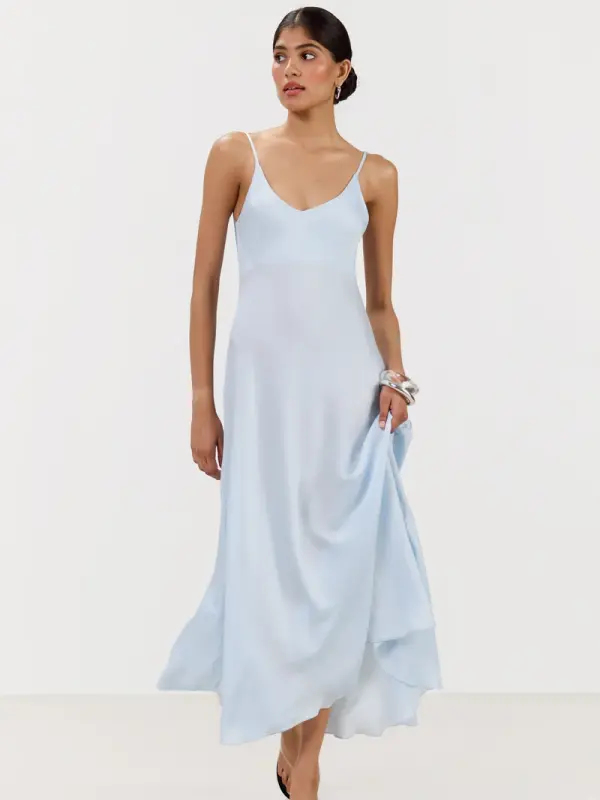
Satin Slip Dresses

Cowl Neck Dresses

Draped Satin Midis

Halter Satin Dresses

Backless Satin Dresses

Bias-Cut Satin Maxis

Fitted Satin Dresses

Structured Satin Dresses
Corset-inspired, bustier and structured satin styles place surface appearance over an internal support system. Boning, cups, interlining, lining, zipper construction and seam allowances can affect the outer satin if internal layers are too bulky or poorly balanced. Development needs to protect a clean exterior while maintaining bust shape, waist definition and wearing security. Structured satin also requires careful pressing because excessive pressure can reveal internal components through the outer surface. Complex styles benefit from first-piece verification before full production release.
Choosing Satin by Drape, Shine, Structure and Production Stability

Selecting Satin by Product Effect
Drape:
Fluid slip dresses, bias-cut maxis and soft cowls need satin that falls close to the body without becoming limp. A heavier construction may improve opacity and surface quality but can reduce movement. A very light satin can create beautiful motion while exposing seam allowance, underwear lines or lining transitions.
Shine:
High-shine satin creates strong campaign impact but magnifies wrinkles, puckering and directional differences. Matte or soft-luster satin often suits premium contemporary or understated occasion collections where surface control matters more than mirror-like reflection.
Stretch:
Stretch satin can support fitted silhouettes, but stretch percentage alone is not enough. Recovery should be evaluated because poor recovery can create bagging around the seat, hip or waist. Stretch direction also influences pattern orientation and measurement control.
Structure:
Corset, bustier and shaped occasion dresses often need more body than a classic fluid slip. Fabric should work with lining, interlining, cups or boning without showing internal ridges through the face.
Opacity:
Pale satin should be checked under direct light, not only on a fabric table. Lining color, length and weight can change both coverage and the apparent color of the outer satin.
Commercial continuity:
A beautiful sample fabric has limited value if the same quality, color direction or handfeel cannot be supported for bulk and later repeat orders. Availability and batch stability are reviewed alongside the visual target.

Locking Fabric for Bulk Consistency
Fabric approval becomes meaningful when specifications can travel from sample development into production.
Sample basis:
The approved sample should record the selected satin direction, including composition where specified, fabric weight or construction reference, color, shine level, stretch behavior, handfeel, lining relationship and any surface-sensitive finishing requirements.
Color control:
Custom colors may require lab dip or color approval before bulk fabric commitment. Dark and reflective colors should be reviewed under appropriate lighting because satin reflection can change perceived depth.
Batch management:
Bulk rolls should be reviewed for shade, surface defects, handfeel and directional appearance. Cutting allocation should reduce unnecessary mixing where visible differences occur between lots.
Pattern connection:
A fabric substitution cannot be treated as a purchasing-only decision. Changing from a fluid satin to a firmer or stretch version may require updates to ease, neckline behavior, lining, seam method or hem construction.
Production connection:
Approved material information should flow into BOM, PP sample references, sewing instructions, QC checkpoints and packing decisions.
Repeat orders:
When a style becomes a repeat program, preserved fabric references, BOM information, pattern records and QC standards provide a stronger starting point for the next production cycle.
Match Satin Construction to the Intended Dress Silhouette
A satin specification should support the silhouette, wearing experience and production plan. The matrix below connects common dress directions with material behavior and the manufacturing points that deserve the closest review.
| Dress Direction | Preferred Satin Behavior | Development Priority | Main Production Risk |
|---|---|---|---|
| Slip Dress | Fluid, soft, controlled shine | Bust coverage, straps, drape | Side seam rippling |
| Cowl Neck | Fluid with clean recovery | Cowl depth, neckline fall | Collapsed or uneven folds |
| Bias Midi | Stable diagonal drape | Grain, waist, hem balance | Twisting and growth |
| Satin Maxi | Fluid with sufficient body | Length, movement, lining | Uneven hem |
| Fitted Dress | Stretch or shaped woven satin | Bust-waist-hip balance | Stress lines and bagging |
| Halter Dress | Stable handfeel with drape | Neck load, bust stability | Pulling at neckline |
| Backless Dress | Controlled drape, adequate body | Internal support, closure | Side and bust instability |
| Structured Dress | Medium/heavier body | Cups, boning, interlining | Internal structure showing |
Pattern and Fit Engineering for Satin Dress Silhouettes
Satin fit cannot be separated from fabric behavior. Grain direction, surface tension, stretch, weight and lining can change how a technically correct pattern appears once the garment is worn.
Bias Direction and Pattern Balance
Bias construction needs controlled freedom rather than loose tolerances.
Grain planning:
Pattern pieces should be positioned according to the intended drape and shine direction. A small orientation difference can change both movement and surface reflection across panels.
Body balance:
Bias fabric follows curves differently from straight grain. Bust, waist and hip balance should be evaluated on the body because tension can pull a side seam forward or backward even when flat measurements appear acceptable.
Growth allowance:
Long bias panels may relax after sewing. Final hem decisions should account for fabric settling before leveling, especially on midi and maxi lengths.
Necklines and straps:
Slip and cowl styles often rely on narrow straps and soft necklines. Strap length, neckline drop and armhole position affect bust height and side coverage. Changes in one point can alter the overall front balance.
Lining relationship:
A lining cut with incompatible stretch or grain behavior can restrict the outer satin, creating drag lines that look like pattern defects.
Fit evidence:
Front, side and back views are reviewed together. Critical points can include bust position, waist line, hip fall, side seam, slit height and hem balance. Comments are translated back into the pattern and specification rather than corrected only on the sample surface.
Fit Correction Across Satin Silhouettes
Different satin dresses require different fit logic.
Slip and cowl:
Primary checks include bust coverage, neckline fall, strap length, side seam direction and fabric release over the hip.
Halter and backless:
Support moves toward the neckline, waist, tie structure or internal stabilization. Fit review therefore checks load points as well as measurements.
Fitted satin:
Chest, waist and hip balance must work with fabric stretch or non-stretch ease. Over-tightening can create visible horizontal stress lines; excess ease can make the garment look unrefined.
Structured satin:
Cup position, boning channels, waist shaping and zipper alignment influence the exterior. Pattern corrections may need to account for internal layers rather than changing only the outer shell.
Size grading:
A silhouette should not be graded by adding the same amount everywhere. Neckline depth, strap position, bust coverage, waist balance, slit height and garment length may need category-specific rules.
Production transfer:
Approved fit points are reflected in pattern files, measurement specifications, tolerance priorities and PP references so production teams are working from the same decision base.
Lining Decisions That Protect Satin Appearance and Wearability

Coverage and Opacity
- Review outer fabric and lining together.
- Check under directional light.
- Confirm lining length against slit and hem.
- Avoid visible lining edges through the satin surface.

Drape and Movement
- Match weight and movement.
- Review static and walking positions.
- Check friction around hip and thigh.
- Prevent lining from pulling the outer skirt.
- Confirm inside finish does not interrupt the intended fluid silhouette.

Zipper and Seam Support
- Control zipper tape visibility.
- Secure lining without creating tension.
- Review seam allowances beneath high-shine surfaces.
- Avoid heavy internal finishing where the satin can reveal thickness.
- Check closure operation before final pressing.

Lining Lock for Bulk
- Record approved lining direction.
- Connect lining to BOM.
- Confirm bulk availability.
- Include lining checks in PP and final QC.
- Preserve references for repeat production.
Satin Sample Development From Product Brief to Approval
A strong satin sample should answer development questions, not simply reproduce an outline. Fabric behavior, fit, surface finish and production feasibility are reviewed together before a style moves toward bulk.
From Development Brief to First Sample
Project review:
The first review identifies silhouette, intended market position, sample purpose, fabric direction, fit priority, colorway, lining, trims, size range and future bulk plan.
Fabric direction:
Before cutting, satin is assessed for drape, shine, stretch, opacity, handfeel and suitability for the intended structure. When an original fabric is unavailable or commercially unsuitable, an alternative can be reviewed according to product effect rather than visual similarity alone.
Pattern preparation:
Pattern work considers grain, bias behavior, bust-waist-hip balance, neckline, strap placement, slit, hem and internal structure according to the style.
Construction planning:
Sensitive details such as invisible zippers, narrow hems, cowl edges, internal support and surface-facing seams are considered before sample sewing.
Sample review:
Completed samples can be assessed through front, side and back views, key measurements, detail photographs and workmanship close-ups. The review separates confirmed elements from open fit, material or construction points.
Duolan’s manufacturing system supports approximately 15,000–35,000 sample pieces or development iterations per month and 3,000–8,000 style development workflows across the wider manufacturing platform, providing capacity for brands running multiple developments in parallel.
Revisions Built for Production
Revision work should become more precise with every round.
Comment classification:
Fit comments, visual comments, fabric issues, construction changes and production risks are separated so the correct team can act on each point.
Pattern correction:
Changes involving neckline shape, bust balance, waist fit, hip release, strap length, slit height or side seam position are transferred back into pattern and measurement records.
Material correction:
When drape, opacity or support is wrong, changing only the pattern may not solve the issue. Satin, lining, zipper or internal support may need to be reconsidered.
Workmanship correction:
Puckering, uneven hems, zipper waves, visible seam allowance and pressing marks are treated as manufacturing points rather than fit comments.
Revision record:
Updated specifications, construction notes and approved visual references reduce the risk of previous issues returning in later samples.
Production path:
As sample direction becomes stable, development moves toward PP or another production-ready reference rather than continuing open-ended aesthetic revisions.
What a Production-Ready Satin Sample Must Lock
A beautiful sample is not enough for bulk release. Production readiness requires the main visual, fit, material, workmanship and delivery standards to be clear enough for production and QC teams to repeat.
| Approval Area | Satin Dress Standard to Lock | Production Value |
|---|---|---|
| Fit & Measurements | Bust, waist, hip, length, straps, neckline, slit, grading | Reduces fit drift |
| Satin & Color | Fabric direction, shine, handfeel, stretch, shade, batch reference | Protects visual consistency |
| Lining | Color, length, stretch, opacity, attachment | Controls comfort and coverage |
| Construction | Seam method, zipper, darts, drape, hem, internal support | Keeps workmanship repeatable |
| BOM & Trims | Main fabric, lining, zipper, labels, trims, packing materials | Prevents material substitution |
| PP / Approval Basis | Approved sample status, comments closed, QC priorities | Creates one bulk reference |
Satin Sewing Standards for Clean Seams and Surfaces

Seam Control Across Satin Constructions
Needle interaction:
Needle size and condition can influence visible holes or pulled yarns. Repeated unpicking should be minimized because some satin surfaces retain evidence even after stitches are removed.
Thread tension:
Excess tension can pull the fabric into a rippled seam. Weak tension can affect stability and appearance. Trial sewing helps establish a suitable balance before volume production.
Feed control:
Smooth layers can shift during sewing, especially on long side seams or bias panels. Uneven feeding may create twisted seams or misaligned hems.
Darts and shaping:
Bust and waist darts should end cleanly without puckered points. Structured satin may require more controlled shaping because reflective surfaces highlight every transition.
Zippers:
Invisible zipper areas need stable feeding, correct seam allowance and careful pressing. A straight zipper can still look poor when surrounding fabric waves.
Curves and necklines:
Cowl edges, armholes, bias edges and narrow straps need finishing methods matched to fabric weight. Excessive bulk quickly becomes visible.
Inline reference:
Production teams should compare seam appearance with the approved sample or PP reference rather than relying only on stitch density numbers.

Hem, Slit and Detail Workmanship
A satin hem affects how the entire skirt falls.
Narrow hems:
Lightweight satin often needs a narrow, controlled finish that remains flat without stiffening the edge.
Midi and maxi hems:
Longer garments require consistent left-right balance and front-back length. Bias styles may need settling before final leveling.
Slits:
Slit height, reinforcement and edge finish affect both visual proportion and wearing security. High slits need clean reinforcement without a bulky endpoint.
Straps:
Narrow straps should be consistent in width and attachment position. Adjustable hardware needs smooth operation without damaging the satin.
Internal seams:
Clean internal construction reduces friction and helps prevent seam allowance from becoming visible through the outer layer.
Surface handling:
Finished panels should not be dragged, stacked carelessly or exposed to rough edges during movement between operations.
Final visual check:
Seams, darts, zipper areas, hems and slits are reviewed after pressing because some defects become more visible only when the garment reaches its final surface condition.
Pressing and Finishing Without Damaging Satin Surface Quality

Controlling Heat, Pressure and Surface Reflection
Temperature:
Heat should be appropriate for the fabric composition and finish. Excess temperature can alter shine, flatten texture or damage synthetic satin.
Pressure:
Heavy pressure may imprint seam allowance, zipper tape, darts, boning or internal layers onto the outer surface. Structured satin needs particular care because hidden components sit close to the face fabric.
Steam and moisture:
Steam helps shape and release wrinkles, but uncontrolled moisture may create water marks on sensitive satin. Fabric response should be understood before final finishing.
Protection:
A suitable protective layer or pressing method can reduce direct surface contact when needed.
Sequence:
Pressing during construction and final finishing serve different purposes. Operators should avoid overworking areas repeatedly because high-shine surfaces can record excessive handling.
Lighting:
Finished garments benefit from surface review under directional light, where shine marks, seam impressions and wrinkles are easier to see.

Final Presentation Before Packing
Finishing is complete when the garment is ready for brand presentation, not merely when sewing ends.
Shape review:
Neckline, bust, waist, hip, drape, slit and hem are checked on a form or appropriate review setup where needed.
Surface cleaning:
Loose threads, removable marks and handling dust should be addressed without aggressive rubbing that could damage the satin.
Seam appearance:
Side seams, darts, zipper areas and hems are checked again after pressing.
Drape recovery:
Fluid styles should hang naturally without trapped folds from pressing or handling.
Packing readiness:
Garments should cool and stabilize before folding or bagging. Fold lines are planned around style construction so pressure is not concentrated on sensitive areas.
Photography-sensitive styles:
Campaign samples and high-shine colors may need an even higher visual standard because wrinkles, shade shifts and seam lines are amplified under studio lighting.
Control Shade and Shine Across Satin Production Batches
Color Approval
Color review starts from the approved fabric direction, lab dip or nominated reference where applicable. Satin should be judged with attention to both hue and reflective character. Burgundy, champagne, ivory, navy and deep green can look materially different when shine changes, even if instrument readings are close. Bulk approval therefore needs to connect color, surface finish and lighting conditions instead of treating color as an isolated lab value.
Batch and Roll Control
Garment-Level Review
Final color control happens on the garment, not only on fabric swatches. Panels, lining, zippers and trims are reviewed together because component differences can become visible around seams and closures. Finished garments can also reveal pressing-related shine or directional mismatch that was not obvious before construction. Production records, approved samples and bulk fabric references provide a clearer basis for judging whether visual variation remains within the agreed standard.
Packing Satin Dresses to Protect the Approved Finish

Fold Placement

Surface Protection

Shape Protection

Carton and Delivery Control
Unit packing, size stickers, style codes, barcodes, carton marks and packing quantities need to align with the agreed delivery specification. Carton pressure should be considered for long-distance transport because over-compression can increase satin creasing. Split shipments or different transport methods may also require adjusted packing plans. Final packing review checks garment condition together with labels, identification, packing quantity and shipment requirements before goods are released.
Moving Approved Satin Samples Into Controlled Bulk Production
Bulk Readiness Before Line Release
Before production begins, the approved development position is reviewed.
Sample status:
Teams confirm whether fit, visual appearance and PP basis are fully approved or whether any point remains open.
Material lock:
Satin batch, color direction, lining, zipper, trims and packaging materials are confirmed against the production plan.
Measurement lock:
Critical points such as bust, waist, hip, length, strap, neckline and slit are identified for production and QC.
Workmanship lock:
Seam appearance, zipper installation, draping, hem method, pressing and surface handling points are communicated before line release.
Production path:
Styles are assessed by complexity, quantity, material requirements and timing. Regular satin slips may follow a different production path from structured corset satin or heavily draped occasion styles.
Timeline:
Material readiness, cutting, sewing, QC, finishing, packing and shipment are planned backward from the required delivery window.
The purpose is not paperwork for its own sake. Production teams need a single usable standard before hundreds or thousands of garments begin moving through the line.
First Piece, Pilot and Production Feedback
Risk-sensitive styles can be checked before full volume is released.
First-piece approval:
Early production pieces allow measurement, seam appearance, zipper behavior, drape, pressing and surface quality to be assessed under real production conditions.
Pilot quantity:
A small production run may be used when a new satin, new construction or complex style carries higher repetition risk.
Corrective action:
If bulk conditions reveal a problem not visible in sampling, sewing method, handling, pressing or material instructions can be adjusted before the issue spreads across the order.
Inline checks:
Measurement and workmanship checks continue during production rather than waiting for final inspection.
Production updates:
Progress, open issues and required decisions can be coordinated across development, production and quality teams.
Bulk release:
Full-scale production proceeds after critical risks are understood and the line standard is stable enough for controlled replication.
QC Evidence Across Every Satin Production Stage

Fabric Inspection
Bulk satin is reviewed before production for visible defects, shade direction, handfeel, surface condition and other project-specific requirements. Batch or roll differences can be recorded where necessary so cutting decisions do not create avoidable panel mismatch.
Approved fabric references remain connected to the sample and production standard. Key evidence can include:
- Fabric inspection records.
- Batch or shade references.
- Approved swatches.
- Color confirmation.
- Surface defect checks.

PP and Pre-Production
- PP sample details.
- Measurement review.
- BOM confirmation.
- Workmanship notes.
- Material approval references.

Inline Measurement
- Bust and underbust.
- Waist and hip.
- Body length.
- Strap length.
- Neckline position.
- Slit height.
- Hem opening.

Workmanship and Surface
- Seam puckering.
- Needle marks.
- Zipper waves.
- Dart appearance.
- Twisted side seams.
- Uneven hems.
- Scratches or pulls.
- Pressing marks.
- Lining exposure.

Finishing and Packing
- Final pressing condition.
- Surface cleanliness.
- Fold placement.
- Tissue or protective material.
- Labels and hangtags.
- Size or barcode identification.
- Unit packaging.

Final Shipment Readiness
Final inspection connects garment quality with commercial delivery requirements. Measurements, workmanship, appearance, quantities, packaging and client-specific instructions can be reviewed before shipment.
Where required, Duolan can coordinate third-party inspection arrangements and nominated forwarding requirements.
Final quality and packing information can be organized so brand teams know what was inspected and which shipment standard was used before release.
Manufacturing Capacity for Multi-Style Satin Dress Programs
300 Sewing Lines
50+ Flexible Lines
6.5M Stable Monthly Capacity
15K–35K Sample Capacity
3K–8K Style Workflows
Multi-Factory Coordination
Duolan’s wider network includes 16 owned womenswear factories and more than 20 long-term satellite factories. Core control and flexible capacity can be coordinated according to product complexity, process requirements and schedule. Multi-factory capability is not used as an excuse to fragment standards. Approved samples, material directions, workmanship priorities and QC expectations need to remain traceable across production allocation. The objective is controlled scalability for multi-style programs, repeat orders and seasonal delivery rather than uncontrolled subcontracting.
Compliance Support for Formal Fashion Supply Chain Requirements
SMETA Audit Foundation
Duolan’s core manufacturing system has completed a SMETA audit and SMETA 2-Pillar audit, providing a documented social audit foundation for formal sourcing discussions. Audit status does not replace product qualification; it supports the broader supplier review alongside development capability, quality systems, production evidence and project execution. Relevant audit documents can be reviewed according to project and onboarding requirements where appropriate.
Testing and Standards Coordination
Inspection and Brand Execution
Formal programs may require third-party inspection, defined measurement tolerances, approved packaging, labels, barcodes, carton marks and nominated logistics procedures. Duolan can coordinate production information and inspection preparation around agreed requirements. For satin styles, inspection priorities can be expanded beyond basic measurements to include surface condition, seam appearance, pressing, lining, shade and packing protection.








Satin Dress Programs With Real Production-Level Control
Project examples show how satin decisions move from material and fit review into sample approval, bulk control and delivery. Client names and unreleased designs remain confidential.

US Occasionwear Program — 18 Styles, 42,600 Pieces
A US occasionwear program included 18 satin-led styles across midi, maxi, cowl, halter, fitted and draped directions, with a combined bulk quantity of approximately 42,600 pieces. The range used multiple satin weights and several pale and deep color groups, creating different risks across otherwise related silhouettes.
Development challenge:
The main challenge was not garment construction alone. Fluid styles needed clean drape and controlled hems, while fitted styles required stronger bust-waist-hip balance. Pale colors required additional lining and opacity review. Deep colors needed closer attention to batch appearance and directional shine.
Development actions:
Fabric direction was reviewed by silhouette instead of applying one satin across the entire range. Bias-sensitive styles received additional pattern and hem attention. Lining decisions were separated between fluid and fitted garments. Sample comments were divided into fit, material and workmanship actions.
Bulk readiness:
Before production release, main satin directions, lining, measurements, zipper standards, seam appearance, pressing priorities and packing methods were confirmed. Higher-risk styles moved through first-piece review before wider production.
QC focus:
Inline checks emphasized side seam direction, bust-waist-hip measurements, zipper areas, hem balance and surface handling. Final review added pressing condition, scratches, shade appearance and packing folds.
The program demonstrates why a satin collection should be managed as several manufacturing systems sharing one visual language, not as 18 versions of the same construction.

Australian Partywear Program — 12 Styles, 28,800 Pieces
An Australian partywear development covered 12 satin styles and approximately 28,800 pieces across mini and midi lengths, with halter, open-back, ruched, cowl and structured directions. Six size points and four principal color groups increased the need for coordinated grading, material and quality records.
Development challenge:
The collection mixed soft fluid dresses with styles carrying more body and internal support. A single fit or seam solution could not be applied across the range. Open-back styles needed stability without visible support, while ruched and fitted dresses needed controlled tension without surface rippling.
Sample control:
Fit review focused on bust coverage, strap length, waist placement, side seam direction and slit positions. Satin response was checked after construction and pressing because several visual issues only became clear at the finished stage.
Production preparation:
Fabric, lining and main trim references were locked before bulk. Structured styles received additional first-piece review, while simpler commercial styles moved through the standard production route. QC checkpoints were adjusted according to silhouette.
Packing:
High-shine colors and draped areas required controlled fold placement and surface protection. Packing checks were included with final garment inspection rather than handled as a warehouse-only activity.
The project structure reflects a common partywear requirement: maintain a coherent collection appearance while letting each silhouette use the manufacturing controls it actually needs.
Plan Development, Production and Delivery Around Launch Timing
Development and Sampling
Bulk and Delivery
Reference production periods are approximately 15–20 days for simple styles, 20–30 days for regular styles and 30–45 days for complex styles after PP, BOM, materials, order information and required commercial checkpoints are ready.
Transport is planned separately: express is commonly around 3–7 days, air freight around 5–8 days and sea freight around 20–35 days. Actual timing depends on destination, shipment arrangement, booking, customs and project conditions.
Repeat and Scale Programs
Repeat production should start from preserved approved standards rather than treating every order as a new development. Pattern records, BOM, satin references, color information, workmanship points, measurement standards and packing instructions can be reviewed against current material availability before scheduling. A repeat order may still require a new batch comparison, updated color approval or pre-production confirmation when materials change. Stable records allow successful satin styles to extend into new colors, lengths or related silhouettes with less development uncertainty.
Satin Dress Manufacturing Frequently Asked Questions
Duolan focuses on fashion-led dresses including satin slip, cowl-neck, draped, halter, backless, fitted, bias-cut, midi, maxi, occasion, party, wedding guest and structured satin directions. Each silhouette is reviewed according to fabric behavior, fit, lining, workmanship and production requirements rather than being treated as one generic satin category.
Fabric selection depends on drape, weight, shine, stretch, opacity, support and intended retail positioning. Fluid slip and bias styles normally require different behavior from fitted or structured satin dresses. Duolan reviews the required garment effect first, then evaluates suitable satin and lining directions based on sample and bulk feasibility.
Yes. Development can begin from a complete tech pack, reference garment, original sample, sketch, reference images, size specification, fit comments or a defined collection direction. The available information is reviewed before confirming material direction, sampling approach, open technical questions and the next development stage.
Control may involve fabric-specific sewing trials, appropriate needle condition, stitch density, thread tension, feeding, seam construction and pressing. Seam appearance is reviewed after finishing because some rippling becomes more visible only after pressing. Approved sample or PP workmanship provides the visual basis for inline and final inspection.
Bias-cut development considers grain direction, fabric relaxation, side seam position, bust-waist-hip balance, lining behavior and hem leveling. Long bias panels can grow or twist differently from straight-grain pieces. Fit comments are translated into pattern and measurement updates before production standards are locked.
Pale satin is evaluated together with lining under relevant lighting conditions. Lining color, weight, stretch, length and attachment can affect coverage, drape and apparent outer color. Reviews focus especially on bust, hip, upper-thigh, slit and body-skimming areas before final material decisions are confirmed.
Before bulk release, Duolan reviews approved sample status, fabric, lining, trims, color, measurements, workmanship and packing requirements. Risk-sensitive satin styles may also go through first-piece or pilot verification. Production and QC teams then work from the confirmed PP or production-ready reference rather than an isolated development sample.
Reference production periods are approximately 15–20 days for simple styles, 20–30 days for regular styles and 30–45 days for complex styles after production-critical approvals and materials are ready. Final timing depends on style complexity, satin availability, custom colors, revisions, order quantity, QC requirements, packing and production scheduling.
Yes. Duolan’s wider manufacturing system supports parallel development and production across multiple styles, colorways and project stages. The manufacturing platform includes approximately 300 sewing lines, 50+ flexible lines and significant monthly development capacity. Individual styles are allocated according to complexity, material requirements and production timing.
Send available design files or references, satin direction, color or Pantone information, size standard, target quantity, intended market, launch timing, lining requirements, trims, packaging requirements and any previous fit or quality concerns. A complete tech pack is valuable but is not the only acceptable starting point for an initial project review.

Send Your Satin Dress Program for Manufacturing Review
Share the information already available for your satin dress program. A complete tech pack is useful, but a reference garment, design sketch, product images, previous fit comments or fabric direction can also provide a workable starting point. Duolan will review the silhouette, satin behavior, lining, fit priorities, workmanship-sensitive areas, production complexity and bulk requirements before confirming the recommended development path. For a more accurate initial review, include:
- Satin dress style or collection direction
- Tech pack, sketch or reference images
- Target satin, composition or handfeel direction
- Color or Pantone references
- Size range and sample size
- Target order quantity
- Key fit or workmanship concerns
- Lining, zipper, trim or support requirements
- Required packaging or labeling
- Target launch or delivery window
- Sample, first bulk, repeat order or supplier evaluation stage
The objective is to establish the right development and manufacturing basis before time and material are committed.