 Skip to content
Screen Print Dress Manufacturer
Artwork, fabric, pattern, print placement and dress construction managed within one production-ready development system.
- 150–400 print-related machines and supporting units across the manufacturing group, covering screen printing, plate exposure, curing, digital printing and heat-transfer processes.
- 16 owned womenswear factories supported by 20+ long-term satellite factories for controlled development, production allocation and repeat-order capacity.
- 300 garment sewing lines plus 50+ flexible production lines supporting multi-style collections, launch orders and rolling replenishment.
- Monthly development capacity covers approximately 15,000–35,000 sample pieces and 3,000–8,000 style-development workflows across the group.
More Than a Garment Printing Service
Printing Service
- Print placement may conflict with darts, seams or waistlines.
- Curing conditions may alter fabric hand feel or dimensional stability.
- Garment modifications may move an approved graphic out of position.
- The printer may not understand how gathers, stretch or drape distort artwork.
- Bulk print approval may remain disconnected from garment approval.
Printed Fabric Supplier
A printed fabric supplier can produce repeat prints, all-over patterns or prepared yardage, but finished-garment development still requires paper patterns, size grading, cutting control, construction engineering, fit review and final inspection. Printed yardage alone does not answer several production questions:
- Where should the pattern begin on the front panel?
- How will the repeat align near a center seam?
- Will a border motif remain level around a curved hem?
- Does the base cloth provide enough opacity for the intended silhouette?
- Will the print remain balanced across mini, midi and maxi lengths?
Duolan evaluates printed material as part of a finished dress program, linking fabric direction with cutting plans, panel position and size architecture.
Integrated Dress Manufacturing
Duolan manages screen printed dress development through a connected route:
Artwork review → color separation → fabric evaluation → pattern planning → print strike-off → garment sample → fit and placement correction → pre-production approval → bulk printing → cutting → sewing → inspection → packing.
Integrated management improves accountability. Pattern corrections can be checked against print anchors, fabric batches can be reviewed against approved strike-offs, and sewing teams receive production instructions built around the approved garment rather than a detached print file.
The outcome is not simply a printed surface. The outcome is a sale-ready dress with controlled fit, visual proportion, construction quality and repeatable bulk standards.
Manufacturing Support for Established Fashion Teams
Fashion Dress Brands
Dress-focused brands need a manufacturing partner able to preserve silhouette, visual identity and fit across multiple styles. Duolan supports mini, midi, maxi, casual, resort, party and occasion-led dress programs where screen print must work with the garment rather than sit on top of it.
Cooperation may cover:
- Collection-level artwork planning
- Fabric family coordination
- Shared color stories
- Multiple print placements
- Size-range development
- Launch and reorder production
- Private labels and retail packing
Product Development Teams
Development support focuses on:
- Print feasibility
- Fabric and ink compatibility
- Pattern construction
- Print-position mapping
- Fit priorities
- Sample purpose
- Revision control
- Production readiness
Buying and Sourcing Teams
Buying and sourcing teams require more than a good first sample.
They evaluate documentation, capacity, quality checkpoints, compliance readiness, delivery planning and repeat-order consistency.
Duolan supports structured project communication through:
- Tech pack and artwork review
- Material confirmation
- Sample version tracking
- Production path planning
- Inline and final inspection
- Packing verification
- Shipment coordination
- Reorder standard preservation
Multi-Brand Fashion Groups
Duolan can divide projects by:
- Product complexity
- Base fabric
- Print technique
- Production volume
- Fit sensitivity
- Launch priority
- Inspection requirement
- Delivery route
Screen Print Risks Controlled Before Bulk Production
Artwork Mismatch
Registration Shift
Placement Drift
Fabric Distortion
Hand-Feel Change
Curing Damage
Seam Interruption
Bulk Variation
Screen Printed Dresses Developed for Commercial Collections
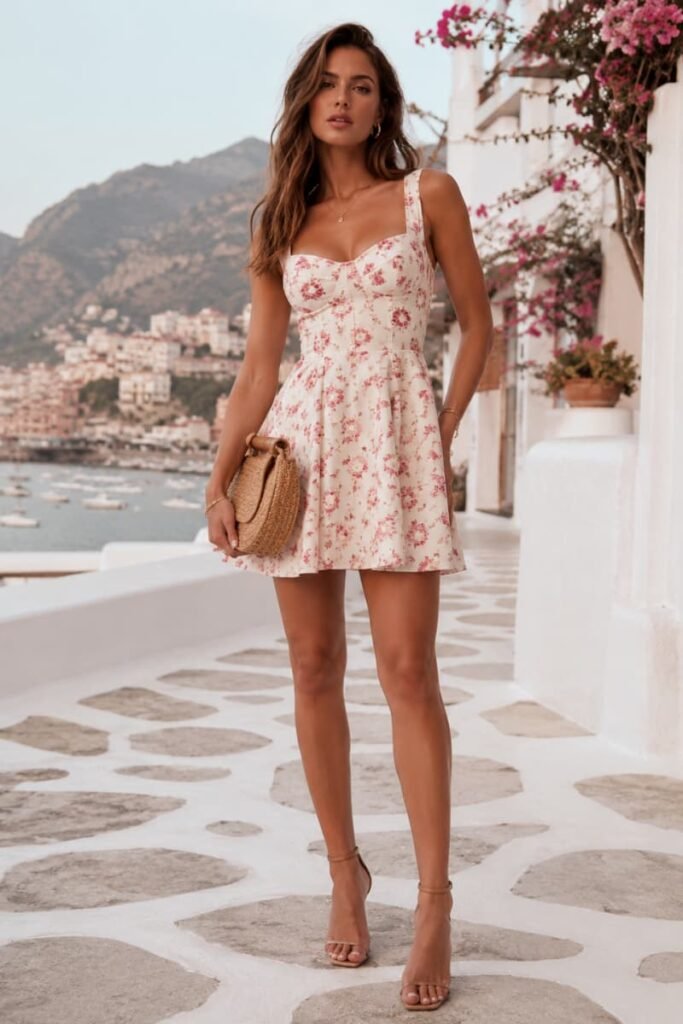
Printed Mini Dresses
- Print-to-garment proportion
- Bust and waist placement
- Hem clearance
- Stretch distortion
- Side-seam interruption
- Opacity and lining need
- Size-range visual balance

Printed Midi Dresses
- Vertical motif proportion
- Waist-seam alignment
- Skirt-panel repeat
- Side-slit position
- Graphic continuity
- Fabric fall after printing
- Grading across body and length

Printed Maxi Dresses
- Long-panel print consistency
- Border alignment
- Repeat matching
- Front-to-back balance
- Tier and seam planning
- Fabric width utilization
- Hem-level control
- Packing protection

Printed Resort Dresses
Resort collections frequently use botanical motifs, geometric graphics, coastal themes, artistic repeats and border arrangements. Cotton, viscose, rayon and linen blends may support the desired relaxed appearance, but every base fabric behaves differently during printing and garment construction.
Development may include:
- Coordinated mini, midi and maxi silhouettes
- Shared artwork families
- Multiple colorways
- Border and placement combinations
- Lightweight lining plans
- Vacation-ready packing
Print design should support movement, photography and destination styling without creating excessive stiffness or transparency.

Graphic Jersey Dresses
- Fab stretch percentage
- Recovery after extension
- Graphic cracking risk
- Print distortion over bust and hip areas
- Seam elasticity
- Dimensional stability
- Opacity under tension
- Wash behavior

Printed Day Dresses
- Wearable color combinations
- Balanced print scale
- Easy-care construction
- Comfortable surface feel
- Consistent neckline and waist fit
- Repeat-order material availability
- Retail-ready appearance
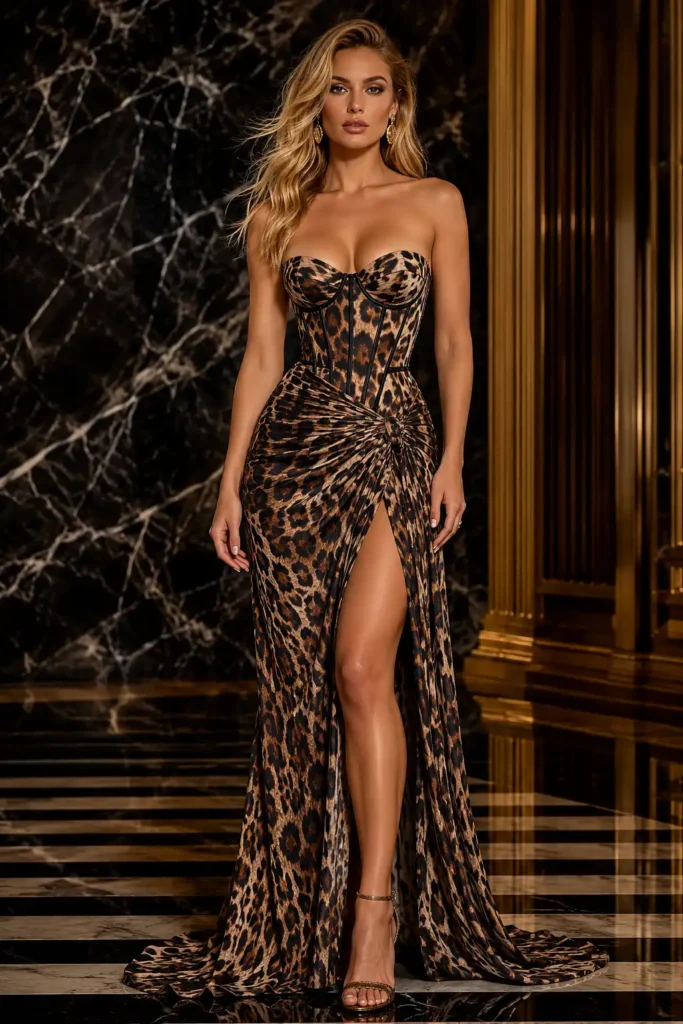
Printed Party Dresses
- Surface effect
- Skin-contact comfort
- Stretch requirements
- Decoration weight
- Heat sensitivity
- Lining and facing
- Photography appearance
- Packing protection

Printed Collection Programs
A collection may combine hero styles, commercial styles and repeatable core silhouettes. Screen print development becomes more efficient when artwork, fabric and pattern decisions are planned across the range.
A program can include:
- 10–30 styles per order
- Shared artwork families
- Coordinated color stories
- Mini, midi and maxi extensions
- Common fabric bases
- Placement and repeat versions
- Seasonal drops
- Reorder-ready core products
Collection planning helps reduce unnecessary screens, duplicated testing and fragmented material decisions while preserving individual style character.
Screen Print Layouts Built Around Dress Construction

Placement Prints
Placement printing positions a defined graphic on a specific garment area, such as the chest, center front, back, skirt panel or hem zone.
The placement map should define:
- Print width and height
- Centerline relationship
- Distance from stable pattern points
- Orientation
- Size-grade rules
- Front and back references
Placement printing works well for logos, statement graphics, framed motifs and artwork designed as a focal point. Darts, neckline changes and fit corrections must be considered before the print position becomes final.

Repeat Prints
Development reviews include:
- Horizontal and vertical repeat
- Motif spacing
- Directional versus non-directional layout
- Side-seam matching
- Center-front appearance
- Fabric width
- Cutting yield
- Size-grade impact

All-Over Prints
The process must account for:
- Fabric preparation
- Screen dimensions
- Print-table sequence
- Repeat joins
- Base-color consistency
- Curing
- Roll inspection
- Cutting placement

Panel Prints
Panel printing suits:
- Engineered front graphics
- Large skirt motifs
- Back-panel artwork
- Asymmetric designs
- Graphics aligned to body zones
- Styles with defined seam architecture

Border Prints
Control points include:
- Border level
- Distance from hem
- Panel length
- Curved-hem behavior
- Side-seam continuation
- Size-length differences
- Cutting direction
- Fabric shrinkage

Graphic Logo Prints
Duolan reviews:
- Logo dimensions
- Brand clear space
- Color references
- Fine-line reproduction
- Fabric contrast
- Underbase requirement
- Placement
- Care impact
When Screen Printing Supports the Best Result
Strong Spot Colors and Defined Graphic Edges
Several questions guide the decision:
- Does the artwork use separate solid colors?
- Are fine lines open enough for repeat production?
- Will a white underbase be needed on dark fabric?
- Does the desired surface require soft-hand or higher-opacity ink?
- Are gradients central to the artwork?
- Will the graphic stretch over fitted body zones?
Duolan can review vector artwork, final dimensions, spot-color references and garment placement before screen preparation. The goal is a graphic capable of surviving sampling, bulk printing, sewing, wear and care—not merely a visually attractive digital file.
Repeated Production and Colorway Expansion
Screen setup requires preparation, making the process more commercially efficient when production volume, repeat orders or colorway extensions justify the initial work.
A stable screen print program can support:
- Multiple dress styles using one artwork family
- Seasonal color updates
- Reorders of proven silhouettes
- Coordinated tops and dresses
- Regional color assortments
- Repeat production after a successful launch
Production efficiency depends on more than total units. The number of artwork separations, garment colors, fabric types, placement changes and size-related adjustments also affects the setup structure.
For a collection containing 10–30 styles, Duolan reviews whether artwork elements can be shared, whether screen dimensions can serve several styles, and where separate strike-offs remain necessary. Such planning avoids unnecessary duplication while protecting style-specific placement and fit.
Fabric Surface and Desired Hand Feel
A screen print should support the fabric rather than overpower it. Cotton and stable woven surfaces often accept screen printing more predictably than highly textured, slippery or heat-sensitive fabrics, yet final suitability depends on composition, finish, color and garment use.
Large ink areas can reduce drape. Heavy coverage may feel acceptable on a structured cotton dress but unsuitable on a flowing viscose maxi. Stretch jersey requires ink flexibility and body-worn evaluation. Dark polyester may present migration concerns under certain curing conditions.
Duolan reviews:
- Fabric composition
- Weight and thickness
- Surface texture
- Stretch and recovery
- Base color
- Absorbency
- Heat response
- Garment silhouette
- Skin-contact area
- Care expectations
A fabric strike-off is more reliable than selecting ink from a generic chart. The approved combination should reproduce the intended color while preserving enough softness, movement and comfort for the finished dress.
When Another Print Route Makes More Sense
Screen printing is not automatically the best route for every image. Highly photographic artwork, numerous subtle colors, complex gradients or very limited visual-development quantities may be more suitable for digital printing or another controlled process.
Duolan compares methods based on:
- Artwork complexity
- Number of colors
- Detail level
- Fabric composition
- Print area
- Surface effect
- Production quantity
- Reorder plan
- Required hand feel
- Color consistency expectations
A development sample may occasionally use a different method to evaluate proportion, but the result should not be treated as a bulk standard unless the final production process is also tested. A digital sample cannot automatically approve a future screen print because color, surface, edge quality and hand feel will differ.
Method selection should happen before the sales sample or pre-production stage, allowing the approved garment to represent the planned bulk route.
Screen Print and Digital Print Decision Guide
Both processes can produce strong fashion results. The correct route depends on artwork construction, fabric, order structure, surface requirements and future reorder plans.
| Decision Factor | Screen Printing | Digital Printing | Duolan Review Focus |
| Artwork Structure | Strong for separated spot colors, graphic shapes and defined edges | Strong for photographs, gradients and highly detailed multicolor images | Artwork is reviewed at final garment dimensions |
| Color Count | More efficient when the number of controlled colors remains manageable | Can reproduce many colors without separate physical screens | Color count is considered with order volume and setup |
| Surface Effect | Can provide controlled opacity, texture and strong color coverage | Usually provides a lighter printed layer depending on fabric and process | Hand feel is compared against dress drape and comfort |
| Dark Fabric | May require an underbase and additional approval | Suitability depends on printer, ink and fabric preparation | Base color, migration risk and target brightness are reviewed |
| Stretch Fabric | Requires compatible ink and stretch testing | Requires a print system suitable for the fiber and extension | Graphic distortion is checked on the body |
| Initial Setup | Requires artwork separation, screen preparation and registration setup | Lower physical screen preparation | Setup is evaluated across styles, colors and forecast volume |
| Bulk Repeatability | Strong when screens, ink references and process settings are preserved | Strong when files, color profiles and fabric conditions remain controlled | Reorder records are retained with material and garment standards |
| Small Visual Trial | Less efficient for highly complex, multicolor artwork | Often suitable for early visual evaluation | A visual trial is not treated as bulk approval without process validation |
| Best Application | Graphic collections, spot-color artwork, placement prints and repeat programs | Detailed artwork, tonal images and complex gradient designs | The selected route must remain feasible from sample through bulk |
Fabrics Evaluated for Screen Printed Dresses

Cotton and Cotton Blend Dress Fabrics
- Fiber composition
- Fabric weight
- Weave density
- Surface hairiness
- Pre-shrink condition
- Base color
- Opacity
- Garment wash requirements
- Intended print coverage
- Final hand feel
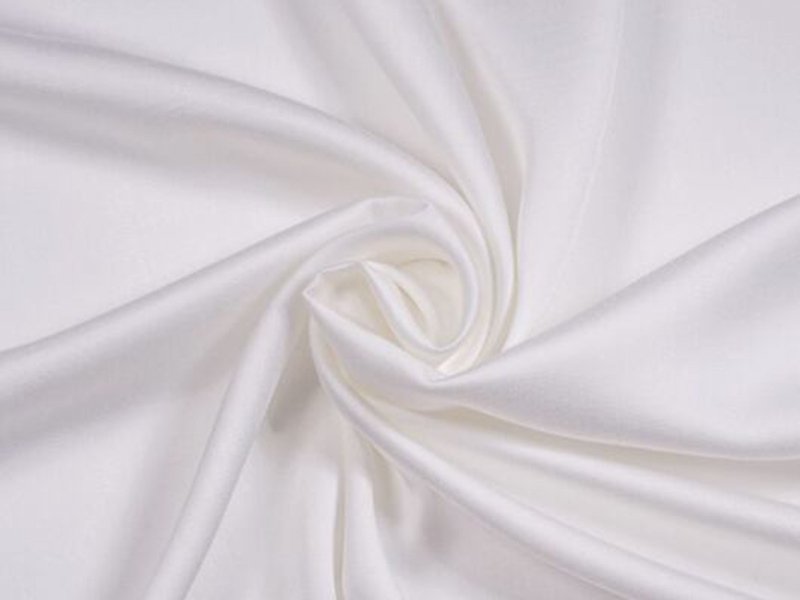
Viscose, Rayon and Fluid Woven Fabrics
- Fabric construction
- Weight
- Surface smoothness
- Width
- Pre-shrink result
- Color absorption
- Wet-processing history
- Heat response
- Draping behavior
- Transparency
- Lining interaction

Linen and Linen Blend Dress Fabrics
Linen and linen blends support relaxed resort dresses, casual midis and structured daywear. Their natural texture can add visual character but may reduce edge sharpness compared with a smooth fabric.
Development reviews focus on:
- Slub distribution
- Surface texture
- Weave openness
- Blend content
- Shrinkage
- Creasing
- Base-color variation
- Ink coverage
- Desired visual texture
- Garment construction
A very crisp graphic may require a smoother linen blend, while a more artisanal design can work with controlled texture showing through the print. Linen tends to crease during handling and wear. Print placement should remain visually balanced even when the garment is not perfectly flat.
Large rigid surfaces should be avoided where they interfere with natural movement. Bulk cutting requires attention to shade and surface character. Panels should be grouped consistently, and prominent front sections should be checked for extreme slubs or visible fabric irregularities according to the agreed garment standard.
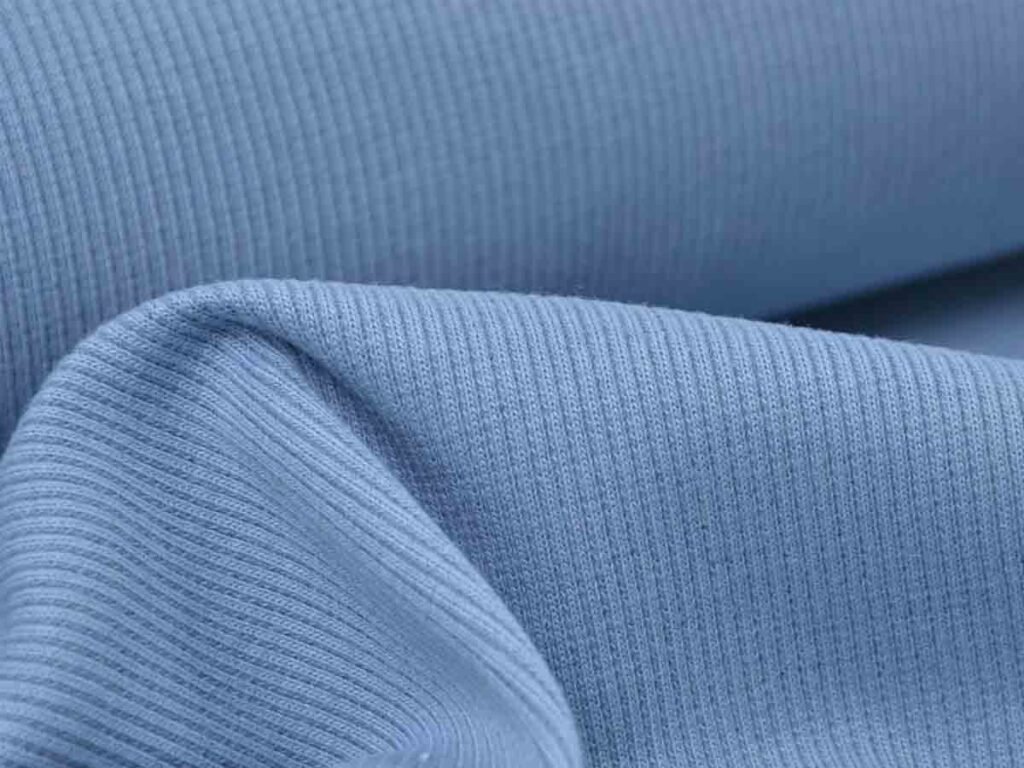
Jersey, Rib and Stretch Fabrics
Stretch fabrics add another variable: the graphic must perform both at rest and under body extension. A print can look correct on the cutting table yet crack, separate or distort across bust, waist and hip areas. Duolan reviews:
- Fiber composition
- Elastane content
- Stretch direction
- Extension level
- Recovery
- Fabric weight
- Surface texture
- Opacity under tension
- Print position
- Garment negative ease
- Seam elasticity
Graphic placement should be assessed on a fitted sample. Circular motifs may become oval, text may widen, and solid areas may reveal cracking when stretched. Bodycon and fitted jersey dresses require coordinated pattern and artwork decisions. Reducing garment tension may protect the graphic but change the intended silhouette. Increasing print flexibility may preserve stretch but affect opacity or hand feel. Both elements must be balanced rather than solved independently.

Polyester and Blended Fabrics
Polyester fabrics offer varied surfaces, weights and performance characteristics. Print compatibility depends on dye stability, heat response, fabric finish and selected ink system. Important considerations include:
- Dye migration risk
- Curing temperature
- Surface coating
- Moisture management finish
- Fabric shine
- Stretch
- Base-color depth
- Print opacity
- Press marks
- Dimensional stability
Dark polyester needs careful evaluation because heat can cause dye movement into lighter print colors. A visually correct fresh strike-off may change after curing or storage if the materials are not compatible. Smooth polyester can also show surface marks from heat and pressure. Finishing trials should reflect the planned production route. Duolan does not approve polyester screen printing based only on artwork appearance. The full combination—fabric batch, ink, color, curing and garment use—must be reviewed.

Sensitive Fashion Fabrics
Satin, chiffon, mesh and very lightweight fabrics require cautious evaluation. Their surfaces, transparency, movement and heat sensitivity can make conventional screen printing unsuitable for some designs.
Possible risks include:
- Satin shine disruption
- Visible pressure marks
- Chiffon stiffness
- Mesh penetration
- Uneven coverage
- Ink transfer through open structures
- Heat damage
- Reduced drape
- Skin-contact discomfort
- Print cracking over stretch mesh
Screen print may still work for selected localized details, reinforced panels, layered areas or specific base constructions, but no blanket recommendation should be made.
For sensitive materials, Duolan may compare a lighter print treatment, alternative fabric, modified artwork, panel construction or another print method. The aim is to preserve the fashion result rather than force one technique onto an unsuitable base.
Artwork Prepared for Repeatable Garment Production
Artwork File and Final Dimensions
Vector artwork is preferred for spot-color separation because edges, shapes and dimensions can be adjusted without losing definition. High-resolution raster files may also be reviewed when supplied at an appropriate final size.
The artwork package should identify:
- File version
- Final print width and height
- Orientation
- Front or back position
- Spot colors
- Pantone references when available
- Underbase requirement
- Repeat dimensions
- Border dimensions
- Mirroring or directional restrictions
- Brand-approval status
Artwork dimensions should be stated in measurable units rather than described as “large front print” or “near the hem.” A visual mockup can support communication, but production instructions require numerical anchors. Brand logos, licensed graphics, artist work and protected motifs should be accompanied by appropriate authorization within the project relationship.
Color Separation and Underbase Planning
- Number of spot colors
- Print sequence
- Trapping between colors
- Shared edges
- Fine details
- Underbase shape
- Fabric-color influence
- Opacity
- Highlight and shadow treatment
- Registration sensitivity
Repeat, Direction and Panel Mapping
Repeat artwork must match the intended garment structure. A repeat file should state horizontal and vertical dimensions, motif direction and any half-drop or alternate arrangement.
Panel mapping addresses:
- Center-front motif
- Side-seam relationship
- Shoulder or sleeve direction
- Waist-seam transition
- Skirt-panel continuity
- Tier positioning
- Border distance
- Hem alignment
- Pattern-piece orientation
- Size-grade changes
Directional motifs increase cutting responsibility. All panels must face the intended direction, which may increase material consumption compared with a non-directional pattern.
Engineered panel prints require clear identification of each garment part.
Printed panels should be numbered and protected so left, right, front and back sections remain correctly paired through sewing.
Strike-Off Approval Before Garment Sampling
File Confirmation
Fabric Confirmation
Screen Preparation
Color Preparation
Registration Review
Surface Evaluation
Performance Review
Approval Standard
Pattern and Print Placement Engineered Together

Stable Pattern Anchors Define Placement
Print instructions should reference stable pattern points rather than temporary garment edges. Depending on the style, anchors may include center front, high shoulder point, neckline seam, waist seam, hemline, side seam or a defined panel notch.
A center-front placement map may specify:
- Horizontal center
- Distance below neckline
- Distance above waist
- Maximum print width
- Relationship to bust points
- Clearance from darts
- Clearance from zipper or placket
- Size-grade rule
Pattern corrections can change these relationships. A neckline raised during fit review may make a previously approved graphic appear too low. A shortened bodice can compress the space between artwork and waist seam. Placement should therefore be rechecked after significant pattern revisions. Duolan links final print references to the approved pattern version and garment measurement chart. Production files should not combine an old placement map with a newly revised pattern.

Seams, Darts and Construction Lines
- Princess seams
- Bust darts
- Side seams
- Center-back zippers
- Waist joins
- Tier seams
- Pleats
- Gathers
- Cut-outs
- Pocket openings

Size Grading and Visual Proportion
A fixed print can look balanced on a base size but change visually across smaller and larger garments. The team must decide whether the graphic remains at one physical size, changes proportionally or uses adjusted placement anchors. Questions include:
- Should the artwork width remain fixed?
- Should the graphic move lower on larger sizes?
- Does a border remain the same distance from the hem?
- Will a bust graphic enter the armhole area on a small size?
- Does bodycon stretch increase across larger sizes?
- Should repeat scale remain constant across the range?
- Does a longer size require another artwork position?
There is no universal answer. Brand aesthetic, artwork role and garment architecture determine the grading rule. A size-set review can identify visual problems before bulk cutting. Print maps should clearly state any size-group differences.

Gathers, Pleats, Stretch and Movement
Fabric manipulation can distort a printed design even when the flat placement is technically correct. Gathers compress artwork into a smaller visible width. Pleats hide sections and create interrupted visual rhythm. Shirring forms repeated surface channels. Stretch expands motifs across the body. Draped panels rotate artwork away from its original orientation. Development decisions may include:
- Printing before gathering
- Relocating the graphic
- Reducing coverage in manipulated areas
- Using a repeat rather than a focal motif
- Adjusting motif scale
- Separating printed and plain panels
- Testing artwork on the full sample
A dress should be reviewed while worn, standing and moving. Flat-lay approval alone cannot confirm the final graphic balance.
Development Files Needed for Accurate Execution
Front and Back Views
Measurement Chart
Artwork Files
Fabric Direction
Construction Details
Sample Purpose
Quantity Structure
Launch Timeline
Label and Packing
Screen Print Dress Sample Development Process
Project Review
The team reviews product category, artwork, base fabric, size range, quantity, market, launch date and sample purpose. Missing information is listed before work begins.
Feasibility Check
Material Preparation
Pattern Development
Print Strike-Off
First Sample
Fit Revision
Revised Sample
Fit and Measurement Control Protect Print Balance
Base Size and Garment Balance
The base-size sample establishes the foundation for fit and visual proportion. Review covers bust, waist, hip, shoulder, neckline, armhole, body length, skirt length and garment balance according to the silhouette.
For a screen printed style, the fit review also checks:
- Graphic center relative to the body
- Distance from neckline and waist
- Appearance over bust shaping
- Distortion across fitted zones
- Side-seam relationship
- Hem and border position
- Front-to-back visual balance
A garment can meet isolated measurements yet hang incorrectly. Pattern balance, grain direction and fabric behavior influence whether the print appears level and centered when worn.
Fit comments should identify the issue, measurement point, requested change and visual reason. “Move print slightly” is less useful than a measurable placement adjustment tied to the revised pattern.
Size Grading and Measurement Discipline
Production control uses:
- Approved measurement chart
- Defined points of measure
- Measuring method
- Tolerance priorities
- Approved pattern version
- Size-set review where required
- Print-placement map
- Construction notes
A size-set sample or selected graded sizes can help confirm placement before full production, especially for fitted dresses, body graphics, border designs and extended size ranges.
Stretch Fit and Graphic Distortion
Fitted jersey and bodycon dresses place continuous tension on the printed surface. The pattern, fabric and print system must be evaluated together.
Control areas include:
- Fabric extension
- Recovery
- Negative ease
- Bust and hip tension
- Seam stretch
- Print-film flexibility
- Opacity under tension
- Graphic distortion
- Size-range variation
- Wear comfort
Reducing graphic width may minimize distortion but alter visual impact. Increasing garment ease may protect the print but weaken the intended fitted silhouette. The solution comes from balancing fabric selection, pattern fit and print construction.
Length, Hem and Border Accuracy
Border graphics and lower-body placements depend on confirmed finished length. A change to waist position, skirt length, hem allowance or shrinkage can move the artwork.
Duolan reviews:
- Finished garment length
- Front and back length balance
- Hem construction
- Border distance
- Curved hem behavior
- Side seam level
- Maxi movement
- Size-related length rules
- Fabric relaxation
- Finishing effects
For maxi dresses, the garment should hang before final measurement. Fluid fabrics can relax, while uneven panels can create a border that appears slanted.
Workmanship Built Around Printed Garment Panels

Fabric and Print Inspection Before Cutting
Printed fabric or completed panels are inspected before entering the cutting stage. The inspection focuses on artwork version, color, registration, surface defects, direction, repeat consistency and fabric condition.
Cutting preparation may include:
- Fabric relaxation
- Shade grouping
- Print-lot identification
- Directional marker planning
- Panel map confirmation
- Border-position checking
- Defect marking
- Approved reference display
Cutting damaged or incorrect print sections into garments transfers an avoidable defect into every later operation. Early isolation reduces rework and protects production flow.
For panel prints, left and right components should be clearly identified. Mirrored pieces, asymmetric graphics and front-back sets require disciplined numbering.

Cutting, Numbering and Panel Pairing
Production controls can include:
- Bundle numbering
- Style and color identification
- Size separation
- Front-back pairing
- Left-right pairing
- Print-lot tracking
- Notch verification
- Border-level verification
- Defect-panel replacement
- Bundle transfer records
A panel with correct artwork but incorrect grain direction can twist after sewing or washing. Grain, print and pattern direction must agree.

Sewing Without Damaging Print Surfaces
Key workmanship areas include:
- Needle selection
- Stitch density
- Seam type
- Presser-foot pressure
- Handling of thick ink zones
- Avoiding unnecessary stitching through graphics
- Side-seam print relationship
- Waist-seam matching
- Zipper insertion
- Lining attachment
- Stretch-seam elasticity
- Thread cleanup
Seam matching standards should be commercially defined. Large engineered motifs may require close alignment, while small repeats can follow an agreed normal matching level.
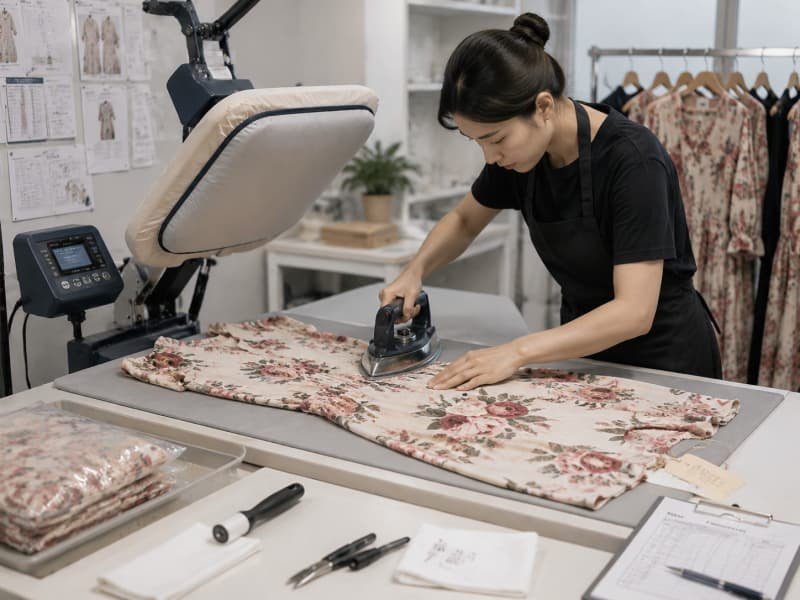
Pressing, Finishing and Surface Protection
Final pressing must suit both the fabric and print. Heat, pressure and direct contact can create shine, flatten texture, transfer ink or leave marks.
Finishing controls may include:
- Temperature setting
- Protective press cloth
- Inside pressing
- Limited pressure over print
- Cooling before stacking
- Surface cleaning
- Thread trimming
- Shape setting
- Hanger or folded presentation
- Print-to-print contact prevention
Garments should cool and stabilize before packing. Freshly heated printed surfaces may stick or mark when compressed.
Final appearance is reviewed under suitable lighting for color, surface defects, garment balance, pressing and overall presentation.
Sample Standards Locked Before Bulk Printing
Artwork and Print Standard Lock
The production print file should match the approved version exactly. File name, revision date, dimensions, orientation, color separation and placement are recorded.
The print standard includes:
- Approved strike-off
- Color references
- Screen dimensions
- Underbase direction
- Print sequence
- Registration reference
- Surface and hand-feel direction
- Placement map
- Size-related rules
- Agreed performance checks
A photographed sample alone cannot replace measurable instructions. Lighting and display screens change color appearance, while photographs do not show exact placement dimensions. Reference samples should be identified and protected. Production teams need access to the correct physical or documented standard throughout printing.
Fabric, Color and Trim Lock
- Fabric supplier and reference
- Composition
- Weight direction
- Width
- Base color
- Approved shade
- Stretch
- Pre-shrink status
- Lining
- Zipper
- Elastic
- Labels
- Packing materials
Measurement and Workmanship Lock
- Measurement chart
- Points of measure
- Tolerance priorities
- Pattern version
- Seam construction
- Stitch requirements
- Hem method
- Lining method
- Closure details
- Placement anchors
- Pressing direction
- Packing presentation
Production Path and Timeline Lock
Bulk orders are divided by style, color, size, quantity, complexity and print requirement.
Each group can then be assigned to an appropriate printing and sewing path.
Duolan’s general bulk-production reference is:
- Simple styles: approximately 15–20 days
- Regular styles: approximately 20–30 days
- Complex styles: approximately 30–45 days
Timing begins after production-critical approvals and material readiness. Artwork changes, strike-off revisions, unavailable fabric, added testing or delayed PP approval can change the schedule.
For multi-style orders, the team can prioritize photo styles, launch-critical styles, commercial core styles or planned partial shipments according to the agreed program.
Screen Print Dress Quality Control Checklist
Quality control follows the approved artwork, strike-off, garment sample, measurement chart and packing instructions. Print and garment standards are checked as one combined product.
| Inspection Point | What Is Checked | Production Stage | Control Evidence |
|---|---|---|---|
| Artwork Version | Correct file, dimensions, orientation and revision | Before screen preparation | Approved artwork record |
| Fabric Base | Composition, color, surface, width and print suitability | Material preparation | Fabric reference and inspection record |
| Color Accuracy | Approved visual reference and acceptable production consistency | Strike-off and bulk printing | Approved strike-off |
| Registration | Alignment between colors, edges, traps and underbase | Strike-off and bulk printing | Registration reference |
| Print Dimensions | Width, height, border depth or repeat size | Printing | Placement specification |
| Print Position | Centering, distance from pattern anchors and size rules | Panel printing and sewing | Placement map |
| Surface Quality | Pinholes, smudges, marks, uneven coverage and contamination | Printing and final inspection | Defect reference |
| Fabric Condition | Heat marks, shrinkage, distortion, shine and damage | After curing | Process check |
| Stretch Behavior | Cracking, opening, recovery and visual distortion where applicable | Development and production check | Approved assessment |
| Garment Measurements | Key points of measure and tolerance priorities | Inline and final inspection | Measurement report |
| Workmanship | Seams, hems, zippers, lining, matching and finishing | Sewing and final inspection | Approved sample and workmanship notes |
| Packing Accuracy | Labels, barcode, folding, polybag, assortment and carton marks | Packing inspection | Packing specification |
When a defect is found, the affected pieces are identified, separated and reviewed according to severity. Correction, re-inspection and necessary project communication take place before the goods move forward.
Third-party inspection or testing can be arranged according to the brand’s required protocol, market and product specification.
Private Label Packaging for Printed Dress Programs

Brand and Size Labels

Care Labels
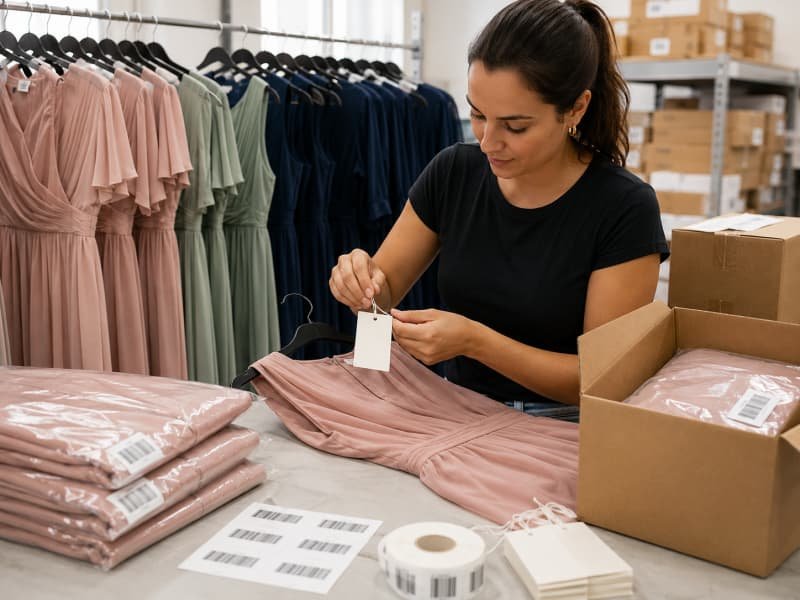
Hangtags and Barcodes

Individual Packing
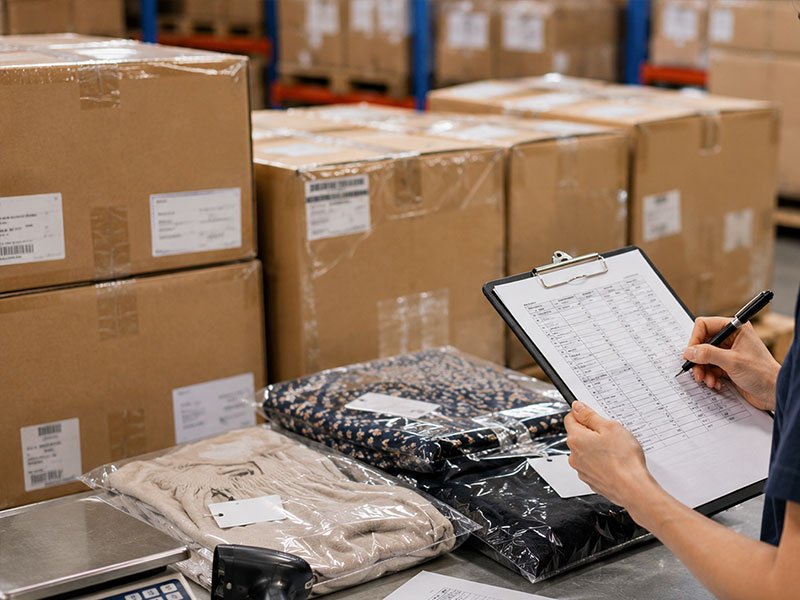
Carton Assortment

Print Surface Protection
Manufacturing Capacity Behind Screen Printed Dress Production
16 Owned Factories
20+ Satellite Factories
150–400 Print Units
300 Sewing Lines
50+ Flexible Lines
15,000–35,000 Samples
Compliance Support for International Fashion Programs
SMETA Audit Foundation
Testing Coordination
Market Standards
Inspection Cooperation
Screen Printed Dress Programs Managed at Collection Scale

US Resort Dress Collection
Market: United States
Brand Direction: Contemporary resort and vacation dresses
Order Structure: 18 styles, 42,000 total garments
Product Mix: 6 mini dresses, 7 midi dresses and 5 maxi dresses
Fabric Direction: Viscose and cotton-blend bases
Print Direction: Six related artwork families across fourteen garment colorways
The main challenge came from using shared botanical artwork across different dress lengths and panel structures. Artwork balanced well on a midi sample but appeared too low on shorter mini styles and too fragmented across tier seams on two maxi styles.
Duolan separated the program into three placement systems:
- Fixed upper-body placements for mini dresses
- Repeat artwork for gathered midi skirts
- Engineered border and panel artwork for maxi silhouettes
Strike-offs were prepared on the selected fabric groups rather than one common test cloth. Pattern anchors were added after base-size fit review, and border positions were checked again after skirt-length corrections.
Bulk standards locked artwork version, fabric base, color reference, print dimensions, size placement, finished length and packing fold.
Outcome: All 18 styles moved into planned production after structured artwork and fit revisions. The range used shared visual language without forcing one placement rule onto every silhouette.

European Jersey Dress Program
Market: Europe
Brand Direction: Graphic fitted dresses and going-out styles
Order Structure: 12 styles, 24,000 total garments
Product Mix: Bodycon minis, fitted midis and long-sleeve jersey dresses
Size Range: Five graded sizes
Print Direction: Front placements, back graphics and selected sleeve details
The central risk involved graphic distortion over bust and hip zones. Initial artwork mockups were created on flat garment outlines, while the selected stretch jersey changed the design considerably when worn.
Duolan reviewed the fabric’s extension and recovery together with garment negative ease. Placement anchors were connected to the neckline and waist rather than the raw panel edge.
The development route included:
- Fabric and print strike-off
- Base-size first sample
- Worn fit and stretch review
- Pattern correction
- Graphic proportion adjustment
- Selected graded-size review
- Pre-production approval
Bulk inspection included relaxed graphic appearance, placement measurements, workmanship, key garment measurements and controlled stretch observation.
Outcome: Twelve styles entered production after two structured sample rounds. A shared fit base supported future color and artwork extensions while preserving style-specific placement instructions.

Australian Printed Maxi Program
Market: Australia
Brand Direction: Vacation maxi and day-to-evening dresses
Order Structure: 26 styles, 68,000 total garments
Product Mix: Halter maxis, tiered maxis, relaxed columns and gathered-waist dresses
Print Direction: Border prints, vertical panels and coordinated repeats
The project combined long skirt panels with multiple border depths and several directional motifs. The main production concerns were uneven border level, inconsistent panel direction and visible interruption at waist and tier seams.
Duolan grouped the range by construction rather than artwork name:
- Straight-panel maxi dresses
- Gathered-waist dresses
- Tiered constructions
- Asymmetric or side-slit styles
Each group received a separate cutting and placement map. Finished lengths were confirmed before the border standard was locked. Printed fabric was inspected by lot, while directional panels were cut and numbered in matched bundles.
Packing instructions were adjusted so the lower border did not remain under excessive pressure during transport.
Outcome: The 26-style program moved through coordinated bulk production with separate control standards for straight, gathered and tiered constructions. The system also preserved repeat information for later color extensions and replenishment planning.
Screen Print Dress Frequently Asked Questions
- Tech pack
- Front and back sketches
- Artwork files
- Placement mockups
- Measurement chart
- Fabric direction
- Color references
- Size range
- Quantity by style and color
- Sample purpose
- Launch date
- Label and packing instructions
- Testing requirements

Start Your Screen Print Dress Development
Send your artwork, tech pack, dress references or collection brief for an initial development review. Duolan will assess the relationship between artwork, fabric, pattern construction, placement, size range, sample purpose and planned production volume before confirming a suitable route.
A useful project brief should include:
- Company or brand name
- Website and target market
- Dress categories and number of styles
- Artwork files and placement mockups
- Preferred fabric, weight and hand feel
- Garment measurements and size range
- Quantity by style, color and size
- Required sample type
- Target campaign or launch date
- Label, barcode and packing requirements
- Quality, inspection or testing standards
- Shipping destination and delivery window
Files may include AI, EPS, SVG, PDF, PSD, high-resolution artwork, tech packs, measurement charts, reference images, print maps and existing sample comments.
After reviewing the information, Duolan can identify missing development inputs, likely print risks, sample requirements and the production-critical standards needed before bulk planning.


