Skip to content

Sculpted Dress Development
Engineered silhouettes developed through fabric behavior, pattern control, internal support, fit review, and disciplined sample-to-production translation.
- 6 shape-control zones: bust, underbust, waist, hip, shoulder/back, and hem must work as one silhouette rather than six isolated measurements.
- 4 structural inputs: main fabric, pattern geometry, internal support, and finishing determine whether volume stays intentional without making the dress rigid.
- 3 approval gates: visual shape, wearing fit, and production readiness are reviewed separately before a sculpted style moves into bulk planning.
What Defines a Sculpted Dress Silhouette?
A sculpted dress does more than follow the body. Shape is deliberately engineered through pattern geometry, material behavior, controlled volume, support components, and fit balance. The development method changes according to whether the design needs contour, compression, rigid volume, drape, or mixed construction.
| Dress Direction | How Shape Is Created | Primary Development Control | Main Risk |
|---|---|---|---|
| Bodycon Dress | Fabric stretch follows body contours | Negative ease, recovery, opacity | Over-compression or shape loss |
| Corset Dress | Bodice reshapes and supports torso | Cups, panels, boning, closure | Cup distortion or pressure |
| Structured Dress | Fabric and internal layers maintain form | Pattern, interlining, pressing | Rigidity or collapsed edges |
| Draped Dress | Controlled folds create three-dimensional form | Grain, drape, fold volume | Unbalanced folds or bulk |
| Sculpted Dress | Pattern, material and support intentionally build a new silhouette | Shape engineering across the full garment | Sample shape cannot be repeated in production |
Six Sculpted Dress Directions for Collection Development
Sculpted silhouettes can be commercial without becoming costume-like. Development starts by identifying where visual volume belongs, how the body remains balanced, and which construction method can reproduce the intended shape across samples, sizes, colorways, and later production.
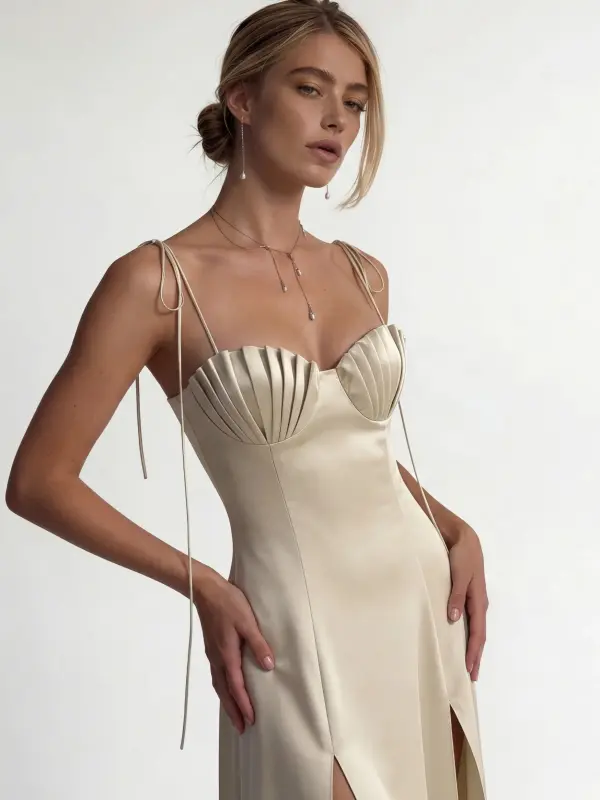
Sculpted Bust Form
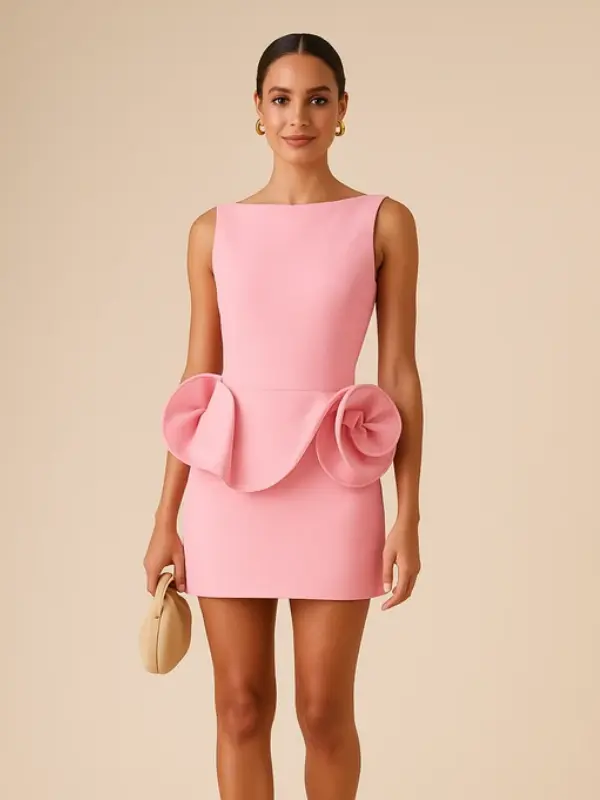
Defined Waist Architecture

Sculpted Hip Contour
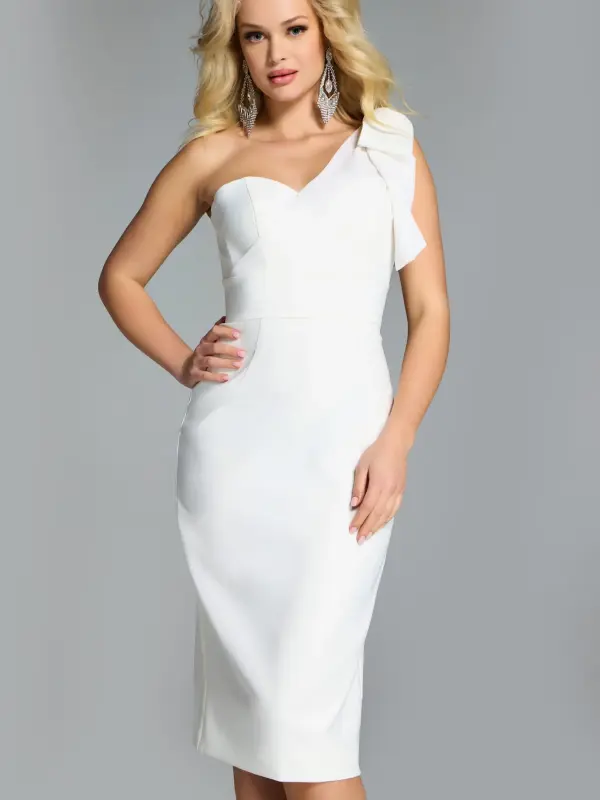
Asymmetric Shoulder Form
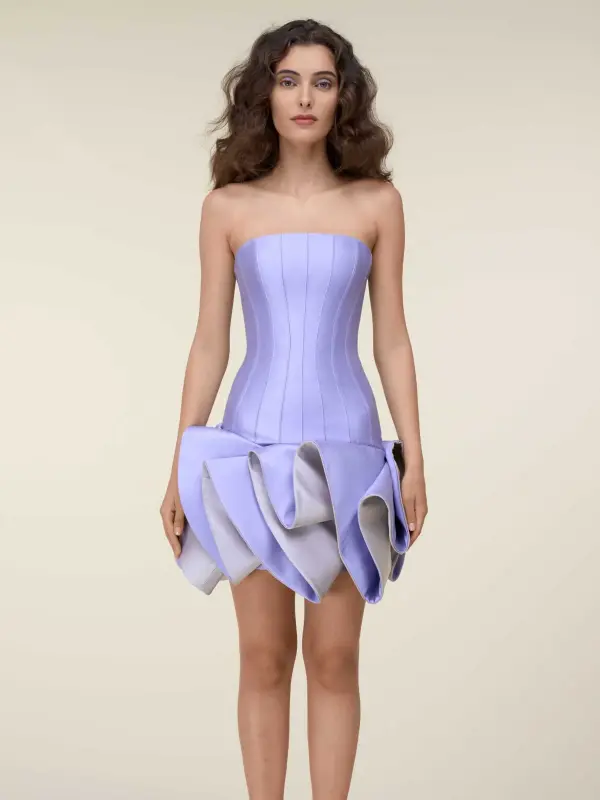
Structured Skirt Volume
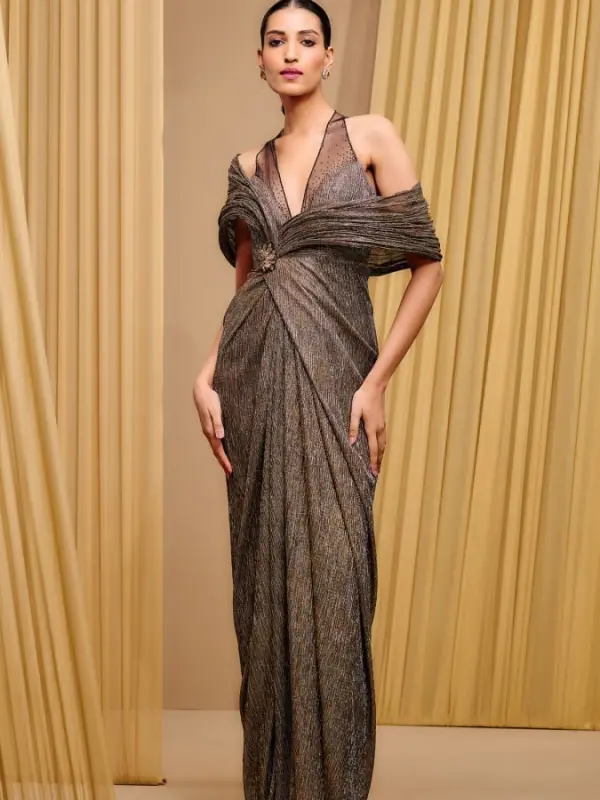
Controlled Draped Sculpture
Six Failure Points in Sculpted Dress Development
Silhouette Collapse
Fabric Mismatch
Support Failure
Fit Imbalance
Grading Distortion
Bulk Shape Drift
From Design Brief to Production-Ready Sculpted Dress
A sculpted style becomes manageable when every development stage answers a specific question. Duolan moves from visual interpretation into material, pattern, fit, sample, revision, and production preparation so unresolved shape decisions do not travel unnoticed into bulk manufacturing.
Design Basis Review
Shape Feasibility Review
Material Direction
Main fabric, lining, interlining, cups, boning, zipper, elastic, edge support, and other structural components are considered as one material system. Fabric is reviewed for weight, drape, stretch, recovery, opacity, surface behavior, and ability to hold shape. For reference-led development, several material directions may be compared before the first sample.
Material decisions are tied to silhouette result and production stability rather than choosing the closest visual fabric without considering construction performance.
Pattern and Draping
First Sample Review
The first sample is evaluated as a development tool rather than a finished product. Review focuses on whether the silhouette reads correctly, whether fabric behaves as expected, whether support is sufficient, and whether bust, waist, hip, shoulder, and hem proportions are balanced. Front, side, and back photographs help separate visual problems from measurement problems. The review also identifies construction points that need adjustment before the next sample rather than pushing unresolved issues toward production.
Fit and Revision
PP Readiness
Bulk Transition
Before full production release, shape-sensitive styles may require first-piece confirmation, a pilot check, or verification of high-risk operations. Production planning considers style complexity, material route, critical construction points, quantity, and delivery timing. The objective is to carry the approved silhouette into repeated cutting, sewing, pressing, inspection, and packing. Development information remains active during production rather than ending when the sample is approved.
Engineering a Sculpted Silhouette Without Losing Wearability
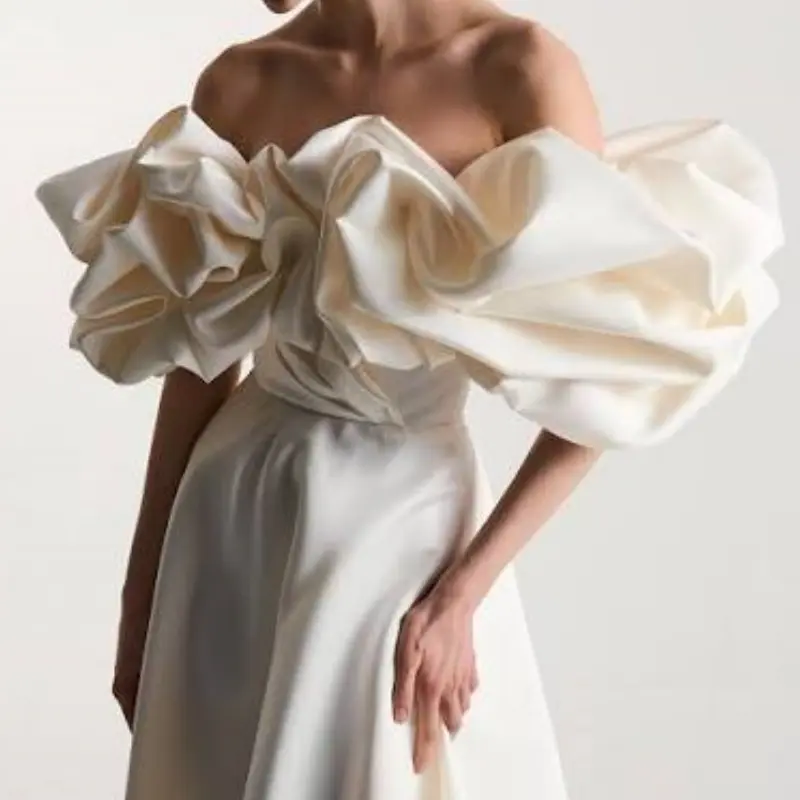
Exterior Shape Starts With Body Balance and Pattern Geometry
Silhouette target: The first technical decision is not “make it tighter” or “make it stiffer.” The team defines where volume begins, where the body is compressed or released, where the eye should read the waist, and how front, side, and back views connect. A strong bust with a narrow waist may need a different hip release from a straight sculptural mini. A dramatic shoulder may require a calmer skirt line to keep the whole look balanced.
Pattern geometry: Darts, princess seams, curved panels, seam angles, pleats, godets, shaped inserts, and grain direction create different kinds of volume. Pattern lines should serve the silhouette rather than divide the garment randomly. Around the bust and waist, small seam-position changes can alter cup projection, torso length, side profile, and pressure distribution.
Movement allowance: Sculpted does not mean immobile. Sitting, walking, raising an arm, turning, and using a zipper all introduce forces into the garment. Hip ease, slit position, armhole shape, back width, upper-edge stability, and hem opening should be reviewed against intended wearing conditions.
Grading logic: A shape feature must keep its visual identity as sizes change. Bust position, waist level, shoulder volume, neckline depth, and hip shaping may need controlled grade rules rather than simple geometric enlargement. The objective is a consistent design language, not identical dimensions.
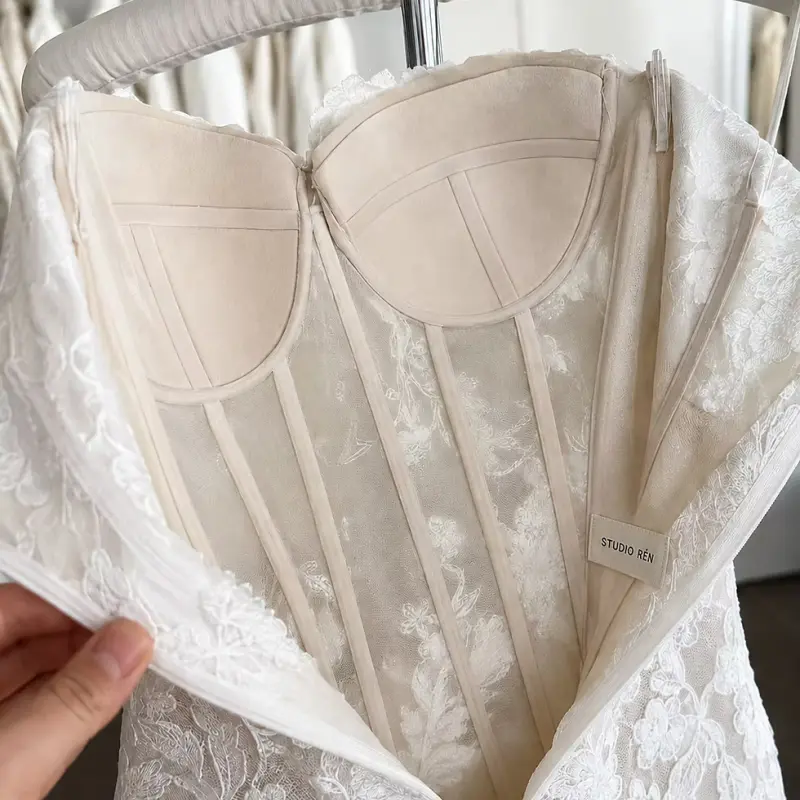
Internal Engineering Keeps the Shape Clean Instead of Hard
Support map: Internal components are assigned according to load. Boning can stabilize a bodice or waist but should not compensate for a weak pattern. Interlining can support a neckline, zipper edge, waist area, or architectural panel. Cups may create projection or coverage. Anti-slip tape can stabilize a strapless upper edge. Each component has a job.
Layer relationship: Main fabric, interlining, lining, and support should move together without creating bubbles, visible ridges, excessive seam thickness, or unwanted stiffness. A thin outer fabric may require discreet stabilization; a firm bonded fabric may need less reinforcement but more careful seam and pressing control.
Construction sequence: Sculpted areas are sensitive to order of assembly. Support channels, cup attachment, lining connection, closure installation, seam pressing, and final shaping need a repeatable sequence. Late corrections can change the silhouette or make internal finishing bulky.
Finishing: Pressing is part of shape engineering. Curved seams, waist transitions, pleats, edges, and volume panels can gain or lose form through heat, pressure, and handling. Production instructions should distinguish areas that need crisp definition from areas where excessive pressing would flatten the intended shape.
Production control: The final silhouette is translated into measurable references: critical measurements, symmetry points, support placement, seam location, fold depth, pleat quantity, hem level, and visual checkpoints. A sculpted garment becomes scalable only when production teams can reproduce the design without relying on one sample maker’s memory.
Matching Fabric Behavior to Sculpted Dress Shape
Build Structure Without Making the Dress Feel Rigid
Fabric body: Crepe, bonded constructions, compact wovens, structured satin, certain jacquards, scuba-like materials, and other stable surfaces can support clean lines, but stiffness alone does not create a refined sculpted silhouette. Excess rigidity can make armholes uncomfortable, create sharp seam ridges, restrict sitting, or cause the dress to stand away from the body in unintended areas.
Thickness and seam bulk: Curved bodice panels and narrow waist constructions can contain multiple seam layers. A material that looks clean as a flat swatch may become bulky where seam allowances, lining, interlining, boning channels, or zippers meet. Development samples should test high-density construction areas before the entire style is locked.
Pressing response: Heat and pressure affect surface shine, seam flattening, edge definition, shrinkage, and final shape. Structured fabrics may need controlled pressing stages rather than one heavy final press. Sensitive surfaces should be tested before production instructions are confirmed.
Commercial balance: A sculpted look needs enough body to hold the design, but the garment still needs comfort, recoverability after packing, and a finish appropriate for the brand’s retail position. The strongest material is rarely the automatic choice. The correct material is the one that produces the intended form with manageable construction and repeatable bulk performance.
Control Stretch, Recovery and Contour on Fitted Forms
Stretch direction: Sculpted fitted dresses often combine visual shaping with body movement. Stretch percentage alone is not enough. Direction, resistance, and recovery determine whether the waist remains defined, the bust keeps support, and the hip line returns after sitting.
Negative ease: Stretch materials allow measurements smaller than the body, but excessive negative ease creates compression marks, seam strain, transparency, zipper distortion, or uncomfortable pressure.
Recovery: A fabric may stretch easily yet fail to return. Weak recovery leads to bagging at the hip, waist, seat, neckline, or underarm after wear. Recovery testing becomes particularly important when sculpted shape relies partly on fabric tension.
Layer compatibility: Stretch outer fabrics require compatible lining, interlining, elastic, and seam construction. A rigid lining inside a highly elastic shell can restrict movement and distort the outer silhouette. A lining that stretches too freely may provide insufficient support.
Size range: As body dimensions increase, the relationship between fabric tension, bust support, waist compression, and hip movement changes. Fit review across the intended size range should confirm whether the same material construction can preserve the design language without creating unsafe openings or excessive pressure.
Use Lightweight Layers for Volume Without Excess Bulk
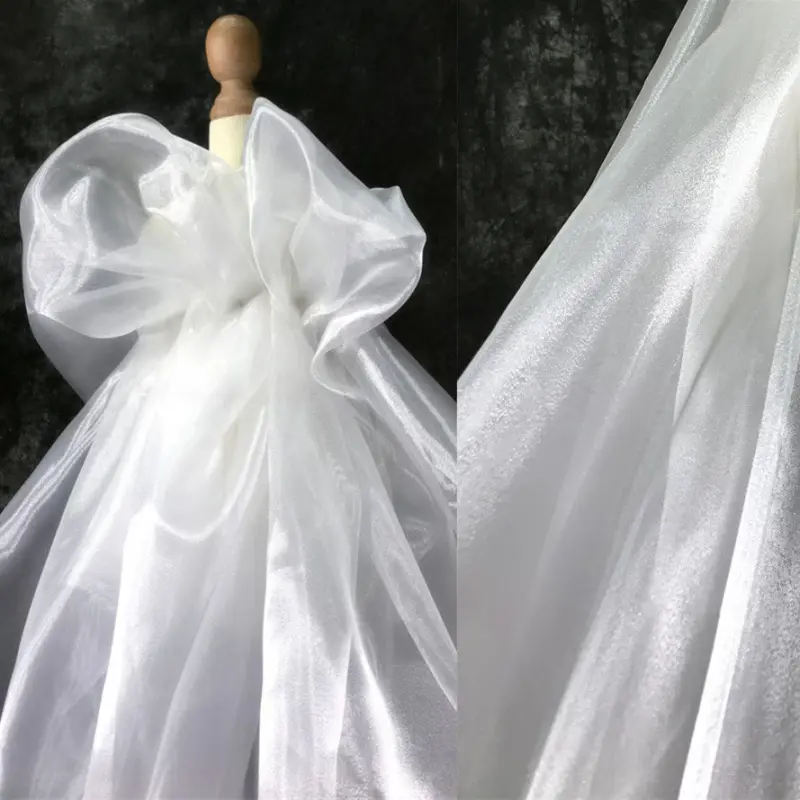
Organza and tulle roles: Lightweight structure can create shoulder forms, skirt volume, peplums, bubble effects, internal lift, or layered architectural shapes. Soft and firm variants behave differently. Layer count, grain, edge finish, and attachment points determine whether the volume looks deliberate or puffy.
Transparent structure: Lightweight materials often reveal internal construction. Lining color, seam finish, support placement, and edge treatment become visible design decisions. Sculpted transparent panels require especially clean attachment and coverage planning.
Volume recovery: A garment may leave the factory with the correct shape but lose volume after folding and shipment. Material memory, packing method, steam recovery, and final finishing should be considered during development. Large sculptural forms may need packing trials rather than assuming the showroom silhouette will survive transport unchanged.
Weight distribution: Adding layers to create shape also adds weight at seams and waist joins. Development should avoid concentrating too much material at one construction point. Controlled volume can often be achieved through shape, stiffness, and placement rather than simply increasing fabric quantity.
Hidden Support Systems Behind Sculpted Dress Construction
The exterior silhouette only shows the final result. Inside, lining, interlining, cups, boning, closures, and stabilizing trims manage tension and shape. Each component should solve a defined structural problem without creating bulk, discomfort, visible ridges, or unnecessary rigidity.
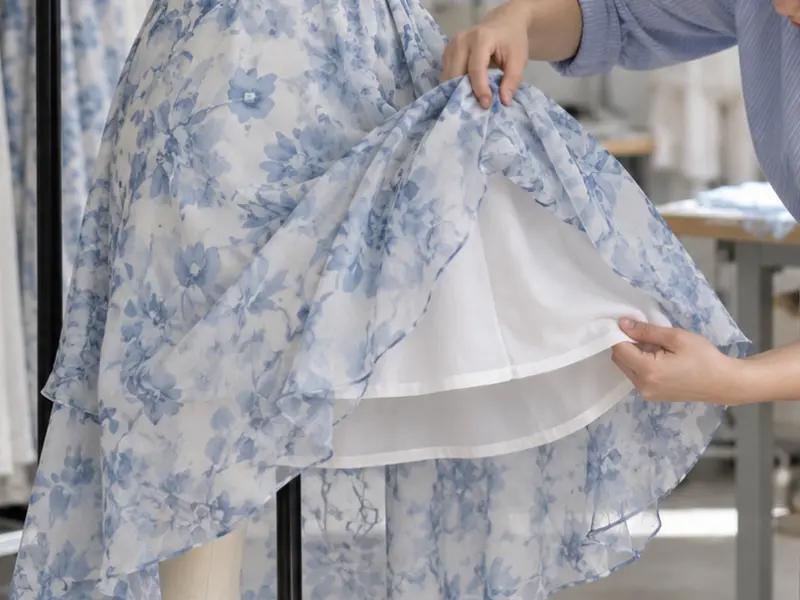
Lining System
Lining controls more than opacity. It affects skin feel, movement, color depth, zipper stability, internal seam protection, and how the outer layer falls over the body. A sculpted dress may require stretch lining in a fitted zone and a more stable lining around a structured bodice. Lining length and attachment points also influence hem movement and slit behavior. The goal is an interior layer that supports the outer design without pulling against it, showing through it, or becoming visible around openings.
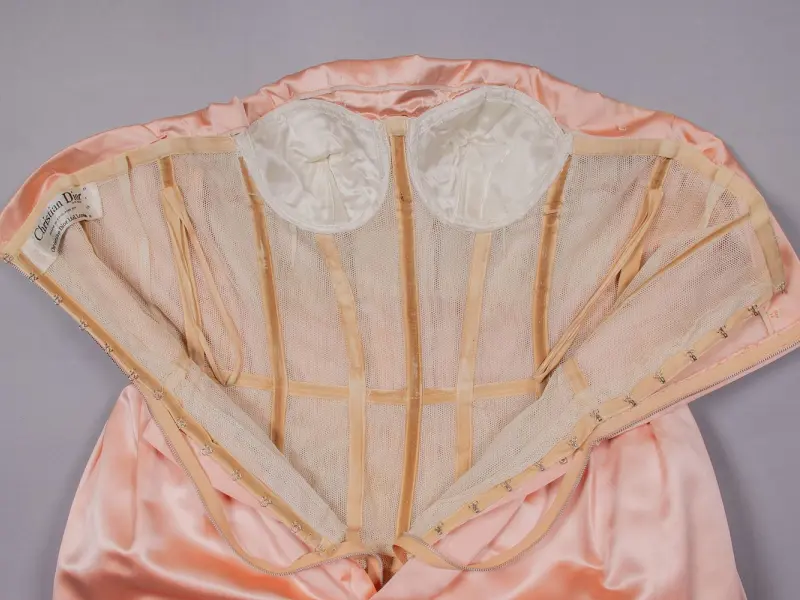
Interlining Control
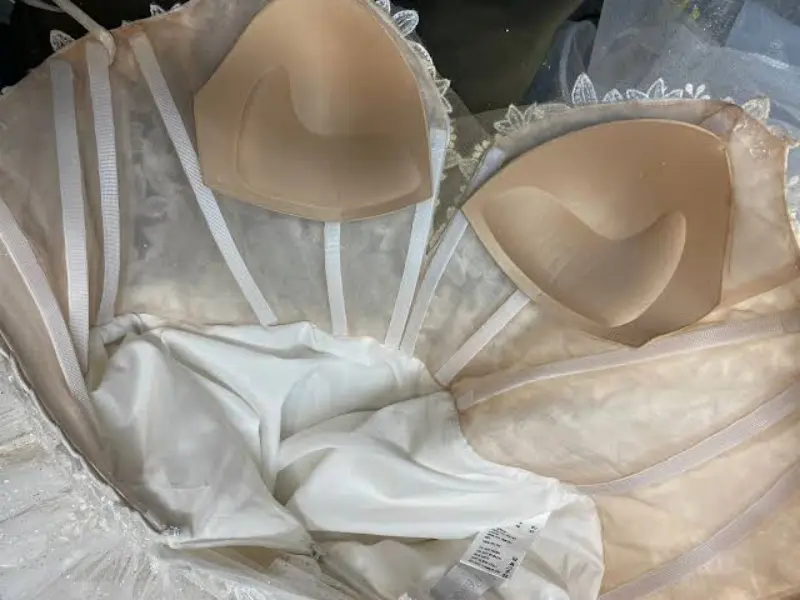
Cups and Bust Shape
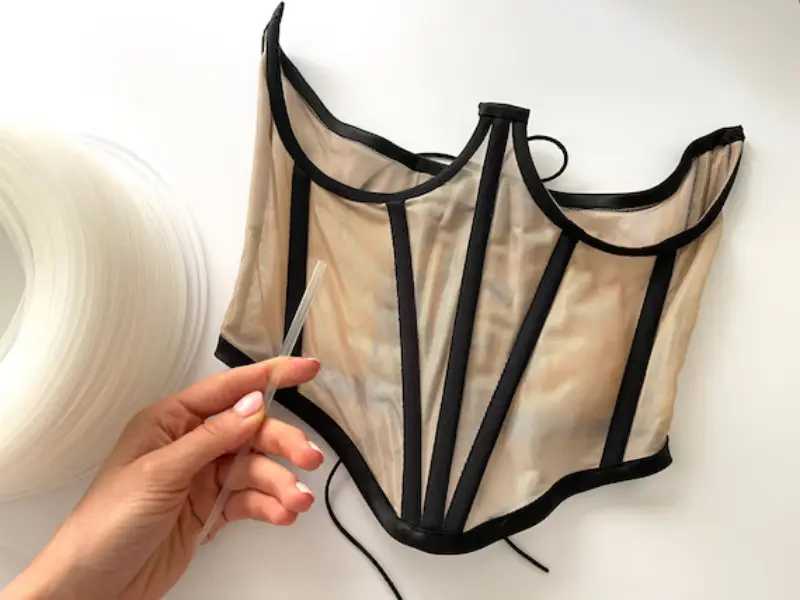
Boning and Channels
Boning can stabilize a strapless upper edge, support a defined waist, keep a bodice from collapsing, or control vertical tension. Plastic, spiral steel, flat steel, softer support strips, and different channel constructions create different effects. Length and placement matter as much as material. Boning positioned too high can dig into the body; too short may fail to support the form. Channels must stay smooth, secure, and consistent so the internal structure does not twist or become visible through the outer garment.
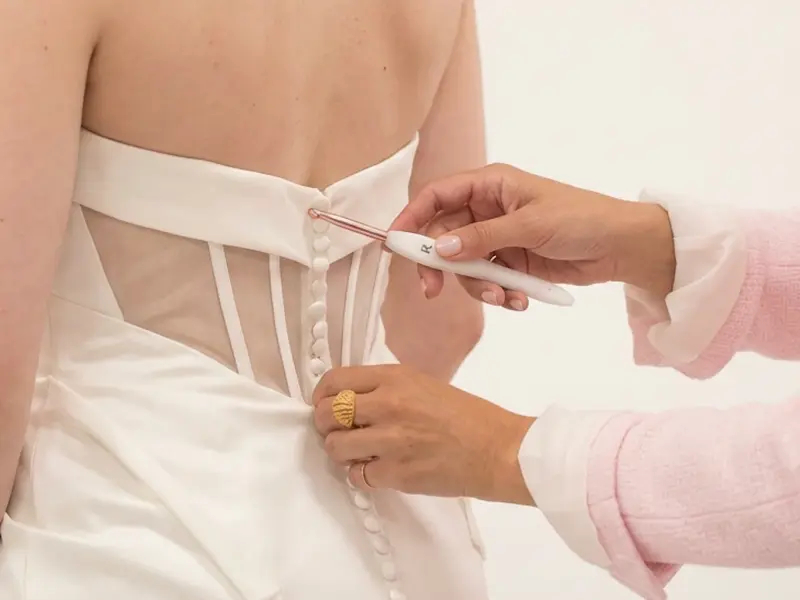
Closure Reinforcement
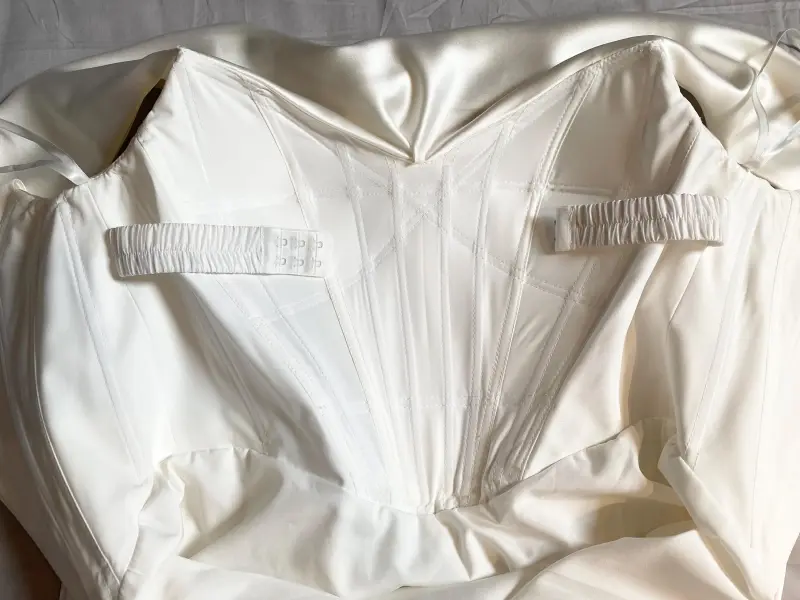
Stabilizing Components
Anti-slip tape, waist stays, elastic, internal hooks, shaped facing, edge tape, power mesh, or reinforcement patches can solve specific movement and support problems. Their value comes from placement, not quantity. A strapless sculpted dress may need upper-edge stabilization; an open-back design may need hidden tension management; a heavy skirt may need support at the waist seam. Hidden components should improve wearing confidence while remaining comfortable, visually clean, and repeatable enough for production teams to apply at controlled positions.
Pattern Making and Draping for Three-Dimensional Dress Shapes
Pattern Engineering Turns Visual Shape Into Controlled Garment Geometry
Silhouette mapping: Pattern work begins by identifying where the garment follows the body and where it departs from the body. Bust projection, waist suppression, hip release, shoulder width, neckline height, back shape, and hem volume are mapped together. A sculpted style cannot be developed accurately by adjusting isolated circumferences without considering the entire body balance.
Seam architecture: Princess seams, darts, curved panels, side seams, waist seams, shoulder seams, and shaped inserts control how two-dimensional fabric wraps into a three-dimensional form. Their positions affect both appearance and engineering. Moving a seam by a small distance can change bust projection, waist definition, support placement, and sewing difficulty.
Fabric response: Pattern dimensions should respond to material behavior. Stable woven fabrics, stretch constructions, bonded materials, satin-like surfaces, mesh layers, and stiff lightweight fabrics require different ease, seam allowance, support, and edge strategies. A pattern developed for one fabric should not automatically be transferred to another without review.
Revision discipline: Fit comments become effective when they return to the pattern. “Waist looks loose” may involve side seam shape, dart intake, fabric stretch, or torso length. “Bust feels unsafe” may involve neckline, cup position, underbust level, side coverage, support, or shoulder balance.
Production link: Once the pattern is stable, it becomes the foundation for grading, marker planning, cutting, PP approval, measurement control, and repeat orders.
Draping Solves Volume, Fold and Balance Before They Become Sewing Problems
When draping matters: Draping becomes valuable when the silhouette contains complex folds, twisted waists, asymmetric volume, unusual shoulder forms, curved bodices, sculpted hips, bias behavior, layered structure, or shapes difficult to predict fully on a flat screen.
Volume control: Draping is not random fabric arrangement. Fold depth, direction, anchor position, grain, entry point, release point, and interaction with seams are recorded. A fold that looks attractive from the front may create unwanted bulk at the side or back. Three-dimensional review exposes those conflicts before a final production pattern is set.
Support relationship: Soft draping and rigid support often need to coexist. A sculpted bodice may use a stable inner base with a softer outer fold. An asymmetric shoulder may require invisible anchoring. A hip drape may need a clean foundation layer to keep the body contour controlled under decorative volume.
Returning to the pattern: Draping only becomes scalable when the approved shape is translated back into measurable pattern pieces, notches, fold marks, pleat quantities, seam positions, and sewing instructions. The finished production pattern should capture the visual decision made on the form.
Visual review: Front, side, back, and movement views are compared because sculptural volume can look correct from one angle and unbalanced from another. Photographs, measurements, and marked muslin or sample sections help preserve the intended shape during later revisions.
Fit Review for Sculpted Bust Waist and Hip Balance
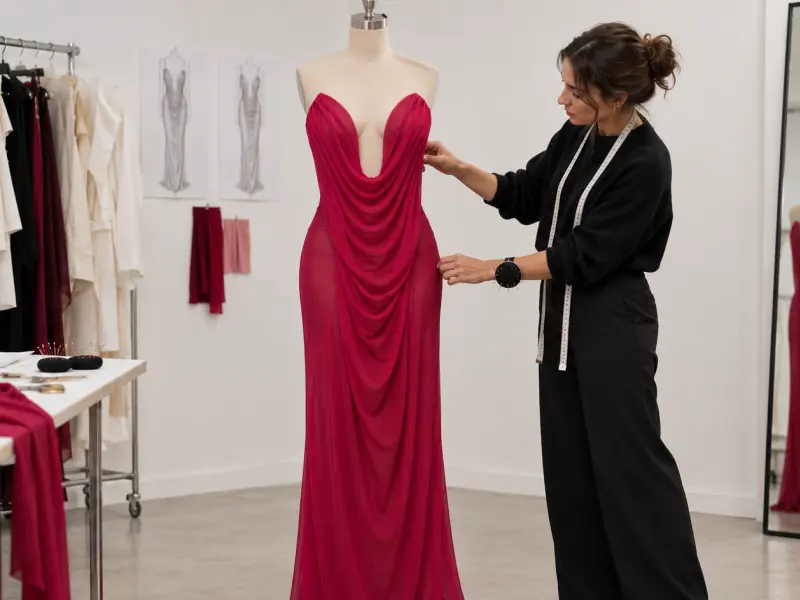
Mannequin Shape Review
- Review exterior silhouette before isolated measurements.
- Check symmetry and panel position.
- Mark collapsing, twisting, or over-built areas.
- Record structural points before live fitting.
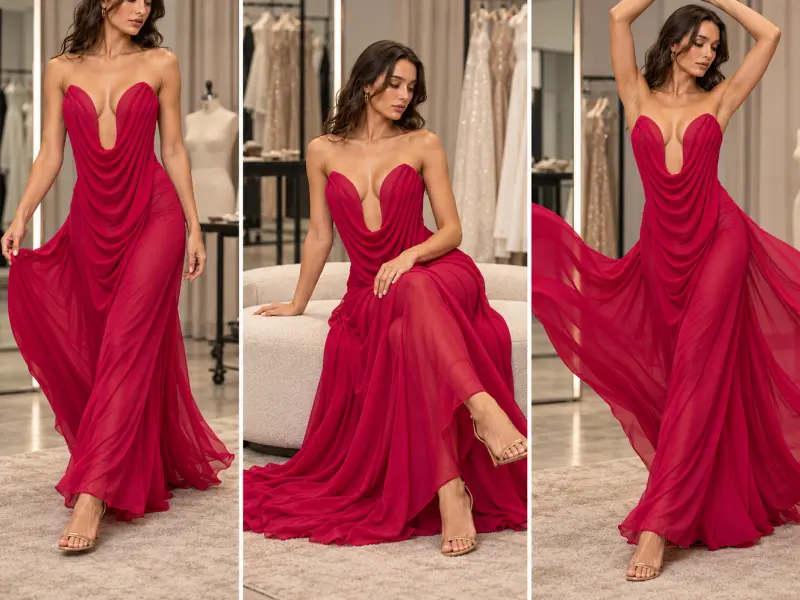
Live Wearing Review
- Test movement relevant to the intended wearing occasion.
- Check whether support remains in position.
- Separate visual compression from uncomfortable compression.
- Record movement-related pattern or support corrections.
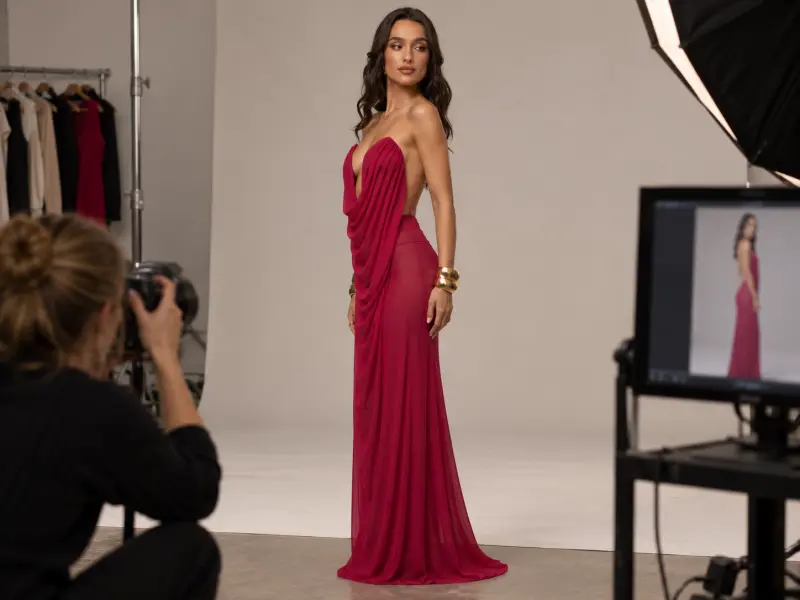
Photo and Profile Review
- Capture front, side, back, and three-quarter angles.
- Compare intended and actual visual focal points.
- Review seam shadows and fabric reflections.
- Identify corrections that improve shape without overfitting.
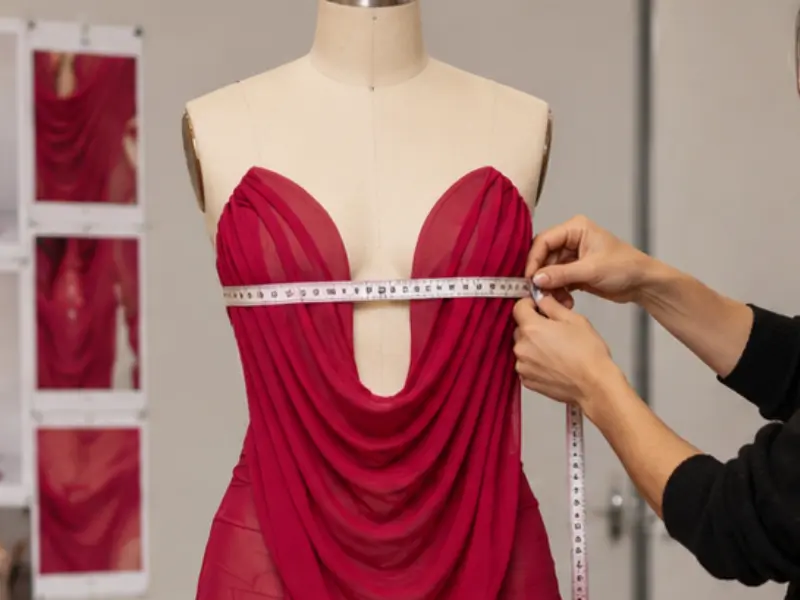
Measurement and Comment Review
Measurements turn fit observations into technical actions. Critical points may include bust, underbust, waist, high hip, full hip, body length, cup position, neckline height, strap length, back opening, slit height, hem opening, and support length. Tolerances should reflect how sensitive each point is to the finished silhouette. Comments are then separated into pattern, measurement, fabric, support, workmanship, and visual issues before revision.
- Convert comments into measurable adjustment points.
- Update pattern rather than only altering the sample.
- Maintain a revision record between versions.
- Carry approved critical measurements into PP and QC.
Sculpted Dress Sampling With Clear Approval Stages
Sampling should move a sculpted design closer to a decision, not simply produce more versions. Prototype, fit, visual, and pre-production stages have different purposes. Development comments are tracked so shape, material, support, measurements, and construction become progressively clearer before production planning begins.
First Prototype
The first prototype tests whether the design direction can become a convincing three-dimensional garment. The main questions are silhouette proportion, material response, support concept, construction route, and major fit balance. Fine finishing is not allowed to hide structural problems. For a sculpted style, the first version should expose whether bust, waist, hip, shoulder, or skirt volume is being created by the correct method.
- Review shape before cosmetic refinements.
- Confirm whether fabric body is suitable.
- Identify missing or excessive support.
- Record high-risk points for revision.
- Decide whether draping or pattern reconstruction is needed.
Fit Sample
- Check front, side and back balance.
- Test standing, sitting and movement.
- Update critical measurements.
- Return corrections to the pattern.
- Reconfirm support after fit changes.
Visual or Photo Sample
- Review silhouette under camera angles.
- Check reflection, seams and surface pressure.
- Photograph construction details for records.
- Separate photo-only finishing from production standards.
- Keep materials and pattern direction aligned with bulk planning.
PP and Production-Ready Sample
- Lock approved pattern and grade basis.
- Confirm fabric, lining and structural components.
- Record critical workmanship points.
- Define PP approval references.
- Transfer shape-sensitive checkpoints into QC.
Workmanship Details That Preserve a Sculpted Silhouette
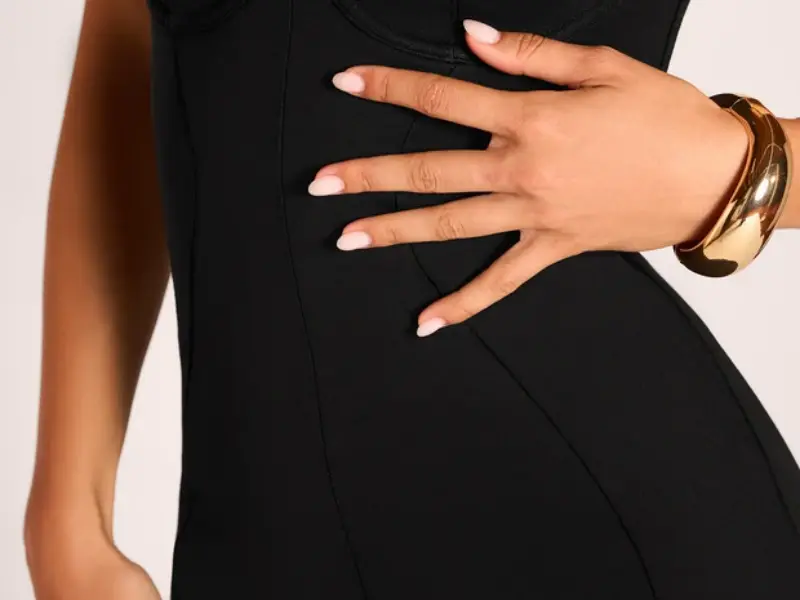
Structural Seam Control
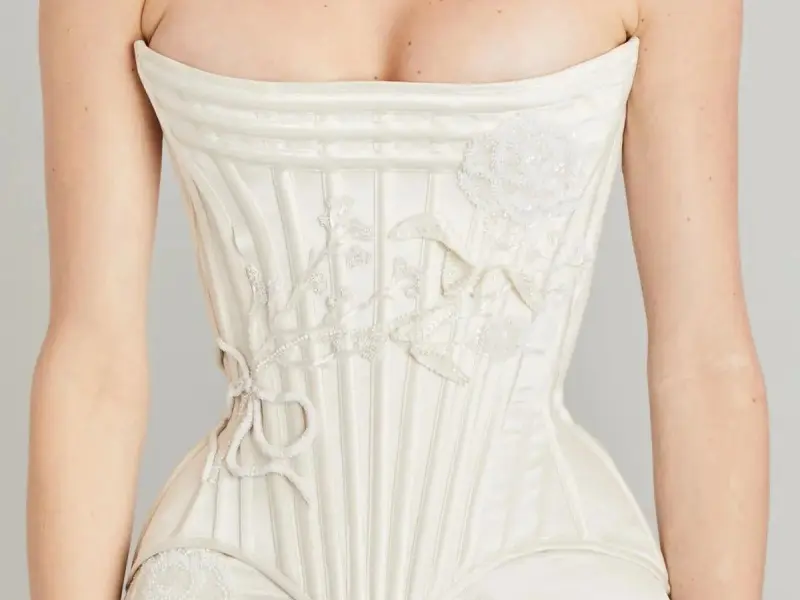
Boning Channel Finish
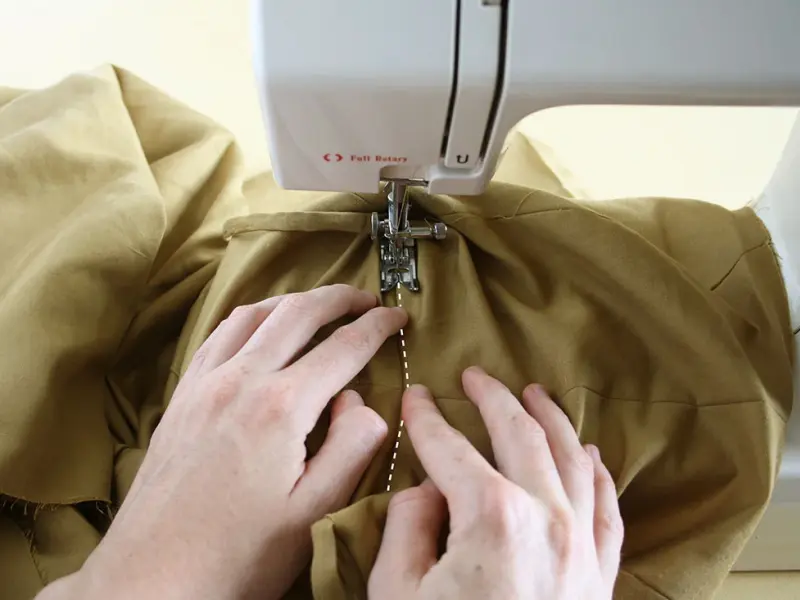
Lining Attachment
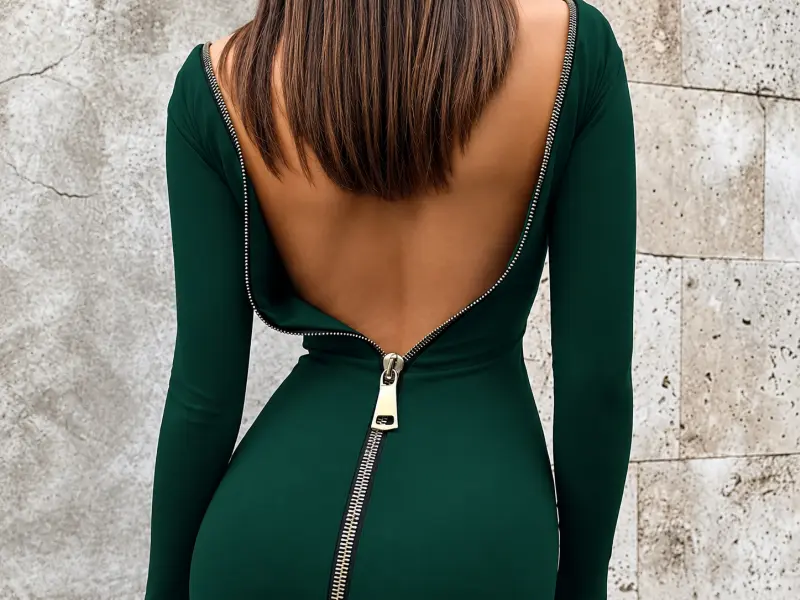
Closure Stability
Zippers and other closures must handle the tension created by a fitted or supported silhouette. Zipper tape should stay flat, center lines should remain straight, and seam matching across the closure should preserve the waist and panel architecture. Reinforcement may be needed around upper zipper points or high-tension areas. A closure that shifts even slightly can create visible asymmetry, distort the back, or change the pressure distribution around a sculpted bodice.
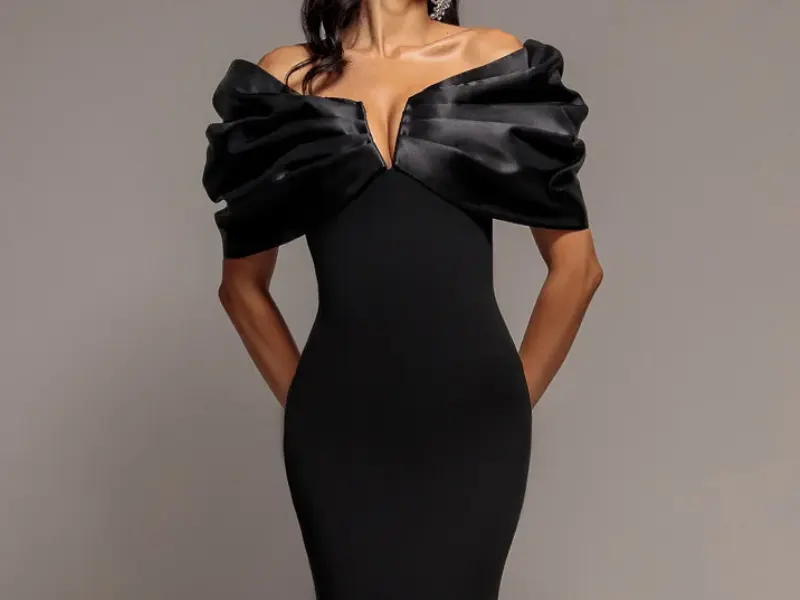
Symmetry and Placement
Sculpted designs often use strong visual lines, making small placement differences easy to see. Cup spacing, boning position, seam angles, shoulder forms, hip volume, pleats, darts, and hem points need agreed reference positions. Asymmetric designs still require controlled internal logic: the intended asymmetry must remain consistent from piece to piece. Production inspection should distinguish designed imbalance from uncontrolled sewing variation and use pattern marks or measurable positions where needed.
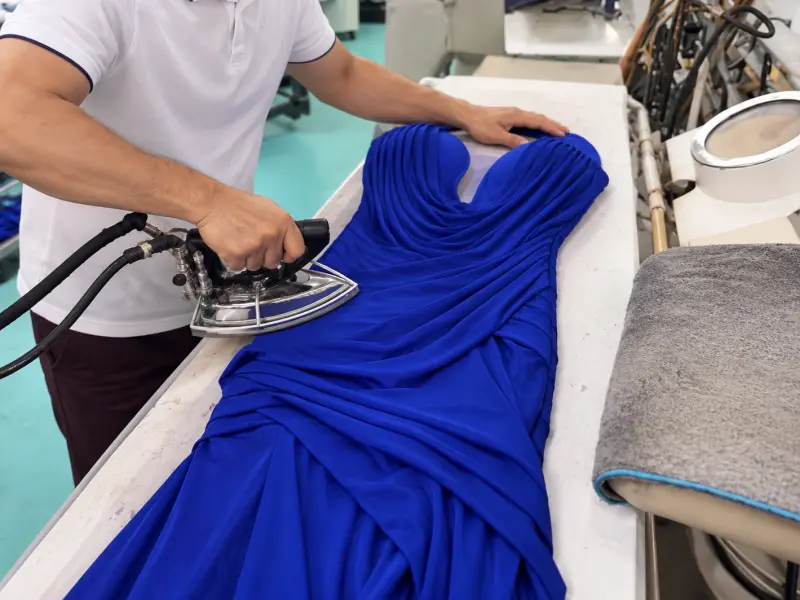
Pressing and Final Form
Pressing determines how seams settle, curves open, folds hold, and edges remain defined. Too much pressure can flatten sculptural volume or create shine; too little can leave bulky seam transitions and uneven surfaces. Pressing stages should follow construction order, especially around bust curves, waist shaping, folded structures, and supported hems. Final inspection checks the garment after pressing and hanging, because shape can change once heat, gravity, and internal layers settle.
Moving Sculpted Samples Into Controlled Bulk Production
Bulk Readiness Locks the Shape Before the Line Starts
Approval status: The team first separates visual approval, fit approval, and PP readiness. A sample can look close to target while still containing unresolved production questions. Those points should be identified before fabric cutting begins.
Material locking: Main fabric, lining, interlining, boning, cups, zippers, elastic, reinforcement, and other critical components are checked against the approved direction. Color, weight, handfeel, stretch, recovery, opacity, structure, and relevant batch differences can all influence the final silhouette.
Pattern and measurements: Approved pattern status, size breakdown, grading basis, critical measurement points, tolerances, and symmetry references are aligned. Shape-sensitive dimensions receive more attention than low-impact measurements.
Workmanship: Seam construction, support channels, closure installation, lining attachment, folds, pleats, structural edges, and pressing requirements are recorded before line release. A sample detail that required individual hand judgment should be converted into a repeatable instruction or inspection point.
Commercial timing: Duolan’s general bulk reference is 15–20 days for simple styles, 20–30 days for regular styles, and 30–45 days for complex styles after the production basis is ready. Sculpted dresses normally sit toward the complex end because material preparation, support construction, PP confirmation, pilot validation, or additional inspection may be needed.
First-Piece and Pilot Checks Reduce Shape Drift Before Full Release
First-piece confirmation: A first finished unit or controlled early quantity can be reviewed before the line produces at full speed. The aim is to compare shape, measurements, support, seam quality, closure, and pressing against the approved basis.
Critical operation review: High-risk operations may include cup assembly, boning channels, shaped seam joining, asymmetric volume placement, structured neckline construction, layered support, zipper installation, and final pressing. Early verification allows correction while the production volume is still manageable.
Shape comparison: Front, side, back, symmetry, waist level, bust position, hip contour, shoulder volume, and hem balance are checked. Where visual shape cannot be controlled by one measurement, photographs or approved reference points can support inspection.
Production feedback: Problems found during the pilot stage return to production instructions, pattern notes, sewing method, pressing process, or QC checkpoints. A correction is useful only when it reaches every relevant operator and inspector.
Release decision: Full production proceeds when the major sculpted features can be repeated with the required stability. The goal is not a perfect first unit; the goal is identifying and controlling variation before thousands of garments are affected.
Quality Control for Shape-Sensitive Sculpted Dress Production
Silhouette Consistency
Critical Measurements
Support Placement
Symmetry and Design Placement
Material and Surface
Final Form and Packing
The finished dress is reviewed after pressing, hanging, labeling, and packing preparation. Strong structures should remain balanced after handling. Sensitive volume, pleats, bust shapes, or supported edges may need packing methods that reduce crushing. Final checks also confirm labels, size marking, garment orientation, protective materials, and carton arrangement so the approved shape is not lost during the final delivery stage.
Evidence From Sculpted Dress Development and Production
Development evidence should show decisions, not only finished garments. Material, pattern, form work, internal construction, revisions, PP preparation, first-piece checks, and final inspection create a traceable visual path from design intention to production-ready execution.
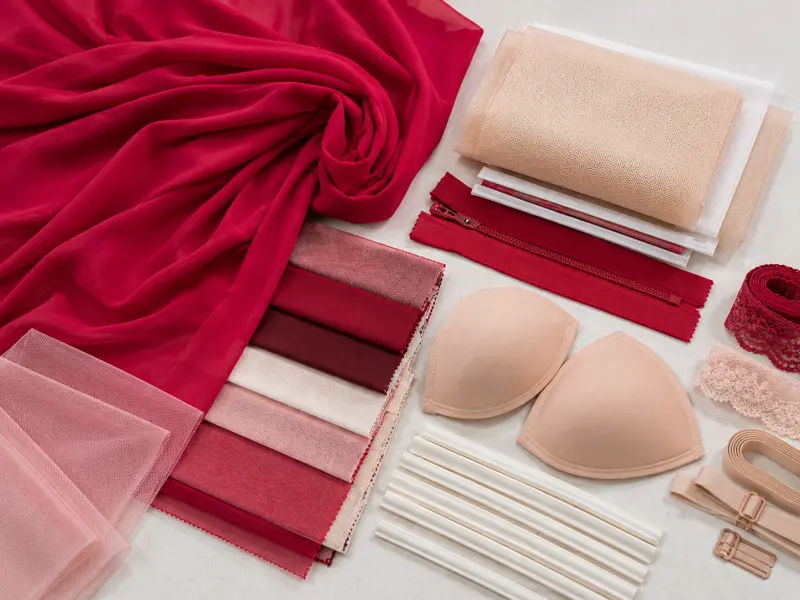
Material Review
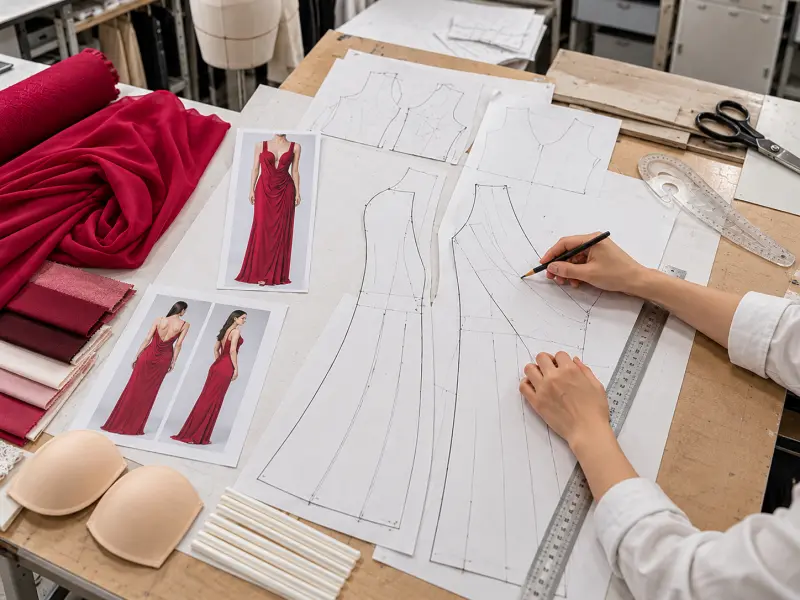
Pattern Development
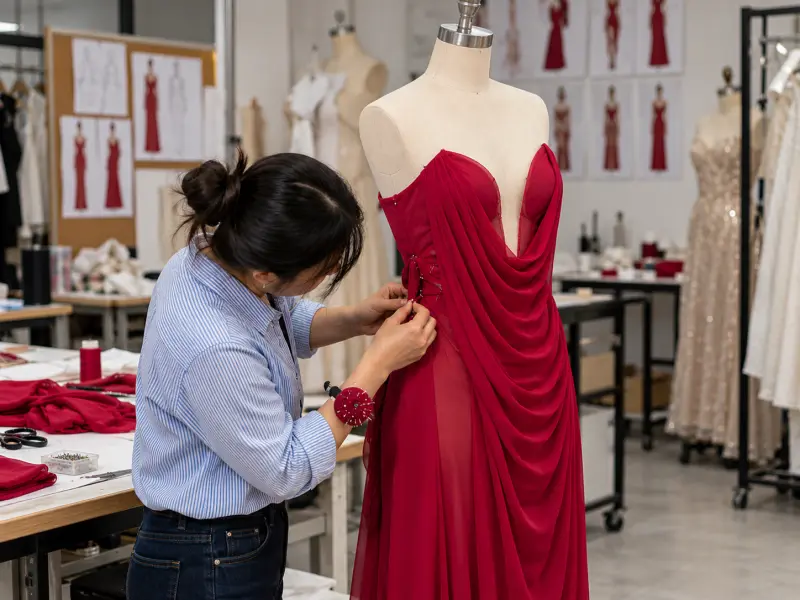
Draping and Form Review
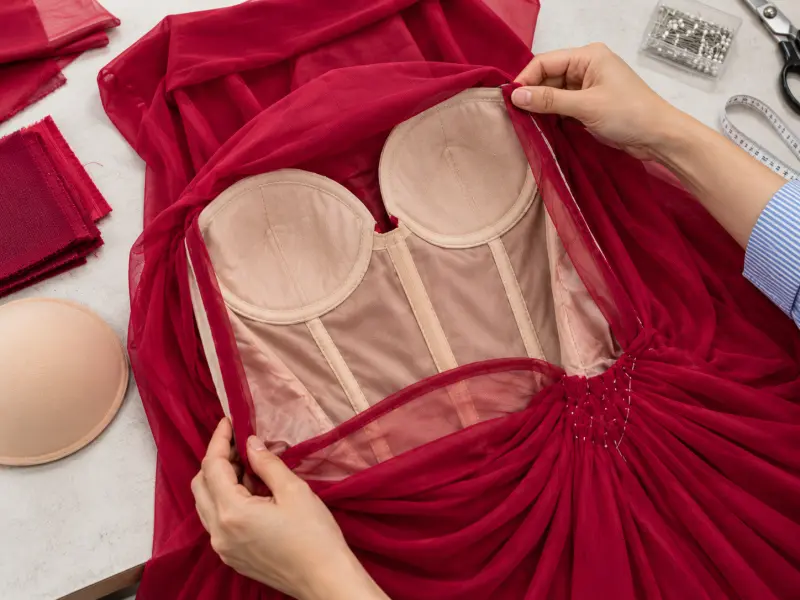
Internal Construction
Photograph the inside of a sample: cups, boning channels, interlining, lining, waist support, reinforcement, zipper backs, facing, elastic, anti-slip tape, or support mesh where relevant. Interior views explain why the outer shape stays stable. Clean internal evidence also helps established brands evaluate workmanship maturity because structural dresses often reveal more about manufacturing discipline from the inside than from a finished campaign photograph.
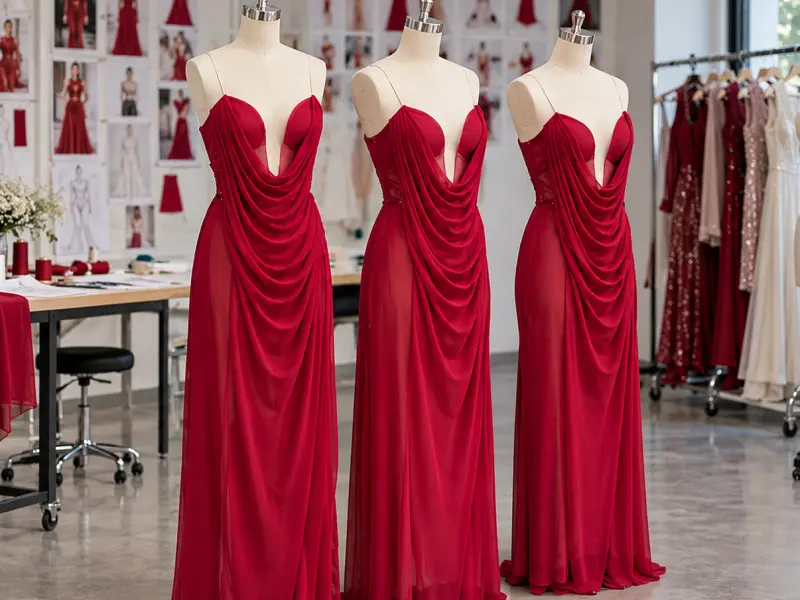
Sample Versions
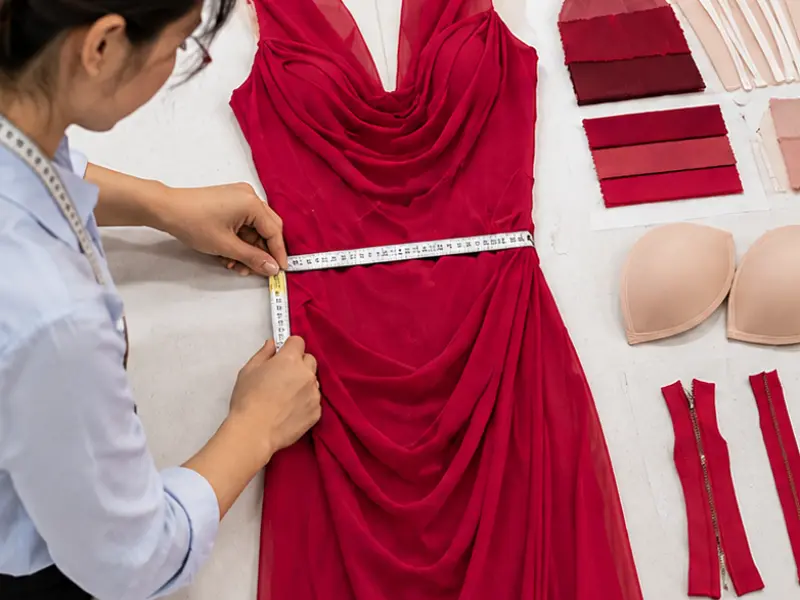
PP Preparation
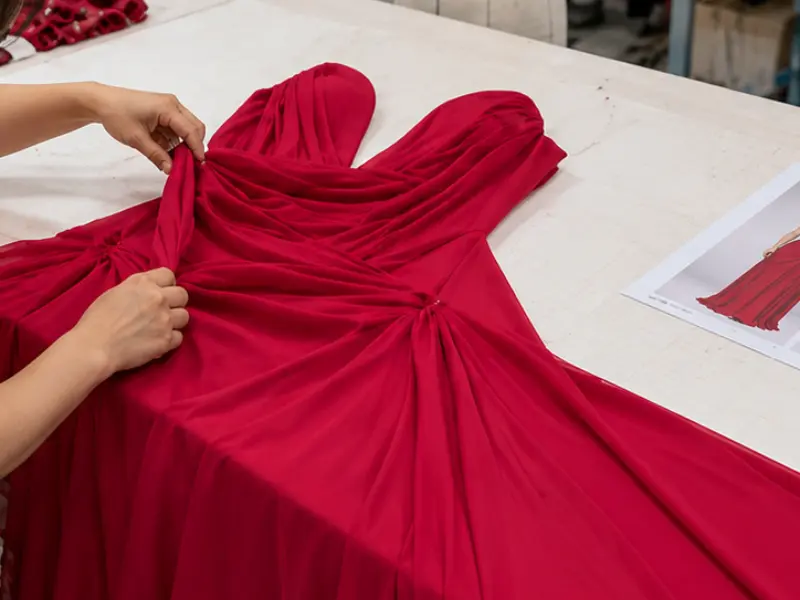
First-Piece Review
Use production-line or controlled pilot images showing a first piece compared with approved references. Photograph the key shape zones, internal support, seam architecture, closure, and final pressing. When a discrepancy appears, include an anonymized correction note or marked photograph. First-piece evidence demonstrates that shape-sensitive styles are verified before full release instead of waiting for final inspection to discover construction drift.
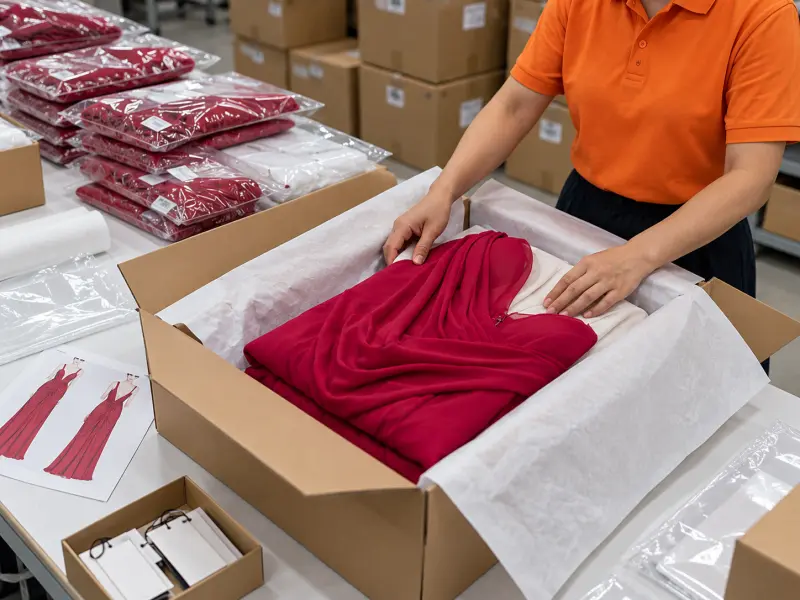
Final QC and Packing
Structured Occasionwear Development From Sample to Bulk
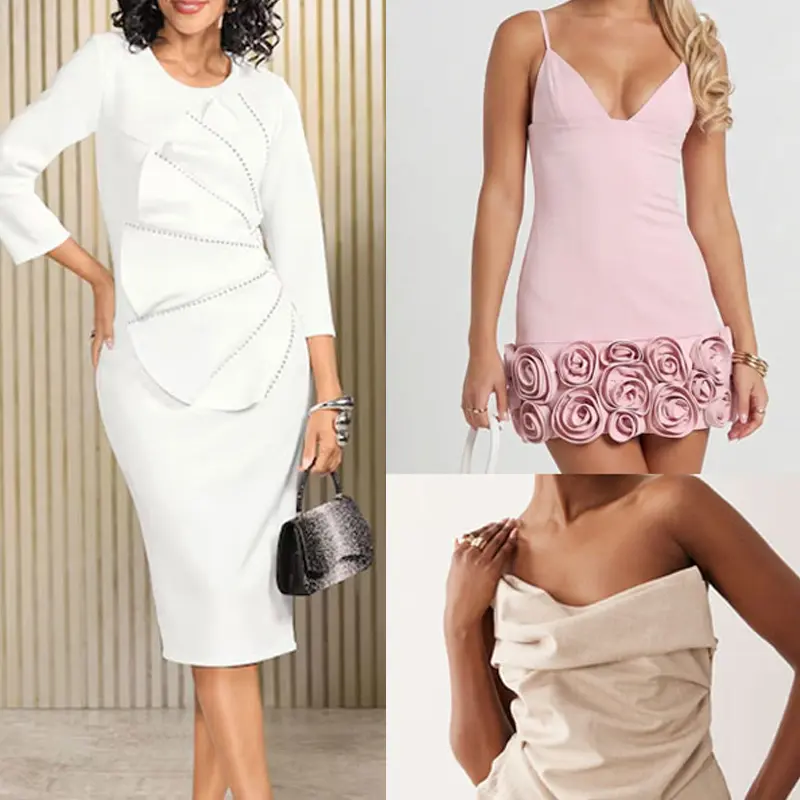
Project Profile: 16 Styles, 36,800 Pieces and Six Sizes
Collection structure: The program covered 16 occasion and party styles, including fitted mini and midi shapes, corset-influenced bodices, asymmetric necklines, defined waists, controlled hip shaping, and structured skirt details. Total planned production was 36,800 pieces across five color directions and six sizes. Development therefore needed more than one strong sample. The approved silhouette language had to remain consistent across different fabrics, colors, constructions, and grade increments.
Primary development risk: Several styles depended on a pronounced bust-to-waist transition. If cup position, panel curvature, waist seam level, or support length changed during grading, the collection would lose visual consistency. One-shoulder shapes also required careful balance between neckline tension, bust security, and back anchoring.
Material route: Main materials were grouped by required shape behavior rather than appearance alone. More stable fabrics were used where clean panel lines carried the design. Softer surfaces were paired with controlled interlining or inner foundations where the outer layer needed a smoother visual finish. Lining stretch and support level were reviewed according to each silhouette.
Sample strategy: Three major approval gates were used across the program: silhouette and construction direction, fit and revision, then production-ready confirmation. Not every style required the same number of physical versions. Development effort was concentrated on styles with higher bust, waist, asymmetric, or skirt-volume sensitivity.

Development Decisions and Production Controls
Pattern families: Related styles were grouped by structural logic rather than treated as sixteen unrelated garments. Fitted bodices, supported bodices, asymmetric upper bodies, and structured skirt shapes each used a controlled pattern approach. Shared fit knowledge helped reduce repeated correction while preserving differences in neckline, length, and surface design.
Revision focus: Comments were separated into visual proportion, measurement, support, and workmanship. Instead of reducing the waist whenever the silhouette looked loose, the team reviewed torso length, seam curvature, fabric tension, and hip release. Bust comments were checked against cup angle, neckline, side coverage, and support. Revision decisions therefore addressed the real cause rather than chasing the appearance of one photograph.
Production readiness: Before bulk release, critical points were locked for main fabric, lining, support components, measurements, closures, structural seams, and pressing. Shape-sensitive operations were identified for first-piece verification. The early production review compared waist level, bust projection, asymmetry, skirt volume, zipper line, and interior support with the approved reference.
Bulk objective: The aim was not to make every garment look hand-sculpted by one sample maker. The aim was to convert the approved visual language into repeatable pattern, construction, pressing, and QC standards. That distinction allowed the collection to move from development into multi-style production without losing the proportions that made the designs commercially recognizable.
Manufacturing Capacity Behind Complex Dress Development Programs
30+ Years Development Background
16 Owned Fashion Factories
20+ Satellite Factories
More than 20 long-term satellite garment factories add production flexibility around the core system. The satellite structure is used as organized capacity support rather than replacing development control. Pattern, sample, material, workmanship, and quality standards need to be locked before production is distributed. For established fashion programs containing many styles or repeat orders, additional capacity gives Duolan more room to manage peaks, reorder demand, and different construction routes while keeping the approved project basis consistent.
12,000+ Supporting Workers
Development-to-Bulk Coordination
SMETA Audit Foundation
Duolan’s associated core manufacturing system has completed a SMETA 2-Pillar audit and maintains a social audit foundation suitable for formal supplier evaluation. For larger fashion organizations, compliance works alongside product capability rather than replacing it. Technical development, production discipline, inspection, documentation, labeling, packaging, and requested third-party processes all need to fit the brand’s vendor structure. Relevant project requirements can be reviewed during supplier onboarding rather than presented as an unsupported wall of certification logos.








How to Evaluate a Sculpted Dress Development Supplier
A strong supplier should explain how the proposed shape will be created, reviewed, corrected, and repeated—not only confirm that the style is possible. Use the following criteria when comparing development partners for architectural, structured, fitted, corset-influenced, or shape-sensitive dress programs.
| Evaluation Area | What a Qualified Supplier Should Demonstrate | Warning Sign |
|---|---|---|
| Silhouette Interpretation | Explains bust, waist, hip, shoulder, back and hem relationships | Replies only with price and MOQ |
| Pattern Engineering | Connects panel geometry, measurements, fabric and grading | Treats the pattern as simple tracing |
| Draping Capability | Knows when folds, volume or asymmetry need form-based review | Forces every design into flat pattern only |
| Material-to-Shape Matching | Discusses weight, drape, structure, stretch and recovery | Chooses fabric mainly by appearance |
| Internal Support | Understands lining, interlining, cups, boning and closure loads | Adds support only after fitting problems appear |
| Fit Revision Discipline | Converts fit comments into pattern and construction corrections | Alters only the finished sample surface |
| Production-Ready Sampling | Locks material, pattern, measurements and workmanship before bulk | Treats photo approval as production approval |
| Bulk Repeatability | Uses first-piece, inline control and shape-sensitive QC | Waits until final inspection to compare silhouette |
Sculpted Dress Development Frequently Asked Questions
Start Your Sculpted Dress Development Review
Share the design information already available and Duolan can review the product direction before sampling begins. Useful files include a tech pack, reference images, design sketches, original sample photos, target fabric or swatch direction, size chart, color plan, estimated quantity, sample purpose, and planned launch date. For sculpted styles, also identify the areas carrying the strongest visual intent—such as bust projection, defined waist, hip contour, asymmetric shoulder, structured skirt volume, draped form, or internal support.
The first review focuses on silhouette feasibility, material behavior, pattern and draping requirements, fit-sensitive areas, support strategy, likely sample path, and production considerations. Where information is incomplete, the team can identify what should be confirmed before pattern development, quotation, or a production timeline is finalized.
Helpful project information:
- Company and brand name
- Website and target market
- Reference images or tech pack
- Target sculpted silhouette
- Fabric and trim direction
- Sample purpose
- Sample size and full size range
- Estimated style and order quantity
- Colorways
- Launch or delivery target
- Critical fit or structure concerns
- Label and packaging requirements when relevant