 Skip to content
SMETA Audited Clothing Manufacturer
Responsible sourcing readiness and womenswear manufacturing support for established fashion brands.
Duolan supports fashion brands needing a clothing manufacturer with SMETA 2-Pillar audit record, womenswear production capability, QC control, packing discipline and long-term supplier evaluation support. Our manufacturing system connects audit readiness with real production execution across dresses, occasionwear, partywear, sets, refined tops and scalable repeat programs.
- SMETA 2-Pillar audit record supports responsible sourcing review and supplier evaluation.
- 16 owned womenswear factories support stronger control for key production programs.
- 20+ satellite factories support flexible capacity under unified production standards.
- 300 sewing lines support womenswear production across multiple style groups.
- 50+ quick-response lines support sampling, development review and launch preparation.
- 15,000–35,000 monthly samples support frequent development and revision cycles.
- 6,500,000 stable monthly capacity supports planned bulk and repeat production.






Use SMETA Audited, Not SMETA Certified
SMETA is an audit methodology used by Sedex members to review workplace conditions, responsible sourcing risks and improvement actions. It is not a product certificate, factory certificate or quality certification. The accurate wording is SMETA audited, not SMETA certified.
For fashion brands, the value sits in the audit record, audit scope, audit date, site information, report review path and corrective action process. A responsible sourcing team will not rely on a logo alone. They usually need to understand which factory site was audited, whether the audit was 2-Pillar or 4-Pillar, whether findings were tracked, and whether the supplier can cooperate with vendor onboarding.
Duolan presents SMETA as an entry point for supplier evaluation, not as a marketing badge. Our SMETA 2-Pillar audit record supports responsible sourcing discussions, while our womenswear manufacturing system supports product development, bulk production, QC, packing and repeat cooperation.
What SMETA 2-Pillar Covers
- Labour Standards review helps fashion brands assess workplace responsibility and worker-related risk.
- Health & Safety review helps sourcing teams evaluate factory site management and working conditions.
- The audit record supports supplier review, but production capability still needs separate evaluation.
- Brand teams may request audit details, report review access or corrective action information during onboarding.

What SMETA 4-Pillar Adds
- Environment and Business Ethics are added to Labour Standards and Health & Safety.
- Larger CSR programs may request 4-Pillar audit review by project policy.
- Duolan’s current public-facing position should remain SMETA 2-Pillar audit record unless a later audit expands scope.
- Future audit needs can be discussed according to brand sourcing requirements.

Built for Brand Supplier Evaluation
Duolan works best with fashion brands and sourcing teams needing both responsible sourcing readiness and real womenswear manufacturing capability. A SMETA audit record opens the evaluation conversation; production facts decide whether cooperation can move forward.
Global Fashion Brands
- Need suppliers able to support social compliance review, factory information, product capability and repeat production.
- Evaluate vendor fit through audit record, factory structure, QC flow, packing control and delivery reliability.
- Duolan supports responsible sourcing discussions alongside womenswear manufacturing execution.
Regional Fashion Leaders
- Need suppliers able to grow with seasonal launches, replenishment and repeat orders.
- Require production partners with clear audit readiness, stable quality process and packing discipline.
- Duolan combines SMETA 2-Pillar audit record with scalable womenswear production support.
Sourcing Offices
- Need fast supplier screening before deeper sampling or price discussions.
- Look for audit record, factory profile, production scope, capacity data and document readiness.
- Duolan can support evaluation conversations with site-level manufacturing information and project records.
CSR and Compliance Teams
- Review audit type, audit date, site scope, report availability and corrective action language.
- Need suppliers who understand responsible sourcing review, not only sales communication.
- Duolan positions audit readiness as part of long-term supplier management.
Product Development Teams
- Need assurance before investing development time with a new supplier.
- Prefer suppliers where compliance readiness and manufacturing capability move together.
- Duolan supports development, samples, PP preparation, QC and bulk handover under a more structured vendor framework.
Multi-brand Groups
- Need supplier records clear enough for different brand lines, price levels, markets and product categories.
- May evaluate one supplier for several programs, seasons or delivery channels.
- Duolan’s factory structure and record-based cooperation support broader supplier review.
SMETA 2-Pillar, 4-Pillar and Supplier Review
Fashion brands use SMETA-related information to understand responsible sourcing readiness. Duolan should communicate audit scope accurately and avoid overclaiming beyond the actual record.
| Audit / Review Area | What It Covers | Why Fashion Brands Care | Duolan Position |
|---|---|---|---|
| SMETA 2-Pillar | Labour Standards, Health & Safety | Basic responsible sourcing review for workplace conditions | SMETA 2-Pillar audit record |
| SMETA 4-Pillar | Labour, Health & Safety, Environment, Business Ethics | Broader supplier risk review for larger CSR programs | Future audit needs can be discussed by project |
| Audit Report Review | Site details, findings, scope, audit date | Helps compliance teams evaluate supplier readiness | Report review can be coordinated when required |
| CAPR / Corrective Actions | Findings, action plan, evidence, closure progress | Shows improvement process, not only audit claim | Corrective-action cooperation should be prepared |
| Brand Vendor Onboarding | Forms, factory information, audit records, production data | Supports formal supplier entry process | Duolan can support supplier evaluation discussions |
Why Fashion Brands Search for SMETA Audited Manufacturers
Fashion brands search for SMETA audited clothing manufacturers when supplier selection has moved beyond product photos and sample price. They need a partner able to enter responsible sourcing review before development, bulk production or repeat cooperation begins.

Supplier Shortlisting
Large fashion brands often remove suppliers with no visible audit readiness before product discussions go deeper. A SMETA audit record gives sourcing teams a clearer reason to continue evaluation.
- Helps sourcing teams identify suppliers with responsible sourcing awareness.
- Reduces time spent on factories unable to enter vendor review.
- Gives compliance teams a starting point for document review.
- Supports stronger supplier screening before sampling or quotation.

Responsible Sourcing Risk
Apparel sourcing can involve labour, health, safety, subcontracting, site management and documentation risks. Brands need evidence-based review rather than broad “ethical manufacturing” claims.
- Audit records help brands evaluate workplace risk more clearly.
- Site-level information helps avoid unclear supplier structures.
- Corrective action language supports improvement tracking.
- Responsible sourcing review protects brand reputation and long-term supply stability.

Internal Approval
A sourcing team may like product capability, but compliance and CSR teams still need supplier evidence. Vendor approval often involves several internal functions, including quality, product, logistics and legal.
- Audit type, audit date and site scope may be requested.
- Factory profile and production capacity may be reviewed together.
- QC process and packing records support operational approval.
- Stronger documentation reduces delays during internal review.

Long-term Vendor Fit
SMETA audit readiness matters most when cooperation is expected to continue beyond one order. Long-term brands evaluate whether a supplier can stay review-ready while supporting bulk, repeat orders and improvement records.
- Audit readiness creates trust at the start.
- Repeat production records create trust over time.
- QC and packing discipline reduce operational risk.
- Stable supplier systems reduce repeated evaluation cost.
Responsible Sourcing Readiness Beyond the Audit
A SMETA audit record should not stand alone. Brand teams still need to evaluate how the manufacturer manages production, documentation, corrective actions, quality control and long-term cooperation.
Audit Record as an Entry Point
- SMETA audit record helps confirm a supplier has entered a recognized social audit framework.
- The record does not replace product development review, factory capability review or QC evaluation.
- Audit details should be connected with site information and production scope.
- Responsible sourcing confidence grows when audit information and manufacturing facts match.

Corrective Action Mindset
- Findings may appear in many audit processes; improvement handling matters.
- CAPR language helps brands understand whether issues are tracked, addressed and supported by evidence.
- A supplier with corrective action discipline usually communicates better during quality or delivery issues as well.
- Improvement culture is stronger than one-time audit display.

Documentation Discipline
- Supplier evaluation requires organized documents, not scattered claims.
- Factory profile, audit record, production data, QC process, packing standards and project records should be ready.
- Clear documentation helps sourcing, compliance and product teams review the supplier faster.
- Duolan should present audit readiness with production records, not separate from them.

Manufacturing Reality
- SMETA audit readiness supports responsible sourcing entry.
- Product fit still depends on womenswear capability, sample control, material review and production execution.
- QC, packing and delivery determine whether cooperation can scale.
- The best supplier message combines audit readiness with real manufacturing performance.

Duolan Manufacturing Facts Behind Supplier Evaluation
Supplier evaluation becomes stronger when compliance readiness is supported by manufacturing facts. Duolan’s factory structure, development capacity and production system help brand teams judge both responsibility and delivery fit.
Owned Womenswear Factory Structure
- 16 owned womenswear factories support stronger control for key production programs.
- Owned factories help manage sensitive styles, PP-controlled production and repeat programs.
- Direct production structure gives sourcing teams clearer factory visibility.
- Stronger control helps reduce uncertainty during vendor evaluation.
Satellite Factory Network
- 20+ satellite factories support flexible capacity extension under unified production standards.
- Satellite cooperation should be communicated as managed capacity, not invisible subcontracting.
- PP samples, BOM, QC checklists and project coordination help protect standards.
- This structure supports scalable programs while keeping supplier management visible.
Sewing and Quick-response Lines
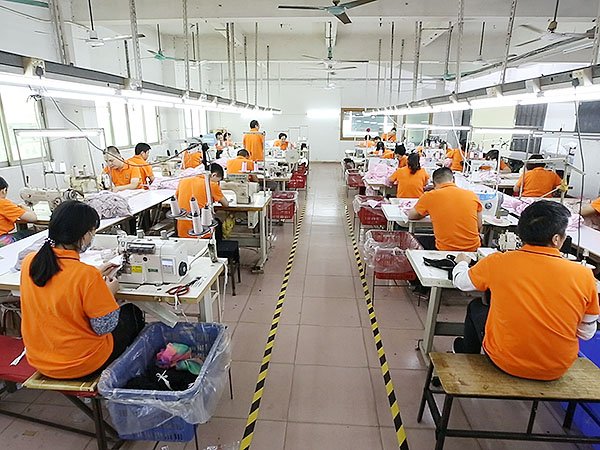
- 300 sewing lines support womenswear bulk production across several product groups.
- 50+ quick-response lines support sampling, test production and launch preparation.
- These lines help brands move from development review into production planning.
- Capacity data supports evaluation beyond audit status.

Sample and Style Development Scale
- 15,000–35,000 monthly samples support frequent product development and revision.
- 3,000–8,000 monthly style development flows support parallel womenswear programs.
- Strong sample capacity helps brands test styles before bulk commitment.
- Development scale matters when evaluation includes future seasonal cooperation.

Stable Production Capacity
- 6,500,000 stable monthly capacity supports planned bulk and repeat production.
- Production scale must be supported by QC, packing and delivery control.
- Stable monthly capacity helps sourcing teams assess order-fit potential.
- Capacity data should be reviewed together with product category and launch calendar.
SMETA 2-Pillar Audit Record
- SMETA 2-Pillar audit record supports responsible sourcing review.
- The audit record should sit alongside factory, QC, packing and production information.
- Brand teams may request audit details during supplier onboarding.
- Accurate wording protects Duolan from overclaiming.
Supplier Evaluation Data Brand Teams Usually Ask For
A SMETA audited manufacturer should prepare more than an audit reference. Large fashion brands often review factory identity, audit record, product capability, QC process, packing control and delivery readiness together.
| Evaluation Item | What Brands Usually Ask | Why It Matters | Duolan Response Direction |
|---|---|---|---|
| Factory Profile | Legal entity, site address, production scope, worker scale | Confirms who and where the supplier is | Prepare site-level factory information |
| SMETA Audit Record | Audit type, date, site, report access, CAPR status | Confirms responsible sourcing readiness | Provide SMETA 2-Pillar audit discussion support |
| Production Capacity | Lines, monthly output, sample capability, product range | Confirms order fit and scaling ability | Present factory, line, sample and capacity data |
| QC Process | Material, inline, final and packing QC | Confirms quality control structure | Explain style-level QC and inspection flow |
| Compliance Documents | Policies, social responsibility records, testing support | Supports internal compliance review | Prepare documents by project requirement |
| Packing and Delivery Control | Barcode, carton mark, packing ratio, delivery planning | Reduces channel receiving risk | Present packing and shipment readiness |
What SMETA Helps Fashion Brands Evaluate
SMETA supports responsible sourcing review by giving brand teams a structured way to assess workplace-related risks. It should not be treated as a product quality certificate or a substitute for manufacturing due diligence.

Labour Standards
- Labour standards review helps brands assess worker-related risk inside the supply chain.
- Apparel sourcing teams often view labour conditions as part of brand responsibility.
- SMETA 2-Pillar includes Labour Standards as a core audit area.
- Duolan should present the audit record within supplier evaluation language, not marketing language.

Health and Safety
- Apparel manufacturing involves cutting, sewing, pressing, packing, warehouse handling and production floor operations.
- Health and safety review helps brands understand workplace management and operational risk.
- SMETA 2-Pillar includes Health & Safety as a core audit area.
- Site management quality matters for long-term supplier confidence.

Environment and Business Ethics
- SMETA 4-Pillar adds Environment and Business Ethics to the two core areas.
- Some larger CSR programs may request 4-Pillar audit review in future sourcing policies.
- Duolan should communicate current 2-Pillar status accurately.
- Additional audit scope can be discussed when a brand requires broader review.

Continuous Improvement
- SMETA review should be read as part of an improvement process.
- Corrective action handling gives brands deeper insight than audit claims alone.
- Issue tracking, action plans and evidence help build supplier trust.
- Improvement discipline also supports stronger production and quality communication.
Clothing Categories Supported Under an Audited Manufacturing System
Duolan’s SMETA audit record supports supplier evaluation, while the manufacturing system supports real womenswear programs. Product relevance matters because compliance readiness alone does not create sellable garments.

Fashion Dresses
Fashion dresses often carry brand identity and commercial value. Under an audited manufacturing system, dress production still requires strong fit, fabric and PP control.
- Suitable for mini dresses, midi dresses, maxi dresses and fashion-led seasonal drops.
- Key production focus includes fit, fabric, size tolerance, finish and packing condition.
- Audit readiness supports supplier evaluation before product development begins.
- Manufacturing execution proves long-term supplier value.

Occasion Dresses
Occasionwear requires polished presentation, support and finishing. Brand teams usually evaluate supplier responsibility and product risk together.
- Suitable for cocktail, graduation, wedding guest and semi-formal styles.
- Key production focus includes lining, zipper, bust support, drape, pressing and stain control.
- Event-season products need clear sample, material and delivery planning.
- QC flow should match garment complexity.

Partywear
Partywear often uses high-risk fabrics and details such as mesh, sequins, cut-outs and fitted silhouettes. An audited supplier still needs strong product control.
- Suitable for going-out dresses, mesh styles, bodycon silhouettes and embellished pieces.
- Key production focus includes stretch recovery, opacity, seam elasticity and surface protection.
- Style-level QC matters because visual products carry higher defect risk.
- Packing must protect shine, decoration and final appearance.

Fashion Sets
Fashion sets require stronger SKU and color control because two garments often sell together. Supplier evaluation should include packing and record discipline.
- Suitable for skirt sets, fitted sets, resort sets and coordinated drops.
- Key production focus includes color matching, top-bottom proportion and ratio packing.
- Barcode, polybag and carton accuracy affect warehouse receiving.
- BOM and packing records support future repeat orders.

Refined Tops
Refined tops extend womenswear programs beyond dresses while keeping brand language consistent. They require stronger fit and finish than basic tops.
- Suitable for satin tops, corset tops, mesh tops, halter tops and blouse-led styles.
- Key production focus includes neckline stability, label placement, strap position and surface finish.
- These styles help support collection expansion and repeat programs.
- QC should reflect fabric and construction sensitivity.

Resort and Vacation Styles
Resort and vacation styles often use print, lightweight fabrics and relaxed silhouettes. Production discipline remains important even when styling feels easy.
- Suitable for printed maxis, vacation dresses, lightweight sets and seasonal capsules.
- Key production focus includes print placement, shrinkage, shade band and wrinkle control.
- Packing affects arrival condition after international shipment.
- Fabric records support future resort or vacation repeats.
Audit Readiness and Manufacturing Readiness
Responsible sourcing readiness and production readiness must work together. A factory can have an audit record but still need review for product capability, QC process, packing control and repeat production.
| Readiness Area | Compliance Question | Manufacturing Question | Duolan Message |
|---|---|---|---|
| Audit Record | Has the site completed SMETA audit? | Can the site support actual production? | SMETA 2-Pillar audit record plus womenswear manufacturing capability |
| Factory Scope | Which site was audited? | Which products and orders can the site handle? | Site-level clarity and product capability should align |
| Corrective Action | Are findings tracked and improved? | Are operational issues also recorded and improved? | CAPR mindset pairs with QC improvement |
| Documentation | Can reports and factory data be reviewed? | Can BOM, PP, QC and packing records be managed? | Supplier evaluation needs both compliance and production files |
| Long-term Fit | Can the supplier stay review-ready? | Can the supplier support repeat orders? | Responsible sourcing and scalable production must work together |
Vendor Onboarding Support
Formal supplier onboarding often involves sourcing, compliance, product, quality and logistics teams. Duolan should present audit readiness and manufacturing capability in a way these teams can review.
Factory Information Preparation
- Legal entity, factory address, production scope, product category and capacity data should be clear.
- Larger brands evaluate supplier sites, not only company names.
- Site-level information helps avoid confusion during early review.
- Factory profile preparation supports faster evaluation.
Audit Record Discussion
- Brand teams may request audit type, audit date, site scope, report review path and CAPR status.
- SMETA 2-Pillar information should be communicated accurately.
- Full report sharing may follow project policy, platform access or confidentiality rules.
- Clear audit discussion protects both supplier and brand.
Production Capability Review
- Supplier onboarding should not stop at compliance review.
- Product range, sample capacity, bulk capacity, QC flow and packing readiness still need evaluation.
- Duolan should present SMETA audit readiness and womenswear manufacturing facts side by side.
- Production capability confirms whether audit-ready suppliers can support actual programs.
Internal Team Coordination
- Sourcing, CSR, quality, product and logistics teams ask different questions.
- A supplier should be ready with audit, product, QC, packing and delivery information.
- Organized answers reduce evaluation friction.
- Strong coordination helps move from review into sampling or production planning.
SMETA Audited Supplier Risk Control for Fashion Programs
SMETA audit readiness supports responsible sourcing, but long-term cooperation also depends on product control, factory visibility and improvement discipline. Duolan should connect social compliance with manufacturing management.

Social Risk and Production Planning
- Responsible sourcing is connected to production planning.
- Brands evaluate whether a supplier has structured workplace management and operational discipline.
- Clear factory standards support stable production as well as social responsibility.
- Audit readiness helps reduce early supplier risk.

Subcontracting and Factory Visibility
- Larger fashion brands often ask where production will actually happen.
- Owned factories and satellite factories should be explained as a managed structure.
- PP samples, BOM records and QC checklists help align different production routes.
- Transparent factory visibility reduces concerns around uncontrolled outsourcing.

QC and Corrective Action Culture
- Compliance improvement and quality improvement share a similar mindset.
- Both require issue tracking, root-cause thinking, action plans and evidence.
- A supplier familiar with corrective action language can communicate more clearly during production issues.
- Improvement discipline supports trust beyond the audit record.

Long-term Brand Protection
- Fashion brands protect reputation through supplier selection.
- Labour issues, quality failures, delivery errors and packing mistakes all create risk.
- SMETA audit readiness provides a responsible sourcing entry point.
- Manufacturing discipline creates long-term cooperation value.
QC System for Audited Clothing Manufacturing
An audited manufacturer still needs strong quality control. SMETA supports responsible sourcing review; QC protects product quality, delivery accuracy and repeat cooperation.
Material QC

- Fabric, lining and trims are reviewed for color, defects, shrinkage, opacity, handfeel and batch consistency.
- Womenswear fabrics such as satin, mesh, lace, chiffon, sequins and stretch materials need different checks.
- Material risk should be reviewed before cutting.
- Early control reduces downstream production defects.
First-piece and Inline QC

- First-piece review checks whether the line follows the PP sample before bulk continues.
- Inline QC catches repeated problems before final inspection.
- Satin, mesh, sequins, bodycon and structured garments need style-specific inspection points.
- Process control is stronger than relying on final inspection alone.
Final QC

- Final QC reviews garment appearance, measurements, stains, loose threads, labels, trims and overall presentation.
- Final inspection protects shipment release but should not be the only quality gate.
- Large fashion programs need visible quality flow.
- Defect records should support future improvement.
Packing QC

- Packing QC checks barcode, hangtag, polybag, carton mark, packing ratio and shipment readiness.
- Multi-style, multi-color and multi-size programs create higher packing risk.
- Packing mistakes affect warehouse receiving and sales flow.
- Delivery discipline is part of supplier evaluation.
Packing and Documentation for Brand Receiving
Responsible sourcing teams may open supplier evaluation, but logistics and operations teams decide whether delivery is reliable. Packing accuracy and shipment documents matter for mature fashion programs.
Label and Barcode Accuracy
- Main labels, care labels, size labels and barcodes should match approved brand instructions.
- Care label content may connect to market requirements.
- Barcode errors can affect warehouse receiving and sales system accuracy.
- Label control reflects supplier execution discipline.

Carton Mark and Packing Ratio
- Carton marks should match style, color, size, quantity and purchase order instructions.
- Multi-SKU programs require stronger packing separation.
- Packing ratio must follow channel and warehouse needs.
- Carton accuracy reduces receiving disputes.

Shipment Document Readiness
- Packing list, carton list and shipment documents should match finished goods.
- Inconsistent documentation creates customs, warehouse or receiving delays.
- Large brands expect document accuracy as part of delivery discipline.
- Strong documentation supports smoother international cooperation.

Repeat Order Records
- Packing standards should remain available for future repeat production.
- Labels, barcodes, carton marks and ratio packing should not restart with every order.
- Record reuse helps reduce errors in repeat programs.
- Long-term supplier value grows through better order memory.

Compliance and Manufacturing Evidence Checklist
A brand supplier review usually needs audit information and production proof. Duolan should prepare evidence showing responsible sourcing readiness, womenswear capability, QC process and delivery discipline.
| Evidence Area | What Should Be Prepared | Why It Matters |
|---|---|---|
| SMETA Audit Record | Audit type, date, site, report review path | Supports responsible sourcing evaluation |
| Factory Profile | Entity, address, production scope, capacity | Confirms supplier identity and site relevance |
| Production Data | Factories, lines, sample capacity, monthly capacity | Shows manufacturing fit beyond compliance |
| QC Process | Material, first-piece, inline, final, packing QC | Shows production control structure |
| Product Range | Dresses, occasionwear, partywear, sets, tops | Confirms product relevance for fashion brands |
| Packing Standard | Label, barcode, carton, packing ratio | Supports warehouse and channel receiving |
| Corrective Action Mindset | CAPR, issue tracking, improvement evidence | Shows continuous improvement readiness |
Scalable Production Under Supplier Evaluation
After responsible sourcing review, fashion brands still need to know whether a supplier can support real programs. Duolan’s manufacturing system helps connect audit readiness with scalable womenswear production.
Multi-style Order Control
- Established brands often develop and produce more than one garment at a time.
- 10–30 styles per order may require sample, PP, fabric, production, QC and packing coordination.
- A compliant supplier also needs project control.
- Duolan organizes multi-style orders by category, material, risk and delivery plan.
Repeat Order Support
- Long-term brands value suppliers able to repeat successful products.
- BOM, PP samples, patterns, fabric records and QC notes should stay reusable.
- Repeat orders should become more stable with each cycle.
- Record-based production supports brand growth.
Factory Network Visibility
- Owned factories and satellite factories should be explained clearly.
- The key message is controlled coordination, not hidden outsourcing.
- PP samples, BOM records, process notes and QC requirements unify standards.
- Factory visibility supports supplier confidence.
Delivery Discipline
- Audit readiness cannot replace delivery performance.
- Launch timing, packing accuracy, carton marks, documents and split shipments still matter.
- Large programs evaluate supply chain behaviour across the whole order.
- Duolan should connect compliance, production and delivery discipline.
Cost and Cooperation Logic for Audited Manufacturers
SMETA audited suppliers are not usually selected only by the lowest quoted price. Responsible sourcing, production control, QC discipline and long-term cooperation reduce supply risk across larger programs.

Compliance Has Operating Cost
- Audit preparation, document management, workplace management, corrective actions and training require resources.
- Lower price alone cannot represent total sourcing value.
- Responsible sourcing readiness reduces risk during vendor review.
- Compliance readiness belongs to long-term supplier cost planning.

Manufacturing Cost Still Depends on Product
- SMETA audit status does not decide garment price.
- Fabric, construction, quantity, sewing complexity, QC level and packing requirements shape quotation.
- Satin, mesh, sequins, structured garments and lined dresses carry different cost logic.
- Audit readiness and product costing should be evaluated separately.

Long-term Value Comes From Stability
- Stable suppliers reduce repeated audits, repeated explanations, rework and delivery problems.
- Record-based repeat orders lower operational friction.
- Clear QC and packing processes reduce hidden downstream cost.
- Total supply risk matters more than a first quotation.

Supplier Evaluation Before Price Negotiation
- Strong brands usually confirm supplier fit before detailed price negotiation.
- Product category, volume, fabric, audit needs and delivery expectations should be reviewed together.
- A supplier evaluation request should gather enough information for a serious response.
- Price discussion becomes more useful after scope and readiness are clear.
Anonymous SMETA Audited Manufacturing Project Evidence
These anonymized examples use realistic program sizes aligned with current Duolan cooperation patterns: 10–30 styles and 20,000–80,000 pieces per brand order.

US Fashion Dress Program
An established US fashion brand reviewed supplier readiness before moving a dress program into sample and bulk planning.
- Project scope: 18 styles, 42,000 pieces, including satin midi dresses, fitted minis and refined tops.
- Supplier evaluation focus: SMETA 2-Pillar audit record, factory profile, QC process and packing readiness.
- Sample-to-PP cycle: 38–45 days depending on fabric and fit complexity.
- Bulk window: 62 days after material approval and PP confirmation.
- Control actions: PP standard, shade band review, size tolerance checks, barcode packing and carton ratio control.
- Quality result: final inspection pass rate reached 98.1%; post-shipment claim rate stayed near 0.8%.

Australian Partywear Program
An Australian partywear brand needed audit readiness plus stronger control for high-risk garment structures.
- Project scope: 16 styles, 36,000 pieces, including mesh, cut-out, bodycon and sequin-influenced garments.
- Supplier evaluation focus: social compliance record, high-risk product QC and shipment wave planning.
- Sample timeline: first sample review completed within 21–28 days for high-risk styles.
- Bulk delivery: 3 shipment waves aligned with launch calendar.
- Control actions: opacity mapping, lining adjustment, edge finishing, sequin packing protection and SKU separation.
- Quality result: inline defect closure reached 95.7%; post-shipment claim rate stayed near 1.1%.

European Resort Line
A European contemporary brand reviewed responsible sourcing readiness before developing a seasonal resort line.
- Project scope: 14 styles, 28,500 pieces, including printed maxis, vacation dresses and lightweight sets.
- Supplier evaluation focus: fabric records, QC system and packing documentation.
- Material timeline: print and fabric approval completed within 14–18 days.
- Bulk window: 55 days after PP approval.
- Control actions: print placement review, shrinkage check, final measurement review and packing wrinkle control.
- Quality result: measurement compliance reached 97.4%; final inspection pass rate reached 98.0%.

Repeat Womenswear Program
A repeat program used prior production records to support supplier confidence and quality stability.
- Project scope: 12 styles, 58,000 pieces across repeat production rounds and color extensions.
- Supplier evaluation focus: repeat order records, BOM reuse, PP sample control and claim reduction.
- Reorder result: preparation time reduced by 23% after BOM, PP sample and pattern records were reused.
- Control actions: shade band comparison, seam elasticity review, packing continuity and QC memory.
- Quality result: repeat defect rate reduced from 1.3% to 0.7%.
Supplier Evaluation Flow for Fashion Brands
A structured supplier review helps brand teams connect audit readiness, product capability and production fit before moving into sampling or bulk planning.
| Step | What the Brand Reviews | Duolan Support |
|---|---|---|
| Step 1 | Supplier fit and product relevance | Womenswear product range, factory structure, capacity data |
| Step 2 | Compliance readiness | SMETA 2-Pillar audit record and supplier evaluation discussion |
| Step 3 | Project capability | Samples, fabric, production route, QC and packing requirements |
| Step 4 | Documentation review | Factory profile, audit record, BOM, QC process and packing standards |
| Step 5 | Sample / PP confirmation | Fit, workmanship, material, labels, QC and production benchmark |
| Step 6 | Bulk and repeat cooperation | Production control, inspection, packing, delivery and reorder records |
SMETA Audited Clothing Manufacturer FAQ
A SMETA audited clothing manufacturer has completed a Sedex Members Ethical Trade Audit for a specific factory site and audit scope. The audit supports responsible sourcing review by helping brand teams evaluate workplace conditions, labour standards, health and safety, and related supplier risks. Duolan has SMETA 2-Pillar audit record supporting supplier evaluation discussions.
No. SMETA is an audit methodology, not a product certificate or factory certification. Accurate wording is SMETA audited, not SMETA certified. Brand teams usually review audit scope, audit date, site information, audit report access and corrective action status before accepting audit information into supplier evaluation.
SMETA 2-Pillar covers Labour Standards and Health & Safety. SMETA 4-Pillar adds Environment and Business Ethics. Duolan’s public positioning should state SMETA 2-Pillar audit record. Broader audit needs can be discussed when a brand has a specific supplier review policy or CSR requirement.
Yes. Duolan has SMETA 2-Pillar audit record supporting responsible sourcing review. During supplier evaluation, brand teams may request details such as audit site, audit date, audit scope, report review path and corrective action status according to project and confidentiality requirements.
Audit-related details can be coordinated during serious supplier evaluation discussions. Full report sharing may depend on platform access, confidentiality rules and brand onboarding process. Duolan can prepare responsible sourcing information, factory profile and manufacturing data for review according to project needs.
Brands often review factory profile, audit record, production scope, capacity data, product range, QC flow, packing standards, delivery process and compliance documents. Larger programs may also require sample standards, BOM records, material information, inspection reports and corrective action information.
No. SMETA supports responsible sourcing review, while product quality depends on material control, sample approval, PP standards, production process, QC and packing. Duolan connects SMETA 2-Pillar audit record with womenswear manufacturing capability so brand teams can evaluate both responsibility and production fit.
Duolan combines SMETA 2-Pillar audit record with owned womenswear factories, satellite factory coordination, sample development capacity, sewing lines, QC flow, packing readiness and repeat order records. This helps brand teams evaluate supplier readiness beyond audit status alone.
Yes. Duolan supports planned womenswear bulk and repeat programs across fashion dresses, occasionwear, partywear, sets, refined tops and resort styles. Repeat cooperation is supported through BOM records, PP samples, fabric references, QC notes, packing standards and delivery planning.
A brand can send product category, planned style count, target quantity, compliance requirement, audit review needs, sample or PP status, launch date and packing requirements. Duolan will review supplier evaluation fit, audit readiness, product capability, QC focus, production route and next steps.

Send Your Supplier Evaluation Request
Duolan works with established fashion brands, sourcing offices, product teams and compliance teams needing a SMETA 2-Pillar audited clothing manufacturer with real womenswear production capability. Send your supplier evaluation request for review across audit readiness, product fit, factory structure, QC flow, packing control and production planning.
Share Compliance Needs
- Audit requirement, Sedex or SMETA review path, CAPR expectations and onboarding timeline.
- Internal sourcing, CSR, quality or vendor approval requirements.
- Any additional audit, inspection or documentation requirements.
Share Product Scope
- Product categories, planned style count, target quantity, fabric direction and sample status.
- Size range, colorways, launch calendar and repeat order plan.
- Current project stage: supplier review, sampling, PP approval, bulk planning or repeat production.
Duolan Will Review
- SMETA 2-Pillar audit readiness and supplier evaluation fit.
- Womenswear product capability, production route and capacity match.
- QC focus, packing requirements, documentation needs and cooperation next steps.

