 Skip to content
Special Workmanship Development for Dresses
Dress workmanship development for fashion brands that need stronger visual impact, reliable construction and repeatable bulk production.
- 30+ years of fashion dress development knowledge across occasion, party, fitted and fashion-led collections.
- 16 owned womenswear factories and 20+ long-term satellite factories for matched production routing.
- 2-3 mature partner resources in each key process direction, including printing, dip dyeing, embroidery and garment washing.
- 650-1,200 pattern, sample and development machines, supported by CAD pattern systems and dedicated sample lines.
- 150-400 printing machines and 150-300 embroidery machines across the wider manufacturing system.
- 300 sewing lines, 50+ flexible-response lines and stable monthly capacity of approximately 6.5 million garments.
Built for Complex Dress Development Programs
Fashion Product Teams
Buying and Sourcing Teams
Occasionwear Brand Teams
Multi-style Collection Programs
Large brand programs rarely contain one isolated style. A typical project may include 10-30 styles with shared fabrics, coordinated color stories and different workmanship levels. Duolan can separate image-led styles, commercial core styles and repeatable support styles, then plan sampling and production according to complexity, material availability and launch priority.
What Special Workmanship Development Means
Decorative Workmanship
Structural Workmanship
Structural workmanship includes boning, molded or soft cups, under-bust support, power mesh, internal elastic, eyelets, lace-up backs, concealed support panels and controlled lining coverage. Development reviews how the structure holds the body, how it changes fit, where pressure may build and how each element will be graded across the approved size range.
Surface and Form
Control the Risks Before Full Sampling
A strong workmanship result depends on early decisions. Duolan connects each common risk with a defined review action before the issue reaches a complete sample or a production line.
| Development Risk | Commercial Impact | Duolan Control Point |
|---|---|---|
| Design-to-sample mismatch | The finish looks weaker, heavier or less refined than the approved direction | Reference analysis, process route comparison and workmanship swatch |
| Fabric distortion | Stretch, drape, panel shape or measurement changes after processing | Fabric behavior review, stabilization trial and pattern allowance check |
| Poor wearing comfort | Beads, sequins, boning, seams or reverse-side finishing irritate the wearer | Reverse-side review, lining plan, edge clearance and wear-sensitive inspection |
| Unstable placement | Motifs, stones, appliqué or pleats shift across sizes and production batches | Placement map, grade review, first-piece confirmation and inline checks |
| Sample-to-bulk variation | A hand-finished sample cannot be repeated consistently in volume | Approved method, operation sequence, PP reference and defined QC checkpoints |
| Cost or timing escalation | Repeated trials, unavailable trims or manual hours weaken the launch plan | Feasibility review, material alternatives, trial schedule and production path planning |
Workmanship Options for Fashion-led Dresses
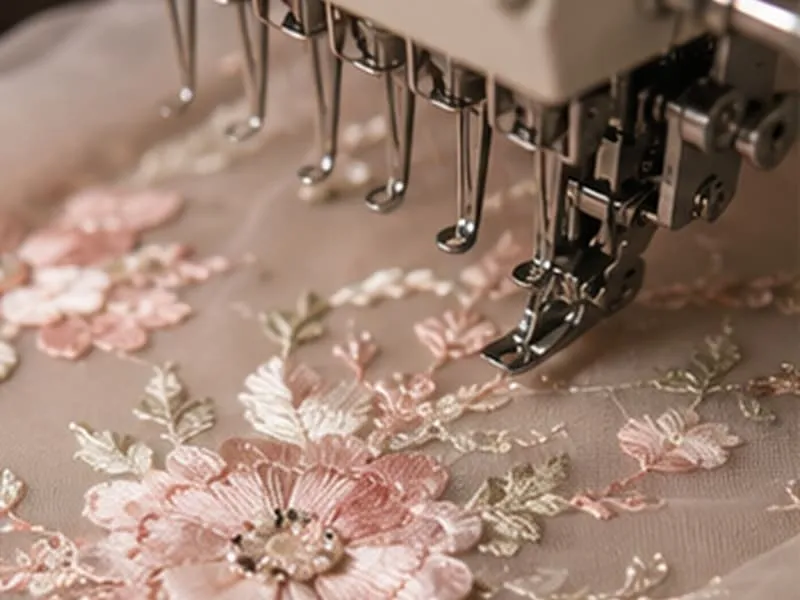
Embroidery

Sequin Work

Beading and Pearls

Rhinestone Application

Lace and Appliqué

Three-dimensional Flowers

Pleating

Ruching and Smocking

Print and Foil

Dip Dye and Ombré
Dip dye and ombré effects rely on controlled color transition, fabric absorbency and batch planning. The development route reviews target gradient, color depth, garment or fabric processing, shrinkage and possible panel variation. A sample can look attractive while bulk lots drift significantly, so approved color zones, processing time and batch references must be defined before production release.

Washing and Finishing
Garment washing, softening and special finishing can change hand feel, shade, shrinkage and surface appearance. The selected route must be tested on the full material combination, including lining, trims and labels. Duolan records the approved effect and reviews size movement before bulk production. Inspection compares shade, touch, distortion and finish consistency across the lot.

Corset Structures
Corset workmanship combines boning, cups, lining, seam support, under-bust shaping, eyelets, lace-up elements and closure systems. Visual impact depends on accurate internal engineering. Development checks bust position, waist balance, pressure, mobility and seam thickness before grading. Production standards define boning length, cup symmetry, reinforcement, closure alignment and lining coverage for each approved size.
Match Workmanship to the Dress Program

Party Dresses

Occasion Dresses
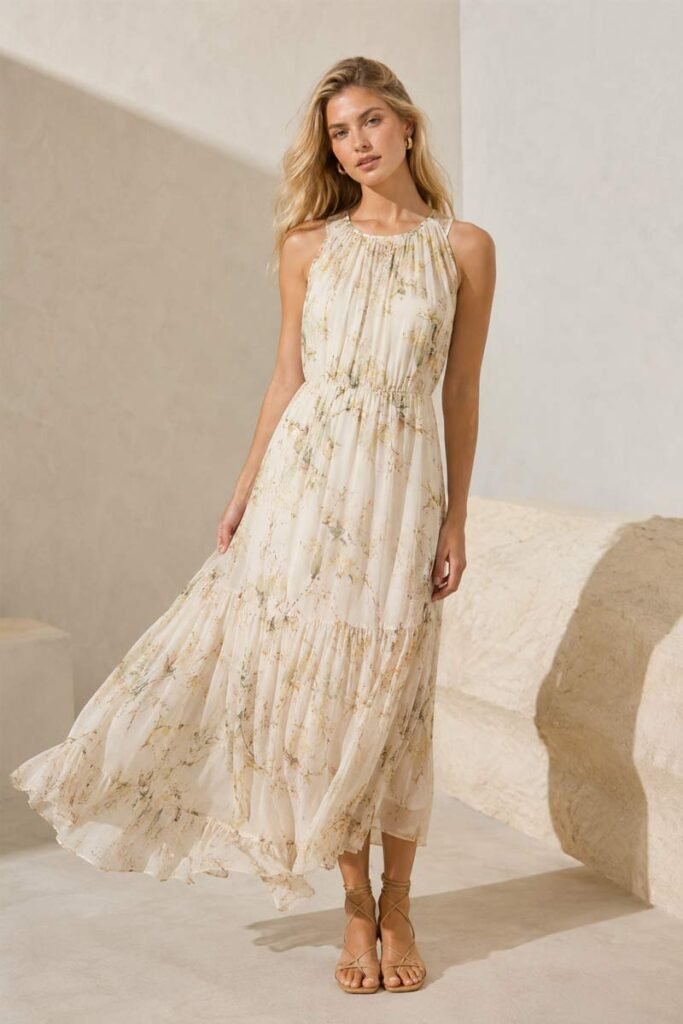
Resort Dresses

Holiday Collections

Corset Dresses
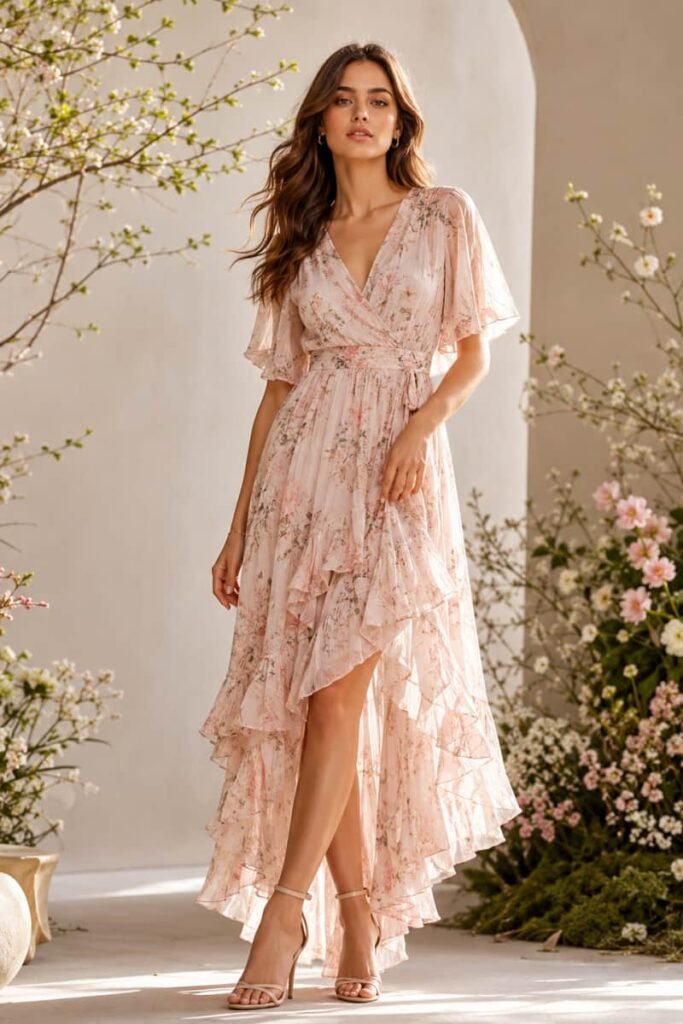
Seasonal Capsules
A seasonal capsule may contain 10-30 styles with different workmanship levels. Shared fabrics, trims or colorways can improve coordination, while over-complexity across every style can create unnecessary cost and delay. Duolan helps separate hero styles, commercial styles and repeatable styles, then assigns an appropriate sample and production path to each group.
Six Checks Before Approving a Workmanship Route
Target Appearance
Fabric Behavior
Garment Structure
Wearing Comfort
Cost and Timing
Bulk Repeatability
Fabric and Trim Compatibility by Workmanship
Material selection determines whether a workmanship concept will hold its shape, remain comfortable and repeat consistently. Duolan reviews the full material system – main fabric, lining, backing, thread, decoration, support components and closures – before confirming the sample route.
| Workmanship | Material Consideration | Main Development Risk | Recommended Trial | Bulk Control Focus |
|---|---|---|---|---|
| Sequin embroidery | Base stability, stretch and weight | Distortion, seam bulk and sharp edges | Sequin swatch on target base | Direction, density, seam clearance and lining |
| Beading and pearls | Fabric strength and reinforcement | Sagging, detachment and imbalance | Attachment and weight-distribution trial | Spacing, pull resistance and reverse-side comfort |
| Rhinestones | Heat sensitivity and surface finish | Adhesive failure or surface damage | Heat and adhesion test | Temperature, placement and missing-stone checks |
| Pleating | Fiber composition and recovery | Pleat loss, width change and shrinkage | Pleat stability test | Depth, direction, panel width and hem consistency |
| Printing and foil | Surface, stretch and absorbency | Cracking, color drift and panel mismatch | Strike-off and stretch test | Color, repeat, placement and lot consistency |
| Dip dye or washing | Absorbency, shrinkage and trim reaction | Shade variation and measurement movement | Process sample with full material set | Batch reference, shade, hand feel and measurements |
| Corset support | Lining, seam strength and body pressure | Discomfort, asymmetry and fit imbalance | Internal structure prototype | Cup symmetry, boning position and reinforcement |
From Workmanship Concept to Production-ready Dress
Project Brief Review
Reference and Artwork Analysis
Fabric and Trim Evaluation
Workmanship Route Selection
Swatch or Process Trial
Full Sample Development
Revision and PP Confirmation
Production Standard Release
The approved sample is translated into the BOM, placement map, operation sequence, workmanship notes, tolerance priorities, first-piece criteria and QC checkpoints. Complex styles may receive a pilot run or first-piece confirmation before full volume is released. Production begins only after the critical inputs are aligned.
Test Workmanship Before Building the Full Dress

Embroidery Density Trial

Sequin Direction Trial

Bead Attachment Trial

Print Strike-off

Pleat Stability Trial

Wash and Dye Trial
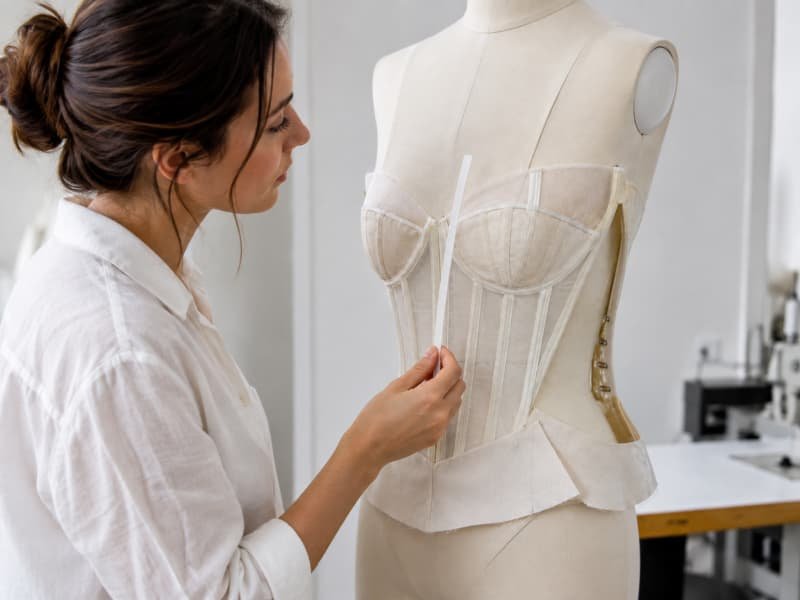
Structure Mock-up
A partial corset, bust or waist mock-up can verify cup position, boning, seam support, lining and closure before a full dress is made.
The mock-up helps isolate structural issues from surface decoration. It is especially useful when lace, beads or sheer panels will later cover the internal construction.

Packing Protection Trial
Fold and pack a decorated sample using the intended tissue, polybag, insert and carton arrangement. Review crushing, scratching, stone transfer and fold marks after a holding period. Packing trials are valuable for three-dimensional flowers, sequins, delicate satin, molded cups and strongly pleated garments.
Workmanship Must Follow Pattern, Fit and Structure
Decoration Around Shaped Seams
Bust darts, princess seams, waist seams and curved panels change the position of embroidery, lace and stone motifs. A flat placement drawing may look correct but distort after shaping. Duolan reviews the motif on the actual pattern and sample, then separates, rotates or repositions elements where needed. Seam allowances are kept clear enough for stable sewing, pressing and alteration.
Graded sizes also require attention. A motif that fits perfectly on a base size may crowd the armhole or zipper in a smaller size and appear too sparse in a larger size. Placement rules define fixed points, proportional changes and areas that must remain visually consistent.
Support Under Visual Effects
Beading, lace and sheer panels often sit over cups, power mesh, boning or internal elastic. The surface effect must not expose unfinished support or create excessive thickness. The lining plan is developed with the external motif so coverage, transparency and edge finish remain intentional.
For corset dresses, boning length, cup position, under-bust seam and back closure affect where decoration can safely sit. Stitching through rigid or heavily decorated zones may damage components or weaken the structure. The production route therefore defines the order of support construction and surface application.
Stretch and Movement Control
Bodycon, mesh and fitted dresses need controlled elasticity. Dense embroidery, foil, sequins and appliqué can reduce stretch or create hard zones. Duolan compares stretch before and after processing, then adjusts placement, panel direction, seam type or backing. The aim is to preserve fit without allowing the workmanship to crack, pull or distort during wear.
Movement-sensitive areas include underarms, side seams, hip curves, back openings and skirt slits. Decoration is kept clear of stress points or reinforced with a method suited to repeated movement. Fit review checks standing, walking and sitting positions rather than only a static mannequin pose.
Clean Internal Finish
A premium visual surface can be weakened by rough backing, loose threads, exposed knots or poorly secured edges. Internal finishing is reviewed for skin contact, lining coverage, seam thickness and durability. Decorative work near necklines and armholes receives special attention because the reverse side is close to the body.
Approved internal methods may include partial lining, binding, backing removal, protective tape, concealed reinforcement or hand-finished edge control. Clear reverse-side references help production and QC teams judge workmanship beyond the front appearance.
Coordinated Special Process Resources for Dress Projects
Printing Resources
Digital, screen, heat-transfer and related print resources can be selected according to artwork, fabric and volume. Project control covers strike-off approval, color, scale, repeat, placement and lot consistency.
The print route is linked to cutting and garment construction so motifs remain aligned after shaping and size grading.
Embroidery Resources
Dye and Wash Resources
Dip dyeing, ombré, washing and special finishing are coordinated with 2-3 mature resource options in each key direction.
Development trials include the full material combination where possible. Shade, shrinkage, hand feel and trim reaction are reviewed before a bulk route is approved.
Pleating and Finishing
Embellishment Support
Production Coordination
Special processes are inserted into the production path at the correct stage: fabric processing before cutting, panel processing before assembly, or garment finishing after sewing. Project teams coordinate material movement, approval status, production timing and QC handover so external processing does not become an uncontrolled gap.
Send Your Dress for Workmanship Review
Share Available Inputs
Send any available design sketch, tech pack, reference image, original sample photo, target fabric, artwork, size range, colorways, estimated quantity and launch date. Complete information supports a more accurate review, but early-stage references are also welcome when the production route is still being defined.
Receive a Clearer Path
The initial response can cover likely fabric and workmanship risks, suggested trials, structural concerns, sample stages, material questions and production-sensitive checkpoints. Where several methods could create a similar look, Duolan can outline the main trade-offs in appearance, cost, timing and repeatability.
Turn the Approved Sample Into a Production Standard

Lock the Material System

Translate the Workmanship
The approved appearance is converted into a placement map, density or spacing reference, attachment method, seam clearance, reverse-side finish and operation sequence. Production engineers identify which steps happen before cutting, on individual panels, during assembly or after garment completion. Complex workmanship may require training pieces, a first-piece sample or a pilot run. Operators and inspectors use the same approved reference so the standard is not dependent on verbal explanation.

Control Size Grading

Release With Checkpoints
Production release includes the PP reference, BOM, size specification, critical workmanship notes, first-piece criteria, inline checks and final inspection focus. Complex styles may be verified at first-piece or pilot stage before the full run is released. Bulk production references commonly fall into three planning ranges after approvals and materials are locked: simple styles around 15-20 days, regular styles around 20-30 days and complex styles around 30-45 days. Exact timing depends on order size, process load, packaging and inspection requirements.
Sampling Plans for Complex Workmanship Dresses
First Sample Planning
A sample proposal should identify the sample type, included materials, workmanship trials, major open questions and expected review points. Generic speed promises are avoided when an unresolved fabric, artwork or process decision could create a false timeline.
Staged Development Updates
Project updates are organized around sample start, key technical questions and pre-completion review. Photos or short videos may be used to confirm fabric effect, placement, structure or an unexpected process issue before the sample is fully finished. Early visibility reduces the risk of completing a sample in a direction the brand team would not approve.
Complex styles benefit from a brief sample review note covering fit, fabric, drape, lining, workmanship and production-related concerns. The note helps product teams separate visual preference from technical risk and prepares more useful comments for the next round.
Revision Management
Comments are summarized by category: fit adjustment, fabric or detail adjustment, visual preference and production-related issue. Conflicting comments are clarified before changes begin. A revision summary records the agreed direction, the next sample objective and any decision that could affect bulk production.
Revision timing depends on material changes and workmanship complexity. A fit-only correction can move faster than a new embroidery program, new color strike-off or redesigned corset structure. The revised plan is confirmed after the scope is clear.
Sample Shipping and Review
Sensitive dresses are photographed before dispatch and packed according to their structure. Molded cups, pleats, satin surfaces, sequins, lace and three-dimensional elements may require tissue, inserts or hanging protection. Express delivery commonly takes about 3-7 days, subject to destination and customs.
The receiving team can review front, side and back fit, measurements, fabric behavior, lining, comfort, workmanship and production readiness. Clear review categories lead to faster decisions and more disciplined revision rounds.
Workmanship-specific Quality Control Before Shipment
Sequin and Bead Control
Embroidery Control
Print and Color Control
Pleat and Ruching Control
Pleat direction, depth, spacing, recovery and hem balance are reviewed across the garment.
Ruching and smocking are checked for gather ratio, elastic tension, seam twisting and size consistency.Measurements are taken without stretching or compressing the area beyond the defined method.
Corset Structure Control
Cups, boning, under-bust seams, waist balance, closures, lining and reinforcement are checked for symmetry and comfort.
Boning ends must be secured, cups must align, and back tension should remain balanced. Size grading is compared against the approved measurement and structure references.
Final Packing Control
Final review includes garment appearance, measurements, labels, hangtags, barcode, folding or hanging method, protective tissue, inserts, polybag and carton requirements. Decorated dresses are packed according to surface sensitivity. Shipment release follows the agreed inspection route, including brand-appointed or third-party inspection where required.
What Determines Workmanship Cost and Lead Time
Coverage and Density
Material and Components
Manual Working Hours
Development Trials
Artwork programming, strike-offs, dye tests, pleat tests, wash tests and structure mock-ups add development steps before garment sampling. Those trials reduce later rework and protect bulk consistency.
The project plan should state which trials are required, which are optional and which approval is needed before moving forward.
Wastage and Rework Risk
Decorated fabrics often require careful cutting, motif matching and seam clearing. Breakage, shade variation or failed adhesion can increase material and labor loss.
A stable method, clear operator training and first-piece approval reduce avoidable rework, but realistic wastage must still be included in the production plan.
Production and Delivery Path
Special processes may add external scheduling, material movement and approval points. Bulk lead time begins after the PP sample, BOM, materials, order details and payment milestone are confirmed. Express delivery commonly takes 3-7 days, air freight around 5-8 days and sea freight around 20-35 days, depending on destination and customs.
Special Workmanship Projects From Development to Bulk

Holiday Party Collection
A US fashion brand developed 18 party styles with sequins, rhinestones, mesh panels, ruching and fitted silhouettes. Total order volume reached approximately 48,600 pieces across four core colors and a US XS-XL size range. Early trials identified seam bulk on the sequin fabric and stone adhesion risk on a stretch mesh.
The route was adjusted with controlled seam clearance, selected backing, revised stone temperature and added lining coverage. Two sample rounds were completed before PP approval. Production was divided by complexity, with high-manual-hour styles separated from machine-led styles. Bulk planning used a 32-day production window after material and PP confirmation, followed by staged final inspection and split shipment.

Structured Occasion Program
A regional occasionwear brand developed 24 styles combining corset bodices, lace appliqué, cups, boning, beading and satin skirts. The total order was approximately 72,000 pieces across US 0-14. The main development risk was the interaction between decorative motifs and bust structure, especially around princess seams, back closures and graded cup positions.
Partial structure mock-ups were created before full sampling. Lace placement maps were revised by size, and bead coverage was reduced near seam and zipper areas without weakening the visual identity. A pilot run verified boning position, cup symmetry and reverse-side comfort. Approved standards were then transferred to matched production lines with inline checks focused on structure and motif alignment.

Resort Print and Pleat Capsule
A multi-channel fashion brand developed 12 resort styles using placement prints, lightweight satin, chiffon, ombré effects and sunray pleating. The first order totaled approximately 26,400 pieces in three color stories. Development focused on print placement across graded panels, pleat recovery, transparency and shade consistency between the main fabric and lining.
Strike-offs and pleat trials were approved before full samples. Pattern allowances were adjusted after pleating, and printed panels were mapped to control placement near waist seams and slits. The project moved through photo samples, PP samples and a 28-day production window after final approvals. Packing included tissue and controlled folding to protect pleats and satin surfaces during shipment.
Development Depth Backed by Manufacturing Scale
30+ Years Development
Owned Factory Control
Measurable Equipment Base
Development Capacity
Production Capacity
Audit Readiness
Duolan’s factory system has completed SMETA and SMETA 2-Pillar audits with a social audit record. Project requirements can be coordinated around BSCI, ISO 9001, AATCC, ASTM, OEKO-TEX®, EN, China GB standards, GOTS and specific brand standards where applicable.
Special Workmanship Frequently Asked Questions
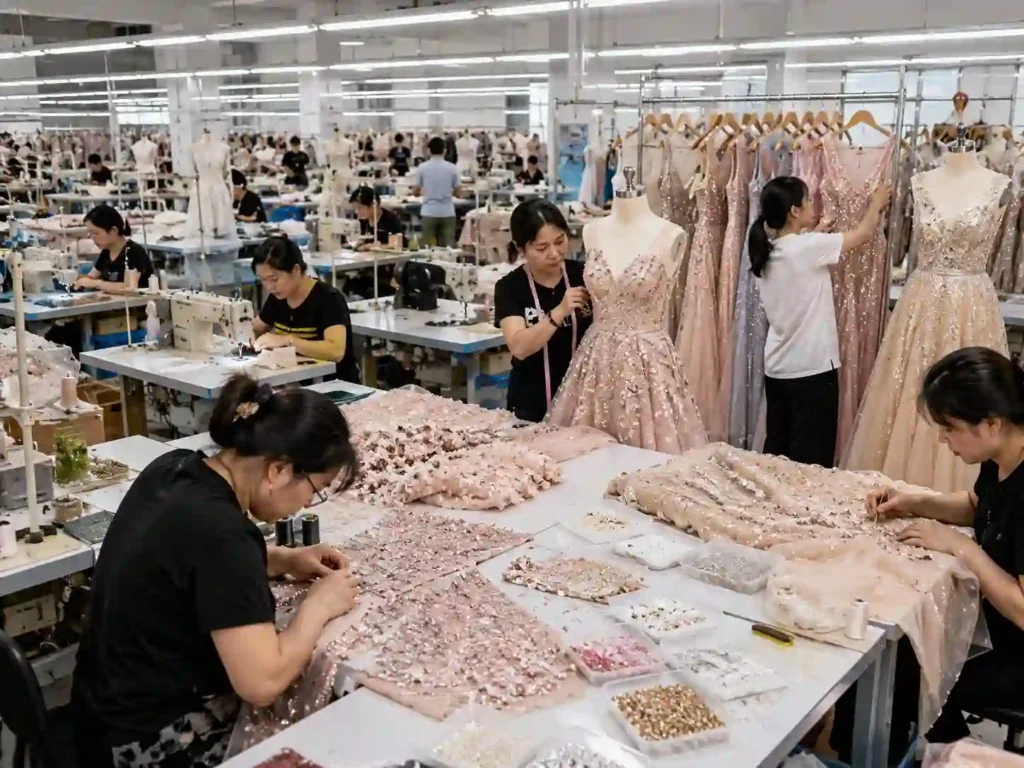
Start Your Workmanship Development Review
Share the materials already available for your dress program, whether the project begins with a complete tech pack, a design sketch, reference images, an original sample or an early collection direction. A stronger project brief helps Duolan review fabric behavior, process feasibility, fit and structural risks, sample stages, quantity planning and lead time with greater accuracy.
Useful inputs include:
- Dress type and selling scene
- Design sketch, tech pack or reference images
- Authorized print or embroidery artwork
- Target fabric, lining and trim direction
- Required workmanship and visual finish
- Size range, colorways and estimated quantity
- Label, packaging and inspection requirements
- Target launch date or delivery window
The team will review the available information and outline the next development path, including important trials, material questions, sample priorities and production-sensitive checkpoints. Confidential files and unreleased product information are handled within agreed project boundaries.


