
Stretch Dress Fit Solutions
Fit engineering for bodycon, jersey, stretch mesh and fitted dress programs from fabric review through sample approval and bulk production.
- 5 fit zones reviewed: bust, waist, hip, side seam and hem, with support points added when the design needs them.
- 3 fabric states compared: relaxed, stretched and recovered, so extension is never judged without shape return.
- 4 movement checks can be built into fit review: walking, sitting, raising the arms and turning.
- Size performance is reviewed beyond one sample size, with grading, measurement tolerance and bulk consistency tied to the approved fit direction.
Dress OEM execution for established fashion brands, from technical files and PP samples to inspected bulk delivery.
Duolan manufactures brand-owned dress designs through controlled OEM workflows. We review tech packs, fabric standards, BOM details, measurement specs, approved samples, PP requirements, dress construction risks, QC points and packing rules before bulk production moves forward.
Four Controls Behind Reliable Stretch Dress Fit
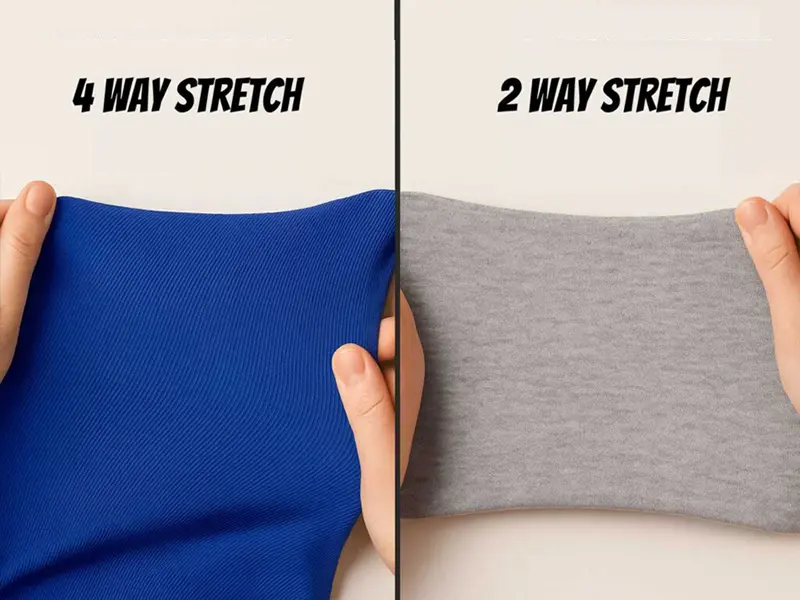
Fabric Behavior
- Review stretch direction and usable extension.
- Compare relaxed shape with recovered shape.
- Check GSM, density, surface and opacity under tension.
- Match shell behavior with lining or support layers.
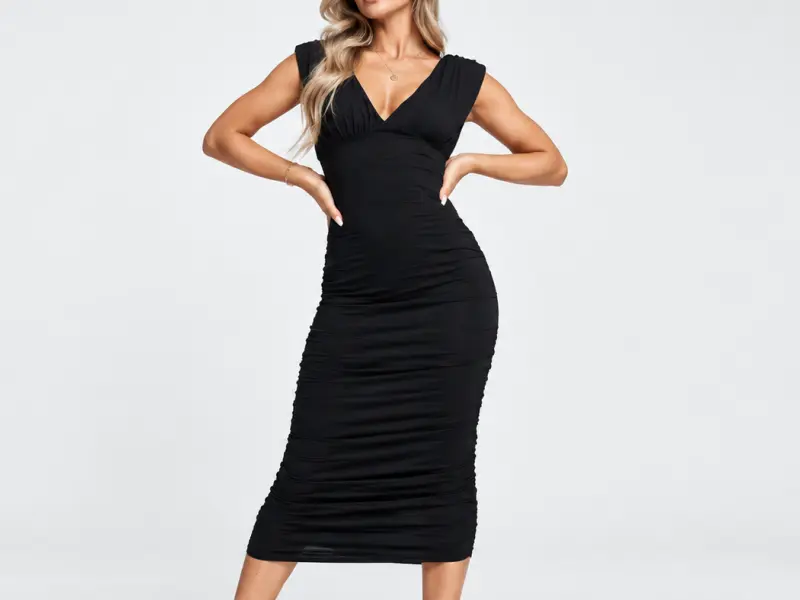
Pattern Tension
- Define base size and brand fit direction first.
- Adjust ease by body zone, not by one global ratio.
- Review side-seam balance, body length and hem behavior.
- Return fit comments to the pattern, not only to the sample surface.

Construction Elasticity
- Check seam extension at high-tension areas.
- Prevent neckline growth without making the opening rigid.
- Match lining stretch to the outer fabric where movement is shared.
- Reinforce stress points without blocking required extension.
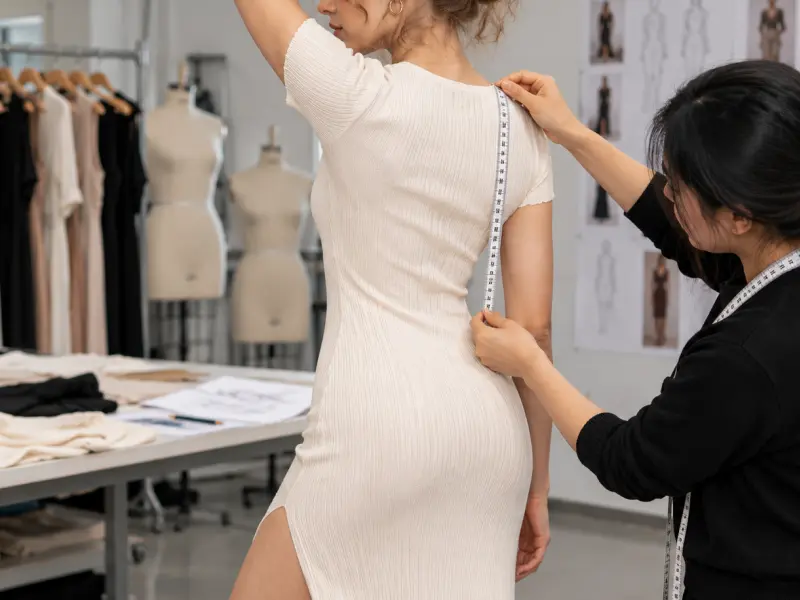
Size And Movement
A sample can look correct on one fitting model and still fail across a size range or during wear. Duolan reviews critical proportions as sizes grade up or down, including bust position, waist level, high hip, full hip, body length, strap length, slit height and hem opening. Movement review adds another layer: the dress should remain secure when walking, sitting, turning or raising the arms, while recovery should bring the garment back toward its intended shape after movement.
- Review sample size and grading logic together.
- Check fit in static and moving positions.
- Track measurement tolerance against the approved standard.
- Preserve the same visual contour across the planned size range.
Diagnose Stretch Dress Fit Problems Before Reworking Samples
Visible defects often have more than one cause. A useful fit review links each symptom to fabric, pattern, construction and movement before the next sample, helping the development team correct the cause rather than repeatedly treating the surface problem.
| Visible Fit Problem | Common Timing | Likely Causes | What We Check | Development Action |
|---|---|---|---|---|
| Back waist bags out | After wear | Low recovery, excess ease, weak waist shaping | Recovery, back waist length, side seam balance | Adjust fabric choice or waist pattern control |
| Hem rides up | Walking or sitting | Hip tension, thigh restriction, short back balance, lining friction | Hip ease, hem opening, movement, lining behavior | Rebalance hip, thigh and hem relationship |
| Side seam twists | Standing or movement | Fabric torque, grain direction, front-back imbalance | Cutting direction, fabric skew, pattern balance | Correct pattern or cutting direction |
| Neckline gapes | Standing or after wear | Excess opening length, poor recovery, sewing stretch-out | Neckline measurement, stabilization, stitch tension | Reduce or stabilize opening correctly |
| Bust feels compressed | Standing | Too much negative ease, insufficient cup volume, rigid lining | Bust width, underbust, fabric force, lining | Restore volume and rebalance pressure |
| Fabric turns sheer | Under stretch | Low GSM, open knit, excessive extension, wrong lining | Opacity at bust and hip under tension | Change material, layering or fit reduction |
| Seam feels tight | Dressing or movement | Low seam extension, rigid thread path, excess reinforcement | Seam stretch, stitch type, stress point | Change stitch or local construction |
| Waist loosens over time | During wear | Weak recovery, heat or wash instability, pattern depending on compression | Recovery, wear behavior, wash behavior | Improve material stability or waist shaping |
Stretch And Recovery Must Be Evaluated Together
Stretch Percentage Does Not Define Fit On Its Own
Two fabrics can both contain elastane and still behave completely differently on the body. A material that extends easily may create a soft, relaxed bodycon effect, while another needs more force and produces stronger compression. Duolan therefore treats stretch as a behavior to be reviewed, not a marketing number to be accepted without context.
A useful material review starts with direction. Widthwise stretch controls circumference and comfort around bust, waist and hip. Lengthwise stretch affects body length, skirt drop, strap behavior and how a fitted dress settles during wear. Four-way stretch can improve movement, but uncontrolled vertical extension may also contribute to length growth, neckline movement or a heavier skirt pulling downward.
The next question is usable extension. A fabric may reach 20%, 40% or 60% extension under a chosen test method, yet the dress pattern should not simply copy the same percentage as negative ease. The force required to reach the extension matters, and so does the intended wearing pressure.
Material review should therefore record:
- Widthwise and lengthwise stretch direction.
- Extension behavior under a consistent test method.
- Hand feel and resistance during extension.
- GSM and knit density relative to body-line coverage.
- Opacity at relaxed and stretched states.
- Shell and lining behavior when both layers move together.
Duolan uses those observations to decide whether the material supports the target silhouette before the pattern is pushed further into fit development.
Recovery Is What Keeps The Silhouette In Shape
Stretch describes how far a fabric can move. Recovery describes how well it returns after being pulled, worn or washed. For fitted dresses, recovery often determines whether the waist stays clean, the seat remains smooth, the neckline holds position and the garment still looks controlled after several hours of wear.
Recovery needs to be viewed in more than one condition. Immediate recovery shows whether the fabric springs back after extension. Wear recovery shows what happens after the body has loaded the fabric at the waist, hip, seat or thigh. Wash recovery and dimensional stability show whether the approved fit can survive the intended care method. A fabric that performs well in the first pull test may still grow around the seat or develop a soft bag at the back waist after repeated movement.
Weight and construction affect the result. Lightweight jersey can offer excellent comfort but may expose body lines or lose shape when recovery is weak. A denser double jersey can improve coverage and shape retention, while the additional weight may change drape or increase downward pull. Stretch mesh can work well for ruched or layered designs, but shell-to-lining compatibility becomes critical because one layer cannot move correctly if the other layer resists or recovers at a different rate.
Duolan connects recovery review with pattern tension, size grading, movement fitting and wash stability rather than treating the material test as a separate laboratory exercise. The goal is a dress that returns toward the approved silhouette after normal movement instead of relying on permanent compression to look fitted.
Negative Ease Must Follow Fabric And Body Zones
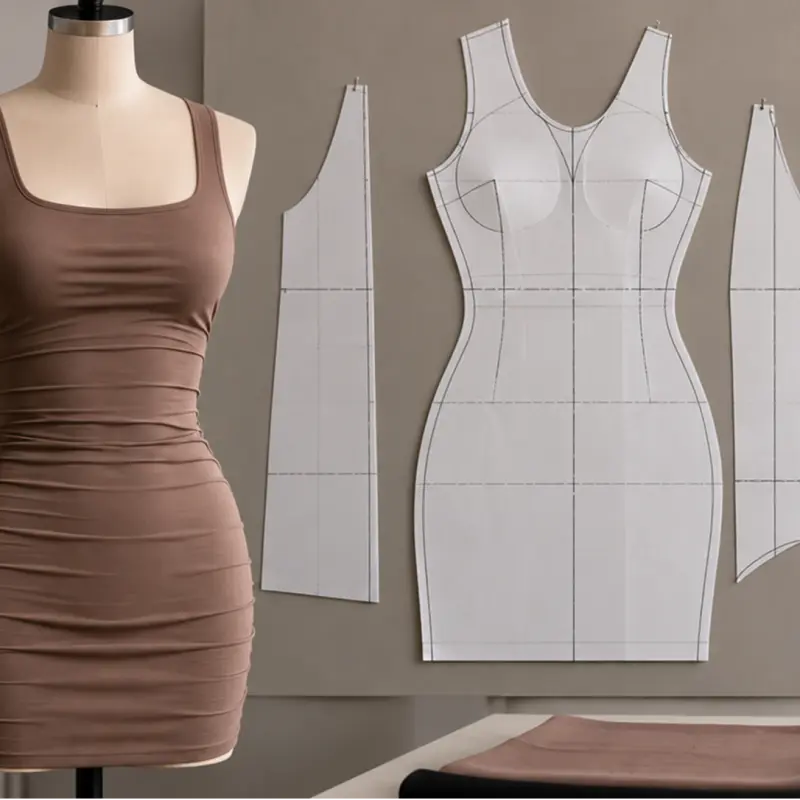
Pattern Reduction Is A Controlled Fit Decision
A stretch dress pattern is not a woven dress pattern reduced by an arbitrary percentage. The reduction must be compatible with the fabric’s usable extension, recovery force, thickness, lining system and target appearance. If the pattern asks for more stretch than the material can supply comfortably, the garment may show horizontal drag lines, excessive shine, transparency, seam strain or restricted movement. If the pattern asks for too little tension, the same dress may look soft at the waist, lose contour around the seat or shift during wear.
Duolan starts with the brand’s fit direction: sculpted, close-fitted, softly fitted, structured or movement-led. The base size and target market are then linked to the actual fabric. A 40% widthwise extension result, for example, does not mean the garment should use 40% negative ease. Maximum extension, comfortable wearing extension and recovery after wear are different measurements. Pattern reduction is set from the desired wearing condition, not from the furthest point a fabric can be pulled.
Critical measurements commonly include bust, underbust, waist, high hip, full hip, body length, thigh level and hem opening. Strap length, armhole depth, neckline drop and slit height are added when the design uses those elements. The pattern team then checks whether the pressure distribution can hold the intended silhouette without creating a rigid or unstable garment.
Fit comments are returned to the pattern as specific actions: change waist suppression, add back length, reshape hip curve, rebalance side seam, adjust neckline opening, restore bust volume or widen the hem. Surface pinning can demonstrate a possible correction, but the approved solution needs to exist in the pattern for sampling, grading and bulk production.
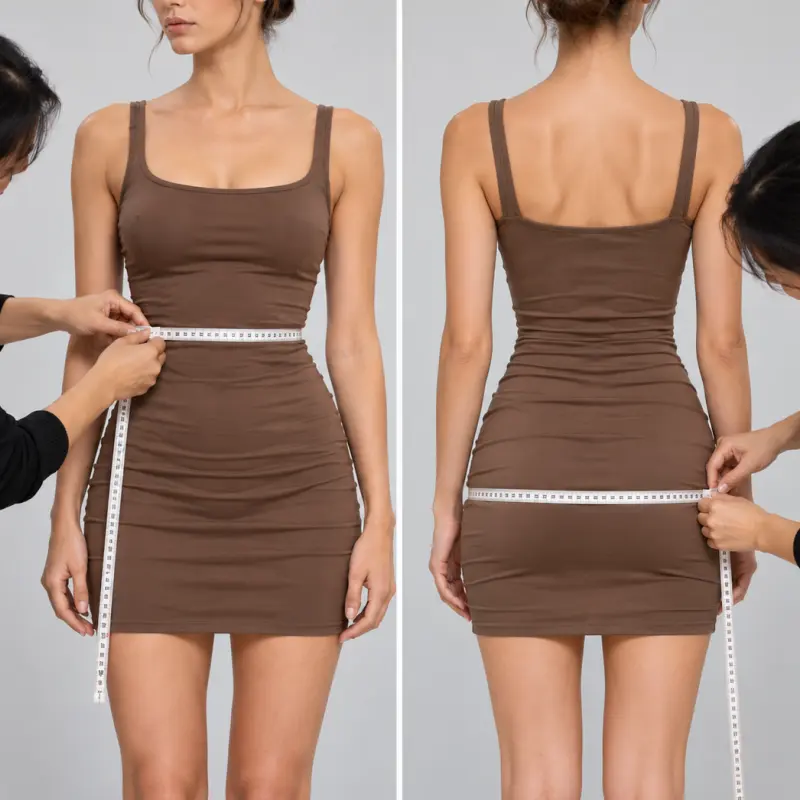
Bust, Waist, Hip And Hem Need Different Tension
The body is not a cylinder, so a uniform reduction rarely produces a balanced fitted dress. Bust requires shape and coverage as well as closeness. Waist often needs stronger contour. Hip and seat need enough room for body volume and sitting movement. Thigh and hem must prevent the skirt from climbing upward when walking. A neckline or strap may need stability even when the main body remains highly elastic.
For a fitted mini dress, excessive hip or thigh tension can transfer downward resistance into upward movement, causing the hem to ride up. A back waist that appears loose may come from weak recovery, excess back length or a front-back balance issue rather than simply too much waist circumference. A compressed bust can be caused by insufficient cup volume or rigid lining even when the body measurement appears correct. Each defect needs a cause-based correction.
Duolan reviews pressure distribution through front, side and back fitting. Side-seam direction is especially useful because rotation or diagonal drag can reveal hidden imbalance between front and back pattern sections. Movement checks then show whether the fit holds when the wearer walks, sits, raises the arms or turns. The approved pattern needs to preserve shape without requiring constant adjustment by the wearer.
The same logic continues into grading. As sizes change, bust-to-waist and waist-to-hip relationships do not remain visually identical if every measurement is increased by one fixed amount. Stretch-sensitive grading must preserve the intended contour, coverage and movement while respecting the brand’s size system. Pattern tension therefore becomes a linked system from base size through full size range rather than a one-sample adjustment.
Fit Engineering By Body Zone Prevents Hidden Imbalance
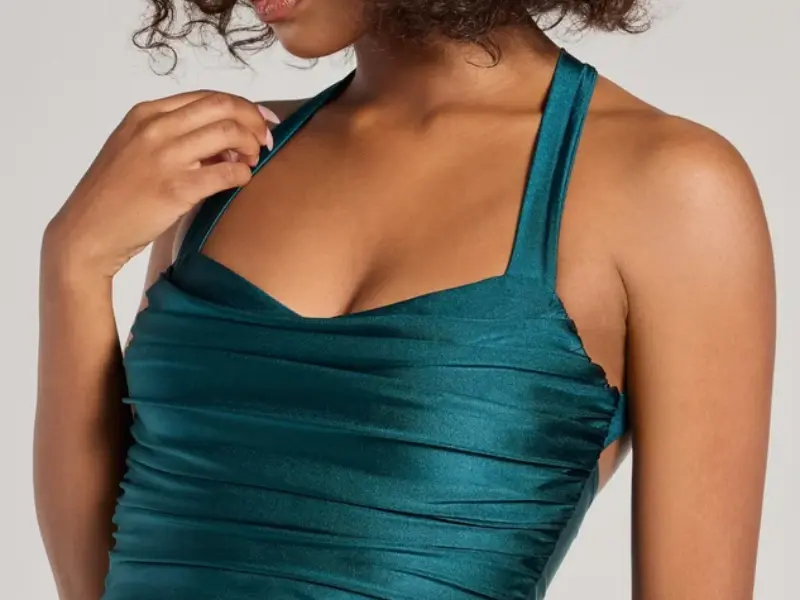
Bust And Neckline
- Check front volume against fabric force.
- Watch neckline growth after dressing and movement.
- Confirm coverage under intended stretch.
- Review support layers without creating a rigid shell.
- Compare neckline position before and after movement.
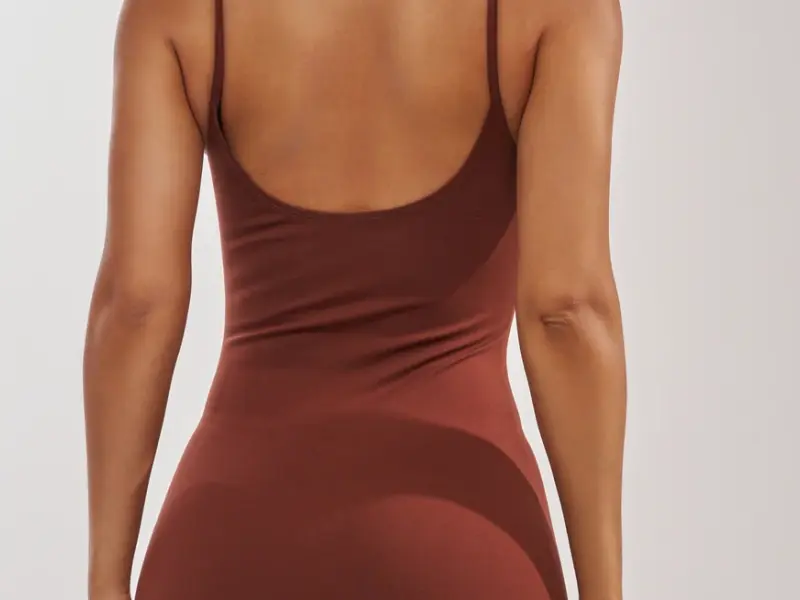
Waist And Back
- Check front and back waist balance.
- Review recovery after sitting and movement.
- Separate circumference issues from length issues.
- Keep contour without creating pressure marks.
- Recheck back waist after the fabric has recovered.

Hip And Seat
Hip fit is a major control area for bodycon, ruched and stretch mesh dresses. Too little room can create diagonal drag lines, side-seam rotation or hem ride-up. Too much room can produce seat growth or a loose lower back.
Duolan reviews high hip, full hip, seat curve, fabric recovery and lining friction while the wearer stands, walks and sits. The goal is close contour with enough movement to prevent the skirt from constantly shifting.
- Check high hip and full hip separately.
- Review seat recovery after sitting.
- Watch side-seam direction under movement.
- Confirm lining does not block shell extension.
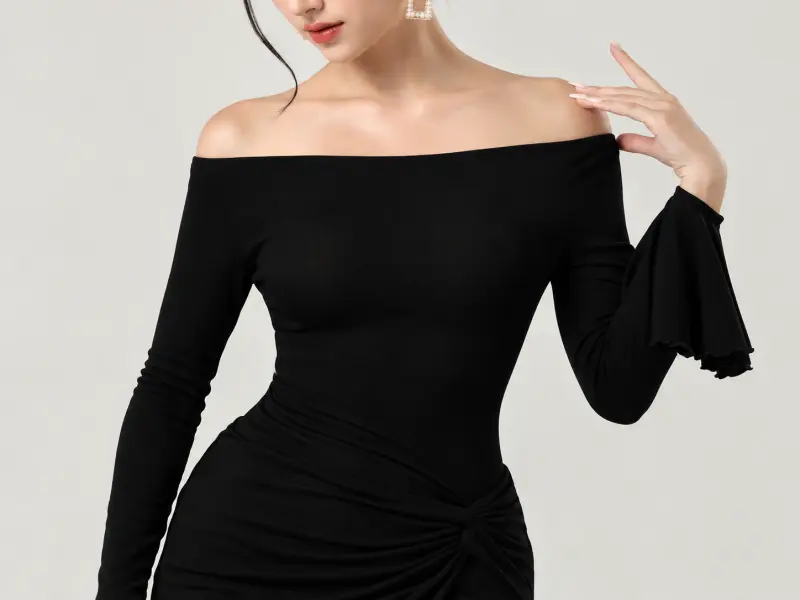
Shoulder And Armhole
- Check raised-arm movement, not only standing fit.
- Review strap stretch and recovery.
- Prevent armhole cutting or excessive gaping.
- Balance support with neck and shoulder comfort.
- Confirm strap position returns after movement.
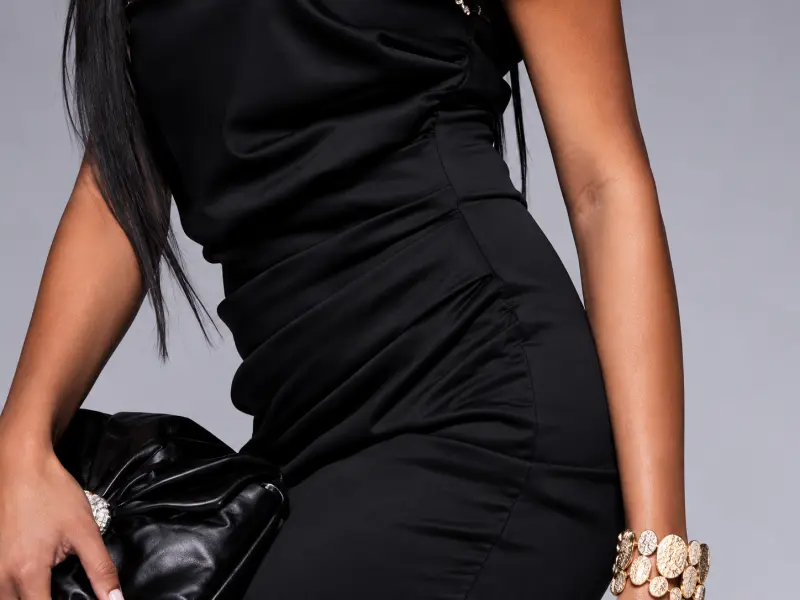
Side Seam And Torso
A straight side seam is a useful indicator of pattern balance. When the seam twists toward the front or back, the cause may involve fabric torque, grain direction, uneven pattern tension or front-back body balance. Duolan compares the seam line in relaxed condition, on-body fit and movement. Correction can involve pattern redistribution, cutting direction or fabric selection rather than forcing the seam back through sewing tension.
- Mark seam direction during fitting.
- Check fabric skew before cutting decisions.
- Review front-back tension distribution.
- Keep seam alignment consistent through grading.
- Compare both sides for balanced rotation.
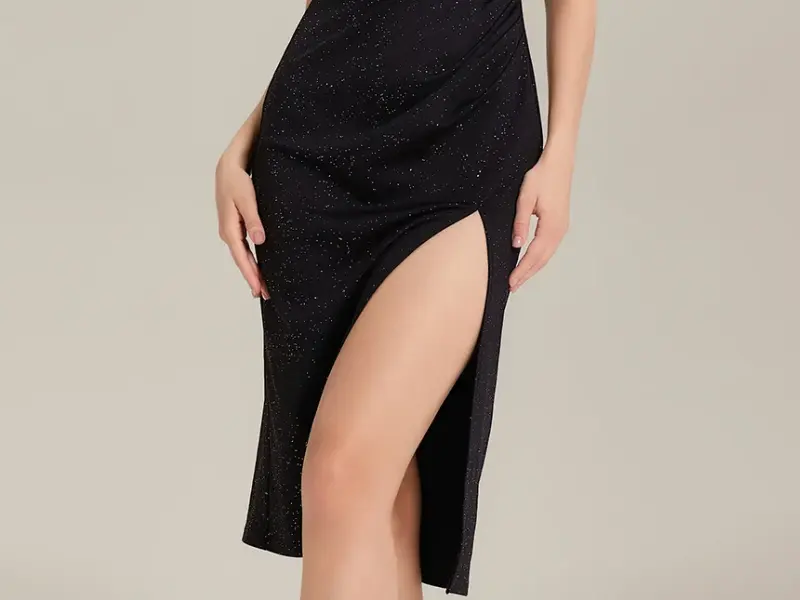
Hem And Slit
A fitted hem must allow walking, sitting and normal stride without climbing upward or opening too aggressively. Mini dresses need coverage and ride-up control. Midi and maxi fitted silhouettes need enough lower-body movement while preserving a clean line. Slit height, slit reinforcement, thigh tension and hem opening are reviewed together. For ruched or asymmetrical designs, fabric tension around the hem can be uneven and must be evaluated from both static and moving positions.
- Check stride and seated position.
- Review hem opening against thigh tension.
- Confirm slit height across the size range.
- Reinforce the slit top without blocking movement.
Static Fit Is Only The First Fit Check
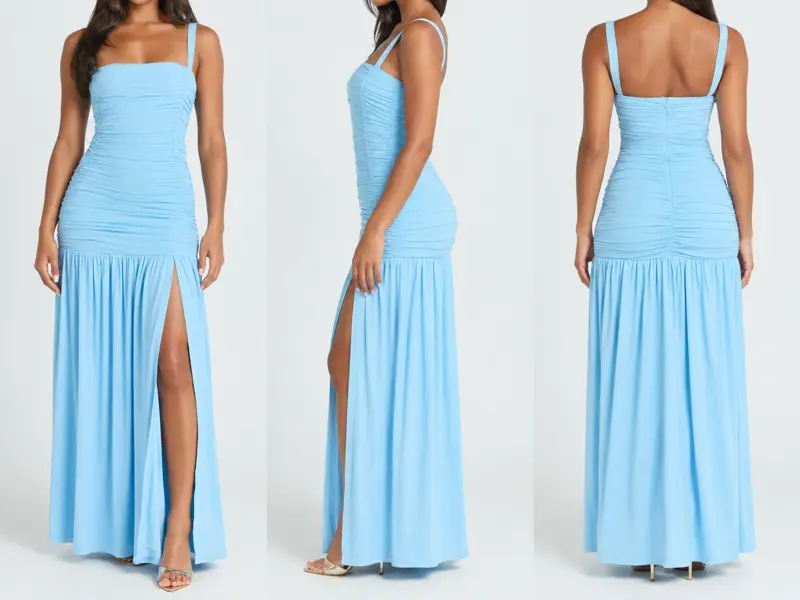
Static Fit Review
Standing fit establishes proportion, silhouette and key alignment. Duolan reviews bust position, waist level, hip contour, side-seam direction, neckline, strap placement, hem line and slit position from front, side and back. Static review is also the point where drag lines, gaping or unexpected compression can be mapped back to the pattern. A clean standing fit is necessary, but it is not enough to approve a stretch-sensitive style for production.
- Front, side and back views.
- Key measurement confirmation.
- Side-seam and hem balance.
- Coverage and support review.
- Mark visible drag lines before the sample is revised.
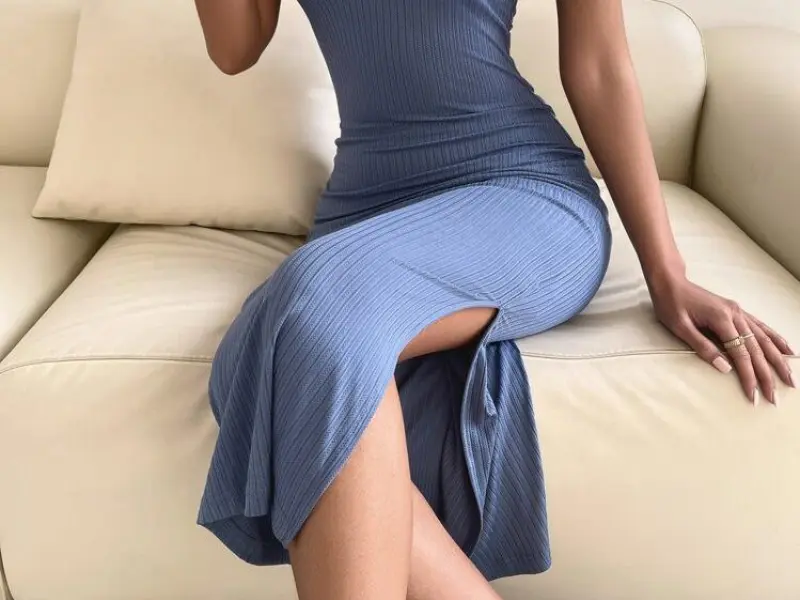
Movement Fit Review
Movement exposes restrictions and migration that may never appear in a standing photo. Walking can reveal hem ride-up or side-seam rotation. Sitting can expose hip restriction, back-waist growth or slit tension. Raising the arms can show underarm cutting, strap movement or neckline instability. Turning can reveal whether the dress rotates around the body. Duolan uses movement comments to separate pattern issues from fabric recovery, lining friction and construction limits before the next sample stage.
- Walk and normal stride.
- Sit and stand recovery.
- Raise arms without neckline failure.
- Turn without garment rotation.

Wear Recovery Review
A fitted dress can pass the first two minutes of a fitting and still lose shape after longer wear. Recovery review looks for waist bagging, seat growth, neckline relaxation, knee or thigh distortion and changes in hem level after the fabric has remained under tension. The same material may behave differently when lined, ruched or combined with a zipper. Duolan connects wear observations to fabric recovery, pattern reduction and construction so the correction addresses the real cause rather than only the visible symptom.
- Compare relaxed and worn shape.
- Observe high-load body zones.
- Check shell and lining recovery together.
- Reconfirm measurements after wear when needed.
Match Stretch Fabrics To The Intended Dress Silhouette
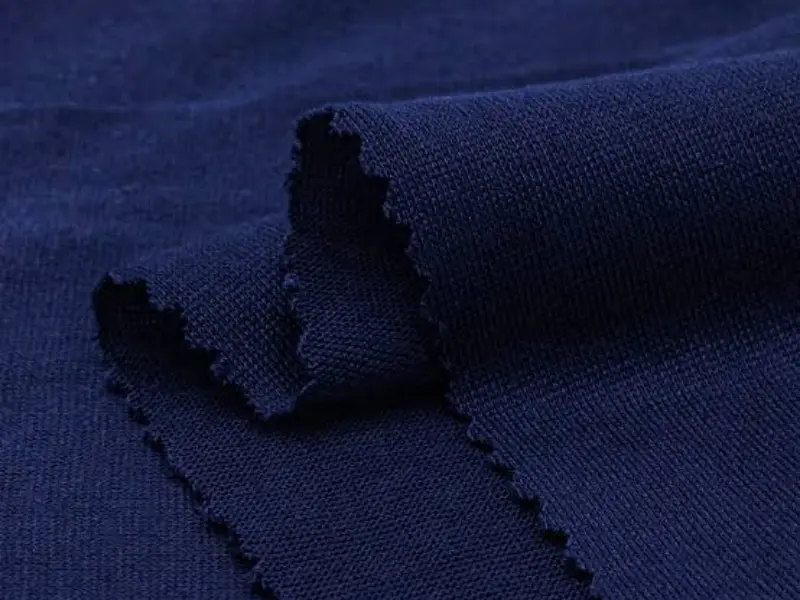
Single Jersey
- Best for softer fitted silhouettes.
- Watch seat growth and back-waist bagging.
- Check light colors under stretch.
- Confirm wash stability before bulk.
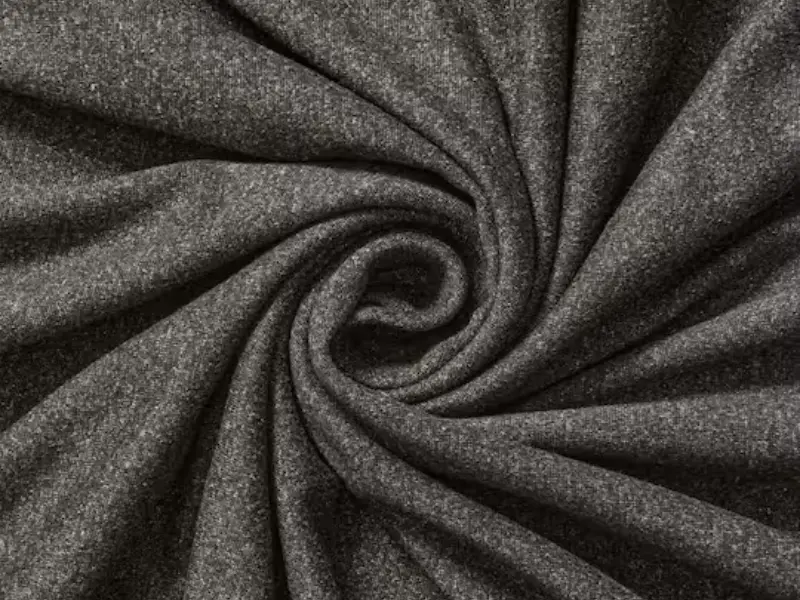
Double Jersey
- Stronger contour and coverage.
- Lower transparency risk than light jersey.
- Requires controlled pattern reduction.
- Check total garment weight in longer styles.
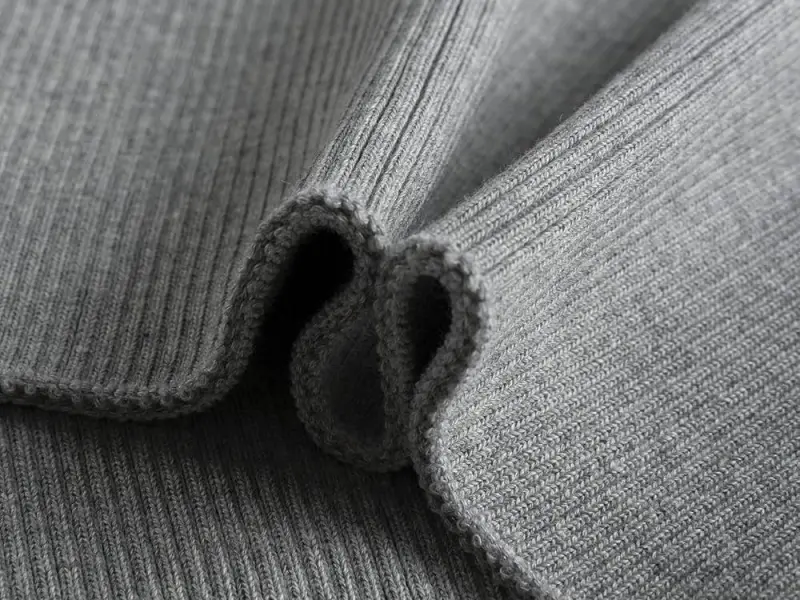
Rib Knit
- Strong body adaptability.
- Rib opening changes visual coverage.
- Check neckline and hem recovery.
- Review grade across bust and hip.
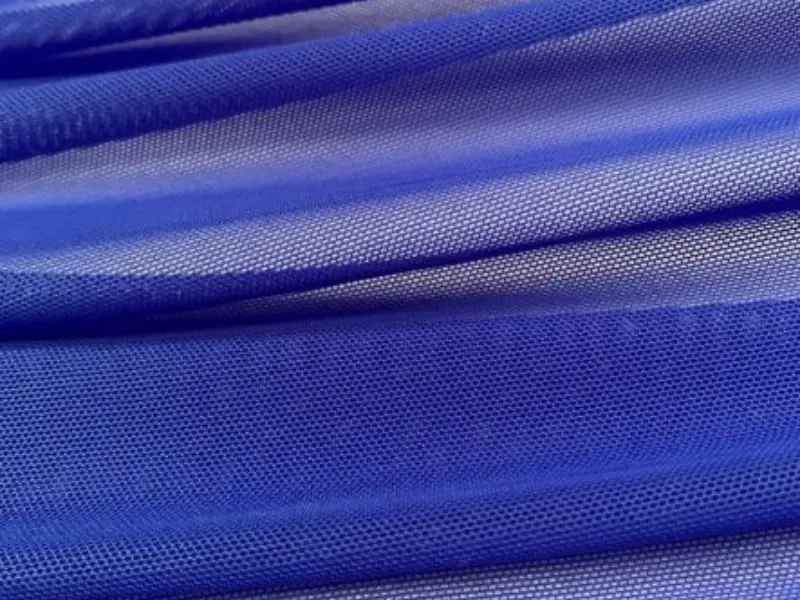
Stretch Mesh
- Best for layered visual effects.
- Check shell-to-lining stretch ratio.
- Review opacity under full extension.
- Protect seams from puckering and wave.
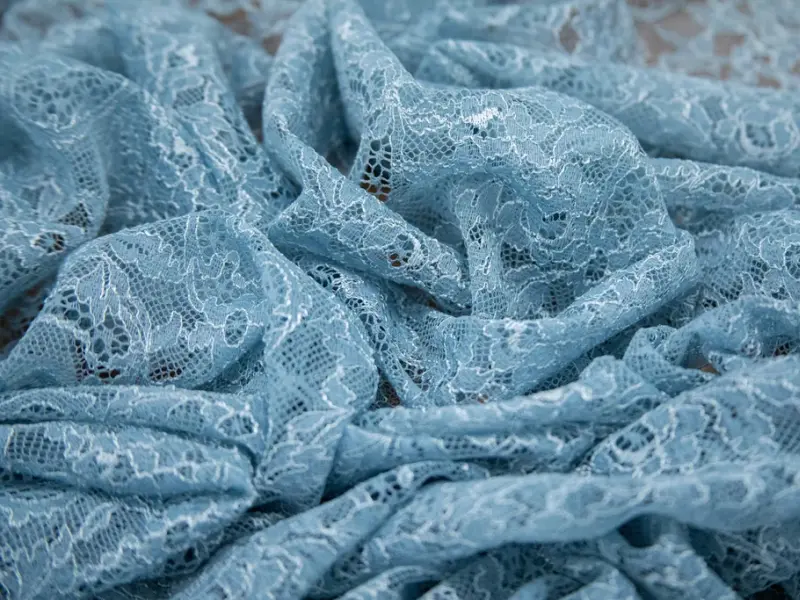
Stretch Lace
- Review motif distortion under tension.
- Match lining stretch and color.
- Control seam placement through the pattern.
- Lock lace specification for repeat production.
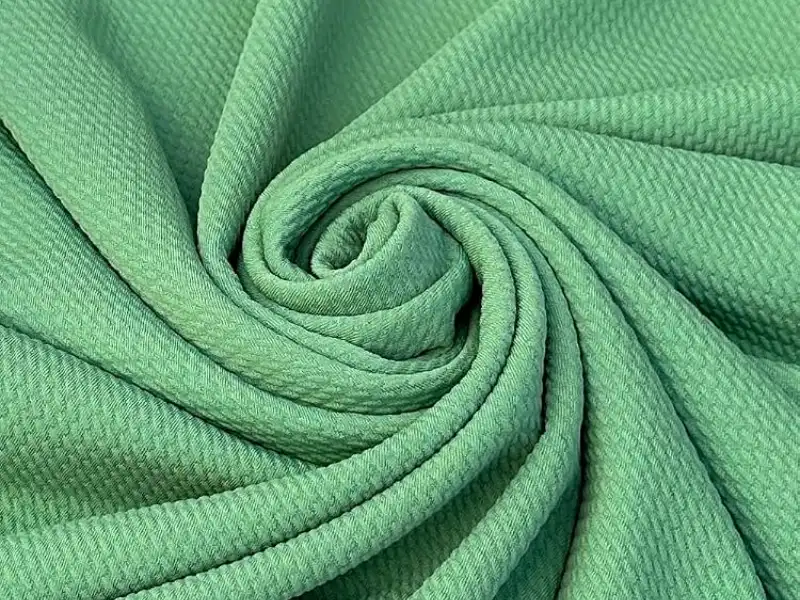
Supportive Stretch Knits
- Higher contour and compression potential.
- Require careful entry and movement review.
- Check zipper and seam stress.
- Grade pressure, not only circumference.
Build Size Charts Around Stretch Behavior And Brand Fit
Base Size And Fit Direction Must Be Defined Together
Duolan can follow an established brand size chart or help organize fit logic when specifications are incomplete. The first step is identifying the target market and the fit direction of the product. A US 4, UK 8, EU 36 or AU 8 can be used as a sample-size reference when appropriate, but the number alone does not define how a fitted dress should feel. Bodycon, softly fitted, sculpted and structured stretch dresses require different garment relationships even when the same body chart is used.
The material then changes the garment specification. A stable double jersey can support a closer clean contour with less transparency, while light single jersey may need more careful coverage and recovery control. Stretch mesh layered over a lining must be sized as a two-layer system. A rib knit may open visually at higher extension, affecting both fit and appearance. Duolan therefore reviews body measurements, garment measurements and material behavior as connected inputs.
Critical points commonly include bust, underbust, waist, high hip, full hip, body length, strap length, armhole depth, neckline drop, slit height and hem opening. The exact list depends on the style. For a mini bodycon dress, full hip, body length and hem opening may be critical. For a halter fitted dress, strap length, neckline drop and bust coverage become more sensitive. For a ruched mesh dress, gathering position and shell-to-lining relationship also need control.
A reliable base-size approval should answer three questions: Does the silhouette match the brand direction? Can the wearer move without the garment shifting or restricting? Can the approved fit be translated into measurable points for grading and production? Once all three are clear, the size chart becomes a production standard rather than a static spreadsheet.
Grading Preserves Proportion Across The Full Size Range
Grading is not a simple process of adding the same amount to every measurement. The aim is to preserve visual proportion, coverage, movement and pressure as the style moves from the approved sample size into the planned size range. Stretch fabrics add another variable because the same amount of garment reduction can create different wearing pressure at different body dimensions.
For bodycon styles, Duolan reviews bust-to-waist and waist-to-hip relationships rather than expanding only circumference. The waist should still look intentionally shaped in larger sizes, while the hip and thigh need enough room for movement. Mini length must remain safe as body dimensions change. Strapless, halter and backless styles require additional grading attention at neckline, strap, bust coverage and back opening. Stretch mesh and lace need stable coverage because open structures can become more transparent as extension increases.
A typical size-set review can include XS through XL or a brand-defined extended range. Not every style requires a physical sample in every size, but critical jump sizes or high-risk sizes can be reviewed based on project requirements. Measurement tolerance should be set around the points that materially affect fit, rather than treating every dimension as equally sensitive.
Grade approval also needs to connect to bulk control. Pattern versions, size specifications, POM definitions and approved tolerances should remain aligned with the PP sample and production files. When a fit correction changes waist suppression, body length, neckline or hip balance, the grading rule must be updated before production. Duolan treats grading as part of fit preservation, not as a separate technical task performed after the sample already looks right.
Lining, Opacity And Support Change Stretch Dress Fit
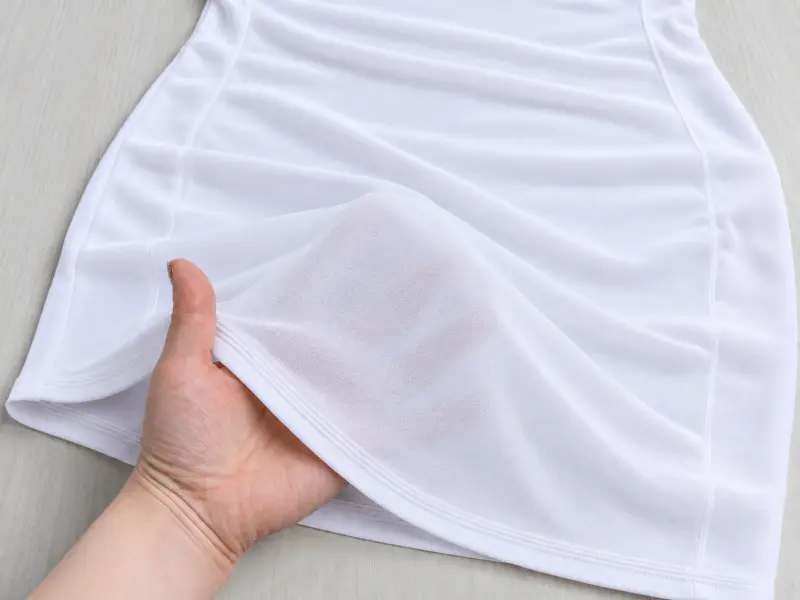
Opacity Under Tension
A fabric that looks opaque on a table can become visibly sheer over bust, hip or seat once it is stretched. Light colors, thin jersey, stretch mesh, rib knit and open lace are especially sensitive. Duolan checks opacity in relaxed and stretched conditions, then reviews the result on a mannequin or fitting model under normal and stronger lighting when the style requires it. The goal is not to remove every sheer effect; the goal is to distinguish intentional transparency from unwanted exposure.
- Check bust, hip and seat under real extension.
- Review white and pale colors separately.
- Compare shell alone with shell plus lining.
- Confirm photo-lighting behavior for ecommerce samples.
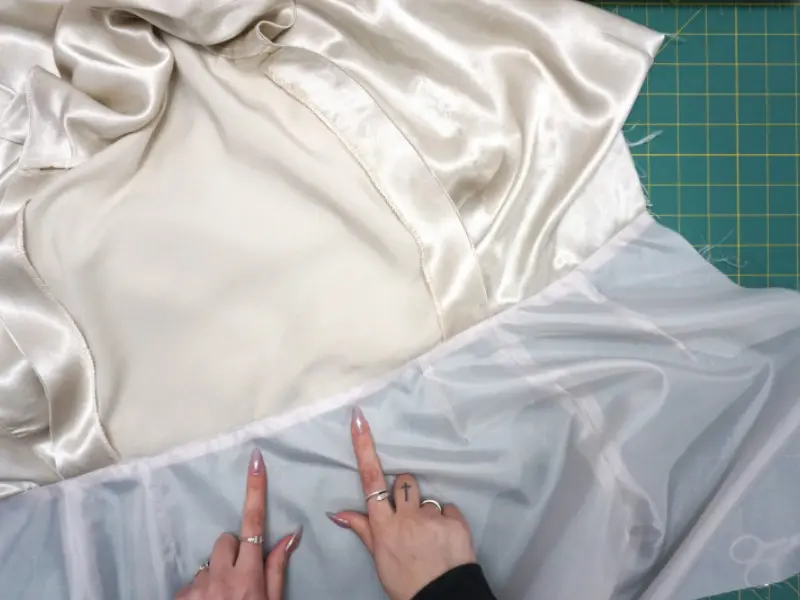
Stretch-Compatible Lining
A rigid lining inside a flexible shell can make a dress feel smaller than the outer pattern suggests. A lining that stretches too freely can shift, twist or fail to cover high-tension areas. Duolan reviews lining composition, extension, recovery, thickness, hand feel and shrinkage alongside the shell.
Attachment points at shoulder, side seam, waist, zipper and hem also matter because excessive fixing can block movement while insufficient fixing can allow the lining to migrate during wear.
- Match lining extension to garment movement.
- Check shrinkage compatibility with the shell.
- Prevent lining from showing below the hem.
- Control fixed points around zipper and waist.
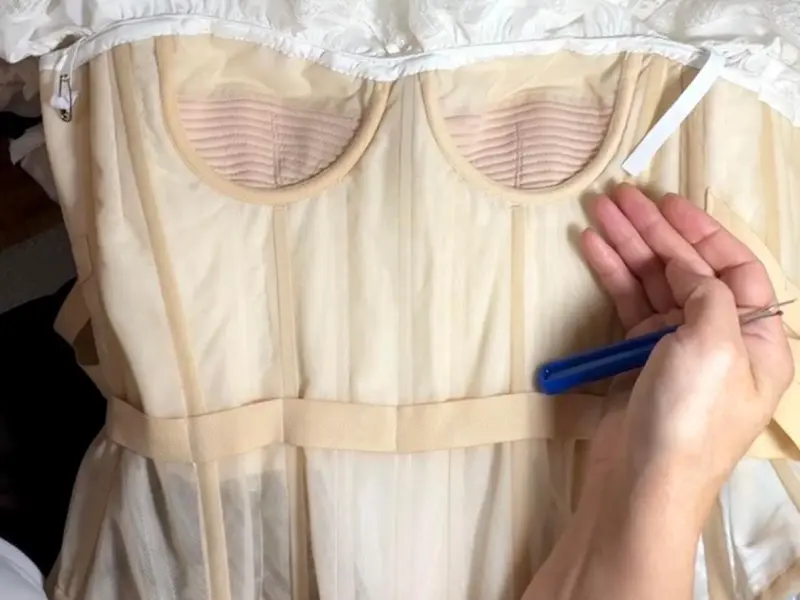
Internal Support
Some stretch dresses need more than soft lining. Bust cups, power mesh, elastic, anti-slip tape, localized reinforcement or structured panels can help hold shape where the main fabric alone cannot. Duolan reviews where support begins and ends, how it interacts with stretch zones and whether the wearer can still dress, sit and move comfortably. Support decisions are strongest when made during sampling rather than added late to solve an already unstable fit.
- Add support only where the silhouette needs it.
- Keep transitions smooth under the outer fabric.
- Review pressure around bust and neckline.
- Confirm support survives normal movement.
Stretch Seams Must Move Without Losing Structure
Side Seam Extension
- Check seam extension against fabric extension.
- Avoid rigid thread paths in high-movement zones.
- Watch waviness after sewing.
- Confirm side-seam direction during fitting.
- Recheck seam recovery after repeated extension.
Stress Point Reinforcement
- Reinforce zipper bottoms and slit tops.
- Review strap and halter attachment loads.
- Protect ruched anchor points.
- Keep reinforcement localized and flexible.
- Inspect surrounding fabric for stress concentration.
Opening Stabilization
- Control neckline growth.
- Match stabilization to fabric force.
- Prevent edge wave and roll.
- Check comfort at underarm and chest.
- Confirm the stabilized opening still allows dressing.
Ruched And Slit Control
Ruching changes local stretch because fabric is gathered into a shorter seam or channel. Slits introduce a concentrated movement point. Both details can distort a fitted skirt if seam tension, elastic length or reinforcement is inconsistent. Duolan reviews gathering ratio, placement, seam recovery and slit height through fitting and sample comparison. The construction standard must then be measurable enough to repeat across sizes and bulk production.
- Lock ruching position and distribution.
- Check elastic length or channel tension.
- Reinforce slit tops without stiffness.
- Compare appearance across sizes.
- Recheck hem level after movement.
Stretch Dress Styles Need Different Fit Priorities
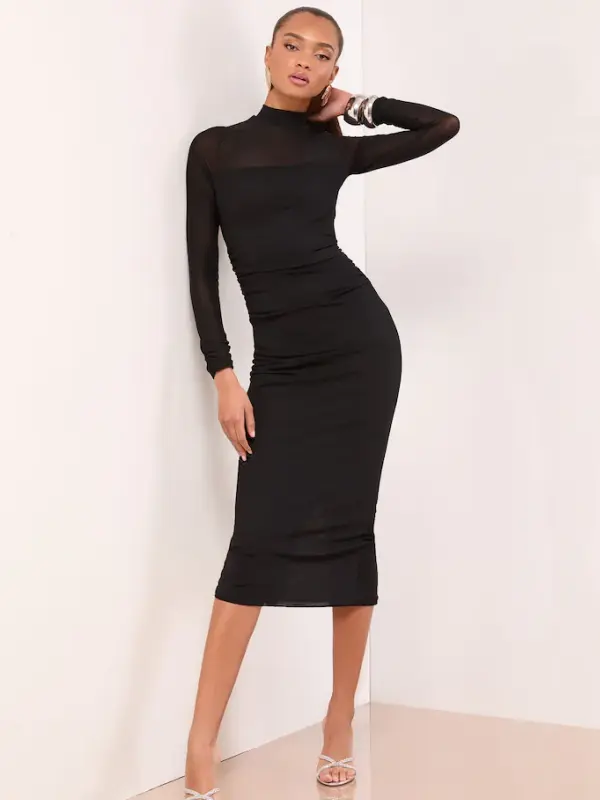
Bodycon Dresses
- Priority: controlled contour.
- Main risks: bagging, sheerness, ride-up.
- Key checks: recovery, hip balance, hem opening.
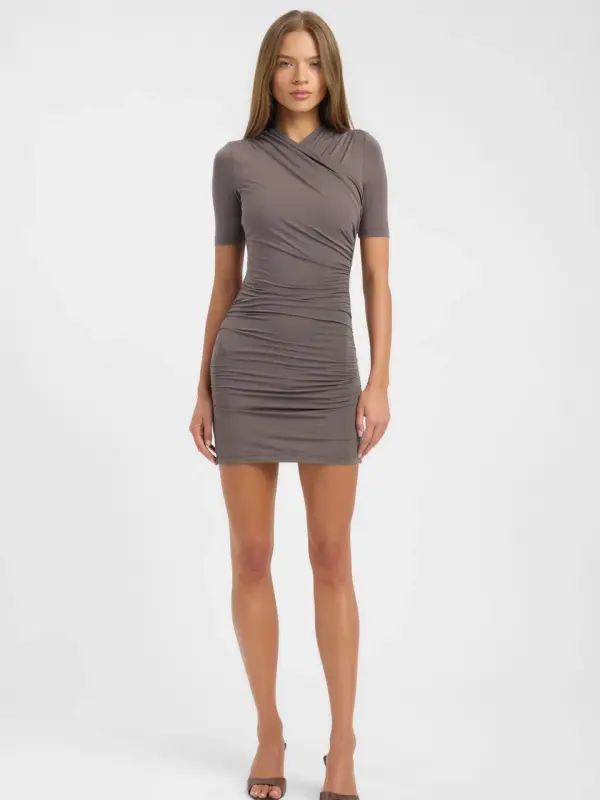
Jersey Fitted Dresses
- Priority: softness with shape retention.
- Main risks: growth, twist, wash change.
- Key checks: GSM, recovery, shrinkage.

Ruched Dresses
- Priority: controlled gathering and contour.
- Main risks: distortion, uneven length, seam pull.
- Key checks: placement, tension, recovery.
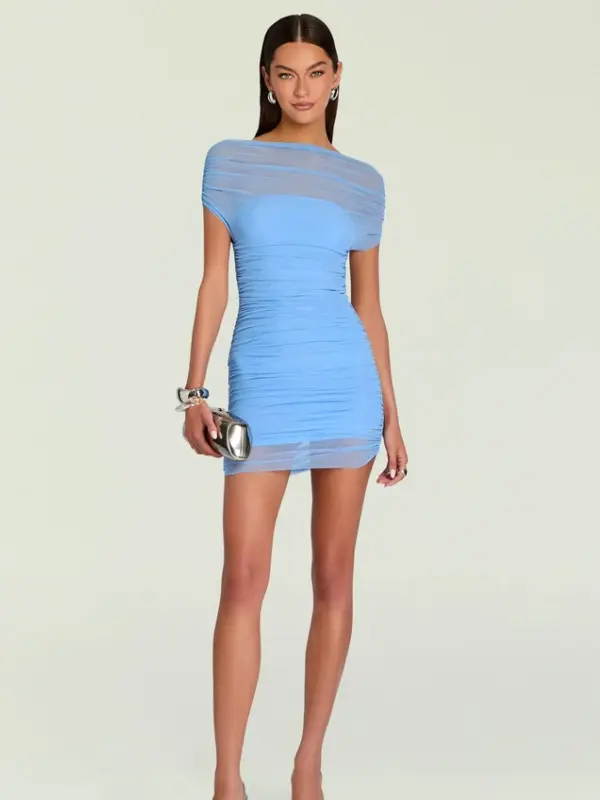
Stretch Mesh Dresses
- Priority: layered fit and coverage.
- Main risks: transparency, shell-lining mismatch.
- Key checks: extension, lining, seam wave.
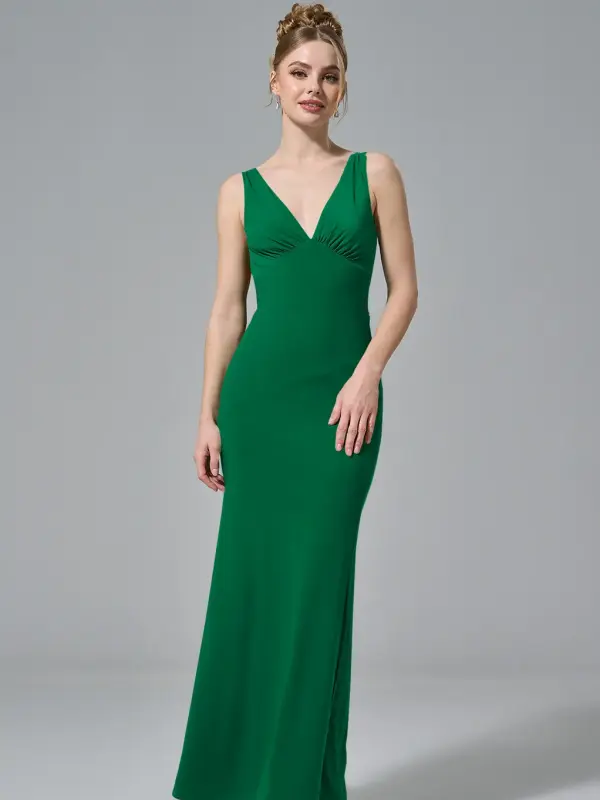
Supportive Stretch Dresses
- Priority: sculpted but wearable fit.
- Main risks: pressure, entry, seam stress.
- Key checks: body zones, zipper, grade.
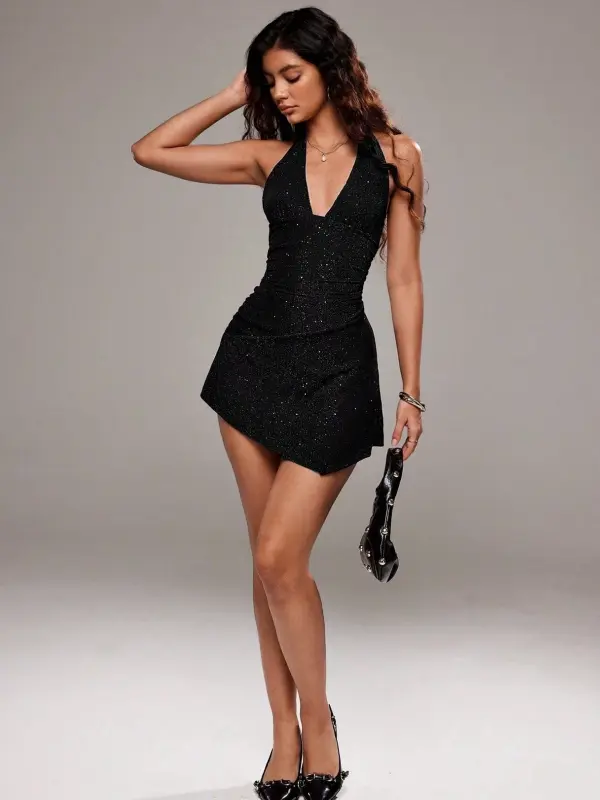
Fitted Party Dresses
- Priority: visual fit with wearing security.
- Main risks: shifting, exposure, stress-point failure.
- Key checks: support, movement, reinforcement.
Fit Samples Turn Design Direction Into Measurable Standards
Feasibility Review
First Sample
Fit Sample
Pattern Correction
PP Sample
First-Piece Review
Ten Fit Checks Before Stretch Dresses Enter Bulk
Fit approval should leave a measurable production trail. The following checks connect fabric behavior, on-body review, grading, seam performance and manufacturing control without relying on a single flat measurement result, so critical fit decisions can remain visible from sampling through PP and bulk inspection.
| Fit Check | Development Stage | What Is Reviewed | Risk Controlled |
|---|---|---|---|
| Stretch direction | Fabric review | Width, length and four-way behavior | Wrong pattern or cutting orientation |
| Usable extension | Fabric review | Extension under consistent method and wearing force | Excess compression or loose contour |
| Recovery | Fabric and sample | Immediate, wear and wash return | Bagging and shape loss |
| Opacity under tension | Sample | Bust, hip, seat and light-color coverage | Unwanted transparency |
| Shell-lining compatibility | Sample | Relative stretch, recovery and shrinkage | Restriction, twisting, lining exposure |
| Movement fit | Fit sample | Walk, sit, raise arms, turn | Ride-up, migration, restricted movement |
| Seam extension | Construction review | Side seams and high-load openings | Seam break or rigid pressure points |
| Size grading | Size-set review | Proportion, coverage and pressure across sizes | Inconsistent fit by size |
| Shrinkage stability | Pre-production | Length, width, lining and post-wash balance | Fit change after care |
| Measurement tolerance | PP and bulk | Critical POM against approved standard | Size drift during production |
Preserve Approved Fit From PP Sample Into Bulk
Lock The Inputs That Can Change Fit
Stretch dress fit can shift even when the design and size chart stay unchanged. A new fabric lot may have different recovery. A cutting direction can change extension. A lining replacement can restrict movement. Stitch tension can create a rigid seam.Duolan reduces those risks by connecting material, pattern, measurement and workmanship references before full production is released. The production basis should identify the approved fabric specification, color, GSM or relevant material parameters, stretch direction, lining, trims, pattern version, size spec, POM definitions, measurement tolerance, stitch construction and high-risk details.Critical fit points are then translated into line-level checks rather than remaining only in the development team’s comments. For fitted styles, common production checkpoints include:
- Bulk fabric stretch and recovery compared with the approved direction.
- Cutting orientation checked before volume cutting.
- Pattern version and grading files aligned with the latest fit approval.
- First-piece measurements compared with the PP or approved specification.
- Side-seam direction, waist balance, hip contour and hem opening reviewed on early pieces.
- Stretch seams and stress points checked before full-line output builds.
- Inline measurements focused on fit-sensitive POM rather than only general dimensions.
- Fitting QC used when flat measurements cannot confirm wearing behavior.
Bulk consistency does not mean every piece is visually identical at microscopic level. It means the product stays inside the approved fit, material and workmanship standard that the brand signed off before production.
Production Timing Starts After Critical Standards Are Ready
Lead time is more reliable when fit-sensitive decisions are locked before the production clock is compressed. A general planning reference for dress production can be 15-20 days for simpler styles, 20-30 days for regular styles and 30-45 days for complex styles after PP basis, BOM, materials, order details and payment milestones are confirmed. Stretch-sensitive construction, new fabric development, special finishing, third-party inspection or late fit changes can affect the actual schedule.
For fitted programs, rushing past the production-readiness stage can create a false time saving. If bulk fabric behaves differently from the approved sample, a quick start may generate a full-line fit problem. If a late pattern correction has not been graded into every size, production can preserve the wrong fit at scale. If lining or seam construction changes after PP approval, movement and wearing pressure can shift even when flat measurements still pass.
Duolan therefore treats bulk release as a decision point. The production path is reviewed by style complexity, material sensitivity, fit risk and delivery window. High-risk styles can move through first-piece or pilot verification before wider release. Lower-risk repeat styles can rely more heavily on locked records from the confirmed version, provided material and production conditions remain aligned.
The aim is not to make every project follow the same timeline. The aim is to protect launch timing by preventing avoidable fit corrections after bulk has already advanced. Brands with a fixed campaign, ecommerce launch or retail delivery window can share the required delivery date early so sampling, PP approval, production and inspection milestones can be planned around the commercial calendar.
A Representative Stretch Fit Correction Program
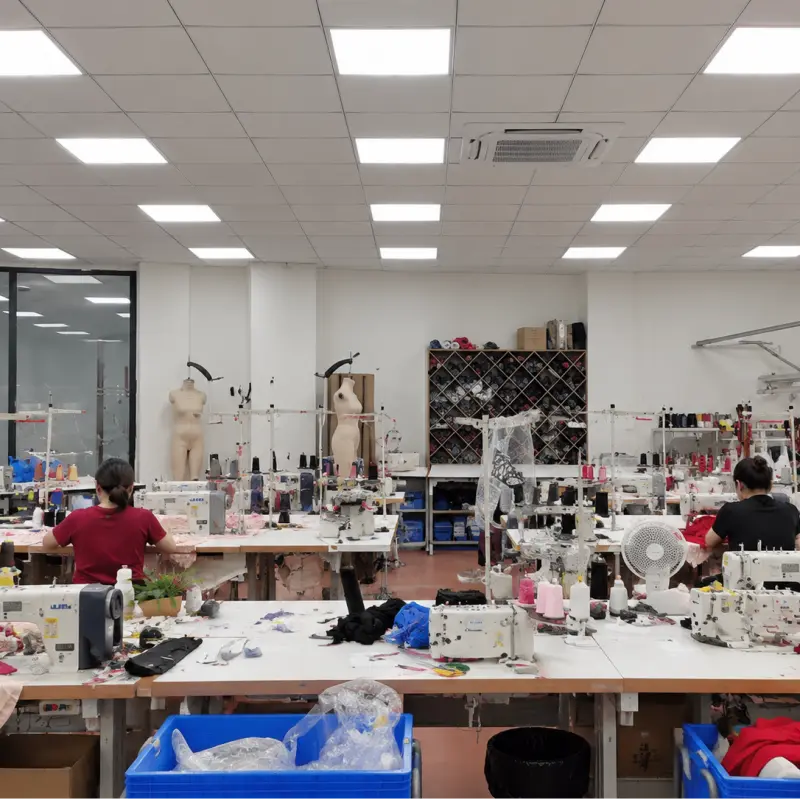
18 Styles, 42,600 Pieces, XS-XL
The program covered 18 fitted party and going-out styles across five color families, with a planned total of 42,600 pieces in XS-XL. The silhouettes included bodycon minis, ruched midis, stretch mesh overlays, halter fitted dresses and two supportive stretch styles with more structured waist control. Three sample stages were used for the higher-risk styles: first sample, fit/revised sample and PP basis. Lower-risk extensions reused approved fit blocks where the fabric and construction remained compatible.
The first review identified several recurring risks across the assortment. A lightweight jersey created stronger transparency at full hip than the initial swatch suggested. Two ruched styles showed side-seam rotation after movement. One halter dress held the waist correctly but transferred too much tension into the neckline. A stretch mesh style looked smooth while standing but the lining restricted the shell during sitting. A supportive midi maintained shape well but the initial pattern reduction created excessive thigh pressure and limited stride.
The correction process did not apply one answer to every style. Material and fit comments were separated first, then each issue was traced to the most likely cause. The lightweight jersey style moved to a denser commercial jersey direction for the light color, while the darker color kept the original material after opacity review. Ruched side seams were rebalanced through pattern distribution and gathering control rather than by tightening sewing tension. The halter pattern restored front volume and adjusted strap length so support was shared more evenly. The mesh dress received a lining with more compatible extension. The supportive midi gained controlled room through thigh and hem while preserving waist contour.
Across the program, the development team tracked bust, waist, full hip, body length, strap length and hem opening as core fit points, with additional measurements added by style. Movement review focused on walking, sitting, raising the arms and turning for designs where migration or restriction was likely.
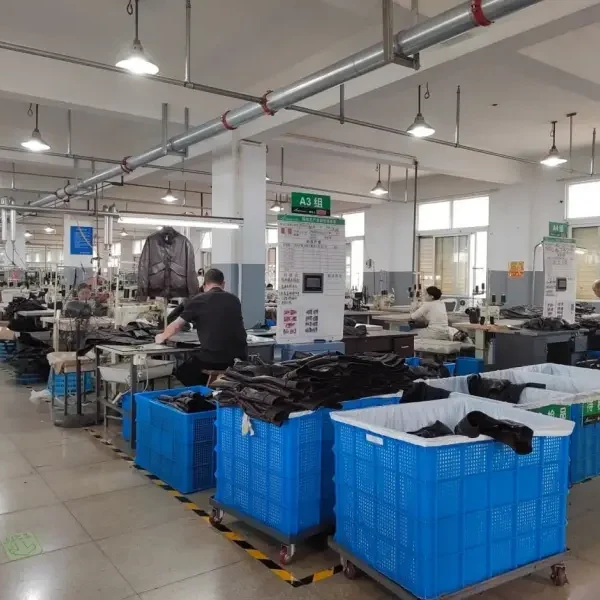
From Fit Approval To Production Control
Once the fit direction was approved, the production basis was organized around material and pattern stability. Each style moved forward with an approved fabric direction, pattern version, size specification, critical POM list, workmanship notes and PP reference. Stretch-sensitive styles added checks for bulk fabric recovery, cutting direction, lining compatibility and seam extension. Higher-risk styles received first-piece review before the full production run was released.
The most important result was not a claim that every style became “perfect” after one correction. The value came from making each revision traceable. A visible problem had a stated reason, a defined correction and a production consequence. For example, changing lining stretch was not recorded as a comfort preference only; it was linked to shell movement and seated fit. Widening a hem was not described as a styling change; it was linked to stride and ride-up control. Rebalancing a side seam was tied to pattern distribution and cutting direction, giving production a clear standard to protect.
The same logic supported the XS-XL grade. Instead of scaling only circumference, the team reviewed bust position, waist shaping, hip curve, length and hem opening so the silhouette stayed recognizable across the range. Critical jump sizes were prioritized for additional review where pressure or coverage could change faster than expected.
For a 20,000-80,000 piece brand program, fit risk grows when small differences repeat across thousands of garments. A disciplined fit-correction process keeps decisions visible before volume multiplies them. The production meaning of the program was therefore simple: approve the cause and correction while the cost of change is still contained, then lock the corrected standard before large-scale output begins.
Manufacturing Capacity Behind Stretch Fit Development
16 Owned Factories
20+ Satellite Factories
300 Sewing Lines
50+ Flexible Lines
15,000-35,000 Samples
SMETA 2-Pillar
Core manufacturing facilities have completed SMETA audit and SMETA 2-Pillar audit records, with the wider system able to work against brand-specific quality, testing and compliance requirements. For established fashion brands, fit quality and supply-chain qualification are separate approval questions; both need to be addressed before a supplier becomes suitable for long-term production programs, repeat orders and formal vendor evaluation processes.
Evaluate A Stretch Dress Supplier By Technical Evidence
Material Judgment
- Evidence: stretch and recovery observations.
- Evidence: opacity and lining review.
- Evidence: fabric-to-silhouette comparison.
- Warning sign: “any stretch fabric will work.”
- Strong sign: material advice changes with silhouette and size range.
Pattern Engineering
- Evidence: pattern correction records.
- Evidence: marked fit photos.
- Evidence: updated size specifications.
- Warning sign: only surface alterations are discussed.
- Strong sign: the correction is recorded in pattern and specification files.
Fit Sampling
- Evidence: front, side and back review.
- Evidence: fit comment summary.
- Evidence: revision objective by stage.
- Warning sign: every sample is treated the same.
- Strong sign: each sample stage has a defined approval purpose.
Size Consistency
- Evidence: grading rules and POM.
- Evidence: critical jump-size review.
- Evidence: tolerance linked to fit risk.
- Warning sign: sizes are enlarged mechanically.
- Strong sign: grade review considers proportion, movement and pressure.
Construction Control
- Evidence: stress-point map.
- Evidence: seam extension review.
- Evidence: shell-lining compatibility.
- Warning sign: “strong stitching” is the only explanation.
- Strong sign: seam choices are tied to specific stress points.
Bulk Repeatability
- Evidence: PP and first-piece records.
- Evidence: measurement and QC checkpoints.
- Evidence: pattern and material version control.
- Warning sign: sample and bulk teams work separately.
- Strong sign: approved fit records follow the style into production.
Stretch Dress Fit Frequently Asked Questions
Ride-up usually comes from a combination of hip or thigh tension, insufficient hem opening, front-back pattern imbalance, short back length, lining friction or weak recovery. The garment should be checked while walking and sitting, not only while standing. Correction may involve redistributing pattern tension, adding movement at hip or hem, changing lining behavior or selecting a fabric with more suitable recovery.
Recovery determines how well the fabric returns after extension. Weak recovery can create back-waist bagging, seat growth, neckline relaxation or loss of contour after wear. Stretch percentage alone cannot predict those changes. Recovery should be reviewed in the material, on the body and after the intended care method when wash stability is relevant.
Negative ease means the garment measurement is smaller than the body measurement so the fabric stretches to fit. The amount should not be copied from maximum fabric stretch or applied uniformly to the whole dress. Bust, waist, hip, thigh and hem can require different tension depending on fabric force, recovery, support and movement needs.
Opacity should be checked under actual extension, especially at bust, hip and seat. Solutions can include a denser fabric, higher GSM, different color, double layer, longer or more compatible lining, localized coverage or less pattern reduction. The right choice depends on whether the sheer effect is intentional and where it appears on the body.
Yes. A lining with less extension than the shell can restrict the garment even when the outer fabric and pattern are correct. Lining can also change recovery, drape, heat and comfort. Shell and lining should be reviewed together for stretch direction, recovery, thickness, shrinkage and attachment points before fit approval.
Grading should preserve proportion, coverage, movement and wearing pressure rather than simply add the same amount to every measurement. Bust-to-waist and waist-to-hip relationships, body length, strap length, neckline, slit and hem opening may need different grade logic. Fabric stretch and recovery should remain part of the grading decision.
Movement review can include walking, sitting, standing up, raising the arms and turning. The goal is to identify hem ride-up, garment rotation, neckline movement, strap pressure, hip restriction, slit stress and recovery after movement. The exact check depends on the silhouette and the areas carrying the most tension.
Wavy seams can come from fabric stretch during sewing, incorrect feed, unsuitable stitch settings, thread tension or an unstable edge. The sewing method should allow the seam to extend with the garment without stretching the fabric permanently during construction. A sample seam test is often more useful than relying on one standard machine setting.
The approved fit should be connected to the final pattern version, size specification, critical POM, measurement tolerance, material standard, lining, seam construction and PP reference. Bulk fabric and first pieces can then be checked against the same basis. Fit-sensitive points should remain visible during inline QC and repeat production.
Sampling time depends on style complexity, material readiness, fit difficulty and the number of approval stages required. A style using an available fabric and an established fit block usually moves faster than a new stretch material, complex lining system or high-risk bodycon construction. Duolan confirms the schedule after reviewing the brief rather than promising one fixed number before the development basis is clear.
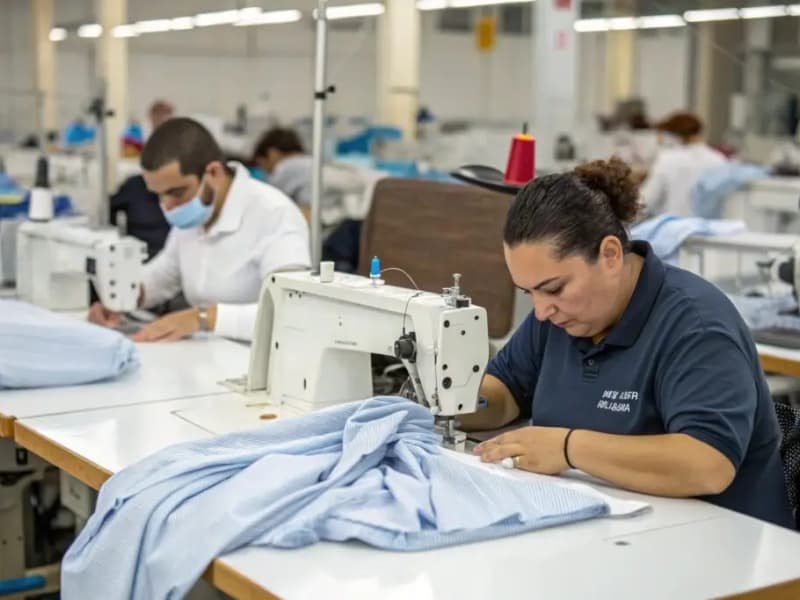
Send Your Stretch Dress Fit Project For Review
If your team is developing bodycon, jersey, stretch mesh, ruched, supportive knit or fitted party dresses, send the information already available. A useful review can begin from a tech pack, reference image, existing sample, marked fit photos or a current size specification. Duolan will organize the fit problem around material behavior, pattern tension, body-zone balance, lining, construction, grading and production risk before recommending the next development step.
For a more accurate review, include:
- Product type and target silhouette.
- Tech pack, reference images or current sample photos.
- Fabric composition, GSM or swatch information when available.
- Current fit comments and the body areas causing concern.
- Existing size chart, base size and planned size range.
- Colorways and lining or support requirements.
- Estimated order quantity and intended launch window.
- Sample stage: first sample, fit revision, PP preparation or bulk correction.
Clear project information helps us separate fabric problems from pattern or construction problems before another sample round begins. For bulk-ready styles, the review can also cover PP basis, measurement tolerance, first-piece priorities and fit checkpoints that need to remain visible during production.