Skip to content
US Apparel Compliance Solutions for Fashion Brands
Compliance-aware womenswear development, testing coordination, label execution, quality control and scalable production for established US fashion programs.
Duolan brings regulatory requirements into the manufacturing workflow before materials are locked, labels are printed or bulk cutting begins. Our role is to translate approved brand standards into controlled fabric, sample, production, inspection, packing and document procedures.
- 30+ years of fashion dress development and manufacturing experience
- 16 owned womenswear factories supported by 20+ long-term satellite factories
- SMETA 2-Pillar audit record for qualified supplier review
- 300 sewing lines and 50+ quick-response production lines
- Standard development samples typically completed in 10-15 days after material direction and technical details are confirmed
- Structured for 10-30 style programs and seasonal orders of approximately 20,000-80,000 pieces
What Are US Apparel Compliance Solutions?
Compliance Begins Before Testing
A compliant garment program is not created by ordering a laboratory report at the end of production. Product category, fiber content, surface structure, trims, print chemistry, care method, origin labeling, retail channel and brand-specific protocols all influence the control plan. For most textile products sold in the United States, the FTC framework requires disclosure of fiber content, country of origin and the responsible business identity. Garments also need care instructions supported by a reasonable basis. General wearing apparel may fall within the CPSC flammability framework under 16 CFR Part 1610.
Duolan starts with the brand manual, testing protocol, restricted substances list, label artwork, packaging guide and inspection standard. Missing or conflicting information is raised before sampling or bulk material approval. Early review reduces late label changes, repeated testing, unplanned material substitution and production holds.
Manufacturing Execution Has Boundaries
Duolan supports manufacturing-side compliance execution and coordination. We can prepare material information, arrange approved samples, cooperate with nominated laboratories, execute approved label files, maintain QC records and assemble shipment-related manufacturing documents. Final legal interpretation, product classification, importer duties and market authorization remain with the brand, US importer, legal counsel and qualified laboratory.
No factory can truthfully promise one universal certificate for every garment. Requirements change according to product scope, materials, adult or children’s classification, state rules, selling channel and brand policy. A reliable supplier works from an approved protocol, documents each control point and avoids claims such as “FTC certified,” “CPSC certified factory,” “UFLPA certified” or “guaranteed customs clearance.”
Built for US Fashion Brand Teams
Fashion Brand Teams
Procurement Teams
Product Development Teams
Quality Teams
Compliance Teams
Sourcing Offices
Key US Apparel Compliance Areas
Textile Labeling
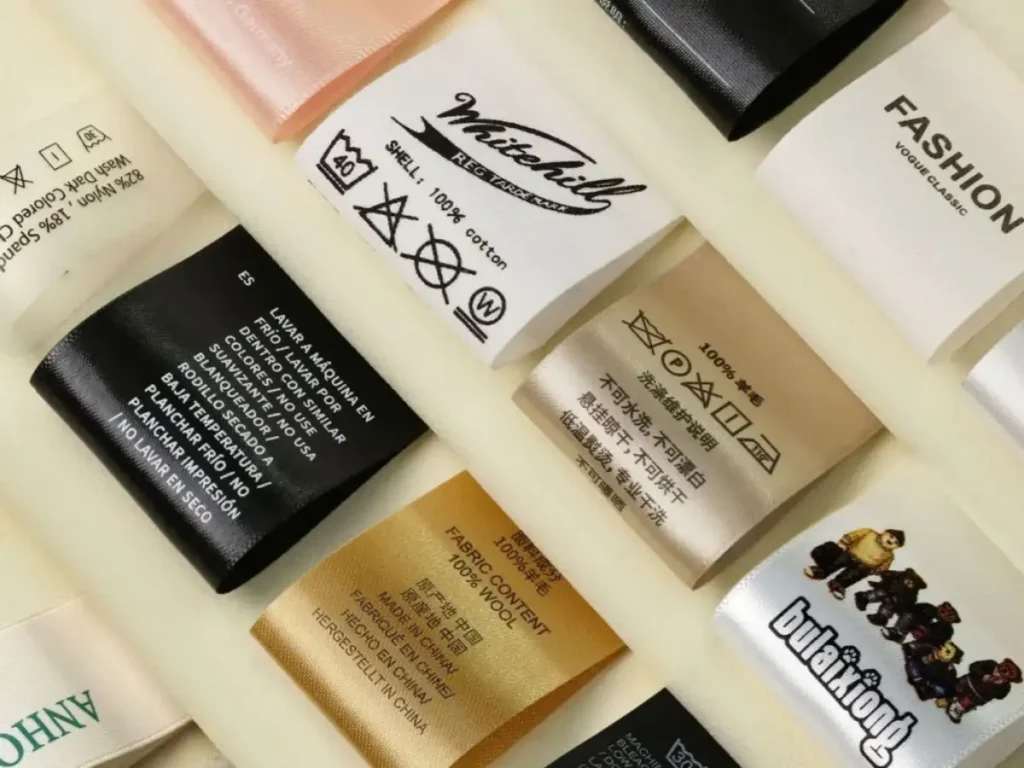
- Fiber content and percentages
- Country of origin
- Company name or RN supplied by the responsible US entity

Care Instructions
- Fabric behavior
- Trim and embellishment limits
- Approved wording or symbols

Clothing Flammability
- Fabric surface classification
- Garment construction
- Approved test sample linkage

Chemical Requirements
- Brand RSL
- Prints and coatings
- Metal, plastic and adhesive components

Supply Chain Records
- Material supplier records
- Processing information
- Shipment and origin documents

Brand Standards
- Quality manual
- Testing protocol
- Packaging and warehouse guide
Who Owns Each Compliance Decision?
Clear responsibility prevents duplicated work and dangerous assumptions. The brand and importer retain legal ownership while Duolan controls approved requirements inside manufacturing.
| Compliance Step | Brand / Importer | Duolan | Third Party |
|---|---|---|---|
| Confirm applicable laws and product classification | Brand / US importer leads | Provides product, material and process information | Legal counsel or qualified lab may advise |
| Approve testing protocol and RSL | Brand compliance team approves | Reviews feasibility and prepares samples | Approved laboratory executes testing |
| Approve legal label content | Responsible US entity approves | Produces and applies approved artwork | Specialist review when requested |
| Provide material composition records | Defines evidence required | Coordinates mills and trim suppliers | Laboratory verifies when required |
| Approve PP sample and bulk standard | Product and quality teams approve | Builds controlled production file | Third-party inspector may witness |
| Control production and packing | Sets acceptance standard | Executes inline, final and packing checks | Nominated inspector can verify |
| Manage import declarations | US importer is responsible | Supplies manufacturing documents | Broker or trade adviser supports filing |
| Manage supply-chain due diligence | Brand / importer sets policy | Coordinates manufacturing-side records | Traceability provider or adviser may validate |
Where Compliance Problems Usually Begin
Most failures start as small file, material or approval gaps. A visible risk-control-evidence chain makes corrective action faster and less expensive.
| Risk | Stage | Control Action | Evidence |
|---|---|---|---|
| Declared fiber content differs from bulk | Material sourcing | Supplier specification, composition check and batch control | Material file and approved BOM |
| Testing misses a relevant component | Development | Review full garment construction before sample submission | Testing checklist and sample record |
| Care method damages trim or structure | Sample review | Evaluate fabric, lining, adhesive, boning and decoration together | Care review note and approved label |
| Tested sample is not equal to bulk | Pre-production | Lock material, color, trim and construction after approval | PP sample and material approval file |
| Label artwork is correct but applied incorrectly | Sewing / packing | Position, orientation and content checks during production | Label approval and QC photos |
| Multi-factory output drifts | Bulk production | One specification set, first-piece confirmation and inline checks | Version-controlled production file |
| Packaging fails warehouse requirements | Final packing | Barcode, polybag, carton and marking verification | Packing checklist and carton photos |
| Shipment lacks supporting records | Pre-shipment | Compile approved manufacturing and logistics documents | Shipment document pack |
Compliance-Aligned Manufacturing Workflow
Requirement Intake

Product Risk Review

Material Assessment

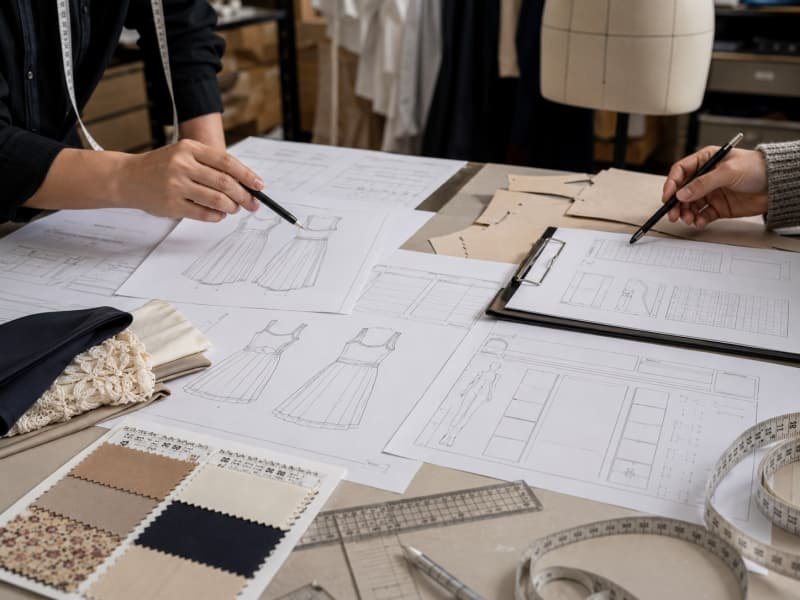
Sample Development
Patterns, construction and workmanship are developed with compliance details included. Standard samples are commonly completed in 10-15 days after the design, material direction and technical information are confirmed.

Testing Coordination

PP Sample Locking

Bulk Control

Shipment Records
Final inspection records, packing details, invoice, packing list and requested manufacturing documents are assembled before release. Third-party inspection and client-nominated forwarder coordination can be added to the shipping plan.
Fabric and Material Testing Support
Material Selection With Risk Context
Material approval begins with the finished garment, not an isolated swatch. A lightweight satin used for a bias-cut slip dress behaves differently from satin used over corset panels. A high-stretch jersey may support bodycon shaping but create opacity, recovery or seam-growth risks. Mesh can meet the visual direction while requiring lining coverage, edge stabilization and careful care instructions.
Duolan reviews composition, fabric weight, stretch direction, recovery, shrinkage, color behavior, surface sensitivity and construction compatibility before the sample is treated as production-ready. Trims are assessed alongside the shell fabric: zipper tape, elastic, boning, cup foam, underwire, hooks, eyelets, sequins, rhinestones and adhesive systems can affect testing scope, care method and final durability.
For established programs, material records are organized by supplier, article number, color and approved batch. Lab dips, strike-offs, trim boards and bulk shade references create a visible bridge between development and production.
Testing Built Around Actual Construction
Testing is coordinated from the approved protocol rather than a fixed generic list. Common areas can include fiber composition, dimensional change, colorfastness, pilling, abrasion, stretch and recovery, fabric weight, pH and restricted substances. Flammability applicability, component testing and state-specific requirements are confirmed with the brand and approved laboratory.
The test sample must represent the material and construction intended for bulk. A report on plain base fabric may not cover a printed, coated or heavily embellished final garment. Colorways can also matter when dyes, prints, plating or adhesive systems differ. Duolan prepares sample identification and component information so the laboratory can understand what is being submitted.
Test reports are not used as decoration. Results are linked to an approval decision: proceed, adjust material, change care instructions, repeat testing or separate a high-risk colorway. Manufacturing teams then receive the approved material standard rather than a report that remains disconnected from production.
Bulk Material Consistency Controls
Approved material can still fail at scale when bulk lots, dye batches or substitute trims are not controlled. Duolan uses BOM references, approved swatches, color standards, supplier article numbers and incoming checks to maintain consistency. Fabric inspection can include width, weight, shade, defects and lot separation according to project requirements.
The wider group manufacturing system includes approximately 1,100-2,000 fabric inspection, spreading and cutting units, including inspection machines, shrinkage equipment, color light boxes, automatic spreading and computerized cutting systems. Available equipment supports repeatable incoming review and controlled cutting, while project standards remain defined by the brand manual and approved sample.
No material substitution enters bulk without written review. When supply conditions require a change, the alternative is documented, sampled and tested as required before approval. This discipline protects the relationship between the tested sample, PP sample and finished order.

Pattern, Sample and PP Control
Development Inputs and Technical Review
Before pattern work begins, the team reviews whether the requested silhouette can be achieved with the proposed fabric and construction. Corset styles require cup position, bust support, boning, waist balance and closure analysis. Backless and halter dresses require tension control and support planning. Bodycon styles require stretch direction, negative ease, opacity and seam recovery review. Embellished styles require decoration density, edge comfort, weight distribution and repair planning.
Early comments are written as decisions: confirm, revise, test or hold. Clear action language keeps design, merchandising and sample teams aligned.
Fit, Size and Construction Decisions
Where a size-set review is required, 3-5 representative sizes can be selected across the range according to the brand protocol. Grade rules are reviewed before bulk cutting, especially around bust shaping, waist reduction, hip curve, cup placement and strap length. Large ranges may require separate base sizes or adjusted grade logic rather than one automatic rule.
Standard development samples are commonly completed in 10-15 days after material and technical details are confirmed. Complex hand embellishment, custom hardware, corsetry or layered construction receives a project-specific timeline. Each revision should identify what changed, what remains under review and whether the style is ready for PP confirmation.
Production-Ready PP Sample
The PP sample is the controlled bridge between development and bulk. It should reflect approved fabric, trims, color, pattern, measurements, workmanship, labels and packaging as closely as the project requires. A beautiful sample made with temporary materials cannot serve as a reliable production standard.
Before release, Duolan checks the approved BOM, measurement chart, construction notes, stitch and seam requirements, decoration map, label artwork, packaging method and inspection points. The production file carries one current version, while superseded files are removed from active use. First-piece confirmation and inline inspection then refer back to the PP standard.
A production-ready sample package can include front, side and back photos, key detail close-ups, measurement notes, revision summary and a list of remaining approval points. Clear records help product, quality and compliance teams reach a decision without repeating earlier discussions.

US Label and Packaging Execution
Fiber Content Labels
- Approved composition source
- Label sample confirmation
- Bulk position and orientation check
Country of Origin
- Approved wording
- Permanent attachment
- Production and shipment alignment
Care Instructions
Care instructions are reviewed against shell fabric, lining, boning, foam, elastic, hardware, prints, adhesives and embellishments. A label should not recommend a process likely to damage the garment. Final wording or symbols require brand approval and a reasonable technical basis.
- Wash or dry-clean route
- Drying and ironing limits
- Special trim restrictions
Brand and Size Labels
Brand labels, size labels, content labels and warning labels are mapped in the tech pack or approved sample. Attachment method, seam position, visibility, skin contact and reading direction are checked before bulk sewing. Size coding follows the approved market range.
- Position map
- Approved size coding
- Attachment workmanship
Retail Packaging
- Barcode and SKU match
- Polybag and hangtag rules
- Approved folding method
Carton and Warehouse Marks
- Carton assortment
- Shipping marks
- Warehouse label verification
Compliance Considerations for Fashion Dresses

Satin Dresses

Mesh Dresses

Sequin Dresses

Bodycon Dresses

Corset Dresses
Corset structures need controlled cups, foam, underwire, boning, hook systems, eyelets, zippers and internal reinforcement. Each component affects fit, durability, care and wear comfort.
Cup position and waist balance should be checked across representative sizes before large-scale production.

Printed Embellished Dresses
Prints, foil, flock, beads, pearls, rhinestones and mixed decorations can change colorfastness, abrasion, restricted-substance and care requirements. Decoration maps, attachment methods and density standards must be production-ready.
Production and Quality Control Details
Pre-Production Control
Bulk planning begins only after the required approvals are visible. The active file includes the current tech pack, measurement chart, BOM, PP sample status, fabric and trim approvals, label artwork, packaging guide, test status and inspection standard. Production teams receive one controlled version rather than mixed email attachments.
Before cutting, fabric lot, shade, width, weight and defect status can be reviewed according to the project plan. Cutting markers, grain direction, panel matching and critical notches are checked for styles where alignment affects fit or appearance. Embellishment maps, boning placement, cup position and seam allowances are clarified before line setup.
A pre-production meeting converts specifications into factory actions. Key risks are shown with approved samples, detail photos and defect examples. Any open issue receives an owner and deadline before bulk release.
Inline Workmanship and Measurement
Inline control checks whether the production line is reproducing the approved standard, not merely whether garments are being completed. First-piece review confirms sewing method, seam appearance, measurements, support structure, decoration position, label placement and pressing result. Early correction prevents thousands of pieces from repeating the same defect. Measurement checks focus on critical points selected for the silhouette. Bodycon dresses may prioritize bust, waist, hip, length and stretch-sensitive openings. Corset styles add cup spacing, bust point, waist balance and boning length. Halter and backless styles add strap, neckline and closure dimensions. Results are recorded against approved tolerance rather than informal visual judgment. Workmanship review covers puckering, skipped stitches, seam slippage, loose threads, uneven topstitching, lining exposure, zipper waves, decoration loss, sharp components and press marks. Brand-defined AQL or another approved inspection method can be followed when specified.
Final Inspection and Packing Verification
Finished garments are reviewed for appearance, measurement, workmanship, function, labels and packaging before shipment. Zippers, hooks, straps, elastics, cups, boning and detachable parts are checked according to the design. Shade and assortment are compared with the order and packing plan.
Packing verification connects garment SKU, size, color, barcode, polybag, hangtag and carton information. Incorrect content in a correct carton can create the same operational failure as a garment defect. Carton photos, weight data, assortment records and final counts support shipment review.
Duolan can cooperate with brand-nominated inspection companies and provide access to required production and packing records. Final release follows the agreed approval route; it is not replaced by internal inspection alone when third-party verification is required.

Factory Audit and Vendor Onboarding
Audit Record
Supplier Documentation
Brand-Specific Review
Duolan can complete client questionnaires, coordinate video or on-site factory reviews, support nominated audits and follow corrective action plans. The manufacturing system can work with requirements related to BSCI, ISO 9001, AATCC, ASTM, OEKO-TEX, GOTS and other client standards when they apply, subject to the exact facility, product and requested evidence.
Compliance Documents and Supply Chain Records

Material Specifications

Testing Records

Label Approvals

QC Records

Shipment Documents

Traceability Support
Compliance Control Across Scalable Production
Manufacturing Scale With Defined Control
Equipment and Technical Infrastructure
Program Timing and Capacity Planning
Standard development samples are generally planned within 10-15 days after technical and material information is confirmed. Standard bulk production is commonly scheduled within 20-30 days after PP approval and material readiness, while complex embellishment, multi-layer construction or large multi-style programs may require 30-45 days.
Final timing is confirmed from style complexity, testing needs, material availability and delivery window. Monthly sample-development capacity is approximately 15,000-35,000 pieces or style iterations across the group, supporting 3,000-8,000 style-development and sampling workflows per month.
Capacity figures are used for allocation planning rather than as a promise that every project follows the same schedule. A launch calendar should include development, testing, label approval, PP confirmation, production, final inspection and transport. Compliance tasks are placed inside the calendar rather than added after the ship date is fixed.

Anonymized US Dress Program Case
Program Scope
A US occasionwear program covered 24 dress styles and 60,800 total units. The mix included eight satin styles, six stretch bodycon styles, five lined mesh styles and five embellished styles. Each category carried different material, care, construction and inspection risks, so one universal test or QC checklist would not have been sufficient.
The collection used multiple colorways, private-label trims, size ranges and retailer-specific packaging. Product, quality and compliance teams needed one supplier workflow able to connect design approvals with material records, label files and shipment evidence.
Control Plan
Development was divided into three technical groups: smooth-surface and satin construction, stretch and fitted silhouettes, and embellished or layered products. Each group received its own material review, sample priorities and workmanship checkpoints. Testing samples were identified against the intended bulk fabric and trim package.
PP approval locked fabric article, color reference, BOM, measurement chart, construction notes, label artwork and packing method. Production lines received controlled files, while proposed substitutions required written approval. Third-party inspection timing was reserved before the final production window rather than requested after packing.
Program Outcome
The program moved from development into bulk through documented approval gates instead of one final pre-shipment check. Material, label and packing records were organized by style and colorway, allowing the brand team to review exceptions without reopening every approved point. Standard styles followed a 20-30 day bulk window after release, while complex embellished styles used a longer production path.
The main value was not a single certificate. The value was a traceable relationship between approved design, tested material, PP sample, bulk workmanship, label execution and shipment files. The same records created a cleaner base for repeat orders and future color extensions.

Frequently Asked Questions About US Apparel Compliance
Start Your US Compliance Manufacturing Review
Send the project information your product, quality and compliance teams already use. Duolan will review the manufacturing scope, material risks, sample path, testing coordination, label execution, factory qualification, quality checkpoints and document requirements before confirming the next step.
A stronger first review comes from complete files. Include the style range, target order quantity, required launch date and any nominated laboratory or inspection company. When a requirement falls outside manufacturing responsibility, the gap will be identified rather than hidden behind a broad compliance claim. The review is designed for established fashion programs that need disciplined development, controlled production and documented delivery.
- Company name, website and contact role
- Product category, style count, size range and target quantities
- Tech packs, reference samples or design files
- Compliance manual, testing protocol and restricted substances list
- Label artwork, packaging guide and warehouse requirements
- Required factory audit and third-party inspection plan
- Target sample date, PP approval date and shipment window
- Form fields: Name, Tel/WhatsApp, Email, Message, Upload Files