Skip to content
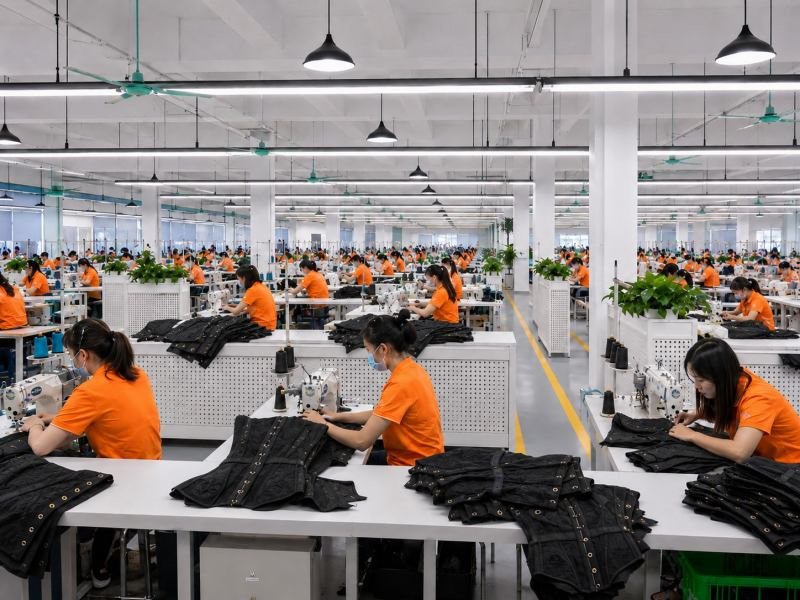
In the fashion industry, choosing a custom dress manufacturer is not a procurement decision—it is a product strategy decision that defines whether a brand will scale or stall. Many fashion labels fail not because of weak design direction, but because their manufacturing partner cannot translate creative intent into production reality. A dress may look perfect on a sketch or reference image, but the final outcome depends on pattern accuracy, fabric behavior, construction logic, and the manufacturer’s ability to control consistency across every production stage.
A brand-level custom dress manufacturer must demonstrate strong specialization in womenswear, accurate sample development, scalable production systems, and strict quality control. The ideal partner can translate design concepts into production-ready garments while maintaining consistency from sampling to bulk manufacturing across multiple seasons and collections.
In real production environments, a single mismatch in fabric selection or fit interpretation can change the entire commercial outcome of a collection. This is why high-performing brands evaluate manufacturers not only by price or capacity, but by their ability to manage risk across development, sampling, and scaling stages.
There is a moment many brand owners recognize too late: the sample looks promising, but the bulk order fails to match expectations. That gap is where the right manufacturer makes the difference—and where the wrong one costs an entire season.
Why Dress Specialization Defines Manufacturing Success
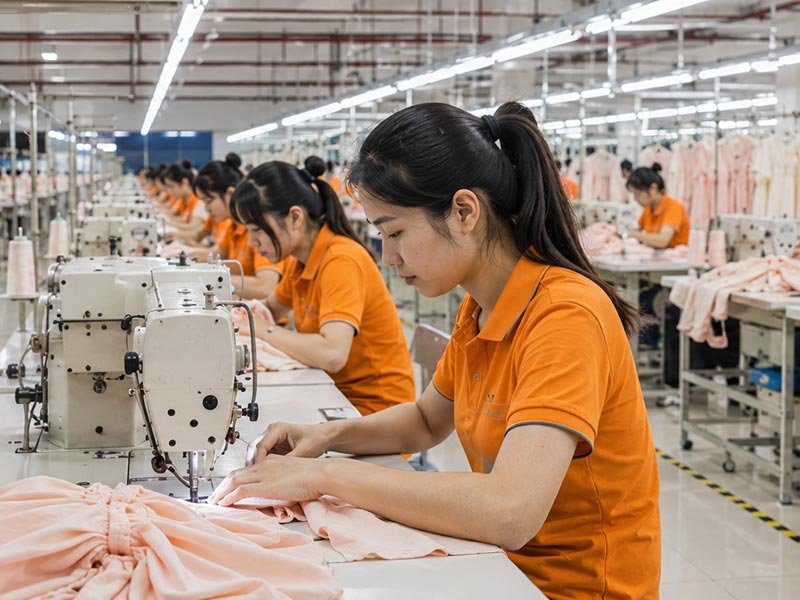
Dress specialization determines whether a manufacturer can consistently execute complex silhouettes, manage fabric behavior, and maintain stable quality across production runs. Factories focused on dresses develop deeper control over fit engineering, construction logic, and material performance, resulting in higher accuracy from sampling to bulk production compared with general apparel suppliers.
Dress manufacturing requires a level of technical depth that goes far beyond basic garment production. Unlike standard tops or simple trousers, dresses combine multiple engineering layers: silhouette balance, fabric tension control, structural shaping, and movement behavior. Each of these factors must work together to produce a garment that looks stable both on a hanger and during real wear.
A non-specialized factory often evaluates dresses using general sewing logic. In practice, however, dress production behaves more like applied pattern engineering. A small deviation in waist positioning or fabric tension can completely change the visual proportion of a garment. Over time, these small inconsistencies accumulate across production batches and lead to visible brand quality issues.
Dress-focused manufacturers build internal systems specifically around these challenges. Pattern teams are trained to understand body proportion mapping, sewing operators are trained for curve alignment precision, and fabric teams evaluate drape behavior before cutting begins. These layers of specialization reduce uncertainty and increase repeatability.
A structured comparison highlights the gap:
| Production Area | Dress-Specialized Factory | General Apparel Factory |
|---|---|---|
| Fit accuracy | High repeatability across sizes | Variation across batches |
| Fabric handling | Drape and stretch calibrated | Basic fabric usage |
| Sample approval cycles | 2–3 iterations average | 4–8 iterations common |
| Bulk consistency | Controlled deviation ≤0.5 cm | Higher fluctuation risk |
| Structural garments | Corset, ruched, layered | Limited capability |
Dress specialization is not about variety—it is about depth of control. Once production scales beyond 300–500 units per style, these differences become highly visible in retail performance.
Silhouette logic vs basic garment construction
Silhouette logic is the foundation of dress manufacturing. It determines how a garment interacts with the human body across movement, posture, and fabric tension.
In bodycon dresses, silhouette stability depends on controlled elasticity distribution. Waist compression must remain consistent while allowing natural movement. In A-line dresses, balance between upper structure and lower drape determines visual proportion. In corset-style dresses, internal support systems define both shape and comfort.
General factories often treat these as simple sewing variations. Dress-specialized factories approach them as structural equations:
- Waist positioning affects hip balance
- Shoulder slope affects neckline stability
- Hem weight affects vertical drape behavior
For example, a 1 cm shift in waist seam placement can visually shorten or elongate torso proportion, impacting overall design perception. Specialized manufacturers understand these thresholds and adjust patterns before production begins rather than correcting issues later.
Fashion cycle responsiveness and production rhythm
Dress manufacturing is tightly connected to seasonal demand cycles. Party dresses, resort collections, and occasionwear drops often require fast transitions between design, sampling, and production.
A specialized factory is structured around these cycles:
- Sampling capacity: 50–100 new styles per month
- Production readiness time: 25–35 days for standard runs
- Style switching efficiency: 2–3 days between production lines
- Parallel style handling: 10–30 styles simultaneously depending on capacity
General factories often struggle when multiple dress categories overlap. Without structured line allocation, production delays increase and quality becomes inconsistent.
Dress-focused systems maintain rhythm through segmentation:
- Lightweight dresses on separate lines
- Structured dresses assigned to trained operators
- Embellished styles processed in controlled environments
This segmentation allows continuous production flow without disrupting quality standards.
Why general factories struggle with dress complexity
Most production issues in dresses originate from misinterpretation of structural complexity. General garment factories tend to apply uniform sewing logic across all categories, which works for simple garments but fails under dress-specific requirements.
Common failure patterns include:
- Inconsistent bust shaping due to lack of dart control
- Poor drape behavior in satin and chiffon fabrics
- Misaligned seams in curved silhouettes
- Weak internal structure in fitted dresses
These issues are often not visible in first samples. They appear during bulk production when multiple operators replicate the same unclear instruction differently.
Another limitation is fabric behavior understanding. Dresses often combine multiple materials—lace, mesh, satin, lining—which behave differently under tension. Without specialization, factories fail to predict how these materials interact during wear and washing cycles.
Dress specialization eliminates these risks by embedding fabric behavior logic into pattern development and production training systems. Over time, this reduces variation and increases reliability across repeated production cycles.

Development & Sampling Accuracy as the Core Decision Filter
Sampling accuracy determines whether a manufacturer can convert design intent into production-ready garments. Strong development capability reduces revision cycles, improves fit precision, and ensures faster decision-making for brands.
Interpreting tech packs and reference images
High-level manufacturers can work from incomplete inputs: sketches, reference images, or partial tech packs. The key capability is interpretation. This includes understanding intended silhouette, identifying missing specifications, and proactively suggesting construction improvements. A weak factory waits for instructions. A strong one builds clarity.
Fit accuracy and first-sample performance
First samples are not just prototypes—they are decision tools. If the first sample is too far from target expectations, development cycles expand, cost increases, and launch timelines collapse. A high-performing manufacturer reduces iteration cycles by getting fit, proportion, and silhouette direction correct in early sampling stages.
Revision discipline and development speed
Sampling is not a single step—it is a controlled loop of refinement. The best manufacturers treat revision cycles as structured engineering iterations. Each revision should improve clarity, not introduce new uncertainty. Poor systems lead to repeated errors; strong systems converge toward production readiness with each round.

Fabric Engineering and Dress Performance Control
Fabric engineering defines how a dress behaves in real wear, including drape, stretch, recovery, opacity, and durability. Strong manufacturers control fabric selection through measurable testing such as shrinkage rate, elasticity recovery, and color stability. Proper fabric engineering ensures dresses maintain consistent shape, fit, and appearance across sampling, bulk production, and long-term wear cycles.
Fabric is not a passive material in dress manufacturing—it is an active structural component that determines how a garment performs under real conditions. Two dresses with identical patterns can behave completely differently depending on fabric selection, fiber composition, weight, and elasticity behavior.
In production practice, most quality failures in dresses are not caused by sewing errors, but by incorrect fabric engineering decisions made before cutting begins. Once fabric is selected without proper testing, all downstream processes inherit that risk.
Professional dress manufacturing treats fabric as a performance system rather than a visual input. Each fabric is evaluated through measurable indicators before approval: how it stretches under tension, how it recovers after deformation, how it drapes under gravity, and how it behaves after washing cycles.
A structured fabric engineering system reduces production uncertainty and ensures that what appears in sampling remains consistent in bulk production and reorder cycles.Drape, stretch, and recovery behavior control
Drape, stretch, and recovery form the core performance triangle of dress fabrics. Each element directly affects how a garment looks and behaves on the body.
Drape determines how fabric falls and shapes silhouette lines. For example, satin with high fluidity creates soft vertical flow, while heavier crepe creates more controlled structure. If drape is misaligned with design intent, the dress may appear stiff or visually unbalanced even if construction is correct.
Stretch defines comfort and fit stability. Bodycon dresses typically require 10–30% controlled stretch depending on design tightness. Without correct stretch mapping, seam distortion and size inconsistency appear during wear.
Recovery measures how well fabric returns to original shape after movement. A recovery rate below 85% in stretch garments often leads to knee-bagging, waist loosening, or silhouette collapse after multiple wears.
A reliable manufacturing system tests these values before production:
- Stretch ratio measurement: horizontal and vertical direction tested separately
- Recovery rate: evaluated after 30–60 minutes of tension release
- Drape simulation: tested using weighted hanging methods or body form observation
These metrics ensure fabric behavior aligns with garment structure instead of relying on visual judgment alone.
Structure vs fluidity balance in dress fabrics
Every dress design sits between two extremes: structural stability and fluid movement. Fabric selection determines where a design sits on this spectrum.
Structured dresses such as corset gowns, tailored midi dresses, or sculpted silhouettes require fabrics with higher density and controlled stiffness. These fabrics must hold shape without collapsing under gravity. Interfacing, lining layers, and reinforcement materials are often integrated to maintain structure.
Fluid dresses such as slip dresses, chiffon gowns, or resort styles rely on controlled softness and movement. In these cases, excessive stiffness destroys design intent, making garments appear rigid or artificial.
The key engineering challenge is balance:
- Too much structure removes natural movement
- Too much softness removes silhouette definition
A professional manufacturer evaluates this balance through pre-production testing:
- Multi-layer drape simulation (fabric + lining combination)
- Seam stress testing at key tension points
- Body movement observation during fitting trials
In real production, even a 10–15 GSM difference in fabric weight can significantly shift dress behavior, especially in midi and maxi lengths where gravity effects accumulate.
Fabric stability across dye lots and production batches
One of the most overlooked risks in dress manufacturing is variation between fabric batches. Even when fabric composition remains identical, dyeing conditions, finishing processes, and mill variations can introduce subtle but visible differences.
These variations often appear as:
- Slight color shifts between production runs
- Differences in surface sheen on satin fabrics
- Uneven texture in lace or mesh materials
- Changes in fabric stiffness or softness
In structured manufacturing systems, fabric stability is controlled through:
- Pre-production lab dip approval before bulk dyeing
- Color tolerance measurement using ΔE standards (typically ≤1.5–2.0 acceptable range)
- Fabric roll tracking with batch coding systems
- Cross-batch comparison during incoming inspection
For dress collections that require restocking or seasonal repeats, batch consistency becomes critical. A dress produced in one season must visually match the same style produced months later. Without strict fabric engineering control, brand consistency breaks at retail level.
Fabric-to-silhouette compatibility engineering
Not all fabrics support all dress designs. A core part of fabric engineering is matching material behavior to silhouette requirements before production begins.
Compatibility evaluation includes:
- Weight vs silhouette length ratio
- Elasticity vs fitted structure requirement
- Transparency vs lining system design
- Surface texture vs visual detail complexity
For example:
- Satin works well for draped or slip silhouettes but performs poorly in highly structured corset designs without reinforcement
- Mesh requires controlled layering to prevent distortion under tension
- Heavy crepe supports structured tailoring but may limit fluid movement in flowing skirts
A structured compatibility matrix is often used in professional production planning:
| Dress Type | Recommended Fabric Behavior | Risk if Misaligned |
|---|---|---|
| Bodycon | High recovery stretch | Shape collapse after wear |
| Corset | Medium stiffness + structure | Seam deformation |
| Slip dress | High drape, low stiffness | Visual rigidity |
| Party dress | Mixed structure + embellishment support | Weight imbalance |
Without this alignment process, even well-sewn garments may fail commercially due to poor wearing performance.
Performance testing before bulk production
Before bulk production begins, fabric must pass a series of performance tests to reduce downstream risk. These tests simulate real usage conditions rather than relying on static inspection.
Common pre-production tests include:
- Shrinkage test after washing cycles (target ≤3%)
- Colorfastness test under friction and washing conditions
- Seam slippage test at stress points (typically ≥180–220N depending on fabric type)
- Elastic recovery test for stretch fabrics (target ≥85–90%)
In dress production, these tests are critical because garments are often worn in movement-heavy environments such as events, parties, or travel situations.
A failure in any of these areas does not immediately reject a design—but it triggers engineering adjustment:
- Fabric substitution
- Pattern reinforcement
- Lining system redesign
- Stitch density modification
This proactive adjustment process ensures that production risk is reduced before scaling begins.
Why fabric engineering defines long-term product stability
Fabric engineering does not only affect initial production—it determines whether a dress can survive multiple production cycles.
A strong fabric system ensures:
- Consistent fit across reorder cycles
- Stable visual identity across seasons
- Predictable behavior after washing and wear
- Reduced return rates caused by material failure
Without structured fabric engineering, even successful designs lose stability over time. A dress that performs well in first production may degrade in later batches due to unnoticed fabric variation or uncontrolled sourcing changes.
In professional production systems, fabric engineering acts as the foundation layer that supports sampling accuracy, bulk consistency, and long-term scalability.
Scaling From Sample to Mass Production Without Losing Quality
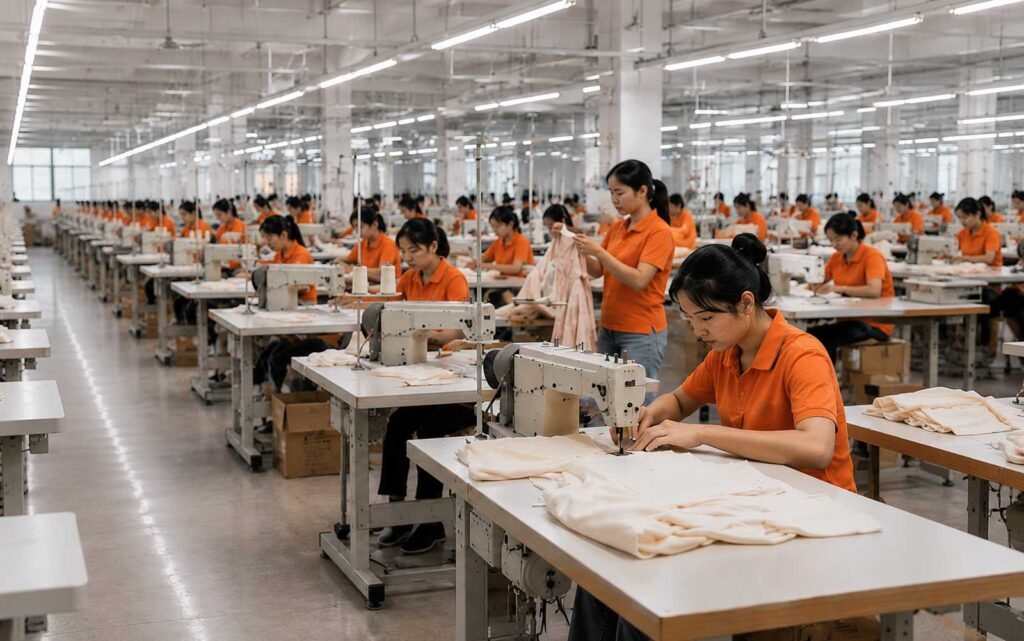
Scalable manufacturing ensures consistent translation from sample approval to bulk production. Strong factories maintain quality across batches, manage multiple production lines, and support both small test orders and large-scale replenishment.
Scaling is where manufacturing systems are truly tested. Many suppliers can produce good samples, but fail when orders increase. The challenge is not production—it is consistency.
Sample-to-bulk replication stability
The biggest risk in apparel production is deviation between approved samples and final bulk output. Even small changes in stitching tension, fabric batch variation, or operator differences can alter final garment quality. Scalable manufacturers implement strict replication systems to eliminate this gap.
Multi-line production coordination
Large-scale dress production requires parallel manufacturing lines handling different styles simultaneously. Without coordination, quality inconsistency appears across styles and colorways. A structured system ensures each production line follows identical technical standards and quality checkpoints.
Flexible capacity for seasonal demand
Dress brands operate in peaks: holiday seasons, resort launches, partywear spikes. Manufacturers must flex capacity without sacrificing quality. This requires satellite factories, modular production allocation, and dynamic workload distribution systems.
Quality Control and Compliance Systems for Global Brands
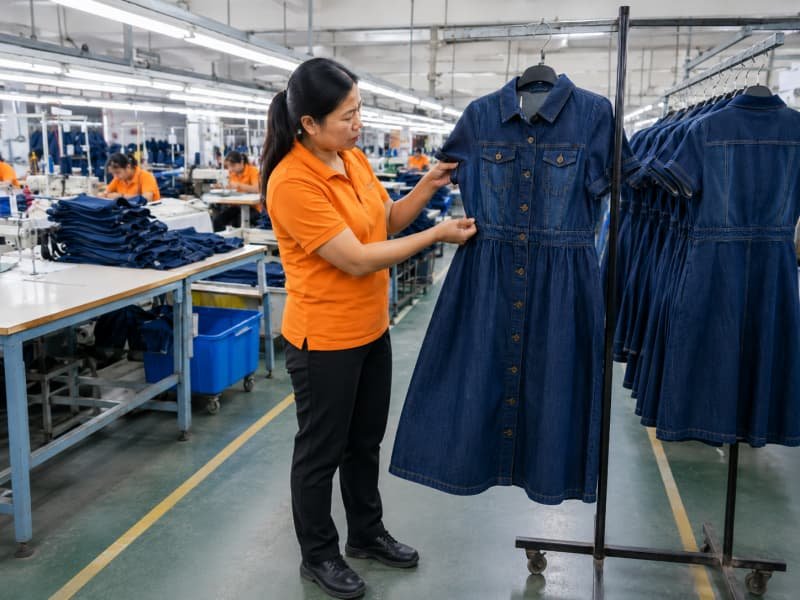
Quality control and compliance systems ensure dresses meet consistent production standards across fabric, construction, sizing, and finishing. Strong manufacturers implement multi-stage inspection processes, measurable defect control systems, and internationally recognized compliance frameworks. These systems reduce production risk, stabilize bulk consistency, and ensure garments meet retail-grade requirements across repeated production cycles.
In dress manufacturing, quality is not a final checkpoint—it is a continuous control system embedded across every production stage. A garment may pass visual inspection but still fail in real-world use due to weak seam construction, inconsistent fabric behavior, or uncontrolled variation between production batches.
Professional manufacturing environments treat quality as a structured engineering system. Every stage—from fabric incoming inspection to final packaging—has measurable standards, documented checkpoints, and defined tolerance limits. Without this structure, quality becomes subjective, leading to inconsistent output across seasons and orders.
For fashion dresses specifically, quality control becomes even more critical because garments often involve fitted silhouettes, delicate fabrics, and multi-layer construction. Small deviations in stitching or material behavior can significantly affect fit, appearance, and durability.
A stable quality system does more than detect defects—it prevents them from entering production flow.
What QC system is used across production stages?
A structured QC system in dress manufacturing is divided into multiple layers rather than a single inspection point. Each layer targets different risk factors in the production cycle.
The first layer is incoming material inspection, where fabric and trims are checked before cutting begins. Key measurements include fabric width tolerance (typically ±1–2 cm), GSM deviation (within ±5%), and color consistency across rolls. Zippers, buttons, and lace materials are also tested for structural integrity before approval.
The second layer is in-line production inspection, which monitors garments during sewing. At this stage, seam alignment, stitch density, and construction accuracy are checked continuously. Common standards include 10–12 stitches per inch for woven dresses and real-time defect correction before batch continuation.
The third layer is final inspection under AQL standards, usually set at 2.5% for apparel production. Sampling rates range from 5% to 13% depending on order size. Defects are classified into critical, major, and minor categories, each with different acceptance thresholds.
A structured QC system ensures problems are identified during production rather than after completion, reducing risk accumulation across bulk orders.
How inspection stages control production consistency
Inspection is not a single event but a controlled sequence designed to maintain stability across all production phases. In dress manufacturing, consistency depends on how well each stage is linked to the next.
During cutting, marker accuracy determines whether fabric utilization and pattern alignment remain consistent. Even a 1 cm deviation at this stage can affect symmetry in finished garments. During sewing, operator-level consistency ensures that seam tension and stitch density remain uniform across all units.
Mid-production inspections act as control points where deviations are corrected before they spread across the entire batch. For example, if waist alignment begins shifting across a production line, corrections are applied immediately rather than waiting for final inspection.
Final inspection focuses on external quality validation, including visual appearance, measurement accuracy, and packaging standards. At this stage, garments are compared against sealed samples to ensure production alignment.
A well-structured inspection system reduces cumulative error risk. Without it, small deviations at early stages multiply into visible inconsistencies in finished garments.
What defect control rates indicate production maturity?
Defect rate is one of the most direct indicators of manufacturing control. In dress production systems, defect rates are not just statistics—they reflect the stability of internal processes.
A mature production system typically maintains:
- Critical defects: near 0% tolerance
- Major defects: controlled within 2.5% (AQL standard)
- Minor defects: managed within acceptable finishing thresholds
Critical defects include issues such as broken seams, incorrect sizing beyond tolerance, or unusable garments. Major defects include visible stitching irregularities, uneven hems, or fabric alignment issues. Minor defects include loose threads or small aesthetic inconsistencies.
When defect rates exceed controlled thresholds, it usually indicates instability in one or more production layers—often linked to inconsistent fabric sourcing, weak operator training, or insufficient in-line inspection.
Stable manufacturers do not only measure defect rates—they track root causes. For example, repeated seam issues may trigger adjustments in stitch density or operator retraining, rather than repeated repair cycles.
Over time, this structured approach reduces overall defect frequency and improves production predictability across seasons.
How compliance systems support global production standards
Compliance systems ensure that production meets international safety, labor, and environmental standards required by global fashion brands. Without compliance alignment, even high-quality production may be excluded from international supply chains.
Key compliance frameworks commonly used in dress manufacturing include SMETA audits, ISO quality management systems, OEKO-TEX® textile safety standards, and AATCC/ASTM testing protocols. These frameworks evaluate both production processes and material safety.
Compliance evaluation typically covers several areas:
- Workplace safety and labor conditions
- Chemical usage in dyeing and finishing processes
- Environmental impact of production systems
- Traceability of raw materials and sourcing documentation
For textile safety, OEKO-TEX® standards ensure fabrics are free from harmful substances. ISO-based systems focus on process consistency and quality management. SMETA audits evaluate ethical and operational compliance across production facilities.
In practice, compliance systems also improve production discipline. Factories that maintain audit-ready systems tend to have better documentation, clearer process control, and more stable production outputs.
For dress manufacturing, compliance is not only a certification requirement—it directly supports production reliability, material safety, and long-term scalability across international markets.

Communication, Project Management and Execution Discipline
Strong communication systems ensure transparency, reduce delays, and improve collaboration efficiency. Effective manufacturers manage sampling, production, and feedback through structured workflows and clear responsibility systems.
Even the best technical factory fails without structured communication. Apparel production is a coordination-heavy process involving multiple stakeholders and stages.
Structured feedback interpretation
Customer comments must be categorized—fit, fabric, construction, or visual preference. Without structured interpretation, revision cycles become chaotic and repetitive.
Timeline transparency and project tracking
Brands need visibility into development progress. A reliable manufacturer provides clear timelines for sampling, revision, and production stages, reducing uncertainty and improving planning accuracy.
Cross-team coordination efficiency
Production involves design, pattern making, sourcing, and manufacturing teams. Misalignment between teams leads to inconsistent execution. Strong systems ensure all departments operate from a single source of truth.
Red Flags When Selecting a Custom Dress Manufacturer
Red flags in manufacturer selection include weak sampling systems, inconsistent quality, unclear communication, lack of production transparency, and unstable lead times. These issues indicate poor process control and high production risk. Identifying these warning signals early helps avoid quality failures, delayed launches, and inconsistent bulk production across dress collections.
In dress manufacturing, most long-term production failures do not come from obvious mistakes—they come from early warning signs that are ignored during supplier selection. Many factories present acceptable samples at the beginning, but underlying system weaknesses only appear later during bulk production or reorder cycles.
A reliable manufacturer is defined by repeatability, structure, and transparency. When any of these elements are missing, production becomes unpredictable. Small issues such as inconsistent fabric sourcing or unclear revision processes often escalate into large-scale problems like delayed shipments, quality variation, or complete style failure in retail environments.
The following red flags are based on real production scenarios where brands experienced breakdowns in scaling, consistency, or delivery stability.
Lack of dress specialization and unclear production focus
One of the strongest warning signs is a manufacturer without clear specialization in dress production. Factories that claim to produce “everything” often lack depth in any single category.
In practice, dress manufacturing requires understanding of:
- Silhouette engineering (bodycon, A-line, corset, slip, structured dresses)
- Fabric behavior control (drape, stretch, recovery balance)
- Multi-layer construction techniques
- Fit stability across size curves
Factories without this focus often produce inconsistent results when handling structured dresses or mixed-fabric designs. A common pattern is acceptable basic garments but unstable performance in fashion dresses such as satin, mesh, or fitted occasionwear.
When specialization is missing, sampling may look acceptable, but bulk production often reveals fit imbalance, poor seam alignment, or unstable fabric behavior.
Inconsistent sample-to-bulk production results
A major red flag appears when bulk production does not match approved samples. This inconsistency indicates weak internal control systems.
Typical signs include:
- Waist or bust measurements shifting by more than 1–2 cm in bulk
- Fabric sheen or texture differences between sample and production
- Stitch density variations across production lines
- Color tone changes due to uncontrolled dye lots
In stable systems, deviation between sample and bulk is usually controlled within ±0.5 cm for critical measurements. When variation exceeds this range, it signals lack of standardized pattern control or uncoordinated production execution.
Another warning sign is when each reorder produces slightly different results. This often means fabric sourcing or production documentation is not locked, leading to gradual quality drift over time.
Weak or unclear sampling and revision process
Sampling is the foundation of production accuracy. A weak sampling system creates long-term instability in every production cycle.
Warning signs include:
- No clear revision structure or documented feedback process
- Multiple rounds of sampling without convergence
- Frequent misinterpretation of design adjustments
- Lack of measurable correction tracking
In stable manufacturing systems, sampling typically reaches approval within 2–3 structured revisions. When a style requires 5–8 revisions without clear improvement direction, it indicates unclear pattern logic or weak technical interpretation.
Another critical issue is when revisions are handled informally without structured documentation. This leads to repeated mistakes and inconsistent final production results.
Unstable lead times and production scheduling behavior
Unreliable lead times are one of the most damaging operational risks. Delays directly affect seasonal launches, inventory planning, and retail timing.
Common red flags include:
- Initial promises of fast delivery followed by repeated delays
- Lead time variations exceeding 30–50% between orders
- No clear production schedule visibility
- Sudden timeline changes without early notification
In stable systems, sampling and bulk production timelines remain predictable:
- Sampling: 7–15 days depending on complexity
- Bulk production: 25–35 days for standard dress collections
- Reorder cycles: 15–25 days with stable fabric availability
When timelines fluctuate heavily between orders, it often indicates overbooking, weak production planning, or reliance on external subcontracting during peak demand.
Lack of production transparency and hidden outsourcing
Transparency is a critical indicator of manufacturing reliability. Without it, production control becomes unpredictable.
Red flags include:
- No clarity on in-house vs outsourced production ratio
- Inability to track production stages clearly
- Missing or inconsistent QC documentation
- No visibility into fabric sourcing channels
In dress manufacturing, outsourcing during peak season is common, but unmanaged outsourcing creates variation in quality and finishing standards. A factory that cannot clearly define where and how garments are produced often lacks full control over output consistency.
Stable manufacturers maintain clear production structure:
- Sampling system separated from bulk production
- Defined production lines for different garment categories
- Documented QC checkpoints across all stages
Without this structure, production becomes fragmented and difficult to control.
Weak quality control system and missing measurable standards
Quality control without measurable standards is another serious risk indicator. If inspection is based only on visual judgment without defined tolerances, consistency cannot be maintained.
Warning signs include:
- No AQL-based inspection system
- Lack of measurable tolerance ranges for sizing
- No fabric testing before production
- Absence of defect classification system
In structured systems, quality is controlled through measurable benchmarks:
- Measurement tolerance: ±0.3–0.5 cm for key points
- Defect classification: critical / major / minor
- Fabric shrinkage control: ≤3% after testing
- Stitch density consistency: standardized per garment type
Without these standards, quality becomes subjective and varies between batches.
Poor communication structure and unclear responsibility flow
Communication issues often appear early but are ignored until production problems escalate.
Common warning signs include:
- Vague responses without technical detail
- Lack of clear responsibility for decisions
- Delayed updates during production stages
- No structured feedback tracking
In stable manufacturing environments, communication is structured around production logic rather than informal messaging. Each update includes measurable data such as:
- Revised measurements
- Fabric confirmation codes
- Production stage status
- QC feedback summary
When communication lacks structure, small misunderstandings accumulate into production errors that affect entire collections.
No documented production history or repeatability system
Repeatability is one of the strongest indicators of manufacturing maturity. Without documented production history, long-term consistency cannot be maintained.
Red flags include:
- No archived patterns for previous styles
- Inability to reproduce identical garments across seasons
- Missing fabric codes or sourcing records
- No sealed sample system for reference control
In stable systems, each style has a controlled production record:
- Original pattern file
- Fabric specification details
- Approved sample reference
- Production notes for future reorders
Without this system, every new production cycle behaves like a new project, increasing risk and reducing consistency.
Start Your Custom Dress Production with Duolan Apparel
If you are developing a fashion dress collection, selecting the right manufacturing partner will determine how fast your designs reach the market—and how consistent they perform once launched.
Duolan Apparel operates a structured dress manufacturing system built around fashion dresses, occasionwear, partywear, and scalable womenswear production. With integrated development teams, multi-factory production networks, and compliance-ready systems, the focus is not only on making garments, but on supporting brands through full-cycle product development—from sampling to bulk production.
Whether you are building a capsule collection, testing a new dress line, or scaling an established fashion brand, the right manufacturing system ensures your designs are not just produced—but properly executed, consistently repeated, and commercially ready.
If you are ready to develop your next custom dress collection, Duolan Apparel can support your project from concept to production with structured sampling, fabric engineering, and scalable manufacturing capacity.