Skip to content
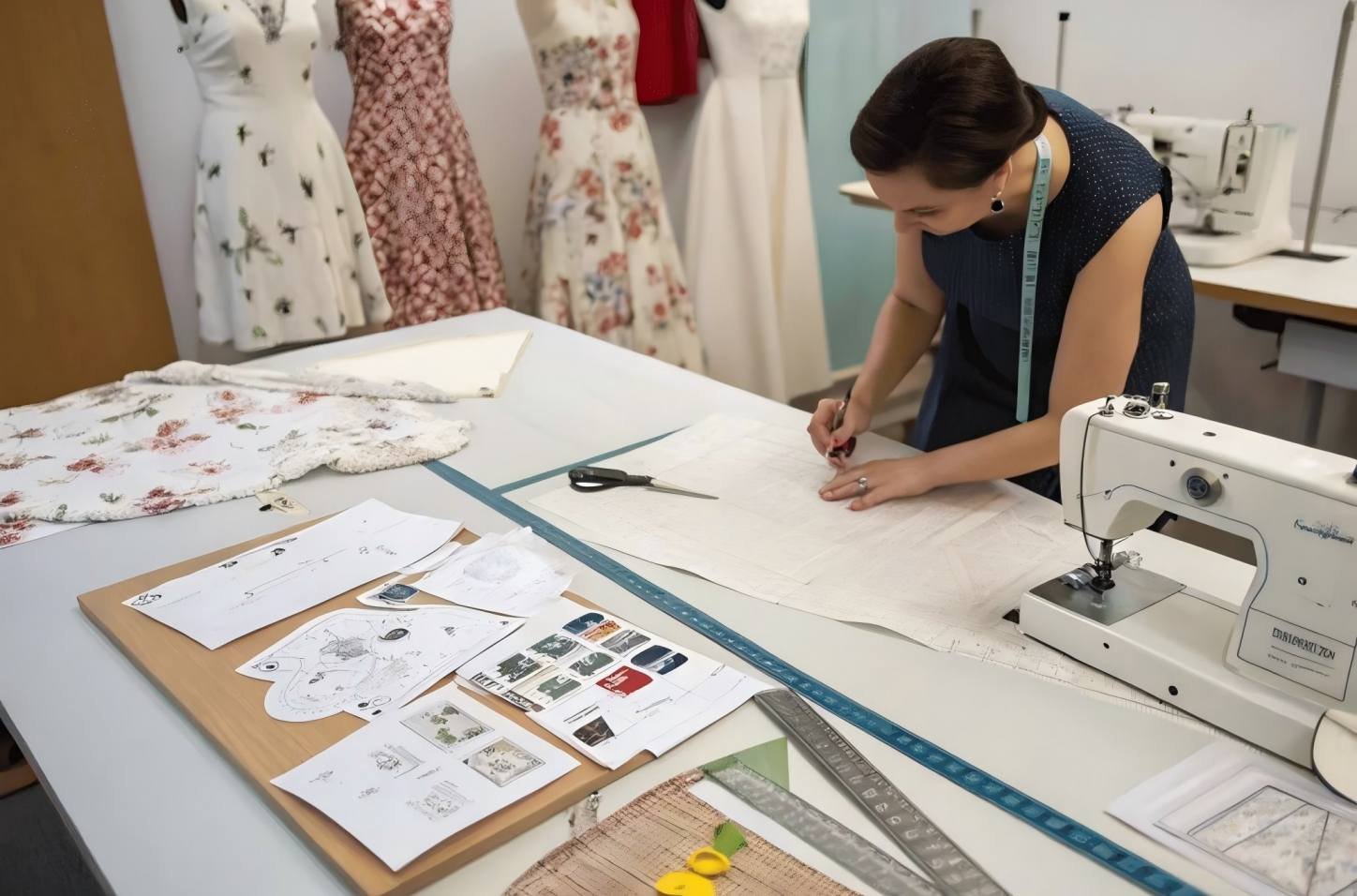
In today’s fashion industry, the relationship between a brand and its manufacturer is no longer a simple “order and produce” transaction. It has evolved into a deeply integrated partnership where product development speed, design interpretation accuracy, scalability, and consistency directly determine whether a collection succeeds in the market or fails at launch.
Many established fashion brands today are not struggling with design ideas—they are struggling with execution. A design may look perfect in concept, but when it moves into sampling and production, issues appear: fabric behaves differently than expected, fit is inconsistent across sizes, or bulk production loses the refinement of the sample. These gaps are where manufacturers either prove their value or expose their limitations.
A suitable dress manufacturer for established fashion brands is not defined by price alone. It is defined by its ability to translate creative direction into commercially viable, scalable garments that maintain consistency across seasons, volumes, and markets. This requires a combination of technical capability, production infrastructure, communication discipline, and product intelligence.
A suitable dress manufacturer for established fashion brands is one that combines advanced product development capability, consistent quality control systems, scalable production capacity, and strong communication processes. It must be able to translate design intent into production-ready garments while maintaining fabric accuracy, fit consistency, and repeatable quality across large volumes and seasonal collections. These manufacturers support not only sampling but also long-term growth, multi-style production, and reliable bulk delivery across global markets.
To understand this deeper, imagine a brand preparing a new seasonal collection of 40 dress styles. One factory can produce samples quickly but fails in bulk consistency. Another produces stable bulk but cannot interpret complex designs like corset dresses or satin draped silhouettes. Only a manufacturer that balances development intelligence with production discipline becomes a long-term strategic partner—not just a supplier.
What Do Established Fashion Brands Expect From a Dress Manufacturer?
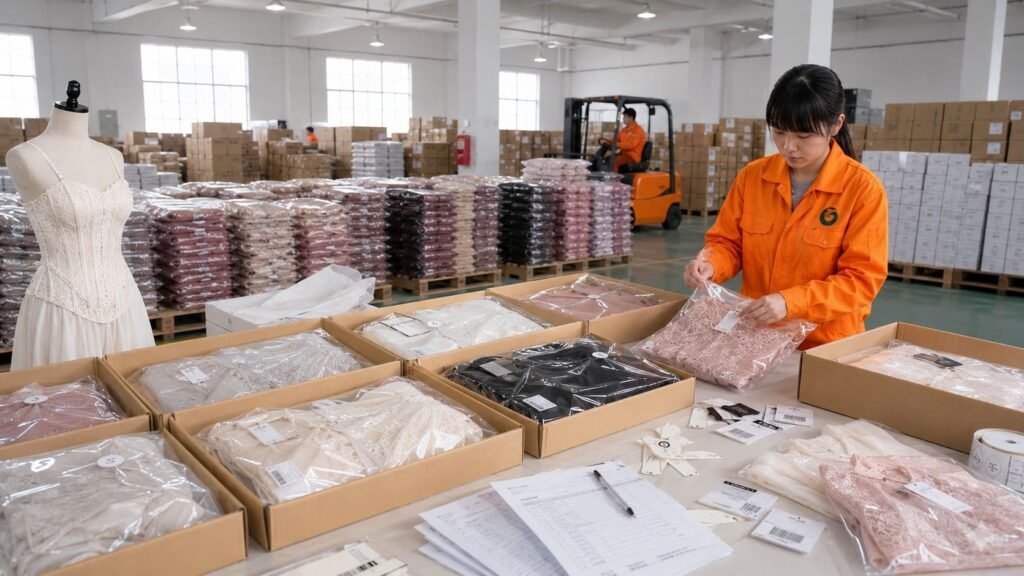
Established fashion brands expect a dress manufacturer to provide more than production—they require consistent quality, accurate interpretation of design intent, scalable capacity, and reliable communication. The manufacturer must be able to support seasonal collections, maintain repeat order stability, and ensure product consistency across multiple styles and production batches while aligning with brand identity and commercial goals.
Established fashion brands operate with structured product calendars, tight launch timelines, and strong brand positioning requirements. Their expectations of manufacturers extend far beyond basic garment construction. They require systems that can support speed, accuracy, scalability, and repeatability simultaneously.
What defines expectations in modern fashion manufacturing partnerships?
Established fashion labels operate with strict product calendars, seasonal drops, and coordinated global sales timelines. Expectations toward a dress manufacturer are shaped by commercial pressure, not theory. A production partner is evaluated based on how well it supports revenue timing, product consistency, and repeatable quality across collections.
Key expectation areas include:
- Ability to align with seasonal launch calendars without delay
- Stable sample accuracy from first or second round
- Clear understanding of different dress categories (party, occasion, resort, fitted styles)
- Ability to maintain identical quality across repeat production runs
- Fast response during development cycles when design changes occur
- Predictable execution even when order volume increases
In real production environments, brands do not evaluate manufacturers based on “capability claims” but based on execution under pressure. A supplier may produce good samples once, but if it cannot repeat that standard across 20–50 styles per season, it will not be considered stable enough for long-term cooperation. The expectation is not perfection in isolated cases, but reliability across full collections, where every style must follow the same product logic.
How do brands evaluate production reliability and consistency?
Production reliability is the most critical factor for established fashion operations. A dress that looks correct in sampling but shifts in bulk production creates direct financial and brand risk. Evaluation is therefore focused on repeatability and control rather than isolated output quality.
In practice, brands assess:
- Whether fabric behavior remains consistent between sample and bulk
- Whether measurement tolerance stays stable across size sets
- Whether different production lines deliver identical workmanship
- Whether color matching remains stable across batches
- Whether complex details (draping, pleating, embellishment) remain controlled in scale
- Whether previous orders can be reproduced without variation
A typical production evaluation cycle includes multiple checkpoints: sample approval, pre-production confirmation, inline inspection, and final inspection. Manufacturers that lack structured control often fail when scaling from 200 pieces to 10,000 pieces because small variations multiply under volume pressure.
Consistency also includes operational discipline. If communication gaps exist between sampling and production teams, or if material substitution happens without alignment, even strong samples can lose integrity in bulk. Established fashion operations expect a system where every approved detail is locked before production begins and maintained through all stages.
What level of development capability is required for modern dress collections?
Development capability determines whether a manufacturer can turn design direction into commercially viable garments. Established fashion labels rarely provide fully detailed technical packs; instead, they rely on manufacturers to interpret, adjust, and refine design intent into production-ready solutions.
Core expectations include:
- Translating sketches or reference images into accurate patterns
- Adjusting silhouettes for real fabric behavior
- Identifying construction risks before sampling begins
- Recommending suitable fabric options for specific dress types
- Supporting structure-heavy designs such as corset, bodycon, and draped satin dresses
- Improving design feasibility without losing brand identity
For example, a satin slip dress may look simple in design but requires precise control of drape, lining choice, and seam placement. A corset-style dress requires structural reinforcement that must be balanced with comfort and movement. Without technical development input, these styles often fail in real wear performance even if they look correct visually.
In practical workflows, development teams are expected to participate early, not after sampling fails. Strong manufacturers provide feedback before production starts, not after problems appear. This reduces revision cycles and helps brands move from concept to production-ready samples faster, often reducing development time by 20–40% compared to reactive systems.
How important is communication and project management in production success?
Communication structure is often the hidden factor behind successful or failed production cycles. Established fashion operations require predictable communication flow because multiple departments are involved: design, merchandising, sourcing, and retail planning.
Key expectations include:
- Clear ownership of each communication stage (sampling, production, QC, shipping)
- Fast response cycles during sampling revisions (typically 24–72 hours)
- Structured updates during production milestones
- Clear documentation of changes instead of informal updates
- Ability to manage multiple styles without confusion or data loss
- Transparent escalation when risks appear in production
Without structured communication, even technically strong manufacturers struggle to maintain trust. Brands cannot operate efficiently if every update requires chasing or clarification. In practice, delays in communication often cause more damage than production delays themselves, because they disrupt internal planning, marketing schedules, and inventory coordination.
A strong manufacturing partner operates like an extension of the brand’s internal team. Updates are not reactive—they are scheduled. Problems are not reported late—they are flagged early. Decisions are not repeated—they are documented once and followed through.
Why do brands prioritize long-term partnership over one-time production?
Established fashion labels rarely evaluate manufacturers on a single order basis. The real focus is long-term supply chain stability. A dress manufacturer is expected to evolve alongside the brand’s growth, collection expansion, and market scaling.
Long-term expectations include:
- Ability to support repeat orders without quality deviation
- Capacity to scale from test production to full commercial volume
- Flexibility to support new collections every season
- Consistency in fabric sourcing and production standards over time
- Stability in team structure and operational execution
- Reliability during peak seasonal demand periods
A key concern is continuity. Many brands experience disruption when switching manufacturers because product identity is lost between suppliers. This creates additional development cycles, increased sampling cost, and inconsistent customer experience in retail.
Long-term manufacturing partners reduce these risks by building memory into the production system—tracking fit preferences, fabric behavior, and construction standards over multiple seasons. This creates compounding efficiency, where each new collection becomes faster and more predictable than the previous one.
What role does scalability play in brand growth and product expansion?
Scalability defines whether a manufacturer can support brand growth beyond initial success. A dress style that performs well in the market must often be quickly expanded in colorways, sizes, or restocks. Without scalable production, brands lose momentum during peak demand cycles.
Key scalability expectations include:
- Ability to increase production volume without quality loss
- Support for multi-style production within the same season
- Flexibility to shift from small test orders to full-scale production
- Capacity to manage urgent replenishment orders for best-selling styles
- Ability to coordinate multiple production lines simultaneously
In real commercial environments, demand can increase rapidly after product launch. A successful dress style may move from 300 units to 10,000+ units within weeks. Manufacturers that cannot scale efficiently create lost sales opportunities and disrupt retail momentum.
Scalability is not only about size—it is about system design. It requires coordination between sampling teams, material sourcing, production scheduling, and quality control systems. Without this structure, scaling becomes reactive rather than controlled, increasing risk across the entire supply chain.
How Does Manufacturing Capability Impact Brand Growth and Collection Success?
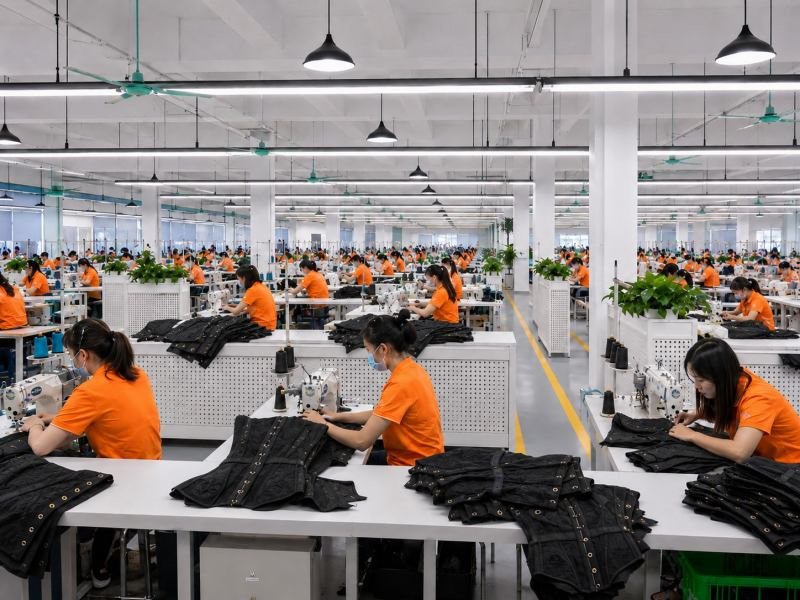
Manufacturing capability directly shapes how fast a fashion brand can scale, how many styles can be launched per season, and how consistently products perform in the market. Strong capability supports faster sampling, stable bulk production, multi-style coordination, and reliable repeat orders. Weak capability limits growth by creating delays, quality variation, and missed retail opportunities during critical seasonal launch windows.
Manufacturing capability is one of the most decisive yet underestimated factors behind fashion brand performance. In real commercial environments, design creativity alone cannot drive growth without a production system capable of executing it at scale. When manufacturing is weak, even strong collections fail to reach market timing, lose consistency between samples and bulk, or struggle during replenishment cycles.
For established fashion brands, collection success is not only about how a product looks on a model or in a studio shoot. It is about whether that product can be repeated, scaled, and delivered across multiple markets under strict timelines. Manufacturing capability determines whether a brand can respond to demand, expand successful styles, and maintain identity across seasons.
Three structural layers define this impact:
First is speed of execution, which influences how quickly ideas become sellable samples.
Second is scalability, which determines whether successful styles can move from test orders to full production.
Third is system stability, which ensures consistency across multiple batches, factories, and timelines.
When these three layers are weak, brands face delayed launches, inconsistent product quality, and lost sales momentum. When they are strong, collections move smoothly from concept to retail performance, allowing brands to grow predictably rather than reactively.
Manufacturing capability therefore becomes not just an operational function, but a direct driver of brand expansion, revenue timing, and collection reliability.
Production Capacity and Brand Scaling Speed
Production capacity determines how quickly a brand can move from sampling to market launch and how effectively it can scale winning styles. In fashion cycles where timing is critical, even a 2–3 week delay can shift a product out of its selling window.
Key operational realities include:
- Seasonal collections often contain 20–100 styles per drop
- Each style may require multiple sampling rounds before approval
- Retail launch windows are fixed and cannot be extended
- Fast-moving styles require rapid replenishment within weeks
Manufacturers with strong capacity systems are able to:
- Run multiple sampling lines simultaneously
- Support parallel development of different dress categories
- Allocate production lines based on complexity and urgency
- Handle sudden volume increases without disruption
In contrast, limited capacity creates bottlenecks. Sampling queues become longer, bulk orders overlap inefficiently, and production prioritization becomes unstable. This leads to missed launch timing, which directly affects sell-through performance in retail environments.
For dress categories such as bodycon, satin slip, corset, and occasion wear, timing is especially sensitive. These products are often linked to events, holidays, or seasonal trends. If production cannot align with these cycles, even strong designs lose commercial value.
Multi-Style Coordination in Seasonal Collections
Modern fashion collections are rarely single-product focused. A typical seasonal drop includes multiple dress categories such as mini dresses, midi dresses, evening wear, resort styles, and fitted silhouettes. Each category has different construction logic, fabric behavior, and production requirements.
Manufacturing capability impacts how effectively these styles are coordinated within a single production cycle.
Strong coordination systems allow manufacturers to:
- Separate production flows based on style complexity
- Manage fabric allocation across multiple SKUs
- Balance workload across different production lines
- Prevent bottlenecks when multiple styles peak simultaneously
Without coordination capability, production becomes fragmented. Styles compete for resources, timelines overlap, and quality control becomes inconsistent across categories. This is especially critical in collections where aesthetic consistency is essential across multiple silhouettes.
For example:
- Satin dresses require controlled handling to maintain drape consistency
- Mesh styles need careful transparency control
- Structured corset dresses require reinforced internal construction
Each of these cannot be treated with a single production logic. Capability lies in understanding differences and organizing them into a unified production plan.
Speed to Market and Commercial Timing Pressure
Speed to market is one of the most direct links between manufacturing capability and commercial success. Fashion is time-sensitive by nature, and delayed production can completely shift a product from high demand to missed opportunity.
Manufacturers with strong systems typically achieve:
- Sample development cycles within 7–15 days per style
- Bulk production cycles aligned with seasonal calendars (20–45 days depending on complexity)
- Rapid adjustment capability during peak demand periods
- Fast replenishment for high-performing styles
In contrast, slower systems introduce risks such as:
- Missing seasonal peak sales windows
- Delayed campaign launches
- Reduced retail visibility during critical periods
- Loss of competitive positioning in fast-moving categories
Dress categories like party wear, occasion dresses, and resort collections are especially sensitive to timing. These styles are often linked to specific events such as holidays, weddings, or seasonal travel periods. If production misses these windows, demand cannot be recovered later.
Manufacturing capability therefore acts as a timing engine. It determines whether a collection enters the market at peak relevance or after demand has already shifted.
Risk Control and Production Consistency Across Volumes
As production volume increases, risk increases exponentially. A small inconsistency in sampling can become a large issue when scaled across thousands of units. Manufacturing capability is measured by how effectively these risks are controlled.
Common risk areas include:
- Fabric variation between batches
- Measurement drift across size grading
- Stitching inconsistency across production lines
- Embellishment instability in bulk production
- Fit deviation after scaling from sample to mass production
Strong manufacturing systems reduce these risks through structured control points:
- Pre-production confirmation of all materials and trims
- Inline inspection during production stages
- Final inspection aligned with brand standards
- Standardized measurement tolerance systems
- Controlled batch production processes
For fashion brands, consistency is not optional. A dress that performs well in one batch but fails in another creates brand trust issues and increases return rates. This is especially critical in fitted and occasion wear categories where silhouette precision is essential.
Capability in this area is not about avoiding all variation, but about controlling it within acceptable commercial limits.
System Integration and Communication Efficiency
Manufacturing capability is not only technical—it is also organizational. How information flows between sampling, production, and brand teams directly affects execution quality.
Strong systems ensure:
- Clear ownership of each production stage
- Structured updates during sampling and bulk phases
- Documented decision-making for design changes
- Fast feedback loops during revisions
- Coordinated communication across multiple styles
Weak communication systems often lead to:
- Delayed response cycles
- Misinterpretation of design comments
- Rework due to missing information
- Lack of visibility during production stages
In real production environments, communication failure is often more damaging than technical failure. Even well-made garments can fail commercially if timing, updates, and coordination are inconsistent.

What Fabric, Fit, and Technical Development Capabilities Are Required?
A capable dress manufacturer needs strong fabric judgment, accurate pattern development, fit correction, construction planning, and sample-to-bulk control. For fashion dresses, fabric choice affects drape, support, stretch, transparency, and final shape. Fit and technical development decide whether a style only looks good in photos or can be worn, repeated, and produced consistently across sizes and bulk orders.
Established fashion brands do not only need a factory to sew a dress. They need a team able to read the product correctly before fabric is cut. A satin dress, mesh bodycon dress, corset mini dress, or backless occasion dress can fail for different reasons. Sometimes the sketch is clear, but the fabric is too soft. Sometimes the size chart is complete, but the pattern does not support the body. Sometimes the first sample looks acceptable on a mannequin, but the same shape cannot hold across XS to XL.
Technical development is where design risk becomes visible. A good manufacturer checks whether the fabric matches the silhouette, whether the inner structure can support the garment, whether seams will twist, whether lining affects drape, and whether the confirmed sample can be repeated in bulk. Strong development capability reduces wasted sampling rounds, avoids unstable bulk production, and protects the final product feeling.
For dress-focused brands, the real question is not “Can the factory make dresses?” The better question is: “Can the factory understand how fabric, fit, structure, and production behavior work together before mistakes become expensive?”
Fabric Behavior
Fabric is never just a material choice. In dress production, fabric decides how the style falls, stretches, holds shape, photographs, and feels when worn. Two dresses can use the same pattern but look completely different if one uses heavy satin and another uses lightweight stretch jersey. For fashion brands working on party, occasion, resort, or fitted dress lines, fabric judgment often decides whether a sample feels premium or disappointing.
A manufacturer needs to evaluate several fabric points before sampling begins:
- Drape: whether fabric falls softly, sharply, or collapses
- Support: whether fabric can hold bust, waist, hip, and hem shape
- Stretch and recovery: whether fabric returns after body movement
- Opacity: whether lining or double-layering is needed
- Weight: whether the fabric suits the length and structure
- Surface behavior: whether shine, pile, sequins, or texture will cause cutting or sewing issues
Satin is a good example. A satin dress may look simple, but wrong fabric weight can create seam puckering, poor drape, or cheap shine. A lightweight satin may work for a slip dress, but not for a structured corset dress. A heavier satin may hold a formal silhouette better, but may feel too stiff for a resort style.
Mesh creates another set of risks. Mesh dresses need control over transparency, stretch direction, lining placement, and seam strength. If mesh is too soft, bodycon styles may lose contour. If mesh is too stiff, movement becomes uncomfortable. For layered mesh dresses, cutting accuracy and tension control are critical because distortion can appear after sewing.
Sequins and embellished fabrics require even more planning. The issue is not only decoration. Weight, abrasion, seam bulk, lining comfort, and machine handling all affect the final garment. A beautiful sequin fabric may become difficult in bulk if the decoration density changes across rolls or creates uneven seam areas.
A strong manufacturer should not simply accept a fabric request without checking its behavior. Practical fabric advice can prevent failed samples, unstable fit, and expensive rework.
| Dress Type | Key Fabric Need | Common Risk | Technical Checkpoint |
|---|---|---|---|
| Satin slip dress | Smooth drape, clean shine | Seam puckering, twisting | Grainline, needle choice, lining weight |
| Bodycon dress | Stretch and recovery | Loose fit after wear | Elasticity test, recovery test |
| Mesh dress | Controlled transparency | Overexposure or distortion | Lining placement, stretch direction |
| Corset dress | Firm structure | Bust collapse, waist imbalance | Boning, interlining, cup support |
| Sequin dress | Decoration stability | Heavy seams, discomfort | Seam bulk, lining, decoration loss |
| Vacation dress | Soft movement | Fabric too heavy or flat | Drape test, wash shrinkage |
A professional dress manufacturer should connect fabric sourcing with final product effect. Fabric cost matters, but fabric behavior matters more. A cheaper material may increase return risk if it damages fit, transparency, or comfort. A premium material may still fail if construction planning is weak.
Fit Engineering
Fit is not only about measurement. A dress can match the size chart and still look wrong on the body. Fit engineering means shaping fabric around real movement, body balance, and garment structure. For fitted dresses, party dresses, bodycon dresses, corset dresses, halter styles, and backless silhouettes, fit is often the biggest difference between ordinary production and brand-level production.
Several fit areas need careful control:
- Bust balance: support, cup shape, neckline stability
- Waist shaping: contour without pulling or twisting
- Hip curve: smooth fit without horizontal drag lines
- Shoulder and strap position: comfort and garment stability
- Back opening: secure hold without gaping
- Hem and skirt fall: clean movement and balanced proportion
Bodycon dresses are a common fit test. Many factories can make a tight dress, but a strong fitted dress requires contour control. The garment should shape the body without creating wrinkles, pulling lines, or fabric fatigue after wear. Stretch fabric must recover after sitting, walking, and movement. If recovery is weak, the dress may look good during fitting but lose shape after a few hours.
Corset and bustier dresses require stronger technical planning. Bust support, boning placement, cup shape, waist pressure, and back closure must work together. If one point is wrong, the dress may feel uncomfortable, collapse at the bust, or distort the waistline. A corset dress also needs size grading logic because support structure cannot simply be enlarged equally across all sizes.
Backless and halter dresses require balance between exposure and stability. A backless style may look attractive in a reference image, but poor tension control can cause side gaping, neckline pulling, or unstable bust coverage. For halter dresses, neck pressure, armhole shape, bust coverage, and strap length need careful testing.
Fit engineering also depends on fabric. A pattern made for woven satin cannot be used directly for stretch jersey. A mesh overlay may need a different seam allowance and tension control than lining. A manufacturer must understand when a pattern should be adjusted because fabric behavior has changed.
A useful fit review should include:
- Front, side, and back view check
- Key measurement check
- Movement and sitting test where needed
- Tension and wrinkle analysis
- Size grading logic review
- Fit comments organized by priority
For established fashion brands, fit accuracy affects more than product quality. It affects photography, model presentation, return rates, and brand reputation. A dress that photographs well but feels unstable when worn creates real retail risk.
Pattern Control
Pattern development turns design intent into a repeatable garment. A strong pattern team does not only draw lines on paper. It translates silhouette, fabric behavior, size logic, construction sequence, and bulk production requirements into a stable technical foundation.
Pattern control becomes especially important in styles with:
- Curved seams
- Corset panels
- Cut-outs
- One-shoulder construction
- High slits
- Draped panels
- Mesh layering
- Bias-cut satin
For simple styles, small pattern issues may be hidden. For fitted or occasion styles, small mistakes become visible immediately. A waist seam positioned 1 cm too high can shorten the torso visually. A side seam pulled slightly forward can distort the hip. A bust dart placed incorrectly can change the whole front shape.
Pattern control also affects production efficiency. If pattern pieces are too complex, unclear, or unstable, bulk sewing becomes slower and less consistent. If seam allowance is unsuitable for the fabric, the garment may stretch, pucker, or twist during sewing. If notches and markings are incomplete, production workers may interpret details differently across lines.
A professional dress manufacturer usually checks pattern logic before cutting samples:
- Are main body panels balanced?
- Does the pattern match fabric stretch direction?
- Are cut-out areas stable after wearing?
- Is the lining pattern adjusted properly?
- Are seam allowances suitable for bulk sewing?
- Can the style be graded without losing shape?
Grading is another key part. A dress that fits well in size S may fail in larger sizes if grading is mechanical. Corset, bodycon, and bustier styles need special grading care because support, coverage, and contour must remain balanced. Larger sizes may require changes in strap width, cup structure, lining strength, or internal support.
Pattern records also matter for repeat production. Once a style becomes a best seller, the brand may reorder it in new colors, fabrics, or size ranges. Without accurate pattern files and production notes, repeat orders may drift away from the approved version. Stable pattern control protects continuity across seasons.
For fashion brands, pattern control is not a back-office task. It is one of the strongest safeguards for product identity.
Structure Planning
Many fashion dresses fail because inner structure is ignored. A beautiful outer design may need invisible engineering inside the garment. Structure planning includes lining, boning, cups, elastic, interlining, zipper choice, strap support, seam reinforcement, and finishing method. These details rarely appear clearly in a reference image, but they decide whether the garment works in real life.
Structure is especially important for:
- Corset and bustier dresses
- Backless dresses
- High-slit dresses
- Strapless dresses
- Heavy sequin dresses
- Tight bodycon dresses
- Satin draped dresses
- Mesh layered styles
A strapless dress, for example, cannot depend on outer fabric alone. It may need silicone tape, inner elastic, boning, cup support, or reinforced side seams. Without structure, the garment may slide down or lose shape during movement. A high-slit satin dress may need careful seam reinforcement and hem control to avoid twisting or tearing.
Lining is also a major technical decision. Wrong lining can change the entire garment. A lining that is too stiff may kill drape. A lining that is too thin may create transparency problems. A lining with poor stretch may restrict movement in bodycon styles. For mesh and satin dresses, lining choice often determines comfort and visual quality.
Zipper and closure placement also affects fit. A weak zipper may fail under body tension. A poorly placed invisible zipper may distort the side seam or back seam. Hook-and-eye, elastic panels, lace-up details, and adjustable straps should not be treated as decoration only; they affect wearing stability.
Structure planning should answer several practical questions before sampling:
- What part of the dress needs support?
- Which areas must stay flexible?
- Where will body tension be highest?
- Does lining need stretch, softness, or opacity?
- Which closure gives the cleanest look and safest wear?
- Can the same structure be repeated in bulk?
The best structure is often invisible. The wearer does not notice it, but the dress feels secure, shaped, and comfortable. Poor structure is noticed immediately: slipping neckline, twisting seams, collapsing bust, uneven hem, or uncomfortable pressure.
A manufacturer with strong technical development will identify these needs before sample failure. That saves time and reduces the number of revision rounds.
Sample-to-Bulk Control
A sample is not valuable unless it can become production. Many fashion brands face one painful problem: the sample looks good, but bulk production changes. Fit becomes looser, fabric looks different, stitching loses refinement, or details are simplified during production. Sample-to-bulk control prevents this gap.
Before bulk production begins, several points need to be locked:
- Approved fabric and color standard
- Final pattern and size specification
- Trim, lining, zipper, cup, boning, and label details
- Key workmanship points
- Measurement tolerance
- Packing and finishing requirements
The approved sample should become a production reference, not just a visual guide. For complex styles, a pre-production sample or first-piece approval is often needed before full production. This step helps confirm whether the sewing line can repeat the sample standard.
Common sample-to-bulk risks include:
| Risk Area | Sample Stage Issue | Bulk Result |
|---|---|---|
| Fabric | Similar but not identical bulk fabric | Different drape or hand feel |
| Pattern | Final changes not recorded | Fit inconsistency |
| Sewing | Sample made by senior sample worker | Bulk sewing lacks same refinement |
| Trim | Substitute zipper or lining | Wearing comfort changes |
| Decoration | Manual sample detail not scalable | Uneven embellishment |
| Measurement | Loose tolerance control | Size complaints |
For dress production, sample-to-bulk control must be practical. A sample worker may sew slowly and carefully, but bulk production needs repeatable construction. If a detail is too fragile or too time-consuming, it should be flagged before approval. A strong manufacturer explains where a design detail needs adjustment for stable production.
Production notes also matter. For example, if a satin seam requires special needle size, thread tension, and pressing method, those notes must follow the style into bulk production. If a mesh dress requires specific lining placement, that cannot be left to line interpretation.
Strong sample-to-bulk control helps brands avoid one of the most expensive mistakes in fashion manufacturing: approving a beautiful sample that cannot be reliably repeated.
Technical Documentation
Technical documentation is where product knowledge becomes transferable. Without clear records, every style depends too heavily on memory, and mistakes appear when people, factories, or production lines change. Strong documentation protects sampling accuracy, revision history, production stability, and repeat orders.
Useful technical documentation may include:
- Development brief
- Fabric and trim record
- Pattern version record
- Sample comments and revision summary
- Measurement specification
- Construction notes
- QC checkpoints
- Final approved sample reference
A development brief clarifies the purpose of the sample. Is it for fit approval, visual approval, presentation, or production preparation? Different sample purposes require different priorities. A fit sample may not need final fabric, but it must test body balance. A sales sample must reflect final appearance. A pre-production sample must prove production readiness.
Revision records are especially important. If comments are handled casually, changes become confusing after two or three rounds. One round may adjust bust coverage, another changes fabric, another changes strap length. Without clear records, final approval becomes unclear. Structured revision summaries reduce repeated mistakes and help everyone move in the same direction.
Technical documentation also supports repeat orders. A successful style may be reordered after three months in new colors. If the pattern, fabric, trim, and production notes are recorded properly, repeat production becomes faster and more stable. If records are weak, the repeat order may behave like a new development project, increasing cost and risk.
For established fashion brands, documentation is part of reliability. A manufacturer that records decisions clearly is easier to work with, easier to trust, and easier to scale with. It also helps internal teams make faster decisions because key information is not buried in long message threads.
Strong fabric, fit, and technical development capability does not come from one skill alone. It comes from the connection between fabric sourcing, pattern making, sampling, structure planning, production control, and documentation. When these areas work together, a dress manufacturer can help brands move from design idea to production-ready garment with fewer risks and stronger commercial results.

How Do Quality Control and Production Consistency Define Supplier Reliability?
Quality control and production consistency define whether a dress manufacturer can be trusted for long-term collaboration. Reliable suppliers maintain stable measurement accuracy, fabric behavior, and workmanship standards across samples and bulk production. Strong QC systems reduce variation between batches, prevent production drift, and ensure every dress delivered matches the approved sample in fit, fabric feel, and visual appearance.
In fashion dress manufacturing, quality control and production consistency are not operational details—they define the entire reliability of a supplier. A factory may produce impressive samples, but if bulk production shifts in fit, fabric, or finishing, the brand experience is directly impacted. For established fashion labels working with seasonal collections and repeat production cycles, consistency is more valuable than isolated quality.
Reliability is not measured by one successful order. It is measured by whether the 10th production run looks identical to the first sample approved. When variation appears between batches, brands face increased return rates, disrupted retail presentation, and weakened customer trust. This is why quality control and consistency systems are central to supplier evaluation.
Strong manufacturers treat QC as a system, not a final inspection step. It is embedded across sampling, production planning, inline monitoring, and final packing. At the same time, consistency is not just about sewing accuracy—it includes fabric control, measurement discipline, process standardization, and communication clarity across all production stages.
The following four areas define how reliability is actually built in real manufacturing environments.
Fabric and Material Consistency Control
Fabric inconsistency is one of the most common reasons bulk production fails to match approved samples. Even when the same fabric code is used, variations in dye lot, weight, stretch, or finishing can significantly change the final garment appearance.
Reliable manufacturers control fabric consistency through structured checks before production begins:
- Fabric batch testing before cutting (weight, shrinkage, stretch recovery)
- Color consistency checks under standardized lighting conditions
- Roll-to-roll comparison for tone variation control
- Fabric substitution approval process before production changes
- Pre-production fabric confirmation with sealed reference samples
In dress production, fabric behavior affects silhouette directly. For example, a satin dress with slightly different weight may lose drape control or create seam twisting. A mesh fabric with altered elasticity may shift body fit and transparency levels. Even a small deviation in fabric recovery can impact fitted dresses, especially bodycon or corset styles.
Advanced suppliers often maintain fabric “behavior records” across styles, tracking how each material performs in real production conditions. This allows better prediction of risks before bulk cutting begins.
Without fabric consistency control, even perfect patterns and QC systems cannot prevent variation at garment level.
Measurement Accuracy and Fit Stability Across Sizes
Measurement consistency is one of the strongest indicators of production reliability. A dress must maintain proportional balance not only in sample size but across the full grading range. When measurement drift occurs, the same design behaves differently across sizes, affecting brand perception.
Reliable manufacturing systems enforce measurement control through:
- Pre-approved measurement charts locked before bulk production
- Inline measurement checks during sewing stages
- Size grading validation for proportion consistency
- Tolerance control systems for key fit points (±0.5–1.5 cm typical range)
- Final inspection sampling across multiple size runs
Fit stability becomes especially critical in structured or fitted dresses. Bodycon, corset, halter, and backless styles rely on precise balance between bust, waist, and hip positioning. A small deviation in waist placement or bust height can completely change the garment’s silhouette.
For example:
- A 1 cm shift in waistline placement may shorten or elongate torso appearance
- Slight bust misalignment can cause neckline distortion
- Hip grading inconsistency may create tightness or looseness across sizes
In consistent production systems, measurement is not treated as final inspection alone—it is controlled continuously from pattern stage through to finishing. This reduces cumulative deviation across production lines.
Without stable measurement control, brands often experience a common issue: the sample looks correct, but bulk sizes feel “different” even when measurements appear technically correct on paper.
Workmanship Standardization Across Production Lines
Workmanship consistency determines whether garments look refined or fragmented across different production batches. Even with correct fabric and measurements, inconsistent stitching, finishing, or construction technique can damage overall product quality.
Reliable manufacturers ensure workmanship consistency through:
- Standardized sewing instructions shared across all production lines
- Sample-based training for production workers before bulk start
- Defined stitch density, seam type, and tension settings per style
- Inline inspection of critical construction points
- Final visual inspection focusing on symmetry and finish quality
In dress manufacturing, workmanship issues often appear in subtle ways:
- Uneven stitching on curved seams
- Wrinkling at side seams or darts
- Uneven hemming in flowing skirts
- Loose finishing in embellishment areas
- Inconsistent seam tension in stretch fabrics
These issues may not appear in samples because samples are often made under controlled, slower conditions. However, bulk production requires repeatability at scale, which introduces variation if workmanship standards are not strictly defined.
A structured system ensures that every operator follows identical construction logic. For example, a satin slip dress must have controlled seam tension to avoid puckering, while a corset dress requires reinforced stitching in support areas. Without standardized workmanship rules, each production line may interpret construction differently, creating visible inconsistency.
Reliable suppliers reduce this risk by treating workmanship as a documented system rather than individual skill dependency.
Batch-to-Batch Stability in Bulk Production
Batch stability determines whether a dress maintains identical quality across multiple production runs. This becomes especially important for brands that reorder successful styles or produce collections in multiple waves.
Stable manufacturers control batch consistency through:
- Locked production reference samples stored for each approved style
- Standardized production parameters for each batch
- Controlled material sourcing across repeat orders
- Cross-batch inspection comparison systems
- Production record tracking for each style iteration
In real production environments, batch variation can occur due to:
- Different fabric lots used in repeat orders
- Seasonal production pressure affecting workflow
- Worker rotation between production lines
- Minor process adjustments over time
For fashion brands, these variations directly affect retail consistency. A dress sold in two different batches must appear identical in store, online images, and customer experience. Even minor differences in shade, drape, or stitching can lead to return issues or brand inconsistency perception.
Strong manufacturing systems reduce this risk by treating every batch as a controlled reproduction of an approved reference, not as a new production interpretation. This includes maintaining production logs, fabric records, and QC checkpoints that remain consistent across seasons.
Batch stability is what transforms a supplier from a one-time producer into a long-term production partner.
Final Inspection and Pre-Shipment Standard Control
Final inspection is often misunderstood as the last step of production, but in reliable manufacturing systems, it is a structured verification stage that confirms all previous controls have been correctly executed.
Effective final QC includes:
- Random sampling across full production quantity
- Measurement verification against approved specifications
- Visual inspection of stitching, alignment, and finishing
- Fabric defect and color consistency review
- Packaging, labeling, and presentation confirmation
For dress products, final inspection is critical because visual appearance plays a major commercial role. A slight defect in symmetry, seam alignment, or finishing quality can affect product perception immediately.
Reliable suppliers also apply pre-shipment consistency checks, ensuring:
- All size sets are complete and correctly graded
- Packaging matches brand requirements
- Hangtags, labels, and barcodes are accurate
- Folding and presentation match retail standards
This stage ensures that what leaves the factory matches what was approved during sampling and production control stages. It closes the loop between development intent and final commercial delivery.
Without strong final inspection systems, even well-controlled production processes can fail at the last stage, creating unnecessary commercial risk.
How Should Fashion Brands Evaluate Long-Term Manufacturing Partnerships?
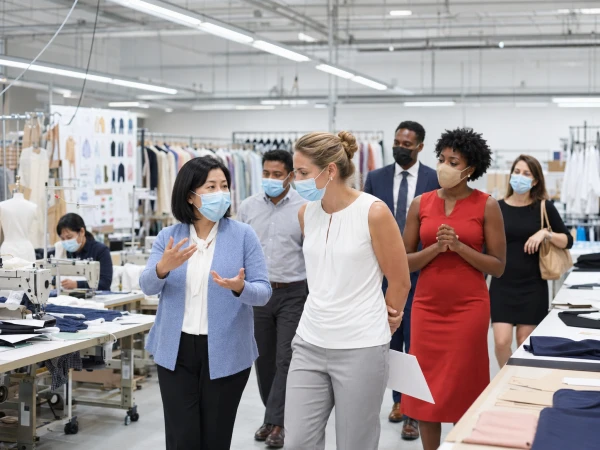
Fashion brands should evaluate manufacturers based on long-term stability, communication efficiency, scalability, and development capability. A strong partner is one that can support seasonal growth, multi-style collections, repeat production, and maintain consistent quality across evolving brand requirements.
Communication and Project Management
Clear communication ensures:
- Faster sampling cycles
- Reduced misunderstanding
- Stable production execution
Scalability and Growth Alignment
Manufacturers must grow with brands:
- From small test orders
- To full seasonal production
- To multi-market distribution
Long-Term Production Stability
Consistency over time is more important than one-time performance.
How Can Duolan Apparel Support Your Custom Dress Development?
If your brand is looking for a manufacturing partner capable of supporting fashion dress development, seasonal collections, and scalable production systems, Duolan Apparel provides end-to-end support from sampling to bulk production.
We specialize in:
- Fashion dresses
- Occasion and party dresses
- Bodycon and structured silhouettes
- Satin, mesh, lace, and complex fabric constructions
Our system supports:
- Rapid sampling development
- Multi-style seasonal collections
- Scalable production from test orders to bulk
- Stable QC and production consistency
If you are building your next collection or evaluating a new manufacturing partner, you can reach out to Duolan Apparel to discuss your design direction, sampling requirements, and production plan.
We support brands not just in making garments—but in building collections that perform in the market.