Skip to content
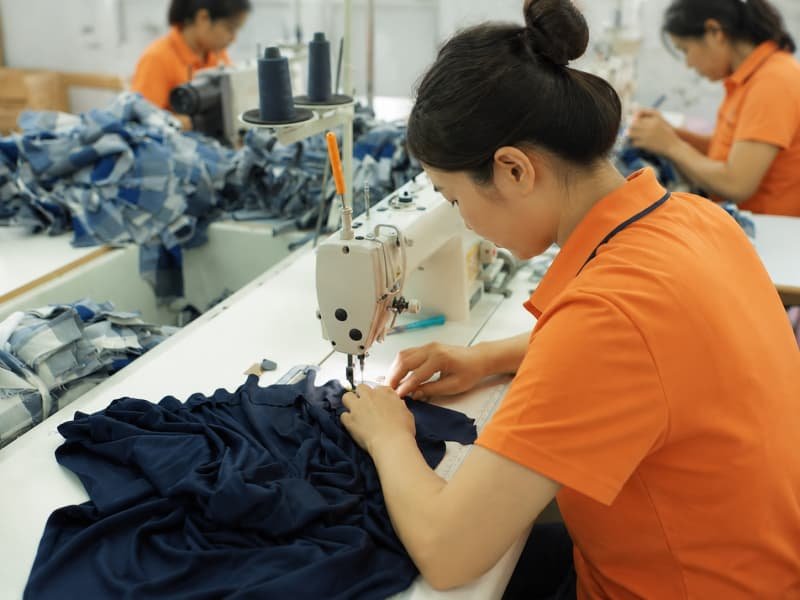
The decision to move dress production overseas is rarely just a cost conversation anymore. For modern fashion brands, especially those working with dresses across categories like occasionwear, partywear, resort collections, or bodycon silhouettes, the challenge is not finding a factory—it is finding a manufacturing partner that understands design intent, fabric behavior, and commercial execution at scale.
Many brands underestimate this shift. They assume that once a tech pack is ready, production becomes a linear process. In reality, overseas manufacturing introduces a multi-layer system of risks: communication gaps, sampling misinterpretation, fabric substitution issues, and bulk inconsistency. A supplier that cannot translate creative intent into production-ready garments will silently increase costs through repeated sampling, delayed launches, and inconsistent quality.
At its core, selecting an overseas dress manufacturer is not about price comparison. It is about capability alignment across five dimensions: sampling accuracy, fabric engineering, fit consistency, production scalability, and quality control discipline. These are the factors that determine whether a design becomes a best-seller or a production failure.
Before moving dress production overseas, brands should evaluate sampling capability, fabric and fit development expertise, production scalability, quality control systems, and pricing transparency. The most critical factor is whether the manufacturer can translate design intent into production-ready garments consistently across multiple batches while maintaining fit, fabric behavior, and visual accuracy at scale.
In sourcing decisions, the difference between a reliable manufacturer and a risky one only becomes visible after production begins. That is why experienced brands treat supplier selection as a technical evaluation—not a transactional purchase. The following sections break down exactly what to ask before committing to overseas dress manufacturing, based on production workflows used by established fashion supply chains.
What Should You Evaluate Before Choosing an Overseas Dress Manufacturer?
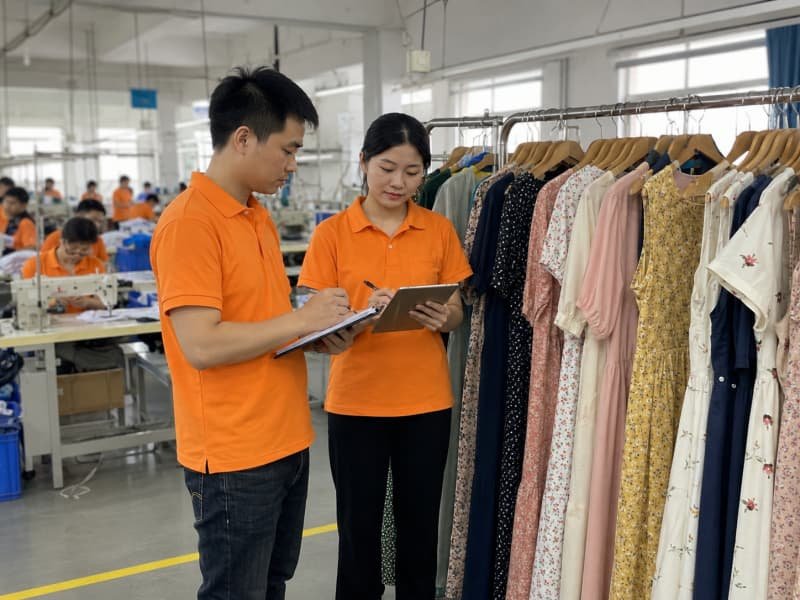
Before selecting an overseas dress manufacturer, the evaluation process should focus on whether the factory can consistently translate design intent into production-ready garments without losing silhouette accuracy, fabric behavior, or construction quality. The decision should not rely on pricing alone. It requires assessing specialization in dress categories, production scalability, sampling accuracy, and real execution capability across different fabric types such as satin, mesh, chiffon, and structured corset materials. A strong manufacturer must demonstrate control over both creative interpretation and industrial stability, ensuring that sampling results can be replicated in bulk production without deviation.
Dress Manufacturing Specialization
Many factories present themselves as capable of producing all types of garments, but dress manufacturing requires a much deeper technical foundation than general apparel production. Dresses—especially fitted, structured, or occasion-focused designs—depend heavily on precise control of fabric behavior, internal construction, and silhouette engineering. A manufacturer that lacks specialization may still produce garments, but the outcome often fails in areas such as drape balance, waist shaping, or overall proportion consistency.
In practice, specialization is reflected in how a factory handles complex dress categories. For example, bodycon dresses require contour precision and stretch recovery control, while satin dresses demand careful management of surface tension and seam smoothness. Corset and bustier designs require structural reinforcement through boning, lining systems, and stability mapping across the torso. Without prior experience in these categories, production errors tend to appear during scaling rather than sampling.
A specialized dress manufacturer typically has internal systems dedicated to different silhouette families rather than a single generalized workflow. This includes separate development logic for fitted dresses, flowing silhouettes, embellished partywear, and layered occasion dresses. The ability to distinguish between these categories is critical because each requires different production parameters.
From a sourcing perspective, one of the most reliable indicators of specialization is whether the manufacturer can clearly explain the behavior of different fabrics under stress. For example, satin may shift under seam tension, mesh may distort under grading changes, and stretch fabrics may lose recovery after repeated wear. Factories that understand these behaviors tend to produce more stable results in both sampling and bulk production.
Production System & Scalability
Scalability is one of the most overlooked factors when selecting an overseas dress manufacturer, yet it directly determines whether a supplier can support brand growth beyond initial sampling. A factory may perform well at small sample stages but fail when order volume increases, leading to delays, inconsistent quality, or production bottlenecks.
A scalable production system is typically structured into multiple layers rather than a single production line. These layers may include dedicated sampling lines, flexible small-batch lines, and high-volume production lines. This structure allows different types of orders—test orders, seasonal drops, and bulk replenishment—to run simultaneously without interfering with each other.
In practical terms, scalability can be measured by three operational indicators:
| Capability Area | What It Means in Production | Risk if Missing |
|---|---|---|
| Multi-line production | Ability to run multiple styles at once | Delays during peak season |
| Flexible capacity adjustment | Shifting workers between lines | Inability to handle urgent orders |
| Parallel development handling | Managing multiple samples simultaneously | Slow product development cycles |
Without these capabilities, even a strong sampling result may not translate into stable bulk production. For fashion brands with frequent seasonal launches or multiple SKU collections, lack of scalability becomes a critical bottleneck.
Another key factor is whether the manufacturer can separate complexity levels across production lines. Simple dress styles should not compete for capacity with complex embellished or structured garments. When factories fail to segment production properly, the result is often inconsistent lead times and unpredictable delivery schedules.
Brand Alignment & Product Category Fit
Beyond technical capability, alignment between the manufacturer and the brand’s product direction plays a decisive role in long-term success. Dress brands often operate within specific identity frameworks such as occasionwear, partywear, resortwear, or contemporary fashion. Each category carries different expectations in silhouette, fabric mood, and finishing standards.
A manufacturer that understands brand alignment does not treat every order as an isolated production task. Instead, it evaluates whether the requested design fits within the brand’s existing product logic and market positioning. For example, a resort dress collection prioritizes lightweight fabrics and fluid movement, while occasion dresses require structure, support, and controlled visual impact.
Misalignment often appears in subtle ways. A factory may technically produce the garment correctly, but the final product may feel disconnected from the brand’s identity. This usually happens when suppliers focus only on execution rather than product context.
Strong alignment also affects development speed. When a manufacturer understands a brand’s typical silhouette patterns, fabric preferences, and pricing structure, sampling cycles become shorter and more accurate. This reduces unnecessary revisions and improves decision-making efficiency during product development.
Proof of Capability & Past Output
One of the most practical ways to evaluate a manufacturer is by analyzing past production output across similar dress categories. Capability is not defined by claims, but by consistency across multiple styles, fabric types, and production cycles.
A reliable manufacturer should be able to demonstrate experience with various dress constructions, including fitted silhouettes, structured corset designs, satin evening dresses, mesh layering styles, and embellished partywear. More importantly, this experience should show stability across repeated production rather than isolated successful samples.
In evaluation, brands often look for three layers of evidence:
- Category consistency – ability to produce multiple styles within the same dress category
- Fabric versatility – handling different materials without loss of quality
- Repeat production stability – maintaining consistency across reorders
Factories that lack this consistency often perform well in initial sampling but fail during scaling. The most common issue is variation in batch output, where later production runs differ in fit, color tone, or finishing quality compared to initial samples.
From a sourcing perspective, the strongest signal of capability is not the number of products a factory can make, but the repeatability of similar products over time. This indicates whether the manufacturer has a controlled system or a trial-and-error approach.

What Questions Should You Ask About Sampling and Product Development?
Sampling and product development represent the most critical stage in overseas dress manufacturing because they determine whether a design idea can be transformed into a production-ready garment with stable quality, accurate fit, and repeatable results. At this stage, the focus should not only be on whether a sample looks correct, but whether the factory can systematically control fabric behavior, pattern accuracy, and revision logic. A strong manufacturer should demonstrate a clear development workflow that reduces iteration cycles, prevents misinterpretation of design intent, and ensures that final approval samples can be replicated in bulk production without deviation in structure or finishing.
Sampling Input Capability and Interpretation Accuracy
A key question during early evaluation is how the manufacturer interprets different types of development input. Dress development rarely starts from a single standardized format. It may come from tech packs, reference images, physical samples, or even partial sketches. Each input type requires a different level of technical translation.
Factories with strong development systems can convert visual or technical references into structured production logic. For example, a reference image of a satin slip dress requires interpretation of drape behavior, seam placement, strap tension, and fabric weight balance. Without this capability, sampling results often drift away from the original design intent, especially in silhouette-sensitive categories like bodycon or corset dresses.
A reliable sampling system should also include internal validation before the sample is presented. This means pattern makers, sample technicians, and fabric specialists review the design together to identify structural risks early. When this step is missing, brands often face unexpected revisions after the first sample, leading to extended timelines and increased development cost.
Sampling Workflow Structure and Revision Control
Sampling is not a single production step but a structured sequence that includes proto sample, fit sample, and pre-production sample stages. Each stage serves a different function in refining design accuracy and production readiness.
A well-organized manufacturer clearly defines revision boundaries between each stage. For example, structural changes such as neckline adjustment or waist shaping should be resolved during the fit sample stage, while minor finishing adjustments like stitching alignment or hemming are reserved for later stages. Without this separation, sampling cycles often become repetitive and unpredictable.
Another important factor is revision control efficiency. In practical production environments, an efficient sampling system typically limits major revisions to two or three rounds before final approval. When revision cycles exceed this range, it often indicates weak initial interpretation or insufficient technical alignment between design and production teams.
Strong sampling workflows also include feedback documentation. Each revision should be recorded with measurable changes in centimeters, fabric substitution notes, and construction adjustments. This prevents communication loss and ensures that final samples reflect cumulative improvements rather than fragmented corrections.
Fabric Behavior Testing During Sampling
Fabric selection and behavior testing are often underestimated during early sampling stages, yet they directly determine garment performance in bulk production. Different fabrics behave differently under tension, movement, and stitching conditions, especially in dress categories where silhouette is a key selling factor.
For instance, satin fabrics tend to shift under seam stress and require precise handling during cutting and sewing to avoid distortion. Mesh fabrics may lose structural stability if not reinforced correctly, while stretch materials require recovery testing after pattern grading adjustments. Without controlled testing during sampling, these issues typically surface only during bulk production.
A strong manufacturer evaluates fabric performance before finalizing sample approval. This includes assessing shrinkage behavior, stretch recovery, drape consistency, and color stability under production conditions. Some advanced factories also conduct pre-production fabric simulation to ensure that material behavior remains stable across different sizes and batch runs.
This stage is particularly important for dresses with complex silhouettes such as corset structures, layered skirts, or asymmetrical designs, where fabric movement directly impacts visual balance.
Fit Development and Pattern Accuracy Control
Fit accuracy is one of the most decisive factors in dress manufacturing because it directly affects wearability and commercial success. Even minor deviations in pattern grading can significantly alter silhouette proportions, especially in fitted categories like bodycon or structured evening dresses.
A professional sampling system should include systematic pattern adjustment based on real garment behavior rather than theoretical measurements alone. This means evaluating how the garment sits on the body, how fabric tension distributes across seams, and how movement affects structure stability.
In practice, fit development often requires multiple iterations of adjustment, especially for dresses with complex construction elements such as boning, built-in cups, or multi-layer lining systems. Manufacturers with strong technical capability can predict these adjustments early, reducing unnecessary revision cycles.
Another important aspect is size grading logic. A consistent grading system ensures that all sizes maintain proportional balance rather than simple linear scaling. Without this control, smaller or larger sizes may distort the intended silhouette, affecting brand consistency across collections.
Sample-to-Bulk Transition Readiness
The final and often most critical question is whether the approved sample can be accurately translated into bulk production. Many manufacturing failures occur not during sampling, but during scaling, where small inconsistencies become amplified across large production volumes.
A strong manufacturer ensures that every element of the approved sample is documented in production-ready format. This includes fabric specifications, stitching parameters, measurement tolerance ranges, and construction details. Without this documentation, bulk production often relies on interpretation rather than controlled replication.
Another key factor is production alignment between sampling teams and bulk production teams. In many weak systems, samples are created by highly specialized technicians, while bulk production is handled by separate teams with limited reference context. This disconnect often leads to inconsistency between sample approval and final output.
Reliable manufacturers bridge this gap by integrating sampling and production teams within a unified system, ensuring that every approved detail is understood and executable at scale. This alignment is what ultimately determines whether a design remains consistent from first sample to final shipment.

How Do You Assess Fabric, Fit, and Dress Construction Capability?
Evaluating fabric, fit, and construction capability is one of the most decisive steps in selecting an overseas dress manufacturer. It determines whether a design can move from concept to a commercially stable garment without losing silhouette integrity, fabric performance, or structural balance. A capable manufacturer must demonstrate not only sewing accuracy, but also control over how fabric behaves under tension, how patterns respond to grading, and how construction methods support long-term wearability. Without these controls, even visually accurate samples often fail during bulk production due to instability in fit or fabric distortion.
Fabric Engineering and Material Behavior Control
Fabric is not just a material choice; it defines the entire behavior of a dress. Different fabrics react differently during cutting, sewing, pressing, and wearing, and a strong manufacturer must understand these behaviors at a technical level rather than a visual one.
For example, satin fabrics are highly sensitive to seam tension and cutting direction. A deviation as small as 0.5–1 cm in grain alignment can cause twisting or surface rippling after stitching. Mesh fabrics behave differently depending on elasticity and density, often requiring reinforcement in stress areas such as waistlines or bust sections. Structured fabrics used in corset dresses require internal stabilization layers, where failure to balance stiffness and flexibility leads to discomfort or silhouette collapse.
A technically capable factory evaluates fabric performance before sampling begins. This includes shrinkage testing (commonly within a 2–5% tolerance range depending on fiber composition), stretch recovery checks for elastic materials, and drape simulation for fluid fabrics. These tests are not optional in advanced dress production—they directly influence whether the final garment will maintain its intended silhouette after wear and washing.
Another important factor is fabric-to-design matching. A strong manufacturer does not simply accept fabric selection; it evaluates whether the chosen material can support the intended structure. For instance, lightweight chiffon may work well for layered skirts but fail in structured bodice designs. Without this evaluation step, production risks increase significantly during scaling.
Fit Engineering and Body Proportion Accuracy
Fit is not only about size—it is about proportion control, body mapping, and visual balance. In dress manufacturing, especially for fitted categories like bodycon, corset, or evening dresses, fit accuracy directly determines product acceptance in the market.
A professional manufacturer builds fit through iterative pattern refinement rather than static measurement conversion. The process typically begins with a base pattern, followed by adjustments based on garment drape and tension distribution on a fitting form or live model. Small variations in waist suppression (often within 1–2 cm adjustments) can significantly change the visual impact of a fitted dress.
One of the most common issues in overseas production is inconsistent grading logic. A linear grading system may increase measurements uniformly across sizes, but it does not account for how fabric tension and body curvature change with size variation. This often results in smaller sizes fitting correctly while larger sizes lose proportion accuracy.
Advanced factories use proportion-based grading systems instead of simple measurement scaling. This ensures that neckline depth, waist positioning, and hip shaping maintain visual balance across all sizes. Fit consistency is particularly critical for global brands, where size expectations vary across markets such as the US, UK, and EU.
Fit validation also includes movement testing. A dress that fits correctly while standing may shift significantly during walking or sitting. Strong manufacturers evaluate these conditions during sampling to ensure structural stability across real wearing scenarios.
Construction Logic and Structural Stability
Dress construction is the foundation that connects design intent with physical durability. Even with correct fabric and fit, poor construction logic can lead to instability, especially in complex designs involving layers, lining systems, or internal support structures.
A technically strong manufacturer understands how construction choices affect garment behavior. For example, seam placement in bodycon dresses must align with muscle movement zones to avoid stress points. In corset dresses, boning placement must distribute pressure evenly across the torso to prevent deformation during wear. In layered chiffon dresses, internal seam reinforcement is required to prevent fabric shifting between layers.
Construction also defines long-term garment stability. Stitch density, seam type selection, and reinforcement methods directly impact durability. A standard stitch density for stretch fabrics may range between 3.0–3.5 stitches per cm, while delicate fabrics like chiffon require adjusted tension control to avoid puckering.
Internal structure design is particularly important in structured dresses. Elements such as lining composition, interfacing placement, and hidden support layers determine whether a dress maintains its shape after repeated use. Without proper construction engineering, garments may appear correct initially but lose structure after limited wear cycles.
A reliable manufacturer treats construction as an engineering process rather than a sewing task. Each construction decision is linked to fabric behavior and fit requirements, ensuring that the final garment maintains both visual and functional stability across production batches.
Fabric-Fit Integration and Real Production Performance
The final capability assessment lies in how fabric, fit, and construction interact as a unified system. In real production environments, these three elements cannot be evaluated separately, because each directly influences the others.
For instance, a fabric that performs well in isolation may behave differently once pattern adjustments are applied. Similarly, a well-constructed pattern may fail if fabric elasticity or weight distribution changes during bulk production. This is why advanced manufacturers evaluate dress performance as a complete system rather than isolated components.
In production scenarios, consistency between sample and bulk output is the most important indicator of capability. Variations in fabric batches, slight shifts in sewing tension, or grading differences can all accumulate into visible quality deviations. Manufacturers with strong integration systems control these variables through standardized production documentation and internal cross-checking between sampling and production teams.
Ultimately, fabric, fit, and construction capability is not defined by isolated technical strength, but by the manufacturer’s ability to maintain alignment between design intent and mass production reality. This alignment is what ensures that dresses remain consistent in shape, comfort, and visual quality across every production batch.

What Questions Help You Understand Bulk Production and Quality Control?
Bulk production and quality control determine whether a dress manufacturer can maintain consistent output after sampling approval. Many factories can produce good samples, but fail when order volume increases due to weak process control, unstable material management, or lack of standardized inspection systems. For dress manufacturing—especially in categories such as satin, mesh, corset, and embellished styles—small deviations in stitching, fabric tension, or measurement control can multiply quickly during mass production. A strong manufacturer must demonstrate not only production capacity, but also structured quality systems that ensure every unit matches the approved sample within defined tolerance levels.
Sample-to-Bulk Consistency Control
One of the most important questions is how the manufacturer ensures consistency between approved samples and bulk production output. In many production systems, samples are made by highly skilled technicians, while bulk production is handled by different operators under time constraints. This separation often creates variation in stitching precision, fabric handling, and finishing quality.
A strong production system reduces this gap through standardized production sheets, sample breakdown documentation, and pre-production alignment meetings. Every approved sample should be translated into measurable production parameters, including seam type, stitch density, measurement tolerance, and fabric handling instructions. For example, waist measurements in fitted dresses often require tolerance control within ±0.5–1.0 cm to maintain silhouette accuracy.
Factories with weak control systems rely heavily on visual comparison rather than structured data, which increases the risk of inconsistent outputs across production batches.
Inline Inspection and Stage-Based Quality Control
Quality control in bulk production is not a single final step but a continuous process that takes place at multiple stages. A well-structured manufacturer implements inline inspection during sewing, mid-line checks during assembly, and final inspection before packing.
Inline inspection focuses on identifying defects at the earliest stage, such as uneven stitching, seam puckering, or incorrect fabric alignment. Mid-line inspection ensures that partially assembled garments still match measurement standards before final finishing. Final inspection evaluates overall appearance, symmetry, and construction stability.
In professional dress production systems, inspection frequency often follows a structured ratio based on order size. For example, higher-risk categories like satin or embellished dresses typically require more frequent checks due to fabric sensitivity and construction complexity.
Without stage-based inspection, defects are often discovered too late, resulting in bulk rework or inconsistent shipment quality.
Fabric Batch Management and Material Consistency
Fabric variation is one of the most common causes of inconsistency in bulk production. Even when the same fabric type is used, differences in dyeing lots, elasticity levels, or finishing treatments can affect final garment appearance and fit.
A reliable manufacturer implements fabric batch control systems that track each roll of fabric from cutting to final production. This includes recording shrinkage rates, color consistency across dye lots, and elasticity variation for stretch materials.
For dress categories such as satin evening dresses or mesh bodycon styles, even minor differences in fabric weight (for example, 10–20 gsm variation) can affect drape behavior and silhouette balance. Without strict batch control, garments within the same order may appear visually inconsistent when placed side by side.
Strong factories also conduct pre-cut fabric inspection to eliminate unstable material before production begins, reducing downstream defects significantly.
Defect Rate Management and Production Stability
Defect rate management is a key indicator of production maturity. In structured manufacturing systems, defect rates are monitored at both process level and batch level to ensure long-term stability.
Typical defect categories in dress production include stitching errors, measurement deviation, fabric damage, and finishing inconsistencies. A controlled system defines acceptable tolerance thresholds for each category and tracks defect frequency across production lines.
For example, a stable production environment may maintain a low single-digit defect rate depending on product complexity, while unstable systems often experience fluctuating defect levels across batches. High variability is usually a sign of inconsistent training, weak process documentation, or insufficient supervision.
Advanced manufacturers analyze defect patterns to identify root causes rather than only correcting visible issues. This approach reduces repeated errors and improves long-term production stability across different dress categories.
Production Line Coordination and Capacity Balance
Bulk production stability depends heavily on how well production lines are organized and balanced. In dress manufacturing, different styles require different levels of labor intensity and technical skill. Without proper line coordination, complex styles may slow down overall production or create uneven workload distribution.
A structured factory separates production based on complexity levels, such as lightweight dresses, structured garments, and embellished styles. Each category is assigned to specialized teams with relevant technical experience. This prevents bottlenecks and ensures consistent output speed across all product types.
Capacity balancing also plays a critical role during peak production periods. When multiple orders run simultaneously, factories must adjust workforce allocation without compromising quality standards. Weak coordination often results in rushed production, inconsistent finishing, or delayed shipment schedules.
Strong production systems maintain flexible allocation models that allow real-time adjustment of labor resources based on order complexity and urgency.
Final Inspection Standards and Shipment Readiness
The final stage of bulk production is not only about visual inspection but also about confirming that garments meet all predefined technical standards before shipment. This includes measurement verification, appearance consistency, and construction stability checks.
Final inspection typically follows a sampling-based evaluation method, where a percentage of finished goods is checked against approved standards. Key focus areas include seam alignment, color consistency, fabric integrity, and overall silhouette balance.
In high-quality dress production systems, final inspection is aligned with initial sampling documentation, ensuring that every approved specification is traceable throughout production. This traceability reduces disputes, improves accountability, and ensures consistency across multiple production batches.
Shipment readiness is only confirmed when garments meet both visual and technical acceptance criteria, ensuring that final products reflect the original design intent without deviation across scale.

How Do You Evaluate Lead Time, MOQ, Pricing, and Long-Term Capability?
Evaluating commercial conditions is not only about cost, but about whether a dress manufacturer can support stable planning, repeat production, and scalable growth. For overseas dress manufacturing, four factors determine real cooperation value: lead time stability, MOQ flexibility, pricing structure transparency, and long-term production capability. Duolan Apparel structures its production system around these four areas to support both small test runs and large seasonal collections.
Lead Time and Production Scheduling Accuracy
Lead time reflects how well a factory controls sampling, material sourcing, and bulk production flow.
At Duolan Apparel:
- Sampling lead time: 7–15 days
- Bulk production: 20–35 days
- Complex dresses (corset, beaded, multi-layer): 30–45 days
Key point is not speed alone, but consistency. A stable system separates sampling, cutting, and bulk production planning so timelines remain predictable across seasons. This reduces delay risk during peak order periods.
MOQ Structure and Order Flexibility
MOQ reflects production structure and flexibility across different dress types.
At Duolan Apparel:
- Standard dresses: 100–200 pcs/style/color
- Simple knit or jersey dresses: 100 pcs possible
- Complex structured dresses: 200–300 pcs due to process intensity
Lower MOQ is usually supported for test launches, while higher MOQ applies to complex construction styles requiring more setup and fabric efficiency planning. A flexible MOQ system allows brands to test new designs without committing to large inventory risk.
Pricing Logic and Cost Transparency
Pricing is based on fabric, construction difficulty, and production process complexity.
Typical structure:
- Basic knit dress: USD 6–12/unit
- Satin / chiffon dress: USD 10–25/unit
- Corset / structured evening dress: USD 18–45/unit
- Embellished or beaded dress: USD 25–60+/unit
Pricing varies with fabric sourcing, labor intensity, and finishing requirements. A stable manufacturer should provide clear cost breakdowns (fabric, labor, trims, finishing) so pricing remains consistent for repeat orders unless design changes occur.
Long-Term Production Capability and Scalability
Long-term capability determines whether production can scale beyond initial orders.
Duolan Apparel capacity structure:
- Monthly sampling capacity: 60–100 styles
- Monthly bulk capacity: 20,000 pcs (standard operation)
- Scalable peak capacity: up to 50,000 pcs/month
A scalable system includes separated sampling lines, flexible production lines, and bulk capacity adjustment mechanisms. This ensures small test orders and seasonal expansions can run without disrupting quality consistency or delivery schedules.
Start Your Custom Dress Development with Duolan Apparel
If your brand is planning to move dress production overseas, the most important decision is not just choosing a supplier—it is choosing a long-term manufacturing partner that understands your design direction, production goals, and commercial strategy.
Duolan Apparel supports global fashion brands with structured OEM/ODM dress manufacturing, covering sampling, fabric development, fit engineering, and scalable production systems designed for modern fashion cycles. Whether you are developing your first capsule collection or expanding a multi-style seasonal line, our team can support your project from concept to bulk production with technical precision and production stability.
If you are ready to develop your next dress collection, we invite you to share your tech pack, reference images, or design concepts with us.
Duolan Apparel is ready to support your next production move.