Skip to content
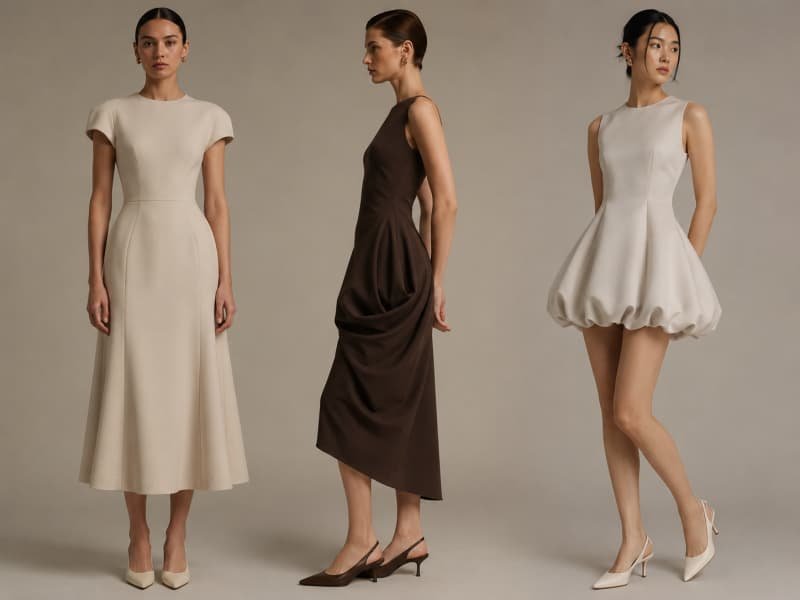
Fashion has spent several seasons talking about oversized proportions, but 2027 is moving the conversation in a more exacting direction. The useful question is no longer how large a sleeve, skirt or shoulder can become. It is where volume should sit, how the shape should hold, and whether the garment still feels natural when someone walks, sits, dances, travels or appears in campaign photography. That shift is turning silhouette into a product-development issue rather than a surface styling exercise.
Current 2027 direction points toward controlled fullness, renewed waist definition, soft architecture, layered construction and a closer relationship between material behaviour and form. Clean lines are not being replaced by uncontrolled excess. Instead, fitted foundations are being combined with concentrated areas of curvature, projection and movement, giving brands a way to create recognisable products without making every garment feel theatrical.
The defining volume and sculptural silhouette trends for 2027 include controlled bubble shapes, rounded shoulders, engineered sleeves, sculpted peplums, defined waists, asymmetric draping and elongated architectural columns. Their commercial success will depend on fabric selection, balanced pattern construction, internal support, movement testing and disciplined simplification rather than simply adding more fabric to an existing dress.
A sculptural dress can look effortless in a campaign image while hiding dozens of technical decisions underneath. A small change in seam tension can flatten a curve. A lining that is too heavy can pull down a bubble hem, while a beautiful satin can collapse where a firm profile was expected. The strongest 2027 collections will be built by teams that understand both sides of the garment: the silhouette customers notice first and the engineering they never see.
What Defines Sculptural Volume in 2027?
Sculptural volume in 2027 is controlled three-dimensional shape rather than simple oversized fit. The strongest designs place fullness at specific areas such as the shoulder, hip, sleeve, waist or hem while keeping the rest of the garment balanced. Shape must remain visible from front, side and back, yet still allow the wearer to walk, sit and move comfortably.
Controlled Volume
The most important change is that volume is becoming more precise. Earlier oversized fashion often relied on a wider body, dropped shoulder and generous ease throughout the garment. Sculptural dressing works differently. It starts by deciding exactly where the garment should leave the body and where it should return. A rounded shoulder may project outward while the waist remains closely fitted, and a bubble skirt may begin below a smooth hip rather than expanding directly from the waist.
A one-sided peplum can create asymmetry without increasing unnecessary width around the entire body. These decisions make the silhouette easier to read and usually more flattering. Before the first pattern is cut, the development team should identify where fullness begins, its maximum projection, whether the shape is fixed or mobile, and how it should appear from the side and back. A garment can look correct from the front while failing in profile.
- Mark the exact points where the volume begins, reaches maximum projection and returns to the base silhouette.
- Define whether the shape should remain firm, soften during movement or change visibly as the wearer walks.
- Review front, side and back profiles rather than approving the silhouette from a single campaign angle.
- Confirm which body areas must remain fitted so the volume does not overwhelm the wearer or confuse sizing.
Controlled volume is therefore not merely a styling idea. It is a measurable relationship between the body, pattern and fabric. A side peplum that projects too far may interfere with the wearer’s arm, a rounded sleeve may pull the neckline backwards, and a bubble hem may rise too high when the wearer sits. The more dramatic the outline, the more carefully those relationships need to be managed.
Volume Versus Oversized Fit
Oversized fit is usually created by increasing garment ease, while sculptural volume is created through construction. Both approaches may use additional fabric, but the visual result, cost structure and development risk are different. A wide skirt is not automatically a bubble silhouette, just as a wide sleeve is not automatically sculptural. The shape needs a controlled start, a recognisable maximum point and a stable return to the body or garment edge.
| Feature | Oversized Fit | Sculptural Volume |
| Main objective | Relaxed proportion and comfort | Defined three-dimensional shape |
| Typical pattern change | Increased width, length or dropped shoulder | Curved panels, pleats, gathering, padding or internal support |
| Relationship to body | Garment hangs away from several body areas | Selected areas project while others remain controlled |
| Side profile | Often loose or straight | Intentionally rounded, angled or asymmetric |
| Fabric requirement | Can work in soft or draped fabrics | Must match the required structure and recovery |
| Production risk | Size interpretation and excess bulk | Shape inconsistency, support placement and pressing variation |
| Fit priority | Ease and balance | Fit, projection, movement and shape retention |
The distinction affects production planning. Standard oversized garments may consume more fabric while remaining straightforward to assemble. Sculptural styles often require extra pattern pieces, controlled gathering ratios, internal facings, more precise pressing and additional inspection points. The design should therefore justify its complexity through a clear visual advantage that customers can recognise immediately and that production teams can reproduce consistently.
Shape and Movement
A sculptural garment should not be approved only on a mannequin. Walking, sitting, raising the arms and turning the body reveal problems that remain invisible in a static fitting. A projected hip panel may repeatedly strike the wearer’s hand, a large sleeve may pull the neckline backwards, and a rigid bubble hem may ride upward when the wearer sits. These issues affect comfort, product photography and return risk.
Movement testing should cover normal walking, a longer stride, sitting on a chair, lifting both arms, reaching forward and turning the upper body. After each movement, the garment should be checked to see whether folds, supports and hems return to their intended positions. The goal is not to make the garment completely static. Some silhouettes are more attractive when they shift slightly with the body, but that change must remain controlled rather than becoming twisting or collapse.
A useful development decision is to define which parts of the silhouette are allowed to move and which must remain stable. A fluid draped panel may change naturally, while the waist seam, neckline and inner support must stay fixed. This distinction helps patternmakers choose the right construction and gives quality teams a practical standard for judging the garment during production.
Wearable Architecture
The most commercial sculptural garments usually contain one dominant idea. A dress may have a strong rounded shoulder, projected hip or dramatic draped panel, but it rarely needs all three at full intensity. Reducing competition between design elements improves visual clarity, fit and production control. A structured bubble mini can be paired with a clean fitted bodice, while a strong peplum can be balanced by a simple neckline.
Wearability also depends on total garment weight and where that weight is carried. A heavy skirt supported only at the waist can drag the bodice downward, while a large sleeve can strain a narrow strap or distort the shoulder seam. Internal support should move weight toward stable parts of the body without making the garment hot, rigid or difficult to put on. The wearer should understand where the garment sits and move without worrying that the shape will fail.
The strongest 2027 pieces are likely to feel surprising in appearance but straightforward in use. Their construction may be complex, but the experience should not be. That balance separates a memorable commercial product from a garment that succeeds only in a controlled runway image or short campaign shoot.
Which Silhouettes Will Lead 2027?
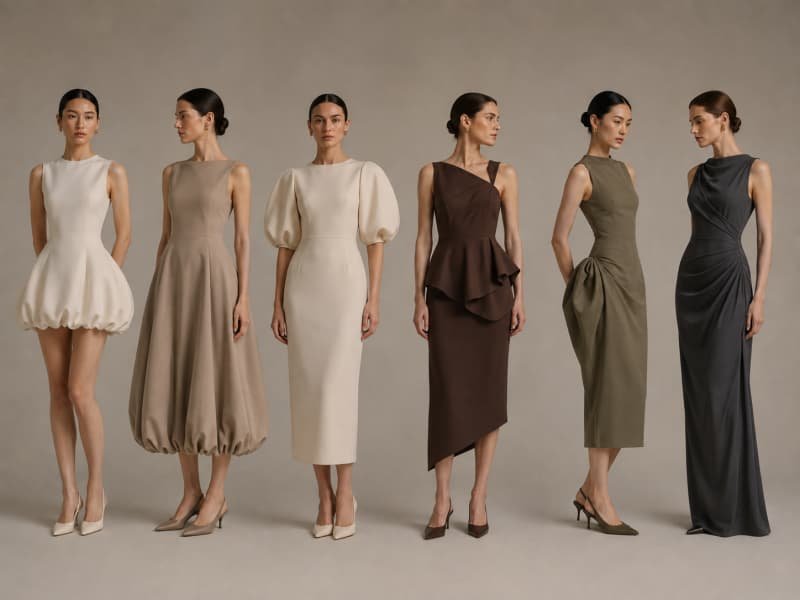
The leading 2027 silhouettes are expected to include compact bubble hems, balloon skirts, rounded sleeves, shaped shoulders, sculpted peplums, controlled hip volume, asymmetric draping and long architectural columns. These shapes create impact through proportion rather than decoration, making the outline of the garment as important as its surface detail.
Bubble and Balloon Forms
Bubble and balloon shapes are returning in more refined versions. Instead of relying only on very full skirts, designers are controlling where the outer layer is gathered and where it connects to the lining. This allows the silhouette to appear rounded without becoming excessively heavy. A compact bubble mini is especially adaptable for party, birthday and going-out collections because the shorter length reduces garment weight and keeps the proportion energetic.
The main technical risk is coverage. The inner layer must provide enough length and hip ease even when the outer shell lifts or compresses during movement. Midi bubbles can feel more sophisticated but are harder to balance because fullness placed at mid-calf can make the silhouette look heavy. A better result often comes from concentrating volume around the lower hip or knee and narrowing the shape gradually toward the hem.
Gathering ratios vary according to fabric behaviour. Crisp taffeta can create visible fullness with less added width than soft chiffon, while heavy cloth generally needs a lower ratio to avoid bulky seams. The successful version is not necessarily the largest. It is the one whose curve remains readable from several angles and continues to look intentional after sitting, walking, packing and steaming.
Shoulders and Sleeves
Shoulder and sleeve volume can transform a familiar dress shape without changing the entire garment. Rounded cap shoulders create a clean modern line when supported lightly from underneath, while extended shoulders can make the waist appear narrower. The shoulder width, neckline opening and sleeve-head height need to be reviewed together because a broad upper shape combined with a high neckline can visually shorten the neck or overpower a smaller frame.
Leg-of-mutton sleeves combine fullness near the shoulder with a narrow lower sleeve, giving a strong profile while keeping the wrist area practical. The transition between full and narrow sections must remain smooth. When the reduction is too sudden, the sleeve can buckle; when the lower sleeve is too tight, the upper fullness pulls upward and changes the intended balance.
One-sided sleeve volume provides a directional alternative and can make a simple fitted dress feel distinctive without adding equal complexity to both sides. However, asymmetric weight may twist the neckline, so the opposite shoulder can require stabilising tape or pattern adjustment. Lightweight organza, soft felt, shaped interfacing or a sleeve-head roll usually produces a cleaner result than thick padding, especially for garments expected to travel or pack flat.
Peplums and Hip Volume
Peplums and controlled hip volume are gaining relevance because they reintroduce waist definition after several seasons dominated by straighter proportions. The modern peplum is often cleaner than a traditional ruffle. It may be formed with curved panels, folded fabric, controlled pleats or a light internal support layer, and it may project around the waist, concentrate at the sides or sit slightly toward the back.
Placement is critical. A peplum positioned too high can shorten the torso, while one placed directly over the fullest hip may add unwanted width. A common approach is to begin the shape slightly above the natural hip and bring the maximum projection back before the widest body point. Asymmetric peplums provide additional flexibility and can create a campaign-level silhouette without increasing the full circumference.
| Silhouette | Useful Proportion Guide | Suitable Categories | Main Development Risk |
| Compact bubble mini | Fullness concentrated below hip; fitted upper body | Party, birthday, going-out | Hem lift and limited inner-lining coverage |
| Rounded sleeve dress | Strong upper volume with controlled waist | Occasion, cocktail, fashion daywear | Neckline pull and restricted arm movement |
| Sculpted peplum midi | Peplum projects before fullest hip point | Cocktail, occasion, contemporary | Poor grading and sitting discomfort |
| Asymmetric hip dress | Volume placed to one side or slightly backward | Party, event, image-led capsules | Garment twisting and arm interference |
| Draped column maxi | Narrow base with one major fold or overlay | Formal, resort, evening | Drape pulling and uneven hem |
| Balloon midi | Controlled lower-body volume with narrowed hem | Contemporary, occasion | Heavy calf-level proportion |
Grading needs visual review as well as measurement review. A peplum that looks balanced in the sample size can become too shallow in larger sizes if projection is barely increased. Increasing it by exactly the same amount as the hip circumference can create the opposite problem and make the shape excessively wide. The visual ratio between waist, hip and projection should remain recognisable across the intended size range.
Drapes and Columns
Sculptural design does not always require obvious outward projection. Long column dresses with carefully controlled draping create architecture through length, tension and fold direction. A clean narrow base gives the drape a stable background, while an added panel may begin at the shoulder, wrap across the waist or fall from one hip. The anchor point determines where tension appears and how the fabric moves.
Fabric grain is particularly important. Bias-cut sections create fluid movement but can grow after hanging, while straight-grain panels offer more control and may appear rigid in fabrics with limited drape. Many successful dresses combine a stable base layer with a softer overlay, allowing the main fit to stay consistent while the visible panel moves naturally.
The team should also decide whether every fold needs to appear identical in production. Some draped garments gain character from slight variation, while others require exact placement for product photography and brand consistency. That decision needs to be recorded before bulk production because it affects operator training, inspection tolerance and the way garments are packed after finishing.
Which Fabrics Build Sculptural Shape?
The best fabric depends on the type of sculpture required. Crisp taffeta, faille, Mikado and double cloth support clear curves and folds. Organza and mesh provide lightweight volume. Satin creates fluid architecture, while compact jersey and scuba shape fitted areas. Fabric weight alone is not enough; drape, recovery, seam stability, opacity and pressing response must also be tested.

Structured Wovens
Structured woven fabrics are the most direct choice for rounded hems, clean peplums, architectural folds and defined sleeves because they occupy space and recover after handling. Taffeta provides crispness without the weight of heavier occasion fabrics and responds well to gathering, but it can show needle marks, crease during packing and create visible seam puckering when tension is poorly controlled.
Faille has a pronounced rib and often gives firmer directional control, making it useful for peplums, pleats and shaped panels. Mikado offers a smoother, more substantial surface and works well for premium occasion dresses, corseted bodices and dramatic folds, although its weight can become a disadvantage in large skirts or full-length garments. Double cloth and bonded fabrics create clean architectural lines but introduce seam bulk, pressing difficulty and possible delamination risks.
| Fabric | Typical Weight Range | Shape Behaviour | Best Uses | Key Checks |
| Organza | 25-80 gsm | Light lift and transparent structure | Sleeves, overskirts, internal support | Snagging, seam visibility, edge finish |
| Taffeta | 70-160 gsm | Crisp, responsive, rounded volume | Bubble hems, gathered skirts, ruffles | Creasing, seam puckering, colour shading |
| Faille | 120-220 gsm | Firm with directional rib | Peplums, pleats, shaped panels | Grain direction, edge bulk, pressing |
| Mikado | 180-300 gsm | Dense, polished, strong projection | Occasion skirts, corseted shapes, folds | Weight, seam thickness, movement |
| Double cloth | 180-350 gsm | Stable and architectural | Columns, curved panels, structured dresses | Seam reduction, pressing, shrinkage |
| Compact scuba | 250-380 gsm | Rounded stretch structure | Fitted curves, peplums, bodycon forms | Recovery, heat response, seam waviness |
These ranges are practical reference points rather than fixed standards. Fibre composition, finishing, yarn type and construction can make two fabrics of the same weight behave differently. The full garment should be reviewed because a swatch that feels suitably firm in the hand may become too heavy when multiplied across a large skirt or several layered panels.
Satin and Sheer Layers
Satin creates sculpture through light and movement. Its reflective surface makes changes in direction visible, which is why a simple fold can appear more dramatic in satin than in a matte fabric. Lightweight satin works well for fluid overlays and asymmetric drapes but may cling to the body and reveal seam allowances. Heavier satin provides a more stable line yet can pull folds downward when the panel becomes large.
Mesh, organza and tulle build volume through layering rather than density. Several lightweight layers can produce a large silhouette without the mass of one heavy fabric, and the layers can be cut to different lengths to create a graduated form. Power mesh provides hidden stability beneath fitted satin or jersey, while transparent sleeves can expose an internal structure and make the engineering part of the visual design.
Layer compatibility is essential. A heavy lining can pull down a light outer bubble, while a stiff organza support can create unwanted sharpness beneath soft mesh. The shell, support and lining should be tested together rather than approved separately. A partial prototype of one sleeve, one hip panel or a section of the bubble hem can reveal problems before a complete first sample is cut.
Stretch and Recovery
Stretch fabrics support sculptural garments when the design combines fitted and projected areas. Compact jersey, scuba, power mesh and stretch woven cloth can create smooth body-conscious bases while allowing the wearer to move naturally. This is particularly useful in party and occasion dresses where a strong silhouette needs to remain comfortable through sitting, walking and dancing.
Stretch can also flatten the intended design. When a projected panel is attached to a base under too much tension, the base pulls the panel inward. Poor recovery causes waists and necklines to relax after wear, while shell and lining fabrics with different stretch percentages create rippling or twisting. Negative ease must therefore be applied with restraint because it changes both fit and the behaviour of the surrounding sculptural section.
- Record stretch percentage in both directions and recovery after repeated extension.
- Check fabric growth after hanging, especially for long fitted dresses and bias-linked panels.
- Review seam appearance under tension and confirm whether heat pressing changes the surface or recovery.
- Test shell, lining and support layers together because mismatched elasticity often causes distortion.
The fitted base and projected shape should be treated as one system. Adjusting only the body fit without reviewing the outer volume often creates unexpected tension. A fabric should control the silhouette or respond to the body as planned, rather than unpredictably controlling both.
Hidden Structure
Many sculptural dresses rely on internal components that customers never see, including boning, cups, interlining, organza, crinoline, padding, horsehair braid, stay tape and internal waist supports. Each component should perform a specific task. Boning stabilises a bodice, horsehair braid helps a hem retain a curve, padding creates fixed projection, and organza can hold folds without adding excessive weight.
The internal structure should carry the garment efficiently. A heavy skirt attached only to the outer bodice can pull the neckline downward, while an internal waist stay transfers some of that load to a more stable point. A corset foundation may support the body and outer fashion layer separately, which improves neckline stability and helps sculptural details remain in position during movement.
Comfort and serviceability still matter. Boning ends should be protected, cups must suit the intended size range and padding must be secured so it does not shift. Before final approval, the garment should be reviewed inside out. Loose supports, improvised stitching and uneven padding may be hidden in photography, but they often cause inconsistency in production and instability during wear.
How Do Brands Make Volume Commercial?
Brands make sculptural volume commercial by retaining one recognisable silhouette feature while simplifying secondary details, controlling garment weight and improving fit. A balanced range usually combines a small number of image-building pieces with easier commercial versions. The goal is not to remove drama, but to make the strongest design idea comfortable, understandable and repeatable.

From Runway to Retail
Runway pieces often combine several strong ideas in one garment, such as exaggerated shoulders, a corseted waist, projected hips, a train and heavy surface treatment. Retail products usually become clearer when one feature leads and the others become quieter. The first development decision is to identify the non-negotiable element, whether that is the bubble hem, curved shoulder, peplum or asymmetric drape.
Once that feature is protected, construction can be simplified around it. A dramatic pannier can become a smaller side peplum, a rigid shoulder can be recreated with lighter organza support, and a long train can be shortened or made detachable. Several hand-positioned folds can be replaced by one controlled pleat with clear notches and templates, improving repeatability without removing the design’s character.
Commercialisation should preserve the emotional response that made the concept attractive. The dress may need to feel confident, elegant, playful or powerful. Simplification should remove unnecessary cost, weight and discomfort rather than the reason a customer notices the garment. The same trend can therefore appear as a fully structured statement piece, a compact party mini or a fitted top with one sculptural sleeve, depending on the intended price and category.
Category Fit
Different dress categories can carry different levels of sculptural intensity. Party and birthday dresses are suited to bubble minis, rounded sleeves, compact corset structures and reflective fabrics because customers expect immediate visual impact. Cocktail and occasion dresses usually benefit from cleaner architecture, including shaped peplums, asymmetric midis and fitted columns with a controlled fold.
Vacation dresses require lighter construction, breathable layers and better packability. Airy drapes, open backs, layered mesh and soft balloon shapes are usually more appropriate than heavy internal structures. Going-out dresses work well with concentrated details, such as a small hip projection, curved neckline or one-sided sleeve, because the garment remains easy to style while still creating a strong product image.
Fashion sets provide another practical route. A sculptural top paired with a narrow skirt or trouser gives customers more styling options and allows the stronger element to become a repeatable product in several colours. Category decisions should be made before sampling because the intended occasion affects fabric weight, support, fastening, length, comfort and how much construction cost the product can carry.
Fit and Returns
Sculptural garments attract attention online, but fit problems can quickly increase returns. The most common risks occur where a fitted foundation meets a voluminous outer shape. A bubble skirt may have generous outer width while the inner lining remains too narrow for walking, a structured shoulder may contain a restrictive armhole, and a corset bodice may support the silhouette while creating pressure at the waist or bust.
- Test sitting coverage and stride length inside every inner lining, not only the outer shell.
- Check arm movement beneath large sleeves and confirm that sleeve weight does not move the neckline.
- Review bust support, waist position, zip access and compatibility with common underwear.
- Confirm that the silhouette recovers after movement and that the customer can understand the fit from product imagery.
Size grading requires visual control as well as numerical grading. A peplum may need more circumference in larger sizes without the same proportional increase in projection, while a bubble skirt may need extra inner ease without becoming much larger externally. Clear side-view photography, movement video and fit notes also help customers understand where the garment is close to the body and where it intentionally projects.
Collection Balance
A commercially balanced collection should not treat every style as a hero piece. Too many complex silhouettes create high development costs, crowded merchandising and difficult production planning. A practical capsule can include one or two image-building dresses, several elevated commercial styles, easier interpretations of the same shape language and a small number of coordinating core products.
The connection between styles should remain visible. A curved shoulder from the campaign dress can reappear as a smaller sleeve in a commercial mini, while a signature side seam can move from a dramatic maxi into a fitted midi. This gives the collection a recognisable point of view without repeating the same garment. Colour planning can follow the same logic, with complex styles offered in fewer controlled shades and simpler products carrying more colour depth.
Fabric continuity can reduce risk by improving shade consistency, simplifying purchasing and making repeat orders easier, although each silhouette still needs its own pattern adjustment. The strongest collection feels varied but connected. Customers see a clear design language, while the product team maintains control over cost, fit, development time and production stability.
How Are Sculptural Dresses Made for Production?
Sculptural dresses become production-ready when visual ideas are converted into measurable rules. Pattern pieces, fullness ratios, support materials, seam positions, pressing methods and tolerances must be documented. The approved sample should become a technical standard that operators and quality teams can repeat. Without this translation, shape usually changes between the sample room and bulk production.

Pattern Engineering
Pattern engineering determines whether a sculptural silhouette can be repeated consistently. Volume may be created through slash-and-spread methods, pleats, gathers, godets, curved panels, darts, padding or internal suspension. The method changes both appearance and production difficulty. Gathering creates softer variation, pleats provide directional control, curved panels produce a clean outline, and padding creates fixed projection while adding grading complexity.
A production pattern should identify grain direction, fullness ratio, pleat depth, seam matching points, support placement, shell-to-lining relationships, hem connection points, finished projection and size-grade rules. A bubble skirt may use an outer circumference approximately 1.4 to 2.2 times the controlled inner hem, depending on fabric stiffness and the desired fullness. This is a working development range rather than a universal formula, and a test section should confirm the correct ratio.
The sewing sequence must be considered while the pattern is being developed. A sample-room technician may shape a fold by hand, but bulk operators need repeatable guides. Templates, placement marks, pre-pressed lines and intermediate measurements help convert visual skill into a stable production method and reduce variation between operators or factories.
Sample Review
The first sample should have a clear purpose. It may test the overall silhouette, confirm the pattern, assess a fabric or prove an internal support method. Expecting one sample to finalise every issue often creates vague comments and unnecessary revisions. A complete review should include front, side and back views as well as images after walking and sitting, because side projection and recovery cannot be judged from a single static angle.
Fit comments should separate technical defects from design adjustments. A twisted side seam is a defect, while a request to reduce a peplum projection by two centimetres is a design decision. Sculptural styles also need measurements beyond bust, waist and hip, including maximum sleeve width, shoulder projection, peplum depth, outer and inner hem circumference, fold position, support placement and the distance from the body to the outer curve.
The garment should be reviewed inside out because internal layers often reveal the cause of external problems. An uneven bubble hem may come from an imbalanced lining, a collapsed shoulder may result from support that ends too early, and a twisted drape may be caused by its anchor point. A useful review closes with clear priorities: what is approved, what must change and what remains open for evaluation.
Technical Documentation
A standard front-and-back sketch is not enough for a three-dimensional garment. The tech pack should communicate how the silhouette looks from the side, how far it projects and how it is supported. Front, back and side drawings, sectional diagrams, finished measurements, projection measurements, gathering ratios, pleat depths, fabric behaviour, internal supports and pressing instructions are all relevant to production accuracy.
Reference photography can communicate mood, but it should not replace measurable information because the original image may use a different fabric, be pinned on the model or show only one flattering angle. Critical points should be ranked. A neckline may require close symmetry, while a fluid side drape may allow slight natural variation. That hierarchy helps quality teams focus on details that genuinely change the garment’s identity.
Version control is equally important when sample rooms, sourcing teams and several factories are involved. Revised patterns, measurement sheets and construction comments should carry clear dates and version numbers. The approved sample and final tech pack must agree. When a construction change exists only in the physical sample and never reaches the documents, repeat production becomes dependent on memory rather than a stable standard.
Bulk Shape Control
Bulk production needs checkpoints before a small deviation spreads through the order. Sculptural styles should not wait until final inspection for shape evaluation. Material approval confirms weight, width, shade, stiffness, stretch and recovery. The pre-production sample locks the silhouette and support method, while first-piece approval checks projection, balance and seam position before the production line continues.
| Production Stage | Main Control Point | Practical Record |
| Material approval | Weight, width, shade, stiffness, stretch and recovery | Approved fabric report and retained swatch |
| Pre-production sample | Silhouette, fit, support and workmanship | Signed sample with dated comments |
| Cutting | Grain, panel direction, pair matching and shade grouping | Cut-panel audit and bundle identification |
| First-piece review | Projection, seam position, balance and support placement | First-piece approval before line release |
| Inline inspection | Gathering ratio, pleat depth, internal structure and measurements | Operation-based inspection record |
| Finishing | Pressing temperature, shaping method and hem recovery | Approved finishing standard |
| Final inspection | Appearance, measurements, movement and packing | Project-specific AQL and tolerance report |
| Packing trial | Compression, creasing and shape recovery | Recheck after an agreed packed period |
Pressing is particularly important because a garment may be correctly sewn and still lose its silhouette through excessive heat, pressure or inconsistent shaping. The finishing team should follow approved forms, temperatures and handling methods. Packing also needs a trial before the entire order is compressed. Bubble hems, shaped shoulders and folded panels may require tissue support, larger cartons or hanging shipment if they do not recover reliably through steaming.
Repeat orders should not assume that the first production standard will continue automatically. Fabric lots, operators and production lines may change, so retained samples, approved measurements and first-piece review should be used again. The goal is not to remove all natural variation. It is to define which variation is acceptable and which changes the intended silhouette. Once that distinction is measurable, sculptural design can move from an impressive sample into stable, scalable production.
Develop Your 2027 Sculptural Dress Collection
Volume becomes commercially valuable when the silhouette, fabric, fit and production method are developed together. A memorable shape may begin with a sketch or runway reference, but it reaches the market only after the team has tested projection, movement, support, grading, pressing and packing. Brands that make those decisions early can keep the visual impact of 2027’s sculptural direction while avoiding unnecessary revisions, uncomfortable fit and unstable bulk results.
Duolan Apparel supports fashion dress, occasionwear, partywear, fitted dress, fashion set and refined top development from fabric selection and pattern work through sampling and production coordination. To discuss a 2027 collection, send your tech pack, reference images, original sample or collection brief to duolan apparel for a project review and custom quotation.
Editorial Source Note
The trend context in this article was informed by current 2027 womenswear and textile forecasting from FashionUnited, Première Vision and specialist dress-silhouette reporting. Company capability statements were aligned with Duolan Apparel’s supplied company facts document. Final material ranges and construction ratios are practical development references and should be confirmed against each fabric, pattern and target product before bulk production.