
...

Slip Dress Manufacturing

Development-led slip dress manufacturing for fashion brands requiring controlled drape, bias cutting, refined fit, clean finishing, and repeatable bulk production.

  • 9 critical control areas: bias direction, drape, straps, bust coverage, opacity, seams, hem balance, pressing and packing protection.
  • 8 core development directions: from bias-cut midi and fluid maxi silhouettes to cowl neck, lace trim, open back and adjustable-strap versions.
  • 3 manufacturing locks: approved material and pattern basis, PP production standard, then controlled bulk execution and inspection.
  • Scalable manufacturing structure: Duolan combines dress development resources with 16 owned factories and 20+ long-term satellite manufacturing facilities.

Slip Dress Manufacturing Built Around Established Fashion Teams

Slip dresses often sit inside larger occasion, resort, evening or contemporary collections. Duolan supports established fashion organizations that need more than garment assembly: development judgment, controlled sampling, fabric coordination and a production route capable of carrying approved standards into repeat orders.

Established Dress Brands

For established dress-led labels, slip styles rarely exist as isolated products. A proven silhouette may develop into mini, midi and maxi lengths, multiple neckline treatments, seasonal colors or a broader satin capsule. Manufacturing therefore has to protect the recognizable fit language while allowing controlled extensions. Duolan reviews silhouette, fabric behavior, strap placement, bust coverage, lining requirements and finishing before a style moves deeper into sampling, helping brand teams build product families rather than unrelated one-off garments.

Product Development Teams

Product teams often arrive with a tech pack, reference garment, fit history, fabric direction or previous sample comments. Duolan works from those inputs to identify the points most likely to affect the final result: bias behavior, neckline fall, side-seam balance, body ease, strap length, opacity and hem movement.
Development decisions are then carried into pattern work, sampling and revision records, giving technical teams a clearer route from visual direction to an approvable production basis.

Sourcing and Buying Teams

Sourcing and buying teams need a supplier capable of being evaluated beyond price. A slip-dress program may involve several styles, colors and delivery windows, while material sensitivity creates additional control requirements. Duolan supports structured review around development capability, material coordination, production readiness, QC, documentation, packing and manufacturing scalability. The aim is a supply relationship where a successful sample can move into organized bulk production without losing the approved silhouette, surface quality or finishing standard.

Why Minimal Slip Dresses Expose Manufacturing Weaknesses Quickly

A slip dress has few decorative elements available to hide technical errors. Small deviations in grain, fabric fall, strap balance, neckline position or seam quality remain visible on the body, under photography and across a production run.

Control AreaWhat Can Go WrongMain Cause to ReviewManufacturing Control
Bias DirectionTwisted body or unstable drapeGrain direction and panel orientationPattern and cutting direction are defined before bulk cutting
Fabric DrapeDress looks stiff, flat or overly clingyWeight, handfeel and constructionFabric is reviewed against target silhouette before sample approval
Side SeamsSeams rotate toward front or backPattern balance, bias behavior, sewing tensionSide-seam position is checked during sample and production review
Cowl NeckNeckline collapses or exposes too muchCowl volume, fabric weight and neckline geometryDraping and pattern balance are evaluated together
Shoulder StrapsBust height changes or straps distortLength, stretch, hardware and attachment pointStrap specification and attachment method are locked
Bust CoverageSide bust or neckline feels insecurePattern shape, strap position, lining and easeFit review focuses on coverage and movement, not flat measurements alone
OpacityLight colors become visibly sheerFabric weight, shade, stretch and liningFabric and lining are reviewed under relevant lighting conditions
Seam SurfacePuckering and needle marks remain visibleNeedle choice, tension, handling and pressingSeam appearance is checked on actual production fabric
Hem BalanceHem becomes uneven after fabric settlesBias growth and panel behaviorGarment fall is reviewed before final hem leveling
PressingShine marks, water marks or flattened surfaceHeat, pressure and fabric sensitivityPressing method is matched to surface behavior
PackingCreases and abrasion damage approved finishFolding pressure and surface frictionPacking method protects drape and satin surface
Bulk ConsistencyApproved sample cannot be reproducedMaterial lot, process or standard transfer gapsPP basis, material standards and QC checkpoints are locked before release

Slip Dress Styles Developed as Brand-Ready Product Directions
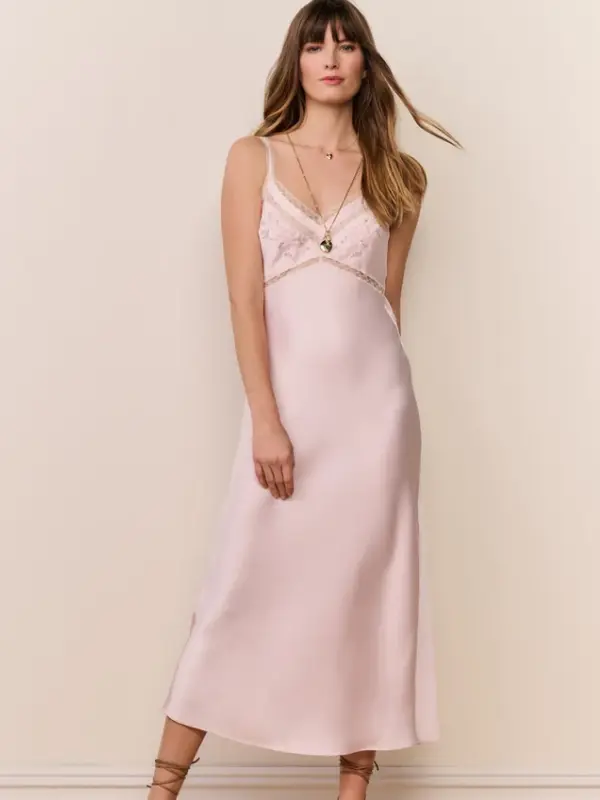
A mature slip program is built around silhouette logic rather than a catalog of similar dresses. Each direction below changes pattern balance, fabric requirements, fit review and production control, even when the finished garments share a minimal visual language.

Bias-Cut Midi

Bias-cut midi dresses depend on a controlled relationship between fabric fall and body shape. Development focuses on grain direction, waist and hip flow, side-seam stability, bust coverage and final hem level. Lightweight fabric may create beautiful movement but can also reveal underwear lines, seam tension or excessive cling. Before production, Duolan reviews whether the chosen fabric supports the intended drape and whether pattern, lining, cutting and finishing decisions can remain repeatable across the approved size range.

Cowl-Neck Slip

A cowl neckline needs enough fabric volume to fall naturally without looking collapsed, bulky or excessively open. Neckline depth interacts with bust coverage, strap position and fabric weight, so visual references alone are not enough. Sample review should examine front fall, side-bust security and how the neckline behaves during movement. For satin versions, seam and pressing quality around the upper body also require careful control because reflected light makes uneven construction immediately visible.

Minimal Mini Slip

A minimal mini slip relies on proportion. Bust height, armhole depth, strap length, waist position, hip ease and finished length have to work together because a short silhouette leaves little room for visual imbalance. Larger sizes cannot be created by simply increasing every measurement. Development should preserve coverage, movement and the intended leg line while keeping the dress visually light. Light colors also require an early opacity decision so lining does not unexpectedly change drape or body feel.

Fluid Maxi Slip

A fluid maxi version places more weight and movement below the hip, changing how the complete garment hangs. Pattern length, hem sweep, fabric weight and lining length must work together to prevent drag, distortion or an uneven hem. Long bias panels also make grain control more important. When developed for resort, evening or destination collections, packing behavior deserves equal attention because an approved fluid surface can lose visual quality if deep transport creases remain across the front or skirt.

Lace-Trim Slip

Lace trim adds visual detail to an otherwise minimal silhouette, but trim selection affects much more than appearance. Width, softness, stretch, edge stability, color and attachment method must suit the outer fabric. A heavy or rigid lace can pull a lightweight satin neckline out of shape, while rough trim at the bust or armhole can affect comfort. Development therefore links lace selection to neckline pattern, strap connection, seam finishing and bulk attachment consistency rather than treating lace as a final decoration.

Open-Back Slip

Open-back construction changes the stability of the upper body because less fabric remains available to hold the dress in position. Back depth, strap angle, bust coverage, side seam and fabric movement need to be reviewed together. A deeper back can also change how the front neckline sits. Duolan uses sample fit and pattern review to balance visual openness with wearable stability, while strap attachment and interior finishing receive added attention at the points carrying the garment’s weight.

Side-Slit Slip

A side slit can create movement and a longer leg line, but slit height must work with skirt width, lining length, seam strength and sitting comfort. On fluid satin, the slit edge can also reveal seam distortion or pulling if construction is too heavy. Development therefore defines slit position through fit and movement review, then locks edge finishing and reinforcement before bulk. Maxi and midi versions may require different slit proportions even when they originate from the same core silhouette.

Adjustable-Strap Slip

Adjustable straps improve fit flexibility only when the entire system is balanced. Strap width, slider and ring size, attachment position, front neckline height and back depth all influence how the dress sits. Hardware that is too heavy can distort lightweight fabric, while excessive strap stretch changes bust coverage after wear. Duolan reviews strap construction as part of fit engineering and records the approved dimensions, hardware and connection method so the same upper-body balance can be reproduced during production.

Control Points That Decide Whether Slip Dresses Look Premium

Slip-dress quality is built through connected decisions rather than one finishing operation. Duolan separates visual design intent from the manufacturing variables underneath it, then reviews how fabric, body balance, construction and presentation influence one another before production standards are released.

Bias, Drape and Body Balance Must Work Together

A slip silhouette is often judged by how naturally the fabric follows the body. A visually clean result depends on more than choosing a soft material. Pattern orientation, grain direction, waist and hip ease, side-seam position, body length and fabric weight all influence the final fall. Bias-cut versions create additional movement because fabric behaves differently once panels are positioned away from the straight grain. A pattern that appears balanced on paper can still develop twisting, uneven length or unexpected cling after cutting and sewing. Development therefore begins by defining the intended effect: close and liquid, softly skimmed, relaxed and fluid, or more structured for occasion dressing. Duolan reviews the relationship between the fabric and pattern before the approved sample becomes a production reference. Key observations include:
  • Whether the fabric hangs cleanly through bust, waist and hip.
  • Whether side seams remain visually balanced rather than rotating.
  • Whether the skirt falls without unwanted pulling or diagonal tension.
  • Whether bias panels require settling before final hem leveling.
  • Whether lining supports opacity without restricting movement.
  • Whether a longer midi or maxi version changes weight distribution.
The goal is not maximum softness. The goal is controlled drape. A fabric can feel luxurious in the hand yet fail on the body if it is too thin, too unstable, too glossy or too dependent on pressing to look smooth. Development decisions must survive cutting, sewing, pressing, packing and repeated production.

Strap Position, Bust Coverage and Neckline Geometry Control Wearability

Thin straps make a slip dress visually light, but they also concentrate responsibility into small construction points. A few millimeters of visual movement at the neckline can materially change bust coverage, armhole exposure and the way the back sits. Strap development therefore starts with body balance rather than hardware selection. Front and back attachment positions, finished strap length, adjustability, fabric stretch and slider weight all need to suit the chosen neckline. Cowl necklines add another variable because neckline depth changes as fabric falls. Open-back versions remove supporting fabric from the back, making strap angle and front coverage even more important. During fit review, Duolan focuses on:
  • Front neckline height and visual proportion.
  • Side-bust coverage in standing and moving positions.
  • Armhole depth and whether the edge gapes.
  • Strap attachment strength without creating visible pulling.
  • Adjustable hardware weight relative to outer fabric.
  • Back depth and how it affects the front.
  • Lining construction around high-contact or higher-risk areas.
Fit comments are converted into pattern and specification changes rather than informal sewing adjustments. Once approved, strap dimensions, attachment positions, neckline measurements and lining relationships become controlled production points.

Seam, Hem and Final Presentation Reveal Production Discipline

Minimal satin surfaces magnify sewing and finishing defects. A slightly puckered side seam, visible needle mark, uneven narrow hem or aggressive press mark can attract more attention than a larger defect on a heavily decorated dress. Seam construction therefore has to suit fabric behavior. Lightweight satin needs clean handling and stable tension; a heavier satin may require different pressing and seam treatment. Hem construction must remain fine enough to preserve movement without becoming weak or visibly rope-like. For slit styles, reinforcement must protect the opening without creating a heavy point on the skirt. Final presentation is also treated as part of manufacturing quality. Inspection covers:

  • Smooth side seams and balanced front/back panels.
  • Clean neckline and armhole finishing.
  • Stable strap connections.
  • Consistent narrow hems and slit edges.
  • Interior finishing that does not pull the outer shell.
  • Pressing without shine changes, water marks or hard crease lines.
  • Packing methods suited to sensitive surfaces.

A slip dress is ready for bulk only when the approved visual effect can be translated into repeatable construction instructions, QC checkpoints and packing requirements. 

Fabric Selection Based on Drape, Surface and Production Stability

Fabric choice starts with the intended silhouette and retail positioning, not a generic satin label. Weight, shine, body, opacity, handfeel and surface sensitivity affect pattern shape, lining, sewing, pressing, packing and the ability to repeat an approved appearance in bulk.

Fabric DirectionExpected Visual ResultMain Development ReviewLining DirectionBulk Risk to Control
Lightweight SatinLiquid, close-to-body movementDrape, cling, opacity, seam visibilityOften reviewed for light colors or body coveragePuckering, transparency, bias growth, packing creases
Medium-Weight SatinCleaner body with controlled flowBalance between structure and fluidityDepends on shade, handfeel and target finishSurface pressure, seam marks, shade consistency
Stretch SatinCloser fit with added movementStretch direction, recovery and body easeStretch compatibility must be checkedSize variation, recovery change, seam tension
Matte SatinSofter reflection and contemporary finishHandfeel, drape and surface depthSelected according to opacity and comfortLot-to-lot shade and handfeel difference
High-Shine SatinStrong evening and occasion impactReflection, surface flatness and pressingMust not distort outer shine or drapeNeedle marks, scratches, pressing marks, visible creases
Satin-Back CrepeControlled surface with more bodyWhich face is used and desired fallStyle dependentCutting direction, pressing and finish consistency
Fluid Woven AlternativeSofter or lower-shine interpretationDrape, weight, opacity and commercial targetEvaluated with outer fabricDifferent pattern response from original reference

Satin Control From Cutting Surface to Final Presentation

Satin can create the clean, liquid appearance associated with premium slip dresses, yet the same reflective surface exposes handling errors quickly. Duolan reviews satin as a manufacturing system involving material selection, cutting, stitching, pressing, inspection and packing rather than simply choosing a shiny fabric.

Surface Quality Starts Before Sewing Begins

Satin quality begins when fabric is selected and received. Weight, shine level, surface smoothness, handfeel and opacity influence the entire development route. A lightweight satin may create a beautiful fluid line but expose seam allowances or body contours. A heavier version may improve coverage yet reduce the movement expected from a minimal slip silhouette.
Fabric direction also matters because light can reflect differently when panels are cut inconsistently. Before bulk cutting, material lots, shade and visible surface direction require control so front and back panels do not appear mismatched under retail or photography lighting.
Development review therefore considers:
  • Whether shine level supports the brand’s intended price and visual position.
  • Whether fabric weight creates fluidity without looking weak.
  • Whether lighter shades need lining or a different construction.
  • Whether surface marks appear easily during handling.
  • Whether bias cutting changes drape or length stability.
  • Whether approved fabric remains available in production quantities and consistent lots.
A swatch alone cannot answer those questions. The material has to be viewed as part of the finished garment, because pattern balance, sewing method and pressing can change how the same satin appears once worn.

Seam, Pressing and Light Reveal Every Construction Error

Satin has very little visual tolerance for poor stitching. Puckering, uneven tension, needle marks and seam impressions become more visible because light moves continuously across the surface. Side seams are particularly important on slip silhouettes because long, uninterrupted lines sit close to the body.
Duolan treats sewing setup as a material-sensitive decision. Construction is reviewed on the actual or approved equivalent fabric rather than assuming one sewing method will suit every satin. The aim is a smooth seam that remains strong without looking heavy.
Pressing carries equal importance. Excessive heat or pressure can create shine changes, flattened areas, hard creases or impressions from underlying seam allowances. A garment may technically measure correctly but still fail visual approval after poor pressing.
Inspection therefore looks beyond loose threads. Review points include seam flatness, left/right balance, needle impressions, neckline smoothness, hem appearance, pressing marks and whether the garment photographs cleanly under stronger light. For premium visual products, camera behavior is a useful test because reflections often reveal defects that appear less obvious in normal room lighting.

Packing Must Protect the Approved Satin Finish

Manufacturing quality can be lost after final inspection if packing is treated as a routine last step. Satin surfaces can show deep fold lines, abrasion, pressure marks or transfer impressions after extended compression. A fluid dress also needs to recover its intended fall after unpacking.
Packing decisions should therefore reflect garment length, fabric sensitivity, trim placement and presentation requirements. Mini, midi and maxi versions may not use the same folding logic. Adjustable hardware, lace trims and exposed decorative components also need positioning that avoids pressing into the outer surface.
Before shipment preparation, Duolan reviews whether packing protects:
  • Front-panel surface and shine.
  • Cowl or neckline shape.
  • Strap hardware from leaving impressions.
  • Hem and slit edges from crushing.
  • Sensitive light colors from contamination.
  • Approved label, hangtag and barcode placement.
  • Consistent folding across a multi-size production run.
The objective is straightforward: the garment arriving at a warehouse, showroom or distribution center should remain recognizably close to the approved finishing standard, rather than requiring extensive recovery work before sale.

Pattern, Draping and Fit Engineering for Fluid Slip Silhouettes

Fit in a slip dress is created before sewing reaches the production line. Pattern balance must respond to fabric behavior, while draping and fit review reveal how the garment actually falls across bust, waist, hip, back and hem.

Pattern Balance Controls the Entire Slip Dress Silhouette

Pattern development translates visual direction into controlled body relationships. For a slip dress, critical areas include bust position, neckline drop, armhole shape, waist and hip ease, side-seam direction, back depth, strap position and finished length. A fabric with more body can support a different pattern balance from a very fluid satin. A bias-cut version behaves differently from a straight-grain silhouette. An open back may change how the front neckline sits, while a cowl neckline introduces volume that cannot be evaluated through chest width alone. Duolan therefore treats the pattern as a connected system. Development review focuses on:
  • How the neckline meets the bust rather than floating away.
  • How waist and hip lines flow without unwanted drag.
  • Whether side seams remain correctly positioned.
  • Whether back opening and strap angle change front balance.
  • How lining affects outer-shell movement.
  • How skirt length and hem width support the intended motion.
Sample comments are returned to the pattern when the root cause is structural. Temporary pinning or sewing adjustments may demonstrate a direction, but the approved correction has to exist in the pattern and specification before a reliable production standard can be created.

Draping Reviews What Flat Measurements Cannot Fully Show

Flat measurements define size, yet fluid fabric can still behave unexpectedly once gravity and body shape act on the garment. Draping becomes useful when neckline fall, bias movement, soft volume or body balance cannot be judged confidently from a two-dimensional pattern alone. For slip styles, mannequin or fit review can reveal whether a cowl collapses naturally, whether a bias skirt twists, whether the side seam remains straight and whether strap placement allows the neckline to sit at the intended height. Draping also helps assess visual flow from bust through waist and hip, especially when a design aims to skim rather than tightly fit the body. Duolan uses draping selectively rather than as a decorative design exercise. Observations are translated back into pattern decisions:
  • Neckline volume becomes a controlled pattern shape.
  • Strap landing points become measurable positions.
  • Waist and hip flow becomes defined ease.
  • Back openness is balanced with front stability.
  • Hem movement becomes a cutting and finishing requirement.
The result is a stronger first development direction and fewer revisions caused by problems that flat information could not reveal early.

Grading Must Preserve the Approved Visual Proportion

A successful sample size does not guarantee a successful production size range. Slip dresses are particularly sensitive to grading because neckline depth, strap length, armhole exposure, waist placement and skirt length all influence both appearance and coverage. Grading should therefore preserve design relationships rather than enlarge every measurement at the same rate. A larger size may need different bust and side-coverage consideration without changing the intended neckline character. A mini length must remain wearable, while midi and maxi versions must retain the correct vertical balance. Bias-cut products also need careful review because fabric fall can change how graded dimensions appear on the body. Duolan connects grading with the approved size specification, fit comments and PP standard. Key points include:
  • Bust, waist and hip relationship.
  • Front and back body length.
  • Strap length and adjustment range.
  • Neckline and armhole depth.
  • Side-seam balance.
  • Hem opening and skirt movement.
  • Lining length and coverage.
Production measurement checks then use the agreed measuring method rather than unrelated flat measurements, helping preserve fit consistency across sizes and repeat production.

Bias Cutting Controlled From Grain Direction to Hem Balance

Bias construction creates the fluid movement associated with many premium slip dresses, but it also introduces manufacturing variables that straight-grain garments handle differently. Duolan treats bias direction as an engineered production standard covering pattern, cutting, panel handling, sewing and final length balance.

Grain Direction Is a Defined Production Standard

Bias direction cannot remain an informal instruction such as “cut diagonally.” Pattern pieces need a clear orientation so all approved panels behave consistently and reflect light in a controlled way. A direction error can change drape, create twisting or make visually similar panels react differently after sewing. Pattern development therefore defines where bias behavior is required and how each panel relates to the complete silhouette.

Front, back and any inserted panels have to work as one garment rather than separate pieces. Before cutting, review includes:

  • Approved fabric width and usable surface.
  • Fabric face and visual direction.
  • Grain or bias orientation by pattern piece.
  • Panel symmetry and left/right relationships.
  • Marker planning and expected consumption.
  • Fabric lot separation where shade or surface varies.

Material efficiency remains important, but yield cannot override the approved grain logic. A lower consumption marker that disturbs panel direction may create a higher downstream cost through twisting, uneven hems or rejected appearance. For premium-control slip styles, pattern orientation forms part of the product standard.

Cutting and Relaxation Control Shape Stability

Fluid fabrics can shift during spreading and cutting. Excessive tension, uncontrolled layering or careless handling may change panel dimensions before sewing even begins. Once bias panels carry their own weight, the garment can also settle differently through various sections. Duolan’s cutting-control logic starts before the blade reaches the fabric. Fabric inspection, width, lot, surface direction and marker planning are reviewed first. During cutting, panel direction and numbering need to remain identifiable so different lots or orientations are not mixed. After assembly, bias-sensitive dresses are reviewed for natural settling before final length judgment. The objective is not to force every piece into a theoretical flat shape. The objective is to allow the constructed garment to reveal its actual balance, then complete final leveling against the approved silhouette. Areas watched closely include:
  • Side-seam rotation.
  • Front-versus-back length balance.
  • Local stretching near neckline or armholes.
  • Hip drag or diagonal tension.
  • Uneven skirt drop.
  • Slit position after the garment settles.
These controls reduce the risk of a visually correct sample becoming unstable once repeated across production quantities.

Hem Leveling and Panel Balance Protect Bulk Consistency

The hem is often where earlier bias errors become visible. A panel can be cut accurately and still appear uneven once fabric weight, seam tension and body shape interact. Finishing the hem too early may lock an unstable length into the garment. Final hem review therefore follows construction balance. The dress is checked for overall fall, side-seam position and front/back level before the finished hem is confirmed. Narrow hems must be clean enough to preserve movement and consistent enough to avoid waves or heavy edges. For production, the approved result becomes more than a finished measurement. It includes:
  • Pattern and panel orientation.
  • Cutting identification.
  • Stitching method.
  • Garment settling and visual review.
  • Finished length measurement method.
  • Hem construction.
  • Pressing method.
  • Final hanging appearance.
QC then compares production pieces against both measurements and visual balance. Combining technical specification with garment fall is particularly important for bias-cut midi and maxi styles, where a small imbalance can become clearly visible over a longer silhouette.

Workmanship Details That Keep Minimal Slip Dresses Looking Refined

Slip-dress workmanship needs close visual control because seams, edges and interior construction remain exposed by the minimal silhouette. Duolan reviews each detail according to fabric sensitivity, body position and production repeatability rather than relying on one generic sewing standard.

Strap Connections

Thin straps carry garment weight through very small attachment areas. Construction must remain secure without creating bulky reinforcement or visible distortion on lightweight fabric. Strap width, fold quality, hardware, attachment position and stitching are reviewed together. For adjustable versions, slider and ring weight must suit the fabric so hardware does not drag the neckline. Production checks compare left and right strap length, connection position and finished appearance, while high-stress points receive suitable reinforcement without sacrificing the clean surface expected from a minimal slip silhouette.

Neckline and Cowl Finish

The neckline sits close to the face and is frequently visible in campaign photography, making finishing quality immediately noticeable. Straight necklines require clean edge control without rolling, stretching or visible seam allowance. Cowl necklines add soft volume and must fall naturally rather than collapsing into random folds. Lining or facing construction should support the edge without making it rigid. During sample review, neckline depth, symmetry, bust coverage and strap relationship are evaluated together so the final construction remains visually light while still stable enough for repeated wear.

Satin Side Seams

Long satin side seams can reveal puckering, twisting, tension imbalance and needle impressions. Seam quality therefore depends on fabric-specific sewing decisions rather than simply reducing stitch size or pressing harder. Duolan reviews whether the finished seam lies smoothly against the body, whether front and back panels remain balanced and whether seam allowances influence the outer surface. Bias-sensitive styles also require attention to differential movement between panels. Production inspection focuses on consistent seam appearance, body balance and a clean line under both normal viewing and stronger photographic light.

Narrow Hem Finish

A narrow hem should preserve the fluid movement of the skirt without becoming wavy, rope-like or uneven. Lightweight satin can stretch during handling, while bias-cut panels may continue to change length as the garment settles. Hem approval therefore follows overall balance rather than being treated as an isolated sewing operation. Duolan reviews finished width, edge smoothness, front/back level and whether the hem remains flexible enough for the intended movement. Maxi, midi, mini and slit versions may use different finishing decisions according to weight and silhouette.

Slit and Opening Control

Slits create movement but introduce a high-stress point where the seam opens. Reinforcement needs enough strength to resist tearing without building a visible hard area on the outer fabric. Slit height is also a fit and wearability measurement, not only a styling choice. Development review considers lining length, seam allowance, edge finishing, sitting movement and the way the slit falls when walking. Once approved, slit position and construction are recorded for bulk so different sizes preserve the intended visual proportion and level of coverage.

Lining and Interior Finish

Interior construction influences how a slip dress moves, feels and appears from the outside. Lining that is too short, too rigid or poorly attached can pull the shell, restrict drape or create visible ridges. Light colors may need more opacity, while an open-back or low neckline requires careful coverage planning. Duolan reviews lining handfeel, stretch compatibility where relevant, color, length, attachment and skin-contact areas. Interior seams are also kept controlled so bulk or rough finishing does not undermine a clean external silhouette or premium wearing experience.

Sample Development That Moves a Slip Dress Toward Production

Sampling is used to make decisions, not merely to produce a single attractive garment. Slip-dress samples need to answer questions about fabric fall, pattern balance, coverage, workmanship and future bulk execution before the style progresses into a production-ready standard.

Development Starts With a Defined Sample Purpose

A first prototype, fit sample, photo-ready sample and PP sample are not interchangeable. Each stage answers a different question, and the project should identify that purpose before materials and pattern work begin. For a first slip-dress sample, Duolan reviews the available development basis: tech pack, sketch, reference image, original sample, target measurements, fabric direction and intended market. The initial objective may be silhouette confirmation, fabric behavior, fit, visual proportion or production feasibility. Before sampling begins, the team identifies the areas most likely to require judgment:
  • Bias versus straight-grain construction.
  • Target drape and body closeness.
  • Cowl or neckline depth.
  • Strap position and adjustability.
  • Bust and side coverage.
  • Lining and opacity.
  • Hem length and movement.
  • Seam and surface sensitivity.
Material preparation and pattern work then follow the agreed objective. Sample timing is confirmed after style complexity, fabric readiness and required development work are reviewed rather than promised as one fixed number for every garment. A simple straight slip and a premium bias-cut cowl style do not carry the same development path.

Comments Must Become Measurable Revision Actions

Professional revision is not a sign of failed development. Fit, fabric and visual direction often need refinement before a style becomes suitable for production. The important question is whether every round becomes more specific and controlled. Duolan classifies sample comments rather than treating them as one general correction list. Feedback can relate to:
  • Fit and measurement.
  • Fabric behavior.
  • Visual preference.
  • Construction.
  • Wearability.
  • Production risk.
A comment such as “the waist does not fall cleanly” may involve pattern shape, hip ease, bias direction, lining drag or seam tension. “The neckline is too open” may require cowl-volume adjustment, strap position, neckline geometry or bust coverage changes. Effective correction therefore returns to the root cause. Revision actions are documented through updated pattern information, measurements, construction notes or material decisions. Before-and-after photos, marked images and revision summaries can support remote approval. Each round should clarify what changed, why it changed and whether the change has implications for grading or bulk production.

Approval Must Create a Production-Ready Reference

A visually approved sample only becomes useful for manufacturing when the production-critical details behind it are defined. Pattern, measurement, fabric, lining, straps, hardware, seam method, hem, pressing and packing all need a common reference before bulk begins. Duolan connects the approved sample with:
  • Confirmed pattern version.
  • Measurement specification and measuring method.
  • Fabric and color basis.
  • Approved lining and trims.
  • Workmanship notes.
  • Strap and neckline details.
  • PP or production reference.
  • QC checkpoints.
  • Label and packing requirements.
The goal is continuity. A production line should not have to guess how the sample achieved its appearance, and QC should not rely on a photograph alone. Once the standard is complete, manufacturing teams can compare first pieces and inline production against the same basis used during development. That connection is particularly important for satin and bias-cut slip dresses because seemingly small changes in fabric lot, grain direction, sewing tension or pressing can materially alter the finished appearance.

Turning an Approved Slip Sample Into a Bulk Standard

Production readiness depends on converting visual approval into information that pattern, material, production and QC teams can use consistently. Six control layers create the working bridge from the approved slip-dress sample to manufacturing execution.

Approved Pattern

The approved pattern becomes the structural reference for silhouette, neckline, strap position, body balance, side seams, hem and any bias direction. Revision changes must be incorporated into the correct pattern version rather than left as handwritten sample-room adjustments. Pattern control also supports grading and repeat production. For slip styles, special attention is given to panel direction, cowl shape, open-back geometry and areas where fluid fabric can alter the visible balance after construction.

Measurement Specification

Measurements convert fit approval into repeatable checkpoints. Relevant points can include bust, waist, hip, front and back length, neckline drop, armhole, strap length, slit height, hem opening and lining length. Measuring methods need to be agreed because different approaches can create false discrepancies. Tolerance priorities are then aligned with garment structure and fit sensitivity rather than applying one arbitrary allowance to every point. Critical measurements become part of production and final QC review.

Fabric and Color Standard

Approved fabric is defined through more than composition or a supplier name. Weight direction, handfeel, drape, shine, opacity, stretch where relevant, color reference and production-lot behavior all matter for a slip dress. Lab dips, approved swatches or sample fabric may form the color basis according to the project. Bulk material is reviewed before cutting so unexpected shade, surface or handling differences are identified before hundreds or thousands of garments inherit the same problem.

Construction Standard

Workmanship instructions capture the details responsible for the approved finish: seam type, seam allowance, neckline treatment, strap construction, lining attachment, slit reinforcement, narrow hem, internal finishing and pressing considerations. A clean sample can depend on small construction decisions that are easily lost when production starts. Duolan uses sample and PP information to make those decisions visible to the production route, reducing reliance on memory or verbal instruction when multiple styles move through manufacturing.

PP Production Reference

The PP stage provides a final manufacturing reference when required by the project. Fit, material, color, trims, measurements, workmanship and packing details are reviewed before full production release. For risk-sensitive slip dresses, a first-piece or pilot confirmation can add another checkpoint where bias balance, satin surface, strap position and hem appearance are inspected under production conditions. Full production moves forward against an approved basis instead of treating the first production pieces as another development round.

Packing and QC Basis

Packing requirements are locked alongside garment quality rather than added after sewing finishes. Folding, polybag, labels, hangtags, barcode, size stickers, carton allocation and destination requirements can all affect brand warehousing and delivery. Slip dresses also need surface-sensitive packing where satin or hardware can mark the garment. QC uses the approved pattern, measurements, fabric, workmanship and packing requirements as one connected standard, giving development and production teams a common reference.

Slip Dress QC Focused on the Risks Bulk Exposes

Quality control starts before final inspection. Slip-dress production requires checkpoints tied to fabric behavior, bias construction, fit, minimal workmanship and final presentation so approved sample standards remain visible throughout cutting, sewing, finishing and packing.

Fabric Lot Control

Production fabric is checked against the approved direction before cutting. Shade, surface, handfeel, drape, width and other project-relevant characteristics are reviewed because a material change can alter both appearance and pattern response. Satin lots deserve particular attention under controlled viewing because reflected light can make subtle differences more obvious. When multiple rolls or dye lots are involved, identification and separation help prevent visibly different panels or sizes from being mixed into the same production group.

Bias and Cutting Control

Cutting QC verifies panel direction, orientation, numbering and material-lot control before sewing begins. Bias-cut styles require additional attention because incorrect direction can create twisting, asymmetric drape or unstable length. Fabric handling during spreading should avoid unnecessary tension that distorts panels. Cut components are kept traceable so left/right pieces and related panels remain correctly matched. Production review later checks whether the finished garment confirms the cutting standard through balanced side seams, stable body fall and controlled hem level.

Strap and Neckline Control

Straps and necklines determine where the upper dress sits on the body. QC therefore checks strap dimensions, adjustment hardware, attachment location, left/right symmetry and connection quality. Cowl and low-neck styles are also reviewed against the approved neckline depth and shape rather than only measuring total bust width. Small differences can change coverage significantly. Production pieces should preserve the approved relationship between straps, neckline, armhole and back opening so size variation does not alter the intended visual and wearing balance.

Bust and Fit Control

Fit checks focus on the measurements and relationships that matter to the style. Bust width alone does not define a successful slip fit. Side coverage, armhole shape, waist and hip ease, back depth, body length and fabric behavior all contribute to how the dress sits. Measurement review follows agreed methods, while fit-sensitive issues identified during sampling remain highlighted for production. When a deviation appears repeatedly, the team investigates whether it originates in cutting, pattern, sewing, pressing or material behavior instead of correcting isolated garments without addressing the source.

Seam Quality Control

Slip dresses expose long seams, especially on smooth satin. QC checks seam straightness, puckering, twisting, needle impressions, skipped stitches, visible seam allowance and unwanted pulling between shell and lining. High-stress areas such as strap connections and slit ends also require suitable strength. Inspection standards are adapted to fabric type because the same visual tolerance does not make sense for structured crepe and lightweight reflective satin. Seam quality is judged by appearance, strength and suitability for the position on the garment.

Hem and Length Control

Finished length is assessed through both measurement and visual balance. Bias-sensitive garments can settle after construction, creating differences that were not visible on flat cut panels. QC therefore reviews front/back balance, side-seam position, hem smoothness and finished length against the approved reference. Narrow hems should remain clean and flexible without waves, heavy ridges or inconsistent width. Mini, midi and maxi versions receive different emphasis because longer silhouettes amplify small level differences and short silhouettes place greater importance on wearable length.

Lining Control

Lining is checked for coverage, length, color, attachment, comfort and interaction with the outer shell. A lining that pulls, twists or finishes at an awkward level can damage the silhouette even when external measurements remain correct. Light-color styles receive stronger opacity attention, while low-back or slit styles need lining boundaries aligned with the design. Interior construction is also reviewed so seam allowances, zipper areas and attachment points remain clean and do not create visible bulk through smooth outer fabric.

Pressing and Surface Control

Final pressing is inspected as a finishing process, not a cosmetic correction for poor sewing. Satin and other reflective fabrics can show shine changes, water marks, hard creases, seam impressions and accidental scorching. The finished garment should have a controlled surface without flattening intended drape. QC also looks for scratches, stains, handling marks and differences in shine between panels. Garments requiring re-pressing are handled according to fabric sensitivity rather than repeatedly applying heat until the surface looks temporarily flat.

Packing and Final Control

Final inspection connects garment quality with brand delivery requirements. Appearance, measurements, labels, hangtags, barcode, size marking, packing method and carton information are checked against agreed instructions. For satin slip dresses, folding and hardware placement are reviewed to reduce pressure marks or abrasion. Multi-style and multi-color orders also need correct size and color allocation. When third-party inspection forms part of the project, Duolan can coordinate the required access and production status so external inspection fits into the delivery schedule.

Slip Dress Program: 16 Styles, 38,400 Pieces

A contemporary occasionwear program required a connected family of satin slip silhouettes rather than one repeated base dress. The project covered 16 styles, five commercial color directions, an XS–XL size range and 38,400 total units planned across the approved program.

The Brief Combined Minimal Design With Multiple Fit Risks

The range was developed around a clean occasionwear language: bias-cut midi silhouettes, fluid maxi dresses, cowl necklines, adjustable straps, side slits, low backs and restrained lace-trim variations. Although the styles appeared visually simple, the development team identified several connected risks before bulk planning.

The 16-style program included:

  • 6 bias-led midi and maxi styles
  • 4 cowl-neck variations
  • 3 open-back or low-back versions
  • 3 lace-trim or slit-detail developments
  • 5 commercial color directions
  • XS–XL size coverage
  • 38,400 pieces across the production program

The main challenge was maintaining a common collection language while individual styles used different neckline depth, body length and upper-body openness. Satin surface and drape also had to remain consistent enough for campaign photography and coordinated merchandising.

Development review therefore concentrated on bias direction, front/back balance, cowl volume, strap position, bust coverage, lining boundaries, side-seam fall and hem behavior. Rather than treating every style as an independent sample, shared decisions were identified where the collection could use compatible fabric, workmanship and fit logic.

Development Actions Turned Visual Comments Into Controlled Standards

Sampling started by separating visual targets from production-critical points. Cowl volume and neckline depth were reviewed on the body; open-back versions were checked for front-bust stability; bias styles were monitored for seam rotation and hem balance. Light shades received additional opacity review before lining decisions were finalized.
Revision comments were divided into fit, material, visual and workmanship actions. Pattern corrections addressed neckline geometry, waist and hip flow, strap landing points and back opening. Construction review focused on satin seam flatness, neckline finishing, narrow hems, slit reinforcement and interior cleanliness.
Before production release, the approved direction was converted into a controlled basis covering:
  • Pattern versions for each style.
  • Approved size specifications.
  • Fabric and color references.
  • Strap and hardware specifications.
  • Lining color and length.
  • Seam and hem construction.
  • Pressing requirements.
  • PP reference points.
  • Packing protection for satin surfaces.
The program also used shared checkpoints across related styles so repeated issues did not have to be rediscovered style by style. Cowl review, strap control and satin seam standards were standardized where construction allowed, while each silhouette retained its own pattern and fit requirements.

Bulk Planning Focused on Consistency Across Styles, Colors and Sizes

Production planning separated higher-risk bias and open-back styles from more stable straight-grain versions instead of releasing all 16 styles through one undifferentiated route. Critical materials and workmanship standards were reviewed before line release, and first-piece confirmation was used for styles carrying greater fit or surface sensitivity.

During production, attention centered on material lot consistency, panel direction, strap dimensions, neckline height, side-seam fall, hem level and satin surface appearance. Final checks also covered label, barcode and packing accuracy across the multi-style order.

The result was a program prepared around repeatability rather than one successful approval sample. Patterns, material references, construction notes and QC checkpoints were retained as the working basis for future color extensions, length variations and repeat production.

For confidentiality, brand identity, labels and unreleased design details are not displayed. Project information is presented through development scope, manufacturing challenges and production-control actions.

Manufacturing Capacity Behind Multi-Style Slip Dress Programs

Slip-dress manufacturing becomes a supply-chain question once multiple styles, colorways and repeat orders move together. Duolan combines development capacity with a multi-factory manufacturing structure designed to separate product complexity, manage parallel work and support planned production growth.

16 Owned Factories

Duolan’s manufacturing system includes 16 owned fashion womenswear factories. Owned facilities provide the core control base for development-sensitive and priority projects where pattern understanding, sample standards and bulk execution need close coordination. For slip-dress programs, factory allocation can consider fabric sensitivity, style complexity and production route rather than assigning every garment to whichever sewing line has immediate open capacity.

20+ Satellite Factories

More than 20 long-term satellite manufacturing facilities provide additional production flexibility around the owned-factory structure. Satellite capacity is used as part of a coordinated manufacturing network rather than replacing core development control. The arrangement gives larger multi-style programs, repeat orders and seasonal volume expansion more room to be scheduled while higher-risk garments can remain aligned with production resources suited to their construction.

50+ Flexible Lines

The manufacturing system includes 50+ flexible and quick-response production lines alongside broader production capacity. Flexible lines help separate order types and style complexity so a development-sensitive style does not have to follow the same production route as a stable repeat item. For multi-style dress programs, line allocation can be planned around material readiness, workmanship sensitivity, target timing and repeat-production status.

15,000–35,000 Sample Developments

Group sample-development capacity is recorded at approximately 15,000–35,000 styles/pieces per month, with 3,000–8,000 style development and sampling processes supportable monthly. Scale alone is not the message. The value is parallel development: multiple slip styles, revisions, color directions and collection programs can move without relying on one small sample team to carry every technical decision.

6.5 Million Stable Monthly Capacity

The broader manufacturing system records approximately 6.5 million pieces of stable monthly production capacity, with peak capacity reaching around 10 million pieces. Slip-dress programs represent only one part of that capacity, and production planning still depends on style, fabric, construction and confirmed timing. Scale becomes useful when an approved product family progresses into multi-style bulk or sustained repeat production.

12,000+ Partner-Base Workers

Long-term manufacturing bases across several regions are supported by more than 12,000 workers within the related partner-factory network. The value is production resilience rather than a headline labor number. Different product types, order stages and manufacturing requirements can be matched to suitable resources, giving Duolan greater flexibility when established brands run parallel collections, replenishment or seasonal production windows.

How Established Brands Should Evaluate Slip Dress Manufacturers

Supplier selection should examine more than quoted price and sample speed. Slip dresses reveal whether a manufacturer can connect product understanding, fabric behavior, pattern engineering, controlled sampling, production discipline, quality systems and repeat-order scalability across one continuous manufacturing route.

Slip Dress Knowledge

A credible manufacturer should be able to explain where slip dresses fail without relying on generic quality language. Ask about bias direction, side-seam twist, cowl volume, bust coverage, strap position, opacity, lining drag, narrow hems, satin surface and packing creases. Strong technical answers should connect each risk to a development or production action. A supplier unable to identify product-specific risks before sampling may only discover them after fabric has been cut.

Material Judgment

Fabric sourcing is not enough. The manufacturing team should understand how weight, shine, handfeel, opacity, stretch, drape and surface sensitivity alter pattern and construction decisions. Review how proposed materials are compared, how bulk lots are checked and what happens when the nominated fabric cannot deliver the approved effect reliably. Material judgment becomes especially important for satin because a visually similar replacement can behave differently through cutting, sewing, pressing and packing.

Pattern and Draping

Ask how design comments move into pattern changes. Experienced teams should discuss neckline geometry, bust-waist-hip relationship, side seams, back depth, strap position and hem balance rather than only offering to follow measurements. For bias, cowl or highly fluid styles, draping or three-dimensional review may be useful when flat information cannot predict garment fall. The important evidence is a controlled route from pattern to sample, revision, grading and production standard.

Sample Discipline

Sampling should have a defined purpose and revision history. Ask whether the supplier distinguishes first prototype, fit sample, photo-ready sample, revision sample and PP reference when required. Strong sample management includes fabric confirmation, internal review, marked comments and measurable revision actions. A sample that looks attractive but has no recorded pattern version, measurement basis or construction standard offers weak protection once production moves beyond the sample room.

Bulk Replication

The central qualification question is whether approved sample quality can be repeated. Review how pattern, fabric, color, trims, workmanship, measurements, PP information and packing instructions reach the production line. Higher-risk styles may require first-piece or pilot confirmation before full release. A manufacturer with strong bulk discipline should be able to explain what is locked before production, what is checked during production and how deviations are corrected before they spread across the order.

Quality Traceability

Quality systems should identify where a problem originated, not only count defects at final inspection. Ask how fabric lots, cutting, measurements, seam quality, neckline position, straps, hems, pressing and packing are checked. Look for inline and final checkpoints linked to approved standards. For repeat programs, pattern, BOM, workmanship and quality records should also remain available so future orders do not restart from undocumented assumptions.

Compliance Readiness

Formal sourcing programs may require audit records, testing coordination, third-party inspection or market-specific product standards. Duolan’s core manufacturing system has completed SMETA and SMETA 2-Pillar audit work with social-audit records. Other standards and testing requirements are handled according to project and brand requirements rather than being presented as certifications automatically held for every factory or product. 

Capacity and Communication

 Evaluate whether a manufacturer can handle multiple styles, colors, sample revisions, bulk orders and replenishment without disconnecting development from production. Communication should support technical files, fit comments, production updates and issue escalation through clear project ownership. Duolan supports email, WhatsApp, WeChat, voice, video and online meetings, allowing overseas product and sourcing teams to review development and production information through multiple working formats.

Slip Dress Manufacturing Frequently Asked Questions

Yes. Bias-cut development is reviewed through pattern orientation, fabric behavior, side-seam balance, body drape and final hem stability. Fabric choice is important because different weights and surfaces respond differently on bias. The approved grain direction, cutting logic, construction and finished appearance are then transferred into the production standard rather than relying on visual reference alone.
A tech pack is ideal, but development can also begin from a design sketch, reference image, original garment photographs, size specification, previous fit comments or fabric direction. Useful project information includes target silhouette, length, neckline, fabric, lining, colorways, size range, estimated quantity and intended launch timing. More complete inputs allow the team to identify development risks earlier.
The choice depends on the desired drape, shine, opacity, handfeel, price position and construction. Lightweight, medium-weight, matte, high-shine, stretch and satin-back fabric directions can create very different garments. Duolan reviews material against silhouette, lining, pattern, sewing, pressing and bulk stability rather than selecting fabric from appearance alone.
Seam appearance is reviewed through fabric-specific sewing and handling rather than one universal setting. Production checks focus on tension, needle impressions, seam balance, unwanted pulling and pressing results. Long side seams receive particular attention because reflection makes small irregularities visible. The approved construction method is carried into PP or production instructions and checked during inline inspection.
Yes, brand-provided size specifications can form the development basis. Fit comments are translated into pattern and measurement changes, then grading extends the approved sample into the required range. Slip-dress grading pays particular attention to bust coverage, neckline drop, strap length, armhole depth, waist/hip balance, body length, slit position and hem movement rather than enlarging every point mechanically.
Yes. Each feature changes upper-body balance. Cowl volume is reviewed against fabric weight and bust coverage; open backs are checked for front stability and strap angle; adjustable straps require suitable hardware, length range and secure attachment. Those elements are developed as structural points rather than decorative additions and are recorded for production once approved.
Depending on the project, development may include first prototype, fit sample, revised sample, photo-ready sample, salesman sample or pre-production reference. Not every style requires every stage. The sequence is selected according to fabric sensitivity, fit complexity, campaign requirements and production risk. Sampling timing is confirmed after the design basis and material readiness are reviewed.
The approved direction is converted into a production basis covering pattern version, measurements, fabric and color, trims, construction, workmanship, PP reference where required, QC checkpoints and packing instructions. Risk-sensitive styles can also go through first-piece or pilot confirmation before full release. The purpose is to prevent information agreed during sampling from being lost when production starts.
Reference manufacturing windows are 15–20 days for simple styles, 20–30 days for regular styles, and 30–45 days for complex styles after production-critical requirements are ready. A slip dress may fall into different categories depending on bias construction, material sensitivity, lining, lace or other details. Final timing is evaluated against fabric readiness, quantity, workmanship and required approval stages.
Yes. Production can be coordinated with brand-defined labels, wash-care information, hangtags, barcodes, size stickers, inner packing and carton requirements. Final checks include packing accuracy alongside garment quality. Third-party inspection can also be coordinated when required. Exact testing, documentation and inspection requirements should be provided early enough to include them in production and shipment planning.

Send Your Slip Dress Program for Development Review

A strong project starts with enough information to judge the garment before fabric is cut. Send Duolan your current slip-dress direction and the team can review the factors most likely to affect sample accuracy, manufacturing stability and bulk planning.
Useful information includes:

  • Tech pack, sketch, reference images or original sample photographs
  • Slip silhouette and target length
  • Bias-cut or straight-grain direction
  • Preferred satin or other fabric direction
  • Cowl, lace trim, slit, open-back or strap details
  • Lining and opacity requirements
  • Sample size and required size range
  • Planned styles, colorways and quantities
  • Previous sample or fit comments
  • Target sample, campaign or launch timing
  • Label, barcode and packing requirements
  • Inspection or compliance requirements

After receiving the files, Duolan will review style complexity, fabric behavior, pattern and fit priorities, key workmanship risks and the most suitable development or production route. Projects already carrying approved samples can move directly into production-readiness review, while new developments can begin with a defined sampling plan.

Start Your Apparel Development Project

OEM/ODM Manufacturing Support for Fashion Brands

Share your collection details, estimated quantities, target market, development timeline, and technical requirements. The production team will review your request and provide a tailored manufacturing solution based on your product category, fabric selection, construction needs, and delivery schedule.

Fashion Manufacturing Support with Scalable Production Capacity

From sample development to bulk production, Duolan supports fashion brands with confidential OEM/ODM manufacturing, stable quality management, flexible production planning, and coordinated multi-factory execution for seasonal and capsule collections.

Need Direct Assistance?