Skip to content
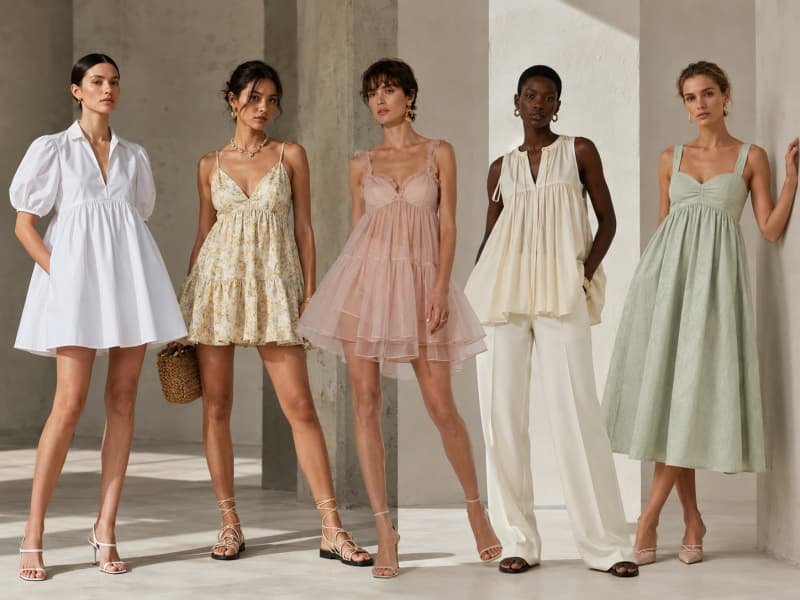
The babydoll dress is returning at a moment when shoppers expect clothing to do two seemingly opposite things: feel effortless enough for everyday life and look distinctive enough to photograph, share and remember. Its raised waist and free skirt answer the demand for comfort, yet a familiar pastel mini will not automatically become a strong product in 2027. Brands now have to decide how much volume feels fresh, which details appear sophisticated rather than juvenile, and whether the dress can move naturally between vacation, daytime, party, festival and transitional collections. The category is therefore becoming less about repeating one nostalgic silhouette and more about building a flexible product family with different levels of structure, coverage and visual impact.
Babydoll dresses for 2027 will be shaped by controlled volume, varied lengths, tactile lightweight fabrics, mature romantic details and stronger fit engineering. The most commercial designs will preserve the silhouette’s freedom while improving bust balance, neckline stability, movement coverage, layering flexibility and repeat-production consistency. Mini styles will remain important, but tunic, above-knee, occasion and refined daywear versions will expand the category.
A useful way to understand the change is to picture the same raised-waist dress in four different wardrobes. In embroidered cotton it becomes an easy vacation piece; in black poplin it feels graphic and modern; in organza with a fitted slip it moves into occasionwear; and with matching bloomers it becomes a high-impact festival look. The underlying pattern may share familiar proportions, but every material, seam and finishing choice changes the customer’s experience. That is where the next stage of babydoll dress development will be won or lost.
What Will Define Babydoll Dresses in 2027?
Babydoll dresses in 2027 will be defined by controlled volume, clearer product positioning and better wearability. The strongest styles will retain the raised waist and free-moving skirt while using more deliberate proportions, varied lengths and stronger upper-body construction. Rather than repeating one nostalgic mini dress, collections will divide into daywear, vacation, party, festival and refined occasion interpretations.
A Broader Silhouette Family
The babydoll dress is often treated as one fixed shape: a compact upper body, a seam beneath the bust and a short gathered skirt. In practice, that description covers a much wider range of products. The commercial opportunity for 2027 lies in developing a silhouette family rather than producing minor variations of the same dress. A crisp cotton mini with a square neckline serves a different customer from a sheer organza style with a fitted slip, even though both begin with a raised waist and an easy skirt.
The most useful development approach is to define the purpose before adjusting the design. When a brand describes a dress as romantic, the development team still needs to know whether it is intended for brunch, vacation, a birthday party or an evening event. Each setting changes the appropriate hem length, transparency, fabric weight, support and decorative intensity. A printed day dress may need pockets and bra-friendly coverage, while a party version may require internal cups, adjustable straps or fitted shorts.
Babydoll dresses are also moving away from a purely youthful identity. Cleaner necklines, darker colors, longer sleeves, sculptural fabrics and restrained embellishment can make the shape relevant to a wider customer group. This does not remove the playful character of the dress. It gives the silhouette more than one visual language and allows brands to build separate stories for contemporary daywear, resort, festival dressing and occasion-led collections.
Length and Proportion
Mini lengths will remain central because they create the clearest babydoll proportion, but brands need to distinguish between a visually short sample and a commercially wearable product. A dress may look balanced on a tall fit model while becoming extremely short on customers with a fuller bust or longer torso. Front length can also lift when the empire seam is placed too high or the upper body lacks enough shaping, so finished length cannot be judged only from a flat specification.
Mid-thigh and above-knee versions are likely to offer the broadest commercial potential. They preserve the youthful outline while improving sitting coverage and allowing the dress to be worn without a separate underlayer. Tunic lengths can work when paired with matching shorts or narrow trousers, particularly for festival and vacation collections. Midi versions are more selective, but they can translate the silhouette into premium daywear, resort or transitional fashion when fullness is carefully controlled.
The proportion of bodice to skirt is as important as total garment length. A short bodice combined with a very full skirt creates a stronger, more dramatic shape, while a slightly longer bodice with controlled fullness feels easier and more mature. Even a two- or three-centimeter adjustment in seam placement can change whether the garment looks balanced, maternity-like, oversized or intentionally sculptural. Length should therefore be fitted together with neckline depth, sleeve scale and the intended footwear.
| Length Direction | Approximate Wear Position | Suitable Product Use | Main Development Concern |
| Micro mini | High upper thigh | Editorial, festival and party | Movement and rear coverage |
| Commercial mini | Mid-thigh | Core fashion and vacation | Front-to-back hem balance |
| Above-knee | Just above knee | Daywear, brunch and casual occasion | Maintaining a youthful proportion |
| Tunic length | Below upper thigh | Sets with shorts or trousers | Styling clarity and set sizing |
| Midi | Mid-calf | Premium, resort and transitional | Excess fullness and visual heaviness |
These positions are design references rather than universal measurements. Final lengths need to be tested on the intended size range and on more than one body proportion, because bust projection, torso length, fabric lift and footwear can change how short the garment feels in real use. Movement checks should be completed before the hem specification is frozen for production.
Controlled Volume
Volume will remain one of the defining features of the category, but successful 2027 dresses will use it more carefully. A large rectangular skirt gathered evenly into a straight empire seam can create an immediate sample, yet it often produces unnecessary bulk at the center front. It may also consume more fabric without creating a more flattering shape. Better volume comes from directing fullness to the sides, back or hem instead of treating every part of the waist seam equally.
Shaped panels, side-focused gathering, pleat clusters, godets, tiered sections and curved empire seams all create more deliberate volume. These methods let designers control where the skirt opens and where it remains visually clean. Gathering ratios should be tested rather than selected by habit. A ratio near 1.5:1 may produce a light, controlled skirt in crisp poplin, while a softer chiffon may need more fullness to show movement. Ratios above 2:1 can add drama, but they also increase fabric use, seam bulk, hemming time and packing volume.
Bubble hems and double-layered skirts will remain relevant, although they require internal control. The inner layer must be shorter and stable enough to create the shape without pulling the outer fabric unevenly. When the outer material is extremely light, seam allowance weight, lining construction and pressing can affect the finished silhouette more than expected. A successful voluminous dress should still feel light in motion and should not become difficult to sit in, pack or reproduce across different production batches.
Layering and Styling Flexibility
Layering helps the babydoll dress move beyond a single-season mini. Matching shorts, bloomers, detachable slips, sheer overlays and dress-over-trouser combinations can increase styling options while solving practical concerns around coverage and transparency. A separate bloomer or short should be developed as a complete garment rather than a hidden accessory. Its rise, elastic recovery, leg opening and hem position affect both comfort and visual proportion, and visible underpieces need fabric and workmanship that match the dress.
Detachable slips offer another useful route. A sheer lace, mesh or organza dress can be sold with an opaque lining for everyday wear, while the customer can restyle the outer layer with other pieces. This creates more e-commerce content and gives the product a stronger sense of versatility. The slip still has to remain concealed at the neckline, armholes and hem unless visible layering is intentionally part of the design, and it must move independently without twisting beneath the outer skirt.
Layered development also allows brands to test the trend without relying entirely on an extremely short hem. A tunic-style babydoll worn over narrow trousers can work for transitional seasons, while a sleeveless version layered over a fitted top can extend the selling period. These combinations are most convincing when they are considered during product development rather than added only during campaign styling, because the underlying proportions, closures and fabric friction all affect the final look.
Which Fabrics and Colors Will Lead?
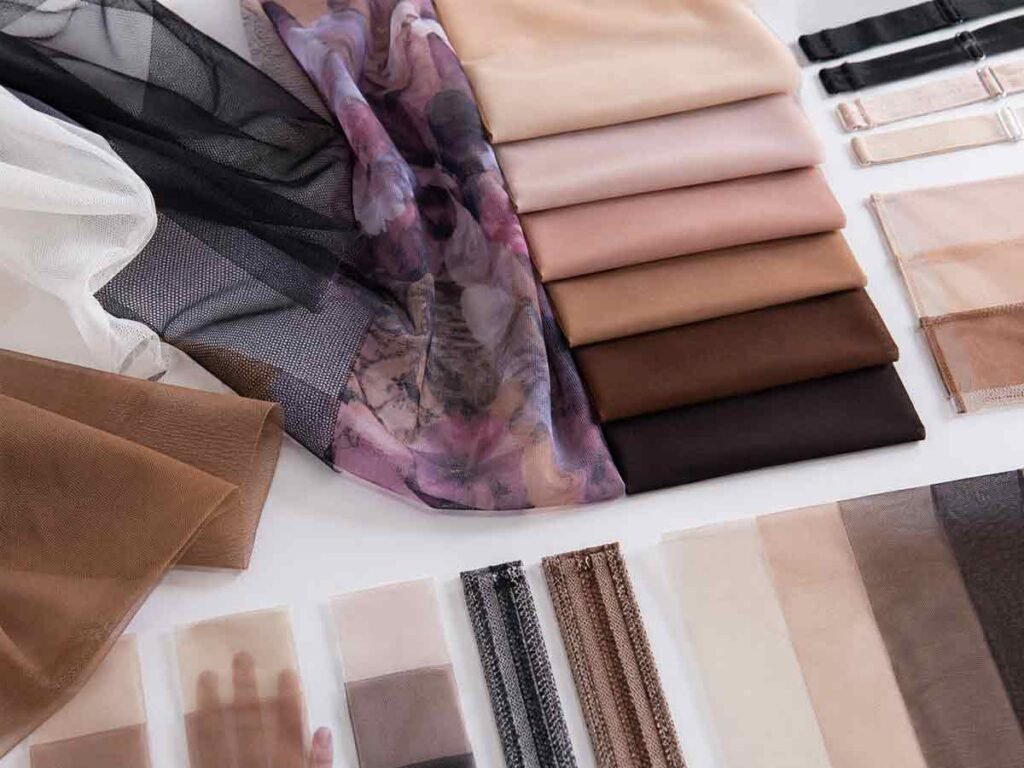
The leading materials will combine visual lightness with enough stability to support the intended shape. Cotton poplin, voile, eyelet, chiffon, organza, lace, satin and soft mesh will remain useful, but each serves a different market. Color will expand beyond pale pink and white into black, warm earth tones, saturated brights and more sophisticated pastels.
Fabric Behavior Comes First
Babydoll dresses depend heavily on fabric behavior because the silhouette contains relatively few close-fitting seams below the bust. If the fabric is too limp, the skirt may collapse and look unfinished. If it is too stiff, the garment can stand away from the body in an exaggerated way. If it is too heavy, it may pull the empire seam downward and distort the upper bodice. Weight alone cannot predict performance because yarn structure, finishing, fiber composition and weave density all change the way a cloth gathers and recovers.
Cotton poplin is useful for clean, graphic volume. It presses well, supports gathers and works for daywear, vacation and structured mini dresses. A lighter voile creates a softer effect but usually requires lining or strategically placed double layers. Chiffon and georgette offer movement for occasion styles, although seam slippage, puckering and transparency need careful control. Organza creates strong visual volume with limited weight, but its seam allowances and edges must be finished so they do not feel rough against the skin.
Satin changes the category completely. A soft satin babydoll can feel polished and evening-focused, but the fabric should not be selected on shine alone. Surface marking, needle damage, seam puckering and bias movement can become visible in production. Stretch satin may improve comfort, yet its recovery must be tested around the neckline, bust and empire seam. Before bulk approval, materials should be checked for shrinkage, colorfastness, opacity, seam behavior and appearance after pressing or laundering.
Lace and Eyelet
Lace and eyelet remain highly suitable for babydoll dresses because they add texture without requiring heavy decoration. They also reinforce the light, romantic character of the silhouette. The main change is that these materials no longer need to be limited to delicate white summer dresses. Black eyelet, terracotta embroidery, oversized floral cutwork and geometric openwork can make the product feel more modern, while selective panels can create stronger visual focus than covering every garment piece.
Motif placement needs to be considered during pattern development. Large embroidered repeats may need to be centered at the front, aligned across seams or matched at the hem. This can increase fabric consumption because the marker cannot always be arranged for maximum efficiency. Border embroidery creates a clear hem finish, but the usable width must be confirmed before the pattern is finalized. Scallops, cutwork and shaped lace edges also require accurate pattern placement so that different sizes retain the same visual balance.
Lining should support the textile without hiding it. A lining that is too dark can reduce the openwork effect, while a bright white lining beneath cream lace may appear mismatched. The lining also needs to stop at an intentional point and remain consistent across sizes. Shrinkage deserves particular attention because the embroidered area and the base cloth can react differently to washing or steaming. A sample that looks flat before finishing may pucker if the two structures contract at different rates.
| Fabric | Practical Starting Weight | Visual Effect | Common Production Risk |
| Cotton voile | 55-85 gsm | Soft and airy | Transparency and seam strain |
| Cotton poplin | 95-140 gsm | Crisp and graphic | Excess stiffness |
| Chiffon or georgette | 50-95 gsm | Fluid and layered | Slippage and puckering |
| Organza | 25-65 gsm | Sculptural and light | Harsh seams and snagging |
| Lightweight satin | 90-160 gsm | Polished and fluid | Needle marks and surface damage |
| Soft mesh | 40-110 gsm | Sheer and body-aware | Stretch instability |
| Linen-viscose blend | 110-180 gsm | Relaxed and textured | Shrinkage and creasing |
These ranges are practical starting points for sourcing rather than fixed specifications. Two materials with the same weight can behave very differently after gathering, pressing and lining, so fabric selection should be confirmed through physical drape tests, prototype sampling and production-lot review. Shade, shrinkage and hand-feel consistency should also be checked before bulk cutting begins.
Color Direction
Pale pink, soft blue, butter yellow and warm white will continue to make sense because they are closely associated with the category. They are easy for customers to understand and work naturally with cotton, eyelet and lace. A collection built only around these shades, however, can feel predictable. Black is one of the most effective ways to make the silhouette feel mature, while chocolate, olive, clay, ochre and deep plum introduce warmth without relying on the expected pastel story.
Saturated shades can work especially well for short party or vacation styles. Tomato red, bright blue, cyclamen, citrus and emerald make the simple silhouette more visually direct and photograph strongly for e-commerce launches. The trade-off is that intense colors often require more careful shade control, colorfastness testing and production-batch comparison. Dark colors on openwork fabrics also appear lighter where skin or lining shows through, so color approval should always take place on the actual construction rather than on an isolated swatch.
Color should be reviewed together with fabric texture and finish. Powder pink on matte cotton feels different from the same laboratory color on glossy satin, and black poplin creates a different mood from black chiffon. A practical collection often benefits from three color roles: one familiar commercial shade, one modern neutral and one stronger seasonal color. This gives customers an easy entry point while preventing the range from becoming visually flat or dependent on one short-lived palette.
Prints and Surface Interest
Print offers a useful way to distinguish the silhouette without adding multiple trims. Small florals remain commercially reliable, but brands should avoid using them as the only print direction. Enlarged flowers, irregular dots, abstract botanicals, hand-drawn motifs and engineered border prints can create a more current identity. Print scale should match the garment proportion because a tiny repeat may disappear in a highly gathered skirt, while a large motif may become distorted or hidden within the folds.
Placement artwork requires more technical control than an all-over repeat. The design team should specify where the key motif sits on the base size and how it moves through grading. Without clear rules, a centered flower may shift toward the side seam in larger sizes or disappear into the waist gathering. Before bulk production, print development commonly includes strike-off review, color approval, repeat-size confirmation and wash testing. Dark grounds may also require crocking tests when the dress will be worn with light accessories.
Surface interest does not always need to come from print. Seersucker, jacquard, crinkle, dobby and slub fabrics can make a solid-color dress feel more developed while keeping the pattern visually clean. These textures are particularly useful when the silhouette should remain the main focus. The most valuable print or texture is one that supports the brand’s visual language and can extend into coordinated tops, skirts or sets rather than functioning as a one-off novelty.

Which Details Will Modernize the Look?
Modern babydoll dresses will rely on fewer but stronger details. Clean necklines, sculptural sleeves, selective ruffles, embroidery, statement bows and removable components can update the silhouette without making it feel overworked. The best details improve recognition, fit or styling flexibility while remaining stable enough for repeat production.
Necklines and Sleeves
The neckline has a strong effect on whether a babydoll dress feels youthful, romantic, minimal or occasion-focused. Because the skirt is loose, the upper body often needs a clear visual structure. Square necklines create definition and work well with puff sleeves, straps or fitted bodices. Halter necklines feel more directional and suit vacation and going-out collections, while a curved scoop can appear relaxed and an off-shoulder shape can introduce a softer evening mood.
High gathered necklines and Peter Pan collars remain useful for nostalgic concepts, but they can become overly literal when combined with pastel color, short puff sleeves, bows and lace. Removing one or two of those elements usually produces a more modern result. Sleeve volume should also be balanced against skirt volume. A full skirt and an oversized balloon sleeve can create a strong editorial shape, yet the same combination may overwhelm a petite wearer or increase material and labor beyond the intended price position.
Sleeve construction affects movement as much as appearance. A tight cap sleeve can restrict arm lift, while an elasticated puff sleeve may leave pressure marks if the circumference is too small. Elastic recovery should be tested after repeated stretching because a sleeve opening that loses tension can change the entire shape of the garment. For long-sleeved versions, cuff width, sleeve length and fabric weight need to match the relaxed body so the shoulders are not pulled downward.
Trims with a Clear Purpose
Decorative elements should create visible value rather than simply increase the number of operations. A single oversized bow at the back may contribute more to the product image than several small bows placed around the neckline. A shaped lace border can define the hem, while a narrow generic trim may disappear in photography. Before approval, each trim should be judged by whether customers can see it, understand it and trust it to survive wear, packing and cleaning.
Ruffles work best when their scale relates to the garment. A narrow neckline ruffle can soften a clean cotton dress, while a deeper hem ruffle adds movement but increases fabric consumption and may distort if cut in the wrong grain direction. Multiple ruffle levels should be tested after laundering because edges can curl, shrink or twist. Smocking and pintucks add valuable texture, but they require consistent spacing and careful production control if the final appearance is to match the approved sample.
Embroidery, pearls, sequins and stones can move a babydoll dress into party or occasionwear, but the base fabric must support the added weight. Dense embroidery can stiffen chiffon or fine cotton. Beading at the empire seam can pull the seam downward or feel uncomfortable against the body. Heavy embellishment near the hem can reduce the floating movement that defines the silhouette. The most commercial trims are usually those that read clearly in the first product image and can be repeated consistently across every size.
| Detail | Visual Benefit | Technical Check | Cost Consideration |
| Oversized bow | Strong focal point | Shape retention and secure attachment | Moderate labor with visible value |
| Lace border | Defines neckline or hem | Placement, shrinkage and edge finish | Fabric yield may increase |
| Pintucks | Refined surface texture | Spacing and parallel accuracy | Labor-intensive |
| Smocking | Fit flexibility and texture | Elastic recovery and stretch balance | Specialist operation |
| Embroidery | Premium identity | Density, puckering and motif alignment | Artwork and machine time |
| Pearls or stones | Occasion impact | Pull test, abrasion and comfort | Attachment and inspection time |
| Detachable trim | Styling versatility | Fastener security and wash care | Extra component management |
The strongest details normally deliver visible value in the main product image and can be reproduced with measurable placement and attachment standards. Decorative complexity that cannot be seen clearly, tested reliably or repeated consistently rarely supports a healthy commercial margin. Every selected trim should therefore have a defined visual purpose, workmanship standard and inspection method.
Bloomers and Underlayers
Bloomers, matching shorts and shaped underlayers can make short babydoll dresses easier to wear. They also give the product a stronger identity, particularly in festival, vacation and youthful fashion collections. A separate bloomer creates a true two-piece set and can be styled independently, but it introduces a second fit problem. Customers may need different upper and lower sizes, especially when the dress is loose and the underpiece is fitted, so sizing and merchandising decisions should be made early.
Built-in shorts provide security and reduce the risk of the pieces being separated. They are useful for dance, party and active social occasions, but dressing access must be checked carefully. If the dress has no full opening, the wearer needs enough stretch or closure space to pull both layers on comfortably. The rise must also be long enough to prevent the shorts from pulling the upper dress downward, and the leg opening should remain secure without creating visible lines.
A detachable slip is often the better solution for lace, organza or mesh. It gives the customer control over transparency and makes the outer dress more versatile. The slip should follow the upper-body shape closely enough to remain hidden while allowing the outer layer to move freely. Underlayers need the same wear testing as the visible garment because sitting, walking, lifting the arms and bending can reveal pulling, twisting or exposure that is not obvious during a static fitting.
A More Mature Expression
Avoiding a childlike look is less about removing the core silhouette and more about controlling the complete visual message. When pale color, rounded collar, tiny bow, puff sleeve, lace sock and miniature print are all combined, the result becomes highly literal. A mature interpretation introduces contrast through darker shades, sharper necklines, cleaner fabrics, larger-scale prints or one deliberately oversized trim. The sweetness remains, but it is balanced by structure, scale or unexpected styling. Proportion can create maturity as well. A slightly longer skirt, wider strap, lower neckline or more controlled gather may be enough to move the product into contemporary daywear. Long sleeves can balance a short hem, while a structured bodice can contrast with a light skirt and create a stronger fashion shape. Black poplin, deep red satin or olive eyelet can retain the raised waist without repeating the familiar pastel cotton formula.
Campaign styling should be considered during development because it influences practical decisions as well as visual positioning. Heavy footwear, structured bags, modern jewelry and architectural photography can place the same dress in a different market from delicate accessories and bedroom-style imagery. The intended styling may affect strap width, hem length, pocket placement and underlayer visibility. The strongest products do not try to remove all playfulness; they make it feel intentional rather than costume-like.

How Will Fit and Wearability Improve?
Fit improvement will focus on the upper body, empire-seam placement, movement coverage and grading. A loose skirt does not make the garment automatically easy to fit. Neckline stability, bust balance, armhole depth, strap position and front length determine whether the dress feels secure and looks intentional across different body proportions.
Empire-Seam Placement
The empire seam should sit at a deliberate point beneath the bust. When it is too high, it can cross the fullest part of the bust, pull the front hem upward and create pressure at the side seam. When it is too low, the dress begins to lose its characteristic proportion and may create fullness around the natural waist. The correct position depends on bust shape, bodice construction, neckline and fabric rather than on one standard distance from the shoulder.
Fit should be assessed from the front, side and back. From the front, the seam should appear level unless a curved shape is intentional. From the side, it should not rise sharply toward the front, and from the back, excess length should not create folds above the seam. Gathering placement also affects the result. Too much fullness directly beneath the bust can create a maternity-like appearance, while moving some gathers toward the side body or using shaped skirt panels creates a cleaner front.
The seam position must also be reviewed through grading. Larger sizes often need additional front length and bust shaping rather than a simple proportional increase. Without this adjustment, the seam may rise and the front skirt may become shorter than the back. Structured or cup-based styles may require separate panels, darts or internal support to control bust projection. A seemingly simple raised waist therefore demands precise pattern work if the dress is expected to remain balanced across a wide size range.
Fit Across Body Proportions
Babydoll dresses can work across many body types, but the same pattern will not create the same visual effect on every wearer. Height, torso length, bust projection, shoulder width and leg proportion all influence the result. Petite customers often benefit from controlled volume and a clear hem position, while taller customers may need extra bodice and skirt length so the dress looks intentionally short rather than under-graded. Customers with a fuller bust require adequate front length, seam placement and neckline coverage. Straighter body shapes may suit a more sculptural version, while curvier customers may prefer a closer upper bodice and a smoother skirt release. Fit review on only one model is often insufficient when the planned size range is broad. A style approved in a small reference size may develop wider necklines, outward-moving straps, exposed armholes, lifting front hems or excessive skirt volume after grading.
Grading should protect the silhouette rather than merely add circumference. The amount of gathering does not always need to increase at the same rate as the body measurement. In larger sizes, excessive added skirt width can create unnecessary bulk and increase material consumption without improving fit. Brands developing extended size ranges may need separate base patterns or additional fit reviews, particularly for structured necklines, fitted bust panels and very short hems.
| Wear Test | What It Reveals | Typical Correction |
| Sitting | Effective thigh and rear coverage | Add length or deepen the underlayer |
| Raising arms | Bodice lift and hem movement | Adjust armhole, sleeve or bodice length |
| Walking upstairs | Rear exposure | Use a longer back hem or fitted shorts |
| Bending forward | Neckline gaping and skirt coverage | Improve neckline control and length |
| Turning quickly | Skirt lift and lining exposure | Adjust fullness, weight or underlayer |
| Entering a vehicle | Mobility and riding-up | Review hem width and internal construction |
Movement checks should be completed in the intended sample size and repeated after significant pattern, fabric or lining changes. A dress that passes a static fitting can still fail in ordinary movement, particularly when the hem is short, the skirt is light or the upper body lifts with the arms.
Coverage and Movement
A short dress should be tested in movement, not only during a standing fitting. Customers sit, walk upstairs, enter vehicles, raise their arms and bend down, and these actions can change the effective hem position by several centimeters. Coverage can be improved through a longer back hem, deeper lining, matching shorts, bloomers or an internal body layer. The solution should match the occasion and should not create new problems such as pulling, twisting or visible compression lines.
Movement testing should include ordinary actions rather than exaggerated studio poses. The wearer should sit on a standard chair, walk up stairs, raise both arms, bend forward, turn quickly and enter a vehicle. The fitting team should observe front, back and side views. Lightweight skirts can lift unexpectedly during turning, while stiff hems may hold away from the body. A lining that seems adequate while standing may become too short during sitting, and fitted shorts may pull the outer bodice downward if the rise is insufficient.
These checks are especially important for garments promoted as party, dance or festival products. Wearability affects reviews, returns and repeat purchase even when the product photographs well. Fit reports should record the movement issue, correction and approved result rather than relying only on verbal comments. When a style is likely to be reordered, these notes become part of the production reference and help later batches reproduce the same coverage standard.
Bust, Neckline and Armholes
The bust area is the most technically sensitive part of many babydoll dresses. A loose lower body cannot compensate for a neckline that gaps, straps that slip or armholes that expose too much side bust. Square necklines need stabilization at the front and corners because lightweight fabric can stretch during sewing or wear. Curved necklines can gape when the front width is too wide or the bodice lacks shaping, while halter styles must distribute tension without pulling the empire seam upward.
Strap position should be checked with the intended undergarment. Bra-friendly products need enough width and placement to conceal straps, while narrow shoulder straps may require adjusters whose size and weight suit the material. A heavy metal slider can pull on delicate satin or voile. Armhole depth should allow movement without exposing the bra or creating a loose fold, and the cause is often a combination of excess width, incorrect shoulder slope and insufficient bust shaping rather than armhole depth alone.
Stretch panels and elastic backs can improve flexibility, but elastic recovery needs to be tested after repeated extension. If the back panel relaxes too quickly, the neckline may fall and the empire seam may shift. Boning, cups or under-bust elastic may be appropriate for occasion versions, although they move the product into a more structured fit category. Security should remain acceptable after wear, cleaning and repeated movement, not only during the first sample fitting.

How Can Brands Build Commercial Collections?
A commercial babydoll range should assign each style a clear role and avoid excessive repetition. Strong collections combine recognizable core products, trend-led image pieces, practical length options and production-ready constructions. The range should also leave room for color repeats, regional adjustments and fast replenishment if one silhouette performs better than expected.
Market and Occasion
Babydoll dresses can enter several markets, but one construction will not satisfy every occasion. Vacation styles prioritize breathability, washable fabrics and easy packing. Party products need stronger visual impact, reliable coverage and secure upper-body construction. Daywear requires practical length, pockets and bra compatibility, while premium fashion versions can support more complex fabric, shaping and surface work. The intended wearing situation should be established before fabric, lining, closure and hem decisions are finalized.
A cotton eyelet dress may suit vacation, brunch and warm-weather daywear, while the same silhouette in satin or embellished mesh belongs more naturally in party and occasion collections. A tunic with trousers can work for transitional fashion, and a bloomer set is better suited to festival and social content. A dress intended for dinner and dancing should be reviewed for movement and support, while a resort dress should be checked for transparency in strong light and comfort in warm conditions.
Regional differences also matter. Some markets respond well to micro lengths and visible underlayers, while others prefer above-knee coverage. Climate changes the usefulness of long sleeves, lining and heavy embellishment. A global program can retain one recognizable silhouette while adjusting color, length and sleeve direction by region. The most reliable collections do not ask one SKU to serve every customer; they use a common design language across products built for distinct situations.
Capsule Structure
A focused capsule often provides better information than a large range of similar dresses. Eight to twelve styles can be enough for an established brand to test different lengths, fabrics and customer responses without creating excessive inventory complexity. A balanced ten-style capsule might include four core commercial dresses, two stronger trend pieces, one premium image style, one longer-length interpretation and two color or fabric repeats of the most dependable silhouette. Core styles should be easy to understand and wear. They might include a black poplin mini, a printed day dress, an eyelet vacation style and a sleeved above-knee version. Trend pieces can test bloomers, sheer layers or dramatic volume, while the premium style can use embroidery, sculptural satin or more complex construction. Repeats allow the brand to learn whether customers are responding to the silhouette itself or mainly to one color, fabric or campaign image.
Each product should have a written commercial role. A campaign image style may attract attention without becoming the highest-volume seller, while a simple black dress may produce stronger conversion and repeat orders. The number of colorways should also be controlled. Three colors in one proven silhouette can provide more useful sales information than three weak silhouettes in one color each. Product depth should follow expected demand and replenishment potential rather than the desire to make the launch look larger.
Development Before Sampling
Sampling works best when the brand knows what the sample is expected to prove. A reference image may communicate mood, but it rarely defines fit, fabric behavior, target price or production risks clearly enough. Before pattern development begins, the team should confirm the intended length, empire-seam position, neckline direction, skirt fullness, fabric character, lining approach and coverage requirement. The size range, fit model, intended occasion and retail price position should also be clear.
Some variables can remain open, but they should be named. A brand may intentionally compare two skirt-volume ratios or two fabric weights. That is different from beginning without a decision and changing several elements after the first fitting. Controlled comparisons produce useful development information, while uncontrolled changes create repeated sampling without a clear conclusion. Closure type, pocket requirements, care expectations, trim placement, testing needs and launch timing should also be included in the sample brief.
Target cost needs to be discussed early. Fabric consumption can rise quickly when the skirt becomes fuller or when border embroidery requires inefficient marker placement. Extra lining, built-in shorts, detachable bows and complex trims all affect labor and material cost. Waiting until the final sample to review price can force late changes that weaken the design. A clear brief allows the manufacturing team to identify materials, constructions or embellishments that may be unstable before the first sample is cut.
From Sample to Repeat Production
An approved sample must be translated into repeatable production standards. The appearance of one carefully made garment does not prove that the construction will remain stable across hundreds or thousands of pieces. The development path may include a first prototype, fit sample, revised sample, photo or salesman sample, size set and pre-production sample. Not every style requires every stage, but each approval should have a defined purpose and a clearly recorded result. Before bulk cutting, the approved pattern, grading rules, fabric, trims, color standards and construction details should be frozen. Gathering distribution, lining length, bow position, neckline reinforcement and hem appearance need written and visual references. Quality control should focus on risks specific to the style, including uneven empire seams, neckline stretching, inconsistent skirt fullness, armhole exposure, lining visibility, hem twisting and trim placement. Measurement inspection alone will not catch every visual problem.
Repeat orders also need material continuity. A second fabric batch may differ in hand feel, shade or stiffness, changing the finished silhouette even when the composition is technically the same. Replenishment should include fabric review rather than assuming that the same supplier will automatically produce an identical result. The commercial value of a successful babydoll dress lies not only in launching the first order, but in reproducing its fit, appearance and delivery standard when demand increases.
Ready to Develop a 2027 Babydoll Dress Program?
For brands preparing a 2027 dress collection, the strongest first inquiry includes the target market, reference silhouette, fabric direction, size range, quantity, target cost and launch calendar. Duolan Apparel supports trend-informed dress development, fabric sourcing, pattern and fit work, sampling, production preparation and repeat manufacturing for established fashion brands and product teams. Send a tech pack, original sample, reference images or collection brief to iduolan apparel to discuss a custom babydoll dress program built around practical quality, cost and delivery requirements.