Skip to content
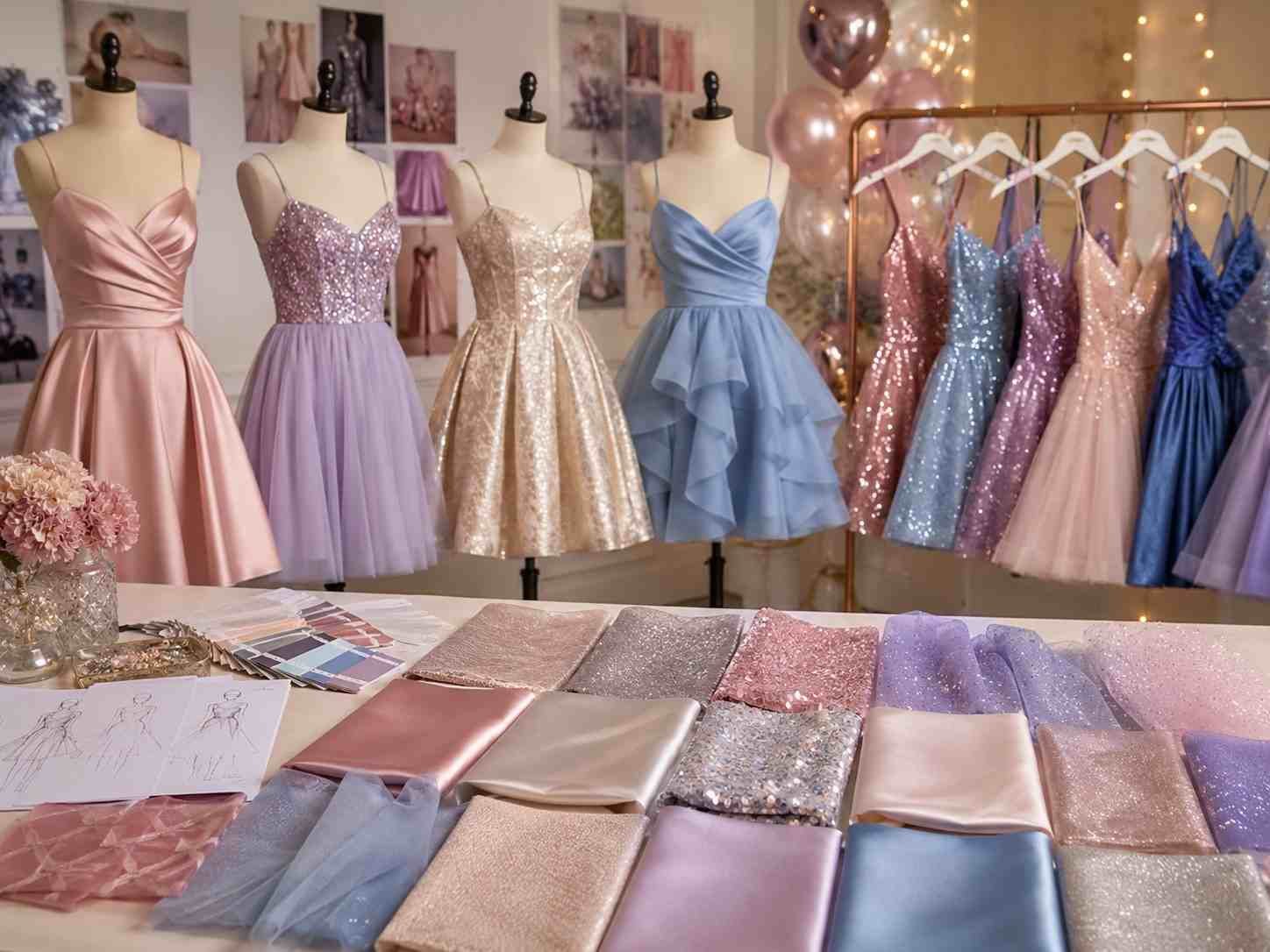
Homecoming fashion rarely changes through one dramatic reset. It usually moves through smaller shifts in proportion, color, surface, construction, and styling. A corset shape that felt fresh one season may return with a lower waist, a softer cup line, or an unexpected fabric the next. A familiar satin mini can suddenly look current because of a scarf neckline, a bubble hem, or carefully controlled draping. That evolutionary pattern matters when forecasting 2027 because the season is still developing and complete sell-through data does not yet exist.
The leading homecoming dress trends for 2027 are expected to include structured corset minis, strapless and halter necklines, satin and stretch-mesh fabrics, expressive sparkle, romantic volume, and colors ranging from black and jewel tones to butter yellow, cobalt, pink, and metallics. Short dresses should remain dominant, while selected midi and long styles serve more formal events.
The useful question is not whether every visible trend will become a bestseller. It is which combinations can look fresh, fit securely, photograph well, and remain repeatable in production. One dress may appear perfect in a studio image yet fail after twenty minutes of dancing. Another may look simple on a hanger but become the most requested style once customers try it on. The difference is often hidden beneath the surface in pattern balance, fabric recovery, lining, internal support, proportion, and movement.
What Homecoming Styles Will Lead 2027?
Structured mini dresses, corset bodices, halter necklines, asymmetric shapes, and fuller short skirts are likely to lead homecoming fashion in 2027. Fitted silhouettes will remain important, but bubble hems, basque waists, draped panels, and selective longer lengths will add variety. The strongest styles will combine a recognizable trend with reliable fit, comfortable movement, and clear visual impact.
Corset and Bustier Minis
Corset minis are likely to remain one of the most visible homecoming categories because they combine a defined waist, clear bust shaping, and a silhouette that reads immediately in photographs. Their appeal comes from structure rather than tightness alone. A well-developed corset dress controls the upper body, supports the neckline, and keeps its intended proportion while the wearer walks, sits, raises her arms, and dances.
The fresher 2027 versions are expected to move beyond exposed straight boning and sharply pointed fronts. Curved basque waists, softer sweetheart cups, internal boning, paneled satin, mesh-covered corsetry, and corset bodices paired with skater or bubble skirts can broaden the category. These changes preserve the familiar hourglass effect while giving a collection enough variation to avoid looking like one pattern repeated in different colors.
Fit is the main technical risk. Cup position, bust projection, top-edge tension, waist placement, and back construction must work as one system. Proportional grading alone can create shallow cups in larger sizes, loose necklines in smaller sizes, or boning that ends at uncomfortable body points. A reliable fitting should include sitting, arm lifting, upper-body rotation, and several minutes of movement before the structure is approved for production.
Statement Necklines
Necklines will continue to carry much of the visual identity in 2027. Strapless, sweetheart, halter, one-shoulder, off-shoulder, and asymmetric shapes can make a relatively simple dress feel distinctive without adding heavy decoration. For a collection with a controlled material budget, neckline variation often creates more meaningful assortment depth than applying different trims to the same bodice and skirt combination.
Each neckline brings a different construction challenge. Strapless shapes depend on contouring, top-edge tension, grip, cups, and internal support. Halter dresses must balance side-bust coverage with neck comfort, especially when the skirt or embellishment adds weight. One-shoulder styles need coordinated armhole, waist, and neckline control so the garment does not rotate after walking or dancing. These points are easy to miss when the sample is reviewed only on a mannequin.
The most useful neckline plan covers several levels of exposure and support. A clean strapless corset may lead the campaign, while a higher halter, a softly draped cowl, and a stable one-shoulder option broaden the audience. This approach preserves the fashion direction without forcing every customer into the same fit challenge, styling preference, or school dress-code boundary.
Bubble and Drop-Waist Shapes
Bubble hems, basque waists, and drop-waist silhouettes provide a strong alternative to conventional bodycon minis. They bring volume and proportion back into homecoming dressing after several seasons dominated by close-fitting shapes. These designs are unlikely to replace fitted dresses across the whole market, but they can give a collection stronger identity and attract customers who want movement, playfulness, or a less predictable outline.
A successful bubble hem requires more than gathering an outer skirt into a lining. The fullness must be distributed deliberately, the inner hem needs stable dimensions, and the waist-to-hip balance must avoid unnecessary bulk. Satin, taffeta, and compact woven fabrics can support volume, but excessive stiffness may create a costume-like result. Softer materials can work when the pattern carries enough controlled fullness and the inner structure supports the desired curve.
Drop-waist and basque-waist dresses visually lengthen the torso and shift attention toward the hip. Seam placement cannot be copied blindly from a trend image because it interacts with body proportion and movement. A seam falling directly across the widest hip may restrict sitting or create unwanted emphasis. These silhouettes are usually strongest as selective fashion pieces placed beside dependable corset, skater, and ruched styles rather than used as the whole collection.
Short, Midi and Long Lengths
Short dresses should remain the center of most homecoming assortments because the event is generally less formal than prom and involves more movement. Length preferences still differ by school, region, and event format. Some customers want a compact mini, while others feel more comfortable in a lower-thigh cocktail length or attend a homecoming court event where midi and floor-length styles are common.
Length must be evaluated on the body rather than through one flat measurement. A fitted mini can rise during walking and sitting, while an A-line dress with the same center-back length may provide greater practical coverage. Bubble hems can appear shorter when the skirt expands, and a high slit can make a long dress feel more revealing than its total length suggests. Center-front, center-back, and side-seam measurements therefore need separate attention.
Long homecoming dresses usually work best when they feel lighter than traditional prom gowns. Stretch jersey columns, clean satin dresses, streamlined corset shapes, and fluid skirts with controlled slits can provide formality without excessive weight. Large underskirts, long trains, and dense all-over beading may reduce movement and make alteration more difficult. The right length strategy offers choices without confusing homecoming with a full ball-gown occasion.
Practical silhouette and length considerations for a balanced homecoming range.
| Style Direction | Typical Length | Key Fit Check | Commercial Role |
| Corset bodycon | Upper-thigh mini | Bust security and hem rise | Core fitted assortment |
| Skater mini | Mid-thigh | Waist position and skirt balance | Broad movement-friendly option |
| Bubble mini | Mid- to lower-thigh | Inner hem stability | Fashion-led statement style |
| Fitted midi | Below knee to mid-calf | Walking ease and skirt tension | Polished customer segment |
| Streamlined long dress | Ankle to floor | Hem clearance and movement | Formal schools and court events |
Which Colors Will Define Homecoming 2027?
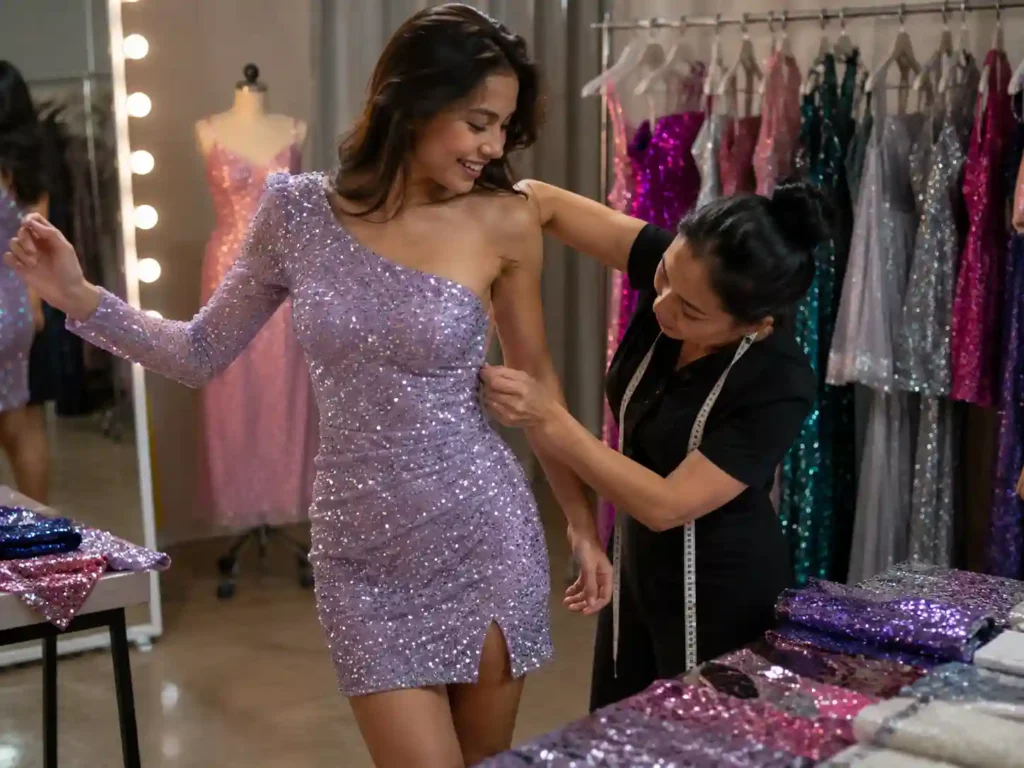
Homecoming color trends for 2027 are likely to divide into four useful groups: vivid statement shades, soft pastels, dependable dark colors, and metallic finishes. Cherry red, cobalt, and strong pink will attract attention, while blush, butter yellow, and lilac support romantic styling. Black, burgundy, emerald, silver, champagne, and gold should retain strong occasion relevance.
Bold Event Colors
Strong reds, vivid pinks, cobalt blue, and saturated green are likely to remain important because they create clear visual separation in crowded venues and social photography. A bold shade can make a relatively simple silhouette feel event-ready, reducing the need for complex decoration. This is especially useful when a brand wants campaign impact while keeping construction manageable and the product price within a realistic range.
Color intensity changes with fabric. Cherry red satin appears smooth and reflective, while the same red in sequins becomes louder and more theatrical. Cobalt stretch mesh can gain depth over a tonal lining, but a pale lining may weaken the shade. Hot pink in compact jersey may feel casual unless the cut, finish, or structure restores an occasionwear character. Color and material should therefore be approved together rather than in isolation.
Lab dips should be reviewed in daylight, warm indoor lighting, and phone flash because saturated colors can shift between conditions. Fluorescent or highly blue-based shades may also be difficult to reproduce accurately on product pages. A practical collection often pairs the boldest color with a dependable alternative, such as cherry red with black or cobalt with navy, allowing the same silhouette to serve both attention-seeking and more restrained customers.
Soft Romantic Shades
Blush pink, powder blue, lilac, mint, and butter yellow should continue to support the romantic side of homecoming fashion. These colors work naturally with satin, chiffon, mesh, floral appliques, bows, and softly structured skirts. They also create a lighter visual story within an assortment dominated by black, red, or jewel tones, helping a collection address different moods without changing its overall occasion focus.
Pastels reveal manufacturing problems more readily than dark colors. Seam allowances, cup edges, lining differences, pressing marks, and small stains may become visible through pale shell fabrics. A bright white lining can cool butter yellow or blush, while an overly dark nude lining may show through powder blue. Opacity should be checked on a moving body because fabric that looks acceptable on a hanger may become transparent when stretched over the bust, hip, or seat.
The most current pastel designs often balance softness with controlled construction. A butter-yellow strapless corset, a lilac asymmetric mini, or a powder-blue halter can feel sharper than a dress combining a pastel color with bows, flowers, ruffles, and glitter all at once. Letting the color carry the romantic quality while the silhouette remains clean usually gives the style greater longevity and a more premium appearance.
Black and Jewel Tones
Black remains commercially valuable because it works across multiple aesthetics, photographs consistently, and reduces uncertainty around accessories. It can support clean satin, bodycon jersey, sequins, velvet, and mesh without feeling repetitive when silhouettes and surfaces are varied. Jewel tones such as emerald, sapphire, deep purple, burgundy, and wine bring similar reliability with more seasonal richness for autumn homecoming events.
Dark colors still require technical control. Black materials from different mills may carry blue, brown, or green undertones, and the mismatch becomes obvious when shell fabric, lining, zipper tape, thread, and embellishment sit beside one another. Velvet panels can also appear different when the pile direction changes during cutting. Mixed-material dresses should therefore be reviewed as complete garment sets, not as individually approved components.
The strongest dark-color strategy assigns shades to silhouettes that benefit from visual restraint. Sculpted corsets, clean halters, controlled draping, and precise asymmetric shapes often look sharper in black or jewel tones. Rather than recoloring every design in black, brands can use dark colors where they improve the outline and reserve brighter shades for softer or simpler shapes that need additional visual energy.
Metallic Finishes
Silver, gold, and champagne are becoming more flexible within homecoming collections, but they should not be treated as one material category. Champagne satin can function almost like a neutral, while silver sequins, rhinestone mesh, metallic-thread fabric, and foil-coated jersey create very different levels of shine, weight, stretch, abrasion, and cost. The finish must suit both the silhouette and the intended wearing experience.
Full sequin fabrics can add noticeable weight and feel rough near the underarms, neckline, and side seams. Rhinestone mesh may stretch unevenly when decoration density is too high, while foil surfaces should be tested for cracking at seam lines and high-movement areas. Concentrated metallic detail, such as a jeweled neckline or silver draped panel, can deliver strong visibility without the weight and production risk of full coverage.
Packaging is part of metallic quality control. Sequins can mark adjacent fabric, rhinestones can press into satin, and metallic coatings may transfer under heat or carton pressure. Tissue placement, folding method, garment-bag material, and carton compression should be tested before bulk packing. The garment must arrive with the same clean surface that attracted the customer in the product image.
Color groups should be evaluated together with fabric, lining, lighting, and end-use conditions.
| Color Direction | Strong Fabric Matches | Main Benefit | Development Risk |
| Cherry red, cobalt, vivid pink | Satin, crepe, stretch jersey | Strong photo impact | Shade shift under lighting |
| Blush, butter yellow, lilac | Chiffon, satin, mesh | Soft romantic appeal | Transparency and staining |
| Black, navy, espresso | Velvet, jersey, satin, sequins | Broad wearability | Undertone mismatch |
| Emerald, burgundy, sapphire | Velvet, satin, embellished mesh | Seasonal depth | Lot-to-lot variation |
| Silver, gold, champagne | Sequins, foil jersey, metallic satin | High event visibility | Abrasion, weight, and shedding |

Which Fabrics and Details Will Matter?
Satin, stretch mesh, sequins, velvet, and lightweight structured wovens are likely to remain the key homecoming materials for 2027. Their success depends on matching fabric behavior to the silhouette. Draping, ruching, floral appliques, rhinestones, and bows can strengthen a dress, but only when their scale, placement, comfort, and production consistency have been tested.
Satin and Fluid Surfaces
Satin remains important because it can serve clean, romantic, and highly structured designs. Lightweight satin supports draping and bias cuts, while heavier stretch satin can hold a corset or fitted silhouette. High-shine surfaces create immediate evening appeal, but they also reveal seam puckering, needle marks, pressing errors, and uneven tension more clearly than matte fabrics, making process control essential.
Material selection should begin with the shape. A corset dress needs enough body for stable panels and clean seam lines. A ruched mini requires fabric that gathers without becoming thick at the side seam. A bias-cut style needs balanced grain behavior so the skirt does not continue lengthening after cutting or wearing. The word satin describes a surface, not a guaranteed performance level, so weight, stretch, finish, and construction must be assessed together.
Sampling should include opacity, snagging, seam performance, shrinkage, colorfastness, and stretch recovery where applicable. Pressing standards are especially important because excessive temperature can create permanent shine or flatten the face. Needle size, stitch length, thread tension, seam allowance treatment, and pressing temperature should be recorded with the approved sample so bulk teams can reproduce the same finish consistently.
Mesh and Layered Transparency
Stretch mesh is useful for fitted dresses, ruched overlays, illusion panels, and asymmetric layering because it creates depth without the weight of dense decoration. Softer tulle and non-stretch mesh work better for fuller skirts, floral overlays, and romantic shapes. The key question is not whether mesh looks fashionable, but whether transparency, recovery, and seam bulk remain controlled during real movement.
A mesh panel may appear subtle on a hanger and become much more revealing once stretched. Bust, waist, hip, and seat areas should be checked on the body under normal light and flash photography. Lining color also changes the result. A matching lining deepens the shade, while a skin-tone lining creates an illusion effect but requires careful shade planning for customers with different skin tones.
Recovery is critical for fitted mesh. After extension, the material should return close to its original dimensions rather than leaving loose areas around the waist, neckline, or seat. Embellished mesh needs additional testing because beads, sequins, and rhinestones can restrict stretch unevenly. Multiple layers should be reduced or graded at side seams and waist joins so the garment remains soft against the body.
Sequins, Beads and Florals
Decoration is likely to divide into two clear directions: all-over impact and concentrated detail. Some customers want full sequin coverage, while others prefer one recognizable feature such as a jeweled neckline, floral corsage, beaded cup, or embellished hem. Concentrated decoration can lower weight and cost while still giving the style a strong image, especially when placement supports the dress silhouette rather than competing with it.
Placement should be reviewed on the body. Dense beading at the hem can make a skirt heavy, rhinestones near the underarm may scratch the wearer, and large flowers crossing a side seam can become inconsistent in production. Bows also need enough internal support to hold their shape without pulling the neckline or waist out of position. Visual decoration must be evaluated together with comfort and construction access.
Bulk standards should translate appearance into measurable controls. Useful references include motif position from key seams, attachment method, acceptable density variation, orientation, replacement quantity, and close-up photographs. Testing should include rubbing, flexing, moderate pulling, and planned packaging. Three-dimensional flowers and structured bows may need tissue support or lower carton pressure so the delivered garment still matches the approved sample.
Draping and Ruching
Draping and ruching can shape the body, soften fit sensitivity, and create movement without adding separate trims. For 2027, these details are likely to appear through asymmetric hip drapes, twisted bust panels, scarf-like extensions, diagonal gathers, and layered side seams. The effect can look effortless in a finished image, but reliable repetition requires careful pattern engineering and clearly defined placement.
Adding extra fabric to one seam does not automatically create flattering gathers. The ratio between the shell and lining must be established, and the gathered area needs stable start and end points. Satin highlights every fold, making variation easy to see, while mesh is visually softer but may become bulky where several layers meet. Notches, gathering measurements, templates, and reference photographs can improve repeatability.
Drapes also require size-specific review. A fold positioned correctly on a sample size may move too close to the bust or widest hip in larger sizes. Grading should preserve the purpose and visual balance of the detail rather than enlarge every component mechanically. A successful draped dress should fall into place after movement instead of requiring the wearer to rearrange the folds repeatedly.
*These ranges are practical starting references, not universal purchasing specifications. Fiber content, fabric construction, finishing, and garment design can change performance significantly.
| Material Type | Practical Development Range* | Suitable Styles | Priority Checks |
| Lightweight satin | 90-150 gsm | Draped, bias, and ruched minis | Opacity, puckering, snagging |
| Stretch satin | 140-220 gsm | Corset and bodycon dresses | Recovery and seam stability |
| Stretch mesh | 80-140 gsm | Overlays, fitted, and illusion styles | Extension, recovery, transparency |
| Velvet | 180-280 gsm | Fitted jewel-tone dresses | Pile direction and pressure marks |
| Sequin fabric | 180-320 gsm | Statement minis and panels | Weight, shedding, abrasion |
| Structured woven | 110-200 gsm | Bubble and skater shapes | Creasing and volume retention |

How Will Fit and Wearability Shape Demand?
Fit and wearability will determine which 2027 homecoming trends become repeatable commercial products. Customers need dresses that stay secure while sitting, walking, taking photographs, and dancing. Skirt coverage, neckline stability, stretch recovery, lining, cup position, and seam comfort influence satisfaction as much as color or decoration. A dress requiring constant adjustment will struggle regardless of its online appeal.
Mini Length and Coverage
Mini dresses should remain the standard homecoming format, but one universal length cannot suit every silhouette or body proportion. A fitted skirt tends to rise during walking and sitting, while an A-line skirt with the same center-back measurement may provide more practical coverage. Bubble hems can also appear shorter as the volume expands, so the visible and functional length must be reviewed together.
Length checks should include center front, center back, side seam, and any asymmetric high point. Wrap-inspired and slit designs need opening measurements during walking and sitting, not only while standing. Waist position also changes perceived coverage. A lower waist can shorten the visible skirt even when total garment length remains similar, while a high waist may visually extend it.
Built-in shorts can add security in selected styles, but they increase material use, labor, heat, and fitting complexity. A stable lining, suitable skirt ease, and controlled hem position may offer a cleaner solution. The practical standard is simple: the wearer should be able to move naturally without repeatedly pulling the dress downward or checking whether the lining has shifted.
Movement and Photo Testing
A fitting should reproduce the way a homecoming dress will actually be worn. The model should sit, raise both arms, rotate the upper body, walk quickly, and take several dance-like steps. During this sequence, the team can observe whether the neckline drops, the skirt rises, the zipper buckles, the lining rolls, or the side seams move away from their intended position.
Bodycon dresses need enough extension through the hip and thigh, but stretch alone is not sufficient. Recovery determines whether the garment returns to shape after sitting. Skater dresses usually offer easier movement, although a tight waist seam or restrictive lining can still create discomfort. Bubble skirts require particular attention because the inner hem may pull upward or the outer layer may collapse unevenly after sitting.
Photo testing should include daylight, warm indoor light, and phone flash. Flash can reveal transparency, cup edges, adhesive marks, and lining differences that remain hidden in a fitting room. Reflective satin may exaggerate wrinkles, while sequins can create bright areas that visually distort the outline. The dress needs to perform both as a physical garment and as an image because purchasing decisions often begin with photography.
Lining and Internal Support
Lining, cups, boning, elastic, grip tape, and interfacing control the dress from inside. These components should support the silhouette without making it rigid or uncomfortable. More internal structure does not automatically create better fit. Poorly placed boning can dig into the body, overly stiff cups can create gaps, and heavy lining can remove the flexibility expected from a short party dress.
A stretch bodycon dress usually needs lining with compatible extension and recovery. If the lining stretches less than the shell, it can restrict movement and create horizontal pulling. If it stretches too freely, it may fail to smooth or support the outer fabric. Corset styles also need size-sensitive cup depth, boning length, back construction, and elastic tension rather than a single proportional grade across the whole size range.
High-friction areas deserve special protection. Sequin fabric and rhinestone mesh should not sit directly against the underarm, neckline, or inner arm without a soft facing or lining. Open-back edges may need clear elastic or stabilizing tape to prevent gaping. Internal components should also be checked after the intended cleaning method because cups, adhesive, elastic, and interfacing can change after care.
Dress Codes and Customer Choice
Homecoming dress codes differ between schools, so a resilient collection offers several coverage levels within the same fashion story. A fully lined corset mini, an illusion-waist style, a higher halter, a fitted long-sleeve dress, and a streamlined midi can all feel current while meeting different comfort expectations and local rules. Modest adjustments do not have to remove the design identity.
Small pattern changes can broaden suitability. A cup line can be raised while retaining the corset effect, a low back can move upward by several centimeters, and mesh can cover side openings without eliminating visual interest. A high slit may be shortened while preserving the long silhouette. These options are easier to plan during development than to correct after the product reaches customers.
Product descriptions should communicate practical facts, including garment length, lining coverage, cup construction, adjustable elements, closure type, and stretch level. Front, back, and side photographs help customers judge exposure before ordering. Bust, waist, hip, and garment measurements should be presented consistently because the same dimensions can fit very differently in rigid satin, stretch jersey, and layered mesh.

How Can Brands Build a Commercial 2027 Collection?
A commercial 2027 homecoming collection should combine dependable silhouettes with selected directional styles. Brands can reduce risk by assigning each dress a clear role, validating fabrics before adding colorways, testing fit through movement, and translating approved samples into measurable production standards. The goal is not to follow every forecast, but to build a coordinated range suited to the customer, price level, and launch calendar.
Core and Statement Styles
A successful collection needs familiar shapes and visible fashion ideas. Core styles create confidence because customers understand how they look and wear, while statement styles give campaign imagery and product launches enough novelty to attract attention. Corset minis, strapless bodycon dresses, halters, and ruched satin styles can form the commercial center, with bubble hems, drop waists, complex asymmetry, and concentrated embellishment used more selectively.
Each style should have a clear job. A black corset mini may serve as a repeatable volume option, a cobalt satin halter may carry campaign color, and a silver embellished dress may attract attention even at a lower unit depth. Treating every design as equally commercial can lead to overbuying difficult styles or underdeveloping the dependable shapes that support repeat orders.
An illustrative twenty-style range might devote around half of the assortment to fitted and structured minis, then divide the remainder among draped satin, romantic volume, sparkle, directional shapes, and selected longer options. The exact balance should reflect previous sales, customer profile, and price positioning. The value of the model lies in assigning roles, not in following one universal percentage for every brand.
Color and Fabric Balance
Too many colors can weaken purchasing efficiency and complicate material minimums, while too few can make a collection feel repetitive. A practical structure combines dependable colors, seasonal shades, and one or two high-impact finishes. Black, burgundy, navy, or emerald can support repeatable styles, while blush, butter yellow, cherry red, cobalt, or metallic silver give the season a clearer visual signature.
Fabric families should be planned alongside color. A range using ten unrelated materials may become difficult to sample, test, purchase, and reorder. Repeating one reliable stretch satin across several silhouettes can improve color consistency and purchasing leverage, while a stable mesh can support multiple overlays and ruched styles. Material repetition should create efficiency without making every dress look the same.
Before adding multiple colorways, the base construction should be validated in a representative fabric and shade. Fit, opacity, seam behavior, recovery, and pressing can then be confirmed before extra colors multiply the risk. Color duplication should also be intentional. Offering every style in black creates apparent choice, but assigning colors according to silhouette usually produces a more balanced and visually coherent range.
Sampling and Risk Control
Homecoming development often runs on short calendars with many styles moving at once. Early risk identification saves more time than rushing every sample. Each design should be reviewed for fabric availability, fit difficulty, construction complexity, decoration method, testing needs, and production repeatability before the first pattern is cut. The review does not need to be slow, but it should be systematic enough to expose obvious problems early.
A practical sequence may include a first prototype, fit sample, revised sample, salesman or photo sample, and pre-production sample. Not every style needs every stage, yet skipping fit or production confirmation on a complex corset, sequin, or bubble dress can transfer unresolved problems directly into bulk. High-risk elements can be isolated first, such as testing cup shape before embellishment or bubble volume in a lower-cost trial fabric.
Comments should be measurable. Instructions such as make the waist better or improve the drape leave too much room for interpretation. A more useful comment specifies the amount and location of change, such as reducing the waist by 1.5 centimeters, raising the seam by 1 centimeter, and smoothing the side line between waist and high hip. Clear comments shorten revisions and preserve accountability across teams.
From Sample to Repeat Production
An approved sample is valuable only when its standards can be repeated. Before bulk production, the fabric reference, color approval, pattern version, measurement chart, construction method, trim placement, and workmanship tolerances should be locked. Decorative styles also need close-up visual references showing bead density, motif direction, drape placement, and seam appearance, because written descriptions alone may not capture the intended result.
Pre-production review should confirm that the bulk fabric behaves like the sample material. A small change in stretch, weight, finish, or lining can alter fit and surface quality. Inline inspection is especially useful for complex dresses because twisted side seams, uneven cups, puckered satin, and inconsistent draping are easier to correct before finishing than after the entire order has been completed.
Repeat orders require organized records. Patterns, graded nests, approved trims, color standards, workmanship photographs, and version histories should be archived by style. When a successful dress returns months later, the team should know exactly which specification produced the approved result. Commercial success is not one attractive sample; it is the ability to reproduce the same product standard through launch quantities, replenishment, new colors, and future seasonal extensions.
This assortment model is an example for planning discussion, not a universal sales forecast.
| Collection Role | Illustrative Style Count | Possible Direction |
| Core fitted minis | 6 | Corset, strapless, halter, and ruched bodycon |
| Satin and draped styles | 4 | Twisted busts, scarf details, and asymmetric draping |
| Romantic volume | 3 | Bubble hems, skater skirts, and floral appliques |
| Sparkle styles | 3 | Sequins, rhinestones, and embellished mesh |
| Directional shapes | 2 | Drop waist, basque waist, and unusual proportion |
| Midi and long options | 2 | Streamlined formal alternatives |
| Total | 20 | Balanced illustrative assortment |
Develop a 2027 Homecoming Collection with Duolan Apparel
A strong homecoming program begins with trend awareness, but it succeeds through disciplined product development. Silhouette, fabric, lining, internal support, decoration, fit, and packing all need to work together before a dress can move reliably from an appealing image to repeatable production. The most commercially useful forecast is therefore not a list of fashionable details. It is a framework for deciding which details suit the customer, price level, launch timing, and manufacturing reality.
Duolan Apparel supports fashion brands and product teams developing homecoming, party, occasion, fitted, satin, mesh, corset, halter, backless, and embellished dress collections. The company combines dress-focused product development, fabric and trim coordination, pattern and fit work, sample progression, flexible production, and bulk quality control. Its manufacturing network includes owned factories, long-term satellite capacity, specialist process partners, and structured support for multi-style seasonal programs.
For a new 2027 homecoming collection, send the available tech packs, reference images, original samples, target fabrics, size specifications, expected order structure, launch window, and target market. The development team can review material behavior, construction risk, fit priorities, decoration feasibility, sampling steps, and production planning before quotation. Contact Duolan Apparel to discuss a custom dress program.