Skip to content
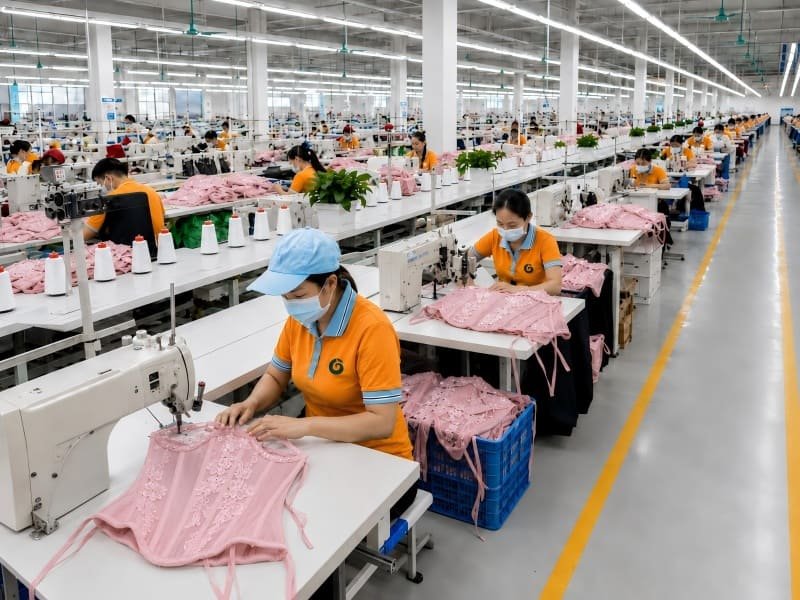
A beautiful sample can create excitement inside a fashion brand. The design team sees the right silhouette, the buyer approves the look, the marketing team starts planning the campaign, and everyone feels the project is almost ready. Then bulk production arrives, and the same dress suddenly feels different. The satin hangs heavier. The waist sits lower. The mesh looks more transparent. The zipper waves at the back. The sequin dress feels scratchier than the sample. The neckline no longer stays secure. Nothing looks completely wrong at first glance, but the brand knows the final product is not the approved version.
That gap between sample and bulk is one of the most expensive problems in dress manufacturing. It affects customer reviews, return rates, launch timing, internal trust, supplier evaluation and repeat orders. The issue is rarely caused by one single mistake. More often, it comes from small uncontrolled changes: a different fabric batch, an unapproved trim, a loose measurement tolerance, a rushed sewing method, unclear PP sample approval or weak inline QC.
Fashion brands can control sample-to-bulk consistency by locking the PP sample, BOM, fabric batch, trims, measurements, construction details, finishing standard, label placement, packaging method and QC checkpoints before bulk production starts. A clear approval standard allows the sample room, production line, QC team and brand team to judge every bulk garment against the same reference.
Think of the approved sample as a promise. Bulk production is where that promise gets tested at scale. One dress can be adjusted by a skilled sample maker. Hundreds or thousands of dresses need a system. The difference between a good supplier and a risky supplier is not only who can make a nice first sample. The deeper question is: who can protect that sample standard when production moves to fabric purchasing, cutting, sewing, pressing, packing and shipment?
What Is Sample-to-Bulk Consistency?
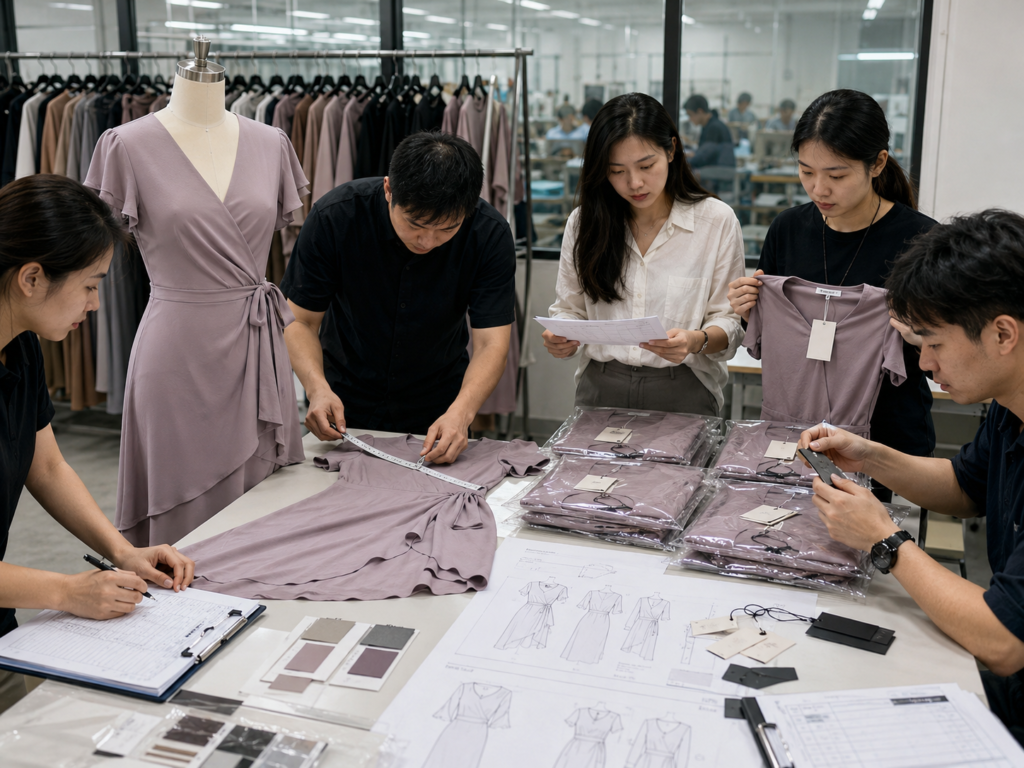
Sample-to-bulk consistency means the final bulk garments match the approved sample in fabric, color, fit, measurement, construction, trims, workmanship, finishing and packaging. It requires more than sample approval. Brands need a locked PP sample, BOM, material standard, measurement tolerance, production notes and QC checkpoints before bulk cutting begins.
Sample-to-Bulk Meaning
Sample-to-bulk means transferring a confirmed sample standard into repeatable production. A development sample may prove the idea. A fit sample checks body balance and measurement. A photo sample may focus on visual effect for campaign shooting. A salesman sample may be used for buyer presentation. A PP sample, or pre-production sample, should become the final approved reference before bulk production.
The danger begins when brands treat all samples as the same. A photo sample may look good on camera but still use substitute fabric, temporary trims or sample-room sewing methods. A fit sample may correct body balance but not finalize packaging or label placement. A first sample may show direction but still need material changes. If bulk production starts from an unclear sample stage, the factory may produce based on assumptions instead of a locked standard. For custom dress manufacturing, PP sample approval is the bridge between creative development and production discipline.
Why Consistency Matters
For fashion brands, consistency is not only a technical standard. It is a commercial issue. If bulk dresses do not match the approved sample, the brand may face late launch changes, higher return rates, customer complaints, rejected inspections, discounting pressure or damaged supplier trust. For online brands, a small difference between campaign photos and delivered products can quickly become negative reviews. For retail brands, inconsistent bulk can affect store presentation, fit comments and reorder confidence.
Dress categories are especially sensitive because fit and fabric are visible on the body. A 1.5 cm neckline change may affect security. A slightly heavier satin may change the way the skirt falls. A mesh batch with weaker recovery may cause bagging. A corset dress with softer boning may lose waist support. Customers may not know the technical reason, but they feel the difference when they wear the garment. That is why mature brands care deeply about sample-to-bulk control.
Approved Sample Limits
One approved sample is not enough if the details behind it are not locked. A sample is a physical reference, but bulk production also needs written and visual standards. The production team needs to know which fabric batch was used, which zipper was approved, which lining quality was selected, which stitch type should be followed, what measurement tolerance is acceptable and how the dress should be packed.
A sample without a BOM is risky. A sample without approved measurement specs is risky. A sample without fabric batch confirmation is risky. A sample without clear workmanship notes is risky. In real production, many people touch the order: sourcing, warehouse, cutting, sewing, inline QC, finishing, pressing, packing and final inspection. They cannot all rely on memory. They need a shared reference system.
| Sample Stage | Main Purpose | Bulk Risk If Misused |
|---|---|---|
| Development sample | Tests design direction | May not use final fabric or trims |
| Fit sample | Confirms body balance | May not finalize all construction details |
| Photo sample | Supports campaign shooting | May prioritize appearance over production standard |
| Salesman sample | Supports presentation or line review | May not include final bulk materials |
| PP sample | Confirms production standard | Must be locked before cutting bulk |
| Golden sample | Long-term reference for repeats | Useful for repeat orders and complex styles |
Which Risks Cause Bulk Differences?
Bulk differences usually come from uncontrolled changes in fabric, trims, cutting, measurements, sewing interpretation, pressing, finishing or packaging. Higher-risk dresses include satin, mesh, corset, sequin, bodycon, lace, ruched and cut-out styles because small material or construction changes can visibly affect fit, comfort and appearance.
Bulk Difference Risks
Most bulk problems are not dramatic at the beginning. They start with small decisions that seem harmless. The approved sample used one fabric batch, but bulk uses another. The sample zipper was smooth, but bulk uses a cheaper replacement. The sample was sewn by a senior sample maker, while bulk is handled by a production line that needs clearer operation notes. The sample was gently pressed, but bulk pressing creates shine marks or seam impressions. The sample was packed flat, but bulk is folded tightly and arrives with creases.
These risks are normal in manufacturing, but they must be controlled. Brands often focus on the sample because the sample feels like the exciting part. Factories focus on production because production is where scale begins. Sample-to-bulk consistency sits between the two. It requires both sides to ask a simple question before bulk starts: which details must not change?
High-Risk Dress Types
Some dress styles need stronger control because their materials and structures are less forgiving. Satin dresses show seam puckering, pressing marks, lining imbalance and packaging creases easily. Mesh dresses show transparency, lining edges, color differences and seam placement. Corset dresses depend on cups, boning, eyelets, waist control and back tension. Sequin dresses involve weight, shedding, scratchiness, lining and embellishment density. Bodycon dresses rely on stretch recovery, opacity, measurement tolerance and seam balance.
A simple woven shift dress may tolerate small production variation better than a fitted mesh ruched dress. A basic jersey dress may be easier to repeat than a structured strapless satin corset dress. That does not mean complex dresses should be avoided. It means they need more detailed PP sample locking, stronger production notes and closer QC checkpoints.
Fit Impact
Small changes can affect fit more than brands expect. A fabric with 5% less stretch may make a bodycon dress feel one size smaller. A lining that is slightly tighter than the outer shell can pull the skirt or create twisting. A waist seam moved down by 1–2 cm can change body proportion. A strap that stretches too much can drop the neckline. Softer boning can reduce corset support. A different pressing method can flatten ruching or change hem balance.
Fit consistency is not only about measuring finished garments. It starts with fabric behavior, cutting accuracy, sewing tension, lining balance and finishing method. A measurement chart may say the dress is within tolerance, but if the fabric recovery is different, the wearing experience may still change. That is why dress manufacturing needs both numerical checks and product judgment.
| Bulk Difference Source | Common Cause | Brand Impact |
|---|---|---|
| Fabric batch change | Different lot, GSM, stretch or finish | Different drape, fit or color |
| Trim substitution | Unapproved zipper, cup, boning or hardware | Lower durability or changed appearance |
| Cutting variation | Marker, spreading or shrinkage issue | Size inconsistency and shape distortion |
| Sewing interpretation | Line does not follow sample method | Different workmanship and fit behavior |
| Pressing difference | Heat, pressure or method changes | Shine marks, seam marks or changed silhouette |
| Packing pressure | Tight folding or poor protection | Creases, deformation or surface damage |
| Weak QC standard | No clear tolerance or checklist | Subjective approval and late disputes |

How Should PP Samples Be Controlled?
A PP sample should be controlled as the final production reference before bulk cutting. Brands and manufacturers should confirm fabric, color, trims, lining, measurements, stitch method, workmanship, labels, packing and finishing standard. Bulk production should not start until the PP sample and related records are approved.
PP Sample
A PP sample is not just another sample. It is the production agreement in physical form. It shows what the factory is allowed to reproduce and what the brand has approved. A strong PP sample should use approved fabric, approved trims, approved measurements, approved construction, approved labels and the intended finishing method.
When brands skip or rush PP sample approval, bulk production becomes vulnerable. The production team may use the first fit sample as a guide, even though fit comments were not fully applied. The sourcing team may buy trims that look similar but are not identical. The packing team may follow a general method instead of the brand’s requirement. A PP sample protects the brand because it converts decisions into a visible standard.
Locking Details
The PP sample should lock more than the outer appearance. It should confirm main fabric, lining, interlining, zipper, cups, boning, eyelets, straps, lace, sequin, beads, buttons, labels, hangtags, care label placement, stitch type, seam allowance, hem method, pressing standard and packaging style. For printed dresses, it should confirm print scale, placement and color. For lace dresses, it should confirm lace direction, edge use and lining coverage. For corset dresses, it should confirm cup position, boning casing and back closure tension.
A good rule is simple: if a detail can affect fit, appearance, comfort, production efficiency or customer satisfaction, it should be confirmed before bulk. Brands do not need to overcomplicate every simple style. But for high-risk dresses, the PP sample should become a detailed production map.
Golden Sample
A golden sample is useful when a brand expects repeat orders, multi-color production, long-term supply, complex construction or strict retail approval. It acts as a preserved reference for future production. While a PP sample controls one production run, a golden sample can support repeat consistency across seasons or reorder batches.
For example, a fashion brand may develop a bestselling corset mini dress and reorder it every season in new colors. If the brand and factory keep a golden sample, approved pattern, BOM, fabric standard and QC notes, future production can move faster with fewer misunderstandings. This is especially valuable when teams change, production moves to another line or a style returns after several months.
| PP Sample Control Point | What to Confirm | Why It Matters |
|---|---|---|
| Fabric | Supplier, batch, GSM, stretch, color | Protects drape, fit and appearance |
| Lining | Quality, coverage, color, stretch | Controls comfort and transparency |
| Trims | Zipper, cups, boning, eyelets, hardware | Protects function and durability |
| Construction | Seams, stitch, hem, lining method | Keeps workmanship repeatable |
| Measurements | Base size, tolerance, grading logic | Controls fit across sizes |
| Labels | Main label, care label, placement | Supports brand and compliance needs |
| Packing | Folding, polybag, hanger, carton | Reduces damage and delivery issues |
| Finishing | Pressing, thread cleaning, final look | Protects presentation quality |
How Can Fabric and Trims Stay Consistent?
Fabric and trims stay consistent when brands and manufacturers lock approved suppliers, batches, color standards, GSM, stretch, shrinkage, handfeel, surface texture, lining and all accessories before bulk. Any replacement should require brand approval. Material consistency is the foundation of sample-to-bulk consistency in dress manufacturing.
Fabric Locking
Fabric locking means confirming the exact material standard used for bulk production. For dresses, fabric is not only a cost item. It controls how the garment behaves on the body. A satin fabric with a different weight may change the skirt fall. A mesh fabric with different stretch may change bust and hip fit. A jersey fabric with weaker recovery may cause bagging. A lace fabric with different pattern scale may affect cutting and placement.
Brands should ask the manufacturer to confirm supplier, composition, GSM, color, stretch, shrinkage, handfeel, surface appearance and availability before bulk. Lab dips, strike-offs or fabric swatches may be needed when color or print matters. For custom colors, approval should happen early enough to avoid production delay. For repeat orders, fabric batch records become important because the same material name does not always guarantee the same behavior.
Colorfastness and Shade Control
Color consistency should not rely only on visual approval under random lighting. For dresses, color can shift after washing, rubbing, steaming, pressing, packaging or exposure to light. Dark satin, bright party colors, white mesh, printed resort dresses and contrast lining styles can all create colorfastness risks if fabric is not checked early.
AATCC Gray Scale for Color Change is used to visually evaluate color change under AATCC Evaluation Procedure 1 or ISO 105-A02, while AATCC Gray Scale for Staining is used to evaluate staining under AATCC Evaluation Procedure 2 or ISO 105-A03. In practical textile inspection, a higher grade means better color stability, and many quality control references use Grade 4 as a common desired target for color change in colorfastness evaluation.
| Color Control Item | What to Check | Why It Matters |
|---|---|---|
| Lab Dip / Color Standard | Approved shade under standard lighting | Prevents bulk fabric from drifting away from approved color |
| Colorfastness to Washing | Color change after washing test | Helps reduce customer complaints after care |
| Colorfastness to Rubbing | Dry and wet rubbing performance | Important for dark colors, prints and contrast linings |
| Colorfastness to Perspiration | Color change and staining risk | Useful for fitted, party and summer dresses |
| Gray Scale Rating | Commonly reviewed from Grade 1 to Grade 5 | Higher grade indicates better color stability |
| Bulk Shade Band | Acceptable shade range across rolls | Prevents mixed shade panels in one garment |
For Duolan, shade control is especially important when a style uses multiple fabric components, such as shell fabric, lining, mesh panels, lace trims, satin binding or contrast straps. Even when every material is technically “black,” the bulk garment can look inconsistent if black satin, black mesh and black lining have different undertones. Color locking should happen before cutting, not after sewing.
Trim Approval
Trims need the same discipline as fabric. A zipper may look similar but pull differently. Boning may have different stiffness. Cups may change bust shape. Eyelets may vary in strength or finish. Elastic may stretch differently. Lace may shrink or curl. Sequins may scratch or shed. Hangtags, care labels and packaging may affect retail or ecommerce presentation.
For custom dress production, trim approval should include both appearance and function. A metal eyelet may look beautiful, but does it hold tension? A hidden zipper may look clean, but does it create waves on satin? A cup may fit the sample size, but does it work across grading? A sequin may shine well, but does it feel comfortable against the body? These details are not minor when the dress reaches real customers.
Substitution Rules
Substitution is one of the most common causes of bulk difference. Sometimes material becomes unavailable. Sometimes a supplier changes quality. Sometimes a trim shipment is delayed. Sometimes the production team finds a cheaper or faster alternative. Without clear rules, substitutions can happen quietly and create visible bulk differences.
Brands should set a simple approval rule: no fabric, lining, zipper, trim, label, embellishment or packaging replacement should be used in bulk without brand confirmation. For urgent production, the manufacturer should provide photos, swatches, technical details or a revised sample if the replacement affects appearance or fit. Speed is important, but silent substitution can cost much more than a short approval delay.
| Material Item | What to Lock | Bulk Risk If Changed |
|---|---|---|
| Main fabric | Batch, GSM, stretch, color, handfeel | Different drape, size feel or surface look |
| Lining | Weight, stretch, color, coverage | Twisting, tightness or transparency |
| Zipper | Length, color, puller, quality | Waving, breakage or back fit issue |
| Cups | Size, shape, thickness | Changed bust shape or support |
| Boning | Width, stiffness, placement | Weak support or discomfort |
| Eyelets | Size, finish, strength | Poor lace-up tension or damage |
| Sequins | Size, density, backing | Weight, shedding or scratchiness |
| Labels | Material, size, placement | Brand inconsistency or compliance issue |
How Should Measurements Be Managed?
Measurements should be managed through a confirmed size chart, base size, grading rule, critical measurement points and acceptable tolerance. Brands should define key areas such as bust, waist, hip, shoulder, neckline, strap length, skirt length, slit height and hem width so QC can judge fit consistency objectively.
Key Measurements
Not every measurement has the same importance for every dress. A bodycon dress depends heavily on bust, waist, hip, length and sweep tension. A corset dress depends on cup position, waist, underbust, back opening and boning placement. A halter dress depends on neck strap length, bust coverage and back fit. A high-slit dress depends on slit height, skirt balance and hip area. A satin slip dress depends on bust width, strap length, waist ease and skirt fall.
Brands should identify critical points before bulk production. These points should be measured on the approved sample and included in the bulk measurement chart. If the factory only checks general length and width, important fit issues may be missed. For example, a dress may pass bust and waist measurements but fail because the strap length changed or the neckline drops too low.
Grading Control
Grading affects how the dress fits across sizes. A size S sample may look perfect, but that does not guarantee size XS, M, L and XL will work. The grading rule must respect the design. A ruched dress may need careful grading so the ruching stays balanced. A corset dress may need cup and boning adjustments across sizes. A bodycon dress may need stretch behavior considered across body measurements. A maxi dress may need length adjustments for market expectations.
Brands should provide their own size chart if they already have a fit identity. If they do not, they should still define target market and fit preference. A US partywear brand, Australian resortwear brand and UK occasionwear brand may not use the same fit expectation. Grading should not be treated as a mechanical enlargement of the sample. It should preserve proportion, support and wearing comfort.
Tolerance Rules
Measurement tolerance helps brands and factories avoid subjective disputes. Garments are not plastic parts. Fabric can relax, stretch, shrink, shift during cutting, change during pressing and move slightly during sewing. A clear tolerance table tells QC what is acceptable and what must be corrected.
Industry practice usually sets different tolerances for different points of measure. More critical fit points should be tighter. For example, third-party garment QC guidance gives an example of prom dress shoulder width using a tighter tolerance around 1/8″, while a less critical neck width may allow around 1/4″. Apparel production references also commonly explain bust or chest tolerances with examples around ±1/2″, depending on garment type, fit, buyer standard and construction risk.
For custom dresses, Duolan recommends brands avoid using one tolerance for every measurement. Bust, waist, hip, strap length, neckline, cup position and slit height usually need stricter control because small changes can affect fit, coverage and wearing security. Hem width, full skirt sweep or relaxed body length may allow slightly more flexibility, depending on silhouette and fabric behavior.
| Measurement Area | Suggested Control Logic | Common Reference Range |
|---|---|---|
| Bust / Chest | Critical for fitted, corset, halter and bodycon dresses | Often around ±1/4″ to ±1/2″ depending on style |
| Waist | Critical for bodycon, corset and fit-and-flare dresses | Often around ±1/4″ to ±1/2″ |
| Hip | Critical for fitted and stretch dresses | Often around ±1/4″ to ±1/2″ |
| Shoulder Width | High impact on structured or formal dresses | Can be as tight as ±1/8″ for strict dress QC |
| Neck Width | Important, but sometimes less strict than shoulder or bust | Example reference around ±1/4″ |
| Strap Length | Critical for slip, halter, backless and cami dresses | Should be set tightly by brand fit standard |
| Skirt Length | Important for mini, midi, maxi and high-slit dresses | Usually depends on silhouette and market expectation |
| Hem Width | Less critical for loose skirts, stricter for fitted hems | Can be wider if it does not affect fit or look |
Duolan’s view is simple: tolerance should protect the customer experience, not only help the factory pass inspection. A loose tolerance may reduce rejection, but it can damage fit consistency. An unrealistically strict tolerance may increase rework and cost. The right tolerance sits between brand fit expectation and real production behavior.
How Does QC Protect Bulk Quality?
QC protects bulk quality by checking materials before cutting, confirming the first production piece, inspecting workmanship during sewing, measuring garments during production, reviewing finishing and checking packed goods before shipment. Strong QC turns the approved sample into a production standard instead of a memory from the sample room.
Before Cutting
Before cutting, the factory should inspect fabric quality, color, width, shrinkage, defects, stretch and batch consistency. Pattern and marker should be reviewed. For printed, lace or stripe fabrics, placement and direction should be checked. For delicate fabrics like satin, cutting and handling methods matter because damage can happen before sewing begins.
A pre-production meeting is also important. The production team, QC team, cutting team and merchandiser should review the PP sample, BOM, measurement chart, construction notes and special risk points. This meeting prevents the production line from interpreting the style incorrectly. It is much cheaper to correct a misunderstanding before cutting than after hundreds of pieces have been sewn.
During Sewing
Inline QC is one of the strongest tools for sample-to-bulk consistency. It catches problems while production is still moving, not after the whole order is finished. First-piece approval should confirm that the line understands construction, measurement and workmanship. Inline checks should review seam quality, lining control, stitch tension, zipper placement, trim attachment, measurement points and visible defects.
For dresses, inline QC should pay special attention to areas that affect wearing experience. Bust support, waist seam, neckline, strap tension, lining coverage, slit height, zipper smoothness and hem balance should not wait until final inspection. If a line is sewing a corset dress, boning and cup placement should be checked early. If a line is sewing satin dresses, seam puckering and pressing should be controlled early. If a line is sewing sequin dresses, shedding, edge comfort and lining should be checked during production.
Before Shipment
Final inspection checks whether bulk production is ready to ship. It should include measurement sampling, workmanship review, color and fabric consistency, defect classification, label check, packing check, carton mark check and quantity verification. For ecommerce and retail brands, packing matters because a good garment can arrive looking poor if folding, bagging or carton pressure is wrong.
Final inspection should not be the first serious QC checkpoint. If problems are discovered only after everything is packed, correction becomes slower and more expensive. Strong QC is layered: material check, pre-production review, first-piece approval, inline inspection, finishing check, final inspection and packing review. Each layer reduces the chance of a surprise before shipment.
| QC Stage | Main Check | Sample-to-Bulk Risk Controlled |
|---|---|---|
| Fabric inspection | Defects, color, width, stretch, shrinkage | Material difference |
| Pre-production meeting | PP sample, BOM, measurements, risks | Production misunderstanding |
| First-piece check | Construction, measurement, workmanship | Line interpretation error |
| Inline QC | Seams, trims, fit points, defects | Repeated bulk defects |
| Measurement check | Critical points and tolerance | Size inconsistency |
| Finishing check | Pressing, cleaning, thread trimming | Poor presentation |
| Final inspection | Defects, measurements, quantity | Shipment quality risk |
| Packing check | Labels, folding, carton, barcode | Delivery and retail issue |
AQL Inspection Reference
Final inspection should also define an AQL level before shipment. AQL, or Acceptable Quality Limit, is used in product inspections to determine how many defects are acceptable in a sampled batch before the shipment passes or fails. For general consumer goods, AQL 2.5 is commonly used, while AQL 4.0 is often used where minor cosmetic defects are more acceptable. Premium dress brands may request stricter standards, especially for high-value occasionwear, corset dresses, satin dresses, embellished dresses or retail orders.
For fashion dress manufacturing, AQL should not be treated as a generic number. A loose standard may pass too many visible issues. A very strict standard may create unnecessary rejection when defects are minor and repairable. The brand and factory should agree on defect classification before inspection begins.
| Defect Type | Common AQL Reference | Dress Manufacturing Example |
|---|---|---|
| Critical Defect | Often zero tolerance | Broken needle, unsafe sharp trim, harmful contamination |
| Major Defect | Commonly around AQL 2.5 for general consumer goods | Wrong color, broken zipper, open seam, wrong measurement beyond tolerance |
| Minor Defect | Commonly around AQL 4.0 where small cosmetic defects are acceptable | Loose thread, light crease, minor removable mark, slight pressing issue |
For Duolan projects, AQL works best when paired with a style-specific QC checklist. A satin dress should check seam puckering, pressing marks and packing creases. A corset dress should check cup position, boning, eyelets and back tension. A sequin dress should check shedding, scratchy edges and lining comfort. AQL gives the inspection framework, but product-specific checks protect the actual brand standard.

What Should Brands Send to Duolan?
Brands should send tech packs, approved sample photos, BOM, fabric details, trim list, measurement chart, sample comments, PP approval notes, packing requirements and QC standards. These files help Duolan review sample-to-bulk risks, lock production details, plan QC checkpoints and reduce avoidable bulk differences before shipment.
Bulk Control Files
A strong bulk control package should include both design files and approval records. The tech pack shows the product structure. The BOM shows approved materials. The measurement chart shows size standards. The sample comments show what changed during development. The PP approval notes show the final decision. Packing instructions show how the garment should arrive.
Brands sometimes send many files but miss the most important approval information. For example, they may send a first tech pack but not the latest revised measurement chart. They may send a sample photo but not confirm the final fabric. They may approve a trim in WhatsApp but never update the BOM. These small gaps can create production confusion. Duolan can support review, but the cleaner the file package, the smoother the bulk process becomes.
Rework Reduction
Rework often happens because decisions are late, unclear or changed after production starts. A fabric is approved, then replaced. A fit comment is given verbally, but not reflected in the spec. A label position changes after cutting. A packing method changes after cartons are prepared. Each late change creates cost, delay and quality risk.
Brands can reduce rework by giving clear written approvals, marking sample comments on photos, confirming measurement changes, locking fabric and trims before bulk, and responding quickly when the factory raises production questions. This does not mean brands should accept every factory suggestion. It means decisions should be visible, traceable and connected to the final production standard.
Duolan Support
Duolan supports sample-to-bulk consistency by reviewing fabric, fit, trims, PP sample standard, construction risk, measurement tolerance, QC checkpoints, packing requirements and delivery needs before shipment. For dress-focused brands, this kind of control is especially important because dresses often combine visual design, body fit, fabric behavior and delicate workmanship.
Duolan is a strong fit for brands that need custom dress development, sample improvement, bulk production and repeat order support. The team can review whether the approved sample is ready for bulk, whether key materials are locked, whether construction details are clear, and whether QC points match the risk of the style. For satin, mesh, corset, sequin, bodycon, lace, ruched, party, occasion and resort dresses, early sample-to-bulk review can prevent many expensive surprises.
| File or Standard | What It Should Include | Why Duolan Needs It |
|---|---|---|
| Tech pack | Sketch, specs, construction, labels | Guides development and production |
| BOM | Fabric, lining, trims, packaging | Locks approved materials |
| Approved sample photos | Front, back, inside, close-ups | Supports visual reference |
| Measurement chart | Base size, grading, tolerance | Controls size consistency |
| Sample comments | Fit and construction revisions | Prevents repeated mistakes |
| PP approval record | Final confirmed standard | Authorizes bulk production |
| QC requirement | Inspection level and focus points | Guides inline and final checks |
| Packing standard | Folding, bag, carton, label | Protects delivery presentation |
Final Summary
Sample-to-bulk consistency is not protected by one beautiful sample. It is protected by a complete approval system. Before bulk production, fashion brands should lock the PP sample, BOM, approved fabric, trim standard, measurement tolerance, color standard, construction method, packaging method and QC inspection plan.
The most reliable dress production projects usually share three habits. First, they define measurable standards, such as POM tolerance for bust, waist, shoulder, strap length and skirt length. Second, they use inspection frameworks such as AQL to classify critical, major and minor defects before shipment. Third, they control fabric and color with clear shade approval, colorfastness expectations and bulk material locking.
For custom dresses, these details matter because fit, fabric and construction are connected. Satin can change with pressing. Mesh can change with lining. Corsets can change with boning. Sequins can change with weight and comfort. Bodycon dresses can change with stretch and recovery. A small difference can become a visible customer experience problem.
Duolan helps fashion brands review sample-to-bulk risks before production begins. Send your tech pack, approved sample photos, BOM, fabric direction, size chart, quantity plan, launch timeline and QC requirements to Duolan for a custom dress production review. A clear production standard helps your brand protect fit, quality, launch timing and repeat order stability.