Skip to content


A drop-waist dress can look perfectly balanced in a sketch and surprisingly different once it is fitted on a real body. The reason is that moving the waist seam changes more than one construction line. It changes where the eye believes the upper body ends, where the skirt begins, how long the legs appear, where volume is concentrated, and how strongly the hips become part of the silhouette. A change of only a few centimeters can turn a softly elongated bodice into a noticeably long-torsoed look, especially when the skirt is full, gathered, pleated, or made from a fabric that holds its shape.
Drop-waist placement changes body proportion by moving the visual division between the bodice and skirt below the natural waist. A lower seam usually makes the torso appear longer, shifts skirt volume closer to the hips, and can reduce apparent leg length. The final effect depends on seam position, body proportions, hip shape, skirt construction, fabric behavior, and how closely the extended bodice follows the body.
That is why two dresses described as “drop waist” can produce completely different results. One may sit only slightly below the natural waist and feel clean, modern, and easy to wear; another may extend almost to the fullest hip and dramatically redraw the figure. For designers, product developers, and brands, the useful question is not simply whether a dress should have a drop waist. The better question is exactly where the drop should end, how the skirt should release from that point, and whether the proportion still works across movement, fabric choice, and multiple sizes.
What Is Drop-Waist Placement?
Drop-waist placement is the point below the natural waist where the bodice visually ends and the skirt begins. It may sit only slightly below the waist, around the high hip, or closer to the hip line. The lower the transition moves, the more strongly it can lengthen the perceived torso, shift visual attention toward the hips, and change how much of the dress is read as bodice rather than skirt.
Where Does a Drop Waist Sit?
There is no single measurement that automatically makes a waistline a drop waist. The useful reference points are the natural waist, high hip, and fuller hip area, because the visual result depends on where the seam sits relative to those landmarks. In practical sample development, a team may compare a seam at the natural waist with alternatives positioned a few centimeters lower, then review which version creates the intended proportion. These are fitting comparisons rather than universal standards, since total height, torso length, waist-to-hip depth, and garment length all change how the same numerical drop appears.
A good fitting process starts by marking body landmarks on the fit model instead of judging the seam against the garment alone. The natural waist can be identified first, followed by the high hip and fullest hip. The proposed drop line can then be photographed from the front, side, and back. This matters because a seam that looks balanced from the front may climb at the back, dip at the center front, or appear too close to the fullest hip from the side. Reviewing the line while the wearer is standing, sitting, and walking also reveals whether a visually attractive placement is practical in use.
How Is It Different From a Natural Waist?
A natural-waist dress usually creates one of its strongest horizontal breaks around the narrowest part of the torso. That gives the skirt a relatively large share of the visible vertical length below the waist. A drop-waist dress shifts part of that length into the bodice, so the upper section appears longer before the skirt begins. The wearer has not changed, but the garment has changed the way the body is divided visually. This is why a seam moved by only a few centimeters can produce a noticeable difference even when the total dress length remains exactly the same.
Think of a simplified 120 cm shoulder-to-hem dress. If the skirt begins 40 cm below the shoulder, the upper section occupies about one-third of the visible length. If the seam moves 6 cm lower, the upper section becomes 46 cm, or about 38 percent of the total. That five-percentage-point shift is large enough to change the visual balance between torso and skirt. The effect becomes even stronger when the bodice is fitted and the skirt changes volume abruptly at the seam, because the eye receives a clearer signal that one body zone has ended and another has begun.
Is Every Low Waist a Drop Waist?
Not every low visual break is a conventional drop-waist seam. An extended bodice can finish in a curved line, pointed Basque shape, V-shaped panel, corset edge, or shaped yoke and still create a similar elongated-torso effect. Some dresses have no obvious horizontal waist seam at all; the low-waist impression comes from where gathers, flare, pleats, or volume begin. These distinctions matter because a straight horizontal line emphasizes width more strongly, while a curved or pointed line can guide the eye downward and preserve a longer vertical flow through the center of the dress.
This becomes especially useful when a designer likes the idea of an elongated bodice but does not want a strong horizontal break across the hip area. Changing the shape of the seam can sometimes solve the proportion problem better than simply raising it. A fitted panel may continue below the natural waist while a pointed center front preserves vertical direction, for example. The most successful development decisions therefore begin with the visual goal rather than the style label. The practical question is where the eye reads the bodice ending, where skirt volume begins, and whether that transition supports the intended silhouette.
How Does Waist Position Change Proportion?
Waist position changes proportion by altering the visual relationship between upper-body length and lower-body length. As the waistline moves downward, the bodice usually appears longer, the skirt begins lower, and the legs may appear shorter by comparison. The effect becomes stronger when the seam is visually prominent, when the bodice fits closely, or when skirt volume expands abruptly beneath the lowered line.
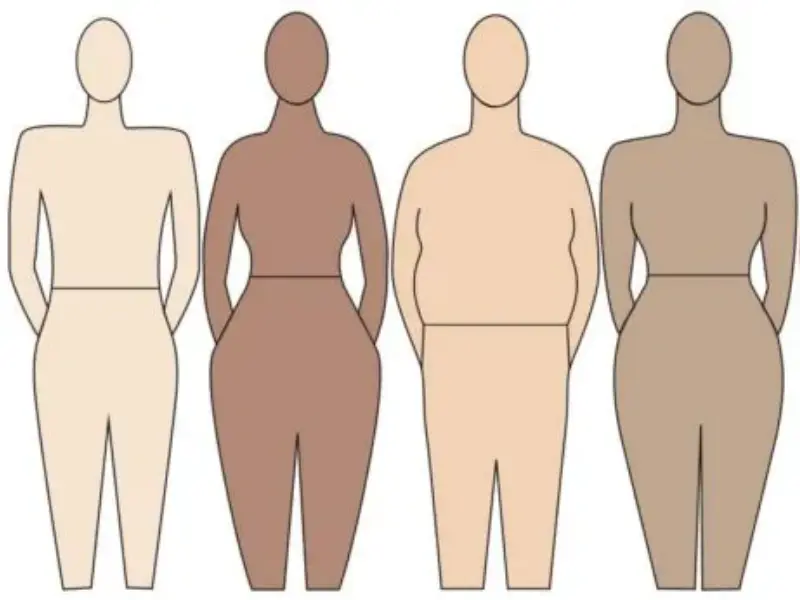
How Does It Change Torso Length?
The torso appears longer because the garment continues the upper-body structure below the natural waist. A close-fitting extended bodice strengthens this effect because the eye follows one uninterrupted shape from the shoulder through the waist and into the upper hip. A softer, looser bodice can make the same numerical drop feel less pronounced because folds and drape blur the exact transition. For this reason, the vertical seam position should never be assessed without also looking at bodice fit, fabric stiffness, seam contrast, and the point where the skirt begins to gain volume.
One useful way to assess proportion is to compare the upper and lower sections as percentages of the visible dress length. The table below uses a 120 cm shoulder-to-hem dress only as an illustrative fitting example, not as an industry standard. It shows how a 3 cm, 6 cm, or 9 cm downward shift can progressively give more visual territory to the bodice even though the garment’s total length has not changed.
| Illustrative Placement | Shoulder to Seam | Seam to Hem | Upper Share of 120 cm |
| Natural-waist reference | 40 cm | 80 cm | 33.3% |
| Slightly lowered | 43 cm | 77 cm | 35.8% |
| Clear drop waist | 46 cm | 74 cm | 38.3% |
| Deep drop | 49 cm | 71 cm | 40.8% |
The numbers are simple, but the principle is important. A pattern can be technically accurate and still look proportionally wrong if the bodice occupies too much of the finished silhouette. This is especially relevant when a brand adapts the same design language across mini, midi, and maxi dresses. The same shoulder-to-seam measurement may feel balanced on one length and overly dominant on another. Development teams should therefore review the seam as part of the complete vertical composition rather than treating it as an isolated pattern coordinate.
Does a Drop Waist Make Legs Look Shorter?
A drop waist can make the legs appear shorter, but the effect is relative rather than literal. What changes is the perceived starting point of the lower body. When the skirt begins lower, the viewer receives a stronger cue that the upper portion of the silhouette continues farther down. The effect is most noticeable when several design decisions work in the same direction, such as a deep drop, a long midi hem, a visually heavy skirt, and a strong horizontal seam. Together, those features can move the visual center of gravity downward and reduce the apparent length allocated to the legs.
Other design choices can offset that effect. A shorter hem exposes more actual leg, a cleaner skirt preserves vertical movement, and a low-contrast seam can reduce the sense of segmentation. A deep drop waist with a lightweight, narrow skirt may therefore look longer and cleaner than a shallower drop with a dense, highly gathered skirt. This is why waist placement and hem placement should be reviewed together. Raising the seam is not always the best correction when a dress looks leg-shortening; sometimes the better solution is reducing lower-body volume, changing the hem, or softening the seam treatment.
How Does the Eye Read the Waistline?
The eye notices boundaries, contrast, curves, and changes in volume. A waist seam can combine all four at once, which makes it a powerful visual marker. A low seam becomes especially noticeable when it has contrast piping, a color change, gathered fabric, visible topstitching, or an abrupt transition from fitted bodice to full skirt. By contrast, a quiet seam in a dark, fluid fabric may almost disappear even when it sits several centimeters below the natural waist. This explains why seam visibility can matter as much as seam location when evaluating overall proportion.
When a drop-waist sample looks too hip-heavy, it is useful to separate three possible causes before changing the pattern. The seam may genuinely be too low, the seam treatment may be too visually strong, or the skirt may be expanding too aggressively at that point. Those problems require different solutions. Raising the line may improve one dress, while reducing gather density or changing to a softer fabric may preserve the intended low waist in another. Good fitting decisions come from identifying which visual cue is creating the imbalance instead of assuming that every proportion issue is caused by the vertical position alone.
Which Drop-Waist Position Creates the Best Balance?
The best drop-waist position is the one that supports the intended silhouette without creating unwanted torso length, hip width, or leg shortening. A slight drop usually gives a softer elongated effect, a high-hip position makes the style more obvious, and a deeper drop creates a stronger fashion statement but requires tighter control of fit, skirt volume, body movement, and the relationship between the seam and the fullest hip.

What Happens With a Slight Drop?
A slight drop is usually the least disruptive way to lengthen the bodice. The seam moves below the natural waist but remains close enough to it that the skirt still begins before the hip becomes visually dominant. This can work well for commercial fashion dresses that need a current silhouette without feeling difficult to wear. The bodice looks a little longer, the waist definition becomes less conventional, and the dress gains a more relaxed or fashion-forward balance while still keeping much of the leg proportion associated with a natural-waist construction.
The main risk with a very small drop is ambiguity. If the seam moves only a minimal amount, especially on a fitted dress, it can look accidentally misplaced rather than deliberately designed. During the first fitting, it is often more useful to pin the skirt at two or three nearby heights and photograph each version than to immediately alter the pattern. Even a 2-3 cm difference can be visible on a close-fitting bodycon or occasion dress. The final choice should be judged from the complete front, side, and back views rather than by measuring the seam against a waist tape in isolation.
What Happens at the High Hip?
A high-hip placement usually creates a clearer drop-waist identity because the bodice visibly extends past the natural waist while the skirt can still release before reaching the fullest part of the hip. This often creates a useful balance between fashion impact and wearability. The torso looks intentionally elongated, but the dress can avoid placing its strongest horizontal break directly across the broadest area of the lower body. For many fitted styles, this zone also gives the pattern enough vertical space to transition gradually from waist suppression into the increasing circumference of the hip.
The high hip is not one fixed distance on every person or every size. Waist-to-hip depth varies, and the same vertical drop can sit differently on a short torso, long torso, straighter body, or more curved figure. This is one reason a style can look excellent on the base fit model but lose balance in larger or smaller sizes if grading is mechanical. The seam should be reviewed as a relationship between landmarks, not only as a fixed number from the shoulder. If the line begins to cross a noticeably wider part of the hip or starts rising at the back, the pattern may need contour correction rather than a simple global length change.
What Happens When the Seam Drops Too Low?
A deep drop waist can be deliberate and dramatic, but it becomes more sensitive because several proportion effects may occur together. The torso appears longer, the lower body appears to begin later, and the skirt may release from a wider part of the hip. None of those effects is automatically wrong; runway-inspired and occasion silhouettes often use them intentionally. The issue is whether they support the intended customer, fabric, and dress length or whether they simply make the garment look heavy, restrictive, or visually pulled downward.
The table below shows practical fitting questions rather than rigid pass-fail rules. It can be used during sample review to distinguish a deliberate deep drop from a seam that has moved beyond the most useful position for the style.
| Sample Check | What to Compare | Common Warning Sign |
| Seam height | Front, side, and back view | Line visually crosses the widest hip area |
| Bodice length | Shoulder to seam | Upper section dominates the total silhouette |
| Hip fit | Ease and contour | Pulling, riding, or diagonal drag lines |
| Skirt release | Fullness below seam | Volume begins too abruptly at the hip |
| Hem balance | Seam to hem | Lower section appears visually compressed |
If two or more warning signs appear together, the best correction may involve several pattern and design changes rather than simply raising the waistline. A slightly higher seam, softer skirt release, different fullness distribution, or improved hip shaping can each solve a different part of the problem. The most balanced result is usually achieved by treating the extended bodice and skirt as one connected silhouette rather than two separate pieces joined at a seam.
Which Body Proportions React Differently?
Different body proportions react differently because torso length, leg length, total height, waist-to-hip depth, and hip shape vary independently. A drop that visually lengthens a short torso may over-extend a long torso, while the same seam can sit cleanly on a straighter figure but create stronger width, pulling, or movement restrictions on a more curved hip. Proportion therefore matters more than height alone.

How Does It Affect Short and Long Torsos?
A relatively short torso can often accommodate more downward extension because the garment gives the upper body additional visual space before the skirt begins. This can make the area between shoulder, waist, and hip feel less compressed. A long torso behaves differently. Extending the bodice farther may reinforce an upper-body proportion that is already dominant, especially when the skirt is narrow or the hem is long. This does not mean people with longer torsos should avoid drop waists; it means the placement often needs to work with the rest of the silhouette rather than relying on the trend detail alone.
Useful balancing choices for a long torso can include a slightly higher drop position, a shorter skirt, lower seam contrast, stronger vertical lines in the skirt, or controlled rather than bulky fullness. Overall height is a poor substitute for torso proportion. A tall person can have relatively long legs and a short torso, while a shorter person can have the opposite relationship. For fitting, measurements such as high-point shoulder to natural waist, natural waist to drop seam, and drop seam to full hip are usually more informative than the customer’s height by itself because they describe the actual vertical relationships the garment has to manage.
How Does It Affect Petite Proportions?
Petite development is particularly sensitive because several vertical measurements are being compressed into a shorter total garment. Simply shortening the hem can leave the bodice occupying too much of the visible dress. For example, if the standard sample gives roughly 38 percent of its shoulder-to-hem length to the extended bodice, but the petite version shortens mainly the skirt, the bodice could rise above 40 percent of the total visual length. The garment might still meet individual measurement tolerances while looking noticeably more top-heavy than the approved standard-size sample.
A better petite review compares the relationship among shoulder-to-waist, waist-to-drop, drop-to-hip, and drop-to-hem measurements. The aim is not to preserve one mathematical ratio exactly, because human bodies do not scale like simple geometric models. The aim is to prevent accidental distortion of the design. Mini dresses require particular attention because a 2 cm change in bodice length consumes a larger percentage of a short skirt than it would on a maxi. The same logic applies to very short customers with long torsos: the correct correction may be different from the adjustment used for a petite customer with proportionally long legs.
How Do Hip Shape and Curves Change the Result?
The more curved the transition from waist to hip, the more carefully an extended bodice has to be shaped. A straighter figure may allow the pattern to fall cleanly through the high hip with relatively modest contouring. A more curved figure asks the garment to move from a smaller waist circumference to a larger hip circumference over a short vertical distance. If that transition is not controlled properly, the seam can rise, the center back can dip or lift, side seams can swing, diagonal wrinkles can develop, and the skirt can begin unevenly even though the original paper pattern appeared symmetrical.
Adding general ease is not always the answer because excessive ease can destroy the clean elongated line that gives the style its character. Depending on the dress, shaping may need to come from princess seams, darts, panel seams, side-seam contour, stretch, back shaping, or a combination of those methods. Sitting comfort also becomes important as the bodice extends over the hip flexion area. A fitted drop waist that looks smooth while standing can feel restrictive in a chair if the fabric has limited give. That is why serious fit evaluation includes movement, not just a static front photograph.
How Do Skirt Shape and Fabric Change the Effect?
Skirt shape and fabric can completely change how a drop waist is perceived. A narrow skirt continues the vertical line of the bodice, while gathers, pleats, flare, or bubble volume create a stronger break at the seam. Fabric then determines whether that volume collapses downward, follows the body, or projects outward from the hip, which can either soften or exaggerate the low-waist effect.

How Does Skirt Volume Shift Proportion?
Moving the waist seam lower also moves the point where skirt volume begins, which is one of the most important structural effects of a drop waist. On a natural-waist dress, fullness is released from a relatively narrow part of the body. On a drop-waist dress, the same amount of fullness may start around the high hip, where the body circumference is already larger. This means a skirt pattern that looked balanced at the natural waist can create a noticeably different silhouette when attached lower, even if its total fabric width and hem circumference remain unchanged.
Gather ratios provide a useful illustration. If a skirt is attached to a 90 cm seam and the cut edge measures 135 cm, the ratio is 1.5:1. If the cut edge measures 180 cm, the ratio is 2:1. These are not universal recommendations, but they show how quickly volume can increase. A soft chiffon may collapse close to the body at a relatively full ratio, while a crisp taffeta can project noticeably with less added width. For this reason, fullness should be reviewed together with fabric stiffness and seam location. Moving the waistline after the skirt has already been approved can create an entirely new proportion problem.
Do Gathers and Pleats Widen the Hip Area?
Gathers and pleats can increase perceived width because they introduce additional fabric close to the hip, but the amount of width depends on how the fullness leaves the seam. Fine, evenly distributed gathers in a fluid fabric can fall almost vertically, while larger gathers in a crisp woven can stand away immediately. Pleats behave differently again. Knife pleats can create repeated vertical lines that lead the eye downward, box pleats hold more depth and projection, and inverted pleats can hide some fullness until movement opens them. The construction method therefore matters as much as the total amount of fabric.
Fullness distribution should also be checked. Concentrating gathers at the side seams can make the hips look broader even when the total skirt width is moderate, while placing more fullness toward the front and back changes the effect. A front photograph alone may miss this problem because side projection is often the real issue. During development, it is useful to compare front, side, and three-quarter views and to note whether the fabric returns close to the body after movement. A well-specified drop-waist skirt controls attachment length, fullness distribution, pressing, and fabric behavior instead of describing the construction only as “gathered” or “pleated.”
How Do Fabric and Bodice Fit Change the Result?
Fabric can make the same pattern look like two different dresses. Fluid satin, crepe, or chiffon tends to fall closer to the body under its own weight, which can soften a low seam and reduce hip projection. Crisp poplin, taffeta, organza, and structured synthetics can hold more air around the skirt and make the seam appear stronger. Stretch introduces another variable because a close-fitting extended bodice may look cleaner initially, but weak recovery can allow the hip area to relax or sag after wear. A firm non-stretch fabric may preserve the line but need more carefully engineered ease for sitting and movement.
The lining can also change the result. A stretch shell combined with a rigid lining may feel restrictive even when the outer fabric looks correct, while a loose lining can bunch underneath and distort the low seam. Before approving placement, teams should therefore test the actual development fabric or a technically comparable alternative whenever possible. Useful observations include drape, stretch, recovery, thickness, shrinkage after pressing or steaming, and whether the shell and lining move together. The visual position of the drop waist is only stable when the materials above and below it behave in a predictable way.
How Do Designers Set Drop-Waist Placement?
Designers set drop-waist placement through fitting, measurement, and visual comparison rather than relying on the sketch alone. A reliable process identifies body landmarks, tests several seam positions, evaluates the dress from multiple angles, checks sitting and walking, and then converts the approved visual position into controlled pattern, grading, and production measurements so the intended proportion can be repeated across sizes and production runs.
What Should Be Checked on the First Sample?
The first sample should confirm the overall proportion before the team spends too much time refining small construction details. Useful measurements include high-point shoulder to drop seam, natural waist to drop seam, drop seam to full hip, center-front and center-back seam level, and drop seam to finished hem. These measurements turn vague comments such as “the waist looks too low” into actions that a pattern maker can repeat. A fitter can instead specify that the front seam should rise 2 cm, the back should stay unchanged, or the skirt length should remain constant while the bodice is shortened.
Movement should be checked at the same stage. A low fitted seam may look excellent while the wearer is standing and become uncomfortable as soon as she sits because the bodice now extends into the hip flexion area. Walking, climbing a step, turning the torso, sitting normally, and bending slightly can reveal tension that a static fitting hides. If the seam shifts substantially during those movements, the issue may involve hip ease, fabric stretch, front-to-back balance, or shaping rather than vertical placement alone. A decision-ready first sample should show both the intended look and acceptable wear behavior.
How Should Placement Change During Fitting and Grading?
One of the most common fitting mistakes is to treat every proportion problem as a total bodice-length problem. If the seam rises at the back while the front looks correct, shortening the entire bodice may make the front worse. The actual cause may be insufficient room over the seat. If the front seam dips, bust balance or front length may be influencing the line above it. If the side seam swings, the distribution between front and back could be wrong. Good fit comments identify where the line is incorrect and what body relationship is causing the shift before the whole seam is moved.
Grading adds another layer because an approved base-size drop does not always stay visually balanced when every point is enlarged or reduced mechanically. Waist-to-hip depth, bust projection, seat shape, total bodice length, hip circumference, and skirt attachment all change across the size range. For a proportion-sensitive design, reviewing at least the base fit size and one additional size is often more informative than approving the entire grade from measurements alone. The goal is not to force every size to have an identical centimeter drop; the goal is to preserve the intended relationship among torso length, hip position, skirt release, and finished hem.
How Can Sample Proportion Be Preserved in Bulk?
Once the sample is approved, the drop-waist position has to become a controlled production feature rather than a visual idea that exists only in the sample room. The pattern should include clear notches and reference points, while the specification should define how the drop is measured and which finished dimensions protect the silhouette. Fabric behavior also needs to stay within the approved direction because shrinkage, relaxation, stretch recovery, or pressing can shift the effective position of the seam even when the sewing line follows the original pattern accurately.
The following control points are practical for styles where waist placement strongly affects proportion. Exact tolerances should be set by the brand and factory according to fabric, size range, construction method, and quality standard rather than copied from a generic chart.
| Control Point | What to Record | Main Production Risk |
| Shoulder-to-seam length | Approved measurement by size | Torso appears too long or too short |
| Waist-to-seam drop | Vertical relationship | Drop effect changes between sizes |
| Seam-to-hip distance | Fit reference | Seam intersects the hip incorrectly |
| Skirt attachment | Circumference and fullness method | Uneven or excessive volume |
| Front/back seam level | Pattern and finished garment | Line tilts, rises, or dips |
| Fabric behavior | Stretch, recovery, and shrinkage | Approved position moves after finishing |
The aim is not to overload the sewing line with measurements. It is to protect the few relationships that determine whether the finished dress still looks like the approved sample. A style can pass total-length inspection and still look wrong if the shoulder-to-seam dimension drifts while the skirt length stays unchanged. For brands developing drop-waist collections, discussing these checkpoints with a dress-focused development partner such as Duolan can make sample review and production communication much clearer, especially when one silhouette has to remain consistent across several sizes, fabrics, and repeat orders.
Conclusion
A well-designed drop waist is not defined by a single number below the natural waist. It is defined by what that position does to the entire silhouette. Lowering the seam changes perceived torso length, the apparent start of the legs, the place where skirt volume begins, and the way the garment interacts with the hips. The strongest results come from treating seam placement, body proportion, skirt construction, fabric behavior, grading, and movement as one connected system. When those relationships are reviewed carefully in the sample stage and translated into measurable production controls, the drop waist can remain intentional from sketch to fit model, from one size to another, and from the approved sample into bulk production.
Frequently Asked Questions
Does a drop-waist dress make the torso look longer?
Yes, in most designs a drop waist makes the torso appear longer because the visual transition from bodice to skirt occurs below the natural waist. The effect becomes stronger as the seam moves lower, particularly when the bodice is fitted and the skirt changes volume sharply beneath it. A fluid fabric or low-contrast seam can soften the effect, while a structured bodice, visible horizontal line, or full gathered skirt can make the longer-torso impression much more noticeable.
Where should a drop waist sit on the body?
There is no universal distance that works for every dress or body. A drop waist may sit only slightly below the natural waist, around the high hip, or closer to the hip line depending on the intended silhouette. The most useful approach is to compare the seam with actual body landmarks and review it from the front, side, and back. The best position is the one that creates the intended torso length without introducing unwanted hip width, riding, or restricted movement.
Is a drop waist flattering for a short torso?
It can be particularly effective on a relatively short torso because extending the bodice downward gives the upper body more visual length before the skirt begins. However, the result still depends on leg length, hip shape, hem position, and skirt volume. A moderate drop can create balance, while a very deep seam combined with a long, heavy skirt may still reduce apparent leg length. Fit should therefore be judged from the complete silhouette rather than from torso length alone.
Can a drop waist make the hips look wider?
A drop waist can increase hip emphasis when the seam sits close to the widest part of the hip or when substantial gathers, pleats, or stiff skirt volume begin directly below it. The seam itself is only one factor. Fluid fabrics, cleaner skirt shapes, curved seam lines, and controlled fullness can reduce the width effect. If a sample looks too broad through the hip, it is worth checking seam position, skirt release, fabric stiffness, and fullness distribution before deciding that the entire style is unsuitable.
How much lower than the natural waist should a drop waist be?
There is no single industry-standard drop that should be applied to every style. A development team may test several nearby positions, sometimes only a few centimeters apart, to compare how the silhouette changes. What matters is the relationship between the natural waist, high hip, fuller hip, and total dress length. The final measurement should be treated as a result of fitting and design evaluation rather than chosen from a fixed formula, especially for fitted or size-sensitive dresses.
Does fabric choice affect drop-waist placement?
Yes. Fabric behavior can change how the same seam position looks and feels. A fluid satin or crepe may let the skirt fall close to the body, while a crisp taffeta or organza can project volume outward from the same line. Stretch and recovery affect how a fitted extended bodice sits over the hip, and lining can either support or restrict movement. For this reason, the final drop-waist position should ideally be approved in the intended fabric or a technically comparable development material.
How do you keep drop-waist proportions consistent across sizes?
Consistency comes from grading the visual relationship, not merely enlarging or reducing every pattern point by the same amount. Development teams should monitor shoulder-to-seam length, waist-to-seam drop, seam-to-hip relationship, front and back balance, skirt attachment, and overall dress length. Reviewing at least one size beyond the base fit size can reveal whether the silhouette is changing unexpectedly. Once approved, those key relationships should be documented as production checkpoints so the same design intent carries through the full size range.