Skip to content

Launching a new dress collection is never only about creativity. The real challenge begins after the sketches are ready—choosing the right manufacturing partner who can translate design intent into consistent, scalable production. Many fashion projects fail not because of weak design, but because supplier evaluation was rushed or based on surface-level comparison such as price or sampling speed. In reality, supplier selection determines fit consistency, fabric performance, production stability, and ultimately brand reputation in the market.
In modern fashion supply chains, supplier evaluation is no longer a simple checklist exercise. It is a structured decision system that evaluates technical capability, production reliability, material understanding, and long-term scalability. A strong supplier is not only someone who can produce a sample, but someone who can protect design integrity across multiple collections, seasons, and reorder cycles. For dress categories such as bodycon, satin, mesh, or occasion wear, even a small deviation in fabric behavior or pattern execution can completely change market acceptance.
Supplier evaluation for a new dress collection is the structured process of assessing a manufacturer’s sampling capability, fabric expertise, pattern accuracy, production scalability, and quality control system before committing to bulk orders. It ensures the supplier can translate design intent into consistent garments across sampling, testing, and mass production while minimizing risk in fit, material mismatch, and delivery instability.
To understand this properly, imagine a brand preparing a 20-style seasonal dress drop. On paper, multiple factories may appear suitable. However, only a few can maintain consistency across satin drape, corset structure, or sequins alignment when production scales from 100 pieces to 10,000. The difference between a supplier who “can sew” and one who can “build a collection system” is where most brand failures or successes are decided. That is why supplier evaluation must be treated as a strategic process, not a procurement task.
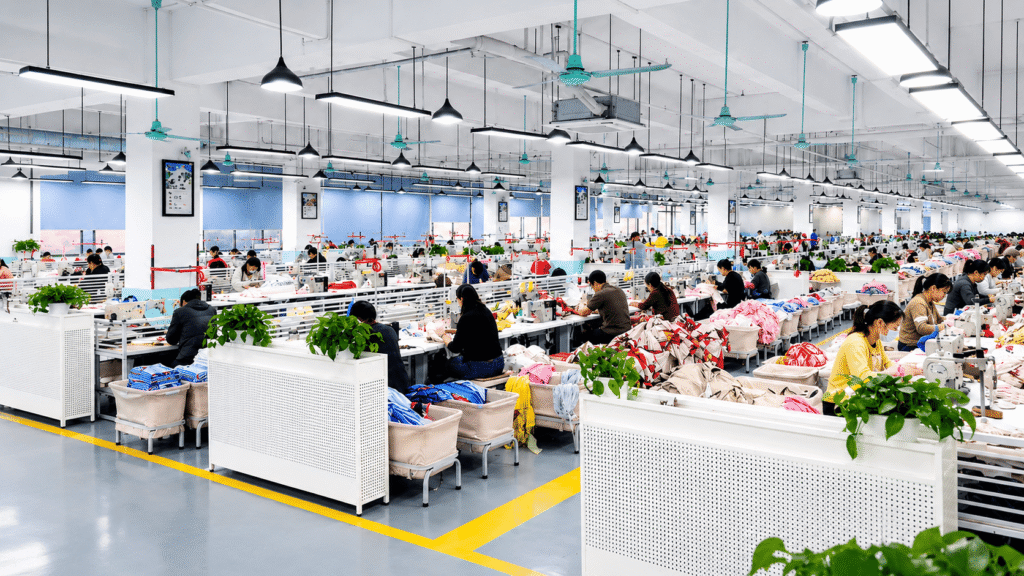
What Is Supplier Evaluation in Dress Manufacturing?
Supplier evaluation in dress manufacturing is the process of systematically checking whether a factory can reliably support a new dress collection from early sampling to bulk production without breaking design intent, quality stability, or delivery timelines. It is not a simple comparison of factories. It is a structured assessment of how well a supplier understands fabric behavior, pattern accuracy, production discipline, and repeatability across multiple styles and order cycles.
For dress categories such as bodycon, satin slip dresses, mesh styles, corset silhouettes, or occasionwear collections, evaluation becomes even more critical because small deviations in fabric selection or construction can completely change the final wearing effect. A strong supplier is not defined by the ability to make one good sample, but by the ability to consistently reproduce that standard across multiple sizes, colors, and production batches.
Supplier Evaluation Scope in Real Dress Development
Supplier evaluation covers multiple interconnected stages of product development and manufacturing readiness. In practice, it focuses on how a supplier performs across the full lifecycle of a dress collection rather than isolated production steps.
Key evaluation dimensions include:
- Fabric understanding and material behavior control
- Pattern development and fit accuracy across silhouettes
- Sample execution quality and revision efficiency
- Production scalability from small batch to bulk orders
- Quality consistency across repeated production runs
Each dimension reflects a different risk area in dress manufacturing. For example, fabric mismatch can affect drape and silhouette, while weak pattern execution can lead to fit imbalance in bodycon or corset dresses. Without structured evaluation, these issues often appear only after production begins.
In practical sourcing scenarios, evaluation also includes observing how a supplier responds to design complexity. Dresses with structured bodices, asymmetric cuts, or embellished surfaces require not only technical skill but also decision-making ability during development. Suppliers that only follow instructions without interpretation often struggle when design intent requires adjustment for production reality.
Why Supplier Evaluation Defines Collection Stability
A new dress collection is built on a sequence of dependent decisions: fabric selection, silhouette development, sampling accuracy, and production scaling. Supplier evaluation ensures these decisions remain aligned from the first sample to final shipment.
One of the most common risks in dress production is sample-to-bulk deviation. A supplier may produce an accurate prototype, but when production scales, differences appear in fabric batch, stitching tension, or finishing methods. These inconsistencies often lead to mismatched garments within the same collection.
Another critical factor is interpretation accuracy. In many cases, design references or tech packs are not fully detailed. A capable supplier must interpret missing information correctly, especially in areas like bust shaping, waist positioning, or fabric layering. Weak interpretation leads to repeated revisions and delayed launch schedules.
Evaluation also plays a role in reducing development uncertainty. Instead of discovering problems during sampling or bulk production, structured evaluation identifies limitations early. For example, if a supplier lacks experience in stretch-based fabrics or structured corsetry, these risks can be addressed before production begins rather than during execution.
Practical Indicators Used in Supplier Evaluation
In real manufacturing environments, supplier evaluation is based on observable performance indicators rather than theoretical claims. These indicators help determine whether a supplier is suitable for handling a new dress collection.
Common indicators include:
- First sample accuracy compared to design intent
- Speed and quality of revision cycles
- Ability to handle complex silhouettes such as corset or draped dresses
- Consistency of fabric sourcing and material substitution control
- Stability of production output across multiple batches
These indicators reflect both technical and operational capability. A supplier with strong evaluation performance typically demonstrates fewer revisions, clearer communication during development, and higher alignment between sample and final production.
Another important indicator is decision readiness. In dress manufacturing, a sample is not only a prototype but also a decision tool. Suppliers must produce samples that allow clear judgment on fit, fabric behavior, and silhouette accuracy. If samples require excessive interpretation or correction, the evaluation process reveals a gap in development capability.
How Supplier Evaluation Impacts Long-Term Manufacturing Success
Supplier evaluation is not only relevant to the first order. It directly affects long-term production stability, especially for brands that rely on repeat collections or seasonal launches.
A well-evaluated supplier reduces risk in three long-term areas:
First, it improves repeat order consistency. When a supplier understands original development logic, future production cycles maintain alignment with the first approved sample, reducing deviation across seasons.
Second, it strengthens scaling reliability. As order volume increases, suppliers with strong evaluation scores are more likely to maintain consistent quality without structural breakdowns in production.
Third, it supports collection expansion. Many dress collections evolve over time, adding new styles or variations. A supplier that has already been properly evaluated can extend production capacity to new designs with lower development friction.
Without proper evaluation, brands often face supplier switching, inconsistent quality, and repeated sampling cycles. These issues increase cost and slow down collection speed.
Supplier evaluation in dress manufacturing therefore functions as a foundational control system. It ensures that design intent, material selection, and production execution remain aligned from the earliest stage to full-scale production, especially in categories where fit, fabric behavior, and silhouette precision directly determine market success.

How Do You Define the Right Evaluation Criteria for Dress Suppliers?
Defining evaluation criteria for dress suppliers means building a structured measurement system that can clearly judge whether a factory is capable of supporting a full dress collection from sampling to bulk production. Instead of relying on price, surface-level communication, or sample appearance alone, the evaluation framework must focus on repeatable production capability, fabric control, pattern accuracy, and long-term stability across multiple styles and seasons.
For dress manufacturing, especially in categories such as bodycon, satin slip dresses, corset silhouettes, mesh layering, and occasionwear, evaluation criteria must be precise enough to detect hidden risks before production begins. A strong supplier is not only evaluated by what they can produce once, but by how consistently they can reproduce design intent under real production pressure.
Below is a practical structure used to define evaluation standards in real dress development projects:
| Criteria | What to Check | Why It Matters | Risk If Weak | Suggested Evidence |
|---|---|---|---|---|
| Fabric Capability | Fabric sourcing range, behavior understanding, stability | Directly impacts silhouette, drape, and comfort | Wrong drape, transparency issues, unstable look | Fabric swatches, lab dips, past fabric usage |
| Pattern & Fit | First sample accuracy, grading logic, fit balance | Determines wearability and proportion | Poor fit, repeated revisions, product rejection | Sample garments, fit comments history |
| Production Capacity | Line structure, order handling ability, scalability | Ensures smooth transition from sample to bulk | Delays, overload, inconsistent output | Factory layout, production records |
| Quality Control | Inspection system, tolerance control, defect tracking | Maintains consistency across batches | High defect rate, customer complaints | QC reports, inspection checkpoints |
| Compliance | Audit reports, material testing standards | Required for brand-level cooperation | Market rejection, compliance failure | Audit certificates, testing reports |
What fabric and material capability should be checked?
Fabric capability is one of the most critical evaluation dimensions because it directly defines how a dress looks, feels, and performs in real wear conditions. In dress manufacturing, fabric is not only a material choice but also a structural decision that influences silhouette stability, movement, and visual quality.
A supplier must demonstrate clear understanding of how different fabrics behave under tension, stitching, and wear. For example, satin requires controlled drape and surface stability, mesh requires elasticity balance and transparency control, while structured fabrics used in corset dresses require reinforcement compatibility. Without this understanding, even accurate sewing cannot correct material mismatch issues.
Evaluation should focus on practical handling ability rather than theoretical knowledge. Key points include fabric sourcing reliability, consistency between sample and bulk fabric, and the ability to suggest alternatives when original material is unstable or unavailable. In real production environments, fabric substitution decisions often determine whether a collection stays on schedule or faces delays.
Another important factor is fabric-to-silhouette matching ability. A strong supplier should be able to explain why a certain fabric works better for a specific dress shape, such as why heavier satin supports structured evening dresses while lighter blends are better suited for flowy vacation styles. Suppliers who cannot link fabric behavior to garment structure often produce visually inconsistent results during scaling.
Finally, fabric stability across production batches must be evaluated. Even small variations in dye lot, weight, or stretch recovery can create visible inconsistencies in a dress collection. Reliable suppliers maintain strict control over fabric repeatability to ensure uniform output across multiple production runs.
How important is pattern making and fit capability?
Pattern making and fit capability determine whether a dress can move from design concept to wearable product with correct proportion and structure. In dress categories such as bodycon, corset, halter, and backless designs, pattern accuracy becomes the foundation of product success.
A supplier’s pattern capability should be evaluated through first sample accuracy. If the initial sample already reflects correct bust placement, waist shaping, and skirt proportion, it indicates strong interpretation ability. Weak pattern execution often leads to multiple revision rounds, increasing development time and delaying collection launch.
Fit balance is another critical factor. Dresses must maintain proportional harmony between upper and lower body sections. Even small misalignment in waist positioning or hip shaping can affect how the garment performs on the body. Suppliers with strong pattern systems understand how different silhouettes require different structural logic rather than applying a standard template.
Grading capability is also essential for multi-size production. A strong supplier ensures that fit consistency is maintained across all sizes without distortion of silhouette. Weak grading systems often produce size variations where smaller sizes fit well but larger sizes lose structure or proportion accuracy.
Pattern capability is not only about drawing accuracy but also about understanding fabric behavior. For example, stretch fabrics require different shaping logic compared to woven fabrics. Suppliers who can integrate fabric behavior into pattern development produce significantly more stable results in bulk production.
What production capacity indicators matter?
Production capacity is not simply about volume; it reflects how well a supplier can organize multiple styles, manage timelines, and maintain stability under production pressure. For dress collections that often include multiple silhouettes, colors, and fabric types, capacity structure is more important than raw output numbers.
A reliable supplier must demonstrate multi-line production capability, allowing different styles to be produced simultaneously without interference. This is especially important for seasonal drops where multiple designs must be launched together.
Flexibility is another key indicator. Suppliers should be able to handle small batch testing orders as well as large-scale production without restructuring their entire system. This flexibility ensures smoother transitions from sampling stage to full launch.
Seasonal responsiveness also matters. Fashion collections often face tight timelines aligned with market windows. Suppliers must show the ability to scale output during peak periods without compromising quality or consistency.
Another important factor is order segmentation ability. Strong suppliers can separate complex, simple, and high-risk styles into different production paths. For example, structured corset dresses may require different handling compared to basic jersey dresses. This segmentation reduces production errors and improves efficiency.
Which quality control systems define reliability?
Quality control systems define whether a supplier can maintain consistency across multiple production batches. In dress manufacturing, QC is not only about final inspection but about continuous monitoring throughout the entire production process.
A strong QC system includes inline inspection during production, final inspection before shipment, and clear measurement tolerance standards. These systems ensure that deviations are identified early rather than discovered after production is completed.
Defect tracking is another important component. Suppliers must be able to record, analyze, and correct recurring issues instead of treating each defect as an isolated case. This improves long-term production stability.
Fabric and trim inspection also plays a key role. Many dress quality issues originate from material inconsistency rather than sewing errors. A reliable supplier checks fabric quality before production begins and ensures trims such as zippers, lining, and embellishments meet required standards.
Measurement control is particularly important for fitted dresses. Even small deviations in bust, waist, or hip measurements can affect overall appearance. Strong QC systems ensure that tolerance levels remain within acceptable ranges across all sizes.
How do compliance factors influence selection?
Compliance factors determine whether a supplier can meet international brand requirements and operate within regulated supply chain systems. For many fashion brands, compliance is not optional but a mandatory entry condition.
Key compliance elements include social audit standards, such as factory working conditions and ethical manufacturing practices. Suppliers must demonstrate readiness for third-party audits and maintain transparent operational records.
Material safety compliance is also essential. Dresses intended for international markets must meet standards related to chemical safety, fabric testing, and material certification. This ensures garments can be sold across different regions without regulatory risk.
Testing standards such as fabric durability, color fastness, and shrinkage control are also part of compliance evaluation. These tests ensure that garments maintain performance after washing and wear.
Packaging and labeling compliance is another factor often overlooked. Incorrect labeling or packaging can lead to shipment delays or market rejection. Reliable suppliers follow brand-specific packaging instructions accurately and consistently.
Compliance readiness ultimately reflects whether a supplier is suitable for long-term collaboration with structured fashion brands. It determines not only production capability but also operational discipline and supply chain reliability.

How Should Brands Assess Sample Development Capability?
Sample development capability is one of the most critical indicators in supplier evaluation because it directly reflects how well a supplier can translate design intent into physical garments. A strong sampling system ensures first samples are close to final expectation, reducing revision cycles and accelerating collection development.
Effective assessment focuses on first sample accuracy, revision efficiency, tech pack interpretation, and lead time consistency. It also evaluates whether the supplier can maintain continuity between sampling and production stages without losing design integrity.
The first dimension is interpretation accuracy. A supplier must correctly understand tech packs, reference images, or original samples. Misinterpretation at this stage leads to repeated revisions and extended development cycles.
The second dimension is execution speed combined with precision. Fast sampling is valuable only if accuracy is maintained. Otherwise, speed leads to wasted iterations.
The third dimension is revision intelligence. Strong suppliers do not simply execute changes; they interpret feedback and refine underlying structural issues rather than surface-level corrections.
The fourth dimension is production alignment. Samples must be designed with bulk feasibility in mind. Otherwise, successful samples may fail during scaling.
What Makes a Supplier Strong in First Sample Accuracy?
First sample accuracy reflects how close the initial sample is to the final expected outcome.
- Ability to interpret design intent correctly
- Accurate pattern translation from tech pack
- Correct fabric selection and application
- Balanced silhouette execution
- Minimal revision requirements
High first sample accuracy reduces development time and improves collection efficiency.
How Do Sampling Lead Times Reflect Real Capability?
Sampling lead time is not only about speed; it reflects organizational efficiency.
- Standard sampling timeline
- Complexity-based timeline variation
- Ability to handle rush samples
- Consistency of delivery schedules
- Impact of revisions on lead time
Reliable suppliers maintain predictable sampling timelines even under complex development conditions.
What Does Revision Efficiency Reveal About Factory Strength?
Revision efficiency shows how quickly and accurately a supplier can adjust samples based on feedback.
- Clarity in understanding feedback
- Speed of implementing changes
- Reduction of repeated mistakes
- Structured revision tracking
- Alignment improvement over iterations
Efficient revision cycles indicate strong communication and technical understanding.
How to Evaluate Tech Pack Interpretation Ability?
Tech pack interpretation is critical for converting design documentation into actual garments.
- Understanding of technical drawings
- Ability to interpret measurements correctly
- Fabric and construction mapping accuracy
- Ability to identify missing information
- Communication clarity during clarification stages
Strong interpretation reduces sampling errors and improves consistency.
Why Does Sample-to-Production Continuity Matter?
Sample-to-production continuity ensures that approved samples can be accurately reproduced at scale.
- Alignment between sampling and production teams
- Material consistency between sample and bulk
- Process standardization across stages
- Quality replication mechanisms
- Risk control during scaling
Without continuity, even perfect samples can fail in bulk production.

How to Evaluate Production Stability and Scaling Ability?
Production stability and scaling ability refer to whether a dress supplier can maintain consistent output quality while increasing or adjusting production volume across different order sizes, seasons, and style complexities. In dress manufacturing, especially for categories such as bodycon dresses, satin slips, mesh styles, corset dresses, and multi-style collections, scaling is not only about producing more units—it is about maintaining identical fit, fabric behavior, and finishing quality as volume increases.
A supplier with strong stability ensures that a 300-piece test order and a 30,000-piece bulk order look and perform the same in real wear conditions. Without this capability, brands often experience inconsistent sizing, fabric variation, and construction deviation during repeat production cycles.
What defines scalable manufacturing in dress production?
Scalable manufacturing refers to a supplier’s ability to expand or reduce production volume without losing control over quality, timing, or product consistency. In dress collections, scalability is particularly important because production often shifts from sampling to test orders and then to full seasonal rollouts.
A stable supplier should demonstrate the ability to manage multiple production layers at the same time. These include small-batch sampling, mid-scale test orders, and large-scale bulk production. Each layer must follow the same technical standards, even if handled by different production lines.
Key indicators of scalable manufacturing include:
- Ability to separate sampling, testing, and bulk production systems
- Capacity to allocate different styles to different production lines
- Controlled workflow for both low-volume and high-volume orders
- Consistent output quality across production scale changes
- Structured transition from development to full production
Scaling strength is not only measured by factory size but by how efficiently production complexity is managed when volume increases.
How to assess multi-style and multi-order handling ability?
Most dress collections include multiple styles, fabrics, and silhouettes within a single season. A supplier’s ability to manage these variations simultaneously is a direct indicator of production stability.
In real production environments, multi-style handling involves coordinating different fabric types such as satin, mesh, and jersey, while ensuring that each style follows its own production requirements without interfering with others. It also requires precise scheduling to avoid bottlenecks when multiple styles enter production at the same time.
Evaluation points include:
- Ability to manage multiple SKUs in parallel production
- Allocation of different styles to suitable production lines
- Coordination of fabric and trim usage across orders
- Stability in maintaining timelines across overlapping projects
- Risk control when multiple complex styles run simultaneously
A strong supplier ensures that complexity does not lead to confusion. Instead, each style follows a clearly defined production path.
What defines production consistency across batches?
Production consistency refers to the ability to produce identical garments across different batches, regardless of order timing or production volume. In dress manufacturing, consistency is critical because even minor deviations can affect fit, appearance, and overall collection coherence.
Consistency must be evaluated across several dimensions, including fabric behavior, stitching accuracy, measurement stability, and finishing quality. When these elements vary between batches, the entire collection loses uniformity.
Key control points include:
- Fabric color and texture consistency across batches
- Stitching quality stability across production runs
- Measurement tolerance control for all sizes
- Finishing quality consistency in trims and details
- Repeatability of sample standards in bulk production
To make consistency evaluation more practical, the following table summarizes common batch-level control indicators used in dress production:
| Control Area | Evaluation Focus | Acceptable Stability Level | Risk If Not Controlled |
|---|---|---|---|
| Fabric Consistency | Color, weight, texture stability | Minimal variation between dye lots | Visible color mismatch across garments |
| Stitching Quality | Seam strength, stitch density | Uniform across all production lines | Uneven durability and appearance |
| Measurement Control | Bust, waist, hip accuracy | ±1–2 cm tolerance depending on style | Poor fit consistency across sizes |
| Finishing Quality | Hem, lining, trim alignment | Consistent visual finishing standard | Reduced garment perceived value |
| Sample Replication | Match between sample and bulk | High similarity to approved sample | Design deviation in final production |
This type of structured control is what separates stable suppliers from inconsistent production systems.
How do factories handle rush orders and seasonal peaks?
Rush order handling and seasonal production peaks are key indicators of operational maturity. In dress manufacturing, demand often fluctuates based on fashion cycles, promotional campaigns, and seasonal drops, requiring suppliers to adjust production speed and capacity quickly.
A stable supplier must be able to activate additional production capacity without disrupting ongoing orders. This requires structured workforce allocation, flexible production lines, and clear prioritization systems.
Key evaluation points include:
- Ability to increase production capacity during peak demand
- Structured scheduling for urgent and standard orders
- Availability of flexible production lines for fast response
- Capability to maintain quality under compressed timelines
- Clear prioritization system for overlapping orders
Rush order capability is not only about speed. It reflects whether a supplier can maintain control under pressure without compromising quality or delivery accuracy.
Why is production structure more important than factory size?
Factory size is often misunderstood as a direct indicator of production strength. In reality, production structure is more important than total capacity. A well-organized medium-sized supplier can outperform a large but unstructured factory.
Production structure refers to how effectively a supplier organizes its workflow, separates production stages, and manages coordination between sampling, bulk production, and quality control teams.
Key structural elements include:
- Clear separation between sampling and bulk production teams
- Dedicated lines for different complexity levels
- Standardized workflow across all production units
- Centralized quality control system
- Efficient communication between departments
A strong production structure ensures that scaling does not create operational chaos. Instead, it allows controlled expansion where each additional order is processed with the same level of accuracy and stability as smaller ones.

What Are the Key Red Flags When Evaluating Dress Suppliers?
Identifying red flags during dress supplier evaluation is critical because many production risks do not appear during early sampling. They only surface when collections move into bulk production, repeat orders, or seasonal scaling. In dress manufacturing—especially in categories such as bodycon, satin, mesh, corset, and occasionwear—even small operational weaknesses can lead to major inconsistencies in fit, fabric behavior, and delivery performance.
Red flags are not always obvious. Many suppliers present well during initial communication or sample stage, but deeper evaluation often reveals gaps in technical capability, production structure, or communication discipline. Recognizing these signals early helps prevent cost overruns, delays, and product failure in the market.
Why do sample quality and bulk quality often mismatch?
One of the most common warning signs in dress manufacturing is inconsistency between sample output and bulk production. A sample may look precise and visually aligned with expectations, but bulk production often introduces deviations in fit, stitching, or fabric behavior.
This mismatch usually comes from structural gaps between sampling and production teams, or from weak material control systems.
Key warning indicators include:
- Sample made with premium or different fabric than bulk production
- Stitching quality higher in samples due to manual attention
- Lack of standardized production instructions across teams
- No clear replication system from sample to bulk stage
When sample and bulk quality are not aligned, it signals that the supplier lacks a controlled production system. This becomes especially risky in fitted dresses where millimeter-level differences affect garment appearance and wearability.
What signals show weak communication and project control?
Communication breakdown is one of the most underestimated risks in supplier evaluation. Even technically capable suppliers can fail if project coordination is unclear or inconsistent.
In dress development, multiple stages require continuous feedback loops, including fit comments, fabric confirmation, and production updates. Weak communication leads to repeated misunderstandings and delays in decision-making.
Key red flags include:
- Delayed or inconsistent response times during sampling
- Lack of structured update format for project progress
- Confusion between revision instructions and final approvals
- Repeated clarification needed for same development points
When communication systems are weak, project timelines become unpredictable. This often results in missed seasonal deadlines or delayed collection launches.
How do unclear costing and MOQ rules indicate risk?
Cost structure transparency is a strong indicator of supplier maturity. In dress manufacturing, pricing is influenced by fabric type, construction complexity, embellishments, and order volume. When suppliers cannot clearly explain cost breakdowns, it often signals operational instability.
MOQ (minimum order quantity) clarity is equally important. Unstable or changing MOQ rules may indicate that production planning is not standardized.
Common warning signs include:
- Vague or single-line pricing without breakdown
- Frequent price changes after sampling stage
- No clear link between fabric complexity and cost impact
- Unstable MOQ definitions depending on project stage
A reliable supplier should be able to explain how each cost component affects final pricing, including fabric sourcing, trims, labor intensity, and production volume. Lack of transparency often leads to unexpected cost increases during bulk production.
Why is lack of fabric expertise a hidden danger?
Fabric knowledge is one of the most critical technical foundations in dress manufacturing. Many production issues originate not from sewing errors but from incorrect fabric selection or misunderstanding of fabric behavior.
When suppliers lack fabric expertise, they often treat materials as interchangeable rather than performance-driven components of garment design.
Key risk signals include:
- Limited understanding of fabric drape, stretch, and recovery
- Frequent substitution of original fabrics without explanation
- Poor matching between fabric type and dress silhouette
- Inconsistent material performance between sample and bulk
In categories like satin dresses, mesh styles, or structured corset designs, fabric behavior directly determines final product quality. Weak fabric understanding leads to garments that look correct in flat form but fail in real wear performance.
What operational signs show unstable production systems?
Operational instability is often visible through production behavior rather than verbal communication. A supplier may appear capable during sampling but struggle once multiple orders or styles are introduced.
This instability is usually caused by weak internal coordination, lack of structured workflow, or insufficient production segmentation.
Key warning indicators include:
- Frequent production delays without clear explanation
- Lack of visible order tracking or production status updates
- Overlapping production tasks causing bottlenecks
- Quality fluctuations between different production batches
Another important sign is inability to handle multiple styles simultaneously. Dress collections often require parallel production of different silhouettes, fabrics, and complexity levels. Suppliers without structured systems tend to lose control when workload increases.

Why Duolan Apparel Is a Reliable Partner for New Dress Collections
Duolan Apparel operates as a structured dress manufacturer specializing in fashion dresses, occasion wear, party dresses, and trend-driven collections. With a complete development-to-production system, Duolan integrates fabric expertise, pattern development, sampling precision, and scalable manufacturing into one coordinated structure.
For brands launching new collections, Duolan provides not only production capability but also development intelligence—supporting design interpretation, material selection, sampling accuracy, and bulk stability. This ensures that every collection moves from concept to commercial production with reduced risk and improved consistency.
Whether the goal is a seasonal drop, capsule collection, or multi-style fashion line, Duolan supports full-cycle development including sampling, testing orders, bulk production, and repeat manufacturing. The system is designed for brands that require both creative flexibility and production discipline.
If a new dress collection is in development, Duolan Apparel is prepared to evaluate your designs, support sampling strategy, and build a scalable production plan aligned with your brand direction.
📩 Inquiry is welcome for custom dress development, sampling, and bulk production cooperation.