Skip to content

Occasion dressing in 2027 will not be defined by one viral detail or a single hemline. The strongest dresses are moving toward a more complete balance of silhouette, fabric, internal support, color, and movement. A dramatic bow, high slit, cutout, or sequin surface can still attract attention, but it will not rescue a dress that pulls at the bust, twists at the lining, loses its shape after sitting, or cannot be reproduced consistently across sizes. Early Resort 2027 collections, bridal presentations, and Spring-Summer 2027 color forecasts point toward elongated shapes, lowered waists, controlled draping, dimensional surfaces, and a more expressive use of color. The commercial winners will be the styles that translate those signals into garments people can wear confidently for several hours, photograph well from every angle, and reorder without the second production run looking different from the first.
The occasion dress trends most likely to define 2027 are elongated columns, moderate drop waists, directional draping, softer corset structures, expressive color, modern lace, dimensional flowers, and refined shine. The most commercially useful versions will combine visual impact with stable fit, wearable coverage, reliable materials, and enough flexibility to develop across mini, midi, and maxi lengths.
That balance sounds simple until the first sample arrives. A sketch can promise a clean, modern silhouette, yet the fabric may collapse at the neckline, the lowered waist may cut across the wrong point of the body, or a draped panel may add bulk instead of shape. The real 2027 story will be decided in that gap between inspiration and execution. The following forecast looks at the trend signals that matter, then tests them against the practical questions that determine whether an occasion dress can become a successful product rather than a beautiful idea that never survives fitting, costing, packing, or repeat production.
Which Silhouettes Will Define 2027?
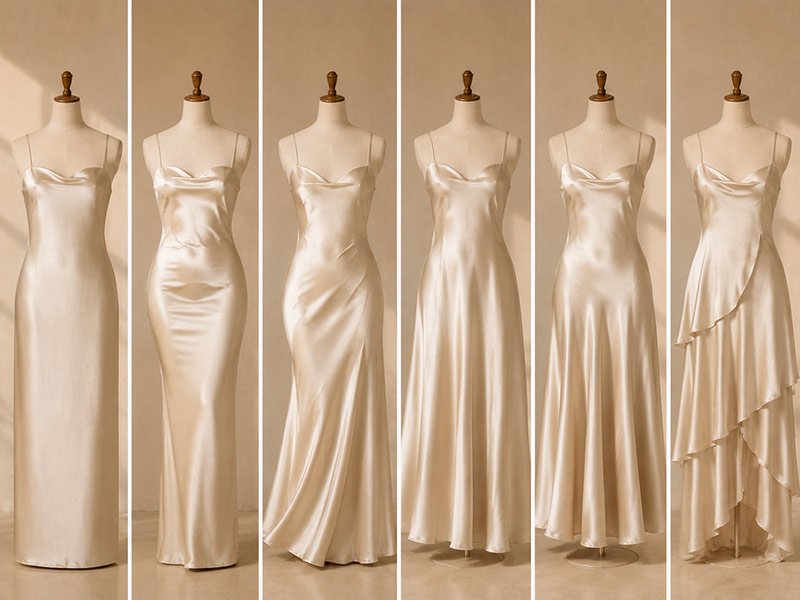
The silhouettes most likely to define 2027 occasionwear are lean columns, lowered waists, softly structured corsets, asymmetric draping, and controlled skirt volume. No single shape will dominate every event category. Strong collections will translate one recognizable construction idea across mini, midi, and maxi lengths while preserving walking ease, bust stability, and a balanced fit from front, side, and back.
Resort 2027 offers a clear early message: designers are returning to dresses that follow the body while using construction to create interest. Bias-cut gowns, spiraling seams, gathered hips, drop-waist shapes, rosettes, and elongated columns are appearing more often than heavily layered decoration placed without a structural purpose. The shift is useful for commercial occasionwear because a clean base silhouette can support several price levels and event categories. One draped seam can be developed into a cocktail mini, a wedding guest midi, and a formal maxi without making the collection feel repetitive. The challenge is that simpler-looking shapes often expose fit and workmanship more clearly. When there is less decoration to distract the eye, a twisting side seam, uneven hem, unstable neckline, or poorly controlled gathering becomes immediately visible.
A fashion signal should also be separated from a production decision. A very low dropped waist may look fresh on a runway model, but a moderate position is often easier to sell, grade, and wear. A narrow column can look elegant in still photography, yet the wearer still needs to sit, walk upstairs, and move through a crowded event. A corseted mini can create a strong product image, but it will disappoint if the top edge slides or the cup shape works only on the original fit model. The most convincing 2027 silhouettes will therefore feel visually new while using carefully tested proportions, support, and movement solutions underneath.
Column and Bias Lines
Long, narrow dresses are returning because they deliver formal impact without relying on excessive skirt volume. The most interesting versions are not plain tubes. They use diagonal seams, gathered side sections, scarf-like panels, twisted necklines, shaped waist seams, or a slight flare below the knee to keep the line fluid. Bias-cut woven fabric is commonly positioned close to 45 degrees to the grain, which gives it natural stretch and a softer fall. That same quality creates production risk because the panels can continue to lengthen after cutting and sewing. A sample should be allowed to relax before the final hem is marked, particularly in satin, crepe, and lightweight woven fabrics. Otherwise, a dress that looks level at approval may develop an uneven hem after hanging, steaming, or wear.
Movement needs to be designed into the silhouette rather than added as an afterthought. A back vent, side slit, godet, stretch panel, or controlled increase in skirt width can provide walking ease while preserving the column effect. The lining should follow the outer dress closely enough to avoid twisting but not so tightly that it restricts the step. A stretch outer layer over a non-stretch lining often creates horizontal pulling at the thigh and seat. Product approval should include walking, sitting, stair use, turning, and a brief period of wear. These tests reveal problems that a static front-view fitting cannot show, especially when the dress is intended for dinners, weddings, galas, or events where the wearer will move for several hours.
Drop Waists and Long Torsos
The drop waist is becoming a broader design tool rather than a short nostalgic revival. It can appear as an extended corset, a curved yoke, a fitted torso flowing into a gathered skirt, or a seam placed just below the natural waist. For commercial occasionwear, the change does not need to be extreme. Lowering the visual waistline by roughly 4-8 cm can make a familiar midi or fitted dress feel current without forcing the skirt to begin at the full hip. More exaggerated positions can work in image-led formal gowns or prom styles, but they require more careful testing because torso length and hip depth vary significantly between wearers.
Grading a drop-waist dress by percentage alone can distort the intended proportion. As sizes increase, the relationship between bust, abdomen, torso length, and upper hip does not expand in a perfectly linear way. The seam may cross the widest part of the body, rise at the front, or create pooling above the hip. Fit reviews should therefore examine the seam position, bodice balance, and skirt release separately. A second fit point beyond the base size is especially valuable. The goal is not to make the seam sit at exactly the same distance from the natural waist on every body; it is to preserve the same visual idea and ensure that the transition into the skirt looks deliberate rather than accidental.
Soft Corsetry
Corset and bustier dresses remain important, but the strongest 2027 versions are likely to feel lighter, smoother, and easier to wear. A softly structured bodice may use flexible boning, shaped seam panels, light fusible support, molded cups, power mesh, or internal elastic rather than several rigid layers. The outside can still show a defined waist and sculpted neckline while the internal components provide stability. Before development begins, the team should decide whether the garment is only meant to look corseted, create waist shaping, or provide genuine bust support. Those are different technical briefs, and each requires a different combination of cup capacity, boning strength, lining, closure, and fitting time.
Cup shape is one of the most common sources of inconsistency. A fixed cup selected for one fit model may not scale naturally across a wider size range. Larger sizes may need greater cup volume, a slightly higher neckline, a different strap position, or stronger support at the underbust. Boning should end where it will not press into the body when the wearer sits, and the top edge should remain close during arm movement and forward bending. A five-minute showroom fitting is not enough for a strapless or low-back dress. The sample should be worn long enough to reveal sliding, rolling, pressure points, or changes in neckline position that may only appear after the body warms and moves.
Drape, Volume, and Hemlines
Draping in 2027 is likely to look directional rather than randomly gathered. A diagonal fold can narrow the waist visually, side ruching can shape the hip, and a scarf panel can create movement without changing the underlying fit. The development team should define where the drape begins, where it is anchored, how much fabric is used, and whether each garment must look identical or simply stay within an approved range. A light mesh may gather easily but need a stable base. A heavy satin can produce beautiful folds but may pull the neckline or side seam downward. The best result usually comes from controlling one strong area of drape and allowing the rest of the dress to remain clean.
Mini, midi, and maxi lengths will all remain relevant because they serve different events. Minis suit birthdays, clubs, homecoming, and cocktail dressing; midis cover the broadest territory across weddings, graduations, dinners, and semi-formal events; maxis and floor-length gowns provide the strongest formal presence. The assortment does not need to be divided equally. A going-out brand may place 40-50% of its occasion range in minis, while a wedding guest or formal brand may place a similar share in midis and maxis. High slits and asymmetric hems should be tested in motion because the effective opening rises when the wearer walks or sits. A small imbalance can also look like a cutting defect unless the difference is clearly intentional.
| Silhouette | Practical Fabric Weight | Key Construction Point | Main Fitting Test |
| Bias column | 90-180 gsm | Allow panels to relax before hemming | Walking and hem balance |
| Ruched bodycon | 160-280 gsm | Control gathering ratio and fabric recovery | Sitting and waist movement |
| Drop-waist midi | 120-240 gsm | Match seam position to torso length | Front, side, and back balance |
| Soft corset dress | 140-300 gsm | Coordinate cups, boning, lining, and closure | Arm lift and neckline stability |
| Sculpted maxi | 180-380 gsm | Balance skirt volume against garment weight | Stairs, turning, and seating |

Which Colors and Fabrics Will Lead?
The leading 2027 color story combines energetic shades with grounded, easier-to-wear tones. Luminous blue, orange, yellow, pink, green, and clay will sit beside black, deep red, and refined neutrals. Satin, lace, mesh, crepe, chiffon, velvet, and decorated textiles will remain central, but the winning material will be the one that supports the silhouette, coverage, comfort, and intended price.
Spring-Summer 2027 color forecasts are presenting a lively but connected palette rather than one universal shade. Luminous blue, energy orange, pop pink, meadow-like green, clay, and sunlit yellow provide a useful directional framework, while deep evening shades and familiar neutrals remain necessary for commercial balance. Occasionwear gives color unusual power because a single dress often carries the entire look. A clean halter maxi in yellow can feel complete without heavy decoration, while the same shade may become visually overloaded when combined with complex cutouts, full sequins, and a sculpted skirt. The practical question is therefore not only which colors are rising, but which silhouette, event, material, and delivery season allow each color to look convincing.
Fabric choice needs the same level of discipline. A material is not suitable simply because it is described as premium. Two polyester satins can differ widely in weight, reflectivity, snag resistance, seam appearance, and drape. Stretch mesh can vary in recovery and transparency. Lace may be soft enough for direct skin contact or abrasive enough to require complete backing. A sequin textile may be light and flexible or heavy enough to distort a neckline. The final decision should consider the garment after cutting, sewing, pressing, packing, wearing, and cleaning, not only the beauty of the swatch under showroom lighting.
Expressive Color Stories
The freshest color direction for 2027 comes from pairing optimism with sophistication. Luminous blue can move from cocktail dresses to formal columns and resort maxis. Orange creates strong visual energy in fitted minis and clean one-shoulder shapes. Sunlit yellow works well when the silhouette is controlled and the fabric has enough depth to avoid looking thin. Pop pink and softened lilac tones offer a romantic option that does not automatically become bridal, while green and clay shades provide a more grounded route into seasonal color. A commercial palette usually benefits from three levels: dependable core shades, seasonal fashion shades, and a smaller group of statement colors used for campaigns and controlled tests.
Color approval must take place on the intended fabric and under more than one lighting condition. Satin reflects light differently from crepe, and velvet may appear several shades darker depending on the nap direction. A sheer mesh color cannot be approved without the lining or base layer because skin tone and underlayer shade change the final result. Lab dips should be compared in daylight-equivalent light and warm indoor light, with special attention to metamerism, where two samples appear to match under one light source but separate under another. The approved color record should include the fabric quality and finish, not only a color reference number, because changing the surface can change the perceived shade.
Satin, Mesh, and Sheer Layers
Satin remains one of the clearest occasionwear materials, but its 2027 use is moving beyond the familiar slip dress. Bias columns, asymmetric hip draping, rosette seams, ruched midis, and softly structured bodices allow satin to feel more modern. Lightweight satin around 90-140 gsm can create fluid movement but may show seam allowances, body lines, or lining edges. Structured satin around 160-260 gsm can support corsets and sculpted skirts but may resist soft draping and create bulky seams. Seam trials should be reviewed before the whole sample is cut, particularly on pale colors where puckering and needle marks are more visible.
Mesh and sheer fabrics are becoming more controlled rather than simply more revealing. A transparent waist section, neckline, sleeve, back, or lower skirt can create visual lightness while maintaining coverage where it matters. The stretch of the outer mesh and inner layer should be measured in both directions. A mesh that stretches 40% over a lining that moves only 10-15% can ripple, restrict the body, or put excess strain on the seam. Opacity should be reviewed in daylight, indoor light, and flash photography. A sample that looks sufficiently lined in a fitting room may reveal much more at an outdoor wedding or under event photography, especially when the lining is close to the wearer’s skin tone.
Lace and Dimensional Texture
Lace is one of the strongest 2027 signals, but occasionwear does not need to copy bridal styling. Black lace over a skin-tone base, colored lace in burgundy or green, and tonal lace over a contrasting lining can create a modern evening effect. Selective placement at the neckline, waist, sleeve, or lower skirt often feels fresher and can be easier to cost than a full lace garment. Large motifs may need to be centered over the bodice, mirrored across cups, or aligned at side seams. That placement can increase fabric consumption substantially, so the actual lace width, repeat, and intended layout should be included in the quotation rather than estimated from a reference photograph.
Dimensional flowers, rosettes, pleats, jacquards, flocking, and raised embroidery will add surface interest without relying entirely on shine. These details need packing and recovery tests because a flower that looks perfect on the sample can flatten inside a carton, and a deep pleat can open after steaming. The attachment method should match the garment’s weight and care requirements. A rosette placed on a lightweight bias panel can pull the fabric unless the area is reinforced. Embroidery placed near a stretch seam can reduce movement or cause distortion. Texture should be approved on the finished garment after pressing and folding, not only as a decorative swatch on a development board.
Refined Shine
Sequins, beads, pearls, and crystals remain relevant, but the more useful 2027 direction is controlled shine. A fully sequined dress still suits prom, holiday parties, and high-impact evening categories, yet tonal sequins, scattered placement, embellished borders, and matte-to-gloss combinations can feel more refined and easier to wear. Decoration density should be approved with a measurable reference whenever possible. A scattered sequin design can be checked by the approximate count within a 10 x 10 cm area, while a beaded motif can be controlled through placement templates and close photographs. These methods reduce the chance that one production garment appears noticeably richer or emptier than another.
Direction and weight also matter. Reversible sequins, directional embroidery, and fabrics with a visible nap can change shade when panels are cut in opposite orientations. Seam allowances may need decoration removed to reduce bulk, needle breakage, and skin irritation. The finished sample should be weighed and checked for shedding, snagging, folding marks, and comfort at the armhole, side seam, and seat. When the bulk garment is significantly heavier or lighter than the approved sample, decoration density, backing, or base-fabric tension may have changed. A small difference per square meter can become very noticeable across an entire floor-length dress.
| Material | Common Working Range | Best Use | Approval Priority |
| Lightweight satin | 90-140 gsm | Bias maxis and draped midis | Puckering, opacity, and snagging |
| Structured satin | 160-260 gsm | Corsets and sculpted skirts | Fold recovery and seam bulk |
| Stretch mesh | 70-160 gsm | Ruched and layered dresses | Stretch, recovery, and transparency |
| Chiffon | 50-110 gsm | Sleeves, overlays, and fluid skirts | Shrinkage and seam slippage |
| Lace | 80-300 gsm | Panels, overlays, and full dresses | Skin feel and motif placement |
| Sequin fabric | 180-500+ gsm | Party and formal statements | Weight, shedding, and comfort |
| Velvet | 180-350 gsm | Winter and evening dresses | Nap direction and pressure marks |

How Will Trends Change by Occasion?
Occasion trends change according to how long the dress is worn, how much movement the event involves, and how formal the setting feels. Wedding guest dresses need polished comfort, cocktail styles can take greater proportion risks, prom and formal dresses support more drama, resort events require lightness, and day-to-night styles need adaptable coverage without losing a clear identity.
Occasionwear is not one uniform product category. Someone attending an outdoor afternoon wedding faces different needs from someone buying a birthday mini, a prom gown, or a dress for a resort dinner. Temperature, seating, dancing, photography, venue rules, travel, and underwear options all change the design brief. A trend such as the halter neckline therefore needs several interpretations. A resort version may use a soft tie, lighter lining, and fluid skirt. A prom version may require stronger internal support, a shaped waist, and a floor-length hem. A cocktail version can become a fitted mini with a clean back. The visual relationship remains, but the coverage, construction, and material weight change.
Designing around real moments is more useful than relying on broad words such as glamorous or elegant. A wedding guest may wear the dress for eight to twelve hours, sit through dinner, move outdoors, and dance. A cocktail customer may accept a shorter hem and stronger neckline but still needs the dress to stay in place. A formal customer expects transformation and drama, yet the garment cannot become so heavy that it is exhausting. The best 2027 collections will connect trends to the physical conditions of the event, then offer related silhouettes at different levels of coverage and intensity.
Wedding Guest Dressing
Wedding guest dresses for 2027 are likely to favor polished midi and maxi silhouettes, expressive color, asymmetric draping, halter necklines, modern lace, and dimensional floral details. Bridal runways are useful for identifying construction and surface signals, but guest dresses need their own color, scale, and formality. Ivory, ceremonial trains, and full bridal volume should not dominate the category. Spring and summer events support lightweight satin, crepe, chiffon, and lace, while autumn and winter allow velvet, heavier crepe, long sleeves, and deeper color. Outdoor settings also make wind, daylight transparency, and ground clearance more important than they appear in a studio sample.
Comfort has a direct effect on whether the dress becomes a repeatable commercial style. The armhole, shoulder, waist, and neckline should remain comfortable after prolonged sitting and movement. Adjustable straps, bra-compatible backs, stable halters, and secure wrap openings can widen the usable customer base without making the design look conservative. A high slit should be checked outdoors and while seated because the opening becomes more exposed in motion. Brands can create a coherent wedding guest group by developing related versions of one design, such as a halter maxi, a sleeved midi, and an asymmetric dress in the same fabric and color story. This preserves collection identity while serving different venue, coverage, and support needs.
Cocktail and Party Events
Cocktail dressing gives designers room to use stronger proportions, shorter lengths, and concentrated decoration. Sculpted minis, fitted midis, one-shoulder necklines, ruched bodycon styles, and focused embellishment all fit the 2027 direction. The strongest dress usually has one clear focal point: a curved strapless neckline, a rosette at the hip, a sharply draped waist, or a clean open back. When the short hem, deep neckline, cutout, and heavy decoration all compete, the garment often becomes difficult to fit and visually tiring. A controlled design also makes it easier to repeat the construction in a second color or length.
Movement tests are especially important in this category. A fitted mini can rise several centimeters while walking or sitting, and a tight lining may pull the outer fabric upward. Strapless and one-shoulder styles should be tested with raised arms, dancing, twisting, and forward movement. Grip elastic, side boning, and balanced waist tension can improve stability, but they should not create visible ridges or pressure marks. Cocktail collections can carry brighter colors than conservative formal assortments. A directional shade can be launched in the most recognizable silhouette, then repeated in black, chocolate, or deep red to broaden demand without requiring every style to depend on the same seasonal color risk.
Prom and Formal Events
Prom and formal dresses support the strongest interpretation of 2027 trends. Floor-length columns, fitted-and-flared shapes, lowered or basque waists, corseted bodices, sculpted skirts, bold draping, and controlled sparkle can create the transformation customers expect. The construction must still support several hours of wear. Dense beading and multiple tulle layers can feel luxurious on a hanger but add heat, weight, and packing volume. Strategic decoration often produces a better result, such as a richly embellished bodice over a lighter skirt or a clean column with one dimensional detail. The visual impact remains high while the garment becomes easier to move in and more manageable to produce.
Bust support and hem length are two major risk areas. Low backs, narrow straps, and strapless necklines leave little room for conventional underwear, so cups, boning, power mesh, waist stay, and grip elastic need to work as one system. Floor-length garments are worn with different heel heights, and one standard length will not suit every customer. Brands may offer regular and long options, publish hollow-to-hem measurements, or leave appropriate alteration allowance. Samples should be tested on stairs, while sitting, and at normal event walking speed. These simple checks expose skirt restriction, lining twist, neckline movement, and train handling problems that may not appear during a static fitting.
Resort and Day-to-Night Events
Resort occasionwear needs to feel light, expressive, and practical for travel. Fluid maxis, asymmetric midis, halter dresses, open backs, and controlled cutouts remain useful directions, especially when paired with bright color, romantic texture, and movement. Humidity changes how fabric feels against the skin, so a dense synthetic lining can make a lightweight outer dress uncomfortable. Partial lining, breathable alternatives, or carefully finished internal seams may improve wearability. Transparency should be checked in strong daylight, while open backs and halters need enough stability to remain secure without heavy internal construction that defeats the purpose of a warm-weather dress.
Travel introduces another layer of testing. Deeply sculpted flowers, rigid cups, and heavily boned bodices can be difficult to fold and may develop pressure marks. The sample should be packed, left folded, then steamed to see whether the fabric and decoration recover. Day-to-night styles need restraint for daytime ceremonies, lunches, or resort activities, but enough presence for dinner and evening events. A refined midi with a detachable scarf, removable strap, or controlled embellished panel can serve more than one setting. The goal is not to make one dress suitable for every possible occasion; it is to define two or three realistic moments and make sure the length, coverage, color, and construction perform well in each.
| Occasion | Useful Length Range | Priority Feature | Common Failure |
| Wedding guest | Midi to maxi | Comfort with polished coverage | Transparency or unstable neckline |
| Cocktail | Mini to midi | One clear statement detail | Restricted movement or hem rise |
| Prom | Floor length | Support and visual impact | Excess weight or poor bust fit |
| Formal dinner | Midi to maxi | Refined silhouette and fabric | Wrinkling or seam distortion |
| Resort event | Midi to maxi | Lightness and packability | Heat, creasing, or weak support |
| Day-to-night | Knee to midi | Controlled versatility | Too casual by evening |

Which Trends Have Commercial Potential?
The trends with the strongest commercial potential are those that can be adapted across events, sizes, colors, and price levels without losing their identity. Lean columns, moderate drop waists, directional draping, softer corsetry, expressive color, and selective texture are more scalable than highly theatrical ideas. A trend becomes valuable when it creates recognizable newness without producing excessive fit, sourcing, or repeat-order risk.
Commercial potential is not the same as visual impact. A dramatic gown may generate attention and still be the wrong style to carry most of the volume. The better question is whether the design signal can be expressed in several garments, whether the material can be sourced again, whether the fit can be graded, and whether the construction can remain consistent when the order grows. Asymmetric draping has strong potential because it can move from a fitted mini to a wedding guest midi and a formal maxi. A moderate drop waist can connect a structured cocktail dress with a fuller occasion style. A rosette can appear as one campaign-scale feature or several smaller tonal details. The collection feels connected even though each product carries a different level of fashion risk.
A practical range also needs a balance between dependable styles and more directional pieces. The exact ratio depends on the brand, but many teams use a structure in which roughly 50-65% of the assortment is commercially familiar, 25-35% introduces a stronger seasonal direction, and 10-20% acts as a statement layer. These are planning ranges rather than fixed market rules. A fashion-led label may carry more risk, while a multi-channel retailer may need a larger core. The purpose is to avoid building every SKU around the most expensive, fit-sensitive, or visually extreme interpretation of the trend.
Scalable Design Signals
A scalable design signal remains recognizable when the length, fabric, or coverage changes. Directional draping is a useful example. A compact side gather can shape a mini, a diagonal waist fold can refresh a midi, and a larger scarf panel can create movement on a formal gown. The garments do not need identical patterns, but they share the same visual language. Drop-waist construction can work in a similar way through an elongated fitted mini, a gathered midi, and a floor-length gown. The collection gains coherence, and the development team can reuse knowledge about seam balance, torso proportion, and material behavior across several styles rather than solving a completely new problem for every SKU.
Scalability also depends on supply. A design built around an unusual embroidered fabric, custom bead, or narrow-source lace may be difficult to repeat even when the first order succeeds. Before placing the trend across several styles, the team should confirm minimums, color consistency, replenishment lead time, and whether a technically acceptable alternative exists. The alternative should be developed while the original style is still active, not after the supplier has discontinued the material. A reliable trend platform uses one distinctive idea with several material and price routes, allowing the collection to keep its identity even when a particular fabric cannot support every market or delivery window.
Core and Statement Styles
Statement styles attract attention, support campaign imagery, and communicate the mood of the season. Core styles usually provide steadier sales because the fit, coverage, and styling feel more familiar. The two groups should not look unrelated. A statement dress may use a dramatic lowered waist, full skirt, and dimensional flower. A more commercial version can keep the neckline and long torso while using a simpler midi skirt. A core version may retain only the curved seam and seasonal color. This structure lets the brand tell one clear story without asking every customer to buy the most extreme product. It also concentrates complex workmanship into fewer styles, which makes sampling, costing, and production easier to control.
Core does not mean generic. A recognizable seam, neckline, drape, or color can connect a wearable dress to the wider collection. The difference lies in the number of risks carried at one time. A core style may use a proven fabric and familiar fit with one new detail. A seasonal style might combine a new silhouette with a tested material. A statement style can carry a new structure, special surface, and stronger proportion, but the order should reflect its narrower audience. Treating these categories deliberately also improves merchandising because product imagery can show an aspirational fashion direction while the assortment still includes dresses that work for a wider range of events and wardrobes.
Fit and Size Potential
A trend cannot be considered broadly commercial until it has been reviewed across the intended size range. An A-line midi offers more fit tolerance than a strapless corset mini. Soft waist draping can accommodate body variation, while fixed cups, deep cutouts, and rigid neckline shapes are less forgiving. Brands should not wait until production grading to discover these differences. A base-size fitting and at least one additional fit point can reveal whether the construction concept scales. For a broad range, reviewing a lower, middle, and upper size provides more useful evidence about bust capacity, torso length, strap position, waist balance, and skirt release.
Inclusive development does not require every internal component to remain identical. The visual intent should stay consistent, but cup volume, strap width, neckline height, boning strength, and support may need adjustment. Customer communication matters as well. Garment measurements, stretch information, cup or support notes, and model sizing help people make a better choice when shopping for a fixed event date. Return data should be read by size and reason, not only as one total percentage. If a style sells strongly but returns cluster around bust fit, hem rise, or zipper stress, the design may need a technical correction before it deserves a wider repeat order.
Trend Risk and Testing
A new direction can be tested without asking one style to prove several unknowns at once. One method is to place a new silhouette in a proven color, then compare it with the same shape in a directional shade. Another is to use a new fabric on a familiar pattern rather than combining a new fabric, new structure, and new decoration in one first test. The team learns more when each variable is clear. Performance should be judged through sell-through, conversion, return reasons, size concentration, customer questions, and repeat-order speed. A fast-selling style with unusually high fit returns may be less valuable than a slower style that produces stable satisfaction and a clean replenishment path.
Timing can distort the result. Prom, graduation, wedding guest, resort, and holiday-party products have different buying windows. A test delivered late may underperform even when the style is right. When a dress succeeds, repeat production must preserve the original material, fit, and workmanship. A substitute satin with slightly different stretch or shine can change the result enough to affect reviews. The pattern, grading, approved material, construction notes, and correction history should remain connected to the reorder. Commercial potential is proven not only when the first quantity sells, but when the product can return with the same appearance and performance.

How Can Brands Develop 2027 Styles?
Brands can develop successful 2027 occasion dresses by turning trend references into precise product requirements. The brief should define the wearer, event, silhouette, material behavior, fit, support, price, and delivery window before sampling. Samples then need to be tested for appearance, movement, comfort, and repeatability so the approved design can enter production without losing its original character.
Trend research becomes valuable only when it is translated into a clear product brief. A reference image may show the desired mood, but it rarely explains the fabric weight, back construction, lining, support, size range, or target cost. The development team needs to know which elements are essential and which can change. A lowered waist may be the central idea, while the exact skirt fullness remains flexible. A satin surface may be important, but several qualities can be tested to reach the correct balance of drape, coverage, and price. When these priorities are not defined, the first sample often combines the wrong features and every correction becomes slower because the team is still deciding what the product is supposed to be.
The development process should also anticipate the move from sample to production. A hand-placed drape that looks beautiful on one sample needs a repeatable method for bulk. A lace motif must have a placement standard. A cup and boning system needs enough stability across sizes. A seasonal fabric should have a replenishment plan if the dress becomes a bestseller. Product development is therefore not only about achieving the first visual result; it is about building the information, materials, and construction controls that allow the result to be repeated under real production conditions.
Building the Product Brief
A useful brief begins with the customer and event rather than a vague material or silhouette label. “Draped satin dress” leaves too much open. “Warm-weather evening wedding guest midi with secure bust coverage, fluid movement, and a contemporary asymmetric waist” gives the team a practical target. The brief should define intended length, fit level, neckline, sleeve or strap structure, back coverage, closure, lining, support components, decoration, target size range, price position, and launch date. It should also identify the expected wearing conditions, such as outdoor daylight, dancing, travel, or formal seating, because those details affect opacity, movement, and comfort decisions.
Visual references are still useful when their role is explained. One image may represent the silhouette, another the fabric surface, and another the neckline or color. Without that explanation, the sample team may copy the wrong feature or combine elements that cannot work together. Material expectations should be described with performance words such as fluid, structured, matte, luminous, lightweight, compressive, breathable, or softly supportive. These descriptions are more useful than asking for “high-quality satin” without explaining the intended effect. The brief should also list non-negotiable features. If the drop waist defines the product, it should not be moved simply to simplify sewing, while less important trim details can remain open to practical alternatives.
Fabric and Fit Development
Fabric and pattern development should happen together. Changing from stretch jersey to woven satin is not a simple substitution because the ease, closure, seam shape, support, and lining may all need to change. For fitted dresses, stretch should be recorded in both directions and recovery checked after extension. A fabric can stretch comfortably and still fail to return to its original measurement, causing bagging at the waist, hip, or seat. Bias woven fabrics need relaxation time. Sheer layers need a compatible inner layer. Structured bodices require the outer fabric, fusible, lining, cups, boning, and elastic to be tested as one package rather than approved independently.
Fit comments should be measurable and connected to the design intent. “Improve the bust” creates room for misunderstanding, while “add 1 cm cup depth, reduce the top edge by 0.5 cm, and move the strap point 0.8 cm outward” gives the pattern team a clear revision path. The fitting record should also state what must not change. Adjusting cup depth can alter the neckline, armhole, or side seam if the correction is not controlled. Photographs from front, side, and back, combined with measurements and marked sample notes, make each revision more precise. The result is not fewer changes because the team rushes; it is fewer changes because every correction has a defined purpose.
Production Risk Control
Occasion dresses often fail at the features that create their appeal. Deep necklines can gape, high slits can open too far, draping can vary, lace motifs can shift, sequins can shed, and satin can pucker along seams. These risks should be identified before the final sample. A construction trial can test a difficult neckline, decorated seam, or curved waist without producing the entire garment. Fabric can be checked for shrinkage, colorfastness, seam slippage, recovery, and pressing response before production quantity is cut. The approved sample should be supported by measurements, construction notes, stitch requirements, decoration placement, gathering ratios, and approved trims.
Tolerances should reflect the importance of each point rather than applying one rule to the whole garment. A difference of 0.5 cm at a strap, cup edge, or upper neckline may affect stability, while a slightly wider tolerance can be acceptable at a full skirt hem. Bulk inspection should compare garments with the approved sample under similar lighting and handling conditions. Shade, drape, neckline position, motif placement, and decoration density can be missed when inspection looks only for sewing defects and measurements. The inspection plan should also identify how problems will be contained, repaired, or separated before packing, because a clear response process is as important as detecting the defect.
From Sample to Launch
Sampling should produce a decision-ready garment, not merely a physical interpretation of a sketch. Depending on complexity, the process may include a first prototype, fit sample, revised sample, photo or salesman sample, pre-production sample, and size-set review. A simple unlined slip may move through fewer stages, while a corseted, embellished, asymmetric, or highly fitted dress needs more verification. The production handover should confirm that bulk fabric, lining, trims, color, and decoration match approved references. Any material substitution should be treated as a product change because even a small difference in stretch, shine, or weight can affect the fit and appearance.
The development records should remain usable after launch. Successful styles are often reordered months later, and rebuilding the dress from memory creates avoidable variation. Patterns, grading, material references, workmanship standards, measurement history, and approved corrections should be archived as one product record. Duolan Apparel supports occasion, party, fitted, satin, mesh, sequin, halter, backless, and corset-related dress development from fabric and pattern work through sampling and coordinated bulk production. Fashion teams preparing 2027 collections can send a tech pack, reference sample, inspiration images, fabric direction, target market, and launch calendar to begin a focused development review and receive a practical path toward sampling and production.
| Development Gate | What Should Be Approved | Useful Record | Main Risk if Skipped |
| Product brief | Occasion, customer, silhouette, price, and launch date | Confirmed development sheet | Attractive sample with weak market fit |
| Material approval | Fabric, lining, trims, color, and finish | Swatch card and lab dip | Bulk appearance differs from sample |
| First fit | Balance, support, movement, and proportions | Measurements and fitting photos | Repeated sample corrections |
| Final sample | Design, construction, and workmanship | Sealed reference sample | Unclear production standard |
| Pre-production | Bulk materials and production method | PP approval record | Sample-to-bulk inconsistency |
| Size review | Grading and fit across the range | Size-set measurements | Problems concentrated in selected sizes |
| Bulk inspection | Measurements, shade, drape, and workmanship | Inspection report | Defects reach the customer |
| Repeat order | Material, pattern, and construction consistency | Archived product file | Successful style changes between batches |
A successful 2027 occasion dress collection will not come from copying the loudest runway image. It will come from choosing the signals that suit the brand, engineering the fit and fabric around the event, and protecting the approved result through production. For a custom development discussion with Duolan Apparel, prepare the intended occasion, target customer, size range, reference images or tech pack, preferred fabrics, order plan, and required delivery window. The more clearly the commercial goal is defined at the beginning, the faster the team can evaluate structure, materials, sampling stages, production risks, and the most practical route from concept to a launch-ready dress.