Skip to content
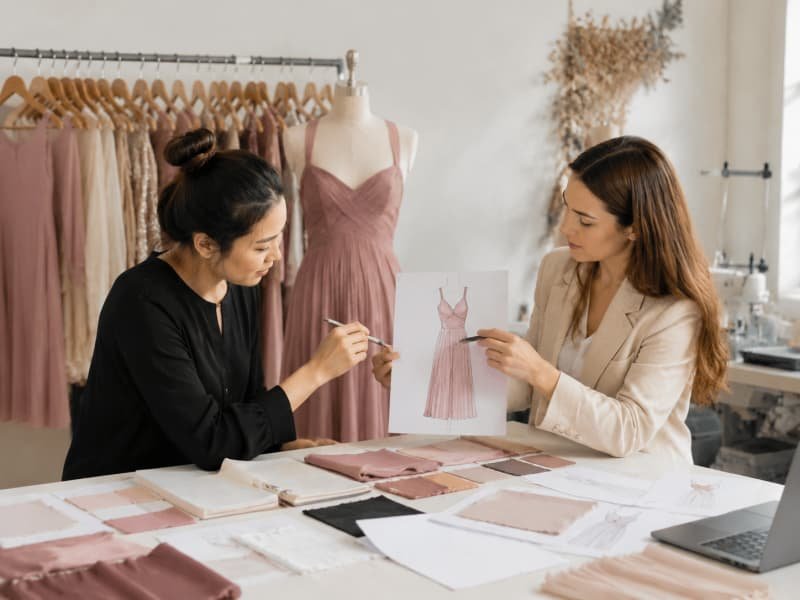
Custom dress development rarely fails only because a factory cannot sew a dress. Most problems begin earlier, before the first sample is even made. A brand sends a beautiful reference image, asks for a price, and expects the factory to understand the full product. But a reference image does not show fabric weight, lining choice, stretch recovery, inside construction, cup position, zipper type, size tolerance, trim standard, packing method or target launch date.
For a mature fashion brand, preparation is not paperwork. Preparation is control. It helps a manufacturer understand the product correctly, quote more realistically, plan sampling with fewer blind spots, and reduce the risk of sample-to-bulk inconsistency. Good preparation also protects the brand’s calendar. When design files, fabric direction, fit requirements and production targets are clear from the beginning, the sample room can move faster, the sourcing team can avoid unsuitable materials, and the production team can plan the correct route before bulk begins.
Before custom dress development, fashion brands should prepare a tech pack or clear reference images, fabric direction, size chart, fit expectations, target quantity, launch timeline, branding details, packaging needs and quality requirements. These details help Duolan review feasibility, estimate cost, plan sampling, reduce revision loops and build a clearer path from first sample to bulk production.
A strong first inquiry does not need to be perfect. Many brands start with a concept, a reference dress, a sample photo or a rough collection moodboard. The key is to provide enough real information for the factory to ask accurate questions. Think of it like a first fitting. If the foundation is wrong, every later adjustment takes more time. If the foundation is clear, development becomes a controlled project instead of a guessing game.
What Is Custom Dress Development?
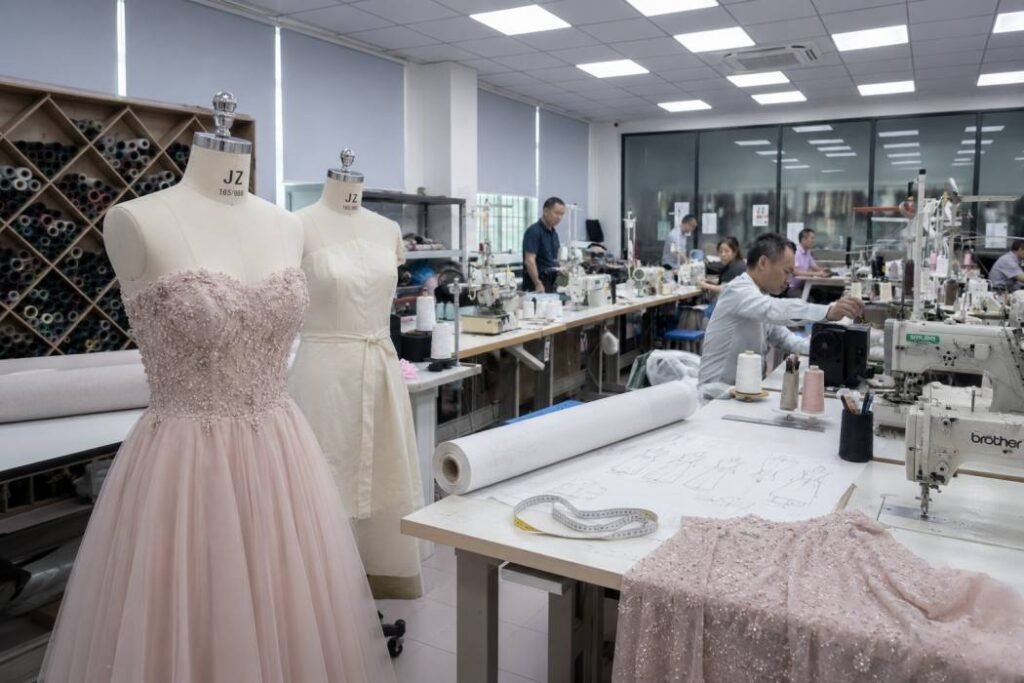
Custom dress development is the process of turning a brand’s design direction into a production-ready garment through design review, fabric selection, pattern making, first sampling, fit correction, trim confirmation, PP sample approval and bulk production planning. It is different from ready-stock sourcing because each custom decision affects fit, cost, timeline, quality and repeat production stability.
Development Scope
Custom dress development begins before the first sample is sewn. A manufacturer needs to understand what the dress is supposed to become: a fitted party mini, a satin occasion dress, a resort maxi, a corset dress, a mesh bodycon style, a refined work dress or a full collection of related pieces. Each direction carries different technical risks. A satin dress may need lining, pressing and seam control. A corset dress may need cups, boning, eyelets and controlled waist support. A mesh dress may need coverage, stretch balance and transparent-area control.
For Duolan, custom dress development usually includes design review, material sourcing, pattern development, sample making, fit adjustment, bulk production preparation, QC, packaging and logistics support. The value is not only in making one sample look close to a reference. The deeper value is turning a brand idea into a version that can be reviewed, revised, priced, produced and repeated.
Fashion brands should see custom development as a joint product-building process. The brand brings the design direction, market positioning and customer expectation. The manufacturer brings fabric knowledge, pattern judgment, construction experience, production feasibility and bulk control. When both sides work from clear files and realistic expectations, the development process becomes much more efficient.
Ready-Made Difference
Ready-made sourcing starts from existing products. Custom dress development starts from a brand’s own direction. That difference matters. In ready-made sourcing, the brand mainly chooses from what already exists. In custom development, the brand and manufacturer need to build the product standard together.
A custom dress may require a unique fabric, a revised neckline, a different lining, stronger zipper quality, specific stretch level, private size chart, custom labels, branded packing or new colorways. Each choice can affect MOQ, price, sample time and bulk lead time. A serious manufacturer cannot treat a custom dress like a simple catalog item. The factory needs to understand what must be copied, what must be improved and what must be adjusted for production.
For example, a brand may send a reference satin midi dress and say, “We want something similar.” But “similar” can mean many things. Similar silhouette? Similar shine? Similar weight? Similar neckline? Similar price level? Similar lining? Similar photo effect? Without clarification, the factory may develop a sample that looks close from far away but feels wrong when worn or photographed.
Sample Accuracy
Sample accuracy depends on the quality of the starting information. A reference image can show mood and silhouette, but it does not show fabric weight, seam construction, inside finishing, stretch recovery, lining coverage or measurement tolerance. A tech pack can show technical information, but it may still miss handfeel, drape or brand-level fit expectations.
A common mistake is thinking that more images automatically mean better preparation. Images help, but only when supported by clear decisions. If the brand has no fabric direction, no target size, no quantity range and no launch date, the manufacturer can only make assumptions. Those assumptions often become sample delays, unexpected cost changes or fit revisions later.
| Development Input | Why It Matters | Risk If Missing |
|---|---|---|
| Tech pack or reference images | Shows design direction and construction target | Sample may follow the wrong silhouette or detail |
| Fabric direction | Controls drape, stretch, opacity and cost | Dress may look different from reference |
| Size chart | Defines fit and grading direction | Sample may not match target market |
| Target quantity | Affects fabric sourcing, MOQ and price | Quote may be unrealistic or incomplete |
| Launch timeline | Helps plan sample, PP and bulk stages | Production may miss selling window |
| QC requirements | Sets approval standard before bulk | Sample and bulk may be judged differently |

What Design Files Are Needed?
Fashion brands should prepare a tech pack, flat sketch, reference photos, original sample if available, size chart, construction notes, artwork files, fabric direction, trim details and label requirements. When a full tech pack is not ready, clear front, back, side and close-up images can still help Duolan start feasibility review.
Tech Pack
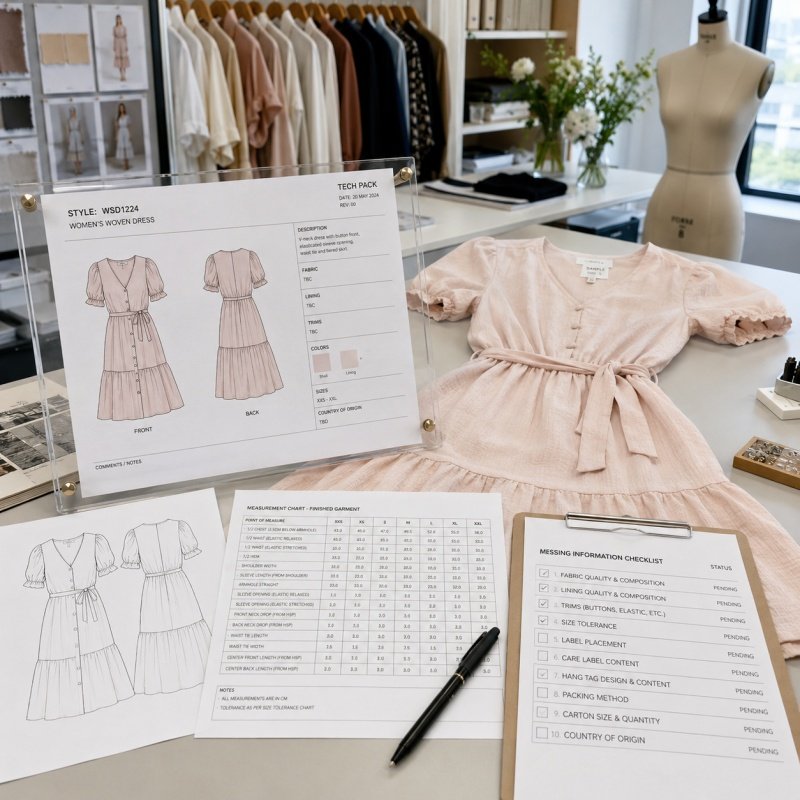
A tech pack is the most useful starting document for custom dress development because it reduces guessing. It should include product name, style number, flat sketches, front and back views, measurements, size chart, fabric details, trim list, construction notes, stitch details, label placement, artwork files, packaging requirements and colorways.
A strong tech pack does not need to look fancy. It needs to be clear. A manufacturer cares less about decoration and more about decision-making details. “Invisible zipper at center back” is more useful than “nice back closure.” “Double-layer mesh at bust area” is more useful than “not too sheer.” Clear wording allows the pattern maker, sample room and costing team to work from the same standard.
For complex dresses, the tech pack should include inside construction details. Corset dresses need cup placement, boning position, eyelet type, back lace-up structure and lining method. Mesh dresses need coverage zones, lining edges, print placement and seam position. Sequin dresses need embellishment direction, lining, edge comfort and stitch method. The more complex the dress, the more valuable the technical file becomes.
Reference Images
Many brands begin without a complete tech pack, especially when developing from moodboards, social media references, old samples or collection concepts. That can still work if the reference images are organized well. The best references show full front, full back, side view, inside structure, fabric close-up, neckline detail, zipper or closure, hem finish and special embellishment.
One image is rarely enough. A dress may look simple from the front but have hidden complexity in the back, lining, bust support or seam shaping. For fitted dresses, side photos help explain body balance. For corset dresses, inside construction images are extremely important. For mesh and lace dresses, close-ups help clarify transparency, pattern scale, trim placement and lining coverage.
Brands should also explain which part of a reference image matters most. A brand may like the neckline from one image, the skirt shape from another and the fabric mood from a third. If those preferences are not marked clearly, the development team may treat all references equally and produce a sample that misses the real design priority.
Original Sample
An original sample is helpful when the brand wants to improve an existing fit, reproduce a proven silhouette or explain construction details that images cannot show. It allows the factory to study fabric handfeel, garment weight, seam allowance, lining, stretch, finishing and proportion. For brands with repeat styles or bestseller extensions, an original sample can reduce misunderstanding.
However, an original sample should not replace clear instructions. The brand should still explain what needs to stay the same and what needs to change. For example, the brand may want the same body fit but a longer skirt, the same neckline but a heavier satin, the same construction but branded trim. Without notes, the factory may copy parts that should be changed or change parts that should be preserved.
| File Type | Best Use | Preparation Tip |
|---|---|---|
| Full tech pack | Precise costing and sample planning | Include measurement points and construction details |
| Reference images | Early feasibility review | Send full views and close-up details |
| Original sample | Fit and construction reference | Mark what should remain or change |
| Fabric swatch | Handfeel and drape matching | Send target weight, stretch and color notes |
| Artwork file | Print, embroidery or embellishment | Use editable files when possible |
| Line sheet | Collection-level review | Show style grouping, colorways and quantity plan |
Which Fabric and Fit Details Matter?
Fabric and fit details matter because they control how the dress looks, feels, photographs, stretches, supports the body and performs in bulk production. Brands should prepare fabric type, weight, stretch, lining need, opacity, drape, target handfeel, size chart, base size, measurement tolerance and key fit points before sampling.
Fabric Direction
Fabric is not a background detail. It is often the main reason a sample succeeds or fails. A satin dress can look premium or cheap depending on weight, shine, drape and lining. A bodycon dress can fit well or lose shape depending on stretch recovery. A mesh dress can feel refined or risky depending on transparency, lining and seam placement. A resort dress can feel light and elegant or flimsy depending on fabric density and print quality.
Brands should prepare a target fabric direction even when they do not know the exact mill fabric. Useful details include fabric type, approximate GSM, stretch level, handfeel, surface texture, color, lining need, opacity and target price range. If the brand has a fabric swatch, even better. If not, a clear description helps the sourcing team narrow options.
Fabric also affects MOQ and timeline. A stock fabric may support faster sampling, while a custom-developed fabric, custom color or special finish may need longer sourcing and higher minimums. If a brand’s design depends on a specific fabric character, that should be discussed before sampling, not after the first sample looks wrong.
Trim Direction
Trims can change both cost and production risk. For dresses, common trims include invisible zippers, metal zippers, hooks, cups, boning, eyelets, elastic, lace, lining, shoulder straps, sliders, buttons, sequins, beads, rhinestones, labels and hangtags. If the brand wants a specific look, trim direction should be discussed early.
A corset dress with poor boning may collapse at the waist. A halter dress with weak hardware may stretch at the neck. A sequin dress without proper lining may feel uncomfortable. A satin dress with the wrong zipper may create ripples at the back seam. Small trim decisions can become big customer complaints after bulk production, so they should never be treated as afterthoughts.
Trim preparation does not mean every component must be confirmed before the first conversation. But the brand should identify non-negotiable details. For example, if the dress must use metal eyelets, branded zipper pulls, soft cups, covered buttons, pearl trim or rhinestone straps, those details should be shared from the beginning because they affect sourcing, cost, sample time and durability review.
Fit Standard
Fit is not only a size chart. It is a brand identity. Some brands prefer a sculpted partywear fit. Some prefer a softer contemporary fit. Some sell to a younger online audience that expects body-hugging silhouettes. Some sell refined occasionwear where movement and comfort matter more than compression.
Brands should provide base size, sample size, body measurement target, garment measurement chart and tolerance. They should also define key fit priorities: bust support, waist position, hip balance, neckline security, strap tension, armhole shape, back opening, slit height, skirt length and lining coverage. Fit comments should be specific and measurable. “Make it better” does not help the sample team. “Raise neckline 1.5 cm and reduce waist by 2 cm at size S” is much more useful.
For fitted dresses, small differences create big effects. A waist seam that moves 1–2 cm can change the whole proportion. A strap that stretches too much can make the neckline unstable. A lining that is too tight can twist the outer fabric. Good fit preparation gives the pattern team a target instead of leaving them to guess from photos.
| Dress Type | Fabric Details to Confirm | Fit Points to Confirm |
|---|---|---|
| Satin dress | Drape, shine, lining, seam risk, pressing | Bust balance, waist shape, skirt fall |
| Bodycon dress | Stretch, recovery, opacity, thickness | Bust, waist, hip, hem tension |
| Corset dress | Shell fabric, lining, boning, cups | Cup position, waist hold, back closure |
| Mesh dress | Transparency, stretch, lining coverage | Neckline, bust coverage, seam placement |
| Sequin dress | Weight, backing, comfort, shedding risk | Shoulder support, lining, hem balance |
| Resort dress | Lightness, print, shrinkage, opacity | Length, movement, strap comfort |

What Production and Cost Details Are Needed?
Brands should prepare target quantity, colorways, size ratio, launch date, delivery window, target price range, branding details and packaging requirements before asking for production cost. These details help Duolan review MOQ, material availability, sampling route, bulk timeline, QC needs and realistic unit price.
Quantity Plan
A manufacturer cannot give a reliable custom dress plan without quantity. Fabric sourcing, trim sourcing, cutting efficiency, production line planning and unit cost all depend on order volume. Quantity should be broken down clearly: total pieces, pieces per color, pieces per size and whether the order is a test order, first launch, repeat order or seasonal collection.
A brand planning 200 pieces per color needs a different sourcing route from a brand planning 2,000 pieces across multiple colors. A brand developing 10 styles for a launch also needs different scheduling from a brand testing one style. Quantity affects whether fabric can be purchased from available stock, whether trims require custom ordering, whether production can be grouped efficiently and whether the factory can reserve the right line capacity.
Brands should also share whether the project has repeat order potential. For mature fashion brands, the first order is often only one step in a longer product cycle. If Duolan knows a style may become a repeat item, the development team can pay closer attention to material locking, pattern record, BOM stability and future bulk repeatability.
Timeline Plan
Timeline is one of the most underestimated parts of custom dress development. Many brands only ask, “How long does production take?” The better question is, “What date must the product be ready for launch, and what steps must happen before then?”
A useful timeline includes target first sample date, fitting date, revision deadline, photo sample date, PP sample approval date, bulk start date, final inspection date, packing date and shipping window. For online fashion brands, photo sample timing can be as important as bulk timing because campaign shooting, website upload and marketing calendars depend on it. For occasionwear brands, missing a graduation, wedding guest, holiday or party season window can reduce the value of the entire collection.
Below is a practical reference timeline for common custom dress projects. Actual timing may change based on fabric availability, trim sourcing, sample complexity, approval speed, testing needs, order quantity and shipping route.
| Development Stage | Common Reference Timeline | Notes for Brands |
|---|---|---|
| Initial project review | 1–3 working days | Faster when tech pack, quantity and fabric direction are clear |
| Fabric and trim sourcing review | 2–7 working days | Special fabric, custom color or imported trim may need longer |
| First sample for ordinary designs | 5–7 working days | Suitable for less complex dresses with available materials |
| First sample for complex designs | 7–15 working days | Corset, sequin, heavy embellishment, layered or structured styles need more time |
| International courier delivery | 5–7 days | Depends on destination country, customs and courier route |
| Fit review by brand | 2–5 working days | Faster when comments are specific and photo-marked |
| Revision sample | 3–5 working days | For normal adjustment after fit comments |
| Second courier delivery | 5–7 days | Needed if physical revised sample is required |
| PP sample confirmation | 3–7 working days | Depends on material locking and final approval standard |
| Bulk production for ordinary designs | 20–30 days | Applies to common construction after materials are ready |
| Bulk production for complex designs | 30–50 days | Depends on workmanship difficulty, trims, embellishment and QC workload |
| Final inspection and packing | 2–5 working days | Larger orders or strict packing rules may need more time |
| Air freight reference | 5–8 days | Faster option for urgent launches |
| Sea freight reference | 20–35 days | Better for planned bulk deliveries and larger shipments |
A healthy development calendar should include buffer time. If a brand plans a launch in eight weeks but still has no fabric direction, no size chart and no sample approval, the timeline may already be risky. A clearer launch plan allows Duolan to advise which styles can move quickly, which details need early testing and which materials should be confirmed first.
Cost Drivers
Cost is not only about sewing. A custom dress price is shaped by fabric, lining, trims, construction complexity, embellishment, sample revisions, quantity, testing, QC, packaging and delivery method. A simple chiffon mini dress and a boned corset dress cannot be priced with the same logic. A lined satin midi and an unlined stretch jersey dress require different labor, handling and finishing.
The table below gives a practical cost-share reference for common custom dress manufacturing. These ranges are not fixed formulas. They vary by style, material, workmanship, order quantity, delivery terms and brand requirements. For heavily embellished dresses, special workmanship may become a much larger share. For simple designs, fabric and sewing may dominate the cost structure.
| Cost Driver | Approx. Share of Garment Cost | What Changes the Range |
|---|---|---|
| Main fabric | 25%–50% | Fiber content, GSM, stretch, print, dyeing, fabric MOQ and fabric waste |
| Lining and interlining | 3%–12% | Full lining, partial lining, bust support, fusible interlining or structure need |
| Trims and accessories | 5%–15% | Zippers, cups, boning, eyelets, hardware, lace, elastic, buttons and labels |
| Cutting and sewing labor | 18%–35% | Number of panels, seams, lining, ruching, structure, layers and sewing difficulty |
| Special workmanship | 0%–25% | Sequins, beading, rhinestones, embroidery, pleating, washing, printing or handwork |
| Pattern and sample allocation | 2%–8% | Development complexity, number of revisions and order quantity |
| QC and finishing | 3%–8% | Pressing, thread cleaning, measurement checks, inspection standard and rework |
| Packaging | 2%–6% | Folding, hanger, tissue paper, polybag, carton, barcode, SKU packing rules |
| Testing and compliance | 0%–5% | Fabric testing, colorfastness, shrinkage, composition, inspection or retailer rules |
| Logistics, if included | 0%–15% | Air, sea, DDP, courier sample shipping, destination and delivery terms |
Brands can make costing faster by sharing a target retail price or target FOB range when available. That does not mean Duolan will simply match the target. It helps the development team judge whether the fabric, trim and construction direction is commercially realistic. If the target price and design complexity do not match, it is better to discover that before sampling.
For example, a brand may want a lined satin corset dress with cups, boning, eyelets, lace-up back, invisible zipper and rhinestone trim. The cost structure will be very different from a simple unlined stretch mini dress. If the brand has a target price band, Duolan can advise whether to simplify lining, change fabric, adjust embellishment density or revise construction before sample cost and time are spent.
What Quality Standards Should Be Set?
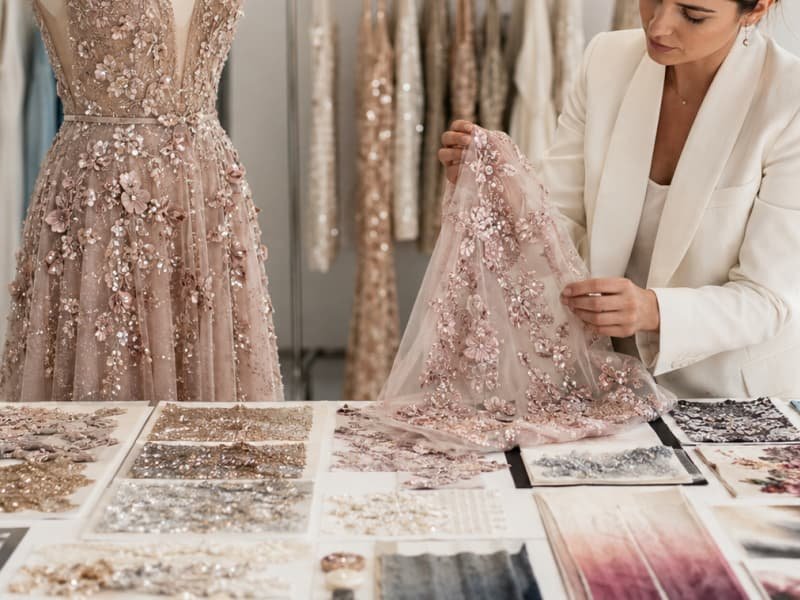
Quality standards should be set before bulk production, not after problems appear. Brands should define PP sample approval, BOM, measurement tolerance, workmanship standard, fabric and trim confirmation, label placement, packing method, inspection requirements and testing needs so the sample room, production line and QC team follow the same reference.
Before Sampling
Quality control begins before the first sample. The manufacturer should review whether the design is feasible, whether the fabric can support the silhouette, whether the trims are compatible and whether the expected fit is realistic. This early review is especially important for structured, fitted or delicate dress styles.
For example, a strapless satin dress may need internal support to stay secure. A white mesh dress may need lining decisions before the sample is cut. A ruched bodycon dress may need correct fabric recovery or the ruching will lose shape. A sequin mini dress may need lining and edge finishing to reduce discomfort. When these risks are discussed before sampling, the first sample has a better chance of becoming a useful decision-making sample.
Brands should also define the purpose of the first sample. Is it a fit sample, photo sample, salesman sample, fabric test sample or construction sample? A first sample cannot always satisfy every purpose. If the goal is photography, finishing and surface appearance become more important. If the goal is fit, measurement and body balance matter more. If the goal is production preparation, material and construction accuracy must be closer to bulk standard.
Before Bulk
Before bulk production, the brand and manufacturer need a locked approval standard. This usually includes PP sample, approved fabric, approved trims, BOM, measurement chart, workmanship details, color approval, label and packing confirmation. The goal is simple: everyone should know what “approved” means before production begins.
A beautiful sample is not enough if the production team does not know which zipper was approved, which lining was used, how much seam allowance is required, which measurement tolerance is acceptable or how the final garment should be packed. PP sample control protects both the brand and factory. It reduces arguments, avoids repeated decisions and gives QC a clear standard.
For repeat orders, the approved standard becomes even more valuable. Pattern version, BOM, fabric batch, trim record, PP sample photos and QC notes allow future orders to move faster with fewer risks. Mature brands should treat confirmed production information as a reusable asset, not a one-time file.
Testing Needs
Not every dress project needs the same level of testing, but testing requirements should be discussed early. Common checks may include fabric composition, shrinkage, colorfastness, seam strength, pilling, metal detection, care label accuracy and third-party inspection. For certain markets or retail channels, the brand may also need specific compliance documents or social audit support.
Duolan can support brand-required testing coordination, label information preparation, inspection standards and quality communication based on project needs. The important point is timing. If testing is required, it should be planned before bulk production, not when the goods are already packed.
Testing can also affect timeline and cost. A fabric test may add several working days. A failed colorfastness or shrinkage result may require fabric change or washing adjustment. A retailer inspection requirement may require additional documentation and production preparation. These points should be visible in the project plan from the beginning.
| Quality Stage | What to Confirm | Why It Matters |
|---|---|---|
| Feasibility review | Fabric, fit, construction and trim risk | Reduces sample rework |
| First sample | Silhouette, proportion, sewing method | Checks design translation |
| Fit revision | Measurements and fit comments | Improves wearability |
| PP sample | Final standard before bulk | Aligns brand, factory and QC |
| Inline QC | Workmanship during production | Catches issues early |
| Final inspection | Measurements, defects, packing | Protects shipment quality |
| Packing check | Label, folding, carton, barcode | Supports retail or ecommerce delivery |
What Should Brands Send to Duolan First?
The best first inquiry package includes a tech pack or reference images, original sample if available, fabric direction, size chart, target quantity, colorways, launch timeline, target market, branding details, packaging needs and quality requirements. With these details, Duolan can review feasibility, sampling path, cost factors and bulk production readiness.
Inquiry Package
A strong first inquiry does not need to be perfect. It needs to be useful. The most helpful package includes the design direction, reference files, fabric idea, expected fit, target quantity, color plan, size range, launch timing and any special quality or packing requirement. If the brand is developing a collection, a line sheet or moodboard can also help the factory understand style relationships.
For example, a brand might send: “We are developing five occasion dresses for a September launch. The styles include two satin midi dresses, one corset mini dress, one mesh ruched dress and one sequin party dress. Target quantity is 200–500 pieces per color. We have tech packs for three styles and reference images for two styles. We need first samples for photo review within the development calendar.” This message gives the manufacturer enough context to respond seriously.
A weak inquiry usually sounds like: “Can you make this dress? How much?” with one screenshot attached. That type of inquiry forces the factory to guess too much. The reply will either be too general or filled with questions. A stronger inquiry turns the conversation into a project review instead of a price guessing exercise.
Delay Reduction
Most sample delays come from missing decisions. The fabric is not confirmed. The size chart changes after the pattern is made. The trim direction is unclear. The brand wants a photo sample, but the first sample was only meant for construction review. The target date is urgent, but material sourcing started too late.
Brands can reduce delays by deciding what the first sample is supposed to prove. Is it for fit? Is it for fabric review? Is it for photography? Is it for PP approval? A first sample cannot always do everything. When the sample purpose is clear, the manufacturer can prioritize the right details and explain what still needs confirmation before bulk.
Fast development does not mean skipping preparation. It means removing unnecessary back-and-forth. If a brand sends clear files on day one, Duolan can review design feasibility, fabric direction, sample path and production risks much faster. If important details are missing for two weeks, even the best sample room cannot recover lost time completely.
Duolan Review
When Duolan receives a custom dress inquiry, the first review should focus on six areas: design feasibility, fabric direction, construction risk, fit requirement, target quantity and production timeline. These areas determine whether the project is ready for sampling, needs more information, or should be adjusted before development cost is spent.
Duolan is a better match for fashion brands with real product development needs, clear order planning and custom production goals. For teams preparing dresses, sets, skirts, tops, jumpsuits or seasonal womenswear collections, a clear inquiry package helps both sides move from general discussion to real development planning.
Duolan’s manufacturing support can cover design interpretation, fabric and trim sourcing, sample development, pattern adjustment, bulk production, QC, packaging and delivery coordination. For complex dress categories such as satin, mesh, sequin, corset, bodycon, party, occasion and resort styles, early project review is especially important because fabric, fit and construction decisions are closely connected.
| What to Send | Good Example | Why Duolan Needs It |
|---|---|---|
| Product direction | Satin midi dress, corset mini, mesh bodycon | Helps assign fabric and pattern review |
| Reference files | Tech pack, photos, original sample | Reduces guessing |
| Fabric target | 120gsm satin, stretch mesh, lined lace | Supports sourcing and costing |
| Quantity | 200 pcs per color, 3 colors, size XS–XL | Checks MOQ and production route |
| Timeline | Sample by May, bulk delivery by August | Plans material and production schedule |
| Quality needs | PP sample, measurement tolerance, inspection | Sets approval standard |
| Branding | Main label, care label, hangtag, bag | Prepares trims and packing |
Final Checklist Before Starting Custom Dress Development
Before contacting a manufacturer, fashion brands can use this simple preparation checklist:
- Design direction: Prepare tech pack, reference images, sketches, original sample or moodboard.
- Fabric direction: Define fabric type, weight, drape, stretch, opacity, color, lining and handfeel.
- Fit direction: Prepare base size, size chart, garment measurements, target body fit and fit priorities.
- Trim direction: Confirm zipper, cups, boning, eyelets, elastic, lace, sequins, labels and packaging needs.
- Production direction: Share target quantity, colorways, size range, launch date and delivery window.
- Quality direction: Define PP sample approval, measurement tolerance, workmanship standard, testing and inspection needs.
- Commercial direction: Share target price range or retail positioning when available, so material and construction choices stay realistic.
A brand does not need every answer before the first conversation. But the more prepared the inquiry is, the more valuable the manufacturer’s reply will be. Good preparation helps the factory move beyond “Can you make this?” and into more useful questions: Which material will work best? Which structure needs testing? Which sample should be made first? Which detail may affect cost? Which approval standard must be locked before bulk?
Custom dress development becomes easier when the brand and manufacturer work from the same facts. Design files guide the visual direction. Fabric information controls drape, stretch and cost. Fit standards protect the customer experience. Timeline planning protects the launch window. Cost drivers help the brand make commercial decisions before sampling goes too far. QC standards keep sample approval connected to bulk production. When these parts are prepared early, the project becomes more predictable, more professional and easier to scale into repeat production.
For fashion brands preparing custom dresses, Duolan can review design files, reference images, fabric direction, fit requirements, target quantities and production timelines. The goal is not only to make a sample, but to build a clear development route from concept to production-ready garment.
Send your dress tech pack, reference image, original sample photos, fabric idea or collection brief to Duolan for a custom development review. A clear first package helps our team evaluate fabric, fit, sample path, cost factors and bulk production planning before development begins.