Skip to content
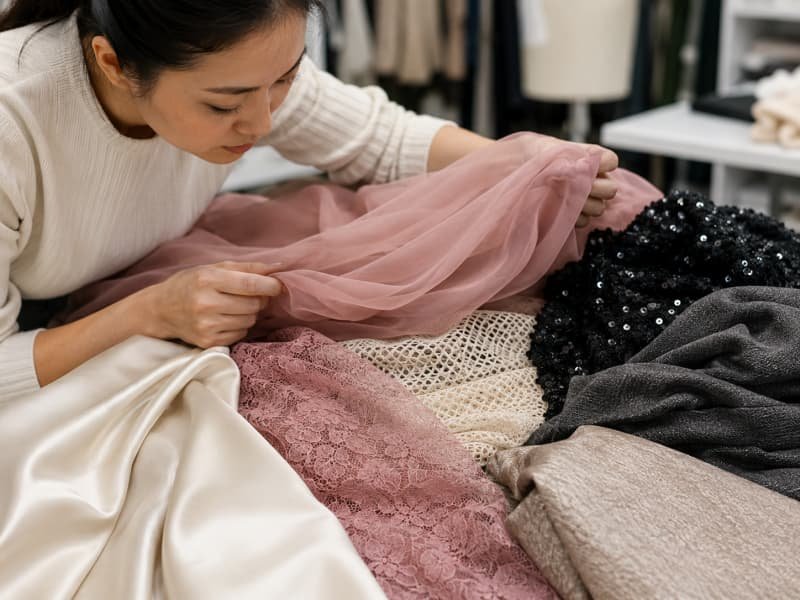
Most people meet fabric only after it has already become a dress, a shirt, or a pair of trousers. In clothing development, fabric enters the conversation much earlier. It decides whether a sketch will hang cleanly, cling to the body, hold a sculpted neckline, survive repeated wear, or create an unexpected problem on the production floor. A strong design can lose its character when the chosen material is too soft, too transparent, too unstable, or simply wrong for the silhouette.
Fabric in clothing is the flexible textile material used to form a garment. It is made from fibers or yarns through weaving, knitting, bonding, felting, coating, or related processes. Its composition, construction, weight, finish, stretch, drape, and stability determine how clothing looks, feels, fits, moves, and performs during manufacturing and everyday wear.
Consider two black fitted dresses cut from the same pattern. One follows the body smoothly, returns to shape after sitting, stays opaque under bright light, and photographs with a clean surface. The other becomes shiny at the hips, grows at the waist, ripples along the seams, and turns slightly transparent when stretched. The pattern may be identical, yet the garments tell completely different stories. That difference often begins with a fabric decision made long before cutting starts, which is why understanding fabric is practical knowledge for shoppers, designers, product teams, and clothing brands alike.
What Is Fabric in Clothing?
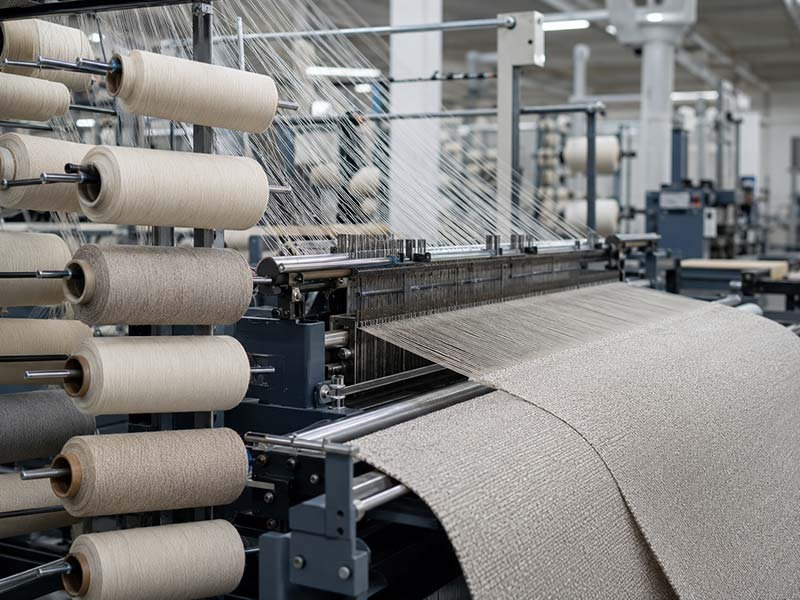
Fabric in clothing is the textile structure that becomes the main body of a garment. Fibers provide basic characteristics, yarns organize those fibers, and woven or knitted construction creates behavior. Pattern cutting, sewing, lining, pressing, and finishing then turn that material into clothing with a specific shape, fit, hand feel, durability, and wearing experience.
What Is Fabric Made From?
Every fabric begins with fibers, but a fiber name is only the first layer of the material story. Cotton, linen, silk, and wool come from plant or animal sources. Polyester, nylon, acrylic, and elastane are manufactured polymers. Viscose, modal, and lyocell begin with cellulose that is dissolved and re-formed into textile fibers. These raw materials influence moisture behavior, strength, softness, heat sensitivity, care requirements, and the way a finished garment feels against the skin.
Fibers are normally spun or extruded into yarns, and the yarns are then woven, knitted, braided, bonded, or arranged through another textile-forming process. Dyeing, printing, brushing, sanding, calendaring, coating, washing, heat-setting, and other finishes may be applied afterward. Each step changes the result. A brushed surface can feel softer but may pill more easily, while heat-setting can improve dimensional stability in a stretch fabric but also alter its hand feel or sheen.
This is why a label that reads 95% polyester and 5% elastane does not fully describe a fabric. The same composition can become lightweight stretch satin, compact ponte, fine jersey, rib knit, performance mesh, or velvet. One may drape softly, another may compress the body, and another may remain nearly transparent. A useful specification therefore combines composition with construction, weight, usable width, stretch direction, recovery, surface, color method, finish, and intended garment use.
From Fiber to Garment
Fiber, yarn, fabric, and garment describe different points in the textile-to-clothing process. They are connected, yet they are not interchangeable. Fiber is the basic substance, yarn is the continuous strand formed from fibers, fabric is the sheet structure created from yarns or fibers, and the garment is the finished product made through pattern cutting, sewing, assembly, pressing, and final inspection. Understanding the sequence helps explain where performance problems begin and where they can be corrected.
| Stage | Practical Meaning | Examples | Main Influence |
| Fiber | The basic textile substance | Cotton, viscose, polyester, wool | Moisture, softness, strength, care |
| Yarn | Fibers formed into a continuous strand | Spun cotton, filament polyester | Texture, luster, strength, surface |
| Fabric | Yarns or fibers formed into a sheet structure | Jersey, satin, twill, chiffon | Stretch, drape, stability, opacity |
| Garment | Fabric cut and assembled as clothing | Bodycon dress, blouse, maxi dress | Fit, silhouette, comfort, appearance |
The simplified chain is fiber to yarn, yarn to fabric, and fabric to garment, but each stage changes what follows. A fine filament yarn can create a smoother and more reflective surface than a coarse spun yarn. A tightly woven structure may resist distortion but feel less airy. A loosely knitted structure may feel soft and flexible while requiring extra care during cutting, sewing, and handling. The final performance is therefore built gradually rather than added at the end.
Pattern work must respond to the material. A stable woven fabric normally relies on darts, shaped seams, pleats, closures, or additional wearing ease to follow the body. A stretch knit may use negative ease, meaning the finished garment is smaller than the body measurement and depends on fabric stretch for fit. Cutting direction also matters. Bias cutting can add fluidity and natural give to a woven fabric, yet it can also introduce length growth, twisting, or uneven hems when the material is not rested and controlled correctly.
Fabric, Textile, and Material
Fabric, textile, cloth, and material overlap in everyday language, but they carry different levels of precision in product development. Textile is the broadest term and can refer to fibers, yarns, fabrics, technical structures, and finished textile products. Fabric normally means a flexible sheet material suitable for cutting and sewing. Cloth is a familiar everyday word, while material includes every component used in a garment, such as shell fabric, lining, interfacing, elastic, cups, boning, zippers, labels, lace, and decorative trims.
Another common source of confusion is that some familiar names describe fibers while others describe structures. Cotton and polyester are fibers. Jersey is a knitted construction. Satin is mainly a weave or surface structure rather than a fiber. Chiffon describes a lightweight, sheer fabric type that may be made from polyester, silk, nylon, or regenerated fibers. Calling a dress simply “satin” leaves important questions unanswered about composition, weight, stretch, sheen, snagging risk, care, and lining.
A production-ready description is more specific, such as polyester-elastane stretch satin, approximately 190 to 220 GSM, medium sheen, widthwise stretch, and intended for fitted occasion dresses. That wording does not guarantee success, but it gives the sourcing, pattern, sample, costing, and quality teams a shared starting point. Precise language reduces the chance that a visually attractive reference will be interpreted as a completely different material once development moves from a mood board to an actual garment.

Which Types of Fabric Are Used in Clothing?
Clothing fabrics are commonly grouped by fiber origin and construction. Natural, synthetic, regenerated, and blended describe what the fabric contains, while woven, knitted, lace, mesh, bonded, and nonwoven describe how it is built. These categories overlap, so the most suitable choice depends on silhouette, comfort, durability, care, price, testing needs, and production stability.
Natural Fabrics
Natural fibers come from plant or animal sources, with cotton, linen, hemp, silk, and wool among the best-known examples. They are often linked with comfort, breathability, texture, or premium positioning, but the finished behavior depends on more than origin. Yarn quality, weave or knit structure, density, dyeing, and finishing can make two cotton fabrics feel and perform almost nothing alike. Cotton voile, poplin, denim, rib knit, and brushed fleece all begin with the same fiber family but serve very different garments.
Cotton can absorb moisture and feel comfortable against the skin, yet untreated or loosely controlled cotton fabrics may shrink, wrinkle, fade, or lose shape. Linen offers airflow, texture, and a dry touch that suits summer dresses, relaxed tailoring, and resort clothing, although its natural creasing may not fit a product expected to remain smooth. Silk can deliver luster, softness, and exceptional drape, but delicate silk surfaces often require careful cutting, fine needles, controlled pressing, suitable lining, and specific care instructions.
Wool also covers a wide range of qualities and structures. Fine wool can be lightweight and soft enough for dresses or tailoring, while dense wool coatings are heavy and structured. Blending wool with polyester, nylon, or viscose may improve stability, reduce cost, change surface character, or make care easier. Natural origin should not be treated as an automatic guarantee of durability or sustainability, because farming, water use, chemical processing, dyeing, finishing, garment life, and disposal all influence the wider environmental impact.
Synthetic and Regenerated Fabrics
Synthetic fibers are manufactured from polymers and are widely used because they can provide strength, wrinkle resistance, stretch, shape retention, quick drying, and relatively consistent industrial performance. Polyester is especially adaptable and can be made into satin, chiffon, crepe, organza, mesh, velvet, jersey, and many other structures. A low-density polyester lining and a high-twist premium polyester crepe share a fiber name, yet their surface, drape, sewing behavior, appearance, and price position can be completely different.
Nylon is valued for strength, smoothness, and abrasion resistance. It appears in hosiery, mesh, linings, stretch fabrics, and fitted fashion products, often blended with viscose or elastane. Elastane is generally added in small proportions to improve stretch and recovery, but the percentage alone does not predict the final result. A fabric with 3% elastane can outperform one with 5% when the yarn placement, knitting tension, density, and heat-setting are better suited to the garment.
Regenerated fibers begin with cellulose, commonly sourced from wood pulp, which is dissolved and re-formed into textile fibers. Viscose, modal, and lyocell are familiar examples. They are often selected for softness, drape, moisture absorption, and a clean surface. Viscose can create fluid dresses and blouses but may require careful shrinkage and wet-strength control. Modal is known for a soft hand, while lyocell can offer attractive drape and moisture behavior, although the final performance still depends heavily on fabric construction and finishing.
| Fiber Group | Common Examples | Typical Advantages | Common Risks |
| Natural | Cotton, linen, silk, wool | Comfort, texture, breathability, premium feel | Shrinkage, wrinkling, care sensitivity |
| Synthetic | Polyester, nylon, elastane | Strength, recovery, consistency, quick drying | Heat sensitivity, static, pilling in some structures |
| Regenerated | Viscose, modal, lyocell | Softness, drape, moisture absorption | Wet handling, shrinkage, surface change |
| Blended | Cotton-polyester, viscose-nylon, polyester-elastane | Balanced fit, durability, care, and cost | More variables to test and control |
Woven and Knit Structures
Woven fabrics are created by crossing lengthwise warp yarns with widthwise weft yarns, while knitted fabrics are formed from interlocking loops. This structural difference affects stretch, stability, drape, sewing behavior, fit, and comfort. Woven poplin, twill, satin, chiffon, organza, taffeta, and crepe can range from crisp and architectural to light and fluid. Most standard woven fabrics have limited natural stretch unless elastane, textured yarns, or an engineered weave is introduced.
Knitted fabrics normally stretch more because their loops can open and move. Jersey, rib, interlock, ponte, sweater knit, and many meshes belong to this group. They are common in bodycon dresses, fitted tops, casual dresses, and garments that need movement or easy dressing. Greater stretch is not automatically an advantage. A loose jersey can feel pleasant but grow during wear, while a compact ponte can recover well yet feel too warm or rigid for a flowing silhouette.
Patterns should be developed with the real fabric or a close technical match. Moving an approved design from woven crepe to stretch jersey is not a simple substitution, because the garment may require different ease, seam types, neckline stabilization, closure choices, and fit tolerances. Even two knits with the same composition can require separate pattern decisions when their stretch force, recovery, thickness, and drape differ. Material changes made after fit approval are a common source of unexpected sizing and silhouette problems.
Blends and Performance Balance
Blended fabrics combine two or more fibers to balance properties that may be difficult to achieve with a single fiber. A cotton-polyester blend may wrinkle less and dry faster than pure cotton. A viscose-nylon blend may combine softness with better strength and recovery. Polyester-elastane is widely used for fitted dresses because it can provide stretch, shape retention, and a consistent surface. The value of a blend depends on the product requirement rather than the number of fibers listed on the label.
Every blend involves trade-offs. Polyester may improve stability while changing moisture behavior and hand feel. Viscose may improve drape but increase shrinkage risk. Elastane can improve fit but makes heat-setting, dyeing, recovery, and long-term shape retention more important. A practical review therefore considers silhouette, care, abrasion, pilling, stretch force, recovery, color method, print compatibility, availability, order quantity, and whether the same performance can be repeated in future batches.
The most useful question is not whether blended fabric is generally better. The useful question is whether a particular blend creates the right appearance, comfort, durability, care profile, and production stability for the intended garment. A travel dress may prioritize wrinkle resistance, while a summer dress may prioritize airflow. A sculpted mini dress may prioritize compression and recovery. The best blend is the one that solves the product’s real needs without introducing unnecessary cost or a new problem elsewhere.

How Do Fabric Properties Affect Clothing?
Fabric properties control silhouette, comfort, fit, durability, and production consistency. Weight and thickness affect body and coverage, drape controls movement, stretch and recovery shape fit, and opacity influences lining. Shrinkage, pilling, colorfastness, seam behavior, and dimensional stability determine whether the finished garment remains close to the approved sample after manufacturing, care, and wear.
Weight, Thickness, and Drape
Fabric weight is commonly expressed in grams per square meter, or GSM. It indicates how much one square meter of material weighs, but it does not fully describe thickness, density, softness, or stiffness. A bulky knit may feel thick without being extremely heavy, while a dense woven satin may feel thin but carry enough weight to create a strong, fluid fall. Two fabrics with similar GSM can therefore produce noticeably different silhouettes and sewing behavior.
| Approximate Weight | General Character | Common Uses | Key Development Checks |
| Below 90 GSM | Very light and often sheer | Chiffon overlays, sheer sleeves, linings | Transparency, seam strength, fraying |
| 90-150 GSM | Light | Blouses, summer dresses, fine jersey | Coverage, shrinkage, twisting |
| 150-220 GSM | Medium | Crepe dresses, satin dresses, tops | Drape, lining, seam appearance |
| 220-320 GSM | Medium-heavy | Ponte dresses, structured knits | Bulk, recovery, heat retention |
| Above 320 GSM | Heavy | Sweater dresses, dense velvet, coatings | Weight, seam thickness, hanging stress |
Drape describes how a fabric falls under its own weight. It is not simply softness. A fabric can feel soft in the hand while still resisting fluid folds because its construction is compact or its finish adds body. A cowl neckline needs enough drape to fall naturally, while a corset bodice needs enough structure to hold shape. A gathered skirt made from heavy fabric can become bulky at the waist, and a delicate bodice may distort when it carries a skirt that is heavier than expected.
The most reliable evaluation goes beyond folding a small swatch on a table. The material should be hung, moved, wrapped around a dress form, and viewed in the expected color. It should also be handled as several meters rather than only as a small cutting, because fabric mass changes movement. For fashion photography and occasionwear, the team should observe how the surface catches light, how folds form, and whether the cloth creates the intended impression in motion rather than only when it is still.
Stretch, Recovery, and Compression
Stretch describes how far a fabric can extend, while recovery describes how closely it returns to its original dimensions. Both properties matter in fitted clothing. A material can stretch easily and feel comfortable during a first fitting, yet recover poorly and become loose at the waist, seat, neckline, elbows, or knees after several hours. This residual growth is often called bagging, and it is one of the reasons a fabric can look impressive in a sample room but disappoint during real wear.
Stretch should be checked in width and length because the directions affect different parts of the garment. Widthwise stretch supports movement across the bust, waist, and hips, while lengthwise stability influences shoulder position, body length, and hem level. Practical categories sometimes describe below 10% as limited stretch, 10% to 25% as moderate, 25% to 50% as useful for many fitted garments, and more than 50% as high stretch. These ranges are guides rather than universal rules because stretch force and recovery are equally important.
Two fabrics may both reach 40% extension, yet one feels soft and loose while the other provides firm compression. Bodycon garments need a balance of extension, recovery, opacity, compression, and comfort. Too little stretch restricts movement and stresses seams. Excessive stretch can reduce support and make sizing less predictable. Strong recovery may improve shape retention but feel restrictive when the fabric is dense. Pattern measurements should not be finalized until the production material, or a close technical match, has been tested and fitted.
Opacity and Surface Behavior
Opacity describes how much light passes through a fabric, and it becomes especially important in white, ivory, beige, pastel, fine knit, chiffon, satin, mesh, and close-fitting products. A material may look opaque on a cutting table but become transparent when it stretches over the body. Knitted loops open as the fabric expands, and spaces between woven yarns may become more visible under tension. Coverage should therefore be checked at the actual garment stretch, not only in a relaxed swatch.
A useful opacity review includes natural daylight, strong indoor lighting, a contrasting background, the intended lining, and flash photography when the garment is made for parties or events. Surface behavior matters at the same time. Satin can reveal snagging, oil marks, needle damage, seam puckering, and pressing impressions. Velvet changes appearance according to nap direction. Brushed fabrics may pill. Fine jersey can show every seam allowance, cup edge, or lining transition beneath the surface.
The shell fabric should be assessed together with lining, interfacing, cups, elastic, boning, and trims. A rigid lining beneath a stretch shell may restrict movement and create pulling. A heavy lining can suppress the movement of chiffon. A lining with strong static may cling to the legs. For close-fitting fashion products, the material package works as one system, and a change to a hidden component can alter comfort, fit, drape, and the outward appearance of the dress.
Measurable Production Risks
Fabric approval becomes more reliable when important properties are measured rather than judged only by touch and appearance. Common checks include weight, usable width, stretch, recovery, shrinkage, colorfastness, pilling, seam slippage, dimensional stability, and opacity. The exact test method and acceptance level should match the garment, care label, target market, and brand standard. A result that is acceptable for a loose blouse may not be suitable for a tightly fitted dress made from the same material.
A small percentage can create a visible garment difference. If a dress length of 100 centimeters shrinks by 3%, the finished length can reduce by approximately 3 centimeters after the specified care process. That change may move the hem outside the approved tolerance. Width shrinkage can tighten the bust or waist, while poor recovery can loosen them. Dark satin may need rubbing and staining checks, fitted jersey may need pilling and dimensional stability testing, and mesh may require seam strength and snagging review.
Roll-level production risks also matter. Full-width inspection can reveal local defects, edge-to-center shade differences, bowing, skewing, inconsistent width, and roll-to-roll variation that never appears in an approved swatch. Testing is most valuable when it happens early enough to influence sourcing, pattern, sewing, or finishing decisions. The goal is not to produce a large laboratory file. The goal is to prevent material behavior from changing the approved fit, appearance, durability, or customer experience once production has already started.

Which Fabric Is Best for Each Garment?
The best fabric is the one that creates the intended silhouette while meeting fit, comfort, durability, care, price, and production requirements. Satin may suit fluid occasion dresses, ponte may support fitted shapes, chiffon may create movement, and mesh may add transparency. Suitability depends on the specific construction, weight, stretch, finish, lining, and pattern rather than the fabric name alone.
Dresses and Fashion Tops
The right fabric for a dress or fashion top begins with the silhouette rather than the category name. A mini dress may be crisp, fluid, fitted, gathered, or sculpted, and each direction needs a different material response. A refined top may need polished drape, while a corset-inspired top needs controlled structure, stable support, and a carefully coordinated lining. Choosing by color or fiber content alone can create a garment that looks technically correct but feels visually unrelated to the original design.
| Fabric Type | Typical Strength | Common Garment Uses | Main Development Risk |
| Satin | Smooth surface and visual luster | Slip dresses, occasion dresses, refined tops | Snagging, puckering, shade variation |
| Crepe | Controlled drape and textured surface | Midi dresses, workwear, occasion styles | Shrinkage, inconsistent hand feel |
| Chiffon | Lightweight movement | Overlays, sleeves, layered skirts | Transparency, fraying, seam damage |
| Jersey | Stretch and comfort | Fitted dresses, draped tops | Growth, twisting, poor recovery |
| Ponte | Compact support and recovery | Bodycon dresses, tailored knit styles | Bulk, warmth, restricted drape |
| Mesh | Transparency and stretch | Panels, overlays, fitted dresses | Snagging, seam strength, opacity |
| Velvet | Rich surface and depth | Party dresses, seasonal occasionwear | Nap direction, marking, shade appearance |
| Sequin Fabric | Strong visual impact | Event and party dresses | Weight, abrasion, attachment, seam comfort |
Satin is widely used for slip dresses, cowl necklines, occasion dresses, skirts, and polished tops because it reflects light and can create a premium surface. Lightweight satin may reveal seam puckering, body lines, and needle marks, while heavier satin adds support but can pull on narrow straps. Crepe usually gives a more restrained surface and controlled drape. Chiffon adds movement and softness but requires suitable lining, stable seam finishes, and careful handling because it can shift, fray, and show damage.
Jersey suits draped tops, body-skimming dresses, and comfortable fitted products, although recovery, edge curling, twisting, pilling, and transparency must be reviewed. Ponte offers more body and can smooth the silhouette, but dense versions may feel warm or too firm for a fluid design. Organza, taffeta, and other crisp wovens can create volume in sleeves and skirts, while soft viscose or lyocell fabrics may collapse when the concept needs a stronger shape. Material selection should translate the intended look into measurable behavior.
Bodycon and Fitted Styles
Bodycon dresses reveal fabric weaknesses quickly because the material must stretch over the body while maintaining shape, coverage, comfort, and a clean surface. A suitable fabric normally needs reliable widthwise stretch, controlled lengthwise behavior, good recovery, stable shrinkage, sufficient opacity, appropriate compression, pilling resistance, and compatibility with the intended seam and lining system. A lightweight jersey may feel easy to wear yet show underwear lines and grow at the waist, while dense ponte can provide support but feel overly restrictive.
Stretch crepe can create a polished fitted surface, while stretch satin adds shine but may reveal tension lines. Compression should match the design and target wearer. Firm compression can support a sculpted silhouette, but it may also increase seam stress, zipper difficulty, discomfort, or rolling at the hem. Low compression feels easier but may not hold the intended shape. The material should be tested at the actual pattern reduction because opacity, color depth, and surface smoothness can change significantly at 20% or 30% extension.
Construction methods need to follow the fabric. A rigid stitch can break on a highly stretchable material, while a bulky seam can show through the dress. Poor differential-feed control can create rippling along side seams and necklines. Fit approval should use the intended production fabric whenever possible. A substitute with a different stretch force, recovery, thickness, or weight may lead to incorrect pattern decisions even when its fiber composition looks similar on paper. In fitted fashion, fabric approval and fit approval are closely connected.
Halter and Backless Designs
Halter and backless garments have fewer conventional support points, so the fabric must work with the pattern and internal structure more precisely. Halter designs transfer part of the garment weight to the neck or upper shoulder area. A heavy material can create discomfort, while a fabric with weak recovery can allow the bust position to drop. The neckline needs enough stability to resist stretching, yet enough flexibility to follow the body without cutting into the wearer.
Backless styles require the fabric to sit close to the body without gaping, rolling, or shifting during movement. The design may rely on clear elastic, internal elastic, cups, power mesh, side boning, adhesive-compatible finishes, or carefully positioned straps. Stretch direction matters greatly. Excessive lengthwise stretch can make the back edge fall, while poor recovery can create gaping after sitting or dancing. Slippery satin may need more internal engineering than a fabric with natural grip.
The complete support system should be fitted together because shell fabric, lining, boning, cups, elastic, and closures affect one another. A non-stretch lining can stabilize a stretch shell but may also restrict movement when its dimensions are too tight. A soft lining can improve comfort but provide insufficient control. Testing should include sitting, walking, raising the arms, bending, and repeated movement. A garment that looks correct in a static fitting may shift noticeably during normal wear, especially in party and occasion settings.
Occasionwear and Embellishment
Occasionwear fabric must perform visually and physically. It should look convincing under indoor lighting and flash photography, move well during walking and sitting, remain comfortable for several hours, and keep its shape during social activity. Satin is popular because it reflects light and creates depth, but matte satin, charmeuse, duchess satin, stretch satin, and crepe-back satin provide different levels of structure, shine, fluidity, and fit. The correct option depends on whether the dress is bias-cut, draped, fitted, corseted, or voluminous.
Chiffon and georgette create movement in overlays, sleeves, and layered skirts, while velvet adds rich color depth and requires one-direction cutting because its nap changes the appearance. Mesh can create illusion panels and contouring, yet seam placement, snagging, and edge stability need attention. Sequin and embellished fabrics create immediate impact but introduce weight, abrasion, attachment security, seam bulk, decorative density, and wearer-comfort concerns that are rarely visible in a small showroom swatch.
Lining is part of the design rather than an afterthought. It affects coverage, comfort, static, stretch, heat retention, dressing ease, drape, and seam appearance. A lightweight lining can preserve chiffon movement, while a stretch lining may be necessary beneath a fitted shell. A stronger woven lining may support a structured bodice. Occasionwear quality comes from the way shell fabric, lining, interfacing, boning, cups, closures, and decorative trims work together, not from the price or shine of the outer fabric alone.

How Do Brands Choose Fabric for Production?
Brands choose fabric through a controlled approval process rather than appearance alone. The material should be checked for composition, construction, weight, usable width, stretch, recovery, drape, opacity, shrinkage, color, finish, cost, availability, minimum quantity, lead time, and test requirements. Swatches, lab dips, trial yardage, fit samples, and bulk inspection turn a creative choice into a production-ready standard.
Build a Clear Fabric Brief
Before sampling starts, the product team should define what the fabric needs to achieve. A request such as soft black stretch fabric is too broad because it can describe light jersey, rib knit, stretch crepe, ponte, scuba, or stretch satin. Each option creates a different silhouette, fit, surface, sewing method, and cost. A useful brief does not need to be overly technical, but it should give the sourcing and sample teams enough information to narrow the search without guessing.
- Garment category and intended silhouette
- Preferred fiber composition and woven or knit structure
- Approximate GSM, usable width, and surface appearance
- Required drape, stretch direction, recovery, and opacity
- Color standard, finish, care expectation, and test needs
- Target quantity, price position, and delivery date
The brief should also rank priorities because every desirable property cannot always be maximized. A fluid maxi dress may prioritize movement and a clean fall. A bodycon dress may prioritize recovery and opacity. A corset-inspired style may prioritize structure and support. A travel product may prioritize wrinkle resistance and easy care. When the team identifies which properties are essential and which can be adjusted, sourcing becomes faster and sample comments become more focused.
A fabric brief should also state the intended market and care method. Machine-washable apparel may need different shrinkage and colorfastness expectations from a dry-clean-only occasion dress. The expected order quantity matters because specialty fabrics, custom dyeing, and decorated materials can carry minimums or longer lead times. Early clarity reduces unsuitable swatches, repeated prototypes, late substitutions, and pricing surprises, while giving the manufacturer a realistic basis for suggesting alternatives when the first-choice fabric is unavailable or unstable.
Use Swatches, Lab Dips, and Trial Yardage
Swatches allow a team to review color, texture, weight, stretch, and hand feel before committing to larger quantities, but a small cutting cannot reveal every production characteristic. It may hide full-width shade variation, edge-to-center differences, bowing, skewing, directional nap, print repeat, roll inconsistency, or the way several meters of material drape together. A swatch is therefore an early filter rather than complete approval, especially for fitted, delicate, embellished, or high-visibility garments.
A lab dip is a small dyed sample used to approve color before bulk dyeing. It should be viewed under agreed light sources because a shade can change under daylight, warm retail lighting, and cool office light. A strike-off is commonly used for printed or decorative development, allowing the brand to review scale, color, sharpness, placement, and the reaction of the artwork to the base fabric. Decorative trials may also be needed for embroidery, sequins, beads, foil, bonding, or wash effects.
Trial yardage provides enough material for realistic garment sampling, wash testing, sewing assessment, or print development. It is particularly valuable when the fabric is new, highly stretchable, delicate, directional, or structurally different from the original reference. The approved fit sample should use the intended fabric whenever possible. A substitute cannot fully approve a production material with different stretch force, recovery, thickness, friction, or drape. Visual review, physical testing, and garment sampling should support the same final decision.
Test the Risks That Matter
Testing should focus on the failures most likely to affect the garment rather than treating every fabric as if it faces the same risks. Fitted knits commonly need stretch, recovery, dimensional stability, pilling, colorfastness, spirality, opacity under extension, and seam-extension checks. Woven satin or occasionwear may need shrinkage, seam slippage, snagging, rubbing fastness, pressing sensitivity, surface marking, and shade consistency. Mesh and embellished materials may require seam strength, attachment security, abrasion, snagging, edge stability, and skin-comfort review.
Testing is most useful when it occurs early enough to change the material or construction. Discovering excessive shrinkage after cutting is far more expensive than testing trial yardage. Finding poor recovery after a sales launch can lead to returns, negative fit feedback, and an emergency replacement. Acceptance levels should match the garment, market, care label, and customer requirements. A fabric that performs acceptably in a loose blouse may be unsuitable for a fitted dress even when both products use the same test method.
A test report should connect with the product-development process. Shrinkage results should reach the pattern and marker teams. Stretch and recovery data should influence fit and seam choice. Colorfastness results should influence care instructions and trim compatibility. Seam-slippage results may require adjusted seam allowance, stitch density, or reinforcement. The value comes from turning measured information into a practical manufacturing decision, not from collecting technical documents that remain separate from sampling and bulk production.
Control Bulk Consistency
Bulk fabric control begins before cutting. The approved material should be translated into measurable and visual standards that purchasing, inspection, cutting, production, and quality teams can follow. Composition, construction, GSM, usable width, stretch, recovery, shrinkage, surface, and color reference should be recorded. Bulk color should be compared with the approved standard, incompatible dye lots should be separated, and rolls should be checked for defects, shade variation, width changes, bowing, skewing, print direction, or nap direction.
- Confirm the approved fabric reference and production specification.
- Approve bulk color under the agreed light source.
- Check usable width, GSM, stretch, recovery, and shrinkage.
- Inspect rolls and separate incompatible dye lots or shade groups.
- Preserve grain, print direction, stripe matching, or velvet nap during cutting.
- Compare production garments with the approved sample before shipment.
Shade control is especially important for solid dresses and matching sets. Two rolls can look acceptable when viewed separately but create visible panel differences when combined in one garment. Usable width also affects cost. A fabric may be sold as 150 centimeters wide but provide a smaller defect-free cutting width, reducing marker efficiency and increasing consumption. Shrinkage information must reach the pattern and marker teams, because width loss can tighten a bodice while length loss can change hem position and overall proportions.
Reliable production does not depend on finding a fabric that looks good once. It depends on defining, measuring, approving, and controlling the material so the same appearance and performance can be repeated across rolls, colors, sizes, and future orders. This is especially important for fashion dresses, where small differences in drape, recovery, opacity, shade, or surface can change the entire impression of the product even when the sewing measurements remain within tolerance.
Duolan Apparel supports established fashion brands and product teams with dress-focused fabric sourcing, material alternatives, pattern development, sample execution, testing coordination, and bulk production control. The team works across satin, mesh, velvet, jersey, crepe, chiffon, sequin fabrics, and other materials used in contemporary, fitted, party, vacation, and occasion dresses. Projects can be developed from a tech pack, reference image, original sample, fabric idea, or collection direction, with attention to drape, support, stretch, recovery, opacity, fit, and repeatability.
For a custom dress program, send the intended styles, target market, approximate quantities, launch date, size range, preferred materials, and any available tech packs or reference samples to info@duolanapparel.com. A clearer starting brief allows the development team to assess fabric options, sample requirements, technical risks, and a realistic production path before quotation. The aim is not simply to match a swatch, but to build a material and garment specification that can move from first sample to stable repeat production with fewer avoidable surprises.