Skip to content
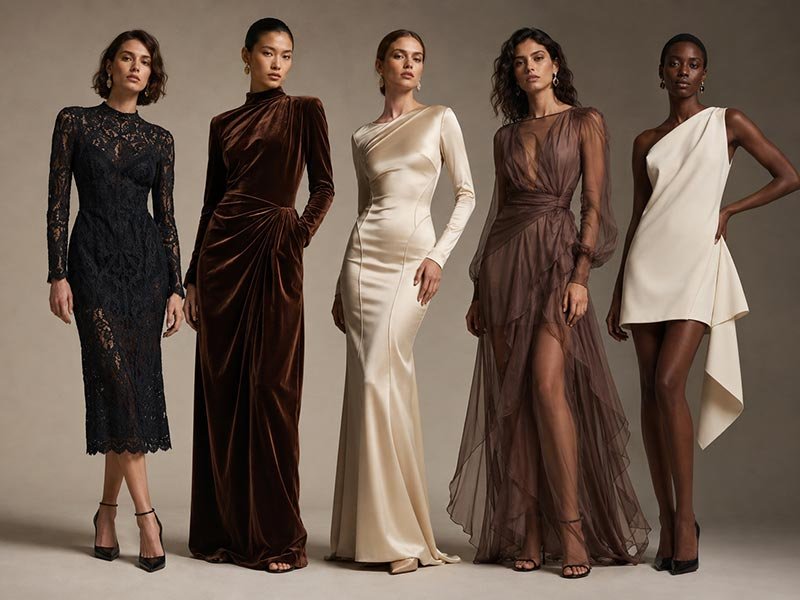
Fashion forecasting becomes useful only when it helps a product team make better decisions. A dramatic image may attract attention, yet a dress still has to fit a real body, work within an intended price range, arrive before the selling window and remain consistent when production moves beyond one sample. Fall/Winter 2027 is therefore less about finding a single winning look and more about understanding which combinations of silhouette, color, fabric and construction can give a collection a recognisable point of view.
Women’s dresses for Fall/Winter 2027 are likely to combine defined or softly controlled silhouettes with tactile fabrics, refined color stories, selective transparency and carefully placed decorative details. The strongest commercial styles will not rely on novelty alone. They will turn emerging ideas into dresses that fit well, move comfortably, photograph clearly and remain stable enough for repeat production.
Early FW27/28 material and trend signals are already moving in that direction. Craft, texture, soft volume, lace, cleaner color and more personal styling appear repeatedly, but no forecast can replace physical development. The decisive moment often comes in the fitting room: a promising sketch is placed on the body, the fabric behaves differently than expected, and one small pattern correction determines whether the style becomes a campaign image, a dependable repeat order or an expensive sample that never reaches production.
What Will Define Women’s Dresses for Fall/Winter 2027?
Fall/Winter 2027 dresses will be defined by stronger product identity, tactile materials, controlled silhouettes and details that feel intentional rather than excessive. The season will support romantic, structured and individual expressions, but the most relevant styles will still need practical fit, comfort and repeatable construction. Familiar dress categories will feel new through better proportion, material character and focused design choices.
A More Individual Season
The most persuasive early signal for FW27/28 is a move away from collections that look interchangeable. Milano Unica has placed craftsmanship, material research and personal expression at the centre of its seasonal presentation, while Texworld’s trend work links future materials and shapes to a wider desire for memory, nature and identity. For dress brands, this does not mean every style needs experimental construction. It means a familiar category should carry a clearer reason to exist, whether that reason comes from proportion, fabric, surface treatment or a recognisable fit language.
A proven satin midi can be renewed through an asymmetric drape, a shaped waist panel or a contrast between matte and shine. A black party mini can gain identity from a curved low back, a narrow crystal placement or a sleeve that changes the overall balance. The most commercial results usually give one feature visual priority and allow the remaining details to support it. When lace, cutouts, crystals, draping and an unusual neckline all compete within one garment, the style may look busy in photographs, cost more to develop and become harder to reproduce consistently.
Romance With Structure
Romantic dressing remains important, but its FW27 form is less dependent on sweetness. Lace, soft gathers, sheer overlays and historical references can be paired with dark color, firmer waist definition or cleaner geometry. Heuritech’s FW27/28 report estimates lace growth of about 4 percent in womenswear compared with FW25/26, with thick lace adding a further 3 percent in its measured market. These figures are directional rather than guaranteed sales results, yet they support the wider return of tactile, emotionally expressive surfaces.
The more useful commercial interpretation is contrast. A lace upper body can sit over a stable corset foundation. A fluid skirt can be controlled by a defined waist and a clean shoulder line. A sheer sleeve can soften a compact crepe dress without turning the whole garment transparent. Material selection remains decisive: lace used over a fitted body needs suitable stretch or engineered ease, a ruffle needs enough body to hold its edge, and translucent panels need seam finishes that remain clean from both sides. Romance becomes convincing when delicacy is visible but the garment still feels secure.
Material-Led Design
Materials will carry more of the visual message in FW27. Velvet changes with light through its pile, satin creates movement through reflection, jacquard builds pattern into the cloth and lace combines texture with transparency. These fabrics can make a relatively simple silhouette feel complete before extra decoration is added. That is especially valuable for online retail, where a customer first reads the overall shape in a full-body image and then looks for material richness in close-up product shots.
Material-led design also requires discipline. A ten-centimetre swatch cannot show how a satin bias skirt will grow, how velvet will shade across curved panels or how stretch mesh will look over the bust and hip. Fabric approval should include drape, stretch, recovery, opacity, shrinkage, colorfastness, pressing response and at least one complete garment test. Fiber content alone is not enough to predict performance. A well-engineered blend may produce better recovery and bulk consistency for a fitted dress than a material chosen mainly because its composition sounds more premium.
Forecasts Versus Proof
Fall/Winter 2027/28 is still a forecast season. As of July 2026, textile fairs, material developers, cultural research and predictive platforms provide useful evidence, but complete womenswear runway adoption and retail sales are not yet available. A forecast can indicate growing interest in lace, soft volume, refined neutrals or expressive surfaces, yet it cannot determine how a specific brand’s customer will respond to one dress at one price point.
A sound decision combines several signals: related style sales, return reasons, customer search behavior, competitor assortments, material availability and physical sample performance. When these signals align, a trend can justify broader development. When visual momentum is strong but fit, cost or demand evidence remains weak, the idea is better placed in a limited test or image-led style. Forecasting should reduce blind experimentation, not create false certainty. The aim is to identify where a new silhouette or material deserves development time and where an existing product block can be updated with less risk.
Which Dress Silhouettes Will Lead the Season?
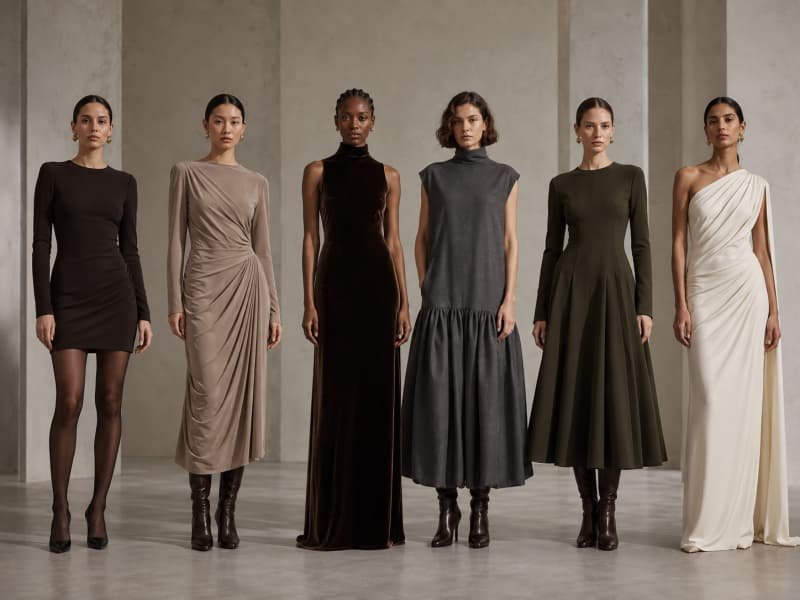
Narrow columns, defined waists, draped midis, controlled fit-and-flare shapes and elongated maxis are likely to lead Fall/Winter 2027 dresses. Minis will remain important for party and going-out categories, while asymmetric shoulders, halter necks and sculpted sleeves will refresh familiar forms. The strongest silhouettes will create impact through proportion and construction rather than uncontrolled volume.
Hemlines by Occasion
Mini, midi and maxi lengths will all remain relevant because they serve different occasions. Minis continue to support party, birthday, club and going-out ranges, where a strong visual feature can be understood quickly on a product grid. The FW27 update is likely to come from balance: a short hem paired with a long fitted sleeve, a higher neckline, a heavier surface or a sculpted shoulder. This makes the dress feel seasonal without simply adding more decoration.
Midi dresses offer the widest application across dinner, occasion, office event and refined daywear. Their success depends on exact proportion because a hem ending at the widest calf point can look heavy, while a narrow skirt may restrict walking. Maxis create room for drape, velvet, lace overlays and elongated lines, yet the most useful versions may be cleaner rather than fuller. A narrow column with a controlled slit or a fitted bodice with limited lower-skirt volume often moves, packs and photographs more effectively than an excessively gathered design.
Defined Waists
Waist emphasis will continue through corset panels, curved seams, shaped yokes, directional gathers and dropped-waist constructions. In fitted dresses, waist reduction cannot be treated as an isolated measurement. Excessive suppression can pull the side seam forward, distort the bust, create diagonal drag lines or push the skirt upward. The entire torso needs to be balanced around bust position, rib shape, waist, hip and fabric stretch rather than adjusted through one narrow point.
Structured bodices may require cups, boning, underlining, elastic stabilisation or a waist stay, but additional support is not automatically better. Too much internal construction can create pressure, heat and visible ridges. Dropped waists create another option for mini and midi dresses, especially when brands want a longer torso line, but the drop position needs careful grading. A fixed distance below the natural waist may sit attractively in the base size and fall at an unflattering hip point in larger sizes unless the visual proportion is actively preserved.
Controlled Volume
Volume is likely to appear in concentrated areas rather than as unrestricted fullness. Rounded sleeves, side drapes, shaped hips, restrained peplums and skirts with carefully released fullness can create presence without using excessive fabric. Placement changes the result as much as quantity. Fullness gathered directly at the waist may add unwanted bulk, while volume released below the hip can maintain a cleaner torso and produce movement where it is more flattering.
Fabric behaviour determines whether the idea works. Chiffon creates floating motion but cannot hold a crisp sculpted fold. Taffeta carries shape but may add noise, bulk and a formal character. Medium-weight satin can support a softer fold while retaining fluidity, although seam tension and pressing must be controlled. Asymmetry can make a small amount of volume look more dramatic because the eye reads the imbalance as intentional. The sample should hang before final hemming, since draped and bias areas often settle unevenly after construction.
| Silhouette | Strongest Categories | Indicative Fabric Range | Main Development Check |
| Fitted mini | Party, birthday and going-out | 180-280 gsm compact stretch jersey or knit | Ride-up, recovery and hem balance |
| Draped midi | Occasion, dinner and evening | 90-180 gsm satin or fluid crepe | Drape placement, seam puckering and twist |
| Velvet column | Winter occasion and evening | 200-350 gsm velvet | Walking ease, pile direction and lining |
| Controlled fit-and-flare | Social events and elevated daywear | 160-280 gsm satin, jacquard or firm woven | Waist balance and volume distribution |
| Layered maxi | Eventwear and dark romance | 40-100 gsm mesh or chiffon over lining | Opacity, hem weight and layer alignment |
| Asymmetric one-shoulder | Campaign and statement styles | Stable knit or supported woven | Neckline security and garment rotation |
The ranges above are practical development references, not universal standards. Fiber blend, construction, finish, intended fit and target market can make two fabrics of the same weight behave very differently.
Necklines and Sleeves
Halter, asymmetric, off-shoulder, high-neck and bustier shapes can refresh a dress without relying on print or dense trim. Each neckline changes the structural balance. A halter transfers weight toward the neck and may need a lighter skirt or internal waist support. A one-shoulder dress can rotate unless the opposite side seam and internal construction are stabilised. A low back may need controlled strap tension, clear elastic, grip tape or a shaped facing to prevent gaping.
Sleeves will also influence proportion through long fitted shapes, translucent layers, extended cuffs and focused shoulder volume. A narrow sleeve needs enough stretch and elbow ease to remain comfortable. A sheer sleeve may require a softer armhole finish so the seam does not tear the mesh. Puff or sculpted sleeves need crown support, but excessive gathering can distort the shoulder and make the upper body appear wider than intended. A successful neckline or sleeve stays in place during movement, allowing the wearer to remember the look rather than the engineering.
Which Colors and Fabrics Will Matter Most?
Fall/Winter 2027 color stories will combine dependable darks, warmer neutrals, softened romantic shades and a limited number of expressive accents. Fabrics with visible character, including velvet, satin, lace, mesh, jacquard and compact jersey, will shape the season more strongly than flat materials. Color and fabric should be selected together because sheen, pile, transparency and texture can change the same shade dramatically.

A Layered Color Strategy
No single color is likely to define the entire season. A stronger commercial approach is to build several color layers with different jobs. Dependable bases such as black, espresso, charcoal, midnight blue and deep burgundy support winter merchandising and allow unfamiliar silhouettes to feel accessible. Warm or mineral neutrals, including almond, mushroom, clay and softened taupe, provide an alternative to cold grey and work especially well on lace, knit, suede-like surfaces and matte crepe.
Emotional shades such as aubergine, dark cherry, moss, smoky blue and aged rose can add depth without requiring extremely bright saturation. Heuritech identifies almond beige as a consistent riser and estimates approximately 9 percent growth in womenswear visibility against FW25/26 within its dataset. That number is useful as a signal, not a sales promise. Stronger accents such as clear red, luminous blue or warm yellow are better reserved for campaign styles, proven silhouettes or limited tests until brand-specific demand is clearer.
Fabric Drives Shape
Fabric selection should begin with the physical requirements of the silhouette. A bodycon dress needs stretch, recovery and opacity. A draped midi needs fluidity and controlled surface friction. A corset dress needs a shell that tolerates reinforcement without bubbling. A sculpted mini needs enough body to hold its line. Choosing fabric only from a visual swatch can create a chain of later corrections because the pattern is forced to compensate for material behaviour it was never designed to manage.
Satin remains valuable for evening and occasionwear, but lightweight qualities reveal seam tension, pressing marks and handling damage easily. Velvet can make a simple column look rich without added trim, yet all panels must follow the approved pile direction. Compact stretch jersey supports fitted shapes, although stretch percentage must be considered together with recovery after extension. Mesh, lace and chiffon create transparency and movement, but their final appearance depends on the lining, underlayer, seam finish and the degree of tension placed on the material.
| Fabric | Indicative Dress Weight | Best Applications | Key Development Risks |
| Lightweight satin | 90-140 gsm | Cowls, bias skirts and draped midis | Puckering, snagging, water marks and bias growth |
| Firm satin or duchess | 160-260 gsm | Corset bodices and structured minis | Needle marks, seam bulk and pressing shine |
| Stretch jersey | 180-280 gsm | Bodycon and fitted dresses | Weak recovery, opacity and seam growth |
| Velvet | 200-350 gsm | Columns, maxis and winter occasionwear | Pile shading, crushing and cutting direction |
| Mesh or chiffon | 40-100 gsm | Sheer sleeves, overlays and layered skirts | Seam slippage, transparency and edge damage |
| Jacquard | 180-320 gsm | Fit-and-flare and shaped occasion dresses | Fraying, motif placement and seam bulk |
| Lace | 70-220 gsm | Panels, overlays and romantic fitted dresses | Motif alignment, edge finishing and stretch mismatch |
These weight bands are common working ranges for fashion dresses. The final specification should also record fiber blend, usable width, stretch in both directions, recovery, shrinkage, opacity, finish and approved care method.
Texture Over Excess
Jacquard, velvet, pleating, crinkled finishes, flocked mesh and dimensional knits create depth through the material itself. This can reduce the need for heavy decoration and help the full silhouette remain readable in online imagery. A textured black midi may feel more distinctive than a plain dress covered with several unrelated trims. A floral jacquard mini may need only a shaped neckline and clean hem, while a velvet maxi can gain sufficient visual movement from pile direction and contrast binding.
Texture is not automatically easier or cheaper. Custom jacquards and engineered pleating may require higher material minimums, longer development times and extra testing. Raised surfaces can become bulky in bindings, flocked areas may crack under excessive stretch and pleats can flatten during pressing or packing. The useful test is whether the material retains its character through cutting, sewing, pressing, transport and customer wear. A fabric that looks luxurious on a showroom hanger but marks badly in a carton is not yet a reliable production choice.
Controlled Transparency
Transparency will remain relevant, but the most wearable versions will place it strategically through sleeves, upper bodices, side panels, lower-skirt overlays or shaped back sections. The underlayer determines the result. A tonal lining produces the cleanest commercial appearance, a contrasting lining emphasises lace structure and a skin-effect base creates more visual drama. Each option should be reviewed across the intended size range and customer market rather than chosen only from one sample image.
Transparent fabric exposes construction that an opaque shell would hide. Dart ends, cup edges, zipper tapes and overlock seams may become distracting, so enclosed seams, narrow bindings or carefully positioned lining panels are often required. Stretch mesh may appear sufficiently opaque when relaxed and become much more revealing over the bust or hip. Samples should be reviewed under front light, backlight and camera flash, then tested while walking and sitting. The design succeeds when the sheer section reveals exactly what was intended and nothing accidental.
What Dress Details Will Feel Most Relevant?
Fall/Winter 2027 dress details will focus on shape, placement and usability. Contour seams, asymmetric draping, corset structures, low backs, controlled cutouts and selective embellishment can make a dress distinctive without overwhelming it. The most successful details will remain secure during movement, grade cleanly across sizes and retain their intended appearance when a single approved sample becomes repeatable bulk production.

Construction as Decoration
Curved waist seams, shaped bust panels, diagonal gathers, twisted sections and exposed corset channels can create identity through pattern engineering rather than applied trim. These details look most convincing when they follow the body. A decorative seam crossing the bust needs to align with the intended bust point, a waist panel must support the torso without cutting into it, and a diagonal drape needs enough released fabric to fall naturally while remaining anchored at a stable point.
Pattern-built details also need a grading plan. A seam that is perfectly placed in the sample size may drift too close to the bust point or hip as sizes increase. Visual proportion often needs to be preserved rather than every panel simply enlarged by the same amount. Asymmetric draping adds another concern because one-sided fabric weight can pull a shoulder, side seam or hem out of position. Internal anchoring, adjusted grain direction and a hanging period before final hemming may be required even when the finished garment appears simple.
Refined Embellishment
Sequins, crystals, pearls, beads, feathers and embroidery remain relevant to party and occasionwear, but placement is becoming more important than total coverage. Heuritech estimates feathers at approximately 5 percent growth in womenswear visibility for FW27/28 against FW25/26 in its dataset. A concentrated treatment around a neckline, contour seam, cuff or hem can create a clearer focal point, lower garment weight and reduce the number of areas where production variation can occur.
Development should begin with measurable artwork rather than a general instruction to add decoration. Motif size, spacing, color sequence, attachment method and placement references need to be recorded. Dense handwork can pull down a sheer base or reduce stretch recovery, while large crystals may create pressure against the skin. Sequin fabrics often require binding or lining at enclosed seams because the cut edges can scratch. Hand application allows nuance but brings natural variation, so acceptable tolerance should be agreed before production instead of judged only after the order is complete.
Back Details and Cutouts
Back views are valuable in digital retail because they encourage the customer to open additional images and can turn a simple front into a memorable product. Low backs, crossed straps, shaped keyholes, lace-up panels and asymmetric openings can all create that effect. Removing fabric from the back or waist changes how the entire bodice holds the body, so the detail cannot be developed independently from shoulder position, side-seam balance and internal support.
Bra compatibility should be treated as a deliberate product choice. Some dresses are intended for adhesive support or no conventional bra, while others need strap positions and back heights that allow standard underwear. Cutout edges may require clear elastic, stay tape, binding, fusible support or an internal facing. Too much reinforcement can create a visible ridge; too little can allow the opening to grow. Strap length also needs a measurable tolerance because a few millimetres can change neckline position on a close-fitting bodice.
Wearability Testing
A trend detail becomes commercially useful when the customer can walk, sit, raise her arms and use stairs without managing the garment continuously. Dresses should be assessed through movement rather than only in a front-facing mirror pose. A high slit may open too far during a full stride, a halter may carry excessive weight at the neck, a low back may gape after sitting, and embellishment near the underarm may feel comfortable for five minutes but irritating through an evening.
The final sample benefits from an extended-wear review because stretch fabrics can relax, straps can lengthen and embellishment can shift after time on the body. Lighting tests are equally important. A mesh panel that appears controlled in soft studio light may become much more transparent under flash, while seam ridges can look stronger in side lighting. Comfort does not weaken fashion impact. A stable neckline, balanced slit and correctly placed cutout protect the intended visual effect and reduce the adjustments that often lead to poor customer reviews.
| Detail | Common Failure | Sample Test | Bulk Control |
| Low back | Gaping or shoulder slippage | Walking, bending and seated review | Back-edge length and strap tolerance |
| High slit | Excessive opening or seam stress | Full walking stride and stair test | Slit length, reinforcement and seam strength |
| Corset bodice | Cup collapse or pressure points | Bust support and extended-wear fitting | Bone position, cup shape and panel symmetry |
| Side cutout | Edge growth and waist distortion | Movement and seated tension test | Stabilisation method and opening measurement |
| Dense beadwork | Weight, scratching or fabric sag | Wear test and attachment pull check | Placement template and density reference |
| Layered mesh | Uneven opacity or visible construction | Stretch, flash and backlight review | Mesh direction, lining shade and seam finish |
| Asymmetric drape | Twist, hem imbalance or side pull | Hanging period and movement review | Anchor points, grain direction and panel matching |
The tests above are most useful when performed on the intended fit model and repeated after the sample has been worn for a realistic period rather than checked only at the beginning of a fitting.
How Can Brands Build a Commercial FW27 Dress Collection?
A commercial FW27 dress collection should translate a limited number of trend signals into clear product roles. Brands need reliable core styles, recognisable seasonal updates and a smaller group of statement pieces. Each design should be evaluated against customer occasion, fit risk, target price, launch timing, material availability and repeat-production potential before the assortment is finalised or a bulk quantity is committed.

Match Trend to Occasion
The same trend should not be applied identically across every category. Party and going-out dresses can carry stronger shine, shorter lengths, fitted shapes, cutouts and concentrated embellishment because the purchase is often driven by immediate visual impact. Occasion dresses need a broader balance of appearance, support and comfort because the wearer may spend several hours sitting, dining and moving between settings. Satin, velvet, lace and drape remain relevant, but lining, ease and closure security become more important.
Elevated day and office dresses can interpret FW27 through warm neutrals, defined waists, textured surfaces and controlled sleeves without relying on extensive exposure. Vacation and destination capsules may use dark florals, mesh layers and fluid maxis in lighter weights because season labels do not always describe the climate where the product will be worn. Product teams should define the intended event, wear duration, climate and styling context before selecting the trend element. That discipline prevents an attractive idea from being placed in the wrong commercial category.
Build Clear Product Roles
Every style should have a job within the range. Core commercial dresses provide dependable fit, understandable price points and opportunities for repeat colorways. Seasonal updates bring a new neckline, material or proportion to an established category. Statement styles support campaign imagery, social content and brand recognition, even when their initial order depth is lower. A small number of test concepts can validate emerging directions without making the entire collection dependent on an unproven silhouette.
Core styles do not need to look old. A proven bodycon block can be updated with a textured fabric, shaped neckline or curved seam. A familiar satin midi can gain a new back treatment or controlled drape. Statement pieces should earn their place through visible impact that can be communicated clearly in photography. When a style carries unusually complex fit, color or handwork, the first launch quantity should reflect that uncertainty. Assortment planning becomes stronger when creative importance and inventory depth are treated as related but separate decisions.
| Product Role | Suggested Share | Example in a 20-Style Drop | Primary Purpose |
| Core commercial | 45-55% | 9-11 styles | Reliable conversion, color extension and repeat potential |
| Seasonal update | 25-35% | 5-7 styles | New silhouette, fabric or detail with controlled risk |
| Statement style | 10-20% | 2-4 styles | Campaign impact and stronger brand identity |
| Test concept | Up to 10% | 0-2 styles | Limited validation of an emerging direction |
This model is a planning reference rather than a fixed rule. The final balance should reflect the brand’s sales history, customer profile, channel mix, target price architecture and appetite for inventory risk.
Control Development Risk
Not all trends create the same level of development difficulty. A new color in an approved silhouette is usually easier to manage than a style that introduces a new fabric, fit and construction at the same time. Corset dresses, low backs, halters, asymmetric necklines and tightly fitted minis carry higher fit sensitivity. Lightweight satin, velvet, stretch mesh, bias cuts and heavily embellished bases carry higher material sensitivity. Hand placement, layered transparency and engineered draping add process risk.
A pre-sampling review should consider fit, material, process, supply, timing and cost. High-risk styles are not unsuitable, but they need more calendar space, clearer approval points and often a more controlled first order. When too many variables change together, the team may spend several sample rounds identifying which element caused the problem. A more efficient sequence holds some variables stable: use a known fabric to test a new silhouette, or use an approved block to test a new surface. This creates cleaner learning and protects the launch schedule.
Make Trends Production-Ready
A trend becomes a product only when fabric, pattern, fit, construction, cost and delivery timing work together. Development normally begins with a clear brief covering the intended customer, occasion, size range, target retail price, launch date and visual priorities. The first prototype should answer the largest questions: whether the silhouette works, whether the fabric supports it and whether the main feature remains stable on the body. Smaller finishing decisions are easier to resolve once that foundation is correct.
Complex dresses may move through an initial prototype, fit sample, revised sample, photography or salesman sample, pre-production sample and first production piece. A straightforward jersey midi may not require every stage, while a corseted sequin dress with shaped cups and a low back usually benefits from more verification. Before bulk approval, the material quality, color standard, lining, trims, pattern version, measurements, artwork placement, workmanship and packing method should be locked in writing and represented by an approved physical sample. Repeatability is the final commercial test.
Fall/Winter 2027 will reward brands that interpret trend information with restraint. Defined waists, elongated lines, tactile fabrics, strategic transparency and concentrated decoration can all create newness, but none of them should be treated as a substitute for clear product positioning. The strongest collection will connect each design to an occasion, give every style a role and allow sufficient development time for the areas that carry the greatest fit or material risk.
Duolan Apparel supports fashion brands developing party, occasion, fitted, satin, mesh, velvet, sequin, halter, backless and other fashion-led dress programs. A project can begin with a tech pack, reference sample, fabric direction or seasonal collection brief. The development team can review silhouette, material behaviour, fit complexity, sampling stages and scalable production requirements before the style moves into bulk manufacturing. Send your FW27/28 dress concepts to discuss custom development and production planning.