Skip to content

Rayon occupies an unusual position in the textile world. It begins with cellulose taken from trees or other plants, yet it does not reach the spinning stage in the same form as cotton or linen. The cellulose is purified, dissolved, and rebuilt into a new fiber through an industrial process. That combination gives rayon many qualities associated with natural materials, including softness, moisture absorption, and comfortable drape, while also creating processing and care concerns that are easy to overlook.
Rayon is a man-made cellulosic fiber created by dissolving purified plant cellulose and regenerating it into filaments or staple fibers. It is widely used in dresses, blouses, skirts, trousers, linings, and knitwear because it can feel soft, absorb moisture, hold rich colors, and create fluid movement. Viscose is the most common form, while modal and lyocell offer different strength and stability characteristics.
A fiber name alone, however, cannot predict how a garment will behave. A lightweight rayon challis may float around the body, while a dense rayon jersey can create a fitted silhouette. One fabric may remain stable after washing, while another may shrink, twist, or stretch at the hem. These differences are often caused by yarn, construction, finishing, dyeing, and garment design rather than cellulose content alone.
The practical challenge becomes clear during product development. A dress can look balanced at the first fitting, then become shorter after steaming or develop an uneven hem after hanging overnight. A soft satin may appear luxurious but show needle marks around the zipper. Understanding rayon as a complete fabric system, rather than a simple fiber label, helps designers, sourcing teams, and clothing brands make better decisions before production begins.
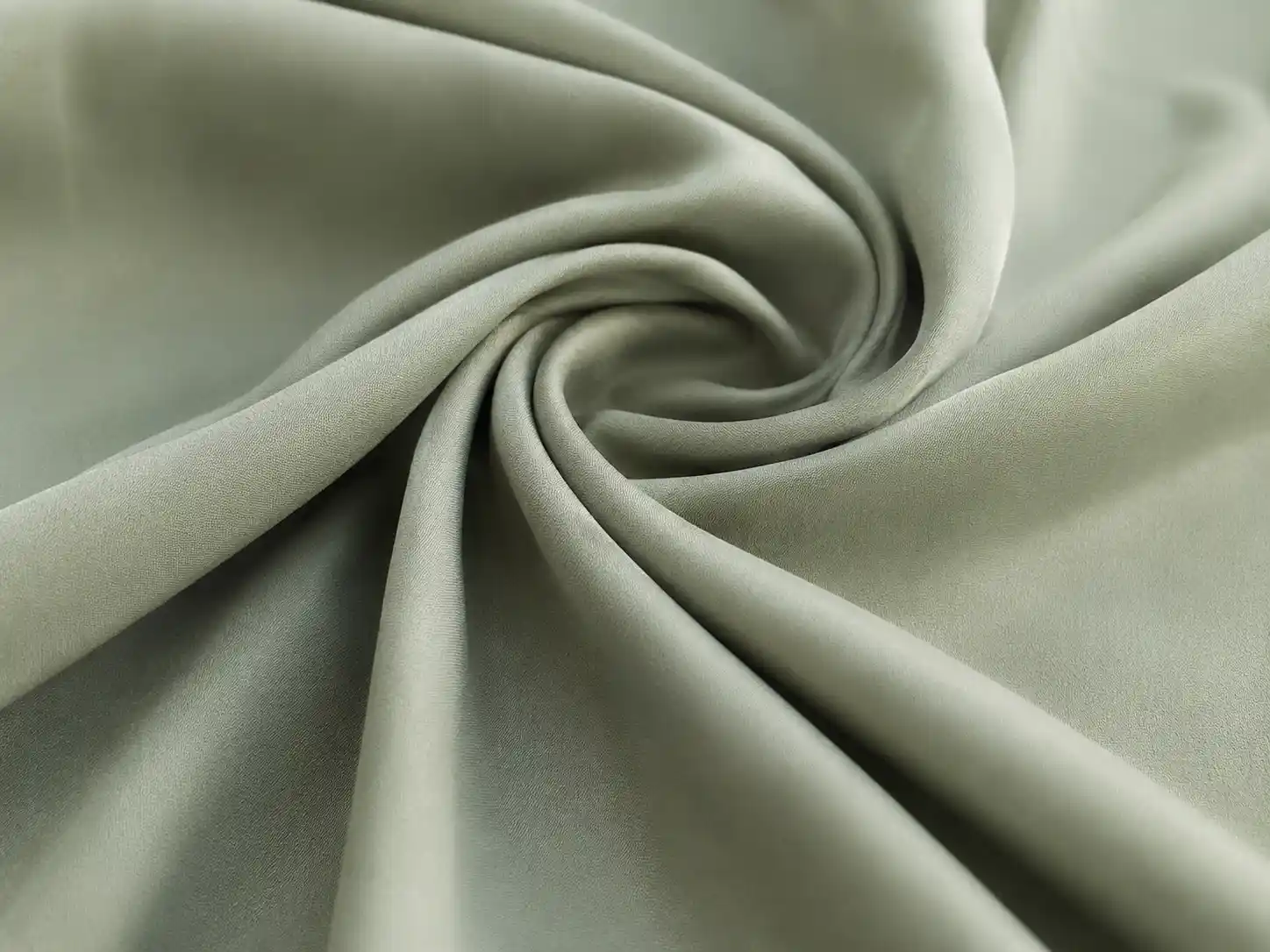
What Is Rayon Fabric?
Rayon is a regenerated cellulosic textile fiber made by converting purified plant cellulose into a soluble material and then forming it into new filaments. Although its raw material comes from plants, rayon is not an untreated natural fiber. Its softness, absorbency, drape, strength, and care performance vary according to fiber type, yarn structure, fabric construction, finishing method, and garment design.
What Rayon Is Made From
The basic raw material used to produce rayon is cellulose, the substance that forms much of the structure of plants. Commercial fiber producers usually work with dissolving-grade pulp because it contains a high proportion of purified cellulose and can be processed into a consistent spinning solution. Common pulp sources may include eucalyptus, beech, spruce, pine, bamboo, or a controlled blend of several plant materials.
Plant origin does not make the finished fiber identical to cotton or linen. Cotton fibers grow naturally around the seed and retain their original structure during spinning. Linen fibers are extracted from flax stems and remain recognizable plant fibers. Rayon production takes a different route: cellulose is separated from the original plant, chemically dissolved, filtered, and re-formed into a continuous filament or staple fiber.
This distinction explains why rayon is generally classified as a regenerated cellulosic or man-made cellulosic fiber. The polymer is plant-derived, but the textile fiber is created industrially. That classification gives customers a more accurate picture than calling rayon entirely natural or treating it as a petroleum-based synthetic similar to polyester.
The pulp source can affect traceability and environmental documentation, although it does not determine garment quality by itself. Responsible sourcing programs may review forest management, pulp-mill controls, recycled cellulose content, chemical recovery, wastewater handling, and chain-of-custody records. Two fabrics carrying the same “100% viscose” label may therefore come from very different supply systems.
Newer fiber programs may also use cellulose recovered from textile waste. Pre-consumer cutting scraps, unused fabric, or selected post-consumer clothing can be processed and blended with virgin pulp. These systems are developing quickly, but recycled percentages, color restrictions, fiber availability, strength, and commercial order volumes can vary. Claims should be supported by documents identifying the material source and verified recycled content.
How Rayon Is Made
Rayon manufacturing begins with purified cellulose pulp, which is prepared so that its molecular structure can be dissolved or converted into a spinnable solution. The exact chemistry depends on whether the fiber is viscose, modal, lyocell, or another regenerated cellulose type, but the objective remains similar: create a clean liquid material that can pass through extremely fine spinneret holes.
During conventional viscose production, prepared cellulose moves through several treatment stages before becoming a thick spinning solution. Filtration removes particles that might interrupt fiber formation or create uneven filaments. The solution is then pushed through spinnerets into a coagulation bath, where the cellulose regenerates as solid strands. These strands are washed, treated, dried, and prepared for later textile processing.
Continuous rayon filaments can be used to create smooth, lustrous yarns suitable for satin, linings, and flowing occasionwear. Other filaments are cut into staple lengths and spun into yarns that may feel softer, more matte, or more similar to cotton. Yarn twist, thickness, blending, and finishing then determine how the fabric handles, drapes, and responds to wear.
Fiber production is only one part of the final performance. Rayon yarn must still pass through weaving or knitting, preparation, dyeing, printing, washing, finishing, relaxation, inspection, cutting, sewing, pressing, and sometimes garment washing. Problems attributed broadly to rayon may actually begin during one of these later stages.
A knitted fabric delivered under excessive width tension may relax and shrink after laundering. A loosely woven fabric may slip at the seams even when its fiber quality is acceptable. A heavy finish may reduce breathability, while an aggressive washing process may change the surface. Reliable development therefore evaluates the finished fabric and completed garment, not only the fiber certificate.
Is Rayon Natural or Synthetic?
Rayon does not fit neatly into the everyday division between natural and synthetic fibers. Its cellulose comes from plants, but the original plant fiber is dissolved and reconstructed. The most accurate description is regenerated cellulosic fiber, because that term recognizes both the natural polymer source and the industrial fiber-forming process.
Calling rayon natural can create unrealistic expectations. A plant-based raw material does not mean that no chemicals, energy, or water are used during production. It also does not guarantee responsible forest sourcing, effective chemical recovery, low-impact dyeing, or long garment life. Those factors require separate evidence.
Calling rayon synthetic without further explanation can also be misleading. Polyester and nylon are generally produced from petroleum-based polymers and typically behave differently in moisture absorption, drying, static, heat response, and wrinkle recovery. Rayon often absorbs more moisture and feels less static-prone, but it may also dry more slowly and require more controlled washing.
The term semi-synthetic is commonly used in consumer discussions and can help explain rayon’s mixed origin. In professional product development, regenerated cellulosic is more useful because it separates fiber origin from textile performance. The classification encourages teams to evaluate the actual fabric rather than assuming it will behave like cotton simply because cellulose came from a plant.
How Fabric Form Changes Rayon
Rayon is a fiber category rather than a single fabric. It can be woven into challis, crepe, twill, satin, voile, or lining cloth, and it can be knitted into jersey, rib, interlock, ponte, or other stretch constructions. Every structure creates a different combination of drape, opacity, stability, strength, elasticity, and surface appearance.
A rayon challis is usually lightweight, matte, soft, and highly fluid. It suits printed dresses and blouses but may need careful seam selection because lighter constructions can move under stress. A rayon crepe often has a drier touch and a lightly textured surface, giving garments movement without the smooth shine of satin.
Rayon satin can produce excellent color depth and a polished appearance, but it may show needle punctures, seam puckering, pressing marks, or water spots. Rayon twill has more body and can work well for shirts, trousers, jumpsuits, and softly tailored dresses. Rayon jersey obtains most of its stretch from knitted loops and may require elastane when close fit and recovery are important.
| Rayon Fabric | Common Weight Range | Typical Garments | Main Production Checks |
| Rayon challis | 90–140 gsm | Printed dresses, blouses, skirts | Opacity, shrinkage, seam slippage |
| Rayon crepe | 110–180 gsm | Dresses, tops, jumpsuits | Dimensional change, snagging, pressing |
| Rayon satin | 100–190 gsm | Slip dresses, skirts, blouses | Needle marks, puckering, bias growth |
| Rayon twill | 150–240 gsm | Trousers, shirts, structured dresses | Shade consistency, abrasion, wash appearance |
| Rayon jersey | 160–240 gsm | Fitted dresses, tops, soft sets | Recovery, spirality, garment growth |
| Rayon rib | 180–300 gsm | Bodycon dresses, tops, loungewear | Width stability, stretching, pilling |
These weight ranges are useful starting points rather than universal standards. A 130 gsm fabric can feel transparent and loose or compact and stable depending on yarn size, density, finishing, and color. Complete specifications should include fiber content, fabric construction, usable width, weight, finish, stretch, shrinkage, colorfastness, and intended care method.

Which Rayon Types Are Common?
The most common rayon-related fibers are viscose, modal, and lyocell. Viscose is widely used for fluid fashion garments, modal is often selected for soft close-to-skin knits, and lyocell generally offers stronger wet performance and dimensional stability. TENCEL™ identifies branded modal or lyocell fibers, while bamboo rayon describes rayon made from bamboo-derived cellulose.
Viscose Rayon
Viscose is the rayon type most frequently found in mainstream fashion. Depending on the market, fiber-content labels may use rayon, viscose, or viscose rayon. The names are commonly associated with the same broad regenerated-cellulose family, although legal labeling language and commercial terminology can differ between countries.
Fashion companies use viscose because it combines softness, color depth, and flowing movement at a more accessible cost than silk. It is particularly suitable for printed dresses, wrap styles, blouses, tiered skirts, loose trousers, jumpsuits, coordinated sets, and summer collections where movement is more important than crisp structure.
Viscose can be produced as a continuous filament or spun staple yarn. Filament viscose is often smoother and more lustrous, making it useful for satin, linings, and evening pieces. Staple viscose may appear more matte and natural, especially in challis, crepe, twill, or blended fabrics. High-twist yarns can create a dry surface that feels less silky while still retaining fluid drape.
The main risks are connected with wet strength, dimensional stability, and fabric movement. Some viscose fabrics become weaker when saturated, making harsh washing, twisting, or aggressive tumble drying unsuitable. Lightweight fabrics may slip around side seams, zippers, armholes, or fitted hip areas. Long skirts and bias-cut panels may also grow under their own weight.
Performance depends greatly on construction and finishing. A compact, well-finished viscose crepe may remain more stable than a loosely knitted premium fiber. The word viscose cannot replace testing. Teams should examine wash shrinkage, seam behavior, pilling, colorfastness, opacity, pressing response, and hanging growth for the exact fabric and color selected.
Modal and Lyocell
Modal is a regenerated cellulosic fiber often associated with softness, smoothness, and improved tenacity compared with many conventional viscose fibers. It appears frequently in jersey, rib, underwear, loungewear, fitted tops, soft dresses, and garments worn close to the skin. Modal blends can also improve the hand feel of cotton or synthetic knit fabrics.
The quality of modal fabric still varies. A lightweight modal jersey can feel exceptionally soft but stretch at the shoulder, neckline, seat, or hem when the knitting structure lacks recovery. Pilling, spirality, and width shrinkage should be tested before the fabric is approved for fitted or frequently washed garments.
Lyocell uses a different solvent-spinning process and is generally known for good strength, moisture regulation, and versatility. It may be used in draped dresses, shirts, trousers, soft tailoring, denim blends, and premium casualwear. Woven lyocell twill can provide enough body for trousers while remaining softer and more fluid than many cotton twills.
Lyocell may develop surface fibrillation when wet fibers rub together. This can create a pale, fuzzy, peach-like, or washed appearance. Some collections use the effect deliberately, while others require a clean surface. Fiber type, finishing, enzyme treatment, washing, color, and garment construction influence whether fibrillation becomes attractive character or an unacceptable defect.
| Fiber Type | Typical Character | Common Applications | Main Evaluation |
| Conventional viscose | Fluid, absorbent, color-rich | Dresses, skirts, blouses, printed sets | Shrinkage, seam movement, wet handling |
| Modal | Soft, smooth, suitable for skin contact | Jerseys, rib dresses, tops, loungewear | Recovery, pilling, spirality |
| Lyocell | Stronger, smooth, moisture-regulating | Shirts, trousers, dresses, denim blends | Fibrillation, wash appearance, stability |
| Viscose filament | Lustrous, smooth, flowing | Satin garments, linings, occasionwear | Snagging, needle damage, puckering |
| High-wet-modulus rayon | Improved wet strength | Washable apparel and blends | Abrasion, dimensional performance |
These characteristics describe common tendencies rather than guaranteed results. Fabric construction can outweigh fiber reputation. A well-engineered viscose fabric may outperform an unstable modal knit, while a poorly finished lyocell fabric may show more surface change than the intended product can accept.
TENCEL™ Fibers
TENCEL™ is a trademark used for specific lyocell and modal fibers produced by Lenzing. It is not the generic name for every lyocell, modal, or rayon fabric. A material described as TENCEL™ Lyocell or TENCEL™ Modal should be supported by appropriate supply-chain documentation confirming use of the branded fiber.
This distinction matters because generic fiber and brand source answer different questions. The word lyocell identifies the fiber category and production route. TENCEL™ Lyocell identifies a particular branded source with its own traceability, communication rules, and technical documentation. The same principle applies to modal.
Branded fibers may support more detailed communication about wood sourcing, production systems, traceability, or fiber technology. They may also carry a price premium and require specific documentation or trademark approval. These factors should be reviewed when the product brief is created rather than added after the garment has entered production.
The branded name does not guarantee the quality of the completed garment. A TENCEL™ Modal rib can still suffer from poor recovery if the knitting and heat-setting process is unsuitable. A TENCEL™ Lyocell woven fabric can still change shade or surface after washing. Garment construction, dyeing, finishing, seam choice, and care instructions remain essential.
Product teams should verify how branded wording may appear on fiber labels, hangtags, online product descriptions, packaging, and advertising. Using a trademark without proof can create compliance and credibility problems. Precise naming protects both the brand and the customer while making the product information easier to trust.
Bamboo Rayon
Bamboo rayon is produced when bamboo supplies the cellulose used to manufacture rayon or viscose. Bamboo is converted into pulp, and the cellulose is dissolved and regenerated into textile fibers. The soft fabric sold in clothing is therefore usually rayon made from bamboo rather than mechanically extracted bamboo fiber.
This difference affects product descriptions. The phrase bamboo fabric may encourage customers to imagine that the stalk has been processed and spun directly in the manner of flax. In most commercial clothing, the manufacturing route is much closer to standard viscose production, with bamboo serving as the cellulose source.
Bamboo grows rapidly, but plant growth is only one part of environmental performance. Pulp production, chemical management, energy use, wastewater treatment, transportation, dyeing, finishing, durability, and garment care also contribute to the final impact. A fast-growing raw material cannot compensate automatically for poorly managed processing.
The soft and absorbent feel often associated with bamboo clothing is largely created by the regenerated cellulose fiber, yarn, and fabric construction. Similar qualities may be achieved with rayon made from other cellulose sources. Marketing should therefore avoid suggesting that softness, moisture behavior, or comfort is unique to bamboo.
Sourcing teams should request the exact fiber description, fiber-content test results, supplier details, and evidence for any environmental claim. “Viscose made from bamboo” is more precise than a broad description such as natural bamboo textile. Accurate language reduces confusion and gives customers a clearer understanding of what they are purchasing.

How Does Rayon Perform?
Rayon usually provides a soft hand, strong color depth, moisture absorption, and fluid drape. It can perform extremely well in dresses and lightweight clothing, but some constructions may crease, shrink, weaken when wet, or lose shape. Breathability, stretch, opacity, durability, and wash results depend on fabric density, yarn, finish, blended fibers, garment shape, and care method.
Feel and Drape
Rayon is often chosen because it can move naturally with the body. It forms soft folds, fluid gathers, and clean flowing lines without the crispness of cotton poplin or the springy resilience of some polyester fabrics. This makes it especially useful for garments where movement and visual softness shape the overall design.
The hand feel can range from smooth and silky to dry and lightly textured. Rayon satin feels polished and cool, while a high-twist crepe has a more granular surface. Challis is light, soft, and matte. Twill adds body and structure. Jersey feels flexible and may cling more closely to the figure.
Drape is not always an advantage. A fabric that falls beautifully in a skirt may collapse around a tailored collar or structured bodice. Very fluid materials can reveal seam allowances under pale colors, cling to the body, or distort along bias-cut edges. Softness must support the intended silhouette rather than work against it.
Development teams commonly evaluate a larger hanging swatch rather than relying on a small cutting. The fabric should be observed on a dress form, sewn into important seams, pressed, photographed, and worn during movement. These checks show whether the material creates controlled flow or uncontrolled growth.
Long dresses deserve special attention because the weight of the skirt can stretch bias areas during hanging. Samples may need to rest for at least 24 hours before the hem is finalized, depending on construction and fabric behavior. Uneven growth should be corrected through pattern balance, cutting control, hanging time, and suitable stabilization.
Breathability and Moisture
Rayon is often comfortable in warm-weather clothing because regenerated cellulosic fibers can absorb moisture and are frequently used in light constructions. The word breathable, however, should not be treated as a guaranteed characteristic of every rayon garment. Airflow depends greatly on fabric density, thickness, surface finish, garment fit, lining, and layering.
A loose rayon challis dress can feel airy because the fabric is lightweight and the garment allows air to circulate. A compact rayon-nylon ponte dress may feel much warmer, even when rayon forms a large part of the composition. A fully lined satin garment can also trap heat despite the absorbent shell fabric.
Moisture absorption, air permeability, and drying rate are separate properties. Rayon can absorb perspiration effectively, but it may release that moisture more slowly than a lightweight synthetic fabric. In humid conditions, an absorbent garment may remain damp for longer. In dry heat, that same absorption may contribute to a comfortable initial feeling.
Opacity must be reviewed alongside warm-weather comfort. Reducing fabric weight can improve airflow but increase transparency. Adding a full polyester lining may solve the opacity issue while reducing the comfort expected from the rayon shell. Alternative solutions include double-layer placement, partial lining, tonal slips, denser yarn construction, or suitable garment volume.
Color and print also influence practical wear. Very dark shades may absorb more heat under direct sunlight, while large printed areas and heavy surface finishes can affect how the fabric feels. Product evaluation should reflect the actual color, print, lining, and fit rather than a laboratory swatch alone.
Stretch and Recovery
Rayon fiber does not provide the high elastic recovery associated with elastane. A rayon fabric can still stretch because of knitted loops, loose yarn arrangement, bias direction, mechanical finishing, or blended stretch fibers. This means that the same fiber content can produce fabrics with very different movement and shape retention.
Rayon jersey often stretches across the width because of its looped knit structure. Adding elastane improves extension and recovery, making the fabric more suitable for fitted dresses, tops, skirts, and coordinated sets. A common blend may contain a small percentage of elastane, but fiber percentages alone do not predict performance.
Yarn count, knitting gauge, loop length, elastane quality, dyeing temperature, heat setting, and finishing tension all influence the finished stretch. Two fabrics labeled 95% rayon and 5% elastane may have different usable stretch, recovery, width stability, and surface feel. Both must be measured rather than treated as interchangeable.
Recovery is more important than extension alone. A fabric may stretch comfortably by 40% or more but fail to return to its original dimension. Poor recovery can cause bagging at the seat, knees, elbows, waist, shoulders, or neckline. Fitted clothing should be tested after repeated extension, wear, laundering, and rest.
Woven rayon presents a different issue. Straight-grain stretch may be limited, but diagonal bias areas can extend under garment weight. Slip dresses, bias skirts, asymmetric hems, and cowl necklines require careful pattern balance, panel handling, hanging time, and stabilization around openings and zippers.
Shrinkage and Wet Strength
Rayon shrinkage can result from several interacting factors. The fiber may swell during washing, yarns may relax, knitted loops may recover from production tension, woven structures may tighten, and finishes may release. Heat, agitation, drying, pressing, and garment washing can all change the final dimensions.
Conventional viscose often loses part of its strength while wet. Rough washing, twisting, excessive extraction, or high-temperature tumble drying may therefore cause distortion or damage. The degree of sensitivity depends on the fiber quality and finished fabric. Modal and lyocell generally offer stronger wet performance, but they still require verified care testing.
Testing fabric before cutting is necessary, but completed garments should also be checked. Fusing, stitching, steaming, pressing, lining, elastic insertion, and garment washing can change dimensions differently from an unsewn fabric sample. A dress may meet fabric shrinkage limits but still become shorter because the skirt grows during sewing and then relaxes during laundering.
| Test Area | Practical Development Measure | Common Working Reference* |
| Woven wash shrinkage | Length and width after approved care cycle | Often controlled near ±3% |
| Knit wash shrinkage | Length and width after approved care cycle | Often controlled near ±5% |
| Residual growth | Dimension remaining after stretch and rest | Commonly below 3–5% |
| Knit spirality | Side-seam movement after washing | Often below 5% |
| Pilling | Surface appearance after abrasion | Frequently grade 3–4 or above |
| Wash colorfastness | Shade change and staining | Frequently grade 3–4 or above |
| Dry or wet rubbing | Color transfer during friction | Set according to shade and market |
| Garment hanging | Hem level after controlled rest | No visible unacceptable imbalance |
*These figures are common apparel-development references, not universal pass standards. Final limits depend on the retailer, test method, product category, price level, target market, fabric weight, color, and care instruction.
Practical controls include relaxing fabric before cutting, testing the exact bulk color, checking width and weight roll by roll, measuring samples before and after pressing, conducting repeated care cycles, and allowing long garments to hang before hemming. Care labels should reflect tested performance rather than being used to hide unresolved stability issues.

How Does Rayon Compare?
Rayon is normally softer and more fluid than cotton, more absorbent and less wrinkle-resistant than polyester, and more affordable but generally less resilient than silk. Viscose, modal, and lyocell also perform differently from one another. A suitable choice depends on silhouette, care expectations, climate, durability, cost, surface appearance, and the way the garment will be worn.
Rayon and Cotton
Rayon and cotton both contain cellulose, but they reach the textile stage in different ways. Cotton grows as a natural fiber around the plant seed and is cleaned, prepared, and spun. Rayon cellulose is purified, dissolved, and regenerated into a newly formed textile fiber.
Cotton is often associated with a dry, familiar touch, good wet strength, and broad washability. It can create crisp poplin, durable twill, light voile, stretch sateen, denim, or soft jersey. Rayon generally offers a smoother hand, heavier flow, stronger drape, and excellent color depth.
Garment shape should guide the decision. Cotton poplin can support a structured shirt dress, pointed collar, puff sleeve, or gathered skirt with clear volume. Rayon challis creates a softer dress with less stiffness and more movement. Neither result is automatically better; each supports a different visual direction.
Both fibers can wrinkle and shrink. Cotton may tolerate household laundering more easily, while some viscose fabrics need gentler handling. Finishing can change these expectations. A treated cotton may resist creasing, while a carefully stabilized rayon may remain dimensionally consistent under the approved care method.
Rayon-cotton blends can balance body, softness, absorbency, and drape. The blend does not automatically capture every advantage of both fibers. The fabric still needs checks for shrinkage, seam behavior, colorfastness, pilling, hand feel, and pressing because construction and finishing determine the final result.
Rayon and Polyester
Polyester is generally stronger, more wrinkle-resistant, faster-drying, and more dimensionally stable than conventional rayon. It performs well in pleated garments, travel clothing, uniforms, satin, chiffon, crepe, and styles that need reliable shape recovery. It can also feel less absorbent or create more static, depending on the construction and finish.
Rayon normally feels more absorbent and often more natural against the skin. It creates a heavier, softer fall and can produce excellent color depth. These qualities make it attractive for relaxed dresses, blouses, skirts, trousers, and resortwear. The trade-off may be greater care sensitivity and lower wet strength.
The comparison should be based on the actual fabric rather than fiber stereotypes. Lightweight polyester chiffon can feel airy because of its open structure, while dense rayon ponte can feel warm. A brushed polyester may feel soft, while a poorly finished viscose may feel harsh. Construction can alter expected fiber behavior.
Rayon-polyester blends can improve strength, drying speed, crease recovery, and dimensional stability while preserving part of rayon’s softness. They may be useful for dresses requiring easier care or more consistent bulk performance. The blend can also feel less fluid and may create recycling challenges because different fiber polymers are combined.
For a travel dress expected to recover after packing, a polyester-rich blend may be practical. For a flowing summer dress where soft movement and moisture absorption matter more, viscose or lyocell may be preferable. The final decision should reflect the customer’s real use rather than a general fiber ranking.
Rayon and Silk
Rayon is often compared with silk because both materials can create fluid movement, rich color, and a smooth surface. Rayon filament satin can imitate part of silk’s shine and drape at a lower raw-material cost, making it popular for slip dresses, skirts, blouses, and occasionwear.
Silk is a natural protein fiber with its own luster, resilience, thermal behavior, and prestige. High-quality silk can feel light while remaining strong, and its surface reflects light differently from most rayon satins. Rayon may reproduce the visual direction without matching the full sensory or performance character.
Both fibers require careful production. Rayon satin may show needle holes, seam puckering, pressing shine, snagging, water spots, or bias growth. Silk may suffer from abrasion, perspiration, unsuitable detergents, water marking, or careless pressing. A luxury fiber is not automatically easier to manufacture or maintain.
Rayon can be the more appropriate choice for collections requiring strong color repeatability, accessible retail pricing, larger volumes, or a specific print program. Silk may be more suitable when natural fiber identity, premium positioning, weight-to-strength performance, and authentic luster are central to the product.
The comparison should remain honest. Describing rayon as artificial silk may help explain appearance, but it can also reduce a complex material to imitation. Rayon has its own value as a versatile regenerated cellulose fiber rather than merely a substitute for something else.
Viscose, Modal, or Lyocell
Viscose is often selected for broad availability, print clarity, fluid drape, and competitive cost. Modal is valuable where softness and close-to-skin comfort are priorities. Lyocell commonly provides stronger performance, a clean surface, and useful moisture behavior for premium casual garments and soft tailoring.
A lightweight printed dress may perform well in viscose challis or crepe, provided shrinkage, opacity, and seam slippage are controlled. A fitted rib dress may benefit from modal or viscose blended with elastane, but recovery and pilling remain important. A trouser or shirt may work well in lyocell twill when the fabric has suitable body.
The fiber type should not be chosen from trend language alone. A premium fiber can still be unsuitable for a garment if it lacks the necessary structure. A basic viscose may be highly effective when its construction, finishing, and testing are handled properly.
| Garment Requirement | Commonly Suitable Option | Practical Advantage | Main Risk |
| Lightweight printed dress | Viscose challis or crepe | Fluid movement and print depth | Shrinkage, transparency, seam slippage |
| Fitted rib dress | Modal-elastane or viscose-elastane | Softness and stretch | Recovery, pilling, spirality |
| Soft trousers | Lyocell twill | Body with controlled drape | Fibrillation, knee growth |
| Slip dress | Viscose filament satin | Smooth surface and shine | Needle marks, bias growth |
| Premium casual shirt | Lyocell woven | Strength and moisture comfort | Wash whitening, collar stability |
| Lounge set | Modal jersey | Soft hand and skin comfort | Surface wear, dimensional change |
| Easy-care travel dress | Rayon-polyester blend | Faster drying and better recovery | Static, pilling, reduced absorbency |
Blends may solve specific problems. Lyocell-linen can soften linen, viscose-nylon can improve strength, modal-cotton can balance softness and familiarity, and elastane can provide recovery. Every addition changes dyeing, finishing, care, recycling, and garment performance, so blend selection should begin with a clear product requirement.

How Should Brands Select Rayon?
Rayon should be selected by matching fiber type, fabric construction, weight, finish, color, and care performance to the intended garment. A dependable process includes large swatch review, sewing trials, wash testing, dimensional checks, seam evaluation, hanging tests, bulk-lot approval, and verification of fiber and environmental claims before production begins.
Match Fabric to the Garment
Rayon works best when its drape supports the intended design. It is particularly effective in wrap dresses, tiered skirts, bias silhouettes, blouses, jumpsuits, wide-leg trousers, resortwear, coordinated sets, and relaxed tailoring. Heavier twill, compact knit, interlining, or lining may extend its use into more structured garments.
The garment’s stress areas should be identified early. A loose blouse places relatively little pressure on the fabric, while a fitted woven dress with a concealed zipper creates concentrated stress at the hip, waist, armhole, and back seam. Lightweight rayon may require reinforcement, wider seam allowances, suitable stitch density, or a more stable construction.
Long garments need careful weight control. A tiered maxi dress can place significant load on the upper skirt seams. Bias panels can lengthen during hanging. Heavy trims, beads, metal accessories, or multiple layers can increase distortion. The fabric must support the full garment rather than only look attractive as a single layer.
Opacity is another commercial concern. Light colors and delicate prints may require lining, but lining changes comfort, drape, cost, and care. Partial lining, double layers, self-fabric slips, tonal undergarments, or denser fabric construction may provide better results than automatically adding a full synthetic lining.
A sample should reproduce the planned bulk garment closely. Changing the lining, zipper weight, fusible, elastic, seam type, or garment wash after testing can alter the final drape and dimensions. Development decisions should be recorded so that the bulk factory follows the approved construction rather than interpreting it independently.
Control Weight and Construction
Fabric weight is useful, but it cannot describe a fabric completely. Two rayon fabrics at 130 gsm may differ substantially in opacity, tensile strength, seam slippage, drape, surface texture, and shrinkage. Yarn count, twist, weave density, knitting gauge, finishing tension, and usable width all affect commercial suitability.
Woven rayon should be examined for seam movement, fraying, bowing, skew, weft distortion, and bias growth. Lightweight dresses may require seam slippage tests around the hip or zipper. Satin constructions need fine needles, controlled thread tension, clean machine surfaces, and careful pressing to prevent visible damage.
Knitted rayon should be checked for spirality, width variation, recovery, edge curling, and relaxation shrinkage. A roll delivered under excessive tension may appear wider during inspection and then contract before or after cutting. Relaxation time should be established through actual trials and included in the cutting instructions.
Bulk-roll control is necessary because laboratory approval does not guarantee roll consistency. Usable width, weight, shade, surface defects, bowing, and skew should be checked according to the quality plan. Shade grouping is particularly important for solid dark colors and large garments where panels from different rolls can appear visibly different.
Marker efficiency may change when usable width varies by only a few centimeters. A width reduction can increase fabric consumption and disrupt costing. The purchase specification should therefore state usable cuttable width rather than only nominal loom or finished width.
Test Before Bulk Production
A visually successful sample does not provide enough evidence for bulk approval. Testing should reflect the actual fabric color, print, garment construction, market, care label, and manufacturing route. Results from an undyed laboratory fabric cannot automatically be applied to a dark bulk shade or printed production lot.
A practical rayon test program may include fiber-content verification, weight, usable width, dimensional stability, colorfastness to washing and rubbing, seam slippage, tensile or bursting strength, pilling, abrasion, stretch, recovery, spirality, pressing compatibility, and appearance after repeated care cycles.
Garment-level tests are equally important. A completed dress should be measured before and after washing, observed on a form, checked for zipper waviness, seam puckering, neckline distortion, hem growth, color change, and surface damage. Testing only flat fabric can miss interactions between the fabric, thread, lining, fusible, elastic, trims, and construction.
Repeated wash cycles reveal problems that may not appear after the first wash. Some fabrics lose most of their dimension immediately and then stabilize, while others continue to shrink or deteriorate. The chosen number of cycles should reflect customer expectations, garment category, price position, and retailer requirements.
Testing limits should be agreed before bulk cutting. When results fall outside the target, possible solutions include adjusting finishing, changing fabric, reinforcing seams, modifying pattern dimensions, revising care instructions, or repeating development. Pattern compensation should not be used to hide irregular and uncontrolled shrinkage.
Verify Material Claims
Rayon sourcing increasingly includes questions about wood origin, recycled content, chemical processing, branded fibers, biodegradability, and certifications. These subjects should be addressed with precise language and supporting documentation rather than broad environmental promises.
A useful documentation file may include the fiber producer, fiber-production location, fiber-content report, forest-source certification, recycled-content certificate, transaction documentation, chemical compliance records, restricted-substance test results, branded-fiber authorization, and supplier declarations supporting specific claims.
Plant-based does not automatically mean low impact. Certified wood sourcing does not describe dyeing, finishing, energy, or wastewater performance. Biodegradable does not mean a garment will disappear quickly under every disposal condition. Recycled content does not guarantee durability or safe chemical management.
Clear claims are more credible than expressions such as completely sustainable, chemical-free, or totally eco-friendly. A statement should identify the exact verified feature, such as certified wood input, a stated recycled-cellulose percentage, a recognized fiber brand, or compliance with a defined restricted-substance requirement.
Accurate claims also help search engines, AI systems, retailers, and customers understand the product. Detailed specifications, test methods, traceable documents, and consistent terminology provide stronger evidence than promotional language. Reliable information is easier to cite, compare, and trust.
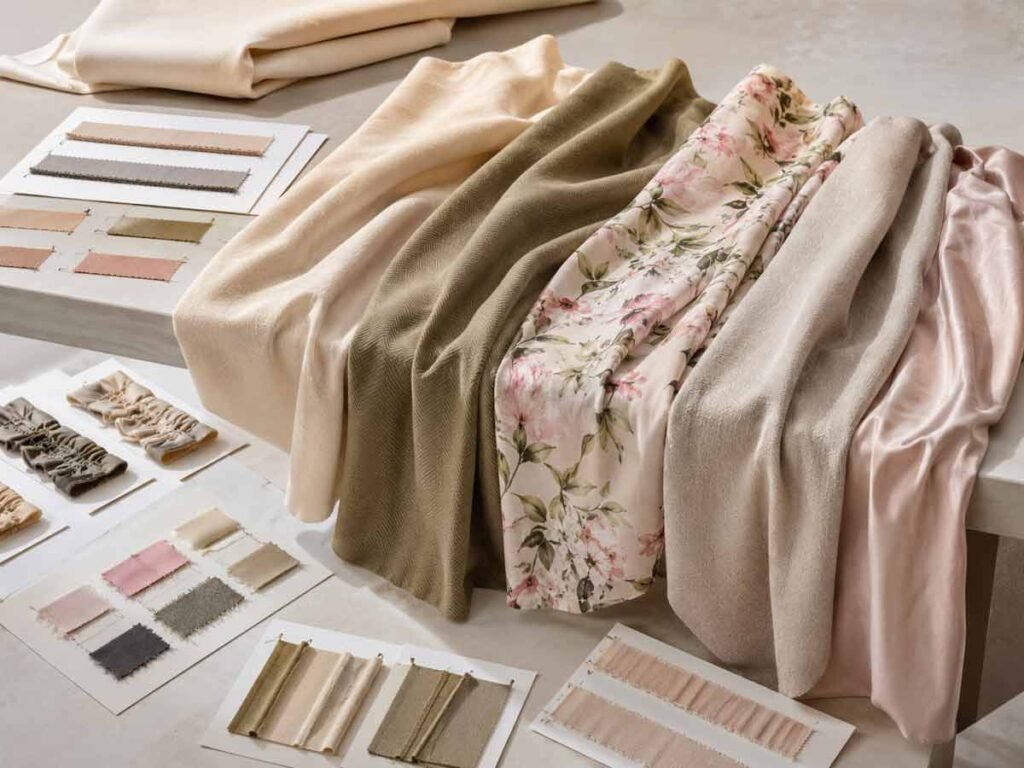
Rayon is not one uniform material. It is a broad family of regenerated cellulosic fibers that can be engineered into lightweight challis, textured crepe, glossy satin, soft jersey, stable twill, and many other fabrics. Its strongest qualities include softness, absorbency, color depth, and fluid drape, while common concerns include shrinkage, wet handling, creasing, seam movement, and shape stability.
Successful rayon garments begin with a clear product brief. Fiber type, weight, construction, surface, stretch, lining, care method, and performance targets should be agreed before sampling. The fabric must then be tested in the actual garment rather than approved from composition, price, or hand feel alone.
For dress collections, a few practical controls make a major difference: relax the fabric before cutting, test every important color or print, inspect seam stability, measure garments after repeated care cycles, allow long skirts to hang before hemming, and verify material claims before marketing begins.
Duolan Apparel supports custom womenswear development from fabric evaluation and sampling through fit adjustment, construction review, bulk production, quality inspection, labeling, and packaging. Brands developing rayon dresses, blouses, skirts, jumpsuits, coordinated sets, or related fast-fashion products can submit reference images, technical files, target quantities, fabric preferences, size requirements, and delivery plans for a project review and quotation.