Skip to content

The going-out dress is changing because the night itself has changed. A customer may move from dinner to a rooftop bar, appear in dozens of phone photographs, sit for several hours, and still expect the same dress to feel secure when she walks, dances, or leans across a table. A low neckline or a layer of sequins is no longer enough to make a design feel current. The dress has to deliver a clear visual idea while handling real movement, close-up photography, repeat wear, and the practical expectations created by online reviews.
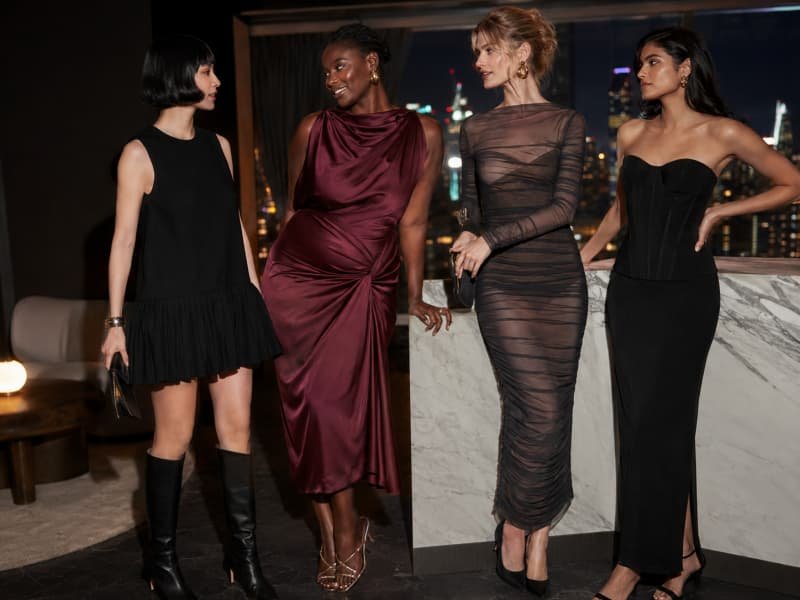
The biggest going-out dress trends for 2027 are likely to include elongated drop waists, modern little black dresses, refined bodycon shapes, corset-inspired bodices, halter and open-back silhouettes, saturated satin, layered transparency, controlled draping, rosettes, and selectively placed embellishment. The strongest products will combine sensuality with reliable support, deliberate proportions, occasion relevance, and construction that can be repeated consistently in production.
This forecast uses Resort 2027 collections, early Spring 2027 signals, and directions already building through 2026. It is deliberately cautious because the main New York, London, Milan, and Paris Spring/Summer 2027 womenswear weeks run from September into early October 2026. The final picture will sharpen after those shows, but the early evidence already reveals a useful shift: the most interesting dresses are not simply louder. They are more controlled, more tactile, and more aware of how a woman actually spends an evening. That is where the difference between a striking sample and a lasting seller begins.
What Will Define Going-out Dresses in 2027?
Going-out dresses in 2027 will be defined by polished sensuality, clear occasion use, and stronger technical execution. Customers will still want bold necklines, fitted silhouettes, shine, and strategic exposure, but the best styles will also remain secure while sitting and moving. Drop waists, updated black dresses, transparent layers, saturated color, rosettes, and localized jewellery effects are the clearest early signals.
A More Considered Kind of Glamour
Going-out fashion is not becoming less expressive; it is becoming more deliberate. For several seasons, many party dresses followed an obvious formula: a very short hem, a low neckline, multiple cutouts, tight fabric, and visible shine. That combination still attracts attention, but it can date quickly and often creates several technical problems at once. When the neckline, back, waist, and hem all compete, the garment becomes harder to stabilize and the wearer has more areas to monitor throughout the evening.
The stronger 2027 direction is controlled impact. A low-back midi can keep the front almost minimal. A corset mini can combine a defined bodice with a clean skirt rather than adding ruching, crystals, and extra cutouts. A transparent dress can use opacity over the bust and hip while leaving the sleeve, waist, or lower skirt sheer. This creates hierarchy, gives photography a clear focal point, and makes the design easier to understand in a thumbnail image.
Construction will increasingly influence whether glamour feels premium. A neckline that stays flat, a cup that follows the intended bust shape, and a lining edge placed with purpose are not minor production details; they determine how confident the dress feels. A dramatic design loses its appeal when it gaps during movement, twists at the side seam, or rides upward after a few steps. The visual idea and the wearing experience must be developed as one product rather than treated as separate stages.
The New Meaning of Going Out
A going-out dress is no longer tied to one venue. The same customer may wear it to a birthday dinner, cocktail bar, concert, holiday event, late-night restaurant, or rooftop gathering. She may style it with a blazer for the first part of the evening and remove the layer later. This broader use means the category should be treated as a social occasion system rather than one narrow clubwear aesthetic.
The most useful definition is practical: a going-out dress should make an evening outfit feel intentional while providing more visual impact than ordinary daywear. It may be a black halter mini, a draped satin midi, a fitted long-sleeve mesh dress, or an embellished column. These products do not need to look identical. They belong together because they are designed around social visibility, evening styling, movement, and a stronger emotional reason to purchase.
Versatility does not mean every dress should work everywhere. A micro mini for a nightclub and a sculpted midi for a restaurant solve different needs. The important point is that each style should have a clear use case. Product teams can make better decisions when the brief names the expected venue, wear time, movement level, underwear solution, outerwear pairing, and likely lighting. A dress designed around a real evening is usually more convincing than one developed only from an isolated reference image.
| Trend signal | Practical product translation | Commercial strength | Main development risk |
| Drop waist | Low-yoke mini, fitted midi, or softly released skirt | Creates an immediately different proportion without costly decoration | Poor seam placement can widen the hip or shorten the leg visually |
| Modern LBD | Sculpted black mini, shift, or column with one clear focal point | Familiar color supports repeat wear and broad styling | The style can look ordinary when shape and workmanship are weak |
| Layered transparency | Mesh sleeve, waist panel, sheer overskirt, or shorter internal lining | Adds sensuality while controlling coverage | Opacity may change under flash, stretch, or warm venue lighting |
| Jewellery effects | Crystal neckline, beaded strap, tonal sequin panel, or hip clasp | Provides campaign impact and close-up value | Weight, snagging, skin contact, and attachment security |
| Saturated color | Hero satin, jersey, or velvet shade supported by black | Refreshes proven silhouettes and creates visual range | Lab dips may photograph differently on shiny or piled surfaces |
| Soft corsetry | Shaped seams, flexible boning, and controlled internal support | Defines the body without severe restriction | Cup scaling and edge stability can fail across sizes |
Runway Signals and Retail Reality
Resort 2027 has already supplied several credible directions. Vogue’s June 2026 season report highlighted flapper-influenced drop waists, deep yokes that lengthen the torso, renewed little black dresses, rosettes, exposed bandeau shapes, and jewels used as decoration or as garment-like surfaces. Chanel’s Resort 2027 opening look reinforced the message with a deep-V black shift, geometric stitching, and a clearly lowered waistline. These are useful signals because they alter recognizable dress forms rather than depending on one short-lived novelty.
The commercial opportunity is rarely a literal copy of the runway. A deep yoke can become a low-waist mini that works in compact jersey or satin. A jewel-covered runway surface can become a crystal neckline, decorated strap, or concentrated hip detail. A dramatic black shift can be translated into a fitted midi with geometric seams and a low back. The value lies in identifying the visual code beneath the show styling and adapting it to the brand’s customer, price position, and production method.
Runway attention and social visibility should also be balanced with product evidence. A look may circulate because it is surprising, yet still be uncomfortable, difficult to size, or expensive to reproduce. Social media reveals what attracts the eye; fitting sessions reveal what the body accepts; reviews and return reasons reveal what survives real ownership. The strongest trend decisions come from all three, not from the loudest image alone.
What Will Carry Forward
Commercial fashion usually evolves through adjustment rather than sudden replacement. Babydoll shapes, lace-trim slips, fitted strapless dresses, colorful satin, body-skimming maxis, and drop waists already gained visibility through 2026. Their staying power comes from adaptability. Each can be refreshed through length, neckline, waist position, fabric weight, color, or styling without forcing the customer to learn an entirely unfamiliar product category.
A babydoll dress can move from daytime cotton into structured satin, velvet, or transparent organza for evening use. A lace-trim slip can gain a stronger waist, asymmetric hem, or contrasting underlayer. A strapless tube can become a curved neckline with contour seams and a low waist. Satin can move beyond champagne and black into tomato red, plum, turquoise, petrol blue, or deep brown. These changes feel new while preserving shapes customers already understand.
The strongest carryovers will be trends that can support several occasions, colors, and price levels. A detail that only works in one viral photograph may struggle to create a complete range or support repeat orders. A useful trend should be capable of producing a campaign piece, a more wearable version, and at least one shape that can return in new colors. That repeatability is often a better measure of commercial relevance than the number of times an image appears on a mood board.

Which Silhouettes Will Lead 2027?
The leading 2027 silhouettes are likely to include elongated drop waists, fitted strapless columns, engineered bodycon dresses, soft corset bodices, halter necklines, and low-back shapes. Minis will remain important for energetic party dressing, while sculpted and draped midis will cover dinners, cocktails, and more polished social occasions. Deliberate waist placement and secure support will matter more than extreme exposure.
Drop Waists and Extended Torsos
The renewed drop waist is commercially interesting because it changes the proportion of a dress without requiring heavy decoration. Moving the seam below the natural waist lengthens the torso and delays the point where the skirt begins. The result can feel clean, softly romantic, or deliberately retro depending on the fabric, skirt release, and neckline. Resort 2027 coverage suggests the idea is continuing rather than appearing as a single-season experiment.
Several versions can work in the going-out market. A straight low-waist mini creates a neat, youthful line. A fitted upper body released into a gathered or godet skirt adds movement. A curved low yoke can define the hip without creating a hard horizontal break. A fitted midi may use an asymmetric waist seam to add shape while preserving a clean column silhouette. These variations allow one direction to reach different customers without becoming repetitive.
The exact seam position needs careful fitting. When it lands directly on the widest part of the hip, it may create tension or make the lower body appear broader. Moving the seam by only 20 to 30 millimetres can noticeably change the balance, although the ideal adjustment depends on body proportions and style length. The position should be reviewed across the intended size range because a simple proportional grade may distort the torso length or place the seam incorrectly in larger sizes.
Bodycon and Soft Corsetry
Bodycon dresses will remain relevant because close-fitting silhouettes are deeply connected to going-out fashion. The stronger 2027 versions will create shape through contour seams, controlled negative ease, double layers, selective compression, and draping rather than simply using the tightest available fabric. A well-developed dress should follow the body without sharp horizontal pulling, collapsed bust shaping, excessive waist folds, or constant upward movement at the hem.
Ride-up can come from several sources, including excessive negative ease, insufficient skirt length, an overly narrow hem, poor fabric recovery, or friction between the shell and lining. Stretch alone is not enough. A fabric may expand comfortably during fitting but remain permanently extended after sitting or dancing. Development teams should compare its dimensions before stretching, immediately afterward, and following a defined recovery period, using the test method required by the brand or laboratory.
Corset-inspired construction will continue, but many customers prefer definition without severe rigidity. Flexible boning, shaped panel seams, stretch back sections, lightweight interfacing, and stable neckline edges can produce the visual language of corsetry while allowing normal movement. The team should decide whether the bodice is genuinely supportive or only corset-influenced. Decorative seams do not replace an engineered strapless foundation, and cup volume requires more than simple proportional grading when the dress is expected to fit several bust shapes.
| Silhouette | Useful material behavior | Critical fit checkpoint | Common failure to prevent |
| Fitted bodycon mini | Reliable crosswise stretch with strong recovery; often 20-50% depending on construction | Hip, back length, hem circumference, and lining movement | Hem rides upward or fabric becomes loose after wear |
| Strapless column | Stable woven or controlled stretch fabric with reinforced upper edge | Upper bust, under-bust, waist, and neckline grip during arm movement | Neckline slips, rolls outward, or creates excessive pressure |
| Drop-waist mini | Fabric behavior matched to the upper-body fit and skirt release | Shoulder-to-low-waist length and seam position across sizes | Low seam cuts across the widest hip or shortens the leg visually |
| Halter dress | Enough stability to carry front weight without excessive elongation | Front neck drop, strap width, strap length, and underarm coverage | Neck pressure, armhole gaping, or bust movement |
| Low-back midi | Stable waist and side seam with controlled edge stretch | Back depth, waist stay, side seam position, and front neckline stability | Side seams rotate forward or the back edge stands away |
| Corset-inspired dress | Stable shell combined with flexible support and suitable lining | Cup volume, under-bust placement, waist, boning ends, and seated comfort | Cup overflow, empty cup area, or concentrated boning pressure |
Halter and Open-back Shapes
Halter and backless dresses create strong visual impact without depending on prints or full-surface embellishment. They work well in satin, compact jersey, velvet, and lined mesh, and they photograph effectively from the front, side, and back. This makes them valuable for campaign imagery, although their apparent simplicity can hide significant technical difficulty. Removing shoulder straps or lowering the back also removes part of the structure that normally keeps a bodice stable.
A narrow halter strap may carry too much garment weight and create pressure around the neck. A low back can allow side seams to rotate forward, the front neckline to open, or the waist to lose stability. Slippery satin can make these problems more visible because the shell moves easily against the body. Useful solutions include wider straps, stabilized neckline edges, internal elastic, waist stays, concealed neck closures, double-layered bust areas, and carefully positioned cups where the silhouette allows them.
Bra compatibility should be decided during development rather than left to product copy. A bra-friendly open back has different dimensions from a very low-back fashion style, and a halter dress that conceals a convertible bra requires a different strap and armhole plan from a backless design intended for adhesive support. Clear information reduces disappointment and prevents the garment from promising support that its structure cannot provide. Fit sessions should include turning, leaning, sitting, and at least twenty minutes of continuous wear.
Mini, Midi and Maxi Balance
Mini dresses will remain important for birthdays, clubs, holidays, and highly visual party edits. Relevant shapes include sculpted strapless minis, low-waist shifts, ruched mesh dresses, tulip skirts, and asymmetric hems. The main issue is rarely the standing length. The dress must be checked while walking, sitting, climbing steps, and raising the arms because the back hem may lift more than the front and a narrow skirt can travel upward even when the static measurement appears acceptable.
Midi dresses cover a wider range of occasions and can often support a higher perceived value. Fitted columns, bias-cut satin dresses, asymmetric draped styles, and semi-sheer midis can move between restaurants, cocktail events, and more formal social settings. Walking ease should come from suitable stretch, a properly placed slit, panel shaping, or sufficient hem width. A bias-cut dress should be hung and remeasured before the final hem is levelled because sections may lengthen after assembly.
Maxi and ankle-length dresses will be more selective but useful for resort evenings and elevated events. Their appeal often comes from an open back, transparent layer, high slit, or body-skimming fabric rather than large volume. A balanced range does not require equal quantities of each length. Allocation should follow historical sales, regional climate, customer age, average selling price, and the brand’s most important occasions. The silhouette mix should explain the collection rather than simply fill a numerical quota.

Which Colors, Fabrics and Details Will Stand Out?
Black will remain the commercial foundation of 2027 going-out dressing, supported by deep red, brown, aquatic blue, purple, metallic neutrals, and concentrated bright shades. Satin, stretch mesh, lace, velvet, compact jersey, and selectively embellished surfaces will stay relevant. Their success will depend less on novelty alone and more on weight, opacity, recovery, lining, color consistency, and deliberate detail placement.
Black, Saturated Color and New Neutrals
The little black dress remains useful because customers understand it immediately. It can be styled repeatedly, worn across seasons, and adapted to several venues. The 2027 opportunity is not to replace black but to make the silhouette or construction feel specific. A low waist, curved strapless neckline, sheer lower skirt, geometric contour seams, asymmetric shoulder, or jewellery-like back detail can refresh black without weakening its commercial familiarity.
Alongside black, richer colors are becoming more convincing. Vogue’s July 2026 review of early Spring 2027 color signals described a broader return to expressive combinations, including tomato red, plum, brown, aquatic blue, and unusual greens. For going-out dresses, these colors can create evening impact without depending on sequins. Deep wine, chocolate, petrol blue, turquoise, rust, purple, and metallic neutrals are practical directions, provided the final palette remains consistent with the brand’s established customer.
Color must be judged in the intended material rather than approved from a digital screen or isolated lab dip. The same red can look dense and luxurious in velvet, sharper in compact jersey, and more luminous in satin. Yarn direction, surface shine, pile, lining color, and venue lighting all affect perception. Review should include daylight, warm interior light, cool retail light, and direct phone flash, especially when the dress will be sold through photography-led online channels.
Satin, Mesh and Lace
Satin remains closely associated with evening dressing because it catches light and creates fluid movement. Lightweight satin works well for bias slips, draped necklines, and soft skirts, while heavier constructions offer more support for strapless shapes and sculpted panels. Neither is automatically premium. Lightweight satin may pucker, snag, or reveal internal allowances, while heavier satin can become bulky where several layers, boning channels, or zippers meet.
Stretch mesh supports bodycon dresses, transparent sleeves, ruched overlays, and layered skirts. Its performance depends on recovery as much as stretch. A material can stretch generously during fitting yet remain distorted after wear. Opacity should be checked at rest, under the intended negative ease, and under direct flash. The relationship between shell and lining also matters; a short lining can create a deliberate sheer effect, but an uncontrolled lining edge may cut across the body or become visible after movement.
Lace is moving beyond a single romantic look. Narrow trim can outline a neckline or hem, while larger motifs can create cups, side panels, sleeves, or a transparent outer layer. The scale and placement of the motif should work with the garment’s seam lines. Poor placement can make an expensive lace appear random, and cutting without a clear matching plan can increase waste. The edge finish, skin contact, snagging risk, and stability of any scalloped area should be reviewed before approval.
| Material | Common starting range | Useful applications | Priority checks before approval |
| Lightweight satin | About 90-140 gsm | Bias slips, draped minis, fluid midis, soft halters | Seam puckering, snagging, show-through, grain stability, and hem growth |
| Structured satin | About 140-220 gsm | Corset bodices, strapless dresses, shaped skirts, clean columns | Seam bulk, crease recovery, press marking, edge rolling, and support compatibility |
| Stretch mesh | About 90-180 gsm | Ruched bodycon styles, transparent sleeves, overlays, and lined panels | Stretch recovery, flash opacity, seam strength, lining interaction, and snagging |
| Compact jersey | About 180-300 gsm | Fitted minis, midi columns, cutout dresses, and draped bodycon styles | Pilling, recovery, ride-up, surface shine, shrinkage, and seam torque |
| Stretch velvet | About 220-340 gsm | Winter party dresses, fitted midis, and sculpted evening styles | Nap direction, pressure marking, color shading, seam impression, and recovery |
| Lace or motif mesh | About 70-220 gsm | Trims, cups, panels, overlays, sleeves, and transparent dresses | Motif placement, edge finish, snagging, skin contact, seam stability, and waste |
| Sequin or crystal fabric | About 180-350 gsm | Statement panels, birthday dresses, straps, and full party styles | Shedding, abrasion, attachment security, weight, stretch loss, and packing method |
Refined Sparkle and Surface Detail
Sequins and crystals will remain part of going-out dressing, but selective placement can make them feel fresher and easier to wear. Full-coverage sequin dresses still suit holiday launches and high-impact birthday edits, yet they introduce weight, scratching, seam difficulty, and greater inspection requirements. Resort 2027 collections also show interest in jewellery effects, tonal embellishment, crystal mesh, rosettes, and surface texture rather than one uniform layer of sparkle.
Localized embellishment often gives a better balance. Crystals can outline a neckline, define a low back, or concentrate around the waist. Scattered sequins can catch light without covering the entire surface. A beaded strap can transform a simple column, while a rosette can lead into draping and make one side of the dress memorable. The detail should be visible in a category-page thumbnail, attractive in a campaign image, and still clean when the customer inspects it at close range.
Every embellished area needs practical review. Decoration around the underarm may rub the skin. Heavy crystals on a soft neckline may pull the edge outward. Dense beading on stretch fabric can reduce recovery. Sequin edges caught inside a seam may scratch unless they are removed from the allowance and the seam is covered correctly. Samples are handled individually, but bulk units are bundled, inspected, folded, and shipped. The attachment method and packing plan must survive that less gentle reality.
Fabric Performance Before Approval
Fabric determines whether a silhouette behaves as intended. Two materials with the same stated fibre content can have different stretch, recovery, thickness, friction, drape, and surface stability. For a bodycon dress, the team should record stretch in both directions and identify how much negative ease the style can tolerate. For a bias satin dress, grain alignment and hanging time matter. For a strapless dress, the shell must work with lining, interfacing, cups, boning, and closure strength.
The most useful approval process goes beyond touching a swatch. Review usable width, actual weight, shrinkage, shade consistency, pilling, snagging, seam appearance, opacity, and recovery. The garment should be examined after the intended care process or a brand-approved simulation. When the design includes print, stones, foil, or sequins, the team should also check how the surface affects stretch, pressing, and repair. Test methods should follow the target market, product claim, and the brand’s quality manual rather than an informal universal standard.
Material substitution requires another fit review. A replacement satin may have a similar color and weight but a different drape or surface friction, changing how the skirt falls and how quickly the neckline moves. A mesh with stronger recovery may require less negative ease than the original. A new lining can improve opacity but add bulk. Treating replacements as visually equivalent without checking their mechanical behavior is a common reason that an approved sample and bulk production no longer look the same.

How Will Trends Change by Occasion?
Going-out trends will change according to wear time, movement, venue formality, climate, and the level of visual impact expected. Date-night and dinner dresses will favor controlled sensuality and seated comfort; club styles need secure stretch and recovery; birthday dresses can support stronger color and embellishment; vacation styles require breathable, packable construction that performs in warm settings and several types of venue.
Date Nights and Dinners
Date-night and dinner dresses work best when they feel considered rather than costume-like. The wearer may spend two or three hours sitting, eating, walking, and moving between venues. Extreme compression, unstable necklines, rough embellishment, and rigid boning can become uncomfortable quickly. Strong options include draped minis, soft bodycon midis, low-back columns, satin halters, and long-sleeve mesh dresses with controlled transparency and a clear balance between coverage and exposure.
A seated fitting is essential. Check whether the hem rises excessively, the waist folds, the zipper presses against the spine, the underarm cuts in, or the neckline opens when the wearer leans forward. A dress can look excellent in a standing photograph and still perform poorly through a meal. Internal support should remain comfortable during normal breathing, and the lining should not twist or gather when the customer moves from standing to sitting.
Styling flexibility increases the usefulness of this category. A dress that works with a blazer, leather jacket, or long coat can cover more climates and extend beyond one season. This does not mean the design should become plain. A low back, asymmetric neckline, sculpted waist, or rich surface can still create the emotional appeal of an evening purchase while the rest of the garment remains comfortable enough for a longer, slower occasion.
Clubs and High-movement Venues
Club dresses require the highest level of movement security. A dramatic design may perform well in a studio image but fail when the wearer raises her arms, turns, sits, climbs stairs, or dances. The hem can travel upward, a halter can pull on the neck, an off-shoulder edge can shift, and unlined mesh can become more transparent under flash. Compact bodycon minis, ruched mesh dresses, and secure halter styles remain useful when these risks are addressed early.
Stretch recovery should be prioritized over stretch alone. A fabric that expands easily but does not return can become loose at the waist or seat after several hours. A practical wear test should include repeated sitting and standing, arm movement above shoulder height, walking up steps, turning, bending, and direct-flash photography. Hem position, neckline security, lining movement, opacity, and seam recovery should be checked after the sequence rather than only during the first fitting.
Grip tape or clear elastic can help certain styles, but these components should not compensate for an incorrect pattern. Excessive tape can irritate the skin, and elastic applied with the wrong tension can create visible rippling. The objective is confidence, not simply tightness. The wearer should be able to enjoy the evening without repeatedly pulling down the hem, lifting the neckline, or checking whether the back has moved out of position.
| Occasion | Strong dress directions | Practical material choices | Performance priority |
| Date night | Draped mini, fitted midi, low-back column, clean halter | Soft satin, velvet, stretch crepe, compact jersey | Seated comfort, stable neckline, and smooth waist after several hours |
| Dinner or cocktails | Strapless midi, asymmetric column, refined LBD, draped satin dress | Crepe, structured satin, velvet, lined mesh | Polish, walking ease, balanced exposure, and outerwear compatibility |
| Club | Bodycon mini, ruched mesh, secure halter, asymmetric fitted dress | Stretch mesh, compact jersey, double-layer stretch fabric | Recovery, opacity under flash, hem control, and movement security |
| Birthday | Corset mini, crystal-detail dress, bold-color midi, metallic or rosette style | Structured satin, lined mesh, velvet, controlled embellishment | Photo impact, comfortable support, decoration security, and color accuracy |
| Vacation night | Backless maxi, halter mini, sheer-layer midi, lightweight slip | Light satin, mesh, chiffon, soft jersey | Breathability, packability, crease recovery, and selective lining |
| Holiday party | Sequin mini, velvet midi, jewelled LBD, statement column | Velvet, sequins, crystal mesh, structured jersey | Skin comfort, weight control, abrasion resistance, and safe packing |
Birthdays and Statement Events
Birthday dresses are among the most expressive parts of the going-out category. Customers are often willing to wear stronger color, sparkle, unusual texture, or a more sculpted silhouette because the garment is tied to a personal event and likely to appear in many photographs. Corset minis, crystal-trimmed dresses, bold satin midis, rosette details, metallic fabrics, and sheer overlays all fit the occasion when one feature remains visually dominant.
Photography tests matter more here than in many categories. The dress should be reviewed with direct flash, warm indoor lighting, and a phone camera at both full-body and close-up distance. Reflective trims may produce glare, dark surface detail may disappear, and pale linings can become visible beneath sheer shells. A style that looks balanced in daylight may become much more transparent or much flatter when photographed in a dim restaurant or event space.
Birthday ranges benefit from color depth rather than an uncontrolled number of options. One silhouette can be offered in black for broader demand, a saturated hero shade for campaign use, and a metallic or embellished option for the highest-impact customer. This creates a recognizable product family while allowing different levels of confidence and spending. The construction should remain consistent enough that the color extension does not become an entirely new development project.
Vacation Nights and Rooftop Dressing
Vacation going-out dresses need to handle warm temperatures, travel, and less predictable venues. A customer may wear the same dress to a beachside dinner, resort bar, or rooftop party. Lightweight construction, breathability, packability, and recovery after hanging therefore matter as much as the visible trend. Halter minis, open-back maxis, transparent-layer midis, lightweight satin slips, and draped jersey dresses are particularly suitable when lining and support are kept proportionate.
Full heavy lining can make an airy dress uncomfortable, so coverage can be created through partial lining, double-layered body panels, integrated briefs, or a shorter internal slip. Travel also changes material priorities. Fabrics that crease sharply may look poor after being packed. Long fringe can tangle, and large rigid embellishments can bend or damage nearby garments. The style should recover after hanging or light steaming without requiring specialist preparation before every wear.
Color can be more adventurous in resort settings. Turquoise, orange, white, yellow, pink, and aquatic green can feel natural in warm-weather nightlife, while black still provides an easy evening anchor. The palette should be checked against transparency, sweat visibility, lining color, and the brand’s main markets. A striking white or pastel dress may require more careful opacity control than a dark style, especially when photographed in strong light or worn close to the body.

How Can Brands Develop Sellable 2027 Styles?
Brands can turn 2027 trends into sellable dresses by translating each visual idea into a defined customer, occasion, price position, fabric specification, fit requirement, and production method. A trend should not enter sampling until the team knows how it will be worn, which body areas need support, what can change across sizes, and which details must remain stable from approved sample to repeat production.
Separate Signal from Noise
Commercial potential depends on more than visibility. A trend becomes valuable when it can be adapted across several occasions, colors, and price levels without losing its identity. Drop waists, fitted strapless dresses, modern bodycon shapes, satin columns, and localized embellishment have this advantage because each can produce a campaign piece and a more wearable version. A novelty that only works in one extreme photograph may generate attention but struggle to support a coherent range.
A useful evaluation begins with five questions: Is the trend recognizable without copying a specific runway look? Can it work in the brand’s established fit and price position? Does it solve a real evening occasion? Can the design be graded without losing its proportion? Can the material and workmanship be repeated at the required quantity? When several answers are uncertain, the idea belongs in experimentation rather than the core line.
Trend evidence should also be ranked by strength. Repetition across several collections is more meaningful than one isolated look. Continuity from 2026 into Resort 2027 is more convincing than a detail that appears for the first time in a single editorial image. Customer search behavior, saved products, sample feedback, and return reasons can then confirm whether the direction fits the brand. Forecasting is most useful when it narrows development choices rather than encouraging every possible idea.
Build a Balanced Dress Assortment
A sellable collection needs more than headline styles. It should contain attention pieces that define the campaign, commercial shapes that convert consistently, and repeatable foundations that can return in new colors or materials. The exact mix varies by brand, but a practical starting framework may place roughly 15 to 25 percent of the range in directional image styles, 50 to 65 percent in commercial fashion styles, and the remaining share in proven continuity shapes or controlled updates.
Those percentages are planning ranges rather than rules. A highly trend-led online brand may carry more image pieces, while an occasion specialist may rely more heavily on proven midi and fitted shapes. The important point is that each style has a job. A crystal-mesh mini may attract attention, a draped satin midi may deliver volume, and a black bodycon column may support repeat color drops. Without this role definition, collections can become a group of attractive samples with no commercial hierarchy.
One trend can also be developed as a family. A low-waist direction might include a clean black mini, a saturated satin version with a released skirt, and a more elevated midi with an asymmetric yoke. Shared seam logic, trims, or fabric groups can improve collection coherence and reduce development fragmentation. The family should not become repetitive; each version needs a different occasion, coverage level, or price point while preserving the recognizable idea.
Test Fit, Fabric and Finish
A style should move through structured checkpoints before bulk approval. The first prototype tests proportion and design interpretation. The fit sample resolves body balance, measurements, support, and movement. A revised sample confirms that comments were understood. A pre-production sample should use bulk-intended materials and construction so the team can verify that the approved appearance is repeatable. Skipping these distinctions often causes late changes to be absorbed informally, creating confusion between the sample room and production line.
Movement testing should match the occasion. A club mini needs repeated sitting, arm lifting, walking, and flash-opacity checks. A dinner midi needs seated comfort and walking ease. A low-back or strapless style needs neckline security through turning and leaning. An embellished dress needs abrasion, flexing, and packing review. Measurements remain important, but a dress can be within tolerance and still perform poorly when the fabric, pattern balance, or support method is wrong.
Finish standards should identify visible risk rather than rely on broad instructions such as ‘good workmanship.’ For going-out dresses, common checkpoints include neckline flatness, cup symmetry, seam puckering, lining length, zipper behavior, mesh distortion, trim alignment, embellishment security, side-seam position, hem level, and shade consistency. A clear approved reference sample, measurement chart, construction sheet, and defect boundary give production and inspection teams a shared definition of acceptance.
Move from Sample to Repeat Production
The hardest stage is often not creating one attractive sample but reproducing its fit and appearance across bulk units and later repeat orders. Materials need traceable approvals, including color, weight, hand feel, stretch, lining, trims, and surface treatment. Key operations should be identified before production, especially cup construction, low-back stabilization, mesh joining, boning placement, draping, and embellishment. These points require early line briefing and in-process checks rather than discovery at final inspection.
Repeat production adds another challenge because a new fabric lot, trim batch, factory line, or seasonal labor mix can change the result. A stable program retains the approved pattern, graded nest, construction records, placement templates, measurement tolerances, and quality comments from the previous order. Incoming materials should be compared with the approved standard before cutting. When a replacement is necessary, the team should assess whether it changes fit or construction instead of treating approval as a purchasing formality.
For fashion teams developing 2027 going-out collections, Duolan Apparel supports trend-informed product development across fabric selection, pattern and fit work, sampling, special processes, and scalable production. Its documented product focus includes party, occasion, bodycon, satin, mesh, corset, halter, backless, and going-out dresses, supported by a manufacturing network built for multi-style development and repeat programs. Share your concept, technical package, reference sample, or collection mood to request a practical development review and quotation for custom production.