Skip to content
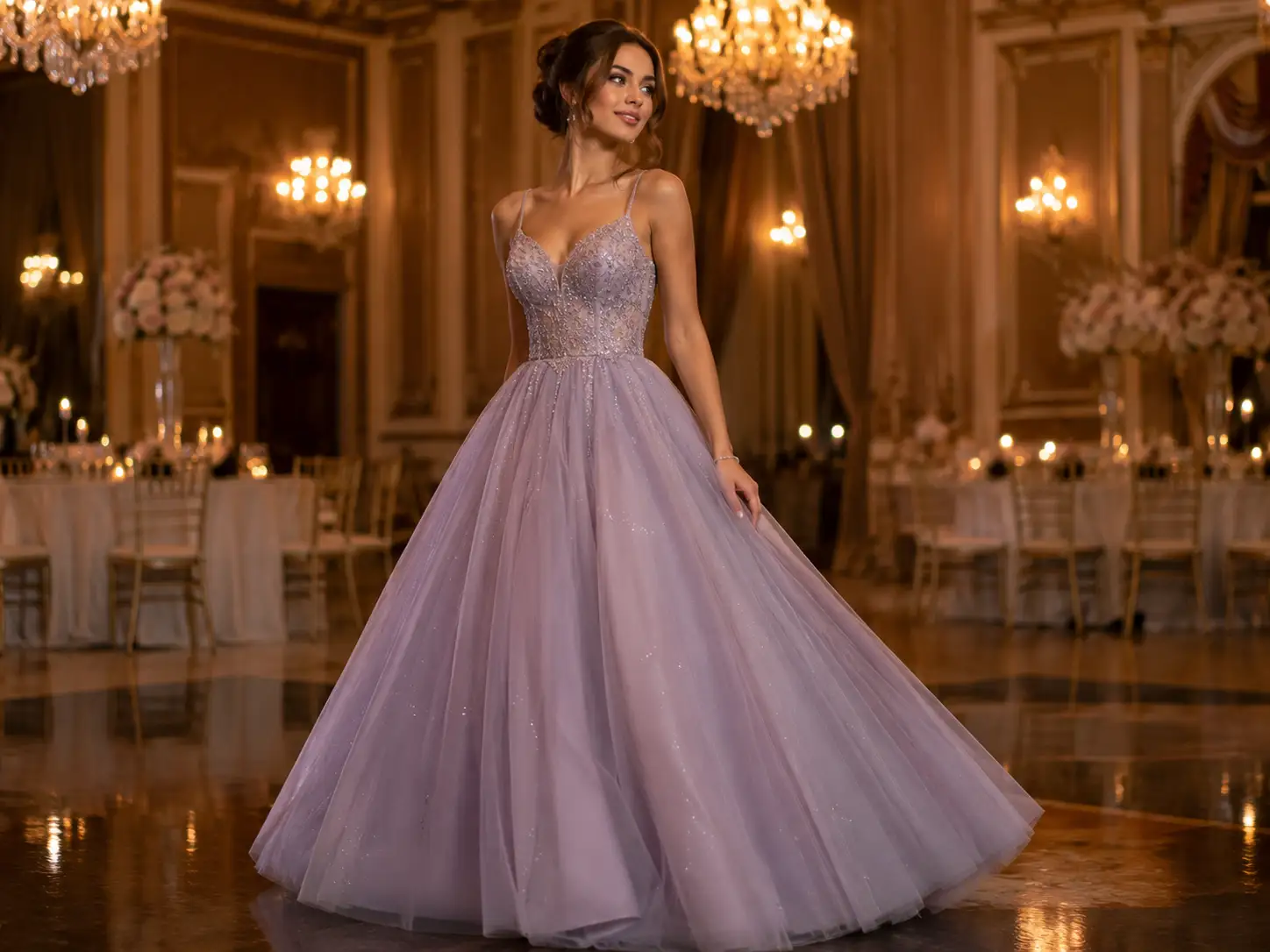
Prom fashion is moving away from the idea that one dominant look must define an entire season. The strongest 2027 direction is a more personal mix of structure, movement, color and practical wearability. Some students will want sharply shaped corsets and dramatic skirts, while others will choose liquid satin, clean columns and restrained sparkle. What links these choices is not one decoration or neckline, but a growing expectation that a formal dress should photograph beautifully, feel secure and remain comfortable for an evening that includes sitting, walking, dancing and constant phone-camera attention.
The leading prom dress trends for 2027 include modern corset bodices, fitted mermaid and column silhouettes, lighter ball-gown volume, asymmetrical necklines, detachable statement pieces, saturated jewel tones, softened pastels, refined metallics, fluid satin, engineered mesh and carefully placed embellishment. The most successful dresses will combine a recognizable visual idea with reliable fit, movement, support and production quality.
As of mid-2026, many 2027 collections are still being released, so the season should be read as an evolving forecast rather than a finished rulebook. That uncertainty is useful. It encourages shoppers to look beyond a single viral image, and it gives product teams time to separate lasting formalwear directions from short-lived visual noise. The dress that wins the night may not be the loudest one in the room; it may be the gown that creates a memorable entrance, survives hours of movement and still looks modern when the photographs are opened years later.
What Prom Dress Styles Will Define 2027?
Prom dress styles for 2027 will be led by modern corsetry, fitted mermaid and column gowns, softly draped A-lines, controlled ball-gown volume, asymmetrical necklines and detachable details. The strongest designs will use proportion and internal construction to create impact, while allowing the wearer to sit, walk, dance and pose without repeatedly adjusting the dress.
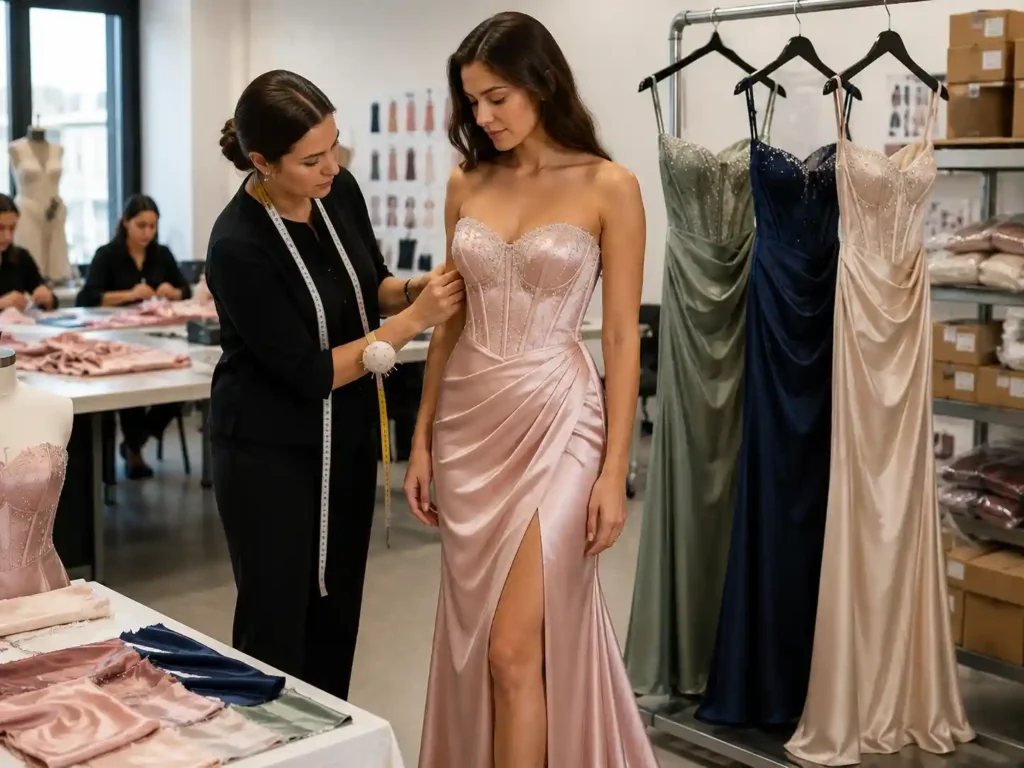
The style story for 2027 is less about inventing unfamiliar shapes and more about improving the way familiar formal silhouettes are proportioned and worn. Corset bodices, mermaid skirts, A-lines and ball gowns already have strong recognition, which is valuable in a category where shoppers often begin with a clear mental picture. The update comes through sharper waist placement, cleaner surfaces, lighter internal structure, better movement and details that look deliberate from the front, side and back.
Two visual moods are likely to coexist. The first is sculptural and confident, using defined waists, strong necklines, fitted hips and controlled flare. The second is fluid and quieter, using satin, crepe or chiffon to create long uninterrupted lines. A commercially useful collection does not need to choose only one side. It can build most of the assortment around reliable silhouettes, reserve a smaller portion for fashion-led updates and use a few statement dresses to create campaign impact.
| 2027 Style Direction | Construction Approach | Development Check | Commercial Role |
| Corset mermaid | Structured bodice, shaped waist, fitted hip and controlled flare | Check bust support, waist level, zipper tension and walking stride | High-impact core or hero style |
| Satin column | Shaped seams, light internal support and clean skirt line | Inspect seam puckering, zipper ripple and lower-back balance | Broad commercial style |
| Draped A-line | Soft bodice, defined waist and fluid multi-panel skirt | Compare drape across shell, lining and every approved colorway | Reliable volume style |
| Layered ball gown | Structured bodice with roughly 3-6 skirt layers, depending on fabric stiffness | Test total weight, sitting comfort, hem control and packing recovery | Statement or campaign style |
| One-shoulder gown | Asymmetrical neckline with stabilized waist and internal balance | Check twisting after arm movement, sitting and repeated wear | Fashion-led commercial style |
| Detachable overskirt | Fitted base dress with concealed waist attachments | Confirm level hem, secure fasteners and a complete look after removal | Premium two-look style |
Structured Corsetry
Corset bodices will remain prominent, but the quality gap between decorative corsetry and functional support will become easier to notice. Exposed boning, pointed waists and transparent panels can create an immediate trend signal, yet seam lines alone do not hold a neckline in place. A dependable corset treats the outer fabric, cups, boning, interfacing, lining, grip, closure and waist position as one connected system. When any one element is weak, the dress may look convincing on a mannequin and unstable on a moving body.
The fitting should confirm more than circumference. The cup position must align with the wearer, the top edge should remain close during arm movement, and the waist should not climb upward when she sits. Boning ends need enough protection to avoid pressure points, while the back closure must support the front without pulling the side seams out of position. Lace-up backs offer limited flexibility, but they should refine a sound pattern rather than rescue one that is fundamentally wrong. A secure corset creates confidence; an over-tight corset changes posture, breathing and enjoyment of the event.
Fitted and Fluid Silhouettes
Mermaid gowns remain important because they create a strong formal profile and a recognizable red-carpet mood. Their success depends heavily on the flare point. A flare that begins too high can shorten the torso, while one beginning tightly below the knee may restrict stride length. Stretch satin, crepe, jersey-backed sequins and supported mesh can all work, but the shell and lining must stretch and recover together. A comfortable first fitting is not enough if the fabric bags around the seat or knees after several hours.
Column gowns provide a cleaner alternative for shoppers who want length without obvious volume. They can be softly shaped, bias cut or lightly fitted rather than skin tight. Their simplicity makes pattern and sewing faults more visible: a small zipper wave, twisted side seam or excess fabric below the waist can change the whole appearance. Fit should be checked from the front, side and back after the dress has been worn, sat in and rehung. The best fitted and fluid gowns follow the body without making movement appear strained or overly controlled.
Controlled Volume
Ball gowns are not disappearing, but the direction is moving toward purposeful volume rather than size for its own sake. Soft tulle can create romantic movement, firmer net can produce architectural lift, and organza can provide crisp volume with less visual density. Layer count alone is not a reliable measure: three layers of stiff net may produce more shape than six layers of soft tulle. The width, gathering ratio, petticoat structure, lining and placement of the first full layer all influence the final silhouette.
Weight is the practical limit that often separates a campaign dress from a comfortable retail style. Dense embellishment, heavy lining and large layered skirts can pull a strapless bodice downward, especially after the wearer has been moving for an hour. A realistic review should include sitting for several minutes, passing through a normal doorway and turning in a confined area. Tiered skirts and ruffles also need proportion control, because fullness beginning at the widest point of the hip can overwhelm the body line. Memorable volume should feel intentional, manageable and visually balanced.
Asymmetry and Modular Design
Asymmetry offers a modern update without covering a gown in decoration. One-shoulder necklines, diagonal draping, slanted waist seams, offset rosettes and side-focused embellishment guide the eye through the garment and work particularly well on satin or crepe. The technical challenge is balance. A one-shoulder bodice naturally places more tension on one side, while diagonal folds can shift if the grain, lining or internal anchoring is not controlled. Front, back and side photographs after movement help reveal twisting that may not appear during a static fitting.
Detachable trains, bows, sleeves and overskirts give one dress two visual moments: a dramatic entrance and a lighter version for dancing. The feature earns its value only when both versions look complete. Fasteners must remain concealed, sit comfortably at the waist and withstand repeated use without marking the shell. During approval, the component should be attached and removed several times, followed by walking and sitting tests. A modular dress should feel intelligently designed, not like a basic gown with an accessory added to justify a higher price.
Which Prom Dress Colors Will Lead 2027?
Prom colors for 2027 are likely to span saturated jewel tones, expressive brights, softened pastels, black, deep neutrals and liquid metallics. No single shade will control the season. Fabric luster, lining, skin undertone, venue lighting and phone photography will strongly influence whether a color appears rich, flat, youthful, dramatic or unexpectedly transparent.

Color is the fastest way to make a familiar silhouette feel new. A straightforward satin column can communicate quiet elegance in black, confidence in tomato red, softness in powder blue or a futuristic mood in gunmetal. The growing appetite for stronger color does not eliminate romantic pastels or dependable dark shades. Instead, 2027 is likely to support a wider palette in which the chosen fabric and finish matter nearly as much as the color name printed on the label.
A commercial color plan normally works better when shades have different jobs. Dependable tones support volume and reorders, trend-led colors refresh the season, and a smaller group of experimental shades creates visual news. It is rarely necessary to make every silhouette in every color. Matching a color to the fabric, shape and intended customer produces a more coherent assortment and reduces the operational burden created by too many low-volume colorways.
| Color Family | Relevant 2027 Shades | Strong Fabric Matches | Main Risk to Control |
| Jewel tones | Emerald, sapphire, ruby, plum and deep teal | Satin, velvet, chiffon and sequin mesh | Shade variation between shell, lining and trims |
| Modern brights | Tomato red, pool blue, turquoise, orchid and vivid green | Crepe, satin, tulle and smooth jersey | Oversaturation or color shift in photographs |
| Soft pastels | Butter yellow, dusty rose, powder blue and lavender | Chiffon, tulle, organza and matte satin | Transparency, weak depth and lining show-through |
| Dark classics | Black, burgundy, midnight blue and chocolate | Velvet, crepe, satin and embellished mesh | Loss of texture and seam visibility online |
| Metallic neutrals | Silver, champagne, bronze and gunmetal | Sequin mesh, metallic knit, foil and crystal surfaces | Scratching, shedding, cracking and uneven reflection |
Jewel and Saturated Tones
Jewel tones remain highly suitable for prom because they provide depth, photograph clearly and feel formal without depending on heavy decoration. Emerald, sapphire, ruby, plum and deep teal can support minimal gowns, corseted silhouettes and embellished styles. The same shade behaves differently across materials. Emerald velvet absorbs light and feels dense, while emerald satin creates bright highlights that emphasize every fold. Sapphire chiffon becomes softer as layers overlap, whereas sapphire sequins create a sharper, more energetic surface.
Color approval should compare the complete material set rather than one shell swatch. Lining, zipper tape, thread, cups, mesh and embellishment can all shift the visual result. A matte zipper may appear darker beside glossy satin even when the dye is technically close. Mature quality systems often combine instrument readings with visual assessment, but the approved physical standard remains the practical reference for production. When detachable overskirts or replacement panels are involved, matching lots becomes especially important because even a modest shade change is obvious when the pieces are worn together.
Pastels and Soft Neutrals
Pastels for 2027 are likely to feel creamy, mineral or slightly muted rather than purely sugary. Butter yellow, dusty rose, soft blue, lavender, pistachio and peach work well with airy skirts, floral details, draped bodices and understated corsetry. Pale shades create a lighter emotional mood, yet they expose internal construction more readily than dark colors. Cup edges, seam allowances, boning channels and labels may show through, especially when the fabric stretches across the bust or hip under direct lighting.
Opacity must be evaluated on the body, not only on a hanger. Lining color has a major effect: bright white can make cream or yellow appear colder, while a warmer lining may increase depth. Layered tulle and chiffon build color gradually, so one layer can look weak while several layers produce the intended tone. Nude illusion linings also need more than one option for diverse wearers. Delicacy should look intentional; weak dye depth, visible cups or unintended transparency should not be presented as part of a romantic aesthetic.
Black and Metallics
Black remains a leading prom option because it supports almost every major silhouette and allows texture to carry the design. A black satin column feels restrained, a velvet corset gown feels rich, and a crystal mesh mermaid dress delivers drama without introducing another color. The challenge is digital visibility. Dense black garments can lose draping, seam lines and embellishment in online photographs. Mixing matte and glossy surfaces, adding controlled transparency or using tonal stones can create depth while preserving the strength of an all-black look.
Metallics are broadening beyond mirror silver and bright yellow gold. Champagne, soft bronze and gunmetal can feel more nuanced, and the reflective effect may come from sequins, foil, metallic yarn, crystals or high-luster satin. Each route creates different risks. Foil may crack when stretched or folded, sequins can scratch and shed, and heavily embellished mesh can distort under its own weight. A metallic dress should be reviewed after packing, unpacking and movement. The surface must recover well enough to look polished when the customer opens the garment, not only when it leaves the finishing table.
Color Approval in Real Light
Color decisions should reflect the environments where the dress will be seen. Daylight, cool retail lighting, warm event lighting and direct phone flash can make one gown appear noticeably different. A shade that feels rich in a controlled studio may look flat in a school venue or overly bright in flash photography. A useful approval review places the finished sample under at least four conditions and photographs it against both light and dark backgrounds, revealing transparency, reflective changes and edge-color differences.
Online images should represent the physical dress honestly. Strong retouching may improve the first click but increases disappointment when the garment arrives. Product photography benefits from a full-length front view, side and back views, close fabric details and short movement video. Very dark colors need enough light to show construction, while pastels should be checked for lining and cup visibility. Accurate color communication is part of product quality because it influences expectations, returns and the customer’s confidence before the dress is ever tried on.
Which Fabrics and Details Will Stand Out?
Satin, crepe, mesh, tulle, chiffon, velvet and embellished textiles will remain central to Prom 2027. Their value comes from the job each material performs: satin creates controlled light, crepe shapes cleanly, mesh adds stretch or illusion, tulle builds volume and sequins or crystals direct attention. Material performance, lining and finishing will matter as much as appearance.

A prom dress begins with the relationship between material and silhouette. Fabric is not a decorative choice made after the sketch has been approved; it determines whether a bodice holds its shape, whether ruching stays controlled, whether a skirt moves cleanly and whether the wearer feels secure. The broad category name printed on a sourcing request is often insufficient. Lightweight charmeuse, stretch satin and duchess satin may all look glossy in a photograph, yet they produce completely different garments.
Sheer materials require the same level of definition. Power mesh, soft tulle, stiff net and chiffon should not be treated as substitutes simply because they are lightweight or transparent. Their stretch, recovery, stiffness, skin feel and edge behavior differ. Decorative surfaces add another set of questions involving garment weight, sewing method, comfort, packaging and alterations. A visually impressive material becomes commercially useful only when it can move through cutting, sewing, fitting, transport and real wear without losing its intended effect.
| Material | Common Working Weight | Suitable Prom Applications | Key Risk |
| Lightweight charmeuse | About 70-120 gsm | Bias gowns, draped bodices and fluid skirts | Clinging, seam slippage and visible body lines |
| Stretch satin | About 120-220 gsm | Bodycon, mermaid and structured fitted gowns | Poor recovery, zipper waves and seam puckering |
| Duchess satin | About 180-300 gsm | Corsets, sculptural skirts and formal ball gowns | Weight, rigid movement and permanent fold marks |
| Chiffon | About 30-80 gsm | Draping, overlays, sleeves and soft skirts | Transparency, twisting and difficult edge finishing |
| Soft tulle | About 20-60 gsm | Layered skirts, ruffles and applique bases | Tearing, uneven volume and edge irritation |
| Power mesh | About 80-180 gsm | Illusion panels, corset support and fitted lining | Bagging, weak recovery or skin discomfort |
| Embellished sequin mesh | Often 180-450+ gsm | Statement gowns, panels and gradient sparkle | Weight, shedding, scratching and seam distortion |
Satin, Crepe and Structure
Satin will remain a key prom fabric because its reflective surface creates immediate occasion value. It also exposes mistakes. Needle damage, uneven pressing, wavy seams and zipper rippling are difficult to hide on a smooth glossy surface. The first decision is how much structure the design needs. Charmeuse supports draping and bias-cut columns but can reveal underwear and every body line. Stretch satin suits fitted gowns when recovery is strong, while duchess satin can support corsets and sculptural skirts but may feel heavy or rigid.
Crepe offers a quieter alternative, especially for clean fitted gowns and asymmetrical draping. Its matte or lightly textured face can conceal minor surface irregularities better than satin, though a heavy crepe may pull downward and a thin one may need additional lining. Shell and lining should be developed together. A rigid lining under a stretch shell restricts movement, while a weak lining beneath a heavy skirt can distort the garment. Samples should be inspected after sewing, pressing, hanging overnight and one realistic packing cycle, because some fabrics change noticeably after they leave the sampling table.
Mesh, Tulle and Chiffon
Mesh, tulle and chiffon create lightness in different ways. Power mesh provides stretch and support, soft tulle adds layered volume, stiff net holds a shape away from the body, and chiffon falls rather than stands. Illusion mesh is especially important in plunging necklines, side cut-outs and open backs. Its color, recovery and edge softness need careful selection. Mesh that is too loose bags after movement; mesh that is too firm can pull the outer fabric or feel restrictive against the skin.
Tulle skirts depend on layer stiffness, width, gathering ratio and placement. Adding layers without a plan can create bulk around the hip or an uneven hem. Chiffon requires accurate grain control because mirrored panels cut in different directions may hang differently even when the paper patterns match. Fine fabrics also react strongly to needle size, thread tension and edge-finishing methods. A good development record identifies composition, weight, stretch direction, transparency, lining, seam construction and recovery after movement so that the desired softness can be repeated in production.
Refined Sparkle
Sparkle is becoming more controlled through scale, placement and color. Tonal sequins, scattered crystals, beaded gradients and shimmer mesh can create light without covering every part of the dress. Selective decoration helps guide attention toward the neckline, waist or skirt movement, but reduced coverage does not always simplify production. When every crystal follows a deliberate placement map, small inconsistencies become visible, particularly around symmetrical corset seams or mirrored bodice panels.
An embellished sample should be reviewed for attachment strength, abrasion, weight distribution, color consistency and packing behavior. Heavy decoration concentrated on mesh may stretch the base or pull a bodice downward. Reinforcement can help, but it must remain invisible and flexible. Underarm areas need special attention because sequins and stones repeatedly rub against the skin. Alteration routes also matter: dense beading across side seams and center back makes resizing difficult and expensive. Refined sparkle supports the silhouette and leaves enough clean construction space for fitting, sewing and future adjustments.
Florals, Bows and Ruffles
Three-dimensional flowers, sculptural bows and controlled ruffles can make a familiar dress immediately recognizable. Scale and placement decide whether the result feels elegant or awkward. A large shoulder flower may hide the neckline or add too much weight to one side, while a back bow can interfere with sitting. Ruffles beginning at the widest point of the hip may change the proportion in an unintended way. The detail should be assessed on a moving body, not only in a front-facing sketch.
Permanent details often look more integrated, while detachable features provide styling and packing flexibility. Concealed snaps, hooks or buttons should be operated repeatedly to confirm that they remain secure without marking the shell. Packaging trials are essential for petals, loops and layered ruffles. The finished sample should be folded using the proposed production method, stored and then reopened to see whether steaming restores the shape. A successful statement detail improves recognition from several angles and survives the practical journey from factory to fitting room to event.
How Do You Choose the Right 2027 Prom Dress?
The right Prom 2027 dress balances personal style with secure support, comfortable movement, reliable coverage and realistic alteration needs. Begin with the preferred silhouette and neckline, then test the gown while walking, sitting and raising the arms. Dress weight, lining, slit placement, surface comfort and shoe height matter as much as the first impression in a mirror.

Trend reports can narrow the search, but they cannot decide which dress will feel right on an individual wearer. Two corset mermaid gowns may look almost identical online and behave completely differently because of cup shape, torso length, fabric recovery, lining, flare position and back construction. A useful starting point is the emotional goal – sleek, romantic, dramatic, glamorous or quietly elegant – followed by a smaller group of silhouettes that can be compared on the body.
Support should be understood before purchase. Strapless, backless and high-slit designs can all be practical when the internal construction matches the visual idea. The wearer should know what is holding the garment in position: cups, boning, grip elastic, mesh, straps, waist stay, lacing or zipper. Comfort also needs time. A dress that feels manageable during a brief fitting may become tiring after hours of sitting and dancing, especially when the skirt is heavy, the knee area is tight or the decoration rubs against the skin.
Fit and Support
Formalwear sizing should be approached through body and garment measurements rather than the number normally worn in casual clothing. Size charts differ between labels, and structured gowns have less room for estimation around the bust, waist and hip. When measurements fall into different sizes, selection is usually guided by the largest critical area, provided the remaining parts can be altered. Reducing a waist or shortening a strap is often more practical than adding room to a fitted hip or reconstructing a small corset cup.
The neckline should remain stable during normal movement. A useful fitting includes raising both arms, leaning slightly forward, turning the upper body and sitting for several minutes. Gaping, rolling edges, cup movement and a waist that climbs upward indicate that the pattern or support system needs attention. Boning should follow the torso rather than press sharply into the ribs, and the bust point should align with the wearer. Front, side and back photographs help reveal lower-back folds, twisted side seams and closure tension that a front mirror view may hide.
Proportion and Silhouette
Body-shape rules are often too rigid to be useful. A better question is what proportion the wearer wants to create. A-line skirts emphasize the waist and provide easier movement, column gowns create a long uninterrupted line, mermaid styles highlight the waist and hip, and ball gowns move visual weight into the skirt. Where the waist seam sits changes the result: a natural waist feels balanced, a pointed basque waist lengthens the torso, and a drop waist can extend the upper body while reducing the apparent leg length.
The flare point is equally important in fitted gowns. A mermaid skirt opening around the lower thigh usually permits more movement than one remaining narrow below the knee. Neckline and skirt volume should be reviewed together so that the top does not feel visually weak beside a large skirt. Photographs are useful because they capture the dress without the wearer continuously correcting her posture. The strongest choice is not the silhouette a rule assigns to a body type; it is the one that creates the desired balance and remains comfortable from multiple angles.
Movement and Coverage
A prom dress should be tested through realistic actions rather than approved while the wearer stands still. Walking at least twenty normal steps, taking several wider steps, sitting for five to ten minutes, raising both arms and stepping onto a low platform can reveal problems with stride, slits, trains and neckline stability. For many floor-length gowns, a final hem around 1-2 cm above the floor while wearing the intended shoes offers practical clearance, although fabric, skirt structure and personal preference can change that decision.
High slits need reinforcement at the top and enough underlap or lining to maintain the intended coverage while sitting. Open backs must preserve enough side, waist and neckline control to keep the front secure. Surface comfort also matters. Sequins near the underarm, rough mesh edges and exposed boning ends can irritate the skin after repeated movement. A short phone video often reveals more than a still image because it shows whether the skirt swings cleanly, the lining rises, the train catches or the wearer repeatedly reaches to adjust the dress.
Shopping and Alterations
Starting serious selection four to six months before the event provides room for stock availability, international delivery, made-to-order schedules and alterations. Major fit changes are often best identified six to ten weeks before prom, while the final fitting should include the intended shoes, bra or support solution and any shapewear. These windows are planning guides rather than fixed rules, and highly embellished or custom-color dresses may need additional time, particularly during the busiest alteration season.
Not every gown can be altered easily. Dense beading across side seams, full corsetry, cut-outs and border embellishment can limit how much a dress can be reduced, enlarged or shortened. Before purchase, it is worth checking whether side seams contain usable allowance, whether cups and boning can be repositioned, whether straps can be shortened without changing the neckline and whether the hem detail permits alteration. The lowest purchase price does not always create the lowest final cost. A dress that already fits well in the hardest-to-change areas usually offers better value and less risk.

How Are 2027 Prom Trends Turned Into Sellable Collections?
Prom trends become sellable collections when visual ideas are filtered through brand identity, target price, fit, material continuity and production repeatability. A strong range balances dependable silhouettes with trend updates and a limited number of statement styles. Each design should pass fabric, fit, movement, embellishment and pre-production reviews before bulk manufacturing begins.
A mood board can identify an attractive direction, but it cannot confirm whether a gown will fit correctly, meet the target cost, arrive on time or remain stable in repeat production. Those answers come from assortment planning, material sourcing, pattern engineering, sampling, fit approval and a controlled transition into bulk. Prom also has a fixed selling window, so every late decision reduces time available for photography, distribution, launch and replenishment.
Strong collections rarely consist entirely of the most dramatic ideas. Hero dresses create campaign images and social attention, while cleaner styles often carry more sales volume and are easier to reorder. A coherent range can reuse proven internal constructions, cups, linings and graded blocks without making every product look the same. Shared engineering reduces development risk, while new necklines, draping, color and surface details create enough difference for the customer to see a fresh season.
| Collection Role | Indicative Share | Typical Purpose | Main Development Priority |
| Commercial core | About 45-60% | Recognizable A-line, fitted, column and corset silhouettes | Fit consistency, stable materials, clear price and reorder readiness |
| Trend updates | About 20-30% | Asymmetry, new waistlines, draping, pastels and metallic finishes | Visible seasonal change with controlled complexity |
| Statement styles | About 10-20% | Overskirts, large florals, dense sparkle and sculptural volume | Campaign impact, wear testing and limited inventory exposure |
| Reorder options | About 10-20% | Proven shapes refreshed through color or fabric | Material continuity, archived standards and quick production restart |
Commercial Assortment
Not every visible trend deserves a separate style. The first filter is whether the direction fits the brand’s existing customer and price position. A clean occasionwear label may interpret corsetry through internal support and smooth satin, while a glamour-led label may use exposed boning, crystals and a stronger mermaid line. The second filter is product role. Some ideas are valuable because they create a campaign image; others look less dramatic on a mood board but sell more consistently because they are easier to fit, style and reorder.
A practical range asks whether each idea strengthens the collection, works in more than one relevant color, remains recognizable in a small online thumbnail and can be graded without losing proportion. Material continuity and delivery timing also matter. Developing five weak versions of the same floral trend adds more complexity than one carefully engineered rosette gown. The goal is not to include every forecast. It is to create a point of view that customers understand and retail teams can explain without the assortment becoming repetitive or disconnected.
Development and Fit Gates
A prom style should move through defined approval stages rather than going directly from sketch to bulk. A common sequence includes an initial prototype, fit review, revised sample, size-set or grading review and a pre-production sample made with approved bulk materials. The first prototype answers whether fabric, structure and silhouette work together. Fit comments should be measurable, identifying the location, amount and intended result rather than relying on vague phrases such as making the dress more flattering or more premium.
Critical measurements often need tighter control than long or less sensitive dimensions. Many formalwear specifications use tolerances near plus or minus 0.5 cm for smaller critical points and around plus or minus 1 cm for longer measurements, but the approved brand tech pack always takes precedence. Corsets, halters, open backs and fitted skirts deserve size-set review because uniform grading can distort cups, necklines, armholes and flare positions. A beautiful sample made from unavailable fabric is not a reliable production standard; the pre-production sample must represent the materials and construction that the factory will actually use.
Quality and Production Control
Prom quality control must reflect how the dress is worn. Measurement inspection and seam appearance are essential, but they do not reveal every risk. High-stress points include strap attachments, halter neck seams, the top of a slit, invisible zippers across a fitted waist, boning ends, cup edges, embellished mesh, overskirt fasteners and thin fabric beside heavy decoration. A wear review can combine walking, sitting, repeated fastening, gentle abrasion and representative pull checks based on the brand’s agreed procedure.
Bulk consistency depends on clear references. Ruching direction, cup placement, embellishment maps, skirt length, pressing standards and packing methods should be documented rather than left in one sample maker’s memory. Packing trials are especially important for satin folds, flowers, bows, fringe and sequins. A gown may leave the finishing table in excellent condition and arrive with crushed details or permanent creases. First-piece or pilot verification is valuable for shape-sensitive styles because it allows the team to confirm the production method before the full quantity moves through the line.
From Forecast to Launch
A collection remains commercially unfinished until repeat production can be handled. Strong prom styles may need color extensions, additional size depth or reorders while the selling window is still open. Fabric continuity is often the limiting factor: a replacement satin lot can have a different luster, sequin suppliers may change the base mesh, and custom floral trims can require longer replenishment than garment assembly. Core styles should therefore rely more heavily on stable resources, while experimental materials can begin with controlled quantities until demand becomes clearer.
Duolan Apparel focuses on prom, occasion, party and fitted dresses, including corset, halter, backless, satin, mesh and sequin directions. Development can begin from a tech pack, reference garment, material idea or collection mood, then move through pattern work, sampling, fit correction, production-readiness review and scalable manufacturing. For a useful project assessment, share the intended styles, target market, size range, launch date, estimated quantities and target price level. Contact duolan apparel to discuss a custom Prom 2027 collection with the development team.