Skip to content
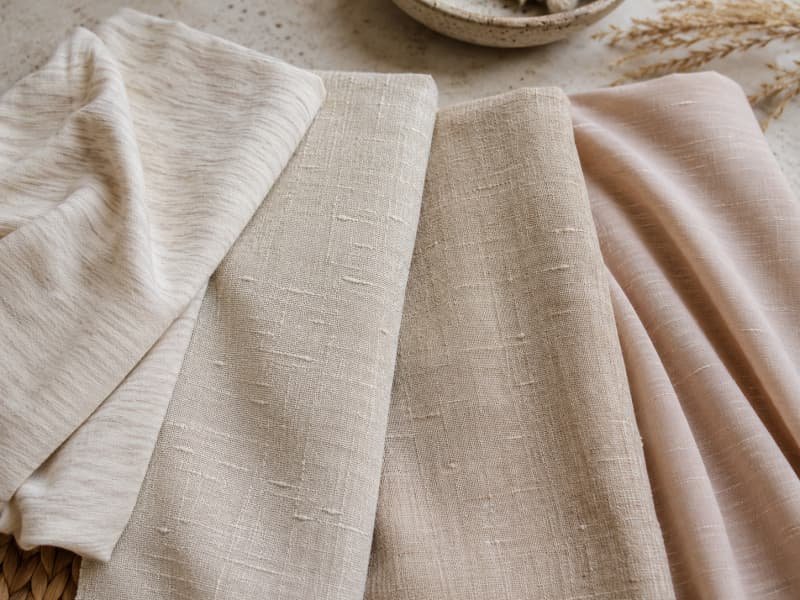
A perfectly smooth fabric is not automatically a better fabric. In many fashion collections, the fine thick lines, raised knots, and irregular streaks across a garment are the details that make a simple silhouette feel considered. Slubbed fabric uses controlled yarn variation to create that character. It can give a cotton T-shirt more depth, make a summer dress feel relaxed rather than flat, or add a dry, linen-like surface without relying on prints, embroidery, or heavy decoration.
Slubbed fabric is a woven or knitted textile made with yarn that contains intentionally thicker and thinner sections. These variations form visible lines, knots, and raised areas across the surface. Slub describes a yarn effect rather than a single fiber, so cotton, linen, viscose, polyester, silk, wool, and blended yarns can all be used to produce slubbed fabrics.
That definition is simple, but selecting the right slub fabric is not. A product team may approve an attractive swatch and later discover that the thin areas become transparent over the body, the jersey twists after washing, or the raised yarns pill faster than expected. The difference between an appealing texture and a production problem often becomes clear only after the fabric has been cut, sewn, stretched, washed, and worn. The following guide explains what should be checked before that happens.
What Is Slubbed Fabric?
Slubbed fabric is a woven or knitted textile made from yarn with deliberate changes in thickness. The thicker sections create raised lines, knots, or streaks across the surface. Slub is a yarn effect, not a fiber type, so the final fabric may be cotton, linen, viscose, polyester, silk, wool, or a blend.
What “Slub” Means
In textile production, a slub is a section of yarn that is noticeably thicker than the surrounding yarn. It may be short and knot-like, gradually tapered, or long enough to form a visible streak. Once the yarn is knitted or woven, the thicker area sits more prominently on the surface. Small changes create a quiet grain, while larger changes produce a stronger rustic, vintage, or linen-like appearance.
Historically, uncontrolled slubs were often treated as spinning faults because mills were trying to make yarn as even as possible. Modern spinning systems can introduce the effect intentionally by changing fiber feed and drafting for selected intervals. The result may look random, but commercial slub yarn is normally produced within planned limits for thickness, length, spacing, frequency, twist, and strength.
Retail descriptions sometimes use the term loosely. A label such as “slub cotton” does not tell a designer whether the material is knitted or woven, lightweight or substantial, stable or stretchy. A useful specification identifies the fiber composition, construction, weight, usable width, finish, stretch, shrinkage, and approved visual character. Without those details, two fabrics sold under the same name may perform very differently in clothing.
Fiber, Yarn, and Construction
Slub is not a fiber category. Cotton, linen, viscose, polyester, wool, and silk describe the material from which the yarn is made. Slub describes the intentional variation within that yarn and the texture it creates after fabric formation. This distinction matters because the underlying fiber still determines much of the moisture behavior, strength, softness, drying time, wrinkle tendency, heat response, and care requirement.
Construction is equally important. Cotton slub jersey is knitted from loops and usually stretches more easily across the width. Woven cotton slub is formed by interlacing warp and weft yarns and normally holds its dimensions more firmly. Viscose slub crepe can feel fluid and cool, while linen-rich slub may feel crisp, dry, and visibly irregular. The word “slub” describes only one part of the performance picture.
When a fabric is being considered for a dress, the development team should ask how the slub interacts with the silhouette. A light jersey may work for a relaxed T-shirt dress but become too transparent for a fitted bodycon style. A firm woven slub may hold a structured mini well but look stiff in a tiered maxi. The fabric name should never replace garment-level evaluation.
Texture or Defect?
An intentional slub is not a defect, but slubbed fabric can still contain real defects. Acceptable texture follows the approved overall character: the average scale, density, direction, and prominence of the thick sections remain reasonably consistent from roll to roll. Genuine faults include holes, broken yarns, oil marks, contamination, severe bars, weak thin areas, excessive knots, obvious shade streaks, and distortion that affects cutting or garment appearance.
The difference becomes especially important on large front panels, pale colors, and symmetrical bodices. A heavy isolated slub may look minor on the inspection table but become highly visible across the bust or center front. Cutting teams may therefore need rules for avoiding extreme marks in critical areas while accepting normal variation elsewhere. Coordinated sets should also be cut from compatible shade and texture groups so the pieces look related.
Quality control for slub fabric is not a search for perfect sameness. Every meter does not need to display identical yarn marks. The aim is controlled irregularity that remains attractive, structurally sound, and suitable for the garment. An approved fabric swatch, roll map, shade grouping, and clear defect limits provide a better standard than vague instructions such as “natural texture is acceptable.”
Regular Fabric Comparison
Regular fabric is commonly made with yarn engineered to maintain a relatively even diameter. Slubbed fabric introduces planned thick and thin sections, which break up the surface and change how light reflects across it. This can make solid colors appear deeper and less flat. Fine slubs create subtle movement, while coarse slubs can become a defining part of the garment’s design language.
The irregular surface also brings practical trade-offs. Fine printed lines may lose sharpness where raised yarns interrupt the surface. Dye can appear slightly different around thicker sections because fiber mass and light reflection change. Lightweight fabric may show uneven opacity when it stretches. These effects are not automatically unacceptable, but they should support the intended look rather than surprise the product team after sampling.
Smooth fabrics often suit polished tailoring, formal shine, precise print placement, or minimalist products that depend on a perfectly clean surface. Slubbed fabrics are particularly useful for casual dresses, resortwear, day tops, relaxed sets, jersey basics, and styles intended to look natural or softly worn. Neither surface is inherently superior; quality depends on whether the fabric is engineered and selected for the job.
| Fabric Description | What It Tells You | What Still Needs Checking |
| Cotton slub | Cotton-based fabric with intentional yarn variation | Knit or woven structure, GSM, shrinkage, opacity |
| Slub jersey | Knitted fabric using slub yarn | Fiber content, stretch, recovery, spirality |
| Linen slub | Linen or linen-rich textured fabric | Blend ratio, hand feel, wrinkling, seam slippage |
| Viscose slub | Regenerated-cellulose slub fabric | Wet shrinkage, growth, strength, pressing |
| Polyester slub | Synthetic textured fabric | Breathability, static, surface shine, heat response |
| Slub blend | Two or more fibers combined for a chosen effect | Exact ratio, performance purpose, care method |
How Is Slubbed Fabric Made?
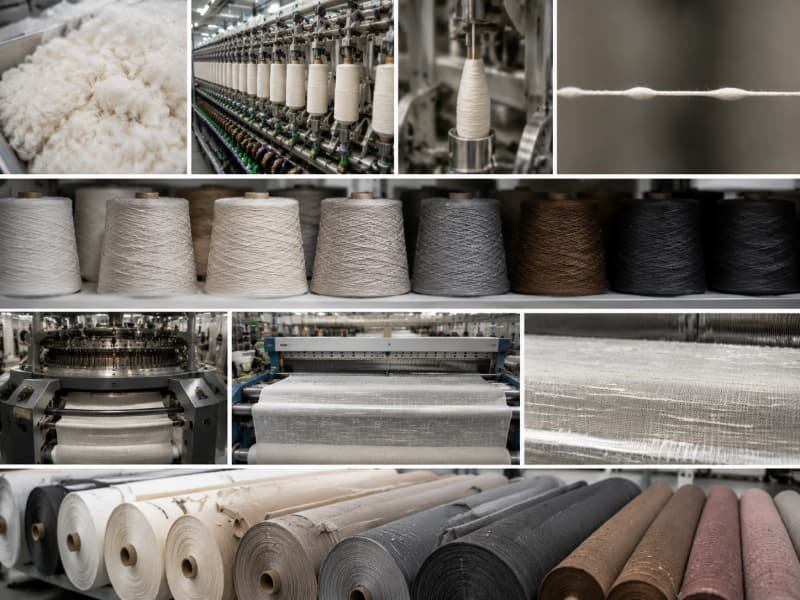
Slubbed fabric is made by spinning yarn with planned changes in diameter and then knitting or weaving that yarn into cloth. Mills can control the approximate thickness, length, spacing, and frequency of the slubs. Dyeing, washing, compacting, heat setting, softening, and other finishes then determine how strongly the texture appears and how stable it remains.
Slub Yarn Spinning
During spinning, fibers are drafted and twisted into a continuous yarn. To create a slub, the spinning system temporarily changes the amount of fiber entering the yarn or alters the drafting conditions. More fiber forms a thicker section, after which the yarn returns to its normal diameter. By changing the timing and amount of this variation, a mill can produce tiny knots, short dashes, gradual thick areas, or long irregular streaks.
Four variables have a strong visual influence: the thickness ratio between the slub and base yarn, the length of each thick section, the number of slubs within a given yarn length, and the interval pattern between them. A subtle ratio creates refined surface movement, while a large ratio produces a clearly raised texture. The intervals may be programmed to appear regular, semi-random, or visually random while remaining technically repeatable.
Yarn twist also affects performance. Lower twist can create softness and a fuller hand, but loose surface fibers may increase fuzzing and pilling. Higher twist can improve firmness, abrasion behavior, and definition, although the fabric may feel drier. The spinner must balance appearance with tensile strength because the yarn still needs to survive knitting or weaving, wet processing, cutting, sewing, laundering, and normal wear.
Woven and Knitted Structures
Slub yarn can be knitted or woven, and the construction changes both appearance and performance. In single-jersey knitting, the yarn forms a series of loops and often produces horizontal slub lines across the fabric. The loop structure gives natural widthwise stretch and makes slub jersey popular for T-shirts, tanks, soft tops, casual dresses, loungewear, and lightweight coordinated sets.
Knitted flexibility does not guarantee good recovery. Some soft jerseys stretch easily but remain enlarged after wear, especially around the neckline, seat, waist, and underarm. Fine slub yarn can also exaggerate twisting if the knitted structure is unbalanced. Dimensional change, spirality, stretch, recovery, edge curling, and seam behavior should therefore be checked before a fitted garment is approved.
Woven slub fabric is formed by interlacing warp and weft yarns. Slub yarn may be placed in the warp, the weft, or both directions, creating lengthwise, crosswise, or all-over texture. Woven constructions range from light cotton shirting and fluid viscose dress fabrics to linen blends, denim, raw-silk-style cloth, and decorative suiting. They usually hold shape more firmly than lightweight jersey but may require seam-slippage or fraying control.
Fiber Choices
Most staple fibers can be spun into slub yarn. Cotton is widely used because it offers familiar comfort, moisture absorption, and a natural casual surface. Linen already contains visual irregularity from flax fibers and produces a dry, cool, textured appearance. Viscose can create fluid drape and rich color, while polyester can provide stronger dimensional stability, faster drying, lower wrinkling, and repeatable bulk production.
Blends are often selected to solve a garment problem rather than to create a more impressive label. Cotton-polyester can improve stability and drying time. Cotton-linen can soften pure linen and make it easier to wear. Viscose-polyester can combine movement with added strength. Elastane can improve stretch and recovery, but the correct percentage depends on construction, weight, fit, and the compression level expected from the final garment.
The same slub pattern will not behave identically across different fibers. A viscose slub may hang and lengthen under garment weight, while a linen slub may form larger, crisper folds. Polyester can retain shape but may feel warmer in a dense construction. Fiber selection should therefore begin with the intended silhouette, climate, care method, retail positioning, and performance requirement rather than with a broad assumption that natural or synthetic is always better.
Dyeing and Finishing
Slub texture can become stronger or softer after dyeing and finishing. Thicker yarn sections contain more fiber and may absorb dye or reflect light differently, making the surface appear more dimensional. Dark colors often emphasize depth but can show abrasion or frosting more clearly. White and pastel shades can look light and airy, although thin areas may become more transparent when stretched over the body.
Finishing options include enzyme washing, softening, compacting, tumbling, brushing, heat setting, garment washing, and mechanical surface treatments. Compacting is especially useful for controlling residual shrinkage in cotton knits. Heat setting helps stabilize polyester and elastane blends. Enzyme or garment washing may soften the hand and enhance texture, but aggressive treatment can weaken raised fibers or increase fuzzing around the slubs.
A pleasant showroom hand should not be the only approval criterion. Heavy softener may affect absorbency, bonding, print adhesion, sewing control, or colorfastness. High heat may alter stretch recovery or damage blended fibers and trims. The approved standard should therefore use the intended production finish, and samples should be tested after the same wash, heat, and softening processes planned for bulk production.
| Slub Variable | Technical Meaning | Visible Effect in Fabric |
| Thickness ratio | Difference between slub diameter and base yarn diameter | Subtle grain or strongly raised texture |
| Slub length | Length of each thicker yarn section | Dots, knots, dashes, or long streaks |
| Slub frequency | Number of slubs over a set yarn length | Sparse, balanced, or dense texture |
| Interval pattern | Spacing between individual slubs | Regular rhythm or natural-looking randomness |
| Yarn twist | Amount of fiber twist in the yarn | Softer fuzzier hand or firmer cleaner definition |

What Are the Properties of Slubbed Fabric?
Slubbed fabric has a visibly irregular, dimensional surface, but it does not have one fixed performance profile. Breathability, softness, stretch, drape, durability, shrinkage, pilling, and opacity depend mainly on fiber content, construction, weight, density, yarn quality, and finishing. Slub changes the visual and tactile surface; it does not guarantee a specific level of comfort or strength.
Appearance and Hand Feel
Slub texture creates small changes in surface height. Raised sections catch more light, while the lower areas create tiny shadows, so solid colors often appear deeper than they do on a smooth fabric. Fine slubs can look understated and refined. Larger slubs create a stronger rustic, vintage, washed, or handcrafted impression. The visual effect also changes with color, garment scale, gathering, washing, and viewing distance.
Hand feel varies widely. Cotton slub jersey may feel soft with a lightly dry touch. Linen-rich fabric can feel crisp, cool, and grainy. Viscose slub often feels smooth and fluid even when it looks irregular. Polyester blends can be engineered to feel matte, soft, peachy, crisp, or dry. The word “slub” alone therefore tells very little about comfort against the skin.
A full garment should be reviewed, not only a small swatch. Texture that looks refined in a sample card can appear too busy across a long maxi skirt, while a very subtle slub can disappear after gathering or garment washing. Large slubs can also interrupt fine printing, embroidery, bonded details, or heat transfers. Decoration trials should be carried out on the actual production surface before artwork or placement is locked.
Breathability and Comfort
Slubbed fabric is often marketed as breathable, but airflow is determined more by fiber type, yarn count, fabric density, weight, and finishing than by the slub itself. A lightweight cotton slub jersey with an open loop structure may feel airy. A cotton-linen woven can feel cool and dry. A tightly constructed polyester slub may allow less airflow even though its surface appears textured.
Moisture behavior also depends on fiber. Cotton and linen absorb moisture but may take longer to dry. Viscose can feel cool and absorbent, yet it may lose strength or change dimensions when wet if the fabric is not well stabilized. Polyester absorbs less moisture and dries quickly, but dense polyester fabric can feel warm or retain body heat during extended wear.
Opacity often competes with summer comfort. A very light fabric may improve airflow but reveal underwear, seam allowances, or lining edges, particularly in white and pale colors. Full lining adds coverage but can reduce breathability and movement. A slightly denser self-fabric, partial bodice lining, skirt slip, or double layer only in critical areas may create a better balance between comfort, coverage, cost, and drape.
Stretch, Drape, and Stability
Slub does not determine stretch. Knit construction and elastane content are the main factors. Slub jersey usually stretches across the width because of its loops, while woven slub normally has limited stretch unless elastane, mechanical stretch, or a special weave is used. For fitted clothing, stretch percentage should always be reviewed together with recovery because easy extension without recovery leads to bagging.
Drape varies by fiber and structure. Viscose slub often produces soft folds and fluid skirt movement. Cotton slub jersey can cling when very light and hang more cleanly at a higher weight. Linen slub forms larger, crisper folds and often holds volume away from the body. Polyester slub can be engineered from very fluid to relatively structured depending on yarn, weave, finish, and fabric density.
Stability is especially important for bias panels, fitted dresses, long skirts, and garments with narrow straps. Fabric may lengthen after cutting, grow while hanging, or distort during sewing and pressing. The development team should condition the fabric, measure stretch in both directions, test recovery after repeated extension, hang bias-cut pieces before hemming, and compare measurements before and after the approved washing process.
Shrinkage, Pilling, and Durability
Slubbed fabric can be durable, but extreme changes between thick and thin yarn sections may create local stress points if the yarn is poorly engineered. Raised fibers also receive more abrasion during wear and washing. Cotton, linen, and viscose versions may shrink if they are not correctly stabilized, while knitted structures can develop spirality that twists side seams after laundering.
Pilling is influenced by fiber length, yarn twist, surface fuzz, construction, and finishing. Soft low-twist staple yarn may feel appealing at first but release more loose fibers during wear. Polyester fibers are strong, so pills that form can remain attached for longer. Pilling should be evaluated after the planned wash and wear simulation because the untreated swatch may not reveal future surface change.
Common working targets for many fashion programs include dimensional change near plus or minus three percent after the approved wash, spirality near three percent or lower for relevant jerseys, pilling around grade three to four or above, and colorfastness near grade four for key tests. These are practical references rather than universal rules; the correct method and limit must follow the garment, market, care label, fiber, and customer standard.
| Fabric Type | Indicative Weight | Common Clothing Uses | Priority Check |
| Light slub jersey | 120-160 GSM | Tanks, loose tops, layering dresses | Opacity, twisting, neckline growth |
| Midweight slub jersey | 160-220 GSM | Casual fitted dresses and tops | Recovery, seam waviness, pilling |
| Woven cotton slub | 100-180 GSM | Shirts, mini dresses, skirts | Shrinkage, wrinkling, fraying |
| Linen-blend slub | 120-220 GSM | Resort dresses and coordinated sets | Seam slippage, opacity, wrinkle level |
| Viscose slub woven | 110-180 GSM | Fluid midi and maxi dresses | Growth, wet shrinkage, pressing |
| Heavier woven slub | 200-350 GSM | Structured skirts, jackets, denim styles | Bulk, abrasion, seam thickness |

Which Slub Fabrics Work Best for Clothing?
The best slub fabric depends on the garment silhouette, season, fit, price position, care method, and desired texture. Cotton slub suits casual products, viscose slub supports fluid dresses, linen blends work well in resortwear, and polyester blends can improve stability and repeatability. The correct choice begins with the garment’s needs rather than the popularity of a fiber name.
Cotton and Slub Jersey
Cotton slub is one of the most familiar forms of slubbed fabric. It may be knitted into jersey or woven into shirting, skirts, dresses, and casual sets. Cotton offers moisture absorption and a comfortable, recognizable hand, while the slub breaks up flat color and gives simple products more visual interest. The final feel can range from soft and lightweight to dry and substantial.
Cotton slub jersey works well for T-shirts, tanks, relaxed tops, day dresses, and softly fitted casual styles. Lightweight versions around 120 to 160 GSM may feel airy but can become sheer under tension. Midweight versions around 160 to 220 GSM usually offer better coverage and may support dresses more effectively. Those ranges are starting references, not fixed quality grades.
Pure cotton jersey relies mainly on knit structure for stretch. Adding roughly three to eight percent elastane can improve recovery in many fitted applications, but the ideal percentage varies with yarn, fabric density, weight, and required compression. More elastane does not automatically improve the garment. A casual slub fabric can lose its natural hand when stretch and compactness become excessive.
Linen, Viscose, and Blends
Linen slub naturally suits warm-weather and resort products. Its dry touch, visible texture, and crisp movement work well for loose mini dresses, relaxed midi styles, gathered skirts, shirts, shorts, and coordinated sets. Pure linen may wrinkle strongly and feel firm at first. Those qualities can be desirable for a natural look, but they need to match the brand’s intended customer and care expectations.
Cotton-linen blends often soften the hand and reduce the sharpness of pure linen. Viscose-linen blends can add fluidity and help a dress fall closer to the body. Viscose slub on its own works well for gathered, draped, or flowing silhouettes because it creates soft movement and rich color. It should be tested carefully for wet shrinkage, seam slippage, growth, and distortion under garment weight.
Blends should have a clear technical purpose. Polyester may improve dimensional stability, strength, and drying time. Cotton may make a linen blend feel more familiar. Viscose may add drape. Elastane may improve recovery. The most successful fabric is not the one with the longest fiber list; it is the one that delivers the required silhouette, hand feel, appearance, care, price, and bulk consistency.
Polyester and Silk-Look Slubs
Polyester slub fabrics are available in knitted and woven structures and can deliver stable dimensions, repeatable color, reduced wrinkling, and faster drying. They are useful when a collection needs a natural-looking texture but also requires dependable bulk performance across multiple colors or repeat orders. Modern matte yarns and finishing methods can create convincing cotton, linen, or crepe-inspired surfaces.
The main questions are heat comfort, static, shine, and hand feel. A dense polyester slub can feel warm even when it looks lightweight, and a glossy surface may appear cheaper than intended. Yarn shape, delustering, blending, fabric density, and finish all affect the result. Wear trials are valuable because hand feel on a hanger does not always predict comfort during movement or warm-weather use.
Silk slub and dupioni-style fabrics create a different direction. Their crosswise texture, crisp hand, and subtle luster can support structured occasion dresses, fitted bodices, full skirts, and decorative separates. Natural silk and polyester silk-look versions differ in cost, care, consistency, and snagging behavior. Strong horizontal slubs should be planned carefully across front panels because placement can become visually dominant in a structured garment.
Garment Applications
Slub fabric performs best when texture supports the design rather than competing with it. Casual fitted dresses can use stable cotton-elastane slub jersey when recovery and opacity are controlled. Loose summer minis work well in woven cotton slub. Resort midis and vacation sets often benefit from linen-viscose or cotton-linen blends, while fluid viscose slub can give tiered maxi dresses movement without a smooth, overly formal surface.
The same fabric may be unsuitable for another silhouette. A lightweight viscose slub that falls beautifully in a loose maxi can stretch out at a narrow shoulder seam. A coarse linen slub may look attractive in a boxy dress but become uncomfortable in a tight armhole. A fine slub jersey can flatter a relaxed body shape yet show every seam allowance when used in a pale, close-fitting style.
Light colors require body testing because thin yarn sections can become more visible over the bust, hips, or seat. Full lining is not always necessary and can make a summer garment heavy. Partial lining, double bodice layers, nude-toned slips, or localized reinforcement may preserve airflow and drape. Strongly textured fabrics should also be reviewed across all panels so the finished garment looks balanced rather than accidentally mismatched.
| Garment Direction | Suitable Slub Option | Useful Weight Reference | Main Development Check |
| Casual fitted dress | Cotton-elastane slub jersey | 170-230 GSM | Recovery and opacity |
| Loose summer mini | Woven cotton slub | 110-170 GSM | Shrinkage and body coverage |
| Resort midi dress | Linen-viscose slub | 130-210 GSM | Drape and seam slippage |
| Tiered maxi dress | Lightweight viscose slub | 110-170 GSM | Growth and gathered weight |
| Shirt dress | Cotton or linen slub woven | 120-200 GSM | Pressing and wrinkle level |
| Vacation set | Cotton-linen slub | 140-220 GSM | Shade and texture matching |
| Structured mini | Midweight woven slub | 180-280 GSM | Support and seam bulk |
| Silk-look occasion style | Dupioni-style slub | 100-180 GSM | Slub placement and snagging |

How Do You Select and Care for Slubbed Fabric?
Select slubbed fabric by matching fiber, construction, weight, stretch, recovery, drape, opacity, shrinkage, surface character, and care performance to the intended garment. Approval should include swatches, wash tests, fit samples, and a production trial. Care instructions must follow the exact fiber blend and finish because slub describes texture, not washing behavior.
Choosing the Right Specification
Fabric selection should begin with the garment rather than a supplier’s stock description. The team should first define whether the style needs fluid movement, body support, stretch, breathability, opacity, wrinkle resistance, or a deliberately natural surface. A fitted dress and a loose resort dress may both use slub fabric, but their required weight, recovery, drape, and construction are completely different.
A workable specification includes fiber composition, knit or weave structure, target weight and tolerance, usable width, stretch in both directions, recovery, dimensional stability, slub scale, color standard, opacity, finish, and care method. Usable width and shrinkage affect cost as much as the quoted meter price. A cheaper fabric can become more expensive when it has narrow width, excessive defects, or poor dimensional stability.
Color should be evaluated in the exact construction and finish. Dark shades may emphasize texture but also show rubbing and frosting. White and pale colors may expose thin yarn sections. The same base cloth can therefore require different lining or weight decisions by color. Approval should be based on a garment sample under realistic lighting rather than on a folded swatch viewed only at the fabric supplier.
Quality and Testing
Inspection should separate intended slub variation from faults that weaken or visually damage the fabric. Each roll should be compared with the approved reference under controlled lighting. Inspectors should review slub scale, density, direction, heavy bars, holes, broken yarns, contamination, oil marks, bowing, skew, shade variation, and tension changes. Critical front panels may require stricter defect placement rules than hidden or gathered areas.
Testing should reflect the garment, fiber, market, care label, and customer standard. Common checks include composition, weight, usable width, dimensional stability, spirality, stretch, recovery, pilling, colorfastness, opacity, seam slippage, tensile or bursting strength, and appearance after washing. Decorated garments may also require tests for print adhesion, trim security, embellishment attachment, and color transfer between layers.
Laboratory results should be combined with wear and wash trials. A fabric may meet an isolated strength requirement but still perform poorly in a narrow strap, fitted hip, low neckline, or heavy gathered skirt. Testing the complete garment reveals interactions between fabric, seam, lining, zipper, elastic, cup, boning, print, and finishing that cannot be understood from a flat swatch alone.
Sewing and Production
Slub jersey requires controlled feeding because soft construction and irregular yarn thickness can increase seam waviness. Ballpoint or stretch needles are commonly tested to reduce damage to knitted loops. Differential feed may need adjustment on overlock machines so the seam is not stretched during sewing. Necklines, shoulders, and armholes may require tape, binding, or elastic stabilization when recovery is soft.
Woven slub fabrics need different controls. Needle size must pass through thicker yarn sections without leaving oversized holes in the thinner areas. Viscose slub may shift during cutting, linen-rich fabric may fray, and long slubs may snag. Seam allowance, stitch density, edge finishing, pressing pressure, and handling methods should be tested on the intended production fabric before operators begin bulk sewing.
Directional texture can affect marker planning. Rotating pattern pieces may save fabric but create visible changes in slub direction, especially on front panels, matching sets, or symmetrical bodices. A pre-production sample made from bulk fabric should confirm shrinkage allowance, seam appearance, lining, trim attachment, measurements, and pressing. A small pilot run can then reveal shade, machine-setting, and handling variation before full production starts.
Washing and Care
Care instructions depend on fiber composition, dye, finish, lining, trims, print, and garment construction. Cotton and linen slubs may shrink and become more textured after washing. Viscose can distort when wet and may need gentler mechanical action. Polyester often dries quickly and wrinkles less, but high heat can damage elastane, transfer prints, coatings, bonded components, and some soft finishes.
The proposed care method should be tested on the finished garment. Measurements should be recorded before washing, immediately after washing, and after the garment has rested. The review should cover length, width, side-seam twisting, neckline growth, color change, surface fuzzing, pilling, slub distortion, seam puckering, lining movement, trim performance, and overall hand feel. Repeated cycles provide a more realistic picture than one initial wash.
Low or moderate wash temperatures are often safer for mixed-fiber slub garments, but the final care label should come from testing rather than habit. Tumble drying can increase shrinkage and abrasion, while hanging a wet viscose garment may encourage length growth. Pressing temperature and pressure should also be tested because excessive pressure can flatten texture or leave impressions across thick yarn sections and internal components.
Develop Slub Fabric Clothing With Duolan Apparel
A successful slub garment begins with more than an attractive fabric swatch. The development team needs to define the silhouette, fit, coverage, stretch, care method, price position, and visual standard before material approval. From there, the fabric should be connected to pattern development, sample fitting, washing, sewing trials, pre-production confirmation, and bulk quality control so the original texture remains commercially consistent in the finished clothing.
Duolan Apparel supports fashion brands and product teams developing dresses, occasionwear, party styles, fitted silhouettes, fashion sets, and refined womenswear. Its development process can include fabric sourcing, comparable material options, slub and opacity review, pattern engineering, sample making, fit correction, wash testing, trim coordination, pre-production approval, and organized bulk manufacturing. The aim is to turn a fabric idea into a garment that looks right, wears correctly, and can be repeated in production.
For a quotation, prepare the tech pack or reference images, target fiber composition, preferred fabric weight, color plan, size range, estimated quantity, target delivery window, and any required testing standard. The team can then review whether the proposed slub fabric is suitable for the design, identify the main development risks, and recommend the next sampling steps before the project moves into production.