Skip to content
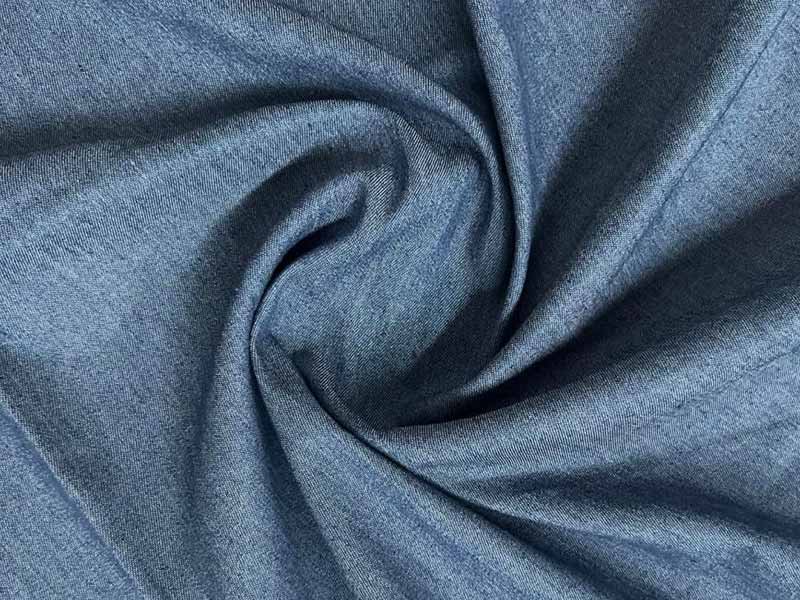
Denim looks so familiar that it is easy to underestimate it. Most people can identify a pair of jeans in seconds, yet two bolts of blue denim can behave like completely different materials once they are cut, sewn, washed, and worn. One fabric may hold the clean architecture of a fitted mini dress, another may fall softly through a shirt dress, and a third may stretch comfortably at first but lose its shape after several hours. For fashion product teams, the useful question is not simply whether a fabric is denim. It is whether that particular denim can deliver the intended silhouette, comfort, color, fit, wash effect, and repeat-production consistency.
Denim is a durable woven fabric traditionally made from cotton in a warp-faced twill construction. Its face is usually dominated by indigo-dyed warp yarns, while lighter weft yarns remain more visible on the reverse. Modern denim may include elastane, polyester, lyocell, recycled cotton, or other fibers to adjust stretch, drape, softness, recovery, weight, and wash performance.
That definition is only the beginning. A fabric can look excellent on the roll and change dramatically after garment washing: the waist may relax, a side seam may rotate, a dark shade may reveal panel differences, or a soft hand may come at the cost of strength. Experienced developers therefore read denim as a complete system made up of fiber, yarn, weave, dye, finish, pattern, construction, and washing. Follow that system through the sections below and the familiar blue cloth starts to tell a much more useful story.
What Is Denim Fabric?
Denim is a woven, usually cotton-rich fabric recognized by diagonal twill lines, a darker face, a lighter reverse, and distinctive fading. Traditional blue denim uses indigo-dyed warp yarns and pale weft yarns. It is used not only for jeans, but also for dresses, skirts, tops, jackets, jumpsuits, fashion sets, bags, and many other products.
Fiber and Fabric Structure
Traditional denim is most often made from cotton because cotton combines useful strength, moisture absorption, dye compatibility, and the ability to soften through wear. A classic rigid denim may contain 100% cotton, while contemporary fashion denim often blends cotton with other fibers to change how the garment moves and recovers. Elastane supports stretch, polyester can improve stability, lyocell can create a softer fall, and recycled cotton can reduce virgin-fiber use when yarn strength and consistency are managed carefully.
The composition printed on a specification sheet is only a starting point. Two fabrics labeled 98% cotton and 2% elastane may have completely different stretch percentages, recovery, weight, surface character, shrinkage, and seam behavior. Yarn type, elastic-yarn placement, fabric density, weaving tension, and finishing all influence the result. For this reason, experienced teams request a complete specification and test the actual fabric rather than approving it from a fiber percentage or a small color cutting.
Most traditional denim uses a warp-faced twill, commonly a 3-by-1 construction in which the warp yarn passes over three weft yarns and under one. More dyed warp yarn is therefore exposed on the face, while the undyed or lightly colored weft remains easier to see on the reverse. Lighter denim may use a 2-by-1 twill, which generally creates a finer diagonal line and less bulk for shirts, soft skirts, and warm-weather dresses.
Denim and Similar Fabrics
Denim is a fabric, while jeans are a garment category. Jeans are commonly made from denim, but the same fabric can be developed into mini dresses, midi skirts, structured tops, jackets, corset-inspired pieces, jumpsuits, shorts, and matching sets. This distinction matters because a search for a ‘denim dress’ describes both a material choice and a garment-engineering problem; it does not simply mean adapting a jeans pattern into a different shape.
Several materials can resemble denim in online photographs. Chambray often uses colored warp yarns and pale weft yarns, but its plain weave gives both sides a more similar appearance and usually creates a lighter, softer fabric. Canvas is also strong, yet its plain-weave surface is flatter and firmer. Knit denim imitates the color and mood of denim while behaving like a knitted material, so it requires different ease, stabilization, seams, and grading.
| Material | Construction | Typical Appearance | Common Uses |
| Denim | Warp-faced twill | Diagonal ribs, darker face, pale reverse | Jeans, dresses, skirts, jackets |
| Chambray | Plain weave | Lightweight, similar color on both sides | Shirts, blouses, summer dresses |
| Cotton twill | Twill weave | Diagonal surface without classic indigo contrast | Trousers, uniforms, jackets |
| Canvas | Plain weave | Dense, flat, firm surface | Bags, workwear, structured garments |
| Knit denim | Knitted structure | Denim-like color with high flexibility | Leggings, fitted casualwear |
What Creates the Denim Look?
The familiar denim appearance comes from the interaction of yarn color, twill structure, surface abrasion, and washing. In classic blue denim, the warp yarns are dyed with indigo while the weft yarns remain white, ecru, or lightly colored. Because the weave exposes more warp on the front, the face looks dark and blue while the reverse looks paler. This contrast becomes especially clear along cut edges, turned cuffs, seam allowances, and distressed areas.
Indigo is often concentrated near the outer surface of the yarn instead of penetrating evenly to the center. Friction gradually removes part of this surface color and reveals lighter fiber underneath, creating the fading seen at seams, pocket edges, folds, elbows, knees, hips, and hems. The same principle allows developers to create controlled high-and-low effects through washing, sanding, laser treatment, whiskering, and localized abrasion.
Twill direction changes the surface character and can influence garment behavior. Right-hand twill runs upward from lower left to upper right and is widely used for classic denim. Left-hand twill runs in the opposite direction and may feel softer after washing. Broken twill repeatedly changes direction, creating a subtle zigzag and reducing the strong torque tendency associated with continuous diagonal structures.
How Denim Behaves in Clothing
Denim can be stiff, soft, crisp, fluid, elastic, dense, breathable, brushed, or coated. A rigid 12-ounce fabric may hold strong panel lines and a clean A-line shape, yet feel bulky around a fitted bust or layered waistband. A 6-ounce cotton-lyocell denim may fall beautifully through a shirt dress but lack the stability required for a corset-style bodice without lining, interfacing, internal tape, or boning.
Weight should therefore be read together with density, stretch, recovery, drape, shrinkage, skew, and finish. Weight influences bulk and structure; density affects opacity and firmness; stretch supports movement; recovery determines whether the shape returns; shrinkage changes measurements; and skew can rotate a side seam or hem. The intended garment wash can alter every one of these characteristics, so an untreated swatch never tells the complete story.
A practical approval process uses a larger fabric cutting, an actual sewn sample, the intended washing or finishing route, and a post-wash fit review. This approach may appear more demanding than selecting a fabric from a hanger, but it prevents expensive surprises. Denim is one of the clearest examples of a material whose final identity emerges only after fabric, pattern, construction, and washing have been tested together.
How Is Denim Fabric Made?
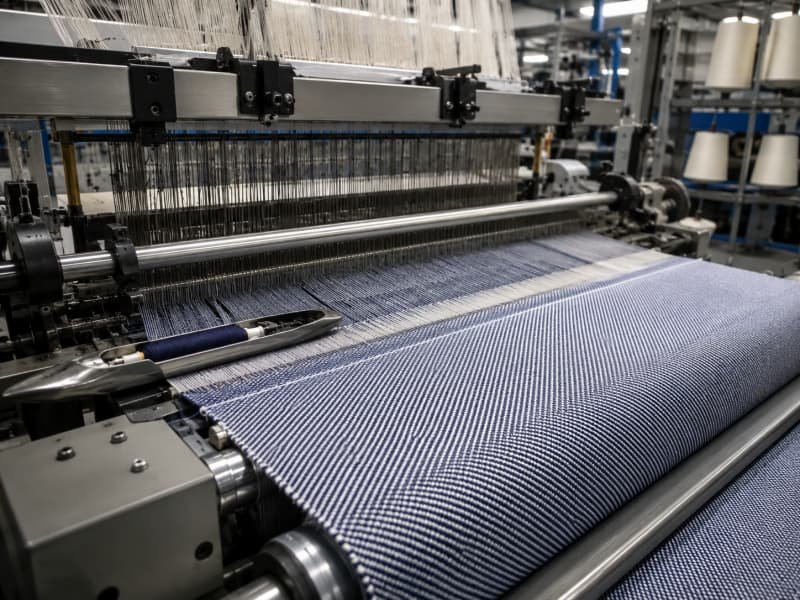
Denim is made through yarn preparation, warp dyeing, twill weaving, fabric finishing, garment construction, and washing. Indigo-dyed warp yarns form the darker face, while lighter weft yarns create the pale reverse. Every stage affects shade, strength, shrinkage, texture, skew, softness, and finished measurements, so reliable denim development treats fabric and washing as one connected process.
Yarn and Indigo Dyeing
Denim begins with the selection of fiber and yarn. Cotton fiber length, yarn count, twist, spinning method, irregularity, and strength all influence the finished surface. Ring-spun yarn often produces a more textured, irregular character that becomes expressive after washing, while open-end yarn can create a more uniform appearance and support efficient production. Neither method is automatically superior; the correct option depends on weight, price, wash target, garment use, and brand aesthetic.
The warp yarns are usually dyed before weaving. Rope dyeing groups many yarns into ropes that pass through repeated indigo baths and oxidation zones before being opened and arranged into a warp sheet. Slasher dyeing handles the yarns in sheet form and can provide controlled, efficient processing for selected constructions. Both routes can produce commercial denim when yarn tension, dye concentration, oxidation, and preparation are managed consistently.
Indigo must be chemically reduced into a soluble form before the yarn can absorb it. The yarn leaves the bath with a yellow-green appearance and turns blue as oxygen reaches the dye. Repeated dipping and oxidation build a deeper shade. Dip count matters, but it is only one variable; water condition, reduction chemistry, dye strength, yarn tension, oxidation time, and later washing all influence the final color and its ability to fade attractively.
Weaving the Twill
After dyeing, the warp yarns are interlaced with lighter weft yarns on a loom. A 3-by-1 warp-faced twill is widely used for medium and heavier denim because it creates a clear diagonal rib and exposes a large amount of dyed warp on the surface. Lighter denim may use 2-by-1 twill to reduce bulk and create a finer, more flexible fabric for dresses, shirts, skirts, and softer fashion pieces.
The weave controls more than appearance. It affects yarn density, abrasion behavior, flexibility, visible weft, surface texture, and the tendency to skew. Loom tension must remain controlled because uneven tension can produce width variation, bowing, density changes, or diagonal distortion. These faults may look minor in a small swatch but become obvious when long dress panels, center seams, or hems are cut and washed.
Usable width is another commercial detail that deserves attention. A wider roll can improve marker efficiency and reduce consumption, while a narrow selvedge fabric may increase usage. The nominal width on a fabric card is not always the width available for production after edge damage, shade variation, or finishing shrinkage is excluded. Accurate costing therefore relies on inspected usable width and an actual marker, not a simple price-per-meter comparison.
Finishing and Garment Washing
Freshly woven denim is often dark, stiff, and dimensionally unsettled. Fabric finishing may include desizing, singeing, softening, sanforization, calendaring, brushing, coating, or resin treatment. Sanforization mechanically reduces potential shrinkage, but it does not make denim completely shrink-free. Residual change still depends on fiber content, construction, wash temperature, drying method, and the finishing route applied to the sewn garment.
Many fashion effects are created after sewing. Rinse washing can remove sizing and loose dye while preserving a dark shade. Enzyme washing softens the surface and can create subtle fading. Stone washing, bleaching, ozone treatment, laser marking, sanding, whiskering, tinting, overdyeing, and local abrasion can produce stronger vintage or fashion effects. Each method changes not only color, but also hand feel, garment measurements, seam appearance, stretch recovery, and strength.
A wash recipe should never be treated as decoration added at the final stage. Strong enzyme or bleach treatment may produce an attractive surface while weakening the cloth. A zipper tape, label, embroidery thread, elastic, lining, or fusible component may react differently from the shell. The correct approval is therefore a complete washed garment that shows how the fabric, construction, trims, and multiple-layer areas behave together.
Production Control Points
Denim production needs checkpoints from yarn to finished garment because a good original fabric does not guarantee a consistent washed product. Shade grouping is especially important. Rolls from the same order can still show visible variation, and mixing noticeably different shade groups within one garment may create mismatched panels that become even more obvious after washing. Fabric inspection and disciplined lay planning reduce this risk before cutting begins.
A pilot wash should be completed before the full order is released. The pilot confirms machine loading, chemical dosage, treatment time, temperature, drying conditions, shrinkage, shade, softness, and trim behavior. A small flat wash panel is useful for early development, but it cannot show the effects created by seams, folds, pockets, zippers, facings, labels, and areas with several fabric layers. The approved standard should therefore include a complete garment whenever possible.
Production records are valuable for repeat orders. Fabric lot, wash formula, machine size, loading ratio, cycle time, temperature, drying conditions, measurement changes, and shade results provide a practical reference when a successful style returns. Denim can never be perfectly identical across every lot, but disciplined records make the acceptable range more predictable and help teams correct variation before it becomes a delivery problem.
| Stage | Main Check | Common Risk | Practical Control |
| Yarn preparation | Yarn count, strength, regularity | Breakage or unwanted texture | Approved yarn specification and testing |
| Dyeing | Shade, cast, dye penetration | Color variation or weak fastness | Lab standard and dye-lot records |
| Weaving | Weight, width, skew, defects | Bowing, torque, density variation | Roll inspection and defect mapping |
| Fabric finishing | Hand feel and residual shrinkage | Stiffness or dimensional change | Controlled wash test before cutting |
| Cutting and sewing | Shade grouping, grain, seam quality | Mixed panels, puckering, needle damage | Lay control and correct machine setup |
| Garment washing | Shade, softness, size, trim response | Shrinkage, strength loss, hardware damage | Pilot wash and approved garment standard |
| Final inspection | Measurements, workmanship, appearance | Batch inconsistency | Comparison with approved sample and specifications |

Which Types of Denim Are Available?
Denim is available in raw, washed, rigid, stretch, selvedge, lightweight, heavyweight, coated, printed, recycled, and blended forms. These terms describe different parts of the material rather than fixed quality levels. The right choice depends on silhouette, comfort, wash effect, construction, care method, price position, and the consistency required for repeat production.
Raw, Washed, and Selvedge
Raw denim, also called dry denim, has not received the extensive washing used to create softness and fading. It usually has a deep shade, crisp hand, and clean surface, then develops creases and lighter areas through wear. Raw denim may be sanforized or unsanforized, so the label alone does not predict shrinkage. Unsanforized constructions can change noticeably during the first wash, making pre-production testing and clear care instructions essential.
Washed denim has already been treated to establish color, softness, shrinkage, or a worn appearance before the customer receives the garment. A dark rinse may preserve a clean, saturated look while removing sizing and loose dye. Enzyme, stone, bleach, ozone, laser, sanding, and tinting processes can create increasingly visible contrast. The most important question is not whether denim is washed, but whether the chosen wash supports the garment’s strength, dimensions, trims, and intended price level.
Selvedge denim has a self-finished woven edge produced on a shuttle loom, often with a colored identifier line. Selvedge describes the edge and production method; it does not automatically mean the fabric is raw, heavy, stronger, or more sustainable. In a fashion dress or skirt, the narrow edge adds value only when it is deliberately exposed. If it disappears inside ordinary seams, the extra fabric consumption may provide no visible benefit.
Rigid and Stretch Denim
Rigid denim normally contains no elastane. It provides firm structure, authentic fading, and clear panel definition, making it useful for A-line skirts, structured mini dresses, jackets, overshirts, and styles that rely on strong seams or topstitching. Because it does not expand significantly around the body, the pattern requires suitable wearing ease, shaping, openings, and closures. A garment that looks sleek while standing must still allow the wearer to sit, walk, reach, and breathe comfortably.
Stretch denim usually contains elastic yarn, often with roughly 1% to 3% elastane in common commercial constructions. The fiber percentage does not directly equal the fabric’s stretch. Yarn engineering, weave, finishing, and elastic placement determine whether the material extends 12%, 25%, 40%, or more. Stretch direction must also be confirmed because some fabrics move mainly across the width while others provide meaningful extension in both directions.
Recovery is more important than extension alone. A fabric may stretch generously and still perform poorly if it fails to return to its original dimensions. Weak recovery can create waist growth, hip bagging, rippling near seams, or a dress that loses definition after a few hours. Evaluation should record stretch in each direction, recovery after controlled extension, growth after repeated movement, relaxation after cutting, and performance after the intended garment wash.
Denim Weight Classes
Denim weight is commonly expressed in ounces per square yard or grams per square meter. It influences bulk, opacity, warmth, drape, sewing difficulty, shipping weight, and general structure, but it does not fully describe hand feel or durability. A softly finished 8-ounce cotton-lyocell denim can fall more fluidly than a rigid 7-ounce cotton fabric, while a coated fabric may feel far firmer than its measured weight suggests.
Very light and lightweight denim usually works best when the garment requires gathering, softer folds, or warm-weather comfort. Midweight denim provides a useful balance for structured skirts, jackets, fitted dresses, and traditional bottoms. Heavyweight fabrics suit outerwear, rigid work-inspired pieces, and intentionally architectural silhouettes, but they create difficult layer build-up at waistbands, facings, zipper guards, pocket corners, belt loops, and overlapping seams.
For many women’s fashion programs, approximately 6 to 10 ounces per square yard is a practical development area because it can provide visual denim character without excessive bulk. This is not a fixed rule. The final choice should be confirmed through a sewn and washed sample, especially when the style includes fitted bust shaping, a long zipper, gathered sections, a flared skirt, corset construction, or several internal support layers.
| Weight Class | Approx. oz/yd² | Approx. GSM | Typical Behavior | Common Fashion Uses |
| Very light | 4-6 | 136-203 | Soft, breathable, fluid | Shirts, blouses, summer dresses |
| Lightweight | 6-8 | 203-271 | Flexible with moderate body | Mini dresses, skirts, fashion sets |
| Midweight | 8-12 | 271-407 | Balanced structure and durability | Jeans, jackets, structured dresses |
| Heavyweight | 12-16 | 407-542 | Firm, dense, less fluid | Outerwear, work-inspired pieces, rigid bottoms |
| Extra heavy | Above 16 | Above 542 | Very stiff and demanding to sew | Specialist or statement garments |
Specialty Denim Options
Black denim may be sulfur-dyed or produced through other color systems. It can create a sharp, clean appearance, but deep shades often reveal abrasion quickly and need careful rubbing and wash fastness evaluation. White denim requires a different kind of control: opacity, yellowing, staining, pocket-bag visibility, and seam-allowance show-through can become more important than fading. Colored denim in pink, green, red, beige, or brown should be judged after the intended laundering process because shade shift may differ from classic indigo.
Coated denim uses resin, pigment, wax, or film to create shine, a leather-like surface, metallic character, or water resistance. The effect can be dramatic, yet the coating may crack, peel, become sticky, or change after folding and cleaning. Printed denim can carry floral, animal, geometric, or placement designs, but the dark base may alter print color and the garment wash may soften or distort fine details. Both options require testing on finished garments rather than flat fabric alone.
Recycled denim may contain mechanically recycled cotton, recycled polyester, regenerated cellulose, or a blend of several fiber sources. Mechanically recycled cotton fibers are generally shorter, so yarn strength and surface consistency need attention. Slub denim uses deliberately irregular yarn thickness to create visible texture that becomes stronger after washing. Clear reference standards help production teams distinguish intended character from unacceptable yarn faults.

What Are the Key Properties of Denim?
Denim is valued for durability, shape, visible aging, and broad design versatility, but its comfort and performance vary widely. Fiber composition, yarn quality, weight, weave density, stretch, recovery, finishing, and garment washing determine breathability, shrinkage, color transfer, softness, seam strength, and long-term fit. The fabric should therefore be evaluated in its finished garment state.
Strength and Comfort
Denim is generally durable because twill construction distributes abrasion across diagonal yarn floats and allows relatively dense yarn placement. Cotton fiber quality, yarn strength, twist, weight, and fabric density also contribute. Weight alone does not guarantee service life. A heavy fabric can be weakened by aggressive bleaching or sanding, while a lighter denim made with strong yarn and a controlled finish may provide better practical durability in the final garment.
Early failure often begins at construction details rather than in the open fabric. Needle cutting, narrow seam allowances, weak pocket corners, sharp hardware, poor bartacks, incompatible thread, and excessive local abrasion can create damage that expands during wear. Stretch denim introduces additional risks because broken elastic yarns may appear as pale lines, rippling, or localized loss of recovery. Strength therefore needs to be assessed after sewing and washing, not only on the original roll.
Comfort is not the same as softness. A fabric may feel soft in the hand but restrict movement when the pattern is too close to the body, while a firm denim can feel comfortable in a loose overshirt. Breathability depends on weight, density, fiber content, coating, lining, and silhouette. For dresses and tops, interior comfort also includes seam edges, facings, zippers, labels, cups, boning, pocket bags, and the way multiple layers sit against the skin.
Stretch, Recovery, and Growth
Stretch describes how far a fabric extends under a defined load. Recovery describes how well it returns after the load is removed, while growth is the remaining dimensional increase after wear or testing. These terms should not be used interchangeably. A denim that stretches 35% may feel comfortable during the first fitting but become loose at the waist or hip if recovery is weak. A lower-stretch fabric with controlled recovery may preserve the intended silhouette much better.
Working ranges vary by construction and test method. Rigid denim may show only limited mechanical give. Low-stretch denim may extend around 10% to 20%, moderate-stretch denim around 20% to 35%, and selected high-stretch constructions more than 35%. These figures are useful only when the direction, load, sample size, holding time, and relaxation period are recorded. Results from different methods should not be compared as though they were identical.
Garment-level testing is especially valuable for bodycon dresses, fitted skirts, corset tops, narrow sleeves, and styles without adjustable closures. A laboratory strip cannot fully reproduce the repeated movement of sitting, walking, bending, and wearing a garment for several hours. The intended wash must also be included because heat, chemicals, and mechanical action can change elastic performance, seam extension, and finished measurements.
Shrinkage, Skew, and Fading
Denim commonly changes dimensions because cotton fibers relax, weaving tension is released, sizing is removed, and drying consolidates the structure. Sanforized denim has been mechanically preshrunk, but residual movement remains. Many commercial programs work toward a defined finished-garment tolerance, often near plus or minus 3% after the specified care method, although the appropriate limit depends on the product, fabric, customer standard, and measurement point.
Shrinkage should be measured in both length and width because the directions may behave differently. Stretch denim may also relax after cutting and hanging, so immediate measurements can be misleading. Skew is diagonal distortion in the fabric, while torque is the visible twisting that may move a side seam, center seam, panel line, or hem. Long dress panels can make these effects more noticeable than short jeans components, which is why fabric inspection and post-wash review matter.
Indigo fading is expected, but uncontrolled color transfer can create complaints. Dark untreated denim may rub onto pale upholstery, shoes, bags, linings, or neighboring garments. Dry and wet rubbing tests, wash fastness, perspiration fastness, and shade-change evaluation help define the commercial risk. Wet rubbing commonly performs below dry rubbing because moisture releases more surface dye. A realistic standard should balance the desired indigo character with the intended use and customer care expectations.
Testing and Responsible Development
Useful denim testing may include fabric weight, composition, tensile strength, tear strength, seam strength, abrasion resistance, dimensional stability, skew, stretch and recovery, rubbing fastness, wash fastness, pH, restricted substances, trim pull strength, and appearance after laundering. Testing should reflect the finished garment whenever possible. Results from unwashed fabric may not represent a style that later receives bleaching, enzyme treatment, abrasion, laser work, or high-temperature drying.
Environmental claims also need context. Cotton is renewable, but its impact varies with farming practice, irrigation, region, and traceability. Recycled cotton can reduce virgin-fiber demand, yet shorter fibers may require blending for strength. Polyester can improve stability and durability while complicating fiber separation, and elastane improves comfort but makes recycling more difficult. No single fiber or process turns denim into an automatically responsible product.
Lower-water dyeing, water reuse, ozone treatment, laser effects, controlled chemistry, and optimized wash recipes can reduce selected impacts when the processes are measured and managed well. Product life remains equally important. A denim garment that holds its fit, seam strength, and appearance over repeated wear can provide more practical value than a garment carrying a fashionable environmental claim but failing early. Responsible development connects material choice, process control, durability, repairability, and honest communication.

How Do You Choose Denim for Fashion Garments?
Choose denim by matching composition, weight, stretch, recovery, drape, opacity, wash response, and surface character to the garment silhouette. The material should be tested after sewing and finishing, because pattern balance, shrinkage, seam bulk, closure strain, color consistency, and repeat-production stability are just as important as the original shade or hand feel.
Matching Fabric to Garment
Different denim garments need different balances of structure and movement. A fabric that performs well in five-pocket jeans may be too heavy for a dress, while a soft shirt-weight denim may not support a fitted bodice. A relaxed shirt dress generally benefits from lightweight fabric that folds and gathers without becoming bulky. A fitted mini dress needs enough body to hold its shape and enough controlled movement to allow sitting and walking without excessive strain.
Corset and bustier styles require particular care. The denim shell may need lining, fusible support, boning, cups, elastic, waist tape, or reinforced seams. A fabric that appears firm on the roll can still stretch or distort around the bust once seams are shaped and the garment is worn. White and pale denim also need realistic opacity checks because pocket bags, seam allowances, internal support, and undergarments may remain visible under store lighting or photography.
These weight ranges are useful development starting points rather than fixed rules. A soft cotton-lyocell fabric may work at a lower weight than a crisp 100% cotton fabric, while stretch and coating can change the apparent body of the material. The final decision should be made on a complete sample using the intended pattern, trims, construction, and wash.
| Garment Type | Practical Weight Range | Preferred Behavior | Main Risk to Check |
| Soft shirt dress | 4-7 oz/yd² | Fluid, breathable, easy to gather | Transparency and weak seam support |
| Fitted mini dress | 6-9 oz/yd² | Controlled stretch and reliable recovery | Waist growth and zipper strain |
| A-line denim dress | 7-10 oz/yd² | Moderate structure and clean drape | Excess stiffness at the hem |
| Denim skirt | 7-11 oz/yd² | Shape retention and abrasion strength | Waistband bulk and panel twisting |
| Corset-style top | 7-10 oz/yd² | Stability with limited controlled give | Bust distortion and seam strain |
| Fashion jacket | 9-13 oz/yd² | Firm structure and durable seams | Layer bulk and restricted movement |
| Matching set | 6-10 oz/yd² | Consistent shade and wash response | Variation between separate pieces |
Pattern and Fit Development
A denim pattern should be developed for the exact fabric and wash. Replacing rigid denim with stretch denim after pattern approval can create an oversized result, while replacing stretch fabric with rigid denim can make the same style uncomfortable or impossible to put on. Weight and composition can look similar on paper even when relaxation, recovery, shrinkage, density, and drape are different enough to change the entire fit.
Patternmakers need to account for stretch direction, fabric relaxation, shrinkage in both directions, seam bulk, skew, recovery, grain direction, and wash-induced distortion. Rigid styles need sufficient wearing ease and appropriate openings. Stretch styles may use reduced ease, but the reduction should be based on measured extension and recovery rather than a generic percentage applied to every fabric.
Close-fitting silhouettes reveal small errors quickly. Bodycon, strapless, halter, backless, corset, bustier, and low-waist styles depend on stable bust balance, waist positioning, hip shaping, neckline control, and secure closures. A practical sequence moves from an initial prototype to a wash trial, post-wash measurement, finished fit review, pattern correction, revised sample, grading check, and pre-production sample in bulk materials. Measurements should be taken after the garment has relaxed sufficiently.
Wash and Trim Compatibility
The wash must be developed together with the shell fabric, thread, zipper, buttons, rivets, labels, elastic, lining, cups, boning, interfacing, prints, and embroidery. A metal zipper may survive a rinse and discolor during bleaching. A thread may retain its original color while the denim fades, creating stronger contrast than expected. Fusible support may bubble, elastic may lose recovery, and a lining may shrink differently from the shell.
Topstitching also changes the visual result. Thick thread can create an authentic denim character, but it requires the correct needle, tension, stitch length, and machine setup. Stitching that is too dense can damage heavy fabric, while unstable tension can produce loops or irregular seams after washing. Thread should be selected for both strength and color behavior, not only for appearance before finishing.
The wash facility needs a physical standard rather than a phrase such as ‘medium vintage blue.’ The approved garment should show target shade, color cast, high-and-low contrast, abrasion placement, seam effect, softness, and acceptable variation. Reviewing the full garment also reveals whether pockets, facings, folds, double layers, and closures create unwanted dark areas or excessive abrasion.
Bulk Quality and Specifications
A useful denim tech pack gives measurable information so the fabric mill, sample room, wash facility, and sewing line are working toward the same result. Fabric information should include composition, weight, usable width, weave, stretch direction, extension, recovery, base shade, wash reference, hand feel, shrinkage, skew, colorfastness, and the approved supplier article. Garment information should define finished measurements, tolerances, stitches, seam allowances, reinforcement, trims, lining, labels, wash, and care instructions.
Bulk fabric should be inspected before cutting for width, weight variation, stains, weaving faults, bowing, skew, holes, unintended slubs, and shade differences. Rolls may need to be grouped by shade, and components from substantially different groups should not be mixed in one garment. A pilot production quantity should pass through the complete washing route before the full order, allowing the team to confirm measurements, seam appearance, trim behavior, color, and drying conditions.
Inline inspection should focus on risks that washing will magnify: needle damage, uneven topstitching, twisted seams, incorrect grain direction, weak bartacks, unstable zipper insertion, broken elastic yarns, seam bulk, and mixed shades. Final inspection should compare production garments with the approved washed sample, measurement chart, workmanship standard, shade reference, and packaging requirements. Retained samples, wash records, fabric lot data, and measurement history support more consistent repeat orders.
From Fabric Choice to Production-Ready Denim
Denim rewards careful development because every decision remains visible in the finished garment. Fiber and yarn determine the foundation; twill construction creates the familiar surface; indigo and other dyes establish the color; finishing changes softness and stability; the pattern converts material behavior into fit; and washing reveals whether the whole system works. A successful denim product is therefore not created by choosing an attractive blue swatch. It is created by controlling the route from fabric selection to the final washed and measured garment.
For fashion brands developing denim mini dresses, structured skirts, fitted styles, corset tops, shirt dresses, jackets, matching sets, or a broader seasonal collection, a useful development brief includes the design reference, target market, preferred composition and weight, required stretch, intended wash, size range, quantity, timeline, testing standard, and packaging needs. These details allow technical teams to identify risks early and recommend a practical sample and production route instead of solving avoidable problems after bulk cutting.
Duolan Apparel supports denim fashion projects through fabric and trim sourcing, pattern and fit development, sample construction, wash evaluation, bulk-readiness checks, production coordination, and quality control. Send your tech pack, sketch, reference garment, or collection direction to begin a technical review. The team can assess material suitability, structure, wash risk, sampling requirements, and the most reliable path from design intent to repeatable production.