Skip to content
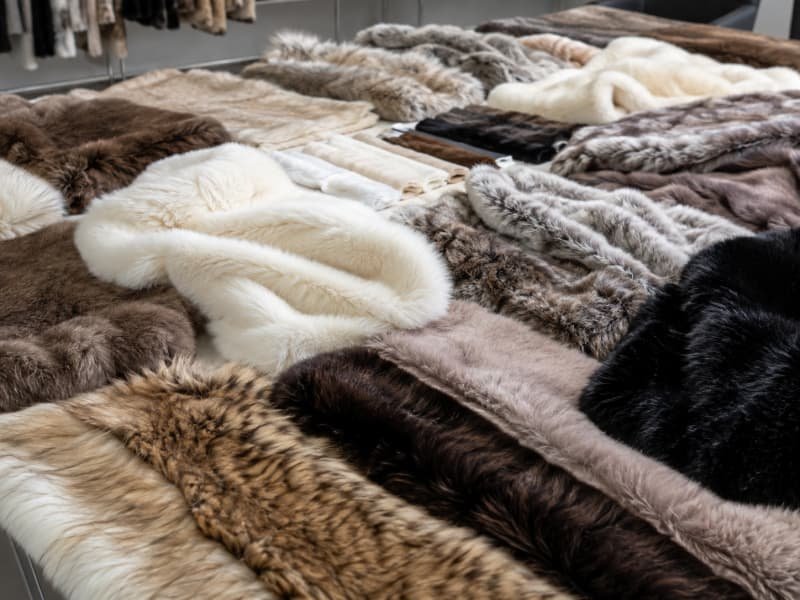
Faux fur is one of those fabrics that can look convincing from several steps away and reveal its true quality only when someone touches, bends, cuts, sews, wears, and cleans it. Two rolls may both be described as 100% polyester faux fur, yet one produces a soft, dense garment with natural movement while the other exposes its backing, sheds fibers, crushes in a carton, or makes a polished design look inexpensive. The difference is rarely explained by fiber content alone. Pile height, fiber fineness, density, backing construction, finishing, direction, color treatment, seam engineering, lining, pressing, and packing all influence the final result.
Faux fur is a pile textile made to imitate the appearance, softness, volume, or warmth of animal fur without using an animal pelt. Most commercial versions use polyester, acrylic, modacrylic, nylon, or blended fibers held by a knitted, woven, tufted, or bonded backing. Its real performance depends on pile density, fiber retention, backing stability, colorfastness, recovery, and the way the finished garment is constructed.
That definition is useful, but it does not answer the question that matters once a design enters development: will this particular fabric work on this particular garment? A long-pile surface that looks dramatic on an oversized coat may overwhelm a fitted mini dress. A soft swatch may become stiff once it is lined and enclosed at the seams. A rich dark color may show every loose fiber after packing. The rest of this guide follows the material from its basic structure to the decisions that determine whether it becomes a wearable, repeatable, commercially sound fashion product.
What Is Faux Fur?
Faux fur is a manufactured fabric with a raised pile designed to resemble animal hair, fleece, or pelt. The visible fibers are attached to a textile backing rather than animal skin. Its character can range from short and polished to long and shaggy, and its quality is shaped by density, fiber softness, backing stability, finishing, shedding control, and garment construction.
Is Faux Fur Real Fur?
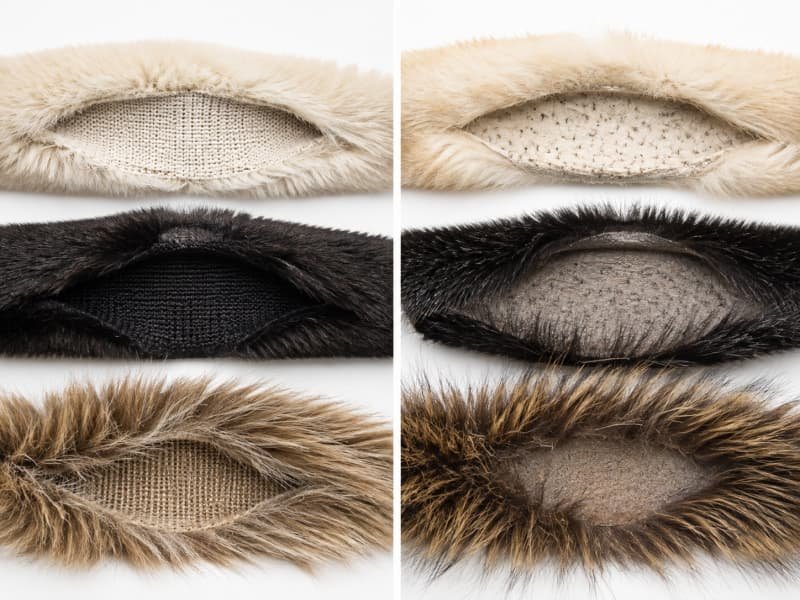
Faux fur is not real animal fur, and the most reliable difference is usually found beneath the surface. When the pile is carefully separated, faux fur reveals a textile base that may be knitted, woven, tufted, or bonded. Real fur normally reveals skin or hide. That distinction affects far more than labeling, because a textile backing can stretch, fray, curl, shrink, or distort in ways that animal skin does not, while real fur requires specialist handling of the hide itself.
Visual appearance alone is not always enough for identification. Better faux fur may use several fiber lengths, dense under-pile, tapered tips, and subtle color changes that imitate natural hair surprisingly well. Real fur can also be clipped, dyed, printed, or heavily finished. A responsible material check therefore combines the reverse-side structure, fiber declaration, supplier records, care information, and laboratory verification when the product claim or market requirement makes that necessary.
Faux fur should also be separated from other fuzzy textiles that are often grouped together in product photos. Sherpa, fleece, brushed jersey, pile velvet, chenille, feather yarn, and plush fabric may all create a soft surface, but they do not share the same pile architecture or garment behavior. The difference shows up in warmth, drape, stretch, skin feel, seam thickness, pilling, shedding, edge finishing, and the way the surface recovers after compression.
| Comparison Point | Faux Fur | Real Fur |
| Underlying base | Knitted, woven, tufted, or bonded textile backing | Animal skin or hide beneath natural hair |
| Typical surface material | Polyester, acrylic, modacrylic, nylon, or blends | Natural animal hair |
| Color and texture range | Broad industrial control, including bright and graphic effects | Natural, dyed, clipped, or printed finishes |
| Construction behavior | Controlled by backing stretch, pile direction, and fiber anchoring | Controlled by skin thickness, hair direction, and hide condition |
| Main care risks | Heat damage, matting, shedding, and backing distortion | Drying, cracking, hair loss, and specialist-cleaning needs |
| Primary ethical question | Synthetic-material sourcing and environmental persistence | Animal welfare, traceability, and pelt sourcing |
What Does Faux Fur Mean?
The word faux means artificial or made to resemble something else. In fashion, faux fur describes a textile engineered to reproduce the softness, volume, sheen, pattern, or movement associated with animal fur. Common alternatives include fake fur, artificial fur, imitation fur, mock fur, synthetic fur, fur-effect fabric, and vegan fur. These expressions are often used interchangeably in retail language, but none of them provides a complete technical specification.
A name such as faux mink usually describes a short, dense, smooth appearance rather than a guaranteed fiber or construction. It does not tell a product team whether the pile is polyester or acrylic, whether the backing stretches, whether the material is 350 or 800 grams per square meter, or whether the fibers remain secure after rubbing and cleaning. The same problem appears with terms such as faux rabbit, faux fox, teddy, sherpa, and faux shearling, which can describe noticeably different materials from different suppliers.
The phrase vegan fur requires additional care because a material name and a finished-product claim are not the same thing. The furry surface may contain no animal hair, yet the garment could include wool lining, silk tape, leather trim, shell buttons, feather decoration, or an adhesive with animal-derived content. Clear product communication begins with a complete bill of materials rather than a single face-fabric description.
How Did Faux Fur Evolve?
Early imitation-fur fabrics were often coarse, flat, and visibly synthetic, and their main appeal was price rather than realism. Modern fiber formation, knitting, tufting, brushing, shearing, printing, and heat-setting methods have changed that. Suppliers can now combine dense short fibers with longer guard-hair effects, control the shine of the surface, create tapered tips, and introduce natural-looking tonal depth without relying on an animal pelt.
The material has also moved beyond imitation. Many contemporary designs use faux fur because it can look deliberately unreal: saturated pink, cobalt blue, lime green, checkerboard patterns, frosted ends, metallic tips, or oversized shaggy volume. In these garments, success is not measured by how closely the textile resembles mink or fox. It is measured by whether the texture supports the collection story, photographs well, feels appropriate on the body, and remains practical enough for production and wear.
This evolution changed the development conversation. An experienced team does not stop at asking whether the swatch looks luxurious. It checks whether the pile scale suits the silhouette, whether the backing can carry the pattern shape, whether the color remains stable, whether the seam can be controlled, and whether the finished product can be cleaned and shipped without losing its intended appearance. The fabric became more sophisticated, but the decisions around it also became more demanding.
Why Is Faux Fur Used?
Faux fur gives designers control over color, volume, texture, and visual impact. It can create a compact polished edge on a neckline, a soft detachable cuff, a winter-party bolero, or a full oversized coat. It also supports animal-free product positioning and can be ordered in more repeatable industrial specifications than many natural materials, although shade, density, and finishing still need to be confirmed across bulk lots.
The material is often most effective when it is used with a clear purpose. A narrow trim can transform a simple dress without adding excessive weight. Detachable collars or cuffs create styling flexibility and simplify care. A cropped jacket can add seasonal value to an occasionwear collection while leaving the main dress visible. These applications use texture strategically rather than assuming that more fur automatically means a more premium product.
Its disadvantages should be acknowledged early. Faux fur can increase garment weight, sewing time, packing volume, shipping cost, static, heat, and cleaning difficulty. Long fibers may catch in zippers, hooks, jewelry, or adjacent garments. Weak pile anchoring can create customer complaints before the product is even worn. The best results come when the material is selected alongside the pattern, lining, trim, closure, care, and logistics plan rather than introduced as a late decorative decision.
What Is Faux Fur Made Of?
Most faux fur is made from polyester, acrylic, modacrylic, nylon, or blends of manufactured fibers. These fibers create the visible pile and are held by a knitted, woven, tufted, or bonded base. Fiber choice influences softness, shine, resilience, and color, while pile density and backing structure determine whether the material feels full, stable, sewable, and suitable for the intended garment.
Common Faux Fur Fibers
Polyester is widely used because it can be produced in many fiber shapes, pile lengths, colors, and finishes. It may create a short velvet-like surface, a dense mink effect, a curly teddy texture, or a glossy long pile. Recycled polyester versions are increasingly available where traceable recycled content is part of the product brief, but the recycled claim should be supported by documents and should never replace normal checks for strength, shedding, color, and recovery.
Acrylic is often selected for loft, warmth, softness, and a wool-like or fur-like hand. Modacrylic may appear in specialty constructions where resilience, softness, or a particular performance profile is required. Nylon is less dominant but can be blended to influence strength, smoothness, luster, and abrasion behavior. Some materials also combine synthetic pile with a cotton, rayon, or mixed backing, which can change shrinkage, stretch, labeling, and cleaning performance.
A fiber-content label should be treated as the beginning of the evaluation, not the conclusion. Two fabrics marked 100% polyester can behave very differently because the label says nothing about fiber diameter, cross-section, pile height, pile density, fiber-length variation, backing construction, heat setting, surface polish, or anchoring strength. In real development work, those differences are often more important to the finished garment than the broad polymer name printed on the specification sheet.
Pile and Backing Structure
The visible surface is called the pile, while the reverse side is the backing. The pile creates softness, movement, warmth, and visual depth. The backing holds those fibers in place and gives the fabric enough stability to be cut, sewn, lined, worn, packed, and cleaned. A beautiful pile cannot compensate for a backing that stretches uncontrollably, curls at the edge, tears around closures, or becomes unstable after cleaning.
Many fashion faux furs use a knitted base because knitting can hold dense pile while allowing some flexibility. Woven backings may feel firmer and more dimensionally stable. Tufted and bonded constructions can create thicker or double-faced materials, including suede-effect reverses used in faux shearling. The most suitable structure depends on the garment: a fitted panel may need controlled stretch, while a coat may need enough body to support its own weight without feeling board-like.
Natural-looking surfaces often combine different fiber lengths. Short, dense fibers fill the base and reduce backing show-through, while longer fibers create direction and movement. The ratio matters. Too little under-pile can make the fabric look thin when it bends; too much can create a heavy, hot material that is difficult to sew. Before approval, a swatch should be folded, stretched, compressed, rubbed, viewed against light, cut from the backing, and sewn into a representative seam rather than judged only by stroking the face.
How Faux Fur Is Made
Production generally begins with fiber or yarn selection and coloration. Depending on the construction, color may be introduced in the polymer, yarn, loose fiber, or finished fabric. The pile is then formed and secured to its backing through knitting, weaving, tufting, or another specialized system. At this point the fabric may still look rough and unfinished, because its final character comes from a sequence of mechanical and thermal finishing operations.
Brushing and raising lift the fibers and separate the surface. Shearing controls pile height and can create a smooth mink-like result. Crimping, curling, and heat setting produce teddy, sherpa, or textured effects. Printing creates animal patterns or graphic designs, while tip dyeing, dark roots, and frosted ends introduce tonal depth. Polishing changes shine and smoothness. Anti-shedding treatments may be added, but they should be evaluated for hand feel, odor, durability, and compliance with the intended market.
Bulk control is critical because finishing variation can be obvious across a garment. Uneven shearing creates visible bands. Inconsistent brushing changes shade and direction. Poor heat setting can lead to weak recovery after compression. Printed designs require repeat, scale, and color control. Approval should therefore include an identified swatch, measurable pile and weight information, color reference, backing description, and agreed performance expectations. A small attractive cutting is useful, but it does not by itself prove that several production rolls will match.
Key Material Specifications
Pile height is one of the clearest working specifications. Short pile, often around 3 to 10 millimeters, creates a compact surface and lower seam bulk. Medium pile, roughly 10 to 25 millimeters, gives more texture while remaining manageable for collars, cuffs, cropped jackets, and selected panels. Long pile may begin around 25 millimeters and extend beyond 80 millimeters, producing strong movement but also greater consumption, cutting care, seam thickness, packing volume, and zipper risk.
Fabric weight should be considered across the whole garment rather than as an isolated number. A material around 250 to 500 grams per square meter may suit lighter trims, fashion panels, or selected jackets, while dense coat fabrics can reach 500 to 900 grams per square meter or more. These are broad development references, not universal standards. A backing can add significant weight, and a full-size garment can feel much heavier than a hand swatch suggests.
Other essential checks include usable width, stretch in both directions, pile direction, compression recovery, fiber retention, colorfastness, dimensional stability, odor, and shade consistency. The expected cleaning method must also be part of approval. A fabric that looks excellent before cleaning but loses curl, shine, density, or softness afterward is not suitable for a product expected to be worn repeatedly. Specifications should be tied to the actual silhouette, size range, lining, trim, market, and care label.
| Specification | Practical Reference | Effect on Garment Development |
| Short pile height | About 3-10 mm | Cleaner edges, lower seam bulk, suitable for compact trims and fitted panels |
| Medium pile height | About 10-25 mm | Balanced texture and movement for collars, cuffs, boleros, and jackets |
| Long pile height | About 25-80 mm or more | Strong volume, higher waste, more zipper and packing risk |
| Light-to-medium weight | Roughly 250-500 GSM | Useful for trims, fashion panels, and lighter outer layers |
| Heavy weight | Roughly 500-900 GSM or more | Suitable for dense coats but increases support and shipping requirements |
| Usable width | Often around 140-160 cm | Influences marker efficiency, consumption, and costing |
| Backing stretch | Measure lengthwise and crosswise | Affects pattern shape, seam growth, lining balance, and fit |
| Compression recovery | Compare before and after realistic folding | Predicts carton marks and delivered surface appearance |

Which Types of Faux Fur Are Available?
Faux fur is available in short, medium, long, smooth, curly, shaggy, printed, tipped, frosted, bonded, and stretch-backed constructions. It may imitate mink, fox, rabbit, chinchilla, shearling, or teddy fleece, or look deliberately artificial. The right type depends on silhouette, pile scale, weight, skin contact, climate, lining, care, target price, and production method.
Types by Pile Length
Short-pile faux fur creates a compact, controlled surface and is often chosen for fitted panels, clean collars, narrow cuffs, handbags, structured tops, and trim that should not overpower the garment. Dense short pile can feel smooth and refined, but low-density versions may expose the backing when wrapped around a curve. Because the cut edge is less dramatic, short pile is usually easier to manage, although seam bulk and fiber release still require testing.
Medium pile gives stronger texture without the extreme volume of long fur. It works well for cropped jackets, boleros, collars, hoods, cuffs, vests, and statement panels. A good medium-pile fabric often combines a dense base with slightly longer fibers, creating depth without looking shaggy. The pattern should still be placed with an intentional nap direction, and seam allowances may need trimming where several layers meet around facings, necklines, and enclosed edges.
Long-pile faux fur produces the most movement and visual drama. It is used for oversized coats, large collars, performance pieces, editorial garments, and seasonal statement capsules. The material also demands the most discipline. Long fibers can hide seam lines but catch in zippers, hooks, jewelry, and stitching. They increase packing volume and may flatten in transit. A 50-millimeter pile that looks balanced on an oversized coat can appear disproportionately large around the neckline of a fitted dress, so scale must be judged on the complete garment.
Animal-Inspired Types
Faux mink usually refers to a short, dense, smooth surface with controlled shine. It is often chosen when a compact, polished appearance is needed. Faux rabbit tends to be soft, fine, and slightly fuller, commonly with a short-to-medium pile. Faux fox usually has longer, more directional fibers and may combine mixed lengths, dark roots, or lighter tips to create movement and visual depth.
Faux chinchilla often uses tonal bands or shaded fiber groups. Faux leopard, zebra, cow, and other animal effects rely on printing, jacquard-like color arrangement, or yarn coloration rather than animal hair. These printed materials introduce additional decisions around repeat scale, panel placement, matching, and shade. A small repeat may look busy across a large coat, while a large repeat can create awkward isolated shapes on a narrow cuff or small handbag panel.
These names are useful for mood and visual reference, but they do not confirm composition or performance. One supplier’s faux rabbit may be a light polyester knit, while another offers a much denser acrylic blend under the same name. A stronger request combines the visual term with measurable requirements: pile height, density, weight, backing stretch, surface luster, color depth, and intended application. That language shortens sourcing time and reduces the risk of approving a beautiful but unsuitable swatch.
Teddy, Sherpa, and Shearling
Teddy fabric has a rounded, curly, or clustered surface and is commonly used in casual jackets, vests, coats, trims, bags, and fashion sets. Its appeal comes from a soft, cozy appearance rather than a close imitation of straight animal hair. The curl size, density, base visibility, and recovery determine whether it looks plush or tired. Lower-density versions may flatten quickly at elbows, cuffs, seat areas, and under bag straps.
Sherpa generally has a fleece-like, looped, or irregularly curled face. It is widely used for linings, casual outerwear, collars, and warm layers. Some sherpa fabrics are light and flexible; others are thick enough to affect pattern dimensions and mobility. Faux shearling usually imitates sheepskin by combining a curly face with a suede-effect or bonded reverse. Double-faced constructions can reduce the need for lining, but bond strength, edge finishing, and the appearance of exposed seams must be evaluated carefully.
These categories are related but not interchangeable. A designer looking for a soft lining may not need the stiffness of a bonded faux shearling. A cropped fashion jacket may require more shape than a lightweight sherpa can provide. A teddy fabric with large curls may make a compact silhouette look wider than intended. Selection should be based on the complete garment behavior, including weight, thickness, stretch, edge treatment, and expected abrasion, rather than on the general comfort associated with the material name.
Finishes and Visual Effects
Faux fur can be produced in solid colors, animal prints, ombre transitions, two-tone pile, frosted tips, dark roots, bright ends, metallic shine, graphic patterns, and intentionally irregular textures. The finish influences perceived quality as strongly as softness. A subtle two-tone surface can add depth to a simple silhouette, while a high-contrast print can turn a small accessory or trim into the focal point of a collection.
Color changes the way defects appear. Black can hide slight backing visibility but shows lint, dust, and loose pale fibers. Cream and white reveal staining, yellowing, uneven density, and contamination. Bright colors require careful colorfastness control, especially where the pile touches pale lining, skin, handbags, or adjacent garments. Printed and tipped effects need bulk-lot comparison because small differences in application can be visible across paired panels or repeat orders.
Directional shading should be understood before cutting. Many smooth and medium-pile fabrics appear darker when the fibers point one way and lighter when they point another. Panels cut with inconsistent nap may look like different dye lots even when they came from the same roll. Most garments therefore use one planned direction across visible parts, unless the contrast is intentional. The decision affects marker efficiency and consumption, so it should be built into costing rather than discovered after the order is confirmed.
| Faux Fur Type | Typical Effect | Suitable Fashion Uses | Main Development Risk |
| Short-pile mink effect | Smooth, dense, polished | Dress trims, fitted panels, bags, structured tops | Backing exposure around curves and visible pressure marks |
| Medium-pile rabbit effect | Soft, rounded, fuller surface | Collars, cuffs, boleros, cropped jackets | Matting and fiber transfer in skin-contact areas |
| Long-pile fox effect | Directional, voluminous, dramatic | Coats, large collars, statement outerwear | Seam bulk, zipper catching, carton compression |
| Teddy texture | Curly, casual, warm | Jackets, vests, sets, accessories | Flattening, pilling, and shape distortion |
| Sherpa texture | Fleece-like, clustered curl | Linings, casual outerwear, collars | Uneven recovery and surface wear |
| Faux shearling | Curly face with structured reverse | Reversible pieces, outer layers, panels | Delamination, exposed-edge consistency |
| Printed animal effect | Graphic and fashion-led | Capsules, coats, trims, handbags | Repeat scale, placement, and shade matching |
| Tipped or frosted pile | Dimensional, premium-looking depth | Collars, jackets, occasion styling | Lot-to-lot color and finishing variation |

Is Faux Fur Sustainable and Ethical?
Faux fur avoids animal pelts, giving it a clear animal-welfare advantage, but it is not automatically sustainable or fully vegan. Most conventional versions use synthetic polymers, and their impact depends on raw-material source, processing, chemical control, shedding, durability, cleaning, recycled content, product lifespan, repairability, reuse, and disposal. Responsible claims require evidence for the complete garment, not only the furry surface.
Is Faux Fur Cruelty-Free?
Faux fur is generally considered animal-free because its pile is manufactured instead of removed from an animal. That distinction is the main reason many brands and consumers choose it. However, a finished garment contains far more than the face fabric. Linings, interfacings, tapes, buttons, adhesives, trims, decorative elements, labels, and even packaging components may introduce animal-derived materials that are not visible in a product photograph.
A faux fur coat with leather piping is not entirely animal-free. A fur-trimmed dress with silk lining may not meet a strict vegan standard. Wool felt, shell buttons, horn components, feathers, and some glues can also require verification. The more accurate approach separates two questions: whether the fur-effect textile contains animal hair or skin, and whether every component in the finished product supports the intended claim.
For commercial products, declarations should be supported by a complete bill of materials and supplier documentation. Questionable components can be tested or replaced before approval. This is not only an ethical issue; it is a labeling and reputation issue. A claim challenged after launch can create returns, relabeling costs, cancelled orders, and lasting mistrust. Narrow, verifiable wording is usually stronger than a broad statement that the product team cannot prove across every component.
Is Faux Fur Made from Plastic?
Most conventional faux fur is made from polyester, acrylic, modacrylic, or related synthetic polymers. These materials are commonly described as plastic-based fibers because they are produced from polymer feedstocks. This creates a real trade-off: the material avoids animal pelts, but it may rely on fossil-derived resources and may remain in the environment for a long time after disposal.
Synthetic pile can release fibers during manufacturing, cutting, sewing, brushing, wear, cleaning, and abrasion. Visible shedding is easy to recognize because loose fibers appear on clothing, furniture, packaging, or neighboring garments. Microscopic release is harder to see but belongs to the wider conversation about synthetic textiles. The degree of release is influenced by fiber length, pile anchoring, backing construction, finishing, cutting method, abrasion, washing conditions, and the age of the product.
A simple hand-rub test is useful for initial screening, but it cannot represent long-term wear. A more realistic review includes repeated rubbing, seam handling, folding, brushing, cleaning, and compression. A fabric that drops large amounts of pile is not only an environmental concern. It creates housekeeping problems in the factory, contaminates other garments, damages the unboxing experience, and increases the chance of complaints or returns. Better material control supports both product quality and more responsible use.
Are Recycled Fibers Better?
Recycled polyester faux fur can reduce demand for virgin polyester when the recycled content is genuine, traceable, and supported by credible documentation. It may help a brand meet a material target or reduce reliance on new fossil-based feedstock. That is a meaningful benefit, but recycled content should be treated as one part of the material decision rather than a complete sustainability answer.
The fabric still needs to perform. If it sheds heavily, mats after limited wear, loses color, separates from the backing, or fails cleaning tests, the environmental benefit can be weakened by rejected garments, rework, returns, replacement shipments, and early disposal. Recycled versions should therefore be evaluated for pile retention, recovery, colorfastness, dimensional change, backing stability, bulk consistency, odor, and compliance with the same seriousness as conventional material.
End-of-life claims also require care. A recycled polyester pile may be attached to a virgin-fiber backing, bonded with polyurethane, combined with cotton, lined with another polymer, and assembled with several trims. That mixture can make later recycling difficult. Designers can improve the situation by reducing unnecessary material combinations, using detachable components where appropriate, documenting the construction, and building enough durability into the garment for longer wear, repair, resale, or reuse.
Is Faux Fur Better Than Real Fur?
There is no single comparison that resolves every ethical and environmental question. Faux fur avoids direct use of an animal pelt but raises concerns about fossil-based polymers, chemical processing, fiber release, and persistence after disposal. Real fur uses an animal-derived material and raises questions about welfare, farming or trapping, traceability, processing, and the treatment of the pelt. The conclusion changes depending on which impacts are measured and how long the garment remains in use.
Durability matters because a well-made product worn for many years has a different profile from a low-quality piece discarded after one season. Care frequency, repairability, second-hand use, packaging, transport, and end-of-life treatment all influence the outcome. A material cannot be judged responsibly from one characteristic alone, whether that characteristic is animal-free content, biodegradability, recycled input, or expected lifespan.
For product teams, the most credible approach is to define the brand’s priorities and make claims that match the available evidence. A statement such as made with certified recycled polyester pile is clear and testable. A broad word such as sustainable can imply far more than the documentation proves. Customers increasingly notice the difference between a specific material fact and a vague promise, so disciplined language has become part of disciplined product development.
| Question | Evidence to Review | Common Oversimplification |
| Is the product animal-free? | Complete bill of materials and component declarations | Checking only the visible pile fabric |
| Is recycled content verified? | Traceable supplier records or recognized certification | Accepting an unsupported recycled claim |
| Will the garment last? | Abrasion, cleaning, recovery, seam, and wear assessments | Judging quality only by initial softness |
| Does the pile shed? | Rubbing, handling, sewing, packing, and cleaning checks | Inspecting one small swatch once |
| Can the garment be recycled? | Review of blends, coating, backing, lining, and trims | Assuming recycled content means recyclable product |
| Is a vegan claim accurate? | Verification of every material and accessory | Treating faux fur and vegan as identical terms |
| Is a sustainability claim credible? | A clearly defined basis and supporting records | Using a broad claim without measurable criteria |

How Is Faux Fur Used in Fashion?
Faux fur is used in coats, cropped jackets, collars, cuffs, hoods, trims, dresses, tops, skirts, sets, bags, hats, footwear details, and statement accessories. Successful use depends on matching pile height, weight, backing, density, color, lining, closure, care, and packing method to the silhouette. The material should be approved as part of a garment system, not as an isolated swatch.
Garment Applications
Outerwear remains the most familiar application because faux fur provides visible warmth, volume, and seasonal impact. Full coats, cropped jackets, boleros, vests, and oversized pieces require careful control of garment weight, shoulder support, lining, pockets, closures, and hanging points. A dense fabric can feel luxurious on a small cutting yet become surprisingly heavy across a complete coat, especially when the design includes a hood, wide collar, double front, or long length.
The material can also be used selectively in dresses and fashion separates. A narrow neckline trim can give a winter-party dress a clear seasonal identity. Detachable cuffs or a removable stole can create more than one styling option. A faux fur hem can add movement to a mini dress, but the added weight may change the way the skirt hangs or swings. Fashion sets often work best when one piece carries the texture and the other remains cleaner, preventing the outfit from becoming visually and physically bulky.
Accessories provide another practical route. Bags, hats, scarves, wraps, footwear details, and detachable collars introduce texture with less fit risk than a full garment. They still require attention to abrasion, shedding, lining, hardware attachment, edge finishing, and hand feel. Faux fur is most convincing when it has a defined role within the collection, whether that role is warmth, glamour, playfulness, contrast, or a strong photographed statement.
Fabric Selection
Selection should begin with the intended garment result rather than the supplier’s material name. The team should define whether the desired effect is polished, playful, glamorous, casual, oversized, fitted, natural-looking, or deliberately artificial. That visual language can then be translated into pile height, density, surface shine, backing stretch, fabric weight, color depth, skin-contact requirements, lining, care, and target price.
A useful brief includes the product type, fur placement, preferred pile scale, expected volume, stretch requirement, closure method, care route, selling season, target market, size range, testing needs, and estimated order structure. The swatch should be viewed flat, hanging, curved around the body, folded into the planned seam, brushed in both directions, compressed, and placed against the lining and trims. A material that feels soft in the hand may look thin on a curve or become too stiff after construction.
Skin contact deserves separate attention. Long fibers around the neckline can transfer to makeup, catch in earrings, or irritate sensitive skin. Dense cuffs may feel restrictive. Pale pile can pick up cosmetic or dye transfer. Final approval should therefore be made on a representative garment sample rather than on a loose swatch. The sample reveals the combined effect of pattern shape, seam thickness, lining tension, closure placement, pressing, and movement in a way that tabletop review cannot reproduce.
Cutting and Sewing
Pile direction must be marked before cutting because many faux furs change shade when brushed in opposite directions. Panels cut with inconsistent nap can appear to be different colors even when they came from the same roll. Most garments use one planned direction across visible parts, although deliberate contrast is possible. Because a one-way marker consumes more fabric than a non-directional layout, nap planning should be included in consumption and costing from the beginning.
Long-pile fabric is generally cut from the backing side so the cutting tool separates the base without chopping through the fibers. Seam allowances may be trimmed to reduce thickness around collars, cuffs, facings, zippers, and enclosed edges. After sewing, trapped fibers can be released gently from the seam to restore a natural surface. The correct needle, thread, stitch length, presser-foot pressure, and feed method depend on the backing’s thickness and stretch, so a representative seam test should be approved before bulk production.
Pressing is a major risk because synthetic fibers can flatten, glaze, curl, or partially melt under excessive heat and pressure. A safe process should be established during sample development, including temperature, time, pressure, protective cloth, and whether steaming or hand shaping is preferable to direct pressing. Heavy garments may require reinforcement at shoulders, hang loops, pockets, necklines, closures, and detachable trim points. Zippers should be positioned so long fibers do not repeatedly enter the teeth.
Quality and Care
Quality control should begin when bulk fabric arrives, not after the garment is finished. Rolls need to be compared for shade, pile direction, density, usable width, weight, backing defects, odor, contamination, surface lines, and visible fiber release. Several rolls should be inspected because one approved cutting cannot reveal all lot variation. Directional materials also require clear roll and panel identification so that cutting teams do not mix nap or shade groups.
During production, useful checkpoints include panel direction, left-right balance, seam bulk, trapped fibers, backing growth, lining smoothness, trim alignment, closure strength, and signs of heat damage. Finishing teams should remove loose fibers without over-brushing the surface. Final inspection should confirm measurements, appearance, cleanliness, labeling, packaging, and any market-specific safety or chemical requirements agreed for the product.
Care instructions must come from testing because the same broad fiber content can hide very different constructions. Many faux furs are sensitive to direct ironing, tumble drying, aggressive agitation, and high-temperature cleaning. Some can tolerate gentle hand washing or a low-agitation cycle, while others require specialist cleaning. Long-pile items also need a packing trial: the garment should be folded as planned, left packed for a realistic period, unpacked, and checked for persistent fold marks, flattened pile, distorted collars, and recovery after hanging or brushing.
| Production Stage | Key Checks | Commercial Risk Controlled |
| Material approval | Composition, pile, density, weight, backing, color, recovery | Selecting a visually attractive but unsuitable fabric |
| Bulk fabric inspection | Shade, width, defects, shedding, direction, lot consistency | Roll-to-roll mismatch and hidden defects |
| Cutting | Nap direction, print placement, pile protection, shade grouping | Panel mismatch and excessive fiber damage |
| Sewing | Seam bulk, backing growth, trapped pile, attachment strength | Poor appearance, fit distortion, seam failure |
| Finishing | Heat exposure, brushing, loose-fiber removal, measurement | Glazing, flattening, contamination, size change |
| Packing trial | Compression, fold marks, recovery, closure protection | Crushed delivered appearance and unboxing complaints |
| Final inspection | Measurements, lining, closures, cleanliness, labels, packaging | Returns, relabeling, chargebacks, and delayed shipment |
Custom Development Support
A reliable custom faux fur garment begins with a clear development brief. Useful starting materials include a tech pack, reference image, original sample, collection mood, target silhouette, preferred pile and color, size range, quantity by style and color, launch date, care expectations, packaging format, and any required testing or labeling standard. The first sample should be used to confirm more than appearance; it should establish pile direction, seam treatment, lining balance, closure function, weight, fit, recovery, and the details that must be repeated in bulk.
Duolan Apparel supports fashion-driven womenswear projects through material sourcing, pattern and fit development, sample execution, production-readiness review, bulk manufacturing, quality coordination, and delivery support. The underlying manufacturing network includes 16 self-owned garment factories, more than 20 long-term satellite factories, 300 sewing lines, and over 50 flexible quick-response lines, with a development background focused on fashion dresses, occasionwear, partywear, fitted silhouettes, sets, and refined fashion tops.
For a useful quotation and feasibility review, send the design basis, intended garment use, target market, expected quantity, launch timing, preferred material direction, and any compliance or packaging requirements. The development team can then assess whether the proposed faux fur matches the silhouette, identify construction and bulk-production risks, source appropriate options, and organize the sample around measurable approval points.