Skip to content
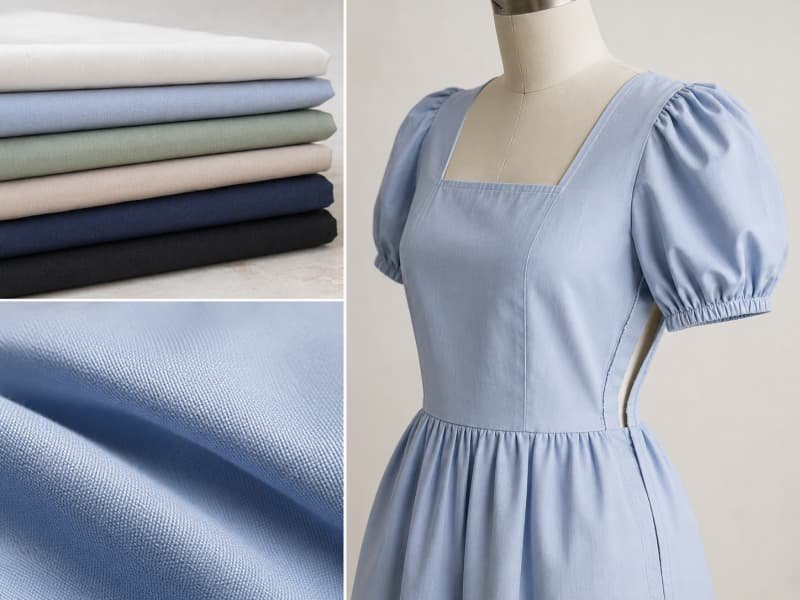
Poplin is one of those fabrics people recognize long before they learn its name. It appears in a crisp white shirt, a full summer skirt, a puff-sleeve dress, a neat uniform, or a coordinated two-piece set that looks polished without feeling heavy. Because the surface is smooth and the construction seems simple, it is easy to assume that every poplin behaves in roughly the same way. That assumption causes many avoidable problems in clothing development. A light cotton poplin may feel cool and airy, while a dense polyester blend may feel firmer, crease less, and trap more heat. Two swatches can share the same fabric name but create completely different results after cutting, sewing, washing, and wearing.
Poplin is a tightly woven plain-weave fabric known for its smooth face, subtle crosswise texture, crisp hand, and relatively light structure. It can be made from cotton, polyester, viscose, silk, wool, or blended yarns. The fabric is widely used for shirts, dresses, skirts, shorts, uniforms, and fashion sets that need clean lines, controlled volume, and reliable shape without the bulk of heavier woven materials.
The most useful question is therefore not simply, “Is this poplin?” A better product-development question is, “Which poplin is this, and what will it do in the finished garment?” Fiber content, weight, density, opacity, stretch, finish, shrinkage, color performance, and lining all influence whether a design succeeds. A dress can look excellent in the first sample and still fail in bulk if the production fabric is slightly stiffer, more transparent, or less stable. The sections below explain how to read poplin beyond its name and choose it with the finished garment in mind.
What Is Poplin Fabric?
Poplin is a closely woven plain-weave fabric with a smooth surface, faint horizontal texture, crisp hand, and light-to-medium structure. The term describes the fabric construction rather than one fixed fiber. Cotton is the most familiar version, but polyester, viscose, silk, wool, and blended yarns can also be used, creating different levels of breathability, wrinkle resistance, softness, stretch, and durability.
| Poplin type | Typical character | Common uses | Main checks |
| 100% cotton poplin | Crisp, breathable, absorbent, natural hand | Dresses, shirts, skirts, blouses | Shrinkage, wrinkling, opacity |
| Cotton-polyester poplin | Stable, smooth, easier care | Uniforms, shirts, commercial sets | Breathability, pilling, heat response |
| Cotton-elastane poplin | Structured with controlled stretch | Fitted dresses, tops, slim trousers | Stretch, recovery, seam growth |
| Polyester poplin | Durable, quick-drying, color-retentive | Uniforms, utility and promotional wear | Static, comfort, surface shine |
| Viscose-blend poplin | Softer with more fluid movement | Relaxed dresses and fashion tops | Wet stability, shrinkage, distortion |
| Silk poplin | Fine, smooth, lightweight, refined | Premium shirts and luxury separates | Care, cost, needle and seam damage |
Is Poplin a Fiber or a Weave?
Poplin is mainly the name of a woven construction, not a raw material. This distinction matters because fiber and structure control different parts of garment performance. Cotton, polyester, viscose, silk, and elastane describe the material used to make yarn. Poplin describes the way those yarns form a compact plain weave. A label reading “100% cotton poplin” therefore gives two pieces of information: cotton identifies the fiber, while poplin identifies the fabric structure.
The distinction also explains why asking whether poplin is better than cotton is not technically precise. Poplin can be cotton. A more useful comparison would be cotton poplin versus cotton lawn, cotton voile, cotton twill, or polyester-cotton poplin. These fabrics may contain the same main fiber yet differ greatly in softness, transparency, strength, stretch, surface texture, and drape. Product teams should therefore avoid approving fabric from a short commercial name alone.
A practical specification normally records composition, fabric weight, usable width, yarn or weave description, finish, stretch direction, stretch percentage, recovery, shrinkage, colorfastness, and intended garment use. Those details make costing, pattern adjustment, sample review, and repeat production more dependable. The approved physical swatch remains essential because two mills can provide materials with similar paperwork that still feel and behave differently in the hand.
How Is Poplin Woven?
Poplin uses a plain-weave structure in which each weft yarn alternates over and under each warp yarn. The next row reverses the sequence, producing a stable, balanced surface with many interlacing points. Traditional poplin often used finer warp yarns and slightly heavier weft yarns, which created the faint crosswise rib associated with the fabric. In modern apparel poplin, the rib may be so fine that the face appears almost completely smooth.
The compact structure helps the fabric hold collars, cuffs, plackets, gathers, sleeve volume, waist seams, and clean topstitching. It also creates a reliable surface for solid dyeing, stripes, checks, screen printing, and digital printing. Unlike satin, poplin has no long yarn floats that easily catch or snag. Unlike twill, it has no prominent diagonal line, so the surface reads as clean and direct in product photography.
A simple weave is not automatically simple to sew. Fine, dense poplin can show needle holes after unpicking, and incorrect thread tension can create puckering along long seams. Sewing trials commonly begin with fine needles such as sizes 65/9, 70/10, or 75/11 for light qualities, while heavier versions may require 80/12. These sizes are only starting references; actual needle choice must follow fabric density, yarn fineness, finish, thread, and seam construction.
Which Fibers Make Poplin?
Cotton is the best-known poplin fiber because it produces a cool, absorbent, familiar hand that works well in shirts and warm-weather dresses. Polyester or polyester-cotton versions can reduce creasing, improve drying speed, and support frequent laundering. Cotton-elastane poplin adds controlled movement for fitted shirts, shaped dresses, and slim bottoms. Viscose blends soften the fabric and increase drape, although they may reduce the crisp silhouette that originally made poplin attractive.
The fiber percentage does not tell the whole story. Two fabrics containing 98% cotton and 2% elastane may show very different stretch and recovery because the elastane can be inserted differently, the weave density can vary, and finishing can change extension. The same caution applies to recycled-fiber poplin. Recycled content can support a sourcing objective, but consistency, certification, shade control, tensile strength, and hand still need to be checked for the actual production lot.
There is no universally best composition. A breathable cotton quality may suit a loose resort dress, while a stable cotton-polyester fabric may suit a uniform program that is washed frequently. A fitted mini dress may benefit from stretch, but excessive extension or weak recovery can lead to bagging at the waist, seat, and elbows. The blend should be chosen according to the garment’s movement, care, price, and appearance requirements.
Where Did Poplin Originate?
Poplin developed from earlier fabrics sometimes called papeline or tabinet, which were traditionally associated with a silk warp and wool weft. The difference between the yarns helped create a refined surface with a subtle rib. As textile manufacturing expanded, cotton became a common choice because it made the fabric lighter, more washable, and more accessible for shirts, dresses, and daily clothing.
Later use of polyester, rayon, elastane, and blended yarns widened the category further. Today, a fine luxury poplin, a crisp cotton dress poplin, and a hard-wearing uniform poplin may all share the same general weave description while differing significantly in yarn quality, weight, density, finish, luster, care, and durability. The history is useful because it shows that fabric names evolve with markets and manufacturing technology.
For sourcing teams, this means that a familiar name should be treated as a starting point rather than a guarantee. A mill sample should be reviewed at full width, washed using the proposed care method, sewn into representative seams, and compared with the intended garment. The physical approval standard is more dependable than assuming that every modern fabric carrying the name poplin will match an older reference.
What Are Poplin’s Properties?
Poplin is usually smooth, compact, crisp, and light to medium in weight. Cotton qualities can feel breathable and cool, while synthetic blends often resist wrinkling and dry faster. Standard woven poplin has limited stretch, and pale lightweight versions may be partly transparent. Its softness, drape, opacity, shrinkage, durability, and comfort depend on composition, density, finishing, laundering, and garment construction.
| Property | Typical behavior | What changes it | Garment implication |
| Hand feel | Smooth, dry, crisp to moderately soft | Fiber, density, wash, softener, resin | Controls comfort and silhouette |
| Breathability | Moderate to good in cotton-rich qualities | Density, lining, fit, finish | Affects warm-weather comfort |
| Stretch | Low unless engineered for stretch | Elastane, yarn system, construction | Important for fitted garments |
| Opacity | Varies, especially in pale lightweight cloth | Weight, color, density, tension | May require lining or double layers |
| Wrinkling | Visible in many cotton versions | Fiber blend and easy-care finish | Influences care and presentation |
| Shrinkage | Variable; must be tested | Pretreatment, wash, drying, yarn | Affects pattern and final measurements |
What Does Poplin Feel Like?
Poplin usually feels smooth and dry rather than fuzzy, brushed, slippery, or heavily textured. Cotton poplin often feels cool at first touch and has enough crispness to sit slightly away from the body. That quality gives shirts and dresses a fresh outline and helps details such as puff sleeves, waist shaping, collars, bows, gathered skirts, and tier seams remain visible instead of collapsing immediately.
Crisp does not always mean stiff. A well-made lightweight poplin can be flexible and comfortable while still holding shape. Heavier, denser, or heavily resin-finished qualities may feel papery or noisy, especially before washing. Enzyme treatment, garment washing, mercerization, calendaring, and softener finishes can all change the surface and drape. The first hand feel in a showroom is therefore not always the hand the customer experiences after laundering.
For washable products, the fabric should be handled before washing, after the intended wash cycle, in the first sample, and again in bulk fabric. A finish that disappears after washing can reduce sleeve volume, soften a collar, change skirt fullness, or loosen a tailored outline. Product approval becomes more reliable when teams evaluate the post-care result rather than treating the original mill finish as permanent.
Is Poplin Breathable?
Cotton poplin is often comfortable in warm weather because cotton absorbs moisture and the fabric can be produced at relatively low weights. Its crispness may also keep portions of the garment away from the skin, which reduces the close, clingy feeling created by some fluid fabrics. A loose cotton poplin dress can therefore feel more comfortable than a similarly weighted garment that sits tightly against the body.
Breathability is not determined by the word poplin alone. Air movement depends on yarn count, weave density, thickness, finishing, fiber, lining, and garment fit. A very tightly woven cotton poplin may allow less airflow than cotton lawn, voile, gauze, or linen. A polyester-rich quality may be light and quick-drying but less absorbent, particularly in humid conditions or in garments with close underarm and waist areas.
Summer evaluation should include more than fabric weight. Teams should consider air permeability, moisture management, perspiration colorfastness, skin feel, lining breathability, garment looseness, and drying behavior. Broad commercial summer qualities often fall around 80 to 140 gsm, but a dense 110 gsm fabric may feel warmer than a more open 130 gsm construction. Wear trials remain valuable because comfort is created by the entire garment system.
Is Poplin Stretchy or Sheer?
Conventional poplin has little dependable stretch because it is woven rather than knitted. It may move slightly on the bias, but that movement is not enough for close-fitting garments that rely on fabric extension. Stretch poplin normally includes elastane or mechanical-stretch yarns. Commercial cotton-stretch qualities often contain around 2% to 5% elastane, although measured extension can still vary widely between constructions.
Recovery matters as much as stretch. A fabric may extend enough to pass over the hips yet fail to return to its original dimensions after sitting, bending, or repeated wear. Weak recovery can cause waist growth, loose knees, elbow bagging, seat distortion, and rippling near seams. Fitted garments should therefore be checked for extension, immediate recovery, and recovery after repeated cycles rather than approved from fiber percentage alone.
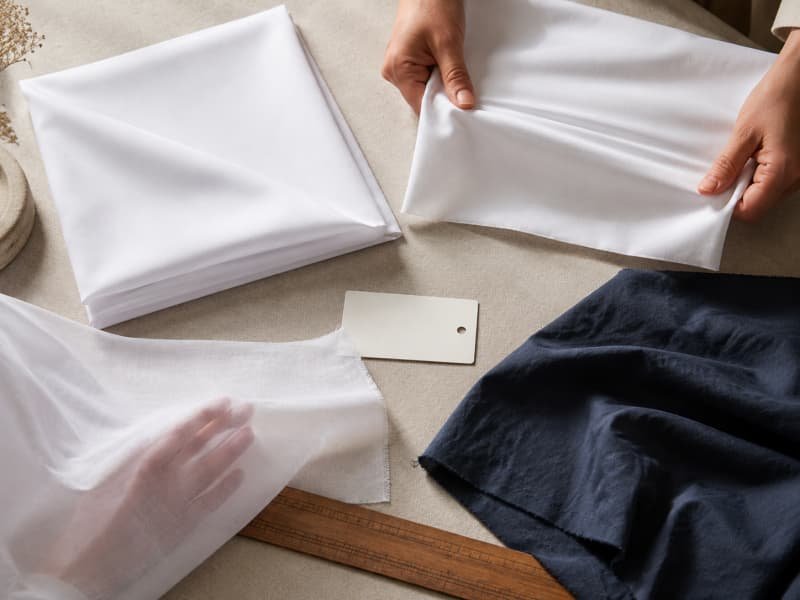
Sheerness is influenced by weight, density, yarn fineness, color, finish, and tension. White, ivory, pale yellow, and pastel poplins commonly reveal more than dark colors. Stretching the material over the bust, seat, or thigh can reduce apparent coverage. Opacity should be reviewed in daylight, store lighting, photography lighting, and movement, because a folded table swatch can look opaque while a single garment layer remains visibly transparent.
Does Poplin Wrinkle or Shrink?
Cotton poplin generally wrinkles more than polyester-rich versions because cotton has lower natural crease recovery. The smooth surface can make wrinkles easy to see on shirt fronts, wide skirts, dark solids, and pale neutrals. Easy-care finishes can improve appearance, but they may also change softness, absorbency, and sewing behavior. Brands must decide how much natural cotton character they are prepared to trade for easier maintenance.
Shrinkage varies with fiber, yarn, construction, pretreatment, dyeing, and drying. Many washable apparel programs aim for dimensional change around 3% or less, although the acceptable figure depends on the garment and customer standard. A 3% reduction across a 100-centimeter dress length equals 3 centimeters, which can visibly alter hem position, sleeve length, waist placement, placket alignment, or overall balance.
Testing should record lengthwise and widthwise change separately, together with skew, twisting, surface puckering, color change, hand change, and seam distortion. Shell, lining, fusible, elastic, tape, and trim must remain compatible after laundering. A fabric described as preshrunk should still be tested, because preshrinking normally reduces dimensional change rather than eliminating it completely.
Which Garments Suit Poplin?
Poplin suits garments that need a smooth face, defined seams, light structure, and controlled volume. It performs particularly well in shirt dresses, sundresses, A-line shapes, full skirts, puff-sleeve tops, tailored shirts, shorts, jumpsuits, and coordinated sets. It is less suitable for bias-cut, heavily draped, bodycon, or pull-on designs unless stretch, support, closures, and pattern construction are deliberately engineered.

| Garment or detail | Suitability | Useful weight direction | Main development concern |
| Shirt dress | Excellent | Light to medium | Placket, collar, shrinkage, opacity |
| Puff-sleeve dress | Excellent | Light to medium | Sleeve volume and armhole comfort |
| Tiered sundress | Very good | Light | Gathering bulk and lining |
| Fitted mini dress | Conditional | Medium or stretch poplin | Movement, recovery, closure, seat stress |
| Full midi skirt | Excellent | Medium | Waist bulk, volume, crease behavior |
| Tailored shorts | Good | Medium to firm | Opacity, seam strength, seat comfort |
| Bias slip dress | Poor | Not recommended | Insufficient fluid drape |
| Pull-on bodycon dress | Poor | Not recommended without engineered stretch | Stretch and recovery |
Is Poplin Good for Dresses?
Poplin is highly effective for dresses when the silhouette needs shape rather than liquid drape. It supports shirt collars, button fronts, waist seams, gathered skirts, puff sleeves, tiering, smocking, pleats, and clean necklines. Shirt dresses, sundresses, A-line dresses, babydoll styles, fit-and-flare shapes, utility dresses, drop-waist dresses, and structured mini or midi lengths can all use poplin successfully when weight and opacity are appropriate.
The fabric often photographs well for ecommerce because key details remain visible. A puff sleeve keeps its volume, a collar stays readable, and a gathered skirt creates a clear outline. The same firmness can exaggerate mistakes. Fullness that looks soft in viscose may become bulky in poplin, especially around the waist, bust, underarm, or hip. Gathering ratios should therefore be tested with the real fabric rather than copied from another material.
A ratio near 1.5:1 can create controlled fullness in many lightweight qualities, while 2:1 or more can produce a much fuller result. These figures are not fixed rules because stiffness, panel length, seam position, and design intention all affect appearance. Pale dresses also need on-body opacity review at the bust, pocket, seat, and skirt. Partial lining can solve transparency without unnecessarily increasing heat through the sleeves and upper body.
Which Dress Shapes Work Best?
Poplin naturally supports silhouettes with clear construction. Shirt dresses, A-line dresses, puff-sleeve styles, tiered dresses, smocked bodices, fit-and-flare shapes, and panelled mini dresses usually benefit from its body. Fitted poplin garments can work, but they require more attention to closures, ease, panel seams, darts, stretch, lining, and movement than loose summer shapes.
A fitted skirt can look correct while the wearer is standing yet feel restrictive when sitting or walking. Side splits, back vents, stretch percentage, seat ease, and hem width should be reviewed during fitting. Corset-inspired dresses can use poplin as an outer shell, but bust support normally comes from inner layers such as lining, interfacing, boning, cups, tape, or reinforced seam structures. The shell fabric alone should not be expected to carry all structural pressure.
The best result comes from matching the pattern to the material from the first sample. A pattern originally developed for soft crepe may have too much volume or ease when transferred to crisp poplin. Similarly, a fitted pattern developed in stretch fabric may become uncomfortable in non-stretch poplin. Fabric selection and pattern engineering should move together rather than being treated as separate stages.
Is Poplin Good for Summer?
Cotton poplin is a practical warm-weather material because it can combine light weight, moisture absorption, and enough crispness to avoid clinging heavily to the body. Loose dresses, full skirts, short-sleeve shirts, puff-sleeve tops, and matching sets can feel fresh and polished. A lightweight garment may still feel warm, however, when the weave is very dense, the fiber is polyester-rich, or the lining blocks airflow.
Broad application ranges can help early selection. Poplin around 70 to 90 gsm is often used for very light blouses, overlays, or lined pieces. Qualities around 90 to 115 gsm suit shirts, tops, and loose sundresses. Fabrics around 115 to 140 gsm can support dresses, skirts, and structured blouses, while 140 to 165 gsm may work for tailored dresses, shorts, sets, or light trousers. Exact suitability depends on density, fiber, color, finish, and design.
Summer review should also consider sweat marks, underarm comfort, static, daylight transparency, lining movement, seat wrinkling, perspiration colorfastness, and drying time. White or pastel dresses may require lining, but a heavy polyester lining can defeat the comfort advantage of a cotton shell. Lightweight cotton, cotton voile, or a carefully selected breathable blend can sometimes provide a better balance of modesty and airflow.
Do Shirts, Skirts, and Sets Work?
Poplin is one of the most dependable fabrics for shirts because its stable surface supports collars, cuffs, yokes, button stands, pockets, sleeve plackets, and topstitched seams. Lightweight qualities create relaxed oversized shirts with a clean outline, while stretch versions can improve movement across the bust, shoulders, and elbows in fitted styles. Button spacing and placket stability deserve attention because gaping can occur even when the general body measurements appear correct.
Gathered, pleated, flared, and panelled skirts also use poplin effectively. Full midi skirts can achieve strong volume without layers of tulle or heavy interfacing. Mini skirts look sharp, although pocket bags, lining, seat strength, and seam slippage should be reviewed. Matching sets are commercially useful because a cropped shirt, tailored short, full skirt, or wide trouser can share a consistent color and surface across several products.
One fabric weight does not automatically suit every piece in a set. A quality that works beautifully for a blouse may be too light or transparent for trousers. Brands may use visually matched poplins in different weights, provided color, texture, shrinkage, and care remain compatible. Bottoms experience more friction and seam pressure, so application-specific testing is more reliable than approving the entire range from the lightest garment.
How Does Poplin Compare?
Poplin is smoother and crisper than many casual woven fabrics, but usually lighter and less textured than twill. It is not the same as cotton because cotton is a fiber and poplin is a construction. Broadcloth can be very similar, Oxford has a more visible basket-like texture, lawn is lighter and softer, and twill has diagonal ribs with greater substance and abrasion resistance.

Is Poplin the Same as Cotton?
Poplin and cotton describe different layers of a fabric specification. Cotton is a natural fiber, while poplin is a woven construction. Cotton yarn can be made into poplin, lawn, voile, twill, denim, canvas, gauze, muslin, and many other materials. Those fabrics may all be 100% cotton yet differ greatly in weight, surface, stretch, transparency, drape, strength, and care.
Cotton poplin is usually more structured than cotton lawn, smoother than cotton Oxford, lighter than canvas, less stretchy than cotton jersey, and flatter than cotton twill. The exact position changes with weight and finishing, but these comparisons show why the fiber name alone cannot predict garment behavior. A cotton jersey T-shirt and a cotton poplin shirt may share the same fiber while requiring completely different patterns, seams, machines, and fit allowances.
When a supplier offers cotton poplin, useful follow-up questions concern weight, usable width, weave density, finish, shrinkage, opacity, colorfastness, and intended application. Mercerization can improve luster and dye response, enzyme washing can soften the hand, and easy-care treatment can reduce wrinkles. The complete construction and finishing route determine the final product more accurately than the cotton content alone.
How Does Poplin Compare with Broadcloth?
Poplin and broadcloth are both commonly described as smooth, tightly woven plain-weave fabrics, and the terminology varies by country, mill, and market. In some modern shirting ranges, the names are used almost interchangeably. Where a distinction is made, poplin may show a faint crosswise rib created by differences between warp and weft yarns, while broadcloth may appear more uniformly smooth and balanced.
The practical difference between two supplier samples may come more from weight, yarn quality, density, and finishing than from the commercial name. A soft-finished poplin can feel smoother than a firm broadcloth, while another poplin can be noticeably crisper. Replacing one with the other solely because a supplier calls them equivalent can change collar shape, gathering volume, opacity, seam puckering, and shrinkage.
A useful comparison involves placing both fabrics under the same light, weighing them, reviewing full-width texture, washing identical swatches, and sewing the same collar, placket, curved seam, gathered seam, and hem. This small development exercise often reveals more than a name-based discussion. Approved master swatches and test results should control production when regional terminology is inconsistent.
How Does Poplin Compare with Twill?
Twill uses an offset interlacing pattern that creates diagonal ribs. Poplin uses a plain over-under structure and normally appears flatter and cleaner. Twill often provides more body, abrasion resistance, wrinkle masking, and flexibility at a similar weight. Poplin tends to look sharper and lighter, making it popular for shirts, summer dresses, full skirts, puff sleeves, and polished lightweight sets.
The diagonal structure makes twill useful for trousers, jackets, utility dresses, structured skirts, uniforms, and garments exposed to friction. Lightweight poplin can still be used for loose summer trousers or shorts, but seat strength, seam slippage, opacity, and recovery require closer attention. A fabric that feels strong in the hand may still allow yarns to pull away from a seam when the garment is tight across the hip or seat.
The visual mood also differs. Poplin creates freshness, clean print definition, and controlled volume. Twill creates substance, utility, and visible woven character. A puff-sleeve mini dress may benefit from poplin, while a panelled workwear dress may feel more convincing in twill. The choice should be based on expected wear, silhouette, care, and surface appearance rather than a general belief that one weave is superior.
How Does Poplin Compare with Oxford?
Oxford fabric commonly uses a basket-style weave that creates a more visible texture and a casual, substantial appearance. Poplin usually has a finer, smoother surface and a sharper finish. Oxford is strongly associated with button-down shirts, school uniforms, relaxed dresses, and preppy styling, while poplin often appears more polished in fitted shirts, structured dresses, precise prints, and fashion-led summer pieces.
Oxford may feel softer or more open depending on yarn and density, while poplin’s compact surface can produce cleaner collar edges and finer print detail. An oversized Oxford shirt often communicates an everyday, relaxed mood. A crisp poplin shirt can feel more minimal, formal, or contemporary even when the patterns are similar. That difference matters in collections where fabric texture supports the intended price point and visual identity.
For sourcing, compare actual samples rather than relying on category expectations. Some light Oxford qualities can be softer than expected, and some heavy poplins can feel more substantial than casual shirting. Weight, opacity, wash appearance, seam response, and hand after finishing determine whether the material supports the design. Fabric names describe a direction, but the approved product must be judged physically.
How Do You Choose and Care for Poplin?
Choose poplin by matching composition, weight, density, stretch, opacity, finish, shrinkage, and color performance to the intended garment. Inspect and test the fabric before bulk cutting, especially for fitted products, pale shades, washable clothing, and repeat orders. Washing and ironing instructions must reflect the complete garment, including lining, print, trims, elastic, interfacing, embroidery, and decorative components.

| Test or control | What it checks | Useful decision |
| GSM and usable width | Weight and cutting width consistency | Confirms drape, opacity, consumption, and marker plan |
| Dimensional change | Length and width shrinkage after care | Guides pattern allowance and care label |
| Colorfastness | Fading and dry or wet transfer | Supports color approval and end-use suitability |
| Seam slippage | Yarn movement beside a seam | Guides seam design, ease, and fabric selection |
| Tensile or tear strength | Resistance to applied force | Checks durability in high-stress garments |
| Stretch and recovery | Extension and return after repeated cycles | Protects fit in stretch poplin |
| Skew and bow | Alignment of yarns and fabric geometry | Reduces twisting and off-grain garments |
| Full-roll inspection | Defects, shade, width, and surface consistency | Controls cutting, segregation, or rejection |
Which Weight and Blend Work Best?
The best poplin specification depends on garment category, silhouette, season, care, target price, and market expectations. A voluminous summer blouse may perform well in a cotton poplin around 90 to 110 gsm, while a structured dress may need approximately 120 to 150 gsm. Shorts, skirts, and light trousers often need more density, strength, or stretch than the matching top, particularly in pale colors.
A useful fabric brief records the garment type, desired hand, composition, approximate weight, opacity, stretch direction, recovery, lining plan, care method, print or color, destination market, testing requirements, order quantity, and target cost. For stretch poplin, measured extension is more informative than elastane percentage. A fabric might offer 15% to 25% widthwise extension, but only repeated recovery testing shows whether it will preserve fit after wear.
White and pastel garments may need heavier fabric or lining compared with the same style in navy or black. The chosen solution affects cost, heat, seam bulk, drape, and wash behavior. A successful poplin should be crisp enough to hold the intended outline without becoming so stiff that the garment feels uncomfortable, noisy, or bulky. Selection works best when fabric, pattern, lining, and care are considered together.
How Do You Check Poplin Quality?
Quality checking should cover appearance, dimensions, physical performance, and consistency between rolls. A small swatch can confirm color and general hand, but it cannot reveal full-width streaks, bowing, skew, shade variation, crease marks, width problems, or repeated weaving defects. Full-width inspection under controlled lighting gives cutting and production teams the information needed to separate rolls and plan usage.
Inspectors commonly look for missing yarns, slubs, holes, contamination, oil spots, dye streaks, crease lines, uneven finishing, print misalignment, selvedge damage, width variation, and shade differences. Many apparel programs use a four-point system to record defects, although the acceptance limit must follow the customer standard, fabric type, and garment risk. The system is useful only when defect records are connected to clear release, segregation, or rejection decisions.
Roll shading is especially important in solid poplin because smooth surfaces can make color differences easy to see. Panels from different shade groups may look acceptable separately yet become mismatched in one garment. GSM and usable width should also be checked at several points because variation can change drape, opacity, consumption, marker efficiency, and fit. Quality inspection is not just rejection; it provides production instructions for safe cutting and assembly.
How Is Poplin Tested?
Testing should reflect fiber content, garment use, color, care, destination market, and customer requirements. A relaxed blouse does not always need the same test package as a fitted dress, uniform, child’s garment, or frequently washed item. Dimensional change, colorfastness, seam slippage, tensile or tear strength, abrasion, pilling, skew, stretch recovery, and restricted substances are among the common areas considered for woven apparel.
Shrinkage must be tested using the proposed wash and drying method, with length and width recorded separately. Fitted garments require particular attention around the bust, armhole, waist, hip, and seat because these areas experience continuous pressure. Seam slippage can occur even when the fabric feels strong. The yarns may move away from the seam, producing visible openings that are difficult to repair after bulk production.
Testing should happen early enough to influence pattern dimensions, seam type, stitch density, lining, care labeling, and fabric approval. A test report completed after cutting cannot prevent avoidable changes. When a material fails or approaches a limit, the team may adjust construction, choose a heavier quality, modify the pattern, add reinforcement, change care, or request a better-controlled production lot before manufacturing continues.
How Can Brands Prevent Bulk Issues?
Bulk problems often begin when production fabric is assumed to be equivalent to sample fabric without direct comparison. Small differences in finish, stretch, weight, shade, shrinkage, or opacity can change fit and appearance. A controlled process normally includes an approved master swatch, confirmed composition, bulk color approval, roll inspection, shade grouping, width and GSM checks, shrinkage testing, stretch review, pattern confirmation, and a pre-production sample made from approved bulk materials.
First-piece approval and inline inspection are more valuable when they refer back to a retained sample, workmanship standard, test report, and fabric reference. Stretch poplin should be checked between significant lots because finishing variation can alter extension and recovery. Pale fabric should be reassessed after bulk dyeing because opacity can change. Prints require review of scale, repeat direction, registration, and placement before large quantities are cut.
Clear records support repeat orders months later. Retained swatches, patterns, graded nests, construction notes, test reports, approved trims, and sealed garments help preserve consistency across seasons and factories. The strongest protection is not a final inspection at the packing stage. It is a connected chain of decisions from fabric selection through testing, pattern adjustment, sample approval, cutting, sewing, finishing, and shipment.
Custom Poplin Product Development
Poplin can produce clean, commercially attractive womenswear when the fabric is selected for the real silhouette rather than the category name. A shirt dress, puff-sleeve mini, full skirt, fitted top, and tailored set may all use poplin, yet they should not automatically use the same composition, weight, stretch, finish, or lining. The strongest results come from treating material choice, pattern shape, sewing method, care, and bulk control as one connected development process.
Duolan Apparel supports fashion brands and product teams with fabric sourcing, material comparison, pattern development, sample execution, fit adjustment, production planning, and bulk manufacturing for fashion dresses, occasionwear, party styles, fitted silhouettes, fashion sets, and refined tops.