Skip to content
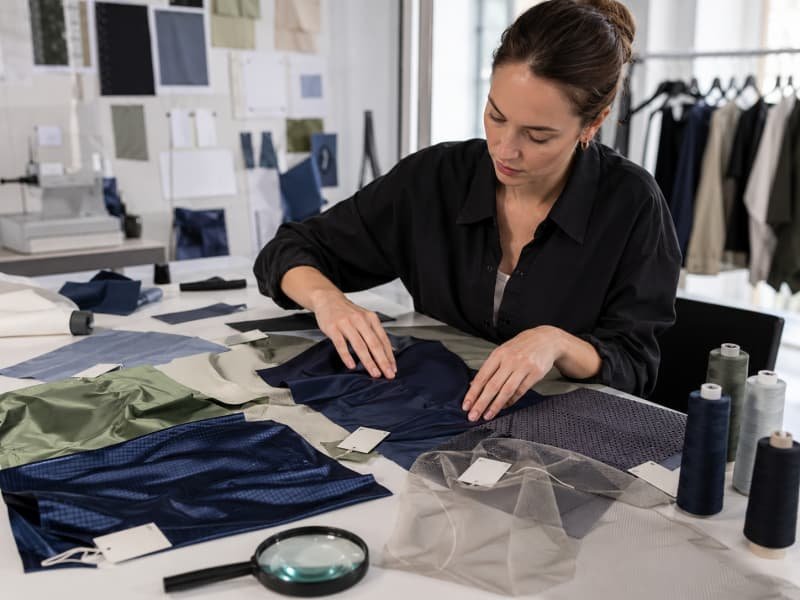
Nylon is one of those materials that appears straightforward on a clothing label but becomes much more complicated once a garment enters development. A lightweight nylon lining, a supportive power mesh, a glossy woven shell, and a soft nylon-elastane jersey can all carry the same fiber name while producing completely different results. Their drape, stretch, opacity, surface texture, breathability, sewing behavior, and care requirements may have almost nothing in common.
Nylon fabric is a synthetic textile made from polyamide fibers. It is valued for its strength, abrasion resistance, low weight, flexibility, and compatibility with elastane. Depending on yarn, construction, weight, and finishing, nylon can be used for dresses, activewear, swimwear, linings, mesh panels, hosiery, outerwear, bodysuits, and technical fashion garments.
The real question is not whether nylon is universally good or bad. The useful question is whether a particular nylon fabric suits the silhouette, fit, movement, care method, selling price, and customer expectations of a specific garment. A swatch may look rich and opaque on a table but become shiny, transparent, or unstable when stretched over the body. That difference is where successful fabric selection begins.
What Is Nylon Fabric?
Nylon fabric is made from synthetic polyamide fibers created through chemical polymerization and melt spinning. It can be woven, knitted, textured, coated, brushed, printed, or blended with other fibers. Its final performance depends not only on the nylon itself but also on yarn size, fabric structure, weight, density, elastane content, dyeing, heat setting, and finishing.
Nylon and Polyamide
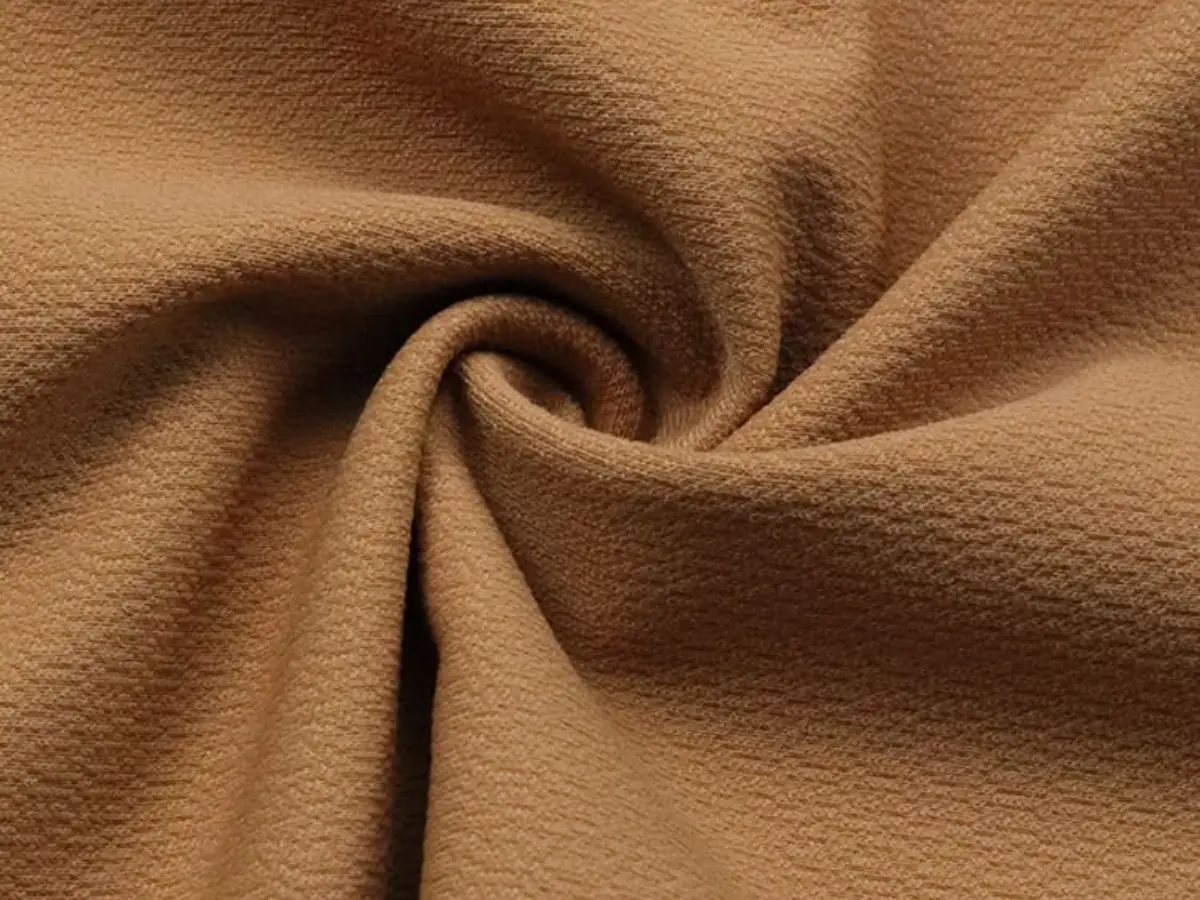
Nylon belongs to the polyamide family. In North America and many Asian sourcing markets, the word “nylon” is common, while garment labels and fabric specifications in parts of Europe frequently use “polyamide.” The terms are closely connected, but nylon is better understood as a family of synthetic polyamides rather than one single textile with fixed characteristics.
The fiber is created by forming long polymer chains, melting the polymer, and pushing it through tiny openings called spinnerets. The emerging filaments are cooled and drawn so that the molecular structure becomes more aligned. This drawing process contributes to nylon’s strength and consistency. The filaments may remain smooth, be textured for additional bulk, or be produced in extremely fine sizes to create soft microfiber fabrics.
Fiber content alone does not describe the finished material. Two fabrics labeled 90% nylon and 10% elastane may behave very differently. One could be a dense, compressive activewear knit, while another could be a lightweight, fluid jersey used for a fitted dress. Their stretch, recovery, surface shine, opacity, thickness, and sewing requirements may all differ.
For practical product development, the nylon percentage should always be reviewed together with the fabric construction, finished weight, usable width, yarn type, stretch direction, recovery, and surface treatment.
How Nylon Is Made
Nylon fabric production usually includes polymerization, melt spinning, filament drawing, yarn preparation, fabric formation, dyeing, and finishing. Each stage can change the final hand feel and garment performance. After the polymer is melted and extruded into filaments, the yarn may be twisted, air-textured, combined into multifilament bundles, or processed into different levels of fineness.
The prepared yarn is then woven or knitted. Woven nylon uses crossing warp and weft yarns and can range from extremely lightweight lining to dense outerwear fabric. Knitted nylon is built from interconnected loops and is commonly chosen when the garment needs flexibility, softness, close body fit, or mechanical stretch.
Finishing frequently makes the largest visible difference. Heat setting can stabilize width and stretch. Brushing can create a warmer, softer surface. Calendaring can make the fabric smoother, shinier, and less air-permeable. Coatings and laminations can improve water resistance. Softening treatments can change hand feel, although excessive softener may create difficulties with printing, bonding, or colorfastness.
A fabric should therefore be approved after its intended dyeing and finishing processes. An untreated sample may not represent the material that eventually reaches the cutting floor.
Natural or Synthetic
Nylon is a synthetic fiber. It is not grown or harvested like cotton, linen, wool, or silk. Conventional nylon is produced from chemical raw materials, although recycled nylon now provides an alternative for brands seeking to reduce dependence on virgin inputs.
Synthetic origin does not automatically mean that the fabric will feel stiff, cheap, or uncomfortable. Modern nylon can be matte, silky, crisp, brushed, sheer, compressive, fluid, or almost cotton-like. A soft nylon-elastane knit may feel smooth against the skin, while a coated woven nylon may feel structured and less breathable. The wearer experiences the complete fabric, not simply the chemical identity of the fiber.
The most useful comparison is therefore performance-based. A garment developer should ask whether the fabric provides the required stretch, recovery, opacity, drape, moisture behavior, dimensional stability, and appearance. The same fiber may be appropriate for one style and unsuitable for another.
A lightweight nylon lining may reduce friction inside a dress, while a dense nylon jersey may shape the body and recover after movement. In contrast, an incorrect quality may become transparent under tension, produce static, or retain too much heat for the intended market.
Reading a Nylon Specification
A reliable nylon specification goes beyond composition. Fabric weight, construction, yarn form, width, stretch, and finish should all be recorded because each item affects cost, consumption, fit, and manufacturing risk. A 160 gsm jersey, for example, may not provide the same opacity as a 220 gsm interlock even when both fabrics contain identical fiber percentages.
Usable width is particularly important in commercial costing. A wider fabric can reduce garment consumption, while a narrow fabric may create inefficient marker layouts or additional fabric requirements. Stretch direction also changes pattern planning. Two-way stretch usually means the material stretches mainly across the width, while four-way stretch provides meaningful extension in both length and width.
The following ranges are useful commercial references rather than universal standards. The correct specification must follow the garment design, quality level, destination market, and approved physical sample.
| Specification Area | Common Apparel Options | Practical Importance |
| Fiber content | 100% nylon; nylon/elastane; nylon/polyester; nylon/cotton | Influences touch, stretch, recovery, absorbency, labeling, and cost |
| Construction | Woven, jersey, interlock, tricot, mesh, ripstop | Controls flexibility, stability, opacity, drape, and appearance |
| Finished weight | Approximately 30–300 gsm for many apparel uses | Affects warmth, structure, transparency, consumption, and sewing |
| Yarn form | Smooth filament, textured yarn, microfiber, monofilament | Changes shine, softness, bulk, strength, and surface texture |
| Stretch | None, mechanical stretch, two-way, four-way | Determines pattern allowance, ease, comfort, and recovery needs |
| Finish | Heat-set, brushed, coated, water-repellent, anti-static | Alters performance, care method, visual effect, and production control |
What Are the Properties of Nylon?
Nylon is generally strong, lightweight, flexible, abrasion-resistant, and less prone to wrinkling than many natural fibers. Its actual breathability, water resistance, stretch, opacity, and dimensional stability vary significantly. Those properties depend on the fabric structure, yarn thickness, density, weight, elastane percentage, heat setting, coatings, and other finishing treatments.

Strength and Durability
Nylon is known for good tensile strength relative to its weight. This allows textile manufacturers to create fine, lightweight materials that can still resist tearing and repeated wear. The fiber is especially useful in products exposed to friction, movement, or regular body contact, including fitted garments, linings, activewear, hosiery, and outerwear.
Strength at fiber level does not guarantee that the complete garment will be durable. A strong yarn may be used in an open mesh that catches easily on jewelry. A dense knit may survive abrasion but fail along a poorly constructed seam. A coated outerwear fabric may remain intact while the coating begins to peel. The weakest element can be the thread, elastic, bonding film, zipper, trim, or printing process rather than the nylon base.
For womenswear, durability should be evaluated at real stress points. Side seams, waist seams, armholes, strap attachments, zipper ends, ruching channels, crotch seams, and narrow cutout sections often carry more force than flat fabric areas. A fitted dress may require reinforcement where a loose garment does not.
Common tests include tensile strength for woven fabrics, bursting strength for knits, seam strength, abrasion resistance, snagging, and pilling. The acceptable result should reflect how the garment will actually be worn.
Stretch and Recovery
Nylon has some natural resilience, but the amount of stretch in a finished textile depends mainly on construction and blend. A tightly woven 100% nylon shell may have almost no useful extension. A nylon jersey can stretch because of its looped structure, while a nylon-elastane fabric may provide strong two-way or four-way stretch.
Recovery is more important than stretch alone. A fabric may extend easily but fail to return to its original dimensions. This can cause bagging around the seat, waist, elbows, knees, or hem. In fitted dresses and bodysuits, weak recovery may result in a garment that looks correct during the first fitting but becomes loose after several hours of wear.
Stretch should be measured under a consistent method rather than judged only by pulling a swatch by hand. Developers commonly mark a fixed distance, apply a controlled extension, release the fabric, and measure how much length remains after a defined recovery period. The same method should be used when comparing bulk fabric with the approved sample.
Pattern ease must match fabric behavior. A firm compressive knit usually needs a different negative-ease calculation from a soft, fluid jersey. Opacity must also be checked at the actual extension expected on the body.
Breathability and Moisture
Nylon is not automatically breathable or moisture-wicking. Airflow depends heavily on fabric density, thickness, construction, coatings, and garment design. An open nylon mesh may allow substantial ventilation, while a dense coated nylon shell may block both wind and air.
Nylon absorbs more moisture than polyester but generally less than highly absorbent fibers such as cotton or viscose. It may therefore dry faster than cotton in similar conditions, although drying time also depends on fabric weight and structure. A heavy double-knit nylon garment can take longer to dry than a very lightweight polyester mesh, even though both are synthetic.
Moisture-wicking performance normally comes from an engineered yarn, capillary fabric structure, textured surface, or chemical finish. A generic nylon composition should not be marketed as wicking without evidence. The same caution applies to claims such as cooling, quick-dry, or breathable.
For warm-weather dresses, active fashion, and close-fitting garments, the fabric should be reviewed together with coverage and lining. A breathable base material can still feel hot when used in a double layer, combined with a non-breathable lining, or cut into a tightly fitted long-sleeve silhouette.
Water, Heat, and Care
Untreated nylon is not necessarily waterproof. It may absorb relatively little water, but liquid can still pass through spaces between yarns. Water resistance can be improved through dense weaving, calendaring, durable water-repellent treatments, coatings, laminations, or membranes.
Each treatment creates trade-offs. Coating may improve protection but make the fabric stiffer, warmer, or noisier. A water-repellent finish may cause droplets to bead on the surface, yet its performance can gradually decline after washing and abrasion. A laminated material may offer stronger resistance, but water can still enter through seams unless those seams are sealed.
Heat sensitivity is another important property. Excessive pressing, ironing, or tumble drying can create shine, flatten texture, damage coatings, or weaken elastane. Fine woven nylon may also show permanent needle holes when seams are removed. Pressing temperatures should therefore be tested on the actual fabric before production begins.
Commercial dimensional-stability requirements vary, but many apparel programs aim to control shrinkage or growth near ±3% after the specified care method. This is an indicative target rather than a universal rule. Long stretch garments may also require hanging tests because fabric weight can increase finished length even when wash shrinkage is acceptable.
| Property | Common Nylon Behavior | Practical Development Check |
| Abrasion resistance | Generally good, but surface construction matters | Test high-friction areas, brushing, prints, and coatings |
| Stretch | Varies from minimal to very high | Record direction, extension, recovery, and load |
| Wrinkle response | Usually better than linen or cotton | Review packing creases and pressing marks |
| Moisture absorption | Higher than polyester, lower than cotton | Evaluate skin comfort, drying time, and lining |
| Water resistance | Depends on density and finish | Define whether the claim is repellent or waterproof |
| Heat response | Can distort or shine at excessive temperature | Establish pressing, ironing, and drying limits |
| Static tendency | May occur in dry conditions | Review lining, anti-static treatment, and garment cling |
Which Types of Nylon Are Used in Clothing?
Clothing manufacturers use several polymer types, yarn forms, fabric structures, and finishes that may all be described as nylon. Common examples include nylon 6, nylon 6,6, woven nylon, jersey, interlock, tricot, power mesh, ripstop, Taslan, and recycled nylon. Each type serves different requirements for drape, stretch, strength, appearance, opacity, and care.

Nylon 6 and Nylon 6,6
Nylon 6 and nylon 6,6 are two widely used members of the polyamide family. They are produced from different chemical building blocks and have differences in melting behavior, dye response, moisture interaction, and mechanical performance.
Nylon 6 is widely used in textile applications and generally offers good dyeability. Nylon 6,6 has a higher melting point and is often associated with strong heat and abrasion performance. These distinctions are technically relevant, but their effect may be less visible in an ordinary fashion garment than differences created by yarn fineness, fabric structure, weight, and finishing.
A lightweight nylon 6 tricot can behave very differently from a heavy nylon 6 woven shell. The same is true for two nylon 6,6 fabrics made with different yarns and constructions. Product teams should therefore avoid assuming that one polymer name automatically represents superior quality.
Polymer type becomes particularly important when a brand has a technical material specification, recycled-content claim, traceability requirement, or repeat-order program. Once a fabric is approved, the yarn or polymer source should not be changed without review because substitutions can affect dye shade, surface appearance, width, stretch, and sewing performance.
Woven and Knitted Nylon
Woven nylon is formed by crossing warp and weft yarns. It tends to offer more dimensional stability than many knitted structures, although this depends on weave, yarn, and finish. Lightweight woven nylon is common in linings, windbreakers, skirts, cargo styles, and layered garments. Denser constructions can provide shape, wind resistance, or a more technical appearance.
Knitted nylon is made from interconnected loops and usually provides more natural flexibility. Jersey, interlock, tricot, and mesh are common examples. Nylon jersey is frequently used for bodycon dresses, bodysuits, tops, leggings, and fashion sets. Interlock is normally denser and more opaque than single jersey, while tricot can provide a smooth, fine, and relatively stable surface.
The main risk in a stretch knit is uncontrolled growth, poor recovery, or transparency under tension. Lightweight woven nylon creates different challenges, including seam puckering, needle marks, fraying, and an overly stiff or noisy hand.
Sewing trials should be carried out before bulk cutting. Needle size, point type, thread, stitch density, seam allowance, feed pressure, and pressing temperature can all influence the finished appearance.
Mesh, Ripstop, and Taslan
Nylon mesh can be decorative, transparent, supportive, or highly elastic. Fine stretch mesh is widely used for sleeves, necklines, cutouts, layered skirts, illusion panels, and lingerie-inspired garments. Power mesh is denser and usually provides more support, making it useful for shaping panels, internal reinforcement, and active fashion.
Mesh must be checked under tension. A fabric that appears subtle when flat can become far more transparent when stretched over the body. Softness, edge curling, snagging, recovery, and seam stability should all be tested. Rough labels, zippers, hook-and-loop fasteners, sequins, or jewelry can damage fine filaments.
Ripstop nylon contains reinforcement yarns arranged in a grid to reduce the spread of small tears. It is used in lightweight outerwear, cargo fashion, technical skirts, and utility-inspired garments. The grid may be clearly visible or very subtle.
Taslan nylon uses air-textured yarns and usually has a more matte, less slippery surface than ordinary smooth filament nylon. Its softer, slightly cotton-like hand makes it suitable for casual outerwear, relaxed sets, skirts, and travel garments where a very shiny technical surface would be undesirable.
| Nylon Type | Indicative Apparel Weight | Common Clothing Uses | Main Development Risk |
| Fine nylon lining | 40–80 gsm | Dresses, skirts, jackets | Static, fraying, seam puckering |
| Stretch nylon jersey | 140–260 gsm | Bodycon dresses, tops, leggings | Growth, transparency, poor recovery |
| Nylon tricot | 70–220 gsm | Swimwear, lining, bodysuits | Edge curling and shade variation |
| Power mesh | 60–180 gsm | Panels, sleeves, shaping layers | Snagging and recovery loss |
| Woven shell nylon | 45–160 gsm | Jackets, skirts, utility fashion | Noise, needle marks, heat shine |
| Ripstop nylon | 50–200 gsm | Technical and cargo styles | Stiffness and visible reinforcement grid |
| Taslan nylon | 90–220 gsm | Casual outerwear and coordinated sets | Surface and shade consistency |
Recycled Nylon
Recycled nylon is produced from recovered nylon waste. Potential sources include industrial yarn waste, discarded fabric, fishing nets, carpets, and other nylon products. The source and recycling route depend on the supplier and certification system.
Mechanically recycled nylon is processed physically, while chemical recycling can break nylon waste down and regenerate it into a material closer to virgin polymer. A recycled claim should state the actual percentage and be supported by documentation. In a fabric containing 80% recycled nylon and 20% elastane, only the nylon portion is described as recycled unless separate evidence confirms otherwise.
Recycled content does not guarantee good garment performance. The fabric must still meet requirements for stretch, recovery, pilling, abrasion, colorfastness, dimensional stability, and shade consistency. The quality of dyeing and finishing remains critical.
Brands should also consider the complete garment rather than only the main fabric. Elastane, lining, thread, elastic tape, labels, coatings, trims, and packaging can all affect the product’s overall environmental profile. A durable garment that maintains shape and appearance may provide more practical value than a poorly performing product with an attractive sustainability claim.
How Is Nylon Used in Fashion?
Nylon is used across dresses, fitted fashion, activewear, swimwear, linings, hosiery, outerwear, mesh garments, skirts, bodysuits, and coordinated sets. It performs particularly well when a style needs strength, smoothness, low weight, controlled stretch, or abrasion resistance. Successful use depends on matching the fabric to the garment’s silhouette, movement, opacity, and care requirements.

Dresses and Fitted Styles
Nylon-elastane fabrics are widely used for bodycon dresses, ruched dresses, fitted skirts, bodysuits, catsuits, cutout styles, and stretch fashion sets. Their smoothness and recovery can help create a clean silhouette, but the fabric must be matched carefully to the pattern.
A fitted dress requires controlled extension and recovery. If recovery is weak, the waist, seat, neckline, or hem may become loose after wear. The material must also remain sufficiently opaque at the actual stretch level. Pale colors often reveal more than black or dark shades, and areas over the bust, hips, and seat may become more transparent than flat fabric inspection suggests.
Pattern developers commonly use negative ease for high-stretch garments, meaning the finished garment is smaller than the body measurement. The correct amount depends on fabric compression, recovery, thickness, garment length, and comfort requirements. A firm activewear-style fabric should not use the same pattern reduction as a soft fashion jersey.
Long dresses need hanging tests because the weight of the skirt can gradually increase the length. Necklines and shoulder seams may require clear elastic, stay tape, binding, or another form of stabilization.
Activewear and Swimwear
Nylon-elastane is common in leggings, sports bras, fitted tops, tennis dresses, exercise skirts, cycling shorts, and performance-inspired fashion. It can provide a smooth surface, comfortable stretch, and good resistance to repeated friction.
The required performance depends on the activity level. A fashion set intended for daily leisure wear may not need the same compression, moisture management, or abrasion resistance as technical training apparel. Claims should reflect the real product rather than broad assumptions about the fiber.
Important checks include squat opacity, stretch recovery, pilling, perspiration colorfastness, seam strength, and fabric growth after repeated movement. Brushed nylon can feel exceptionally soft, but its raised surface may pill more easily if yarn and finishing quality are not well controlled.
Nylon blends are also widely used in swimwear because they can provide softness, fit, and attractive color. Pool and beach use introduces additional risks from chlorine, salt water, sunscreen, body oils, heat, and wet stretching. Swimwear should therefore be tested for wet recovery, colorfastness to chlorinated water and sea water, lining compatibility, dimensional stability, and elastane durability.
Outerwear and Utility Fashion
Woven nylon is used in lightweight jackets, windbreakers, bomber jackets, cargo skirts, utility trousers, quilted garments, overshirts, and sport-inspired coordinates. It can create volume without making the garment excessively heavy, which is useful for oversized or layered fashion silhouettes.
Surface character plays a major role in perceived quality. Glossy nylon can support retro, futuristic, or technical styling, while matte Taslan can feel more casual and refined. Crinkled, washed, or peach-finished nylon may suit relaxed collections, but the finish should remain consistent from roll to roll.
Water-repellent treatments can add practical value, although the finished garment must support the claim. Moisture can enter through pockets, zipper areas, and seams even when the base fabric resists water. Fully waterproof clothing generally requires coated or laminated material, suitable seam construction, and seam sealing.
Pressing and handling controls are essential. Excessive heat may leave permanent shine or flatten texture. Needle holes may remain visible in tightly woven fabric, making repairs difficult. Coated materials can also stick or mark when packed under pressure in hot conditions.
Testing and Production Control
Nylon garments should be tested according to their real end use rather than through one universal test package. A fitted mesh dress, swimsuit, and technical jacket face different failure risks, even though all three may contain nylon.
General womenswear programs often begin with dimensional stability, colorfastness, pilling, seam performance, and appearance after care. Stretch garments also require recovery and opacity evaluation. Swimwear may need chlorine, sea water, and wet-stretch testing. Outerwear may require water resistance, coating adhesion, air permeability, or tear strength.
Production control should begin before cutting. Rolls should be inspected for shade variation, width, weight, holes, streaks, creases, finishing marks, and tension differences. Stretch fabrics normally require relaxation before cutting. Material cut directly from a tightly wound roll may change dimensions after the panels have already been prepared.
The figures below represent common commercial reference points, not universal requirements. Each brand should define its own standard according to product type, destination market, care label, and laboratory method.
| Test Area | Purpose | Common Commercial Reference |
| Dimensional stability | Measures shrinkage or growth after care | Often controlled near ±3%, depending on product |
| Pilling resistance | Evaluates surface wear | Grade 3–4 or above is frequently requested |
| Rubbing colorfastness | Checks dry and wet color transfer | Grade 3–4 or above is common |
| Wash colorfastness | Measures shade change and staining | Grade 3–4 or above is common |
| Stretch recovery | Measures return after extension | Product-specific percentage and load |
| Bursting or tensile strength | Evaluates resistance to force | Minimum based on weight and end use |
| Seam strength | Checks opening or failure under load | Product-specific requirement |
| Opacity under stretch | Checks coverage during movement | Approved visually or by brand method |
| Water resistance | Supports outerwear performance claims | Test method and minimum must be defined |
| Chlorine resistance | Evaluates repeated pool exposure | Required for performance swimwear |
Is Nylon Fabric a Good Choice?
Nylon is a good choice when a garment needs strength, low weight, smoothness, abrasion resistance, or compatibility with stretch. It may be less suitable when the product requires high natural absorbency, strong heat resistance, or a clearly natural texture. The decision should be based on tested fabric performance, garment construction, customer expectations, price, and supply consistency.

Advantages of Nylon
One of nylon’s main strengths is its ability to provide durability without unnecessary weight. Fine yarns can create lightweight textiles that still resist tearing and surface wear. This is useful in linings, fitted garments, mesh panels, lightweight outerwear, active fashion, and travel clothing.
Nylon can also produce a smooth, clean surface. A fine nylon lining helps outer fabric move over the body and can make a dress fall more naturally. Nylon-elastane jersey can provide a sleek appearance and pleasant hand feel when the yarn and finishing are well controlled.
Its compatibility with elastane is another important advantage. This combination allows manufacturers to create fabrics with substantial extension and recovery for fitted dresses, bodysuits, swimwear, leggings, and shaping panels.
Nylon is also responsive to many finishing processes. It can be brushed, coated, crinkled, calendared, printed, laminated, or heat-set to create very different visual and functional results. Designers can use it for sporty, feminine, sheer, glossy, matte, structured, or technical effects.
These advantages remain dependent on quality. A premium nylon construction and a low-quality nylon construction may share the same fiber label while delivering completely different results.
Limitations of Nylon
Nylon is not comfortable in every construction or climate. Dense, coated, or double-layer nylon fabrics may feel warm and restrict airflow. A garment can be lightweight while still retaining heat, particularly when it is close-fitting and covers a large area of the body.
Static electricity can cause linings, dresses, or skirts to cling, especially in dry conditions. Anti-static finishing, compatible fiber blends, and better lining selection may reduce the issue, but it should be considered before bulk production.
Heat sensitivity creates another limitation. High pressing or tumble-drying temperatures may produce shine, distortion, coating damage, or reduced elastane recovery. Fine filament fabrics may also show permanent needle holes after unpicking.
Some nylon fabrics resist tearing but snag easily. Mesh, brushed surfaces, and fine filament yarns may catch on jewelry, rough trims, zippers, or abrasive packaging. Transparency is also common in stretch materials. A fabric can appear opaque when relaxed and become visibly sheer over the body.
These limitations are manageable when they are identified during sampling. Problems become expensive when the fabric is approved by appearance alone and technical checks are delayed until bulk production.
Nylon Compared with Other Fibers
Nylon and polyester are both synthetic fibers, but they are not interchangeable. Nylon often feels softer and more flexible, while polyester usually absorbs less moisture and may offer stronger resistance to sunlight. Polyester is also widely used for sublimation printing because that coloring process works particularly well with polyester fibers.
For close-fitting dresses, premium-feel active fashion, or smooth bodywear, nylon-elastane may provide the preferred touch. For strongly printed sportswear, quick-drying garments, or cost-sensitive outerwear, polyester may be more practical. The best choice depends on actual fabric quality, not fiber reputation.
Cotton absorbs moisture and offers a familiar natural touch, but it can wrinkle, shrink, dry slowly, and lose shape. Nylon generally performs better in abrasion resistance and recovery, while cotton may provide a cooler or more natural experience in certain constructions.
Elastane is not an alternative to nylon. It is usually added to a primary fiber. In an 80% nylon and 20% elastane fabric, nylon forms most of the textile structure while elastane provides high extension and recovery.
Viscose offers softness and fluid drape but may have lower wet stability. Nylon can improve strength in a blend, although dyeing and care behavior must still be tested.
Choosing and Developing Nylon Garments
A nylon fabric should be selected through a structured garment review rather than by composition or price alone. A bodycon dress needs recovery and opacity. A mesh overlay needs softness and snag resistance. A lightweight jacket needs tear strength, stable finishing, and suitable weather performance.
The development specification should record composition, usable width, finished weight, construction, stretch direction, extension, recovery, finish, care method, and required tests. Commercial details such as fabric minimum order quantity, laboratory-dip timing, bulk lead time, repeat availability, and shade-control method should also be confirmed.
Cost should be calculated per finished garment rather than only per meter. A wide fabric may reduce consumption, while a narrow or unstable fabric can increase cutting loss. A lower-priced fabric that needs additional lining, produces sewing damage, or causes high rejection may ultimately cost more.
Before bulk approval, the garment should be checked after fitting, movement, washing, drying, pressing, packing, and hanging. Pale colors should be viewed under strong lighting. Long stretch garments should hang before final length approval. Prints and coatings should be rubbed and folded to reveal cracking or transfer.
Duolan Apparel supports custom dresses, occasionwear, body-conscious styles, fashion sets, and related womenswear development from Guangdong, China. Brands preparing a nylon-based collection can submit a tech pack, reference garment, fabric preference, color plan, size range, order quantity, test requirements, packaging details, and target delivery date for a project review and quotation.