Skip to content
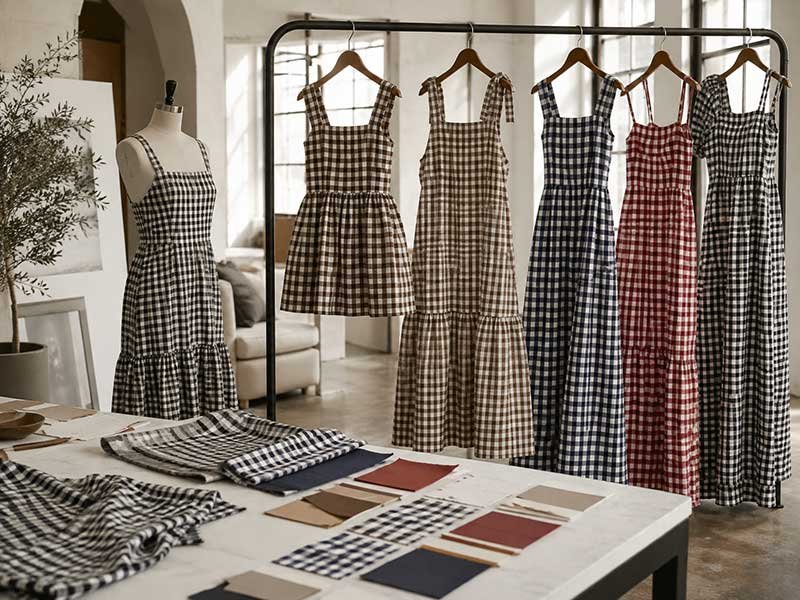
Gingham looks uncomplicated on a mood board: a regular grid, a familiar summer association and a pattern customers recognize immediately. In development, however, it behaves less like a simple print and more like a visible measuring system laid across the garment. A waist seam that moves slightly, a bust dart that rotates too sharply or a side seam that twists under tension can break the grid and make an otherwise well-sewn dress look poorly balanced. Modern product teams therefore need to develop the pattern, silhouette, fabric and production method as one connected system rather than treating the check as surface decoration added at the end.
Modern fashion brands develop gingham dresses by selecting a check scale and fabric structure that suit the intended silhouette, then controlling fit, pattern placement, sample approvals and production standards together. The strongest programs define where checks must align, where controlled distortion is acceptable, and how the approved appearance will be repeated across sizes, colorways and bulk orders.
A useful way to understand the risk is to imagine two samples hanging side by side. Both use the same fabric, measurements and trims, yet one looks refined while the other feels slightly cheap. The difference may be only a few millimeters at the neckline, waist and center front, but gingham makes those millimeters visible. The following development framework explains how experienced dress teams turn that demanding grid into a commercially strong product rather than an expensive source of corrections, rejected samples and inconsistent production.
What Makes Gingham Relevant to Modern Fashion Brands?
Gingham remains relevant because it combines immediate recognition with unusual design flexibility. By changing the check scale, color balance, fabric structure and silhouette, brands can reposition it for casual, resort, contemporary or occasion-led collections. Its commercial strength comes from familiarity, while its creative strength comes from how clearly a label updates that familiarity for its own customer.
A Repeatable Category
Gingham is often introduced as a spring or summer trend, but experienced dress teams usually treat it as a repeatable pattern category rather than a one-season novelty. Blue-and-white cotton checks can anchor a warm-weather launch, while black-and-ivory, chocolate, burgundy, navy or olive combinations can move into transitional collections. The pattern stays recognizable, yet the mood changes substantially when the color balance, fabric surface and proportion are adjusted. This repeatability makes gingham particularly useful for brands that already sell dresses across several seasonal drops and need familiar ideas that can be refreshed without looking copied from the previous year.
The category becomes more commercially useful when one approved fabric supports several related products. A small check might appear in a fitted mini, a square-neck midi and a coordinating skirt set, allowing the same color approval, material testing and supplier work to support a broader story. The collection still needs meaningful variation. Repeating the same puff-sleeve tiered dress each season can make the offer feel predictable, while changing the waist position, neckline, length or check direction creates a new product without losing recognition. Gingham also performs strongly in digital retail because the grid remains visible in thumbnails, but that advantage comes with a warning: mismatched seams and distorted checks are equally easy to see online.
Market and Occasion Fit
The strongest gingham developments begin with a clear wearing occasion. Casual daywear usually benefits from breathable cottons, straightforward internal construction and fits that remain comfortable after repeated washing. Resort products can support open backs, halter necklines, fuller skirts and larger checks because movement and visual impact matter more than close body control. Contemporary fashion collections often rely on cleaner necklines, sharper mini proportions or elongated drop waists to move the pattern away from a traditional country image. Daytime occasionwear needs more refinement, particularly around opacity, bodice support, lining and front-facing check placement.
A useful development sequence is to define the customer, the occasion and the expected retail presentation before choosing the cloth. Starting with an attractive check and searching for a product later often creates compromises: the fabric may be too soft for a corset bodice, too crisp for a fluid maxi or too transparent for an unlined day dress. The same gingham label can describe very different products, so material and construction must follow the intended use rather than the pattern name. The table below provides practical starting points for product planning; final choices should still be validated through fabric tests and a representative sample.
| Market Position | Suitable Check Direction | Typical Dress Shapes | Main Development Priority |
| Casual daywear | Small to medium cotton checks | Shirt dress, babydoll, sundress | Comfort and wash stability |
| Resort and vacation | Medium or large checks in airy blends | Halter, backless, tiered maxi | Drape and movement |
| Contemporary fashion | Micro or graphic checks in restrained colors | Fitted mini, drop waist, clean midi | Modern proportion |
| Day occasion | Refined yarn-dyed checks | Square-neck midi, corset sundress | Fit, opacity and finishing |
| Commercial fashion retail | Repeatable checks with stable supply | Skater, mini, simple midi | Cost and bulk consistency |
Modern Design Language
Gingham looks current when the design team controls proportion and removes predictable signals rather than simply adding decoration. Puff sleeves, bows, ruffles, smocking and tiered skirts can each work, but using several together may push the garment toward costume, cottagewear or childrenswear. A disciplined design often establishes one strong idea, such as a sculpted square neckline, an elongated waist, a precise cutout, wide straps or a clean asymmetric panel. That single decision gives the check a contemporary frame and lets the pattern remain recognizable without dominating the entire product.
Color and scale can modernize the dress just as effectively as construction. Black and ivory feel graphic and urban; chocolate and cream can support a softer premium direction; navy and white remain broadly commercial; muted red, olive or burgundy can extend the category beyond peak summer. Micro checks behave almost like texture and suit fitted or highly seamed silhouettes, while larger repeats become a graphic statement and need broader uninterrupted panels. The goal is not to hide gingham’s history. It is to decide which part of that history supports the brand and which familiar details should be removed so the dress feels deliberate rather than nostalgic by default.
Brand Positioning
A premium contemporary label and a fast-moving digital retailer may use the same check pattern but require different development standards. The premium product may justify yarn-dyed cloth, carefully aligned pockets, cleaner internal finishing and controlled placement across prominent seams. A commercially priced digital style may simplify matching in low-visibility areas while protecting the front view, fit and photographic impact. Neither approach is automatically better; each must deliver the quality promised by the brand’s price, channel and customer expectations. Problems begin when the standard is never defined and the factory is expected to guess which details matter.
Before pattern work begins, the brief should identify the target customer, expected retail price, sales channel and non-negotiable visual features. These points determine where additional cost creates visible value. Aligning a center-front placket or front waist seam can improve perceived quality immediately, while matching a concealed internal panel may consume fabric without changing the customer’s experience. Strong development does not maximize every technical feature. It concentrates effort on the details that reinforce the intended position, then records those priorities clearly enough for pattern, cutting, sewing and inspection teams to repeat them.
Which Gingham Fabrics Work Best for Dresses?
The best gingham fabric is the one that supports the silhouette, fit, price and required visual standard. Yarn-dyed cottons provide authentic checks and a usable reverse side, while printed checks offer greater freedom in color, repeat and base cloth. Weight, drape, opacity, shrinkage, skew and repeat stability should be tested before the final pattern is approved.
Yarn-Dyed or Printed
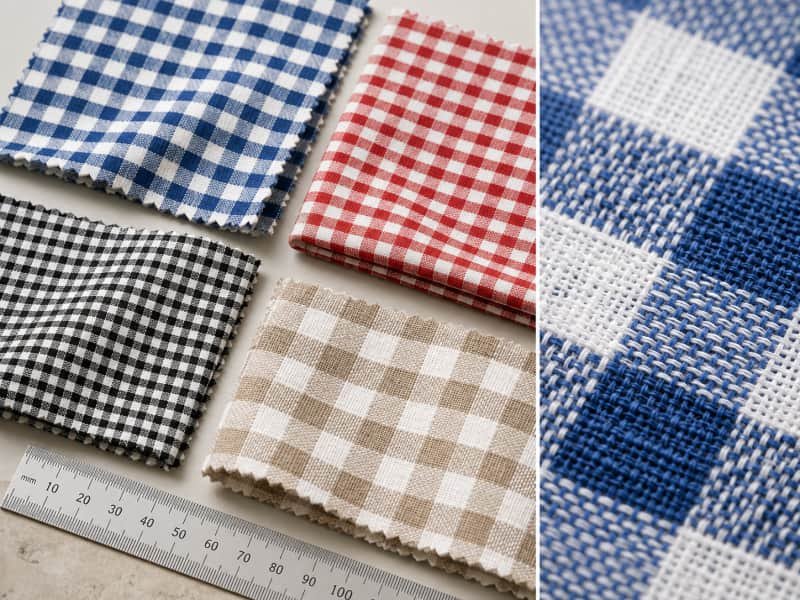
Yarn-dyed gingham is woven from previously dyed yarns, so the check appears through the cloth rather than sitting only on the surface. This often gives the fabric a clean, authentic character and makes it useful for turned-back straps, ruffles, unlined panels or other details where the reverse side can be seen. It can also provide a more substantial quality impression when the weave, yarn size and finishing are consistent. The trade-off is that custom color combinations may require longer development, higher fabric commitments or more limited flexibility than a printed alternative.
Printed checks are applied to a prepared base fabric and offer wider freedom in color, scale, irregular layouts and fashion-led effects. A printed check can sit on fluid viscose, stretch woven, textured cotton or another base that would be difficult to reproduce as traditional gingham. Neither route is automatically superior. Yarn-dyed cloth can show bowing, skew, yarn irregularity or repeat variation, while printed fabric can suffer from off-grain registration, weak penetration or white cracking when seams are stretched. The decision should come from the finished garment: compare face and reverse appearance, repeat accuracy, bulk availability, wash response and the way the check behaves around seams and shaping.
Weight and Fiber
Fabric weight must support the silhouette instead of fighting it. Lightweight cotton voile and cotton-viscose blends can work well for lined sundresses and soft maxis, while medium-weight poplin gives more definition to square necklines, shaped waists and structured minis. Linen blends offer a natural resort appearance but require careful review of wrinkling, slub variation and dimensional stability. Fluid rayon or viscose blends can create attractive movement, although growth, seam slippage and distortion need attention when the skirt is long or cut partly on the bias.
| Fabric Type | Common Starting Range | Suitable Dress Direction | Main Risk |
| Cotton voile or light blend | 80-120 gsm | Lined sundress, soft maxi | Transparency and seam slippage |
| Cotton gingham or poplin | 110-160 gsm | Mini, midi, shirt dress | Shrinkage and seam puckering |
| Cotton-linen blend | 130-190 gsm | Resort and structured sundress | Wrinkling and skew |
| Viscose or rayon blend | 100-150 gsm | Fluid midi and maxi | Growth and distortion |
| Stretch woven check | 160-230 gsm | Fitted mini and bodycon | Check deformation and recovery |
| Structured woven | 180-260 gsm | Corset or sculpted dress | Bulk and limited drape |
Stretch woven checks can support fitted dresses, but stretch percentage and recovery must be measured in both directions. When the fabric expands across the bust or hip, the squares can temporarily become rectangles; weak recovery may leave the grid distorted after wear. The ranges below are useful development starting points rather than fixed rules because yarn count, weave density, finishing and intended care all affect performance. A small hanger swatch should never be the only approval reference. Test the cloth in at least one shaped bodice area, one representative seam and any gathered, curved or supported section that will define the final garment.
Check Scale
Check scale changes the mood, body proportion and manufacturing difficulty of a dress. Micro checks around 2-5 mm can read almost like surface texture and usually tolerate more complex seams. Small checks around 6-12 mm are commercially versatile. Medium repeats around 15-30 mm create stronger visual movement, while checks above roughly 35-40 mm become dominant design elements. These are practical planning ranges rather than universal classifications, yet they help teams discuss visual impact before committing to fabric or pattern work.
Large checks require deliberate placement because a slight shift at the center front, neckline or waist can become immediately visible. Size grading adds another complication: the check repeat remains fixed while panel width increases, so adjacent sizes may show a different number of squares across the body. Small checks are easier to use on fitted bodices and multiple panels, but very fine repeats can create visual vibration in e-commerce photography. The safest approach is to print or drape the proposed repeat at full scale on a body form or first pattern. Reduced mood-board images often hide how strongly the check will divide the bust, waist or skirt.
Fabric Testing
Gingham approval needs to cover appearance, garment performance and cutting behavior. Length and width shrinkage should be measured using the intended care method, and the check repeat should be recorded in several positions across the roll. Teams should also review bowing, skew, shade variation, opacity, seam puckering and pressing response. Many brands use internal dimensional-change limits around 2-3% for stable woven dress fabrics, but the acceptable figure depends on the care label, pattern allowance and market requirement. The test method and acceptance criteria are more important than quoting a general percentage without context.
A sensible pre-sampling package includes composition, usable width, measured repeat, face and reverse identification, grain direction, color approval, shrinkage result, intended lining, interfacing and a realistic backup material. Stretch styles also need recovery checks around the bust, waist and hip, while lightweight fabrics should be assessed for seam slippage and transparency under daylight and photographic lighting. The backup option should not be an afterthought. If the first fabric fails delivery, color or performance requirements, an alternative with similar weight, drape, opacity and repeat can prevent the pattern from being rebuilt from the beginning.
How Should Gingham Dress Silhouettes Be Developed?
A gingham silhouette should be selected according to check scale, fabric behavior and the number of seams crossing the garment. Simple shapes give large checks room to remain balanced, while smaller checks can support fitted or paneled structures. Pattern engineering must account for darts, curves, gathers and internal support before exact placement is approved.
Silhouette and Scale
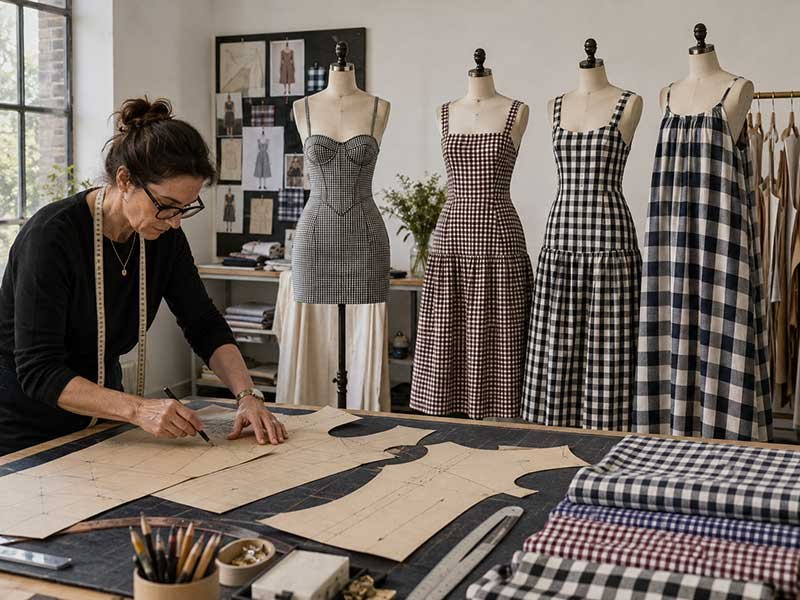
Micro and small checks provide the greatest design flexibility because they move through princess seams, bust shaping and fitted waist panels without creating large visual jumps. They are well suited to corset-inspired minis, fitted midis, body-conscious dresses and designs with several shaping seams. Medium checks work comfortably on square-neck sundresses, shirt dresses, clean-waist midis and A-line shapes because they remain visible in product photography without overwhelming the garment. Large checks need broader uninterrupted areas and are generally more convincing on relaxed maxis, drop-waist dresses, straight shifts or full skirts.
| Check Scale | Suitable Silhouettes | Use With Caution | Key Development Issue |
| 2-5 mm | Fitted mini, corset bodice, paneled midi | Heavy gathering | Visual vibration |
| 6-12 mm | Sundress, skater, babydoll, shirt dress | Dense pleating | Consistent check rhythm |
| 15-30 mm | Square-neck midi, A-line mini, drop waist | Complex bust panels | Focal alignment |
| 35-60 mm | Relaxed maxi, shift, full skirt | Bodycon and curved seams | Engineered placement |
| Above 60 mm | Statement or editorial shapes | High-volume fitted programs | Size-to-size balance |
The base sample size should not be the only reference. Grading increases the width and circumference of pattern pieces while the repeat remains fixed, which can change the number of checks crossing the bodice or place a strong line at a different point on the body. Product teams need to decide whether all sizes must share the same center-front anchor or whether balanced appearance is more important than identical placement. The table below summarizes practical relationships between check scale and silhouette; actual decisions should be tested with the intended fabric because stiffness, stretch and drape can alter the result substantially.
Seams and Shaping
Every shaping line interrupts the grid. Straight side seams are comparatively manageable, while bust darts rotate the fabric and change the direction of nearby lines. Curved princess seams absorb three-dimensional shaping, so complete continuity is often impossible without compromising fit. The correct response is not to remove necessary shaping merely to protect the check. A gingham dress still needs to sit correctly on the bust, waist and hip. The pattern team should instead identify which seams act as visual anchors and which areas allow controlled distortion.
Center fronts, center backs, button plackets and front waist joins usually deserve high matching priority. Bust darts, armholes and curved cup seams require a more realistic standard in which symmetry and smooth progression matter more than perfect continuity. Some shaping can be redistributed to improve the visual result: a large dart may be divided between the side and waist, a princess seam can be moved nearer a check column, or a bias-cut waistband can create an intentional break between bodice and skirt. These choices must happen during pattern development. Trying to correct a broken grid only at the sewing stage can create uneven seam allowances, measurement errors and unstable fit.
Placement on the Body
The center front normally acts as the visual anchor. Depending on the repeat, the pattern may place a full check column, a vertical stripe or a symmetrical relationship on that line. Without a deliberate anchor, the garment can appear twisted even when the measurements are technically correct. The neckline and bust need similar control. Checks on the left and right sides should feel balanced around square necks, sweetheart shapes or corset panels, even when curved shaping prevents exact mirror matching in every section.
Waist placement strongly affects perceived proportion. A horizontal check line sitting directly on the seam creates a crisp division, while the same line falling slightly above on one side and below on the other looks like a sewing error. Drop-waist styles can use the grid to lengthen the torso, but the transition into the skirt still needs an intentional rhythm. The skirt should be reviewed while worn and moving because checks that look level on the cutting table can slope around the hip when grain, side balance or hem level is wrong. Front, side and back photographs often reveal these issues more clearly than a single static fitting view.
Gathers and Support
Gathers compress the check and make the pattern appear darker, which can create an attractive contrast between a smooth bodice and a full skirt. The gathering ratio must be controlled because uneven distribution can make one side look denser than the other. Pleats create more structured repetition: box pleats hide and reveal parts of the check, while knife pleats can produce a directional stripe effect. When the visual outcome matters, pleat depth should be planned around the repeat rather than positioned randomly during sewing.
Bias-cut components rotate the grid and create a diamond effect that can work well on waistbands, cups, pockets or side panels. They also stretch and grow more easily during handling, so they need controlled cutting, stay stitching and resting where appropriate. Internal support should preserve the silhouette without creating ridges or pulling the checks out of shape. Lightweight styles may need only a facing or partial lining, while fitted dresses can require cups, boning, fusible support, a waist stay and a stable zipper. Interfacing must be tested with the shell because excessive stiffness or uneven shrinkage can produce visible puckering across the grid.
How Do Brands Control Check Matching, Fit and Samples?
Brands control gingham quality by defining priority matching points, approving alignment on the body and recording the result in the tech pack and sealed sample. Fit should be stabilized before final placement approval because changes to darts, seams or proportions move the grid. Clear sample stages reduce the risk of approving appearance without confirming production readiness.

Matching Priorities
Not every seam deserves the same matching standard. The eye usually goes first to the center front, neckline, waist, placket, pocket and major horizontal join, so these areas should receive the most attention. Side seams matter, but the acceptable result depends on the shape. A straight shirt dress may allow strong continuity, while a fitted style with waist and hip shaping requires controlled adjustment. Sleeve underarms, concealed joins and heavily gathered sections generally carry lower visual priority because exact matching may add cost without changing the customer’s perception of the finished dress.
A practical system separates the garment into exact-match zones, visual-match zones and controlled-distortion zones. Exact-match areas include focal front openings and prominent waist joins. Visual-match areas include shoulders, side seams and center back, where major lines should appear continuous even if every square is not perfect. Controlled-distortion areas include darts, curved princess seams, gathers and bias panels, where symmetry and consistency matter more than exact continuity. This hierarchy protects both quality and cost. A general instruction such as ‘match all checks’ is too vague; approved photographs with marked reference lines provide clearer guidance for pattern, cutting, sewing and inspection teams.
Fit Before Placement
Fit and check placement cannot be approved independently. Raising a neckline changes the upper horizontal line, adjusting a bust dart rotates the grid, removing width at the waist moves the side seam, and shortening the bodice places a different part of the repeat at the waist join. The first prototype should therefore establish silhouette, balance and material behavior before exact placement is finalized. It may still use the intended check, but the team should expect structural corrections to move the pattern and should avoid treating early alignment as permanently approved.
A fitting review should cover bust-point position, neckline symmetry, waist level, side-seam balance, back-neck alignment, strap angle, hip ease, skirt fall, hem level and movement. Close-fitting styles should be reviewed on a fitting model near the brand’s base size rather than only on a mannequin because human posture reveals twisting, pulling and check distortion that a static form can hide. Once the fit is stable, the pattern maker can refine the center-front anchor, waist alignment and panel symmetry. Any later alteration must trigger another placement review, because a 5-10 mm change can be visually significant when a strong horizontal line crosses the area.
Sample Stages
A professional development process separates design interpretation, fit confirmation and production approval. The first prototype evaluates the overall direction, basic measurements and material behavior. The fit sample corrects balance and wearing performance. A revised sample confirms that comments have been applied and shows how those changes affect check placement. A salesman or campaign sample may be required for wholesale review or photography, while the pre-production sample confirms final fabric, trims, measurements, construction and workmanship before bulk cutting begins.
A simple dress may combine some stages, but the functions should not be skipped. Moving directly from an attractive first sample to production can leave unresolved risks in grading, shrinkage, alignment and sewing method. The final approval sample should use production-representative fabric; a substitute with a different repeat, weight or dimensional behavior cannot validate actual placement. For a fitted gingham style with internal support and several shaped panels, two or three development rounds are common when fit and alignment both need refinement. More rounds are not automatically a sign of care. Repeated corrections without clear priorities usually indicate an unstable brief, weak technical communication or incomplete material information.
Tech Pack Control
The tech pack must translate visual expectations into instructions that production teams can measure and repeat. A flat sketch cannot explain which part of the check belongs at center front, where the horizontal waist line should fall or which curved seams are exempt from exact matching. Useful specifications include the measured repeat in both directions, face and grain orientation, center-front reference, waist reference, bias-cut components, mirrored pieces, priority zones, approved photographs and any size-grading rules that affect placement.
Tolerance should be project-specific rather than copied from a general template. A brand may permit only a small visible difference at a front waist join while accepting more variation at a low-visibility side seam. Figures such as 2-3 mm can be used for a critical focal area when fabric stability and construction make that level realistic, but the approved sample and actual repeat remain the final reference. The document should also state that correct garment measurements and balance take priority when matching conflicts with fit. Cutting or sewing teams should never shift a panel beyond the approved specification merely to continue a line. Clear instructions turn visual taste into a production standard instead of leaving each team to make a different reasonable interpretation.
How Is a Gingham Dress Prepared for Bulk Production?
A gingham dress is ready for bulk only after the fabric, repeat, measurements, placement rules and construction are locked. Production teams must inspect each fabric lot, confirm marker consumption, control spreading and cutting, keep matched components together and check alignment during sewing. This preparation allows the approved sample to be repeated across sizes, colorways and later orders.

Fabric Consumption
Gingham normally requires more fabric than a comparable solid style because pattern pieces cannot always be nested for maximum marker efficiency. Important components may need to begin at a specific point in the repeat, leaving unused spaces between pieces. As an early planning allowance, moderate check matching may add roughly 5-15% to shell consumption. Large, uneven or one-way checks can require more. This is not a universal costing rule; final consumption must come from an actual marker using the confirmed fabric width, repeat, size ratio and matching standard.
Fabric width has a major effect on commercial viability. A style may work comfortably at 150 cm usable width and become expensive at 135 cm because panels no longer fit side by side. Matched pockets, plackets, long skirts and full size ranges add further restrictions. The repeat should be measured on actual bulk rolls because production cloth can differ slightly from the development swatch. Marker review needs to happen before final price approval, not after the purchase order is placed. Estimating consumption from a solid version of the dress is a common cause of late cost increases and avoidable negotiations.
Inspection and Cutting
Bulk fabric inspection should confirm shade, usable width, repeat size, defects, bowing, skew and dimensional behavior. Rolls with visible shade differences need separate grouping so panels from different lots are not mixed in one garment. Spreading also requires tighter control than solid fabric. Check lines should remain straight, fabric tension must be even and layers should not be pulled into temporary alignment because they may relax after cutting and change shape. Stable even checks can sometimes use controlled multi-ply lays, while large or high-priority repeats may require short lays or single-layer cutting.
Cut components should be numbered and bundled so matched left and right pieces remain together. This is especially important for bodice panels, collars, pockets, plackets and paired sleeves. Losing the original grouping can destroy intended symmetry even when each individual piece is within pattern tolerance. Before the full quantity is cut, a pilot lay and first-off assembly provide valuable protection. The team can compare the initial garment with the pre-production sample and correct marker, placement or sewing issues before they spread through the order. This step costs far less than discovering the same problem after hundreds of garments have been assembled.
Sewing and Quality Control
Gingham quality cannot be inspected only at the end because once several major seams are assembled incorrectly, repair can leave needle marks, distorted fabric or uneven allowances. Inline checkpoints should follow critical operations such as front-bodice joining, center-front construction, waist attachment, pocket setting, side seams and zipper installation. Operators need to align the approved reference while maintaining the specified seam allowance. Pulling one panel to force a match may twist the garment, change its measurement or create puckering that becomes especially visible against the straight grid.
Measurement control and visual control should remain separate. A garment can have attractive matching and still be outside size tolerance, or it can meet measurements while looking unbalanced. Needle size, thread tension, stitch density, feeding and pressing should be approved during pre-production because seam puckering is more obvious on checks than on solid cloth. Final inspection should assess symmetry, waist level, pocket position, side continuity, zipper alignment, lining control, hem balance and overall fit appearance. The table below shows practical checkpoints that can be adapted to the brand’s own quality plan and product complexity.
| Production Stage | Control Point | Practical Check | Risk Reduced |
| Fabric receipt | Shade, width, repeat, bow and skew | Group rolls and record repeat before cutting | Mixed shade and sloping checks |
| Marker approval | Consumption and focal placement | Use confirmed width, repeat and size ratio | Late cost change and poor alignment |
| Pilot cutting | First matched component set | Assemble a first-off garment before full cutting | Repeated marker or placement errors |
| Inline sewing | Front, waist, pockets, side seams and zipper | Check alignment without changing seam allowance | Twist, puckering and visual imbalance |
| Final inspection | Measurements plus overall symmetry | Review flat and on a form where practical | Acceptable measurements but poor appearance |
Develop Your Gingham Dress Program
A production-ready gingham dress has more than an attractive approval sample. It has confirmed bulk fabric, measured repeat, tested shrinkage, final patterns, an approved marker, sealed reference sample, construction record, measurement specification and defined inspection points. Development, pattern, cutting, sewing and quality teams should review the same file before production starts, especially when the style combines large checks, fitted construction, multiple panels or custom material. The production file should also identify which details are essential to the design and which allow controlled variation.
Repeat orders deserve the same discipline. A later fabric lot may have a slightly different shade, usable width or repeat, so archived patterns, placement references and previous inspection records are needed to maintain continuity. A capable manufacturing partner should be able to explain where extra consumption comes from, how matched components are controlled and which risks remain before cutting. Vague reassurance is not enough for a serious dress program. The difference between a good sample and a successful commercial product is repeatability across sizes, production lots and selling seasons.
Duolan Apparel works with established fashion brands, product teams and sourcing offices on fabric selection, pattern engineering, sample development, fit correction, production preparation and repeat-order coordination for fashion-led dresses. Brands planning a gingham mini, midi, maxi, resort capsule or multi-style collection can send a tech pack, reference sample, fabric concept or collection brief for an initial development review. Contact duolan apparel to discuss material options, sample priorities, check-matching standards and a practical route from concept to bulk production.