Skip to content
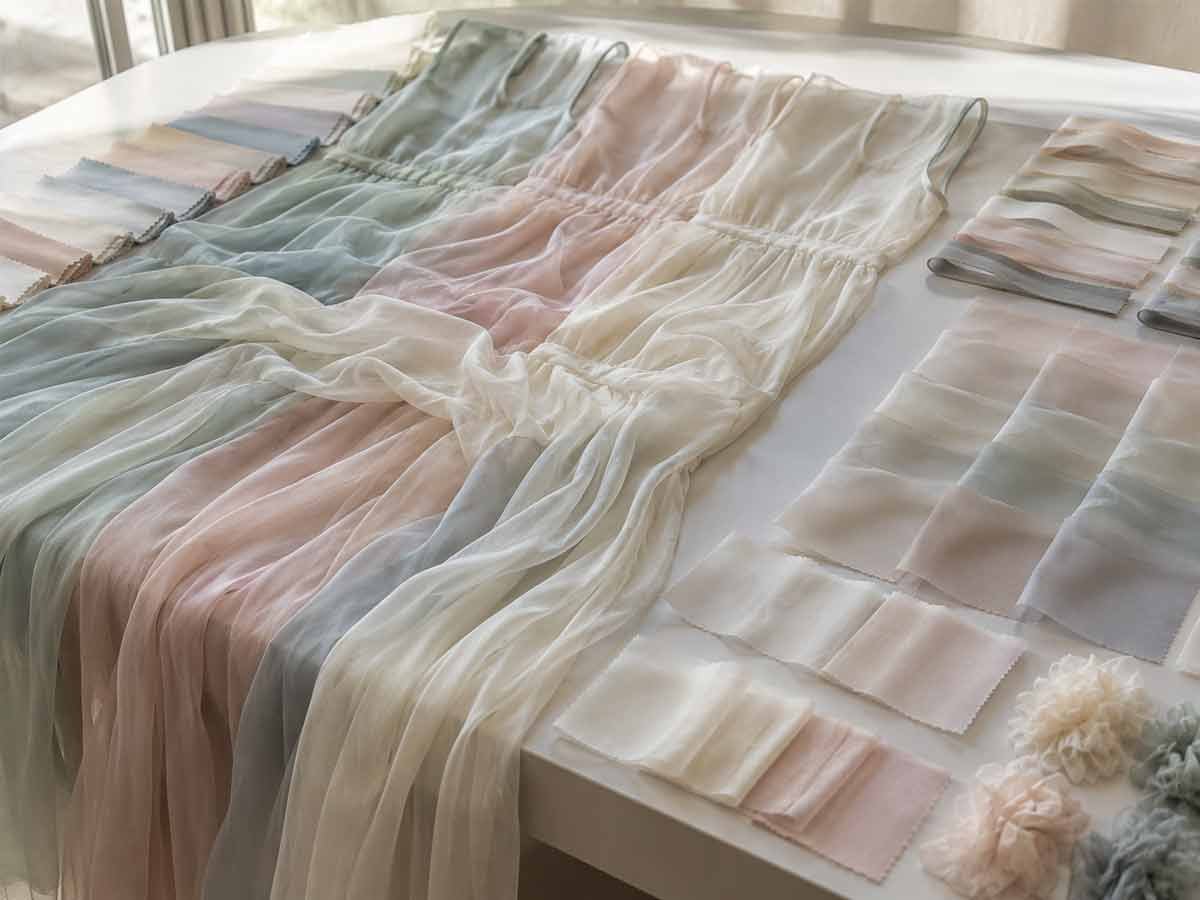
A chiffon dress can look almost weightless when it moves, yet the fabric behind that effortless effect is surprisingly technical. Small differences in fiber content, yarn twist, weave density, finishing, weight, lining, and cutting direction can change a garment from soft and refined to static, transparent, unstable, or difficult to sew. That is why a swatch that looks beautiful on a sourcing card does not always become a successful dress.
Chiffon is widely used for occasion dresses, summer collections, flowing sleeves, ruffles, overlays, printed skirts, scarves, and layered fashion pieces. It is also one of the fabrics most likely to disappoint when it is selected only by color, composition, or price. Product teams need to consider how the material hangs, photographs, stretches on the bias, interacts with lining, responds to stitching, and remains consistent when production moves from a sample to hundreds or thousands of garments.
Chiffon is a lightweight, sheer woven fabric made from fine, highly twisted yarns. It may be produced from silk, polyester, nylon, rayon, cotton, or blended fibers. Its soft drape, subtle grain, and floating movement make it popular for dresses, blouses, sleeves, overlays, and scarves, although most chiffon garments require lining, careful sewing, and fiber-specific care.
For a consumer, understanding chiffon helps with shopping and garment care. For a fashion brand, the question goes further: which chiffon will create the intended silhouette, feel appropriate for the price point, survive production, photograph accurately, and remain consistent across repeat orders? The difference between an elegant chiffon dress and a disappointing one is often hidden inside decisions that are invisible in the final product but critical during development.
What Is Chiffon Fabric?
Chiffon is a light, transparent plain-weave fabric made with fine, highly twisted yarns. It is a fabric construction rather than a single fiber, so it may contain silk, polyester, nylon, rayon, cotton, or blends. The twist creates a faint grainy texture, while the open structure gives chiffon its soft drape, transparency, and characteristic floating movement.
What Chiffon Is Made From
Chiffon is not the name of a fiber. It describes a lightweight woven construction and the visual effect created by that construction. This distinction explains why two fabrics sold under the same name can have very different levels of softness, transparency, strength, static, shrinkage, and cost. Traditional chiffon was closely associated with silk, but polyester is now the most common commercial option because it can be produced consistently in large quantities and in a broad range of colors, prints, and finishes.
Silk chiffon normally has a delicate hand, subtle natural luster, and graceful movement. Polyester chiffon can be crisp, dry, matte, smooth, or fluid depending on yarn quality and finishing. Rayon chiffon often feels softer and more absorbent but may require closer control of shrinkage and distortion. Nylon chiffon can be fine and strong for its weight, while cotton chiffon has a drier, more natural character and usually less liquid drape. Blended versions may combine properties, although the actual performance still needs to be tested rather than assumed from the fiber percentages alone.
Fiber composition is only one part of a reliable specification. Fabric weight, yarn count, yarn twist, weave density, usable width, finish, color consistency, and surface regularity all affect the final garment. A carefully controlled polyester chiffon may be a better choice for a repeat commercial dress program than an inconsistent silk quality, particularly when the brand needs stable colors, predictable care, and reliable reordering. The best selection is the fabric that supports the intended dress, not the fabric with the most prestigious fiber name.
How Chiffon Is Constructed
Most chiffon uses a balanced plain weave in which warp and weft yarns cross in a simple over-and-under sequence. The distinctive character comes from the yarns, which are twisted more tightly than those used in many smooth lightweight fabrics. Alternating twist directions help create a faintly puckered, slightly grainy surface. Under magnification, the material may look like a fine grid with small spaces between the yarns, allowing light to pass through and producing its sheer appearance.
Construction alone does not determine the finished result. Heat setting can stabilize synthetic chiffon, while softening or sand-washing can make the surface feel less crisp and reduce shine. Crinkle finishes introduce controlled texture, and pleating adds regular folds that may be set with heat in polyester qualities. Printing, foil, flocking, embroidery, or sequins can create visual interest, but each additional process affects weight, drape, sewing behavior, and care requirements. A print that covers most of the surface may visually reduce transparency while making the fabric slightly firmer.
The interaction between construction and garment engineering is especially important in dresses. A loose weave may look beautifully soft but suffer from seam slippage at the waist or zipper. A heavily softened finish may improve touch but increase movement during cutting. A tightly woven quality may sew cleanly but look too flat in a layered skirt. For this reason, fabric approval should include both a visual assessment and a sewing trial using the intended seam, thread, needle, lining, and garment structure.
What Chiffon Feels Like
Chiffon usually feels light, fine, and slightly textured rather than perfectly smooth. It does not have the polished surface of satin or the crisp body of organza. When lifted and released, a suitable dress chiffon should fall into soft folds and respond quickly to movement. The surface may feel dry or faintly grainy because of the twisted yarns, although high-quality finishing can make polyester chiffon noticeably softer without removing its characteristic texture.
The hand feel changes with fiber and finish. Silk chiffon often feels cool, delicate, and softly fluid. Polyester can range from crisp and dry to smooth and supple, but some qualities create more static in low humidity. Rayon tends to feel softer and more absorbent, while cotton chiffon feels natural and less slippery. These differences are not merely sensory. They influence how the fabric gathers, whether it clings to a lining, how it behaves against the skin, and how easily a production team can cut and sew it.
A small swatch is rarely enough for a serious decision. A larger panel should be hung vertically, gathered, layered over the proposed lining, and viewed under daylight, retail lighting, and camera flash. The team should also crush the fabric in the hand, release it, and observe recovery. This simple process reveals whether the material creases easily, produces excessive shine, becomes more transparent when stretched, or loses movement when doubled. Chiffon is a fabric that must be judged in motion, not only when lying flat on a table.
Typical Chiffon Specifications
Chiffon is produced in many weights, widths, densities, and finishes, and mills may use the same commercial name for fabrics that behave quite differently. The ranges below are practical references commonly encountered in apparel development rather than universal standards. Actual specifications should always be confirmed through a supplier data sheet, physical sample, and testing based on the intended garment and care method.
| Chiffon Type | Typical Weight | Common Hand Feel | Typical Dress Use | Main Risk to Check |
| Silk chiffon | 20-45 gsm | Fine, soft, fluid | Premium overlays, scarves, occasion dresses | Care, cost, shade variation |
| Polyester chiffon | 30-80 gsm | Dry to soft and fluid | Printed dresses, sleeves, skirts, tops | Static, shine, seam slippage |
| Nylon chiffon | 20-50 gsm | Light, fine, resilient | Decorative layers and sheer panels | Heat sensitivity |
| Rayon chiffon | 35-75 gsm | Soft, fluid, absorbent | Flowing dresses and blouses | Shrinkage and distortion |
| Cotton chiffon | 45-90 gsm | Dry, natural, less slippery | Summer dresses and relaxed tops | Wrinkling and reduced fluidity |
Weight should be considered together with weave density and finishing. Two polyester chiffons listed at 60 gsm can have different transparency, strength, and drape because one uses finer yarns or a looser construction. Usable width also matters for consumption, especially in maxi skirts, circular panels, and large ruffles. The working specification should therefore record not only composition and weight, but also width, finish, color standard, approved hand feel, opacity level, and any required performance tests.
Which Types of Chiffon Are Common?
The most common chiffon types are silk, polyester, nylon, rayon, and cotton chiffon. Polyester is the leading commercial choice because it offers broad color availability, print compatibility, practical care, and scalable production. Silk is softer and more luxurious, while rayon, nylon, and cotton provide different balances of drape, absorbency, strength, breathability, texture, and production stability.
Silk Chiffon
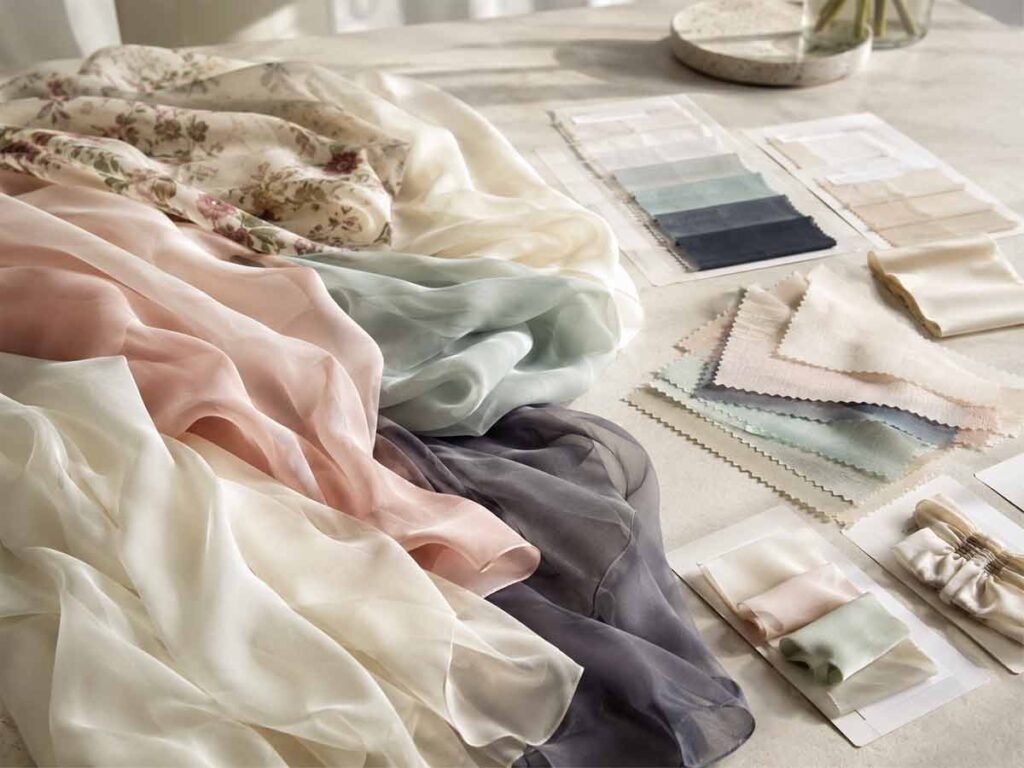
Silk chiffon is valued for its delicate hand, refined movement, fine surface, and subtle natural luster. It is commonly used for premium occasion dresses, luxury overlays, scarves, draped panels, and soft sleeves. Good silk chiffon falls with little resistance, creating narrow folds and gentle movement that can be difficult to reproduce exactly with a synthetic material. Its visual richness comes from the way natural silk interacts with light rather than from a bright surface shine.
The fabric also requires careful control. Silk chiffon can be sensitive to water marks, pressing temperature, abrasion, and pressure. Shade matching may be less predictable across separate dye lots, and sewing marks can remain visible when the wrong needle or handling method is used. Dry-clean-only care may also limit its suitability for garments intended for frequent or casual wear. These factors make silk appropriate for certain premium products, but not automatically superior for every dress collection.
Before approval, the development team should consider the target retail position, expected quantity, color range, lining, trim weight, care label, and delivery schedule. A brand that needs several thousand units across multiple colors may receive better commercial consistency from a carefully chosen matte polyester chiffon. Silk is most successful when its softness and natural movement are central to the product proposition and the price, care expectations, and production controls can support that decision.
Polyester Chiffon
Polyester chiffon is the most widely used type in contemporary womenswear. It appears in printed maxi dresses, party dresses, blouses, sheer sleeves, tiered skirts, pleated designs, and lightweight overlays. Its popularity comes from flexibility: mills can produce many weights, finishes, colors, and print effects, while brands usually receive more predictable color repeatability and dimensional stability than with silk or rayon.
Quality differences are substantial. Lower-grade polyester chiffon may feel harsh, overly bright, static, or thin, and it may show bowing, uneven dyeing, loose yarns, or poor seam stability. Better qualities can be matte, soft, and fluid while retaining the practical advantages of synthetic fibers. They may also support heat-set pleating, easier wash-care instructions, and larger repeat orders. The word polyester therefore does not indicate a single level of appearance or performance.
A useful approval process includes checking shade consistency, surface shine under photography, static against the proposed lining, seam slippage at stress areas, puckering after stitching, print penetration, pressing response, and recovery after folding. Comfort should also be judged in the complete garment. A loose polyester chiffon dress with a breathable lining may feel suitable for warm weather, while a fitted design with multiple synthetic layers can feel warm despite the light outer fabric.
Rayon, Nylon, and Cotton
Rayon chiffon is often selected for a soft, fluid, and more absorbent hand. It can work beautifully in flowing dresses, relaxed blouses, and draped skirts, but it needs careful testing because moisture and tension can affect its dimensions. Shrinkage, growth, or distortion may appear after washing, steaming, or hanging. The fabric may also need to be relaxed and pre-treated before pattern decisions and final hemming are confirmed.
Nylon chiffon is generally fine and strong relative to its weight. It can suit sheer panels, decorative layers, gathered details, and lightweight fashion applications where resilience is useful. Its main limitation is sensitivity to heat, so pressing, transfer printing, pleating, or other thermal processes should be trialed before production. A temperature that is safe for polyester may damage or alter nylon, particularly when the fabric is extremely fine.
Cotton chiffon has a drier, more natural surface and often less fluid movement than silk or soft synthetic chiffon. It may suit summer dresses, natural-looking blouses, modest layered garments, and relaxed collections. Cotton normally wrinkles more visibly, but that characteristic can support a casual aesthetic when it is intentional. These three types should not be treated as direct substitutes. Changing the fiber can alter shrinkage, drape, sewing speed, opacity, care labeling, and even the pattern balance required for the garment.
Choosing Chiffon for Dresses
The best chiffon depends on the job the fabric must perform. A tiered maxi dress needs softness and movement, but the material must also support gathered seams without excessive slippage. A draped bodice needs fluidity and controlled bias behavior. A sheer sleeve can use a lighter quality than a full skirt, while a permanent pleated style needs reliable heat-setting performance when polyester is used.
A practical choice begins with four questions: what movement should the dress have, how much transparency is acceptable, what surface appearance is required, and how reliably can the fabric be repeated? The answers should be considered together with the target price, care method, color plan, print process, order quantity, and expected reorders. Selecting only on the basis of the lowest fabric cost can create higher cutting loss, slower sewing, more rework, and more rejected garments.
| Dress Requirement | Useful Starting Option | Reason | Risk to Confirm |
| Premium soft overlay | Silk chiffon | Refined hand and natural movement | Care, cost, shade variation |
| Printed commercial maxi | Polyester chiffon | Print consistency and scalable supply | Static, shine, color migration |
| Soft flowing day dress | Rayon chiffon | Fluid drape and absorbent touch | Shrinkage and distortion |
| Natural summer look | Cotton chiffon | Breathable, matte, dry hand | Wrinkling and reduced flow |
| Fine decorative layer | Nylon chiffon | Low weight and good relative strength | Heat sensitivity |
For long-running collections, it is helpful to approve one technically acceptable backup fabric before a supply problem occurs. The alternative should be compared for composition, weight, width, shade, hand feel, opacity, shrinkage, and fit impact. An emergency substitution based only on a similar appearance can change the garment’s consumption, pattern behavior, drape, seam quality, and care requirements. A backup is useful only when it has already been tested in the intended construction.
What Are Chiffon’s Key Properties?
Chiffon is light, sheer, fluid, and slightly textured. It creates movement without heavy volume, but it can also fray, snag, stretch on the bias, generate static, and slip at seams. Its breathability, wrinkle recovery, durability, opacity, and comfort vary with fiber content, weave density, finishing, lining, layer count, and the way the garment is patterned and constructed.

Transparency and Breathability
Most chiffon is transparent or semi-transparent because fine yarns and a relatively open construction allow light to pass through. Even a dark fabric that looks sufficiently covered on a table may become noticeably sheer when stretched across the bust or hip, viewed in direct sunlight, or photographed with flash. Opacity changes with weight, weave density, yarn fineness, color depth, print coverage, layer count, lining shade, and the amount of tension placed on the fabric during wear.
Breathability is more complicated than appearance. Chiffon looks airy, but the fiber and lining strongly influence comfort. Silk, cotton, and rayon can absorb more moisture than polyester, while polyester dries quickly but may feel less comfortable against the skin in humid conditions. A loose dress with open sleeves and a lightweight lining can feel suitable for warm weather. A fitted dress with cups, boning, several synthetic layers, and a dense lining may feel much warmer despite its sheer outer surface.
Opacity should be tested on the complete sample under daylight, retail lighting, studio lighting, and camera flash. Pale shades such as white, cream, blush, and light yellow usually need closer attention than black, navy, or dense prints. The team should also check the garment while walking, sitting, raising the arms, and moving near a strong backlight. Chiffon complaints often appear in real movement and photography rather than during a static fitting in controlled indoor light.
Stretch, Bias, and Wrinkling
Standard woven chiffon does not normally have true elastic stretch unless elastane is included. It may have limited mechanical give, and it can move significantly on the bias, which is the diagonal direction across the weave. Bias movement helps create elegant drape, but it can also cause long skirts to grow, necklines to stretch during sewing, and side seams or asymmetric hems to become uneven after the garment hangs.
Long, circular, or bias-cut styles should be evaluated after relaxation rather than hemmed immediately after sewing. Allowing a sample to hang for at least a full day is a common practical check, although the necessary time varies with the fabric and construction. The goal is not to follow a fixed number mechanically, but to identify whether the material continues to lengthen or distort before the final hem and measurement standard are approved.
Wrinkle behavior depends on fiber and finish. Polyester chiffon generally has better wrinkle recovery, while silk may develop pressure marks, rayon may crease or change dimensions when wet, and cotton chiffon normally wrinkles more readily. Packaging trials are particularly useful for ecommerce garments. A dress may leave production looking clean but arrive with hard fold lines after transport. The team should confirm whether the fabric recovers after hanging, steaming, or light pressing without creating shine or changing the finish.
Strength and Sewing Risks
Chiffon’s visual delicacy does not always indicate low yarn strength. A tightly constructed polyester chiffon can be reasonably durable, while a soft, loose quality may suffer from yarn movement even when individual yarns are strong. Seam slippage is a frequent concern: the yarns move away from the stitch line under stress, creating visible openings although the thread has not broken. This defect commonly appears at fitted side seams, waist seams, armholes, and zipper points.
Other risks include fraying, snagging, needle damage, puckering, uneven feeding, twisted hems, and distortion during spreading or cutting. Static can make the shell cling to a lining or hosiery, changing both appearance and comfort. Fine fabrics can also reveal every seam allowance and internal component, so the construction needs to look clean from the outside and through the transparent layer. A seam that is structurally acceptable in an opaque fabric may look unattractive in chiffon.
The actual production setup should be tested with the intended needle, thread, stitch length, seam type, presser-foot pressure, and machine feed. Fine needles around size 60/8 or 70/10 are often used as trial starting points for lightweight woven chiffon, but there is no universal setting. The correct combination depends on density, finishing, decoration, and seam function. Garment-specific trials provide more useful evidence than a general fabric label or a standard machine setup.
Chiffon and Similar Fabrics
Chiffon is often compared with georgette, organza, tulle, and crepe because these materials can appear light or textured, yet they create different silhouettes. Chiffon is usually soft, fluid, and highly transparent. Georgette is generally slightly heavier, more textured, and less sheer. Organza is crisp and holds volume. Tulle has an open net structure, while crepe covers a broad group of fabrics with a textured surface and widely varying weight and drape.
| Fabric | Transparency | Hand Feel | Structure | Typical Fashion Use |
| Chiffon | High | Light, soft, slightly grainy | Low | Flowing dresses, sleeves, overlays |
| Georgette | Medium-high | Dry, textured, slightly heavier | Low-medium | Dresses, blouses, draped pieces |
| Organza | High | Crisp, firm, smooth to dry | High | Structured sleeves, volume, overlays |
| Tulle | High | Net-like and open | Medium-high | Skirts, volume layers, decorative panels |
| Crepe | Low-medium | Textured; varies by type | Varies | Dresses, tailoring, draped separates |
These fabrics are not interchangeable without adjusting the pattern and construction. A chiffon sleeve may collapse softly, while an organza sleeve holds a sculptural shape. Georgette can offer more body and less transparency, but it may not produce the same floating movement. A useful development brief should therefore replace vague descriptions such as light and floaty with clearer requirements for weight, transparency, surface texture, softness, movement, and structure.
How Is Chiffon Used in Fashion?
Chiffon is used for dresses, blouses, skirts, sleeves, scarves, overlays, jumpsuits, capes, and decorative panels. It is especially effective in maxi dresses, tiered skirts, wrap silhouettes, halter styles, one-shoulder designs, ruffles, and occasionwear. Because it is usually sheer and provides little structural support, it often works with lining, layering, cups, boning, mesh, satin, or another foundation fabric.

Common Garment Uses
Chiffon is most useful when movement, softness, and controlled transparency are part of the design. It can form the main shell of a fully lined dress or appear as a secondary layer over satin, jersey, mesh, or another stable base. Common applications include full dresses, printed blouses, sheer sleeves, ruffled necklines, tiered skirts, cape overlays, draped panels, scarves, neck ties, wide-leg jumpsuit overlays, permanent pleats, bows, and decorative trims.
Each application places different demands on the material. A full printed maxi dress needs consistent width, reliable shade, good seam performance, and controlled print alignment. A sleeve quality can be lighter and more transparent. A heat-set pleated skirt needs stable polyester performance, while an embroidered overlay must support stitches without pulling or creating holes around the design. The same chiffon may not be suitable for all of these functions, even when the color and composition appear correct.
A useful material brief explains where the chiffon will be used, how much transparency is acceptable, whether the area will be gathered or stretched, what lining will sit underneath, and what movement the final garment should have. Simply requesting chiffon leaves too many decisions unresolved. Product quality improves when the fabric is selected for a clear role within the garment rather than chosen from a general category because it looks attractive on a hanger card.
Suitable Dress Silhouettes
Chiffon works particularly well in silhouettes that allow the fabric to fall, gather, flutter, or layer. Maxi dresses, midi dresses, wrap dresses, halter dresses, one-shoulder styles, flutter sleeves, tiered skirts, soft A-line shapes, draped necklines, and asymmetric hems all use its movement effectively. A very light chiffon creates delicate motion, while a slightly heavier quality may form clearer tiers, broader folds, and more visible skirt volume.
The fabric can also be used in fitted dresses, but it rarely provides shaping or support by itself. A body-conscious chiffon design often relies on an internal structure such as stretch lining, mesh, satin, cups, boning, elastic, or a woven foundation. Chiffon then contributes ruching, drape, softness, color depth, or controlled transparency. Asking the fabric to perform both the decorative and structural roles often leads to instability or an under-supported fit.
The strongest designs often combine controlled and free-moving areas. A fitted bodice can support a flowing skirt, a structured waist can anchor draped panels, or an opaque inner dress can carry a transparent outer layer. These contrasts give chiffon a clear purpose. They also allow the pattern and internal structure to handle fit and support while the outer fabric provides the movement and visual softness that customers expect from the material.
Lining and Coverage
Most chiffon dresses require some form of lining, although the coverage can be full, partial, or strategic. A complete lining provides reliable opacity and can stabilize the body of the garment. A partial lining preserves transparency in sleeves or shoulders. A shorter skirt lining can maintain coverage while allowing a maxi hem to look lighter. Dark or printed double layers may provide enough opacity for some designs, but this should be confirmed on the body rather than assumed from the fabric table.
Lining affects more than modesty. It changes drape, color, weight, stretch, static, breathability, seam balance, and comfort. A stiff lining can make a flowing shell look rigid. A heavy lining can pull on delicate waist seams. A glossy lining may show through pale chiffon, while poor static compatibility can cause the shell to cling to the legs. The lining should be approved together with the outer fabric during sampling, not selected at the end of development.
Color interaction also deserves attention. A slightly warm lining can shift pale pink chiffon toward peach, while bright white under cream may create an unexpectedly cold appearance. Black lining can deepen dark prints but reduce color clarity. The team should evaluate the combination under natural light, strong retail light, and photography. The approved standard should identify both shell and lining because changing either component can alter the final garment shade and perceived quality.
Drape, Opacity, and Movement
Drape determines how chiffon forms folds and moves around the body, while opacity determines how much coverage and layering the garment needs. A very soft chiffon creates narrow folds and follows the underlying shape closely. This can look refined in draped necklines and gathered skirts, but it may reveal every line of the inner construction. A firmer quality creates broader folds and more visible volume, which can work better for large ruffles, statement sleeves, bows, or structured tiers.
Opacity should be reviewed during movement. A garment may appear covered while standing still but become revealing when the wearer walks, sits, raises the arms, or moves near a strong backlight. High slits, armholes, bust seams, and the upper thigh are frequent risk areas. Print coverage can reduce visual transparency, but it should not replace a proper modesty assessment. Stretching across curved areas can open the weave and make even a dense print look more transparent.
A practical sample review includes walking, turning, sitting, arm movement, daylight, camera flash, and backlighting. The team should also inspect the garment after steaming and after hanging long enough to reveal bias growth. These checks are simple, but they represent how a chiffon garment is actually worn, photographed, and judged. A dress that looks correct only when motionless on a form is not fully developed for real use.
How Do You Choose and Care for Chiffon?
Choose chiffon by checking fiber content, weight, width, drape, transparency, shrinkage, colorfastness, static, seam stability, print quality, and lining compatibility. Cut it with sharp tools, control grain and tension, and sew with fine needles and suitable seams. Care instructions must reflect the complete garment, while bulk production should begin only after shade, dimensional, sewing, opacity, and packing checks are approved.

Choosing the Right Fabric
The selection process should begin with the intended garment effect rather than the supplier’s fabric name. Words such as soft, floaty, premium, or lightweight are useful in conversation but too broad for production. They should be translated into observable and measurable requirements, including composition, weight, usable width, weave density, surface texture, matte or lustrous appearance, drape, transparency, bias growth, shrinkage, colorfastness, seam slippage, static, print clarity, and shade repeatability.
Large swatches are more informative than small hanger cards because a small cutting cannot show skirt movement, gathering density, lining interaction, or length growth. For an important development, a partial mock-up, test sleeve, skirt panel, or first prototype provides better evidence. The fabric should be layered over the proposed lining and checked under realistic lighting. It should also be sewn with the intended construction so that puckering, fraying, slippage, and handling can be evaluated before the full sample is completed.
Commercial suitability matters as much as visual appeal. A beautiful quality may have an impractical minimum, long lead time, unstable reorder availability, or a cost that does not fit the target price. A slightly less delicate fabric may be the stronger choice when it reduces cutting loss, sewing time, rework, and customer return risk. For recurring programs, approving a technically acceptable backup in advance can prevent rushed substitutions that change fit, consumption, drape, and care performance.
Cutting and Sewing
Chiffon shifts easily during spreading and cutting, so it should be laid without tension and allowed to relax before the marker is finalized. Grain direction needs careful control in long skirts, center-front panels, symmetric pieces, and bias sections. Sharp rotary cutters or fine scissors can reduce distortion, and some production teams use paper or another stable underlayer to control movement. The chosen method must not mark, stretch, or contaminate the fabric.
Needle, thread, stitch length, machine tension, presser-foot pressure, and feed balance should be tested together. Fine needles around size 60/8 or 70/10 are common trial starting points for lightweight woven chiffon, but the final choice depends on density, finish, decoration, and seam function. Fine polyester thread is frequently suitable, although an inappropriate thread size or tight tension can create puckering and visible perforation. Transparent fabrics reveal internal construction, so seam allowances also need a clean appearance.
French seams, narrow overlocked seams, enclosed seams, rolled hems, baby hems, and selective binding can all be useful when matched to the garment. A French seam may look refined in a straight transparent panel but become too bulky in a dense gather. A rolled hem can preserve lightness but wave or twist when feed and grain are not controlled. Necklines, shoulders, zipper areas, and openings may need discreet stabilization, provided the support does not make the chiffon visibly stiff.
Washing, Storage, and Packing
Care instructions must reflect the complete garment rather than only the chiffon shell. Lining, pleating, printing, embroidery, sequins, cups, boning, zippers, and trims can determine the final method. Polyester chiffon may be suitable for hand washing or a delicate machine cycle when the construction allows it. Silk often requires professional cleaning, rayon may shrink or distort in water, and cotton chiffon generally tolerates washing better but wrinkles more visibly.
General care principles include mild detergent, cool or lukewarm water, low agitation, limited twisting, and cautious heat. Pressing and steaming temperatures should be tested because excessive heat can glaze polyester, alter pleats, damage nylon, or mark silk. Storage should protect the fabric from rough hangers, exposed hooks, zippers, jewelry, and textured wardrobe surfaces. Heavy dresses benefit from internal hanger loops so that delicate shoulder seams do not carry the full garment weight.
Packing is part of quality control, particularly for ecommerce and international shipment. Tissue and controlled folding can reduce hard creases, while pleated chiffon needs enough space to avoid crushing the folds. Embellished garments should be packed so beads, sequins, hooks, or metal trims cannot rub against the shell. The team should complete a packing trial and confirm whether the dress recovers after unpacking, hanging, and permitted steaming without static, shine, permanent creasing, or distorted hems.
Bulk Quality Checks
Bulk chiffon should be inspected before cutting and compared with the approved sample material. A similar color does not guarantee an acceptable match if the weight, surface finish, transparency, width, or hand feel has changed. Shade grouping is important because transparent fabrics can reveal lot differences when panels or layers overlap. Testing should reflect the destination market, brand requirements, garment construction, intended care method, and the actual stress points in the design.
| Quality Check | What to Review | Commercial Risk if Missed |
| Fabric weight | Actual gsm against approved standard | Changed drape and opacity |
| Usable width | Width after damaged edges are excluded | Incorrect consumption and marker planning |
| Shade consistency | Roll-to-roll and lot-to-lot comparison | Mixed color within garments or orders |
| Shrinkage | Length and width after intended care | Size change and distorted seams |
| Colorfastness | Washing, rubbing, perspiration, and other required tests | Fading, staining, or complaints |
| Seam performance | Puckering, slippage, needle damage, and breakage | Visible defects or seam failure |
| Opacity | Body, movement, daylight, and flash review | Unplanned transparency |
| Print quality | Repeat, skew, bowing, placement, and penetration | Mismatched panels and distorted motifs |
| Static behavior | Shell against lining and hosiery | Clinging and poor movement |
| Bias growth | Length change after hanging | Uneven or dropped hems |
| Packing recovery | Creasing, pleat retention, and snag protection | Poor customer presentation |
A reliable production sequence normally includes fabric inspection, shade grouping, dimensional testing, approved cutting direction, seam trials, first-output approval, inline inspection, measurement checks, final appearance review, and packing assessment. Chiffon quality cannot be judged at only one stage. A fabric can pass visual inspection but fail during sewing, while a dress can look correct after sewing and become uneven after hanging or compressed during packing.
Developing a Custom Chiffon Dress
A successful chiffon dress is developed as a system in which the shell fabric, lining, pattern, fit, seam construction, support components, finishing, and packaging work together. The most useful project brief includes a tech pack or reference sample, target silhouette, size specification, estimated quantity, color or print plan, desired fabric effect, target price, care expectations, and required delivery window. This information allows the development team to identify risks before sampling rather than discovering them after the design is approved.
Duolan Apparel focuses on fashion dresses, occasion dresses, party dresses, fitted silhouettes, fashion sets, and refined fashion tops. Its dress-development process can support fabric sourcing, lining and trim matching, material alternatives, pattern and fit adjustment, sample development, and the transition from an approved sample into repeatable production. For chiffon projects, the practical review should cover weight, drape, opacity, static, lining interaction, seam stability, bias behavior, construction difficulty, and the consistency of the proposed bulk material.
To discuss a custom chiffon collection, send the available tech pack, reference images or original sample, target fabric, size chart, estimated order quantity, color plan, and delivery requirements. A clear initial brief makes it easier to recommend suitable chiffon options, identify the right lining and construction, estimate development risks, and prepare a sample that reflects both the design intention and the realities of commercial production.