Skip to content
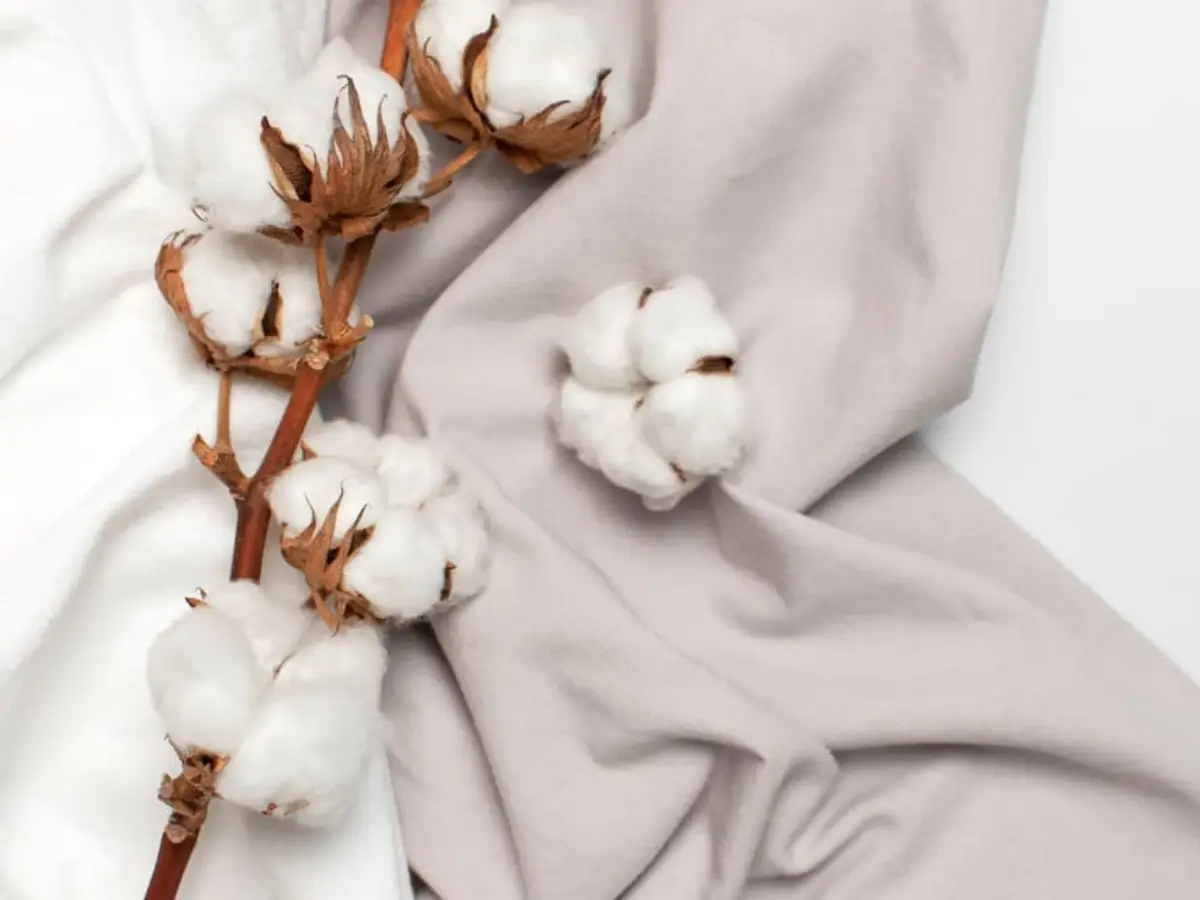
Cotton is familiar enough to sound simple. It appears on care labels, fills summer wardrobes, and often becomes the first fabric considered for a breathable dress, relaxed blouse, or casual collection. Yet two materials labeled 100% cotton can behave so differently that one produces a crisp, polished garment while another shrinks, twists, or loses its shape after laundering. The difference comes from the entire textile system: fiber quality, yarn construction, weave or knit structure, weight, dyeing, finishing, and the way the garment itself is engineered.
Cotton fabric is a woven or knitted textile made primarily from natural fibers that grow around cotton seeds. It is known for softness, moisture absorption, breathability, dyeability, and broad clothing use. Its finished performance depends on the cotton variety, yarn, fabric construction, weight, finishing process, and any blended fibers, so the word cotton alone never describes the full material.
For a clothing brand, that distinction can decide whether a sample feels commercially ready or merely looks attractive on a sourcing table. A light swatch may become unexpectedly transparent when cut into a white dress; a soft jersey may stretch comfortably but fail to recover at the waist; a crisp poplin may photograph beautifully yet feel too rigid for a fluid silhouette. The useful question is not simply whether cotton is good, but which cotton construction fits the style, market, care expectation, and production method.
What Is Cotton Fabric?
Cotton fabric is a woven or knitted textile made from yarn spun from cotton plant fibers. Cotton describes the fiber content rather than one fixed material, so poplin, voile, sateen, jersey, twill, denim, and canvas can all be cotton. Their weight, structure, finish, stretch, opacity, and drape determine how each fabric performs in clothing.
What Is Cotton Made From?
Cotton begins as a layer of soft staple fibers that grows around the seeds of the cotton plant. After harvesting, ginning separates those fibers from the seeds and removes larger pieces of plant matter. The lint is then cleaned, blended, aligned, and spun into yarn. Mature cotton fiber consists mainly of cellulose, a natural polymer that helps explain cotton’s affinity for moisture, its ability to accept many dyes, and its familiar dry yet comfortable hand against the skin.
The finished quality does not come from fiber content alone. Fiber length, strength, maturity, fineness, cleanliness, and uniformity affect how smoothly the yarn can be spun. Longer and more uniform fibers generally support finer, cleaner yarns with fewer loose ends, while a high proportion of short fibers may increase hairiness, linting, or pilling. Those differences become especially visible in dark solid colors, smooth sateens, close-up product photography, and garments positioned at a refined price point.
In practical development, the best question is not whether a fabric contains cotton, but whether the selected cotton quality suits the intended product. A washed utility dress can work well with a firmer, more textured yarn, while a polished fitted dress needs a smoother surface and reliable dye uniformity. A supplier should therefore be able to connect fiber quality with yarn, fabric construction, finish, and the final visual standard instead of relying only on the composition line.
Is Cotton a Natural Fiber?
Cotton is a plant-based natural fiber rather than a petroleum-derived synthetic fiber. It differs from polyester and nylon, and it also differs from regenerated cellulosic fibers such as viscose, modal, and lyocell, which begin with cellulose but are dissolved and re-formed into filaments or staple fibers. Cotton’s natural origin supports its familiar absorbency, softness, and comfort, but natural does not mean untouched or free from industrial processing.
Commercial cotton commonly passes through scouring, bleaching, dyeing, printing, mercerizing, softening, enzyme treatment, calendaring, pre-shrinking, resin finishing, or garment washing. These operations can improve cleanliness, color, luster, dimensional stability, wrinkle resistance, or hand feel. They can also change the characteristics shoppers associate with cotton. A heavy coating may reduce air movement, while strong resin treatment can make a fabric feel firmer and may affect tear performance if poorly controlled.
A cotton garment can also contain many non-cotton components, including sewing thread, elastic, zippers, cups, boning, interlining, labels, sequins, coatings, and decorative trims. For that reason, fiber origin, finished-fabric performance, and complete garment composition should be evaluated separately. The natural-fiber label tells part of the story, while wash tests, physical tests, and sample fitting reveal how the finished product will actually behave.
| Material stage | Practical meaning | Main influence | What to verify |
| Cotton fiber | Natural staple fiber around the seed | Softness, strength, dye uptake, hairiness | Length, maturity, cleanliness and consistency |
| Cotton yarn | Fibers aligned and twisted into a strand | Surface, strength, texture and evenness | Count, twist, spinning method and imperfections |
| Cotton fabric | Yarn woven or knitted into cloth | Weight, drape, stretch and opacity | GSM, width, structure, finish and shrinkage |
| Cotton garment | Fabric converted into a finished product | Fit, comfort, durability and care | Measurements, seams, lining, trims and after-wash appearance |
| Cotton blend | Cotton combined with another fiber | Recovery, drying, wrinkle control or strength | Exact percentages and the purpose of the blend |
Note: Ranges and targets are common commercial references, not universal pass standards. Final limits should reflect the exact fabric, garment, care method, market, and brand specification.
What Does 100% Cotton Mean?
A 100% cotton declaration means that the stated textile fiber content is cotton rather than an intentional blend with polyester, viscose, nylon, elastane, or another textile fiber. It does not guarantee a specific softness, fabric weight, quality grade, production method, or durability level. It also does not mean that every zipper, thread, elastic, lining, or decorative component in the completed garment is made from cotton.
Two fabrics carrying the same 100% cotton label may be entirely different materials. One could be a semi-sheer 70 GSM voile intended for a lined summer dress, another a crisp 130 GSM poplin for a gathered mini dress, and another a 240 GSM twill for a structured skirt. The label does not reveal whether the cotton is carded or combed, ring-spun or open-end spun, pre-shrunk or untreated, piece-dyed or pigment-printed.
For product development, fiber content should be treated as the first line of a specification rather than the complete specification. A useful record also includes finished width, weight, construction, stretch, recovery, shrinkage, colorfastness, pilling performance, finish, and approved shade. Composition testing can confirm which fibers are present, but only performance testing and garment sampling can show whether the material is suitable for a fitted dress, soft blouse, or structured cotton set.
Cotton Fiber vs. Cotton Fabric
Cotton fiber is the raw staple material separated from the seed. Cotton yarn is the continuous strand created by aligning and twisting those fibers. Cotton fabric is produced when yarn is woven or knitted into a textile structure, and the cotton garment is the finished product created through pattern cutting, sewing, pressing, lining, trimming, and care finishing. Each stage introduces new variables that influence quality and performance.
A strong, uniform fiber can support a smooth yarn, but the fabric can still be unstable when the construction is too loose for the intended silhouette. A stable fabric can still produce a poor garment when shrinkage is ignored during pattern development. A well-fitted sample can still fail in bulk when the production fabric has a different finish, shade group, weight, or stretch level from the sampled lot. Reliable results depend on continuity across all stages.
This is the reason experienced teams assess cotton in the actual product rather than approving it only as a flat swatch. The material should be hung, gathered, pressed, stitched, washed, stretched, and viewed over the intended lining. A small cutting cannot show whether a halter neckline will grow, whether a gathered waist becomes bulky, or whether a pale shade turns transparent under daylight and photography.
How Is Cotton Fabric Made?
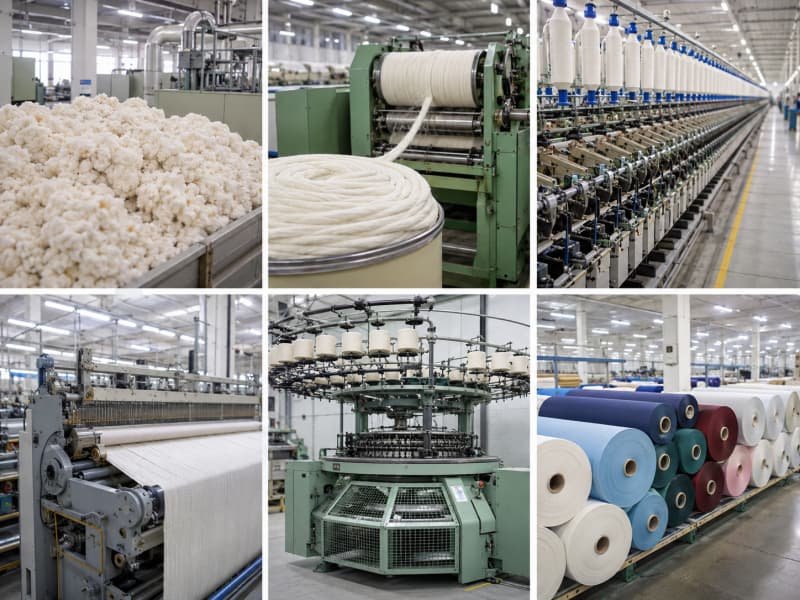
Cotton fabric is made by harvesting cotton, separating the fibers from the seeds, cleaning and aligning the fibers, spinning them into yarn, and weaving or knitting the yarn into fabric. The material is then dyed, printed, washed, pre-shrunk, softened, or otherwise finished to achieve the required color, hand feel, appearance, and clothing performance.
How Are Cotton Fibers Processed?
Cotton processing starts with harvesting and ginning. Ginning removes seeds and larger plant fragments from the usable lint, after which the fibers are compressed into bales, classified, transported, and blended at the spinning mill. Blending matters because bales naturally vary in length, maturity, color, and strength. Combining them in controlled proportions creates a more consistent average and reduces variation during spinning, dyeing, and later fabric production.
Opening equipment loosens the compressed fibers, while cleaning systems remove dust, leaf particles, and other contaminants. Carding then separates fiber clusters, removes additional impurities, and aligns the material into a continuous sliver. When a cleaner, finer yarn is required, combing removes a portion of shorter fibers and improves alignment. This extra operation increases cost and material loss, but it can produce a smoother surface with less hairiness and better suitability for fine lawn, polished poplin, sateen, or premium jersey.
The right preparation depends on the product rather than a blanket preference for the most expensive route. A textured washed dress may not need the same yarn cleanliness as a deep-black fitted style photographed at close range. Before bulk approval, teams should inspect the finished fabric under normal light, angled light, and controlled color lighting because neps, contamination, streaking, and uneven dye uptake may become far more visible after coloration than they appeared in greige fabric.
How Is Cotton Spun Into Yarn?
Spinning converts loose fibers into a continuous yarn with enough strength and regularity for weaving or knitting. After carding or combing, several slivers are drawn together to improve evenness. The strand is gradually reduced in thickness, and twist binds the individual fibers. Yarn quality is influenced by the fiber mix, count, twist, spinning method, evenness, hairiness, and frequency of thick places, thin places, or neps.
Ring-spun yarn is widely used for smoother and more refined cotton fabrics because it can provide a balanced combination of strength and softness. Compact spinning controls the fiber bundle more tightly and can reduce protruding fibers, creating a cleaner surface. Open-end or rotor spinning is faster and efficient for many casual or heavier materials, but the yarn structure and hand differ from fine ring-spun constructions. Neither route is universally superior; the choice should match the fabric character and retail position.
Yarn count describes fineness, while twist affects firmness, strength, softness, and torque. A fine yarn can support a light, smooth material, but it requires appropriate fiber quality and controlled construction. Too little twist may create weakness and fuzz; excessive or unbalanced twist may make the fabric feel hard or contribute to spirality in knits. For large or repeated programs, yarn consistency matters because small changes can alter shade, surface appearance, drape, and wash performance.
Is Cotton Woven or Knitted?
Cotton can be woven or knitted. Woven cotton is made by interlacing lengthwise warp yarns with crosswise weft yarns, while knitted cotton is formed from interconnected loops. The structure often affects fit and performance more strongly than the cotton percentage itself. Wovens usually provide cleaner dimensional control, while knits generally offer more natural give and a softer, body-following character.
Poplin, voile, lawn, sateen, twill, denim, and canvas are common woven cotton fabrics. Their stability makes them useful for shirt dresses, gathered silhouettes, shaped skirts, and structured styles, although lightweight or open constructions may still fray or suffer seam slippage. Single jersey, rib, and interlock are common knitted options. Single jersey is flexible but may curl at cut edges, rib stretches readily across the width, and interlock is usually fuller and more stable.
Stretch and recovery should never be treated as the same property. A cotton knit may extend easily but fail to return to its original size, causing bagging at the waist, seat, knees, or elbows. A fitted dress may need elastane or a more stable knit structure, while a relaxed T-shirt dress may require comfort stretch without compression. Sewing methods must also match the structure, including differential feed, overlocking, coverstitching, stabilization, and suitable needles.
How Do Finishes Change Cotton?
Finishing can change cotton more than many people expect. The same base cloth may become smoother, softer, brighter, more stable, more wrinkle-resistant, more water-repellent, or more textured after mercerization, enzyme treatment, brushing, calendaring, pre-shrinking, resin finishing, or garment washing. These effects influence not only touch and appearance but also sewing behavior, pressing response, dimensional stability, and the way the garment ages.
Mercerization can improve luster, dye affinity, and dimensional behavior. Compressive pre-shrinking helps reduce residual shrinkage, although it does not remove the need for testing. Enzyme treatment can clean surface fuzz and soften the hand, but over-processing may reduce fabric weight or strength. Calendaring creates smoothness or sheen by compressing the surface, while resin finishes can reduce wrinkling but may make the material feel less natural when used too heavily.
Finishes should be assessed before and after the intended care process. A swatch may feel unusually soft because of a temporary softener that weakens after laundering. A calendared sheen may become duller, or a garment wash may reveal seam puckering and shade differences between panels. Approving only the first hand feel creates risk. A better process records the finish, tests wash durability, and confirms that bulk production can reproduce the approved appearance across rolls and reorder lots.
What Are Cotton Fabric’s Main Properties?
Cotton is generally soft, breathable, moisture-absorbent, dyeable, and comfortable against the skin. It can also wrinkle, shrink, dry slowly, or lose shape when construction and finishing are not controlled. Its actual performance depends on yarn quality, fabric weight, weave or knit structure, finishing, garment design, and the care method used by the customer.

Is Cotton Breathable and Absorbent?
Cotton is widely associated with comfort because its cellulose structure can absorb moisture and because many cotton constructions allow heat and water vapor to move through the material. That combination is valuable in summer dresses, tops, linings, sleepwear, and garments worn close to the skin. The experience, however, depends on the finished fabric rather than the fiber name alone. An open voile usually feels airier than a dense twill, even though both are cotton.
Absorbency offers a practical advantage because perspiration can move into the fiber instead of remaining entirely on the skin. The trade-off is drying speed. Cotton may hold absorbed water longer than a lightweight synthetic performance fabric, especially when the cloth is heavy, tightly constructed, lined, coated, or gathered into multiple layers. In hot and humid conditions, a dense cotton garment can therefore feel damp even though its initial touch is comfortable.
Product teams should evaluate finished garment weight, fabric openness, number of layers, lining composition, print coverage, and intended climate. A 100 GSM fabric may sound light, but a tiered maxi dress can use several meters and become heavier in wear. A white cotton dress may require an additional lining that changes breathability. Claims such as airy, cooling, or breathable should reflect the actual construction and not be based only on the cotton content.
How Does Cotton Feel and Drape?
Cotton does not have one universal hand. It can feel crisp, cool, dry, smooth, brushed, dense, papery, soft, or almost silky depending on fiber quality, yarn fineness, twist, construction, washing, and finishing. The same is true of drape, which describes how a material falls and moves under its own weight. Lightweight voile creates airy movement, while poplin builds cleaner volume and sharper gathers.
Lawn often feels fine and smooth while retaining more control than voile. Sateen has a smoother face and more reflected light, which can make a dress appear polished. Twill offers body through its diagonal construction and often suits utility-inspired or structured clothing. Jersey follows the body more easily but may cling, curl, stretch, or grow depending on the knit structure and recovery. A fabric that feels attractive in the hand is not automatically right for the silhouette.
The most useful evaluation happens on a larger length of fabric and on the body. Teams should observe vertical fall, fold size, recovery after crushing, surface reflection under studio lighting, opacity, friction against lining, and movement at hems, ruffles, sleeves, and cut-outs. A finish may also change after washing. A crisp fabric can relax, while a soft fabric can become fuller or more textured, so the after-care hand is often more relevant than the first swatch.
| Property | What controls it | What the wearer notices | Typical development risk |
| Breathability | Openness, thickness, coating and layers | Heat and comfort during wear | A dense garment is marketed as airy |
| Absorbency | Fiber content and finish | Sweat handling and drying time | The garment feels damp or heavy |
| Drape | Weight, yarn, construction and finish | Movement and silhouette | The style collapses or looks too stiff |
| Shrinkage | Residual stress, finish and laundering | Size and length change | Fit, hem or lining mismatch |
| Recovery | Knit structure, elastane and finishing | Shape retention through wear | Bagging at waist, hip or knees |
| Pilling | Fiber length, hairiness and abrasion | Small surface balls | Prematurely worn appearance |
| Colorfastness | Dye choice, fixation and care | Fading or transfer | Complaints, staining and shade loss |
Note: Ranges and targets are common commercial references, not universal pass standards. Final limits should reflect the exact fabric, garment, care method, market, and brand specification.
Does Cotton Shrink or Wrinkle?
Cotton can shrink because tension is introduced during spinning, weaving, knitting, dyeing, and finishing. Water, heat, agitation, and drying allow yarns and fabric structures to relax. Dimensional change may occur in length, width, or both, and knits can also show spirality or skew. The percentage is not fixed by fiber content, which means every new construction and finish should be tested using the intended care method.
Many commercial programs use dimensional-change limits around plus or minus 3% for stable woven garments and may allow up to approximately 5% for some casual knits, but these are examples rather than universal rules. A fitted, lined, striped, or very short garment may need tighter control. Four percent length shrinkage can shorten a 100 cm dress by roughly 4 cm, enough to alter the hem, waist position, lining balance, zipper placement, and overall fit.
Cotton also wrinkles because moisture allows molecular bonds within the cellulose structure to shift and reset as the fabric dries. Finishes can reduce creasing, although they may alter softness or strength. Design can also manage the visual effect. Prints, textured surfaces, gathers, smocking, loose silhouettes, and heavier fabrics often disguise wrinkles better than smooth pale sateen. The safest approach is to test shrinkage before final pattern approval and evaluate the garment after realistic wear and care.
Is Cotton Durable and Easy to Care For?
Cotton can be durable when fiber quality, yarn, fabric density, seams, finishing, and care instructions are appropriate. A lightweight voile and a heavy twill cannot be judged by the same durability expectations. Fine open cloth may be comfortable but vulnerable to seam slippage or tearing in a tightly fitted style, while a dense construction can resist wear yet create excessive bulk or heat. Durability is therefore a balance between strength and product suitability.
The weakest areas of the garment often determine service life. Narrow straps, armholes, side seams over the hip, zipper ends, high splits, pocket openings, gathered waist seams, and points where cups or boning meet the shell experience concentrated stress. These areas may require stronger seam types, stay tape, reinforcement, revised ease, or a different fabric. A general tensile result cannot replace product-specific assessment at the locations most likely to fail.
Care instructions should reflect the complete garment rather than the shell fabric alone. A washable cotton outer may contain lining, elastic, coating, trim, cups, or decoration that cannot tolerate high heat or aggressive agitation. Customer expectations also differ: natural creasing may be acceptable in a relaxed sundress but disappointing in a polished office style. Reliable easy-care performance comes from material selection, shrinkage control, construction engineering, and a care label that the complete product can safely follow.
Which Cotton Fabrics Work Best for Clothing?
The best cotton fabric depends on the garment silhouette, season, opacity, stretch, recovery, drape, care method, and target price. Voile and lawn suit airy dresses, poplin supports crisp shapes, sateen creates a polished surface, twill provides structure, and cotton jersey offers flexibility. Each construction should be selected for a specific product rather than treated as universally suitable.

Which Lightweight Cottons Suit Dresses?
Cotton voile, lawn, batiste, gauze, and lightweight poplin are common choices for summer dresses, resort styles, gathered silhouettes, tiered skirts, puff sleeves, and relaxed tops. Voile is airy and frequently semi-sheer, so it often needs lining, double layering, or carefully planned placement. Lawn is usually smoother and more controlled, making it useful for refined warm-weather dresses and detailed prints, although pale shades may still require coverage.
Gauze has a relaxed textured character, and double gauze offers more body and opacity than a single layer. Its softness is attractive for casual clothing, but the fabric can distort during cutting or grow around seams. Lightweight poplin is crisper and supports collars, cuffs, waist shaping, gathers, and puff sleeves. When it is too dense or heavily finished, however, it may look rigid in a design intended to flow around the body.
Weight ranges provide a useful starting point but should not be treated as a final decision. A tightly woven 100 GSM fabric can feel more stable than a loose 130 GSM material. Before selection, teams should check transparency in daylight and flash photography, seam slippage, fraying, hem behavior, lining compatibility, shrinkage, print quality, and the final garment weight. A light swatch can become surprisingly heavy when several gathered tiers are assembled.
Which Cottons Suit Structured Styles?
Structured clothing usually needs cotton with enough body to support seams, hold a clean line, and resist collapsing under internal components. Poplin, sateen, twill, drill, canvas, and cotton-rich stretch wovens are common options. Poplin is useful when a design needs crisp volume without excessive weight. It can produce defined gathers, puff sleeves, collars, shaped waists, and shirt-inspired mini or midi dresses.
Medium-weight cotton sateen provides a smoother face and a more polished appearance. It can suit fitted dresses, shaped skirts, corset-inspired products, and refined sets, particularly when a small elastane content improves movement and recovery. Twill is fuller and often more durable, making it useful for structured skirts, utility dresses, and fashion sets. Canvas and drill offer stronger architecture but can create bulky seams, heavy hems, and uncomfortable fitted waist areas.
Fabric body does not replace pattern engineering or internal construction. A fitted dress may still require lining, fusible support, stay tape, cups, boning, or stabilized openings. Pressing behavior also matters. Smooth dark sateen can show shine or seam impressions, and dense cloth can retain hard creases. Development should therefore include pressing trials, seam tests, and a full sample that demonstrates whether the fabric, structure, and internal components work as one system.
| Cotton fabric | Indicative GSM | Typical character | Common clothing use |
| Voile | 50-90 | Light, airy, often semi-sheer | Lined dresses, sleeves and overlays |
| Lawn | 70-110 | Fine, smooth, controlled drape | Summer dresses, blouses and detailed prints |
| Batiste | 60-100 | Soft, fine and lightweight | Delicate dresses and lightweight linings |
| Light poplin | 90-140 | Crisp, stable and clean | Shirt dresses, gathered minis and puff sleeves |
| Double gauze | 110-180 | Soft, textured and relaxed | Casual dresses and tops |
| Cotton sateen | 130-220 | Smooth, polished and fuller | Fitted dresses, skirts and refined sets |
| Cotton twill | 180-300 | Structured and durable | Utility dresses and structured skirts |
| Cotton jersey | 130-220 | Flexible and body-following | Casual dresses and fitted knit styles |
Note: Ranges and targets are common commercial references, not universal pass standards. Final limits should reflect the exact fabric, garment, care method, market, and brand specification.
How Do Weight and Weave Affect Fit?
Fabric weight influences how a garment hangs, gathers, stretches under its own mass, and moves during wear. Weave or knit structure controls stability, opacity, surface character, stretch direction, and seam behavior. A lighter cloth may create soft movement but lack support, while a heavier one may improve coverage yet create bulk at hems, waist seams, gathers, facings, and layered details.
GSM alone is not enough. Construction density and yarn choice can make a tightly woven 120 GSM poplin feel more stable than a loosely woven 150 GSM gauze. Bias direction also changes behavior. Woven fabric cut on the bias gains drape and stretch, and soft constructions may continue to grow after hanging. Bias-cut samples should be allowed to relax before final hemming, particularly when the skirt length and floor clearance are commercially important.
Knits require a different fit logic. Stretch percentage should be measured rather than estimated by hand, and recovery should be observed after controlled extension. A fabric that extends 30% but remains elongated will lose shape during wear. Fit testing should include sitting, walking, arm lifting, repeated dressing, and movement over the bust, waist, hip, and hem. A sample can look correct on a stationary form while riding up, gaping, twisting, or pulling during normal use.
How Do Cotton Blends Change Performance?
Cotton is blended with other fibers to change stretch, recovery, drying time, wrinkle behavior, strength, drape, surface character, or price. The blend should solve a defined product need rather than exist as a vague quality claim. Cotton-elastane fabrics are common in fitted dresses and tops because even a small elastane percentage can improve movement and shape recovery, although construction and finishing remain as important as the stated percentage.
Cotton-polyester blends generally dry faster and crease less than pure cotton, while polyester can also improve dimensional stability and strength. The hand may feel less absorbent or less naturally dry, depending on the blend and finish. Cotton-viscose can provide softer drape and smoother movement, but wet stability and shrinkage deserve attention. Cotton-linen blends offer texture and a summery dry hand, while cotton-nylon can add strength and abrasion resistance to compact or utility-inspired fabrics.
A higher cotton percentage does not automatically make the better garment. A carefully chosen blend may provide fewer returns, stronger recovery, and easier care when the silhouette demands those properties. Development teams should consider stretch, recovery, pilling, dyeing route, drying time, labeling, care, price, and the brand’s material claims together. A blend only succeeds when it delivers a visible product benefit without undermining comfort, hand feel, or the intended visual identity.
How Do Brands Choose and Test Cotton Fabric?
Brands choose cotton by matching composition, construction, weight, stretch, finish, color, and care performance to the intended garment. A sound approval process combines fabric specifications, roll inspection, laboratory testing, wash trials, sewing tests, and a correctly fitted sample made from production-representative material. Certification supports traceability or chemical claims, but it does not replace physical performance testing.

Which Cotton Specifications Matter?
A usable fabric specification must be objective enough for the mill, garment factory, quality team, and brand to evaluate the same material. Phrases such as soft cotton, premium poplin, or high-quality jersey are too subjective for repeat production. A practical record includes composition, finished width, usable width, GSM, weave or knit construction, color, finish, stretch, recovery, shrinkage, and required colorfastness or surface-performance levels.
Finished width affects consumption and marker efficiency, while usable width may be narrower after damaged edges, bowing, or selvage variation are excluded. GSM should be checked at several positions because weight can vary across a roll or from one roll to another. Shade control is equally important. Panels cut from different shade groups can create visible mismatch, particularly in smooth solid colors, so rolls should be grouped and garments should not mix uncontrolled shade lots.
Fabric inspection systems can summarize defects numerically, but a total score never replaces placement judgment. A flaw that is acceptable near a hidden seam may be unacceptable in the center front of a fitted dress. The specification should distinguish mandatory requirements from preferences and include an approved physical standard. Reorders should be checked against that standard because a mill can reproduce the same composition and nominal weight while changing yarn source, finish, or process conditions.
How Do You Test Shrinkage and Colorfastness?
Shrinkage testing measures dimensional change after a defined wash and drying process, and the method should match the intended care label. A cold gentle wash result cannot support a label that permits warm machine washing and tumble drying. Marked specimens are measured in length and width, conditioned, washed, dried, and measured again. Knits should also be checked for spirality, skew, and shape distortion rather than judged only by total percentage.
Garment-level wash testing adds information that a fabric specimen cannot provide. It reveals lining interaction, seam puckering, zipper behavior, trim damage, pressing changes, and measurement movement across the complete product. Colorfastness testing examines shade change and staining after washing, dry and wet rubbing, perspiration, water, light, or other exposures selected for the product. Ratings commonly use a 1-to-5 scale, with 5 representing the strongest performance.
Many apparel programs target approximately grade 4 for dry rubbing and grade 3 to 4 for wet rubbing, although dark colors, pigment prints, garment dyes, and special finishes may need product-specific limits. These examples should not be applied blindly. A brand’s final standard must reflect garment type, color depth, care method, price point, market, and customer use. Test reports are most useful when linked to the exact fabric lot used for sampling and bulk production.
How Do You Check Pilling and Stability?
Pilling develops when loose fibers work toward the surface, entangle, and form small balls through wear and abrasion. Cotton can pill when yarn contains many short fibers, the surface is hairy, the construction is loose, or the finish raises the fiber ends. Controlled tests usually grade appearance from 1 to 5, with 5 showing the cleanest surface. The method and cycle count should be stated because grades from different procedures are not directly interchangeable.
Dimensional stability includes more than basic shrinkage. Woven fabrics may show bow, skew, seam slippage, or growth on the bias. Knitted fabrics can twist, spiral, curl, or fail to recover after extension. Bonded components may delaminate, while pressing can create distortion or permanent marks. Lightweight woven cotton intended for fitted clothing deserves particular seam-slippage attention because yarns can separate beside the seam even when the sewing thread remains intact.
Testing should occur at fabric and garment level and should be repeated for bulk and meaningful reorders. A fabric can pass a shrinkage percentage yet create twisted side seams because its structure is unbalanced. Another can pass tensile testing but open at a tight hip seam. Approval is strongest when laboratory results, sewing trials, a washed sample, and real fit movement all tell the same story. One pass result should never be treated as permanent proof for future lots.
| Test area | Common evaluation | Illustrative commercial target | Product risk controlled |
| Dimensional change | Length and width after stated care | Often within +/-3% for stable wovens | Fit, length and lining balance |
| Knit stability | Shrinkage, growth and spirality | Often within +/-5%, tighter for fitted styles | Twisting and shape loss |
| Wash colorfastness | Shade change and staining, grade 1-5 | Commonly grade 3-4 or higher | Fading and cross-staining |
| Dry rubbing | Crocking, grade 1-5 | Commonly grade 4 or higher | Transfer to skin, bags and furniture |
| Wet rubbing | Crocking, grade 1-5 | Commonly grade 3 or higher | Transfer from deep shades |
| Pilling | Appearance after a defined test cycle | Often grade 3-4 or higher | Surface deterioration |
| Seam slippage | Opening under controlled force | Fabric- and product-specific | Gaps in fitted woven garments |
| Strength | Tensile or tear performance | Product-specific minimum | Ripping during wear and production |
Note: Ranges and targets are common commercial references, not universal pass standards. Final limits should reflect the exact fabric, garment, care method, market, and brand specification.
Which Cotton Certifications Matter?
Certifications support specific claims, but they do not all cover the same issue. Organic textile standards may address certified fiber, processing, chain of custody, chemical inputs, and labeling. Harmful-substance testing focuses on selected chemical limits in the material. Recycled-content standards address the origin and traceability of recycled inputs. Social audits and quality management systems evaluate factory practices or process control rather than proving the physical performance of a cotton fabric.
A credible certification review checks the certificate holder, facility address, covered processes, product categories, validity dates, and supporting transaction documentation where the scheme requires it. Recycled cotton deserves additional performance attention because mechanical recycling usually shortens fibers. It is commonly blended with virgin cotton or another fiber to improve spinning strength, surface cleanliness, and fabric stability. Organic cotton also needs the same shrinkage, pilling, shade, and sewing evaluation as conventional cotton.
Certification is most useful when its claim is precise and connected to the actual order. A certified material can still shrink excessively, pill, fade, or vary in shade. Physical testing confirms whether it works in the garment, while certification supports traceability, chemical, environmental, or social claims. Brands should keep these evidence streams connected but separate. The strongest approval package combines valid documentation, a clear fabric specification, lot-linked test reports, a production-representative sample, and consistent bulk inspection.
A good cotton decision connects the material, silhouette, fitting standard, care method, and production process from the beginning. Testing should answer practical questions before bulk cutting: whether a pale dress needs lining, whether a fitted knit recovers after wear, whether a washed poplin remains within measurement tolerance, and whether the selected finish can be reproduced across rolls and reorders. That evidence is far more useful than relying on fiber content or hand feel alone.
Duolan Apparel supports custom womenswear programs that require fabric sourcing, material evaluation, pattern and fit development, sampling, production planning, and bulk quality control to work as one connected process. The team focuses on fashion dresses, occasion styles, fitted silhouettes, refined tops, and coordinated fashion products, with development experience rooted in the Guangdong apparel supply chain. Brands can submit a tech pack, original sample, reference image, target fabric, or collection brief for a practical development and quotation review.