Skip to content
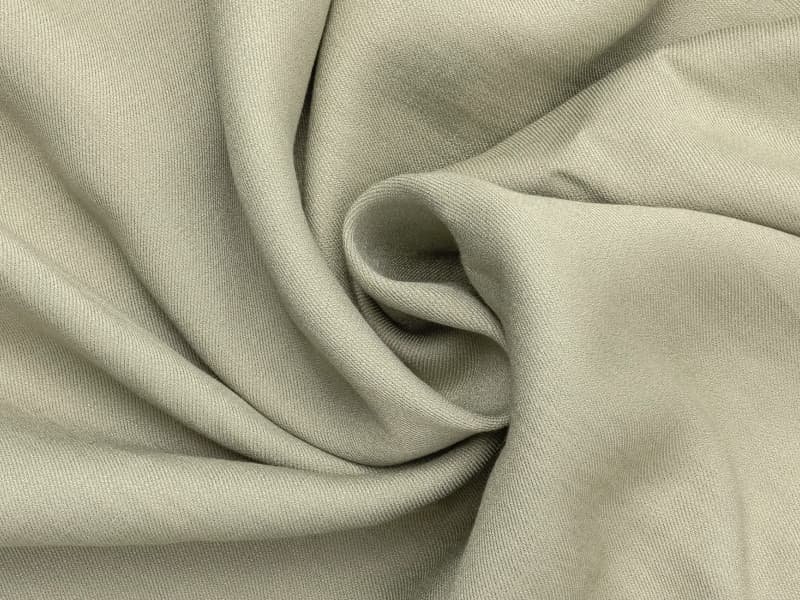
A dress can look effortless on a product page while hiding a surprisingly technical material decision. The flowing skirt, softly gathered waist, clean print, and smooth movement may depend less on the sketch than on whether the selected viscose has the right weight, yarn structure, finish, shrinkage control, and recovery. Choose well, and the garment feels light, fluid, and commercially polished. Choose poorly, and the same design may twist, wrinkle heavily, show seam distortion, or lose its intended length after washing.
Viscose is a regenerated cellulosic fiber made by dissolving plant-derived cellulose, usually wood pulp, and forming it into new textile fibers. It is valued for softness, absorbency, color clarity, and graceful drape. However, its real performance depends on fiber quality, yarn, fabric construction, finishing, blending, garment engineering, testing, and the care method printed on the final label.
For a shopper, viscose may simply mean a cool, soft fabric. For a fashion team, it creates a chain of decisions covering sourcing, lab dips, shrinkage, pattern allowance, lining, stitching, pressing, wash testing, and bulk consistency. A swatch can feel perfect in the meeting room and still behave badly on the cutting table. The useful question is not merely whether viscose is good, but whether a specific viscose is right for the exact dress being developed.
What Is Viscose Fabric?
Viscose is a regenerated cellulosic textile made by dissolving purified plant cellulose and reforming it into fibers. It belongs to the rayon family and combines a plant-derived raw material with industrial processing. Its softness, moisture absorption, dyeability, and fluid drape make it common in dresses, blouses, skirts, linings, and lightweight knitwear.
What Is Viscose Made From?
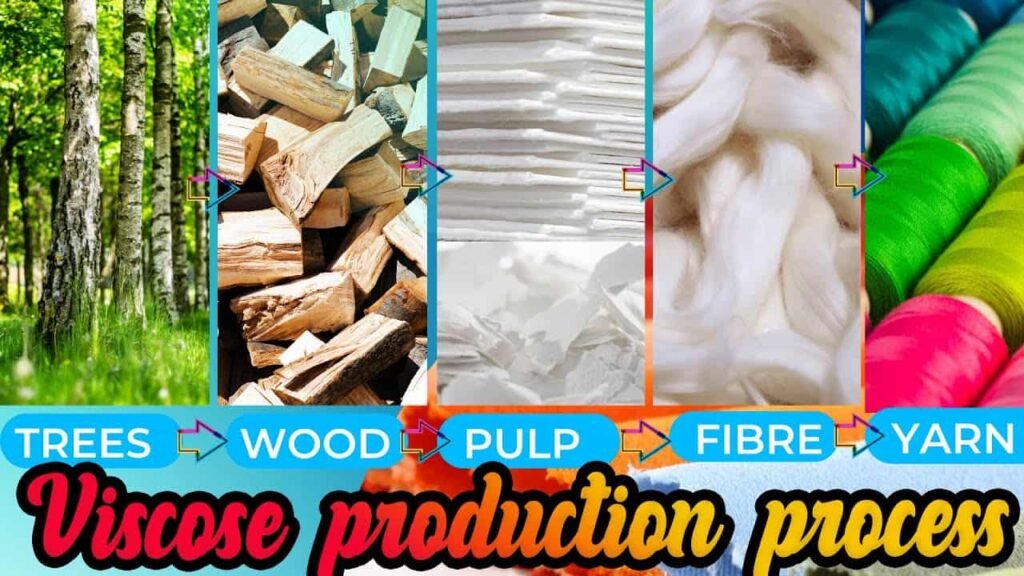
Most viscose begins with dissolving-grade wood pulp produced from cellulose-rich trees such as eucalyptus, beech, pine, or spruce. Bamboo can also supply cellulose, although the finished material is still viscose rather than a mechanically extracted bamboo fiber. The original plant is purified into pulp, dissolved, and rebuilt as a textile fiber, so the source is natural even though the final fiber is manufactured.
The tree species alone does not determine quality. Two fabrics labeled 100% viscose may differ greatly in weight, yarn evenness, surface, strength, opacity, shrinkage, and sewing behavior. Fiber uniformity, staple length, yarn count, yarn twist, weave or knit density, dyeing, finishing, and preshrinking all matter. A 105 GSM challis can feel airy and almost weightless, while a 190 GSM viscose twill has more body and better coverage, even though both carry the same composition label.
Is Viscose Natural or Synthetic?
Viscose does not fit neatly into the simple natural-versus-synthetic choice used in everyday shopping. It differs from cotton and linen because the original plant fiber structure is dissolved before a new fiber is created. It also differs from polyester and nylon because its main polymer is cellulose rather than a conventional petroleum-derived polymer. The most accurate industry terms are regenerated cellulose, rayon, or man-made cellulosic fiber.
This classification matters because plant origin is sometimes treated as proof of environmental superiority. In practice, a renewable feedstock is only one part of the picture. Forest management, pulp traceability, chemical recovery, worker protection, wastewater treatment, energy use, dyeing, finishing, garment durability, and eventual disposal all influence the result. A responsible description explains both the cellulose origin and the manufacturing process instead of using vague phrases such as fully natural rayon or pure bamboo fabric.
Are Viscose and Rayon the Same?
Rayon is the broader recognized family of regenerated cellulose fibers, while viscose is the most widely used rayon type and process. The terms are often used interchangeably in apparel, especially across markets with different labeling habits. A garment described as rayon in the United States may be described as viscose in another region, even when its material structure and performance are essentially the same.
The difference becomes useful when viscose is compared with modal and lyocell. All three begin with cellulose, but their production systems and performance profiles are not identical. Standard viscose is versatile and widely available. Modal is commonly engineered for greater softness and dimensional stability. Lyocell generally offers stronger wet performance and a different solvent system. Product teams should therefore request the exact fiber type, blend ratio, construction, finish, test data, and care recommendation rather than approving a fabric from the word rayon alone.
What Defines Viscose Quality?
High-quality viscose is not simply the fabric that feels softest on the first touch. Heavy softening can create an impressive showroom hand while hiding weak stability, pilling, or excessive growth after washing. A commercially reliable fabric needs a workable balance of softness, drape, opacity, strength, colorfastness, seam performance, dimensional stability, and repeatability across rolls and later production lots.
For dresses, quality should be judged as a finished-garment result. The fabric must support the intended silhouette, spread and cut without uncontrolled distortion, accept seams without slippage or puckering, and maintain acceptable measurements after care. Dark shades, pale colors, solids, and prints may behave differently because dyeing and printing add separate processing stages. Reliable bulk approval therefore uses a sealed reference, measurable tolerances, and test results rather than a supplier’s general description such as premium rayon or silky viscose.
- Even surface and yarn appearance across the approved lot
- Controlled bow, skew, spirality, shrinkage, and hanging growth
- Stable shade, weight, width, drape, and hand across rolls
- Acceptable seam performance, opacity, pilling, and care results
- Repeatable fabric specification for later colors and repeat orders
| Term | Meaning | What It Means in Apparel |
| Cellulose | Plant-based structural polymer | The original raw material used to manufacture viscose |
| Dissolving pulp | Highly purified cellulose pulp | Its purity and consistency affect fiber production |
| Rayon | Broad regenerated-cellulose fiber family | The umbrella category used in many markets |
| Viscose | Most common rayon type and process | Widely used in woven dresses, tops, linings, and knitwear |
| Modal | Modified regenerated cellulose fiber | Often selected for softness and improved wash stability |
| Lyocell | Cellulosic fiber made through a different solvent route | Often selected for wet strength, smoothness, and controlled drape |
| Bamboo viscose | Viscose made from bamboo-derived cellulose | Should not be confused with an untreated natural bamboo fiber |
How Is Viscose Fabric Made?
Viscose is made by purifying cellulose, converting it into a soluble spinning material, filtering and maturing the solution, and extruding it through spinnerets into a coagulation bath. The regenerated filaments are washed, finished, dried, and converted into yarn. The yarn is then woven or knitted, dyed or printed, and stabilized for apparel use.
From Cellulose to Fiber
The process starts with cellulose pulp purified to a level suitable for fiber manufacturing. The pulp is treated with sodium hydroxide to form alkali cellulose, pressed to remove excess liquid, and aged under controlled conditions. It is then reacted with carbon disulfide to form cellulose xanthate, which can be dissolved in diluted sodium hydroxide. The thick resulting solution is the viscose from which the fiber takes its name.
Before spinning, the solution must be filtered, deaerated, and matured. Filtration removes particles or gels that could block spinneret holes or create weak sections in the filament. Deaeration removes bubbles that might interrupt the fiber. The prepared solution is forced through tiny spinneret openings into an acidic bath, where the cellulose reforms as solid filaments. Those filaments are stretched, washed, treated, and dried before being used as continuous filament or cut into staple fiber for spinning.
Yarn and Fabric Construction
Fiber production creates the raw potential of viscose, but yarn design strongly influences the final fabric. Staple viscose can be spun into soft, cotton-like yarns, while filament viscose can create a smoother and more lustrous surface. Yarn count controls fineness, and twist changes strength, drape, hairiness, and texture. Lower twist may feel fuller and softer, while higher twist often produces a drier hand and the pebbled appearance associated with crepe fabrics.
The yarn is then woven or knitted. Plain-weave challis is light and fluid, twill is denser and usually more stable, satin has a smooth face and higher snag risk, and crepe uses yarn or construction effects to create texture. Knitted viscose forms loops, giving it more stretch than a comparable woven fabric. Jersey, rib, and interlock can all share the same fiber content yet differ substantially in recovery, opacity, spirality, seam behavior, and suitability for fitted garments.
Finishing and Dyeing
Greige fabric rarely resembles the final material selected by a designer. It may pass through desizing or scouring, dyeing or printing, washing, softening, drying, calendaring, sanding, compacting, or other mechanical and chemical finishes. These stages can improve color, surface, drape, and softness, but they can also introduce tension, reduce strength, change shrinkage, or create a hand that does not remain after laundering.
Viscose accepts dye well and can produce clear, saturated colors, which is one reason it is widely used in fashion prints. However, shade continuity still requires control. Dark solids may show wet-rubbing concerns, pale colors may expose transparency, and prints can change hand or dimensions after steaming and washing. A fabric should therefore be checked after the intended finishing route, not only as an undyed base cloth. Lab dips, strike-offs, bulk shade bands, and washed references help teams assess repeatability.
How Production Affects Quality
Each stage creates a different garment risk. Poor solution filtration can contribute to irregular fiber. Uneven yarn can appear as streaks after dyeing. Loose weaving may increase seam slippage, while poorly controlled knitting may create spirality. Excessive tension during finishing can be released during washing and cause shrinkage or growth. A fabric that passes visual inspection on the roll may still fail after it is cut, sewn, pressed, packed, or laundered.
Bulk control therefore begins before cutting. Common checks include usable width, weight, roll shade, face and back, print direction, bow, skew, spirality, shrinkage, pilling, colorfastness, and seam performance. Viscose fabrics may also need relaxation after unrolling because stored tension can affect dimensions. For long or bias-influenced dresses, panels sometimes require controlled hanging before hemming. These steps are practical production controls, not unnecessary laboratory formalities, because they protect fit and hem balance at scale.
- Inspect rolls for shade, defects, usable width, weight, and direction before cutting
- Confirm shrinkage, skew, spirality, pilling, colorfastness, and seam behavior
- Relax fabric when required and control grain direction during spreading
- Allow bias or long panels to settle before final hemming when the construction requires it
| Stage | Main Control | Possible Garment Problem |
| Pulp preparation | Cellulose purity and consistency | Irregular fiber quality or unstable processing |
| Solution preparation | Viscosity, filtration, air removal, maturation | Weak spots, uneven filaments, dye streaks |
| Fiber regeneration | Bath chemistry, stretching, washing | Variable strength, fineness, or residual processing substances |
| Yarn spinning | Count, twist, hairiness, evenness | Pilling, weak seams, inconsistent drape |
| Weaving or knitting | Density, tension, bow, skew, spirality | Twisted garments, uneven hems, seam movement |
| Dyeing or printing | Shade, fastness, processing repeatability | Color variation, staining, changed shrinkage |
| Finishing | Softness, stability, surface treatment | Growth, shrinkage, stiffness, fuzzing, or loss of strength |
| Final inspection | Weight, width, shade, defects, test results | Bulk inconsistency and avoidable claims |
What Are the Properties of Viscose?
Viscose is generally soft, absorbent, breathable, easy to dye, and capable of graceful drape. Its limitations can include lower wet strength, wrinkling, shrinkage, hanging growth, and variable recovery. These properties are not identical in every fabric; weight, yarn, weave or knit, blend ratio, finishing, garment construction, and care determine the final result.

Handfeel and Comfort
Well-developed viscose often feels smooth, soft, and cool at first contact. It absorbs more atmospheric moisture than standard polyester and usually produces less of the dry, static-prone sensation associated with some synthetics. Its ability to fall close to the body makes it useful for soft gathers, wrap fronts, flutter sleeves, cowl details, wide legs, and flowing hems. The same fluidity can also reveal seam tension or body lines when the fabric is too light for the design.
Moisture regain is a useful reference rather than a complete comfort score. Conventional viscose is often reported around 11% to 14% moisture regain under standard conditions, compared with roughly 7% to 9% for cotton and below 1% for standard polyester. Actual comfort depends on weight, density, airflow, fit, finish, climate, and drying speed. A thin open fabric can feel cool, while a heavy tightly constructed viscose may hold moisture and feel damp in humid conditions.
Shrinkage and Wet Strength
Viscose can shrink because its fibers swell in water and because manufacturing tension is released during care. Length and width may change at different rates, so a fabric can become shorter without becoming equally narrower. Uneven change is more damaging than a modest balanced reduction because it alters garment proportions, zipper alignment, print placement, and hem shape. Shell, lining, fusible, zipper tape, and trims should be tested together because different shrinkage rates can create bubbling or pulling.
Conventional viscose is also substantially weaker when wet than when dry. Published values vary with fiber type, yarn, and test method, but wet strength may fall to roughly 40% to 60% of dry strength in standard viscose. This helps explain why aggressive agitation, wringing, or hanging a heavy wet garment can produce distortion. High-wet-modulus viscose, modal, lyocell, blending, denser construction, and suitable finishing can improve performance, but the actual fabric and finished garment still need testing.
Stretch and Wrinkling
Standard woven viscose has limited stretch on the straight grain, although a loose weave or bias cut can create significant movement. Bias movement helps a dress contour around the body but can also cause hanging growth, especially in long skirts. Knitted viscose stretches because its loops open under tension. A jersey without elastane may feel flexible but recover poorly, leading to bagging at the seat, neckline, elbows, or hem.
Viscose-elastane knits commonly contain about 3% to 8% elastane, although the required level depends on yarn arrangement, knit density, target stretch, and recovery. More elastane does not automatically solve growth if the fabric is loosely knitted or inadequately heat set. Wrinkling is also common because regenerated cellulose creases under compression. Crepe surfaces, twills, higher yarn twist, selected blends, and easy-care finishing can reduce the visual effect, but finishing must be checked for changes in hand, strength, sewing, and chemical compliance.
Testing and Care
Care instructions should come from tests on the complete garment rather than from fiber content alone. A simple viscose shirt dress may tolerate a gentle machine cycle, while an occasion dress with boning, cups, lining, adhesive components, or embellishment may need hand washing or professional cleaning. A low-temperature wash is not automatically safe if the fabric twists, the lining shrinks differently, or the trim loses color.
Useful development tests include dimensional change, appearance after repeated care, colorfastness to washing and rubbing, pilling, tensile or bursting strength, seam slippage, stretch and recovery, spirality, opacity, snagging, print durability, and fusible compatibility. Consumers should generally avoid twisting wet viscose and should follow the sewn-in label. Heavy wet garments may stretch when hung, while high tumble-drying temperatures can increase shrinkage. Moderate pressing from the reverse side helps reduce shine marks on dark or satin-faced fabrics.
- Dimensional change and garment appearance after the claimed care cycle
- Colorfastness to washing, perspiration, and dry or wet rubbing
- Pilling, seam slippage, stretch recovery, spirality, opacity, and snagging
- Compatibility between shell, lining, fusible, zipper tape, trims, print, and embellishment
| Property | Common Viscose Behavior | Useful Apparel Reference |
| Moisture regain | Relatively high | Often about 11%-14% under standard conditions |
| Light woven weight | Airy, fluid, sometimes transparent | Approximately 90-130 GSM |
| Medium dress weight | Balanced movement and coverage | Approximately 130-180 GSM |
| Heavier dress weight | More body and opacity | Approximately 180-240 GSM |
| Dimensional change | May shrink or grow | Many brands target about +/-3% to +/-5% |
| Knit spirality | Possible in single jersey | Internal targets are often below 5% |
| Pilling | Depends on yarn and surface | Grade 3-4 or better is a common commercial target |
| Colorfastness | Usually dyes clearly but varies by shade | Grade 3-4 or better is commonly requested by test type |
Which Clothes Are Best Suited to Viscose?
Viscose is especially suitable for dresses, blouses, skirts, soft trousers, fashion tops, and coordinated sets that need comfort and movement. Lightweight woven viscose works well for fluid silhouettes, while viscose knits suit softer fitted shapes. Structured, strapless, corseted, or embellished garments can use viscose, but they usually need stable lining, reinforcement, or a carefully selected blend.

Is Viscose Good for Dresses?
Viscose can be an excellent dress material because it combines softness, movement, strong color response, and a more natural hand than many standard polyester fabrics. It can create a fluid silhouette at a different price point from silk and is available in plain weaves, challis, crepe, twill, satin constructions, jacquards, and knits. The fiber name, however, does not guarantee that a specific fabric will provide enough opacity, support, recovery, or wash stability for the chosen style.
A useful selection process begins with the garment rather than the swatch. The team should define the intended movement, bust support, skirt volume, skin contact, lining, care method, target price, and expected repeat-order pattern. A vacation maxi may prioritize airflow and print clarity. A ruched midi may need controlled stretch and recovery. A wrap dress needs drape without neckline growth. A fitted mini needs sufficient weight, opacity, seam stability, and a construction that does not expose every internal seam or body line.
Which Dress Styles Suit Viscose?
Light and medium woven viscose are naturally suited to styles that benefit from movement rather than rigid shaping. Common applications include printed summer dresses, wrap dresses, shirt dresses, tiered maxis, gathered midis, tea dresses, flutter sleeves, relaxed slips, soft A-lines, resort dresses, and wide-leg coordinated sets. Crepe and twill constructions provide more body than challis, while satin-faced viscose can create a dressier surface but may require extra snag and seam testing.
Demanding silhouettes need more engineering. Strapless, corset, bustier, deep-V, backless, cutout, and sharply fitted dresses may need stable lining, underlining, fusible reinforcement, boning, cups, power mesh, stay tape, or a blended shell. Long bias-influenced panels can grow while hanging and should be allowed to settle before the final hem is marked. The best result comes from developing the visible fabric and hidden support as one system instead of forcing a soft cloth to perform like a rigid structure.
- Printed summer, wrap, shirt, tea, tiered maxi, and gathered midi dresses
- Relaxed slips, soft A-lines, resort dresses, blouses, wide-leg trousers, and coordinated sets
- Structured or fitted dresses only when lining, reinforcement, and recovery are engineered together
Woven, Knit, and Blended Viscose
Woven and knitted viscose can share the same composition while behaving like different materials. Woven challis is usually light, fluid, and suitable for prints. Twill offers more density and sewing control. Crepe provides texture and may hide wrinkles. Satin creates a smooth face but can snag or show needle marks. Knit jersey stretches through its loop structure and works well in softer fitted silhouettes, although single jersey can twist or grow when knitting and finishing are not well controlled.
Blending changes the balance of properties. Cotton can add a drier, more familiar hand and may improve body. Linen introduces texture and crispness but can increase wrinkling. Polyester can improve dimensional stability, strength, and faster drying, although it changes moisture behavior and end-of-life considerations. Nylon can strengthen fine knits, while elastane adds stretch and recovery. A blend should be chosen for a defined garment need rather than treated as automatically better than 100% viscose.
What Should Brands Test?
Dress testing should focus on the risks created by the exact silhouette. A loose printed maxi needs shrinkage, print fastness, seam strength, transparency, and hem-balance checks. A fitted jersey dress needs stretch, recovery, spirality, pilling, opacity, and measurement retention. A satin occasion dress needs snagging, seam slippage, pressing, water spotting, and lining compatibility. Testing only a general fabric strength value can miss the failures that customers actually see and return.
Sampling should use production-representative fabric whenever possible. The first prototype can identify drape and proportion, but a later sample should confirm the approved bulk construction, trims, lining, care method, and finishing. The team should record weight, width, shrinkage, shade, grain direction, stitch type, seam allowance, needle size, pressing temperature, and special handling. This makes repeat production more reliable because the garment standard is documented rather than held only in the memory of one sample maker.
- Maxi dresses: shrinkage, seam strength, transparency, print fastness, and hem balance
- Fitted knits: stretch, recovery, spirality, pilling, opacity, and measurement retention
- Satin occasion dresses: snagging, seam slippage, pressing, water spotting, and lining compatibility
- Repeat programs: approved construction, shade standards, test limits, and material traceability
Is Viscose Sustainable and How Does It Compare?
Viscose can have a lower fossil-fiber dependence than polyester because it is made from cellulose, but the fiber name alone does not prove sustainability. Forest sourcing, pulp traceability, chemical recovery, emissions, wastewater, energy, dyeing, durability, and garment care all matter. Compared with cotton, polyester, modal, and lyocell, its best use depends on performance needs and verified supply-chain evidence.

Is Viscose Eco-Friendly?
Viscose starts with renewable cellulose, but renewable does not automatically mean low impact. Conventional production uses chemicals that require careful recovery, ventilation, exposure control, and wastewater management. The pulp may come from responsibly managed forests, plantations with mixed impacts, or poorly traceable sources. Energy and water systems also vary widely between producers. As a result, two fabrics with the same composition label may have very different environmental and social profiles.
A more credible assessment looks for supplier-specific evidence. Useful questions include where the pulp originated, whether the producer can trace it to forest level, how chemicals are recovered, how sulfur emissions and wastewater are controlled, which energy sources are used, and whether independent audits or recognized certifications support the claims. Garment durability also matters. A fabric with weak wash performance may be replaced sooner, so material impact cannot be separated from construction quality, care, and the realistic life of the finished garment.
Which Sourcing Risks Matter?
Forest risk is one of the first issues. A supplier should be able to identify the pulp producer, country of origin, and relevant chain-of-custody information rather than simply stating that the fabric is plant based. Certifications such as FSC or PEFC can support responsible forest sourcing when the documentation is valid and covers the relevant chain. They do not, however, prove that chemical management, dyeing, worker safety, or garment durability are automatically strong.
Chemical and processing claims require separate evidence. Brands may review fiber-producer information, restricted-substance compliance, wastewater controls, test reports, and chemical-management programs. OEKO-TEX Standard 100 can help address tested harmful substances in a textile product, while other standards and programs cover different topics. The practical rule is to match each claim with evidence that actually supports it. A forest certificate should not be presented as proof of closed-loop chemistry, and a product-safety certificate should not be treated as proof of low carbon emissions.
- Pulp producer, country of origin, forest traceability, and chain-of-custody evidence
- Chemical recovery, air emissions, wastewater treatment, and worker-protection controls
- Restricted-substance compliance, test reports, and documentation matched to each claim
- Fabric durability, care performance, and repeatability rather than fiber marketing alone
How Does Viscose Compare?
Viscose generally offers softer drape and higher moisture regain than standard polyester, but polyester is usually stronger, more dimensionally stable, faster drying, and more wrinkle resistant. Cotton often provides familiar comfort and greater wet strength, while viscose usually creates a more fluid silhouette. Modal can offer improved softness and stability compared with conventional viscose. Lyocell is commonly selected for stronger wet performance and a controlled solvent process, although fabric construction and finishing still determine the garment result.
Cost and availability also shape decisions. Standard viscose is widely available in fashion weights, prints, crepes, and knits, making it practical for many commercial dress programs. Modal and lyocell may carry a higher material cost or narrower sourcing range in a specific construction. Polyester can be easier to stabilize for complex supply chains but may not deliver the same moisture absorption or natural hand. Cotton can feel breathable yet appear too crisp for a design that needs liquid drape. No fiber wins every comparison.
Which Fabric Is Better for Dresses?
The best fabric is the one that meets the silhouette, fit, comfort, care, appearance, cost, and sourcing requirements together. Viscose is often the strongest choice for flowing prints, gathered shapes, soft blouses, and dresses that need movement. Cotton may suit structured casual dresses. Polyester may suit wrinkle-resistant travel or highly stable pleated products. Modal and lyocell may justify their cost where softness, wet performance, traceability, or a particular brand position is important.
A disciplined comparison uses the same garment criteria for each option. Teams should compare weight, opacity, drape, stretch, recovery, shrinkage, seam performance, pilling, colorfastness, care, material cost, lead time, minimum dye quantity, repeat availability, and documentation. The decision should be confirmed through swatches, test results, and garment samples rather than general statements about which fiber is premium. A slightly more expensive fabric may reduce returns, while a cheaper material can become costly when it requires repeated sampling, extra lining, or corrective production work.
| Fiber | Typical Strengths | Common Limitations | Often Suited To |
| Viscose | Soft hand, fluid drape, high moisture regain, clear color | Wet weakness, shrinkage, wrinkling, variable recovery | Printed dresses, blouses, soft skirts, fluid sets |
| Cotton | Familiar comfort, wet strength, broad availability | Can be crisp, wrinkle, or lack fluid movement | Shirt dresses, casual dresses, structured summer styles |
| Polyester | Strength, stability, fast drying, wrinkle resistance | Low moisture regain, static, less natural hand in some qualities | Pleated dresses, travel styles, stable occasionwear |
| Modal | Softness, smoothness, improved stability in many qualities | Can cost more and still depends on construction | Premium knits, soft dresses, comfortable fitted styles |
| Lyocell | Wet strength, smooth hand, controlled drape, traceability options | Higher cost in some constructions, fibrillation in some finishes | Refined dresses, shirts, trousers, premium casualwear |
Viscose is valuable because it can translate a simple design into a garment with movement, softness, and strong color. It is also a material that exposes weak development quickly. Incorrect weight can change the silhouette, unstable finishing can change the fit, and poor communication between fabric, pattern, sample, and production teams can turn a promising style into a difficult bulk order. The strongest results come from treating fabric selection, pattern engineering, testing, and manufacturing as one connected process.
Duolan Apparel supports fashion brands with viscose fabric sourcing, construction review, pattern and fit development, sample revision, material testing coordination, and production planning for fashion dresses and related womenswear. To discuss a viscose dress, capsule collection, or repeat-production program, send the tech pack, reference image, original sample, target fabric, size specification, estimated quantity, market, and delivery window. The team can review the product direction and prepare a development and quotation response based on the actual garment requirements.