Skip to content
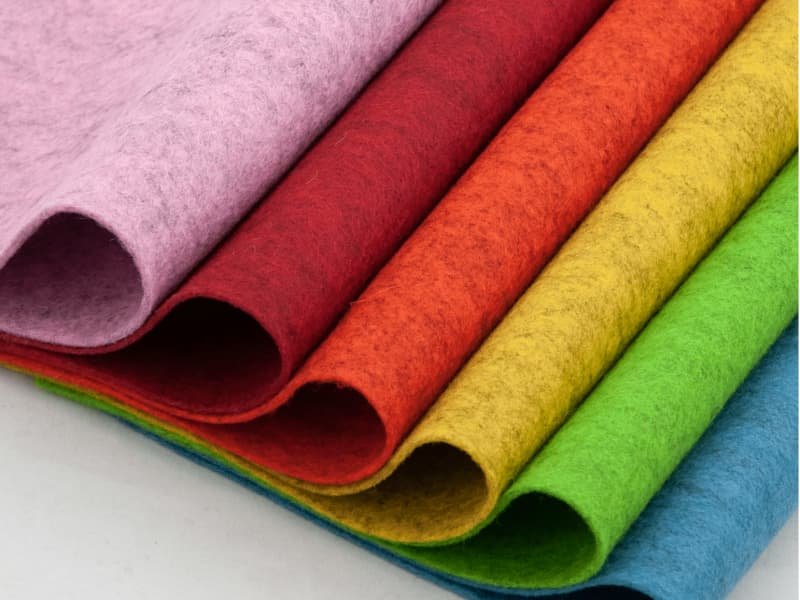
Felt is one of those materials that nearly everyone recognizes, yet many people describe it too simply. A school craft sheet, a molded wool hat, a laser-cut floral appliqué, a structured handbag panel, and a dense industrial padding layer may all carry the same name. Their behavior, however, can be completely different. One may feel soft and fuzzy, another may keep a sculptural curve, while a third may be too coarse or heat-sensitive for any garment that touches the skin. Choosing felt successfully therefore begins with more than color and thickness. It requires a clear view of fiber content, density, bonding method, surface finish, construction demands, care conditions, and the exact role the material will play in the finished product.
Felt fabric is a nonwoven textile formed by interlocking, compressing, needling, or bonding loose fibers into a stable sheet. It can be made from wool, polyester, acrylic, rayon, recycled fibers, or blends. Its softness, stiffness, warmth, durability, and suitability for clothing depend on composition, density, thickness, finishing, and the manufacturing process used.
A development team once reviewed a beautifully cut felt bodice detail that looked polished on the worktable. During fitting, the edge lifted away from the body, the surface began to pill where it touched the arm, and the dense panel trapped more heat than expected. The concept was not the problem; the material specification was. That small failure captures the real value of understanding felt: the right grade can turn a simple detail into a strong design signature, while the wrong grade can undermine fit, comfort, workmanship, and bulk-production consistency before the garment ever reaches a customer.
What Is Felt Fabric?
Felt is a sheet-like textile made by consolidating loose fibers rather than weaving or knitting yarns. It usually has no visible warp, weft, or loop structure. Depending on fiber content and density, felt may be soft and flexible, firm and sculptural, warm and insulating, or strong enough for reinforcement, footwear, bags, and technical components.
Structure and Construction
Most familiar apparel fabrics begin with yarn. Woven fabrics are formed when warp and weft yarns cross, while knitted fabrics are built from connected loops. Felt follows a different route: fibers are laid into a web and then held together through natural felting, mechanical needling, heat, pressure, binders, or a combination of these methods. This fiber-built structure explains why many felt materials can be cut without the long threads that pull away from woven cloth, although low-density felt may still shed or develop fuzzy edges during use.
The absence of a conventional yarn network also changes how felt behaves during pattern cutting. Many grades do not have an obvious grainline, yet machine-produced felt can still stretch or tear differently in the production direction and across the width. A material that appears stable when held flat may lengthen slightly when a narrow strip is pulled, especially if the fiber web is light or loosely bonded. For repeated components such as bag straps, collars, tabs, or laser-cut motifs, consistent cutting direction can improve dimensional control and reduce unexpected variation between pieces.
It is useful to think of felt as a broad material family rather than one fabric. A lightweight sheet used for appliqué, a dense wool hat body, a recycled polyester bag panel, and a technical cushioning felt may share a basic fiber-web structure, but they are designed for very different forms of stress. The working question should therefore be specific: what must this felt support, how much must it bend, where will it touch the body, and which production processes must it survive without changing appearance or shape?
Fiber Content
Wool is the traditional felt fiber because the surface of untreated wool encourages neighboring fibers to catch and lock together when moisture, heat, pressure, and movement are applied. Fine wool can create a compact material with a smooth surface, natural warmth, and resilient body, while coarser wool may produce a firmer or more visibly textured result. The label “wool felt” should never be accepted as a complete specification, because the material may be pure wool, a high-wool blend, or a lower-cost blend containing rayon or synthetic fibers.
Polyester and acrylic are common alternatives. Because these fibers do not naturally felt in the same way as wool, they are typically consolidated by needle punching, thermal bonding, resin bonding, or mixed methods. Synthetic felt can provide consistent color, broad availability, stable repeat production, and a wide range of weights. However, quality differences are large. A loose craft-grade sheet may pill or tear around stitches, while a well-engineered polyester felt may hold embroidery, molding, or cut edges much more reliably.
Blended and recycled felts add further possibilities. Wool-rayon blends may soften the cost while retaining a natural surface, and wool-polyester blends may improve dimensional stability. Recycled felt can contain bottle-derived polyester, reclaimed wool, cutting-room waste, or mixed recovered fibers. The words “recycled,” “eco,” and “premium” describe a marketing position, not a measurable performance level. A serious material review still needs fiber percentages, weight, thickness, bonding method, durability data, lot consistency, and evidence supporting any recycled-content claim.
| Felt category | Typical composition | Common hand | Typical fashion use |
| Wool felt | 70-100% wool | Dense, warm, resilient | Hats, collars, premium accessories |
| Wool-blend felt | Wool with rayon or polyester | Soft to firm, balanced surface | Fashion details, bags, decorative panels |
| Polyester felt | Polyester staple fiber | Uniform, firm, sometimes smooth | Patches, footwear, bags, reinforcement |
| Acrylic felt | Acrylic or acrylic-rich blend | Light, fuzzy, often soft | Costume, craft, temporary decoration |
| Recycled felt | Recycled polyester or reclaimed fiber mix | Varies from smooth to coarse | Panels, bags, trims, internal support |
Hand and Surface
Felt can feel compact, dry, fuzzy, smooth, springy, soft, rigid, or almost board-like. Thickness alone does not explain those differences. A thick low-density felt may compress easily and lose shape, while a thinner high-density felt may feel firm and resist bending. Fiber fineness, fiber length, web uniformity, needling intensity, binder content, and finishing all contribute to the final hand. Brushing may make the surface feel softer, while calendaring and pressing can make it flatter, cleaner, and more stable without changing the nominal fiber content.
Material selection should include physical handling that copies real garment use. Fold the swatch, roll it into a curve, rub the surface, pull a narrow strip, stitch near an edge, and apply controlled pressing. Check whether the fold recovers, whether loose fibers transfer to a dark fabric, and whether the edge develops a visible halo. When the felt may touch skin, test it against the neck, underarm, and inner wrist. The palm is less sensitive and can make a coarse material feel acceptable when it will later irritate a high-contact area.
Movement often reveals problems that a tabletop review misses. A felt panel may look elegant while flat but lift away from a curved body area, resist sitting movement, or create a sharp transition where it joins a soft fabric. A decorative felt flower may hold shape beautifully but become too heavy when several pieces are grouped on lightweight mesh. Successful development connects handfeel to construction, body placement, and weight distribution rather than treating softness or firmness as an isolated aesthetic preference.
Felt and Fleece
Felt and fleece are frequently confused because both may appear soft, warm, and slightly fuzzy, but their structures are fundamentally different. Fleece is usually knitted and then brushed to raise the surface. It often stretches, drapes, and compresses more easily because the underlying loops can move. Felt is made from a consolidated fiber web and normally provides stronger edge stability, lower stretch, and greater shape retention. These differences affect pattern shape, seam construction, comfort, and the way the material responds after washing or repeated wear.
Substituting one for the other can change the entire product. A fleece collar may collapse where a dense felt collar would stand, while a felt panel used in place of fleece can make a casual garment feel stiff and restrictive. Fleece cutouts may curl or distort unless stabilized, whereas a suitable felt can support raw-edge motifs and dimensional appliqué. The choice should be based on required stretch, drape, edge behavior, insulation, and skin comfort, not on whether the two materials look similar in a small online photograph.
How Is Felt Fabric Made?
Felt is made by arranging loose fibers into a web and then consolidating them with moisture and agitation, barbed needles, heat, pressure, binders, or combined methods. The process determines density, surface character, flexibility, strength, shrinkage, heat response, and whether the finished felt is appropriate for clothing, accessories, craft products, interior applications, or technical components.
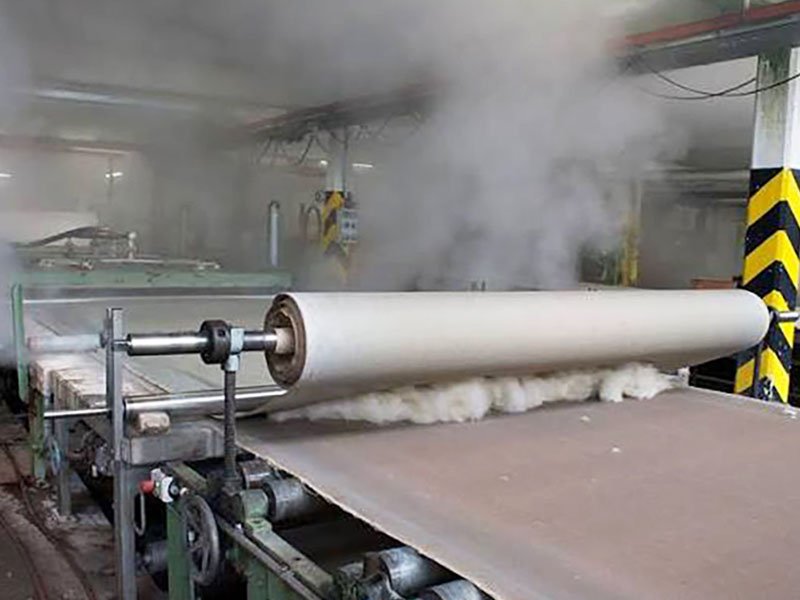
Wet Felting
Wet felting is most closely associated with wool. The fibers are exposed to controlled moisture, warmth, pressure, and movement, allowing them to shift and progressively interlock. As processing continues, the web becomes smaller, denser, and more stable. This is not merely surface flattening; the internal fiber arrangement changes and the loose structure becomes a consolidated textile. The method can produce a rich, compact material with natural depth, which is why wet-felted wool remains important for hats, molded accessories, premium trims, and selected outerwear details.
Control is essential because the same conditions that create felt can also create defects. Insufficient processing may leave weak areas, uneven density, or excessive fiber shedding. Excessive agitation can produce unnecessary shrinkage, harsh stiffness, distorted dimensions, or variation across the sheet. Fiber diameter, blend ratio, moisture level, temperature, pressure, and process time all influence the result. In commercial work, approved samples should represent the intended bulk process, because a beautifully hand-felted prototype may not behave exactly like an industrially produced lot.
The manufacturing history remains relevant during garment care. Wool fibers can continue to move and interlock if the finished component is exposed to unsuitable heat, water, or agitation. A collar, hat brim, or decorative panel that changes by only a few percent may no longer align with the surrounding garment. Development testing should therefore include the proposed wash or cleaning method before final pattern dimensions are locked, especially when wool felt is combined with fabrics that have very different shrinkage and moisture behavior.
Needle Punching
Needle-punched felt begins with fibers opened, blended, and laid into a web. Boards fitted with thousands of barbed needles repeatedly move through the layers. Each needle carries fibers vertically and diagonally into neighboring areas, gradually creating mechanical entanglement. The result can range from a light flexible sheet to a dense structural material, depending on web weight, fiber type, needle design, penetration depth, and the number of passes. Wool, polyester, polypropylene, recycled fibers, and blends can all be processed in this way.
Needle punching offers broad control, but the process name does not guarantee a particular quality. A light fashion felt may remain flexible enough for appliqué or decorative panels, while a heavier grade may be intended for footwear, bags, padding, filtration, or insulation. More needling often improves consolidation, yet aggressive settings can damage fibers or produce an unnecessarily rigid sheet. The best material is not always the densest one; it is the grade that carries the required load without creating unwanted weight, stiffness, seam bulk, or surface roughness.
For sewing applications, inspect thickness variation, fiber shedding, stitch-hole strength, edge fuzzing, directional stretch, and layer separation. A flat swatch may appear stable but weaken when dense embroidery repeatedly perforates the same area. Narrow straps and cutout bridges are especially vulnerable because stress is concentrated across a small fiber section. Sampling should reproduce the final needle count, seam distance, hardware attachment, and bending pattern so that the felt is approved under realistic conditions rather than by appearance alone.
Thermal and Chemical Bonding
Synthetic felt may be consolidated with heat when the fiber web includes components that soften or melt within a controlled temperature range. Heated rollers, ovens, calendaring systems, or molds create bonded points that hold the web together after cooling. This route can produce a regular thickness and clean surface, which is useful for repeat production. The processing window is important, however. Too little heat can leave weak bonding, while too much can flatten the surface, create shine, reduce flexibility, or make the material brittle.
Chemical and resin bonding use a binder distributed through or over the fiber web and then cured. The binder can improve surface stability, reduce shedding, and increase stiffness, but it can also change breathability, handfeel, odor, flexibility, and recyclability. A material that is comfortable before bonding may feel harsher afterward. When the finished product will touch skin, the brand should confirm not only fiber composition but also whether a resin, coating, adhesive, or flame-retardant treatment has been applied and whether it meets the relevant restricted-substance requirements.
Production heat can reveal weaknesses that ordinary sewing does not. Felt may pass a simple stitch trial and later glaze under steam pressing, shrink under fusing equipment, discolor during laser cutting, or harden where hot-melt adhesive is applied. The safest approval method is to test the actual bulk-intended material using the same time, temperature, pressure, and equipment planned for production. Press cloths and lower settings may reduce risk, but they should be validated rather than assumed.
Density and Thickness
Thickness measures the distance between the two surfaces of the felt, while density describes how much fiber mass is packed into that space. The measurements are related but not interchangeable. Two materials may both be 2 millimeters thick, yet one can be soft and highly compressible while the other is firm and resistant to bending. This difference affects cutting accuracy, seam bulk, shape retention, embroidery stability, recovery after folding, and the amount of pressure required during molding or pressing.
During development, weight, thickness, and bending behavior should be reviewed together. A lightweight felt may suit appliqué but lack enough internal strength for a riveted bag tab. A dense felt may support a sculptural collar but feel uncomfortable at the neckline. Soft materials also compress under measuring tools, so thickness readings should be taken using a consistent method and pressure. Measurements from different suppliers are difficult to compare when one uses light contact and another compresses the sample heavily.
| Development use | Indicative thickness | Indicative weight | Likely behavior |
| Light appliqué | 0.5-1.2 mm | 100-220 GSM | Flexible, easy to cut, limited support |
| Fashion detail | 1.0-2.5 mm | 200-500 GSM | Moderate structure, generally sewable |
| Structured panel | 2.5-4.0 mm | 400-800 GSM | Firm shape, visible seam bulk |
| Bag or accessory body | 3.0-6.0 mm | 500-1,200 GSM | Strong shape retention, reduced drape |
| Technical reinforcement | 5.0 mm and above | Project-specific | High cushioning, insulation, or rigidity |
These ranges are useful starting points rather than universal standards. Fiber type, density, bonding, and finishing can make two materials within the same thickness range behave very differently. Pattern engineering must also account for stacked layers. Four layers of 3-millimeter felt create a nominal 12-millimeter junction before thread, binding, lining, or adhesive is added. Lapped seams, butted seams, graded edges, or local thickness reduction may be needed to keep the finished product clean and comfortable.
Which Types of Felt Are Available?
The main commercial felt types are wool felt, polyester felt, acrylic felt, blended felt, and recycled felt. No type is automatically best. The correct choice depends on surface quality, structure, durability, heat response, skin contact, care method, color consistency, target price, and whether the material will serve as a garment shell, decorative layer, reinforcement, accessory body, or hidden support.

Wool Felt
Wool felt is valued for its natural depth, warmth, resilience, and ability to look structured without immediately feeling plastic-like. Fine-fiber grades can create a smooth, refined surface suitable for hats, collars, outerwear details, molded accessories, and premium decorative components. Wool can also respond well to controlled steam shaping, allowing curves and three-dimensional forms that would be difficult to achieve with a loose woven fabric. These qualities make it attractive when visual richness and tactile character matter as much as simple edge stability.
The description “wool felt” still leaves many questions unanswered. It may refer to 100% wool, a high-wool blend, wool-rayon, wool-polyester, or a material with only a modest wool percentage. Fiber fineness, color method, density, thickness, and finishing determine whether the felt feels soft, firm, coarse, or compact. A higher wool content can improve natural hand and surface character, but it may also increase material cost and care sensitivity. The blend ratio should therefore be written into the approved specification.
Colorfastness and shrinkage deserve attention. Dark wool felt may transfer color under wet or dry rubbing, while uncontrolled moisture and agitation can cause additional consolidation. Even a small dimensional change can distort a shaped collar, hat brim, neckline component, or bag opening. Skin comfort must also be tested. A felt that looks luxurious from a distance may feel irritating around the neck or wrist if the fibers are coarse. Final approval should balance appearance, tactile comfort, shape retention, and realistic care conditions.
Polyester Felt
Polyester felt is widely available in many colors, thicknesses, densities, and price levels. It is commonly used for patches, bag panels, footwear components, internal reinforcement, embroidery bases, laser-cut details, costumes, and structured accessories. Its practical advantage is consistency: a qualified supplier can often reproduce weight, width, and color more predictably than a variable low-grade natural felt. Polyester also offers an animal-free option when a collection or brand policy excludes wool.
The fiber itself absorbs little moisture, but a polyester felt sheet is not automatically waterproof. Water can pass through spaces between fibers or enter through seams unless the material is densely consolidated, coated, or laminated. Performance also varies with bonding. A loose grade may pill, shed, stretch, or tear near stitches, while a heavily bonded grade may feel rigid and become uncomfortable against the body. Material selection should focus on the final construction rather than the general reputation of polyester.
Heat response is one of the most important approval points. Polyester felt may flatten, glaze, shrink, or partially melt under excessive pressing, fusing, transfer printing, or laser cutting. The approved swatch should be tested using the planned equipment, not only a household iron. Lot-to-lot color should also be checked under controlled lighting, particularly for black, navy, melange, and recycled grades, where surface texture can make a visually acceptable color measurement appear different when placed next to satin, jersey, or woven fabric.
Acrylic and Blended Felt
Acrylic felt is often associated with craft sheets because it can be colorful, lightweight, easy to cut, and relatively economical. It can work for costume pieces, temporary decorations, display items, prototypes, and low-stress accessories. Its weaknesses become more visible in products that receive repeated abrasion. The surface may fuzz around cuffs, bag corners, hardware, or edges, and a thin grade may stretch around buttonholes or stitched attachments. A successful commercial application must therefore match the felt to the expected wear level.
Blended felt expands the performance range. Wool-rayon felt can retain some natural surface character while reducing cost, and wool-polyester felt may offer improved dimensional stability. Polyester-rayon blends can create smooth decorative sheets, while blends using recovered fibers may produce a deliberately textured look. Pure fiber is not automatically superior. A well-designed blend may cut more consistently, accept embroidery better, hold color more evenly, or perform more reliably during repeated production than an unsuitable 100% material.
Transparency remains essential. Terms such as “premium blend,” “wool touch,” or “soft felt” do not reveal the fiber percentages or bonding route. The supplier should provide a formal composition statement, and the development team should record the approved weight, thickness, density reference, usable width, and finish. When a blend is selected for a visible feature, verify that the appearance can be repeated across the full quantity, because mixed fibers can create shade variation or surface differences that are difficult to hide in large, uninterrupted panels.
Recycled Felt
Recycled felt may contain bottle-derived polyester, reclaimed wool, textile cutting waste, production offcuts, or mixed recovered fibers. The material can be useful for bags, panels, trims, footwear, internal reinforcement, and accessories, especially when a slightly textured surface supports the design. Its performance can vary because recovered feedstock may contain fibers of different lengths, colors, and origins. A recycled label should therefore lead to more detailed questions rather than being treated as proof that the material is automatically suitable or environmentally preferable.
A credible specification should state the recycled percentage, fiber type, pre-consumer or post-consumer source, certification scope, chemical compliance, and durability expectations. A felt containing 20% recycled polyester is different from one made with 100% recycled input, and certification at the fiber stage may not cover every later process or the completed product. Where claims will appear in marketing, documentation should be reviewed early so that product language does not exceed what the supply chain can substantiate.
Durability belongs in the sustainability discussion. A high recycled-content felt that pills quickly, sheds heavily, or causes the product to fail early may shorten useful life and create more waste. A slightly lower recycled percentage combined with strong abrasion performance and repairable construction can sometimes be the more responsible choice. Fiber shedding, material separation, coating, adhesive content, and end-of-life options should be considered alongside recycled content. The most credible decision is the one that connects verified sourcing with real product longevity.
What Are Felt Fabric Properties?
Felt is commonly valued for shape retention, warmth, cushioning, clean-cut edges, and low fraying, but its performance varies widely. Fiber content, density, thickness, bonding, finishing, and care determine whether a felt is soft or rigid, durable or fragile, breathable or warm, washable or highly sensitive to moisture, heat, abrasion, and repeated folding.

Warmth and Breathability
Felt can provide useful insulation because its fiber structure holds small pockets of air that slow heat transfer. Wool felt is especially associated with warmth and moisture-vapor management, yet the comfort of a finished product depends on more than the fiber. Dense consolidation reduces open airflow, and a thick felt panel may feel hot even when the raw fiber has good moisture properties. Coatings, adhesives, foam laminations, and tightly woven linings can further reduce breathability and change the way heat builds around the body.
Placement has a major influence. A 2-millimeter felt collar on an open coat behaves very differently from a fully lined felt bodice. Close-fitting zones around the bust, waist, back, neckline, and underarm can become uncomfortable when a dense panel restricts movement and ventilation. A quick fitting is not enough to reveal this problem. The wearer should sit, walk, raise the arms, and remain in the garment long enough for body heat to accumulate before comfort is assessed.
Warmth can be an advantage in hats, winter accessories, outerwear, and structured seasonal products, but it may be undesirable in partywear, indoor occasion dressing, or fitted silhouettes. A development team should therefore define whether the felt is intended to insulate, support, decorate, or simply create a visual texture. Using the smallest effective area and avoiding unnecessary layers often preserves the design impact while reducing weight and heat buildup.
Stretch and Edge Stability
Most felt stretches less than knitted fabric, although light or loosely bonded grades can extend under tension. Machine direction may also influence movement. This matters when pattern pieces are rotated to improve material yield, because components cut in different directions may recover differently. For structured products, major pieces should usually be oriented consistently until testing confirms that direction has no meaningful effect. Narrow straps, tabs, and cutout sections need special attention because a small amount of extension can become visible in use.
Felt normally resists conventional fraying because it contains no long woven yarns that unravel from the edge. This makes it attractive for raw-edge appliqué, scalloped trims, badges, laser-cut motifs, and dimensional flowers. Clean cutting at the sample table does not guarantee long-term edge quality, however. Some grades develop a fuzzy halo after rubbing, while others shed fibers or tear at sharp internal corners. Narrow bridges between cutouts are especially vulnerable because stress is concentrated across a small fiber section.
Stitch placement can either stabilize or weaken the edge. Very short stitches placed close to a raw edge may create a perforated tear line, particularly in low-density felt. Buttonholes, eyelets, and hardware attachments should be tested after repeated flexing and pulling. When a decorative edge must remain crisp, the development trial should include cutting, sewing, abrasion, cleaning, and reinspection. Edge stability is a performance feature, not merely the appearance of a fresh cut.
Water, Shrinkage, and Heat
Felt is not automatically waterproof. Dense wool felt may resist light droplets for a short time, while polyester fibers absorb little water into the fiber itself. Water can still move through the spaces between fibers and enter through seams, needle holes, zippers, or unfinished edges. Claims such as water resistant, water repellent, splash resistant, coated, laminated, and waterproof describe different levels of protection. A finished product should use the term that matches a defined test result rather than relying on the base fiber alone.
Wool felt can shrink when moisture, heat, and agitation encourage further fiber entanglement. The material may become smaller, denser, and firmer, and the change can be permanent. Synthetic felt may not shrink through the same mechanism, but it can flatten, glaze, harden, delaminate, or distort under heat. Polyester and acrylic grades should be checked during pressing and drying, while resin-bonded materials should be observed for changes in stiffness, odor, or surface appearance.
Dimensional testing should be completed before the pattern is finalized. Measure length, width, thickness, and visible surface condition, apply the intended washing or cleaning method, dry the sample according to the planned care label, then recondition and measure again. When felt is bonded to another fabric, test the combined construction because unequal shrinkage can create bubbling, curling, twisting, or edge lift. Care approval belongs to the finished component, not to the felt swatch in isolation.
Durability and Limitations
Felt durability depends on fiber strength, web uniformity, density, bonding, thickness, surface treatment, and the type of stress involved. A dense material may resist compression but crack after repeated folding, while a soft material may bend comfortably yet pill quickly. Flat tensile strength alone cannot predict performance around embroidery, rivets, zippers, or narrow cutouts. The highest stress often appears at a construction detail rather than across the center of a panel.
Common risks include pilling, edge fuzzing, fiber shedding, permanent creasing, stitch-hole enlargement, delamination, color transfer, thickness loss, heat glazing, and tearing around hardware. Testing should reproduce the final product. A patch may survive flat rubbing but fail after dense embroidery perforates the surface. A bag panel may appear strong yet tear around one rivet because the load is concentrated. The practical question is not whether felt is durable in general, but whether this grade is durable enough for the expected wear, care method, and product life.
| Property | Useful test or check | Practical risk if ignored |
| Thickness and uniformity | Measure several points across width and length | Uneven seam bulk and inconsistent shape |
| GSM | Compare approved swatch with bulk roll | Unexpected weight and drape changes |
| Abrasion and pilling | Dry and wet rubbing under intended contact conditions | Surface fuzzing, fiber loss, premature wear |
| Dimensional stability | Wash, clean, dry, and remeasure | Shrinkage, twisting, bubbling, edge lift |
| Heat response | Pressing, fusing, transfer, or laser trial | Shine, melting, flattening, hardening |
| Stitch holding | Sew, flex, and pull at seam or hardware areas | Tearing and enlarged needle holes |
| Colorfastness | Dry/wet crocking and care test | Color transfer to lining or garments |
| Edge stability | Cut, flex, rub, and recheck | Fuzzing, shedding, or delamination |
These checks do not all require a laboratory during early development, but commercial claims and final risk decisions should use appropriate test methods where relevant. Simple internal trials can remove obviously unsuitable options before time and money are spent on full sampling. The final material standard should record acceptable appearance, tolerance, test conditions, and failure limits so that the approved sample can be repeated rather than interpreted differently by each supplier or production team.
How Is Felt Used in Fashion?
Felt is used in hats, coats, bags, footwear, patches, appliqués, collars, cuffs, structured panels, internal support, costume pieces, and molded accessories. It performs best when its fiber content, density, thickness, weight, and surface are matched to the silhouette, movement, skin contact, care method, workmanship, and production volume of the finished product.

Fashion Applications
Felt is especially useful when a designer wants visible structure. Hats are a familiar example because suitable wool felt can be steamed, molded, and held in a controlled form. In womenswear, felt appears in coat collars, statement cuffs, structured belts, shoulder details, decorative flowers, pocket flaps, patches, bags, footwear, brooches, hair accessories, and costume components. It may act as the main visible material, a supporting layer, or a small accent that creates shape without changing the entire garment.
Commercially, selective use is often more successful than covering a full garment. A felt collar can give a coat architectural character without making the body heavy. A dimensional flower can add depth to a mesh or satin dress while preserving the movement of the main fabric. A shaped belt can repeat a collection theme across several styles. The intended use frequency matters: an occasional event accessory can accept more stiffness than a daily bag or cuff that receives continuous abrasion.
The felt must also cooperate with neighboring materials. A rigid piece can overpower soft chiffon, distort lightweight jersey, or pull down delicate mesh. Color can appear different when matte felt is placed beside reflective satin, even when both materials are technically close in shade. Weight, surface friction, and stiffness should be reviewed in the complete garment. A component that looks balanced on a hanger may pull or twist after the wearer moves, sits, or lifts an arm.
Dress Development
Felt is rarely the first choice for the main shell of fluid mini, midi, maxi, bodycon, party, or vacation dresses. These silhouettes often depend on drape, stretch, recovery, or movement that dense felt cannot provide. Used across a large area, felt can make a skirt stand away from the body, create bulky seams, restrict sitting movement, and trap heat. Its strongest role in dress development is usually controlled and strategic rather than dominant.
Useful applications include sculptural bodice panels, corsage details, detachable collars and cuffs, structured waist pieces, shoulder components, embroidery backing, shaped belts, and dimensional appliqué. Weight balance is critical. A single felt flower may seem light, but several pieces placed on one side of a mesh dress can pull the neckline or twist the body. Stable felt attached directly to stretch jersey can prevent recovery and create rippling. The base material and felt detail must be engineered as one system.
For fitted or body-conscious products, avoid placing rigid felt across high-movement zones unless the material has been developed to flex. Bust, underbust, waist, hip, armhole, and back areas require wear testing because the body changes shape during sitting and movement. Decorative felt can deliver strong visual value when it supports the silhouette, but it should never force the wearer to accept obvious stiffness, edge pressure, or imbalance. The best detail feels intentional both on camera and in real use.
Material Selection
A reliable material brief describes function instead of relying on a vague phrase such as “soft black felt.” The developer should know whether the felt is visible or hidden, whether it touches skin, how much it must bend, and whether it will be sewn, bonded, molded, embroidered, or laser cut. The target thickness and maximum acceptable weight should be defined, together with care method, color relationship, test requirements, planned production quantity, and the likelihood of seasonal reorder.
At least two or three alternatives should be compared. One may offer the best appearance, another the cleanest sewing result, and a third the strongest balance between cost and durability. Bulk availability must be checked before the sample is approved. A beautiful development swatch has limited value when the supplier cannot reproduce the same surface, shade, or density at the required quantity. Color should be reviewed next to the actual garment fabric because matte fibers and reflective surfaces can create strong visual differences.
| Selection factor | Questions to confirm before approval |
| Fiber content | What are the exact percentages, and do they match care, comfort, and claim requirements? |
| Weight and thickness | Will the detail pull the garment, create seam bulk, or restrict movement? |
| Density and flexibility | Will it hold the intended shape without feeling board-like or cracking after flexing? |
| Surface quality | Will it pill, shed, transfer color, or irritate skin in the intended placement? |
| Heat response | Can it tolerate pressing, fusing, transfer decoration, laser cutting, or molding? |
| Construction route | Will it be stitched, bonded, embroidered, riveted, folded, or left raw at the edge? |
| Care compatibility | Can felt, lining, trims, adhesive, and base fabric share one accurate care label? |
| Bulk repeatability | Can the supplier maintain shade, weight, thickness, width, and surface across production lots? |
The approved material record should include fiber composition, GSM, thickness, usable width, density or firmness reference, bonding method, color standard, dimensional change, abrasion behavior, heat tolerance, edge quality, and restricted-substance requirements. When recycled content is claimed, keep the supporting documentation with the material record. A clear specification prevents later debate about whether a bulk lot is “close enough” and allows product, sourcing, quality, and production teams to evaluate the same standard.
Sewing and Care
Felt is often easy to cut, but sewing quality depends on density, thickness, backing, and edge strength. Light felt may work with a standard sharp needle, while dense grades may require a stronger needle and longer stitch length. Very short stitches can weaken the material by creating a line of closely spaced holes, particularly near raw edges, narrow corners, buttonholes, and straps. Thread tension should be tested so the surface remains flat rather than puckered or compressed around the seam.
Thick intersections should be reduced wherever possible. Lapped seams, butted seams, graded seam allowances, bound edges, separate backing pieces, or reduced fold depth can prevent hard lumps. Adhesive bonding may support a smooth visual surface, but the adhesive must remain flexible, avoid bleed-through, and tolerate the same care method as the felt. Embroidery trials should confirm stabilizer type, needle count, design density, and whether repeated puncturing causes stretching, tearing, or visible distortion.
Care instructions belong to the completed product. Wool felt may require spot cleaning, gentle hand washing, or specialist cleaning, while polyester or acrylic felt may tolerate water more easily. Adhesive, lining, zipper tape, embroidery, print, boning, and decorative trims can still fail under the same process. A complete trial should include washing or cleaning, drying, reshaping, pressing, and reinspection. When the care label does not permit tumble drying, flat drying can help reduce distortion and maintain a shaped component.
Sustainability should be evaluated with the same practical discipline. Verified recycled content, responsible fiber sourcing, chemical processing, waste, durability, repairability, shedding, and end-of-life options all matter. A high recycled percentage does not compensate for early failure, and a durable material does not justify vague environmental claims. Product language should state what can be supported, such as a verified fiber percentage or certification scope, rather than using broad phrases that customers cannot check.
Develop Your Next Product with Duolan Apparel
Felt can create memorable structure, surface depth, and dimensional detail, but it needs to be matched carefully with the garment fabric, pattern, fit, workmanship, and care method. For fashion brands developing occasion dresses, fitted silhouettes, fashion sets, refined tops, structured details, or accessory-led collection concepts, Duolan Apparel can support fabric sourcing, material comparison, pattern development, sampling, construction trials, testing coordination, and sample-to-bulk alignment. The goal is not to force felt into every design, but to determine where it adds genuine product value and how to make that result repeatable in production.
Send your tech pack, reference sample, concept images, target fabric, expected quantity, delivery market, and performance concerns to begin a practical material and product review. A clear brief allows the development team to compare suitable felt grades, identify fit or construction risks early, and build a sample that reflects both the design intention and the realities of commercial manufacturing.