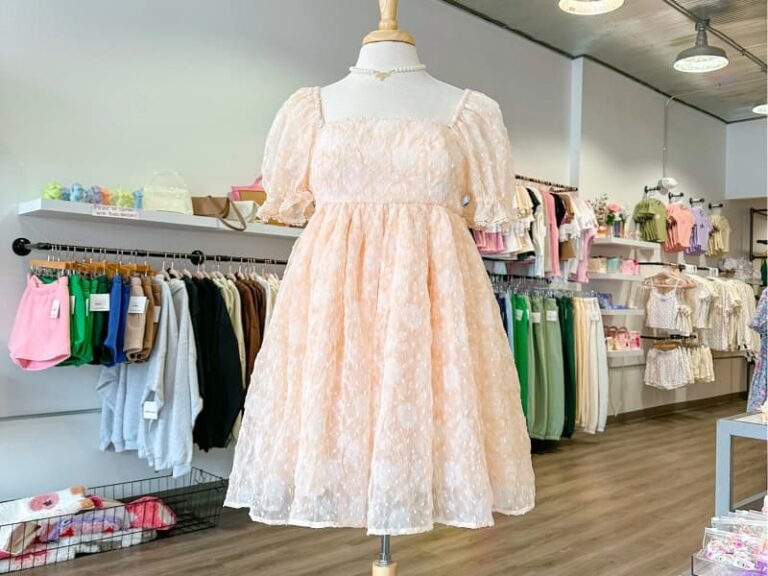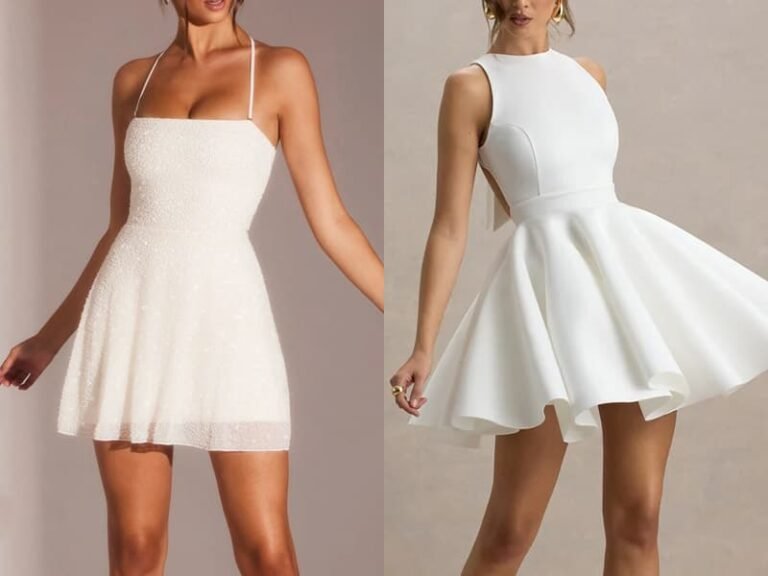
A babydoll dress often looks easier to develop than it really is. The upper body is short, the skirt is loose, and the silhouette seems forgiving, so it is tempting to treat the style as a simple gathered dress. In practice, the shape is unusually sensitive to proportion because the eye reads the raised seam, bust, and lower volume as one continuous relationship. A seam placed only 10-20 mm higher or lower can change the balance around the bust, while a gathering ratio that works beautifully in voile can look bulky in poplin. A fabric substitution that appears minor on a swatch can also change how the skirt opens below the seam, how much weight the bodice carries, and whether the finished dress feels airy or heavy. The design becomes even more demanding when it must hold the same character across several sizes, colors, fabrics, and repeat production runs. What looks effortless on the hanger is therefore the result of several technical decisions being made in the right order rather than a naturally forgiving silhouette.
A babydoll dress is constructed around a shortened bodice and a raised waist or empire seam, with controlled volume released below that point. The silhouette depends on four linked decisions: bodice fit, seam position, skirt fullness, and fabric behavior. Good construction keeps the upper body stable while allowing the skirt to fall freely without becoming bulky, uneven, or visually disconnected from the bodice.
The interesting part is that a successful sample can hide weak construction logic. One skilled sample maker may distribute the gathers by eye, press a difficult seam until it looks clean, or compensate for a pattern imbalance during sewing. The first piece can still look attractive, but those informal corrections are hard to reproduce when an order moves to multiple operators and sizes. The real test of babydoll construction is therefore not whether one dress can be made, but whether the design can be measured, repeated, graded, and produced without losing the effortless shape that made the style appealing in the first place.
What Defines Babydoll Dress Construction?
Babydoll dress construction is defined by a shortened upper bodice, a raised waist or empire seam, and controlled volume released below that seam. The upper section creates enough shape around the shoulder and bust to anchor the garment, while the lower section moves away from the natural waist and hips. Fabric behavior, seam position, gathering amount, and finished length determine whether the result looks balanced or merely oversized.
Silhouette and Proportion
The defining feature of a babydoll dress is not simply a full skirt. The construction changes the visual proportions of the body by moving the point where volume begins upward from the natural waist toward the underbust or upper torso. This shortens the apparent bodice and allows the lower section to expand before it reaches the waist and hips. When that relationship is right, the dress feels intentionally light and youthful rather than loose for the sake of looseness.
The raised seam is especially sensitive because the eye notices it immediately. In development, a vertical change of roughly 10-20 mm can be enough to make the same bodice look more balanced, too high, or too long, particularly on clean styles without prints or ruffles to distract from the seam. The position should be checked on the intended fit body from the front, side, and back, because bust projection can pull the center front higher even when the paper pattern appears level.
Mini versions usually make the babydoll proportion most obvious because the shorter lower section keeps the silhouette compact. Midi versions can still work, but added length increases fabric mass and encourages the skirt to fall more vertically. That means a midi translation often needs a fresh review of fullness, side-seam shape, lining, and hem weight instead of simply extending the mini pattern downward.
Construction Zones
A practical way to evaluate a babydoll dress is to divide it into five connected construction zones: neckline and shoulder stability, bust shaping and front-body length, raised seam position, skirt fullness and gathering distribution, and lower-body length and hem balance. These zones are easy to list separately, but they do not behave separately once the dress is worn. A change in one area can alter the appearance or load carried by another.
For example, adding bust depth can lower the apparent front seam position, while increasing skirt width adds weight that can pull the bodice downward. A lining introduced after the first fitting may make a previously soft skirt feel heavier, and a puff sleeve with a restrictive armhole can cause the entire upper section to ride up during movement. These are not isolated sewing problems. They are interactions between pattern shape, material behavior, and how the garment sits on a moving body.
For this reason, a first sample should be reviewed as a system rather than as a list of decorative details. The bodice should sit cleanly before the skirt is allowed to disguise it, and the skirt should be checked for left-to-right balance rather than only total circumference. When those fundamentals are controlled early, trims, ruffles, bows, lace, or other fashion details can be developed without forcing the team to compensate for an unstable base pattern later.
Babydoll vs. Similar Silhouettes
Babydoll, empire-waist, smock, trapeze, and gathered-waist dresses can overlap visually, but they are not interchangeable construction terms. An empire-waist dress mainly describes where the garment is shaped or joined. Its lower section can be narrow, fluid, or full. A babydoll normally combines that raised position with clearly released volume, creating a stronger contrast between the upper body and the skirt.
A smock dress is often relaxed through the upper torso as well as the lower body, so the silhouette feels more continuous. A trapeze dress may widen directly from the shoulder or upper chest without a distinct raised seam. A conventional gathered dress can use a 2:1 skirt ratio but still look completely different when the join sits at the natural waist. These distinctions matter because the same style name can lead pattern makers toward very different solutions.
When a brand provides a reference image, the most useful questions are therefore measurable ones: Where does the volume actually begin? How closely should the bodice follow the bust? Does the skirt expand because of gathers, flare, pleats, or a combination? Is the visual waistline defined by a seam, elastic, piping, or only by proportion? Answering those questions is more reliable than relying on the word “babydoll” alone.
Visual Balance
The strongest babydoll styles usually have a clear hierarchy. The upper body feels controlled enough to establish the neckline, shoulder, and bust, while the lower body has enough freedom to create movement. If the bodice is too loose, the dress can drift toward a smock silhouette. If the skirt is too narrow, the style loses the distinctive release below the raised seam. If both sections are highly voluminous, the wearer can appear visually overwhelmed.
There is no single formula for getting that balance right. A soft cotton babydoll may use a relaxed bodice and moderate gathering, while an occasion version may pair a fitted bust panel with a much fuller organza skirt. Puff sleeves, adjustable straps, lace inserts, balloon hems, ruffles, or shirring can all sit within the same silhouette family. The construction still succeeds only if the added details support the proportion rather than compete with it.
This is also where commercial judgment matters. A dramatic runway-style volume may look exciting in a campaign image but feel too bulky for everyday wear, packaging, or a target retail price. A good development team should be able to preserve the visual idea while adjusting pattern width, lining, seam bulk, or finishing so the final dress remains wearable and repeatable rather than becoming a one-sample effect.
How Is a Babydoll Pattern Built?
A babydoll pattern is usually built from the upper bodice outward. Pattern development establishes shoulder balance, bust capacity, neckline, armhole, and raised seam position before the lower section is calculated. The skirt width is then related to the finished joining seam through a controlled gathering or flare ratio. This approach keeps the silhouette measurable and makes later grading, sampling, and production control much more reliable.
Bodice Length and Bust Shape
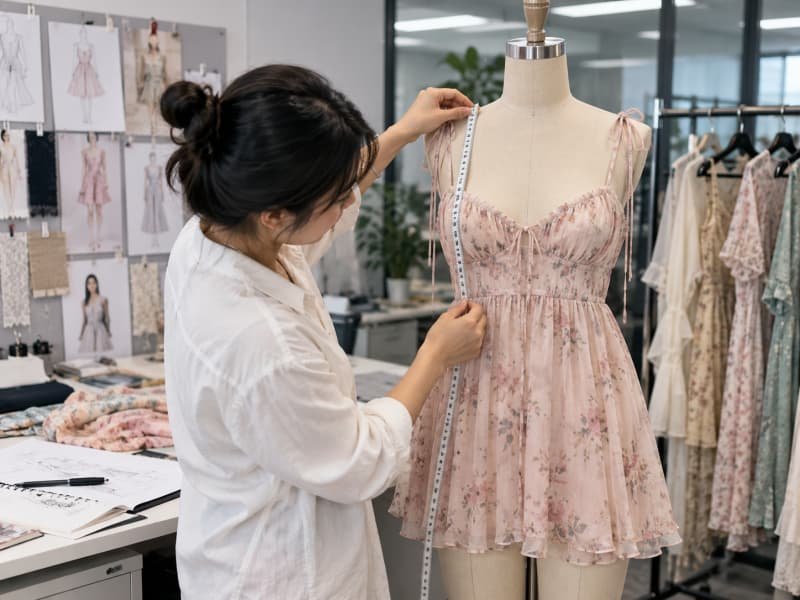
The upper bodice is the part of a babydoll dress that deserves the most precise fitting. Because the lower body is loose, small upper-body errors become visually concentrated around the neckline, armhole, bust, and raised seam. For a woven style, total bust ease of roughly 2-6 cm can be a practical starting range for a fitted to semi-fitted upper body, while a deliberately relaxed cotton design may use more. Stretch fabrics require a different ease strategy and should not be judged by the same numbers.
Vertical measurements are just as important as circumference. High-point shoulder to bust apex, shoulder to underbust, front bodice length, back bodice length, armhole depth, and bust-point spacing all influence where the seam sits after the garment is worn. A standard bodice cannot always be shortened horizontally and expected to become a successful babydoll. If there is not enough three-dimensional bust volume, the center front may be pulled upward even though the pattern pieces match perfectly when laid flat.
This is one reason first fittings should include side views and movement rather than only front photographs. A bodice can look acceptable while the wearer is standing still but ride upward when the arms are raised or when the body bends. The pattern should provide enough capacity for the bust and upper torso without allowing the neckline or armhole to become loose, because those two failures create very different visual problems even when the overall chest measurement is similar.
Empire-Seam Placement
There is no universal number that defines the correct empire-seam height. The useful starting point is the wearer’s underbust level, followed by a visual adjustment based on bust volume, neckline, sleeve construction, and the intended proportion. Some babydoll dresses sit close to the anatomical underbust, while others place the seam slightly lower to create a softer transition between bodice and skirt.
On plain woven styles, a left-to-right difference of around 5 mm can already be visible when the raised seam is intended to read as a clean horizontal line. The final tolerance should always follow the brand’s specification, but the visual sensitivity of this area is worth recognizing early. A difference that might be harmless at a wide skirt hem can be distracting just below the bust because it changes how the entire upper body appears.
If the seam rises at center front, the first response should not automatically be to lower the entire line. The cause may be insufficient front length, inadequate bust projection, or armhole restriction. Moving the seam without correcting the underlying pattern can simply shift the problem elsewhere. A good fitting process identifies the cause first, then adjusts only the pattern area that needs more length, shape, or ease.
Gathering and Skirt Width
Skirt fullness becomes easier to manage when it is expressed numerically. A simple working formula is: gathering ratio = cut skirt top-edge length divided by finished bodice joining-seam circumference. If the finished seam is 82 cm and the skirt top edge is 164 cm before gathering, the ratio is 2.0:1. That figure is more useful in development and production than an instruction such as “make it quite full,” because everyone can verify the same relationship.
| Gathering Ratio | Typical Appearance | Common Development Use |
| 1.4-1.6:1 | Light, controlled fullness | Minimal or clean babydoll shapes |
| 1.7-2.0:1 | Balanced commercial volume | Everyday and fashion-driven styles |
| 2.1-2.4:1 | Clearly visible gathering | Romantic, feminine, fuller shapes |
| 2.5-2.8:1 | High volume | Very light fabrics and statement styles |
These figures are useful prototype ranges, not universal rules. A 2.4:1 ratio in 70 gsm voile can remain soft and airy, while the same ratio in 150 gsm poplin may create a thick joining seam and too much outward projection. Pattern shape can share the work with gathering. A firmer fabric may look cleaner with a lower ratio plus extra flare through side seams or panels instead of forcing all the fullness into one narrow seam.
Fullness also does not need to be distributed evenly around the body. Some designs benefit from slightly more volume at center back and less directly under the bust, while others need equal fullness to create a symmetrical bell shape. Whatever distribution is approved in the sample should be marked with notches or panel measurements so the production team can reproduce it rather than relying on the operator to arrange the gathers by eye.
Mini and Midi Balance
Converting a babydoll mini into a midi is not simply a hem extension. Longer panels add fabric mass, and that extra weight changes the way gathers open below the seam. A short skirt may project outward and feel bouncy, while the same fabric and ratio at midi length can fall closer to the legs. Side-seam shape, hem sweep, lining length, and fabric recovery become more important as length increases.
When a very full mini is translated into a longer version, testing a modest 5-15% reduction in skirt top-edge width can be a sensible development experiment, particularly in fabrics that already have body. That is not a fixed formula; it is a controlled way to check whether the extra length is making the lower section too heavy. Soft viscose may need the opposite treatment if additional width is required to retain movement after the skirt becomes longer.
The useful objective is visual continuity across the collection. A mini, midi, and maxi do not need identical gathering mathematics to belong to the same babydoll family. They need the same design logic: a deliberate upper-to-lower proportion, a clear release point, and a skirt that moves in a way that suits its length and material. Pattern decisions should protect that character rather than preserve one ratio at all costs.
Which Fabrics Work for Babydoll Dresses?
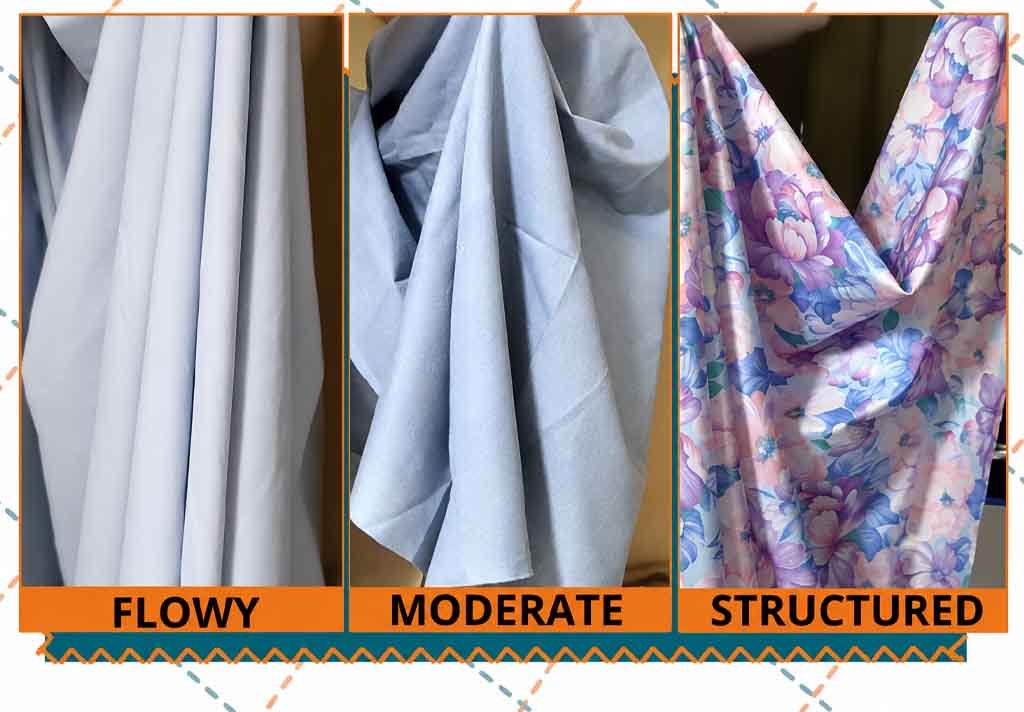
Babydoll dresses work best in fabrics whose weight, drape, stiffness, and compressibility match the intended volume. Lightweight materials create soft or floating gathers, while firmer materials create more projected shapes. Fabric selection should be made together with the skirt ratio because the same pattern can look completely different in voile, viscose, poplin, organza, or taffeta, even when every measurement remains unchanged.
Soft and Fluid Fabrics
Soft babydoll dresses often perform well in cotton lawn, voile, viscose, rayon blends, chiffon, georgette, and lightweight crepe. These fabrics compress relatively easily at the raised seam and allow the skirt to move without creating excessive bulk. They are especially useful when the design aims for a romantic, relaxed, summer, resort, or softly feminine appearance rather than a highly architectural shape.
Approximate fabric weight can help narrow the first sampling choice, although GSM alone does not predict drape. Two fabrics at 100 gsm can behave very differently because of weave density, yarn twist, finishing, fiber content, and surface treatment. One may collapse softly against the body while the other holds visible volume. The most useful test is therefore not the number on the fabric specification but how the actual cloth behaves when gathered at the planned ratio.
| Fabric Type | Approximate Weight Range | Typical Babydoll Effect |
| Cotton voile | 50-90 gsm | Airy, soft, sometimes semi-sheer |
| Cotton lawn | 70-110 gsm | Soft with a cleaner edge |
| Viscose woven | 90-140 gsm | Fluid and relaxed |
| Chiffon | 30-70 gsm | Sheer, floating volume |
| Light crepe | 90-150 gsm | Soft movement with more control |
| Poplin | 100-160 gsm | Crisp, projected volume |
| Organza | 30-80 gsm | Very light but highly structured |
Before committing to a full sample, a small gathering trial can reveal a surprising amount. Gathering 60-100 cm of the intended fabric into the target ratio shows whether the folds look soft, whether the seam becomes too thick, and whether the surface resists compression. That quick test is often more informative than judging a flat swatch on a desk, particularly for fabrics that feel light but become bulky when several layers are compressed together.
Structured Fabrics
Crisp cotton poplin, taffeta, organza, faille, and compact woven blends can create a stronger babydoll shape because they maintain space between the skirt and the body. These materials work especially well for statement minis, puff-sleeve dresses, balloon hems, oversized bows, and designs where the lower section is expected to stand away from the legs rather than collapse softly. Their stronger memory can also help a short skirt retain a deliberate bell or tent-like outline during movement.
The trade-off is that structure increases seam bulk. As the fabric becomes thicker or more resistant to compression, very high gathering ratios can produce a raised, uncomfortable, or visually heavy empire seam. In those cases, the pattern itself can create some of the volume. A skirt with more flare through the side seams or additional panels may need only 1.6-1.8:1 gathering, yet still look full because the hem expands below the join.
Structured fabrics also make small construction inconsistencies easier to see. Uneven gather density, slightly different seam heights, or an overpressed section can stand out sharply in a plain poplin or taffeta dress. The sample stage should therefore confirm not only whether the fabric creates the desired fashion effect, but also whether that effect can be reproduced consistently without excessive manipulation by the sample maker.
Weight, Drape, and Compression
Fabric weight changes the force carried by the raised seam. If two skirts have the same dimensions but one fabric weighs 70 gsm and another weighs 150 gsm, the heavier version carries more than twice the mass per square meter before lining, trims, or decorative layers are added. That extra weight can pull the upper gathers downward and make the bodice feel less stable, especially in a midi or multi-layer style.
Compressibility is equally important. Some fabrics feel light in the hand but have thick yarns or resilient finishes that resist being packed into a narrow seam. Others may weigh more but compress smoothly. This is why a technical review should look at drape, stiffness, thickness, recovery, and seam bulk together rather than ranking fabrics only by GSM. A beautiful material can still be wrong for a specific gathering ratio if it creates too much thickness at the join.
Pressing behavior also matters. Soft viscose or chiffon can lose the rounded character of their gathers if pressed too aggressively, while poplin may need controlled pressing to make the seam look clean. The approved sample should therefore capture not only the fabric specification but also the finishing method that creates the final appearance. Otherwise, a production line can use the correct material and still deliver a noticeably different silhouette.
Lining and Transparency
Not every babydoll dress needs a full lining. The right decision depends on opacity, comfort, skin feel, internal finish, and how much extra weight the design can accept. An opaque cotton style may use only a lined bodice for a cleaner neckline, while a chiffon dress may need a complete coverage solution. Lining is a construction decision because it changes the mass, drape, and bulk of the garment, not just its transparency.
The lining does not always need the same fullness as the outer shell. If a chiffon skirt uses 2.2:1 gathering, a lining might work better at roughly 1.4-1.8:1, provided there is still enough walking room and the intended shape is preserved. A lower lining ratio can reduce bulk at the empire seam and allow the outer layer to remain visually light. The exact relationship should be sampled because different lining fabrics can drag, cling, or move independently.
A shorter lining is another useful option when the design benefits from a sheer lower edge. It can provide coverage through the upper thigh while keeping the outer hem visually transparent and lightweight. A separate slip can create even more freedom between layers, but it introduces another fit and merchandising decision. The important point is to choose the lining strategy during development, because adding it after the shell has been approved can change the very silhouette that was already signed off.
How Do You Construct a Babydoll Dress?
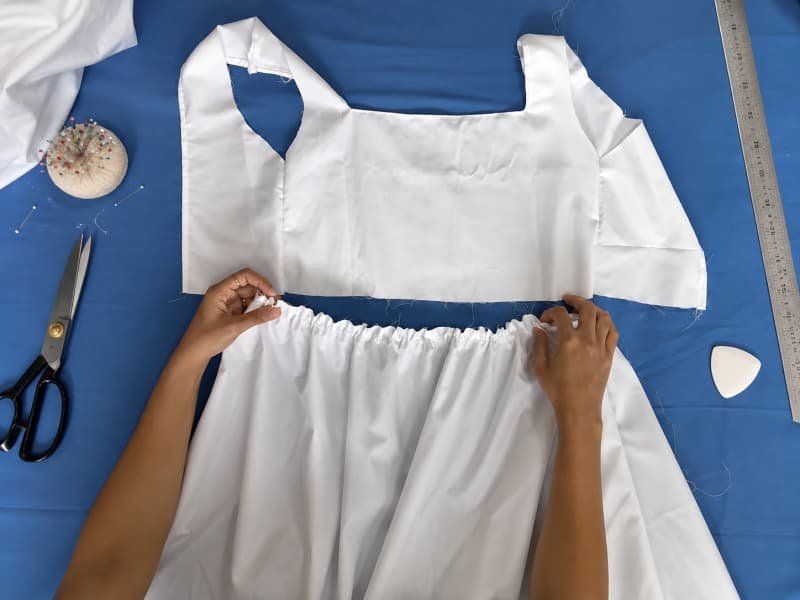
A babydoll dress is generally constructed by completing and stabilizing the bodice first, preparing the skirt separately, controlling the gathers by marked sections, and then joining the two parts at the raised seam. Sleeves, straps, lining, closures, and hems are added according to the design. The critical production principle is to keep the upper body stable and the lower volume measurable throughout assembly.
Bodice Assembly
The bodice should be sufficiently complete before the skirt is attached so its fit can be evaluated independently. A basic woven style may include bust darts or princess shaping, shoulder seams, neckline facing or lining, side seams, and armhole finishing. More fashion-driven versions can add cups, elastic, shirring, puff sleeves, ties, concealed zippers, lace inserts, or internal support. Each addition can change how the upper body carries the weight of the skirt.
Stability is especially important around the neckline, shoulder, and raised seam. Very lightweight or loosely woven fabrics may need selective reinforcement through lining, stay tape, narrow fusible support, or carefully chosen seam construction. The aim is not to make the bodice stiff. It is to keep critical edges from stretching during handling and sewing. Once the skirt is attached, its weight can hide or worsen a weak upper pattern, making later fit comments harder to diagnose.
This is also the best stage to check movement. The wearer should be able to lift the arms, sit, and breathe without the entire bodice shifting upward. A sample that looks clean only when the model stands still is not yet resolved. Restrictive armholes, an incorrect shoulder angle, or inadequate bust length can all cause movement problems that become more obvious after the full skirt is added.
Gathering Control
Good gathering looks effortless, but it should be controlled by measurement. The skirt top edge and bodice seam can be divided into quarters, eighths, or panel sections with notches so each area receives the intended amount of fullness. If a 25 cm bodice section is designed at a 2:1 ratio, the corresponding skirt section should contain approximately 50 cm of top-edge length before gathering. Repeating that logic around the garment helps prevent one side from becoming visibly heavier than the other.
Two parallel rows of temporary gathering stitches are common in sample rooms because they help control the fabric and reduce twisting before the permanent seam is sewn. In larger production, the factory may use gathering attachments, differential feeding, guides, or other controlled methods depending on material and quantity. The machine is less important than the repeatability of the result. The production operator should not need to decide the shape from scratch every time.
Intentional uneven distribution should also be documented. If the approved style places more fullness at center back, that should be marked with notches or section measurements. Otherwise, later garments may technically have the correct overall circumference while looking completely different from the approved sample. This is a good example of a visual characteristic that needs to be converted into a measurable production instruction before bulk begins.
Joining the Skirt
Before the permanent joining seam is sewn, center front, center back, side seams, panel joins, and intermediate gathering points should all match. The gathered skirt should be reduced to the exact finished bodice circumference without stretching the bodice edge. If the bodice is accidentally stretched during sewing, the raised seam can become wavy or the upper body can lose its intended fit even when the skirt measurement itself is correct.
For lightweight woven dresses, a joining seam allowance around 8-12 mm is a common development range, although the final specification should follow the brand and factory construction standard. The seam needs enough width for stable handling without leaving unnecessary bulk inside the dress. Very sheer or delicate materials may use a different enclosed treatment, so the seam type should be tested in the actual fabric rather than copied from a heavier sample.
Pressing should support the design rather than flatten it indiscriminately. Viscose, voile, and chiffon can lose the soft roundness of their gathers under heavy pressure, while poplin may need firmer control to keep the joining seam clean. The approved finish is the combination of sewing and pressing. Recording only the stitch type without the finishing method can lead to a production garment that is technically correct but visually different.
Clean Finishing
Finishing should follow fabric behavior and price positioning instead of using one internal method for every babydoll dress. Opaque cotton styles can often use neat overlocked seams, while chiffon, organza, and other transparent fabrics may look cleaner with French seams, narrow bindings, or enclosed constructions. The more visible the inside of the garment, the more the finishing method contributes to perceived quality.
Hem depth also changes the silhouette. A narrow 5-10 mm finished hem adds little weight and is useful for many lightweight fabrics. A deeper 20-40 mm hem can add structure and visual weight to firmer materials, but it may pull a soft skirt downward or become visible through a sheer shell. These are common development ranges rather than fixed standards, and the correct choice depends on the fabric thickness, desired movement, and garment length.
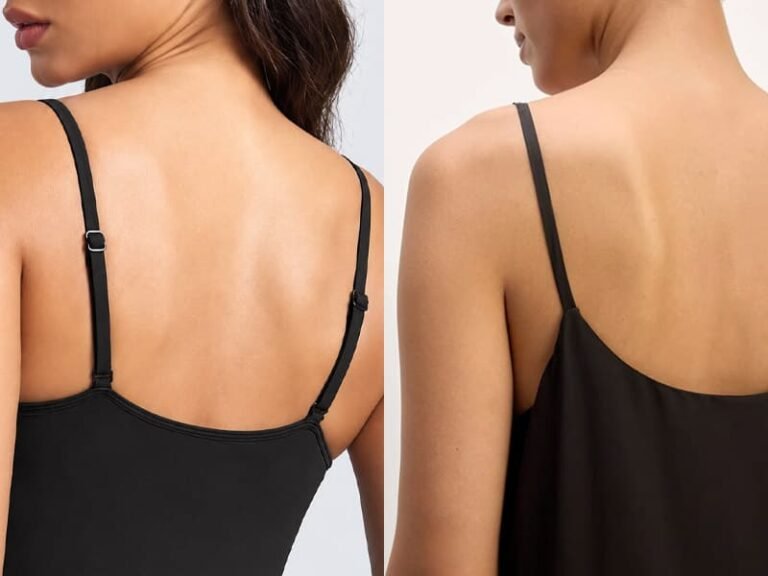
Closures should be considered structurally as well. A concealed zipper gives a controlled upper fit, while elastic or shirring introduces flexibility and can reduce entry problems in a close bodice. Adjustable straps, ties, or back elastication can improve fit tolerance, but they also change how the neckline and empire seam are stabilized. A clean babydoll dress should be easy to put on, comfortable in movement, stable through the upper body, and free-moving through the lower section without relying on excessive pressing or hidden sample-room corrections.
How Do You Control Babydoll Fit Across Sizes?
Babydoll fit is controlled by grading the upper bodice and skirt as connected systems. Bust volume, shoulder width, armhole shape, neckline stability, bodice length, and empire-seam position must remain balanced as size increases. The skirt should preserve the intended visual fullness rather than simply adding a fixed amount of width to every size. Multi-size fitting is important because base-size approval alone cannot prove grading quality.
Bust and Upper-Body Fit
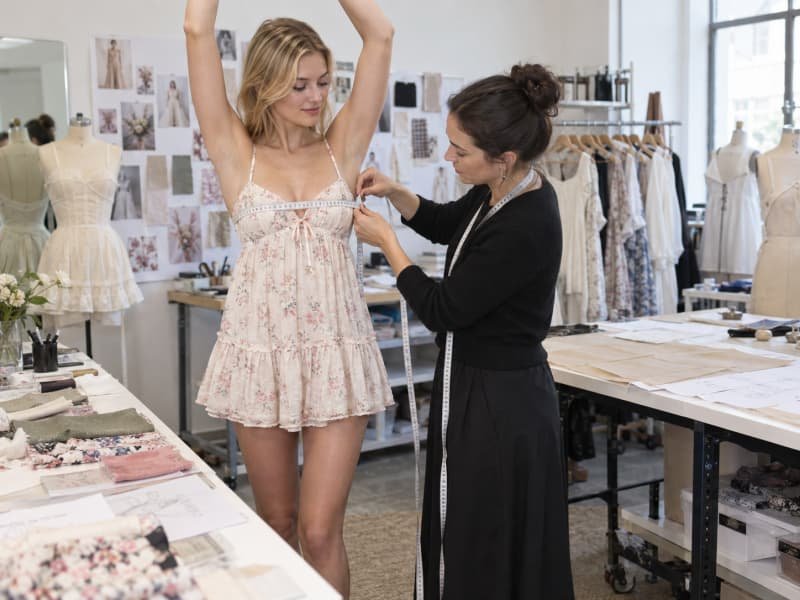
The loose skirt does not make upper-body fit unimportant. In fact, the neckline, shoulder, bust, armhole, and raised seam carry most of the visible fit information in a babydoll dress. Too little bust capacity can create diagonal drag lines, pull the armhole forward, distort the seam, or cause the bodice to ride up. Too much capacity can make the upper body look loose and remove the visual contrast that gives the silhouette its character.
For woven styles, total bust ease of approximately 2-6 cm is a useful development starting point for many fitted or semi-fitted designs, while a relaxed style can use more. These are not grading rules. The fabric, closure, neckline, sleeve, and target customer all affect the final ease requirement. A rigid poplin bodice and a soft viscose bodice can need different shaping even when the nominal bust measurement is the same.
Fit should also be tested during movement. Raising the arms can expose a tight armhole or insufficient front length, while sitting can show whether the raised seam presses uncomfortably under the bust. A mannequin is helpful for evaluating balance, but a live fitting reveals how the garment responds to motion. The sample should remain visually stable rather than shifting every time the wearer changes posture.
Preventing Ride-Up
When the bodice rides upward, adding length everywhere is often the wrong correction. The problem may come from insufficient bust projection, inadequate front length, a tight upper-bust area, restrictive armholes, an incorrect shoulder slope, or a seam placed too aggressively under the bust. Each cause needs a different pattern response, even though the visible symptom may look similar in a front photograph.
The side seam provides useful diagnostic information. If it moves forward while the center-front empire seam rises, the front body may not have enough length or volume to accommodate the bust. Adding 10 mm equally to front and back can increase overall length without correcting the imbalance. A better solution may be targeted front length, dart adjustment, reshaping around the bust, or a change in the armhole that allows the upper body to settle naturally.
Fit comments should therefore describe what the garment is doing rather than only the desired result. “Center-front seam rises 15 mm while side seam pulls forward” gives the pattern maker far more information than “make bodice longer.” This kind of precise language also reduces unnecessary revision rounds because each change can be tested against an observable problem rather than a subjective impression.
Gathering Across Sizes
A simple way to preserve a consistent babydoll look is to maintain the approved gathering ratio as the empire-seam circumference grows. If the base size is designed at 2.0:1, the skirt top edge can increase proportionally with the bodice seam rather than receiving one fixed width increment in every size. That protects the relationship between upper circumference and lower volume, although visual fitting is still required because body shape does not scale as a perfect geometric model.
| Size | Finished Empire Seam | Skirt Top Edge | Gathering Ratio |
| XS | 76 cm | 152 cm | 2.0:1 |
| S | 80 cm | 160 cm | 2.0:1 |
| M | 84 cm | 168 cm | 2.0:1 |
| L | 90 cm | 180 cm | 2.0:1 |
| XL | 96 cm | 192 cm | 2.0:1 |
These numbers illustrate the method rather than prescribe a universal size chart. Some brands deliberately reduce relative fullness in larger sizes because they want less visual bulk, while others preserve the ratio exactly to maintain the same silhouette. Either choice can be valid if it is intentional and fit-tested. What should be avoided is allowing the grading software to create an accidental change in skirt character simply because no one defined how volume should scale.
Front-to-back distribution may also need attention as sizes increase. More bust projection can change the way the front skirt hangs below the seam, so mathematically equal gathering does not always look visually equal. A multi-size fitting can reveal whether the pattern needs a different front curve, extra center-front length, or a small change in where fullness is concentrated. This is particularly useful when the design uses a plain fabric, where subtle imbalance is easier to see.
Grading the Whole Silhouette
Good grading protects visual landmarks, not only circumferences. Shoulder width, neckline scale, bust volume, bodice length, armhole depth, empire-seam level, skirt fullness, and finished length all need to evolve in a way that preserves the original design. A pattern can pass the measurement chart while still looking wrong if its vertical proportions have not grown appropriately with the body. That problem is especially obvious when the raised seam is a strong visual feature.
Larger sizes often need more front-body length to accommodate greater bust projection, but simply lengthening the entire garment can push the back seam too low. Armhole depth may need to increase without making the upper bodice look long or loose. The raised seam itself may need a slightly different curve to appear visually level when worn. These are reasons to treat grading as silhouette engineering rather than a mechanical enlargement exercise.
For a commercial size range, approving only the base size leaves a meaningful blind spot. A practical approach is to review at least one additional size from another part of the range before bulk release, and wider ranges benefit from checking both a smaller and a larger size. The goal is not to make every size mathematically identical. It is to make every size look as though it was intentionally designed, rather than merely enlarged or reduced from one original sample.
How Is Babydoll Construction Controlled in Production?
Babydoll construction is controlled in production by converting the approved sample into measurable standards for pattern, fabric, seam position, gathering ratio, measurements, and workmanship. Critical details should be confirmed before the main line starts, then checked in first-piece or pilot production. The goal is to prevent the carefully developed proportions of the sample from changing when different operators, sizes, colors, or fabric lots enter bulk production.
First-Sample Review
The first sample should answer specific development questions instead of simply proving that the garment can be sewn. A useful review moves from top to bottom: neckline stability, shoulder position, bust capacity, empire-seam level, left-to-right balance, gather distribution, skirt fall, side-seam alignment, and hem balance. Each observation should connect to a measurable pattern, material, or sewing decision wherever possible, so the next revision can be checked against a defined target rather than a general visual impression.
Comments such as “too full” or “waist looks high” are difficult to reproduce consistently. A more useful revision might say “reduce skirt top-edge width from 184 cm to 168 cm” or “lower the side seam by 10 mm while maintaining center-front height.” These instructions give the next sample a defined target and make approval easier because the team can verify exactly what was changed rather than relying on memory.
The sample is also the lowest-cost stage for identifying weak construction logic. If one handmade sample already has a bulky raised seam, full production will not make it cleaner. If the skirt collapses because the selected fabric is too soft, inspection will not turn it into a structured silhouette. Development problems should be solved while the pattern and material choices are still flexible, before large cutting quantities or production scheduling make every correction more expensive.
Common Production Defects
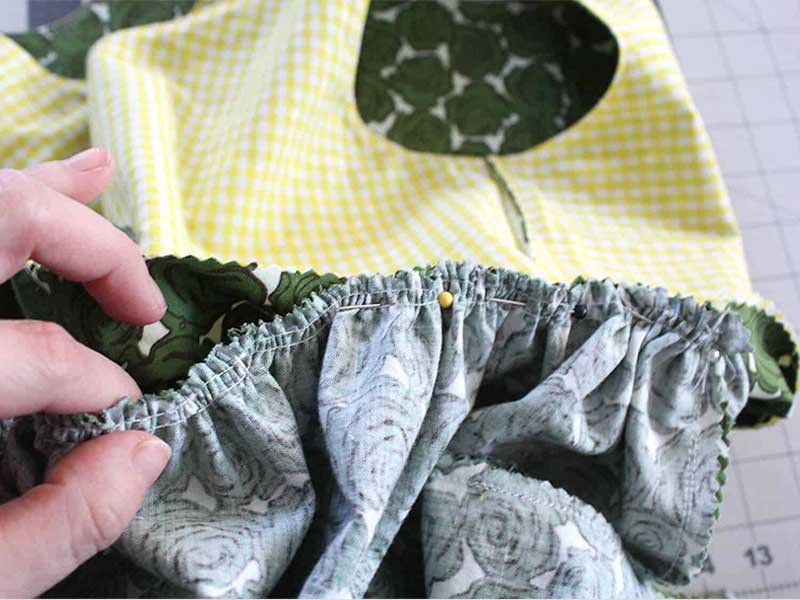
Uneven gathering is one of the most common babydoll production problems because total circumference can be correct while the visual distribution is wrong. One operator may pull more fullness toward the side seam, another toward center front, and both garments can pass a basic measurement check. This is why section notches and allocation measurements matter. Quality control needs to evaluate distribution, not simply whether the skirt fits the bodice.
Wavy empire seams can result from excessive gathering, stretched bodice edges, unbalanced feeding, thick seam allowances, or fabric that does not compress well. Other recurring issues include hem imbalance, twisted side seams, lining drag, puckering, mismatched left and right seam levels, and inconsistent skirt volume. These defects often begin upstream in pattern, cutting, or operation setup, so final inspection alone is not an efficient control strategy.
Visually critical measurements also deserve tighter attention than low-impact ones. A 10 mm difference in a very wide hem circumference may have little effect on appearance, while a similar difference in seam height just below the bust can alter the whole silhouette. The final tolerance should follow the brand specification, but the production team should know which measurements are most sensitive to the design so inspection effort is concentrated where variation will actually be noticed.
Reproducing the Approved Sample
Once the final sample is approved, production needs more than the physical garment. The working reference should normally include the approved pattern version, measurement specification, fabric and lining details, trim references, skirt top-edge measurements or gathering ratio, seam allowances, construction method, critical visual points, and relevant pressing instructions. This creates a repeatable standard instead of asking each department to interpret the sample independently.
Gathering is a good example of information that should be converted from appearance into numbers. If the approved sample has an 84 cm joining seam and a 168 cm skirt top edge, the 2.0:1 relationship should be recorded. If additional fullness is intentionally placed at center back, the section measurements should also be marked. The goal is to preserve the approved visual effect while removing as much operator guesswork as possible.
Pattern versions deserve the same discipline. A 10 mm bodice correction made during sample approval should result in a controlled new pattern version rather than a verbal instruction passed to cutting. Bulk fabric should also be compared with sample yardage because a noticeably stiffer or softer lot can change gathering behavior even when composition and GSM appear similar. A quick pre-production test in actual bulk fabric can catch that difference before the full quantity is released.
Pre-Production Control
Before the main line starts, the project should move from “approved sample” to “repeatable production specification.” That means confirming the bulk fabric handfeel, weight, shade, and width; lining compatibility; trims and closures; current pattern version; size specification; seam position; gathering distribution; stitching; pressing; labels; and packaging requirements. Not every item is equally risky, so the team should identify the handful of construction points that can most easily change the silhouette.
For fit- or construction-sensitive styles, a first-piece or small pilot check is valuable because it shows how the design behaves under real production conditions. There is no meaningful universal pilot quantity. Some projects can validate the critical operations with only a handful of first pieces, while more complex orders may need a slightly broader controlled run. The purpose is to test the riskiest operations before full release, not to satisfy an arbitrary number.
This is the point where a development-focused manufacturer adds the most commercial value. A sample proves that one dress can be made correctly; production control proves that the same design can survive different operators, sizes, colorways, fabric lots, and reorder cycles. For brands preparing a new babydoll program, it is worth discussing pattern balance, fabric behavior, gathering control, grading, and bulk-readiness checkpoints before the order reaches the line, because those decisions are much easier to refine during development than after thousands of pieces have been cut.
Conclusion
Babydoll dress construction is less about one special sewing technique than about managing a chain of connected decisions. The bodice establishes the upper fit, the empire seam sets the visual proportion, the skirt ratio creates volume, and the fabric decides how that volume behaves. Grading then has to preserve the relationship across sizes, while production standards have to preserve it across operators and repeat orders. When those decisions are made together, the dress can look effortless without being technically casual.
For fashion brands, that distinction matters because a visually simple babydoll can still carry meaningful fit and production risk. The most productive development conversation is not only “Can this dress be made?” but also “Where should the volume begin, how should this fabric behave, what needs to change across sizes, and what must be locked before bulk?” A team that can answer those questions early is in a much better position to turn a reference image, tech pack, or first concept into a reliable commercial style rather than a sample that works only once.
Frequently Asked Questions
What is the difference between a babydoll dress and an empire-waist dress?
An empire waist describes the placement of the waist or joining line, usually close to the underbust, while a babydoll describes the overall silhouette. A babydoll normally combines a shortened bodice with noticeably released volume below the raised seam, often creating a playful, loose lower body. An empire-waist dress can instead fall into a slim, straight, or fluid skirt, so not every empire-waist dress reads as babydoll even when the seam position is similar.
What gathering ratio is best for a babydoll dress?
There is no single best ratio because fabric behavior changes the result. As a practical sampling range, roughly 1.7-2.0:1 often creates balanced commercial fullness, while 2.1-2.4:1 produces a more visibly gathered shape. Ratios above about 2.5:1 are usually easier to manage in very lightweight fabrics. The right choice should be confirmed in the actual material because a ratio that looks soft in voile can become bulky and stiff in poplin.
What fabric is best for a babydoll dress?
The best fabric depends on the intended silhouette. Cotton lawn, voile, viscose, chiffon, and light crepe work well for soft movement, while poplin, taffeta, and organza create more projected volume. Weight is only one part of the decision. Drape, stiffness, thickness, compressibility, opacity, and recovery after pressing all affect the final shape. A short gathering trial in the actual fabric is often more useful than choosing only by fiber name or GSM.
How should a babydoll dress fit around the bust?
The bodice should provide enough room for bust projection without gaping at the neckline, pulling at the armhole, or forcing the empire seam upward. For many woven fitted or semi-fitted styles, about 2-6 cm of total bust ease can be a useful first sampling range, although the exact amount depends on fabric, closure, neckline, and brand fit. Vertical front length is equally important because insufficient bust depth can make a correctly measured bodice ride up when worn.
Do babydoll dresses need lining?
Babydoll dresses need lining when the outer fabric is too sheer, uncomfortable against the skin, unstable, or difficult to finish cleanly, but full lining is not always necessary. A lined bodice with an unlined skirt can work for opaque fabrics, while chiffon styles may use a shorter skirt lining or separate slip. The lining can also use less fullness than the shell to reduce seam bulk, provided coverage and movement remain comfortable after fitting.
How do you keep babydoll gathers even in production?
The most reliable method is to divide the skirt and bodice into matching sections with notches and specify how much skirt edge belongs in each section. Quarters may be enough for simple styles, while eighths or panel-based control points are useful for fuller designs. The approved gathering ratio and any intentional front-to-back distribution should be documented numerically. That turns an attractive sample-room effect into a repeatable sewing operation instead of relying on each operator to judge fullness by eye.
How can brands keep the same babydoll silhouette across sizes?
The pattern should grade the bodice and skirt as connected systems. Bust volume, front-body length, shoulder width, armhole depth, seam position, and skirt fullness all need to change without losing the original proportion. Maintaining the approved gathering ratio is a useful starting method, but it does not replace fit testing. Reviewing at least one additional size beyond the base sample helps reveal whether the seam rises, the front becomes short, or the lower volume changes visually as the body shape increases.