Skip to content

What Is the Best Fabric for Babydoll Dresses : A Guide to Drape, Volume, and Production
Your trusted Women’s Apparel Development & Manufacturing Partner from China
- Jerry
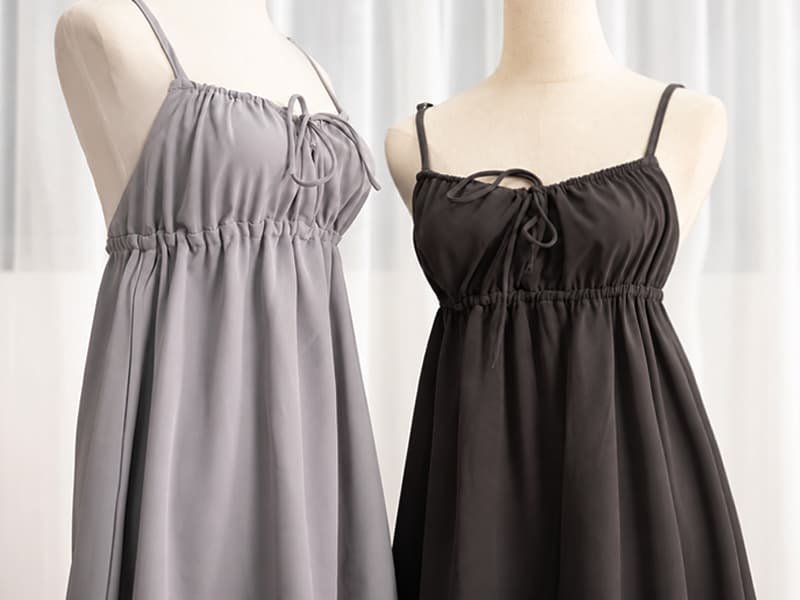
A babydoll dress can look deceptively simple: a fitted or semi-fitted upper section, a raised waist seam, and a skirt that opens into easy fullness. Yet the fabric often decides whether that simplicity looks polished or awkward. The same pattern can appear airy in cotton voile, romantic in viscose, crisp in poplin, fluid in crepe, or almost sculptural in organza. That is why choosing the best fabric for babydoll dresses is less about naming one “correct” textile and more about matching material behavior to the silhouette you actually want to sell. A fabric that works beautifully for a soft vacation dress may create too much bulk in a puff-sleeve mini, while a crisp fabric that photographs well on a short style may feel too rigid for a longer flowing version. Once lining, gathering, shrinkage, color, seam construction, and repeat production enter the picture, fabric selection becomes a product-development decision rather than a swatch-room preference.
The best fabric for a babydoll dress is usually a lightweight to medium-light material that creates fullness without excessive bulk at the raised waist seam. Cotton lawn, voile, poplin, viscose or rayon challis, chiffon, lightweight crepe, linen blends, satin, and organza can all work. The right choice depends on the desired drape, structure, opacity, season, gathering ratio, lining plan, and final use of the dress.
A useful way to think about the decision is to picture two samples made from exactly the same pattern. One uses a fluid rayon; the other uses a dense cotton poplin. Both may pass a measurement check, yet the first can fall in narrow vertical folds while the second stands away from the body and looks several centimeters wider through the skirt. Nothing is necessarily wrong with either sample. They are simply answering different design questions. The rest of this guide explains how to choose those answers deliberately, before a fabric decision turns into another sample revision.
What Makes a Fabric Right for Babydoll Dresses?
The right babydoll dress fabric balances drape, structure, weight, thickness, opacity, softness, and gathering behavior. It should create the intended volume below the raised waist without producing a heavy ridge at the seam or making the skirt look unintentionally stiff. Because fabric behavior changes with finishing and construction, evaluate the actual quality in a gathered test rather than choosing from fiber composition or GSM alone.
What Drape Works Best?
Drape is the way fabric falls under its own weight, and it matters more in a babydoll silhouette than many people expect. The skirt usually begins at an empire or high-waist seam, so a relatively large amount of fabric is compressed into a shorter circumference high on the body. A fluid textile turns that extra fabric into narrow folds that fall downward. A crisper textile holds more three-dimensional shape, which converts the same fullness into visible width. This is the fundamental reason identical patterns can look so different when the fabric changes.
For softer dresses, materials such as viscose challis, rayon, lightweight crepe, chiffon, georgette, cupro-type wovens, and some cotton voiles usually provide enough collapse for the skirt to hang naturally. For a more graphic mini silhouette, cotton poplin, crisp lawn, organza, or a structured blend can be more appropriate. A practical pre-sample test is to gather a 30-50 cm strip to the intended ratio and hang it vertically. The test reveals fold depth, outward projection, and compressibility far more clearly than rubbing a small swatch between your fingers.
Fabric Behavior | Practical Development Range | Likely Babydoll Effect | Main Watchpoint |
Very fluid woven | about 70-130 GSM | Soft vertical folds | Cutting shift or growth |
Light soft cotton | about 60-110 GSM | Airy gentle fullness | Possible transparency |
Crisp cotton woven | about 90-150 GSM | Defined outward volume | Bulk at gathered seam |
Lightweight crepe | about 90-160 GSM | Controlled drape | Wide variation by quality |
Chiffon or georgette | about 40-90 GSM | Floating layered fullness | Lining and seam difficulty |
Light structured sheer | about 30-80 GSM | Sculpted volume | Can become visually stiff |
These ranges are useful starting points, not fixed rules. Finishing, weave density, yarn size, fiber blend, coatings, and washing can make two fabrics with the same nominal GSM behave very differently. For a development team, the important comparison is always the physical sample against the intended silhouette, not the number on a specification sheet by itself. Even when the data looks similar, a quick gathered panel and hanging test can reveal differences in fold depth, seam bulk, and movement that specifications alone cannot show.
How Much Structure Is Too Much?
Structure is useful when the design needs puff sleeves, a crisp mini skirt, a shaped neckline, a collar, or a visible A-line outline. Problems begin when structure, thickness, and gathering quantity are all high at the same time. A 120 GSM poplin with moderate body can look clean at a 1.5:1 gathering ratio, while the same material at a much fuller ratio may build a thick under-bust ridge and push the skirt away from the body. The fabric has not become “bad”; the pattern-fabric relationship has simply moved outside the desired visual range.
When a sample looks too bulky, avoid changing everything at once. First check the actual gathering ratio, then the fabric thickness, the lining fullness, the seam allowance, and the distribution of gathers around the body. Changing fabric, skirt circumference, lining, and construction simultaneously makes it difficult to know which adjustment solved the problem. In experienced development rooms, one controlled change often produces a more useful second sample than a complete redesign, because it preserves the information learned from the first version.
How Do Weight, Opacity, and Hand Feel Affect the Dress?
Weight affects movement, seam stress, and the way gathers hang, but thickness and compressibility are just as important. Two 110 GSM fabrics can feel entirely different: one may be compact and crisp while the other is soft and flexible. A quick bulk test is to fold four to six layers together and compress them between your fingers. If the stack already feels dense before stitching, the raised waist seam may need lower fullness, narrower seam allowances, or a lighter lining to avoid a visible ridge.
Opacity should be tested in the intended color, especially for white, ivory, blush, pale blue, butter yellow, and other light shades. A fabric that appears opaque when doubled on a swatch card may become noticeably sheer across the bust or in daylight. Hand feel also deserves attention because the neckline, armhole, bust, and empire seam remain close to the body even when the skirt is loose. A strong fabric choice should therefore pass four practical tests at once: it should hang correctly, compress cleanly into gathers, provide appropriate coverage, and remain comfortable during real wear.
Which Fabrics Are Best for Babydoll Dresses?
Cotton lawn and voile are strong choices for light, breathable styles; poplin works when the silhouette needs clearer structure; viscose and rayon challis are useful for fluid drape; chiffon and lightweight crepe suit softer occasion looks; and linen blends work well for warm-weather dresses. Satin and organza can also be effective when the design intentionally calls for sheen, polish, or controlled dramatic volume.

Is Cotton Poplin, Lawn, or Voile a Good Choice?
Cotton is one of the most versatile fabric families for babydoll dresses because a change in weave can completely change the result. Voile is usually the lightest and softest option, making it useful for airy summer styles, loose sleeves, and delicate prints. Cotton lawn has more body while still feeling refined and lightweight, so it often sits in the middle between fluidity and structure. Poplin is crisper and better at holding visible shape, which makes it useful for puff sleeves, collars, bows, clean necklines, and short skirts with a more defined outline.
The trade-off is that crisp cotton becomes bulky faster when gathering increases. Before approving a poplin, compare three strips of fabric gathered to the same finished width: poplin, lawn, and voile. Even a small test makes the difference obvious. Poplin tends to build outward form; lawn creates cleaner but softer folds; voile collapses most easily. This is more useful than asking which cotton is “best,” because the right answer depends on whether the dress needs a recognizable structured silhouette or an easy, almost weightless feel.
Is Viscose, Rayon, or Crepe Better for Drape?
Viscose and rayon challis are excellent when the skirt needs generous fullness without looking wide or stiff. Their fluid behavior lets the fabric fall downward, which is especially effective for romantic mini dresses, floral styles, long sleeves, flutter sleeves, and vacation silhouettes. The challenge is technical control. Fluid fabrics can shift during spreading and cutting, grow slightly on bias areas, and produce uneven hems if they are not stabilized, handled carefully, or allowed to settle before final hemming.
Lightweight crepe can offer a useful middle ground. It often has enough surface texture and stability to sew more predictably than very fluid challis while still giving the skirt good movement. The word “crepe,” however, covers a wide range of constructions, so the exact quality matters. One crepe may be thin and mobile at roughly 100 GSM while another is substantially denser and more structured. The development decision should therefore be based on the actual fabric’s drape, thickness, recovery, and seam behavior rather than the category name alone.
Are Chiffon, Linen, Satin, and Organza Suitable?
Chiffon is a strong option for airy occasion dresses, especially when the design includes layered skirts, soft sleeves, or a romantic transparent outer layer. Because it is often sheer, chiffon usually works as part of a fabric system rather than as a single layer. The lining needs to provide coverage without overpowering movement. Linen and linen-viscose blends work differently: they bring texture, breathability, and a relaxed resort character, although pure linen may wrinkle more visibly and may need shrinkage control before pattern approval.
Satin moves the silhouette toward a polished evening look. Lightweight satin can fall beautifully, but reflected light makes seam puckering, needle marks, pressing errors, and uneven gathering more visible. Organza works in almost the opposite direction. It is selected because it resists collapse and can create sculpted sleeves or skirt volume. That means gathering quantities usually need to be more controlled. A good shorthand is that chiffon provides air, linen provides texture, satin provides light reflection, and organza provides shape; each is useful when those qualities are part of the design brief.
Fabric | Common Development Weight | Drape | Structure | Typical Babydoll Use |
Cotton voile | 60-90 GSM | Soft | Low | Airy summer styles |
Cotton lawn | 70-110 GSM | Soft-clean | Low-medium | Feminine day dresses |
Cotton poplin | 90-150 GSM | Moderate | Medium-high | Crisp mini silhouettes |
Viscose or rayon challis | 90-140 GSM | High | Low | Fluid romantic dresses |
Chiffon or georgette | 40-90 GSM | High | Low | Layered occasion styles |
Linen blend | 100-160 GSM | Moderate | Medium | Resort and summer dresses |
Lightweight crepe | 90-160 GSM | Moderate-high | Low-medium | Polished day-to-evening styles |
Satin | 80-150 GSM | Variable | Low-medium | Dressier babydolls |
Organza | 30-80 GSM | Low | High | Sculpted fashion volume |
The table is most useful as a development filter, not a buying rule. Before a bulk fabric is confirmed, sample the specific quality because finishing can substantially change softness, stiffness, shrinkage, surface appearance, and the amount of fullness a dress can carry without becoming heavy. A fabric that looks perfect on a hanger may still fail once gathered, lined, pressed, and worn, so final approval should always be tied to an actual garment sample or a representative construction test.
Which Fabric Fits Each Babydoll Style?
Soft romantic babydolls usually benefit from viscose, rayon, voile, chiffon, or lightweight crepe, while crisp mini styles are better matched with poplin or structured cottons. Summer and resort dresses often work well in lawn, voile, linen blends, or breathable viscose. Party versions can use chiffon, satin, organza, mesh overlays, or polished crepe when shine, layering, transparency, or controlled volume is part of the design.

Which Fabric Works for a Soft Romantic Look?
A soft romantic babydoll depends on movement rather than rigid outline. The skirt should fall into narrow folds, sleeves should respond easily when the wearer moves, and gathering should look gentle instead of compressed. Viscose challis, rayon, cotton voile, chiffon, georgette, and light crepe are natural starting points. These materials also work well with small florals, scattered motifs, and softer abstract prints because the print can move through the folds without feeling overly graphic or heavy.
Print scale should still be reviewed on gathered fabric rather than flat yardage. A motif that looks balanced on the roll can become visually crowded where two times the seam length is compressed into the raised waist. A simple 30-40 cm gathered test panel can show fold depth, print density, transparency, and movement before a full prototype is cut. For long-sleeve versions, also check whether the fabric has enough body to support the sleeve shape. A textile that is perfect for the skirt may need elastic, cuff construction, or a different fullness distribution to make the sleeve look intentional.
Which Fabric Works for a Crisp Silhouette?
Crisp mini babydolls often benefit from poplin, compact cottons, fine structured lawn, or lightweight blended wovens because these materials hold a clear outline. They are especially effective for puff sleeves, bows, collars, cutout details, and short skirts that should sit slightly away from the legs. The key is controlling the relationship between skirt length and circumference. A short skirt has less vertical distance for folds to fall, so excess fullness is more likely to become width rather than graceful downward movement.
For that reason, start with a moderate gathering ratio and build volume only if the first sample looks too flat. This gives the development team a cleaner baseline. Side-view fitting is particularly important. A style can look attractive from the front while projecting too far forward below the bust or accumulating too much fullness at the center back. Redistributing gathers, reducing fullness in selected areas, or balancing sleeve volume against skirt volume can often improve the silhouette without changing the fabric that gave the design its original character.
Which Fabric Works for Summer, Resort, and Party Styles?
Summer and resort babydolls need more than low GSM. They should manage airflow, opacity, skin feel, wrinkle behavior, and the combined weight of shell plus lining. Cotton lawn, voile, lightweight poplin, linen-viscose blends, soft rayon, and light crepe all have useful places in this category. A shell at 80 GSM paired with a 70-80 GSM full lining may feel much more substantial than the outer fabric suggests, so lining strategy often decides whether the finished dress still feels genuinely light.
Party styles can use a wider palette because shine, transparency, layering, and dramatic volume may be part of the visual goal. Satin, chiffon, organza, mesh, embroidered mesh, and polished crepes can all work, but each adds a different production risk. Satin shows puckering, chiffon requires cleaner seam finishing, organza amplifies fullness, and embellished mesh adds weight. A practical solution is often to separate the visual layer from the structural layer, allowing one material to deliver the image while a lighter internal layer provides coverage, stability, or comfort.
How Does Fabric Affect Gathering and Volume?
Fabric determines whether gathered fullness falls downward or pushes outward. Fluid materials such as viscose and chiffon can usually carry higher gathering ratios because the folds compress and collapse easily, while poplin and organza often need lower ratios to avoid excessive width and seam bulk. The same skirt circumference can therefore look dramatically different after a fabric change, even when every finished measurement remains technically correct.

How Does Fabric Weight Change Gather Ratio?
Gathering ratio is one of the most useful numbers in babydoll development. A 2:1 ratio means 200 cm of fabric is gathered into a 100 cm finished seam. If the ratio increases from 1.8:1 to 2.4:1, the cut length for that section increases from 180 cm to 240 cm for the same finished seam, a 33.3% increase before marker efficiency or other consumption factors are considered. That change affects not only appearance but also fabric use, seam thickness, sewing time, pressing, and sometimes packing volume.
The same ratio does not produce the same silhouette across fabrics. Chiffon can compress a large amount of fabric into a relatively delicate seam, while a dense poplin can become thick much earlier. For that reason, ratios should be approved together with the material rather than copied automatically from a previous style. A useful sample record should note the ratio actually used in the approved garment so that later colorways, repeat orders, or fabric substitutions can be evaluated against a clear reference instead of relying on visual memory.
Fabric Direction | Practical Starting Gather Ratio | Typical Visual Result |
Crisp poplin | 1.4:1-1.8:1 | Controlled outward volume |
Cotton lawn | 1.6:1-2.1:1 | Light, neat fullness |
Cotton voile | 1.8:1-2.3:1 | Soft airy gathers |
Viscose or rayon | 1.8:1-2.4:1 | Fluid vertical folds |
Chiffon or georgette | 2.0:1-2.8:1 | Floating layered fullness |
Lightweight satin | 1.5:1-2.0:1 | Visible glossy folds |
Organza | 1.3:1-1.7:1 | Sculpted volume |
These figures are prototype starting points rather than universal production specifications. The correct ratio depends on fabric thickness, finishing, skirt length, lining, seam construction, and the visual brief. The final number should always be confirmed on the actual sample because even a modest change in body or finish can alter how the same quantity of fabric sits below the bust.
How Can Brands Avoid a Bulky Empire Seam?
The raised waist seam is often the most sensitive construction point in a babydoll dress because several layers can meet in a very small area. The bodice, gathered skirt, lining, seam allowances, elastic, waist tape, piping, or decorative trim may all stack at the same level. When the seam looks heavy, simply changing to a lighter fabric may not solve the real problem. The source may be hidden fullness or construction choices rather than the visible shell.
A useful diagnosis is to measure the shell gathering ratio, compare lining fullness, count the number of layers at the seam, review seam allowance width, and check whether gathers are distributed evenly. The lining does not always need to match the shell ratio. If the outer skirt is gathered at 2.2:1, a less-full lining may provide enough movement and coverage while reducing hidden bulk. This type of adjustment can preserve the visible silhouette while improving comfort, pressing, and the transition from bodice to skirt.
How Does Fabric Affect Skirt Movement?
Movement is the dynamic version of drape, and it can reveal problems that static photography misses. Chiffon reacts quickly and appears to float, viscose produces a smoother and slightly heavier swing, poplin moves in broader panels, and satin makes motion more noticeable because reflected light travels across the folds. Hem construction changes the result again. A narrow rolled hem preserves lightness in chiffon, while a deeper hem can add useful weight to a fluid skirt but may distort a strongly curved mini hem if it is too wide or too stiff.
During sample review, use a short movement test rather than relying only on front, side, and back still images. Ten to twenty seconds of walking, turning, sitting, and lifting the arms can expose twisting, static cling, lining restriction, uneven hem drop, or excessive outward volume very quickly. This matters even more for dresses sold through video-led ecommerce and social media, where the garment is judged in motion as much as in a product photograph.
Do Babydoll Dresses Need Lining?
Babydoll dresses need lining when the shell is too transparent, uncomfortable, unstable, or difficult to finish cleanly on its own. Chiffon, voile, lace, mesh, pale lightweight fabrics, and some thin viscose qualities commonly require additional coverage. The lining should remain light and compatible with the shell so it does not add unnecessary heat, restrict movement, increase waist-seam bulk, or change the drape that made the outer fabric attractive.

Which Fabrics Need Lining?
Chiffon, sheer voile, mesh, lace, pale lightweight rayons, and many white or pastel fabrics are obvious lining candidates, but the decision should be made on the garment rather than by fabric category. A printed voile may be opaque enough through the skirt yet still need coverage at the bust. A dark chiffon may appear acceptable when doubled but become transparent when stretched. Strong retail lighting, daylight, and photography flash can also reveal more than the factory cutting table does.
Coverage can be created with a full lining, bodice-only lining, shorter skirt lining, double-layer shell, internal panels, or a separate slip. The best solution depends on the season, cost target, silhouette, and styling. Babydoll dresses are particularly sensitive because a full lining with the same fullness as the outer skirt can significantly increase bulk at the raised waist. Solving transparency early allows the development team to choose the lightest construction that provides reliable coverage rather than adding a heavy lining late in the process.
How Does Lining Affect Drape and Weight?
Lining is invisible from the outside, but it can quietly change the entire garment. A stiff lining may stop a soft shell from falling naturally, while a heavy lining can pull the skirt downward and make the dress feel more substantial than intended. Friction between layers can also restrict movement. This is why the shell should be reviewed both alone and combined with the proposed lining, especially for chiffon, satin, voile, and fluid viscose styles where the outer material is selected primarily for movement.
The lining also does not need to copy the outer skirt’s gathering ratio. In some designs, a shell gathered at 2.2:1 can work with a lining closer to roughly 1.3:1-1.6:1, provided the lining still allows comfortable walking and sitting. That range is not a rule; it is an example of how hidden fullness can be reduced. If the lining is too narrow, it becomes restrictive. If it is unnecessarily full, it adds weight and thickness without improving the appearance of the dress.
How Do Brands Balance Coverage and Comfort?
Coverage and lightness often pull in opposite directions. More layers improve opacity, but they also add heat, weight, and bulk. The most efficient solution is usually to identify where coverage is actually needed. The bust may require full opacity while the lower skirt can remain lighter. A shorter lining can reduce overall weight; a double-layer bodice can stabilize the upper section while keeping the skirt freer; and a less-full lining can prevent the empire seam from becoming thick.
Comfort should be evaluated during movement, not only while standing. Raise the arms, sit, bend slightly, and walk under strong light to see whether the neckline shifts, the lining rides up, or the skirt becomes restrictive. For summer styles, consider the total construction rather than describing the dress as breathable simply because the shell is cotton or linen. A breathable outer fabric paired with a dense synthetic lining may still feel warm in use, so the finished garment is the real unit of evaluation.
How Should Brands Test Fabric Before Production?
Babydoll fabric should be tested before sampling, on the actual sample, and again before bulk cutting. Useful checks include GSM, usable width, drape, opacity, shrinkage, color, surface appearance, gathering behavior, seam performance, lining compatibility, and finished garment movement. The production fabric should also be compared with the approved sample because a small change in softness, thickness, or finish can noticeably alter a gathered silhouette.

What Should Be Checked Before Sampling?
A strong pre-sample review combines measurable data with simple construction tests. Record fiber composition, fabric width, GSM, stretch where relevant, and the intended finishing or care method. Then evaluate drape, bending resistance, surface texture, opacity, wrinkle recovery, fraying, and grain stability. For a babydoll dress, three small tests are particularly useful: gather a strip to the approximate ratio, hold one layer against strong light, and sew a short seam using the planned needle, thread, seam type, and stitch density.
Those tests can reveal problems before several meters of fabric are consumed in a prototype. Satin may show puckering, chiffon may slip or fray, lightweight rayon may stretch while sewing, and poplin may become bulky at a high gathering ratio. The goal is not to create a laboratory report for every sample. It is to identify the few characteristics most likely to change the silhouette, construction, or wearer experience so the first garment sample is answering useful questions rather than discovering predictable material problems.
How Should Shrinkage and Color Be Tested?
Shrinkage should be checked using the intended care method and the brand’s required standard because cotton, rayon, viscose, linen, and blends respond differently to washing, steaming, pressing, and finishing. The test conditions should be recorded rather than reduced to a vague “pass.” Note the wash or treatment method, temperature where relevant, number of cycles, pressing condition, and measurement points. This becomes particularly valuable when a successful style is reordered months later and the team needs to reproduce the original dimensions.
Small percentage changes can be visually important on a mini dress. If a garment measuring 75 cm in length changes by 2%, the difference is 15 mm. That may be manageable in one style and unacceptable in another, especially when the hem is deliberately positioned. Color should receive the same discipline. Compare lab dips, strike-offs, or approved swatches under consistent lighting, and for prints check registration, repeat scale, and how gathering concentrates the print around the waist. Approval should reflect what the fabric looks like in the garment, not only on flat yardage.
How Do Samples Confirm the Right Fabric?
A swatch can answer questions about color, hand feel, basic opacity, and surface finish, but it cannot confirm whether a material works with a specific babydoll pattern. The first garment sample should review raised waist placement, bust balance, fullness distribution, side silhouette, sleeve volume, hem behavior, neckline stability, lining interaction, and movement. If drape is central to the design, a short movement video should be considered part of the sample review because the material may look correct while stationary and behave very differently in use.
It is also useful to define what each sample is trying to prove. One prototype may focus on silhouette and material direction, another on fit, and a later sample on color, trims, and production construction. Separating these objectives makes comments clearer and reduces the temptation to solve every issue in one round. When a style is being developed from a reference image, this disciplined approach is especially helpful because the visual goal often depends on fabric behavior that cannot be fully identified from a photograph alone.
How Do Samples Stay Consistent in Bulk?
The approved sample should become a controlled reference rather than a one-off garment that cannot be reproduced. Before bulk cutting, confirm the production fabric against the approved direction for article or quality, color, usable width, weight, hand feel, finish, lining, gathering ratio, shrinkage allowance, and key seam construction. Two lots with the same stated fiber composition can still differ enough in softness, surface finish, or weight to change how the skirt falls, so composition alone is not an adequate production reference.
If the fabric changes after approval, review at least six variables before treating the replacement as equivalent: weight, thickness, drape, stretch, opacity, and surface finish. A crisper substitute may require less skirt fullness; a thicker one may need a different seam treatment; a more opaque quality may allow a simpler lining; and a less flexible material can alter bust or armhole fit. A small construction test is often faster and safer than assuming the old pattern will behave identically. For teams developing a new babydoll collection, this is also a useful point to involve Duolan early if a second opinion is needed on fabric direction, sample feasibility, or the path from reference image to production-ready construction.
Choosing the best fabric for a babydoll dress is ultimately an exercise in matching material behavior to design intent. Cotton poplin can be excellent when the dress needs crisp shape; voile and lawn work well when lightness matters; viscose and rayon create fluid fullness; chiffon delivers airy layering; linen blends suit relaxed warm-weather collections; and satin or organza can push the same basic silhouette toward a more polished or dramatic direction. The strongest fabric choice is the one that still looks right after the dress is gathered, lined, fitted, moved, tested, and reproduced. When material, pattern, lining, and production method are developed together, the babydoll silhouette stops being a gamble and becomes a repeatable product decision.
Frequently Asked Questions
What is the best overall fabric for a babydoll dress?
There is no single fabric that is best for every babydoll dress, but cotton lawn, lightweight poplin, viscose or rayon challis, and light crepe are among the most versatile starting points. Choose lawn or viscose when you want softer movement, poplin when the style needs clearer structure, and crepe when you want a more polished drape. The final choice should be confirmed using the actual gathering ratio, lining, color, and sample silhouette rather than fiber name alone.
Is cotton poplin too stiff for a babydoll dress?
Cotton poplin is not automatically too stiff, and it can be one of the best materials for a crisp babydoll mini with puff sleeves, bows, collars, or a defined A-line shape. The main risk is using too much fullness. A dense poplin at a high gathering ratio can create a thick empire seam and excessive outward volume. Moderate gathering, careful lining control, and side-view fitting usually produce a cleaner result than simply replacing the fabric with something softer.
Is viscose good for babydoll dresses?
Viscose is particularly good for babydoll dresses that need soft drape and generous fullness without looking bulky. It tends to form vertical folds and move smoothly, making it useful for floral dresses, vacation styles, long sleeves, and romantic silhouettes. The development team should still check cutting stability, shrinkage, bias growth, hem leveling, and seam behavior because fluid viscose can shift more easily than crisp cotton during manufacturing and may need additional handling control.
Do chiffon babydoll dresses always need lining?
Most chiffon babydoll dresses need some form of lining or internal coverage because chiffon is usually transparent, but full lining is not the only solution. Depending on the design, a dress may use bodice lining with a shorter skirt lining, an opaque slip, a double-layer shell, or strategic internal panels. The important point is to maintain coverage without making the raised waist seam heavy or restricting the floating movement that made chiffon attractive in the first place.
What gathering ratio works best for a babydoll dress?
There is no universal gathering ratio because fabric behavior changes the visual result. Crisp poplin may work around a lower starting range such as 1.4:1-1.8:1, while lightweight chiffon can often carry a much fuller ratio such as 2.0:1-2.8:1 without looking equally bulky. These figures are development starting points, not standards. The correct ratio should be approved on the actual fabric with the intended skirt length, lining, seam construction, and volume distribution.
Should the lining use the same gathering ratio as the outer skirt?
Not necessarily. Matching the shell ratio can create unnecessary thickness at the empire seam, especially when the outer fabric already has generous fullness. In many designs, the lining can use less gathering as long as it still allows comfortable movement and provides the required coverage. The right lining width should be checked by walking, sitting, and moving in the sample. A lining that is too narrow restricts the dress, while one that is too full adds bulk without visible benefit.
How should a brand approve a fabric before bulk production?
Approval should combine material data with garment-level testing. Confirm the exact fabric quality, color, usable width, weight, hand feel, finish, shrinkage direction, lining, gathering ratio, and key construction points against the approved sample. Then compare the production lot before cutting, especially if the style depends strongly on drape or volume. For more sensitive fabrics or silhouettes, a first-piece or small pilot check can confirm that the sample standard is reproducible under normal production conditions before the full quantity is released.
Share:
Our Services
Categories
Table of Contents
Here, developing fashion collections is more than manufacturing garments — it’s a collaborative process focused on transforming ideas into well-executed, market-ready products. From fabric sourcing and sample development to scalable production and delivery coordination, every stage is built to support quality, consistency, and efficient collection launches across global markets.