Skip to content
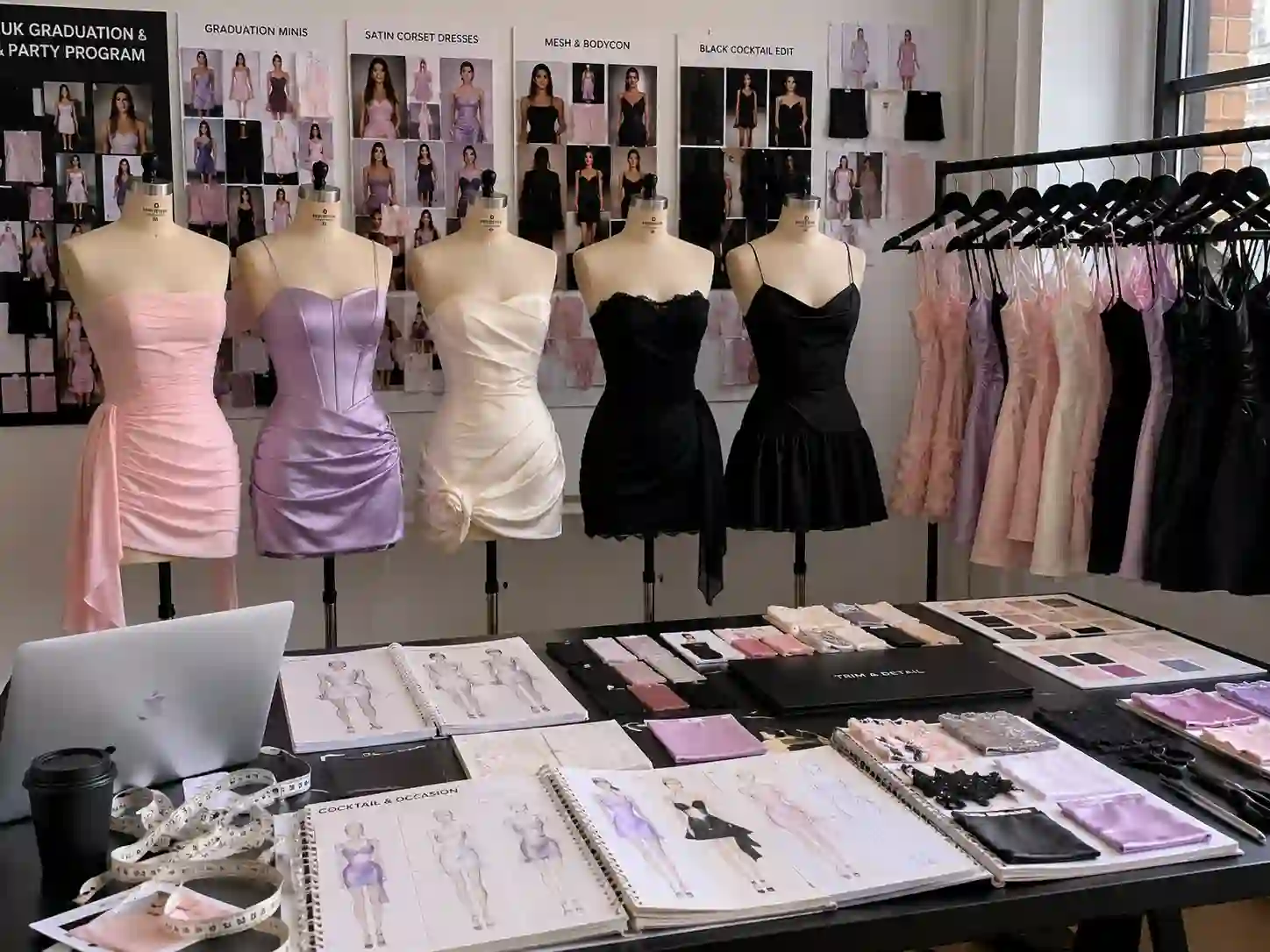
A graduation dress has to perform in a setting that fashion photographs rarely show. It may spend hours beneath an academic gown, move through stairs and crowded seating, appear in bright outdoor photographs, and then become the main outfit for lunch, dinner, or an evening celebration. That combination changes what a useful trend forecast looks like. A silhouette can be visually exciting and still fail the day if it rides up, traps heat, loses support, or clashes with the gown visible in every ceremony picture.
The leading graduation dress trends for 2027 will center on streamlined mini and midi silhouettes, softly structured bodices, elongated waists, controlled draping, modern white dresses, expressive blues and pinks, breathable textured fabrics, refined lace, and selective embellishment. The strongest designs will balance visual impact with support, opacity, movement, gown compatibility, and enough comfort for a full day of ceremonies and celebrations.
The most memorable 2027 styles will not necessarily be the loudest dresses in the room. They will be the ones that still look composed after two hours of sitting, stay secure while the graduate crosses the stage, and reveal a clear personality when the gown opens for photographs. That is where trend prediction becomes practical product judgment: color, fabric, structure, and fit have to work together rather than competing for attention.
What Graduation Dress Trends Will Define 2027?
Graduation fashion in 2027 will favor clean, body-aware silhouettes with one memorable feature rather than excessive decoration. Fitted minis, streamlined midis, compact A-line shapes, elongated waists, asymmetric necklines, and controlled draping will lead. The most useful styles will remain comfortable beneath a gown and look complete once it is removed.
Which Silhouettes Will Lead?
The strongest 2027 silhouettes will sit between strict minimalism and heavily decorated occasionwear. A slim sheath, fitted mini, or clean column midi occupies little volume beneath an academic gown, yet each still needs enough mobility for stairs, long periods of sitting, and fast transitions between venues. The shape should come from balanced pattern work rather than extreme negative ease. Curved side panels, a correctly positioned waist, moderate stretch, and controlled seam shaping usually create a cleaner result than simply cutting the body measurements smaller.
Compact A-line and fit-and-flare dresses will remain important because they offer movement without losing a defined waist. The most practical skirts use panel shaping, restrained pleats, or limited gathering rather than a large amount of fullness. Too much volume can bunch around the lap, distort the gown from the outside, and hold heat. A four-panel or six-panel skirt can create a graceful fall while keeping the total sweep controlled enough for stage movement and seated comfort.
Elongated and drop-waist constructions will bring a clearer fashion update. A commercial graduation version may lower the waist seam approximately 5 to 10 centimeters below the natural waist before releasing into a modest skirt. The drop cannot be applied as a fixed decorative line across every size. Torso length, high-hip position, and fabric structure determine whether the seam lengthens the body or cuts across its widest point. Fit testing should therefore evaluate the proportion on more than one body height and at least one upper size.
Soft corset styling will continue, although comfort will matter more than visible boning. Princess seams, shaped cups, internal elastic, and flexible support can produce a sculpted upper body without the stiffness associated with formal evening corsetry. For a graduation dress, the wearer should be able to sit upright, lean forward, clap, and breathe comfortably. The bodice is successful when it remains stable through those movements without requiring repeated adjustment.
Are Mini and Midi Dresses Still Dominant?
Mini and midi lengths will remain the most commercially useful options, but they serve different moments and customer expectations. Minis feel youthful, remain almost fully hidden beneath many gowns, and transition naturally into after-parties. Midis offer more coverage and a polished appearance that suits university, postgraduate, and professional-school ceremonies. Above-knee and knee-length dresses provide a practical middle ground for customers who want easy movement without a noticeably short hem.
The main risk in a mini dress is not the standing front length; it is what happens during movement. A narrow lining, insufficient hip ease, weak fabric recovery, or an overly tight hem can make the dress travel upward while walking. The fitting should include sitting, stair climbing, entering a vehicle, and walking in the intended shoe height. A dress that meets the length specification on a mannequin may still provide inadequate coverage during real use.
Midi dresses need to be tested with an academic gown. A clearly visible midi hem can look deliberate, while a narrow strip appearing below the robe may seem accidental. The exact result depends on wearer height, gown length, and where the dress finishes on the calf. A straight midi also needs a usable walking opening. Stretch, a reinforced vent, or a stable slit can provide stride without allowing the skirt to twist or open excessively.
Maxi dresses will remain a smaller, more formal option. They can create a dramatic reveal after the ceremony, but additional length brings heat, weight, and a greater chance of catching the heel. A full-length style is more convincing when the customer has a separate formal celebration or when the event has a clearly elevated dress code. For standard daytime ceremonies, shorter lengths usually offer a better balance of polish and practicality.
| Trend Direction | Practical Specification | Commercial Strength | Main Risk to Test |
| Fitted mini | Moderate stretch; secure hem; sitting coverage confirmed | Youthful, easy under gowns, party-ready | Ride-up, zipper waves, excessive compression |
| Column midi | Vent or stretch for walking; hem tested with gown | Polished and reusable after graduation | Restricted stride and accidental hem exposure |
| Compact A-line | Controlled sweep; limited gathering; defined waist | Broad fit acceptance and easy movement | Bulk beneath gown if skirt volume is excessive |
| Drop waist | Waist lowered about 5-10 cm, adjusted by torso and size | Clear 2027 fashion update | Seam crossing the high hip or shortening the legs |
| Soft corset | Flexible support, stable cups, breathable lining | Strong visual shape without formal stiffness | Pressure, cup mismatch, neckline movement |
Which Details Will Feel New?
The freshest details will create one clear focal point rather than covering the whole dress. A twisted neckline, diagonal waist drape, lowered seam, small rosette, or jewel-edged strap can make a familiar silhouette feel new without adding excessive bulk beneath the gown. The strongest detail should be visible either above the gown neckline or after the robe is opened, so the construction cost contributes to a meaningful part of the finished look.
Asymmetric necklines will remain especially useful because they introduce visual movement while allowing the body of the dress to stay clean. One-shoulder styles photograph well, but tension must be balanced across the upper body. If the supported shoulder is too tight, the opposite underarm can gape; if the top edge is too loose, the neckline may shift while the wearer raises her arms. Stable facing, controlled stretch, and correctly placed internal support make the difference.
Ruching will become more selective. Narrow diagonal gathers at the waist, a soft drape over one hip, or a small gathered section at the bust can shape the body and disguise ordinary sitting creases. Heavy gathering across the entire torso often adds bulk and can pull the side seams forward. The fabric weight also matters: lightweight mesh can hold fine gathers, while a heavy satin may collapse into thick folds unless the pattern reduces the excess carefully.
Rosettes, bows, pearls, and crystals will remain visible, but graduation-friendly versions should be flatter, lighter, and easier to wear under a robe. A removable flower pin, a tonal appliqué, or a narrow crystal strap gives a celebratory finish without pressing against the body for several hours. Removable elements also let the wearer keep the ceremony look restrained and add more impact for photographs or the evening event.
How Will Modern Femininity Evolve?
Modern femininity in 2027 will rely less on stacking every traditionally feminine element into one garment. A powder-blue fitted mini can feel soft because of its color and proportion without needing lace, bows, and ruffles at the same time. A black column dress can become romantic through one shoulder flower, while a white A-line style can create interest through curved seams and a lowered waist. Editing the design gives each element more visual authority.
Comfort will become part of the aesthetic rather than something hidden behind it. Adjustable straps, stretch-backed bodices, lighter linings, covered boning ends, and secure necklines help the wearer appear composed because she is not repeatedly pulling the dress into place. A full graduation day can extend from morning preparation to an evening celebration, so a design that looks structured but feels punishing will lose value quickly in reviews and repeat wear.
The category works best between daytime polish and evening celebration. A dress that is too plain may feel like an ordinary summer purchase, while one with dense beading, sweeping volume, or a highly theatrical neckline can drift toward prom. The most convincing graduation styles offer a recognizable fashion point, a balanced amount of skin exposure, and enough versatility to be worn again for dinners, parties, or summer events.
For collection planning, modern femininity is most commercially useful when it appears across several fit experiences. A fitted satin dress, a bra-friendly A-line, a draped mesh midi, and a structured cotton mini can share the same color story and design language without asking every customer to wear the same silhouette. That variety makes the range feel more thoughtful and reduces dependence on a single body-conscious trend.
Which Graduation Dress Colors Will Trend in 2027?
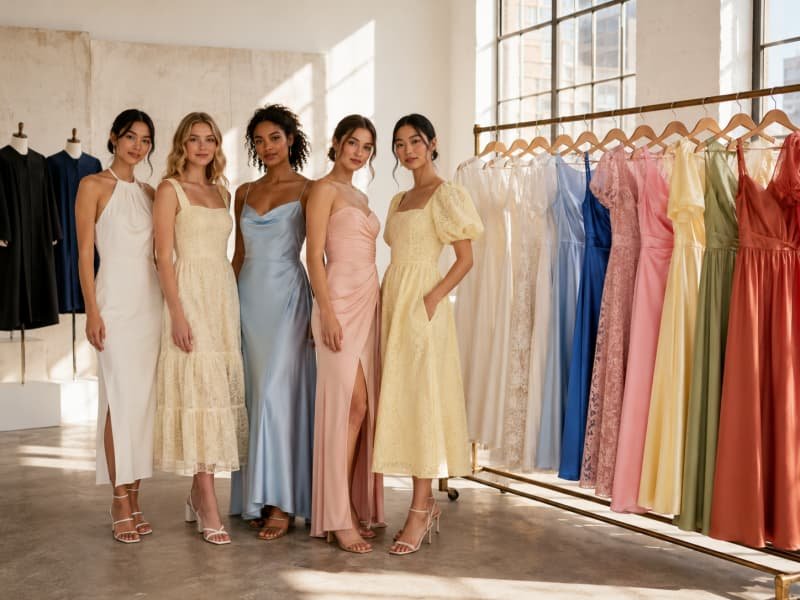
White and ivory will remain essential, but 2027 graduation collections will become more colorful. Luminous blues, expressive pinks, warm yellows, energetic orange, meadow greens, and clay-based neutrals offer credible directions. The strongest color plans will balance tradition with photography, gown coordination, fabric luster, skin tone variety, and dependable shade consistency in production.
Is White Still the First Choice?
White will remain one of the most important graduation colors, particularly in markets where a white dress has become part of the ceremony tradition. It contrasts clearly with black and navy academic gowns, feels fresh in spring photography, and gives retailers a recognizable core category. The technical challenge is that white reveals construction problems more quickly than darker shades. Transparency, mismatched lining, visible seam allowances, yellow-toned cups, and zipper color differences can all become obvious in daylight.
A complete white program should distinguish optic white, soft white, ivory, cream, and oyster rather than treating them as interchangeable names. Optic white creates a crisp contrast and can feel modern in structured silhouettes. Ivory and cream are warmer and often softer against the skin. The final impression changes with the fabric surface: a shiny satin can make ivory look more golden, while matte crepe may make the same shade appear quieter and closer to neutral.
Opacity must be checked on the body, not only by holding a fabric swatch toward a light. The shell, lining, seam allowances, underwear color, and camera exposure all influence what can be seen. White dresses should be photographed outdoors, indoors, and with phone flash after the wearer has moved and sat down. A lightweight style can remain comfortable without becoming transparent when the lining tone and density have been selected as part of the original fabric decision.
Bulk shade consistency deserves equal attention. White lots can shift toward blue, yellow, gray, or pink even when each roll is commercially described as the same color. A physical standard should be approved under controlled light, and the shell, lace, mesh, thread, zipper, elastic, lining, and cups should be compared together. When different components are slightly mismatched, the difference often appears stronger in a high-resolution graduation photograph than it does on the factory table.
Which Pastels Will Rise?
Pastels will remain commercially important, but the strongest versions will look cleaner and more intentional than overly sweet color stories. Powder blue, cool lilac, pale yellow, washed peach, soft pink, and mint can provide a ceremony-appropriate alternative to white. These shades work particularly well in matte satin, fine crepe, textured wovens, embroidered cotton, and softly layered mesh, where the surface gives the color enough depth to avoid looking flat.
Blue has especially broad potential. Powder blue feels fresh, photographs clearly, and coordinates easily with white accessories. More luminous blue offers a stronger fashion statement while remaining easier to wear than neon color. The shade should be tested against navy and royal-blue academic gowns. A dress that sits only slightly apart from the gown color may look mismatched; a much lighter blue or a deliberately saturated blue usually creates a more confident relationship.
Soft yellow will continue beyond the recent butter-yellow cycle, ranging from pale lemon to warmer custard and straw tones. Pale yellow can become transparent in lightweight satin, so opacity should be tested before the shade is approved. Pink will split between restrained blush or shell tones and brighter raspberry or pop pink. Lilac offers a less expected option, although gray-heavy purple may look dull under indoor hall lighting unless the undertone is carefully controlled.
Pastel colors are sensitive to batch variation because small shifts are visible when several dresses are photographed together. Digital lab values can support evaluation, but they do not replace a physical standard. The approved shade should be reviewed under daylight, warm indoor light, and a standard cool light source. For online retail, the product team should also check how the color changes on phone screens, since pale blue and lilac are easily misrepresented by automatic camera correction.
| Color Family | Practical Range Share | Best Role | Key Production Check |
| White, ivory, cream | 35-45% | Core graduation demand | Opacity and component shade matching |
| Soft blue, pink, lilac, yellow | 20-30% | Photogenic seasonal options | Gown coordination and dye-lot consistency |
| Bright blue, red, vivid pink | 10-20% | Statement and social styles | Colorfastness and accurate photography |
| Green, clay, warm neutrals | 10-15% | Sophisticated alternatives | Undertone under daylight and indoor light |
| Prints and novelty color | 5-10% | Limited capsules and image pieces | Placement, scale, and reorder feasibility |
Are Bold Colors Becoming More Popular?
Bold color will become a stronger part of graduation fashion as customers look for a more individual reveal beneath a largely uniform gown. Luminous blue, raspberry, red, energetic orange, emerald, and vivid pink can provide that identity without requiring complicated decoration. A simple silhouette often carries strong color better than a highly detailed one because the hue becomes the focal point and the dress remains wearable after the ceremony.
Bright blue is one of the most adaptable choices. It appears celebratory, photographs well against black gowns, and works across fitted, draped, and A-line shapes. Pop pink and raspberry support fashion-led mini dresses, but not every customer wants a saturated look. Offering the same proven shape in white, soft pink, and vivid pink allows the range to address different comfort levels without multiplying pattern risk.
Energy orange and bright green are more directional and may be better suited to limited capsules, warm-weather markets, or campaign styles. Red remains a dependable statement color, especially in clean square-neck, halter, or one-shoulder silhouettes. The fabric finish should support the color. A highly reflective satin can push a bright shade toward nightlife, while matte crepe or a fine texture can make the same color feel more suitable for a daytime ceremony.
A commercial range should not allocate equal depth to every trend shade. Core colors need more silhouettes and larger stock commitments, while high-energy colors can be introduced through selected styles and tested against real customer response. This approach keeps the collection visually fresh without creating a large amount of fragmented inventory. It also makes repeat orders easier because the strongest-performing color and silhouette combinations can be replenished without carrying every shade across every style.
How Should Colors Work With Graduation Gowns?
The academic gown is the largest visible color block during the ceremony, so dress color should be judged as part of the complete outfit. Before the gown opens, only the neckline, shoes, and perhaps the hem are visible. A beautiful dress color can therefore look weaker when it competes with the robe, hood, stole, and honor cords. Black gowns are easiest to coordinate, while navy, royal blue, burgundy, green, and white robes require more deliberate contrast.
Black supports white, pastel, jewel, and saturated color. Navy works well with ivory, pale yellow, soft pink, coral, and red, but dark-blue dresses may disappear into the robe. Royal-blue gowns usually look stronger with a clearly lighter or contrasting dress rather than a similar middle blue. Burgundy gowns can work with ivory, black, blush, or powder blue, while green gowns often pair well with white, lilac, pink, or warm neutral shades.
The academic hood and stole should not be ignored. A bright hood may sit directly above the dress neckline and introduce colors that were not considered during product styling. For content and product photography, showing selected dresses with common gown colors can help customers make a quicker decision. This is more useful than presenting every dress only against a neutral studio background, where coordination problems remain hidden until the ceremony day.
Light-colored gowns create an additional concern because dark prints or strong color blocking may show through thin robe fabric. The full outfit should be checked in daylight and under indoor stage lighting. Phone cameras can increase contrast and make a subtle mismatch appear stronger. A brief real-world styling test using the dress, gown, hood, shoes, and intended underwear remains the most dependable method for avoiding an unexpected result in the photographs that matter most.

Which Fabrics and Details Will Matter Most?
The most useful 2027 fabrics will combine a refined surface with low bulk, breathability, opacity, and dependable recovery. Matte satin, crepe, lightweight textured wovens, chiffon, lace, and layered mesh will remain important. Decoration will become more selective, using tonal appliqué, pearls, embroidery, or controlled sequins instead of heavy surface treatment across the entire dress.
Is Satin Still Relevant?
Satin will remain important because it can make a simple graduation dress feel polished without relying on heavy ornament. It moves naturally from ceremony to dinner and produces a refined line in photographs when the luster is controlled. The term satin, however, covers many different fabric constructions. Lightweight, midweight, stretch, matte, and high-shine satins do not behave in the same way, so the product decision should begin with performance rather than the fabric name alone.
Lightweight satin drapes attractively but can cling to the body, show seam allowances, and reveal underwear lines. Midweight satin gives more coverage and support, although it can feel warm under an academic gown. Stretch satin helps fitted silhouettes move, but weak recovery may create rippling around the zipper, waist, and hip after sitting. A fabric should be extended repeatedly during development and then allowed to recover before the sample is evaluated again.
Matte or low-luster satin often offers the best graduation balance. It retains depth and movement without producing harsh highlights in direct sun or camera flash. Highly reflective satin can exaggerate wrinkles, seam puckering, and body contours, particularly in pale colors. Pressing also needs control because excessive heat or pressure can leave shine marks. The production method should specify suitable temperature, protective cloth use, and the point at which final pressing occurs.
Bias-cut satin requires additional time. Panels cut on the bias can lengthen, twist, or develop an uneven hem after hanging. The sample should relax before hemming, then be remeasured after at least twenty-four hours. Side seams should be checked for spiraling, and the lining must not restrict the natural drop. A bias dress that is rushed through sampling can appear correct at approval and change shape after packing or several hours on a hanger.
How Will Lace and Mesh Evolve?
Lace will become more targeted and less dependent on traditional all-over coverage. Placement at the neckline, side waist, upper back, or hem can provide texture while keeping the overall shape modern. Tonal lace over a closely matched lining is especially useful because it creates depth without introducing a strong contrast that may compete with the gown, stole, or graduation accessories.
Eyelet and embroidered cotton offer a warmer-weather alternative to formal lace. A clean square-neck mini, structured A-line, or refined midi in modern eyelet can look fresh and breathable. The embroidery scale should be matched to the pattern pieces, and the backing or thread ends must be checked against the skin. Large open areas may require a separate lining strategy so that the dress remains secure without losing the lightweight character that made the material attractive.
Mesh will continue to support fitted and draped styles. Single-layer fashion mesh can create decorative transparency, while double-layer mesh offers better opacity and holds fine ruching more evenly. Power mesh may provide internal support, but it should not be confused with the softer outer layer. Each quality has a different stretch ratio, recovery, hand feel, and seam behavior.
Mesh testing should include stretch in both directions, recovery after repeated extension, seam strength, growth after hanging, snagging, and the visibility of cups or seam allowances. Clear elastic, narrow facing, or an internal support layer may be needed around a sheer neckline. A fabric that creates beautiful gathers can still fail if it cannot hold the neckline or if the layers grow at different rates after several hours of wear.
| Fabric Type | Indicative Weight | Suitable Use | Main Risk to Test |
| Lightweight satin | 90-130 gsm | Draped minis and slip shapes | Cling, transparency, seam grin |
| Midweight satin | 130-190 gsm | Fitted and softly structured dresses | Heat, shine marks, seam puckering |
| Stretch satin | 150-220 gsm | Bodycon and corset styles | Recovery, zipper waves, growth |
| Lightweight crepe | 120-170 gsm | A-line, sheath, draped styles | Opacity, shrinkage, shade variation |
| Chiffon | 50-90 gsm | Overlays, sleeves, soft skirts | Snagging, transparency, lining weight |
| Fashion mesh | 30-90 gsm | Panels, layers, ruching | Growth, recovery, seam instability |
| Cotton or linen blend | 110-220 gsm | Structured minis and warm-weather A-lines | Creasing, shrinkage, bulk variation |
Are Sequins and Embellishments Practical?
Sequins, pearls, crystals, embroidery, and fabric flowers can work for graduation when their scale, density, and placement respect the ceremony. Dense all-over embellishment adds heat and weight, may catch on the academic gown, and can become uncomfortable against a chair. Selective decoration usually delivers a stronger balance of celebration and wearability.
Practical placements include pearl-edged straps, a small crystal neckline, scattered sequins, a decorated waist panel, tonal floral appliqué, or a removable rosette. High-friction areas need caution. Beads beneath the arm can irritate the skin, shoulder embellishment may rub against the gown, and decoration at the back hip can become uncomfortable during long periods of sitting.
Each component should be tested for attachment strength, sharp edges, exposed thread ends, skin contact, snagging, packing pressure, and consistency across sizes. Embellishment placement often changes visually when a pattern is graded. A motif that sits correctly on the bust in the base size may drift toward the armhole or center front in larger sizes unless the placement plan is adjusted rather than enlarged mechanically.
Removable decoration can increase versatility. A flower, bow, or jeweled brooch may be kept off beneath the gown and attached for photographs or the evening event. The fastening should remain secure and should not damage satin, mesh, or lace. All-over sequin dresses can still serve party-led graduation ranges, but they require covered seam allowances, stable lining, reinforced zipper areas, and packing that prevents abrasion.
Which Fabrics Work Best?
Warm-weather performance should be evaluated under the academic gown rather than in an air-conditioned fitting room. Cotton blends, lightweight crepe, selected viscose blends, linen blends, chiffon, and breathable textured wovens can all work, but the lining may determine the final comfort more than the shell. A lightweight shell paired with a heavy polyester lining can still trap heat and cancel the fabric advantage.
Cotton poplin and cotton blends suit A-line, babydoll, and fit-and-flare dresses because they hold a clean shape without heavy internal support. Pure cotton can crease sharply after sitting, so blends or appropriate finishes may improve recovery. Linen blends offer airflow and texture, but pure linen may show severe lap and hip creasing. Linen-viscose or linen-polyester blends can provide more drape and a less crushed appearance.
Crepe remains one of the most versatile choices. A fine lightweight crepe can create a smooth sheath, soft A-line, or draped midi without the shine of satin. It should be tested for opacity, shrinkage, snagging, surface pilling, and shade variation. Chiffon works best as a sleeve, overlay, or skirt layer, supported by a lining that remains lighter than the effect it is meant to create.
A useful wear trial goes beyond looking at the dress after steaming. The wearer should sit for at least thirty minutes, spend time beneath a gown, walk, climb stairs, and raise both arms. The dress should then be photographed in daylight, indoor light, and flash. After hanging overnight, the hem, side seams, and key measurements should be checked again. This simple sequence reveals heat, wrinkling, transparency, twisting, and fabric growth before bulk production begins.

How Should a Graduation Dress Fit and Function?
A graduation dress should remain secure while sitting, walking, climbing stairs, and taking photographs. Dependable designs use stable necklines, suitable bust support, enough skirt movement, breathable lining, and limited bulk. Fit must be reviewed both with and without the academic gown because collars, sleeves, hems, boning, and embellishments can behave differently once the outfit is layered.
Which Length Works Under a Gown?
The most dependable commercial zone is generally above the knee through knee length because these dresses remain largely concealed beneath standard academic gowns while allowing movement. The final garment length should still be communicated in centimeters or inches. Terms such as mini and midi are not precise enough for online shoppers because the same dress will finish differently on a petite customer and a taller customer.
Mini dresses need a movement-based fitting. During sitting, the fabric travels upward across the hip; during walking, friction between the lining and shell can make the dress rise further. The test should include standing, full sitting, climbing and descending stairs, bending to adjust a shoe, entering a vehicle, and walking in the intended heel height. The front hem alone cannot prove that the dress provides secure coverage.
Midi dresses require a gown-length check. The hem may be fully hidden, clearly visible, or show only a narrow strip. A deliberate visible midi can look polished, while a small accidental section may create an awkward layer in photographs. Straight midis also need a practical stride. Stretch, a reinforced back vent, or a carefully positioned slit can provide movement without allowing the skirt to twist or open excessively.
Maxi lengths need enough clearance for stage movement and footwear. The wearer should not have to hold the skirt while crossing the stage. When a maxi is included, its strongest role may be a separate dinner or evening option rather than the default ceremony dress. Product pages should state both the garment length and the model height, and should show the dress with shoes comparable to those likely to be worn at graduation.
Which Silhouettes Suit Different Body Shapes?
Useful silhouette guidance should explain where a garment provides ease, structure, or adjustment rather than presenting body shapes as problems to correct. A-line dresses define the upper body and release through the hip, while fitted styles emphasize contour. Column dresses create a clean vertical line, and fit-and-flare shapes provide a defined waist with more freedom through the skirt. A strong range offers several of these fit experiences.
Bodycon dresses can work across a broad size range when the stretch, lining, and pattern shaping are developed deliberately. Uniform grading from a small base size may not preserve bust balance, waist position, strap placement, or hem length. Upper sizes may need changes in dart intake, cup depth, torso length, and ease distribution rather than a simple enlargement around every edge.
Draped dresses can adapt well to different figures, but the gathers must remain in the intended position. Heavy fabric may pull a side drape downward, while an overly tight pattern can spread the gathers and expose areas that should stay covered. A drape anchor, stable side seam, or internal elastic may be needed to keep the shape consistent after sitting and movement.
Range diversity is more useful than declaring one universally flattering silhouette. A fitted stretch style, a softly shaped woven dress, a bra-friendly A-line, an adjustable-strap option, and a midi with comfortable hip ease allow customers to choose the support and coverage they prefer. This approach also reduces fit-related returns because the collection does not ask every customer to accept the same neckline, waist placement, and level of body exposure.
| Control Area | Practical Working Tolerance | Functional Reason | Wear Test |
| Bust, waist, hip | Commonly +/-1.0 cm on half measurement | Controls fit and silhouette | Sit, walk, and compare drag lines |
| Strap length | Commonly +/-0.5 cm | Changes neckline position and pressure | Raise arms and wear for 30 minutes |
| Front neckline depth | Commonly +/-0.5 cm | Affects coverage and stability | Clap, bend, and wear with gown |
| Dress length | Commonly +/-1.0 cm | Visible in photos and gown interaction | Sit, climb stairs, test intended shoes |
| Slit or vent height | Commonly +/-0.5-1.0 cm | Controls stride and coverage | Walk quickly and climb steps |
| Paired details | Visually level to approved standard | Uneven cups, straps, and seams are obvious | Front and back photography |
| Embellishment placement | Commonly +/-0.5-1.0 cm | Maintains symmetry and size consistency | Check under gown and after packing |
Which Necklines Offer Better Support?
Square necklines will remain strong because they frame the face, work with wider straps, and sit visibly above many graduation gowns. The corners need reinforcement to prevent stretching and gaping. Depending on the fabric, stay tape, clear elastic, stable facing, or a carefully controlled lining may be required. The neckline should be evaluated after arm movement because a stable standing position can hide lifting and distortion.
Halter necklines create a clean summer look and can provide good front coverage with an open back. Strap width and neck pressure are critical. A narrow tie carrying significant bust weight may become uncomfortable after several hours. Wider halter bands, adjustable closures, or partial elastic can distribute pressure more effectively. The armhole should remain close to the body without cutting into the skin when the wearer raises her arms.
Strapless dresses require the most internal engineering. Cups, boning, gripper elastic, stable lining, and waist anchoring may all contribute to support. The wearer should not need to pull the bodice upward during photographs or applause. One-shoulder designs also require tension balance: the supported shoulder must hold the dress without twisting the torso or allowing the opposite neckline edge to gape.
Sweetheart and V-neck styles can provide attractive shaping, but depth should be reviewed across the entire size range. A neckline that looks appropriate in the base size may become significantly deeper after grading. Support testing should include bra compatibility, cup position, center-front stability, underarm gaping, reaching upward, clapping, and at least thirty minutes of wear. Reliable support is a product feature, not an invisible technical detail.
How Do You Balance Comfort and Structure?
Structure should hold the design in place without making the dress feel rigid. More boning does not automatically create better fit. Flexible support placed along side seams, princess lines, or open-back edges can stabilize the bodice with less pressure. Boning ends must be covered, channels should remain flat, and the internal pieces should not become visible through smooth satin or pale shell fabrics.
Cups need to match the intended customer range. One fixed cup shape rarely performs equally well across every garment size. The product team should decide whether the style is designed for a narrow bust range or whether cup depth and placement need to change through the grade. Incorrect cup position can distort a square, sweetheart, or strapless neckline even when the garment meets the basic bust measurement.
Lining controls comfort, opacity, and stretch. A rigid lining inside a stretch dress can restrict movement and make the shell ripple. A lining with excessive stretch may fail to support the outer fabric. Shell and lining should be extended together and allowed to recover before the sample is approved. In white dresses, the lining color must also provide coverage without appearing noticeably different through the shell.
Comfort approval needs time. Pressure at the neck, waist, underarm, or boning ends may not appear during a five-minute fitting. A practical trial should include at least thirty minutes of seated wear, repeated walking, arm movement, and time beneath the gown. The dress should remain secure without constant adjustment, and the wearer should be able to breathe, eat, and move naturally throughout the day.

How Can Brands Develop Graduation Dresses for 2027?
Brands should build 2027 ranges around proven ceremony needs and apply trends selectively. Begin with reliable white, ivory, blue, and soft-color silhouettes, then introduce fashion through elongated waists, asymmetric necklines, draping, and controlled embellishment. Every design should pass gown, movement, opacity, photography, and repeat-production checks before the collection is committed to bulk manufacturing.
Which Styles Should Anchor the Range?
A strong graduation collection needs commercial structure rather than a group of unrelated trend pieces. Core products should address the largest customer needs, while fashion styles create attention and distinguish the range. A practical twenty-style starting plan might include seven or eight dependable core styles, four or five seasonal-color products, three or four elevated-fabric options, two or three directional silhouettes, and one or two statement campaign pieces.
Core products may include a white square-neck mini, an ivory A-line dress, a blue fitted midi, a bra-friendly fit-and-flare, and a simple satin style. They should use stable materials, repeatable trims, and construction that can be controlled through the size range. Seasonal styles can introduce powder blue, pink, yellow, green, and clay, while directional pieces may explore a drop waist, asymmetric neckline, Grecian drape, or removable rosette.
The assortment should cover several commercial roles. Core sellers provide accessible silhouettes with broad fit acceptance. Traffic styles create strong imagery and attract attention. Margin styles use elevated material or construction to support a higher price. Reorder styles rely on stable fabrics, trims, and proven patterns. Image pieces add editorial impact but may carry lower volume. One product can serve more than one role when its fit, color, and cost are balanced correctly.
A coherent collection should also include different support levels and body exposure. A fitted satin mini, bra-friendly A-line, draped mesh midi, and structured cotton dress can share a color story without asking every customer to wear a strapless or body-conscious silhouette. This variety makes the range more inclusive, improves cross-selling, and reduces the commercial risk of relying on one trend expression.
How Do You Build a Color and Fabric Matrix?
A color-and-fabric matrix prevents the range from becoming visually repetitive or operationally fragmented. The process begins with a small number of core silhouettes and an honest assessment of which materials suit each shape. A fitted corset mini may work in stretch satin, bonded crepe, or stable stretch woven fabric, while an A-line style may perform better in poplin, crepe, jacquard, or embroidered cotton.
Each silhouette should not automatically be offered in every color. White may need a heavier shell or additional lining, while the same fabric in blue can work at a lower weight. Pale yellow satin may become transparent, and bright pink may reveal color rubbing or uneven dyeing more clearly. The matrix should record fabric weight, stretch direction, lining, available colors, material minimums, color-lot risk, trim availability, target cost, sample status, and reorder feasibility.
Material consolidation improves both consistency and speed. When ten styles use ten unrelated fabrics, every sample, color approval, and repeat order becomes harder to manage. A controlled program might use one core crepe across four dresses, one stretch satin across three fitted styles, and one mesh quality across two draped products. Variety can still come from silhouette, color, trim, and proportion while the underlying supply structure remains manageable.
The matrix should be updated after wear tests and costing, not treated as a static design document. A fabric may look ideal on the first sample but fail the opacity, recovery, or target-price requirement. Another may suit the silhouette but have an unstable lead time. Recording these decisions allows the team to understand whether a substitution requires only a color approval or a new pattern and fit review.
What Fit Risks Should Be Tested?
Graduation dresses combine occasionwear expectations with extended real-world use, so fit testing should cover both appearance and function. Fitted styles need checks for bust compression, waist placement, hip drag lines, skirt ride-up, zipper rippling, lining restriction, slit movement, and hem twisting. These risks are connected: a lining that is too tight may pull the shell upward and create both ride-up and zipper distortion.
Halter, backless, strapless, and one-shoulder dresses require additional support tests. Strap pressure, cup position, underarm gaping, neckline movement, side-seam balance, and back-edge stability should be reviewed after sitting and arm movement. Open-back styles need enough tension to stay close to the body without pulling the side seams toward the back or causing the front neckline to lift.
Material-specific tests are equally important. White and pastel styles need opacity checks. Mesh, lace, and chiffon need seam-strength, snagging, and growth tests. Satin requires pressing, puckering, and shine-mark evaluation. Embellished products need attachment and abrasion checks. A design should not move to bulk simply because the front appearance is attractive; the known failure points of its fabric and construction should be documented and resolved.
Important fitted products should be reviewed in more than one size. A middle-size sample can confirm the basic pattern, but it cannot prove that bust shape, strap position, torso length, waist level, or hem proportion grade correctly. The fitting models should perform actual graduation-day movements while wearing a representative gown. A style that succeeds only in a front-facing studio pose is not commercially ready.
How Can Sampling Reduce Production Risk?
Sampling should convert a fashion idea into a repeatable production standard. Each sample stage needs a clear purpose. The development review confirms the target customer, occasion, price, quantity, and delivery date. Fabric review examines weight, stretch, drape, opacity, recovery, and availability. The first prototype establishes silhouette and construction. Fit and revised samples correct balance, support, movement, and measurable comments before presentation-quality and pre-production samples are approved.
Comments should be specific enough for a pattern or sewing team to act on. A request such as “improve the neckline” leaves too much room for interpretation. A note such as “raise the center-front neckline by 1 centimeter, reduce the upper edge by 0.5 centimeter, and add clear elastic to control gaping” identifies the problem, the direction, and the expected result. Clear comments reduce unnecessary rounds and protect the development calendar.
The approved sample should be supported by a final measurement specification, pattern version, construction sheet, stitch and seam standards, fabric and trim references, color approval, embellishment placement guide, pressing method, and packing instructions. These records connect the sample room to bulk production. Without them, the factory may reproduce the general appearance while changing details that affect fit, durability, or visual consistency.
For established fashion labels planning multi-style graduation programs, the early brief should include tech packs or reference images, target measurements, estimated quantities, target pricing, sample deadlines, bulk delivery windows, packaging, and market requirements. Duolan Apparel can coordinate dress-focused fabric sourcing, pattern engineering, sample development, specialist processes, bulk production, and repeat-order preparation through its Guangdong-centered development and manufacturing network. A focused project evaluation before sampling helps identify fabric behavior, fit risk, and production constraints while there is still time to make practical changes.
A graduation range earns its place in the market when the dresses still feel current after the campaign imagery has passed. The most dependable products combine a clear trend point with secure fit, practical movement, controlled materials, and records that allow the approved result to be repeated. That discipline is especially important in a seasonal category, where photography, launch, ceremony dates, and replenishment windows leave little room for avoidable development delays.
Brands preparing 2027 graduation collections can send Duolan Apparel their tech packs, sketches, inspiration images, physical reference samples, target size range, estimated quantities, price objectives, and delivery calendar. The development team can review silhouette feasibility, fabric and lining behavior, fit risks, decoration methods, sampling stages, and bulk-production requirements before a quotation is finalized. Project inquiries can be sent to duolan apparel for custom graduation dress development, seasonal collection sampling, bulk manufacturing, and repeat-order support.