Skip to content
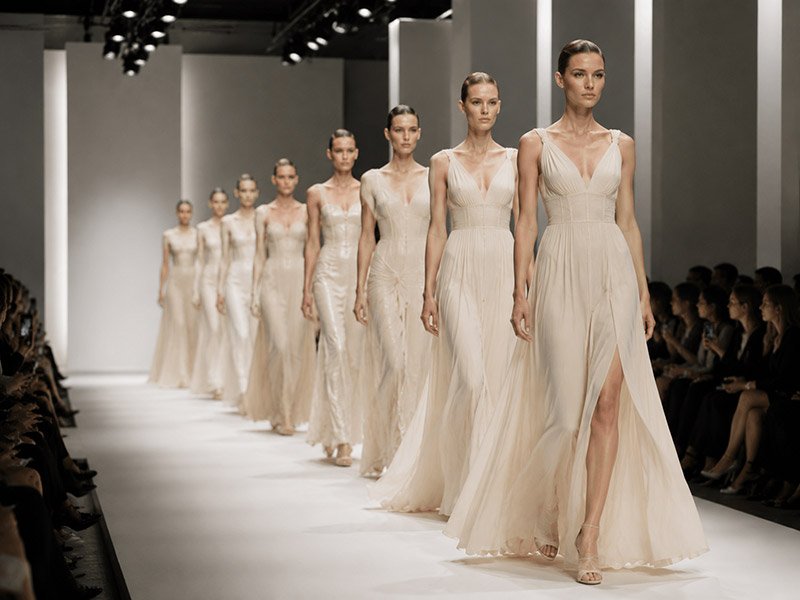
A dramatic dress can command attention on a runway and still fail completely on a retail product page. The sculpted shoulder may be too difficult to layer under a coat. The translucent fabric may look striking under show lighting but create lining, fit and return problems in real life. The hand-applied surface treatment may communicate luxury while pushing the final price far beyond what the brand’s customer normally accepts. Runway relevance and commercial potential are related, but they are not the same thing.
Fashion brands translate runway trends into commercial dresses by isolating the strongest visual signal, checking it against the customer, occasion, price and brand identity, and then rebuilding the silhouette, fabric, fit and construction for repeatable production. The goal is not to copy a showpiece. It is to preserve enough newness to feel current while making the dress wearable, understandable, profitable and scalable.
Imagine two product teams seeing the same exaggerated drop-waist dress. One copies the exact volume, costly textile and difficult internal structure. The other keeps the lowered waist, controls the skirt fullness, chooses a stable commercial fabric and develops three occasion-relevant versions. Both followed the same trend, but only one created a product system that could survive beyond the first sample. The difference lies in a disciplined translation process that protects the idea while removing the reasons customers, merchandisers and production teams might reject it.
What Makes a Runway Trend Commercial?
A runway trend becomes commercial when customers can understand it, wear it for a recognizable occasion and buy it within the brand’s expected price range. It must also be technically repeatable. An exciting idea loses commercial value when it creates excessive fit risk, unstable materials, unmanageable cost or a product that feels disconnected from the brand.
Which Signals Show Real Demand?
One memorable runway look is not enough evidence to commit a dress collection. Runway garments communicate creative direction and editorial impact, so some elements are deliberately amplified for a few minutes of presentation. Product teams need repeated signals rather than isolated images. A stronger direction usually appears across several relevant designers, contemporary labels, retail assortments, styling channels and customer searches without looking identical in every place.
The quality of repetition matters more than the raw number of appearances. Ten designers showing red dresses does not mean every label should increase red inventory. Teams should examine whether similar shade families, waist positions, fabric moods or occasion messages are appearing among brands that serve comparable customers and price points. A signal becomes more useful when it can be translated into several products instead of one highly specific showpiece.
Search interest and social engagement can support the decision, but both require interpretation. A fully transparent runway dress may attract enormous attention because it is provocative, while a controlled mesh-panel version may generate more actual purchases because customers know where to wear it and how to style it. The most useful trend often sits between novelty and familiarity: distinctive enough to earn attention, but familiar enough to reduce hesitation.
Is the Trend Right for the Brand?
A trend can be commercially successful in the wider market and still be wrong for a particular brand. Customers recognize a dress label through a combination of silhouette, fit, fabric, exposure, color, price and occasion. When the new direction is translated through those familiar codes, it feels like an evolution. When every product variable changes at once, the dress can appear disconnected from the brand that introduced it.
A fitted eveningwear label might interpret romantic runway volume through a controlled peplum, draped hip detail or sculpted rosette. A resort-focused label could express the same movement through lightweight gathers, a fluid skirt or a relaxed floral surface. Both are responding to the same creative direction, yet each version should feel natural within its own visual language and customer expectations.
Before development begins, the team should ask whether the idea serves an occasion the customer already shops for, works with the accepted level of body exposure, fits the normal price range and can be photographed in the brand’s existing visual language. Retaining two trusted product codes while introducing one major new signal is often safer than changing the silhouette, fabric, fit and price simultaneously.
Does It Fit the Target Price?
Target price should influence design before the first sample, not after the creative direction has already been approved. The largest cost drivers are usually visible early: main fabric price and consumption, lining, internal support, pattern complexity, cutting difficulty, hand-applied decoration, custom trims, print setup and the expected risk of rework. Ignoring these factors often leads to aggressive last-minute simplification that removes the feature customers valued most.
A commercial dress does not need to eliminate every costly element. It needs to spend money where customers can see or feel the value. One accurate corset structure may justify its cost because it improves both fit and visual impact. Several decorative features competing on the same garment may increase labor without creating equal value. The design team should therefore rank features by customer visibility, fit contribution and production risk before sampling.
Many teams work more effectively with a target-cost corridor instead of one rigid number. The lower figure protects the required margin, while the upper figure allows controlled room for a stronger fashion feature. When the first engineering estimate falls above that range, the team can reconsider fabric weight, fullness, lining zones, embellishment placement or operation count while the design is still flexible.
How Long Could the Trend Last?
Trend duration affects how much a brand should invest in patterns, custom materials, color development, marketing and opening inventory. Broad movements such as lower waist placement, softened tailoring, romantic transparency or a renewed interest in body-conscious occasion dressing can evolve across several seasons. A specific novelty trim, viral motif or celebrity-led styling detail may peak and become overexposed within one selling period.
Longer-cycle directions can justify deeper pattern development, proprietary fabric work and a wider family of dresses. Shorter-cycle signals are better handled through existing blocks, available materials, fewer colors and controlled quantities. The team should examine whether the idea can move across mini, midi and maxi lengths; whether it serves more than one occasion; and whether its materials remain useful after the exact trend begins to weaken.
No scoring system can predict an exact end date, but a shared framework improves the quality of the discussion. The purpose is not to remove creative judgment. It is to prevent the loudest opinion in the room from becoming the only evidence behind a large product commitment.
| Commercial factor | Weight | What a strong score looks like |
| Brand relevance | 20% | Fits recognizable brand codes and customer expectations |
| Occasion clarity | 15% | Customer quickly understands where and when to wear it |
| Wearability | 15% | Manageable movement, coverage, support and styling |
| Price compatibility | 15% | Can reach the intended retail and margin range |
| Demand evidence | 15% | Repeated signals across relevant market sources |
| Production repeatability | 10% | Stable materials, workmanship and sizing |
| Collection potential | 10% | Can expand across lengths, colors or related silhouettes |
This scorecard is a discussion tool rather than a universal formula. A result above roughly three quarters of the available points may support broader development, while a mid-range result may justify a limited test with controlled quantities. A lower score does not automatically mean rejection; it may indicate that the idea is better treated as an image piece or editorial experiment than a dependable volume product.
Which Runway Elements Should Brands Keep?
Brands should keep the element that makes a runway direction immediately recognizable and simplify supporting details that add cost, instability or styling difficulty without contributing equal value. The retained signal may be a silhouette, waist position, neckline, fabric mood or surface treatment. Simplification fails when it removes the trend’s identity together with its complexity.
What Is the Core Design Signal?
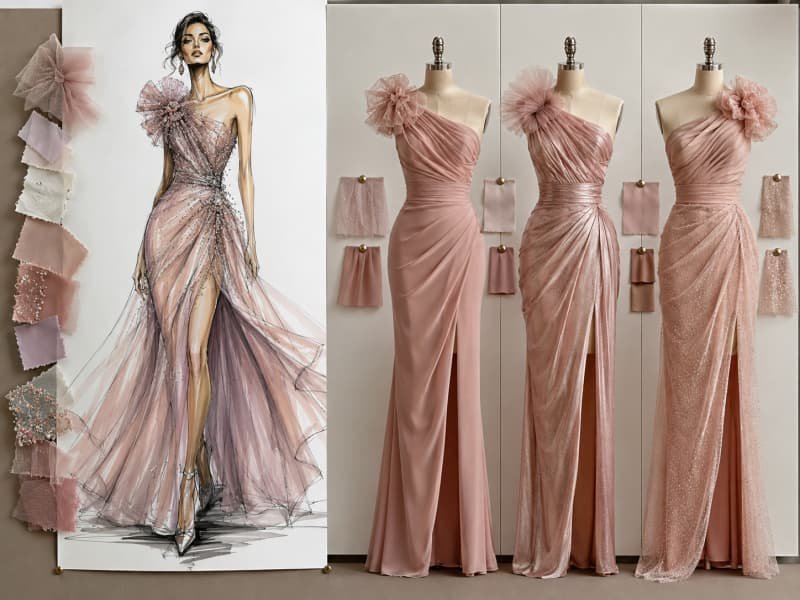
Most runway looks contain a hierarchy of features. One or two elements create the main impression, while the remaining features support the styling or show presentation. Product teams should identify this hierarchy before changing anything. An exaggerated dress may include a lowered waist, oversized skirt, transparent bodice, dimensional flowers and a long train, yet the true signal may simply be the lowered waist combined with a soft three-dimensional surface.
The look can be broken into observable product codes: overall silhouette, waist position, neckline, shoulder line, body exposure, fabric movement, surface texture, hem shape, decorative placement and color relationship. Each code can then be classified as essential, supportive or optional. Essential features must survive development. Supportive features can be adjusted. Optional features can be removed when they create disproportionate cost or production risk.
This method prevents a common mistake: preserving the easiest detail rather than the most important one. A small decorative bow may remain because it is inexpensive, while the distinctive proportion disappears into a generic block. The finished dress technically references the trend but no longer delivers the reason the original runway image attracted attention. If a team cannot describe the primary signal in one clear sentence, consistent development decisions will be difficult.
Which Details Can Be Simplified?
Simplification should remove friction rather than personality. The strongest candidates are details that are difficult to wear, hard to repeat or expensive relative to their visible contribution. Runway garments may rely on temporary support, hand positioning or one precisely fitted model. Commercial dresses must survive grading, packing, transport, repeated trying on and normal movement, so the construction often needs to be redesigned rather than merely copied.
Oversized volume may be reduced through controlled gathers or localized support. A hand-draped surface can become engineered pleats secured at defined points. Dense appliqué can be concentrated at the waist, shoulder or neckline. A fully transparent bodice can be translated through lining zones, double-layer mesh or strategically placed panels. These changes keep the visual message while making the result easier to wear and reproduce.
Teams should review simplification at three levels. Visual simplification reduces competing features. Construction simplification removes unstable seams, unnecessary layers and operations that depend too heavily on one worker’s hand skill. Customer simplification improves entry, fastening, undergarment compatibility, movement and care. One demanding feature may deserve to remain when it creates strong identity; the risk comes from combining several difficult features that customers read as one general effect.
How Do You Preserve Brand Identity?
Brand identity is preserved when a trend is translated through familiar product codes rather than attached to an existing style as superficial decoration. A label known for sculpted fitted dresses should explore how the new direction changes contour, structure and body emphasis. Adding a fashionable flower to an unchanged bestseller may create a seasonal variation, but it does not always produce a convincing interpretation.
The process should start with proven strengths: silhouettes that repeatedly perform, necklines customers recognize, accepted levels of exposure, fabrics associated with the expected quality and occasions that drive repeat purchasing. The trend can then be expressed through those strengths. A transparent direction may become mesh sleeves on a trusted midi block. A dropped waist may be introduced on a familiar mini silhouette. A sculptural movement may appear through a shaped neckline instead of a full architectural skirt.
A good translation feels new and recognizably connected to the label. Returning customers need enough familiarity to trust the fit and enough novelty to justify another purchase. Preserving identity also means rejecting a trend when it forces the collection into an unsuitable price, fit or occasion category. Selectivity is not a lack of trend awareness; it is evidence that the brand understands its own commercial language.
| Runway signal | Literal interpretation | Brand-led commercial translation |
| Extreme transparency | Fully sheer dress | Controlled mesh zones, overlays or lined panels |
| Sculptural flowers | Large all-over appliqué | Focused rosette at shoulder, waist or neckline |
| Deep drop waist | Very low hip seam | Moderately lowered seam balanced to the brand fit |
| Deconstruction | Raw edges and exposed structure | Asymmetric seams, shaped closures or corset lines |
| Heavy metallic surface | Rigid all-over treatment | Foil jersey, shimmer mesh or selected sequins |
| Oversized bubble shape | Architectural hem volume | Softer bubble mini with stable internal control |
What Makes the Look Wearable?
Wearability is not the same as making every design conservative. A daring dress can be commercially wearable when the intended occasion is clear and the construction provides enough stability for the customer to enjoy it. The practical questions are simple: can the wearer get into the dress, choose workable undergarments, move naturally, sit comfortably and trust that the neckline, slit or cutout will remain in position?
A backless dress may need cups, side support, grip tape or carefully placed elastic. A halter dress may require garment weight to be distributed through the bodice rather than hanging from the neck. A high slit may need an adjusted overlap or hidden control point. These details are rarely visible in campaign photography, but they determine whether the customer feels confident during the occasion.
Wearability depends on context. A fitted club dress, vacation dress and wedding guest dress may use similar cutouts but require different levels of support, coverage and movement. The product should therefore be tested through realistic actions such as sitting, walking, climbing stairs, lifting the arms and dressing without assistance. A visually bold design often becomes easier to accept when the fit feels secure and the customer does not need to manage the garment constantly.
How Do You Adapt the Dress Design?
A runway dress is adapted by adjusting silhouette, fabric, pattern, support and finishing as one connected system. These decisions cannot be made independently. A softer fabric changes drape, a lower back changes bust support and additional volume changes balance and consumption. Commercial development works when every technical choice supports the same intended visual effect.

How Should the Silhouette Change?
Silhouette is usually the first signal customers notice, so it should not be weakened casually. The objective is to preserve the proportion that creates newness while controlling extremes that reduce fit coverage, occasion relevance or size consistency. A runway mini may need additional length, but simply extending the hem can distort the leg-to-body ratio. The waist position, skirt opening and hip shape may need to change at the same time.
Before detailed pattern development, the team should define the intended body emphasis, bust support, waist and hip position, target hem length, degree of ease, skirt movement, exposure level and acceptable grading changes. Working from a successful block can reduce uncertainty, especially when the label already owns dependable fit data. However, a familiar block should not be treated as fixed when the new fabric, neckline or waist placement changes garment balance.
The silhouette must also work in motion. A dress that looks correct only when clipped, pinned or carefully posed is not commercially resolved. Front, back and side relationships should remain intentional while the wearer walks, sits and turns. Size grading requires proportional judgment rather than adding equal measurements everywhere; cups, cutouts, waist seams and slit positions may need controlled repositioning to preserve the original visual relationship.
Which Fabrics Support the Shape?
Fabric should be selected for the work the silhouette needs it to perform. Appearance is only one criterion. Weight, drape, stretch, recovery, opacity, surface friction, shrinkage and seam behavior can determine whether the same pattern looks refined or poorly controlled. A bias slip requires fluidity with manageable growth, while a fitted bodycon dress needs stretch that supports the body without excessive shine, transparency or seam stress.
A corset-inspired style may require a stable outer layer, compatible lining and internal reinforcement. A bubble skirt needs enough body to hold volume without becoming heavy. A draped occasion dress needs movement but also predictable cutting behavior. These relationships explain why a beautiful swatch can produce a disappointing garment when it is chosen only for color or surface appearance.
Fabric substitution should be treated as redevelopment rather than a simple purchasing change. When weight, stretch or drape changes, pattern dimensions, support, lining and sewing settings may also need revision. Useful fabric communication describes performance as well as composition: stretch direction, recovery, opacity, surface shine, thickness, shrinkage and shade consistency. Physical sampling remains essential because a small swatch cannot fully show behavior across a fitted bust, long bias skirt or gathered hem.
| Dress direction | Useful fabric behavior | Development checks |
| Bodycon jersey | Balanced stretch with reliable recovery | Growth, opacity, seam grin and waist recovery |
| Satin slip | Fluid drape with controlled bias movement | Puckering, twisting, shade variation and marking |
| Mesh dress | Stable stretch and suitable recovery | Snagging, distortion, transparency and seam strength |
| Corset dress | Structured hand with controlled stretch | Boning visibility, seam stress and bust shaping |
| Bubble mini | Lightweight body and shape retention | Hem balance, weight and internal support |
| Draped occasion dress | Fluidity with manageable cutting behavior | Seam slippage, twisting and consistent fall |
| Sequin dress | Stable backing with acceptable flexibility | Skin contact, shedding, seam bulk and needle damage |
How Do Fit and Structure Change?
Trend translation often succeeds visually but fails structurally. The sketch looks right, the material looks right and the sample still feels wrong on the body. This usually happens when fit is treated as a measurement exercise instead of a relationship among body, fabric and construction. Fitted dresses depend on bust balance, waist shaping, hip contour and recovery, while backless and halter styles remove or relocate structures normally used for support.
Fit comments should be separated into measurement, balance and performance issues. A measurement issue means a defined point is outside the agreed tolerance. A balance issue means the garment hangs forward, backward, twisted or unevenly. A performance issue appears when the dress shifts, rolls, stretches, rides up or exposes during movement. Correcting one category does not automatically solve the others.
Structured dresses should be reviewed from the inside as carefully as from the outside. Cups, boning channels, elastic, lining, seam allowance and closure reinforcement determine whether the shape remains stable. Base-size approval may not be enough for corset, backless, cutout or highly fitted styles. Reviewing at least one additional size can reveal whether cups, openings, straps and design seams retain their intended relationship as the pattern is graded.
What Details Affect Comfort?
Customers rarely describe a return as poor trend translation. They describe the dress as itchy, tight, see-through, unsupported, difficult to zip or restrictive. These practical details can directly affect reviews and returns. Important contact points include underarms, neckline edges, boning ends, zipper guards, waist seams, sequin edges, elastic channels, hooks, internal cups and shoulder or halter straps.
A visually clean halter neckline may become uncomfortable when the full garment weight is carried by the neck. Support can sometimes be redistributed through the back bodice, underbust structure or internal waistband. A fitted sequin dress may need binding or lining at the underarm. A vacation dress intended for warm weather should not carry the same lining and structure as a winter evening dress, even when both use a similar silhouette.
A useful wear test includes ten to fifteen minutes of standing and walking, sitting in a normal chair, raising and rotating the arms, climbing steps, entering and removing the dress, wearing the intended bra or shapewear and checking transparency in natural and strong indoor light. These checks do not replace technical inspection, but they reveal problems that flat measurements cannot capture. Comfort is the engineering that allows the wearer to focus on the occasion rather than managing the garment.
How Do You Validate Commercial Potential?
Commercial potential is validated through design, fit, cost and production checks before a brand commits to broad inventory. The first sample must prove more than visual similarity. It should show that the trend is recognizable, the fit supports the intended customer, the cost fits the business model and the construction can be repeated without uncontrolled variation.

What Should the First Sample Prove?
The first sample should answer the largest unresolved questions. It does not need to perfect every secondary trim, but it must reduce uncertainty. For a draped occasion dress, the proof points might include whether the fabric creates the intended fall, whether the waist placement flatters the target body, whether the drape can be repeated without excessive hand manipulation and whether estimated consumption remains compatible with the target cost.
The team should record what is approved and what remains open. Saying that the sample looks good is too broad. The silhouette may be approved while fit still requires revision. The fabric may be accepted while the construction remains unresolved. Clear approval language prevents provisional details from entering production by accident. Front, back, side, close-up and movement photographs should accompany measurements and written comments.
Any pinning, clipping or temporary adjustment must be documented because it indicates that the current garment is not production-ready. The sample should also be viewed at normal selling distance. A dress may look impressive in a close fitting but lose its signal in ecommerce imagery. Even an unsuccessful first sample becomes valuable when it identifies whether the problem came from fabric, pattern, construction, proportion or the original concept.
How Do You Test Fit and Movement?
Fit testing should reflect the intended occasion. A dress designed for dancing, dining, travel or a formal event faces different movement and comfort requirements. The review should begin with the approved fit model and size specification, but measurement alone is not enough. The team needs to observe balance, pressure, exposure, movement and recovery under realistic conditions.
For fitted products, the wearer should sit for several minutes before the dress is reviewed again. This can reveal fabric growth, waist rolling and seam stress that are not visible during a quick standing fitting. Movement testing should include the intended undergarment because a neckline or armhole may behave differently over the bra, cup or shapewear the customer is most likely to use.
High-risk styles should be assessed in more than one size. Corset, bustier, backless and cutout designs may not retain the same relationships when graded. Cups, openings, straps and design seams often need controlled repositioning. Fit approval means the dress looks right, feels secure and behaves predictably during normal use; these conditions must be considered together rather than approved in separate conversations.
| Test area | What to observe | Practical approval question |
| Neckline | Gaping, rolling or shifting | Does it remain stable without repeated adjustment? |
| Arm movement | Pulling, distortion or restricted reach | Can the wearer raise and move the arms naturally? |
| Bust support | Slippage, compression or cup displacement | Is support suitable for the intended occasion? |
| Waist and hip | Rolling, drag lines or excess pressure | Does the dress recover after sitting and walking? |
| Skirt movement | Riding up, twisting or excessive opening | Does the hem remain controlled in normal movement? |
| Sitting | Exposure, seam stress or discomfort | Can the wearer sit comfortably for the occasion? |
| Dressing ease | Fastening difficulty or assistance required | Is the entry method realistic for the customer? |
Which Costs Must Be Checked Early?
The largest cost drivers should be reviewed before the sample becomes too expensive or emotionally difficult to change. Fabric consumption, lining, internal support, custom trims, embellishment density and operation time are structural choices, not final pricing details. Early costing should distinguish confirmed costs from known materials, estimated costs that depend on final consumption and volatile costs linked to custom processes or uncertain rejection rates.
Many teams benefit from modeling three internal scenarios. The design-intent version stays closest to the original runway concept. The target version is engineered for the intended retail price and margin. The protected-margin version uses pre-approved alternatives if material or labor costs rise. These scenarios do not need to become three customer-facing products; they provide a decision path before the team is forced into rushed compromises.
Cost should also be evaluated across the collection. A statement dress may support campaign imagery and accept a lower margin, while related commercial styles protect the program’s average profitability. Hidden costs deserve attention as well: additional sample rounds, low cutting efficiency, extra inspection, handwork variation, shade inconsistency, testing and small quantities split across too many colors. The most dangerous cost is often repeated rework rather than the obvious fabric price.
Do You Need a Pilot Run?
A pilot run is useful when the dress includes a new fabric, unfamiliar construction, difficult embellishment, unstable fit relationship or a process that depends heavily on manual skill. It confirms whether the approved sample can be repeated by a production team. Not every style needs a separate pilot order; some risks can be tested through a pre-production sample and a small line trial.
The pilot should confirm the actual operation sequence, cutting behavior, needle and machine settings, seam appearance, embellishment placement, measurement stability, pressing, finishing, realistic operation time and inspection standards. This is especially important for hand draping, pleating, appliqué, sequin work, delicate mesh and structured bodices, where one senior sample machinist may create an effect that varies when transferred to a full line.
The team should define what the trial is expected to prove. Producing a small quantity without clear acceptance criteria does not automatically reduce risk. A successful pilot improves training, clarifies workmanship, exposes slow operations and makes capacity planning more accurate. The purpose is not to add bureaucracy; it is to discover repeatability problems while material commitment and launch timing can still be protected.
How Do You Scale the Trend into a Collection?
A trend is scaled by giving it different commercial roles across the collection rather than repeating the same detail on every product. A strong range combines an image-led statement dress, recognizable sales-focused versions and lower-risk supporting styles. This creates a clear seasonal story while serving different occasions, prices, body preferences and levels of customer confidence.

How Many Styles Should Use the Trend?
There is no universal number. The trend should appear often enough to create a coherent story but not so often that products compete with one another or make the collection feel repetitive. For a focused capsule, three to five connected dresses may communicate the direction clearly. A larger seasonal range may use it across more products, colorways and delivery periods, depending on customer appetite and confidence in the signal.
Teams should consider three forms of exposure together: the number of styles, the quantity committed to each style and the timing of delivery. Several shallow test styles and one deeply stocked commercial style create different financial risks even when the SKU count appears similar. The trend can also appear at different strengths, such as a strong drop waist on a statement mini, a subtle seam position on a midi and color blocking on a familiar fitted dress.
The smallest useful group is one that makes the trend visible and intentional. The largest useful group is one the brand can support without overexposing the idea or weakening product differentiation. It is also helpful to consider how many occasions the direction can serve. A party mini, wedding guest midi and formal maxi may share fabric or design codes while solving different shopping missions.
Which Dress Types Should Lead?
The lead dress should explain the trend quickly and align with an occasion where the brand already has credibility. It does not always need to be the highest-volume product. Many collections benefit from three roles: an image leader for campaigns, a sales leader with the clearest balance of fit, price and occasion, and an access style for customers who want the direction with less fashion commitment.
A dimensional floral movement might lead through a sculptural occasion dress. The sales leader could use a smaller waist rosette on a familiar fitted silhouette. The access style might translate the same softness through gathered fabric or a detachable flower detail. The collection remains visually connected without forcing every customer into the strongest version of the idea.
The image leader must still be commercially honest. When campaign imagery presents a dramatic product direction that the rest of the range barely reflects, customers can find the collection fragmented. Timing also matters: a complex hero dress that arrives after the campaign launch cannot perform its role. The strongest lead product is the style that makes the seasonal idea understandable and creates a credible bridge to the products expected to generate volume.
How Do You Balance Core and Fashion?
Core products and fashion products should support one another. Core styles provide trusted fit, familiar brand language and reliable conversion. Fashion styles provide a reason to revisit the collection. Controlled newness often comes from changing one major variable at a time: a new silhouette on a familiar fabric, a new fabric on a proven block or a new surface treatment on an accepted fit.
Changing silhouette, fabric, fit, price and occasion simultaneously increases risk because weak performance becomes difficult to diagnose. The team may not know whether customers rejected the trend, the fit, the price or the unfamiliar category. Core products can carry lighter signals through color, trim, print or styling, keeping the campaign visually connected without requiring every customer to accept an unfamiliar shape.
Statement products can create aspiration, media interest and traffic to more commercial styles, so their value should not be judged only by units sold. That wider role does not justify uncontrolled inventory. Range balance should be reviewed through units, margin, launch timing and product role together. Ten shallow experimental styles may carry less exposure than two heavily stocked fashion styles. The best collection gives cautious and fashion-forward customers different ways to enter the same seasonal story.
How Do You Move from Sample to Bulk?
Moving from sample to bulk means converting visual approval into controlled production information. The approved dress must be supported by a final pattern, grading rules, material standards, workmanship requirements, color references, trim details and inspection criteria. High-risk details should be communicated with marked samples, close photographs or construction diagrams rather than broad instructions such as improve the drape.
Before cutting begins, teams should lock the approved sample status, fabric quality and shade, lining and internal support, trim placement, measurement tolerances, stitch and pressing standards, labels, packaging, testing and delivery dates. The production route should match technical needs. A bias-cut satin dress, a structured corset mini and an embellished occasion style may belong to one collection while requiring different lines, skills or preparation.
Continuity between development and production is essential. Sample comments, approved materials, fit decisions and critical workmanship points must remain accessible to the bulk team. Information loss at this handover is one of the most common reasons an approved sample is not reproduced consistently. The transition is complete only when the approved design has become a repeatable standard rather than a single successful garment.
From Runway Inspiration to a Production-Ready Dress Program
Runway trends give brands creative direction, but the translation process determines whether that direction becomes a dependable product. A commercial dress still needs a visible idea, yet it also needs a clear customer, occasion, price, fit standard, material logic and repeatable production route. The strongest teams protect the element that creates desire while removing the technical and commercial reasons the product could fail after launch.
A reliable sequence begins by identifying the strongest visual signal, checking its relevance to the customer and brand, defining the commercial silhouette, matching fabric behavior to that shape, engineering fit and support, validating cost, resolving risk through sampling and confirming repeatability before bulk production. Sales, returns and customer comments should then feed back into the next translation so the brand improves with each season rather than starting from zero.
Duolan Apparel supports fashion brands that need to turn references, sketches, tech packs, original samples or collection concepts into production-ready dresses. Its documented focus includes fashion dresses, occasion dresses, party dresses, fitted dresses, fashion sets and technically demanding directions such as satin, mesh, halter, backless, bodycon and corset-inspired styles. The development process combines trend-informed product work, material and fit decisions, sample refinement, production readiness and scalable repeat manufacturing.
For a structured quotation, share the target market, intended occasion, reference images, preferred fabrics, size range, estimated quantities and launch calendar. This information allows the development team to identify the main commercial and technical risks, recommend the right sampling path and prepare a clearer route from the first prototype to stable bulk production.