Skip to content
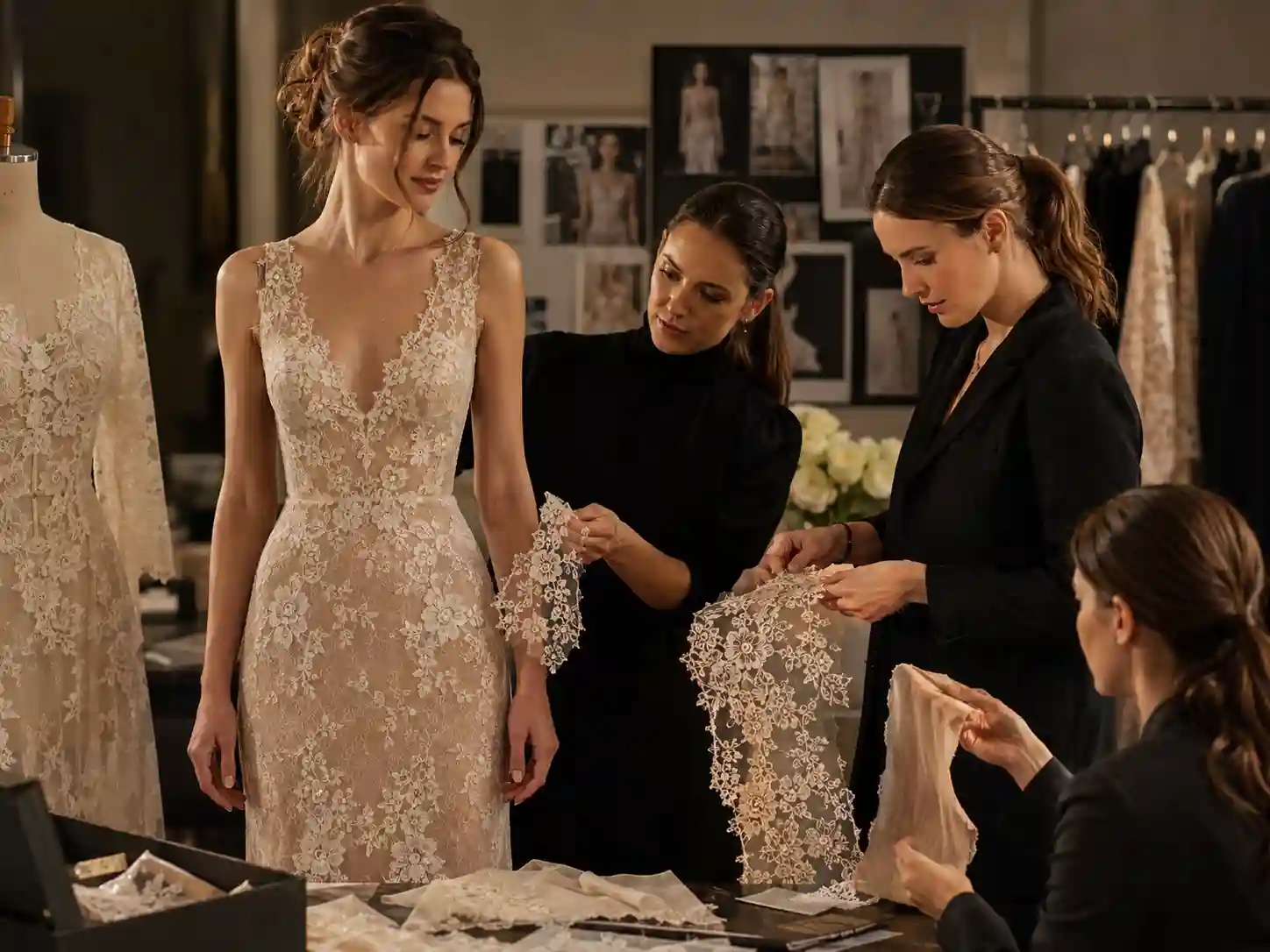
Lace is returning to dress collections, but 2027 will not be won by repeating another dense floral bodycon mini or a familiar romantic gown. The more convincing direction sits between delicacy and control: sheer lace over engineered foundations, lingerie-inspired edges on clean slip shapes, geometric patterns across streamlined silhouettes, and soft materials used in colors that feel modern rather than ceremonial. For a fashion label, the opportunity is not simply to use lace. It is to decide what the lace is meant to do for the customer, the silhouette and the collection.
The key lace dress development trends for 2027 are controlled transparency, lighter layered construction, integrated corsetry, refined lace trims, geometric or abstract motifs, expressive color and occasion-ready silhouettes. Commercial success will depend less on the total amount of lace and more on how accurately the fabric is matched with fit, lining, support, motif placement, price position and the way the dress will actually be worn.
That difference often becomes clear at the first fitting. A lace that looked beautiful as a twenty-centimeter swatch may stretch across the bust, twist at a curved seam or expose a lining edge under studio lighting. A dress that appeared effortless in a sketch can suddenly feel too bridal, too fragile or too expensive. The following analysis looks beyond the mood board and follows the decisions that turn a 2027 lace idea into a dress people can wear, photograph, reorder and produce consistently.
Are Lace Dresses Still in Style for 2027?
Yes. Lace dresses remain relevant for 2027, but the strongest products will look lighter, cleaner and more deliberate than traditional all-over floral styles. Modern development is moving toward controlled transparency, lace-edged silhouettes, softer corsetry, asymmetric placement and dresses that work across party, occasion, vacation and social-event settings rather than being limited to bridalwear.
What Is Driving the Lace Revival?
Lace is gaining attention because it delivers texture, depth and movement in a way that a flat solid fabric cannot. Even a narrow insert creates contrast between covered and open areas, while a full overlay changes with light, body movement and the color beneath it. That quality works particularly well in ecommerce, where a dress needs to communicate its character quickly through campaign photographs, product thumbnails and short-form video. A distinctive scalloped neckline or transparent sleeve can register before a customer has read a single line of product copy.
The revival also reflects a wider return to expressive femininity, tactile surfaces and garments that feel visibly worked rather than anonymous. Current Spring/Summer 2027 forecasting repeatedly brings together flowing dresses, lace, slits, plunging necklines and modern layering. The useful lesson is not that every collection needs to become romantic. Lace can be styled against tailoring, compact jersey, clean corsetry or minimalist shapes, allowing a brand to use softness without losing a sharper identity.
Popularity alone does not make a concept commercially sound. A runway look with extensive transparency may attract attention yet create difficult coverage decisions, a narrow customer group and higher return risk online. A heavily embellished lace dress may look exceptional in a campaign but miss the planned retail price. Strong development identifies the one feature creating the modern effect – perhaps the edge, the shadow, the contrast lining or the fitted structure – and protects that feature while simplifying everything the customer does not need.
How Is Modern Lace Different?
Modern lace is less dependent on conventional full-body floral coverage. It is increasingly used to frame the body, soften structure or create controlled areas of transparency. A sheer upper bodice, a lace-trimmed neckline, a diagonal insert, a transparent sleeve or a tonal overlay can carry the entire visual idea without covering every panel. This selective approach helps a dress feel lighter and makes it easier to control price, fit and production consistency.
The silhouette around the lace is often more important than the motif itself. Fine floral lace paired with a sharp square neckline can look contemporary, while the same fabric on a high-neck fit-and-flare shape may read as traditional. Geometric lace across a narrow column dress can feel graphic rather than romantic. A delicate overlay over a structured corset creates tension between softness and support, which is one of the strongest visual directions for 2027 occasion and party dressing.
Color and underlining change the result just as much as cut. Black lace over black produces subtle depth; black over a warm skin-tone lining exposes every motif and creates a more sensual effect. Chocolate, wine, muted blue, mineral green and softened pink move lace away from predictable bridal associations. Modern lace may look effortless, but the finish still depends on careful seam choice, edge reinforcement, lining control and support hidden inside the garment.
| Dress market | Effective lace applications | Typical coverage | Primary development risk | Commercial role |
| Party and going-out | Corset panels, sheer zones, lace minis | Low to medium | Movement security and edge stability | High-impact launch styles |
| Occasion and cocktail | Full overlays, lined midis, shaped bodices | Medium to high | Comfort, support and polished finishing | Core event dressing |
| Vacation and resort | Openwork lace, light maxis, halter shapes | Medium | Breathability and snag resistance | Seasonal statement products |
| Wedding guest | Tonal lace, elegant sleeves, midi lengths | Medium to high | Avoiding an overly bridal result | Broad occasion demand |
| Graduation and homecoming | Fitted minis, trims, corset details | Medium | Youthful proportion with secure coverage | Event-led seasonal volume |
| Contemporary daywear | Inserts, openwork panels, relaxed dresses | High | Care performance and everyday durability | Accessible extension category |
Coverage levels are directional rather than fixed. A style described as medium coverage may still need additional bust, hip or seat lining according to the market, model photography, size range and intended event.
Which Dress Markets Are Adopting Lace?
Lace can serve several dress markets, but each one needs a different balance of coverage, structure and visual impact. Party and going-out collections can support fitted silhouettes, stronger transparency and shorter lengths. Occasion dresses generally need more dependable lining, polished finishes and enough internal control for several hours of sitting, walking and dancing. Vacation and resort products benefit from lighter constructions, openwork effects and relaxed movement rather than dense, heavily supported surfaces.
Wedding guest and bridesmaid collections can borrow the refinement of bridal lace without using trains, traditional ivory treatments or labor-heavy couture applications. Graduation and homecoming dresses can use youthful mini proportions, shaped bodices and selective lace placement. Contemporary day dresses can introduce cotton-look lace, openwork panels or small inserts that feel less formal and easier to style with flats, boots or a lightweight jacket.
The material should be selected after the market is clear. A delicate non-stretch lace may perform beautifully on a softly lined occasion midi and fail completely on a close-fitting club dress. A stable corded quality can support a sculpted bodice but feel too rigid on a fluid vacation maxi. The intended event, wear time, movement level and price point need to be agreed before the development team confirms the fabric.
Is Lace Moving Beyond Bridalwear?
Lace has moved well beyond bridalwear, although bridal collections still act as an important testing ground for new combinations of sheerness, corsetry, halter necklines, dimensional motifs and asymmetric construction. Fashion labels can use those techniques without reproducing the complete bridal language. The translation works when the dress is recolored, shortened, simplified or rebuilt around a recognisable party, occasion, resort or wedding guest need.
An ivory floor-length lace gown with a train, dense appliqué and conventional floral placement will naturally read as bridal. The same idea can become a commercial fashion dress when it is cut to a midi length, produced in chocolate or deep blue, simplified through the skirt and paired with a cleaner neckline. A corset-inspired bodice can support a party mini without heavy bridal layers, while a sheer lace sleeve can give a satin occasion dress a softer finish.
Category clarity matters. Customers should understand immediately whether the product is for a birthday, graduation, holiday dinner, wedding guest event, resort trip or evening occasion. When the intended use is vague, the dress becomes harder to style, photograph, price and merchandise. The objective is not to manufacture a reduced bridal gown. It is to take the strongest lace ideas and adapt them to repeatable seasonal collections, realistic retail prices and everyday social occasions.
Which Lace Materials Will Lead 2027?
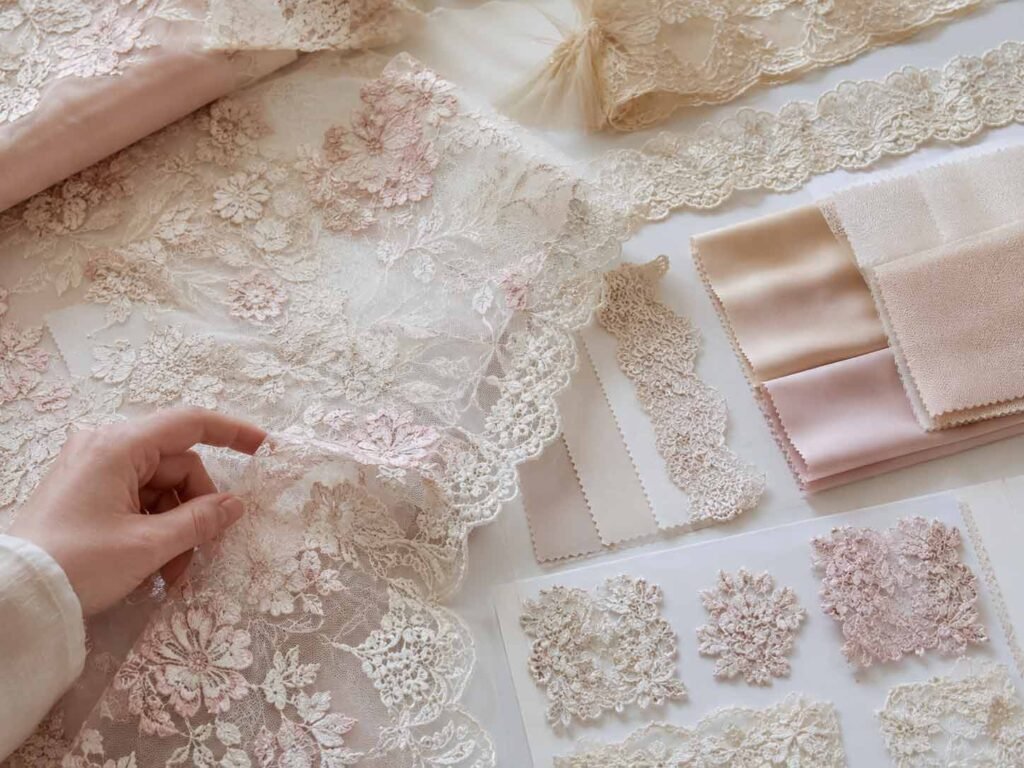
Soft Chantilly-style lace, controlled eyelash edges, stable warp-knit qualities, stretch lace and cleaner geometric patterns are likely to lead 2027 development. The correct material should be selected by weight, stretch, recovery, motif scale, usable width, transparency and repeatability rather than by the appearance of a small showroom swatch alone during sourcing.
What Makes Chantilly Lace Relevant?
Chantilly-style lace remains relevant because it creates fine visual detail without adding excessive bulk. Its light ground allows the lining, skin tone or supporting layer to remain visible, which makes it suitable for transparent sleeves, soft overlays, fitted panels, delicate necklines and layered midi or maxi dresses. It can appear premium in photographs while allowing the silhouette beneath to retain definition rather than disappearing under a dense surface.
Its visual softness should not be confused with structural strength. Fine lace usually cannot support a fitted bodice by itself. Zipper zones, cups, armholes, strap joins and waist seams may need mesh mounting, backing, stabilising tape or another supporting layer. Without reinforcement, the material can distort under tension, and the damage may not become obvious until the dress is worn rather than when it is lying flat on a sample table.
Pattern scale needs to be reviewed on full pattern pieces. Small repeats are usually easier to balance across cups, straps and narrow panels. Large botanical repeats produce stronger impact but may require centred placement, mirrored cutting and higher consumption. Seam construction is equally visible on a fine ground, so thread shade, seam allowance width and finishing method should be compared before the sample is approved for production.
How Will Eyelash and Geometric Lace Evolve?
Eyelash lace is becoming more controlled. Rather than covering an entire garment with irregular fringe, designers are using the decorative edge at necklines, hems, cuffs and shaped bust seams where it can be seen clearly without creating unnecessary risk. A narrow eyelash trim can give a satin slip dress a recognisable identity while keeping the main body clean, easier to fit and easier to repeat across several related styles.
The fringe still needs physical evaluation. Coarse fibers close to the underarm or neck can irritate the skin. Long fibers may catch on jewelry, flatten in packing or become trapped in seams. Development instructions should define exactly where the decorative edge starts and stops, particularly at side seams, back openings and asymmetric necklines. A product can look intentionally soft only when the edge remains consistent enough to avoid appearing damaged.
Geometric lace offers a sharper route. Grids, waves, diamonds and abstract repeats feel younger and less traditional than familiar florals. They suit column dresses, clean minis and one-shoulder shapes, but their precision makes errors more visible. A straight line that shifts at centre front or twists around a curved seam is harder to hide than an organic flower, so grain direction, pattern alignment and grading need to be checked early.
| Lace type | Common screening weight | Typical stretch behavior | Best applications | Main development risk |
| Fine Chantilly-style lace | 50-120 gsm | Low or limited mechanical give | Sleeves, overlays, soft panels | Snagging and weak support |
| Stable warp-knit lace | 80-160 gsm | Low to moderate | Lined occasion dresses | Restricted movement if under-specified |
| Stretch lace | 90-190 gsm | Moderate to high crosswise stretch | Bodycon and fitted dresses | Poor recovery or lining mismatch |
| Corded or raised lace | 120-250 gsm | Usually low | Corsets, bodices, statement panels | Stiffness and added weight |
| Geometric lace | 70-180 gsm | Construction-dependent | Columns, minis, asymmetric styles | Visible line distortion |
| Lace appliqué | Varies by base and motif | Defined by supporting fabric | Hero styles and engineered placement | Labor cost and placement variation |
These ranges are practical screening references, not universal specifications. The approved construction, supplier data, test method, garment silhouette and brand standard take priority for every order.
Which Lace Works for Fitted Dresses?
Fitted lace dresses need compatible behavior across the outer lace, lining, seams, elastic and closures. Stretch alone is not sufficient. A fabric can extend easily and still recover poorly, leaving bagging at the seat, waist, elbow or neckline after wear. The development team should check stretch in both directions, recovery after repeated extension and the way the material behaves when layered over the proposed lining.
Many stretch laces have much greater crosswise extension than lengthwise movement. That can work well for a bodycon silhouette when the pattern follows the correct direction, but rotating pieces to gain stretch may distort the motif or change shade appearance. The lining should not fight the outer layer. If it stretches less, the dress may feel restrictive; if it stretches more, it can pull the lace inward and create rippling or loose areas.
The most useful test is a completed wear sample. It should be worn while sitting, walking, bending and moving the arms rather than evaluated only on a mannequin. Zippers, clear elastic, binding and thread must tolerate the same movement as the fabric. One rigid component can control the whole garment and make a technically stretchy lace dress feel uncomfortable in real use.
How Should Color and Sustainability Be Evaluated?
Black, ivory and white will remain reliable, but color is one of the easiest ways to make lace feel fresh. Chocolate, burgundy, navy and forest tones support autumn evening collections, while powder blue, softened pink, pale yellow and mineral neutrals work for spring, graduation and wedding guest programs. Brighter red or cobalt can turn a familiar silhouette into a stronger party product without increasing construction complexity.
The underlayer needs to be approved with the lace rather than as a separate material. Tonal lining creates a quieter surface; contrast lining exposes the motif and makes the dress more graphic. Skin-tone layers can create the illusion of greater transparency, but one generic shade will not suit every customer or market. Lab dips should be reviewed over the intended lining because the final color can shift considerably compared with the same lace placed on a white card.
Sustainability claims require the same discipline as fit and color. Teams should verify fiber content, the exact scope of any certification, dye-lot repeatability, minimum quantities and the ability to reorder. Recycled yarn or lower-impact processing can be valuable, but a material that loses recovery, snags quickly or cannot be replenished may create a different kind of waste. Durability and repeat production remain part of responsible material selection.

Which Lace Dress Silhouettes Will Matter?
Lace-trim slips, fitted corset dresses, sheer-layered midis, halter and backless shapes, asymmetric columns and occasion-focused minis or maxis will matter most in 2027. Each silhouette needs a lace with the correct drape, support and stretch, while the lining and internal construction must protect comfort, coverage, movement, reliable wearability and confident fit.
Are Lace-Trim Slip Dresses Still Growing?
Lace-trim slip dresses remain commercially useful because they introduce a recognisable trend detail without making the entire garment dependent on lace. The trim can frame a V-neckline, sit beneath the bust, finish the hem or form a side insert. Satin, crepe, lightweight woven fabric and stretch jersey can all support the idea, giving brands room to position similar designs across different price levels and wearing occasions.
The main decision is whether the dress should look deliberately lingerie-inspired or simply borrow a refined lingerie detail. Strap width, bust coverage, back depth and trim placement control that distinction. A narrow edge on a clean midi can feel sophisticated, while transparent cups, very fine straps and a short hem create a stronger party direction. The product needs a clear point of view so it does not fall awkwardly between sleepwear and occasionwear.
Bias-inspired woven constructions need additional care. The fabric can relax and lengthen after hanging, so the sample should settle before the final hem is marked. Cutting the body too tightly may cause diagonal drag lines, twisting side seams and an uneven hem. One approved trim can be repeated across a mini slip, a cowl-neck midi and a matching top, creating a visible family while keeping sourcing manageable.
How Will Corset Dresses Evolve?
Corset dresses are likely to become softer and more integrated rather than visibly rigid. Lace can be placed over shaped cups, used along curved seams or extended across the full bodice while the real support remains hidden beneath it. The result keeps the delicate surface that customers notice while allowing the internal structure to perform the practical work of controlling the bust, waist and neckline.
Support should match the style rather than follow a fixed formula. A strapless occasion dress may need cups, boning, a stabilised neckline, reinforced closure areas and possibly a waist stay. A corset-inspired party mini with secure straps may need less. Adding maximum structure to every dress raises cost, increases heat and can make the garment uncomfortable without improving the visible result.
Motif placement across cups must be decided intentionally. A large flower positioned differently on each side may make the bodice appear unbalanced. Mirrored cutting can solve the problem but increase fabric use. Grading also requires more than enlarging the base pattern. Cup depth, underbust position, neckline coverage and boning placement must remain appropriate across sizes or the dress may become too low, compressed or unstable.
| Silhouette | Recommended lace treatment | Internal support | Critical sample checks | Commercial role |
| Lace-trim mini slip | Neckline, bust or hem trim | Light lining and stable straps | Bias growth, bust coverage, hem balance | Accessible party style |
| Corset mini | Cup overlay and shaped panels | Medium to high support | Cup symmetry, neckline hold, sitting comfort | High-impact going-out style |
| Lined lace midi | Full overlay or fitted bodice | Medium support | Lining drag, seam visibility, movement | Broad occasion product |
| Sheer-layered midi | Short inner layer under lace | Medium, zone-specific support | Transparency under flash, inner-layer position | Event and editorial style |
| Halter maxi | Lace bodice with fluid skirt | Front and neckline support | Neck pressure, back security, garment weight | Vacation or evening statement |
| Asymmetric column | Diagonal panel or one-shoulder overlay | Style-dependent stabilisation | Side pull, motif flow, grade position | Contemporary hero product |
Support levels describe relative construction needs. Final components should be chosen after fitting the intended fabric combination and reviewing movement on the target size range.
Which Halter, Backless and Sheer Shapes Work?
Halter and backless dresses create immediate visual impact, but removing conventional shoulder straps and back coverage transfers more responsibility to the front and side structure. Depending on the silhouette, the garment may need cups, internal elastic, side boning, power mesh or stabilisation around the neckline and opening. Lace by itself should not be expected to control the bust or keep a low back in position during movement.
A halter neckline carries tension through the neck. Wider fabric straps distribute weight more comfortably than narrow cords on a heavier dress, while ties, hooks and sliders should be tested against the actual finished weight. Backless shapes need control at the side seam and lower back; otherwise the dress may rotate or pull forward. Denser motifs over the bust can improve visual coverage while more open areas remain at the waist or upper back.
Sheer styles need a defined coverage map. The inner layer may be full length, mini length, bodysuit-shaped or limited to selected zones. The intended transparency should be checked in daylight, studio lighting and flash photography because ecommerce images can reveal much more than a fitting-room mirror. The key question is not whether the dress is sheer, but whether the amount of exposure matches the customer promise.
Which Length and Shape Fit Each Occasion?
Mini lace dresses are strongest for birthday, homecoming, party and going-out collections. Small and medium motifs usually balance more easily within the reduced garment area, while a large repeat may dominate the body or create awkward placement at the hem. Minis also need careful movement testing because fitted lace and lining can ride upward when their stretch and recovery do not match.
Midi dresses offer the broadest occasion range. A lined lace midi can work for cocktails, graduation, wedding guest events, dinners and polished daytime dressing. The length provides enough area for motif development without carrying the consumption and formality of a maxi. A short inner layer under a sheer midi outer shell can also introduce transparency while preserving a clear level of coverage.
Maxi dresses suit evening, vacation and stronger social-event products, but they expose material and construction inconsistencies over a larger area. Shade variation, twisted seams, motif breaks and uneven hems become easier to notice. Asymmetric shapes can make any length feel more contemporary, although a diagonal overlay or one-shoulder neckline must be strong enough to look intentional and engineered rather than slightly misaligned.

How Should Brands Develop Lace Dresses?
Brands should develop lace dresses by resolving the silhouette, material behavior, target customer, wearing occasion, price level and production method together. Lace, lining, support, motif placement and construction cannot be approved independently because a change in one component often alters fit, appearance, cost, timing, approval speed, production planning and bulk repeatability.
How Do You Match Lace to Shape?
Five properties should be reviewed before a lace is assigned to a silhouette: weight, drape, stretch, recovery and motif scale. A fluid skirt needs softness and enough weight to fall cleanly. A bodycon dress requires extension with reliable recovery. A corset requires a stable foundation even when the visible lace is delicate. Approving a material because it looks attractive beside a sketch ignores the physical work it must perform on the body.
Stretch direction is especially important. Many laces extend more across the width than along the length. Rotating pattern pieces to gain movement may disturb the motif, affect shade appearance or reduce stability. The full garment pattern should therefore be placed over the complete fabric width before cutting direction and consumption are confirmed. A small swatch cannot show where a large repeat will break at the centre front or disappear at a narrow strap.
Motif scale changes the visual proportion of the body. Small repeats are easier to distribute across cups, curved seams and a wider size range. Large botanical or geometric motifs create stronger impact but often need engineered placement and additional material. A useful development review compares the lace over actual pattern pieces, checks the base size and at least one adjacent size, and confirms whether the final balance still fits the brand’s intended look.
How Do You Engineer Lining and Support?
Lining influences coverage, skin feel, drape and fit. Stretch lace should usually be paired with an inner layer that moves in a compatible direction and recovers at a similar rate. If the lace extends much more than the lining, the dress may feel restrictive or develop ripples. If the lining extends much more, it can pull the lace inward and distort the motif. The two materials need to be tested as a system.
Woven lace overlays can be mounted over satin, crepe, mesh or lightweight jersey depending on the required structure. Each pairing changes the finished hand and visual depth. A soft lace over firm satin appears more sculpted than the same lace over stretch mesh. The development team should approve the exact combination rather than confirming each material independently and assuming the result will remain unchanged.
Support belongs where it solves a specific problem. Cups shape and cover the bust, boning controls vertical seams, clear elastic stabilises openings, power mesh supports the side body and stay tape prevents unwanted stretching. A coverage map in the technical package can identify fully lined, partially lined, sheer and reinforced zones. This removes guesswork from sampling and makes the cost reflect the real construction before repeated revisions begin.
How Do You Control Motif Placement?
Motif placement has a direct effect on perceived quality. The most sensitive areas are the centre front, bust apex, neckline, waist, centre back, sleeve head and hem. A flower positioned unintentionally over one side of the bust, a geometric line that breaks at the zipper or uneven scallops around a neckline can distract from an otherwise well-constructed dress. These issues are design decisions, not small cutting-room details.
The team should define which areas require symmetry and where natural placement is acceptable. Mirrored cups, matched centre-front panels and balanced neckline scallops may be essential. Exact matching at every side seam may add cost without creating visible value. Making the distinction early controls both fabric consumption and labor while protecting the areas customers are most likely to notice in product photography.
Scalloped borders need special planning because the nominal fabric width is not always fully usable. If decorative edges are required at both the neckline and hem, the marker may need separate orientations or extra length. Placement marks can be transferred from the pattern to the cutting reference, and approved photographs can be archived for repeat orders. This prevents bulk consistency from depending on the memory of one cutter or sample maker.
How Do You Balance Detail and Cost?
The price of lace is only one part of the finished garment cost. Pattern matching increases consumption, mirrored cutting creates waste, appliqué requires individual placement and scalloped edges may reduce usable width. Internal corsetry, specialist lining and hand finishing can add more labor than the visible surface suggests. Cost control works best when the development team understands which detail creates the customer’s first impression and protects that feature.
Concentration is often more effective than removal. A lace-covered bodice may deliver more perceived value than inexpensive lace spread across the whole dress. A distinctive neckline edge can be more memorable than several minor details placed in low-visibility areas. The hero style can carry engineered placement and complex support, while core styles reuse the same material as an overlay, panel or trim. This creates collection unity without forcing every item into the same price band.
Target cost should be reviewed before the final sample is locked. When a concept is too expensive, the team can reduce non-essential matching, simplify the inner layer, replace hand-applied sections or move the lace to a more visible area. Waiting until approval usually produces abrupt changes that damage the original idea. Romantic, contemporary and partywear labels may use the same trend, but the construction and detail level should still reflect each brand’s customer and retail position.

How Do You Make Lace Dresses Production-Ready?
A production-ready lace dress has an approved material combination, stable fit, documented motif placement, confirmed construction, tested closures and clear quality standards. The sample must be reproducible with bulk fabric, normal factory methods and realistic tolerances rather than depending on one sample maker correcting every difficult construction detail by hand during sampling.
What Should the Tech Pack Define?
A lace dress technical package needs more detail than a basic smooth-fabric garment. It should identify the approved lace quality, fiber composition, usable width, weight reference, stretch direction, pattern repeat, scalloped borders and final color. The lining, mesh, cups, boning, elastic, zipper and thread also need clear references because each component affects the way the finished dress fits, moves and appears under light.
Placement requirements should be shown visually. A note such as ‘match lace’ is too broad to guide consistent cutting. Technical sketches or approved photographs can identify which motifs must be centred, mirrored or aligned across selected seams. Areas where random placement is acceptable should also be recorded so the factory does not increase consumption by matching details that the customer will not notice.
Construction information should state seam type, allowance, edge finish, reinforcement, lining attachment and the method used in transparent zones. Measurement specifications should focus on points that control the silhouette, including bust, underbust, waist, high hip, low hip, body length, neckline opening, strap length and finished skirt length. Critical fitted points commonly require tighter agreed tolerances than long hems or lower-risk areas, and those limits should be confirmed before bulk cutting.
How Should Samples Be Reviewed?
The first sample should confirm more than visual similarity to the sketch. It needs to show whether the lace and lining work together, whether the support strategy is sufficient, whether the intended transparency is appropriate and whether the construction can be repeated. A beautiful sample with an unstable neckline, weak zipper area or difficult hand-corrected motif placement is not ready to become a production standard.
Fit reviews should include movement on the intended base-size model or fit form. Sitting, walking, raising the arms, turning the torso and bending can reveal neckline gaping, lining tension, skirt riding, neck pressure and closure stress that do not appear in a front photograph. Complex fitted styles also benefit from reviewing at least one additional size before the full grade is released, especially when motifs and coverage shift across the body.
Comments should separate design changes from workmanship corrections. Lowering a neckline is a design or fit decision; correcting one cup that sits higher than the other is an execution issue. A revised sample should close known problems rather than introduce new materials or construction without review. Before production, the approved sample, measurement chart, bill of materials, placement reference and workmanship standard need to agree with one another.
| Checkpoint | What to verify | Practical control | Escalation trigger |
| Incoming lace | Shade, usable width, defects, repeat, stretch | Compare each lot with approved standard and layer over approved lining | Visible lot difference or changed material behavior |
| Pre-production sample | Fit, construction, motif and trims | Approve before bulk cutting; record all exceptions | Any unapproved material or construction change |
| Cutting start | Grain, motif position, paired pieces | Check the first marker and first bundles | Placement drift or unexpected consumption |
| First production pieces | Measurements, symmetry, neckline, closure | Review several early pieces before full output | Repeated deviation at critical fit points |
| In-line inspection | Puckering, damage, transparency, seam quality | Inspect high-risk operations at the machine stage | Defect pattern affecting more than isolated pieces |
| Finishing | Heat response, hanging length, edge appearance | Use approved pressing settings and allow settling time | Flattened motif, shine or unstable hem |
| Final inspection | Appearance, measurements, labels, packing | Apply the brand-approved inspection level and acceptance criteria | Failure against agreed major or critical requirements |
The number of pieces checked, measurement tolerances and acceptance criteria should be agreed for the specific brand and order. Fitted or highly transparent styles normally require tighter control at critical points than relaxed dresses.
Which Fit and Wear Risks Need Testing?
Lace dresses commonly fail at openings and high-tension areas. Necklines may gape because the edge stretches during sewing. Armholes can become wavy, bust seams may distort the motif and backless dresses can rotate. Halter styles may place too much pressure on the neck, while fitted skirts can ride upward when the lace and lining recover at different rates. These risks are best discovered through wear trials rather than static inspection.
Transparency can also change by size. A motif that provides adequate bust or hip coverage in the base size may move or open more when the garment is graded or stretched over another body. Product photography adds another layer of risk because studio flash and strong backlighting may reveal seams, cups or lining edges that appeared discreet during fitting. Coverage needs to be approved in the garment, not assumed from the flat fabric.
Closures and skin contact deserve equal attention. Invisible zippers can catch fine lace, hook-and-eye zones may pull away from delicate material, and small loops must tolerate repeated fastening. Lace edges at the neck, underarm and inner arm should be checked for irritation. Boning ends need secure casing, and the dress should remain comfortable after extended wear rather than only during a short sample-room fitting.
How Do You Maintain Bulk Consistency?
Bulk consistency begins when incoming lace and lining are compared with the approved standards for shade, width, hand feel, stretch, repeat and surface condition. Different dye lots should not be mixed within one garment unless the result has been approved. A small lot difference can become highly visible when transparent lace is layered over a contrast lining or when panels meet at the centre front.
Cutting plans need to reflect the motif rules. Paired pieces should be cut together when symmetry is required, and centre-front or centre-back references should be clearly marked. Scalloped edges need protection during spreading, bundling and transport. Unstable lace may require fewer plies or additional controls to prevent shifting, while the first completed production pieces should be checked before the full line continues.
In-line inspection should focus on high-risk operations rather than waiting for final inspection. Necklines, cups, zippers, transparent seams, matched panels and scalloped hems deserve early review. Finishing must use appropriate heat, steam and pressure because synthetic lace can flatten, shine or distort. Long or bias-influenced dresses may need controlled hanging before final measurement. When these steps are documented, the approved sample becomes a repeatable standard rather than a one-time success.
Develop Your 2027 Lace Dress Collection
A successful lace program begins with a clear silhouette, the correct material behavior and a sample that can be repeated in production. Duolan Apparel supports fashion, occasion, party, fitted, halter, backless, mesh and satin dress development for established labels and product teams. Share your technical pack, reference sample, fabric direction or collection mood, together with the target market, size range, planned quantity and required delivery window. The development team can then review material options, construction risks, fit priorities, sampling steps and the path from approved sample to bulk production before a formal quotation is prepared.